


 Скачать презентацию Sponsors Welcome Denise Voss Vice Chairman
4601f6006400067f80dcfb5a96a8e2c1.ppt
- Количество слайдов: 66

 Sponsors
 Welcome Denise Voss Vice Chairman – International Affairs ALFI
 PRESENTATIONS: The link to the slides is printed on the programme An email will be sent to inform you they are online EVALUATION FORM: Can be found in the programme kindly take a moment to complete it and return it to registration desk at the end of the seminar
 Introduction Mark Tennant Senior Adviser J. P. Morgan Europe Limited London
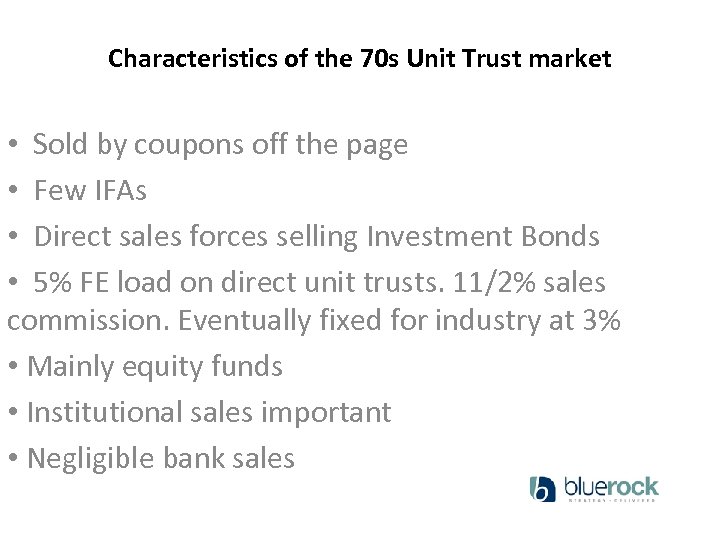 Characteristics of the 70 s Unit Trust market • Sold by coupons off the page • Few IFAs • Direct sales forces selling Investment Bonds • 5% FE load on direct unit trusts. 11/2% sales commission. Eventually fixed for industry at 3% • Mainly equity funds • Institutional sales important • Negligible bank sales
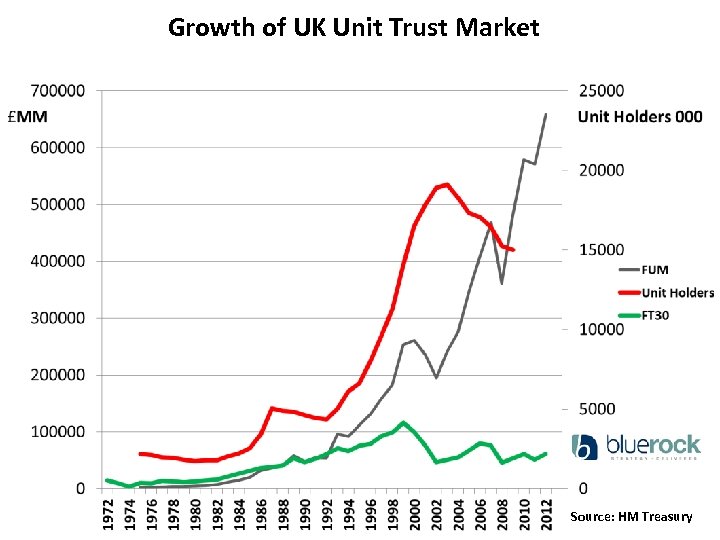 Growth of UK Unit Trust Market Source: HM Treasury
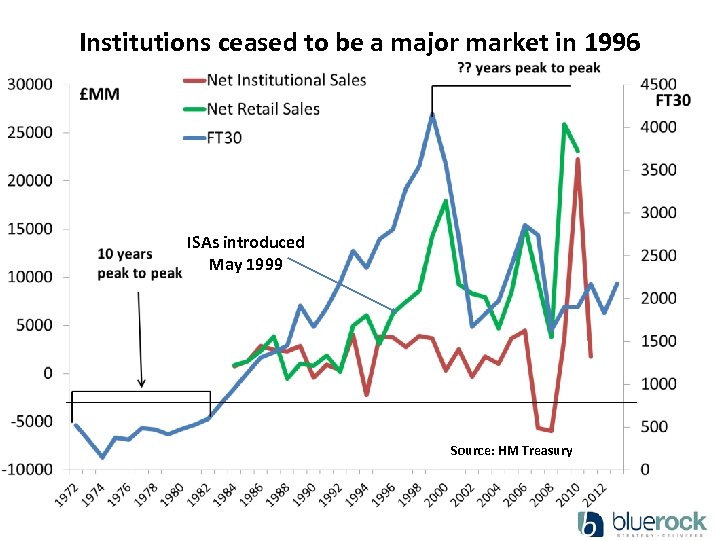 Institutions ceased to be a major market in 1996 ISAs introduced May 1999 Source: HM Treasury
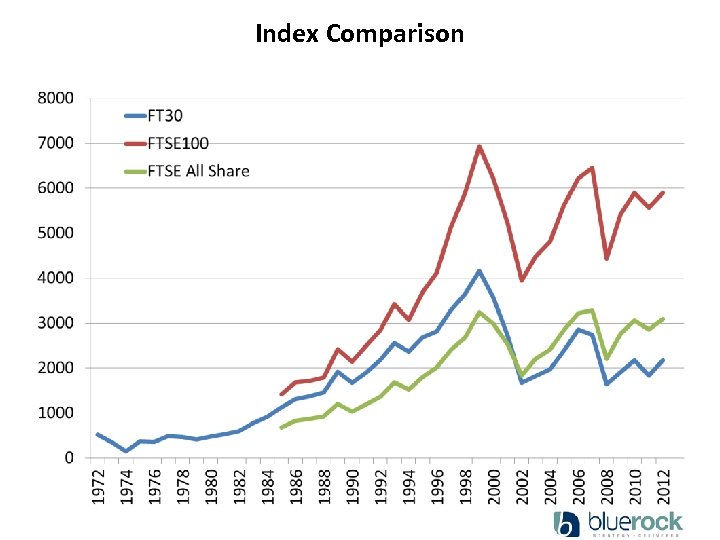 Index Comparison
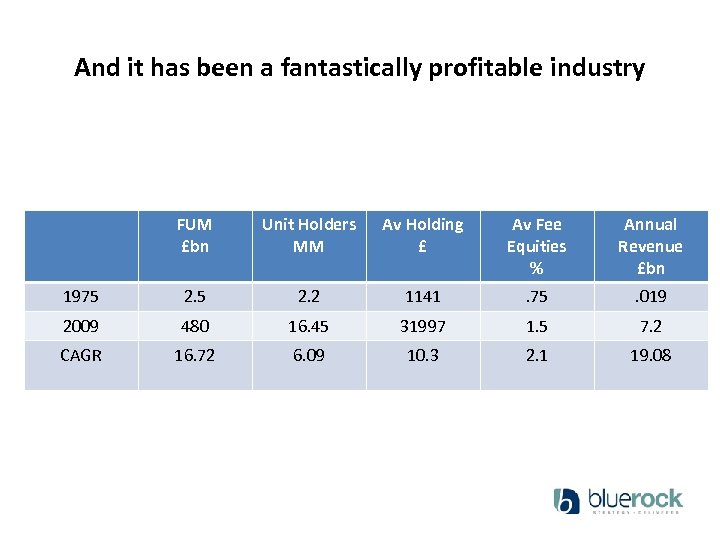 And it has been a fantastically profitable industry FUM £bn Unit Holders MM Av Holding £ Av Fee Equities % Annual Revenue £bn 1975 2. 2 1141 . 75 . 019 2009 480 16. 45 31997 1. 5 7. 2 CAGR 16. 72 6. 09 10. 3 2. 1 19. 08
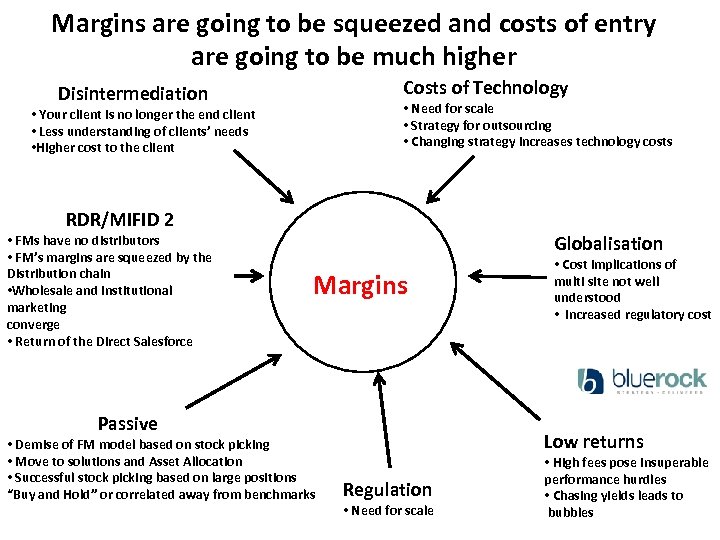 Margins are going to be squeezed and costs of entry are going to be much higher Costs of Technology Disintermediation • Need for scale • Strategy for outsourcing • Changing strategy increases technology costs • Your client is no longer the end client • Less understanding of clients’ needs • Higher cost to the client RDR/MIFID 2 • FMs have no distributors • FM’s margins are squeezed by the Distribution chain • Wholesale and institutional marketing converge • Return of the Direct Salesforce Globalisation Margins Passive • Demise of FM model based on stock picking • Move to solutions and Asset Allocation • Successful stock picking based on large positions “Buy and Hold” or correlated away from benchmarks • Cost implications of multi site not well understood • Increased regulatory cost Low returns Regulation • Need for scale • High fees pose insuperable performance hurdles • Chasing yields leads to bubbles
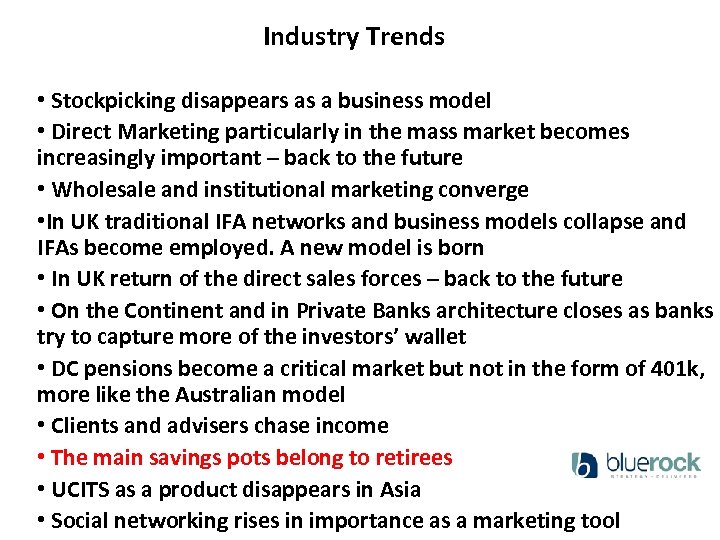 Industry Trends • Stockpicking disappears as a business model • Direct Marketing particularly in the mass market becomes increasingly important – back to the future • Wholesale and institutional marketing converge • In UK traditional IFA networks and business models collapse and IFAs become employed. A new model is born • In UK return of the direct sales forces – back to the future • On the Continent and in Private Banks architecture closes as banks try to capture more of the investors’ wallet • DC pensions become a critical market but not in the form of 401 k, more like the Australian model • Clients and advisers chase income • The main savings pots belong to retirees • UCITS as a product disappears in Asia • Social networking rises in importance as a marketing tool
![Winning strategies of the future Global Scale Players Blackrock] Franklin Templeton Fidelity (in some](https://present5.com/presentation/4601f6006400067f80dcfb5a96a8e2c1/image-14.jpg "Winning strategies of the future Global Scale Players Blackrock] Franklin Templeton Fidelity (in some") Winning strategies of the future Global Scale Players Blackrock] Franklin Templeton Fidelity (in some form)? ? Low Cost Producers • Take advantage of low inflation/growth era • Innovative fee structures • Innovative performance # measurement techniques Solution providers Client Widget Manufacturers Geographical Specialists • Clear and limited local distribution strategy • Deep country penetration • Strong local products • DC space • Decumulation products • Partner with life cos? Direct Marketers • Brand • Clear understandable proposition • Social Networking • ETF, passive • Specialist products (EM, Property, PE, Alternative) • A few really high quality alpha providers
Winning strategies of the future Global Scale Players Blackrock] Franklin Templeton Fidelity (in some form)? ? Low Cost Producers • Take advantage of low inflation/growth era • Innovative fee structures • Innovative performance # measurement techniques Solution providers Client Widget Manufacturers Geographical Specialists • Clear and limited local distribution strategy • Deep country penetration • Strong local products • DC space • Decumulation products • Partner with life cos? Direct Marketers • Brand • Clear understandable proposition • Social Networking • ETF, passive • Specialist products (EM, Property, PE, Alternative) • A few really high quality alpha providers
 AIFMD Opportunities & Challenges Moderator: Michael Hornsby, EMEIA Real Estate Funds Leader, Ernst & Young Panelists: Marie-Elisa Roussel, Partner, Pw. C Christian Hertz, Managing Associate, Linklaters LLP Jérôme Wigny, Partner, Elvinger Hoss & Prussen Alastair Woodward, Conducting Officer and Head of Risk Oversight Luxembourg, Aberdeen Global Services S. A.
 ALFI Edinburgh Roadshow 10 April 2013 AIFMD Opportunities and Challenges
 How to organize an AIFM platform in Europe Marie-Elisa Roussel-Alenda, Partner, Pw. C
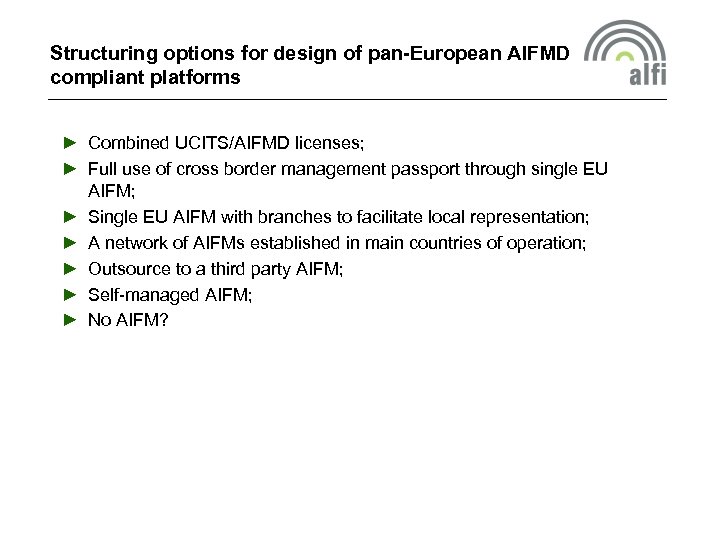 Structuring options for design of pan-European AIFMD compliant platforms ► Combined UCITS/AIFMD licenses; ► Full use of cross border management passport through single EU AIFM; ► Single EU AIFM with branches to facilitate local representation; ► A network of AIFMs established in main countries of operation; ► Outsource to a third party AIFM; ► Self-managed AIFM; ► No AIFM?
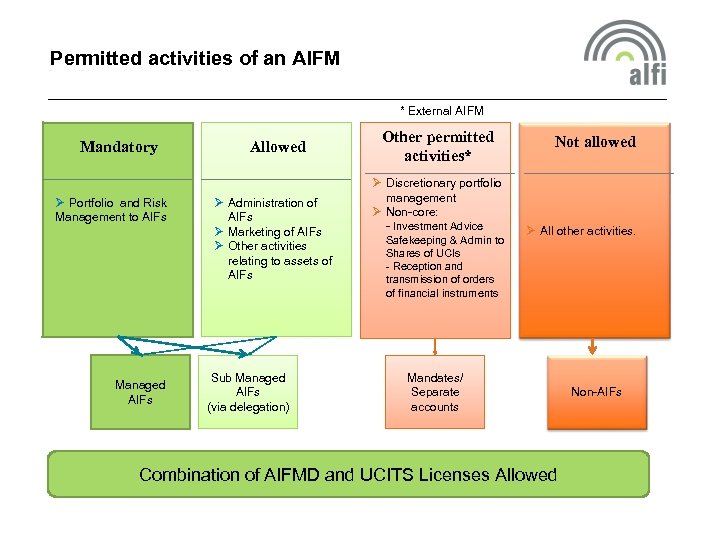 Permitted activities of an AIFM * External AIFM Mandatory Ø Portfolio and Risk Management to AIFs Managed AIFs Allowed Ø Administration of AIFs Ø Marketing of AIFs Ø Other activities relating to assets of AIFs Sub Managed AIFs (via delegation) Other permitted activities* Ø Discretionary portfolio management Ø Non-core: - Investment Advice Safekeeping & Admin to Shares of UCIs - Reception and transmission of orders of financial instruments Not allowed Ø All other activities. Mandates/ Separate accounts Combination of AIFMD and UCITS Licenses Allowed Non-AIFs
 Thank you. Marie-Elisa Roussel-Alenda Partner, Pw. C Tel: +352 49 48 48 2050 E-mail: marie-elisa. roussel-alenda@lu. pwc. com
 Distribution Christian Hertz, Managing Associate, Linklaters
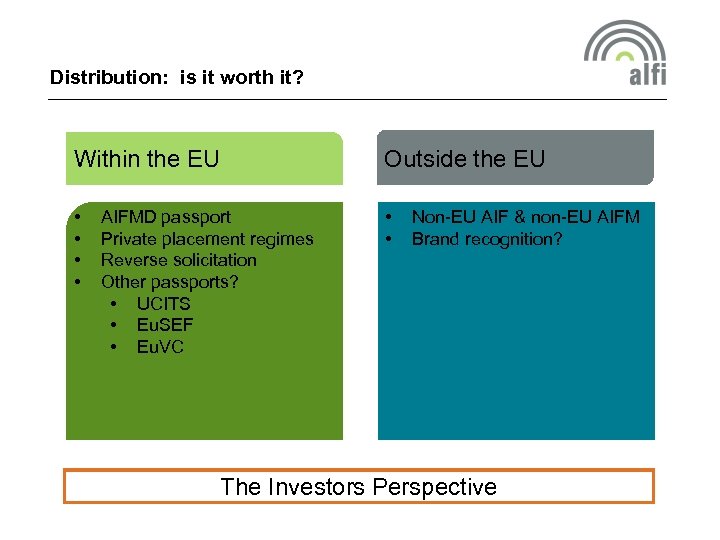 Distribution: is it worth it? Within the EU Outside the EU • • • AIFMD passport Private placement regimes Reverse solicitation Other passports? • UCITS • Eu. SEF • Eu. VC Non-EU AIF & non-EU AIFM Brand recognition? The Investors Perspective
 Thank you. Christian Hertz Managing Associate, Linklaters Tel: +352 26 08 82 07 E-mail: christian. hertz@linklaters. com
 Operations and Risk Management Alastair Woodward, Conducting Officer / Head of Risk Oversight Luxembourg, Aberdeen Global Services
 Operational Considerations ► Distinction between portfolio management and investment advice; ► Middle and back office support services: ► Reorganisation into more efficient hubs; ► Determine what should/ could be outsourced? ► Separation of non-AIFM regulated activities: ► Asset management / property management ► Determining the impact of remuneration rules; ► Segregation of non-AIF clients from AIF clients;
 Risk Management ► Key areas where risk is paramount: ► Product Development ► Due diligence (on investment/ divestment) ► Establishing coherent and streamlined policies and procedures ► How to deal with operational risk dynamics of AIFs ► Internal/ outsourced activities ► Geography ► Data management ► Use of data centres / third party data providers ► Scenario / stress testing ► Risk Reporting: ► Risk Managers ► Investors
 Thank you. Alastair Woodward Conducting Officer / Head of Risk Oversight Luxembourg, Aberdeen Global Services Tel: +352 2643 3011 E-mail: alastair. woodward@aberdeen-asset. com
 Impact on Service Providers Jérôme Wigny, Partner, Elvinger, Hoss & Prussen
 Impact on Service Providers ► Asset managers ► Investment advisers ► Depositaries ► Others
 Thank you. Jérôme Wigny Partner, Elvinger, Hoss & Prussen Tel: +352 44 66 44 0 E-mail: Jerome. Wigny@EHP. LU
 Limited Partnership Christian Hertz, Managing Associate, Linklaters
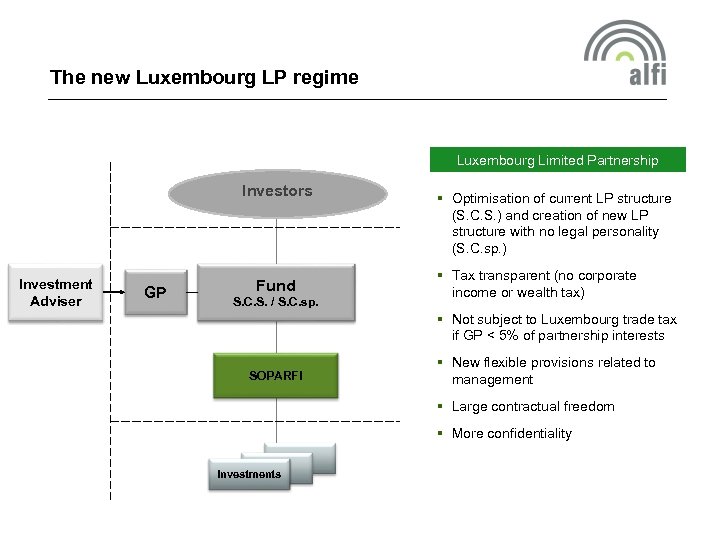 The new Luxembourg LP regime Luxembourg Limited Partnership Investors Investment Adviser GP Fund AIF (SIF) S. C. S. / S. C. sp. § Optimisation of current LP structure (S. C. S. ) and creation of new LP structure with no legal personality (S. C. sp. ) § Tax transparent (no corporate income or wealth tax) § Not subject to Luxembourg trade tax if GP < 5% of partnership interests SOPARFI Optional: SPV § New flexible provisions related to management § Large contractual freedom § More confidentiality Investments
 Thank You
 Sponsors Coffee break
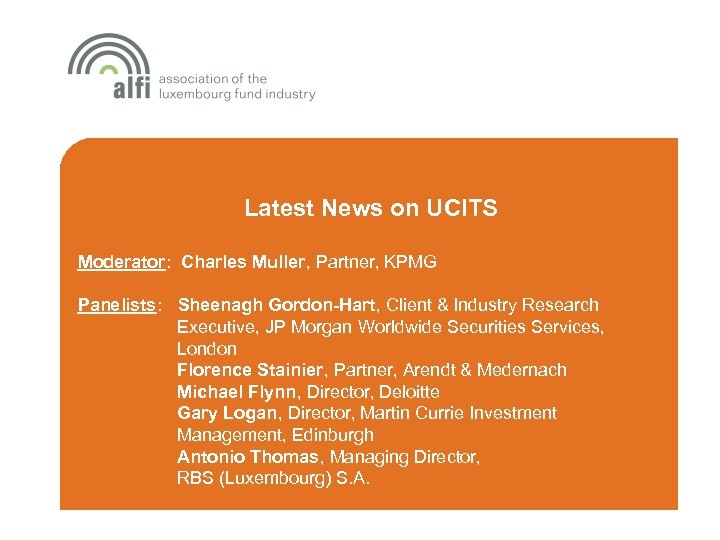 Latest News on UCITS Moderator: Charles Muller, Partner, KPMG Panelists: Sheenagh Gordon-Hart, Client & Industry Research Executive, JP Morgan Worldwide Securities Services, London Florence Stainier, Partner, Arendt & Medernach Michael Flynn, Director, Deloitte Gary Logan, Director, Martin Currie Investment Management, Edinburgh Antonio Thomas, Managing Director, RBS (Luxembourg) S. A.
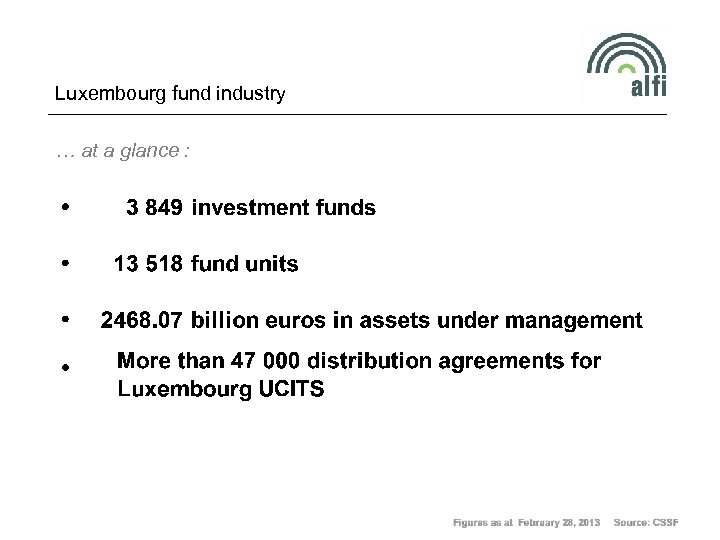 Luxembourg fund industry … at a glance :
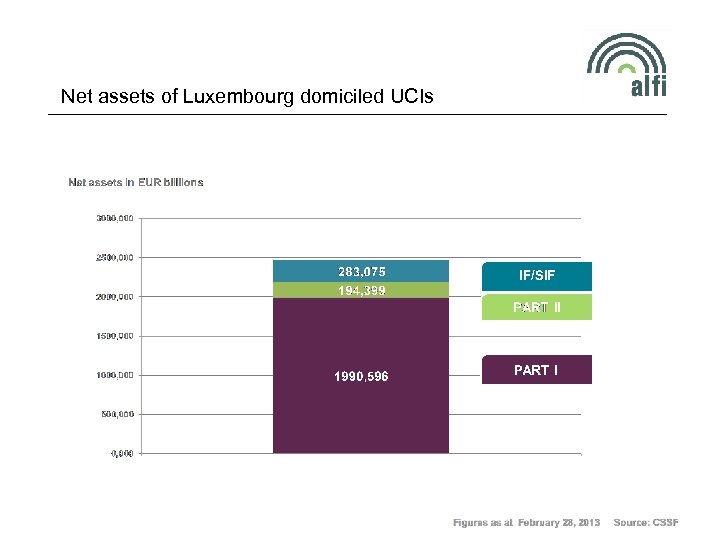 Net assets of Luxembourg domiciled UCIs
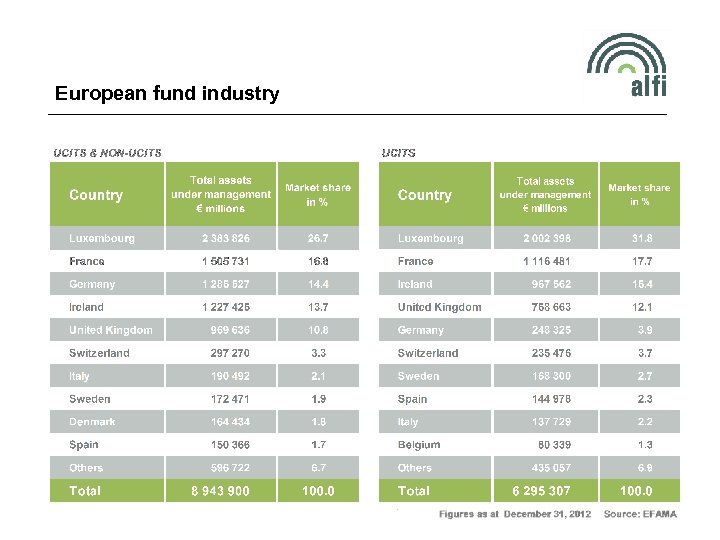 European fund industry 40
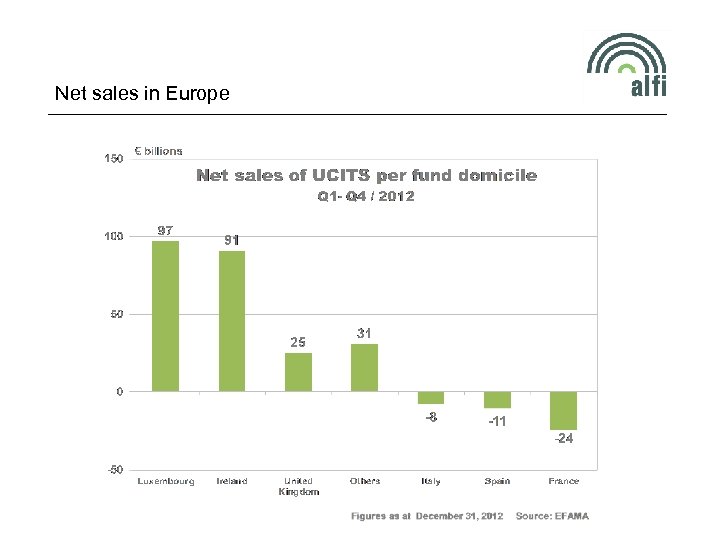 Net sales in Europe 41
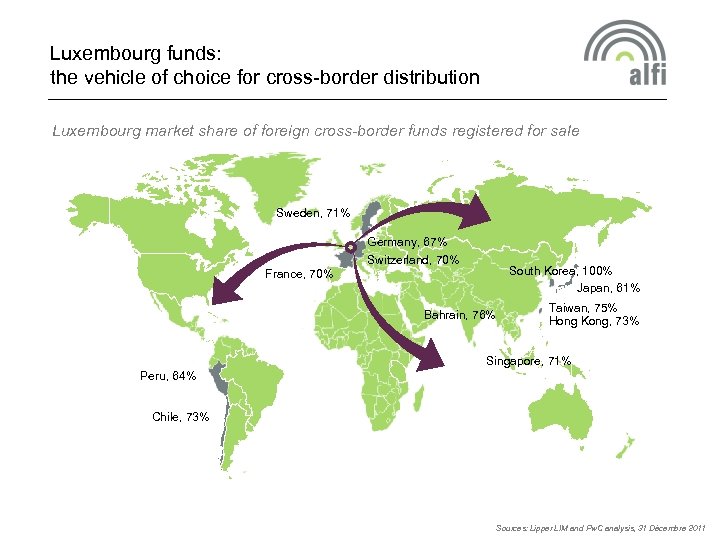 Luxembourg funds: the vehicle of choice for cross-border distribution Luxembourg market share of foreign cross-border funds registered for sale Sweden, 71% Germany, 67% Switzerland, 70% South Korea, 100% Japan, 61% France, 70% Bahrain, 76% Taiwan, 75% Hong Kong, 73% Singapore, 71% Peru, 64% Chile, 73% Sources: Lipper LIM and Pw. C analysis, 31 Décembre 2011
 UCITS: What works or doesn’t
 CSSF Circular 12/546 What has changed for Management Companies?
 Overview of CSSF Circular 12/546 1. On 24 October 2012, the CSSF issued Circular 12/546 on the authorization and organization of Luxembourg UCITS management companies and self-managed investment companies. 2. The Circular repeals CSSF Circular 03/108, CSSF Circular 05/185, CSSF Circular 11/508 and enters into force with immediate effect.
 What has changed: Increased Substance and Governance Increased substance impacting the Management Committee (Committee of the Conducting Officer Composition). Minimum requirement of two conducting officers resident in Luxembourg. Multiple mandates are possible for conducting officers though limited and adequate availability required. Management Committee Operating Model should include the responsibilities allocated to conducting officers in order to avoid conflict of interests for new Management Companies and submit to CSSF annually. The Board of the Management Company should be informed regularly and in writing by the Management Committee on UCITS/UCI it manages and the activity of the Management Company. Management Companies to analyze risk & cost impact as a promoter is not longer necessary for UCITS having designated a Management Company when they meet the requirement of the circular 12/546.
 Management Company and Board of SICAV interaction Management Companies to report to SICAV board on performance of its mandate including performance of activities of the delegates. Management Company must be kept informed about the decisions taken by the Board of Directors of SICAV in order to implement decisions of the board. In case of delegation, duties of the Management Company are: - The choice of Delegates Due Diligence on Delegates (Initial and ongoing) Oversight of services provided by Delegates The important decisions regarding the structure and operations of the SICAV should rest with Board of SICAV.
 Central Administration: Decision Making Centre & Administrative Centre Decision Making Centre: Central Administration to be established in Luxembourg and it should be a decision making centre including two (minimum) conducting officers. A designated person responsible for each of the following functions: risk management, internal audit, compliance, investment management, complaints handling and accounting of Management Company. Administrative Centre: Operating Staff is necessary to execute decisions and supervise the activities of the delegates. CSSF might authorise that the entire staff be in secondment or work simultaneously belonging to the same group and grant such exemption. This translates in staff responsible for different administrative functions within Management Company, reinforcing the 10 -4 requirements in terms of minimum human and technical resources including own offices.
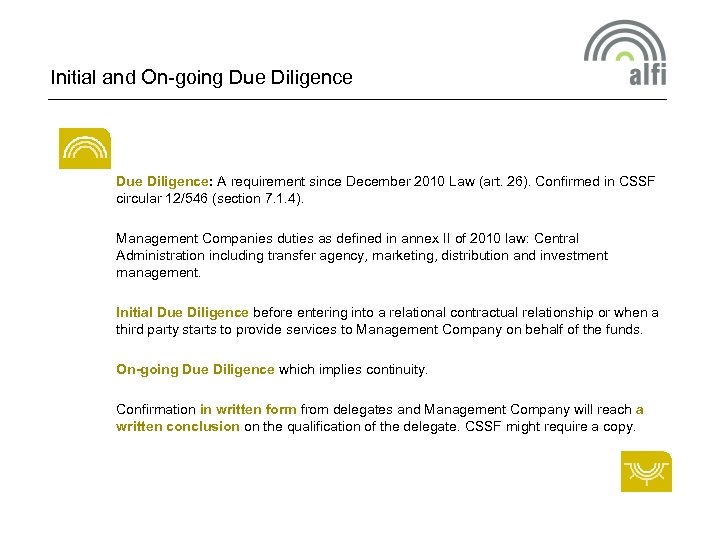 Initial and On-going Due Diligence: A requirement since December 2010 Law (art. 26). Confirmed in CSSF circular 12/546 (section 7. 1. 4). Management Companies duties as defined in annex II of 2010 law: Central Administration including transfer agency, marketing, distribution and investment management. Initial Due Diligence before entering into a relational contractual relationship or when a third party starts to provide services to Management Company on behalf of the funds. On-going Due Diligence which implies continuity. Confirmation in written form from delegates and Management Company will reach a written conclusion on the qualification of the delegate. CSSF might require a copy.
 UCITS V Depositaries
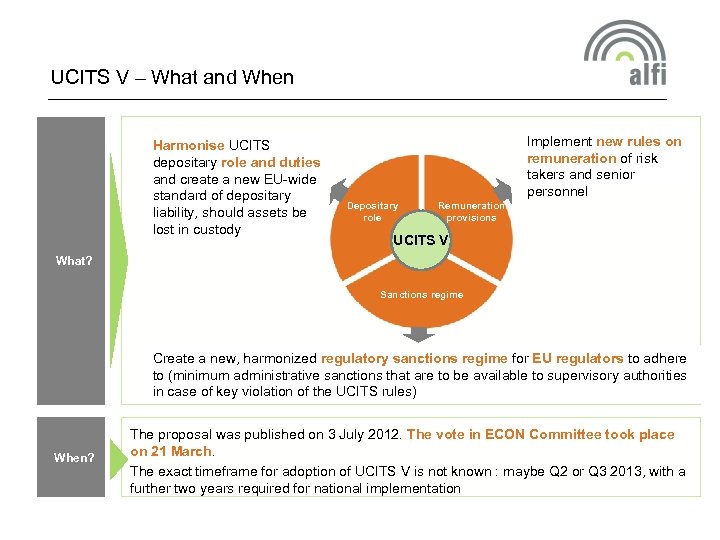 UCITS V – What and When Harmonise UCITS depositary role and duties and create a new EU-wide standard of depositary liability, should assets be lost in custody Implement new rules on remuneration of risk takers and senior personnel Depositary role Remuneration provisions UCITS V What? Sanctions regime Create a new, harmonized regulatory sanctions regime for EU regulators to adhere to (minimum administrative sanctions that are to be available to supervisory authorities in case of key violation of the UCITS rules) When? The proposal was published on 3 July 2012. The vote in ECON Committee took place on 21 March. The exact timeframe for adoption of UCITS V is not known : maybe Q 2 or Q 3 2013, with a further two years required for national implementation
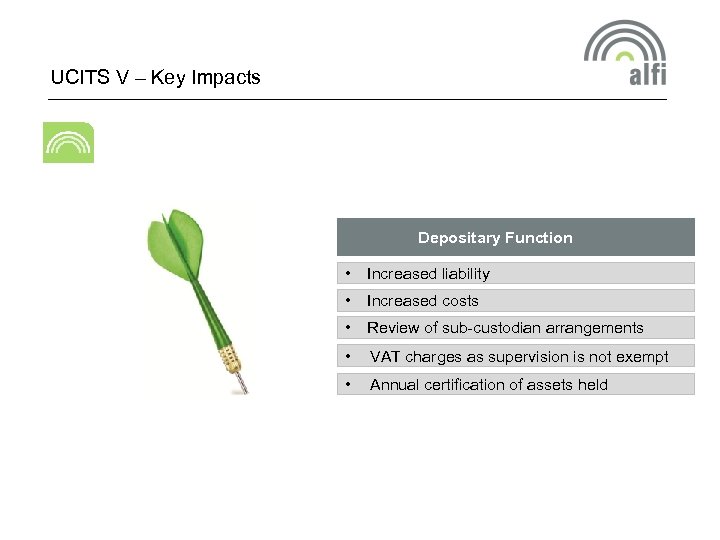 UCITS V – Key Impacts Depositary Function • Increased liability • Increased costs • Review of sub-custodian arrangements • VAT charges as supervision is not exempt • Annual certification of assets held
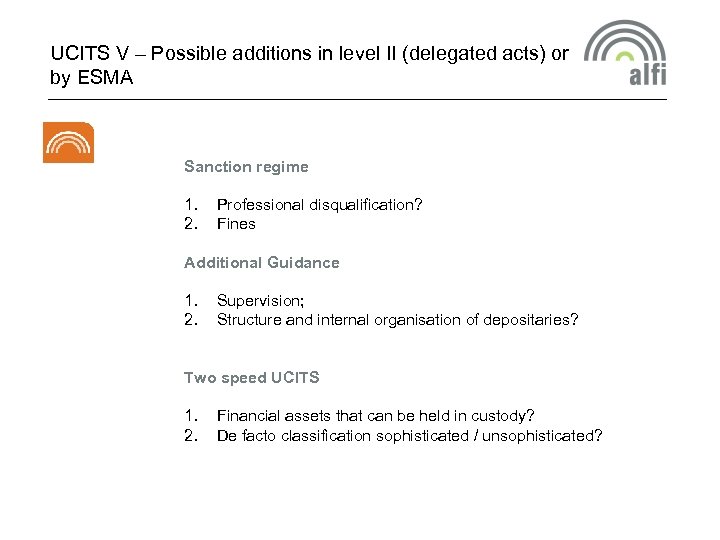 UCITS V – Possible additions in level II (delegated acts) or by ESMA Sanction regime 1. 2. Professional disqualification? Fines Additional Guidance 1. 2. Supervision; Structure and internal organisation of depositaries? Two speed UCITS 1. 2. Financial assets that can be held in custody? De facto classification sophisticated / unsophisticated?
 • UCITS V: Changes to remuneration structure & policy
 UCITS V: Remuneration (1) Current legal framework § Circular CSSF 12/546 of October 24, 2012 referring to Circular CSSF 10/437 of February 1, 2010
 UCITS V: Remuneration (2) General principles § Remuneration policies and practices applicable to staff with material impact on the risk profiles of the UCITS § Fixed and variable components covered § Proportionality principle § Enhanced transparency / Disclosures § Remuneration committee
 UCITS V: Remuneration (3) Variable portion of remuneration § Variable portion of the remuneration § § § upfront payment vs. deferral assessment of performance to comply with conditions no more than 100% of the fixed remuneration no reward of failure when early termination of contract guaranteed variable remuneration exceptional adjustment mechanisms for the calculation of the variable remuneration component or pool at least 50% in units of the UCITS or equivalent ownership interests or share-linked instruments or equivalent non-cash instruments and retention policy Retention policy payment of variable portion only if the financial situation is sustainable and if the performances of the business unit and the individual justify it diminution of remuneration in case of negative performance impact on pension policy no personal hedging
 ‘UCITS VI’
 ‘UCITS VI’ – Has UCITS Gone Too Far? The original UCITS objectives: ‘To remove the barriers to cross-border marketing, by allowing funds to invest in a wider range of financial instruments. The result being a single EU market, with greater investor protection, where economies of scale are passed onto consumers. ’ § ‘UCITS VI’ – Consultation rather than Legislative Proposal § Complementary to recent EU Commission and ESMA output § Open questions to stakeholders. No EU Commission views § A ‘catch-all’ tidy up exercise?
 ‘To Deepen the Commission’s Understanding of…’ § Eligible assets and use of derivatives § Efficient portfolio management tools § Over the Counter derivatives § Extraordinary liquidity management tools § Depositary passport § Money Market Funds § Long-term investments
 Improvements to UCITS IV Revisions to improve operations or fill perceived gaps? § Self-managed investment companies § Master-Feeder structures § Fund mergers § Notification procedures § Further alignment with the AIFMD Which brings us back full circle to the original UCITS objectives.
 Has UCITS Gone Too Far? The original UCITS objectives: ‘To remove the barriers to cross-border marketing, by allowing funds to invest in a wider range of financial instruments. The result being a single EU market, with greater investor protection, where economies of scale are passed onto consumers. ’ § On what side of the fence do you sit? § How much weight do you place on each of these individual objectives? Has UCITS gone far enough? ?
 MIFID 2 and RDR
 The Future of Advice? Or The Future of the Industry? § § § UK RDR: 6 years in the making and now just over 3 months old What’s it all about? § Transparency – Service – Suitability – Risk profiling – Record Keeping and Evidence Deloitte Estimates that 5 million customers will stop seeking advice: § Will they go DIY? Or will they just stop investing? E&Y estimates that the value of advisory firms has declined; previously valuation were based on trail giving values of 2. 5 x to 3 x, falling bow to 0. 8 x to 1. 5 times Chance that focus will shift to areas unaffected by RDR, e. g. Critical Illness, Medical Insurance etc Impact kept under review by UK Regulator and Parliamentary interest is high
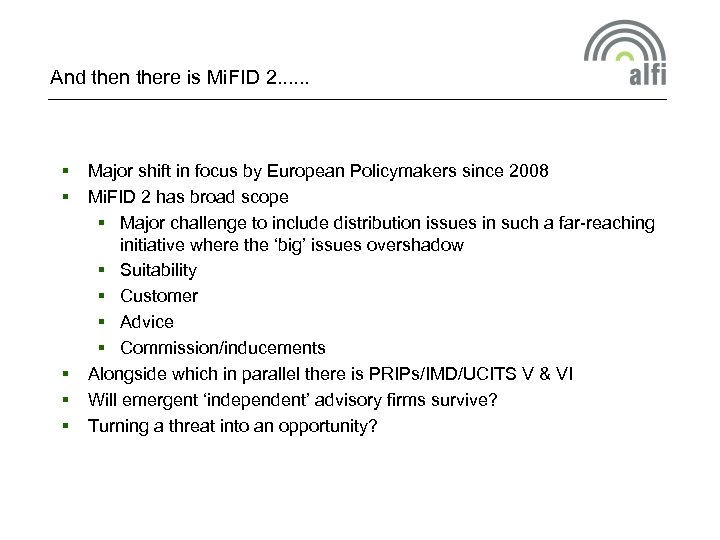 And then there is Mi. FID 2. . . § § § Major shift in focus by European Policymakers since 2008 Mi. FID 2 has broad scope § Major challenge to include distribution issues in such a far-reaching initiative where the ‘big’ issues overshadow § Suitability § Customer § Advice § Commission/inducements Alongside which in parallel there is PRIPs/IMD/UCITS V & VI Will emergent ‘independent’ advisory firms survive? Turning a threat into an opportunity?
 Thank you.
 PRESENTATIONS: The link to the slides is printed on the programme An email will be sent to inform you they are online EVALUATION FORM: Can be found in the programme kindly take a moment to complete it and return it to registration desk at the end of the seminar
 Please join us for lunch!