 Скачать презентацию SPNS Transgender Retention in Care December 10 2013
d505a95e2eefe407b2ea6d5d65ee47d6.ppt
- Количество слайдов: 34



SPNS Transgender Retention in Care December 10, 2013 For Audio: Dial-in#: 866. 394. 2346 Participant Code: 397 154 6368#
Welcome & Introductions Ø Welcome & Introductions, 5 min Ø National Center of Excellence, 20 min Ø Community Healthcare Network, 20 min Ø Updates, Reminders & Evaluation, 5 min Michael Hager, MPH MA NQC Manager, in+care Campaign Manager New York, NY 2 In the chat room, Enter your: 1. name, 2. agency, 3. city/state, and 4. professional role at agency
Welcome & Overview Ø This Partners in+care webinar is offered as part of the in+care Campaign. Ø The in+care Campaign is a national effort to improve retention in HIV care. Ø Webinars are one of many Partners in+care activities designed to engage people living with HIV/AIDS and their allies in the in+care Campaign. For more information: www. incarecampaign. org 3
Participation Guidelines Ø This is a “public event. ” If you have confidentiality concerns: Ø Your names appear on-line in the list of webinar registrants -consider just listening to the audio or to viewing the webinar at a later time, after it is posted at www. incarecampaign. org Ø All webinars are recorded - do not use identifying information when asking questions For Audio: Dial-in#: 866. 394. 2346 4 Participant Code: 397 154 6368#
Participation Guidelines Ø Actively participate and write your questions into the chat area during the presentation; we will pause for conversation during the webinar Ø Do not put us on hold Ø Mute your line if you are not speaking (press *6, to unmute your line press #6) Ø The slides and recording of this and other Partners in+care webinars are available for playback and group presentations at www. incarecampaign. org – “Events” tab For Audio: Dial-in#: 866. 394. 2346 5 Participant Code: 397 154 6368#
HIV and Barriers to Care among Transgender Women Jo. Anne Keatley, MSW Director and Co- Principal Investigator
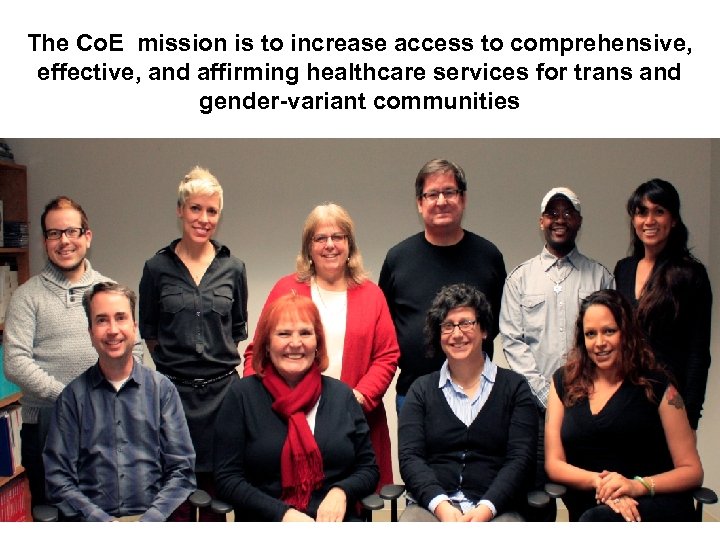
The Co. E mission is to increase access to comprehensive, effective, and affirming healthcare services for trans and gender-variant communities

Global Epidemiology of HIV/AIDS Among Trans Women
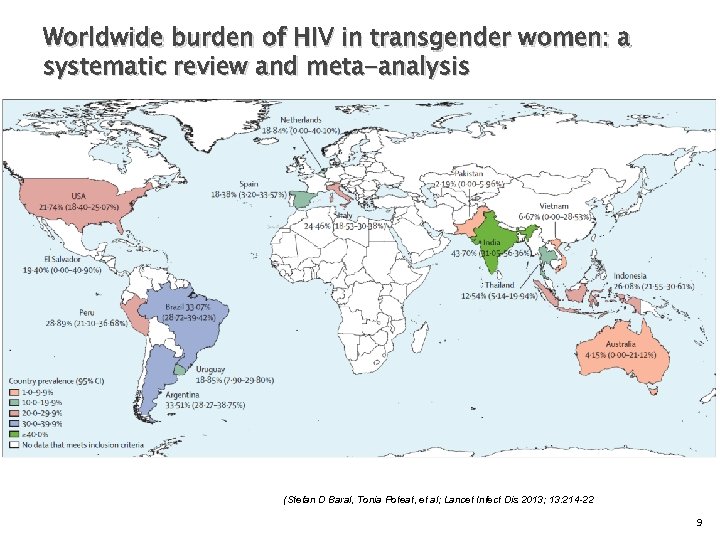
Worldwide burden of HIV in transgender women: a systematic review and meta-analysis (Stefan D Baral, Tonia Poteat, et al; Lancet Infect Dis 2013; 13: 214 -22 9
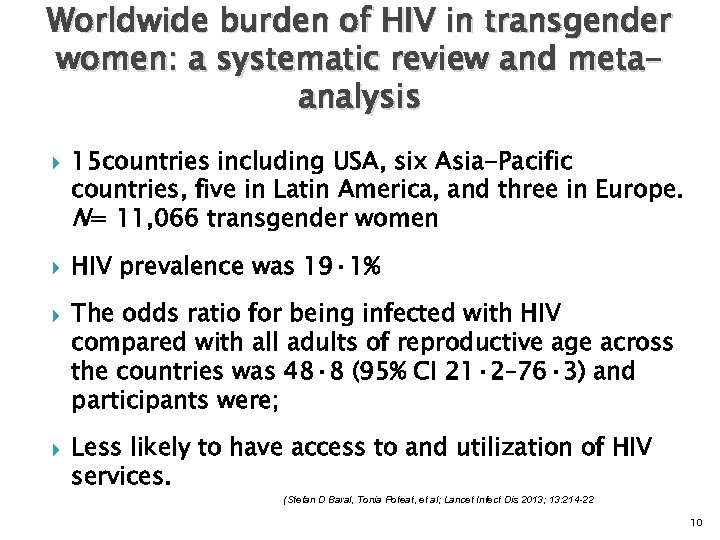
Worldwide burden of HIV in transgender women: a systematic review and metaanalysis 15 countries including USA, six Asia-Pacific countries, five in Latin America, and three in Europe. N= 11, 066 transgender women HIV prevalence was 19· 1% The odds ratio for being infected with HIV compared with all adults of reproductive age across the countries was 48· 8 (95% CI 21· 2– 76· 3) and participants were; Less likely to have access to and utilization of HIV services. (Stefan D Baral, Tonia Poteat, et al; Lancet Infect Dis 2013; 13: 214 -22 10
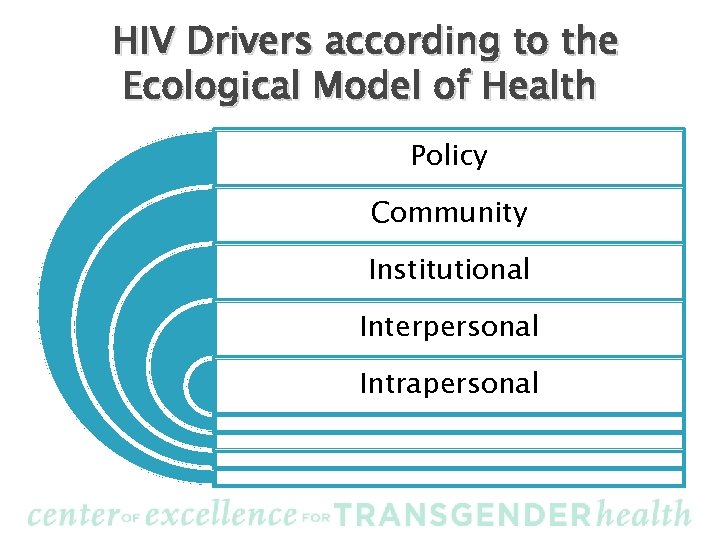
HIV Drivers according to the Ecological Model of Health Policy Community Institutional Interpersonal Intrapersonal
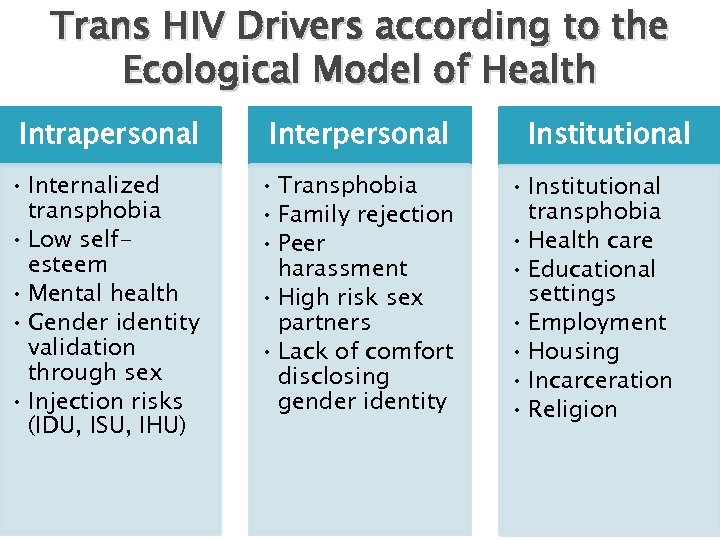
Trans HIV Drivers according to the Ecological Model of Health Intrapersonal Interpersonal • Internalized transphobia • Low selfesteem • Mental health • Gender identity validation through sex • Injection risks (IDU, ISU, IHU) • Transphobia • Family rejection • Peer harassment • High risk sex partners • Lack of comfort disclosing gender identity Institutional • Institutional transphobia • Health care • Educational settings • Employment • Housing • Incarceration • Religion
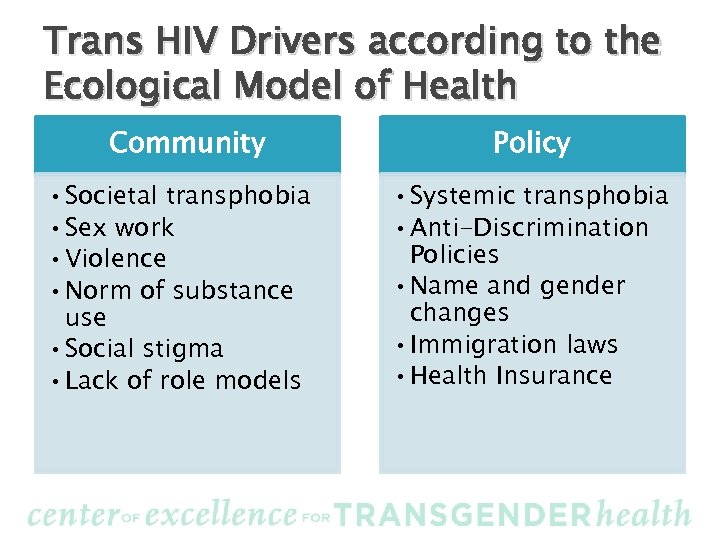
Trans HIV Drivers according to the Ecological Model of Health Community • Societal transphobia • Sex work • Violence • Norm of substance use • Social stigma • Lack of role models Policy • Systemic transphobia • Anti-Discrimination Policies • Name and gender changes • Immigration laws • Health Insurance
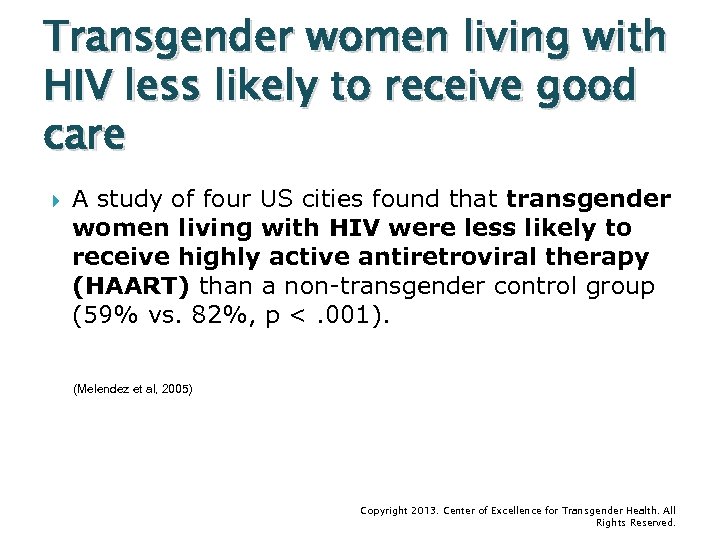
Transgender women living with HIV less likely to receive good care A study of four US cities found that transgender women living with HIV were less likely to receive highly active antiretroviral therapy (HAART) than a non-transgender control group (59% vs. 82%, p <. 001). (Melendez et al, 2005) Copyright 2013. Center of Excellence for Transgender Health. All Rights Reserved.
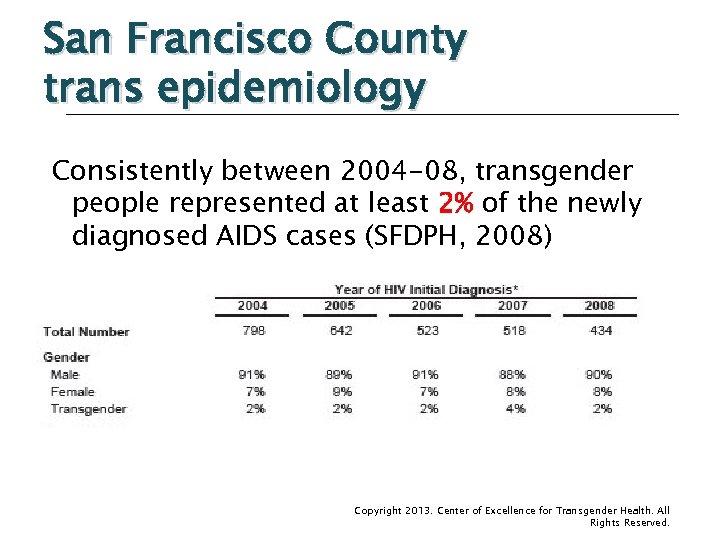
San Francisco County trans epidemiology Consistently between 2004 -08, transgender people represented at least 2% of the newly diagnosed AIDS cases (SFDPH, 2008) Copyright 2013. Center of Excellence for Transgender Health. All Rights Reserved.
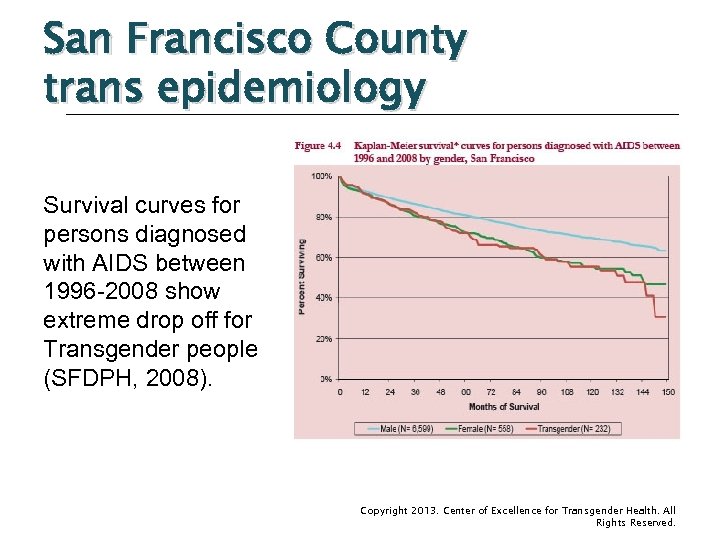
San Francisco County trans epidemiology Survival curves for persons diagnosed with AIDS between 1996 -2008 show extreme drop off for Transgender people (SFDPH, 2008). Copyright 2013. Center of Excellence for Transgender Health. All Rights Reserved.
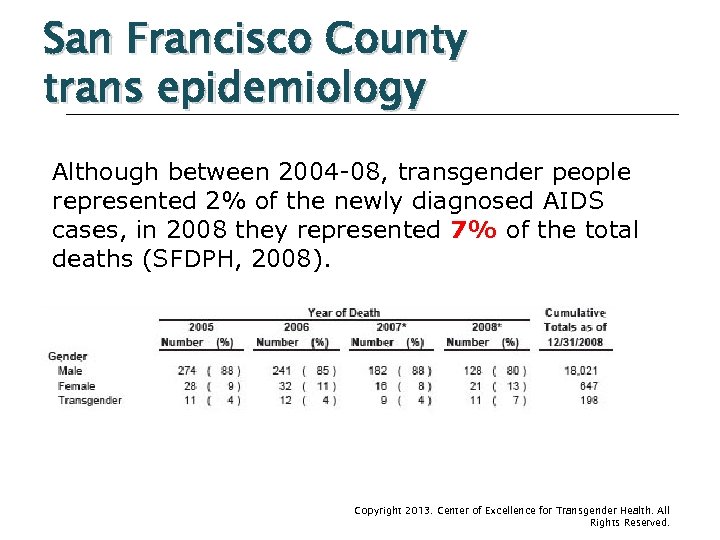
San Francisco County trans epidemiology Although between 2004 -08, transgender people represented 2% of the newly diagnosed AIDS cases, in 2008 they represented 7% of the total deaths (SFDPH, 2008). Copyright 2013. Center of Excellence for Transgender Health. All Rights Reserved.
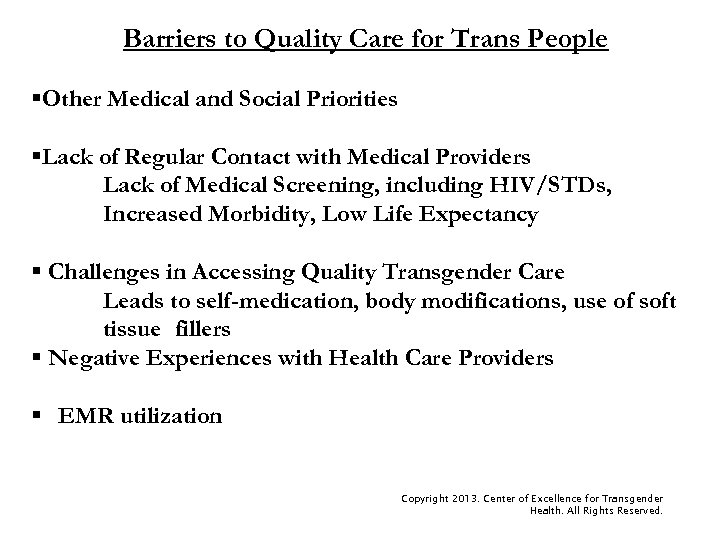
Barriers to Quality Care for Trans People §Other Medical and Social Priorities §Lack of Regular Contact with Medical Providers Lack of Medical Screening, including HIV/STDs, Increased Morbidity, Low Life Expectancy § Challenges in Accessing Quality Transgender Care Leads to self-medication, body modifications, use of soft tissue fillers § Negative Experiences with Health Care Providers § EMR utilization Copyright 2013. Center of Excellence for Transgender Health. All Rights Reserved.
Jo. Anne. Keatley@ucsf. edu www. transhealth. ucsf. edu www. facebook. com/transhealth
Catherine Abate President/CEO Matthew A. Weissman, MD, MBA, FAAP Medical Officer/ VP of Medical Affairs Retaining Transgender Patients in Care: Interventions for Healthcare Providers. Luis Freddy Molano, MD VP HIV Programs and Services Renato Barucco, MS Transgender Family Program Manager
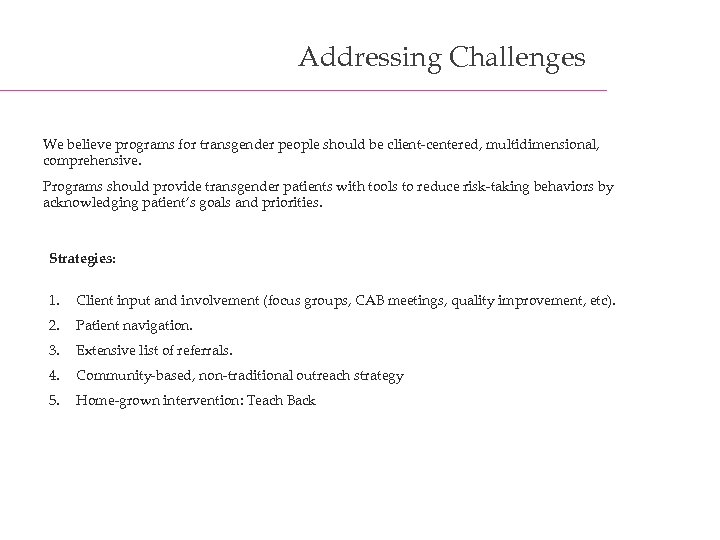
Addressing Challenges We believe programs for transgender people should be client-centered, multidimensional, comprehensive. Programs should provide transgender patients with tools to reduce risk-taking behaviors by acknowledging patient’s goals and priorities. Strategies: 1. Client input and involvement (focus groups, CAB meetings, quality improvement, etc). 2. Patient navigation. 3. Extensive list of referrals. 4. Community-based, non-traditional outreach strategy 5. Home-grown intervention: Teach Back
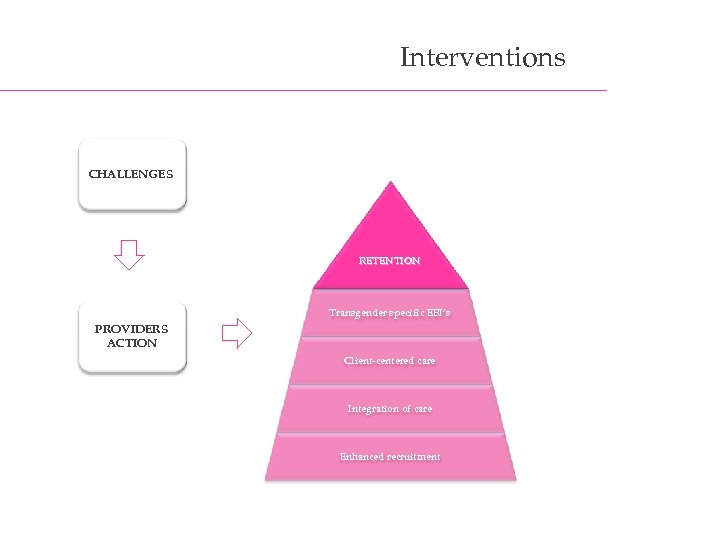
Interventions CHALLENGES RETENTION Transgender specific EBI’s PROVIDERS ACTION Client-centered care Integration of care Enhanced recruitment
Best Practices • Identify support systems for the patients. • Discuss safety at place of residence. • Provide mental health referrals if needed. • Discuss the use of street hormones. • Discuss survival sex, HIV and its transmission. • Assess transition plan and provide assistance in the planning process. • Assess level of comfort. • Think about the patient as a person not as another number or rare case. • Assess sexual behavior in a professional manner. • Remember that behavior does not equals identity. • Policies and Procedure
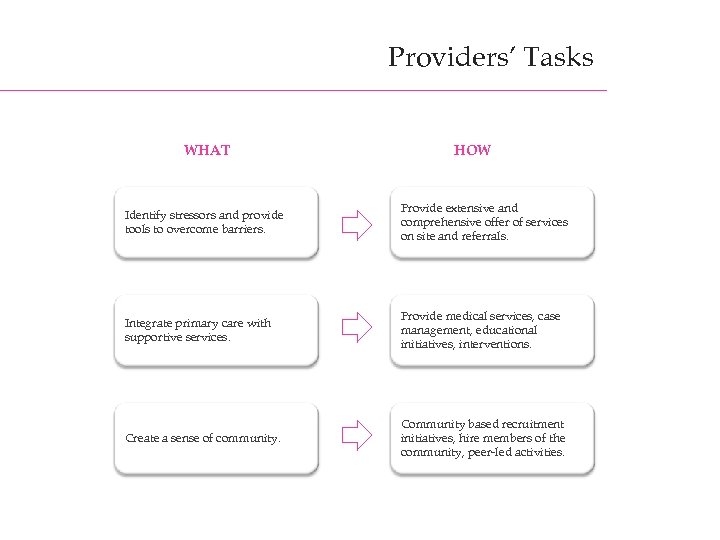
Providers’ Tasks WHAT HOW Identify stressors and provide tools to overcome barriers. Provide extensive and comprehensive offer of services on site and referrals. Integrate primary care with supportive services. Provide medical services, case management, educational initiatives, interventions. Create a sense of community. Community based recruitment initiatives, hire members of the community, peer-led activities.
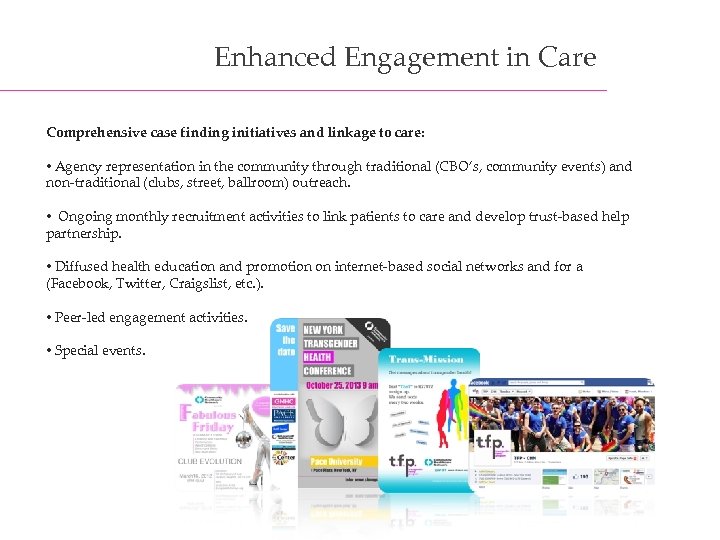
Enhanced Engagement in Care Comprehensive case finding initiatives and linkage to care: • Agency representation in the community through traditional (CBO’s, community events) and non-traditional (clubs, street, ballroom) outreach. • Ongoing monthly recruitment activities to link patients to care and develop trust-based help partnership. • Diffused health education and promotion on internet-based social networks and for a (Facebook, Twitter, Craigslist, etc. ). • Peer-led engagement activities. • Special events.
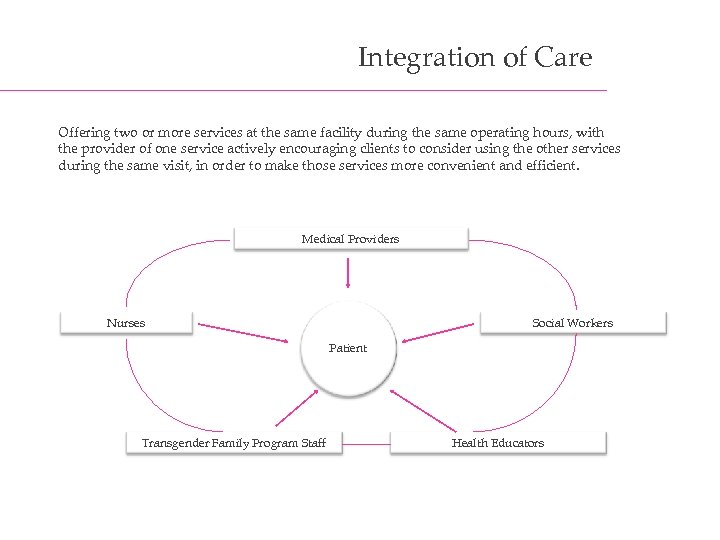
Integration of Care Offering two or more services at the same facility during the same operating hours, with the provider of one service actively encouraging clients to consider using the other services during the same visit, in order to make those services more convenient and efficient. Medical Providers Nurses Social Workers Patient Transgender Family Program Staff Health Educators
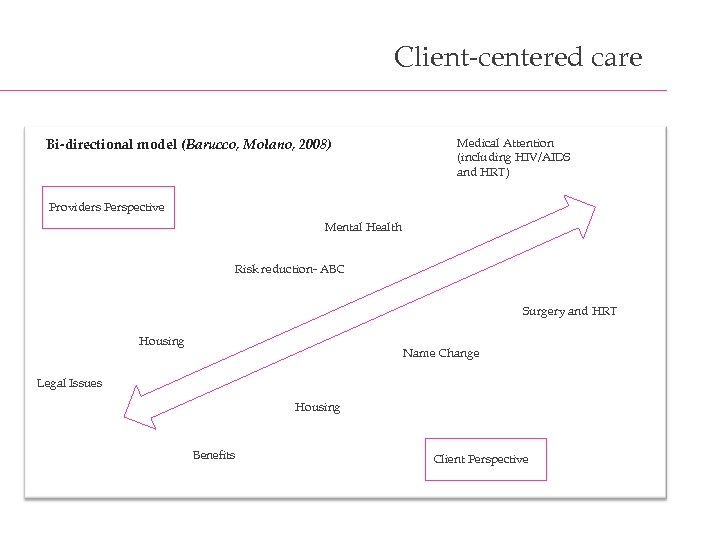
Client-centered care Bi-directional model (Barucco, Molano, 2008) Medical Attention (including HIV/AIDS and HRT) Providers Perspective Mental Health Risk reduction- ABC Surgery and HRT Housing Name Change Legal Issues Housing Benefits Client Perspective
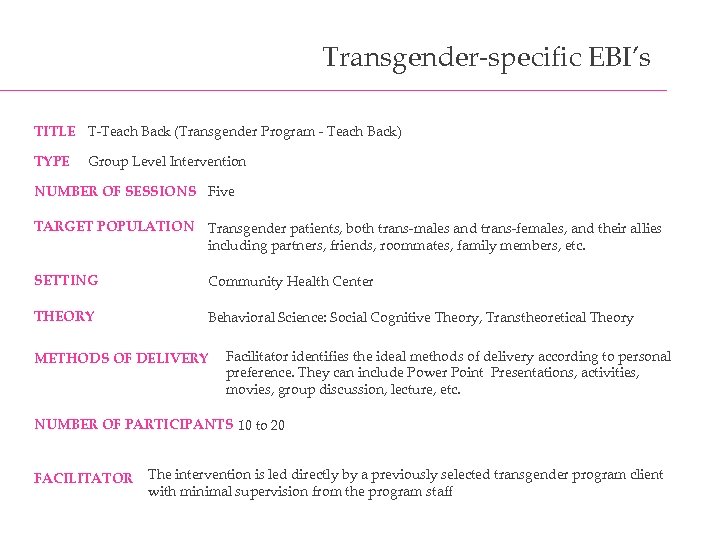
Transgender-specific EBI’s TITLE T-Teach Back (Transgender Program - Teach Back) TYPE Group Level Intervention NUMBER OF SESSIONS Five TARGET POPULATION Transgender patients, both trans-males and trans-females, and their allies including partners, friends, roommates, family members, etc. SETTING Community Health Center THEORY Behavioral Science: Social Cognitive Theory, Transtheoretical Theory METHODS OF DELIVERY Facilitator identifies the ideal methods of delivery according to personal preference. They can include Power Point Presentations, activities, movies, group discussion, lecture, etc. NUMBER OF PARTICIPANTS 10 to 20 FACILITATOR The intervention is led directly by a previously selected transgender program client with minimal supervision from the program staff
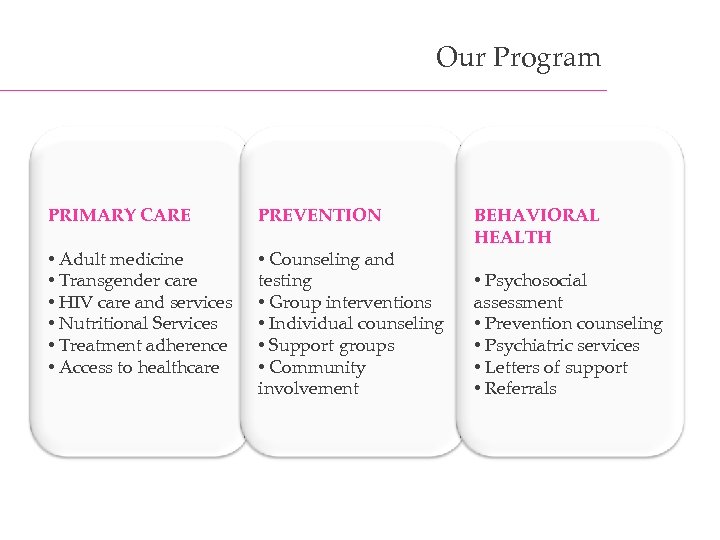
Our Program PRIMARY CARE PREVENTION • Adult medicine • Transgender care • HIV care and services • Nutritional Services • Treatment adherence • Access to healthcare • Counseling and testing • Group interventions • Individual counseling • Support groups • Community involvement BEHAVIORAL HEALTH • Psychosocial assessment • Prevention counseling • Psychiatric services • Letters of support • Referrals
Case study Name: Vivian Age: 22 Ethnicity: African American Gender: Female Medical History: HIV positive History for Syphilis Social Conditions: Severe Substance Use Survival Sex Incarceration Violence and Discrimination Lack of Education
ACTION • Patient met with program staff and created a service plan. Goals included: keep appointments with personal physician, follow treatment recommendations, participate in educational activities to promote self-efficacy. • Patient met with mental health therapist. No specific mental health issues were identified. Patient enrolled in therapy to discuss relationship patters, loneliness and unresolved childhood issues while previous substance use and commercial sex are addressed by the treatment facility. • Patient met with medical provider who completed an initial appointment and will provide general healthcare, HIV-related care and transgender care. Provider meets with the team for case-conferencing every time the patient comes to the clinic for a medical appointment. • Staff works in conjunction with the treatment facility to support the client recovery and avoid relapses in substance use and commercial sex. • Patient met in-house with representative for Transgender Legal and Education Found to start the name and gender marker change process. • Patient started to participate regularly to the program’s activities. RESULTS • Patient keeps medical appointments, regularly takes ARV medication with the supervision of a treatment adherence specialist and is considering starting HRT. • Patient completed therapy sessions without missing any appointment. Patient meet with the nutritionist to monitor diet. • Patient attends regularly workshops and volunteers to help the staff during outreach activities. • Obtained the GED certificate
Take-home Points • Program for transgender people need to include substantial client input in order to capture the specificity of the population. • Program should include comprehensive assessments, comprehensive offer of onsite services, extensive list of referrals for off-site services, qualified and cultural competent staff (possibly peers). • When possible, activities should be peer-led. Consumers should be involved in program design as much as possible.
Thank you. Luis Freddy Molano, MD VP HIV Programs and Services Renato Barucco, MS Transgender Family Program Manager Catherine Abate President/CEO Matthew A. Weissman, MD, MBA, FAAP Medical Officer/ VP of Medical Affairs
Partners in+care Resources Visit Web / Open the Toolkit www. incarecampaign. org - “Partners” tab Sign up for Partners in+care Network www. incarecampaign. org – “Partners” tab Join Facebook Send email to incare@National. Quality. Center. org – “Facebook” in subject line 34 Campaign Headquarters: National Quality Center (NQC) 90 Church Street, 13 th floor New York, NY 10007 Phone 212 -417 -4730
Скачать презентацию SPNS Transgender Retention in Care December 10 2013
d505a95e2eefe407b2ea6d5d65ee47d6.ppt