


 Скачать презентацию Spinal Cord Stimulation Overview 2011 All Rights
dbadc8b49cec3e8e4fcc7c12a7afa198.ppt
- Количество слайдов: 30
 Spinal Cord Stimulation Overview © 2011. All Rights Reserved.
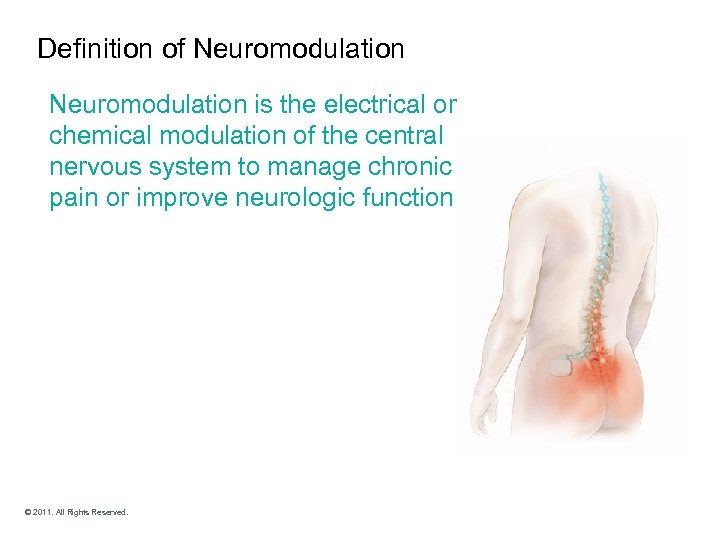 Definition of Neuromodulation is the electrical or chemical modulation of the central nervous system to manage chronic pain or improve neurologic function. © 2011. All Rights Reserved.
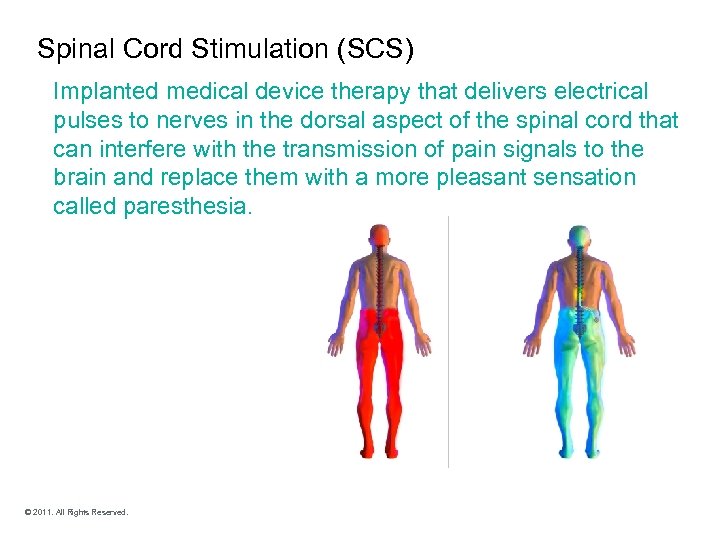 Spinal Cord Stimulation (SCS) Implanted medical device therapy that delivers electrical pulses to nerves in the dorsal aspect of the spinal cord that can interfere with the transmission of pain signals to the brain and replace them with a more pleasant sensation called paresthesia. © 2011. All Rights Reserved.
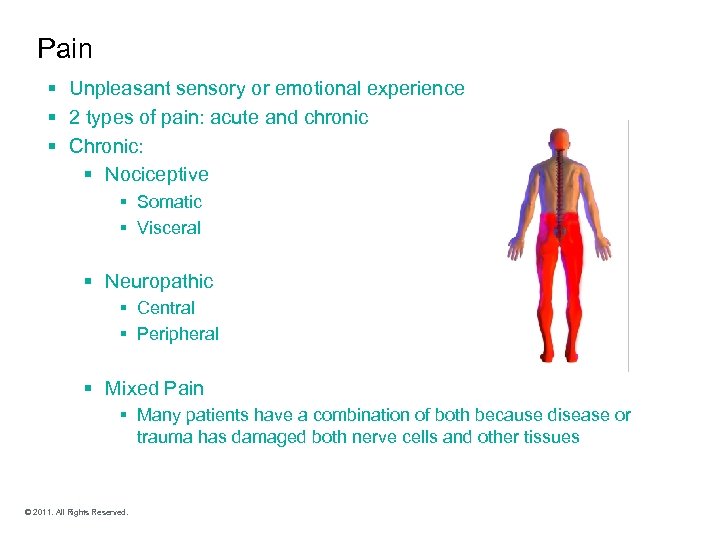 Pain § Unpleasant sensory or emotional experience § 2 types of pain: acute and chronic § Chronic: § Nociceptive § Somatic § Visceral § Neuropathic § Central § Peripheral § Mixed Pain § Many patients have a combination of both because disease or trauma has damaged both nerve cells and other tissues © 2011. All Rights Reserved.
 Nociceptive Pain § Somatic pain arises from bone and joint, muscle, skin, and connective tissue § Aching or throbbing § Localized § Visceral pain arises from visceral organs such as GI tract and pancreas § Tumor involvement § Obstructive Neuropathic Pain § Abnormal processing of sensory input by the peripheral or central nervous system § Centrally generated pain § Peripherally generated pain © 2011. All Rights Reserved.
 Definition of Chronic Pain § Frequent or constant pain that does not respond to the usual treatments § Unlike acute pain, which gets better and goes away in a short time, chronic pain persists for at least several months © 2011. All Rights Reserved.
 Pain 1 Huge, Growing, and Expensive Problem § Pain costs more than $100 billion in lost productivity § More than $3 billion in lost wages § More than $50 million lost workdays § More than 75 million American suffer from persistent, debilitating pain § One in four people in the United States suffers from chronic pain § Pain accounts for more than 80 percent of all physician visits © 2011. All Rights Reserved.
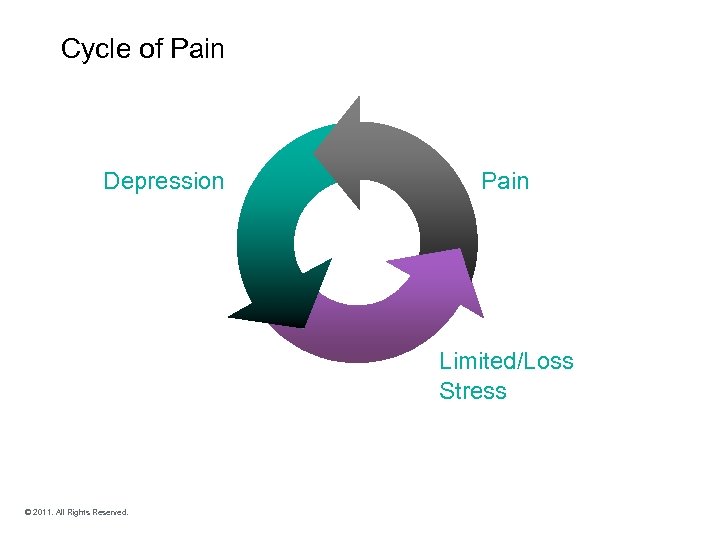 Cycle of Pain Depression Pain Limited/Loss Stress © 2011. All Rights Reserved.
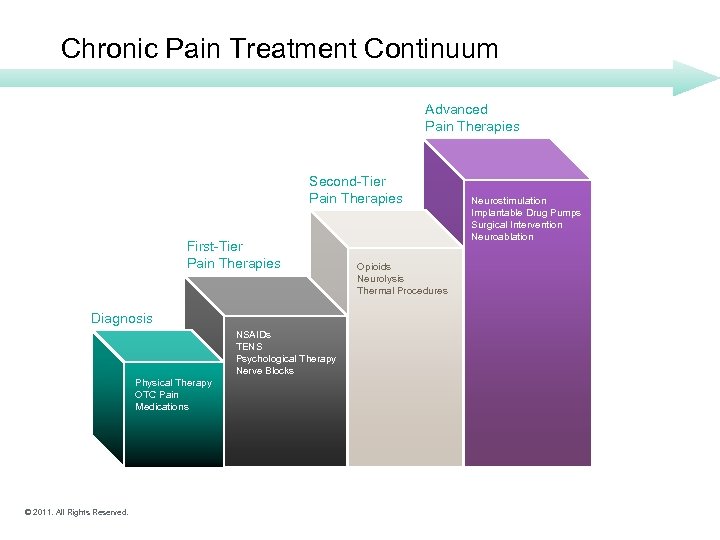 Chronic Pain Treatment Continuum Advanced Pain Therapies Second-Tier Pain Therapies First-Tier Pain Therapies Diagnosis NSAIDs TENS Psychological Therapy Nerve Blocks Physical Therapy OTC Pain Medications © 2011. All Rights Reserved. Opioids Neurolysis Thermal Procedures Neurostimulation Implantable Drug Pumps Surgical Intervention Neuroablation
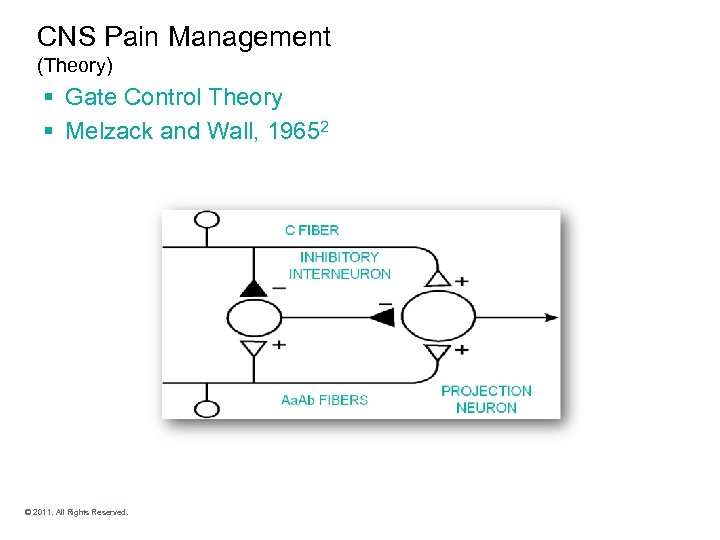 CNS Pain Management (Theory) § Gate Control Theory § Melzack and Wall, 19652 © 2011. All Rights Reserved.
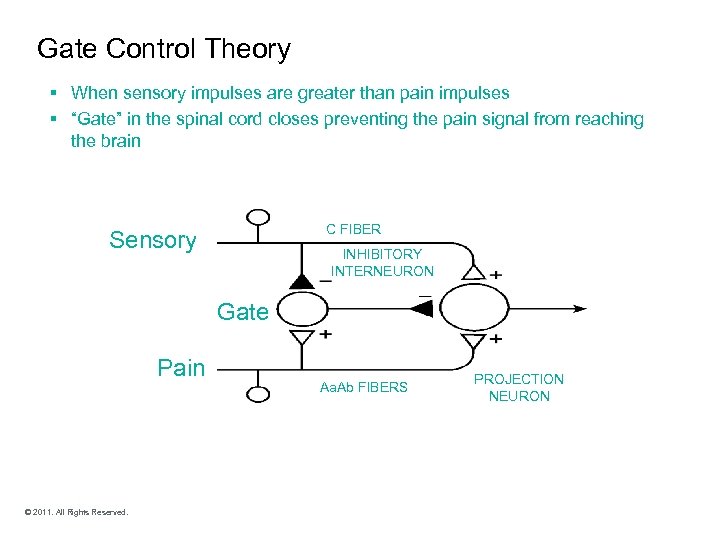 Gate Control Theory § When sensory impulses are greater than pain impulses § “Gate” in the spinal cord closes preventing the pain signal from reaching the brain C FIBER Sensory INHIBITORY INTERNEURON Gate Pain © 2011. All Rights Reserved. Aa. Ab FIBERS PROJECTION NEURON
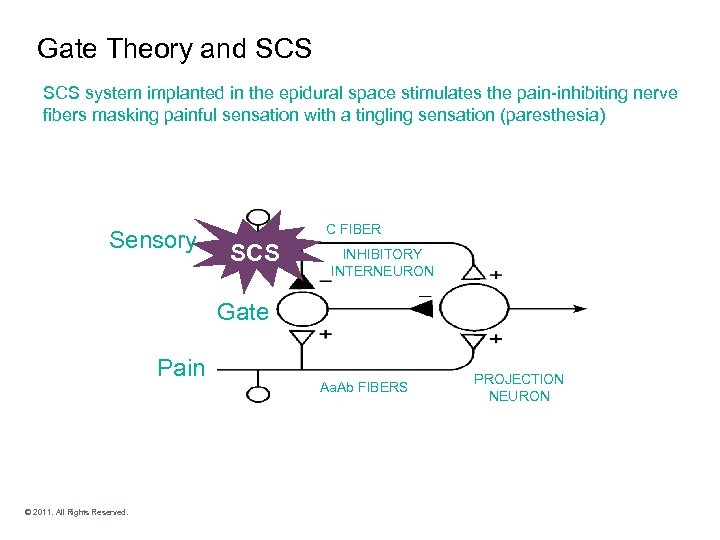 Gate Theory and SCS system implanted in the epidural space stimulates the pain-inhibiting nerve fibers masking painful sensation with a tingling sensation (paresthesia) Sensory C FIBER SCS INHIBITORY INTERNEURON Gate Pain © 2011. All Rights Reserved. Aa. Ab FIBERS PROJECTION NEURON
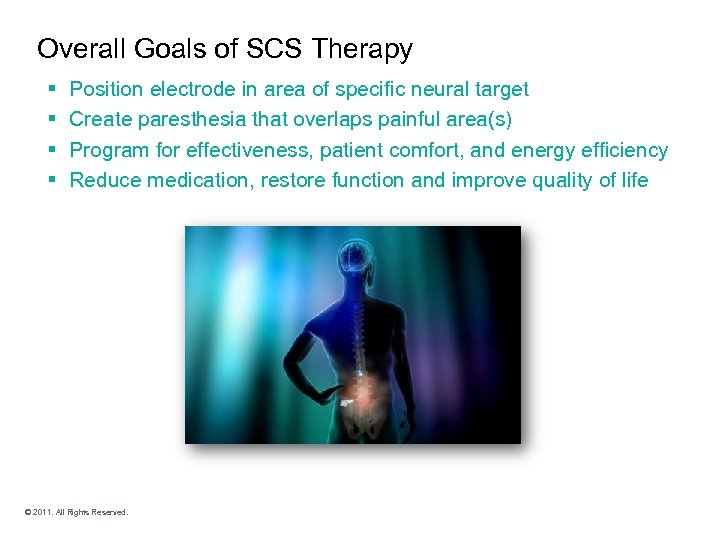 Overall Goals of SCS Therapy § § Position electrode in area of specific neural target Create paresthesia that overlaps painful area(s) Program for effectiveness, patient comfort, and energy efficiency Reduce medication, restore function and improve quality of life © 2011. All Rights Reserved.
 Tenets of SCS § § Comprehensive trial Customizable system components Optimized efficiency in programs and design Team approach to patient care © 2011. All Rights Reserved.
 Clinical Factors Influencing Therapy Success § Indications—Responsive to SCS § Disease etiology—Disease likely to progress should have device with “extra capacity” § Pain distribution—Multi site and broad pain patterns often require more leads and electrodes § Patient factors—Anatomy, physiology, and patient selection © 2011. All Rights Reserved.
 How Are Clinical Factors Evaluated? § Patient Selection Process § Correctly diagnosed § Failed lower level therapies § Successfully passed psychological evaluation § Patient is motivated § Patient is educated © 2011. All Rights Reserved.
 Device Factors Influencing Therapy Success § Stimulation Coverage—Paresthesia is delivered to entire painful segment(s) § Precision of Stimulation—Not delivered to extraneous sites but masks the pain with a tolerable sensation § Sustainability of Therapy—Sustained over the painful anatomical segment © 2011. All Rights Reserved.
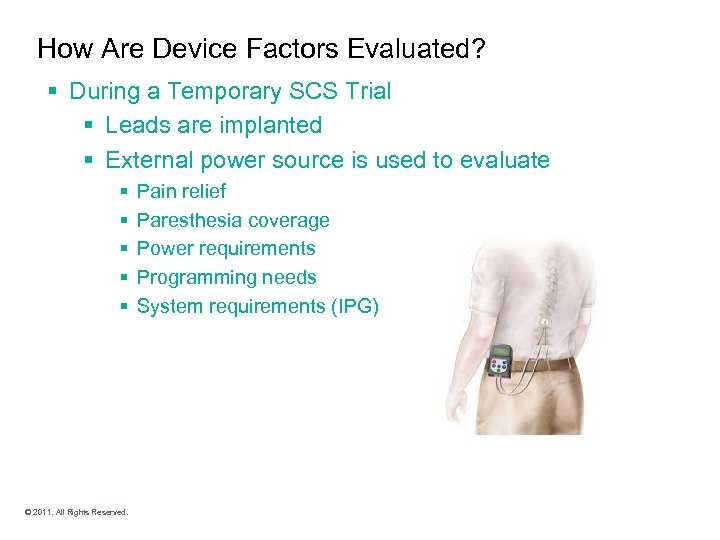 How Are Device Factors Evaluated? § During a Temporary SCS Trial § Leads are implanted § External power source is used to evaluate § § § © 2011. All Rights Reserved. Pain relief Paresthesia coverage Power requirements Programming needs System requirements (IPG)
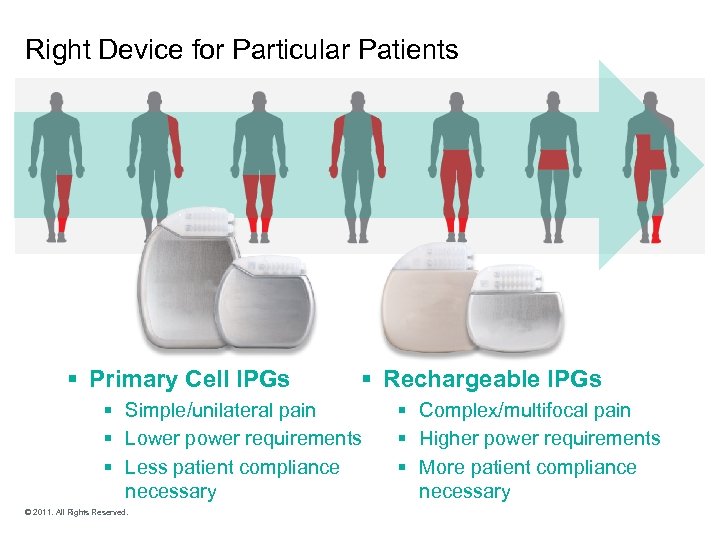 Right Device for Particular Patients § Primary Cell IPGs § Rechargeable IPGs § Simple/unilateral pain § Lower power requirements § Less patient compliance necessary © 2011. All Rights Reserved. § Complex/multifocal pain § Higher power requirements § More patient compliance necessary
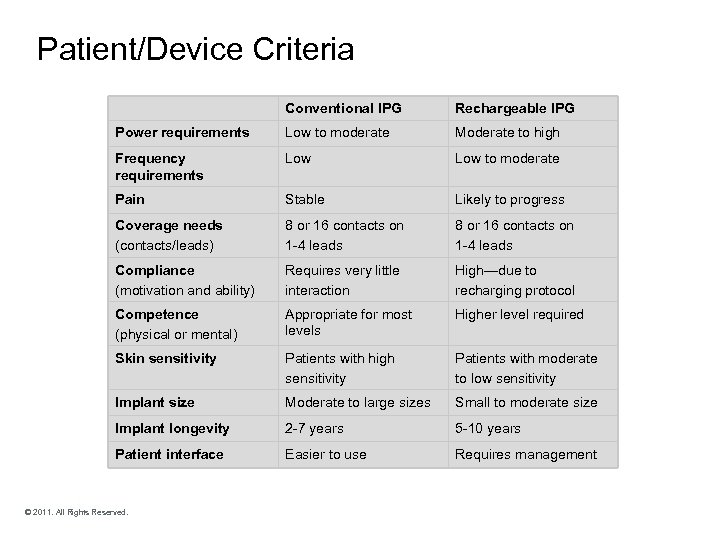 Patient/Device Criteria Conventional IPG Rechargeable IPG Power requirements Low to moderate Moderate to high Frequency requirements Low to moderate Pain Stable Likely to progress Coverage needs (contacts/leads) 8 or 16 contacts on 1 -4 leads Compliance (motivation and ability) Requires very little interaction High—due to recharging protocol Competence (physical or mental) Appropriate for most levels Higher level required Skin sensitivity Patients with high sensitivity Patients with moderate to low sensitivity Implant size Moderate to large sizes Small to moderate size Implant longevity 2 -7 years 5 -10 years Patient interface Easier to use Requires management © 2011. All Rights Reserved.
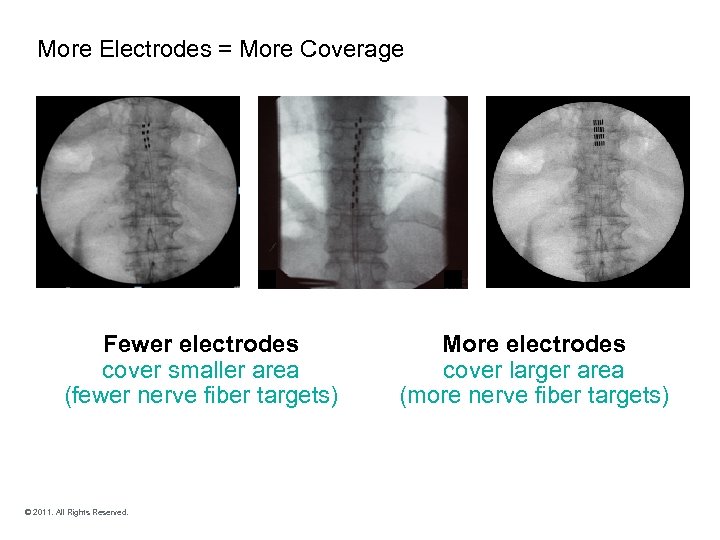 More Electrodes = More Coverage Fewer electrodes cover smaller area (fewer nerve fiber targets) © 2011. All Rights Reserved. More electrodes cover larger area (more nerve fiber targets)
 Programming Cannot Overcome. . . § Out of position leads 1. Poor placement location 2. Leads that have migrated below original vertebral level location § Selection of wrong system 1. Not enough electrodes—reduced targeting flexibility and electronic repositioning capabilities for lead migration 2. Inadequate power outputs—cannot activate necessary electrodes or provide sustainable power to optimize pain relief © 2011. All Rights Reserved.
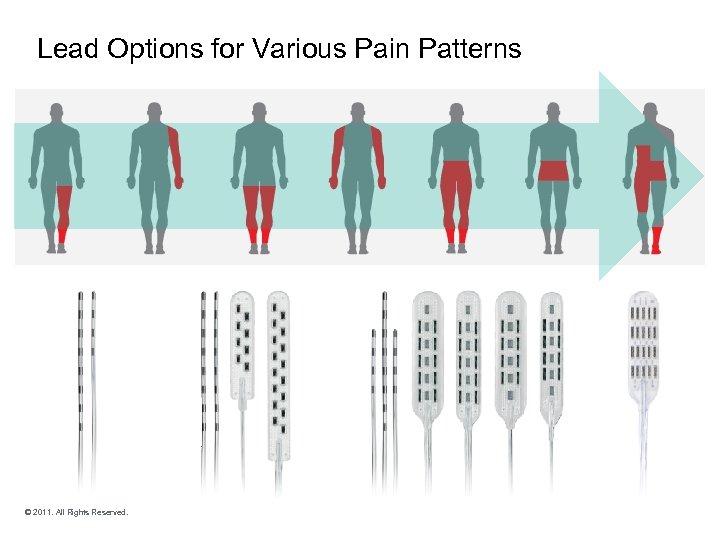 Lead Options for Various Pain Patterns © 2011. All Rights Reserved.
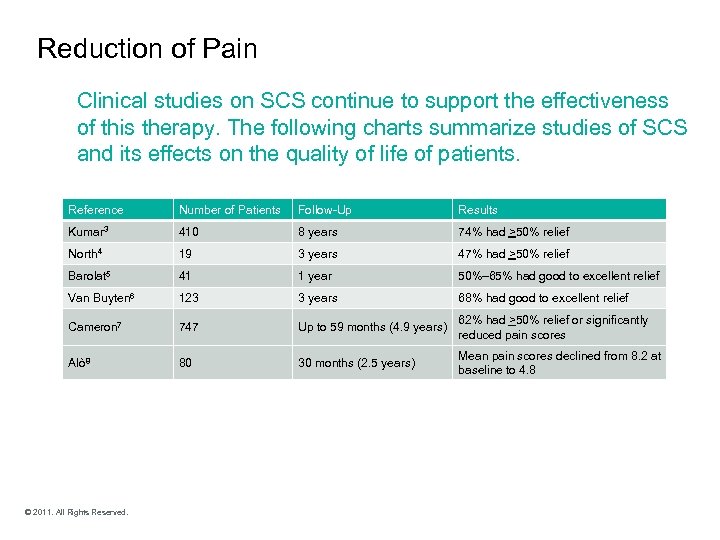 Reduction of Pain Clinical studies on SCS continue to support the effectiveness of this therapy. The following charts summarize studies of SCS and its effects on the quality of life of patients. Reference Number of Patients Follow-Up Results Kumar 3 410 8 years 74% had >50% relief North 4 19 3 years 47% had >50% relief Barolat 5 41 1 year 50%– 65% had good to excellent relief Van Buyten 6 123 3 years 68% had good to excellent relief Cameron 7 747 Up to 59 months (4. 9 years) 62% had >50% relief or significantly reduced pain scores Alò 8 80 30 months (2. 5 years) Mean pain scores declined from 8. 2 at baseline to 4. 8 © 2011. All Rights Reserved.
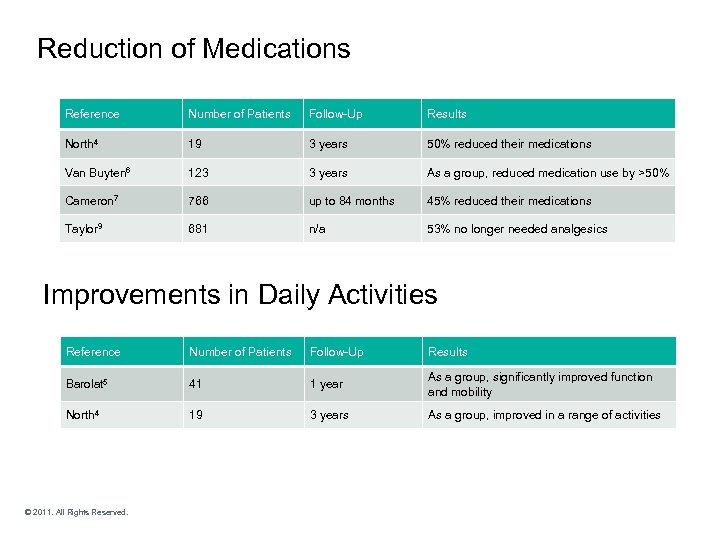 Reduction of Medications Reference Number of Patients Follow-Up Results North 4 19 3 years 50% reduced their medications Van Buyten 6 123 3 years As a group, reduced medication use by >50% Cameron 7 766 up to 84 months 45% reduced their medications Taylor 9 681 n/a 53% no longer needed analgesics Improvements in Daily Activities Reference Number of Patients Follow-Up Results Barolat 5 41 1 year As a group, significantly improved function and mobility North 4 19 3 years As a group, improved in a range of activities © 2011. All Rights Reserved.
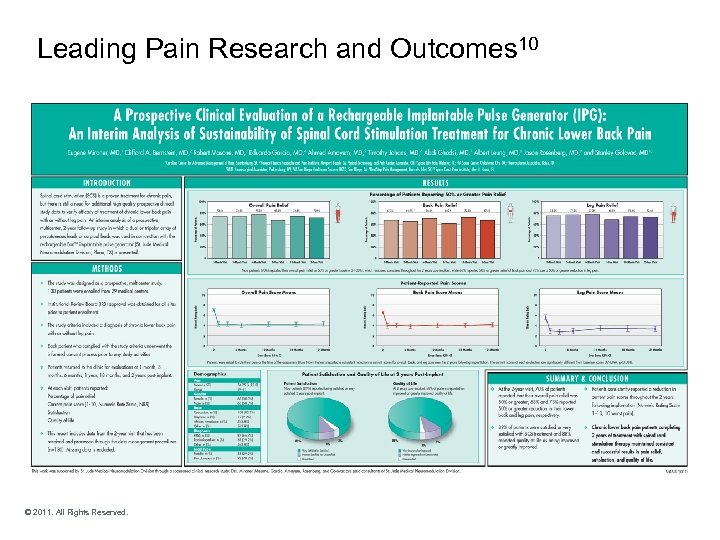 Sustained Pain Relief atand Outcomes 10 of Life Patient Satisfaction and Quality Leading Pain Research Two Years © 2011. All Rights Reserved.
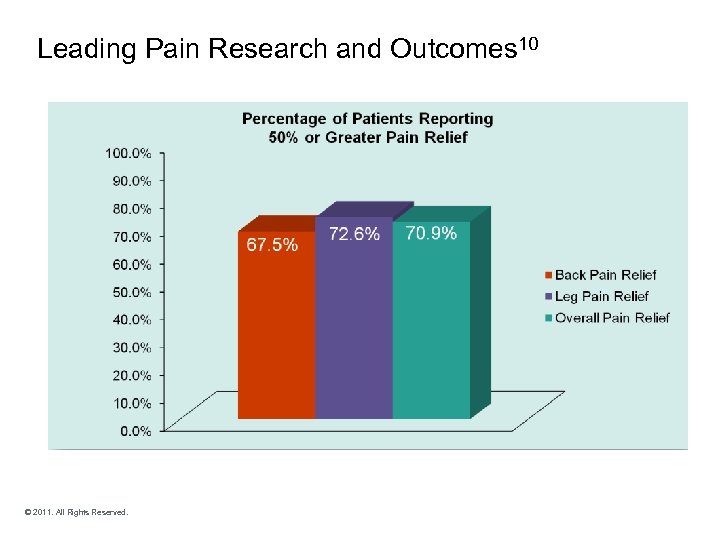 Sustained Pain Relief atand Outcomes 10 Leading Pain Research Two Years © 2011. All Rights Reserved.
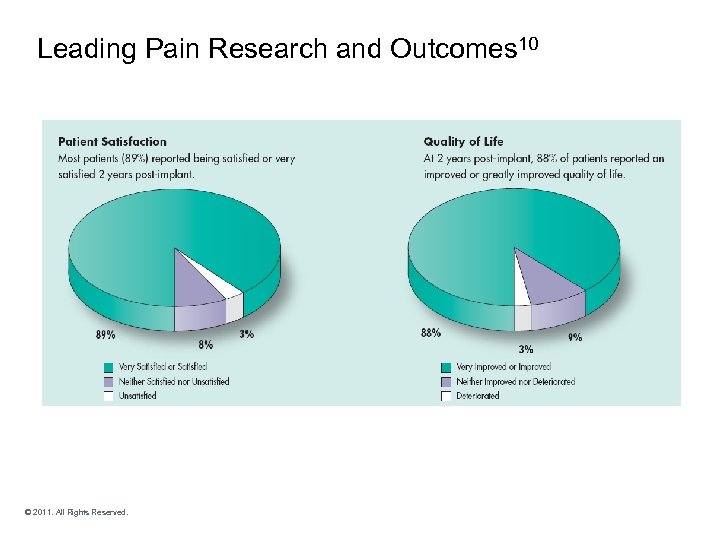 Sustained Pain Relief atand Outcomes 10 Leading Pain Research Two Years © 2011. All Rights Reserved.
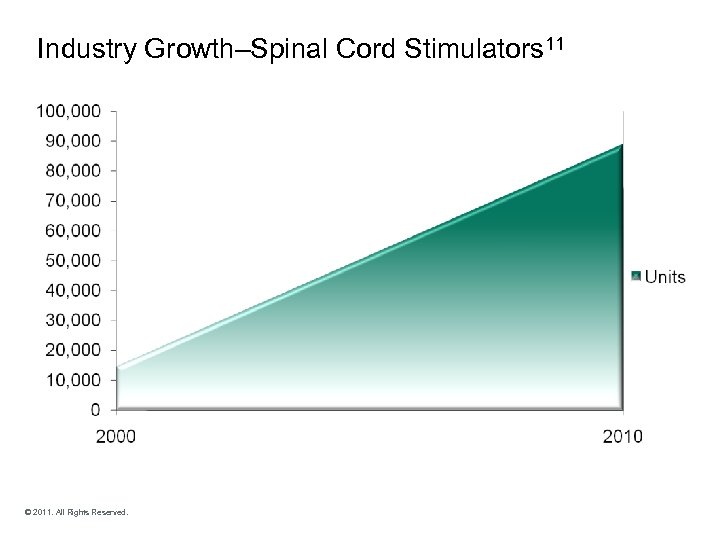 Industry Growth–Spinal Cord Stimulators 11 © 2011. All Rights Reserved.
 References 1. 2. 3. 4. 5. 6. 7. 8. 9. 10. 11. The National Pain Foundation (a health advocacy group for pain sufferers). Available at www. nationalpainfoundation. org. Accessed statistics January 15, 2011 through http: //www. nationalpainfoundation. org/pdfs_states/NPAC%20 Fact%20 Sheet_08. pdf. Melzack R, Wall PD. Pain mechanisms: a new theory. Science. 1965 Nov 19; 150(699): 971– 979. Kumar K, Hunter G, Demeria D. Spinal cord stimulation in treatment of chronic benign pain: challenges in treatment planning and present status, a 22 -year experience. Neurosurgery. 2006; 58: 481 -496. North RB, Kidd DH, Farrokhi F, Piantadosi SA. Spinal cord stimulation versus repeated lumbosacral spine surgery for chronic pain: a randomized, controlled trial. Neurosurgery. 2005; 56: 98 -106; discussion 106 -107. Barolat G, Oakley JC, Law JD, North RB, Ketcik B, Sharan A. Epidural spinal cord stimulation with a multiple electrode paddle lead is effective in treating intractable low back pain. Neuromodulation. 2001; 4: 59 -66. Van Buyten JP, Van Zundert J, Vueghs P, Vanduffel L. Efficacy of spinal cord stimulation: 10 years of experience in a pain centre in Belgium. Eur J Pain. 2001; 5: 299 -307. Cameron T. Safety and efficacy of spinal cord stimulation for the treatment of chronic pain: a 20 -year literature review. J Neurosurg Spine. 2004; 100(3): 254 -267. Alò K, Yland M, Charnov J, Redko V. Multiple program spinal cord stimulation in the treatment of chronic pain: follow-up of multiple program SCS. Neuromodulation. 1999; 2(4): 266 -272. Taylor RS, Van Buyten JP, Buchser E. Spinal cord stimulation for chronic back and leg pain and failed back surgery syndrome: a systematic review and analysis of prognostic factors. Spine. 2005; 30: 152 -160. A Prospective Clinical Evaluation of a Rechargeable Implantable Pulse Generator (IPG): An Interim Analysis of Sustainability of Spinal Cord Stimulation Treatment for Chronic Lower Back Pain. Poster presented at the North American Neuromodulation Society (NANS) annual meeting; December 7, 2010; Las Vegas, NV. Neurostimulation – A Global Strategic Business Report 10/08—Global Industry Analysis, Inc. © 2011. All Rights Reserved.