


 Скачать презентацию Speech and Language Therapy — using i Pad
b0cb926bce7cc98b29ab6ef796de8d10.ppt
- Количество слайдов: 17
 Speech and Language Therapy - using i. Pad technology Jacqui Learoyd Speech and Language Therapist
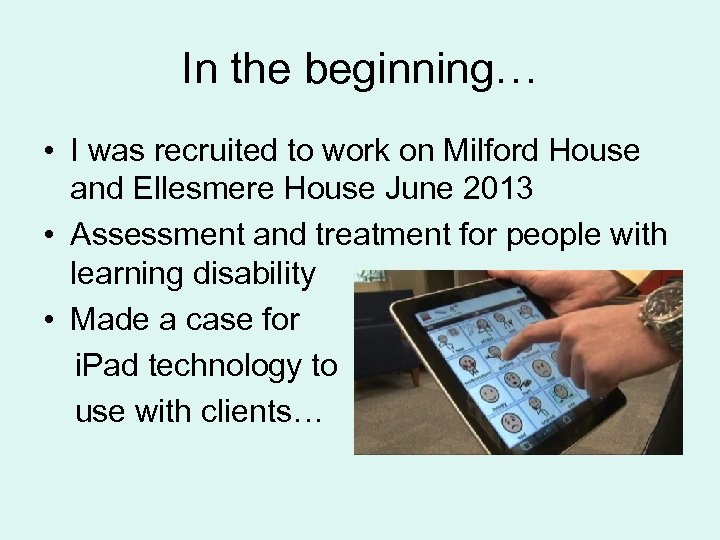 In the beginning… • I was recruited to work on Milford House and Ellesmere House June 2013 • Assessment and treatment for people with learning disability • Made a case for i. Pad technology to use with clients…
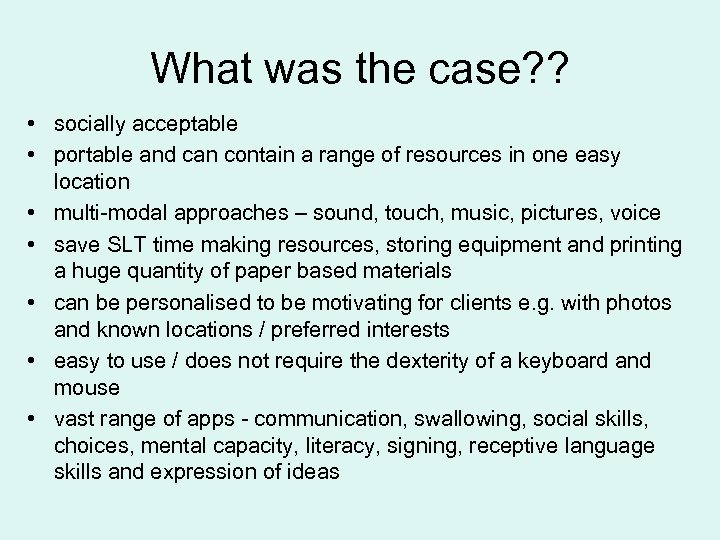 What was the case? ? • socially acceptable • portable and can contain a range of resources in one easy location • multi-modal approaches – sound, touch, music, pictures, voice • save SLT time making resources, storing equipment and printing a huge quantity of paper based materials • can be personalised to be motivating for clients e. g. with photos and known locations / preferred interests • easy to use / does not require the dexterity of a keyboard and mouse • vast range of apps - communication, swallowing, social skills, choices, mental capacity, literacy, signing, receptive language skills and expression of ideas
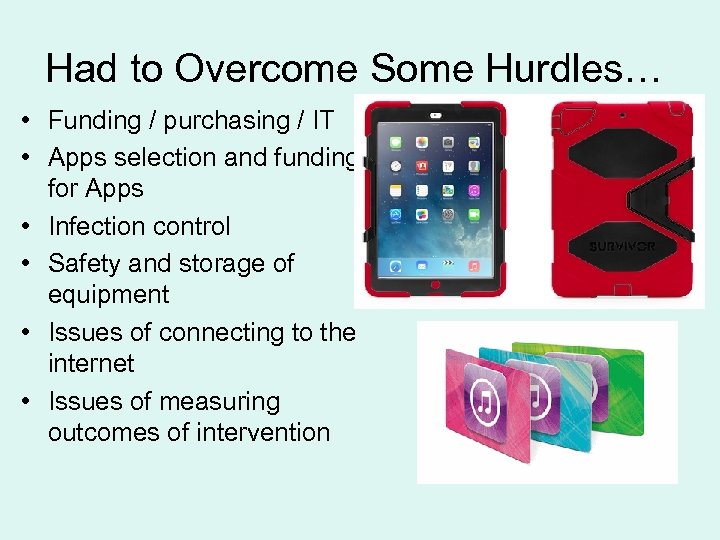 Had to Overcome Some Hurdles… • Funding / purchasing / IT • Apps selection and funding for Apps • Infection control • Safety and storage of equipment • Issues of connecting to the internet • Issues of measuring outcomes of intervention
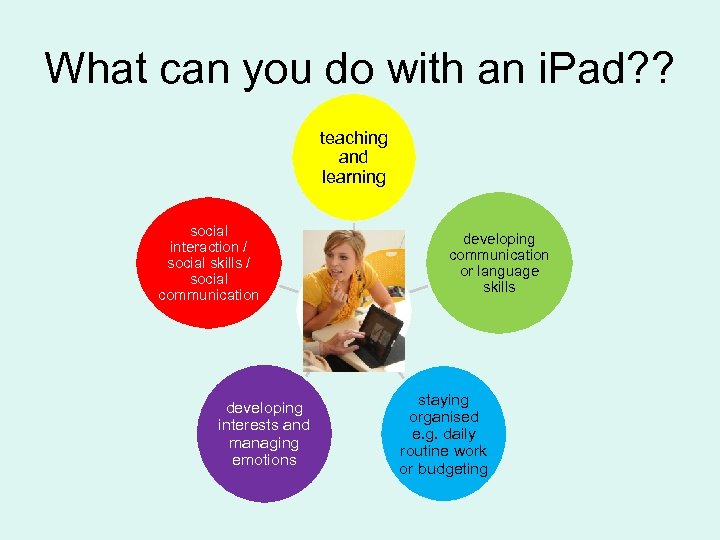 What can you do with an i. Pad? ? teaching and learning social interaction / social skills / social communication developing interests and managing emotions developing communication or language skills staying organised e. g. daily routine work or budgeting
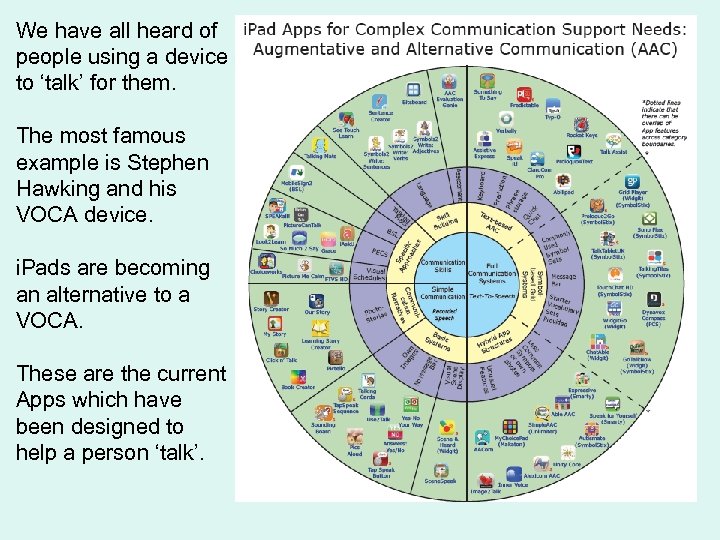 We have all heard of people using a device to ‘talk’ for them. The most famous example is Stephen Hawking and his VOCA device. i. Pads are becoming an alternative to a VOCA. These are the current Apps which have been designed to help a person ‘talk’.
 Case study – inpatients • 2 inpatient clients with learning disability • Both identified by OT as hard to engage on their MOCA assessment • SLT goal is engagement, social skills work, narrative building and recognition of emotions • Worked with them in a pair with i. Pad using social skills videos, music, photos, apps
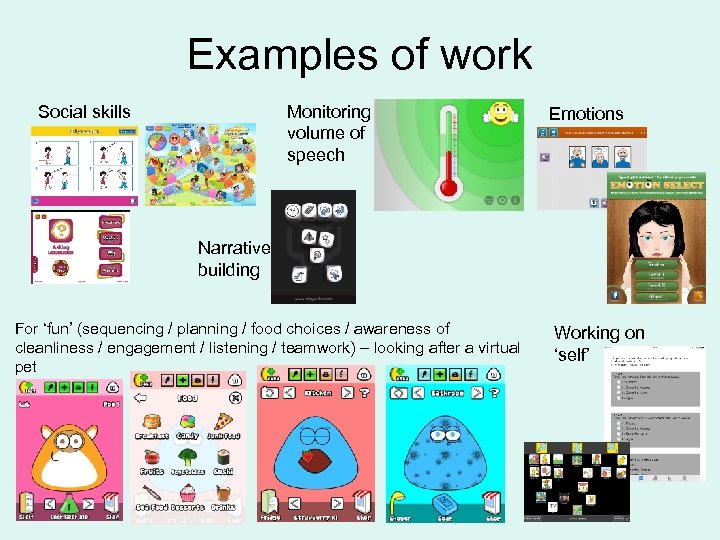 Examples of work Social skills Monitoring volume of speech Emotions Narrative building For ‘fun’ (sequencing / planning / food choices / awareness of cleanliness / engagement / listening / teamwork) – looking after a virtual pet Working on ‘self’
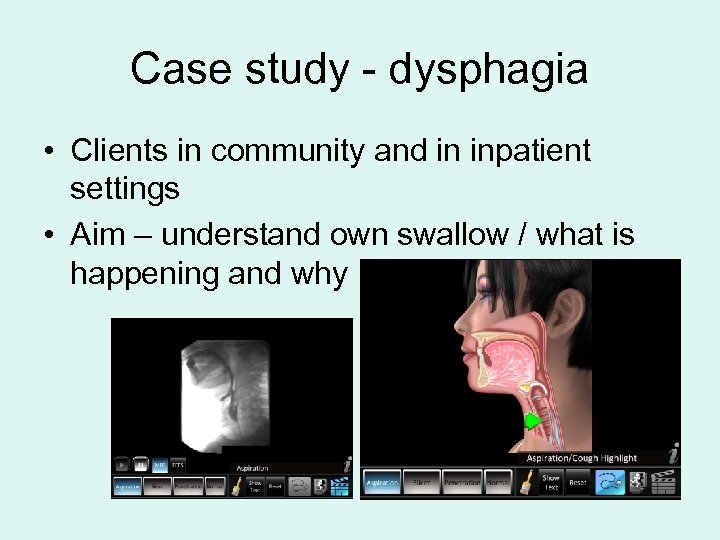 Case study - dysphagia • Clients in community and in inpatient settings • Aim – understand own swallow / what is happening and why
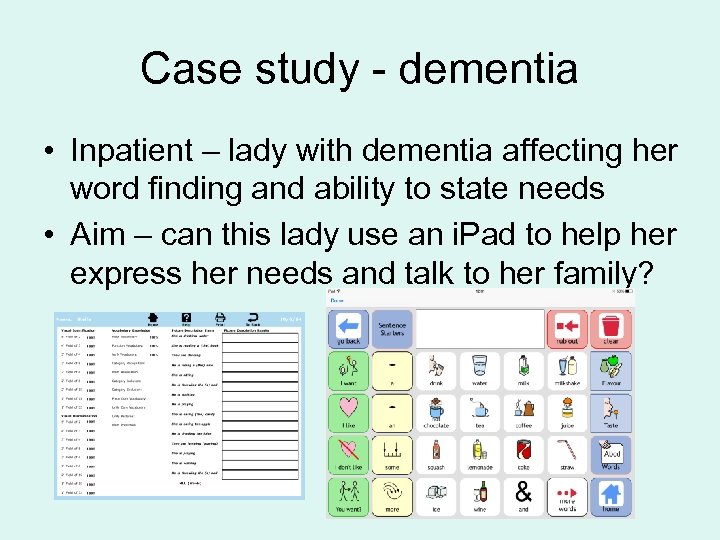 Case study - dementia • Inpatient – lady with dementia affecting her word finding and ability to state needs • Aim – can this lady use an i. Pad to help her express her needs and talk to her family?
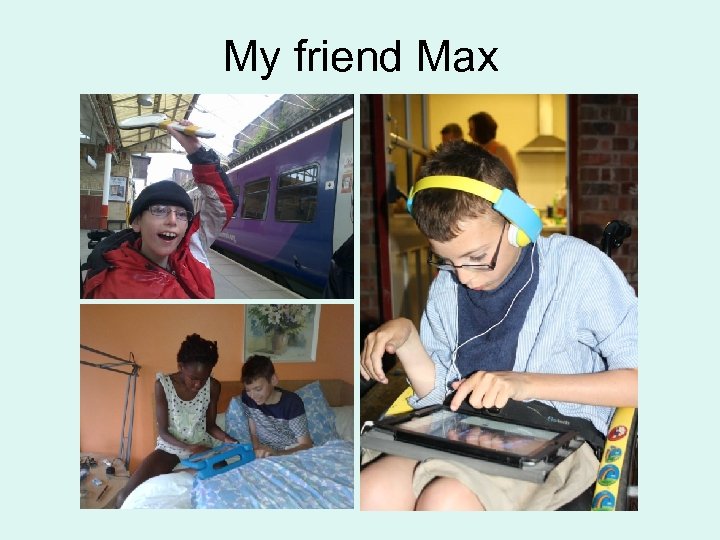 My friend Max
 Other uses - video • My SLT colleagues at Mytton Oak use their SLT i. Pad for videoing clients – either eating and drinking for dysphagia, or communication strategies. • They can use the video for staff training, working with families, and promoting understanding of dysphagia to all stakeholders. • Considering this for Ellesmere House – it might be a good way to review communication breakdowns and how they can be ‘noticed’ and ‘re-directed’ at an early stage. Need to consider contraband rules and consent issues.
 Other uses - Assessment • I’ve purchased paper based assessments and photographed the assessment materials with the i. Pad camera. It allows me to carry a library of assessments easily, and always have a range of assessments at my fingertips. • Informal assessment with photographs is also a useful tool for communication, interaction, attention, naming etc…
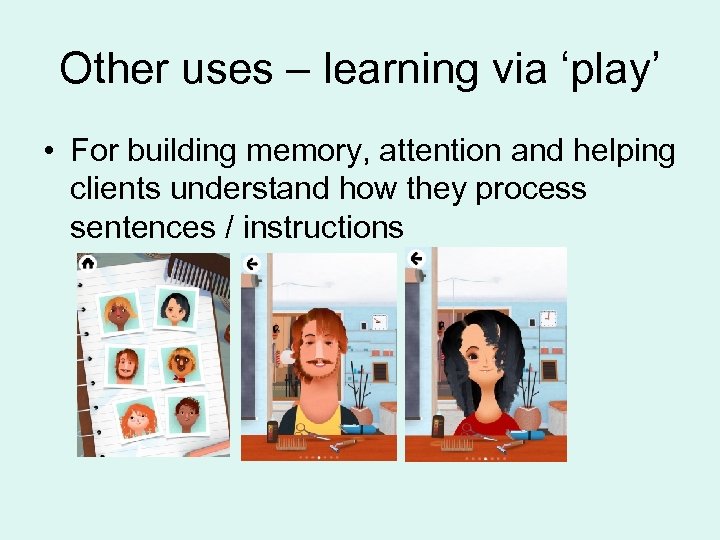 Other uses – learning via ‘play’ • For building memory, attention and helping clients understand how they process sentences / instructions
 Ongoing Hurdles (haven’t figured out the answers yet…) • Still need to work out how to measure outcomes of interventions and capture this • Need to keep up to date with technology and apps • May have an issue with funding of future app purchasing • Need a long term plan for future proofing using technology
 Reporting • It’s early days (only had the i. Pad three months) • I have reported on the impact of SLT at Ellesmere House and Milford House. If you would like a copy please email me at jacqui. learoyd@sssft. nhs. uk Thank you for listening
 References / Further Reading • • • CALL Scotland (2014) i. Pad Apps for Complex Communication Support Needs: Augmentative and Alternative Communication (AAC), CALL Scotland, The University of Edinburgh Constant Therapy (2014) Constant Therapy Launches i. Pad Solution for People with Traumatic Brain Injury, Stroke, Aphasia and Learning Disabilities, Business Wire (English). Haydon et al (2012) A Comparison of i. Pads and Worksheets on Math Skills of people with Emotional Disturbance, Behavioral Disorders, 37 (4), 232 -243 Helps and Herzberg (2013) The Use of an i. Pad 2 as a Leisure Activity for a student with Multiple Disabilities, Journal of Visual Impairment & Blindness, May-June 2013 I CAN Help (2014) Factsheet: i. Pad and Tablet apps, available online at www. ican. org. uk/help King et al (2014) i. Pad® use in children and young adults with Autism Spectrum Disorder: An observational study, Child Language Teaching & Therapy. Jun 2014, Vol. 30 Issue 2, p 159173 Korner and Leske (2012) Apps for communication and everyday living, INDEPENDENT LIVING VOL 28 NO 1 Mc. Clanahan et al (2012) How Use of an i. Pad Facilitated Reading Improvement, Tech Trends Volume 56, Number 3 Mill (2012) i. Pads for Communication, Access, Literacy and Learning (i. CALL), CALL Scotland, The University of Edinburgh Millar (2012) i. Pads, apps and autism, available online at www. nasen. org. uk Sutton et al (2013) Trust and Evidence in an Online Community of Speech and Language Therapists: The Case of i. Pad Use, available online Sutton and Olivier (2013) Speech and Language Therapists, their Patients and Mobile Apps, available online