


 Скачать презентацию Specifying the Use of CIM in an EMS
6ac2f49aa0398299b60226bbdd9dd11b.ppt
- Количество слайдов: 15
 Specifying the Use of CIM in an EMS Project Jay Britton, Fellow, IEEE 2009 PSCE, Seattle jay. britton@areva-td. com
 Topics u The CIM Value Proposition -- General u How to get what will be valuable to your EMS project. 2 2
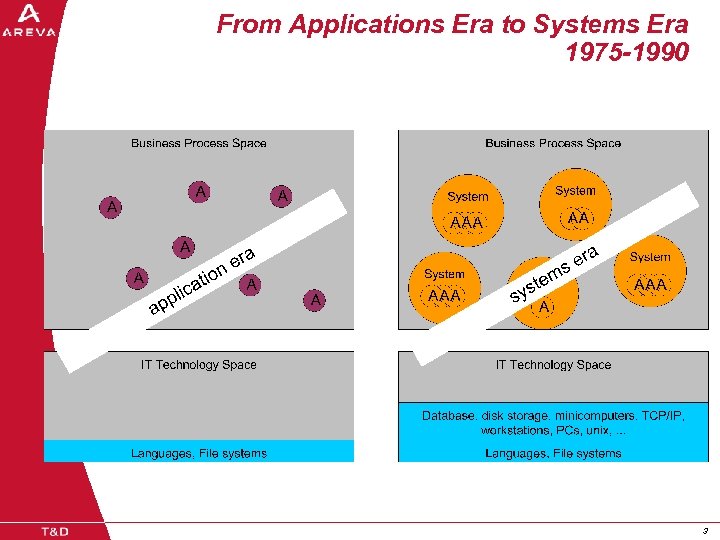 From Applications Era to Systems Era 1975 -1990 3 3
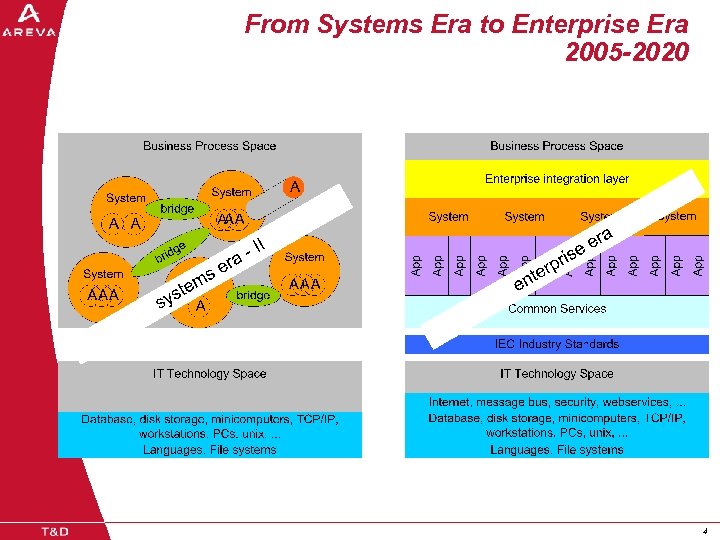 From Systems Era to Enterprise Era 2005 -2020 4 4
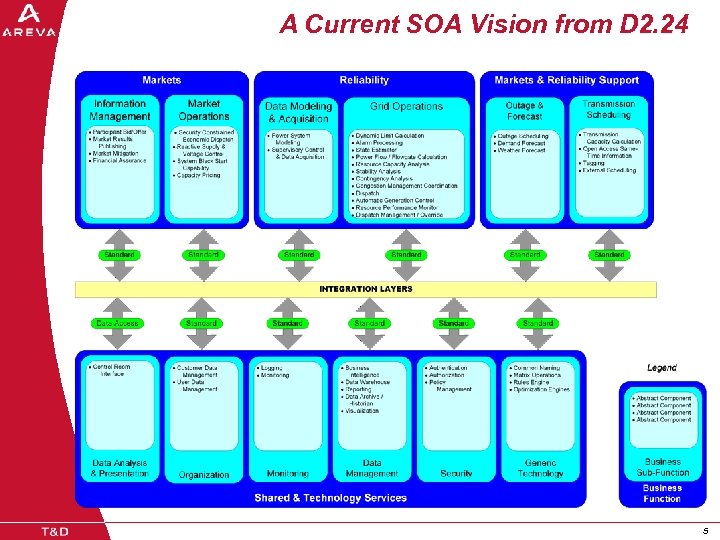 A Current SOA Vision from D 2. 24 5 5
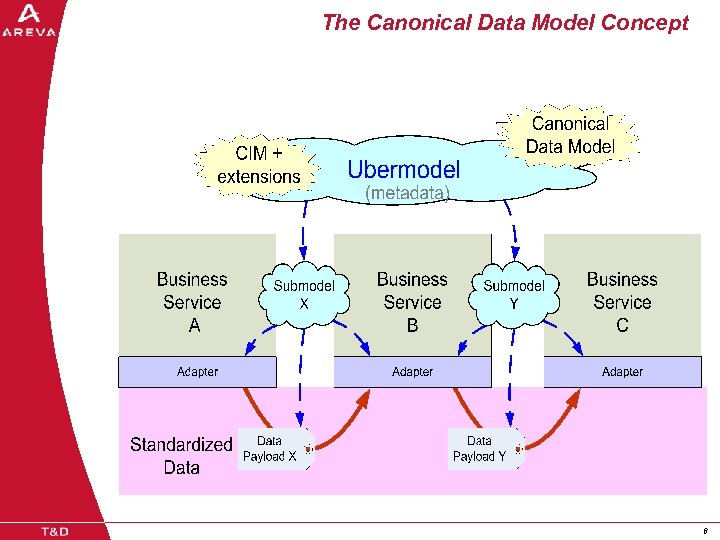 The Canonical Data Model Concept 6 6
 The CIM Value Proposition u Enterprise architectural goals … w Completeness. Organize IT at the enterprise level. w Consistency. l Universal data semantics. (CIM canonical data model) l System management, re-use and integration. (SOA / enterprise integration bus) w Openness. Increase the customer’s freedom to use different vendors. w Standard interfaces at key interface points. u … lead to lower IT complexity, lower IT cost. w Concentration of investment in high quality core products. w Fewer overall skillsets required. w Less orphaned code. w More rapid response to business needs. w Healthy competition. u Incremental implementation – as in an EMS Project. w Evaluate general vendor commitment to the vision. l Evaluate existing product conformance. l Evaluate participation in CIM community. l Evaluate development program direction. w Require the specific interfaces that deliver value to the project. 7 7
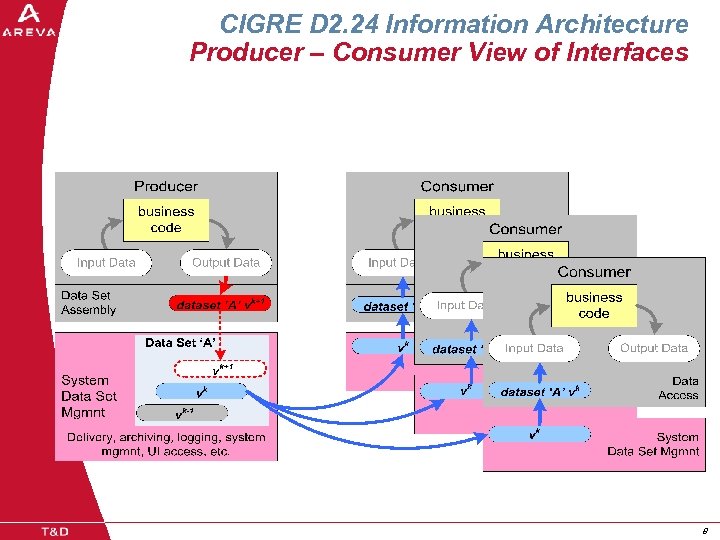 CIGRE D 2. 24 Information Architecture Producer – Consumer View of Interfaces 8 8
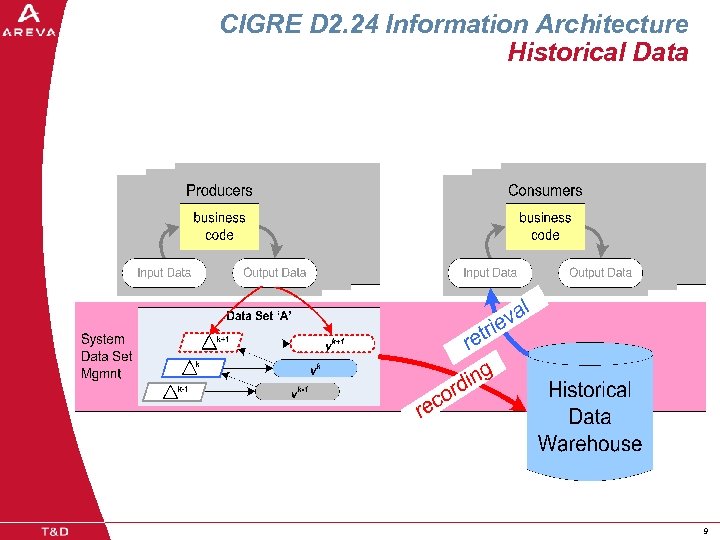 CIGRE D 2. 24 Information Architecture Historical Data 9 9
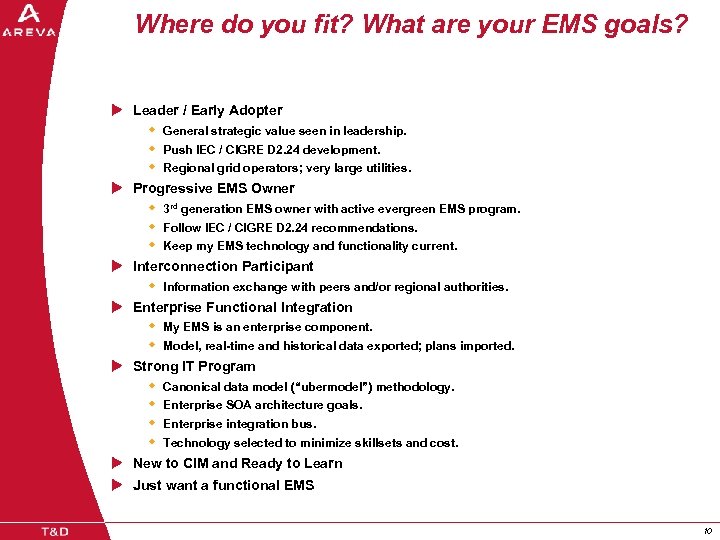 Where do you fit? What are your EMS goals? u Leader / Early Adopter w General strategic value seen in leadership. w Push IEC / CIGRE D 2. 24 development. w Regional grid operators; very large utilities. u Progressive EMS Owner w 3 rd generation EMS owner with active evergreen EMS program. w Follow IEC / CIGRE D 2. 24 recommendations. w Keep my EMS technology and functionality current. u Interconnection Participant w Information exchange with peers and/or regional authorities. u Enterprise Functional Integration w My EMS is an enterprise component. w Model, real-time and historical data exported; plans imported. u Strong IT Program w Canonical data model (“ubermodel”) methodology. w Enterprise SOA architecture goals. w Enterprise integration bus. w Technology selected to minimize skillsets and cost. u New to CIM and Ready to Learn u Just want a functional EMS 10 10
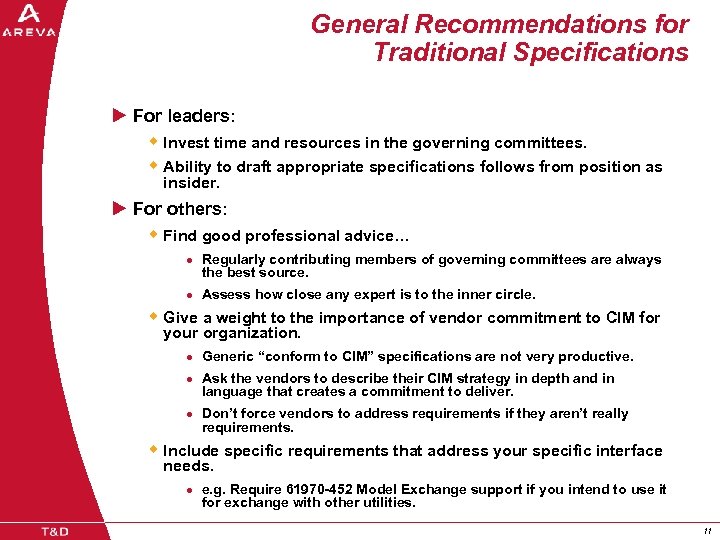 General Recommendations for Traditional Specifications u For leaders: w Invest time and resources in the governing committees. w Ability to draft appropriate specifications follows from position as insider. u For others: w Find good professional advice… l l Regularly contributing members of governing committees are always the best source. Assess how close any expert is to the inner circle. w Give a weight to the importance of vendor commitment to CIM for your organization. l l l Generic “conform to CIM” specifications are not very productive. Ask the vendors to describe their CIM strategy in depth and in language that creates a commitment to deliver. Don’t force vendors to address requirements if they aren’t really requirements. w Include specific requirements that address your specific interface needs. l 11 e. g. Require 61970 -452 Model Exchange support if you intend to use it for exchange with other utilities. 11
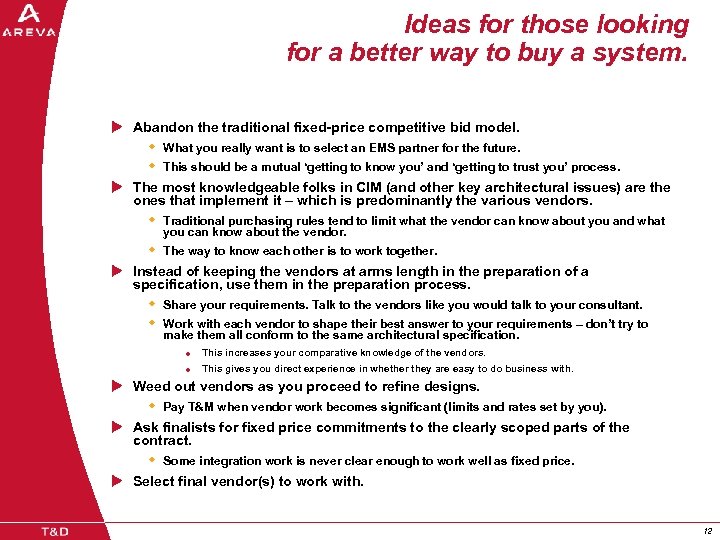 Ideas for those looking for a better way to buy a system. u Abandon the traditional fixed-price competitive bid model. w What you really want is to select an EMS partner for the future. w This should be a mutual ‘getting to know you’ and ‘getting to trust you’ process. u The most knowledgeable folks in CIM (and other key architectural issues) are the ones that implement it – which is predominantly the various vendors. w Traditional purchasing rules tend to limit what the vendor can know about you and what you can know about the vendor. w The way to know each other is to work together. u Instead of keeping the vendors at arms length in the preparation of a specification, use them in the preparation process. w Share your requirements. Talk to the vendors like you would talk to your consultant. w Work with each vendor to shape their best answer to your requirements – don’t try to make them all conform to the same architectural specification. l This increases your comparative knowledge of the vendors. l This gives you direct experience in whether they are easy to do business with. u Weed out vendors as you proceed to refine designs. w Pay T&M when vendor work becomes significant (limits and rates set by you). u Ask finalists for fixed price commitments to the clearly scoped parts of the contract. w Some integration work is never clear enough to work well as fixed price. u Select final vendor(s) to work with. 12 12
 Problematic CIM Requirements u Some paraphrased EMS CIM language that we see in specifications… w compliance with the Electric Power Research Institute (EPRI) Common Information Model (CIM) w compliance with the Control Centre Application Programming Interface (CCAPI) initiatives w CIM/XML model exchange compliance w CIM interfaces to EMS data compliant to GID (Generic Interface Definition) l Generic Data Access (GDA) l Generic Eventing and Subscription (GES) l High Speed Data Access (HSDA) l Time Series Data Access (TSDA) w CIM compliance defined as meaning that interface definitions comply with the CIM UML model in terms of: l Grouping of data into classes l Naming and meaning of data l Type of data l Relationships between CIM classes u Problems: w Inexact references to documents. w Overlapping functionality in the methods. w Generic methods are prescribed without stating what data is to be available via what methods. 13 13
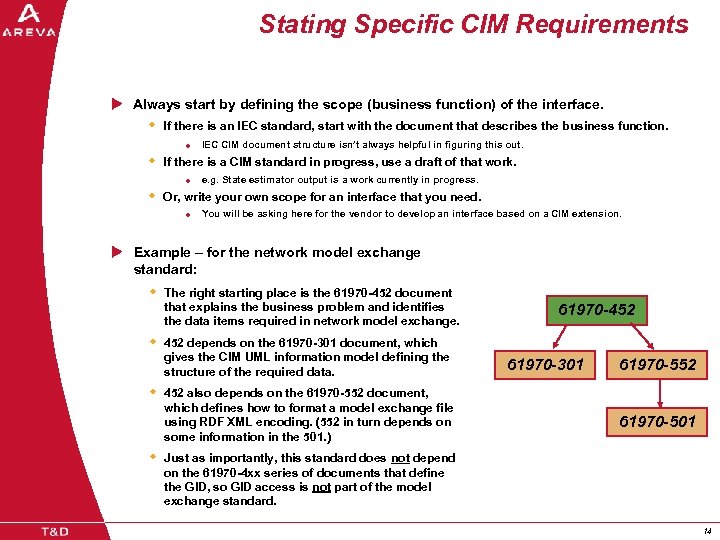 Stating Specific CIM Requirements u Always start by defining the scope (business function) of the interface. w If there is an IEC standard, start with the document that describes the business function. l IEC CIM document structure isn’t always helpful in figuring this out. w If there is a CIM standard in progress, use a draft of that work. l e. g. State estimator output is a work currently in progress. w Or, write your own scope for an interface that you need. l You will be asking here for the vendor to develop an interface based on a CIM extension. u Example – for the network model exchange standard: w The right starting place is the 61970 -452 document that explains the business problem and identifies the data items required in network model exchange. 61970 -452 w 452 depends on the 61970 -301 document, which gives the CIM UML information model defining the structure of the required data. 61970 -301 61970 -552 w 452 also depends on the 61970 -552 document, which defines how to format a model exchange file using RDF XML encoding. (552 in turn depends on some information in the 501. ) 61970 -501 w Just as importantly, this standard does not depend on the 61970 -4 xx series of documents that define the GID, so GID access is not part of the model exchange standard. 14 14
 Summary: CIM Specifications in an EMS u Ask the vendors to describe their CIM strategy in depth and in language that creates a commitment to deliver. u Write individual specifications for CIM business interfaces that have a specific value proposition. w If there is a specific IEC standard for the interface, reference it. w If there is no specific CIM standard, then… l Describe the business purpose. l Describe the required content of the ‘datasets’ (CIGRE D 2. 24 term). l l Require the vendor to design the datasets by extending the CIM and deriving a schema from the CIM. State implementation requirements for each interface. - 15 Preferred – require vendor to specify what implementation technology or standard will be used. Alternatively – require specific mechanisms as appropriate to your enterprise architecture goals: (61970 -552 (RDF XML), 61970 -4 xx GID data access, XML schema, integration bus vs claim-checked files vs other, etc. ) 15