


 Скачать презентацию Special Considerations in Pediatric Evacuation OSHA Training Institute
383593bea1550929f7953ace55bcc7e7.ppt
- Количество слайдов: 50
 Special Considerations in Pediatric Evacuation OSHA Training Institute – Region IX University of California, San Diego (UCSD) - Extension OSHA Training Institute 1
 Objectives n Discuss the challenges in the evacuation of pediatric populations n Identify lessons learned from disasters in the care and evacuation of perinatal and neonatal patients. OSHA Training Institute 2
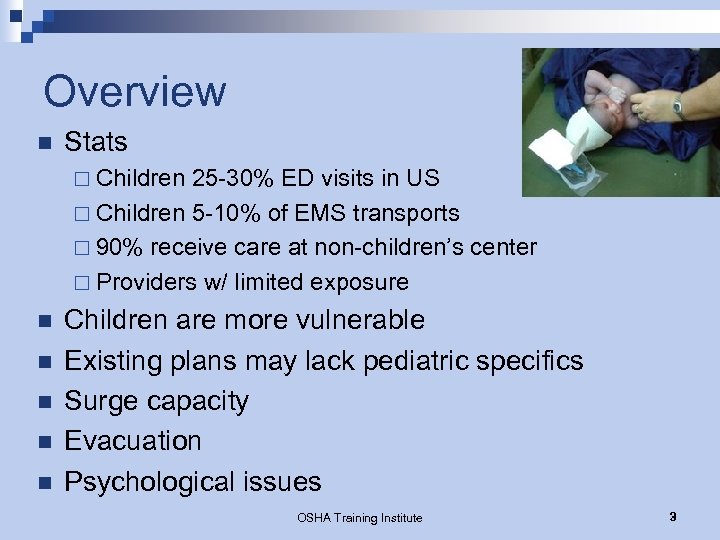 Overview n Stats ¨ Children 25 -30% ED visits in US ¨ Children 5 -10% of EMS transports ¨ 90% receive care at non-children’s center ¨ Providers w/ limited exposure n n n Children are more vulnerable Existing plans may lack pediatric specifics Surge capacity Evacuation Psychological issues OSHA Training Institute 3
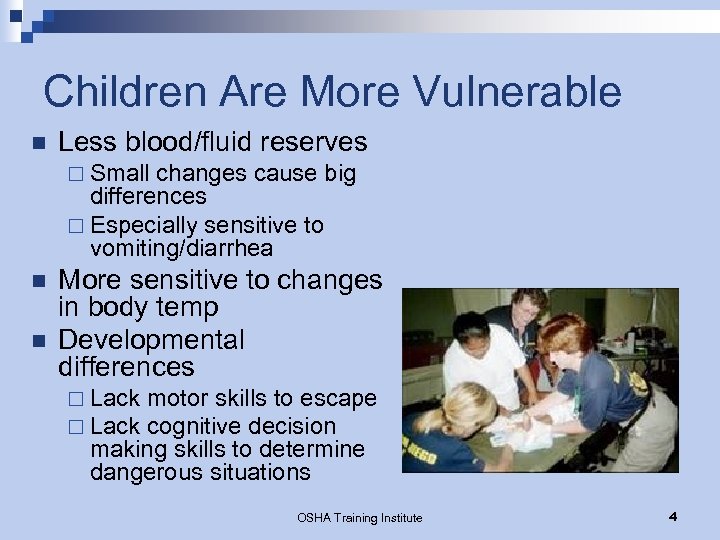 Children Are More Vulnerable n Less blood/fluid reserves ¨ Small changes cause big differences ¨ Especially sensitive to vomiting/diarrhea n n More sensitive to changes in body temp Developmental differences ¨ Lack motor skills to escape cognitive decision making skills to determine dangerous situations OSHA Training Institute 4
 Existing Plans “Uneven” n IOM Emergency Care for Children: Growing Pains ¨ Only 6% have supplies to manage peds ¨ Only half have transfer agreements ¨ Continuing peds training lacking ¨ Protocols vary widely ¨ Shortage of equip in rural areas ¨ Disaster plans overlook the needs of peds OSHA Training Institute 5
 Existing Plans Inadequate: Katrina n n n Baldwin in Pediatrics May 2006 Prior to Katrina—working to improve peds planning Peds inpatient capacity limited: population ¨ Increased n n geographic distance Pediatric evac not centrally coordinated Prior to disaster declaration ¨ Peds facilities made calls on own to start acute patient evacuation ¨ Transfers also made on corporate level OSHA Training Institute 6
 Existing Plans Inadequate: Katrina n n n Baldwin (con’t) Large #s children w/ chronic issues managed w/o formal governmental relationships Ultimately transport of peds WAS viable ¨ Regionalization WAS practical OSHA Training Institute 7
 Surge Capacity Issues n Scarce resources and staff inexperience with peds critical injury/illness ¨ Fewer n General guideline is 1. 5 -2 peds : 10 adults ¨ Based n hospital beds for peds on the ratio in the general population Increase peds emerg treatment ¨ Mutual aid agreements ¨ Alternate care sites OSHA Training Institute 8
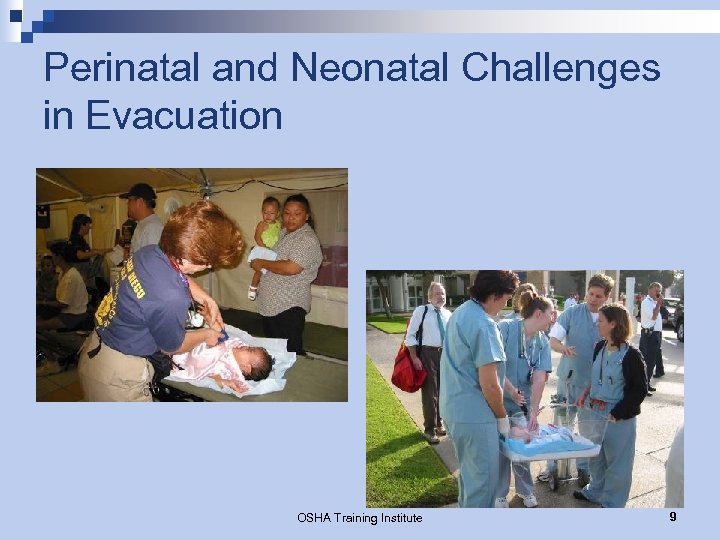 Perinatal and Neonatal Challenges in Evacuation OSHA Training Institute 9
 Lessons Learned: Hurricane Katrina & Rita Woman’s Hospital, Baton Rouge, La designated as the referral center for high risk OB patients and neonates n Hurricane Katrina in a 5 day period: 87 neonates transferred in and 34 additional transports arranged for other facilities. n Hurricane Rita: 21 neonates transferred to Woman’s Hospital n OSHA Training Institute 10
 Planning for Level 3 n 2 days before landfall n Opened Operations Center n Multiple & alternative communications, TVs, emergency power and computers n Emergency radiology capability OSHA Training Institute 11
 Two Days Before Landfall n MD discharged as many as possible n Additional patients supplies obtained n Identified on call MDs and MD willing to stay at hospital n Established employee labor pool OSHA Training Institute 12
 One Day Before Landfall Level 4 n Mandatory evacuation blocked all lanes leaving it impossible to transport infants by ground n Back up neonatologist arrived, in case others could not n Reporting of staff plans & needs to resource pool in the Command Center OSHA Training Institute 13
 Patient Notifications & Staff Care n Storm status & preparation activities n Relocation of emergency child care n Distribution of supplies to staff ¨Lights/ batteries ¨Water ¨Linens/blankets ¨Personal cleaning supplies OSHA Training Institute 14
 Thinking Ahead n Transferred respiratory therapy equipment to emergency electrical outlets n Backed-up electronic medical records off site OSHA Training Institute 15
 Landfall n All staff were in place and ready to accept as many infant transfers as needed if required, for an immediate evacuation. n A 30 bed special care unit and the previous 20 bed unit was still available and stocked with rented equipment. n Each patient space was duplicated. OSHA Training Institute 16
 Transport Teams n 5 teams (Neonatal Nurse Practitioner & Respiratory Therapist or nurse) n Ground transports n Violence toward emergency personnel required state troopers with transports OSHA Training Institute 17
 Helicopter Transport 16 evacuated infants n 2 critical infants were held and hand bagged by MDs - to allow for the maximum number of infants. n Non ventilated patients arrived in bassinets. n Some parents notified due to no communication and evacuating families. n OSHA Training Institute 18
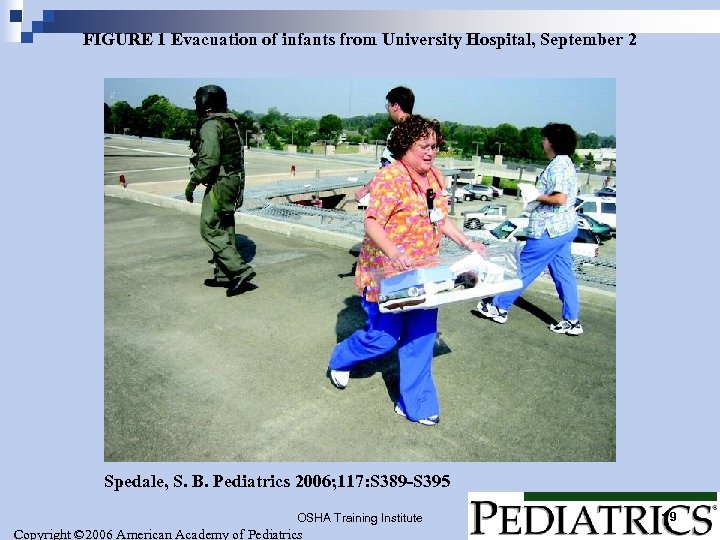 FIGURE 1 Evacuation of infants from University Hospital, September 2 Spedale, S. B. Pediatrics 2006; 117: S 389 -S 395 OSHA Training Institute Copyright © 2006 American Academy of Pediatrics 19
 Reunification n Priority and daily effort n Social Services 24/7 operation n Transport teams working well into night OSHA Training Institute 20
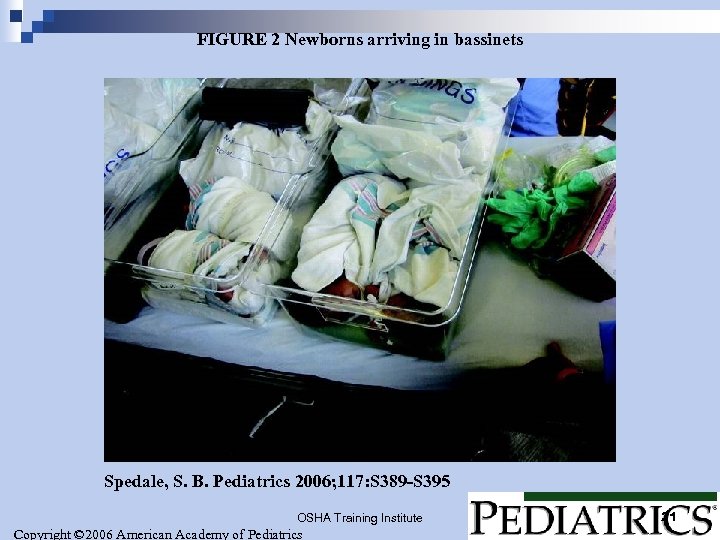 FIGURE 2 Newborns arriving in bassinets Spedale, S. B. Pediatrics 2006; 117: S 389 -S 395 OSHA Training Institute Copyright © 2006 American Academy of Pediatrics 21
 Two Days Post Landfall n Increasing census n Assignment divided into teams and daily meetings determined discharges or transfers of less serious infants OSHA Training Institute 22
 Plans and Alternative Transport n Cardiovascular disease infants & children were transferred in company of surgeons. Increased problems with obtaining transport ground units n Out of state units arrived n n MDs transported infants in their cars OSHA Training Institute 23
 Disrupted Communications Daily confirmation that Woman’s Hospital was the designated center and had authority to arrange transport. n Daily proof of verification leads to frustration. n Decision to transfer infants thru Louis Armstrong International Airport was not followed thru due to communications. n OSHA Training Institute 24
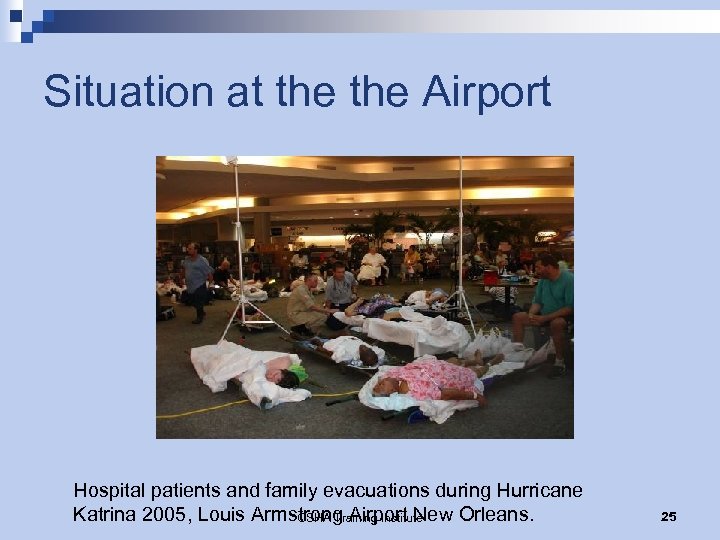 Situation at the Airport Hospital patients and family evacuations during Hurricane Katrina 2005, Louis Armstrong Airport New Orleans. OSHA Training Institute 25
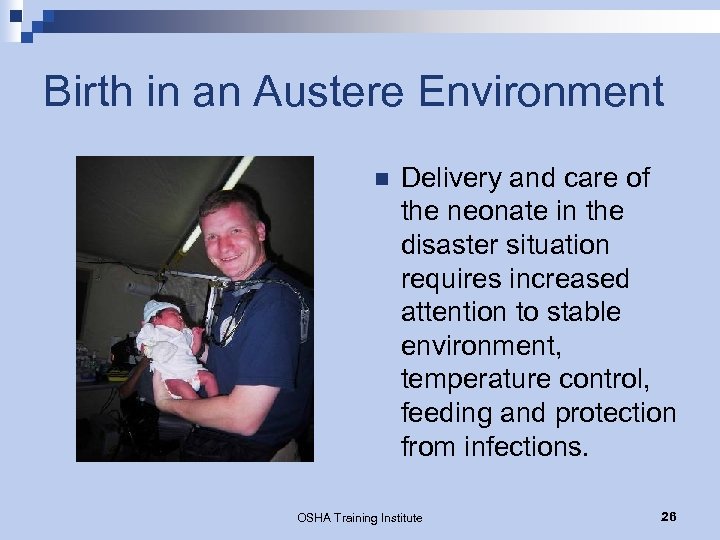 Birth in an Austere Environment n Delivery and care of the neonate in the disaster situation requires increased attention to stable environment, temperature control, feeding and protection from infections. OSHA Training Institute 26
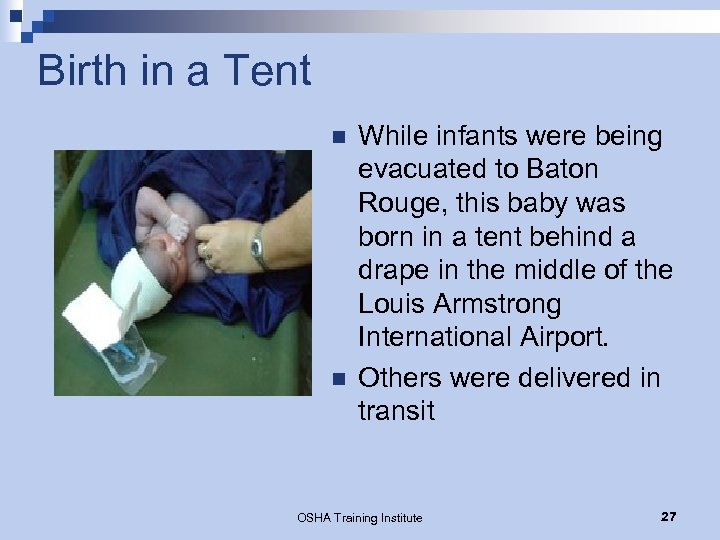 Birth in a Tent n n While infants were being evacuated to Baton Rouge, this baby was born in a tent behind a drape in the middle of the Louis Armstrong International Airport. Others were delivered in transit OSHA Training Institute 27
 Unusual Support Personal contacts got the job done via a US Army Corps of Engineers (Maj. General Don Riley) - relative of an administrator n Lesson learned: Personal relationships get more done than formal organizations. n Offers from NICU to take patients and families or send staff n OSHA Training Institute 28
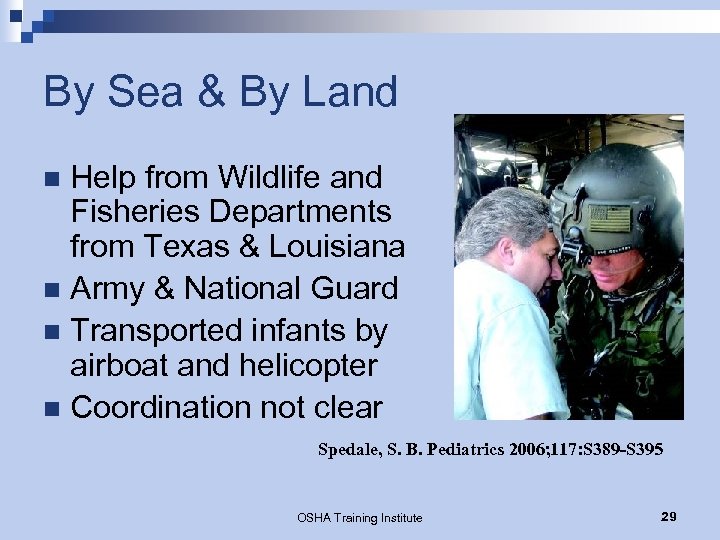 By Sea & By Land Help from Wildlife and Fisheries Departments from Texas & Louisiana n Army & National Guard n Transported infants by airboat and helicopter n Coordination not clear n Spedale, S. B. Pediatrics 2006; 117: S 389 -S 395 OSHA Training Institute 29
 Hurricane Rita n 24 days post Katrina n 3 infants transferred n Escort only required for traffic n Reimbursement arranged OSHA Training Institute 30
 Summary of Successes Preparations for disaster, standards & procedures n Crisis response teams n Published chain of command responsibilities n Preparing for the surge n List of pediatric facilities, providers, modes of transport and evacuation routes n Information sharing n OSHA Training Institute 31
 Recommend - Identify Major Services to Relocate Cardiovascular surgery n Extracorporeal membrane oxygenation n Critical Care units n Teaching programs n Shelters (may not accept woman after 34 weeks gestation concerned about births and may not accept newborns. ) n OSHA Training Institute 32
 Problems n Communication n Daycare for healthcare workers’ children n Extra long hours and disruption of routines n Frequent media requests. OSHA Training Institute 33
 Solutions n Media briefings twice a day n Accurate information to control rumors n Use hospital public relations n Designate a single MD spokesperson for medical issues OSHA Training Institute 34
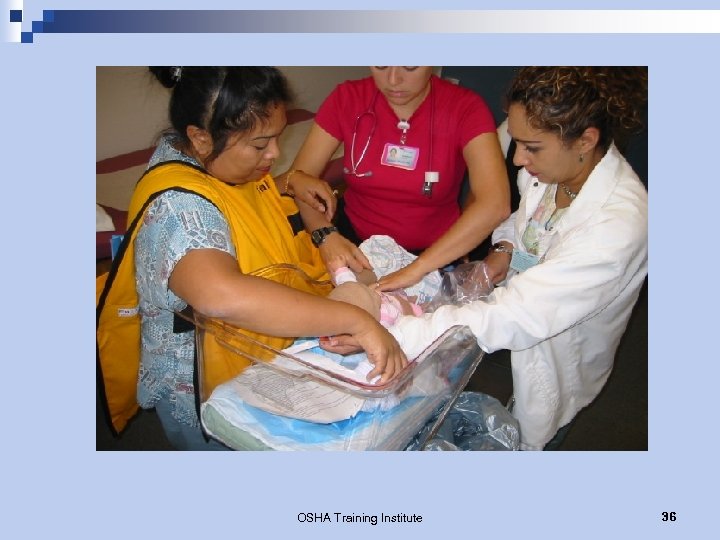
 Example of Lessons Learned in Evacuation of an NICU Staff hand carried bassinets down stairwells. n Single carry was awkward and staff unable to clearly see steps in front of them. n Dual carry improved but unstable on stairs n Solution: Infant carrier worn by staff keeping infant close while still be able to visualize stairwell and use hand rails as needed. n OSHA Training Institute 35
 OSHA Training Institute 36
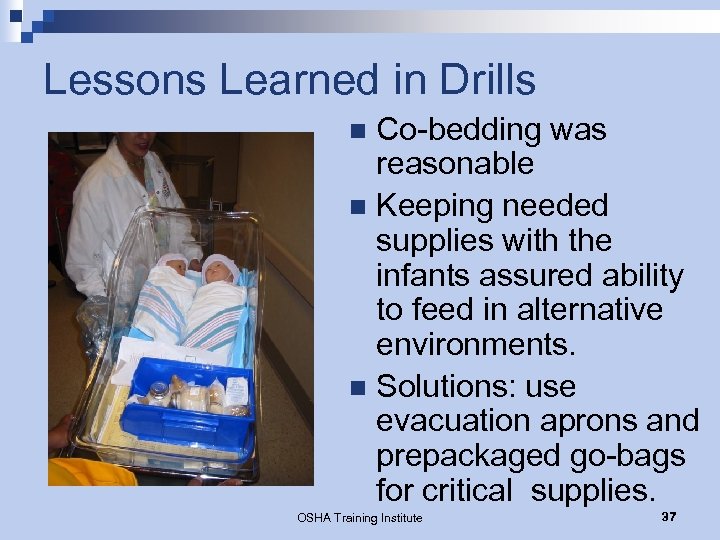 Lessons Learned in Drills Co-bedding was reasonable n Keeping needed supplies with the infants assured ability to feed in alternative environments. n Solutions: use evacuation aprons and prepackaged go-bags for critical supplies. n OSHA Training Institute 37
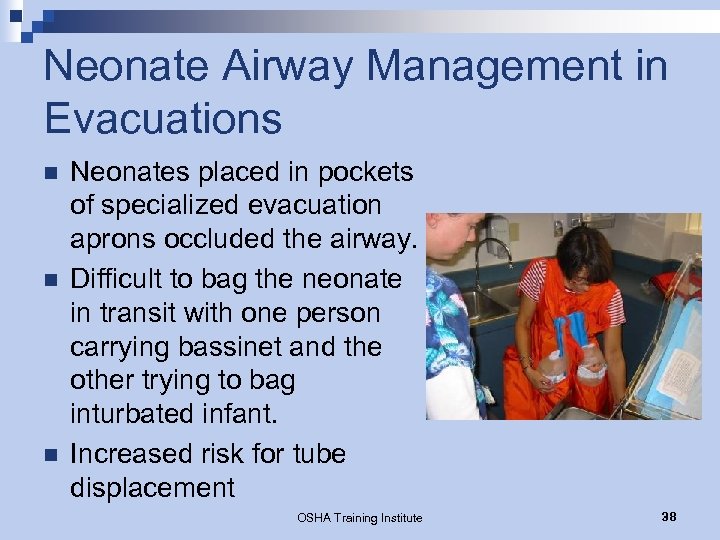 Neonate Airway Management in Evacuations n n n Neonates placed in pockets of specialized evacuation aprons occluded the airway. Difficult to bag the neonate in transit with one person carrying bassinet and the other trying to bag inturbated infant. Increased risk for tube displacement OSHA Training Institute 38
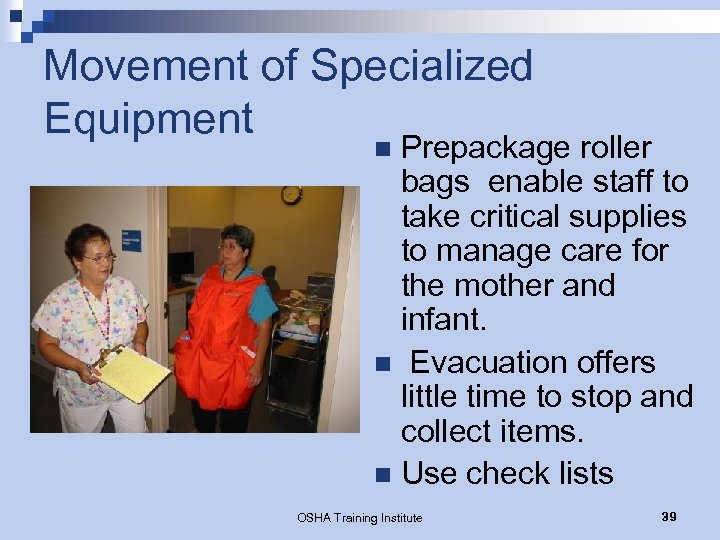 Movement of Specialized Equipment Prepackage roller bags enable staff to take critical supplies to manage care for the mother and infant. n Evacuation offers little time to stop and collect items. n Use check lists n OSHA Training Institute 39
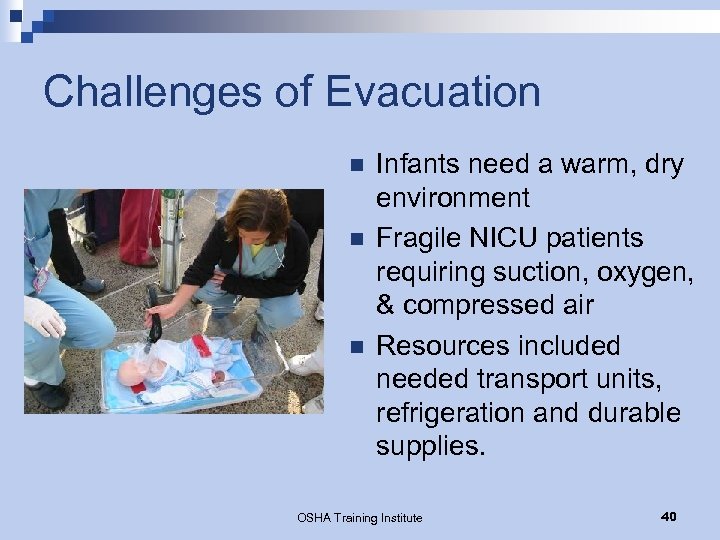 Challenges of Evacuation n Infants need a warm, dry environment Fragile NICU patients requiring suction, oxygen, & compressed air Resources included needed transport units, refrigeration and durable supplies. OSHA Training Institute 40
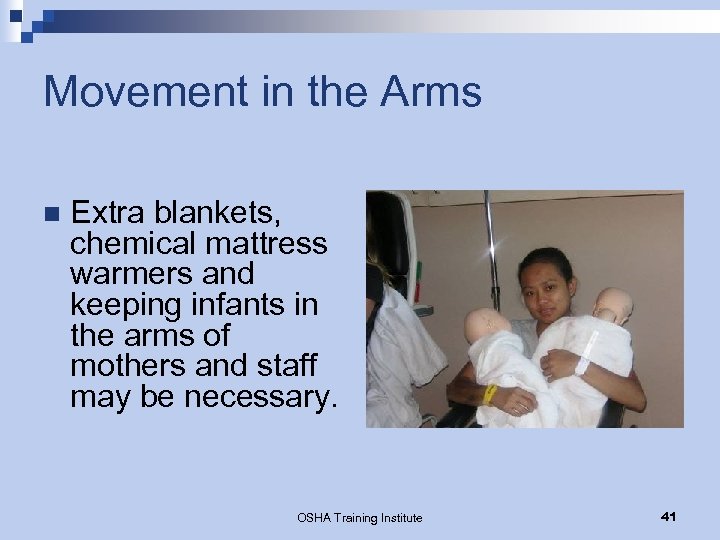 Movement in the Arms n Extra blankets, chemical mattress warmers and keeping infants in the arms of mothers and staff may be necessary. OSHA Training Institute 41
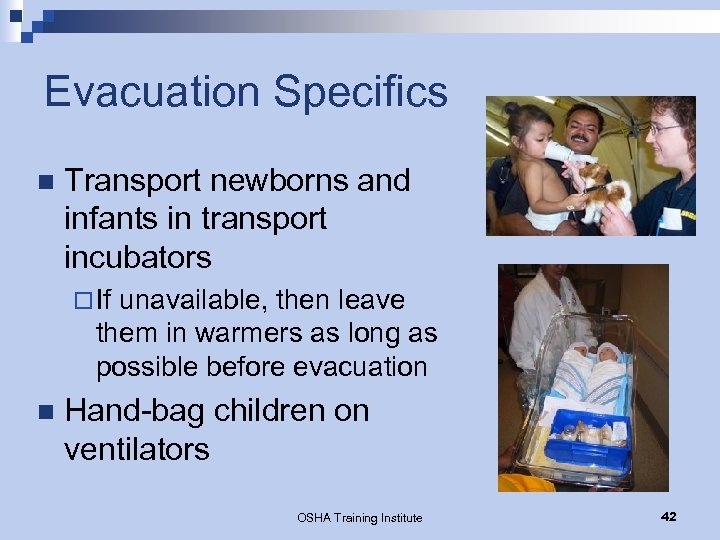 Evacuation Specifics n Transport newborns and infants in transport incubators ¨ If unavailable, then leave them in warmers as long as possible before evacuation n Hand-bag children on ventilators OSHA Training Institute 42
 Respiratory Care in Evacuation Consider portable O 2 sources (small Ecylinders on shoulder strap, Neopuff, ventilators, self-inflating bags, etc. ) n Baby sling for one RN evacuation down stairs and improved ergonomics. n Sam Splints to maintain airway. n Portable suction (bulb or battery-powered, and appropriate sized catheters, gloves) n Intubation kits (all inclusive) n OSHA Training Institute 43
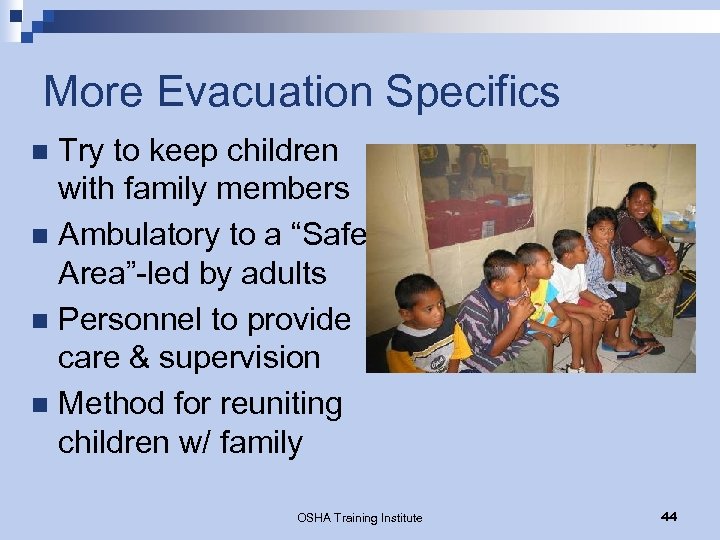 More Evacuation Specifics Try to keep children with family members n Ambulatory to a “Safe Area”-led by adults n Personnel to provide care & supervision n Method for reuniting children w/ family n OSHA Training Institute 44
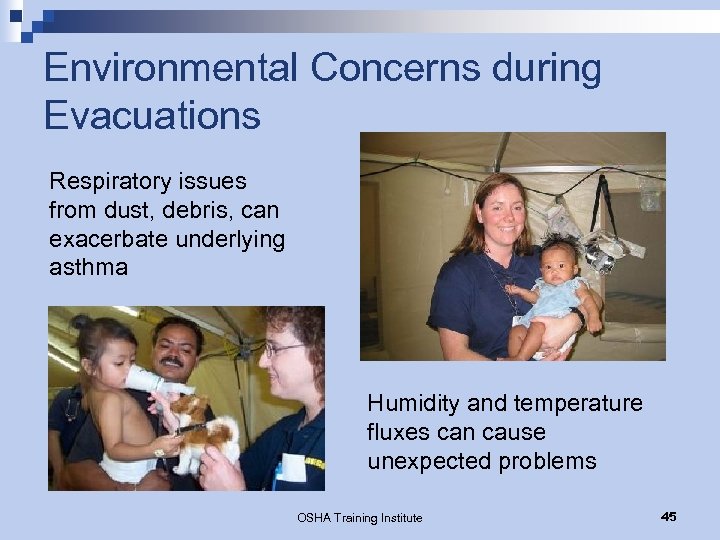 Environmental Concerns during Evacuations Respiratory issues from dust, debris, can exacerbate underlying asthma Humidity and temperature fluxes can cause unexpected problems OSHA Training Institute 45
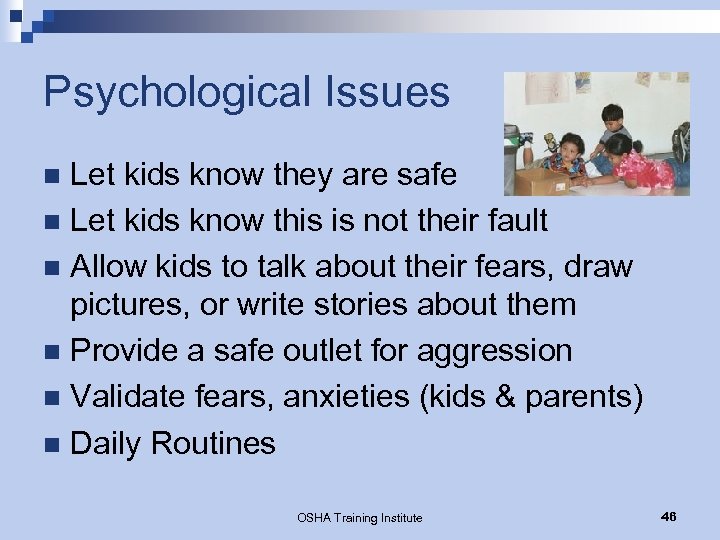 Psychological Issues Let kids know they are safe n Let kids know this is not their fault n Allow kids to talk about their fears, draw pictures, or write stories about them n Provide a safe outlet for aggression n Validate fears, anxieties (kids & parents) n Daily Routines n OSHA Training Institute 46
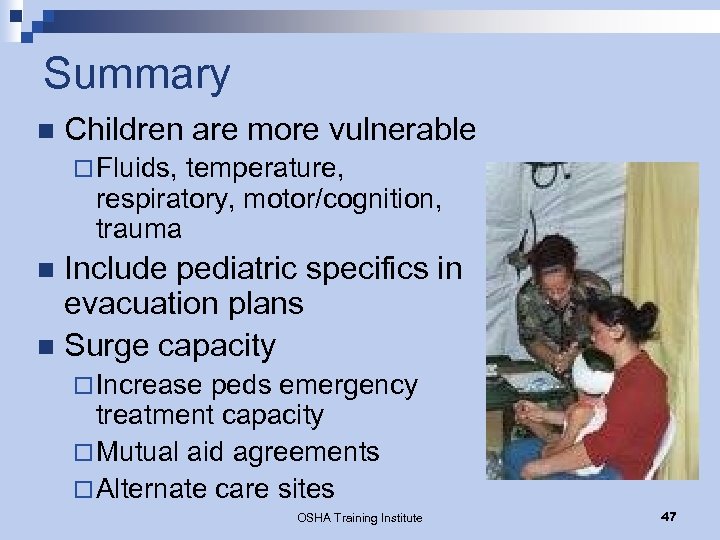 Summary n Children are more vulnerable ¨ Fluids, temperature, respiratory, motor/cognition, trauma Include pediatric specifics in evacuation plans n Surge capacity n ¨ Increase peds emergency treatment capacity ¨ Mutual aid agreements ¨ Alternate care sites OSHA Training Institute 47
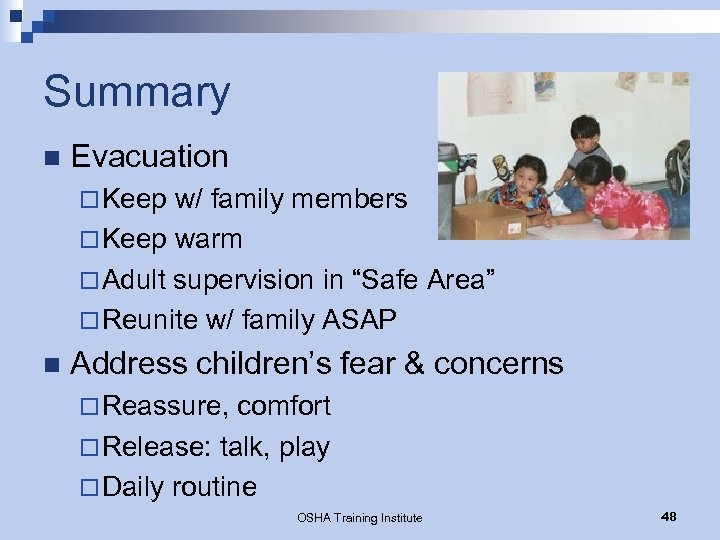 Summary n Evacuation ¨ Keep w/ family members ¨ Keep warm ¨ Adult supervision in “Safe Area” ¨ Reunite w/ family ASAP n Address children’s fear & concerns ¨ Reassure, comfort ¨ Release: talk, play ¨ Daily routine OSHA Training Institute 48
 References n n Baldwin S, Robinson A, Barlow P, Fargason C. Moving hospitalized children all over the southeast: interstate transfer of pediatric patients during hurricane katrina. Pediatrics 2006; 117; s 416 -s 420. DOI: 10. 1542/peds. 200600990 Spedale S. Opening our doors for all newborns: caring for displaced neonates: intrastate. Pediatrics Vol. 117 No. 5 May 2006, pp. S 389 S 395 (doi: 10. 1542/peds. 2006 -0099 J) OSHA Training Institute 49
 References n n Committee on Pediatric Emergency Medicine. The pediatrician’s role in disaster preparedness. Pediatrics 1997; 99; 130 -133. DOI: 10. 1542/peds. 99. 1. 130 National Working Group for Women and Infant Needs in Emergencies. The White Ribbon Alliance for Safe Motherhood. Women and Infants Service Package. . Dec. 2006 OSHA Training Institute 50