


 Скачать презентацию Spatial Data Analysis of Areas Regression Introduction
47e96553bfc5e8c35fabebbccbdaa765.ppt
- Количество слайдов: 60
 Spatial Data Analysis of Areas: Regression
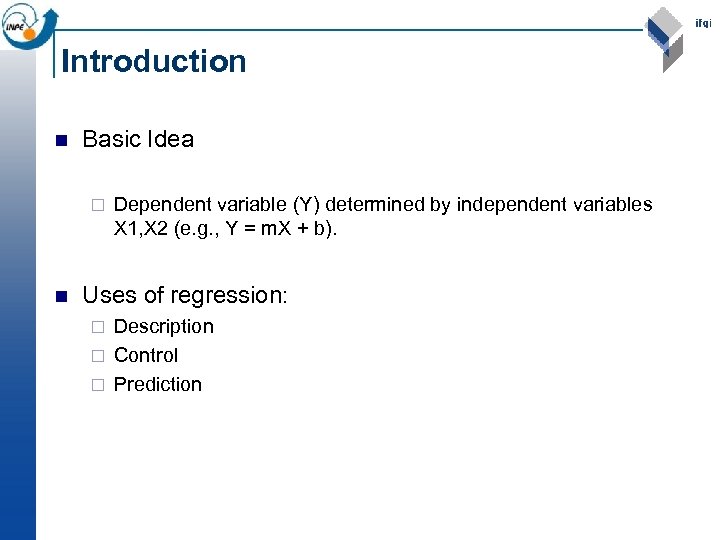 Introduction n Basic Idea ¨ n Dependent variable (Y) determined by independent variables X 1, X 2 (e. g. , Y = m. X + b). Uses of regression: Description ¨ Control ¨ Prediction ¨
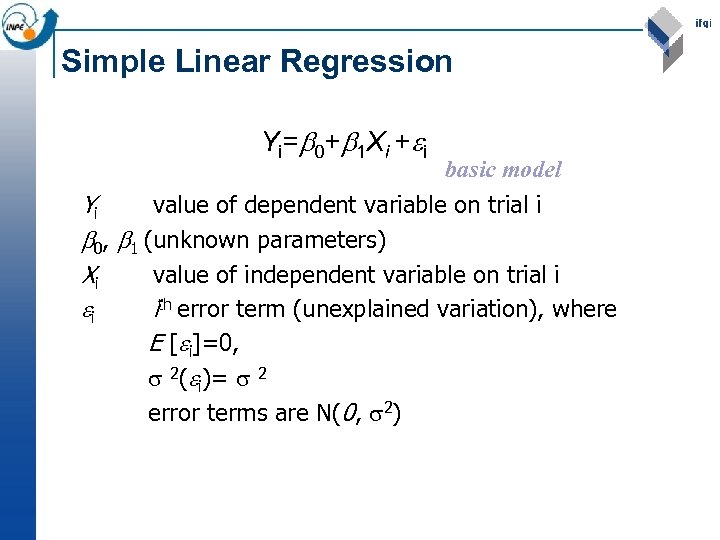 Simple Linear Regression Yi= 0+ 1 Xi + i basic model Yi value of dependent variable on trial i 0, 1 (unknown parameters) Xi value of independent variable on trial i i ith error term (unexplained variation), where E [ i]=0, 2( i)= 2 error terms are N(0, 2)
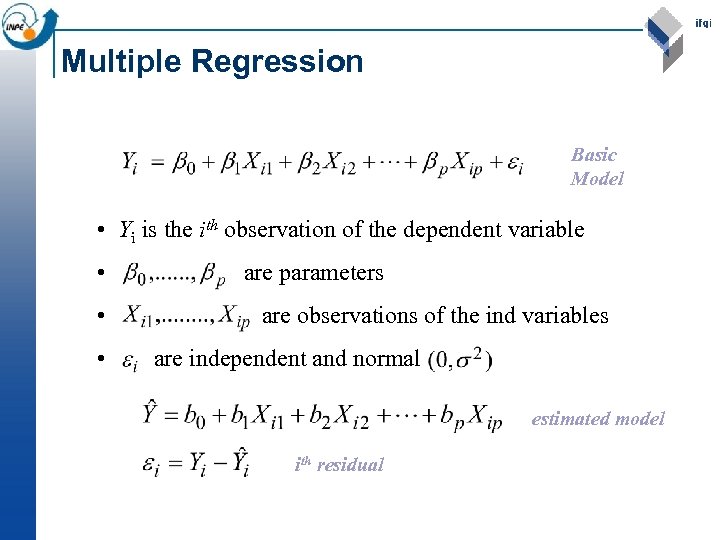 Multiple Regression Basic Model • Yi is the ith observation of the dependent variable • • • are parameters are observations of the ind variables are independent and normal estimated model ith residual
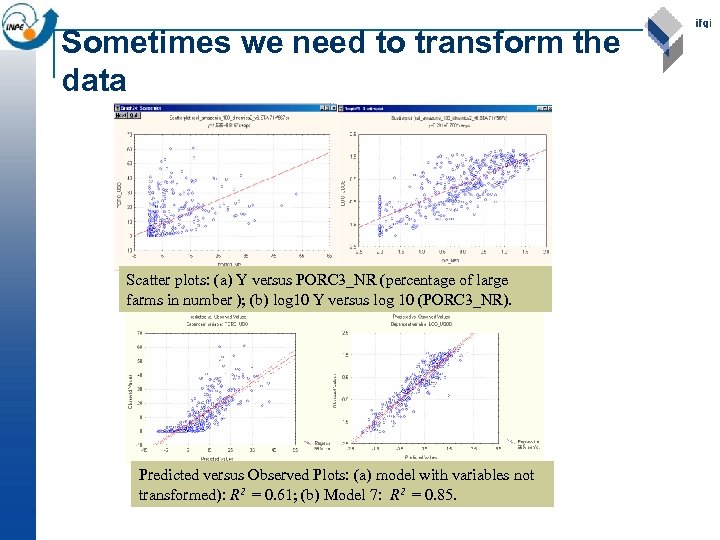 Sometimes we need to transform the data Scatter plots: (a) Y versus PORC 3_NR (percentage of large farms in number ); (b) log 10 Y versus log 10 (PORC 3_NR). Predicted versus Observed Plots: (a) model with variables not transformed): R 2 = 0. 61; (b) Model 7: R 2 = 0. 85.
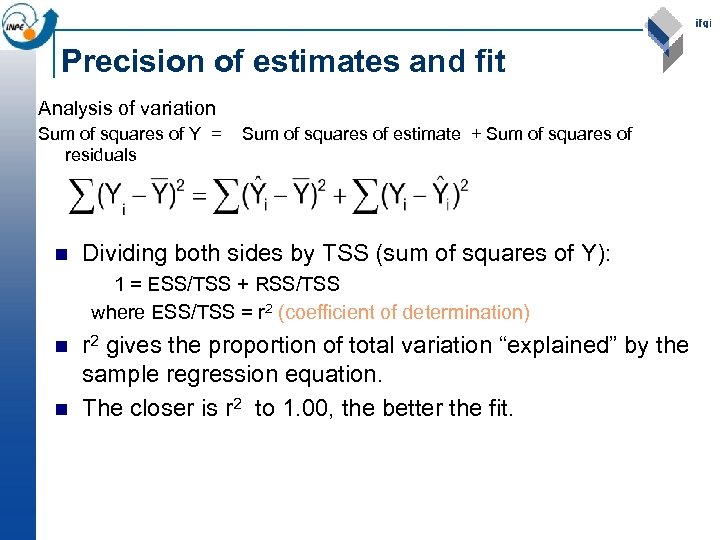 Precision of estimates and fit Analysis of variation Sum of squares of Y = Sum of squares of estimate + Sum of squares of residuals n Dividing both sides by TSS (sum of squares of Y): 1 = ESS/TSS + RSS/TSS where ESS/TSS = r 2 (coefficient of determination) n n r 2 gives the proportion of total variation “explained” by the sample regression equation. The closer is r 2 to 1. 00, the better the fit.
 Analysis of Residuals n n It is a good idea to plot the residuals against the independent variables to see if they show a trend. Possible behaviors: ¨Correlation (e. g. , the higher the independent variable, the higher the residual) ¨Nonlinearity ¨Heteroskedacity (i. e. , the variance of the residual increases or decreases with the independent variable). n Regression assumes that residuals are constant variance and normally distributed.
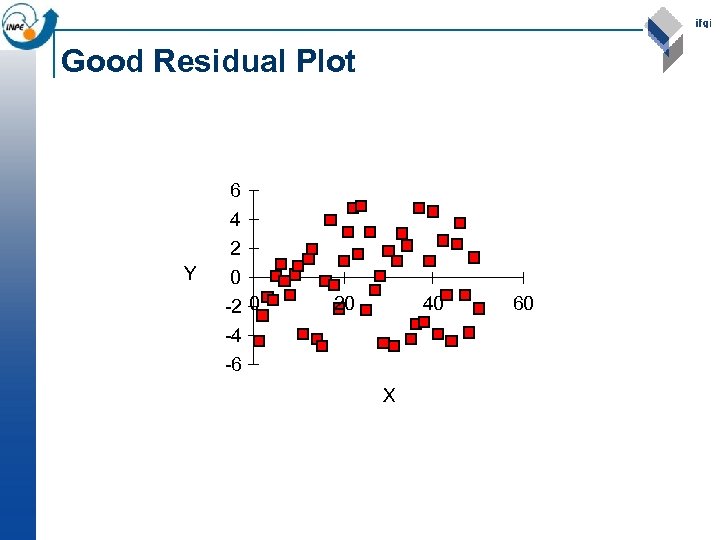 Good Residual Plot 6 4 2 Y 0 -2 0 20 40 -4 -6 X 60
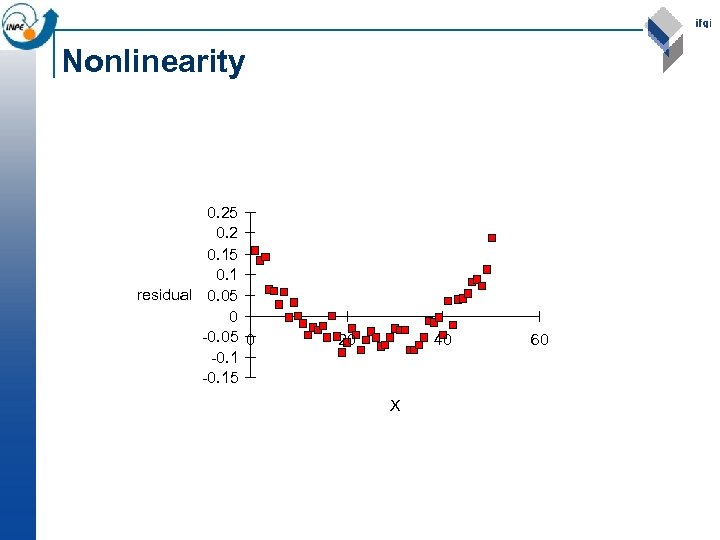 Nonlinearity 0. 25 0. 2 0. 15 0. 1 residual 0. 05 0 -0. 15 20 40 X 60
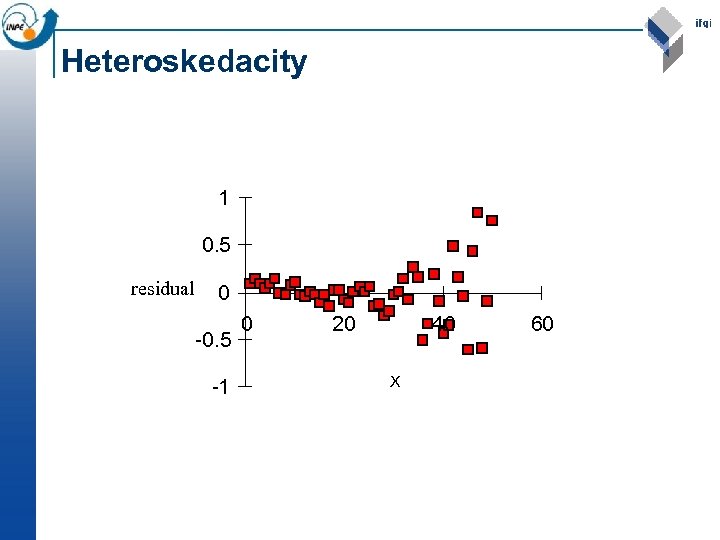 Heteroskedacity 1 0. 5 residual 0 -0. 5 -1 0 20 40 X 60
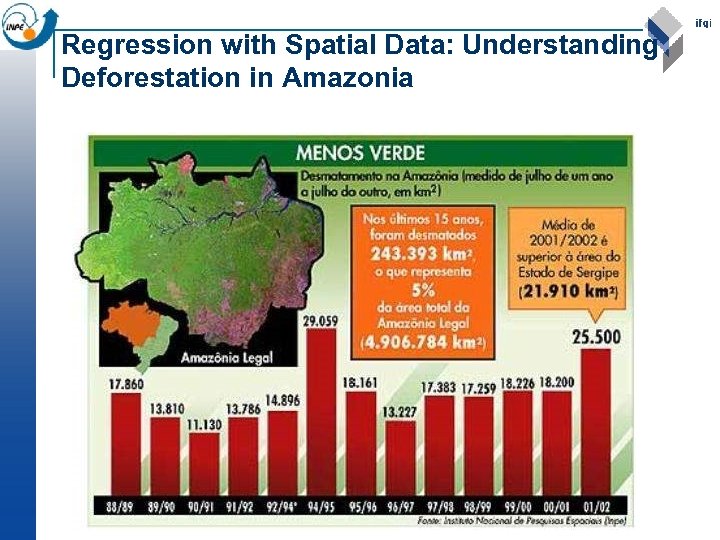 Regression with Spatial Data: Understanding Deforestation in Amazonia
 The forest. . .

 The rains. . .
 The rivers. . .
 Deforestation. . .
 Fire. . .
 Fire. . .
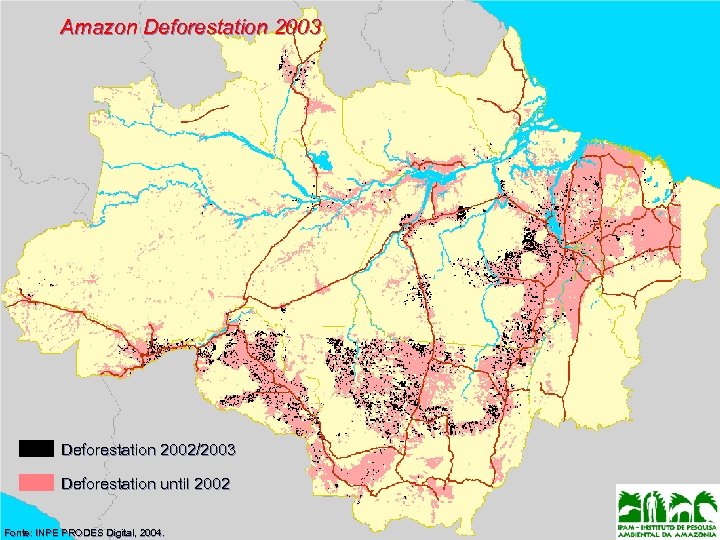 Amazon Deforestation 2003 Deforestation 2002/2003 Deforestation until 2002 Fonte: INPE PRODES Digital, 2004.
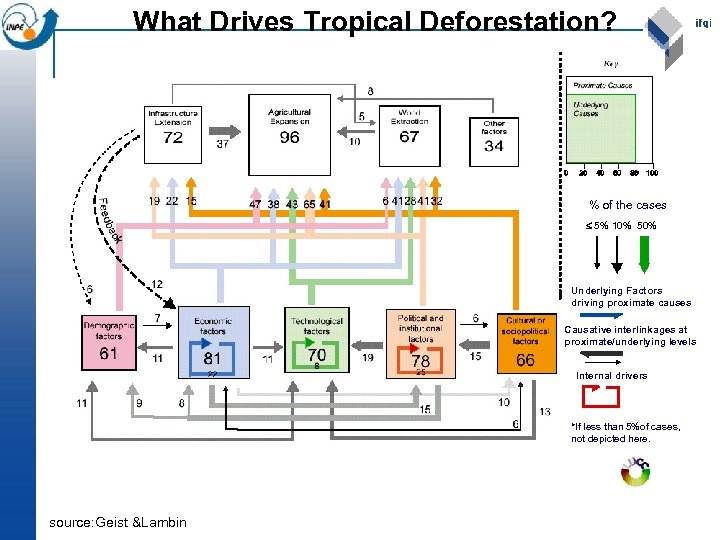 What Drives Tropical Deforestation? % of the cases 5% 10% 50% Underlying Factors driving proximate causes Causative interlinkages at proximate/underlying levels Internal drivers *If less than 5%of cases, not depicted here. source: Geist &Lambin
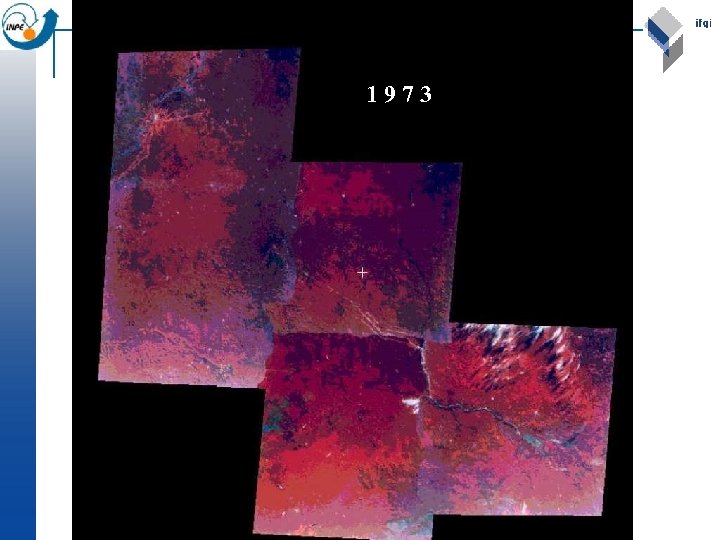 1973
1973
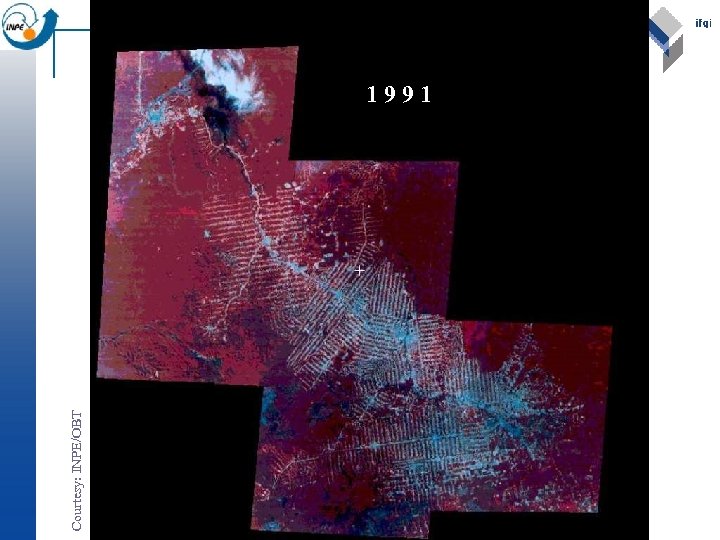 Courtesy: INPE/OBT 1991
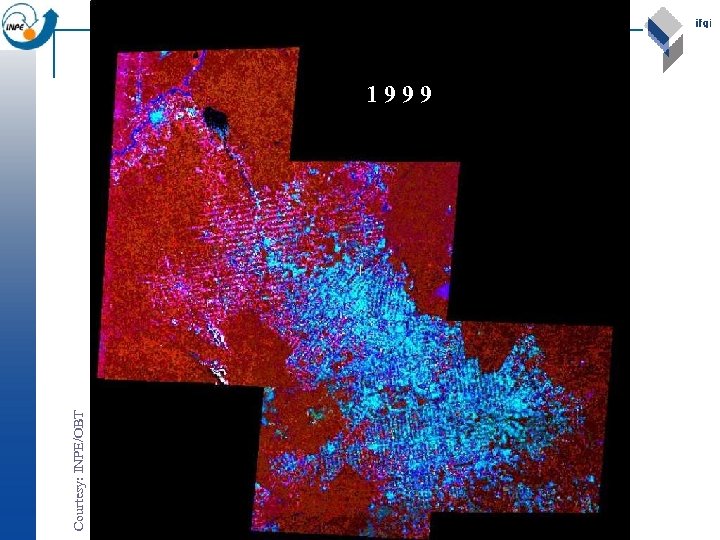 Courtesy: INPE/OBT 1999
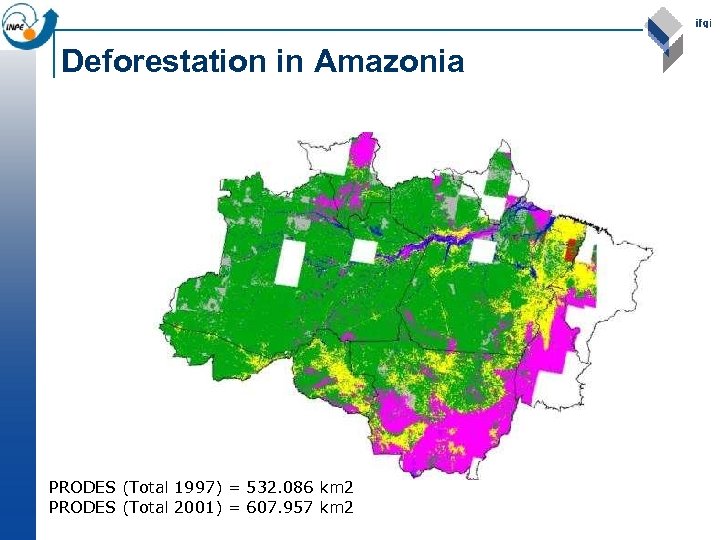 Deforestation in Amazonia PRODES (Total 1997) = 532. 086 km 2 PRODES (Total 2001) = 607. 957 km 2
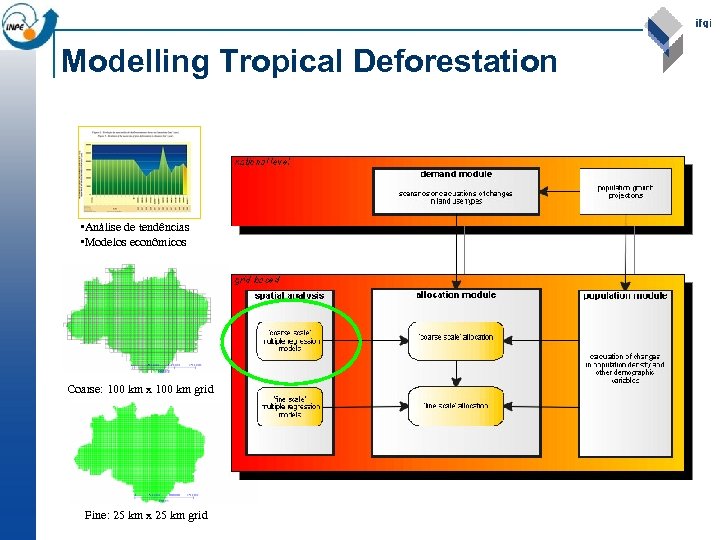 Modelling Tropical Deforestation • Análise de tendências • Modelos econômicos Coarse: 100 km x 100 km grid Fine: 25 km x 25 km grid
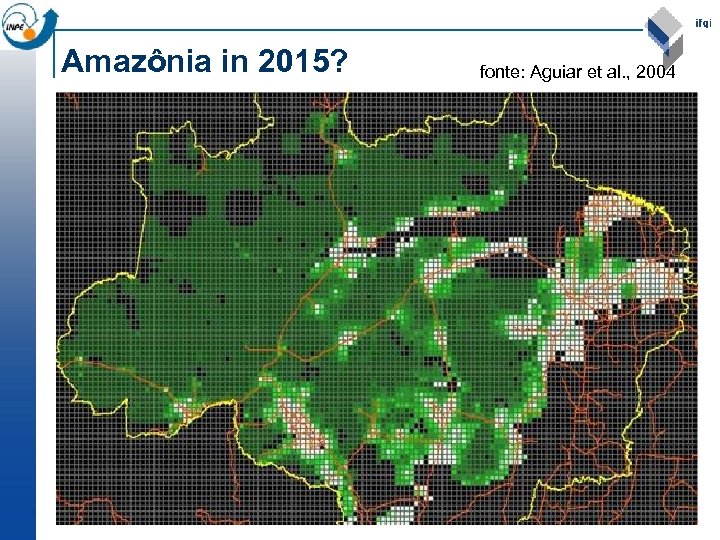 Amazônia in 2015? fonte: Aguiar et al. , 2004
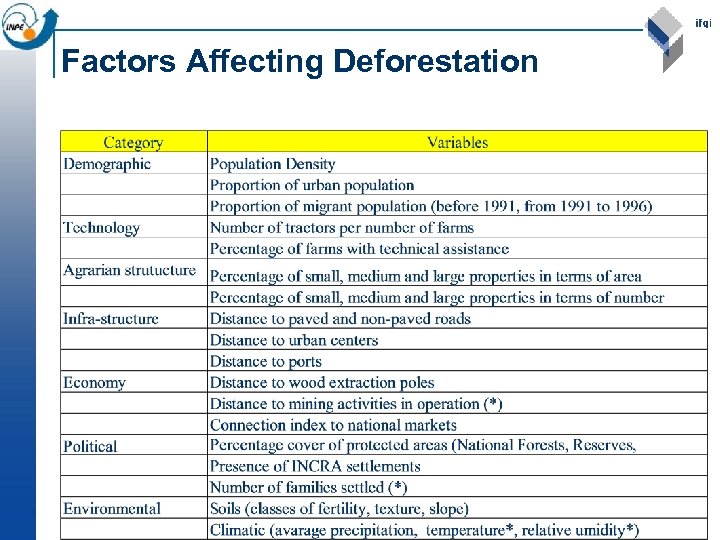 Factors Affecting Deforestation
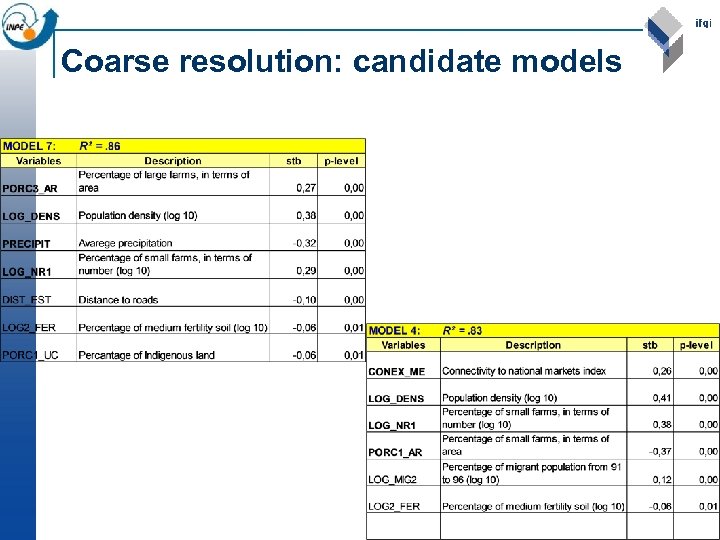 Coarse resolution: candidate models
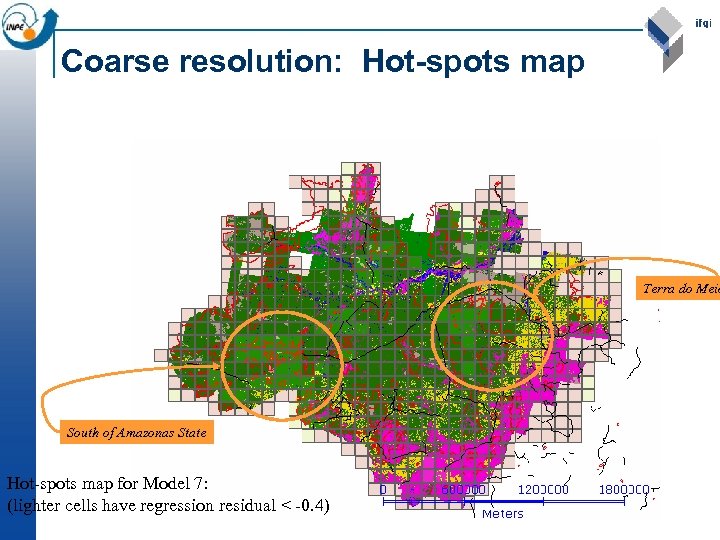 Coarse resolution: Hot-spots map Terra do Meio South of Amazonas State Hot-spots map for Model 7: (lighter cells have regression residual < -0. 4)
 Modelling Deforestation in Amazonia n High coefficients of multiple determination were obtained on all models built (R 2 from 0. 80 to 0. 86). n The main factors identified were: Population density; ¨ Connection to national markets; ¨ Climatic conditions; ¨ Indicators related to land distribution between large and small farmers. ¨ n The main current agricultural frontier areas, in Pará and Amazonas States, where intense deforestation processes are taking place now were correctly identified as hot-spots of change.
 Spatial regression models
 Spatial regression n Specifying the Structure of Spatial dependence ¨ n Testing for the Presence of Spatial Dependence ¨ n what type of dependence, what is the alternative Estimating Models with Spatial Dependence ¨ n which locations/observations interact spatial lag, spatial error, higher order Spatial Prediction ¨ interpolation, missing values source: Luc Anselin
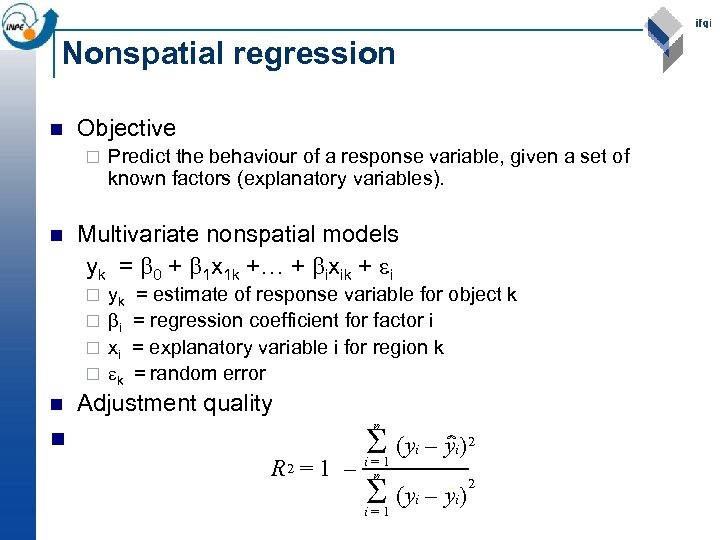 Nonspatial regression n Objective ¨ n Predict the behaviour of a response variable, given a set of known factors (explanatory variables). Multivariate nonspatial models yk = 0 + 1 x 1 k +… + ixik + i yk = estimate of response variable for object k ¨ i = regression coefficient for factor i ¨ xi = explanatory variable i for region k ¨ k = random error ¨ n n Adjustment quality S (y – y ) – S (y – y ) n R 2 = 1 i=1 n i=1 i i 2 2
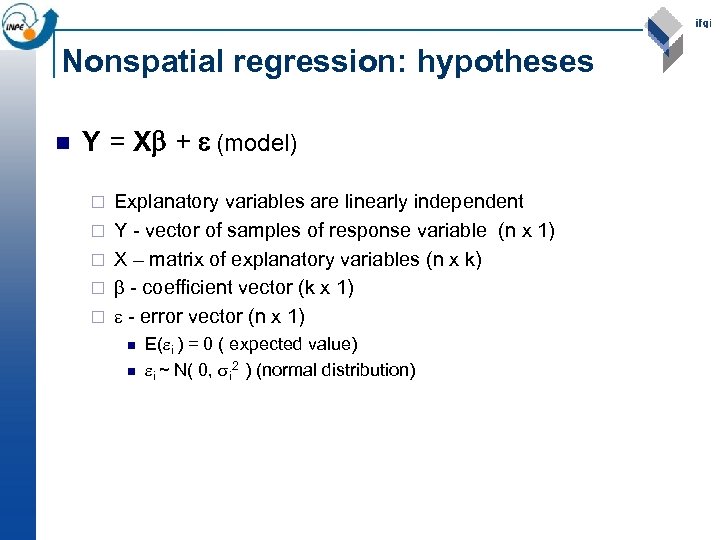 Nonspatial regression: hypotheses n Y = X + (model) ¨ ¨ ¨ Explanatory variables are linearly independent Y - vector of samples of response variable (n x 1) X – matrix of explanatory variables (n x k) - coefficient vector (k x 1) - error vector (n x 1) n n E( i ) = 0 ( expected value) i ~ N( 0, i 2 ) (normal distribution)
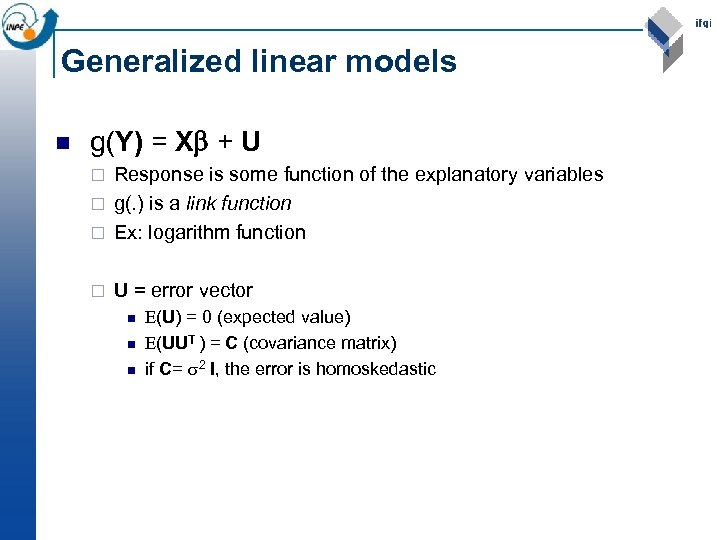 Generalized linear models n g(Y) = X + U Response is some function of the explanatory variables ¨ g(. ) is a link function ¨ Ex: logarithm function ¨ ¨ U = error vector n n n (U) = 0 (expected value) (UUT ) = C (covariance matrix) if C= 2 I, the error is homoskedastic
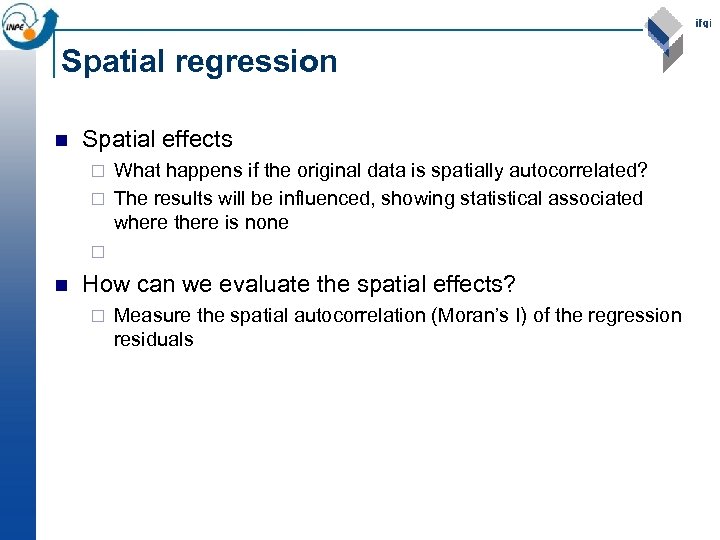 Spatial regression n Spatial effects What happens if the original data is spatially autocorrelated? ¨ The results will be influenced, showing statistical associated where there is none ¨ ¨ n How can we evaluate the spatial effects? ¨ Measure the spatial autocorrelation (Moran’s I) of the regression residuals
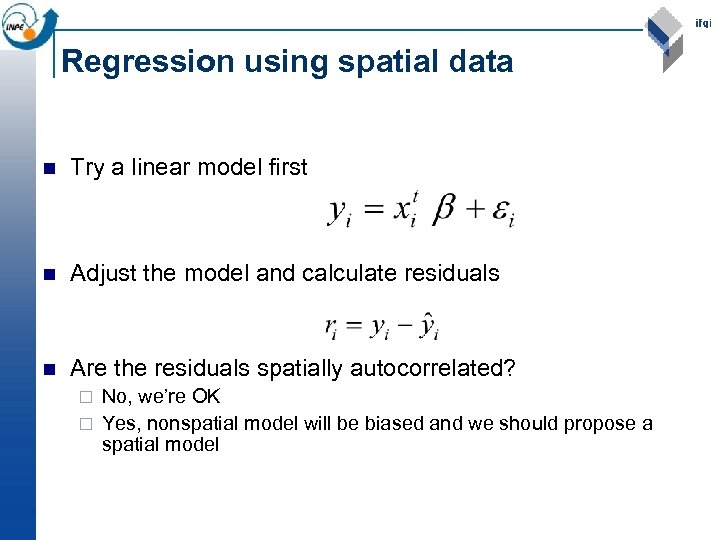 Regression using spatial data n Try a linear model first n Adjust the model and calculate residuals n Are the residuals spatially autocorrelated? No, we’re OK ¨ Yes, nonspatial model will be biased and we should propose a spatial model ¨
 Spatial dependence n Estimating the Form/Extent of Spatial Interaction substantive spatial dependence ¨ spatial lag models ¨ n Correcting for the Effect of Spatial Spill-overs spatial dependence as a nuisance ¨ spatial error models ¨ source: Luc Anselin
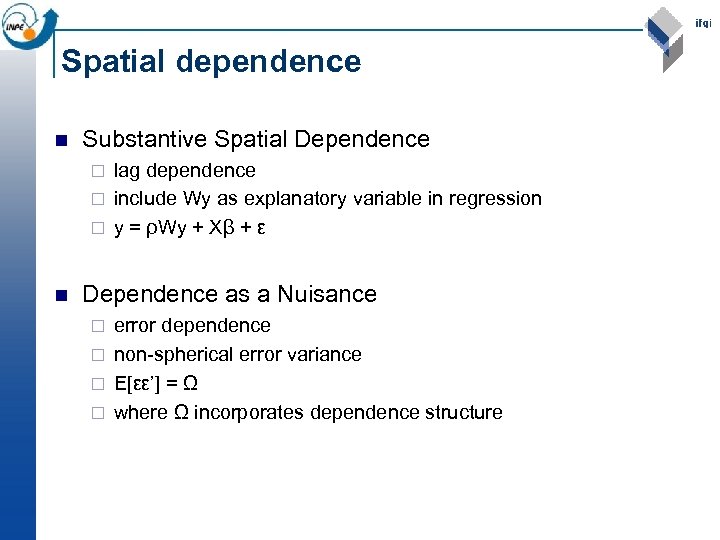 Spatial dependence n Substantive Spatial Dependence lag dependence ¨ include Wy as explanatory variable in regression ¨ y = ρWy + Xβ + ε ¨ n Dependence as a Nuisance error dependence ¨ non-spherical error variance ¨ E[εε’] = Ω ¨ where Ω incorporates dependence structure ¨
 Interpretation of spatial lag n True Contagion related to economic-behavioral process ¨ only meaningful if areal units appropriate (ecological fallacy) ¨ interesting economic interpretation (substantive) ¨ n Apparent Contagion ¨ scale problem, spatial filtering source: Luc Anselin
 Interpretation of Spatial Error n Spill-Over in “Ignored” Variables poor match process with unit of observation or level of aggregation ¨ apparent contagion: regional structural change ¨ economic interpretation less interesting nuisance parameter ¨ n Common in Empirical Practice source: Luc Anselin
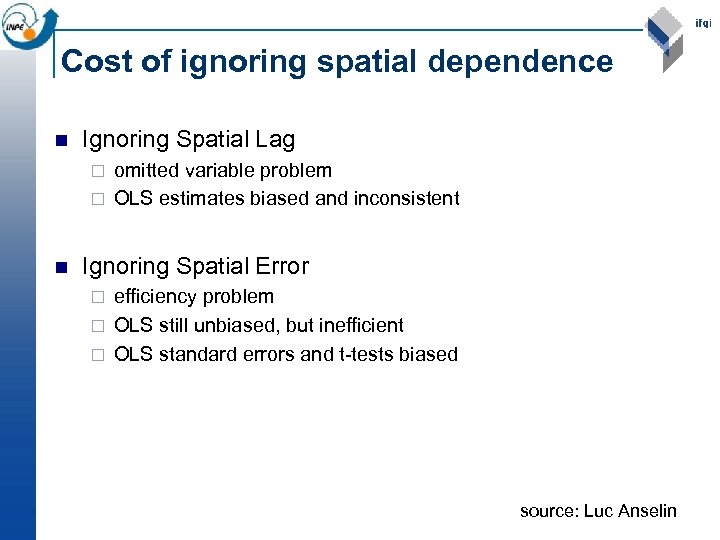 Cost of ignoring spatial dependence n Ignoring Spatial Lag omitted variable problem ¨ OLS estimates biased and inconsistent ¨ n Ignoring Spatial Error efficiency problem ¨ OLS still unbiased, but inefficient ¨ OLS standard errors and t-tests biased ¨ source: Luc Anselin
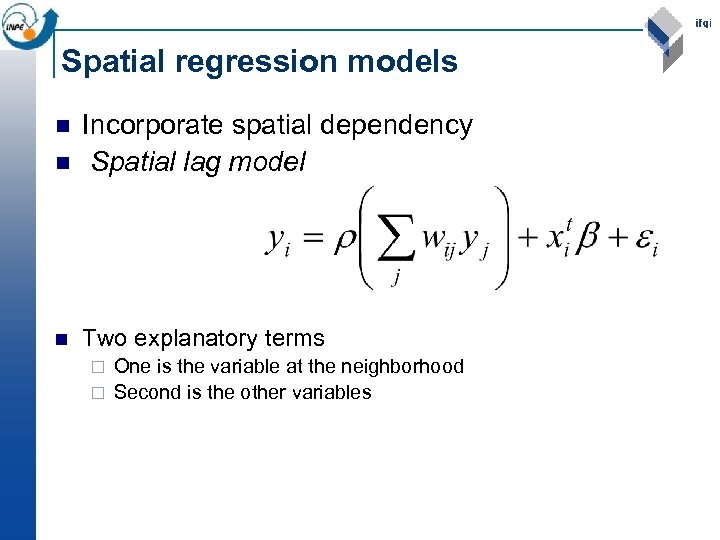 Spatial regression models n Incorporate spatial dependency Spatial lag model n Two explanatory terms n One is the variable at the neighborhood ¨ Second is the other variables ¨
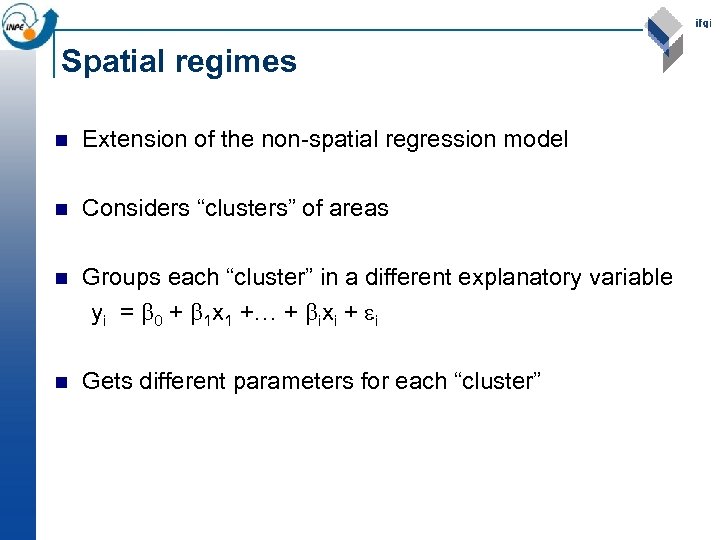 Spatial regimes n Extension of the non-spatial regression model n Considers “clusters” of areas n Groups each “cluster” in a different explanatory variable yi = 0 + 1 x 1 +… + ixi + i n Gets different parameters for each “cluster”
 A study of the spatially varying relationship between homicide rates and socio-economic data of São Paulo using GWR Frederico Roman Ramos CEDEST/Brasil
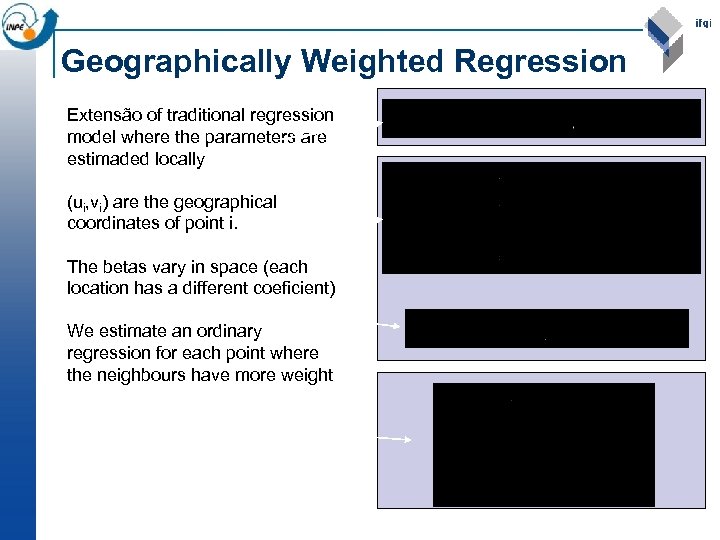 Geographically Weighted Regression Extensão of traditional regression model where the parameters are estimaded locally (ui, vi) are the geographical coordinates of point i. The betas vary in space (each location has a different coeficient) We estimate an ordinary regression for each point where the neighbours have more weight
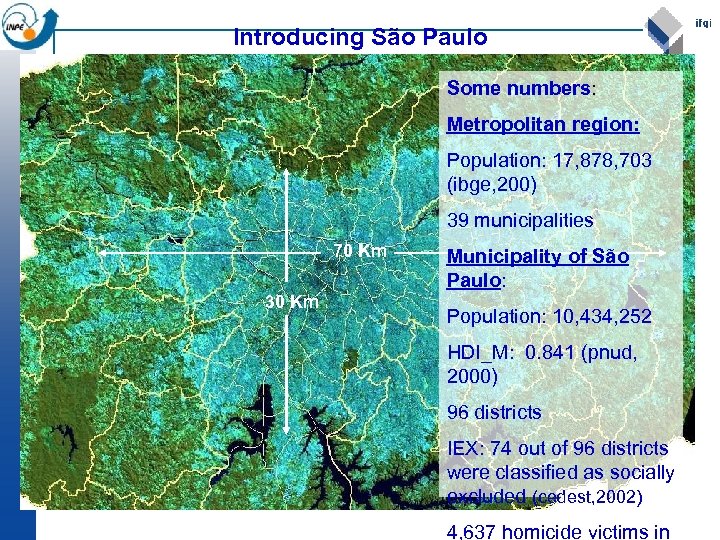 Introducing São Paulo Some numbers: Metropolitan region: Population: 17, 878, 703 (ibge, 200) 39 municipalities 70 Km 30 Km Municipality of São Paulo: Population: 10, 434, 252 HDI_M: 0. 841 (pnud, 2000) 96 districts IEX: 74 out of 96 districts were classified as socially excluded (cedest, 2002) 4, 637 homicide victims in
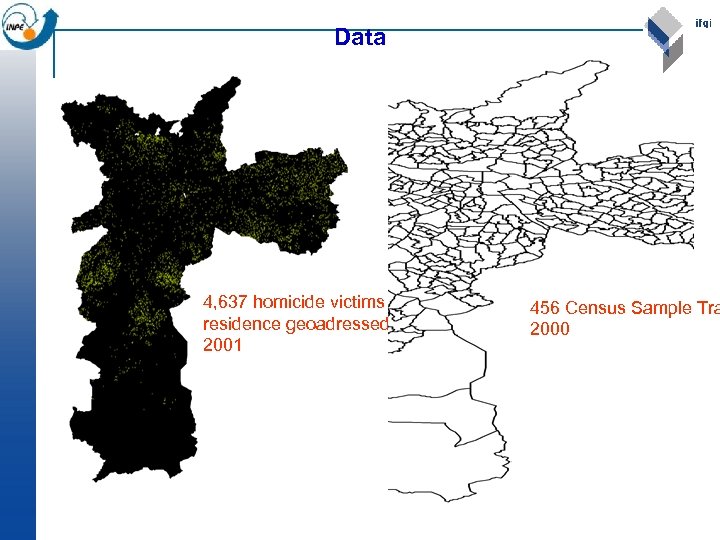 Data 4, 637 homicide victims residence geoadressed 2001 456 Census Sample Tra 2000
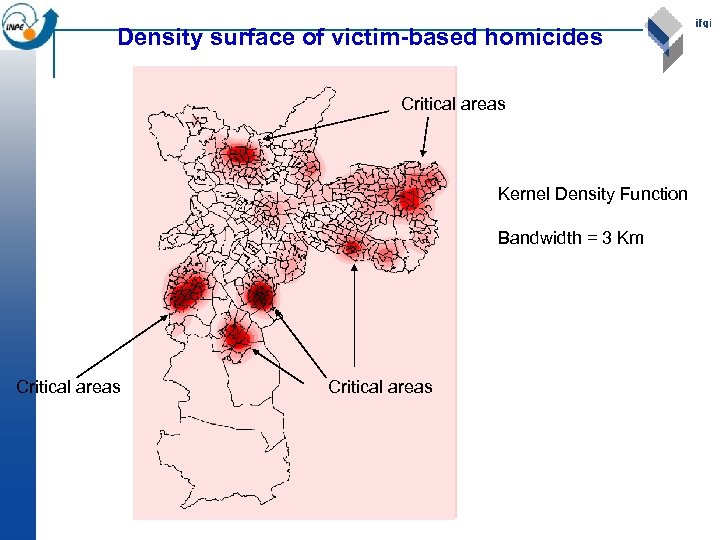 Density surface of victim-based homicides Critical areas Kernel Density Function Bandwidth = 3 Km Critical areas
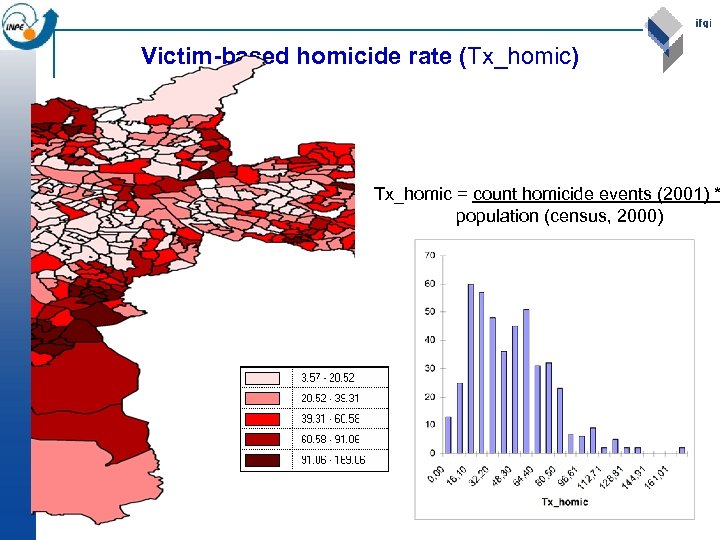 Victim-based homicide rate (Tx_homic) Tx_homic = count homicide events (2001) * population (census, 2000)
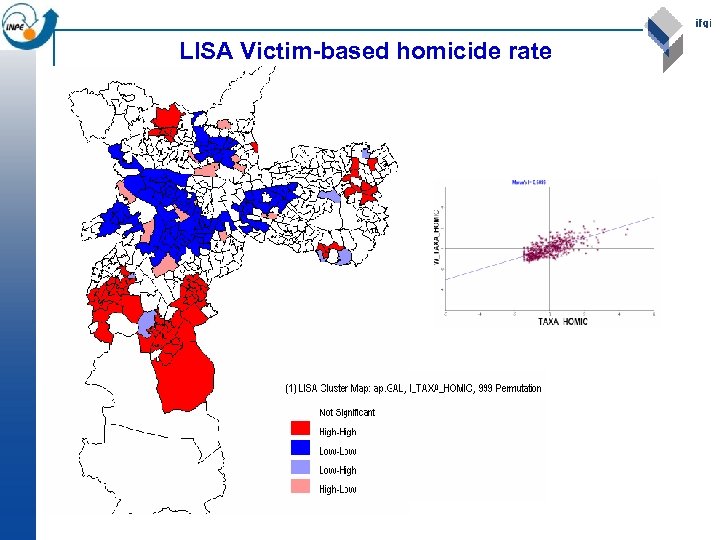 LISA Victim-based homicide rate
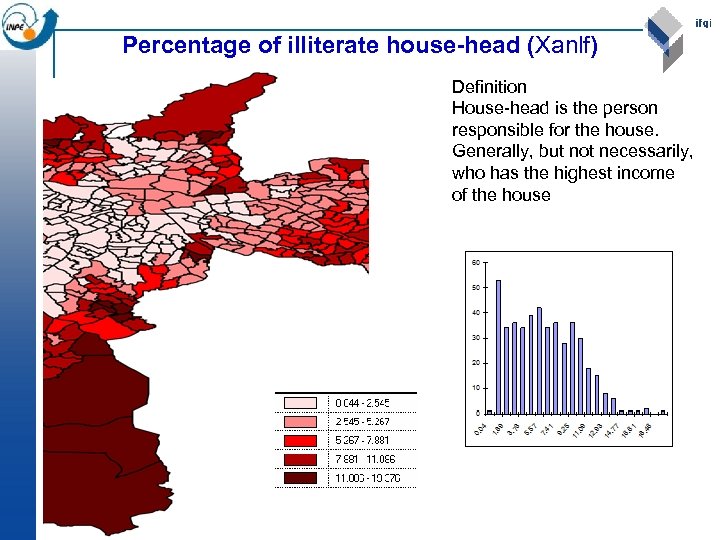 Percentage of illiterate house-head (Xanlf) Definition House-head is the person responsible for the house. Generally, but not necessarily, who has the highest income of the house
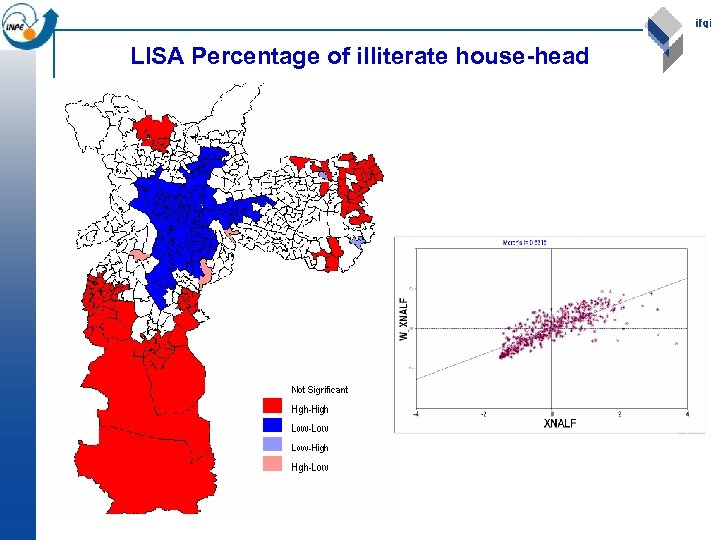 LISA Percentage of illiterate house-head
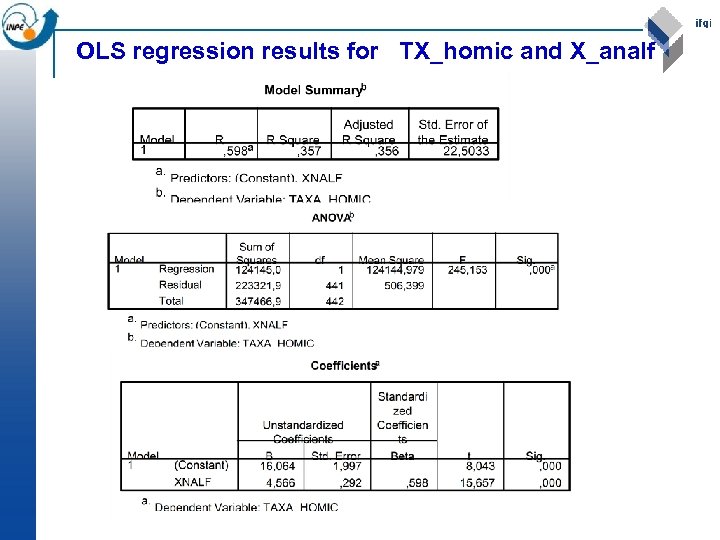 OLS regression results for TX_homic and X_analf
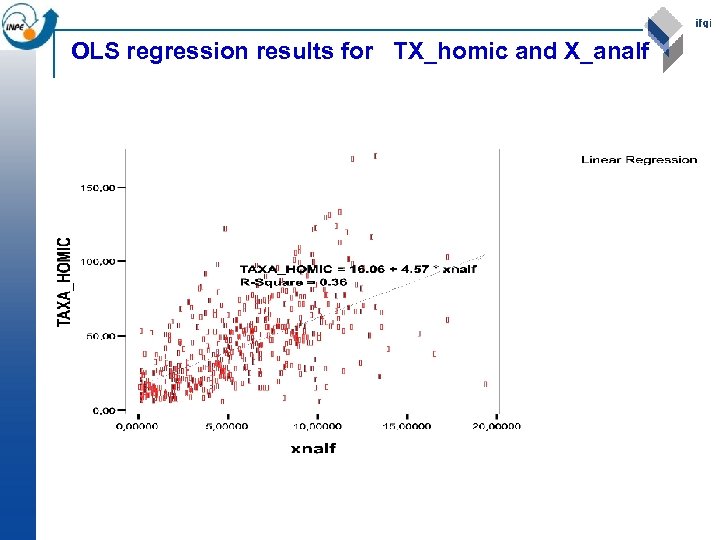 OLS regression results for TX_homic and X_analf
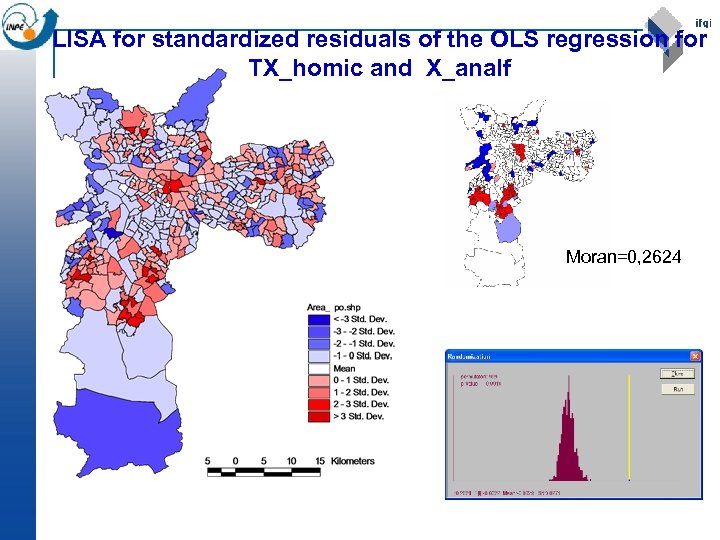 LISA for standardized residuals of the OLS regression for TX_homic and X_analf Moran=0, 2624
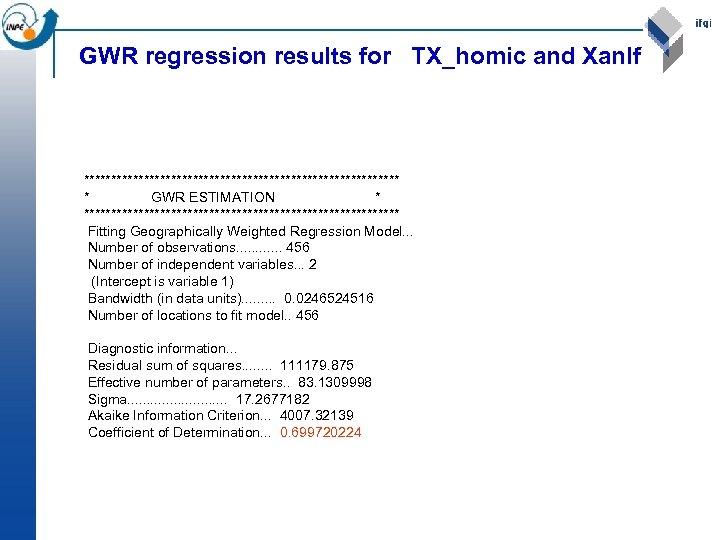 GWR regression results for TX_homic and Xanlf ***************************** * GWR ESTIMATION * ***************************** Fitting Geographically Weighted Regression Model. . . Number of observations. . . 456 Number of independent variables. . . 2 (Intercept is variable 1) Bandwidth (in data units). . 0. 0246524516 Number of locations to fit model. . 456 Diagnostic information. . . Residual sum of squares. . . . 111179. 875 Effective number of parameters. . 83. 1309998 Sigma. . . 17. 2677182 Akaike Information Criterion. . . 4007. 32139 Coefficient of Determination. . . 0. 699720224
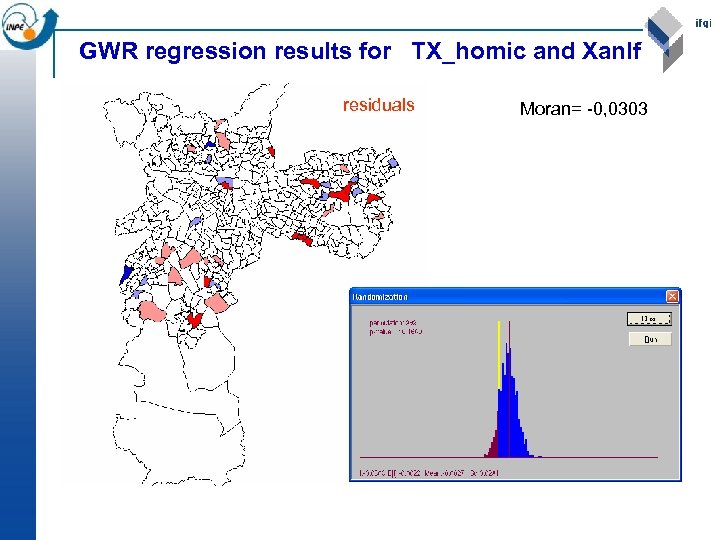 GWR regression results for TX_homic and Xanlf residuals Moran= -0, 0303
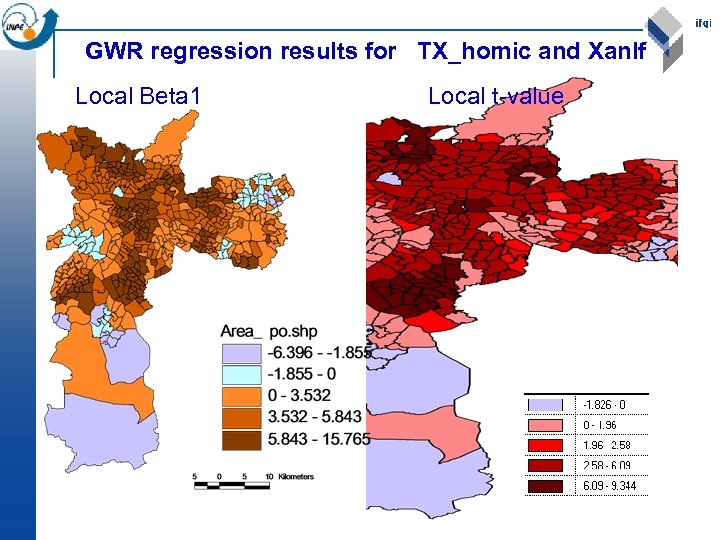 GWR regression results for TX_homic and Xanlf Local Beta 1 Local t-value
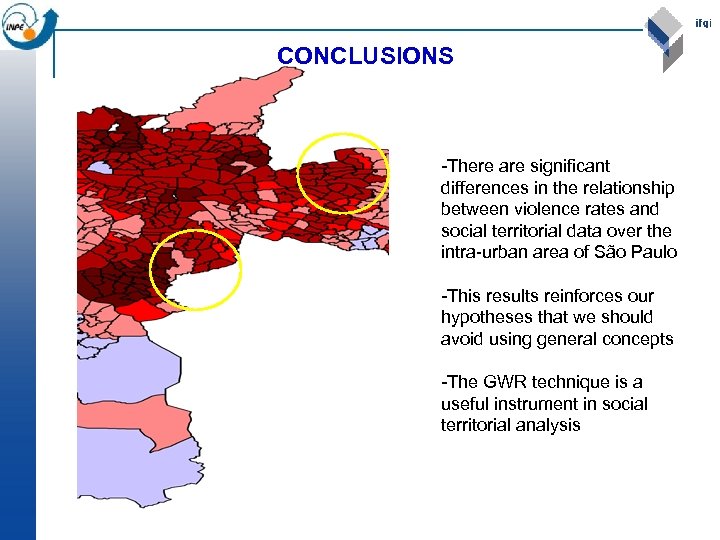 CONCLUSIONS -There are significant differences in the relationship between violence rates and social territorial data over the intra-urban area of São Paulo -This results reinforces our hypotheses that we should avoid using general concepts -The GWR technique is a useful instrument in social territorial analysis