 Скачать презентацию Spatial and temporal operation of food webs Scales
78da6337c4fe4626d49675c5efa91e5a.ppt
- Количество слайдов: 46



Spatial and temporal operation of food webs: Scales of interaction in oceanic ecosystems Eugene Murphy Jon Watkins, Phil Trathan, Nadine Johnston, Rachel Cavanagh, Simeon Hill (BAS) Eileen Hofmann (ODU)
Outline of Presentation • General comments about food webs • Scales of physical and biological processes and interactions • Importance and implications of variability in food webs • Concluding remarks • ICED program
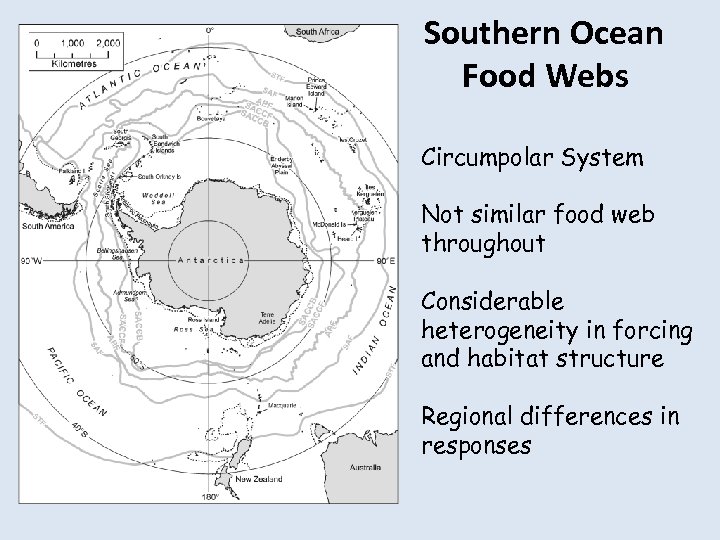
Southern Ocean Food Webs Circumpolar System Not similar food web throughout Considerable heterogeneity in forcing and habitat structure Regional differences in responses
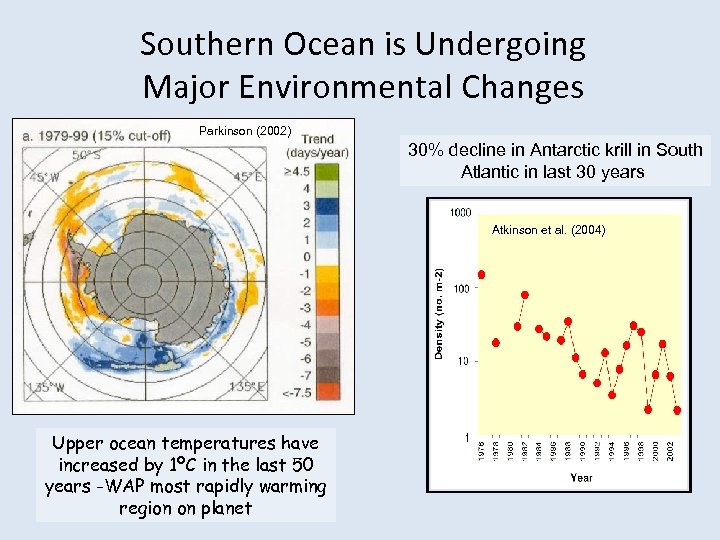
Southern Ocean is Undergoing Major Environmental Changes Parkinson (2002) 30% decline in Antarctic krill in South Atlantic in last 30 years Atkinson et al. (2004) Upper ocean temperatures have increased by 1ºC in the last 50 years -WAP most rapidly warming region on planet
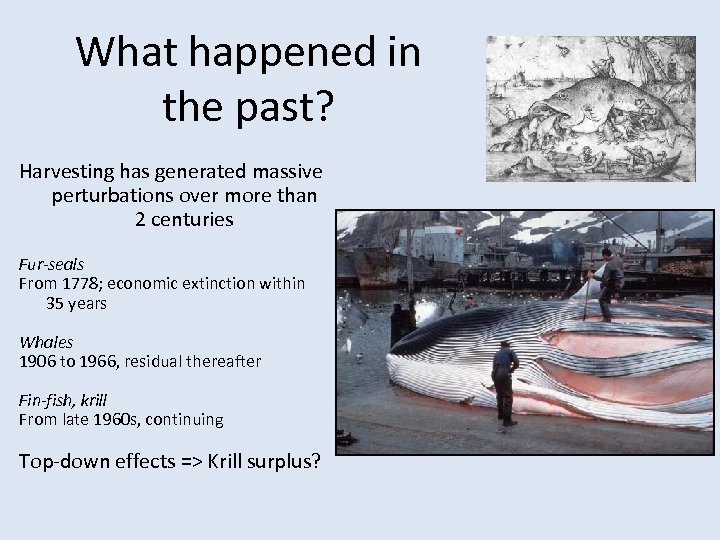
What happened in the past? Harvesting has generated massive perturbations over more than 2 centuries Fur-seals From 1778; economic extinction within 35 years Whales 1906 to 1966, residual thereafter Fin-fish, krill From late 1960 s, continuing Top-down effects => Krill surplus?
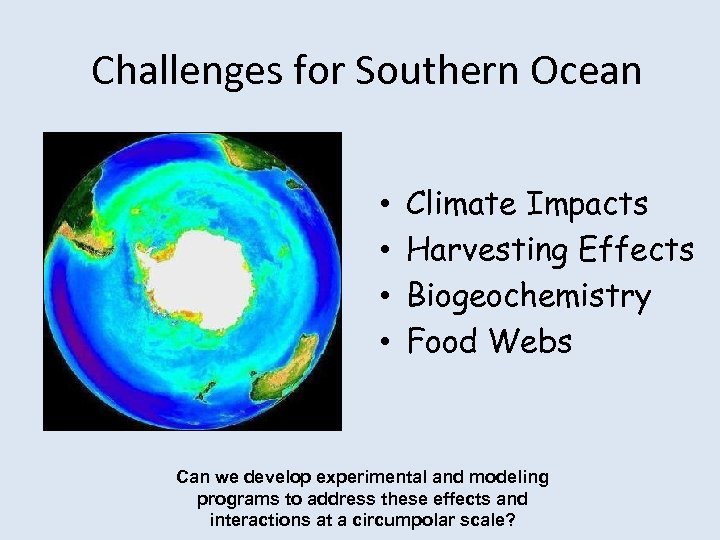
Challenges for Southern Ocean • • Climate Impacts Harvesting Effects Biogeochemistry Food Webs Can we develop experimental and modeling programs to address these effects and interactions at a circumpolar scale?
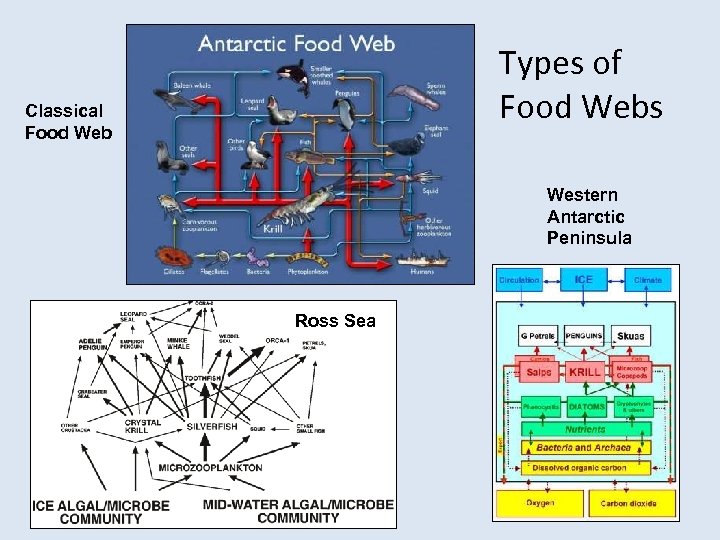
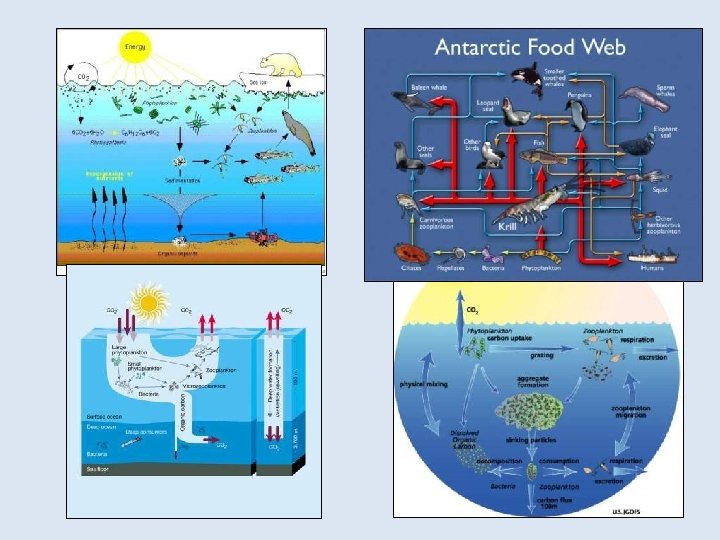
Types of Food Webs Classical Food Web Western Antarctic Peninsula Ross Sea
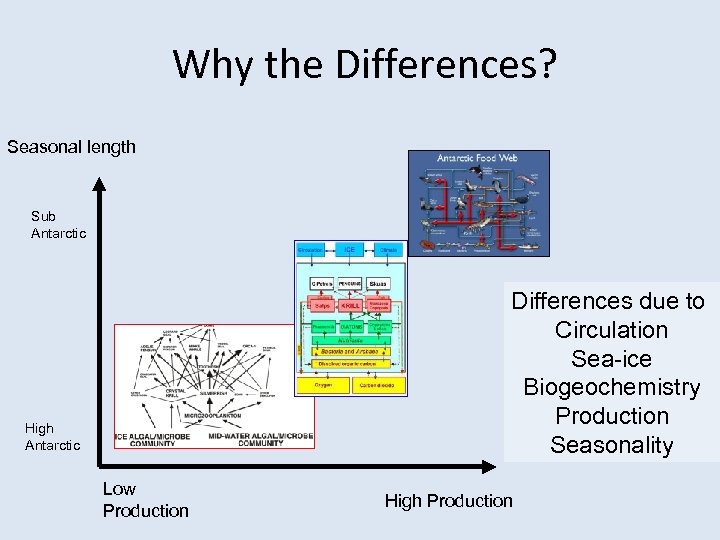
Why the Differences? Seasonal length Sub Antarctic Differences due to Circulation Sea-ice Biogeochemistry Production Seasonality High Antarctic Low Production High Production
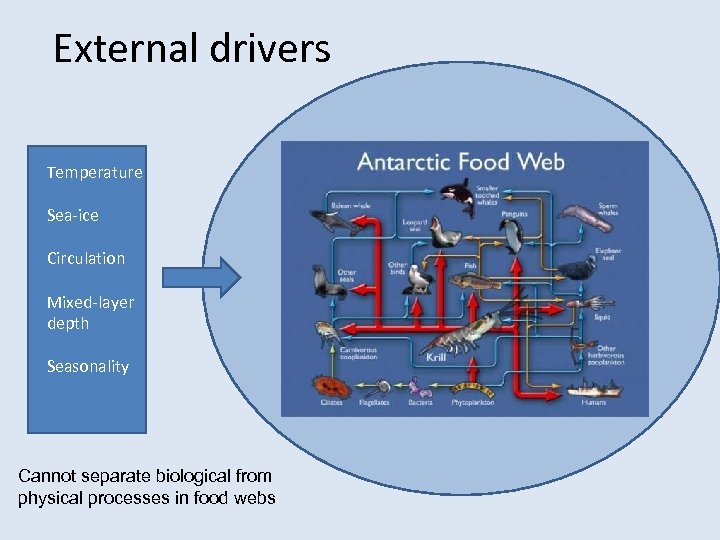
External drivers Temperature Sea-ice Circulation Mixed-layer depth Seasonality Cannot separate biological from physical processes in food webs
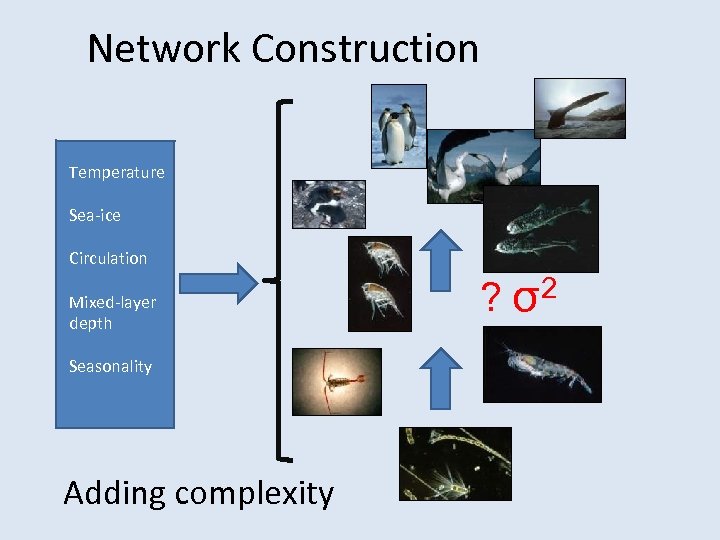
Network Construction Temperature Sea-ice Circulation Mixed-layer depth Seasonality Adding complexity ? σ2
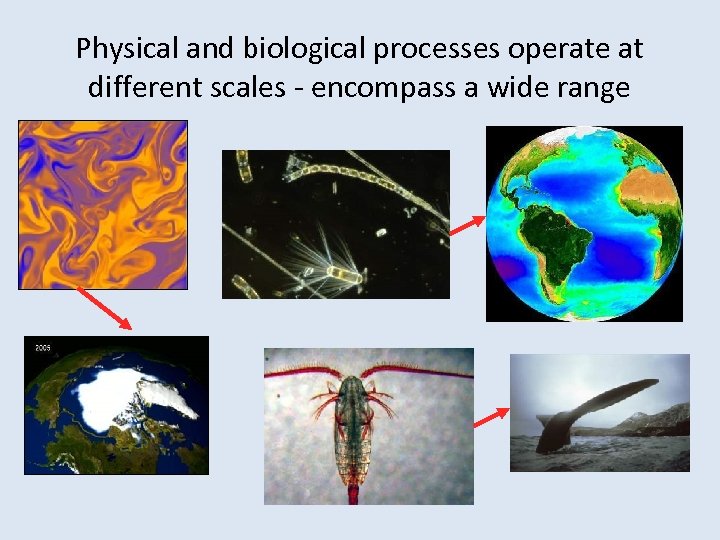
Physical and biological processes operate at different scales - encompass a wide range
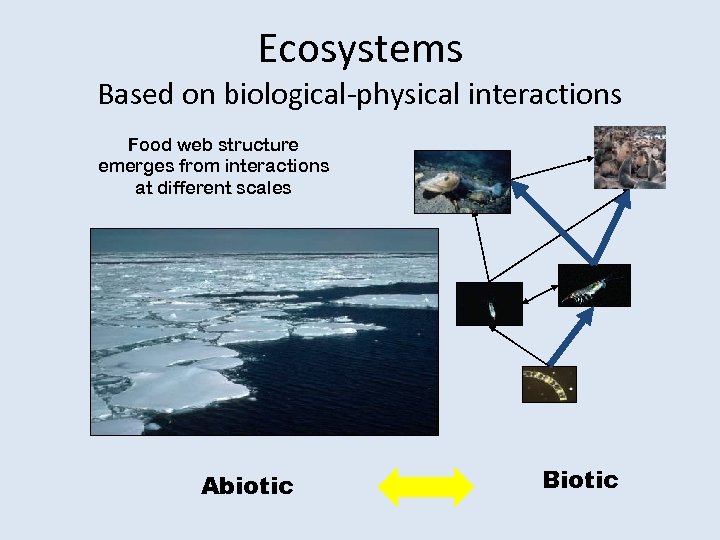
Ecosystems Based on biological-physical interactions Food web structure emerges from interactions at different scales Abiotic Biotic
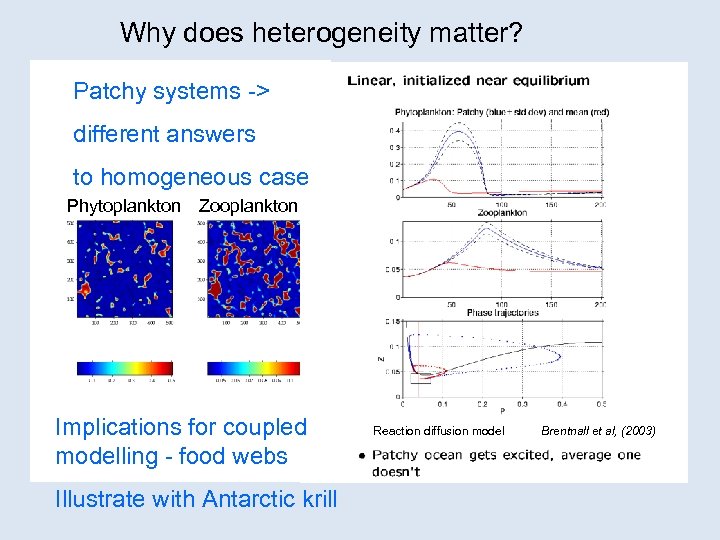
Why does heterogeneity matter? Patchy systems -> different answers to homogeneous case Phytoplankton Zooplankton Implications for coupled modelling - food webs Illustrate with Antarctic krill Reaction diffusion model Brentnall et al, (2003)
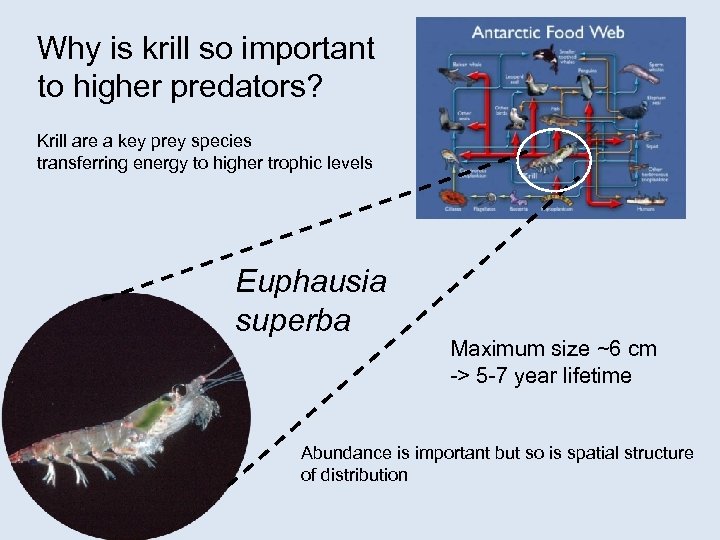
Why is krill so important to higher predators? Krill are a key prey species transferring energy to higher trophic levels Euphausia superba Maximum size ~6 cm -> 5 -7 year lifetime Abundance is important but so is spatial structure of distribution
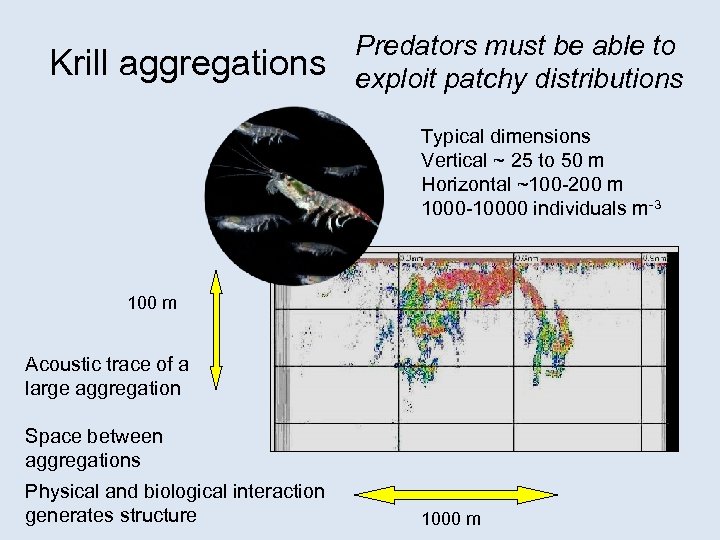
Krill aggregations Predators must be able to exploit patchy distributions Typical dimensions Vertical ~ 25 to 50 m Horizontal ~100 -200 m 1000 -10000 individuals m-3 100 m Acoustic trace of a large aggregation Space between aggregations Physical and biological interaction generates structure 1000 m
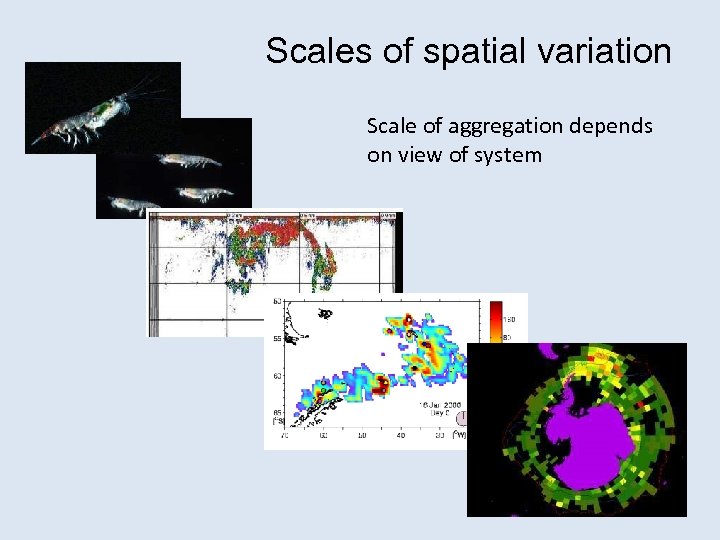
Scales of spatial variation Scale of aggregation depends on view of system
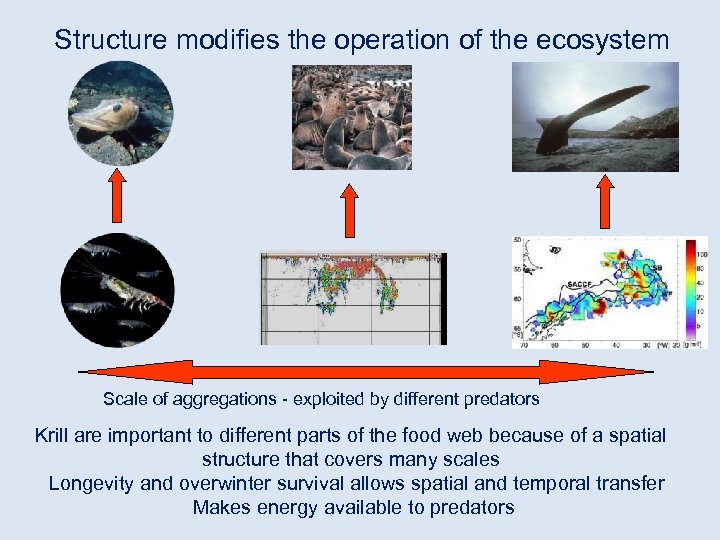
Structure modifies the operation of the ecosystem Scale of aggregations - exploited by different predators Krill are important to different parts of the food web because of a spatial structure that covers many scales Longevity and overwinter survival allows spatial and temporal transfer Makes energy available to predators
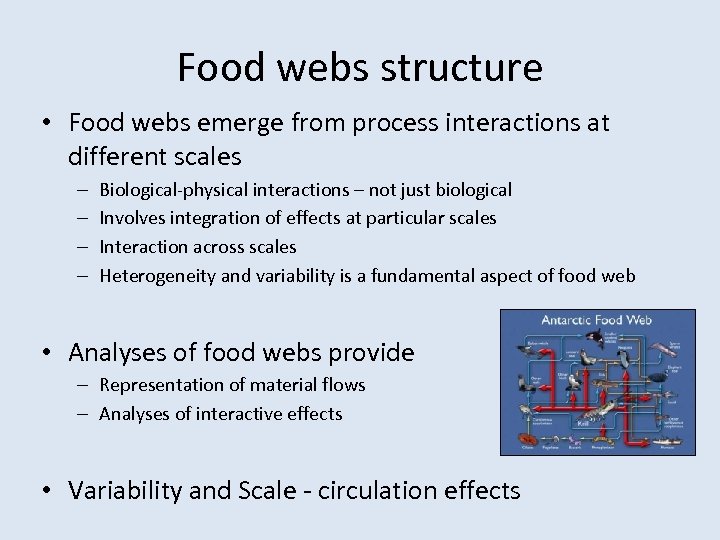
Food webs structure • Food webs emerge from process interactions at different scales – – Biological-physical interactions – not just biological Involves integration of effects at particular scales Interaction across scales Heterogeneity and variability is a fundamental aspect of food web • Analyses of food webs provide – Representation of material flows – Analyses of interactive effects • Variability and Scale - circulation effects
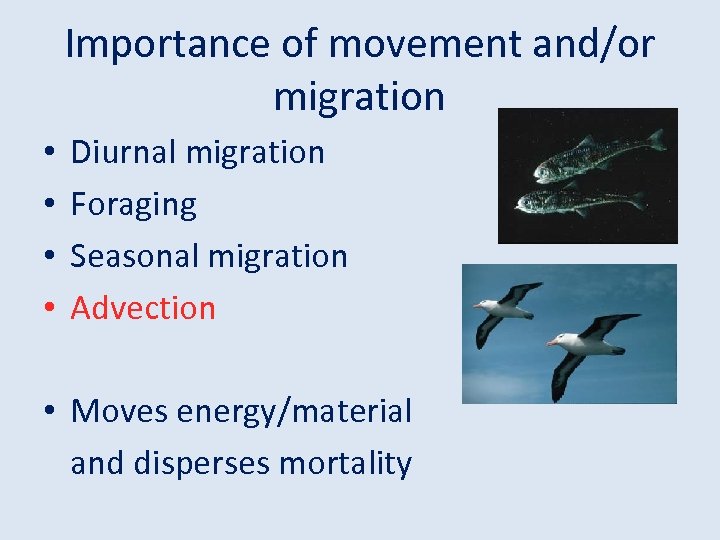
Importance of movement and/or migration • • Diurnal migration Foraging Seasonal migration Advection • Moves energy/material and disperses mortality
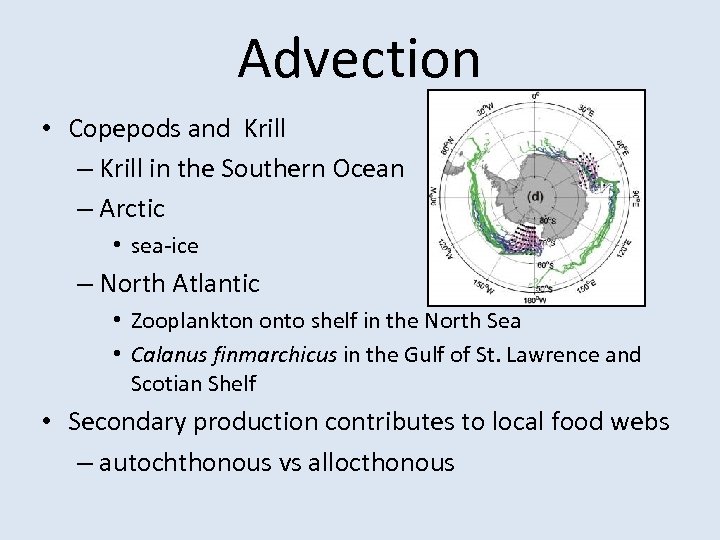
Advection • Copepods and Krill – Krill in the Southern Ocean – Arctic • sea-ice – North Atlantic • Zooplankton onto shelf in the North Sea • Calanus finmarchicus in the Gulf of St. Lawrence and Scotian Shelf • Secondary production contributes to local food webs – autochthonous vs allocthonous
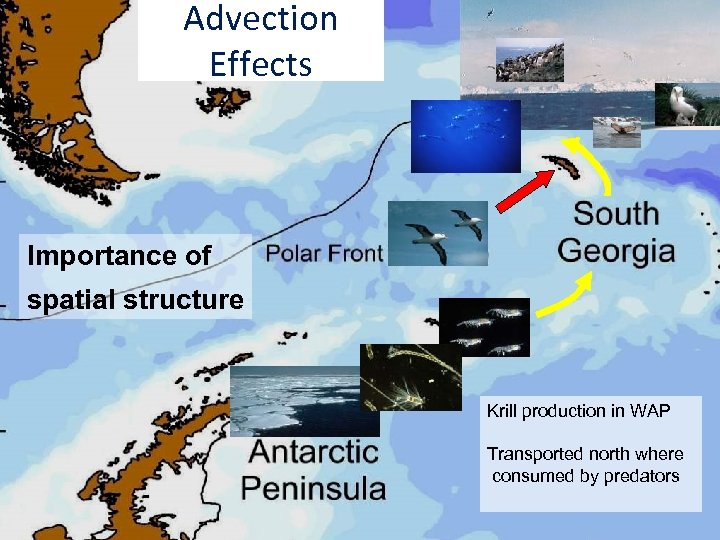
Advection Effects Importance of spatial structure Krill production in WAP Transported north where consumed by predators
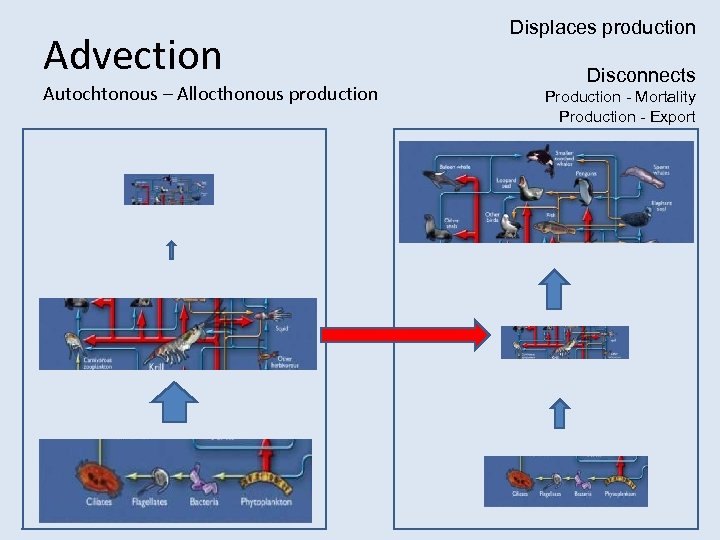
Advection Autochtonous – Allocthonous production Displaces production Disconnects Production - Mortality Production - Export
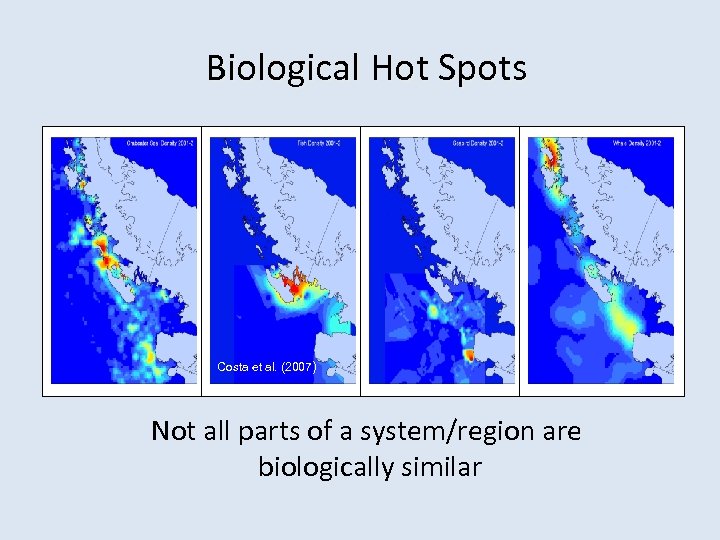
Biological Hot Spots Costa et al. (2007) (Costa et al. , 2007) Not all parts of a system/region are biologically similar
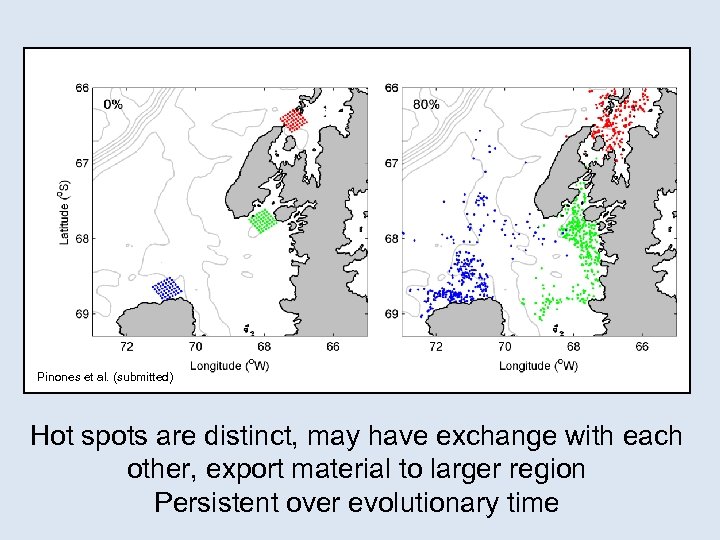
Pinones et al. (submitted) Hot spots are distinct, may have exchange with each other, export material to larger region Persistent over evolutionary time
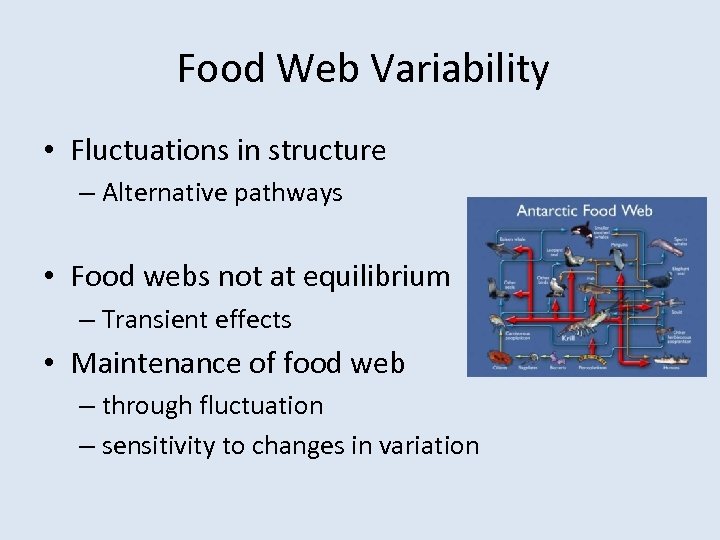
Food Web Variability • Fluctuations in structure – Alternative pathways • Food webs not at equilibrium – Transient effects • Maintenance of food web – through fluctuation – sensitivity to changes in variation
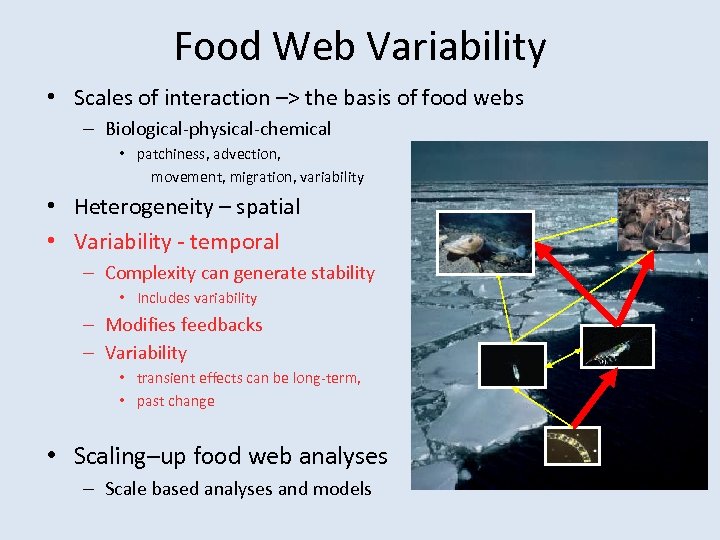
Food Web Variability • Scales of interaction –> the basis of food webs – Biological-physical-chemical • patchiness, advection, movement, migration, variability • Heterogeneity – spatial • Variability - temporal – Complexity can generate stability • Includes variability – Modifies feedbacks – Variability • transient effects can be long-term, • past change • Scaling–up food web analyses – Scale based analyses and models
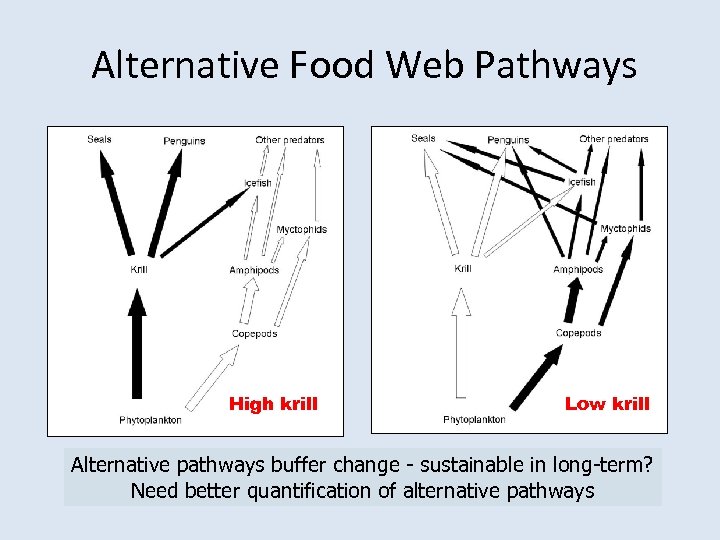
Alternative Food Web Pathways High krill Low krill Alternative pathways buffer change - sustainable in long-term? Need better quantification of alternative pathways
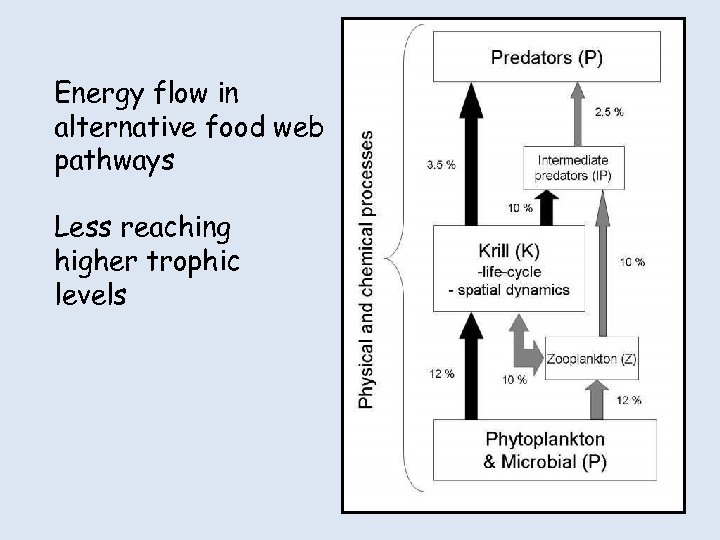
Energy flow in alternative food web pathways Less reaching higher trophic levels
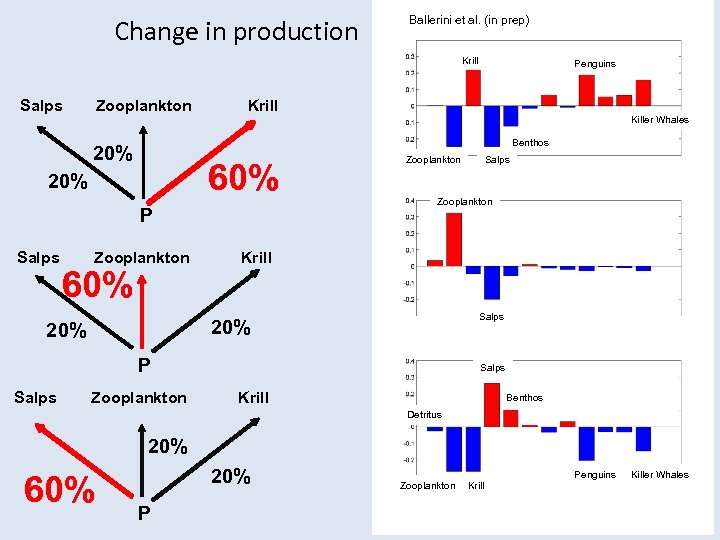
Change in production Ballerini et al. (in prep) Krill Salps Zooplankton Krill Killer Whales Benthos 20% 60% 20% P Salps Zooplankton 60% Zooplankton Krill Salps P Zooplankton Salps Zooplankton 20% Salps Penguins Salps Krill Benthos Detritus 20% 60% 20% P Penguins Zooplankton Krill Killer Whales
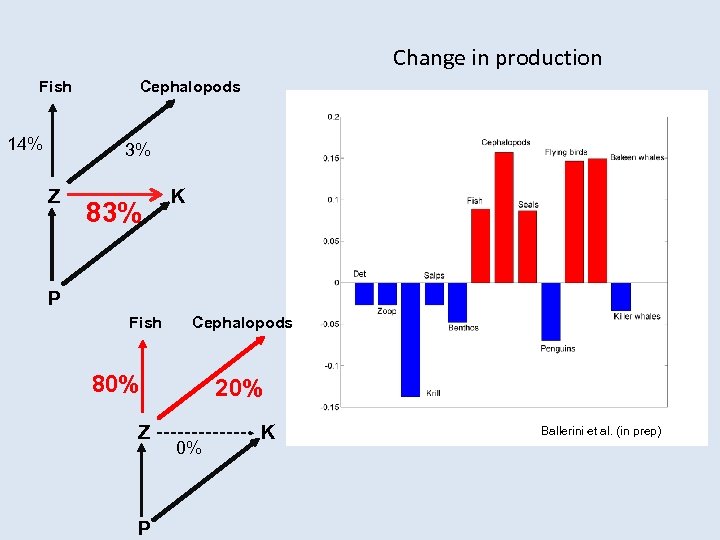
Change in production Fish 14% Cephalopods 3% Z 83% K P Fish Cephalopods 80% Z P 20% 0% K Ballerini et al. (in prep)
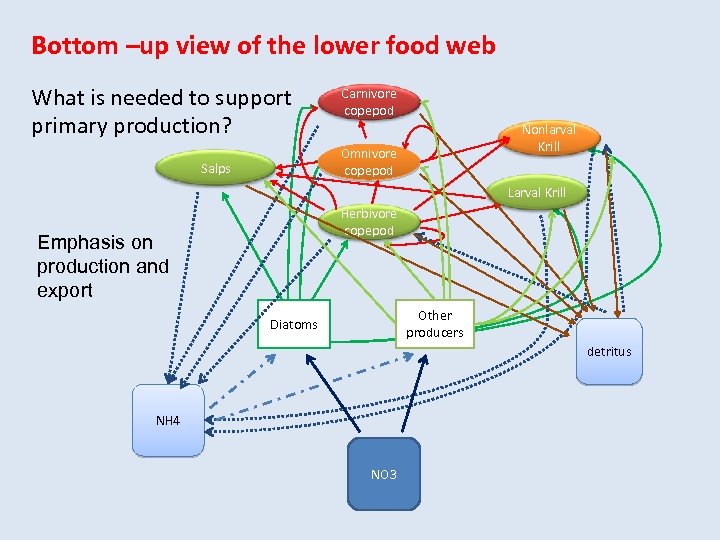
Bottom –up view of the lower food web What is needed to support primary production? Carnivore copepod Nonlarval Krill Omnivore copepod Salps Larval Krill Herbivore copepod Emphasis on production and export Other producers Diatoms detritus NH 4 NO 3
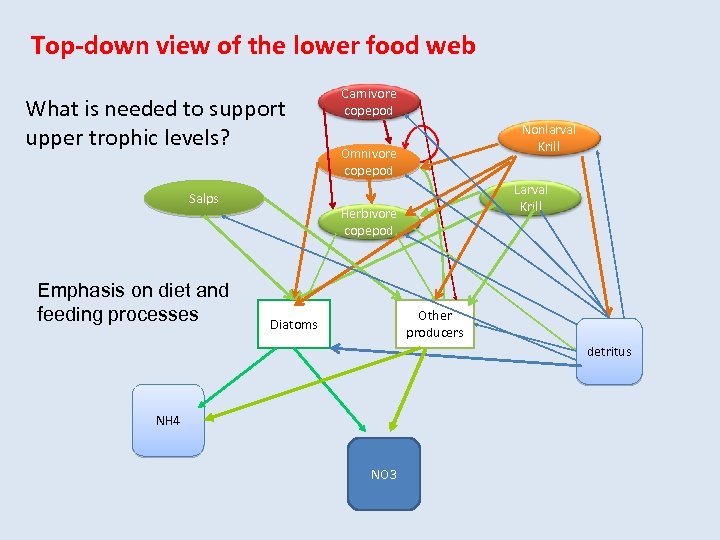
Top-down view of the lower food web What is needed to support upper trophic levels? Salps Emphasis on diet and feeding processes Carnivore copepod Nonlarval Krill Omnivore copepod Larval Krill Herbivore copepod Other producers Diatoms detritus NH 4 NO 3
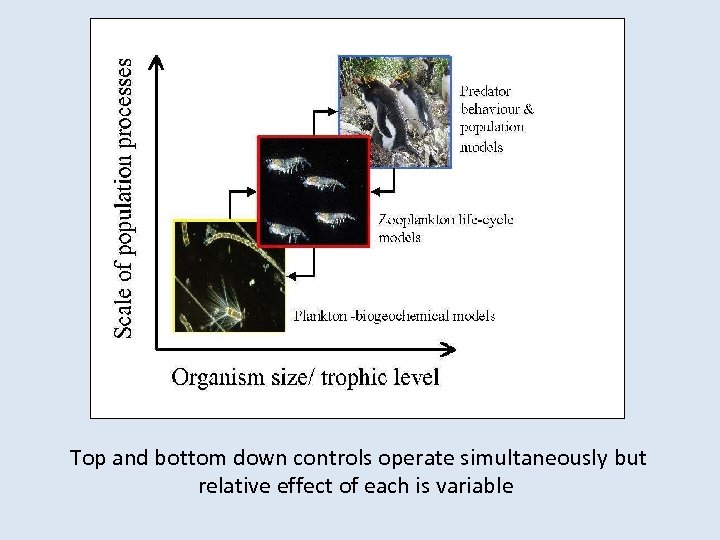
Top and bottom down controls operate simultaneously but relative effect of each is variable
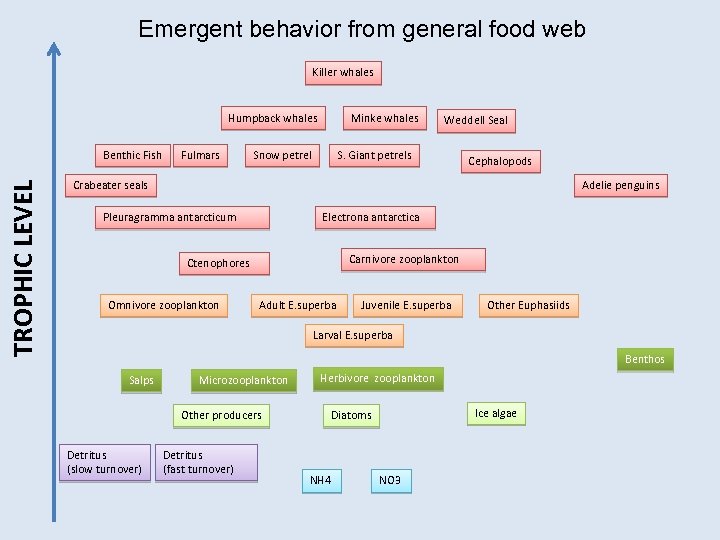
Emergent behavior from general food web Killer whales Humpback whales TROPHIC LEVEL Benthic Fish Fulmars Minke whales Snow petrel Weddell Seal S. Giant petrels Cephalopods Crabeater seals Adelie penguins Pleuragramma antarcticum Electrona antarctica Carnivore zooplankton Ctenophores Omnivore zooplankton Adult E. superba Juvenile E. superba Other Euphasiids Larval E. superba Benthos Salps Microzooplankton Herbivore zooplankton Other producers Detritus (slow turnover) Detritus (fast turnover) Ice algae Diatoms NH 4 NO 3
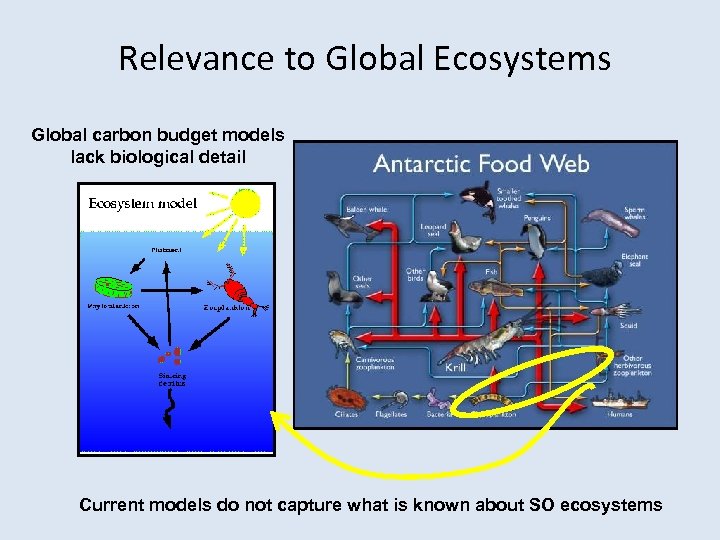
Relevance to Global Ecosystems Global carbon budget models lack biological detail Current models do not capture what is known about SO ecosystems
Key Question and Issues Ø Linking food web analyses with biogeochemical studies in the Southern Ocean Role of different zooplankton groups in recycling and vertical flux • Krill, Salp, Copepod effects and interactions • Top-down controls – magnitude and flux • Seasonality - lack of information
Key Question and Issues Ø Linking food web analyses with biogeochemical studies in the Southern Ocean Food web processes in the vertical • Mesopelagic • Benthic-Pelagic coupling Sea-ice food webs • Summer - winter connections • Critical for overwintering
Key Question and Issues Ø Linking food web analyses with biogeochemical studies in the Southern Ocean Hotspots of production, consumption, export • Intense blooms in areas of natural iron fertilization • Ice-edge blooms • Long-term predator colonies Ocean acidification • Direct and indirect impacts on key pelagic species • Physiological constraints and life-history sensitivity
Key Question and Issues Ø Linking food web analyses with biogeochemical studies in the Southern Ocean Food web processes in the vertical • Mesopelagic • Benthic-Pelagic coupling Sea-ice food webs • Summer - winter connections
Key Question and Issues Ø Linking food web analyses with biogeochemical studies in the Southern Ocean Impacts of change – Effects of change in food web structure on biogeochemical cycles • Change in sea-ice, temperature, harvesting, bottom -up/top-down issues • Seasonality shifts, timing effects and phenology • Regional comparisons
Key Question and Issues - What Needed? – Monitoring systems • Development of a range of long-term large scale systems/sensors – e. g. Acoustics, CPR – SOOS and Southern Ocean Sentinel – Integrated views • Targeted food web–biogeochemical studies to consider impacts of variation on food web structure on biogeochemical processes – Regional comparisons (ICED) – Hotspots (ICED, SOOS) – Modelling – need all • Large scale modelling – towards generic views (ICED) • High resolution localised models • New approaches
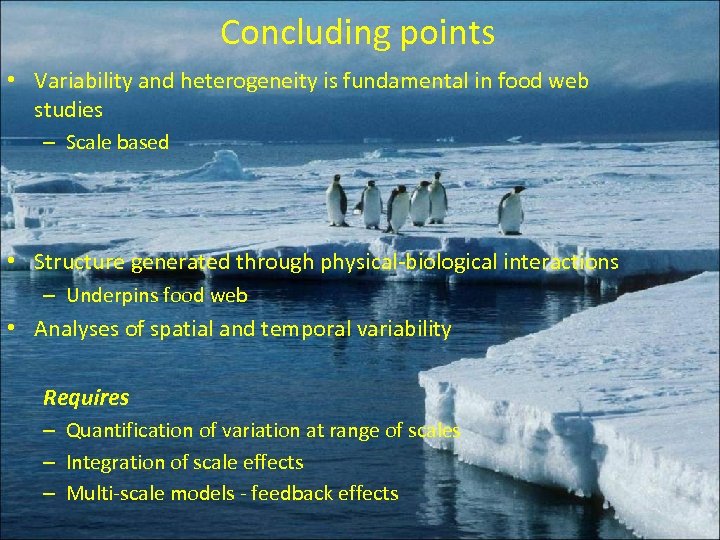
Concluding points • Variability and heterogeneity is fundamental in food web studies – Scale based • Structure generated through physical-biological interactions – Underpins food web • Analyses of spatial and temporal variability Requires – Quantification of variation at range of scales – Integration of scale effects – Multi-scale models - feedback effects
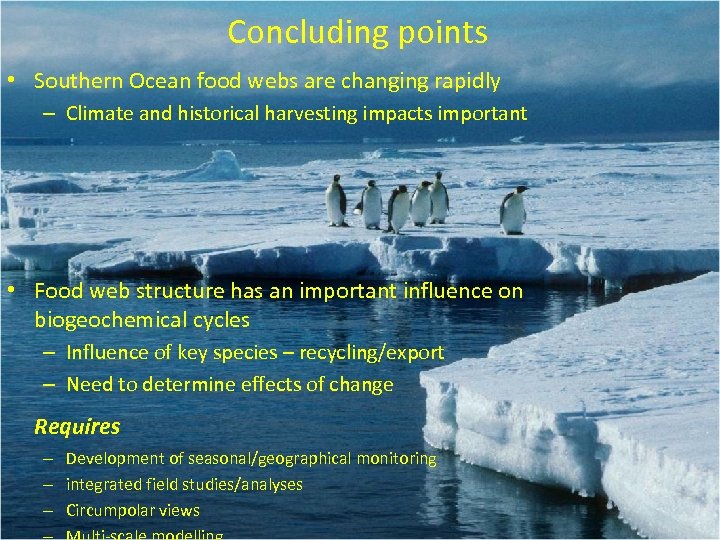
Concluding points • Southern Ocean food webs are changing rapidly – Climate and historical harvesting impacts important • Food web structure has an important influence on biogeochemical cycles – Influence of key species – recycling/export – Need to determine effects of change Requires – Development of seasonal/geographical monitoring – integrated field studies/analyses – Circumpolar views
Joint program under IMBER and GLOBEC - 10 year effort • Circumpolar, interdisciplinary • • • program focused on climate interactions and feedbacks to ecosystem function and biogeochemical cycles Extend and further develop circulation, ecosystem, and biogeochemical models Focus on end-to-end food web models Combine food web and biogeochemical communities
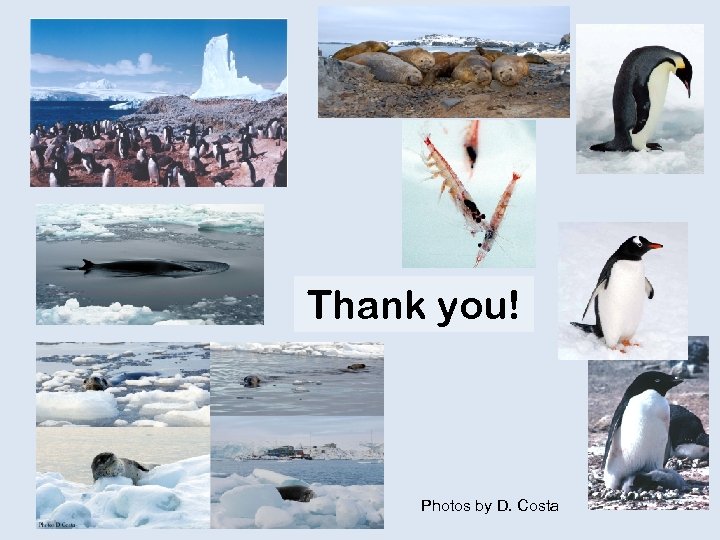
Thank you! Photos by D. Costa
Скачать презентацию Spatial and temporal operation of food webs Scales
78da6337c4fe4626d49675c5efa91e5a.ppt