 Скачать презентацию Spatial and Ballistic Analysis Conducted Pursuant to Pennsylvania
f9818b3038e86365472de311e28cadce.ppt
- Количество слайдов: 23



Spatial and Ballistic Analysis Conducted Pursuant to Pennsylvania House Resolution 61 Relative to the Question: “Do Shotguns and Muzzleloaders Pose Less Risk than Centerfire Rifles for Hunting Deer in Pennsylvania? ” Prepared by: Mountain. Top Technologies, Inc. March 28, 2007
Purpose, Objective and Approach • Purpose: To answer the question “Do shotguns and muzzleloaders pose less risk than centerfire rifles for hunting deer in Pennsylvania? ” • Objective: To provide a scientific basis for policy pertaining to the mandatory use of shotguns and muzzleloaders for deer hunting in designated areas of Pennsylvania. • Approach: Compare the danger areas of firearmammunition combinations and representative cases of error
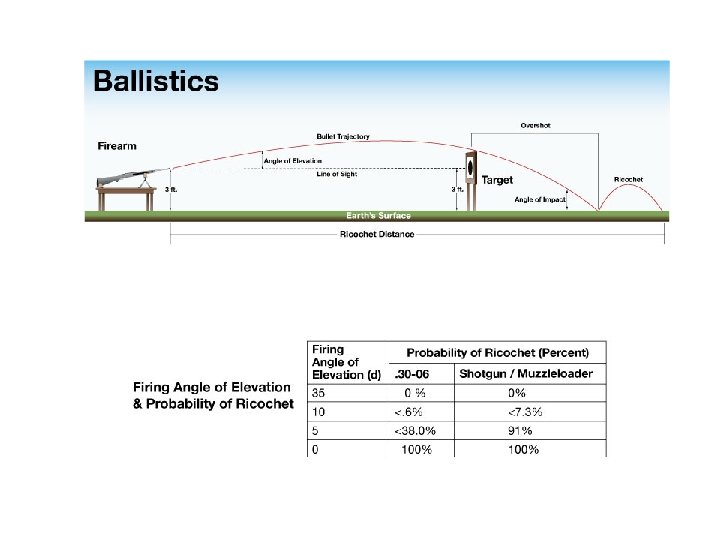
Important Assumptions • The typical hunter exercises reasonable care • Hunters will tend to use the best available legal firearm-ammunition combination • The typical hunter will discharge the firearm at a height of 3 feet to impact a standing deer at approximately 3 feet height • The projectile’s trajectory will most frequently be approximately level with the general trend of the earth’s surface – A hunter may discharge the firearm above a 0 degree angle of elevation – The majority of these discharges will be at an angle of 10 degrees or less – Discharges at an angle delivering the maximum range are possible but not frequent • The firearm-ammunition combinations used in this report are representative of those used to hunt deer in Pennsylvania
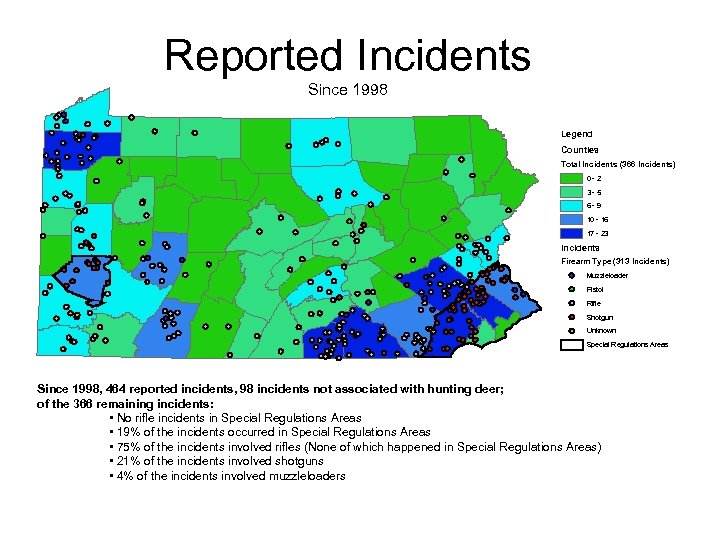
Reported Incidents Since 1998 Legend Counties Total Incidents (366 Incidents) 0 -2 3 -5 6 -9 10 - 16 17 - 23 Incidents Firearm Type (313 Incidents) Muzzleloader Pistol Rifle Shotgun Unknown Special Regulations Areas Since 1998, 464 reported incidents, 98 incidents not associated with hunting deer; of the 366 remaining incidents: • No rifle incidents in Special Regulations Areas • 19% of the incidents occurred in Special Regulations Areas • 75% of the incidents involved rifles (None of which happened in Special Regulations Areas) • 21% of the incidents involved shotguns • 4% of the incidents involved muzzleloaders
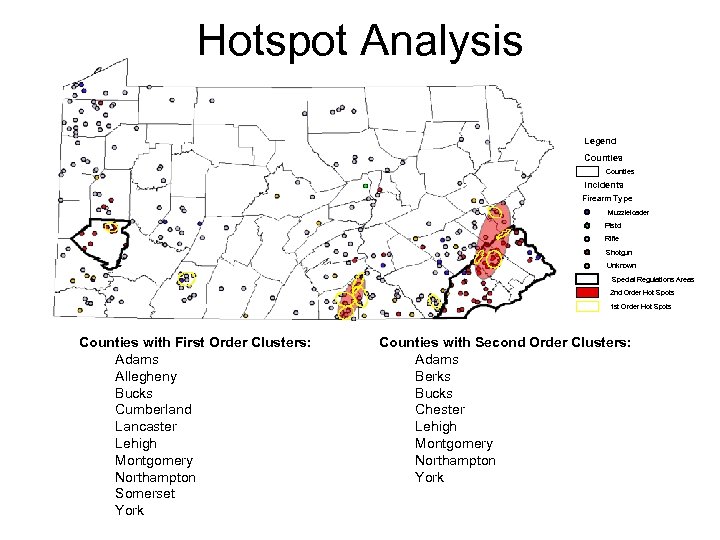
Hotspot Analysis Legend Counties Incidents Firearm Type Muzzleloader Pistol Rifle Shotgun Unknown Special Regulations Areas 2 nd Order Hot Spots 1 st Order Hot Spots Counties with First Order Clusters: Adams Allegheny Bucks Cumberland Lancaster Lehigh Montgomery Northampton Somerset York Counties with Second Order Clusters: Adams Berks Bucks Chester Lehigh Montgomery Northampton York
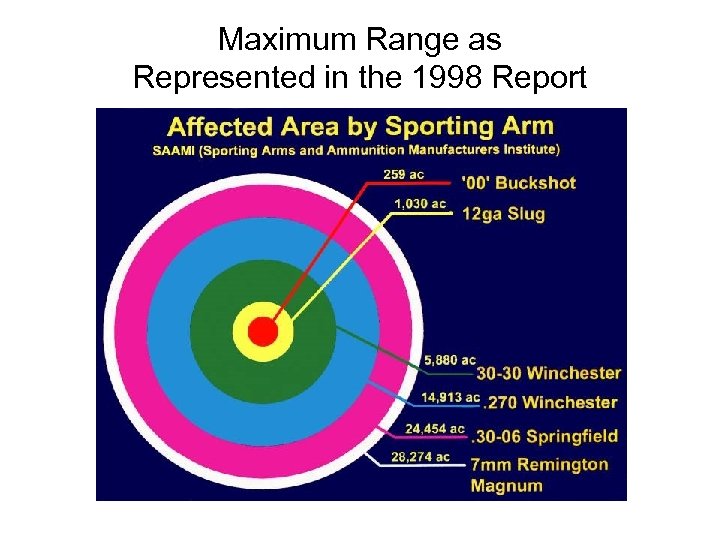
Maximum Range as Represented in the 1998 Report
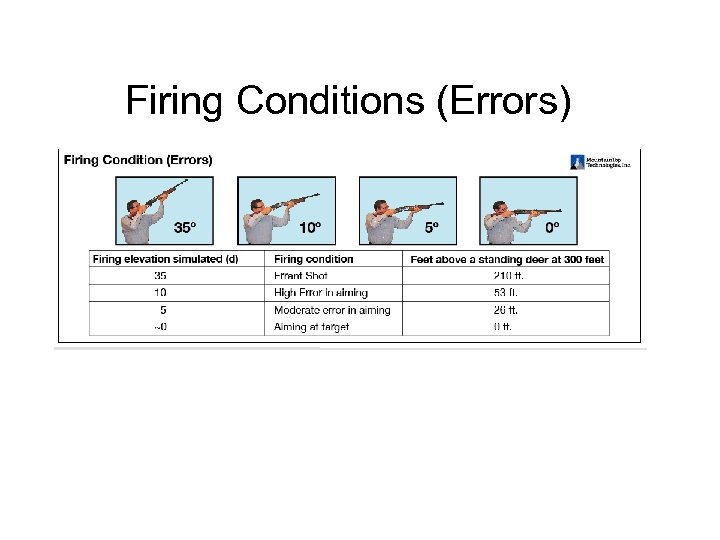
Firing Conditions (Errors)
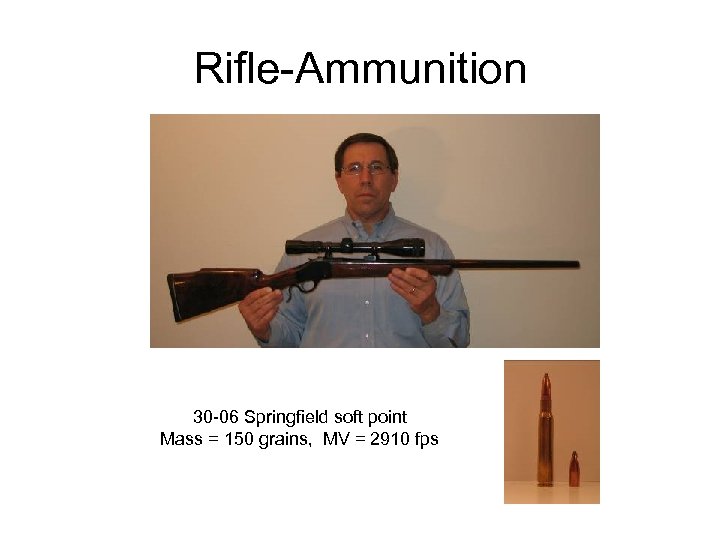
Rifle-Ammunition 30 -06 Springfield soft point Mass = 150 grains, MV = 2910 fps
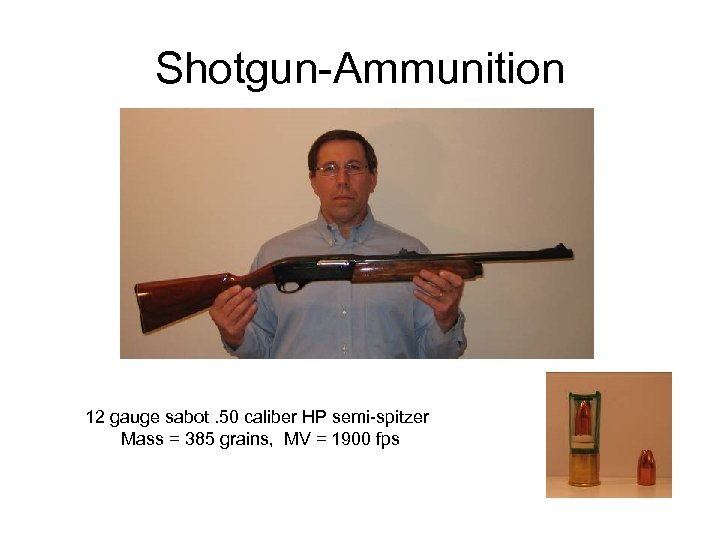
Shotgun-Ammunition 12 gauge sabot. 50 caliber HP semi-spitzer Mass = 385 grains, MV = 1900 fps
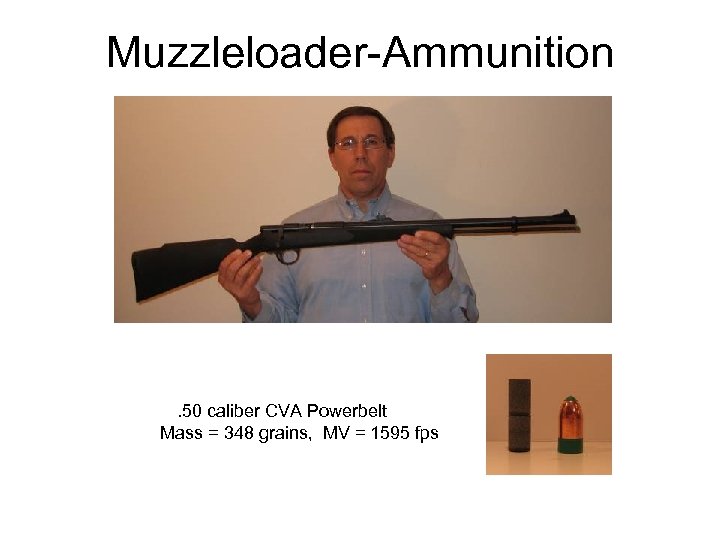
Muzzleloader-Ammunition . 50 caliber CVA Powerbelt Mass = 348 grains, MV = 1595 fps
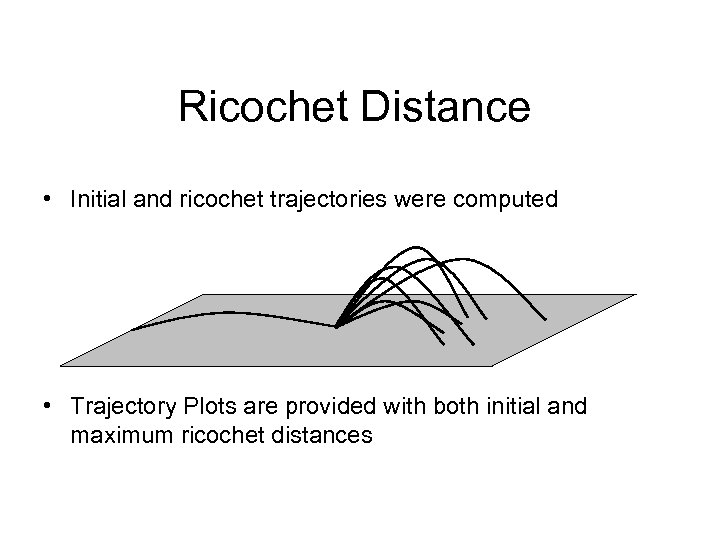
Ricochet Distance • Initial and ricochet trajectories were computed • Trajectory Plots are provided with both initial and maximum ricochet distances
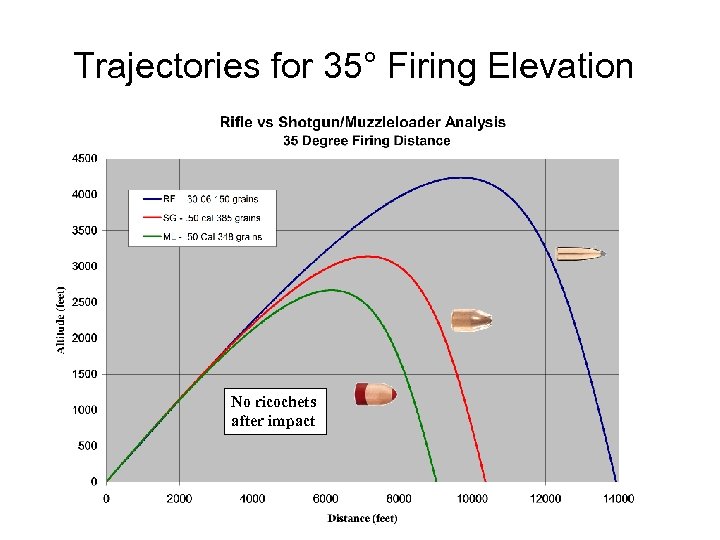
Trajectories for 35° Firing Elevation No ricochets after impact
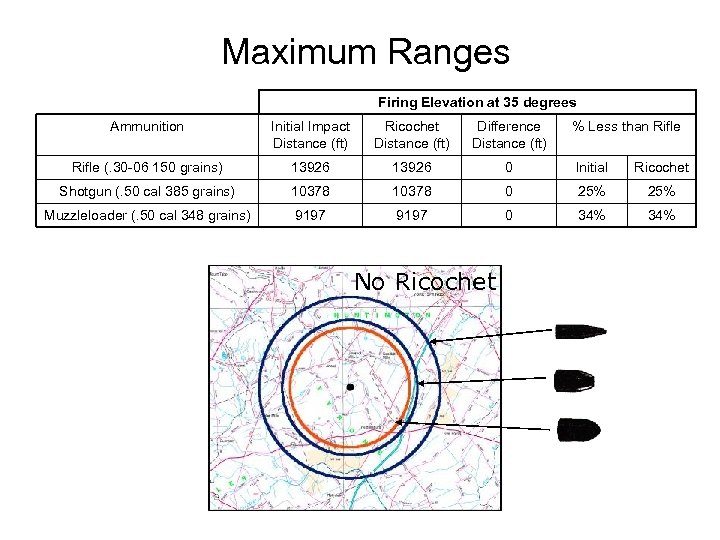
Maximum Ranges Firing Elevation at 35 degrees Ammunition Initial Impact Distance (ft) Ricochet Distance (ft) Difference Distance (ft) Rifle (. 30 -06 150 grains) 13926 0 Initial Ricochet Shotgun (. 50 cal 385 grains) 10378 0 25% Muzzleloader (. 50 cal 348 grains) 9197 0 34% No Ricochet % Less than Rifle
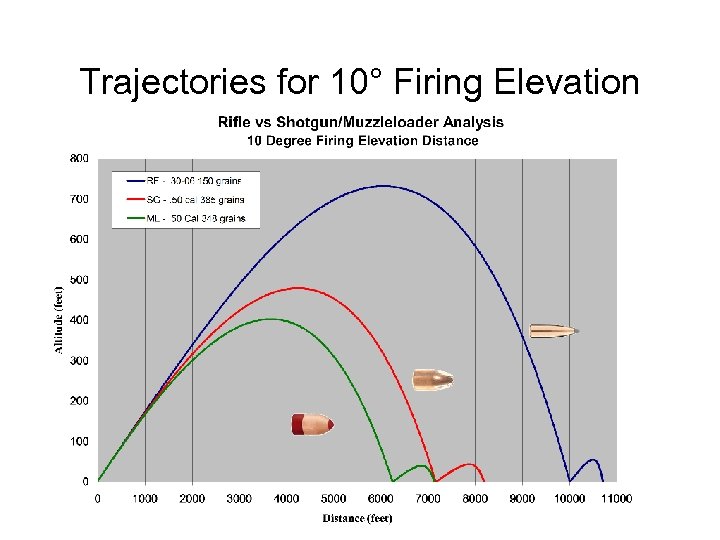
Trajectories for 10° Firing Elevation
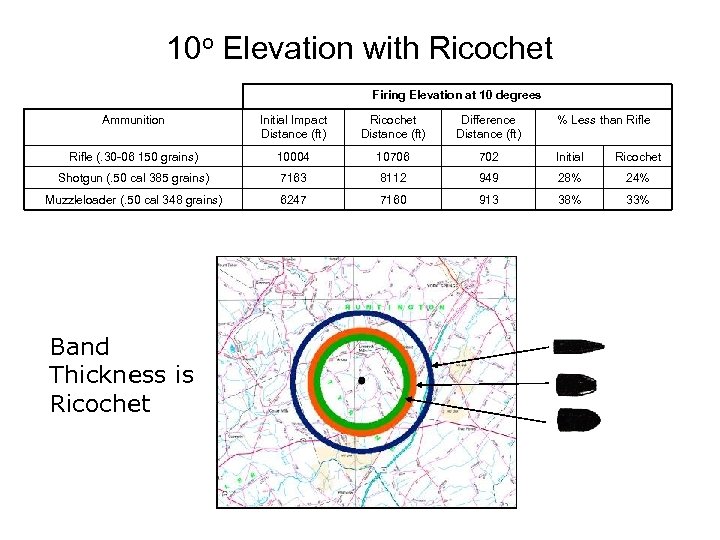
10 o Elevation with Ricochet Firing Elevation at 10 degrees Ammunition Initial Impact Distance (ft) Ricochet Distance (ft) Difference Distance (ft) Rifle (. 30 -06 150 grains) 10004 10706 702 Initial Ricochet Shotgun (. 50 cal 385 grains) 7163 8112 949 28% 24% Muzzleloader (. 50 cal 348 grains) 6247 7160 913 38% 33% Band Thickness is Ricochet % Less than Rifle
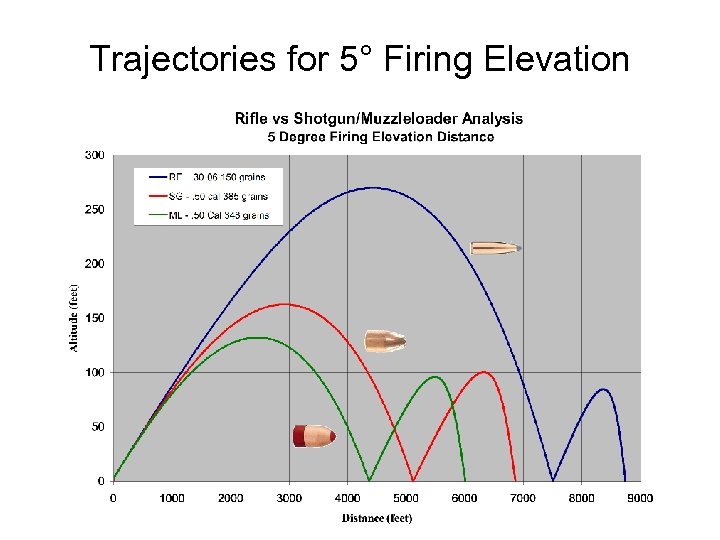
Trajectories for 5° Firing Elevation
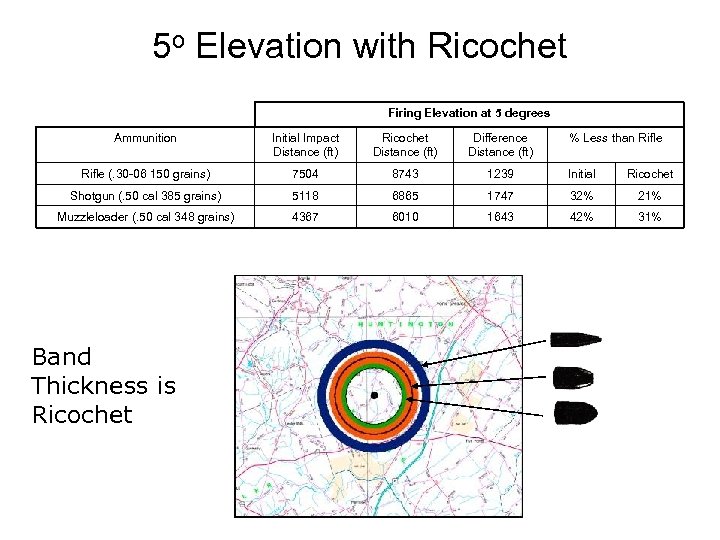
5 o Elevation with Ricochet Firing Elevation at 5 degrees Ammunition Initial Impact Distance (ft) Ricochet Distance (ft) Difference Distance (ft) Rifle (. 30 -06 150 grains) 7504 8743 1239 Initial Ricochet Shotgun (. 50 cal 385 grains) 5118 6865 1747 32% 21% Muzzleloader (. 50 cal 348 grains) 4367 6010 1643 42% 31% Band Thickness is Ricochet % Less than Rifle
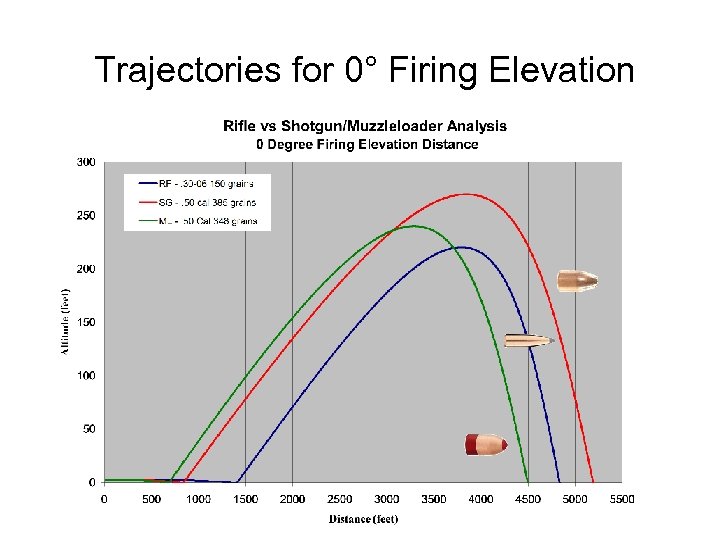
Trajectories for 0° Firing Elevation
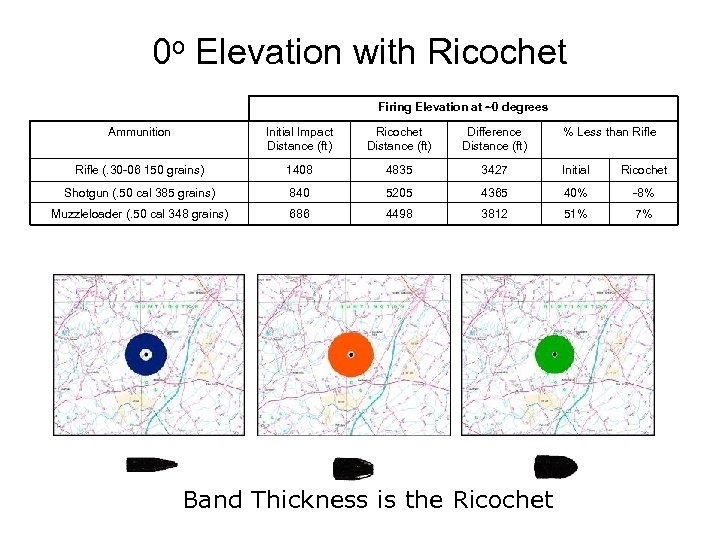
0 o Elevation with Ricochet Firing Elevation at ~0 degrees Ammunition Initial Impact Distance (ft) Ricochet Distance (ft) Difference Distance (ft) Rifle (. 30 -06 150 grains) 1408 4835 3427 Initial Ricochet Shotgun (. 50 cal 385 grains) 840 5205 4365 40% -8% Muzzleloader (. 50 cal 348 grains) 686 4498 3812 51% 7% Band Thickness is the Ricochet % Less than Rifle
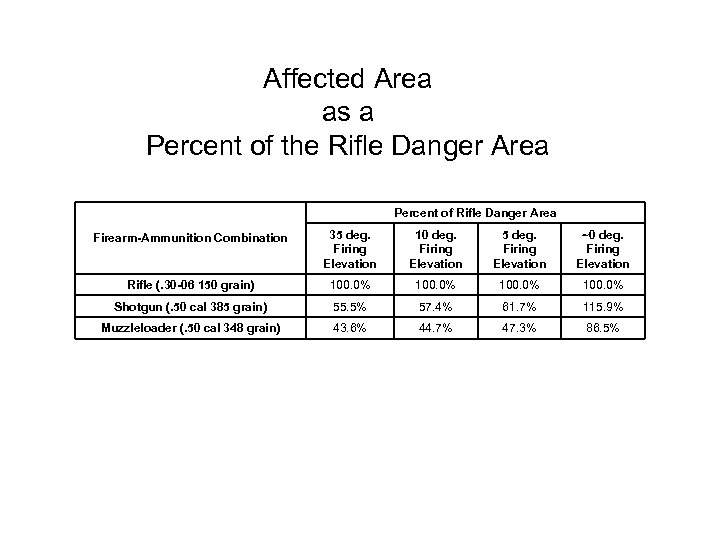
Affected Area as a Percent of the Rifle Danger Area Percent of Rifle Danger Area Firearm-Ammunition Combination 35 deg. Firing Elevation 10 deg. Firing Elevation 5 deg. Firing Elevation ~0 deg. Firing Elevation Rifle (. 30 -06 150 grain) 100. 0% Shotgun (. 50 cal 385 grain) 55. 5% 57. 4% 61. 7% 115. 9% Muzzleloader (. 50 cal 348 grain) 43. 6% 44. 7% 47. 3% 86. 5%
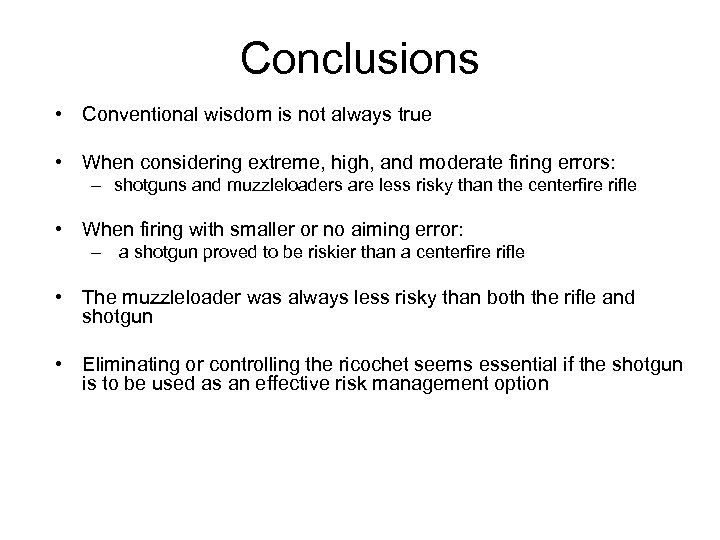
Conclusions • Conventional wisdom is not always true • When considering extreme, high, and moderate firing errors: – shotguns and muzzleloaders are less risky than the centerfire rifle • When firing with smaller or no aiming error: – a shotgun proved to be riskier than a centerfire rifle • The muzzleloader was always less risky than both the rifle and shotgun • Eliminating or controlling the ricochet seems essential if the shotgun is to be used as an effective risk management option
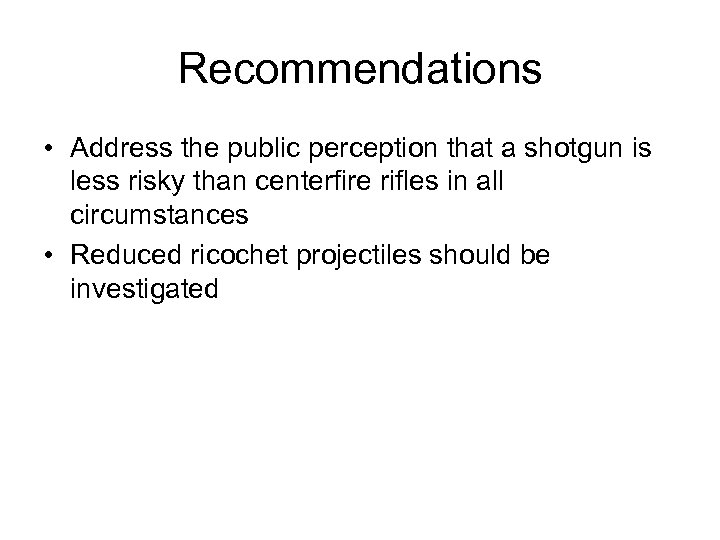
Recommendations • Address the public perception that a shotgun is less risky than centerfire rifles in all circumstances • Reduced ricochet projectiles should be investigated
Скачать презентацию Spatial and Ballistic Analysis Conducted Pursuant to Pennsylvania
f9818b3038e86365472de311e28cadce.ppt