 Скачать презентацию Spanish by Niki I m going to explain basic
Spanish by Niki [UPDATED].pptx
- Количество слайдов: 25



Spanish by Niki I’m going to explain basic grammatical rules and some new words in Spanish
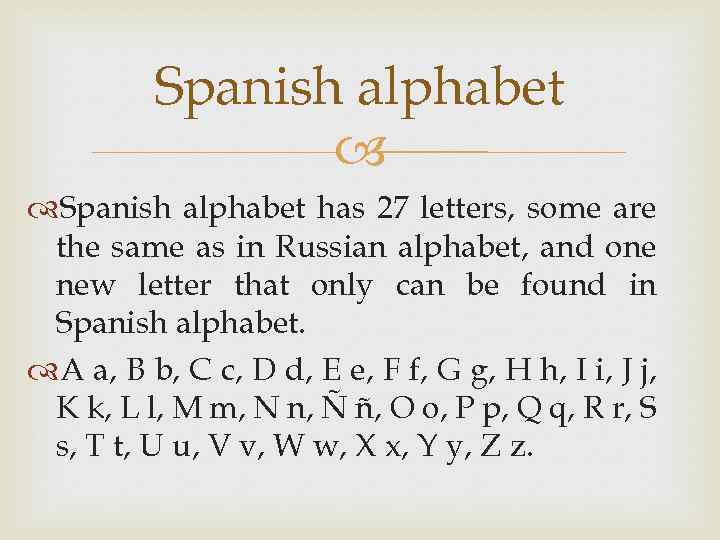
Spanish alphabet has 27 letters, some are the same as in Russian alphabet, and one new letter that only can be found in Spanish alphabet. A a, B b, C c, D d, E e, F f, G g, H h, I i, J j, K k, L l, M m, N n, Ñ ñ, O o, P p, Q q, R r, S s, T t, U u, V v, W w, X x, Y y, Z z.
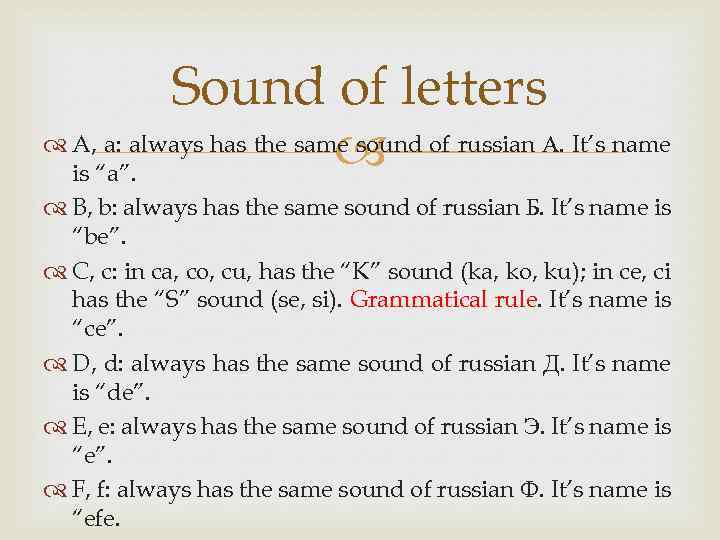
Sound of letters A, a: always has the same sound of russian А. It’s name is “a”. B, b: always has the same sound of russian Б. It’s name is “be”. C, c: in ca, co, cu, has the “K” sound (ka, ko, ku); in ce, ci has the “S” sound (se, si). Grammatical rule. It’s name is “ce”. D, d: always has the same sound of russian Д. It’s name is “de”. E, e: always has the same sound of russian Э. It’s name is “e”. F, f: always has the same sound of russian Ф. It’s name is “efe.
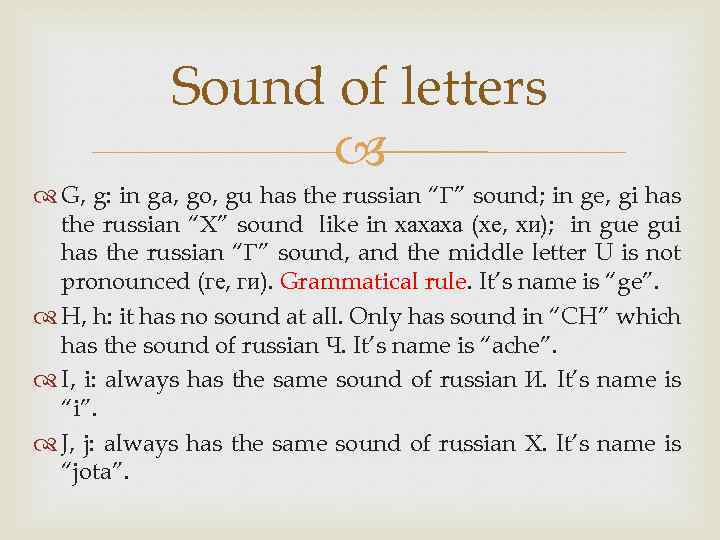
Sound of letters G, g: in ga, go, gu has the russian “Г” sound; in ge, gi has the russian “Х” sound like in хахаха (хе, хи); in gue gui has the russian “Г” sound, and the middle letter U is not pronounced (ге, ги). Grammatical rule. It’s name is “ge”. H, h: it has no sound at all. Only has sound in “CH” which has the sound of russian Ч. It’s name is “ache”. I, i: always has the same sound of russian И. It’s name is “i”. J, j: always has the same sound of russian Х. It’s name is “jota”.
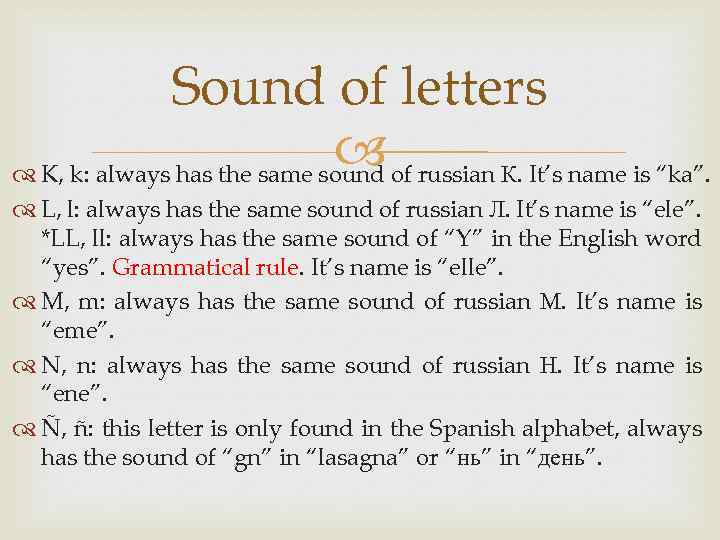
Sound of letters of russian К. It’s name is “ka”. K, k: always has the same sound L, l: always has the same sound of russian Л. It’s name is “ele”. *LL, ll: always has the same sound of “Y” in the English word “yes”. Grammatical rule. It’s name is “elle”. M, m: always has the same sound of russian М. It’s name is “eme”. N, n: always has the same sound of russian Н. It’s name is “ene”. Ñ, ñ: this letter is only found in the Spanish alphabet, always has the sound of “gn” in “lasagna” or “нь” in “день”.
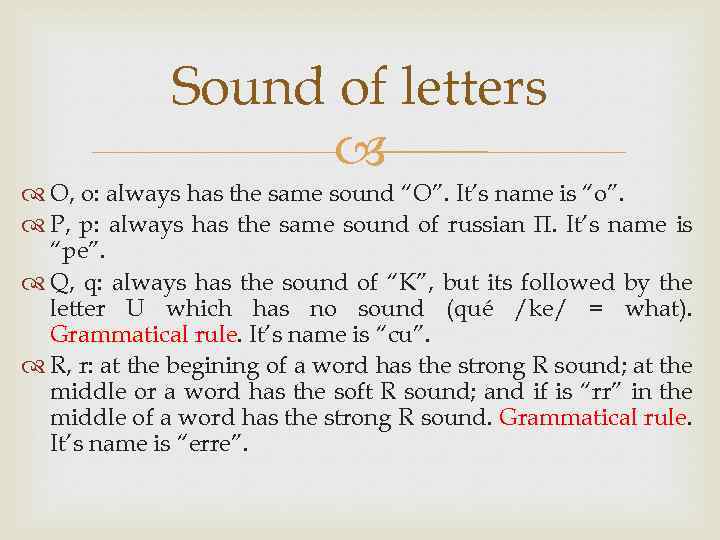
Sound of letters O, o: always has the same sound “O”. It’s name is “o”. P, p: always has the same sound of russian П. It’s name is “pe”. Q, q: always has the sound of “K”, but its followed by the letter U which has no sound (qué /ke/ = what). Grammatical rule. It’s name is “cu”. R, r: at the begining of a word has the strong R sound; at the middle or a word has the soft R sound; and if is “rr” in the middle of a word has the strong R sound. Grammatical rule. It’s name is “erre”.
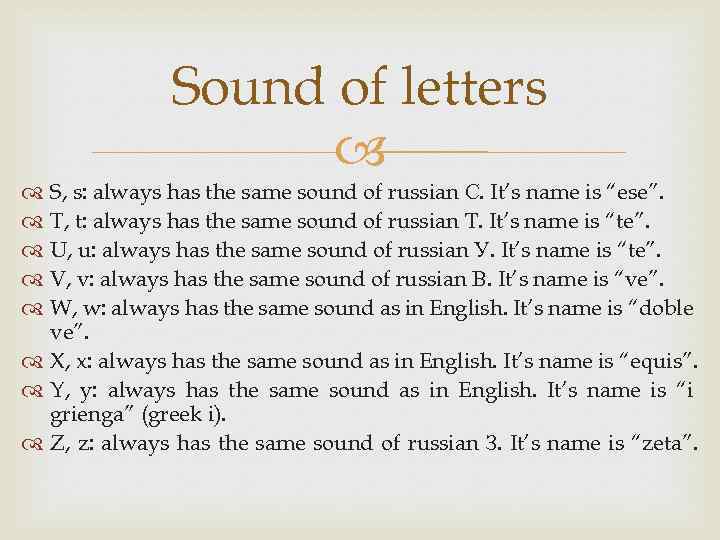
Sound of letters S, s: always has the same sound of russian С. It’s name is “ese”. T, t: always has the same sound of russian Т. It’s name is “te”. U, u: always has the same sound of russian У. It’s name is “te”. V, v: always has the same sound of russian В. It’s name is “ve”. W, w: always has the same sound as in English. It’s name is “doble ve”. X, x: always has the same sound as in English. It’s name is “equis”. Y, y: always has the same sound as in English. It’s name is “i grienga” (greek i). Z, z: always has the same sound of russian З. It’s name is “zeta”.
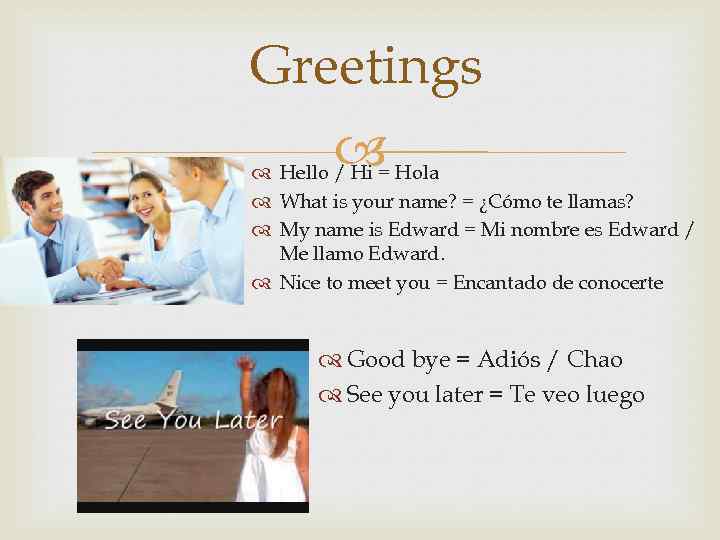
Greetings Hello / Hi = Hola What is your name? = ¿Cómo te llamas? My name is Edward = Mi nombre es Edward / Me llamo Edward. Nice to meet you = Encantado de conocerte Good bye = Adiós / Chao See you later = Te veo luego
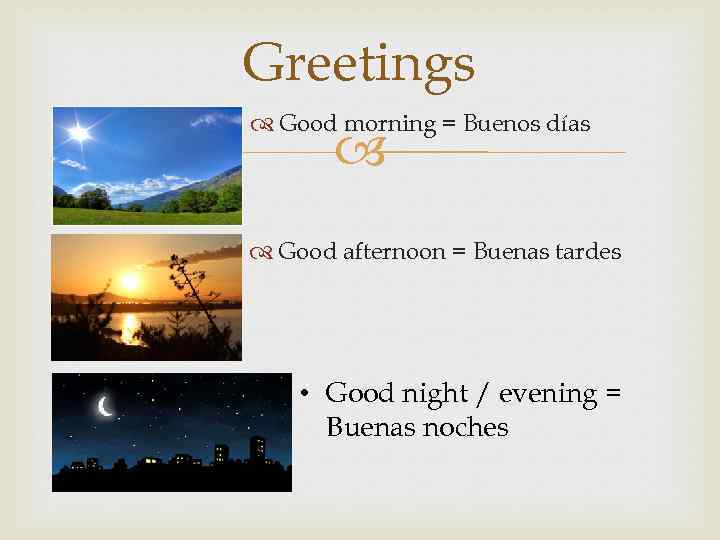
Greetings Good morning = Buenos días Good afternoon = Buenas tardes • Good night / evening = Buenas noches
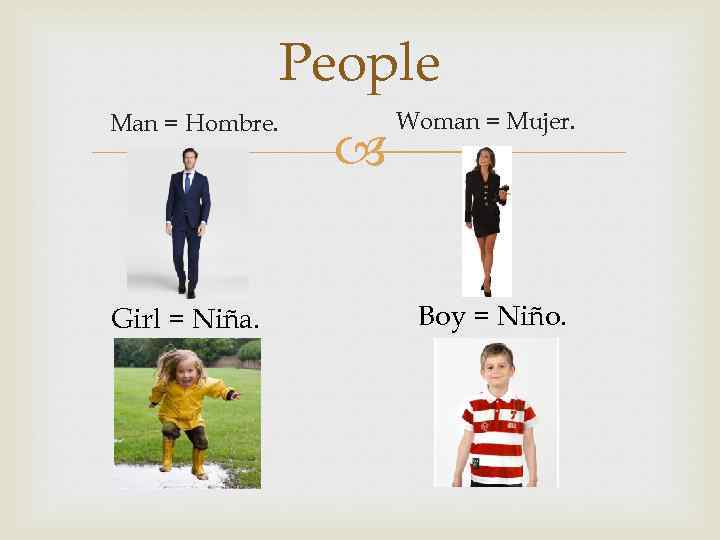
People Man = Hombre. Girl = Niña. Woman = Mujer. Boy = Niño.
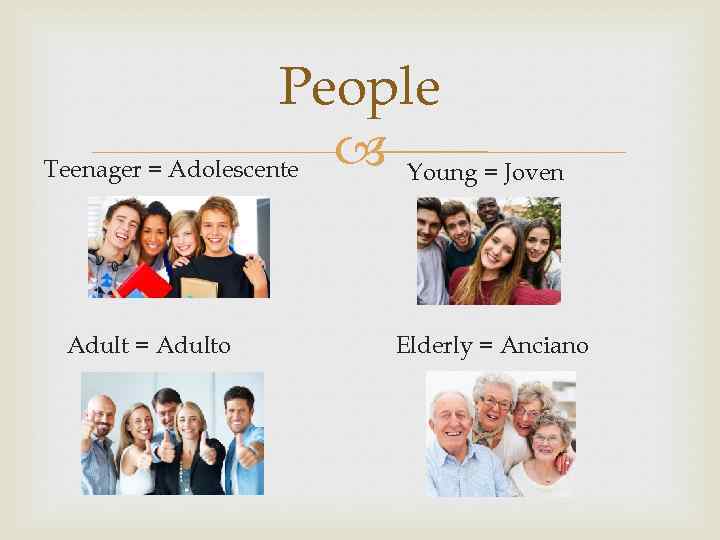
People Teenager = Adolescente Young = Joven Adult = Adulto Elderly = Anciano
Pronouns I = Yo You = Tu (informal), Usted (formal) He = Él She = Ella It = Ello We = Nosotros You (plural) = Ustedes (formal and informal) They = Ellos, Ellas
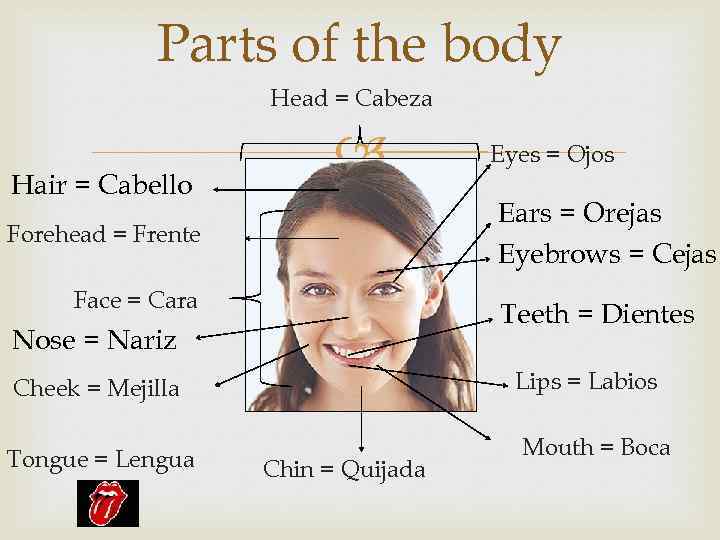
Parts of the body Head = Cabeza Hair = Cabello Eyes = Ojos Ears = Orejas Eyebrows = Cejas Forehead = Frente Face = Cara Teeth = Dientes Nose = Nariz Cheek = Mejilla Lips = Labios Tongue = Lengua Mouth = Boca Chin = Quijada
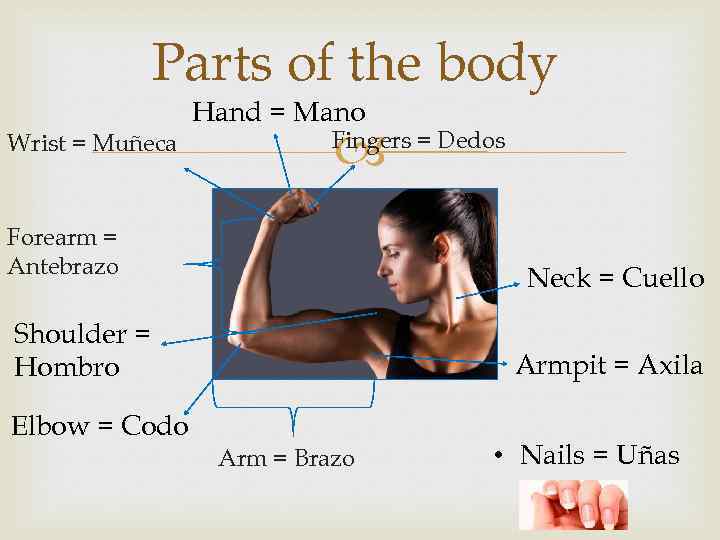
Parts of the body Wrist = Muñeca Hand = Mano Fingers = Dedos Forearm = Antebrazo Neck = Cuello Shoulder = Hombro Elbow = Codo Armpit = Axila Arm = Brazo • Nails = Uñas
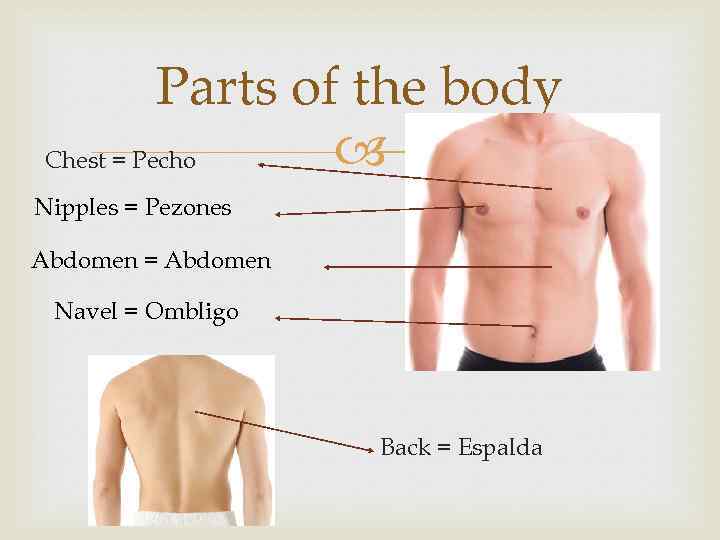
Parts of the body Chest = Pecho Nipples = Pezones Abdomen = Abdomen Navel = Ombligo Back = Espalda
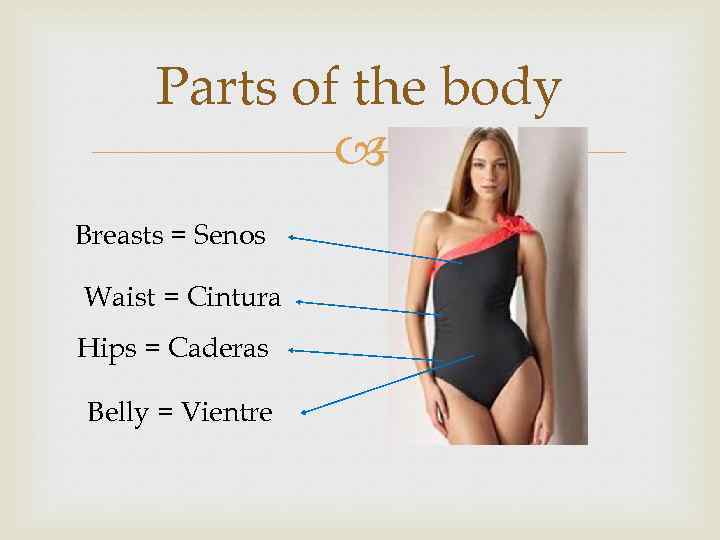
Parts of the body Breasts = Senos Waist = Cintura Hips = Caderas Belly = Vientre
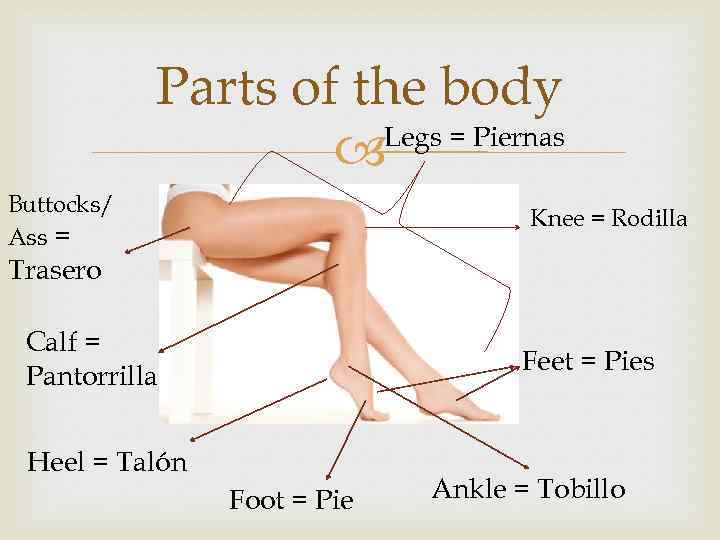
Parts of the body Legs = Piernas Buttocks/ Ass = • Knee = Rodilla Trasero Calf = Pantorrilla Feet = Pies Heel = Talón Foot = Pie Ankle = Tobillo
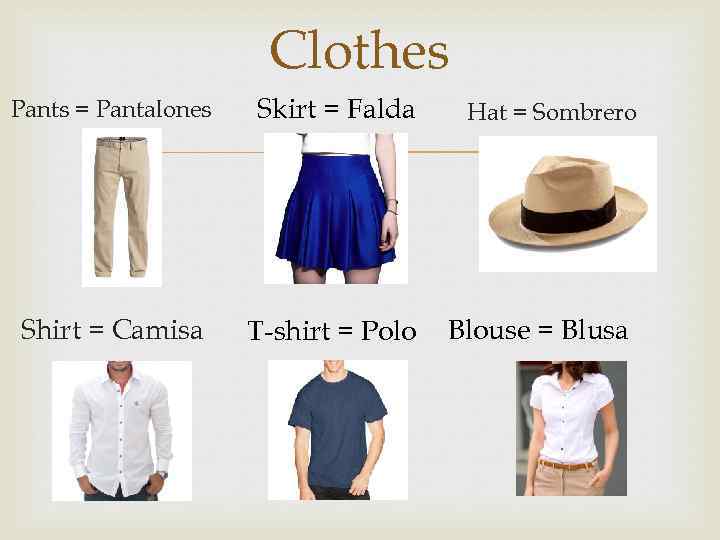
Clothes Pants = Pantalones Skirt = Falda Shirt = Camisa T-shirt = Polo Hat = Sombrero Blouse = Blusa
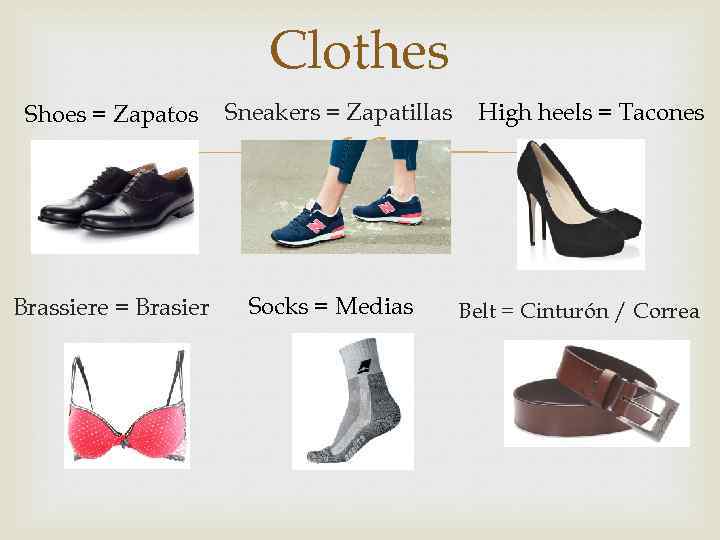
Clothes Shoes = Zapatos Brassiere = Brasier Sneakers = Zapatillas Socks = Medias High heels = Tacones Belt = Cinturón / Correa
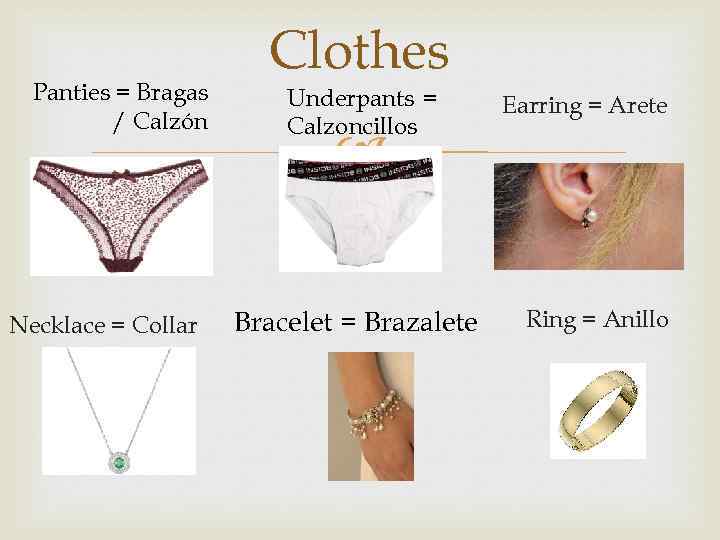
Panties = Bragas / Calzón Necklace = Collar Clothes Underpants = Calzoncillos Bracelet = Brazalete Earring = Arete Ring = Anillo
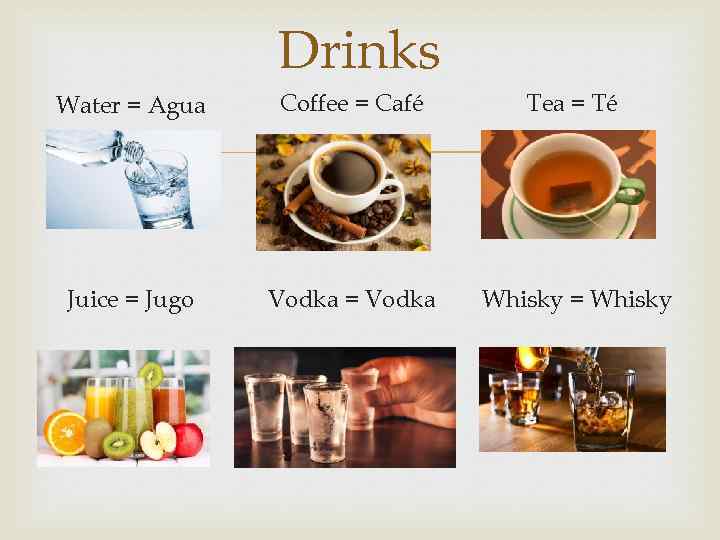
Drinks Water = Agua Coffee = Café Tea = Té Juice = Jugo Vodka = Vodka Whisky = Whisky
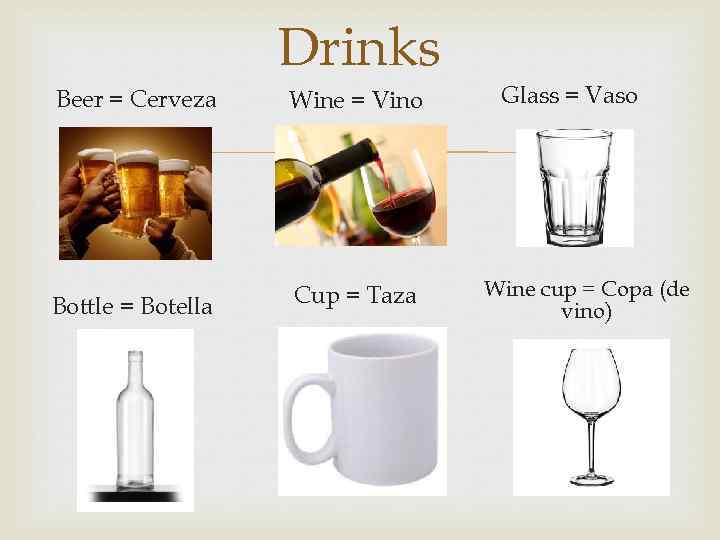
Drinks Beer = Cerveza Wine = Vino Glass = Vaso Bottle = Botella Cup = Taza Wine cup = Copa (de vino)
Feelings Love = Amor Hate = Odio Happiness = Alegría Happy = Alegre Sad = Triste Fear = Miedo
More words Yes = Sí Not = No Maybe = Tal vez Today = Hoy Tomorrow = Mañana Yesterday = Ayer Morning = Mañana Day = Día Afternoon = Tarde Night = Noche Spring = Primavera Summer = Verano Autumn = Otoño Winter = Invierno Cold = Frío Hot = Caliente Warm = Cálido Weather = Clima Snow = Nieve Rain = Lluvia Wind = Viento Hurricane = Huracán
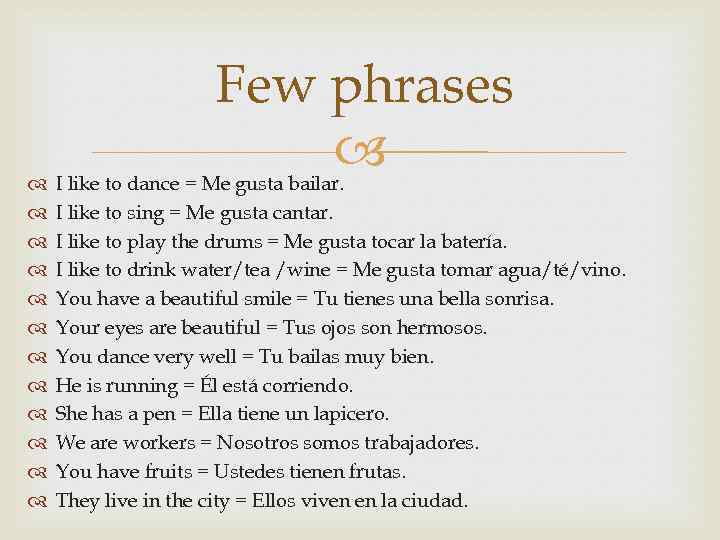
Few phrases I like to dance = Me gusta bailar. I like to sing = Me gusta cantar. I like to play the drums = Me gusta tocar la batería. I like to drink water/tea /wine = Me gusta tomar agua/té/vino. You have a beautiful smile = Tu tienes una bella sonrisa. Your eyes are beautiful = Tus ojos son hermosos. You dance very well = Tu bailas muy bien. He is running = Él está corriendo. She has a pen = Ella tiene un lapicero. We are workers = Nosotros somos trabajadores. You have fruits = Ustedes tienen frutas. They live in the city = Ellos viven en la ciudad.
Скачать презентацию Spanish by Niki I m going to explain basic
Spanish by Niki [UPDATED].pptx