


 Скачать презентацию Space Management Changing Policies in a Changing Environment
c887e17ca36bd9a32452df2ead4d71d3.ppt
- Количество слайдов: 20
 Space Management: Changing Policies in a Changing Environment SAIR 2011
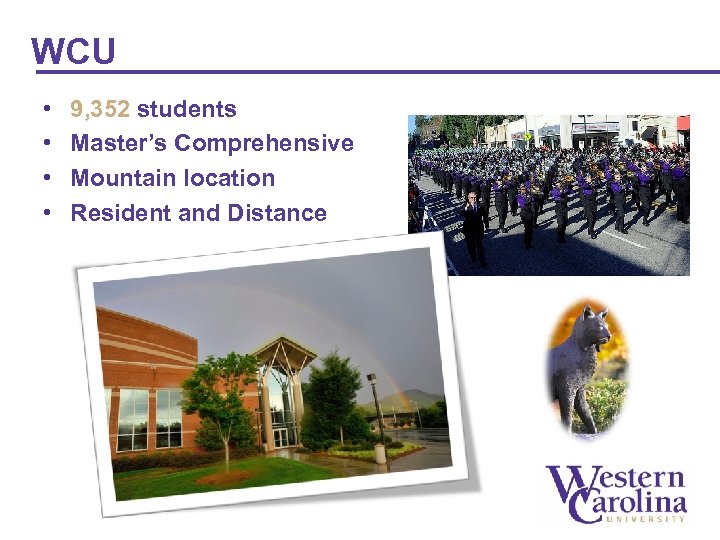 WCU • • 9, 352 students Master’s Comprehensive Mountain location Resident and Distance
 Factors Related to Scheduling • Well over 10, 000 students, faculty, staff • Largely residential • 6 academic colleges, 30 departments, 120+ programs • 10 main academic buildings • 240+ teaching spaces • New, large building coming online as 2 nd campus • Space management – more highly scrutinized • Series 25 scheduling software (College. Net)
 Scheduling Approach – Events • • Very decentralized Approximately 150 schedulers Rationale All areas use R 25
 Scheduling Approach – Courses • Two types of rooms – General pool – Pre-assignable (labs, conf. rooms, gyms, etc. ) • General pool assignments – centralized process • Optimized placement based on size, location and features • Group review and tweaking of process (transparency) • Pre-assignable controlled directly by depts.
 Current Climate • • Economy Importance of data in decision-making More scrutiny internally and at the state-level More and larger classes New demands No renovations/furniture/technology Accuracy
 Strategies • • Changing policies Proactive approach Data transparency & use More inclusive decision-making
 Policy Changes • Formal policies – Space Management • Which bodies have authority • How space is assigned • How to request – Camps & Conferences • How spaces can accommodate different types of groups
 Split the Space Management Committee • Space Management (SMC) – Older and more authority – Reports to Executive Council – Advisory • Academic Space Management – Grants some authority to academic folks – Spreads responsibility and accountability – Creates buy-in – Reports to SMC
 Proactive Approach • When space is coming online, call for proposals • Factors for consideration – Consolidation of departments – Prior agreements and identified need – Space has same general usage type – Little/no renovation needed
 Proactive Approach • Look for low-hanging fruit – Low-cost opportunities • • • Add a door Add a feature (like a white board) Which rooms can accommodate additional seats Better align room sizes with class sizes or vice versa Ask depts to open additional seats when assigned to large space
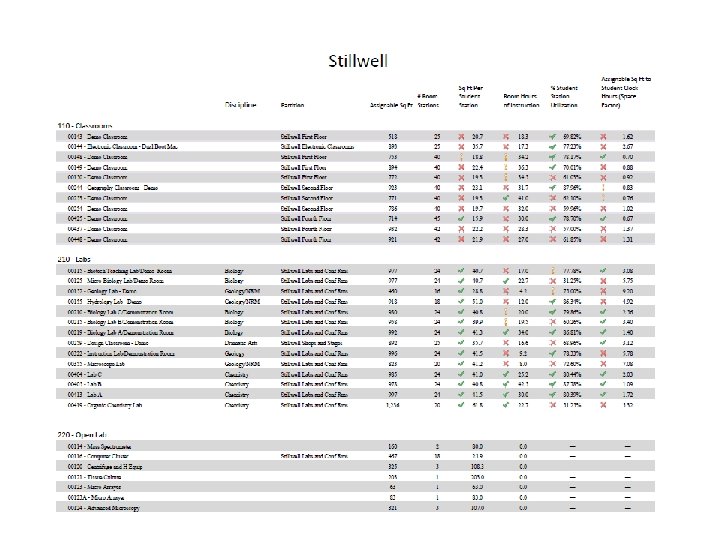
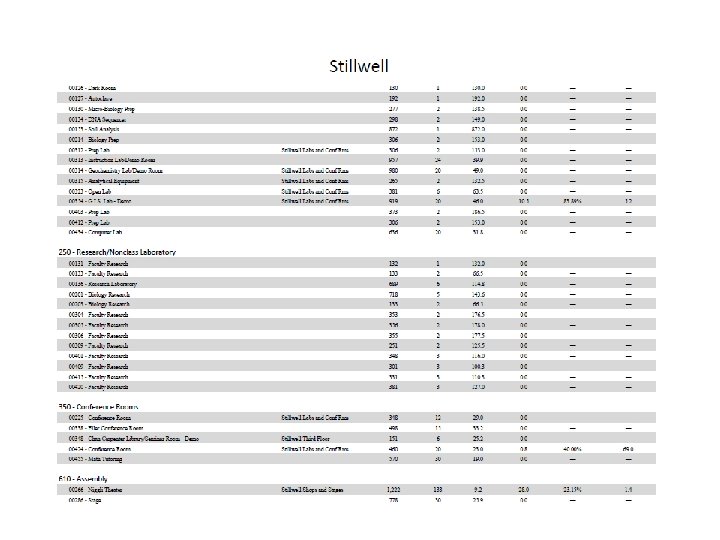
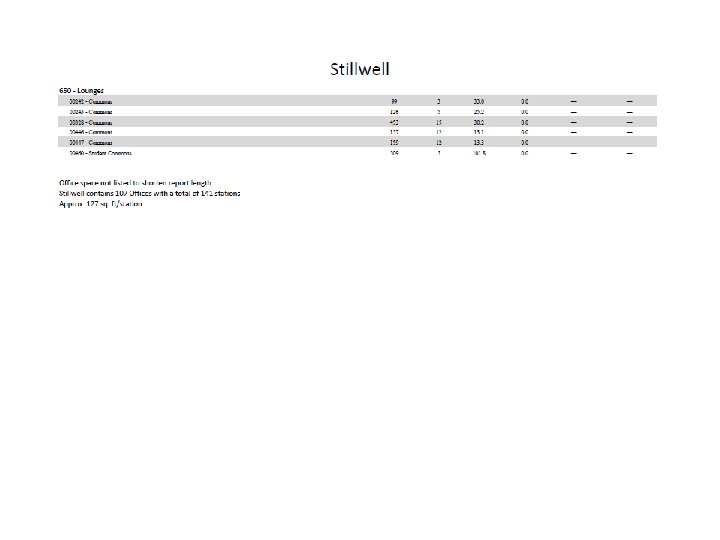
 Data Transparency and Use • Access to scheduling system – Anyone who requests – Several dept heads very involved • Reports shared – Internal and State reports – Easy to read/interpret – Stored in central repository • Clear standards – Campus uses State standards – All space evaluated on same set of standards
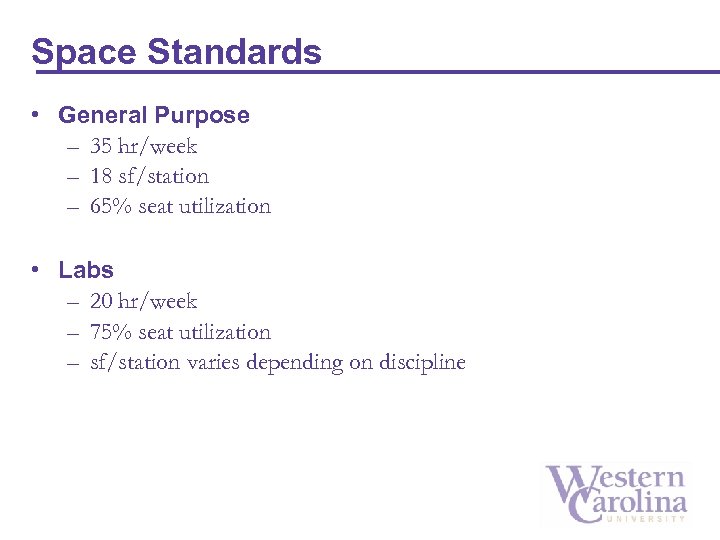 Space Standards • General Purpose – 35 hr/week – 18 sf/station – 65% seat utilization • Labs – 20 hr/week – 75% seat utilization – sf/station varies depending on discipline
 More inclusive decision-making • Space proposals • Academic Space Management committee gives academic units a strong voice • Class placement review • Building Tours
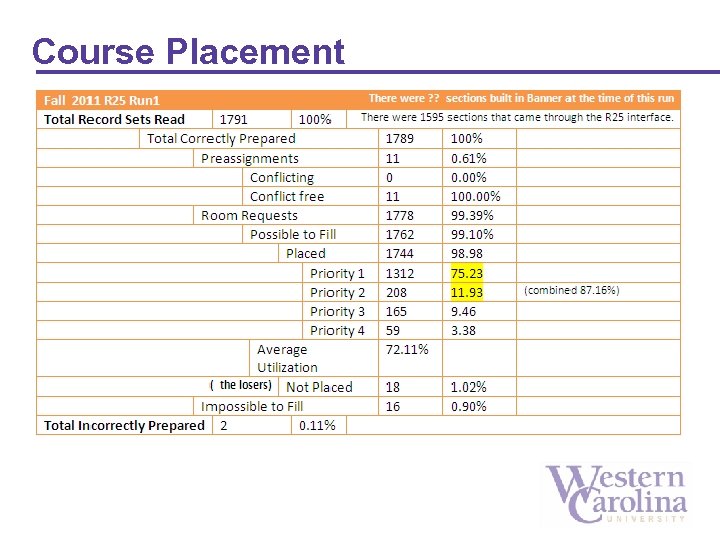 Course Placement
 Building Tours • Tour each academic space (Friday afternoon) • Invite all interested parties • Get a feel for space – Classroom size – Classroom layout – Seat density – Mix of room types – # and size of conference rooms – Offices sizes • Review utilization • Provides transparency
 Contact Information Alison Joseph, Research Specialist ajoseph@wcu. edu opie. wcu. edu (828) 227 -7239