 Скачать презентацию SPACE DEBRIS Fernand ALBY What is the situation
e90124cfcddcf27950109e9af594011f.ppt
- Количество слайдов: 49



SPACE DEBRIS Fernand ALBY What is the situation in-orbit? What are the possible actions? date 1
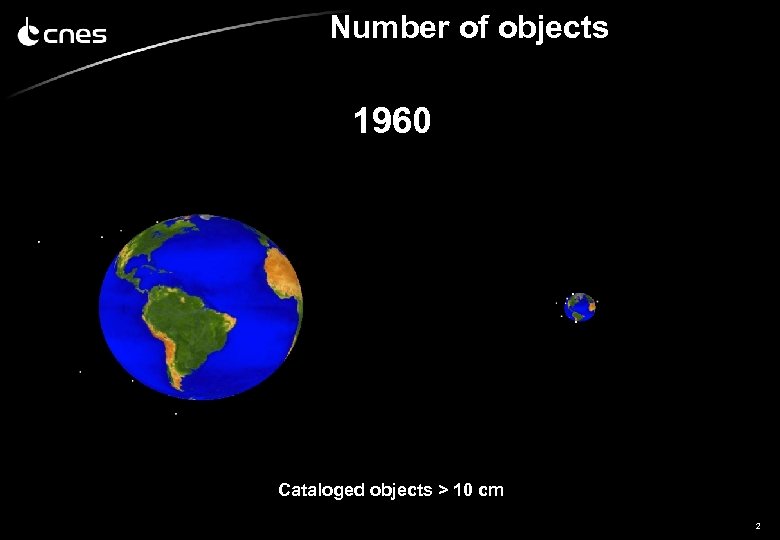
Number of objects 1960 Cataloged objects > 10 cm 2
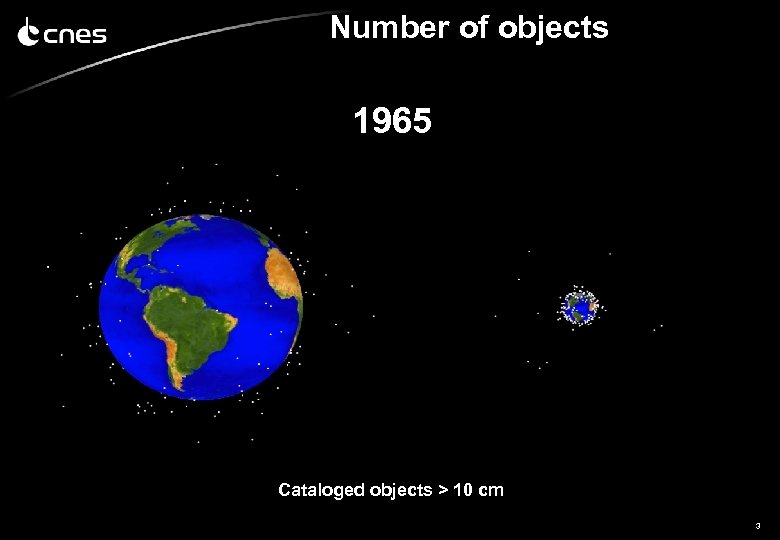
Number of objects 1965 Cataloged objects > 10 cm 3
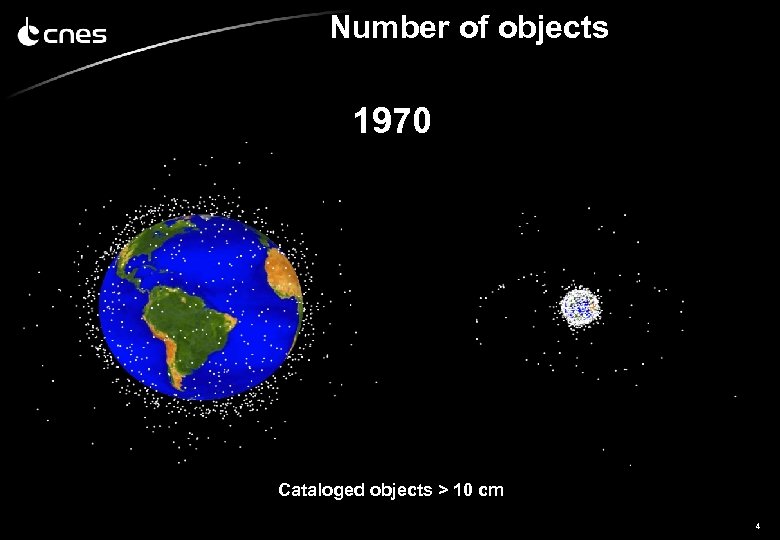
Number of objects 1970 Cataloged objects > 10 cm 4
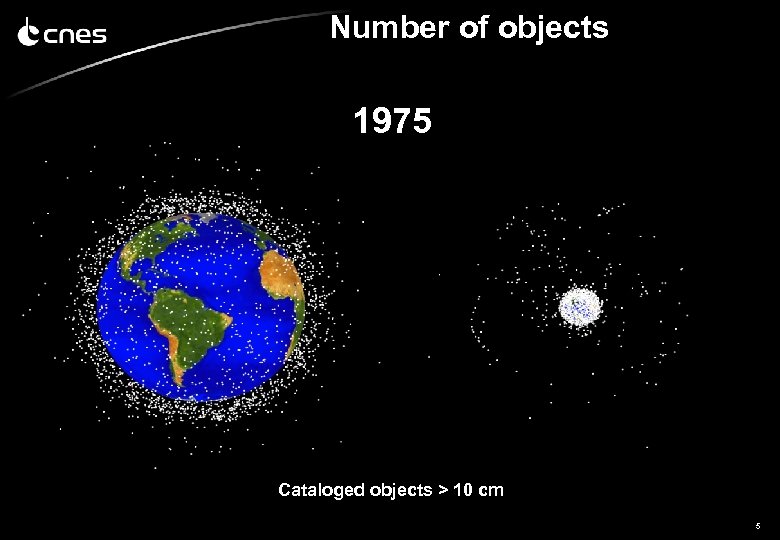
Number of objects 1975 Cataloged objects > 10 cm 5
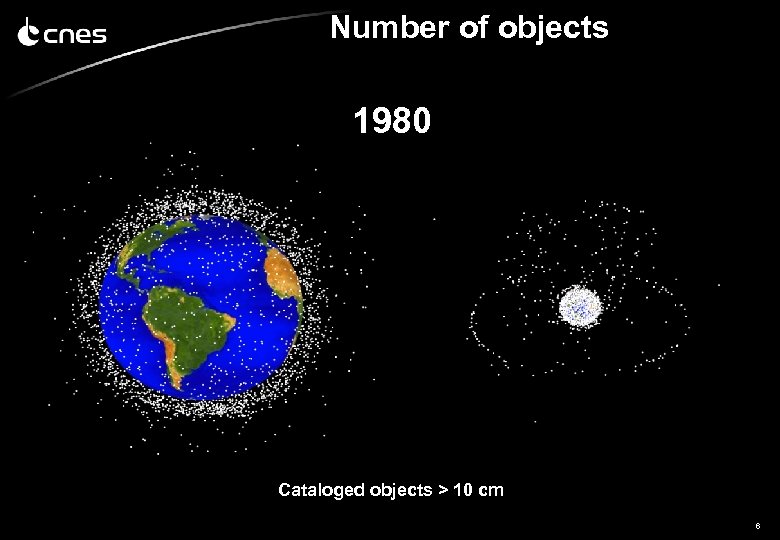
Number of objects 1980 Cataloged objects > 10 cm 6
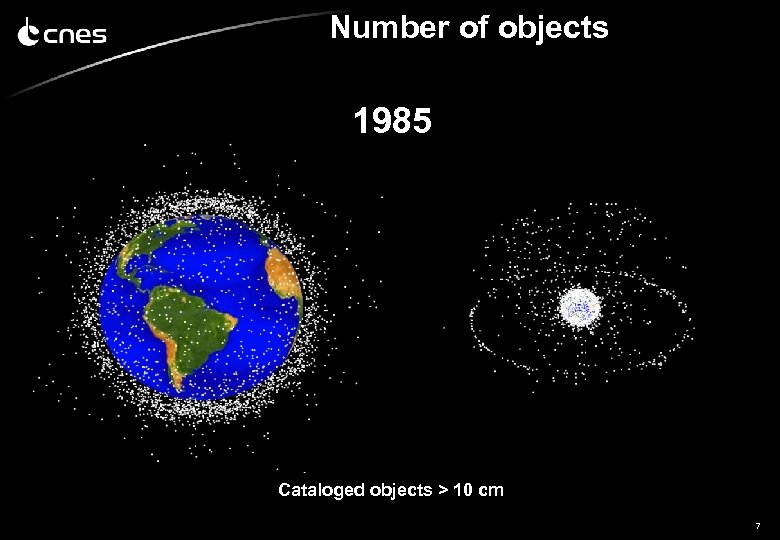
Number of objects 1985 Cataloged objects > 10 cm 7
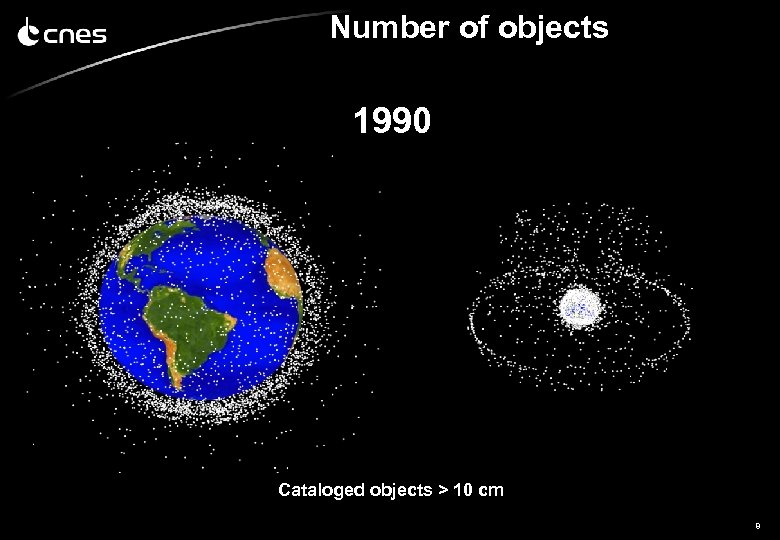
Number of objects 1990 Cataloged objects > 10 cm 8
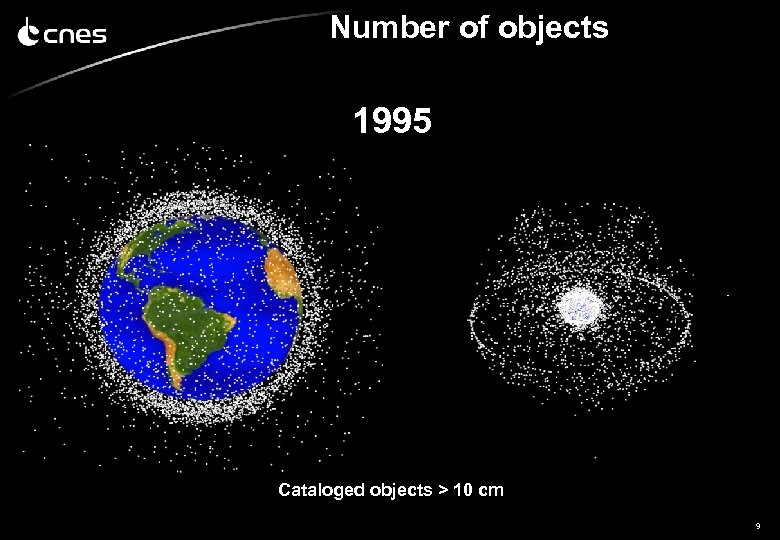
Number of objects 1995 Cataloged objects > 10 cm 9
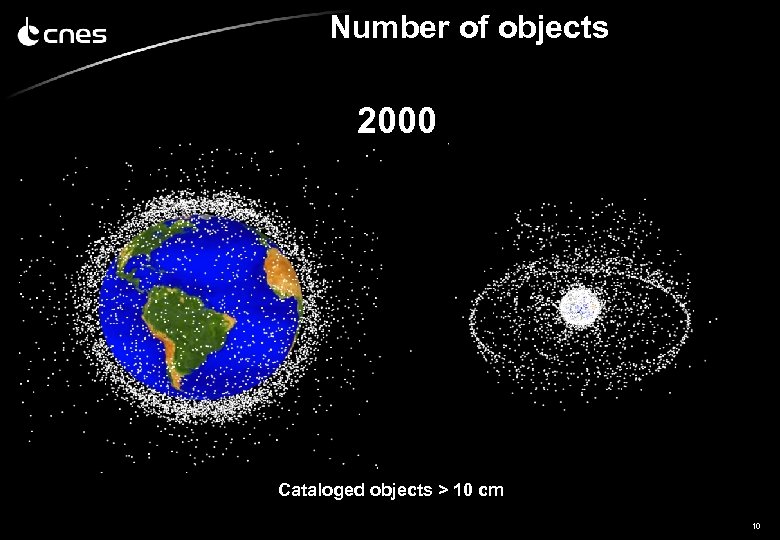
Number of objects 2000 Cataloged objects > 10 cm 10
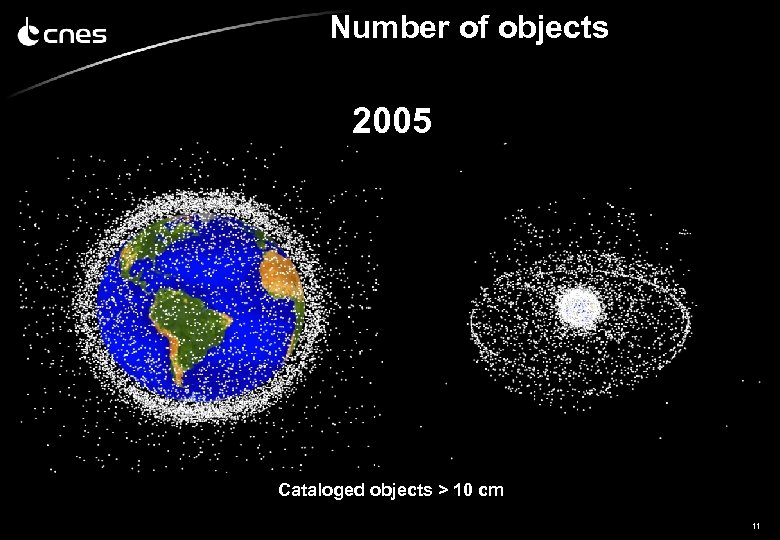
Number of objects 2005 Cataloged objects > 10 cm 11
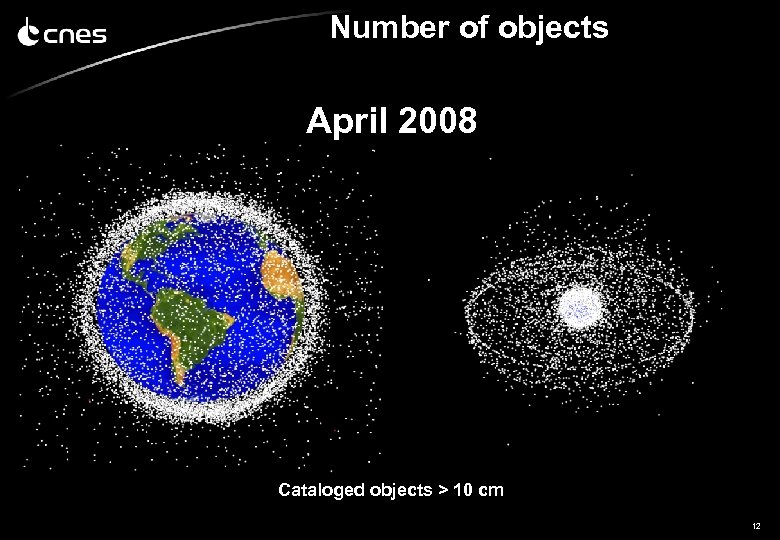
Number of objects April 2008 Cataloged objects > 10 cm 12
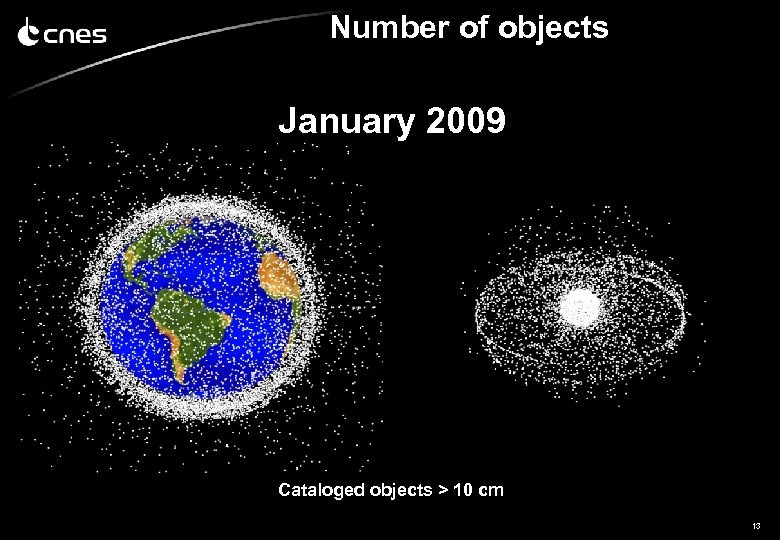
Number of objects January 2009 Cataloged objects > 10 cm 13
1 -what is the situation in orbit ? Origin of the debris Status of the population Risks in orbit Risks on ground 14
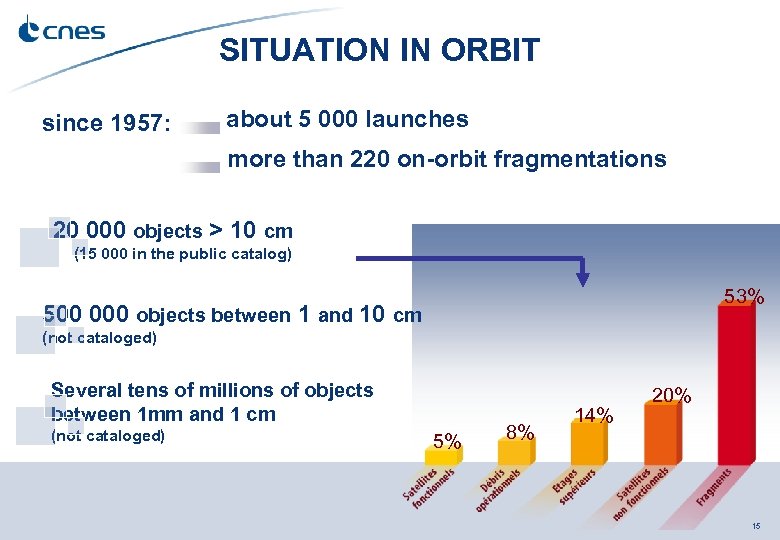
SITUATION IN ORBIT since 1957: about 5 000 launches more than 220 on-orbit fragmentations 20 000 objects > 10 cm (15 000 in the public catalog) 53% 500 000 objects between 1 and 10 cm (not cataloged) Several tens of millions of objects between 1 mm and 1 cm (not cataloged) 5% 8% 14% 20% 15
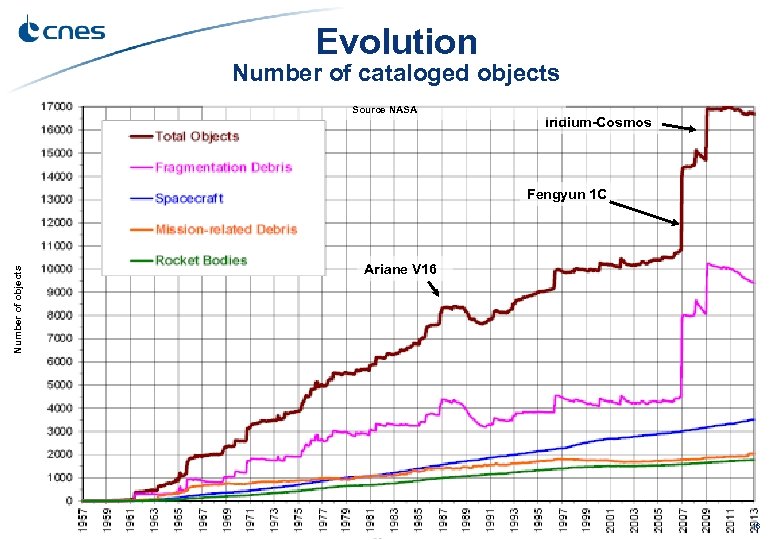
Evolution Number of cataloged objects Source NASA Iridium-Cosmos Number of objects Fengyun 1 C Ariane V 16 16
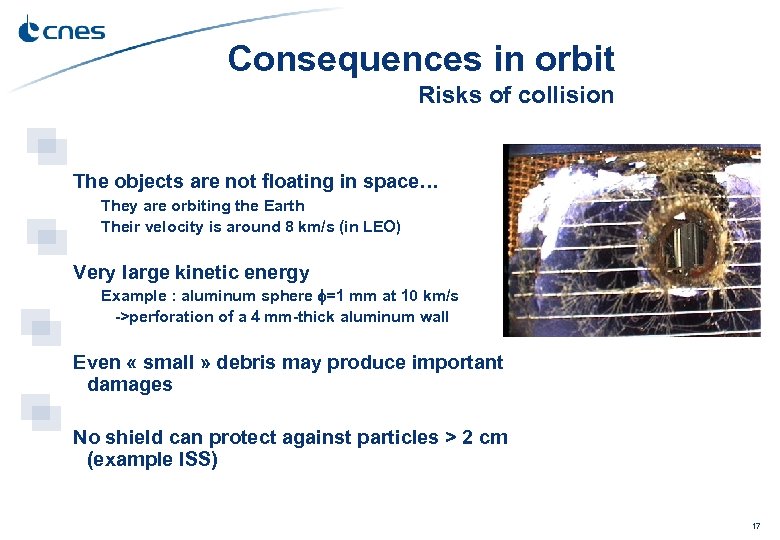
Consequences in orbit Risks of collision The objects are not floating in space… They are orbiting the Earth Their velocity is around 8 km/s (in LEO) Very large kinetic energy Example : aluminum sphere =1 mm at 10 km/s ->perforation of a 4 mm-thick aluminum wall Even « small » debris may produce important damages No shield can protect against particles > 2 cm (example ISS) 17
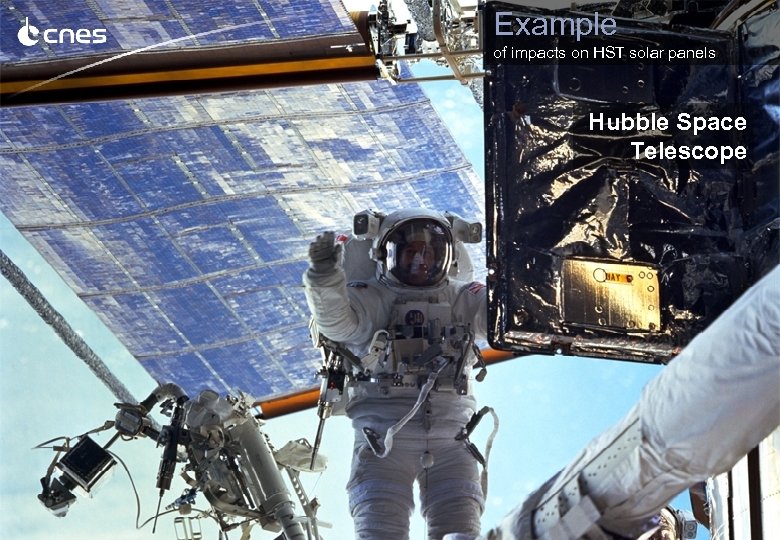
Example of impacts on HST solar panels Hubble Space Telescope 18
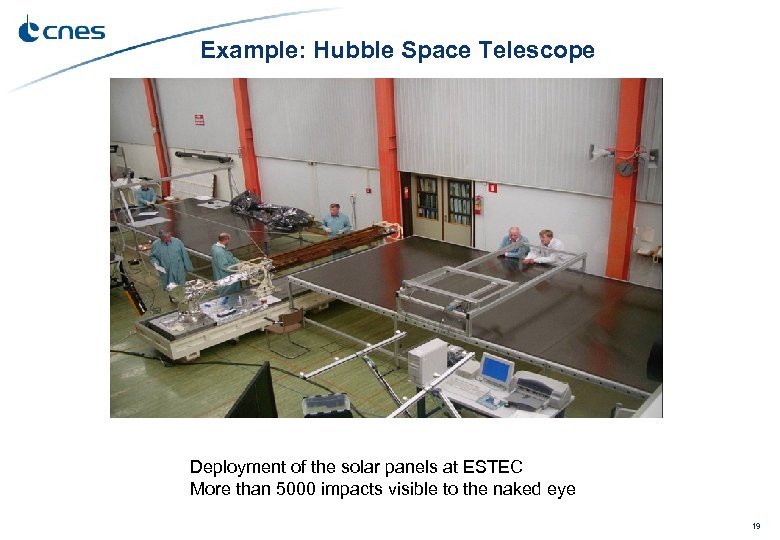
Example: Hubble Space Telescope Deployment of the solar panels at ESTEC More than 5000 impacts visible to the naked eye 19
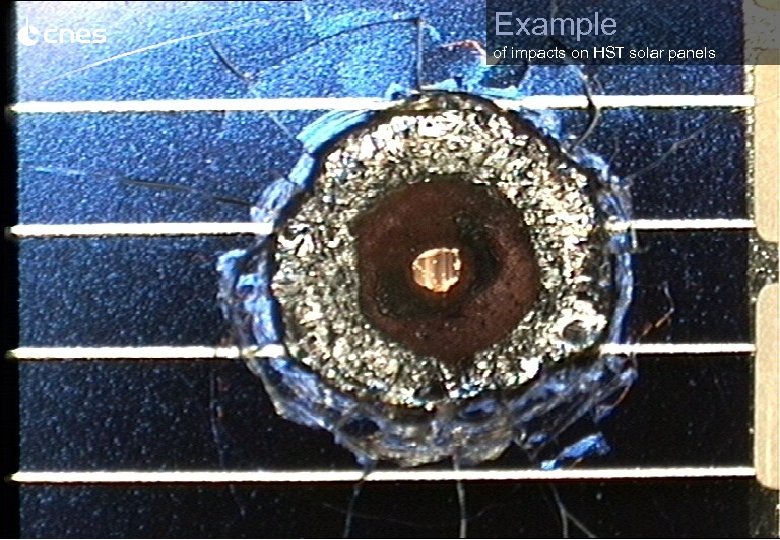
Example of impacts on HST solar panels 20
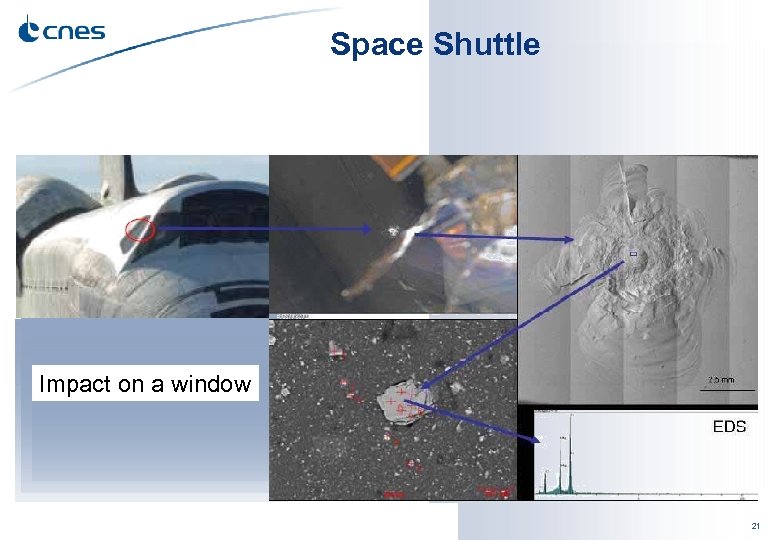
Space Shuttle Impact Hublot Impact on a window 21
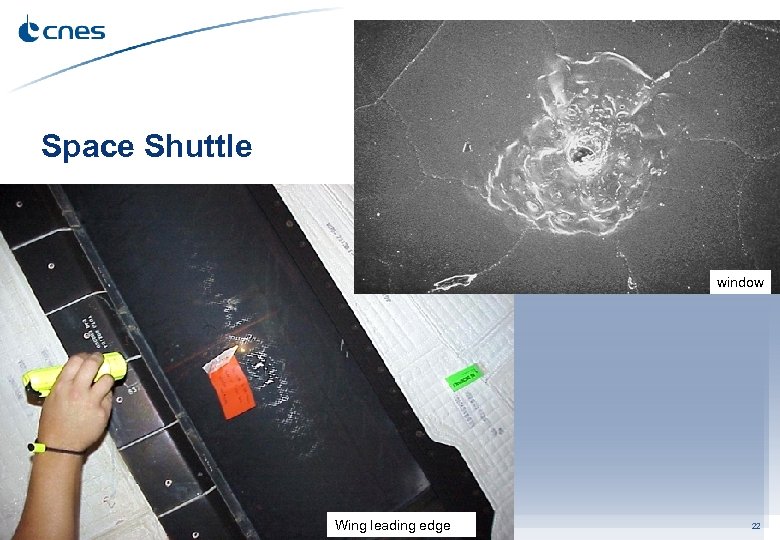
Space Shuttle Hublot window Bord d’attaque des ailes Wing leading edge 22
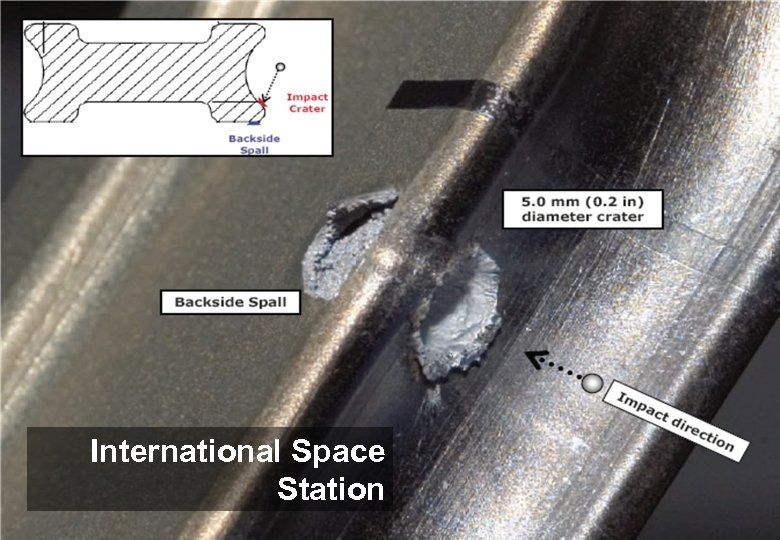
International Space Station 23
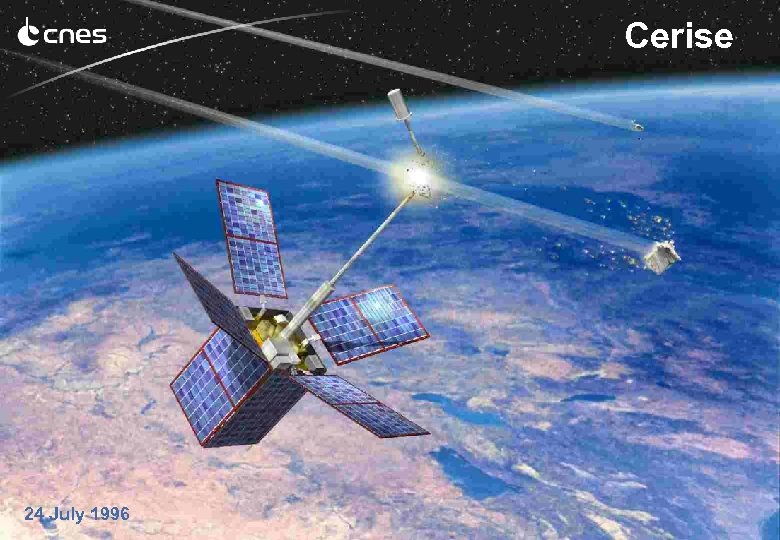
Cerise 24 July 1996 24
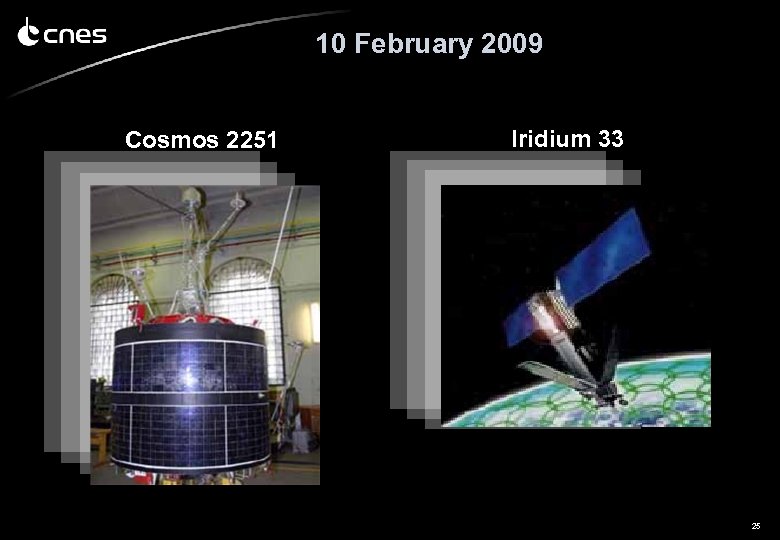
10 February 2009 Cosmos 2251 Iridium 33 25
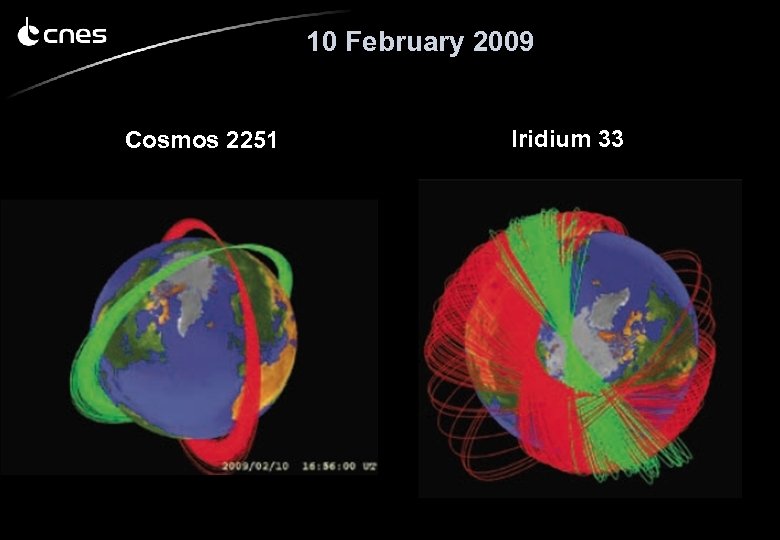
10 February 2009 Cosmos 2251 Iridium 33 26
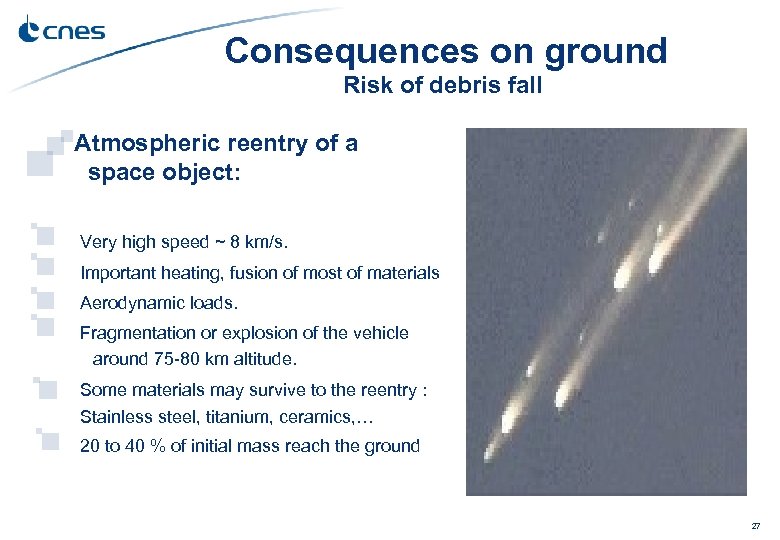
Consequences on ground Risk of debris fall Atmospheric reentry of a space object: Very high speed ~ 8 km/s. Important heating, fusion of most of materials Aerodynamic loads. Fragmentation or explosion of the vehicle around 75 -80 km altitude. Some materials may survive to the reentry : Stainless steel, titanium, ceramics, … 20 to 40 % of initial mass reach the ground 27
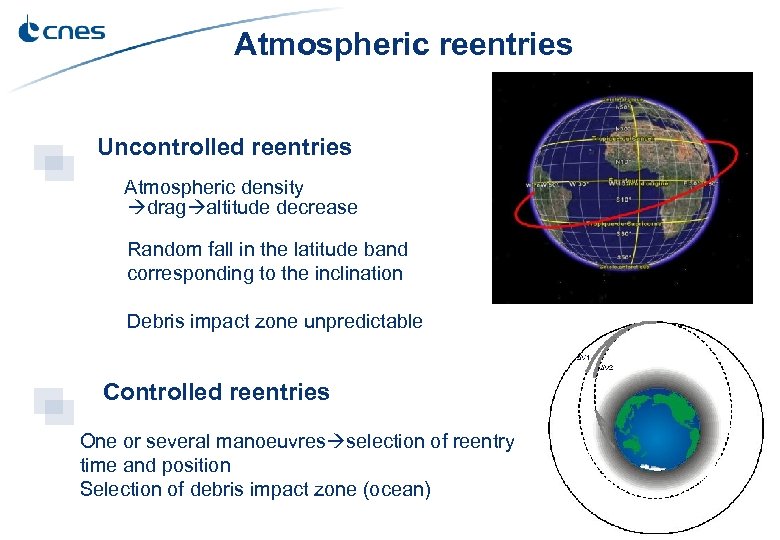
Atmospheric reentries Uncontrolled reentries Atmospheric density drag altitude decrease Random fall in the latitude band corresponding to the inclination Debris impact zone unpredictable Controlled reentries One or several manoeuvres selection of reentry time and position Selection of debris impact zone (ocean) 28
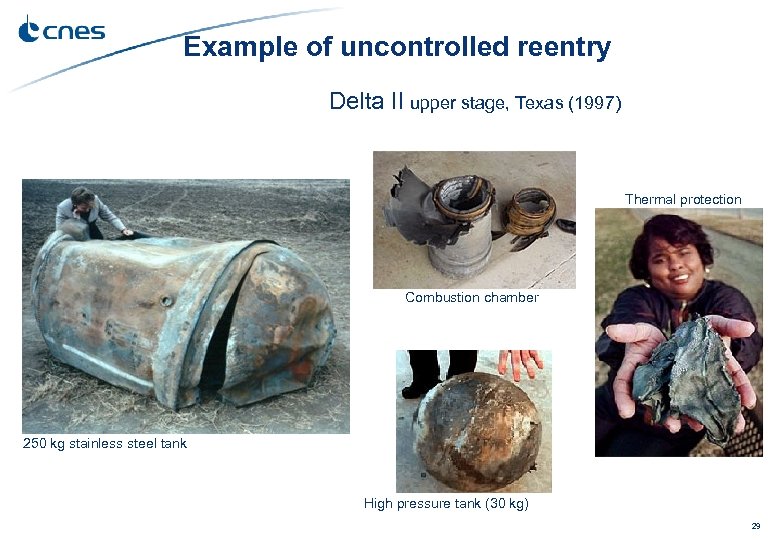
Example of uncontrolled reentry Delta II upper stage, Texas (1997) Thermal protection Combustion chamber 250 kg stainless steel tank High pressure tank (30 kg) 29
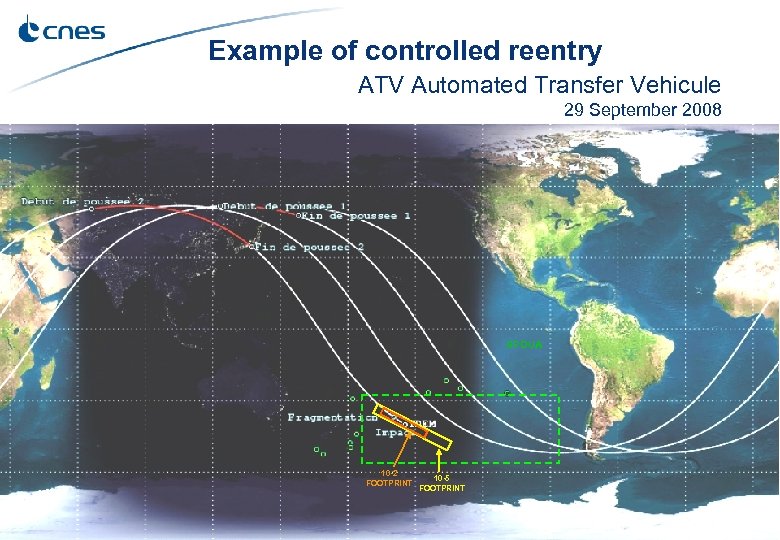
Example of controlled reentry ATV Automated Transfer Vehicule 29 September 2008 SPOUA 10 -2 FOOTPRINT 10 -5 FOOTPRINT 30
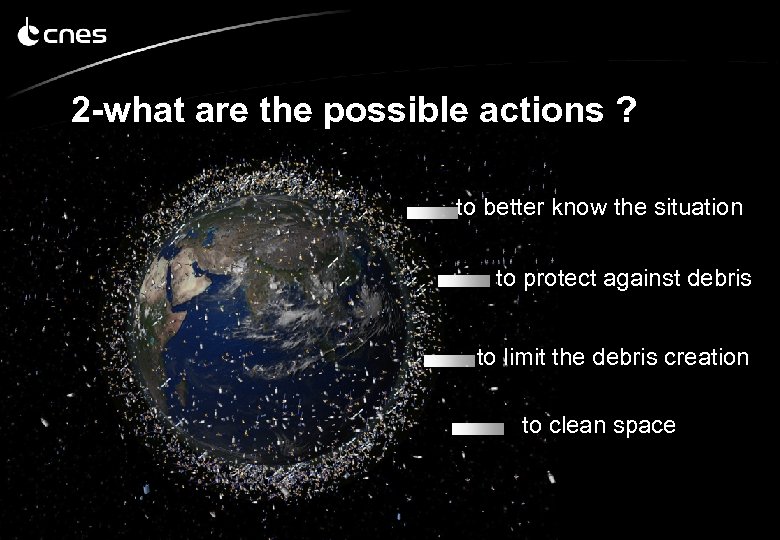
2 -what are the possible actions ? to better know the situation to protect against debris to limit the debris creation to clean space 31
TO BETTER KNOW THE SITUATION… SPACE SITUATIONAL AWARENESS Objective: knowledge of population of objects orbiting the Earth Needs: Military Civilian: prevention of collisions, prediction of reentries Dual activity Principle: « small » debris: statistical knowledge (flux models) « large debris » : deterministic knowledge (catalogues) Facilities: Detection radars Tracking radars Telescopes: detection and tracking low altitude High altitude 32
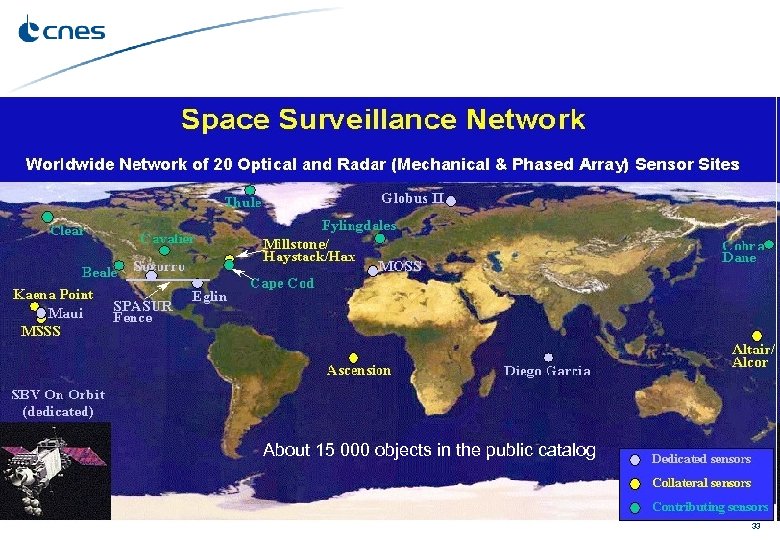
About 15 000 objects in the public catalog 33
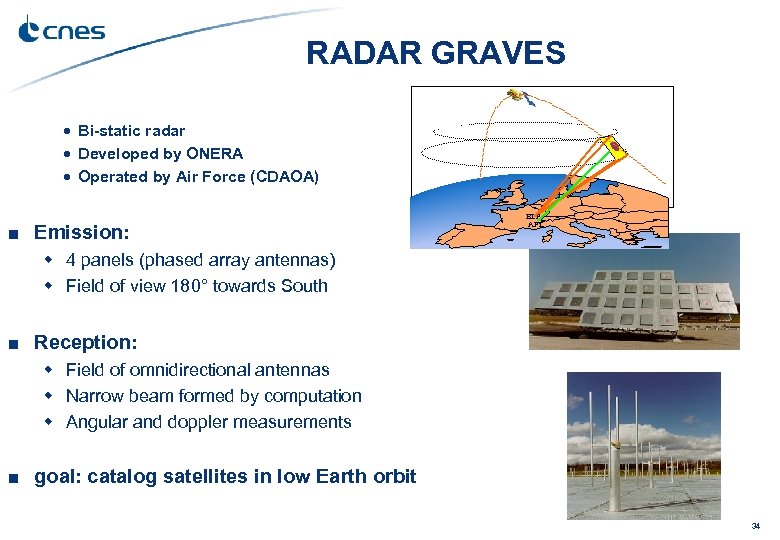
RADAR GRAVES Bi-static radar Developed by ONERA Operated by Air Force (CDAOA) ■ Emission: BLP APT 4 panels (phased array antennas) Field of view 180° towards South ■ Reception: Field of omnidirectional antennas Narrow beam formed by computation Angular and doppler measurements ■ goal: catalog satellites in low Earth orbit 34
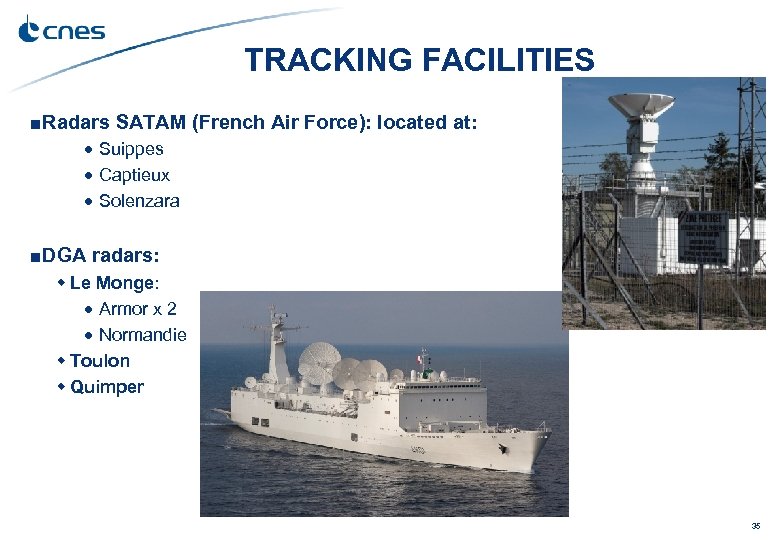
TRACKING FACILITIES ■ Radars SATAM (French Air Force): located at: Suippes Captieux Solenzara ■ DGA radars: Le Monge: Armor x 2 Normandie Toulon Quimper 35
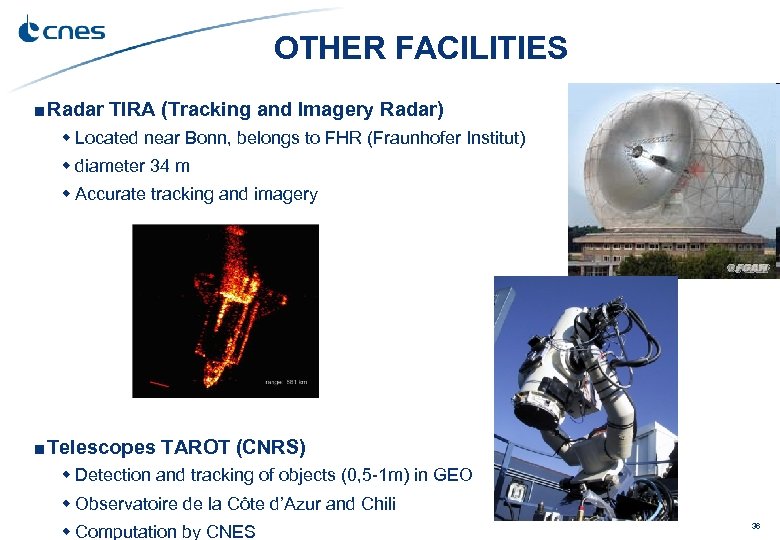
OTHER FACILITIES ■ Radar TIRA (Tracking and Imagery Radar) Located near Bonn, belongs to FHR (Fraunhofer Institut) diameter 34 m Accurate tracking and imagery ■ Telescopes TAROT (CNRS) Detection and tracking of objects (0, 5 -1 m) in GEO Observatoire de la Côte d’Azur and Chili Computation by CNES 36
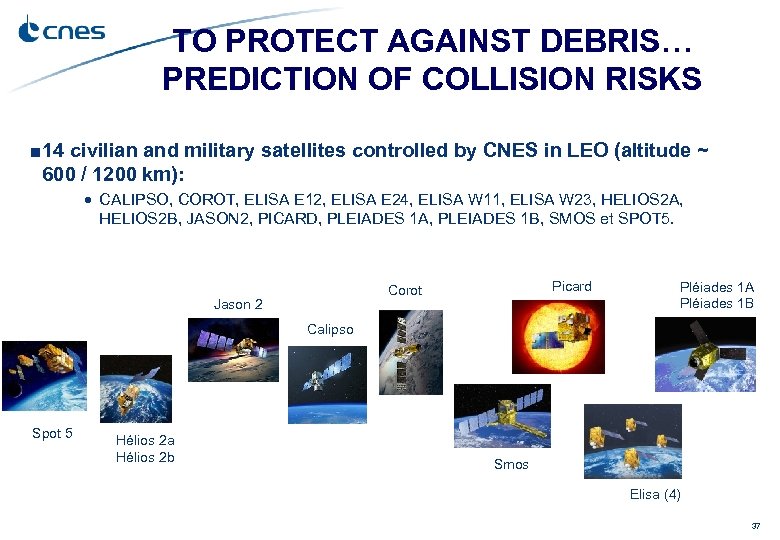
TO PROTECT AGAINST DEBRIS… PREDICTION OF COLLISION RISKS ■ 14 civilian and military satellites controlled by CNES in LEO (altitude ~ 600 / 1200 km): CALIPSO, COROT, ELISA E 12, ELISA E 24, ELISA W 11, ELISA W 23, HELIOS 2 A, HELIOS 2 B, JASON 2, PICARD, PLEIADES 1 A, PLEIADES 1 B, SMOS et SPOT 5. Picard Corot Jason 2 Pléiades 1 A Pléiades 1 B Calipso Spot 5 Hélios 2 a Hélios 2 b Smos Elisa (4) 37
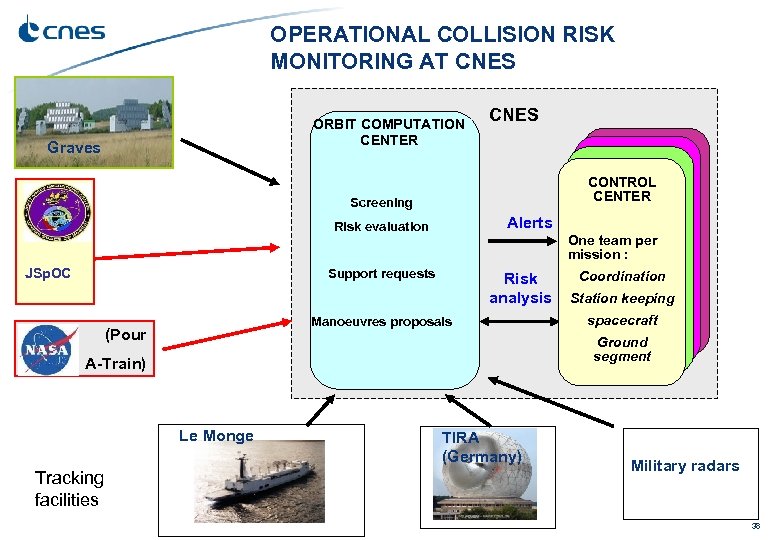
OPERATIONAL COLLISION RISK MONITORING AT CNES ORBIT COMPUTATION CENTER Graves CNES CONTROL CENTER Screening GRAVES System (CDAOA) Alerts Risk evaluation JSp. OC One team per mission : Support requests Risk analysis Manoeuvres proposals (Pour Station keeping spacecraft Ground segment A-Train) Le Monge Tracking facilities Coordination TIRA (Germany) Military radars 38
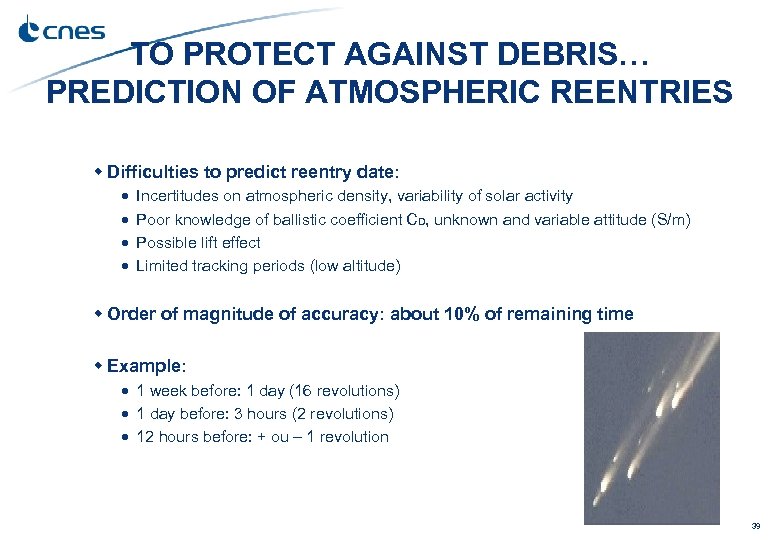
TO PROTECT AGAINST DEBRIS… PREDICTION OF ATMOSPHERIC REENTRIES Difficulties to predict reentry date: Incertitudes on atmospheric density, variability of solar activity Poor knowledge of ballistic coefficient CD, unknown and variable attitude (S/m) Possible lift effect Limited tracking periods (low altitude) Order of magnitude of accuracy: about 10% of remaining time Example: 1 week before: 1 day (16 revolutions) 1 day before: 3 hours (2 revolutions) 12 hours before: + ou – 1 revolution 39
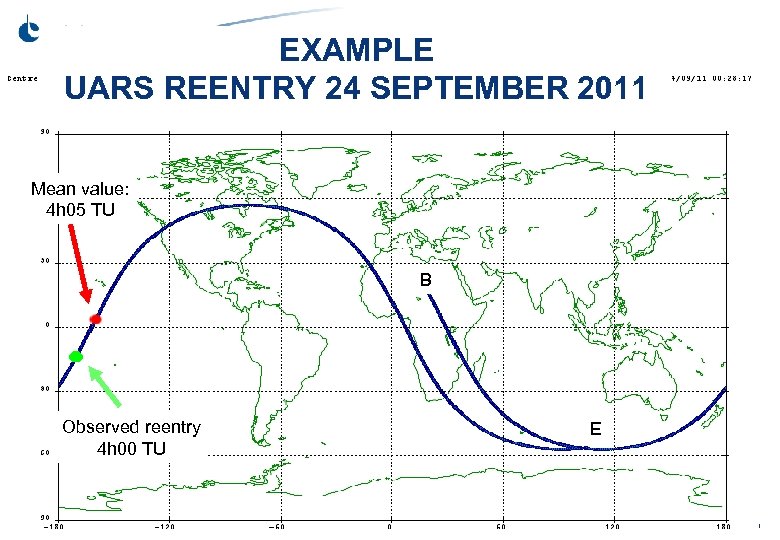
EXAMPLE UARS REENTRY 24 SEPTEMBER 2011 Mean value: 4 h 05 TU B Observed reentry 4 h 00 TU E 40
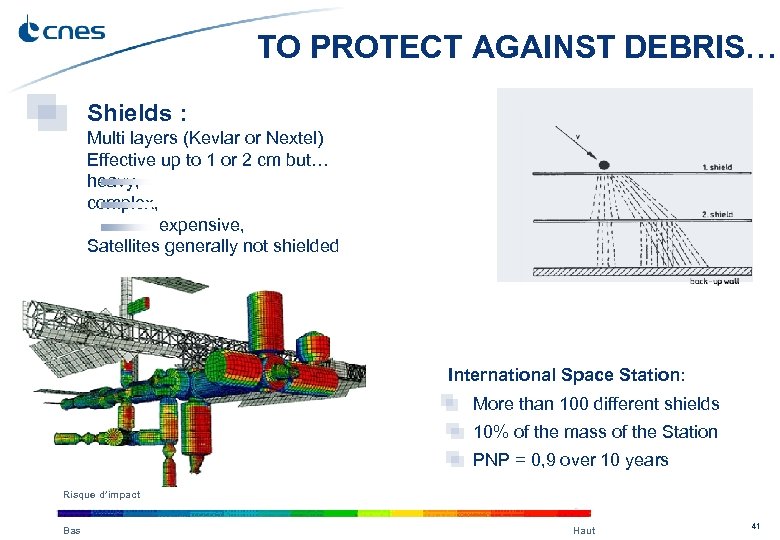
TO PROTECT AGAINST DEBRIS… Shields : Multi layers (Kevlar or Nextel) Effective up to 1 or 2 cm but… heavy, complex, expensive, Satellites generally not shielded International Space Station: More than 100 different shields 10% of the mass of the Station PNP = 0, 9 over 10 years Risque d’impact Bas Haut 41
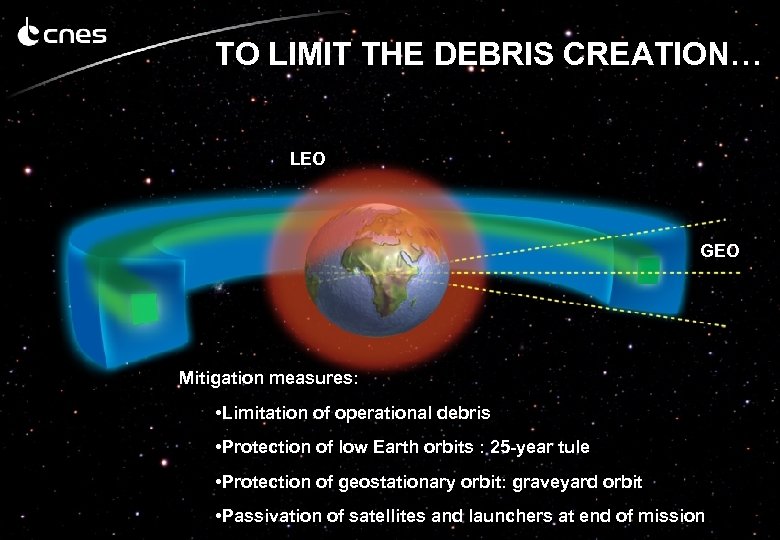
TO LIMIT THE DEBRIS CREATION… LEO GEO Mitigation measures: • Limitation of operational debris • Protection of low Earth orbits : 25 -year tule • Protection of geostationary orbit: graveyard orbit • Passivation of satellites and launchers at end of mission 42
DIFFICULTIES Space debris mitigation measures are costly: mass, performances, development, operations Critical balance to find between : -to do nothing and continue polluting Earth environment -to penalise ourselves when implementing alone constraining measures Economical competition: all actors shall use the same rules need for an international consensus 43
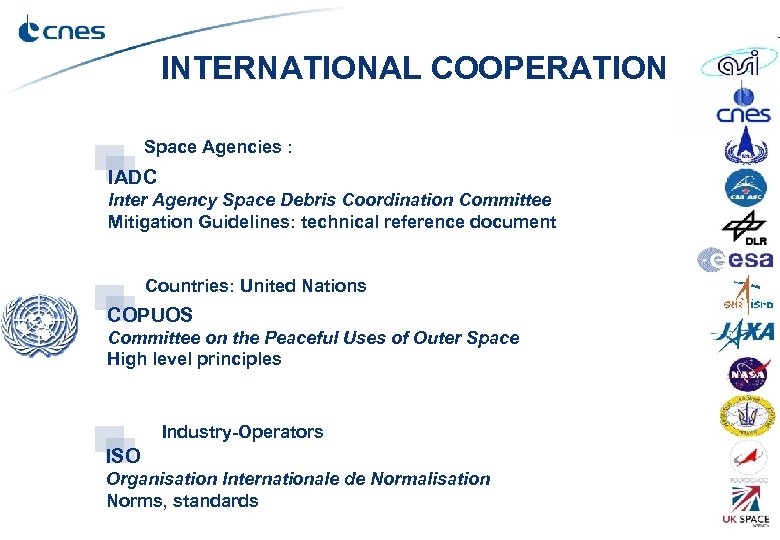
INTERNATIONAL COOPERATION Space Agencies : IADC Inter Agency Space Debris Coordination Committee Mitigation Guidelines: technical reference document Countries: United Nations COPUOS Committee on the Peaceful Uses of Outer Space High level principles Industry-Operators ISO Organisation Internationale de Normalisation Norms, standards 44
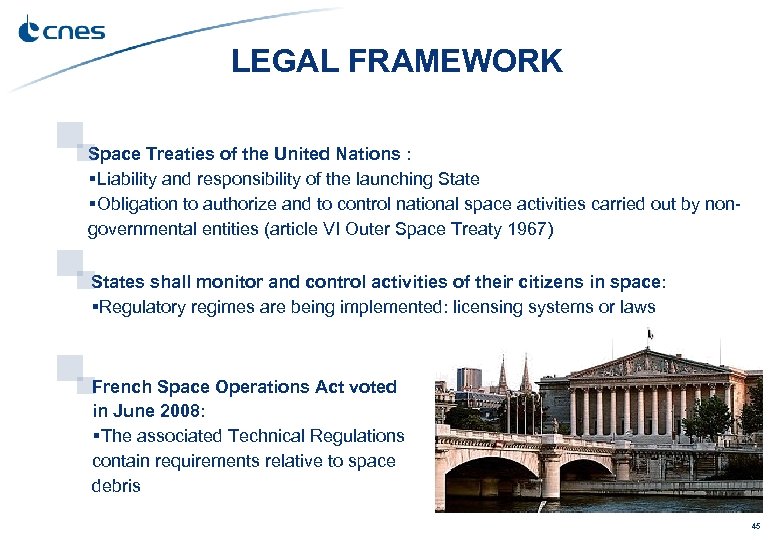
LEGAL FRAMEWORK Space Treaties of the United Nations : Liability and responsibility of the launching State Obligation to authorize and to control national space activities carried out by nongovernmental entities (article VI Outer Space Treaty 1967) States shall monitor and control activities of their citizens in space: Regulatory regimes are being implemented: licensing systems or laws French Space Operations Act voted in June 2008: The associated Technical Regulations contain requirements relative to space debris 45
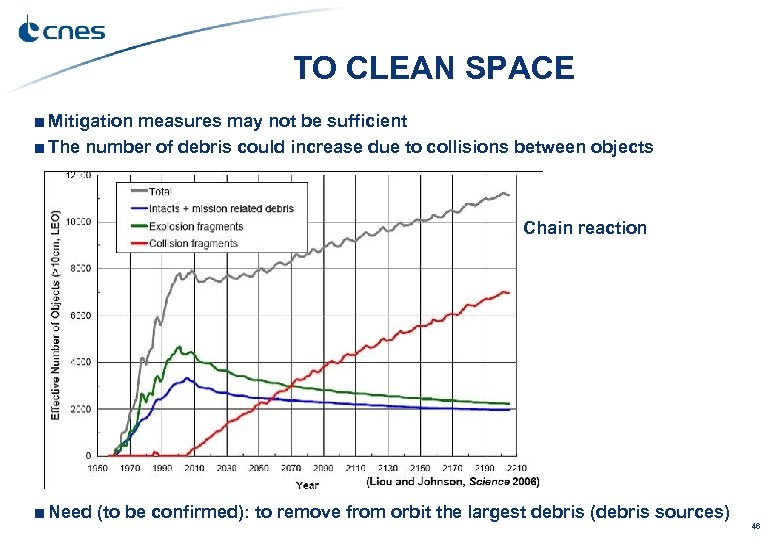
TO CLEAN SPACE ■ Mitigation measures may not be sufficient ■ The number of debris could increase due to collisions between objects Chain reaction ■ Need (to be confirmed): to remove from orbit the largest debris (debris sources) 46
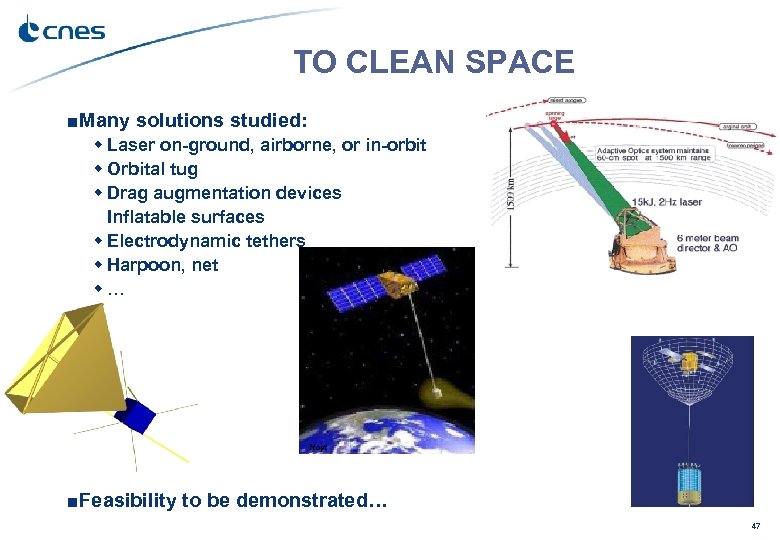
TO CLEAN SPACE ■ Many solutions studied: Laser on-ground, airborne, or in-orbit Orbital tug Drag augmentation devices Inflatable surfaces Electrodynamic tethers Harpoon, net … Hoyt ■ Feasibility to be demonstrated… 47
TO CLEAN SPACE Some difficulties… ■ Technical: Approach Capture De-orbiting system ■ Economical Cost of such a mission Need to remove several objects Who is going to pay? ■ Legal Rights, obligations, Treaties Debris belong for ever to their launching State ■ Need for further studies on modelling and key technologies ■ Operational service? ? ? 48
Conclusions Constant augmentation of debris population orbiting the Earth increasing risk to space missions Critical evolution if nothing is done No realistic solution, except prevention Good awareness of the problem at international level: consensus on the necessary mitigation measures Legal systems are being implemented (license, law) Need for active debris removal to be confirmed 49
Скачать презентацию SPACE DEBRIS Fernand ALBY What is the situation
e90124cfcddcf27950109e9af594011f.ppt