 Скачать презентацию SP 14 ICAO Aviation System Block Upgrades ASBU and
fe020324b65b1c24e9b44060a63a2ad8.ppt
- Количество слайдов: 69



SP/14 ICAO Aviation System Block Upgrades (ASBU) and SWIM/AMHS Present by AEROTHAI AMHS / SWIM Workshop 5 -6 March 2012 Chiang Mai, Thailand 1
List of Contents • The concept of ASBU • Who is involved? • What is actually an Aviation System Block Upgrade? – Module, Block, Thread, PIA • Global Air Navigation Plan & ASBU 2
List of Contents • ASBU & SWIM – B 1 -31, B 2 -31, etc. • ASBU & AMHS – B 0 -30, B 0 -25, etc. • Summary – Why ASBU is useful for us? • Summary – What can we do now? 3
The concept of ASBU • ASBU stands for Aviation System Block Upgrades • Excerpt from the ASBU Working Document • “…ICAO therefore initiated the “Aviation System Block Upgrades” initiative as a programmatic framework that – develops a set of air traffic management (ATM) solutions or upgrades, – takes advantage of current equipage, – establishes a transition plan, and – enables global interoperability…. ” 4
The concept of ASBU • The concept of block upgrades comes from existing implementation plans and initiatives in many regions of the world. – Next Generation Air Transportation System (Next. Gen) from the US – Single European Sky ATM Research (SESAR) from the Europe – Collaborative Actions for Renovation of Air Traffic Systems (CARATS) programs from Japan – Others 5
The concept of ASBU • ASBU composes of a suite of “modules” with the following characteristics: – clearly-defined measurable operational improvement and success metric; – Necessary equipment and/or systems in aircraft and on ground along with an operational approval or certification plan; – Standards and procedures for both airborne and ground systems; and – A positive business case over A a clearly defined period of time. 6
The concept of ASBU • ASBU will include the development of technology roadmaps, to ensure that standards are mature and to facilitate synchronized implementation between air and ground systems and between regions. The ultimate goal is to achieve global interoperability. 7
The concept of ASBU • ASBU are organized in five-year time “Block” increments starting in 2013 through 2028 and beyond. • ASBU will be formalized at the Twelfth Air Navigation Conference, in November 2012 8
Who is involved? ? • “EVERYBODY” • Stakeholders include: – Governing body e. g. ICAO, PIRGs, etc. – Service Providers – Regulators – Airspace Users – Manufacturers 9
What is actually an Aviation System Block Upgrade? ? • A Block Upgrade has 4 components: – Module – A deployable package (performance) or capability – Thread – A series of dependent modules across the block upgrades. – Block – A block is made up of modules that when combined enable significant improvements and provide access to benefits – Performance Improvement Area (PIA) – An executive view of the intended evolution of modules in each Block that provide operational and performance objectives. 10
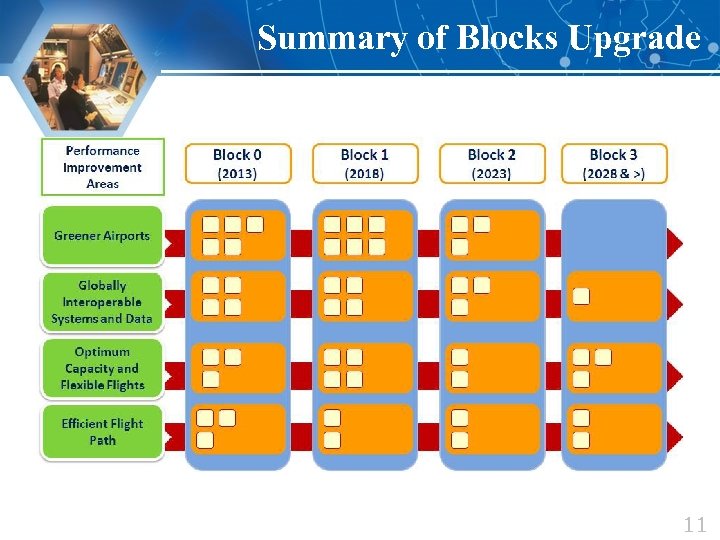
Summary of Blocks Upgrade 11
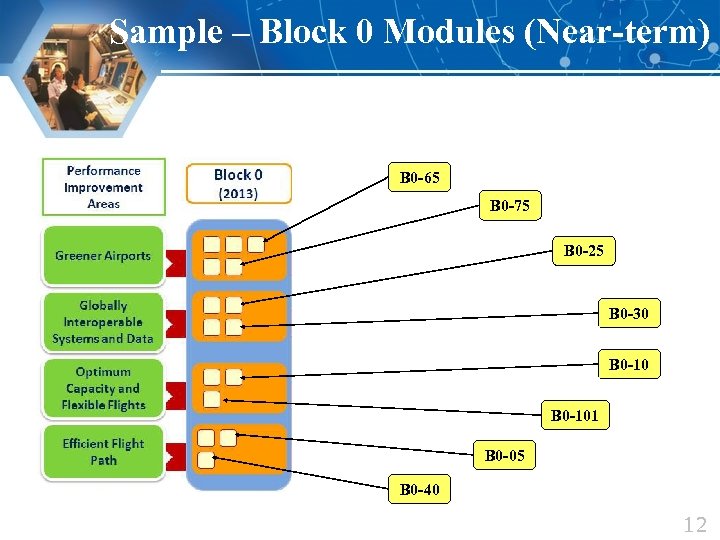
Sample – Block 0 Modules (Near-term) B 0 -65 B 0 -75 B 0 -25 B 0 -30 B 0 -101 B 0 -05 B 0 -40 12
Sample – Block 0 Modules(Near-term) • PIA 1 Greener Airport – B 0 -65 Optimization of approach procedures including vertical guidance. – B 0 -75 Improved Runway Safety • PIA 2 Globally Interoperable Systems and Data – B 0 -25 Increased Interoperability, Efficiency and Capacity through Ground-Ground Integration. – B 0 -30 Service Improvement through Digital Aeronautical Information Management 13
Sample – Block 0 Modules (Near-term) • PIA 3 Optimum Capacity and Flexible Flights – B 0 -10 Improved Operations through Enhanced En. Route Trajectories – B 0 -101 ACAS Improvements • PIA 4 Efficient Flight Path – B 0 -05 Improved Flexibility and Efficiency in Descent Profiles (CDOs) – B 0 -40 Improved Safety and Efficiency through the initial application of Data Link En-Route 14
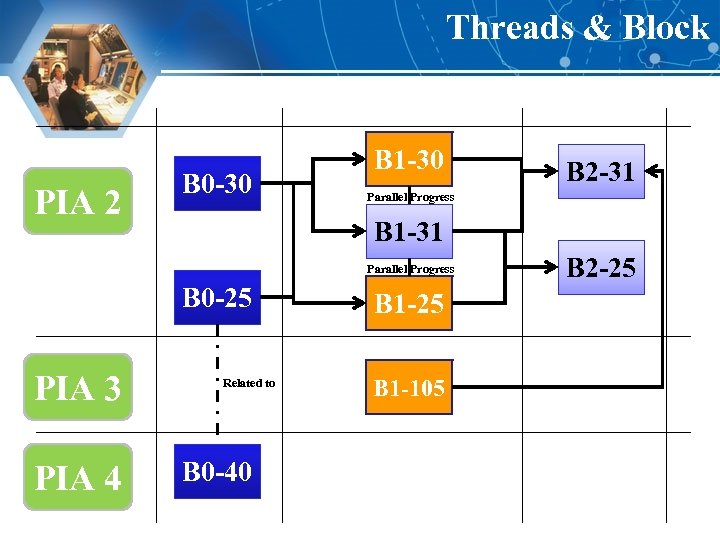
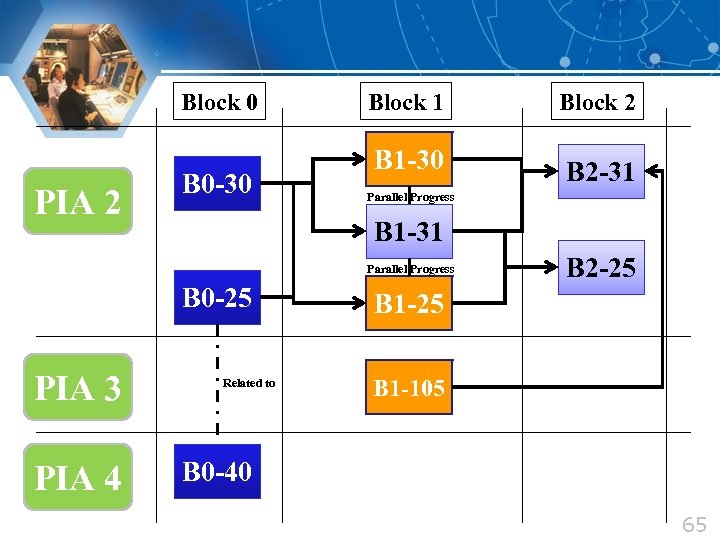
Threads & Block PIA 2 B 0 -30 B 1 -30 Parallel Progress B 1 -31 Parallel Progress B 0 -25 PIA 3 PIA 4 B 2 -31 Related to B 0 -40 B 1 -25 B 1 -105 B 2 -25
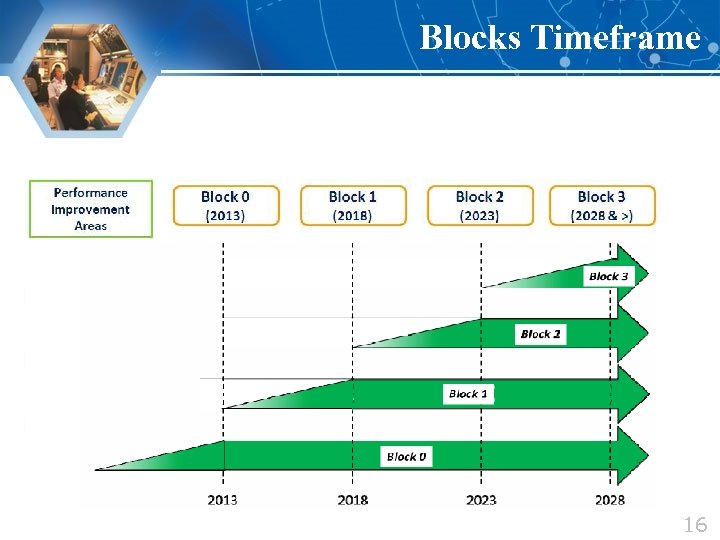
Blocks Timeframe 16
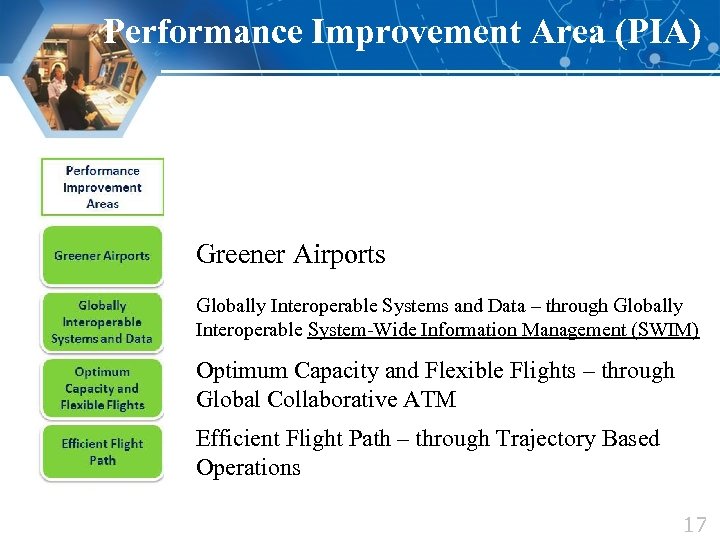
Performance Improvement Area (PIA) Greener Airports Globally Interoperable Systems and Data – through Globally Interoperable System-Wide Information Management (SWIM) Optimum Capacity and Flexible Flights – through Global Collaborative ATM Efficient Flight Path – through Trajectory Based Operations 17
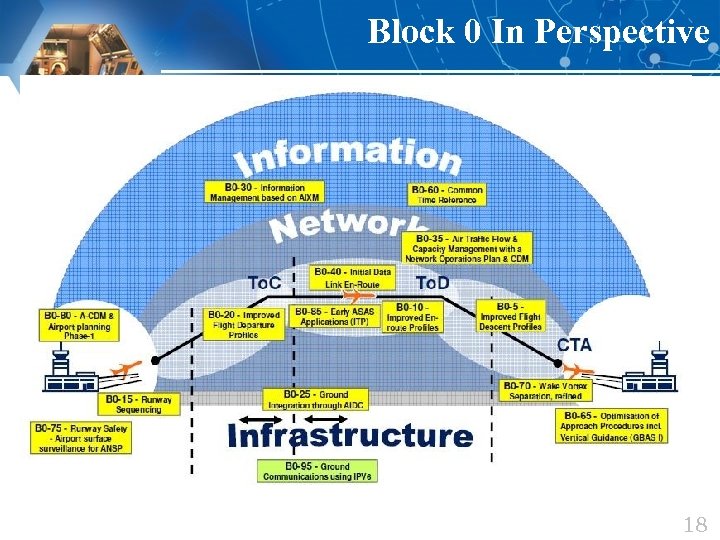
Block 0 In Perspective 18
Global Air Navigation Plan & ASBU • Global Air Navigation Plan (GANP) is a strategic document in enhancing the efficiency of air navigation systems. – GANP contains guidance for systems improvement in the near- and medium-term. – For Long-term initiatives, the GANP must be updated once such concepts are matured. • ICAO aims for the ASBU initiative to be the global approach for GANP. 19
ASBU & SWIM • System-Wide Information Management (SWIM) is a critical component in order to achieve ASBU PIA 2 - Globally Interoperable Systems and Data • SWIM implementation is designated in Block 1 and Block 2 of the ASBU : – B 1 -31, B 2 -31 and B 2 -25 • Relationship (thread) with other modules are not completely developed yet. 20
ASBU & AMHS • AMHS/ATN is the network and application for exchange of digital information. • AMHS systems are being deployed around the world. • AMHS and ATN can be considered as elements contributing to modules in Block 0 (Near-term) of the ASBU : – B 0 -25, B 0 -30 and B 0 -40. 21
Related Modules • Some modules are pre-requisite of the SWIM-related modules – B 1 -30, B 1 -25 and B 1 -105 22
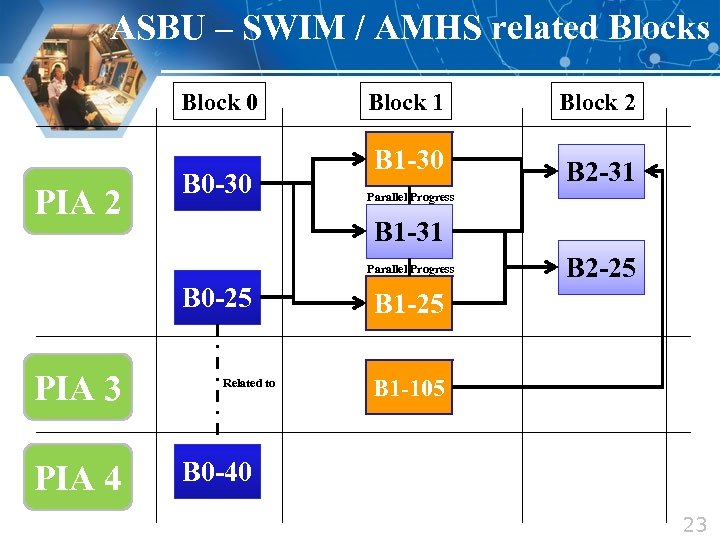
ASBU – SWIM / AMHS related Blocks Block 0 PIA 2 B 0 -30 Block 1 Block 2 B 1 -30 B 2 -31 Parallel Progress B 1 -31 Parallel Progress B 0 -25 PIA 3 PIA 4 Related to B 2 -25 B 1 -105 B 0 -40 23
ASBU & SWIM • SWIM implementation is designated in Block 1 and Block 2 of the ASBU : – B 1 -31 Performance Improvement through the application of SWIM – B 2 -31 Enabling Airborne Participation in Corroborative ATM through SWIM – B 2 -25 Improved Coordination through multicentre Ground-Ground Integration: (SWIM + Other components) 24
B 1 -31 Performance Improvement through the application of SWIM • Implementation of SWIM services (applications and infrastructure) creating the aviation intranet based on standard data models, and internet-based protocols to maximize interoperability 25
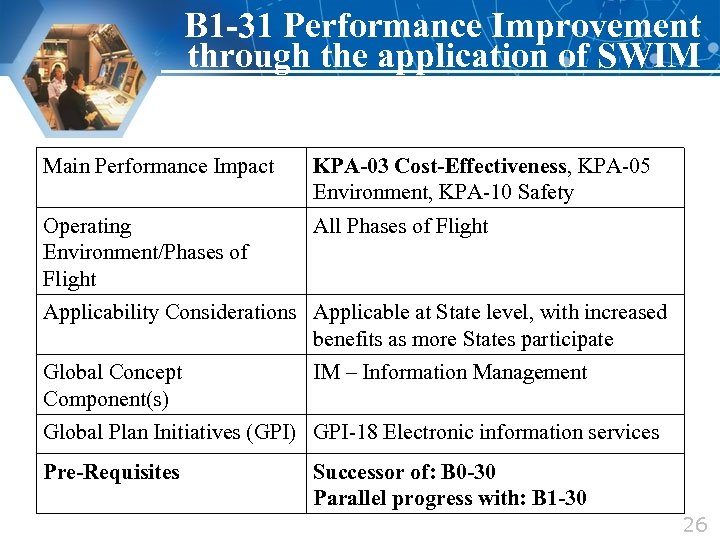
B 1 -31 Performance Improvement through the application of SWIM Main Performance Impact KPA-03 Cost-Effectiveness, KPA-05 Environment, KPA-10 Safety Operating Environment/Phases of Flight All Phases of Flight Applicability Considerations Applicable at State level, with increased benefits as more States participate Global Concept Component(s) IM – Information Management Global Plan Initiatives (GPI) GPI-18 Electronic information services Pre-Requisites Successor of: B 0 -30 Parallel progress with: B 1 -30 26
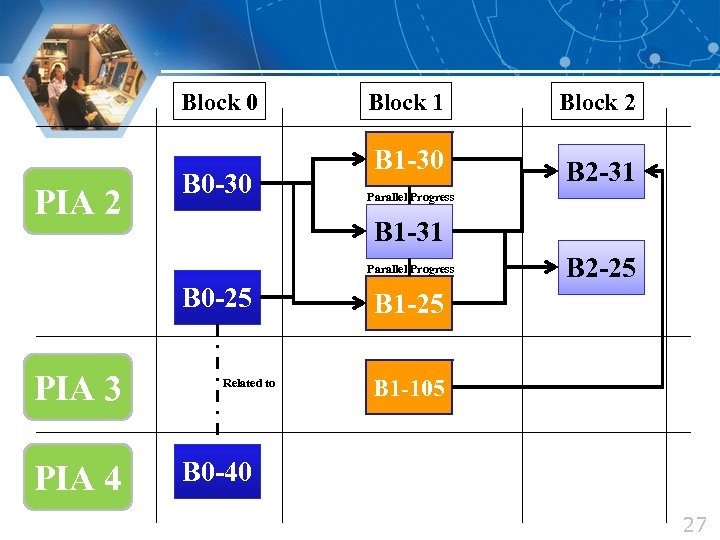
Block 0 PIA 2 B 0 -30 Block 1 Block 2 B 1 -30 B 2 -31 Parallel Progress B 1 -31 Parallel Progress B 0 -25 PIA 3 PIA 4 Related to B 2 -25 B 1 -105 B 0 -40 27
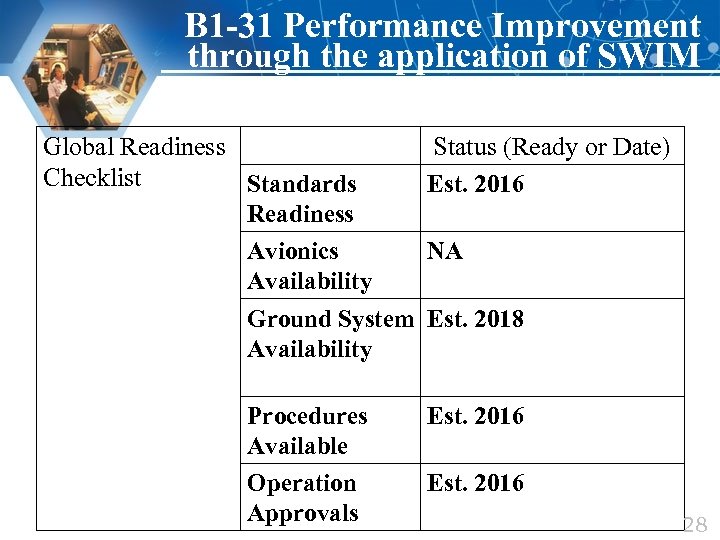
B 1 -31 Performance Improvement through the application of SWIM Global Readiness Checklist Standards Readiness Avionics Availability Ground System Availability Procedures Available Operation Approvals Status (Ready or Date) Est. 2016 NA Est. 2018 Est. 2016 28
B 2 -31 Enabling Airborne Participation in collaborative ATM through SWIM • This module allows the aircraft to be fully connected as an information node in SWIM, enabling full participation in collaborative ATM processes with access to voluminous dynamic data including meteorology. This will start with non-safety critical exchanges supported by commercial data links. The applications of this module are integrated into the processes and the information infrastructure which had evolved over the previous blocks. 29
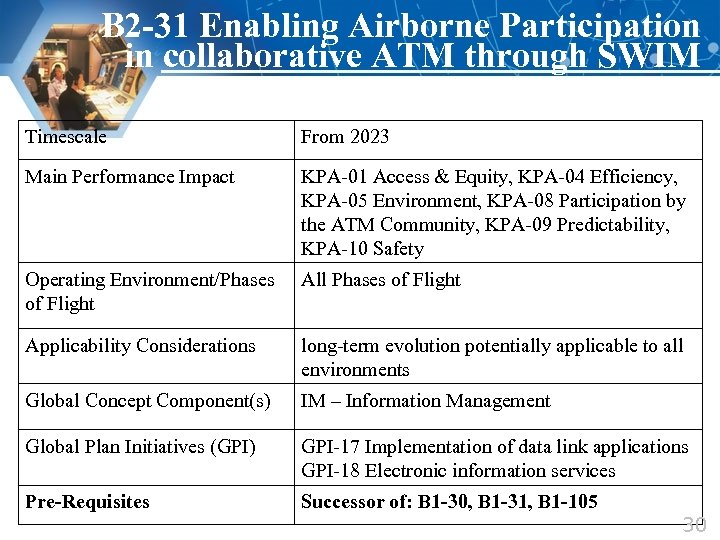
B 2 -31 Enabling Airborne Participation in collaborative ATM through SWIM Timescale From 2023 Main Performance Impact KPA-01 Access & Equity, KPA-04 Efficiency, KPA-05 Environment, KPA-08 Participation by the ATM Community, KPA-09 Predictability, KPA-10 Safety Operating Environment/Phases of Flight All Phases of Flight Applicability Considerations long-term evolution potentially applicable to all environments Global Concept Component(s) IM – Information Management Global Plan Initiatives (GPI) GPI-17 Implementation of data link applications GPI-18 Electronic information services Pre-Requisites Successor of: B 1 -30, B 1 -31, B 1 -105 30
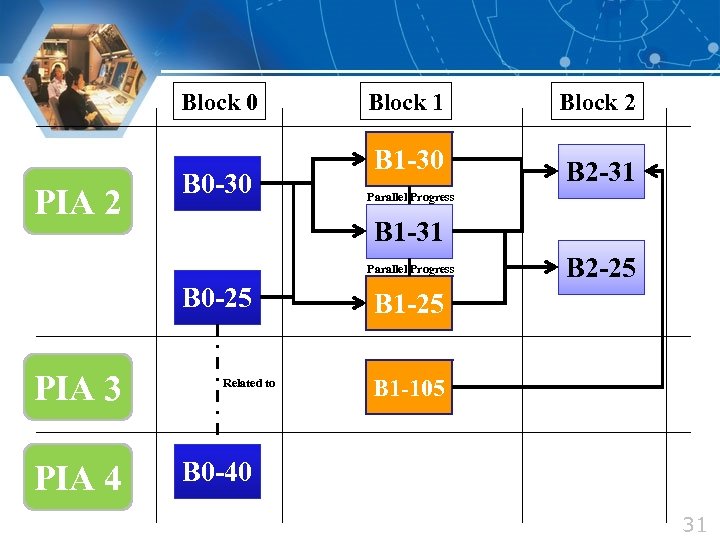
Block 0 PIA 2 B 0 -30 Block 1 Block 2 B 1 -30 B 2 -31 Parallel Progress B 1 -31 Parallel Progress B 0 -25 PIA 3 PIA 4 Related to B 2 -25 B 1 -105 B 0 -40 31
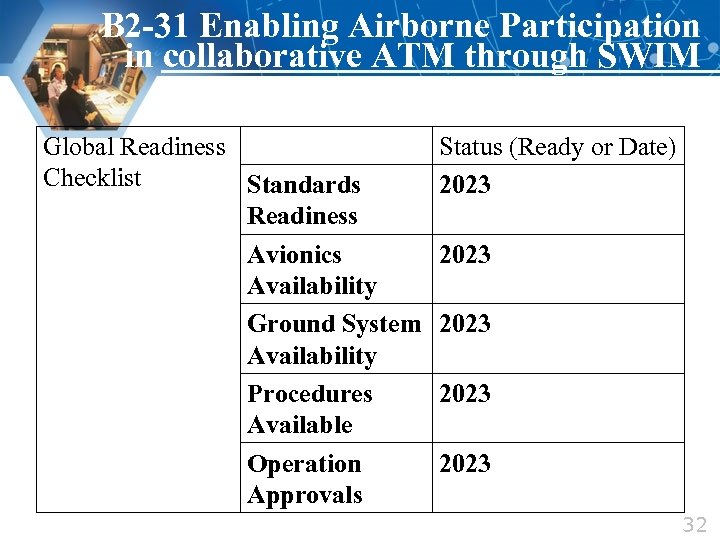
B 2 -31 Enabling Airborne Participation in collaborative ATM through SWIM Global Readiness Checklist Standards Readiness Avionics Availability Ground System Availability Procedures Available Operation Approvals Status (Ready or Date) 2023 2023 32
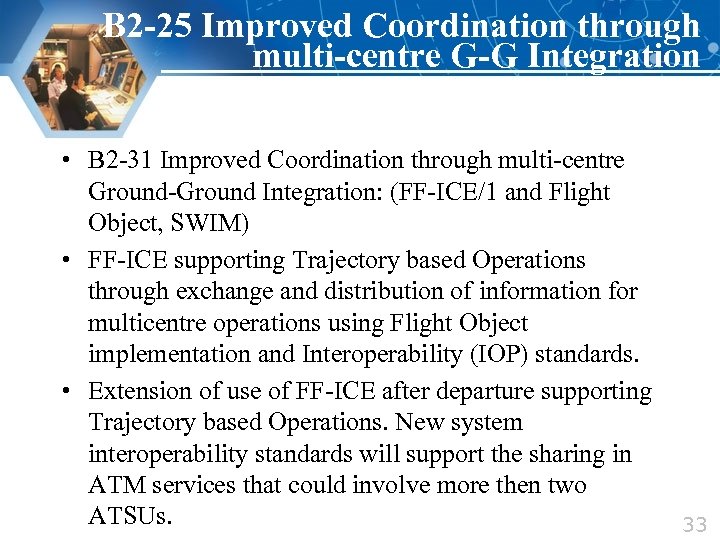
B 2 -25 Improved Coordination through multi-centre G-G Integration • B 2 -31 Improved Coordination through multi-centre Ground-Ground Integration: (FF-ICE/1 and Flight Object, SWIM) • FF-ICE supporting Trajectory based Operations through exchange and distribution of information for multicentre operations using Flight Object implementation and Interoperability (IOP) standards. • Extension of use of FF-ICE after departure supporting Trajectory based Operations. New system interoperability standards will support the sharing in ATM services that could involve more then two ATSUs. 33
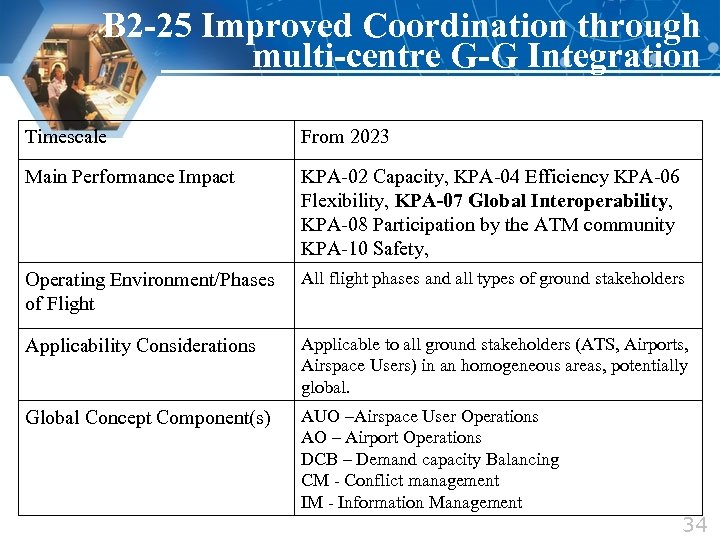
B 2 -25 Improved Coordination through multi-centre G-G Integration Timescale From 2023 Main Performance Impact KPA-02 Capacity, KPA-04 Efficiency KPA-06 Flexibility, KPA-07 Global Interoperability, KPA-08 Participation by the ATM community KPA-10 Safety, Operating Environment/Phases of Flight All flight phases and all types of ground stakeholders Applicability Considerations Applicable to all ground stakeholders (ATS, Airports, Airspace Users) in an homogeneous areas, potentially global. Global Concept Component(s) AUO –Airspace User Operations AO – Airport Operations DCB – Demand capacity Balancing CM - Conflict management IM - Information Management 34
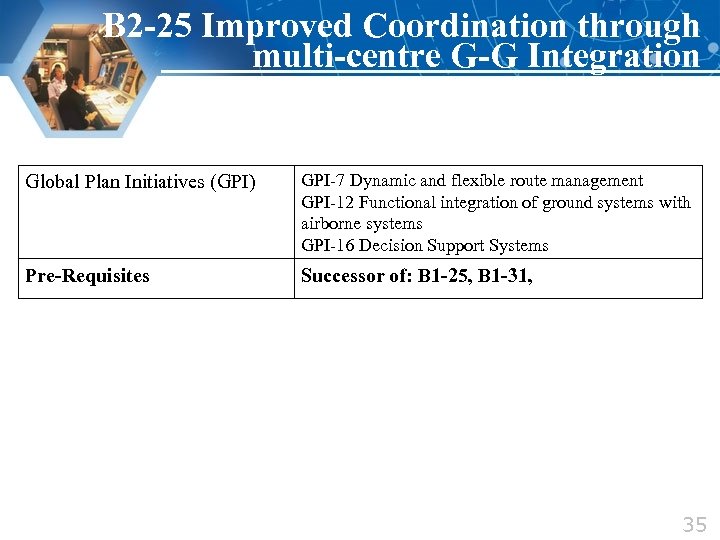
B 2 -25 Improved Coordination through multi-centre G-G Integration Global Plan Initiatives (GPI) GPI-7 Dynamic and flexible route management GPI-12 Functional integration of ground systems with airborne systems GPI-16 Decision Support Systems Pre-Requisites Successor of: B 1 -25, B 1 -31, 35
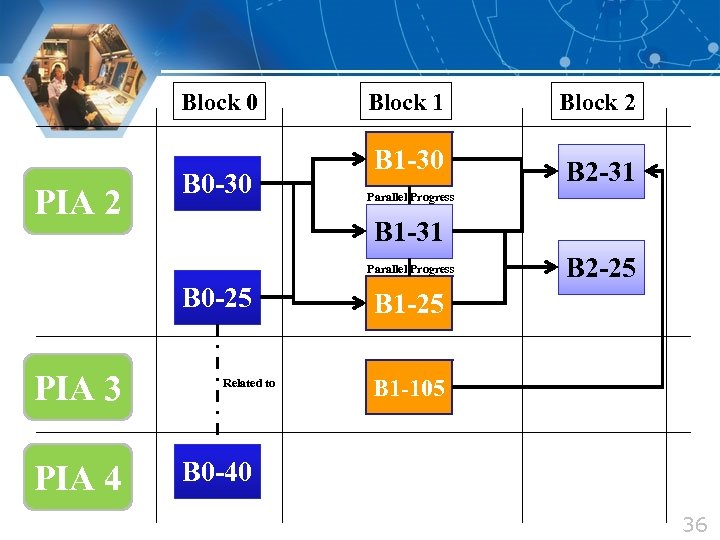
Block 0 PIA 2 B 0 -30 Block 1 Block 2 B 1 -30 B 2 -31 Parallel Progress B 1 -31 Parallel Progress B 0 -25 PIA 3 PIA 4 Related to B 2 -25 B 1 -105 B 0 -40 36
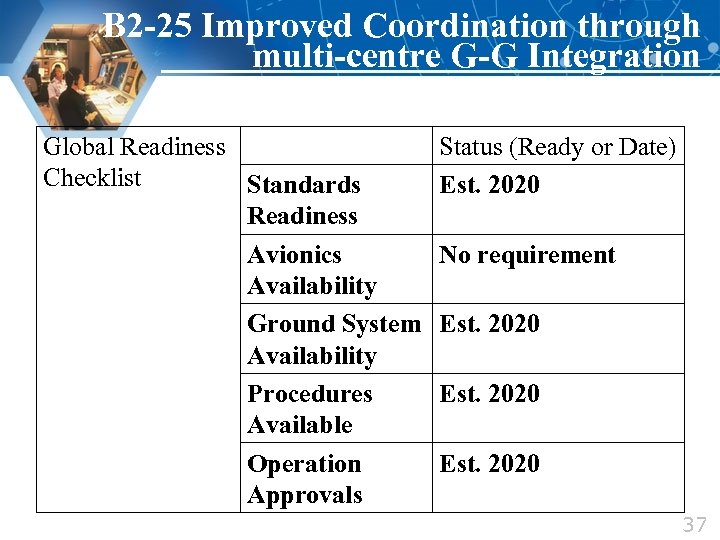
B 2 -25 Improved Coordination through multi-centre G-G Integration Global Readiness Checklist Standards Readiness Avionics Availability Ground System Availability Procedures Available Operation Approvals Status (Ready or Date) Est. 2020 No requirement Est. 2020 37
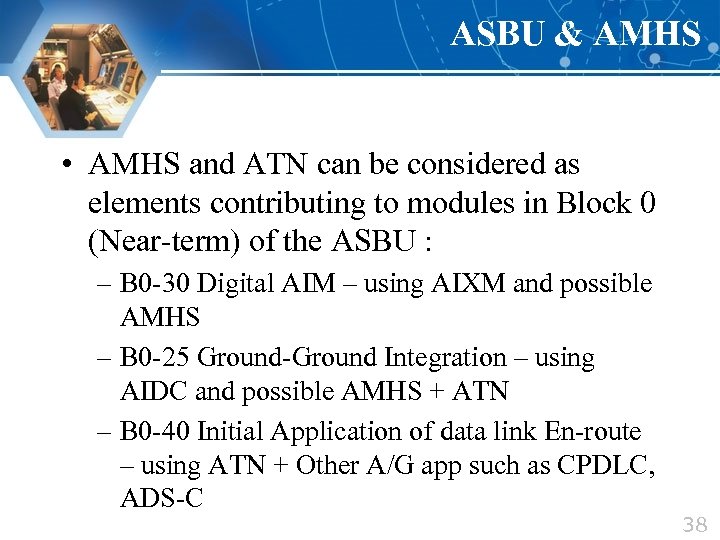
ASBU & AMHS • AMHS and ATN can be considered as elements contributing to modules in Block 0 (Near-term) of the ASBU : – B 0 -30 Digital AIM – using AIXM and possible AMHS – B 0 -25 Ground-Ground Integration – using AIDC and possible AMHS + ATN – B 0 -40 Initial Application of data link En-route – using ATN + Other A/G app such as CPDLC, ADS-C 38
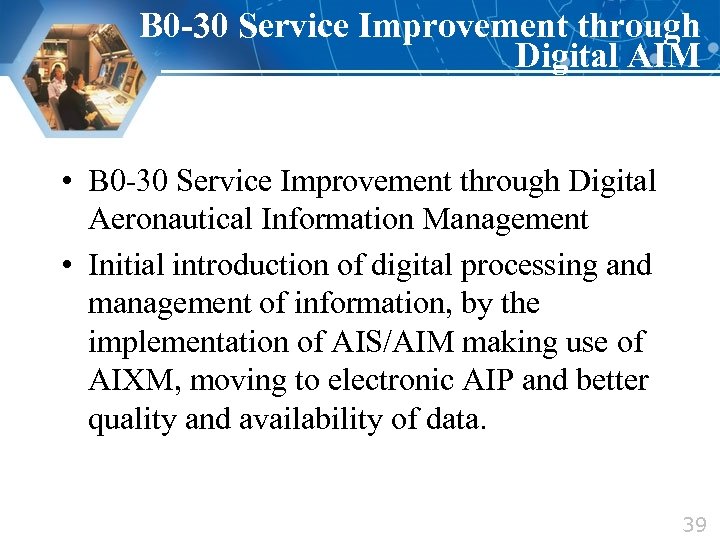
B 0 -30 Service Improvement through Digital AIM • B 0 -30 Service Improvement through Digital Aeronautical Information Management • Initial introduction of digital processing and management of information, by the implementation of AIS/AIM making use of AIXM, moving to electronic AIP and better quality and availability of data. 39
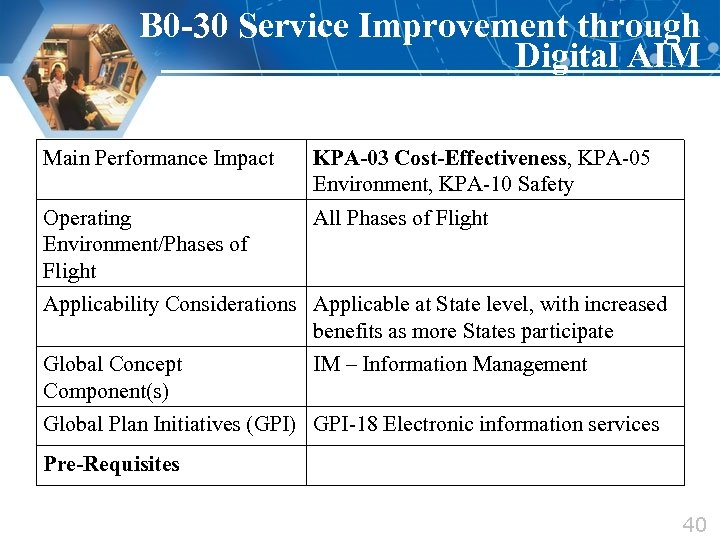
B 0 -30 Service Improvement through Digital AIM Main Performance Impact KPA-03 Cost-Effectiveness, KPA-05 Environment, KPA-10 Safety Operating Environment/Phases of Flight All Phases of Flight Applicability Considerations Applicable at State level, with increased benefits as more States participate Global Concept Component(s) IM – Information Management Global Plan Initiatives (GPI) GPI-18 Electronic information services Pre-Requisites 40
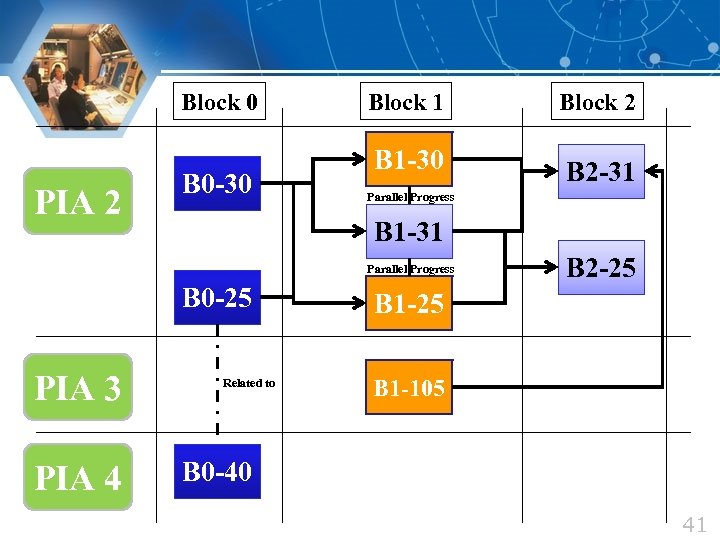
Block 0 PIA 2 B 0 -30 Block 1 Block 2 B 1 -30 B 2 -31 Parallel Progress B 1 -31 Parallel Progress B 0 -25 PIA 3 PIA 4 Related to B 2 -25 B 1 -105 B 0 -40 41
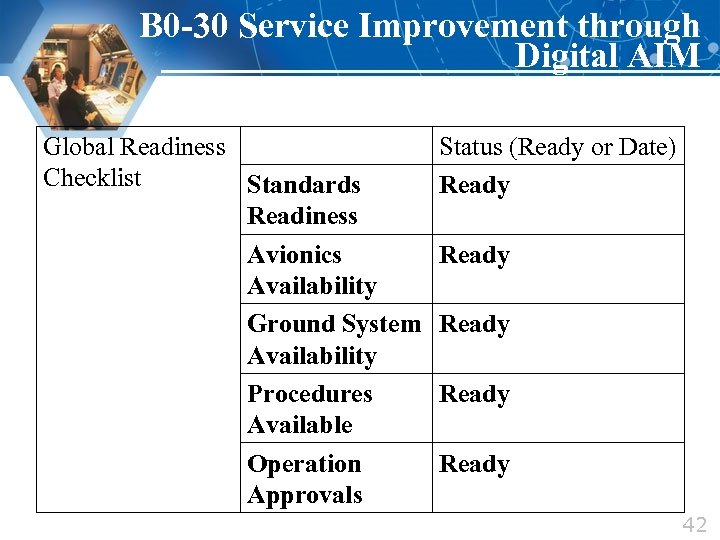
B 0 -30 Service Improvement through Digital AIM Global Readiness Checklist Standards Readiness Avionics Availability Ground System Availability Procedures Available Operation Approvals Status (Ready or Date) Ready Ready 42
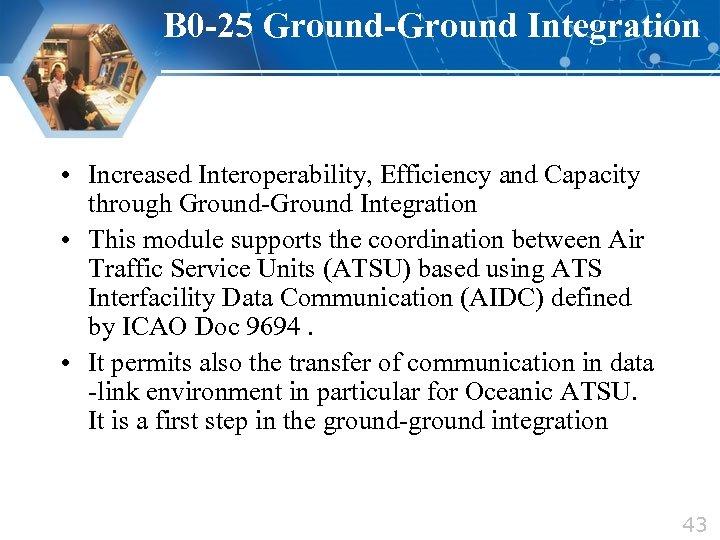
B 0 -25 Ground-Ground Integration • Increased Interoperability, Efficiency and Capacity through Ground-Ground Integration • This module supports the coordination between Air Traffic Service Units (ATSU) based using ATS Interfacility Data Communication (AIDC) defined by ICAO Doc 9694. • It permits also the transfer of communication in data -link environment in particular for Oceanic ATSU. It is a first step in the ground-ground integration 43
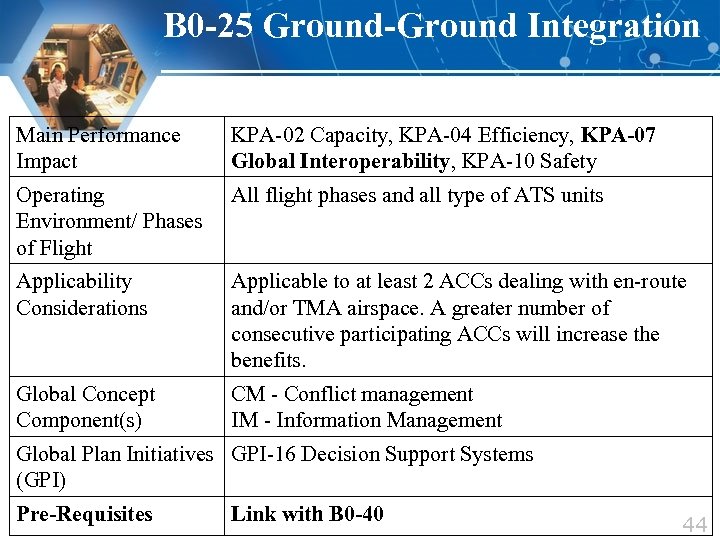
B 0 -25 Ground-Ground Integration Main Performance Impact KPA-02 Capacity, KPA-04 Efficiency, KPA-07 Global Interoperability, KPA-10 Safety Operating Environment/ Phases of Flight All flight phases and all type of ATS units Applicability Considerations Applicable to at least 2 ACCs dealing with en-route and/or TMA airspace. A greater number of consecutive participating ACCs will increase the benefits. Global Concept Component(s) CM - Conflict management IM - Information Management Global Plan Initiatives GPI-16 Decision Support Systems (GPI) Pre-Requisites Link with B 0 -40 44
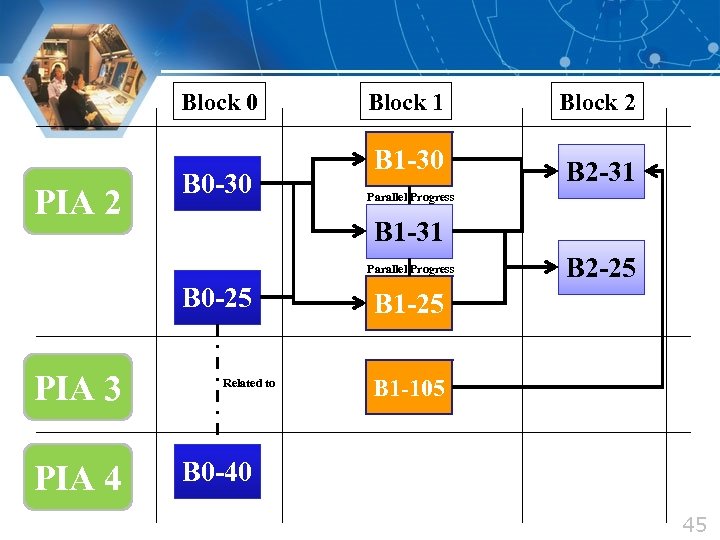
Block 0 PIA 2 B 0 -30 Block 1 Block 2 B 1 -30 B 2 -31 Parallel Progress B 1 -31 Parallel Progress B 0 -25 PIA 3 PIA 4 Related to B 2 -25 B 1 -105 B 0 -40 45
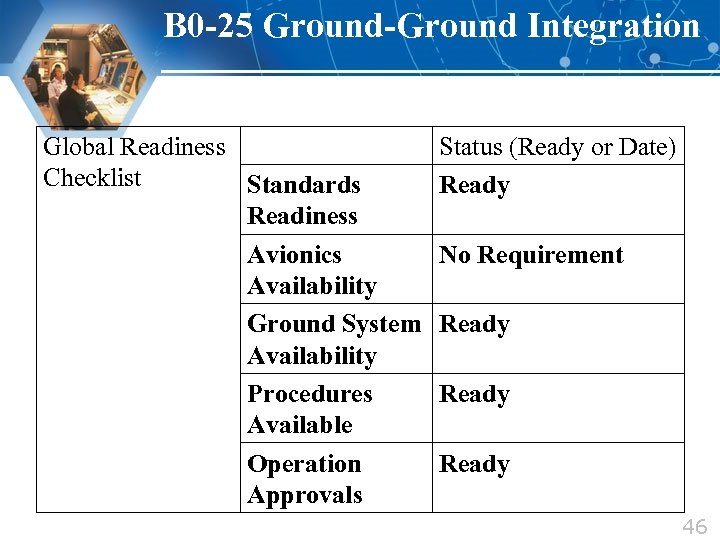
B 0 -25 Ground-Ground Integration Global Readiness Checklist Standards Readiness Avionics Availability Ground System Availability Procedures Available Operation Approvals Status (Ready or Date) Ready No Requirement Ready 46
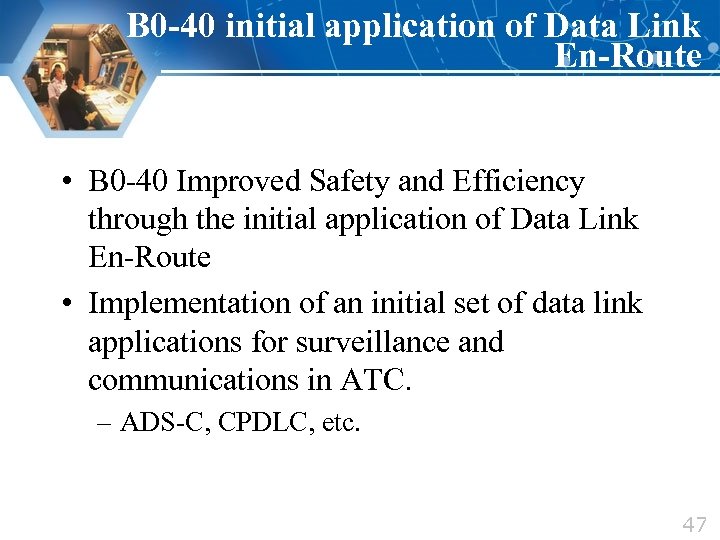
B 0 -40 initial application of Data Link En-Route • B 0 -40 Improved Safety and Efficiency through the initial application of Data Link En-Route • Implementation of an initial set of data link applications for surveillance and communications in ATC. – ADS-C, CPDLC, etc. 47
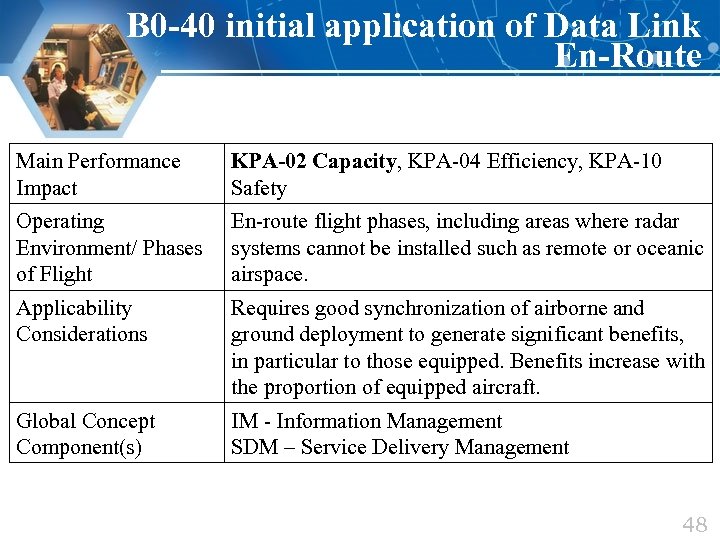
B 0 -40 initial application of Data Link En-Route Main Performance Impact KPA-02 Capacity, KPA-04 Efficiency, KPA-10 Safety Operating Environment/ Phases of Flight En-route flight phases, including areas where radar systems cannot be installed such as remote or oceanic airspace. Applicability Considerations Requires good synchronization of airborne and ground deployment to generate significant benefits, in particular to those equipped. Benefits increase with the proportion of equipped aircraft. Global Concept Component(s) IM - Information Management SDM – Service Delivery Management 48
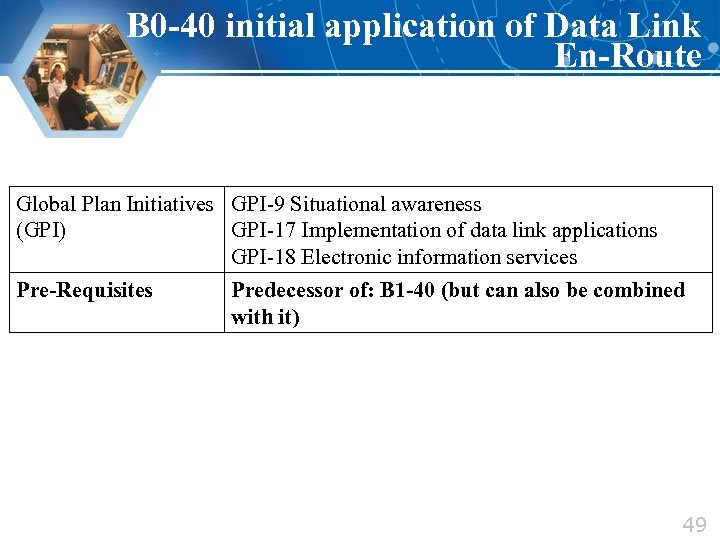
B 0 -40 initial application of Data Link En-Route Global Plan Initiatives GPI-9 Situational awareness (GPI) GPI-17 Implementation of data link applications GPI-18 Electronic information services Pre-Requisites Predecessor of: B 1 -40 (but can also be combined with it) 49
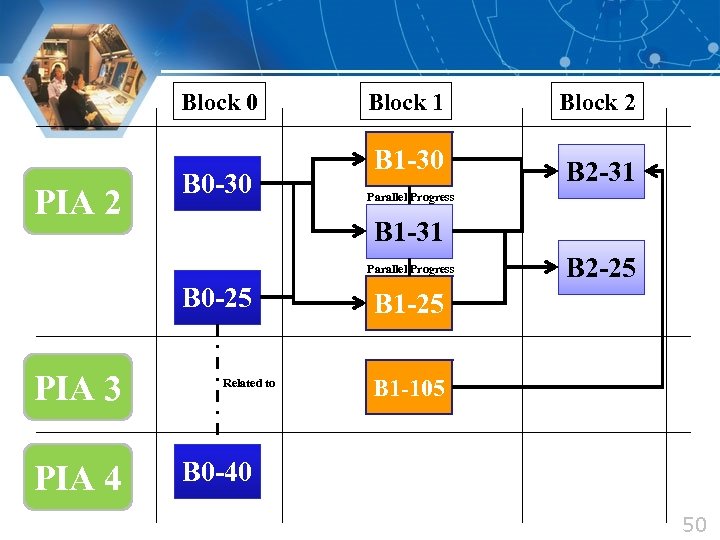
Block 0 PIA 2 B 0 -30 Block 1 Block 2 B 1 -30 B 2 -31 Parallel Progress B 1 -31 Parallel Progress B 0 -25 PIA 3 PIA 4 Related to B 2 -25 B 1 -105 B 0 -40 50
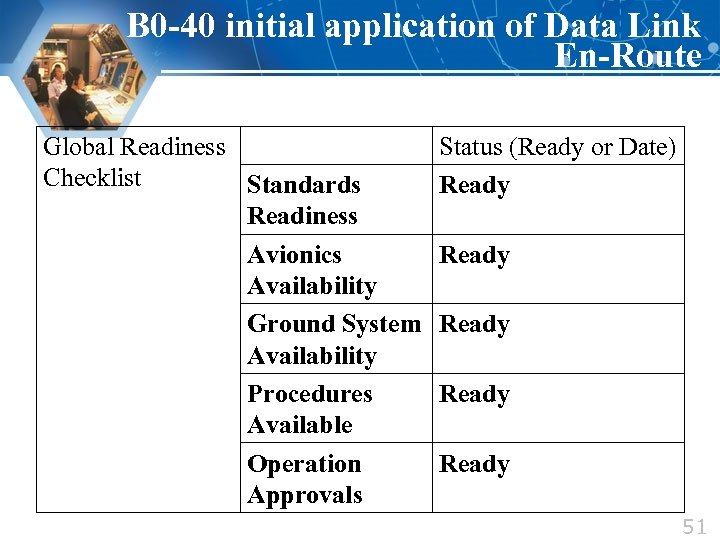
B 0 -40 initial application of Data Link En-Route Global Readiness Checklist Standards Readiness Avionics Availability Ground System Availability Procedures Available Operation Approvals Status (Ready or Date) Ready Ready 51
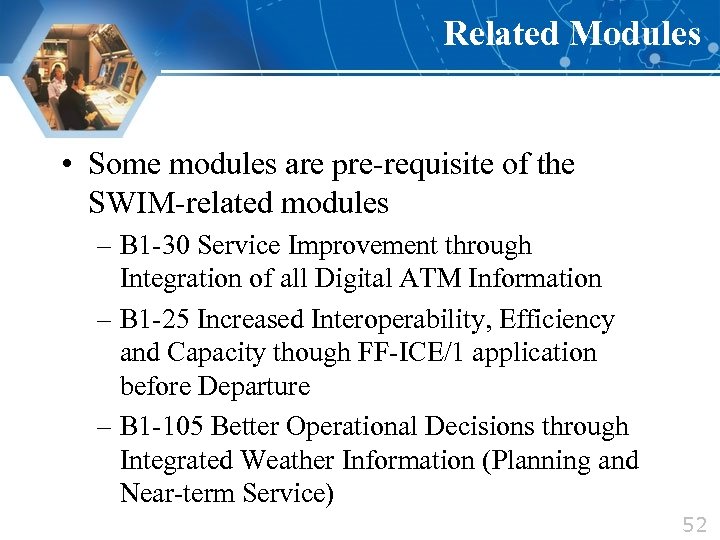
Related Modules • Some modules are pre-requisite of the SWIM-related modules – B 1 -30 Service Improvement through Integration of all Digital ATM Information – B 1 -25 Increased Interoperability, Efficiency and Capacity though FF-ICE/1 application before Departure – B 1 -105 Better Operational Decisions through Integrated Weather Information (Planning and Near-term Service) 52
B 1 -30 Service Improvement through Integration of all Digital ATM Information • Implementation of the ATM information reference model integrating all ATM information using UML and enabling XML data representations and data exchange based on internet protocols with WXXM for meteorological Information. 53
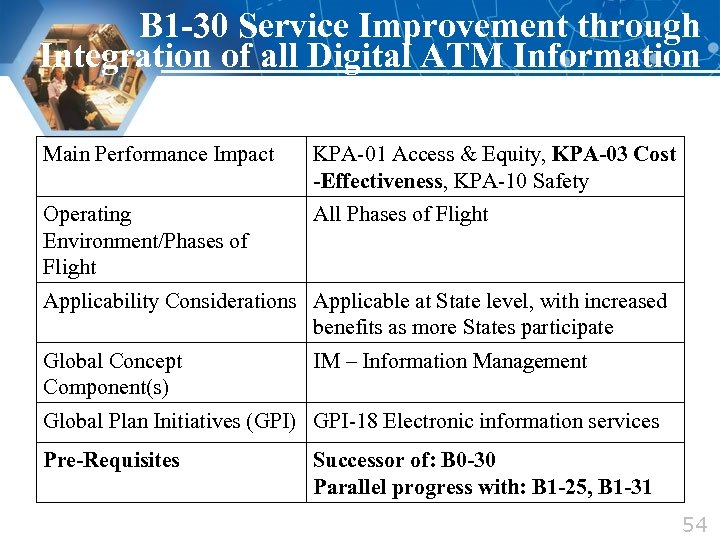
B 1 -30 Service Improvement through Integration of all Digital ATM Information Main Performance Impact KPA-01 Access & Equity, KPA-03 Cost -Effectiveness, KPA-10 Safety Operating Environment/Phases of Flight All Phases of Flight Applicability Considerations Applicable at State level, with increased benefits as more States participate Global Concept Component(s) IM – Information Management Global Plan Initiatives (GPI) GPI-18 Electronic information services Pre-Requisites Successor of: B 0 -30 Parallel progress with: B 1 -25, B 1 -31 54
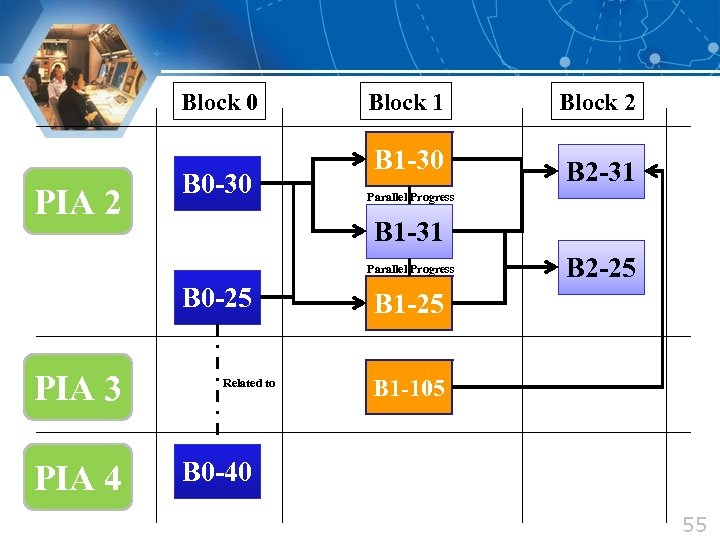
Block 0 PIA 2 B 0 -30 Block 1 Block 2 B 1 -30 B 2 -31 Parallel Progress B 1 -31 Parallel Progress B 0 -25 PIA 3 PIA 4 Related to B 2 -25 B 1 -105 B 0 -40 55
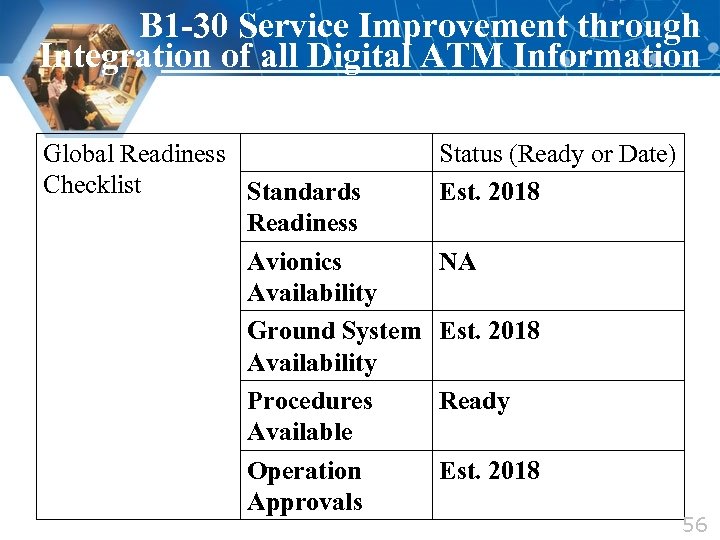
B 1 -30 Service Improvement through Integration of all Digital ATM Information Global Readiness Checklist Standards Readiness Avionics Availability Ground System Availability Procedures Available Operation Approvals Status (Ready or Date) Est. 2018 NA Est. 2018 Ready Est. 2018 56
B 1 -25 FF-ICE/1 application • Increased Interoperability, Efficiency and Capacity though FF-ICE/1 application before Departure • Introduction of FF-ICE step 1, to implement ground-ground exchanges using common flight information reference model (FIXM) and XML standard format used before departure. 57
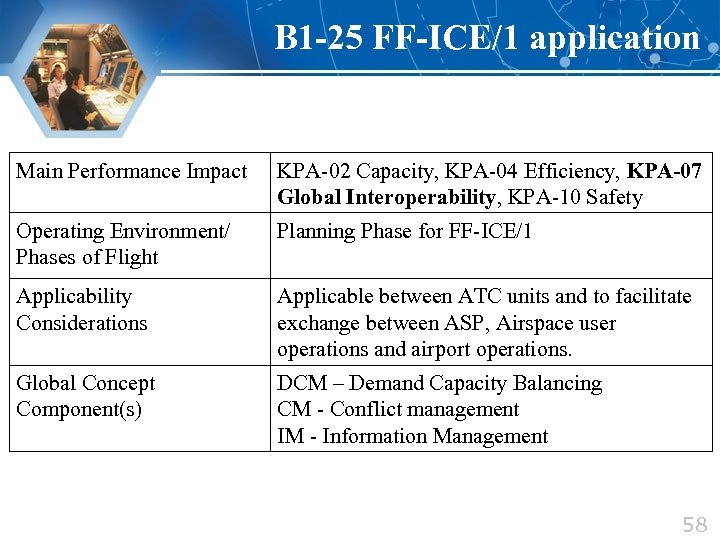
B 1 -25 FF-ICE/1 application Main Performance Impact KPA-02 Capacity, KPA-04 Efficiency, KPA-07 Global Interoperability, KPA-10 Safety Operating Environment/ Phases of Flight Planning Phase for FF-ICE/1 Applicability Considerations Applicable between ATC units and to facilitate exchange between ASP, Airspace user operations and airport operations. Global Concept Component(s) DCM – Demand Capacity Balancing CM - Conflict management IM - Information Management 58
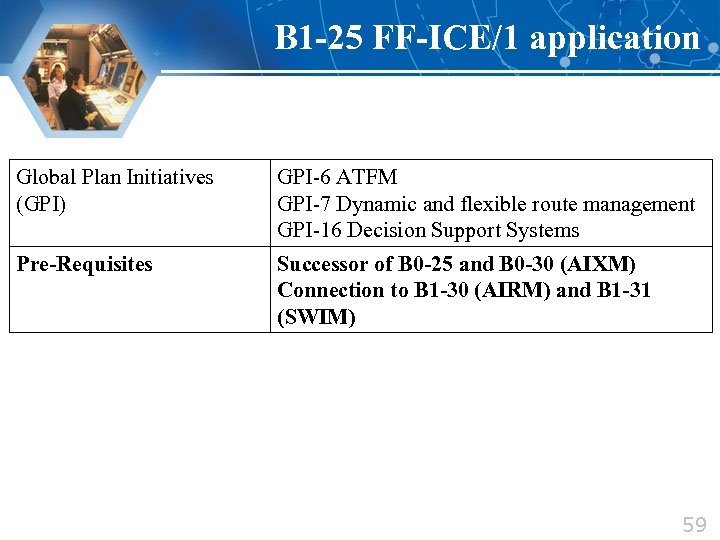
B 1 -25 FF-ICE/1 application Global Plan Initiatives (GPI) GPI-6 ATFM GPI-7 Dynamic and flexible route management GPI-16 Decision Support Systems Pre-Requisites Successor of B 0 -25 and B 0 -30 (AIXM) Connection to B 1 -30 (AIRM) and B 1 -31 (SWIM) 59
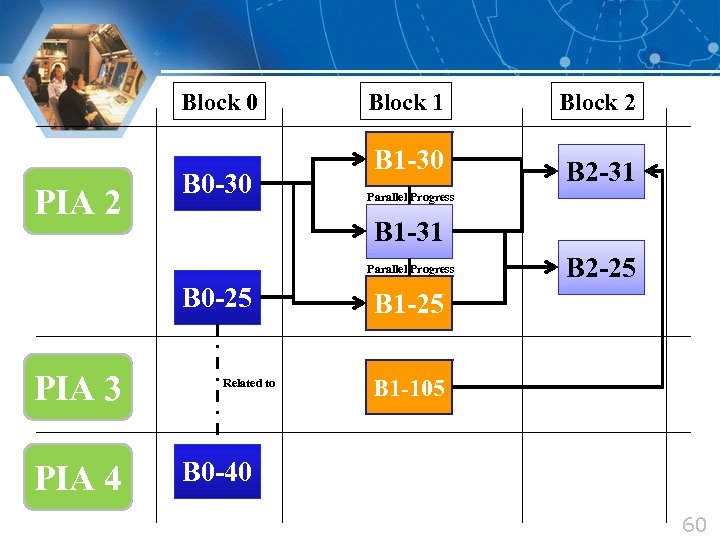
Block 0 PIA 2 B 0 -30 Block 1 Block 2 B 1 -30 B 2 -31 Parallel Progress B 1 -31 Parallel Progress B 0 -25 PIA 3 PIA 4 Related to B 2 -25 B 1 -105 B 0 -40 60
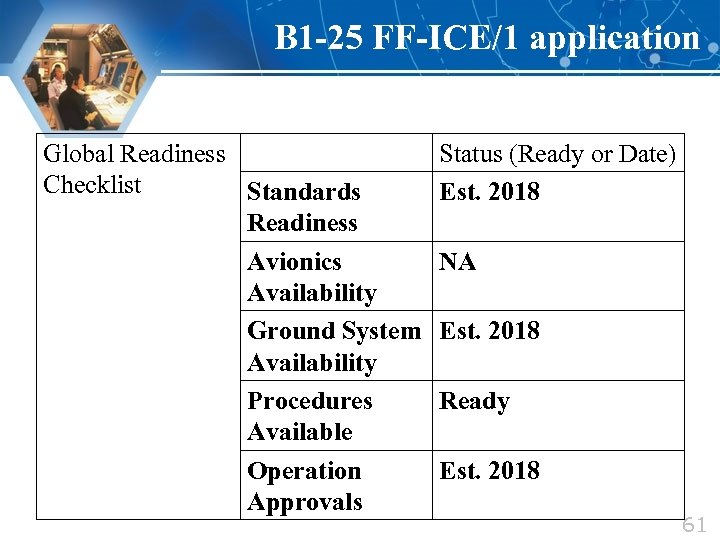
B 1 -25 FF-ICE/1 application Global Readiness Checklist Standards Readiness Avionics Availability Ground System Availability Procedures Available Operation Approvals Status (Ready or Date) Est. 2018 NA Est. 2018 Ready Est. 2018 61
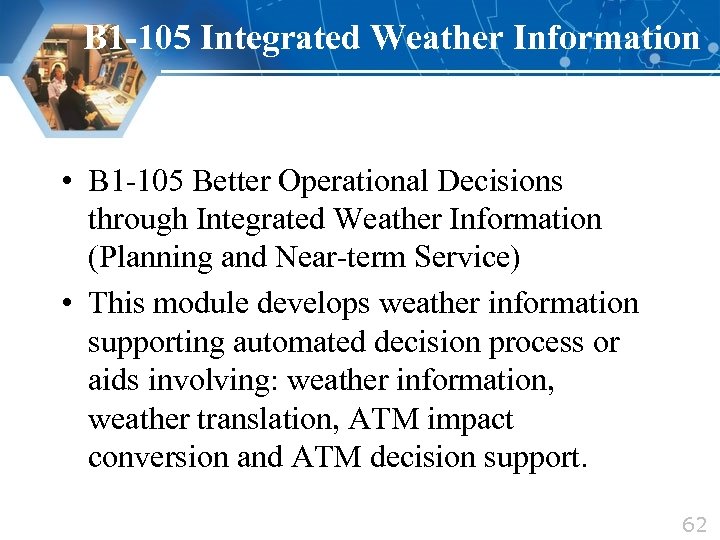
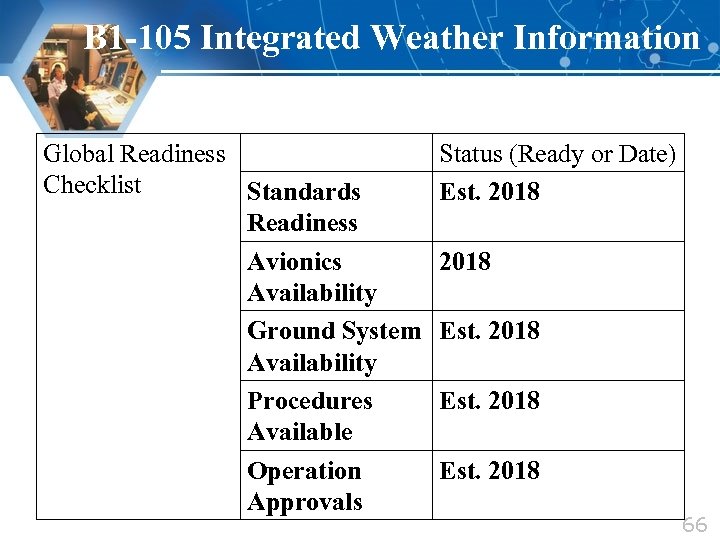
B 1 -105 Integrated Weather Information • B 1 -105 Better Operational Decisions through Integrated Weather Information (Planning and Near-term Service) • This module develops weather information supporting automated decision process or aids involving: weather information, weather translation, ATM impact conversion and ATM decision support. 62
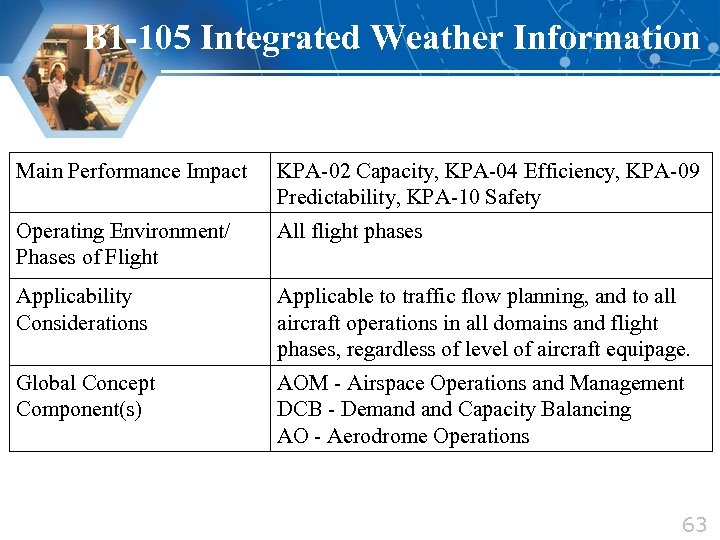
B 1 -105 Integrated Weather Information Main Performance Impact KPA-02 Capacity, KPA-04 Efficiency, KPA-09 Predictability, KPA-10 Safety Operating Environment/ Phases of Flight All flight phases Applicability Considerations Applicable to traffic flow planning, and to all aircraft operations in all domains and flight phases, regardless of level of aircraft equipage. Global Concept Component(s) AOM - Airspace Operations and Management DCB - Demand Capacity Balancing AO - Aerodrome Operations 63
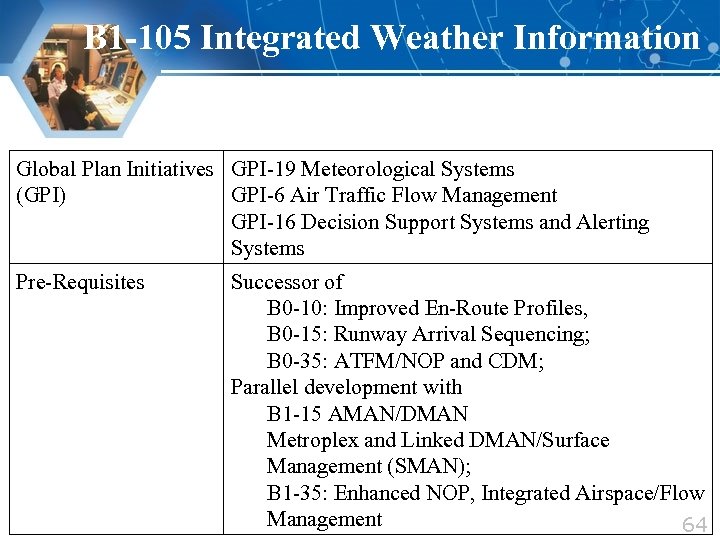
B 1 -105 Integrated Weather Information Global Plan Initiatives GPI-19 Meteorological Systems (GPI) GPI-6 Air Traffic Flow Management GPI-16 Decision Support Systems and Alerting Systems Pre-Requisites Successor of B 0 -10: Improved En-Route Profiles, B 0 -15: Runway Arrival Sequencing; B 0 -35: ATFM/NOP and CDM; Parallel development with B 1 -15 AMAN/DMAN Metroplex and Linked DMAN/Surface Management (SMAN); B 1 -35: Enhanced NOP, Integrated Airspace/Flow Management 64
Block 0 PIA 2 B 0 -30 Block 1 Block 2 B 1 -30 B 2 -31 Parallel Progress B 1 -31 Parallel Progress B 0 -25 PIA 3 PIA 4 Related to B 2 -25 B 1 -105 B 0 -40 65
B 1 -105 Integrated Weather Information Global Readiness Checklist Standards Readiness Avionics Availability Ground System Availability Procedures Available Operation Approvals Status (Ready or Date) Est. 2018 66
Why ASBU is useful for us? ? • We have a sense of the whole picture. • We can see all the components and see how they fit with each other and • We also have a sense of where we are in that “whole picture. ” • We know of “somewhat scope” of what we should do. • We have a “ somewhat prioritized plan” of what we should do. 67
What can we do now? ? • Follow through with how ASBU is developed. • Learn, and Learn some more. • Start coordinating with peer organizations. • Or to put it simply – “BE PREPARED” 68

Thank you for your attention. Thank you for attention.
Скачать презентацию SP 14 ICAO Aviation System Block Upgrades ASBU and
fe020324b65b1c24e9b44060a63a2ad8.ppt