


 Скачать презентацию SOUTH COLLEGE Masters of Health Science Physician Assistant
d7c3c837cf8a0513bd5a215e3ee8ffad.ppt
- Количество слайдов: 32
 SOUTH COLLEGE Masters of Health Science Physician Assistant program Fundamentals of Surgery PAS 5530 The University of Tennessee Medical Center Graduate School of Medicine Department of Surgery
 Schedule § § Quarter Dates: October 9 -December 14 2009 Holidays: November 26 -29, 2009 Course Director: Brian J. Daley, MD, MBA Instructors: Jose Aycinena, MD; James Chalk, MD; Brian Daley, MD, MBA; Allan Dunlap, MD; Blaine L. Enderson, MD; Mitchell Goldman, MD; Melinda Klar, RN; Stanley J. Kurek, DO; Christy Lawson, MD; John Milligan, MD; Todd A. Nickloes, DO; Judy Roark, CST; Sabina Siddiqui, MD; Lou Smith, MD; Dana Taylor, MD; Brian K. Tucker, DO § Lecture: Friday 1 - 5 pm (per syllabus) § Lab: per schedule
 Instructors § § § Office Hours: By Appointment 305 -6058 Contact Method: bdaley@mc. utmck. edu Credit Hours: 4 lectures & 2 lab Lab Hours: 2 per week Prerequisites: Successful completion of the 4 th quarter of the Physician Assistant Program
 Brian J. Daley, MD, MBA, FACS, FCCP, CNSC § § § Tulane University: BS and MD, Internship Columbia/Bassett: Surgical Residency Iowa: Research Fellowship Harvard: Nutrition Fellowship UMDNJ/Cooper: Trauma/CC Fellowships Tennessee: MBA
 Brian J. Daley, MD, MBA, FACS, FCCP, CNSC § Professor of Surgery § 1996 to present § Associate Program Director § Researcher § Trauma and Nutrition Lab § Private Practice § Seven MDs, Three MLPs, Four AP RNs, Five LPNs
 TEST/STUDENT MATERIALS Students will be responsible for all assigned materials identified, as well as supplemental material distributed during class sessions. Required texts • Lawrence, P. F. , (2006). Essentials of General Surgery (4 th ed. ). Baltimore, MD: Lippincott Williams & Wilkins. Reference texts • Silen, W. , (2000). Copes Early Diagnosis of the Acute Abdomen (20 thed). New York, NY: Oxford University Press. • Aluisio, F. V. , (1998). Orthopedics for the House Officer (2 nded). Baltimore, MD: Lippincott Williams & Wilkins.
 COURSE DESCRIPTION This course is designed to provide the students with an introduction and an overview to the discipline of surgery. The management of acute surgical problems, critical illness, solid organ malignancies, and elective surgical procedures will be discussed, as well as the pre- and post- operative care of surgical patients. Laboratory sessions will teach technical skills such as sterile technique, basic suturing, universal precautions, and minor surgical procedures.
 COURSE OBJECTIVES 1. Develop an approach to evaluating evidence based surgical literature and incorporating it into daily practice. 2. Evaluate, diagnose and manage patients with surgical related illness. 3. Understand the pathophysiology of critical illness, recognizing the subtleties of early critical illness and apply applicable early goal directed therapies. 4. Have a general understanding regarding the use of and technical aspects associated with common surgical procedures.
 COURSE OBJECTIVES 5. Develop a complete peri-operative plan of care and recognize common surgical complications and their treatment. 6. Demonstrate properative suite technique including scrubbing, gowning, gloving and working in the operative environment. 7. Demonstrate a baseline knowledge of surgical procedures and first assistant technique.
 Competencies - Goals § § § Patient Care Medical Knowledge Practice Based Learning and Improvement Interpersonal and Communication Skills Professionalism Systems Based Practice
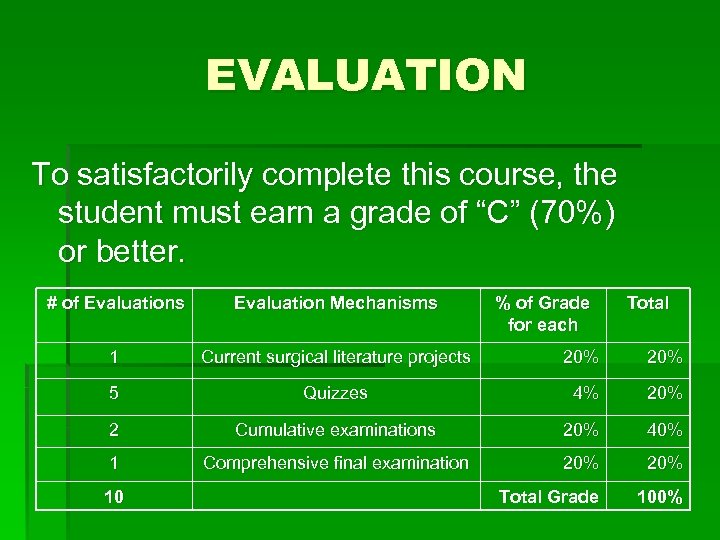 EVALUATION To satisfactorily complete this course, the student must earn a grade of “C” (70%) or better. # of Evaluations Evaluation Mechanisms 1 Current surgical literature projects 20% 5 Quizzes 4% 20% 2 Cumulative examinations 20% 40% 1 Comprehensive final examination 20% Total Grade 100% 10 % of Grade for each Total
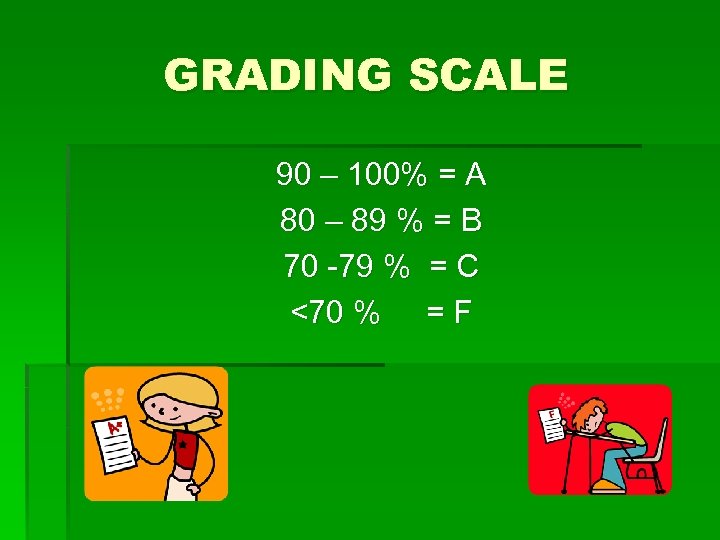 GRADING SCALE 90 – 100% = A 80 – 89 % = B 70 -79 % = C <70 % = F
 TESTING DATES § § § QUIZES – 30 mins. 10/9 10/23 11/6 11/13 11/20 § CUMULATIVE EXAMS – 60 mins. § 10/30 § 11/25 COMPREHENSIVE EXAM 12/14 9 am
 Learning changes as we age… § Pedagogy § Dependent, passive learner § Subject oriented § Indoctrination § Andragogy § Active learner § Life/Experience oriented § Self-directed
 Thinking skills § Basic to advanced § Knowledge/Recall - memory § Comprehension - understanding § Application – problem solving § Analysis – break down of solution § Synthesis - create § Evaluate - judgment
 Keys to adult learning § Problem Centered § Supportive environment § Experience Oriented § Active § Feedback
 Means to achieve § § Needs Assessment Teachable moment Facilitate Evaluate
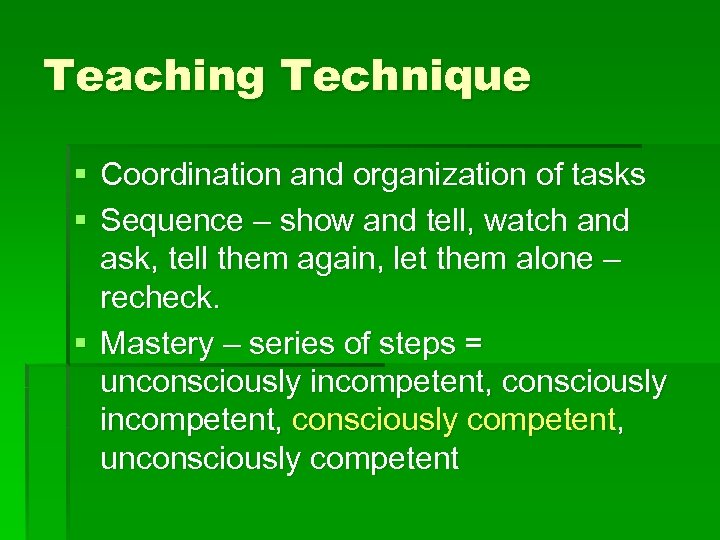 Teaching Technique § Coordination and organization of tasks § Sequence – show and tell, watch and ask, tell them again, let them alone – recheck. § Mastery – series of steps = unconsciously incompetent, consciously competent, unconsciously competent
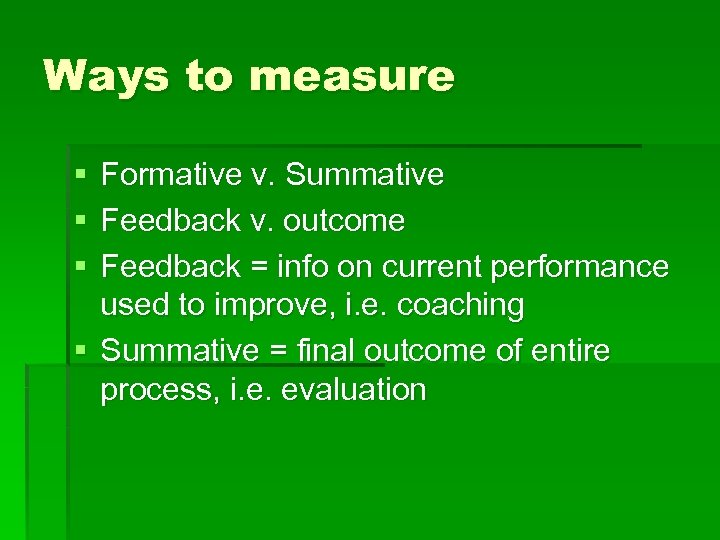 Ways to measure § § § Formative v. Summative Feedback v. outcome Feedback = info on current performance used to improve, i. e. coaching § Summative = final outcome of entire process, i. e. evaluation
 Feedback § § § Timing Environment Non-judgmental Direct observation Specific information/direction § Both pluses and minuses
 Microskills of Clinical Teachers § § § Commitment Probe for evidence General rules Reinforce right Correct wrongs
 Surgery is Different § Physical Performance § Risky § Variable § Observable over sustained periods § Technological revolution
 Affective Domain § § § Receiving Responding Valuing Organization Ranking or ordering of information
 Psychomotor Domain § § § Perception Set Guided Response Mechanism Complex Overt Response § Adaptation § Origination
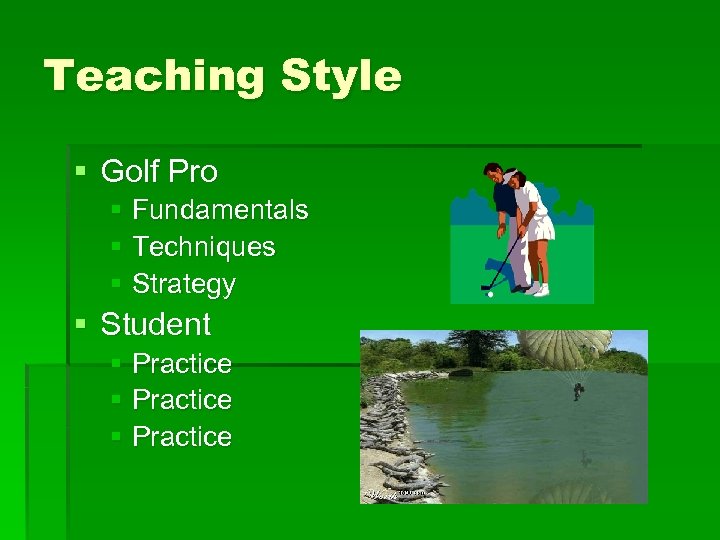 Teaching Style § Golf Pro § Fundamentals § Techniques § Strategy § Student § Practice
 Course Approach § § § Lectures Case Studies Quizzes and Exams Study Project Laboratory
 Surgical Literature Project § Goals: § Develop Life Long Learning habits § Appreciate Practice Based Learning § Demonstrate Teamwork § Interactive Evidence Based Medicine
 Surgical Literature Project § Objective: Developed an Evidence Based Practice Guideline § Topic: Choice of Surgical Topic § e. g. : Use of CT in Diagnosing Appendicitis § Teams: 7 groups of 4 - 8 § DUE 10/30!
 Surgical Literature Project § Use Primer found in east. org Practice Guidelines website § Limit Literature search to 10 Years and in English § Limit to 10 papers § May use up to 3 reviews
 Surgical Literature Project § Format § Statement of problem § Question(s) addressed § Graded Recommendations § Brief literature review § References and grades § Maximum of Five Pages § One Page Self Assessment
 Surgical Literature Project § Assessment § Self: Team Player, value to the team § Fellow Teammates: Team Players, value to the team § § § Exceeds Expectations Meets Expectations Below Expectations § Grading based on clinical applicability, team assessment and end product
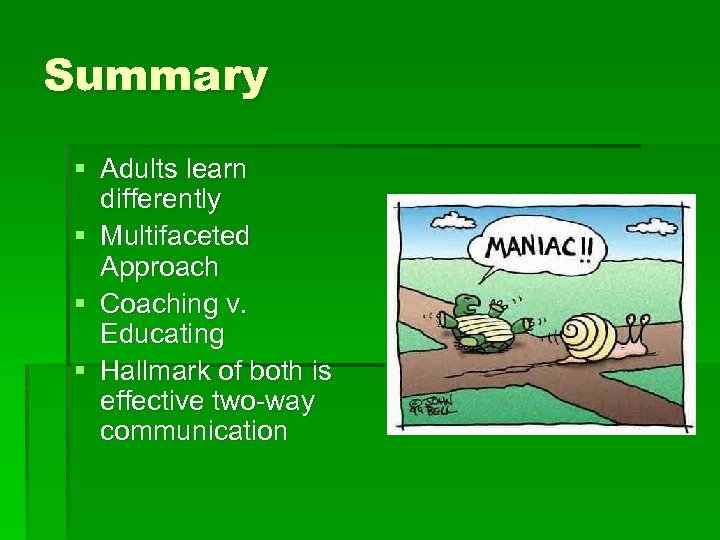 Summary § Adults learn differently § Multifaceted Approach § Coaching v. Educating § Hallmark of both is effective two-way communication