


 Скачать презентацию Sounds Good to Me 8 th Grade Physical
ad7c232320280fb3a5807530338dbdb2.ppt
- Количество слайдов: 33
 Sounds Good to Me! 8 th Grade Physical Science
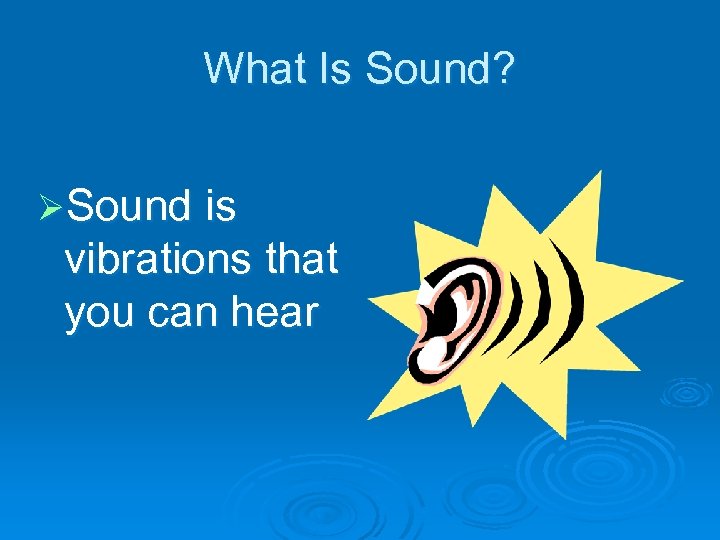 What Is Sound? ØSound is vibrations that you can hear
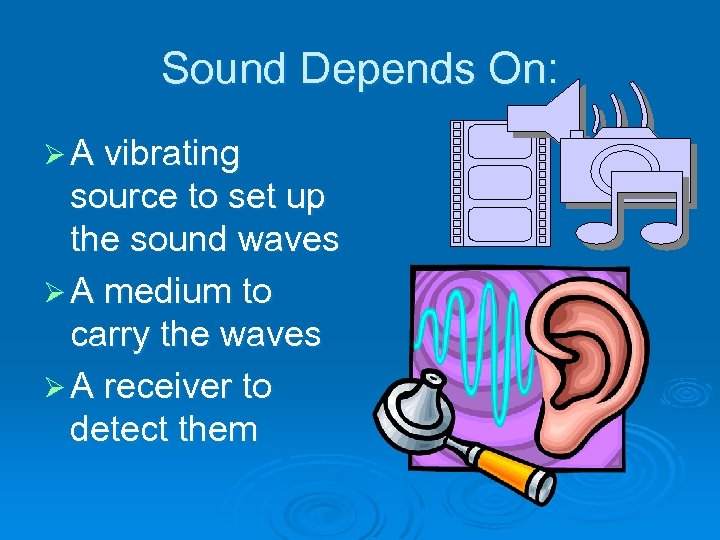 Sound Depends On: Ø A vibrating source to set up the sound waves Ø A medium to carry the waves Ø A receiver to detect them
 E. Q. - How do sound waves interact in the world around us Here is an old riddle: If a tree falls in a forest and no one hears it, does it make a sound? Based upon what you just learned in the previous slide, answer the riddle.
 Vibrations Ø Back-and-forth movement of matter or particles of matter Ø Sound travels away from the vibrating object in all directions
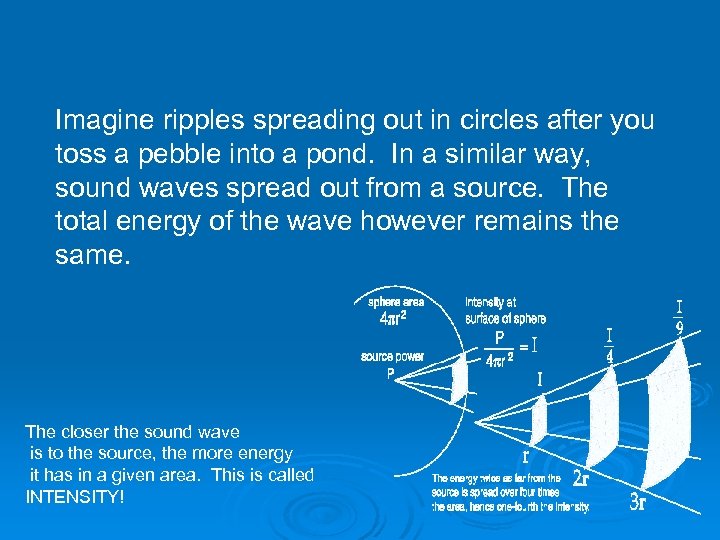 Imagine ripples spreading out in circles after you toss a pebble into a pond. In a similar way, sound waves spread out from a source. The total energy of the wave however remains the same. The closer the sound wave is to the source, the more energy it has in a given area. This is called INTENSITY!
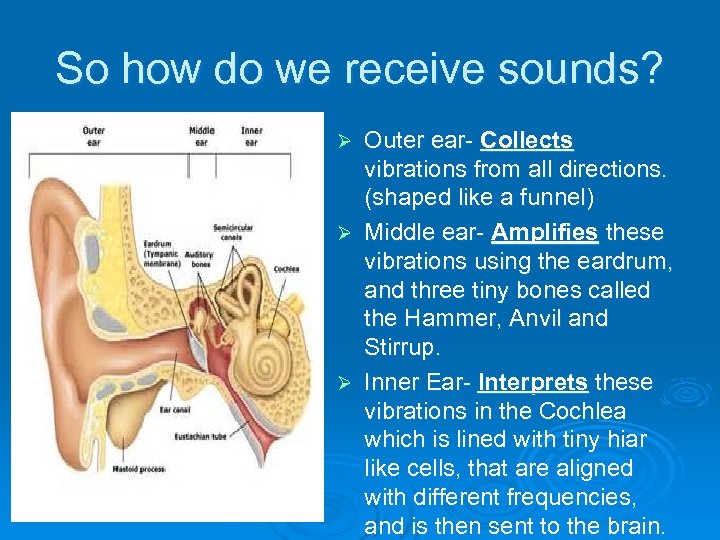 So how do we receive sounds? Outer ear- Collects vibrations from all directions. (shaped like a funnel) Ø Middle ear- Amplifies these vibrations using the eardrum, and three tiny bones called the Hammer, Anvil and Stirrup. Ø Inner Ear- Interprets these vibrations in the Cochlea which is lined with tiny hiar like cells, that are aligned with different frequencies, and is then sent to the brain. Ø
 Sound Waves Sound travels through matter as sound waves (compressional) Ø Particles of air are pushed together and then pulled apart Ø Compressions occur where particles of a medium are pushed together, and rarefactions occur where the particles are pulled back apart. Ø
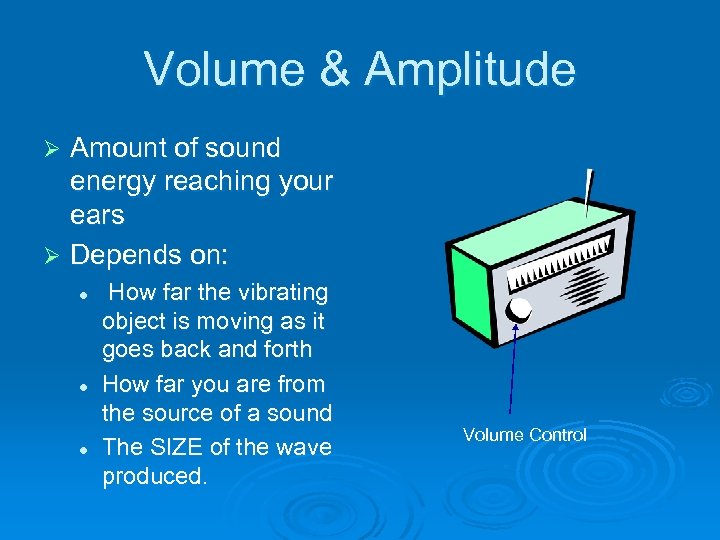 Volume & Amplitude Amount of sound energy reaching your ears Ø Depends on: Ø l l l How far the vibrating object is moving as it goes back and forth How far you are from the source of a sound The SIZE of the wave produced. Volume Control
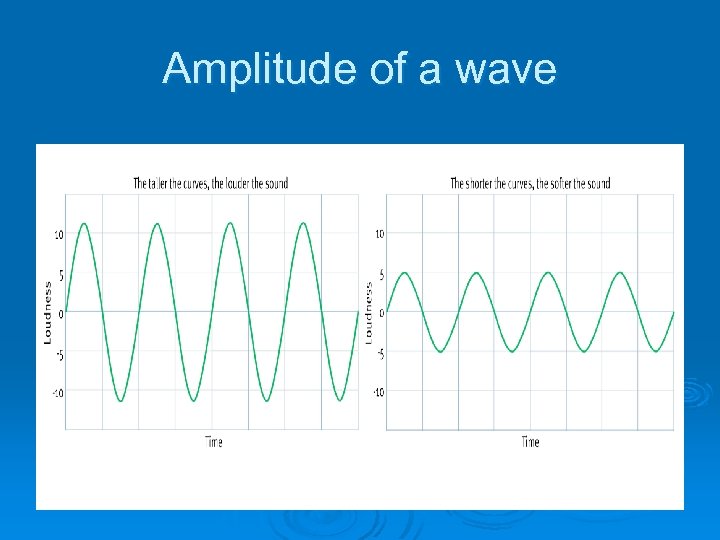 Amplitude of a wave
 Loudness is an important property of sound. Loudness describes your perception of the energy of a sound. Ø Not everyone perceives sounds the same way or at the same levels. Ø What factors do you think might cause this to occur?
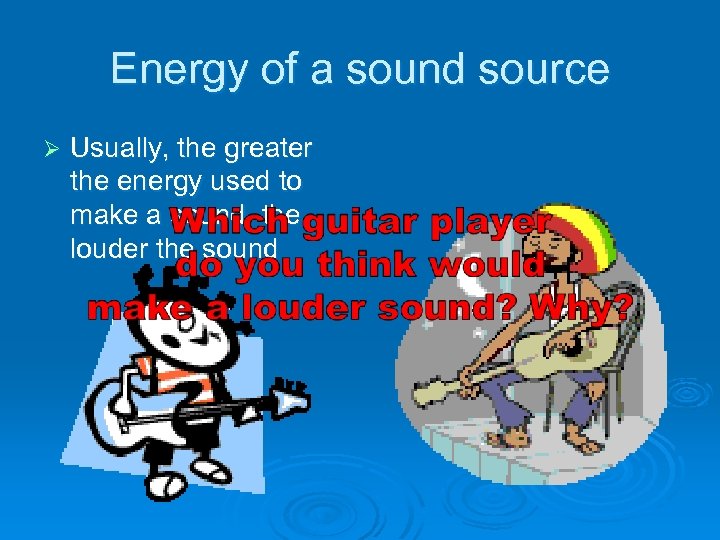 Energy of a sound source Ø Usually, the greater the energy used to make a sound, the louder the sound
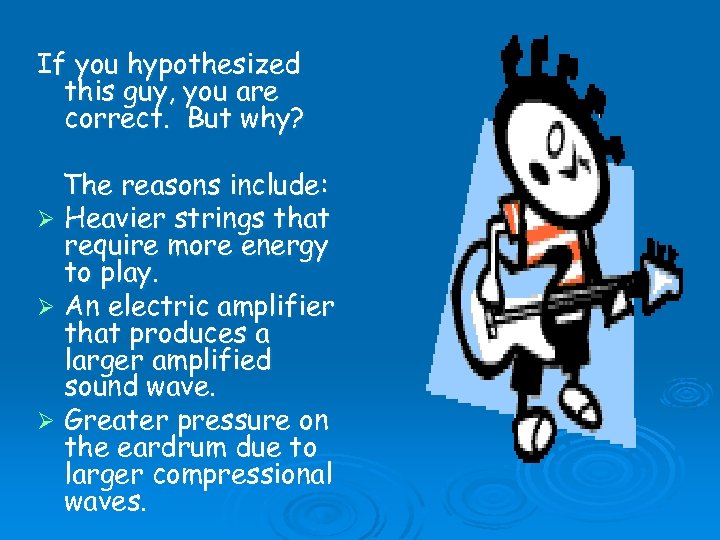 If you hypothesized this guy, you are correct. But why? The reasons include: Ø Heavier strings that require more energy to play. Ø An electric amplifier that produces a larger amplified sound wave. Ø Greater pressure on the eardrum due to larger compressional waves.
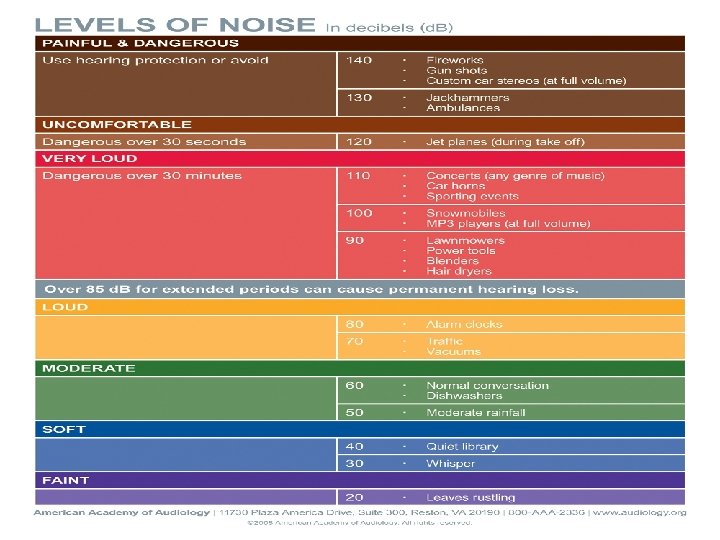
 Measuring Loudness Ø Loudness is measured in units called decibels (db). Ø Each 10 d. B increase in loudness represents a ten times increase in the intensity of the sound
 Human hearing (frequencies) Ø Humans can hear a range of frequencies from around 20 Hz to around 20, 000 Hz. Ø Sound waves with frequencies above the normal range of hearing are called ultrasound. Ø Sound waves with frequencies below the normal range of hearing are called infrasound.

 Frequency Hearing Test Ø click here to test Ø Raise you hand when you can first hear the tone. Ø Keep your hand up until you can no longer hear the tone. Ø Write down your frequency range.
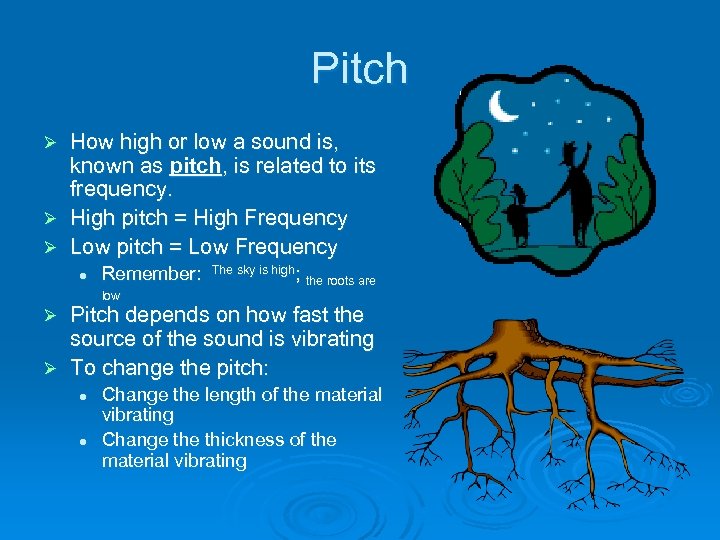 Pitch How high or low a sound is, known as pitch, is related to its frequency. Ø High pitch = High Frequency Ø Low pitch = Low Frequency Ø l Remember: The sky is high; the roots are low Pitch depends on how fast the source of the sound is vibrating Ø To change the pitch: Ø l l Change the length of the material vibrating Change thickness of the material vibrating
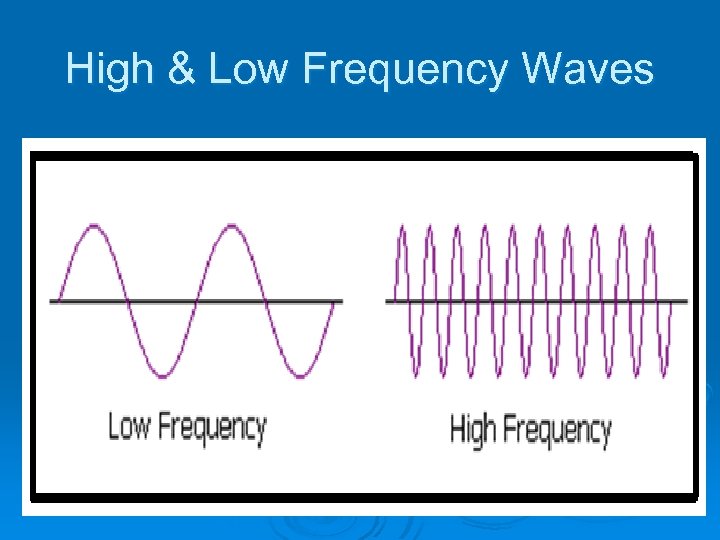 High & Low Frequency Waves
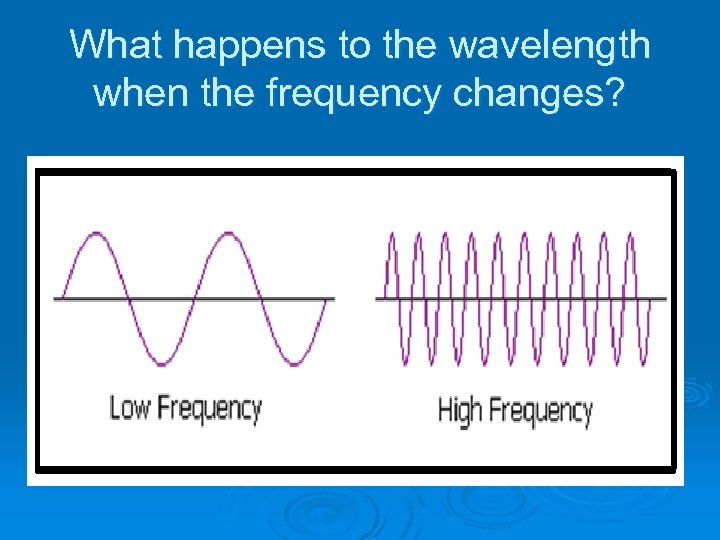 What happens to the wavelength when the frequency changes?
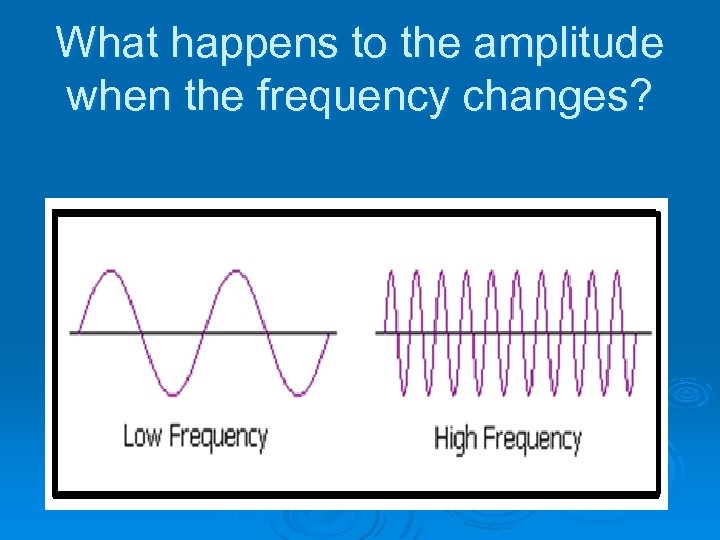 What happens to the amplitude when the frequency changes?
 The Doppler Effect Ø The Doppler effect is the apparent change in the frequency of a sound caused by the motion of either the listener or the source of the sound. Ø Click for example
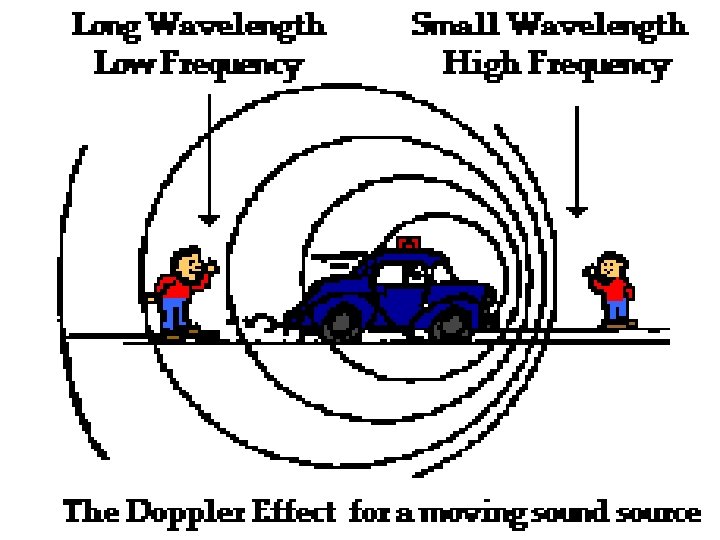
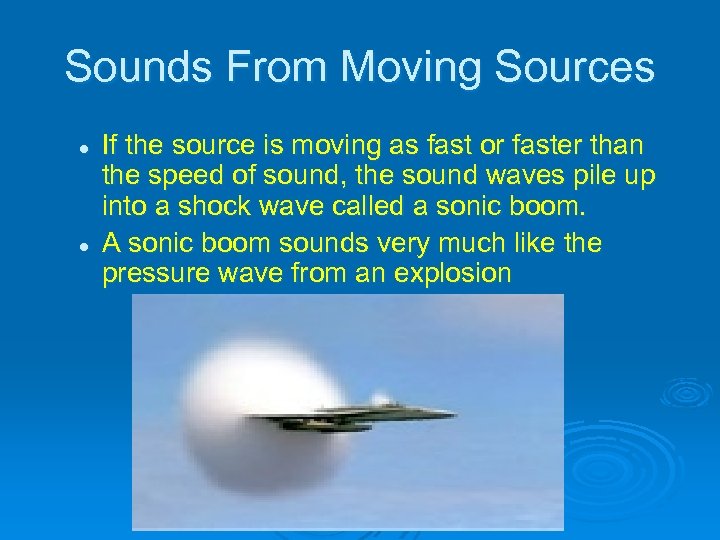 Sounds From Moving Sources l l If the source is moving as fast or faster than the speed of sound, the sound waves pile up into a shock wave called a sonic boom. A sonic boom sounds very much like the pressure wave from an explosion
 Reflection vs. Absorption Ø Just like light waves, sound waves can be reflected, absorbed, refracted or diffracted. Ø Sound waves reflect straight from a smooth, flat surface and produce a clear echo. Several echos in a row are called reverberation. Ø Sound waves that strike a rough, uneven surface do not produce an echo but rather scatter or absorb the sound.
 Refraction Vs. Diffraction Ø Sound waves will change speeds when entering and exiting different mediums which will cause them to refract and distort. Ø Unlike light which travels in a straight line, sound travels in all directions and spreads out as it travels. As a result of this diffraction of sound waves, we have the ability to hear around corners and behind us.
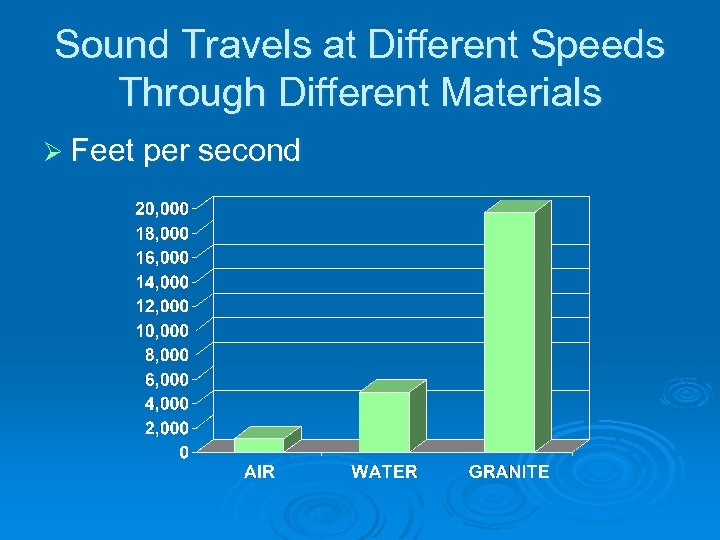 Sound Travels at Different Speeds Through Different Materials Ø Feet per second
 What makes Music…Music? Ø Music is a group of sounds that have been deliberately produced to make a regular pattern of pitches, or notes. Ø Every object will vibrate at a certain frequency, known as its natural frequency. Ø Musical instruments are usually made from materials that have a low natural frequency like wood. Ø This allows the instrument to vibrate freely and project the sound of the instrument. This vibration is known as resonance.
 Natural Frequency Examples Ø shatter a glass w/ your voice Ø Tacoma Washington Bridge Ø Guitar Maker
 Stop That Noise!!! Ø What is noise? How do you know if you are making it if you don’t know what it really is? Ø Noises are sounds that are disorganized and have no regular patterns or pitches. Ø However, what one might consider to be noise, another might consider to be music. After all, the art is in the ear of the listener!
 Music or Noise Ø Bonephone Ø Homemade instrument Ø Singer
 X-tra Credit Instrument Project Should be: l Well designed l Simple l Functional l Attractive l Creative Ø You must be able to: l Produce Sound l Change Pitch l Change Volume l Play a simple tune Ø