


 Скачать презентацию Some Aspects of the Nuclear Safety and Radioactive
75fdaa962d0f95a2e5bf598b82988b4e.ppt
- Количество слайдов: 33
 Some Aspects of the Nuclear Safety and Radioactive Waste Management M. CONSTANTIN Institute for Nuclear Research, PO Box 78, Pitesti, Romania
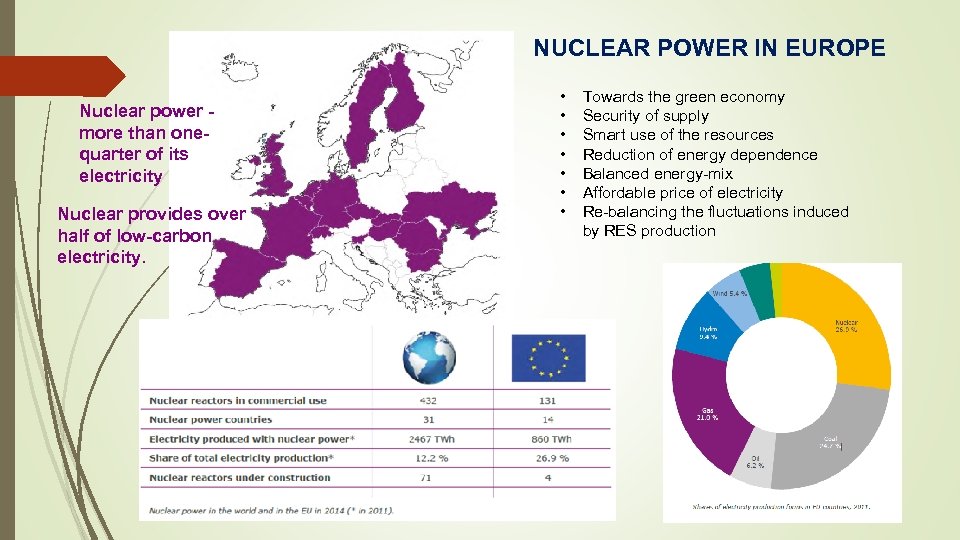 NUCLEAR POWER IN EUROPE Nuclear power more than onequarter of its electricity Nuclear provides over half of low-carbon electricity. • • Towards the green economy Security of supply Smart use of the resources Reduction of energy dependence Balanced energy-mix Affordable price of electricity Re-balancing the fluctuations induced by RES production
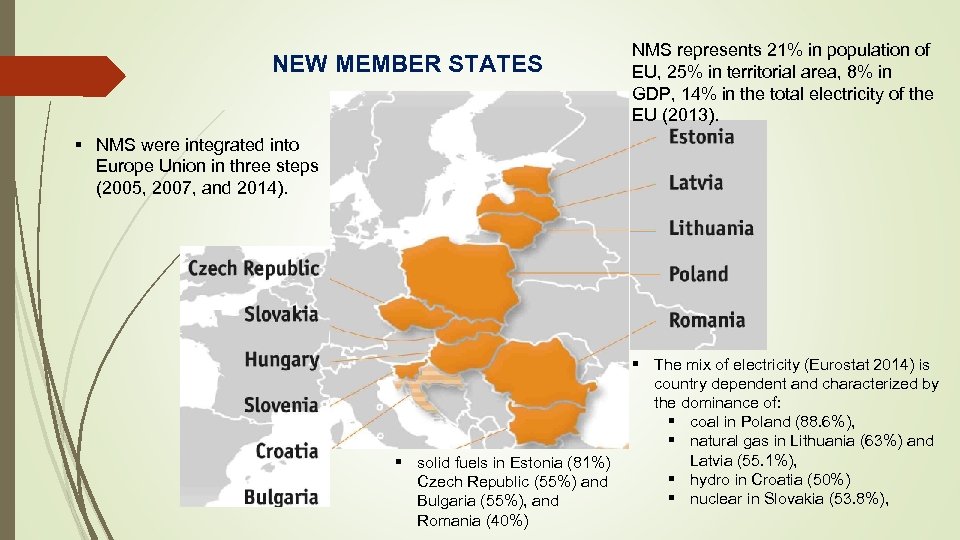 NEW MEMBER STATES NMS represents 21% in population of EU, 25% in territorial area, 8% in GDP, 14% in the total electricity of the EU (2013). § NMS were integrated into Europe Union in three steps (2005, 2007, and 2014). § solid fuels in Estonia (81%) Czech Republic (55%) and Bulgaria (55%), and Romania (40%) § The mix of electricity (Eurostat 2014) is country dependent and characterized by the dominance of: § coal in Poland (88. 6%), § natural gas in Lithuania (63%) and Latvia (55. 1%), § hydro in Croatia (50%) § nuclear in Slovakia (53. 8%),
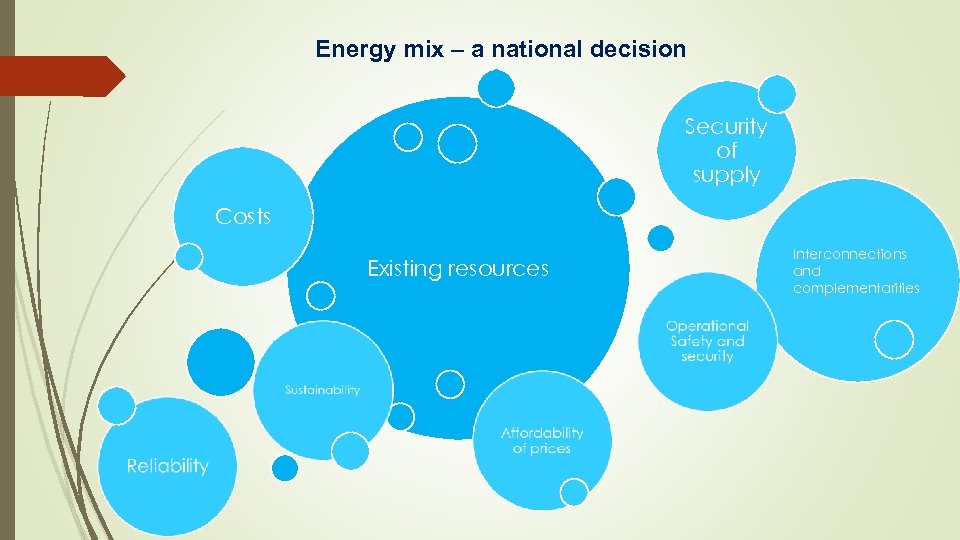 Energy mix – a national decision Security of supply Costs Existing resources Interconnections and complementarities
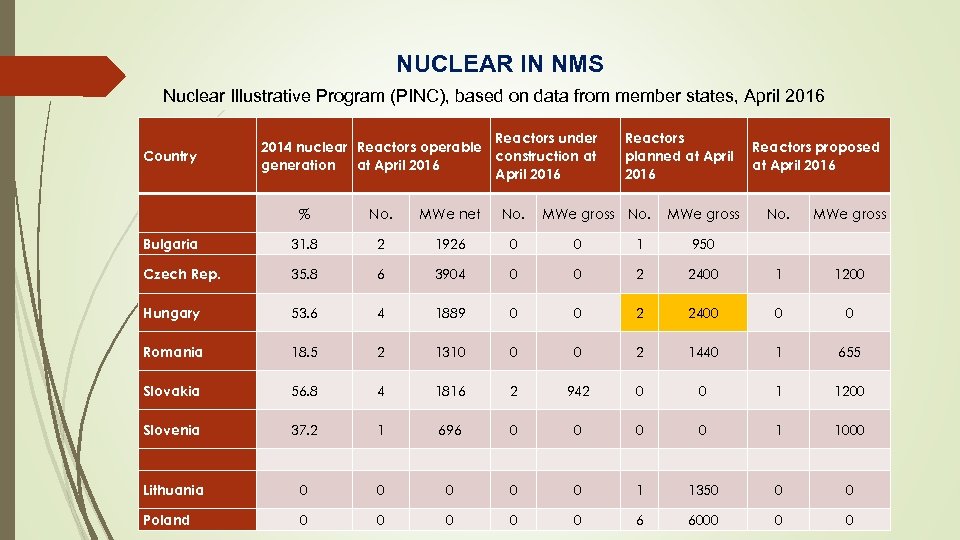 NUCLEAR IN NMS Nuclear Illustrative Program (PINC), based on data from member states, April 2016 Country Reactors under 2014 nuclear Reactors operable construction at generation at April 2016 % No. MWe net No. Bulgaria 31. 8 2 1926 0 0 Czech Rep. 35. 8 6 3904 0 Hungary 53. 6 4 1889 Romania 18. 5 2 Slovakia 56. 8 Slovenia Reactors planned at April 2016 MWe gross No. Reactors proposed at April 2016 MWe gross No. MWe gross 1 950 0 2 2400 1 1200 0 0 2 2400 0 0 1310 0 0 2 1440 1 655 4 1816 2 942 0 0 1 1200 37. 2 1 696 0 0 1 1000 Lithuania 0 0 0 1 1350 0 0 Poland 0 0 0 6 6000 0 0
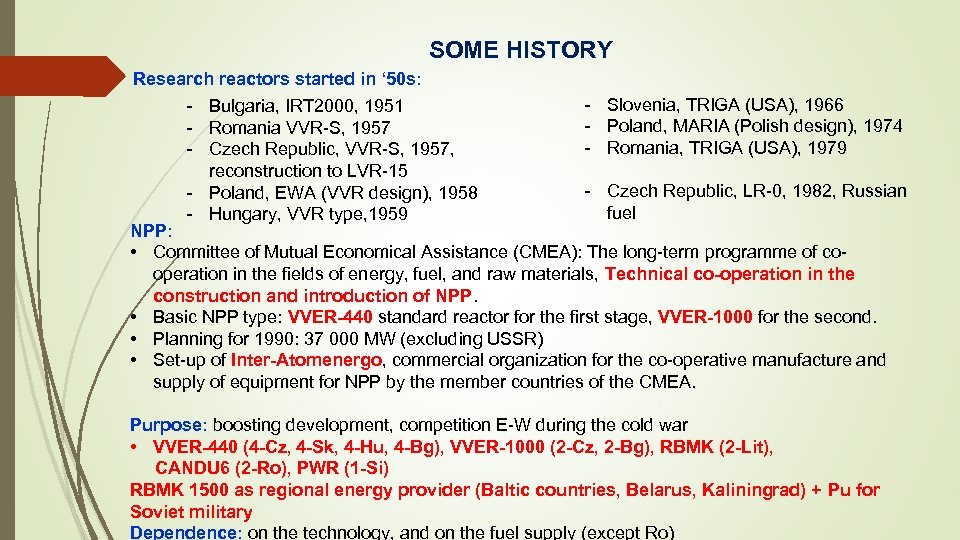 SOME HISTORY Research reactors started in ‘ 50 s: - Bulgaria, IRT 2000, 1951 - Romania VVR-S, 1957 - Czech Republic, VVR-S, 1957, reconstruction to LVR-15 - Poland, EWA (VVR design), 1958 - Hungary, VVR type, 1959 - Slovenia, TRIGA (USA), 1966 - Poland, MARIA (Polish design), 1974 - Romania, TRIGA (USA), 1979 - Czech Republic, LR-0, 1982, Russian fuel NPP: • Committee of Mutual Economical Assistance (CMEA): The long-term programme of cooperation in the fields of energy, fuel, and raw materials, Technical co-operation in the construction and introduction of NPP. • Basic NPP type: VVER-440 standard reactor for the first stage, VVER-1000 for the second. • Planning for 1990: 37 000 MW (excluding USSR) • Set-up of Inter-Atomenergo, commercial organization for the co-operative manufacture and supply of equipment for NPP by the member countries of the CMEA. Purpose: boosting development, competition E-W during the cold war • VVER-440 (4 -Cz, 4 -Sk, 4 -Hu, 4 -Bg), VVER-1000 (2 -Cz, 2 -Bg), RBMK (2 -Lit), CANDU 6 (2 -Ro), PWR (1 -Si) RBMK 1500 as regional energy provider (Baltic countries, Belarus, Kaliningrad) + Pu for Soviet military Dependence: on the technology, and on the fuel supply (except Ro)
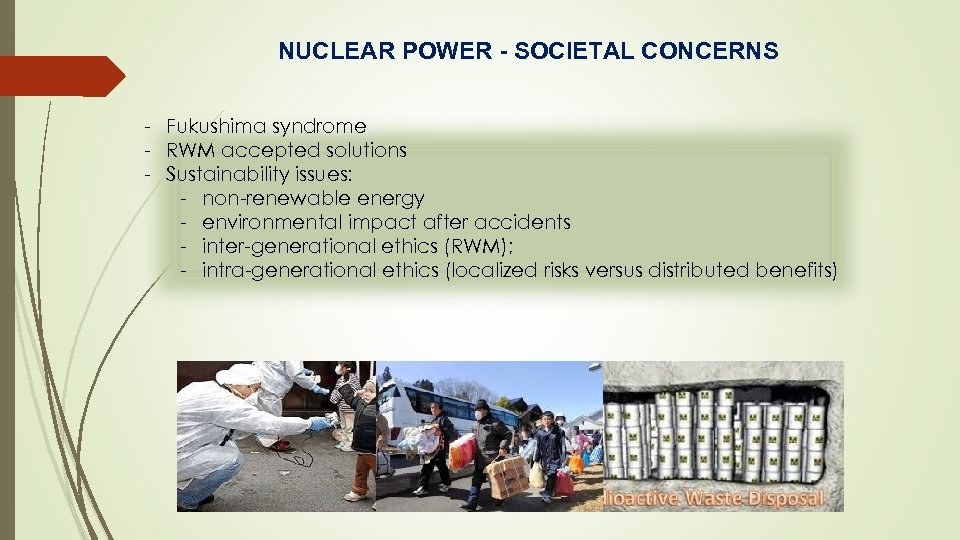 NUCLEAR POWER - SOCIETAL CONCERNS - Fukushima syndrome - RWM accepted solutions - Sustainability issues: - non-renewable energy - environmental impact after accidents - inter-generational ethics (RWM); - intra-generational ethics (localized risks versus distributed benefits)
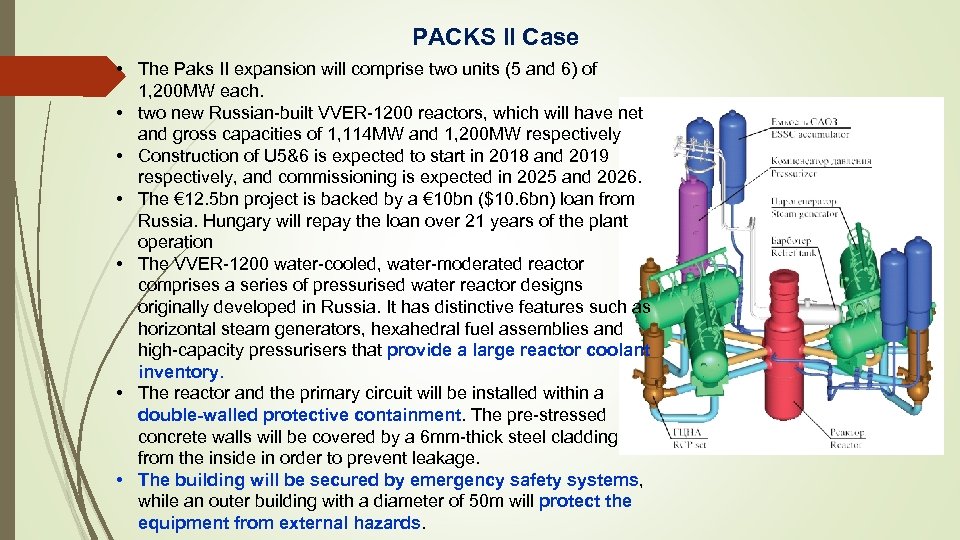 PACKS II Case • The Paks II expansion will comprise two units (5 and 6) of 1, 200 MW each. • two new Russian-built VVER-1200 reactors, which will have net and gross capacities of 1, 114 MW and 1, 200 MW respectively • Construction of U 5&6 is expected to start in 2018 and 2019 respectively, and commissioning is expected in 2025 and 2026. • The € 12. 5 bn project is backed by a € 10 bn ($10. 6 bn) loan from Russia. Hungary will repay the loan over 21 years of the plant operation • The VVER-1200 water-cooled, water-moderated reactor comprises a series of pressurised water reactor designs originally developed in Russia. It has distinctive features such as horizontal steam generators, hexahedral fuel assemblies and high-capacity pressurisers that provide a large reactor coolant inventory. • The reactor and the primary circuit will be installed within a double-walled protective containment. The pre-stressed concrete walls will be covered by a 6 mm-thick steel cladding from the inside in order to prevent leakage. • The building will be secured by emergency safety systems, while an outer building with a diameter of 50 m will protect the equipment from external hazards.
 Targets for the New NPPs The European Utilities' requirements contain safety and reliabilty criteria. Accidents with limited impact: release of 0, 1% of core inventory - i e. 4000 TBq I-131 Cs-137, Sr-90 ~100 TBq Safety targets: - core damage frequency: < 10 E-5, - frequency of release (limited impact): 10 E-6, - early or large release frequency: 10 E-7 Criteria are similar to IAEA safety targets (INSAG 3, 1999)
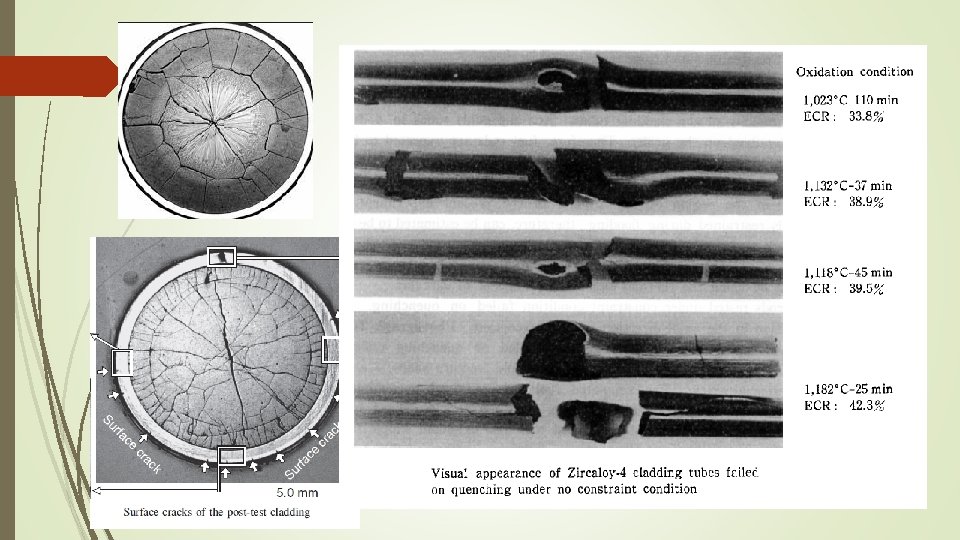
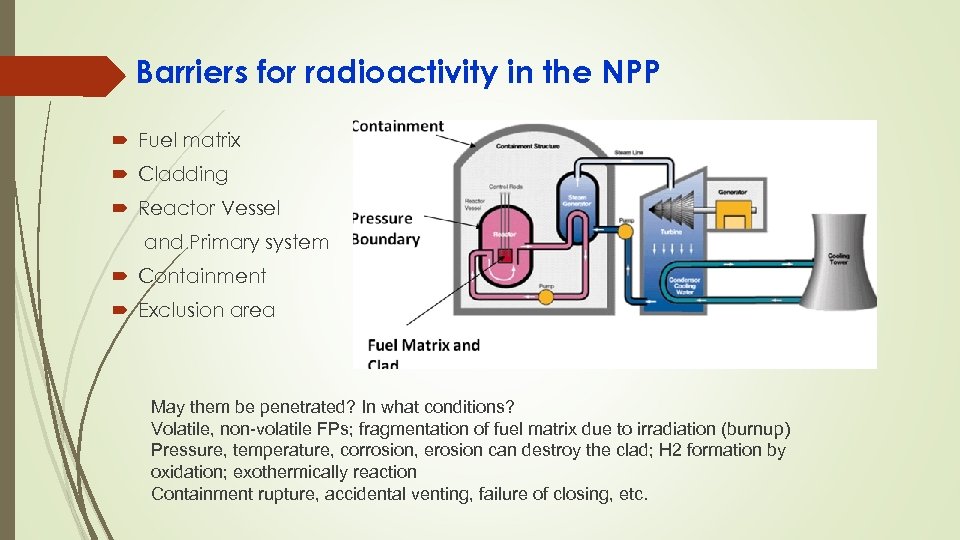 Barriers for radioactivity in the NPP Fuel matrix Cladding Reactor Vessel and Primary system Containment Exclusion area May them be penetrated? In what conditions? Volatile, non-volatile FPs; fragmentation of fuel matrix due to irradiation (burnup) Pressure, temperature, corrosion, erosion can destroy the clad; H 2 formation by oxidation; exothermically reaction Containment rupture, accidental venting, failure of closing, etc.
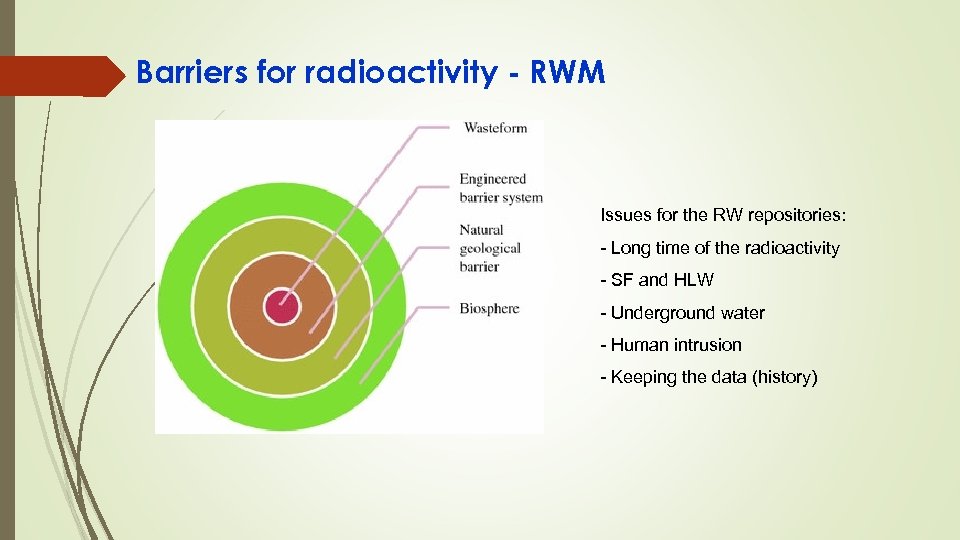 Barriers for radioactivity - RWM Issues for the RW repositories: - Long time of the radioactivity - SF and HLW - Underground water - Human intrusion - Keeping the data (history)
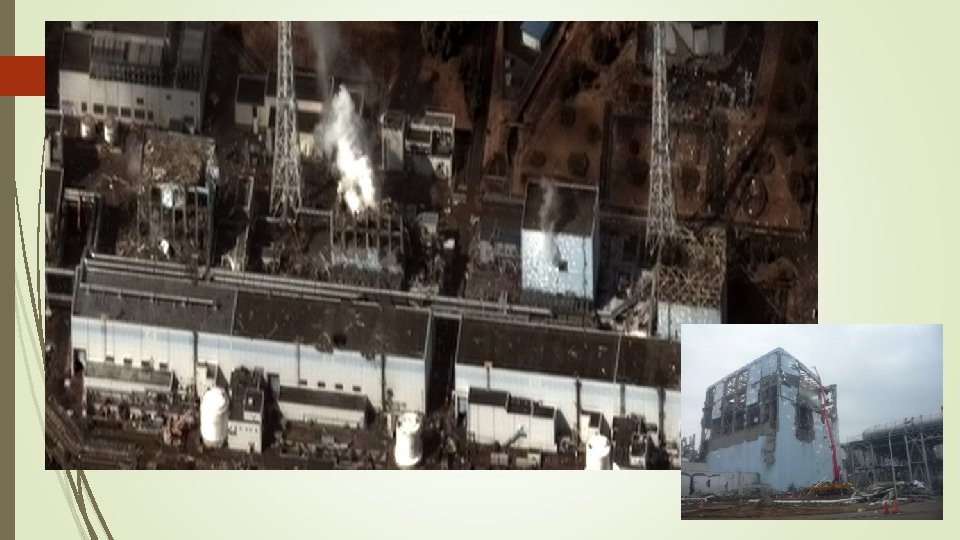
 SAFETY ANALYSIS – SEVERE ACCIDENTS VVER-1000/1200 accidents (source H 2020 FASTNET project): 1) LOCA+ full core melt+ early containment rupture (station blackoutall safety systems are unavailable); 2) like 2 but late containment rupture; 3) SGTR+ full core melt (+station blackout, safety systems unavailable); 4) SFP accident, full loss of water level, „fire release“ (fuel melted) – containment isolated (tight); 5) like 4 but containment opened (not isolated)
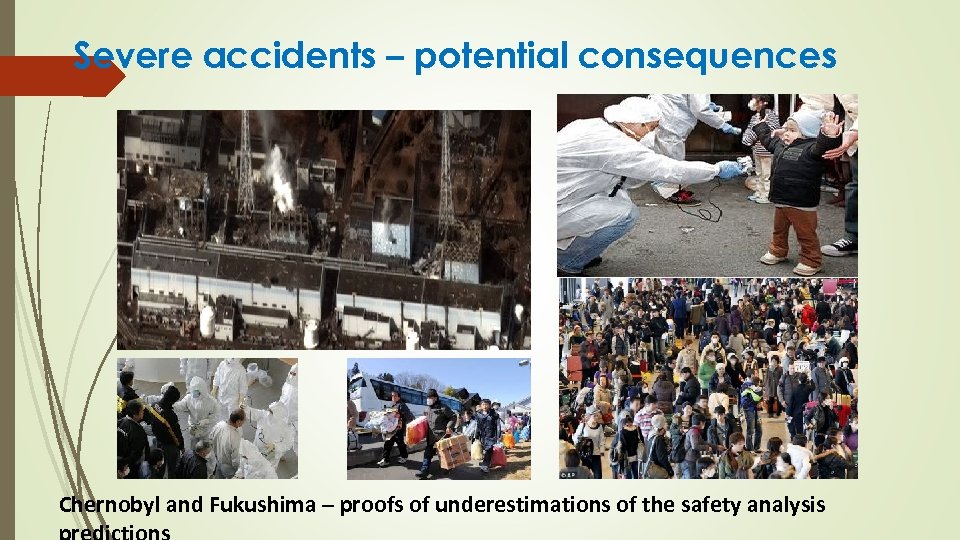 Severe accidents – potential consequences Chernobyl and Fukushima – proofs of underestimations of the safety analysis
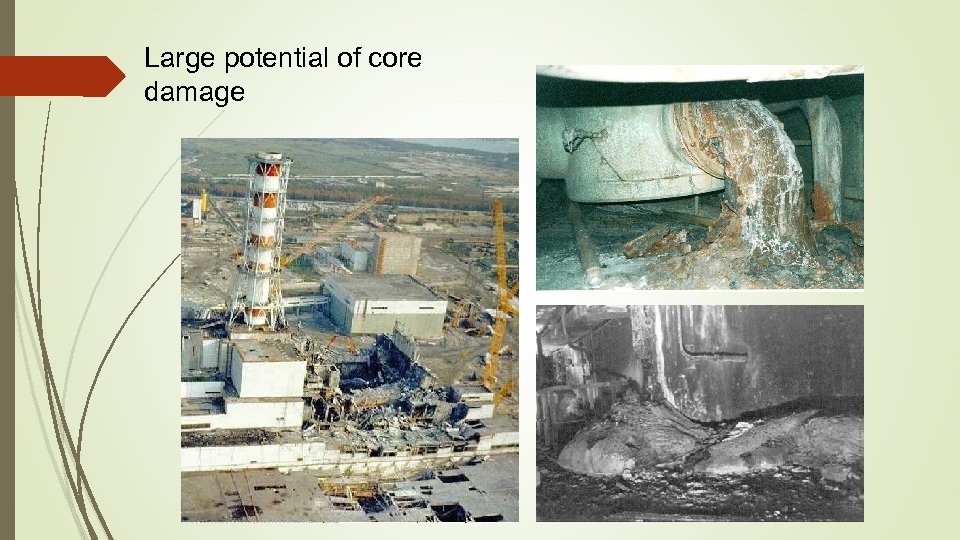 Large potential of core damage
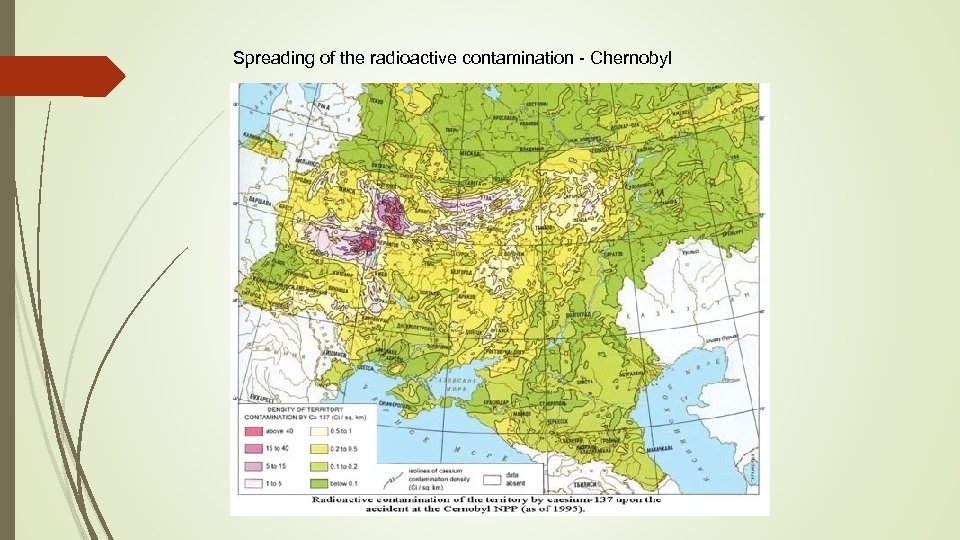 Spreading of the radioactive contamination - Chernobyl
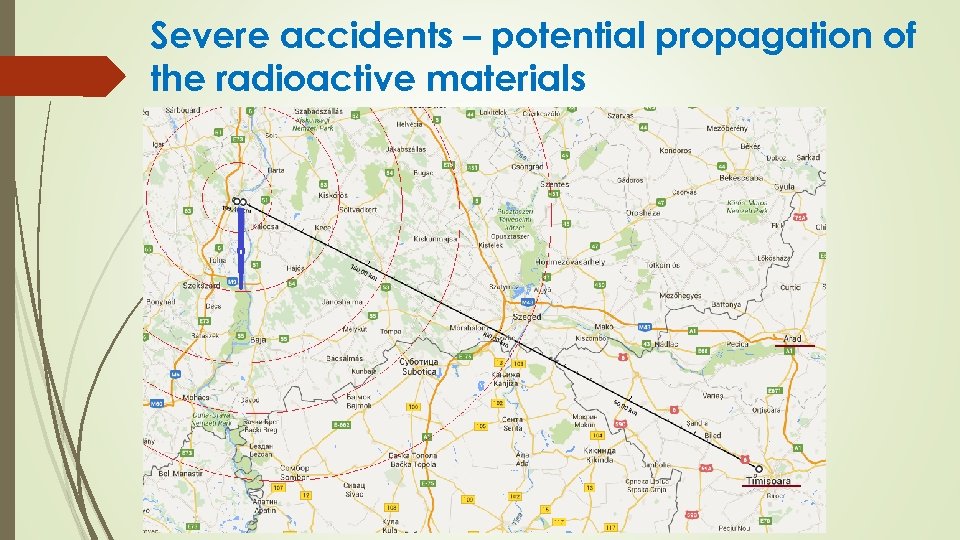 Severe accidents – potential propagation of the radioactive materials
 SOME CRITICISM • Large power – bigger is not better, see Fukushima, many units on the site • The vicinity of Danube, good for the economics, but sensitive channel to transfer the radionuclides during accidents • Core catcher and double containment – what tests, demonstrations and qualifications has been done? Public results? Insufficient knowledge • Passive systems – dependent on external conditions • Potential impact on the neighboring countries during severe accidents • Responsibility of implementer, not of the vendor. Government guarantees • Strong ambitious to sell, see the loan • Fuel, the dependence on supply, the dependence on reprocessing
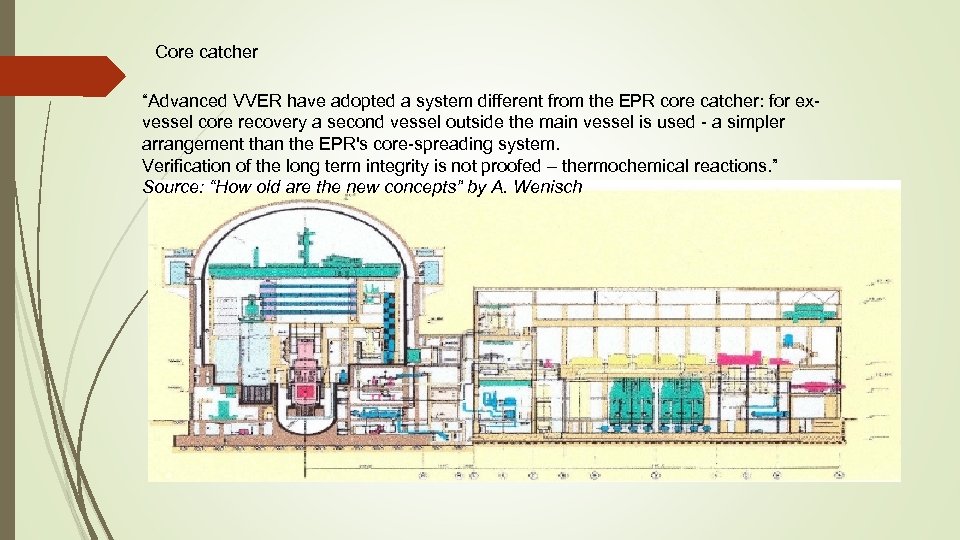 Core catcher “Advanced VVER have adopted a system different from the EPR core catcher: for exvessel core recovery a second vessel outside the main vessel is used - a simpler arrangement than the EPR's core-spreading system. Verification of the long term integrity is not proofed – thermochemical reactions. ” Source: “How old are the new concepts” by A. Wenisch
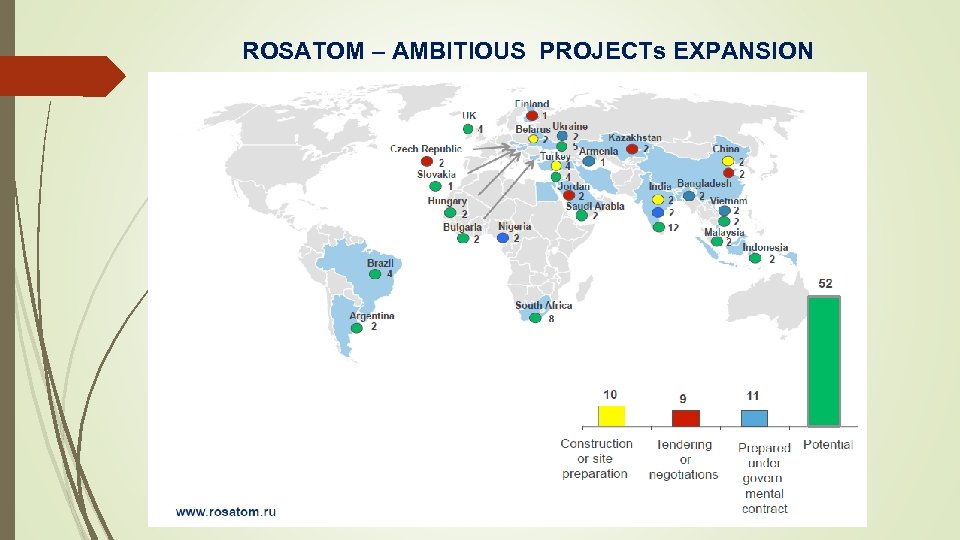 ROSATOM – AMBITIOUS PROJECTs EXPANSION x
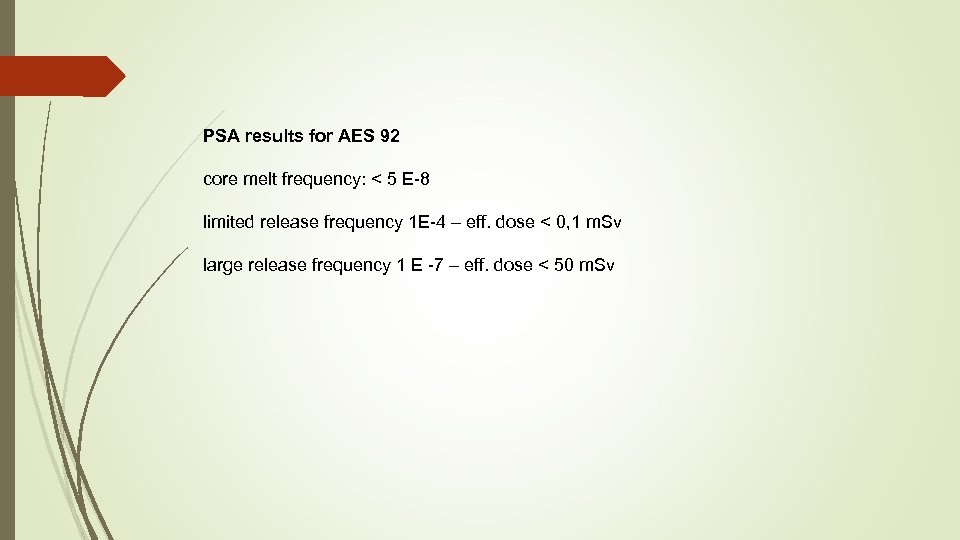 PSA results for AES 92 core melt frequency: < 5 E-8 limited release frequency 1 E-4 – eff. dose < 0, 1 m. Sv large release frequency 1 E -7 – eff. dose < 50 m. Sv
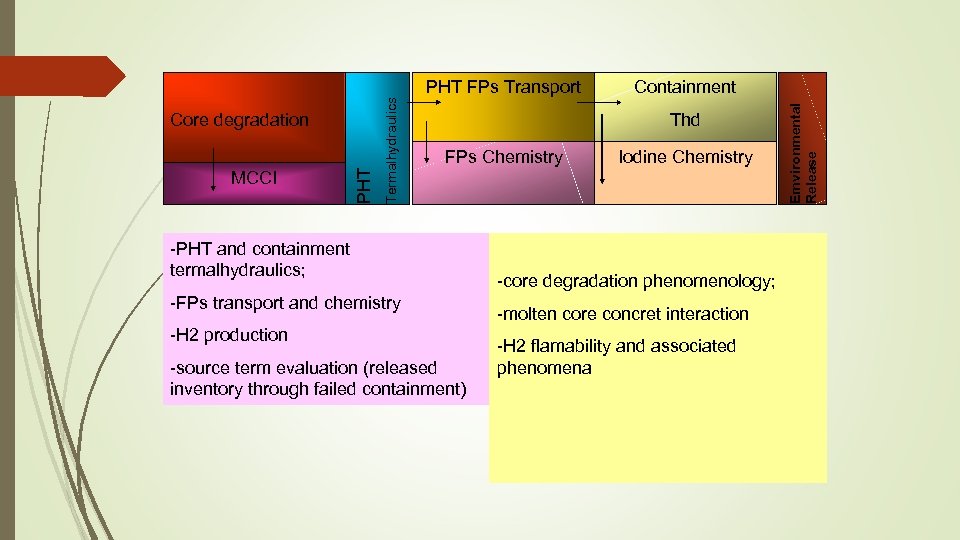 Containment Thd FPs Chemistry -PHT and containment termalhydraulics; -FPs transport and chemistry -H 2 production -source term evaluation (released inventory through failed containment) Iodine Chemistry -core degradation phenomenology; -molten core concret interaction -H 2 flamability and associated phenomena Emvironmental Release MCCI PHT Core degradation Termalhydraulics PHT FPs Transport
 Thank you for your attention!
 SAFETY ANALYSIS – SEVERE ACCIDENTS ROSATOM: “The new NPP design plants have safety design features that take into account the latest development of safety requirements and safety technology. • All fundamental safety functions are ensured by multiple different Safety systems. • The VVER designers have developed already before the Fukushima Daiichi accident the NPP safety features that were suggested as result of the European wide NPP stress in spring 2012. • The safety features include: • possibility for long term decay heat removal from the reactor core without electrical power, • possibility for long term decay heat removal that is not relying on primary ultimate heat sink, and • protection of the reactor containment integrity after potential core meltdown accident. ”
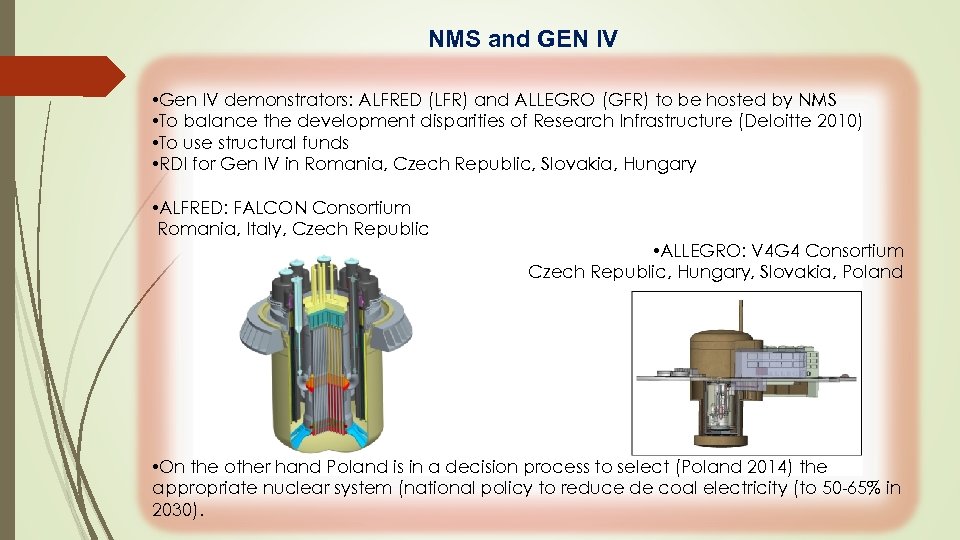 NMS and GEN IV • Gen IV demonstrators: ALFRED (LFR) and ALLEGRO (GFR) to be hosted by NMS • To balance the development disparities of Research Infrastructure (Deloitte 2010) • To use structural funds • RDI for Gen IV in Romania, Czech Republic, Slovakia, Hungary • ALFRED: FALCON Consortium Romania, Italy, Czech Republic • ALLEGRO: V 4 G 4 Consortium Czech Republic, Hungary, Slovakia, Poland • On the other hand Poland is in a decision process to select (Poland 2014) the appropriate nuclear system (national policy to reduce de coal electricity (to 50 -65% in 2030).
 GEN IV §European leadership in nuclear technology §Advanced systems §Safety enhancement §No emergency planning outside the site §Minimization of volume and radio-toxicity of RW §Efficient use of natural resources §Use military stocks of Pu §Simplification and compactness, easy to adapt to SMR §Reliability and replace-ability of the components
 NMS and GEN IV National motivations: • improve Ris, • boosting science and technology, • integrate in developers club, • keep young talents, • economic growth, • jobs. Challenges: • the capacity of the society to support in a due time the resources (funds, institutions, and human resources) for such developments, • strong competition with other national priorities, • complexity of the DMP influenced by the need of learning and practicing in the post-communist context. The process of siting (NPP, repositories) is the most important opportunity for public participation in the NMS. Public hearings are obligatory steps in the current frameworks, but sometimes the participation is reduced and formal.
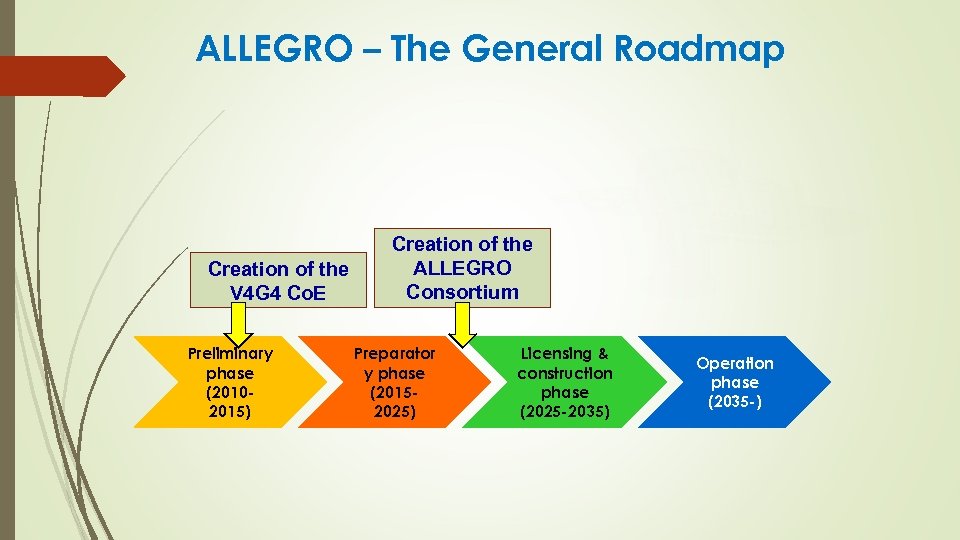 ALLEGRO – The General Roadmap Creation of the V 4 G 4 Co. E Preliminary phase (20102015) Creation of the ALLEGRO Consortium Preparator y phase (20152025) Licensing & construction phase (2025 -2035) Operation phase (2035 -)
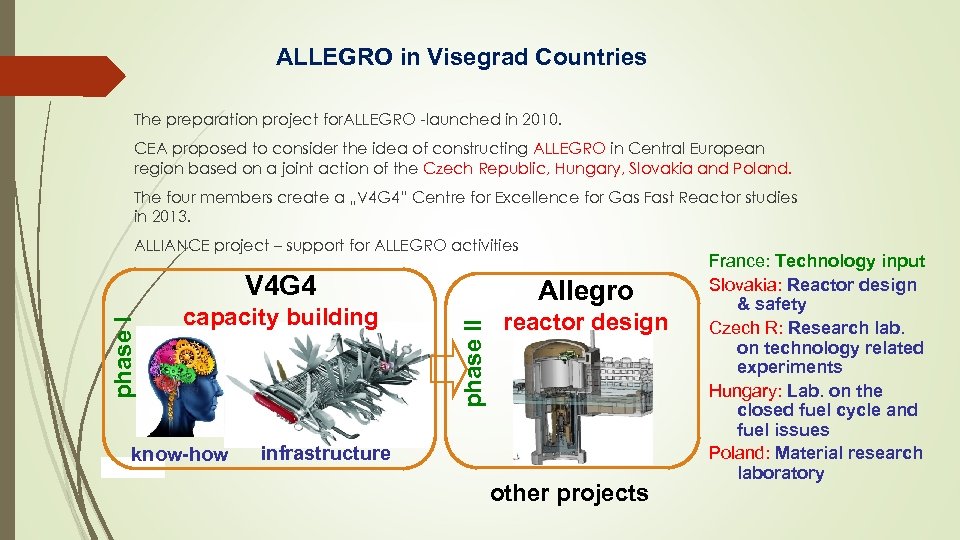 ALLEGRO in Visegrad Countries The preparation project for. ALLEGRO -launched in 2010. CEA proposed to consider the idea of constructing ALLEGRO in Central European region based on a joint action of the Czech Republic, Hungary, Slovakia and Poland. The four members create a „V 4 G 4” Centre for Excellence for Gas Fast Reactor studies in 2013. ALLIANCE project – support for ALLEGRO activities capacity building know-how Allegro phase II phase I V 4 G 4 reactor design infrastructure other projects France: Technology input Slovakia: Reactor design & safety Czech R: Research lab. on technology related experiments Hungary: Lab. on the closed fuel cycle and fuel issues Poland: Material research laboratory
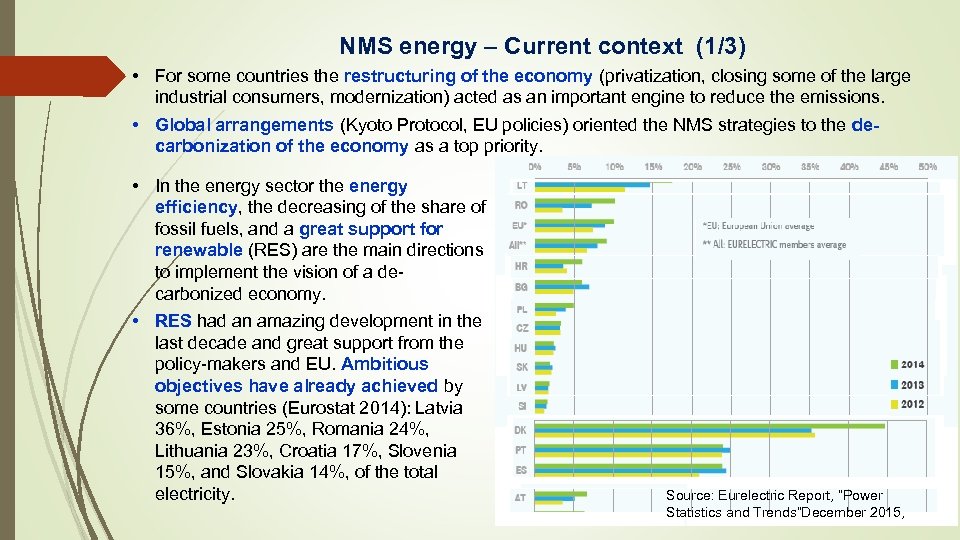 NMS energy – Current context (1/3) • For some countries the restructuring of the economy (privatization, closing some of the large industrial consumers, modernization) acted as an important engine to reduce the emissions. • Global arrangements (Kyoto Protocol, EU policies) oriented the NMS strategies to the decarbonization of the economy as a top priority. • In the energy sector the energy efficiency, the decreasing of the share of fossil fuels, and a great support for renewable (RES) are the main directions to implement the vision of a de carbonized economy. • RES had an amazing development in the last decade and great support from the policy-makers and EU. Ambitious objectives have already achieved by some countries (Eurostat 2014): Latvia 36%, Estonia 25%, Romania 24%, Lithuania 23%, Croatia 17%, Slovenia 15%, and Slovakia 14%, of the total electricity. Source: Eurelectric Report, “Power Statistics and Trends”December 2015,
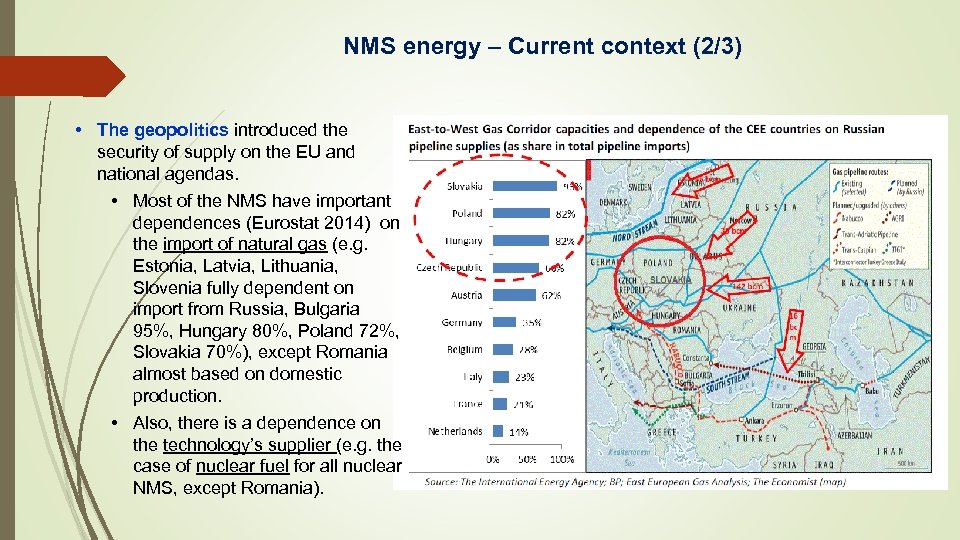 NMS energy – Current context (2/3) • The geopolitics introduced the security of supply on the EU and national agendas. • Most of the NMS have important dependences (Eurostat 2014) on the import of natural gas (e. g. Estonia, Latvia, Lithuania, Slovenia fully dependent on import from Russia, Bulgaria 95%, Hungary 80%, Poland 72%, Slovakia 70%), except Romania almost based on domestic production. • Also, there is a dependence on the technology’s supplier (e. g. the case of nuclear fuel for all nuclear NMS, except Romania).
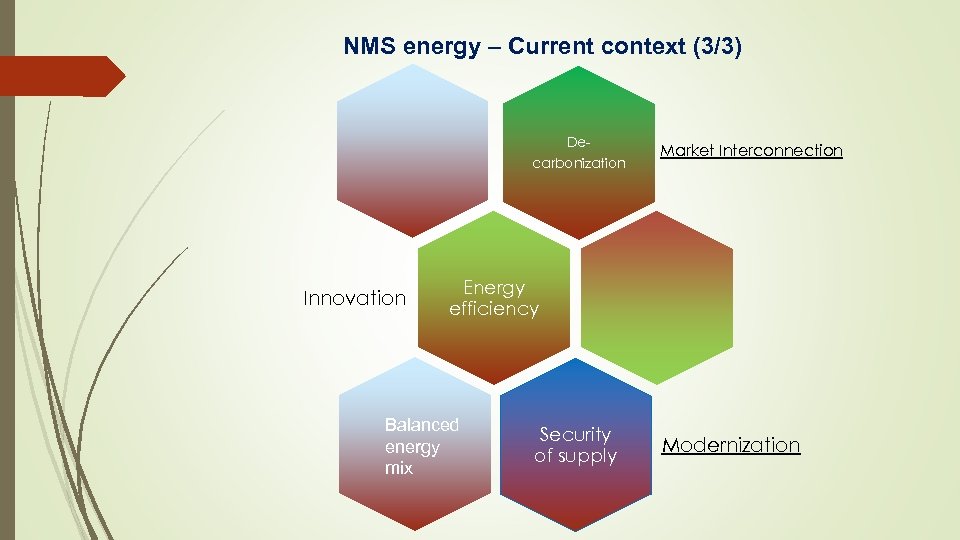 NMS energy – Current context (3/3) Decarbonization Innovation Market Interconnection Energy efficiency Balanced energy mix Security of supply Modernization