

Solution Methods for Bilevel Optimization Andrey Tin [email protected]


Solution Methods for Bilevel Optimization Andrey Tin [email protected] School of Mathematics Supervisors: Dr Alain B. Zemkoho, Professor Jörg Fliege
Overview Define a bilevel problem and its general mathematical form Discuss optimality (KKT-type) conditions Reformulate general bilevel problem as a system of equations Consider iterative (descent direction) methods applicable to solve this reformulation Look at the numerical results of using Levenberg-Marquardt iterative method
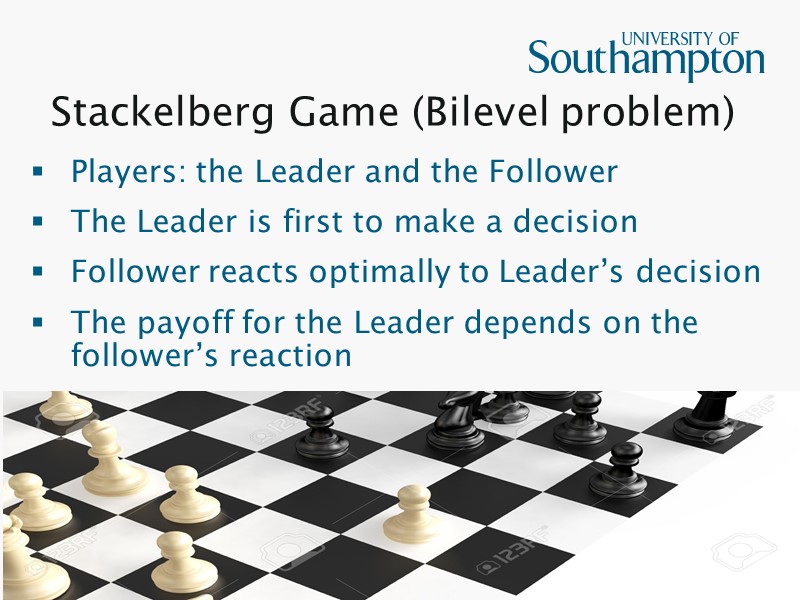
Stackelberg Game (Bilevel problem) Players: the Leader and the Follower The Leader is first to make a decision Follower reacts optimally to Leader’s decision The payoff for the Leader depends on the follower’s reaction
Example Taxation of a factory Leader – government Objectives: maximize profit and minimize pollution Follower – factory owner Objectives: maximize profit
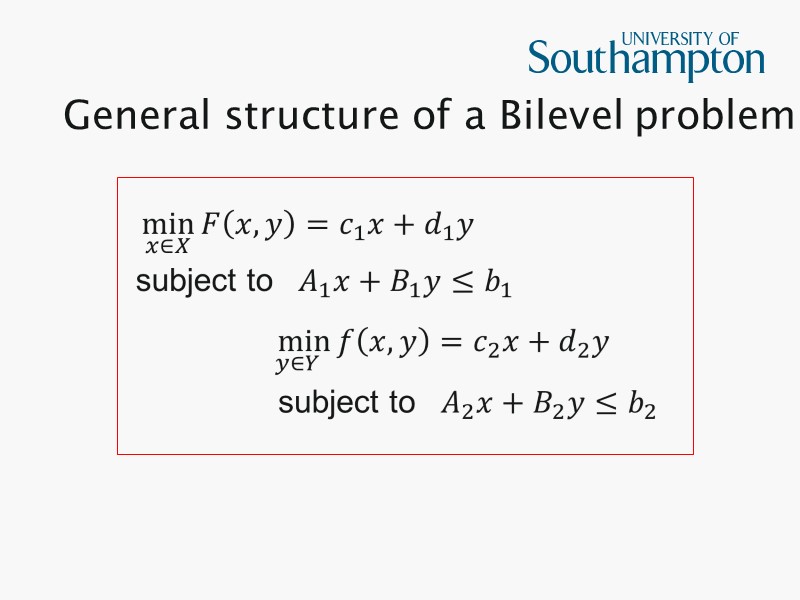
General structure of a Bilevel problem
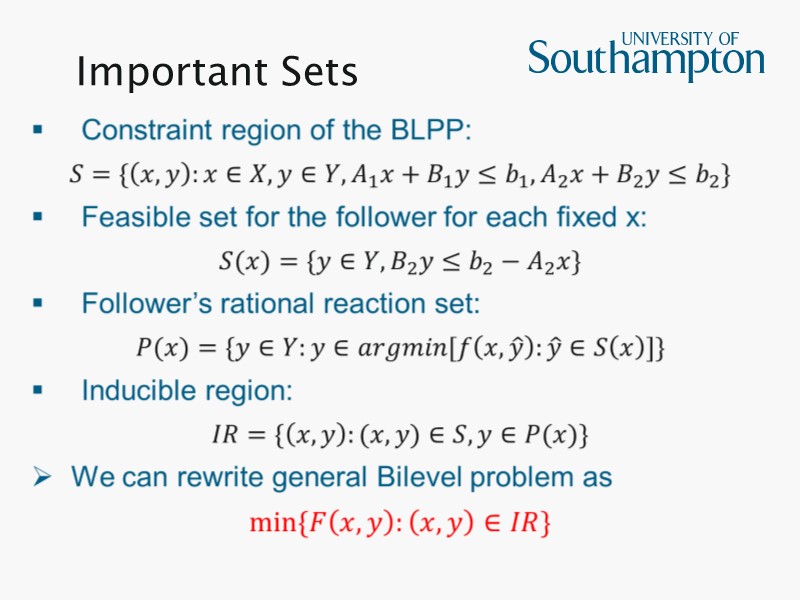
Important Sets
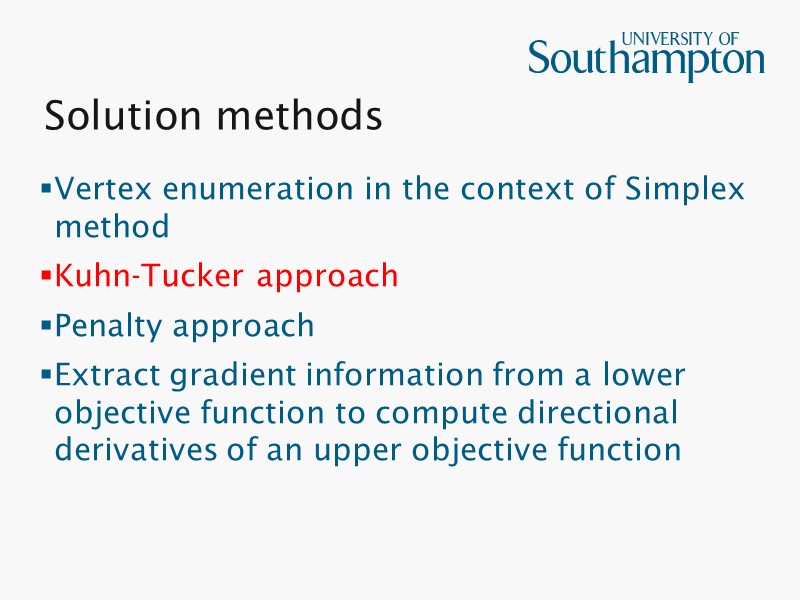
Solution methods Vertex enumeration in the context of Simplex method Kuhn-Tucker approach Penalty approach Extract gradient information from a lower objective function to compute directional derivatives of an upper objective function
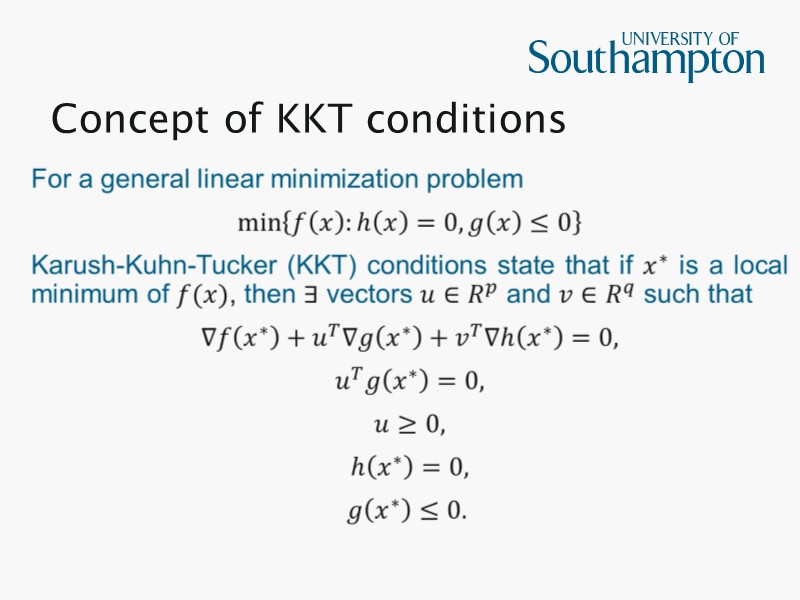
Concept of KKT conditions
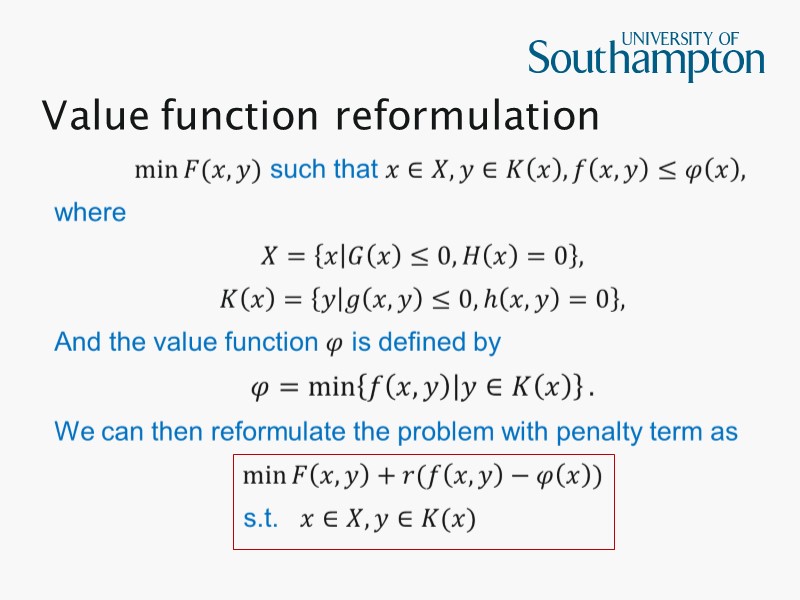
Value function reformulation
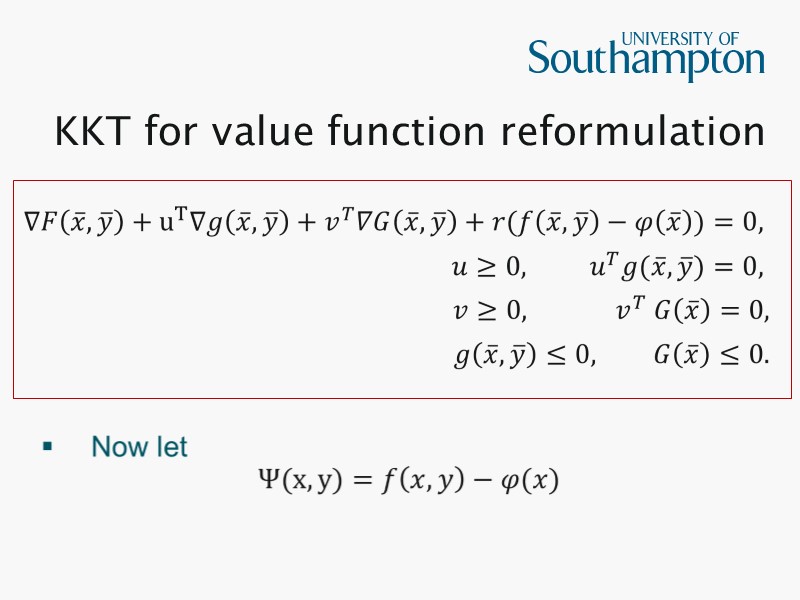
KKT for value function reformulation
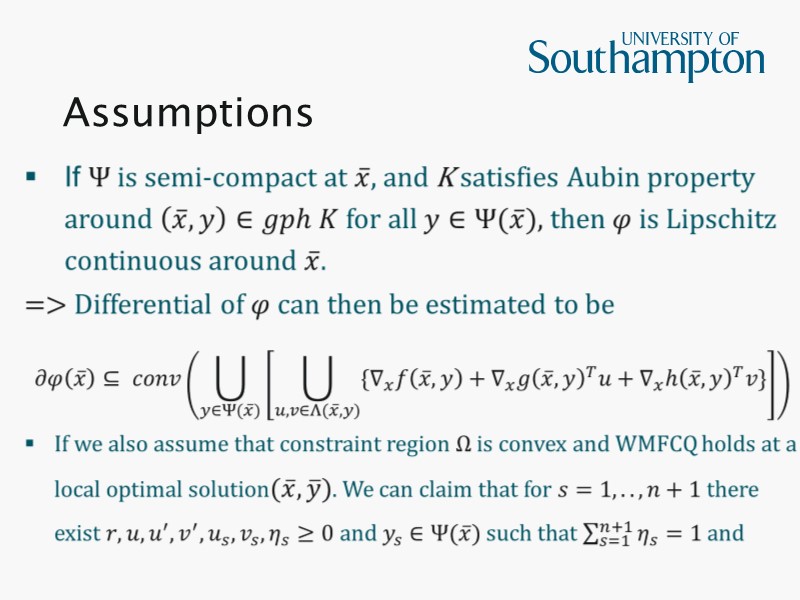
Assumptions
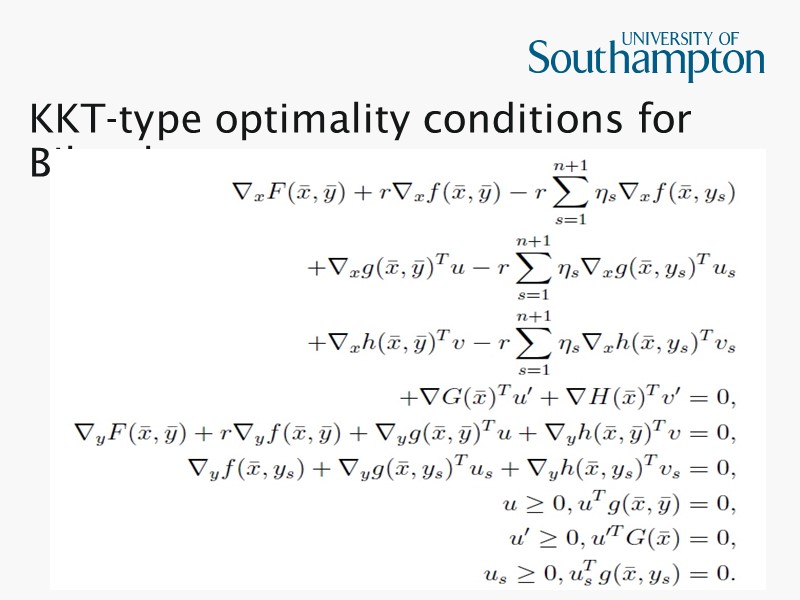
KKT-type optimality conditions for Bilevel
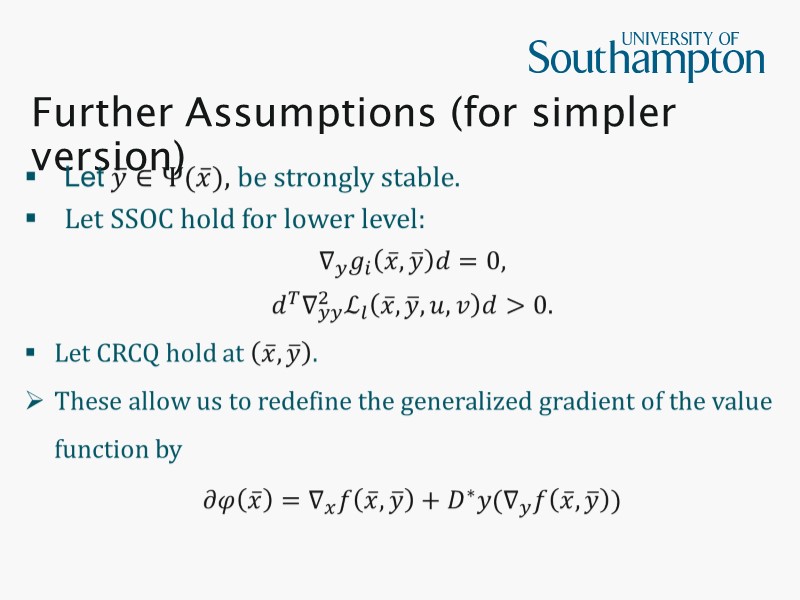
Further Assumptions (for simpler version)
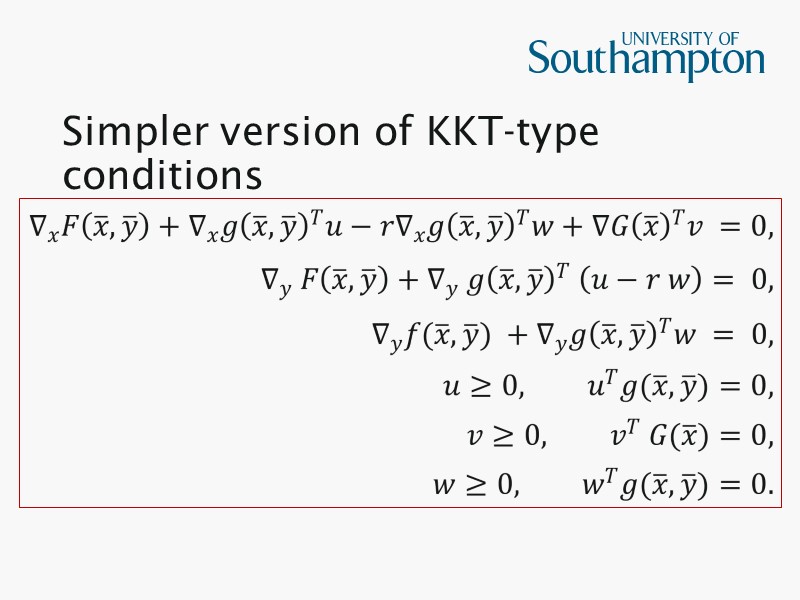
Simpler version of KKT-type conditions
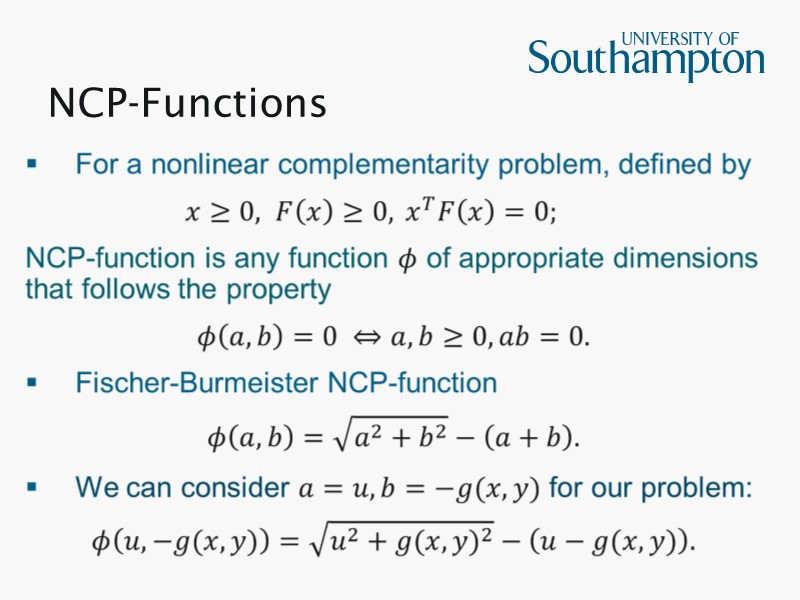
NCP-Functions
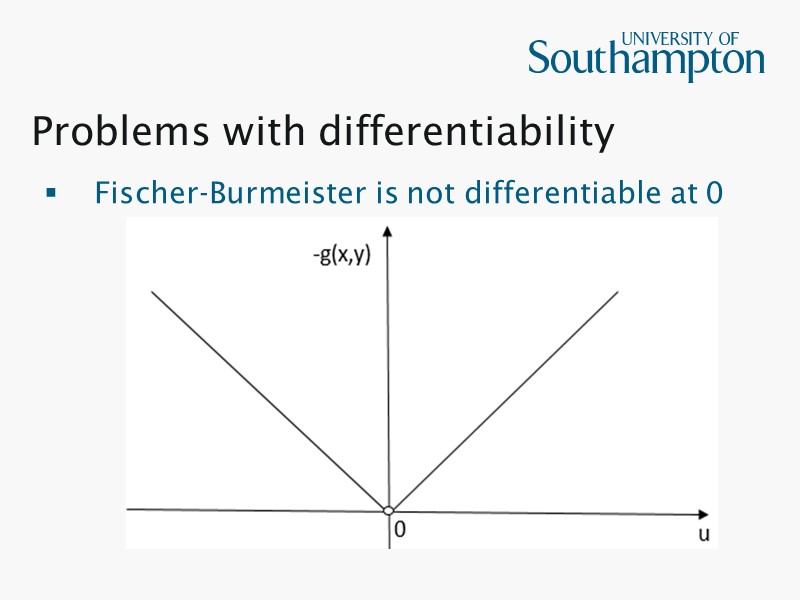
Problems with differentiability Fischer-Burmeister is not differentiable at 0
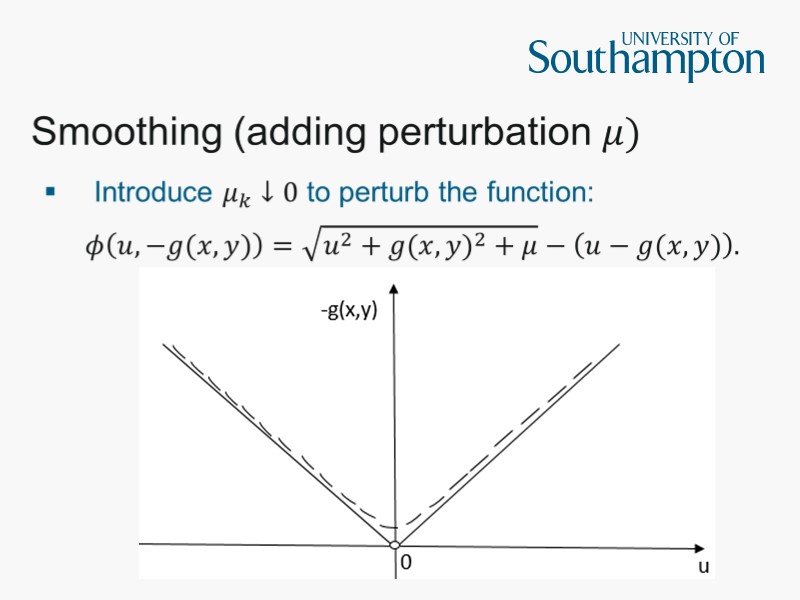
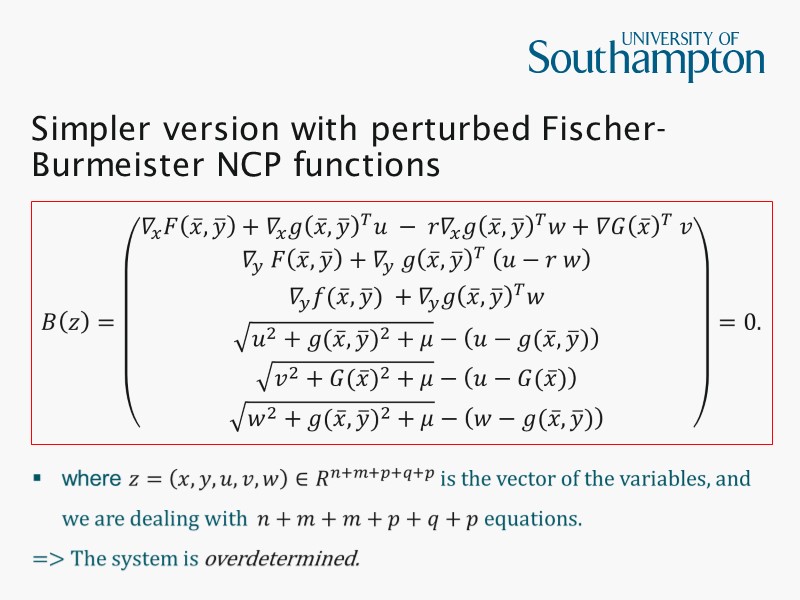
Simpler version with perturbed Fischer-Burmeister NCP functions
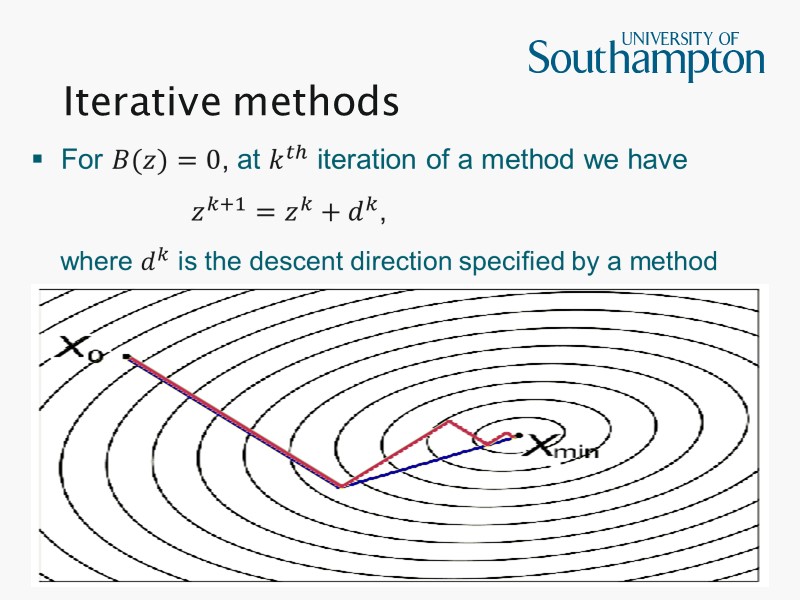
Iterative methods
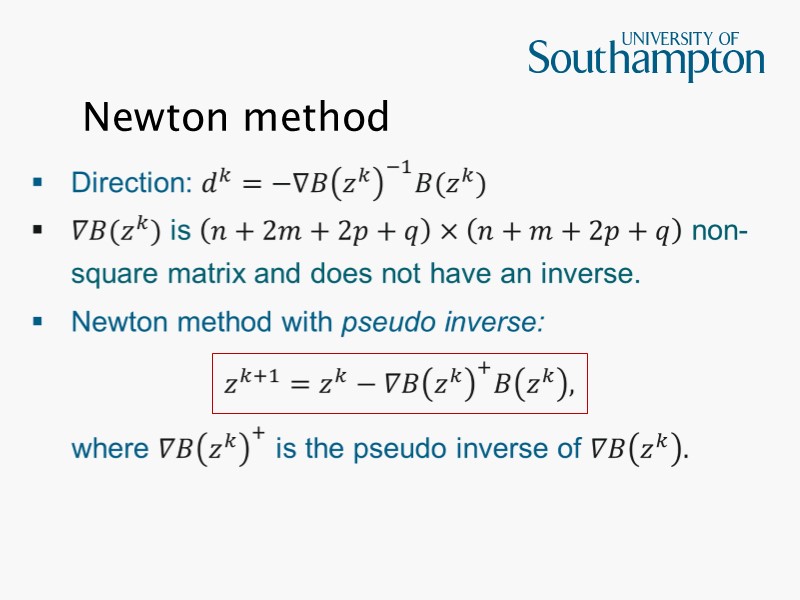
Newton method
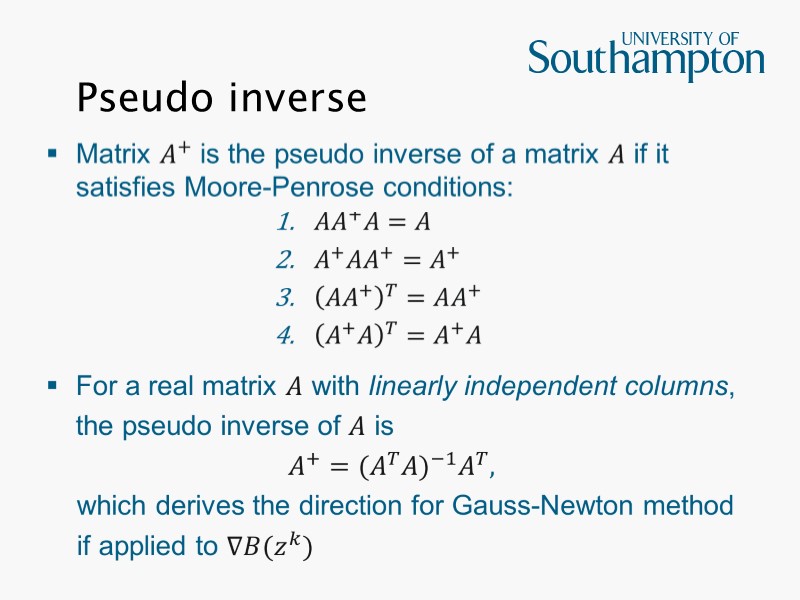
Pseudo inverse
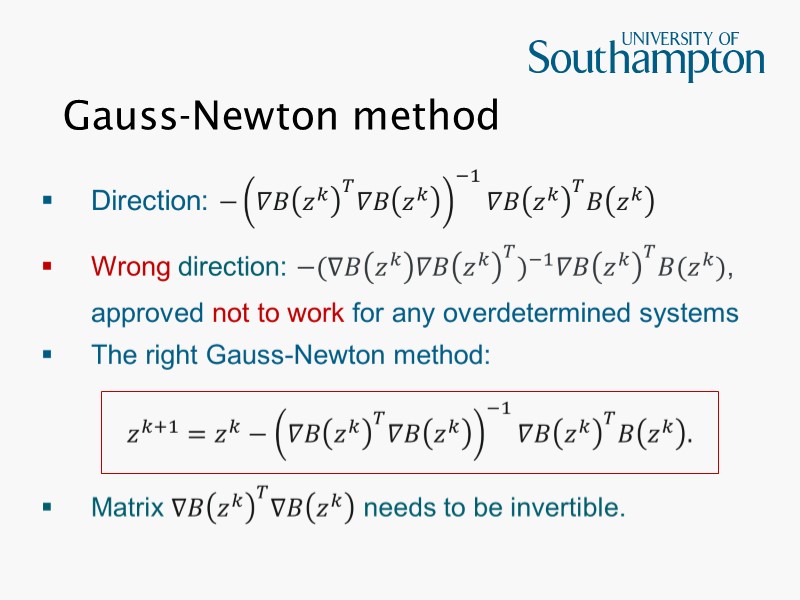
Gauss-Newton method
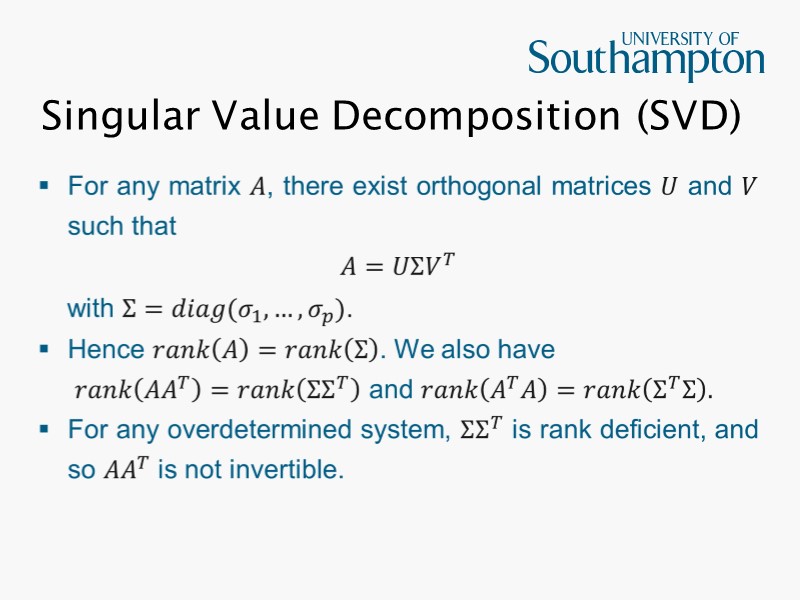
Singular Value Decomposition (SVD)
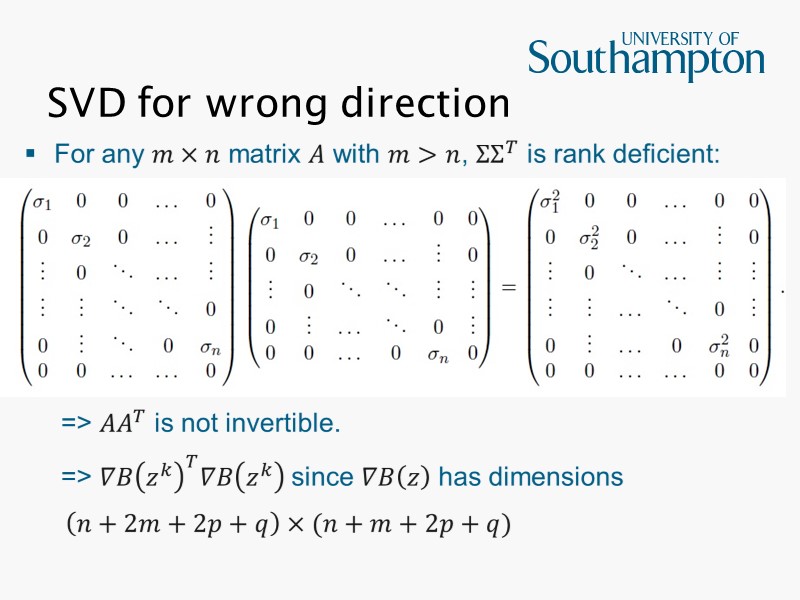
SVD for wrong direction
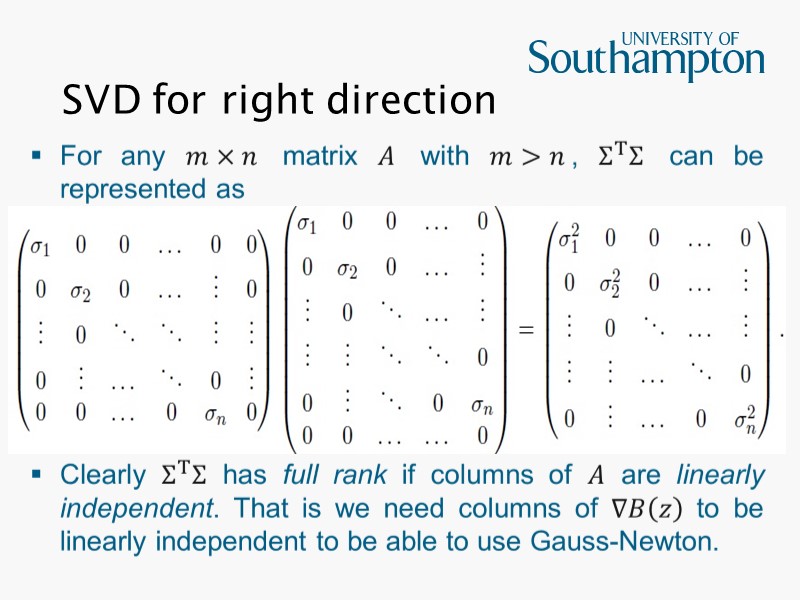
SVD for right direction
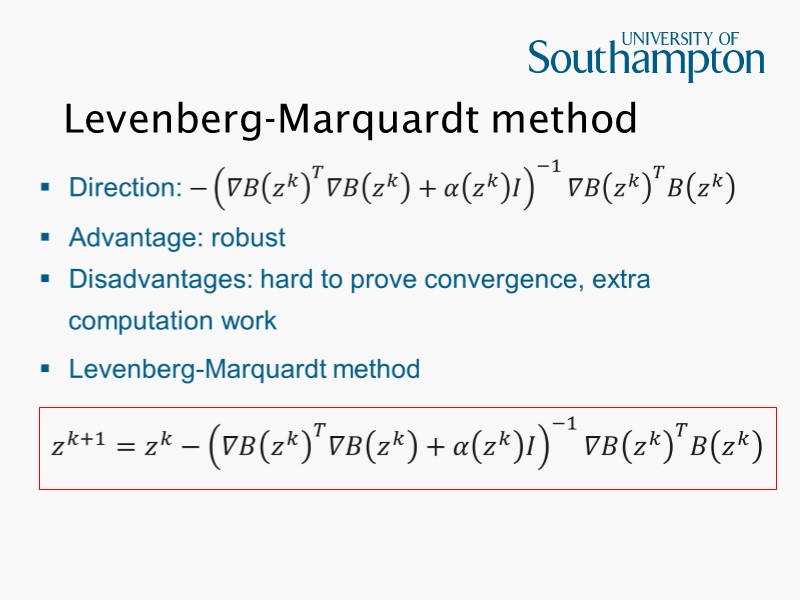
Levenberg-Marquardt method
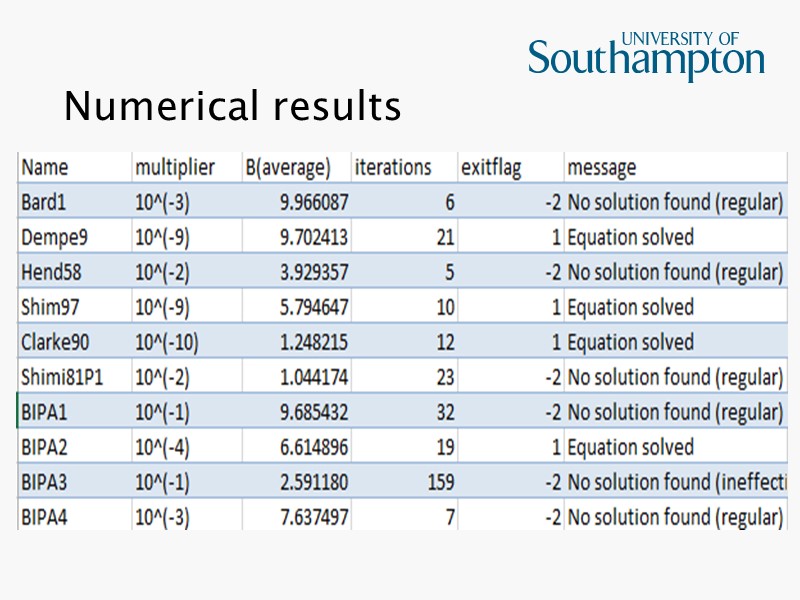
Numerical results
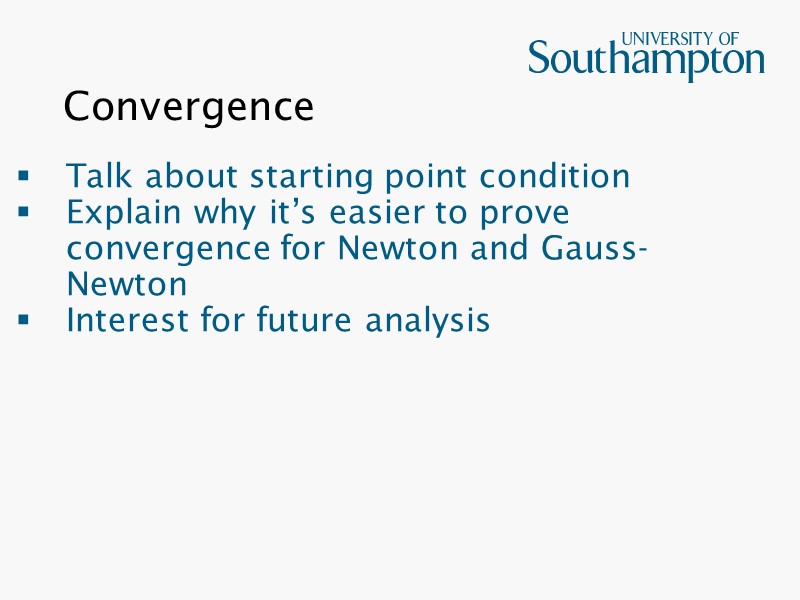
Convergence Talk about starting point condition Explain why it’s easier to prove convergence for Newton and Gauss-Newton Interest for future analysis
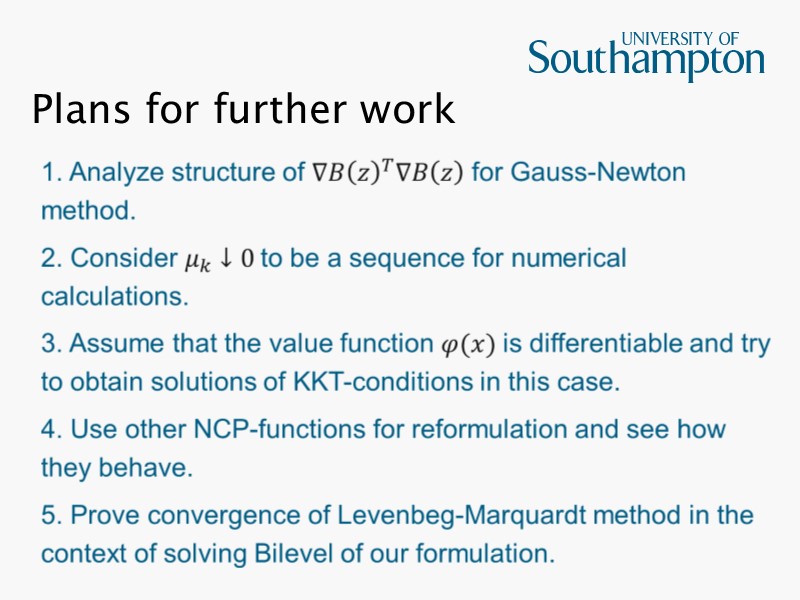
Plans for further work
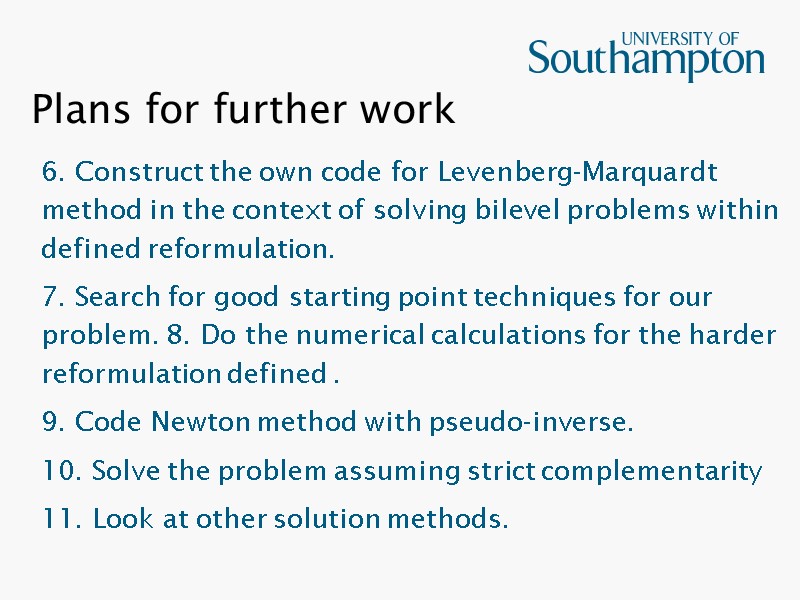
Plans for further work 6. Construct the own code for Levenberg-Marquardt method in the context of solving bilevel problems within defined reformulation. 7. Search for good starting point techniques for our problem. 8. Do the numerical calculations for the harder reformulation defined . 9. Code Newton method with pseudo-inverse. 10. Solve the problem assuming strict complementarity 11. Look at other solution methods.

Thank you!
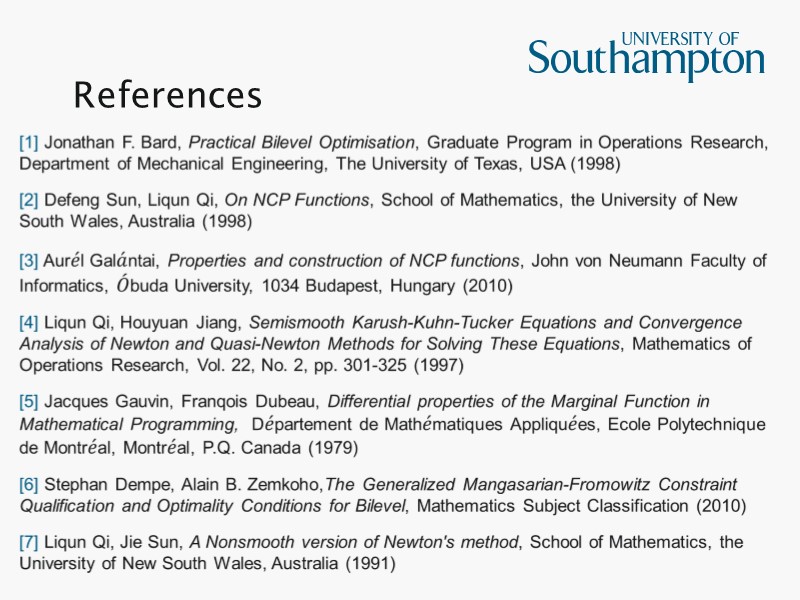
References
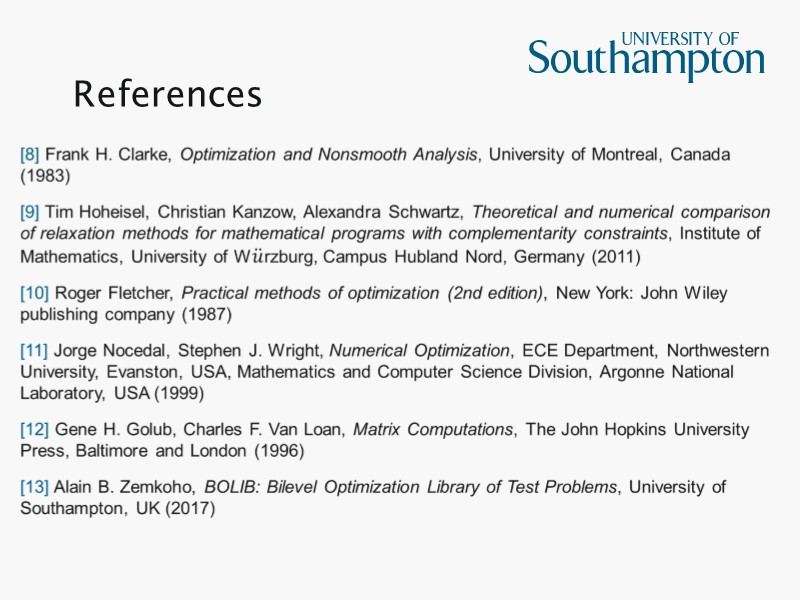
References
 Скачать презентацию Solution Methods for Bilevel Optimization Andrey Tin [email protected]
35940-tsanchez_pm_andrey_tin.ppt
- Количество слайдов: 33