Скачать презентацию Soil and water pollution status of the Hungarian
0d0e412edf33ffa54b7a5ba6a62413e9.ppt
- Количество слайдов: 45
 Soil and water pollution status of the Hungarian environment and needs for remediation Endre Molnár* – Levente Kardos* – János Fehér** *Corvinus University of Budapest, Hungary 1118 Budapest, Villányi 29 -43. Hungary E. Molnár e-mail: endre. molnar@uni-corvinus. hu L. Kardos e-mail: levente. kardos 2@uni-corvinus. hu **VITUKI Environmental Protection and Water Management Research Institute, Hungary E-mail: feher. janos@vituki. hu
 Soils • One of the most significant effects of nature degradation caused by pollution of surface and subsurface water resources and the decrease of soil buffering capacity due to absorption of heavy metals, organic compounds and excess of nutrients. The accumulation of different elements can occur due to the natural factors or the consequence of human activity. Contaminants reaching soils and water bodies can be divided into two main groups: macro- and micropollutants. • The presence of these can serve as a ticking “chemical time bomb”. It means, that any change in environmental circumstances can “blow-up” the bomb by increasing the solubility of harmful elements and compounds.
 Remediation of soils • As a contradiction the Hungarian soils and waters are relatively clean or can be remediated. The remediation methods needs a permanent monitoring system which Hungary already has for soils as well as for water quality. The remediation activity of polluted sites has the steps as follows: • Identification of the problem. • Assessment for describing impairment (pilot plant, laboratory analysis system). • Design of remediation (several methods, selection of its). • Implementation of the technology. • Post-remediation of activities (monitoring, re-use of treated material and site). • Validation of ecological risks of the contamination. • Methodology for prevention of further contamination.
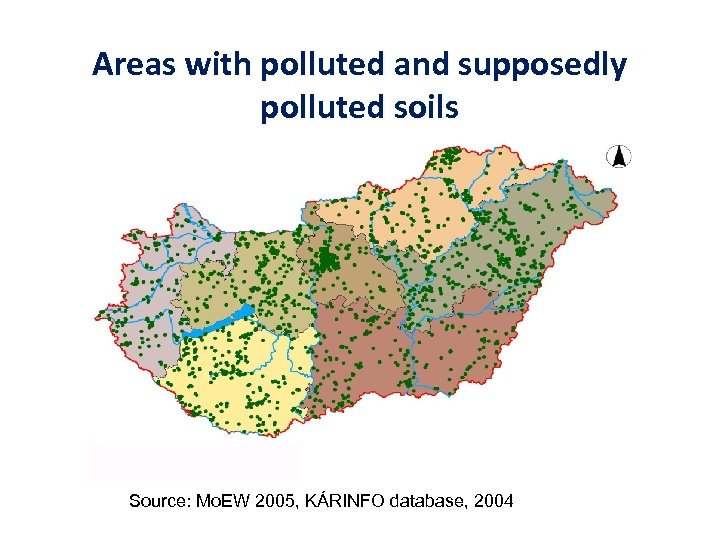 Areas with polluted and supposedly polluted soils Source: Mo. EW 2005, KÁRINFO database, 2004
 Remediation and remediation technologies • The remediation activity of polluted sites has the steps as follows: • Identification of the problem. • Assessment for describing impairment (pilot plant, laboratory analysis system). • Design of remediation (several methods, selection of its). • Implementation of the technology. • Post-remediation of activities (monitoring, re-use of treated material and site). • Validation of ecological risks of the contamination. • Methodology for prevention of further contamination. The set up is shown below.
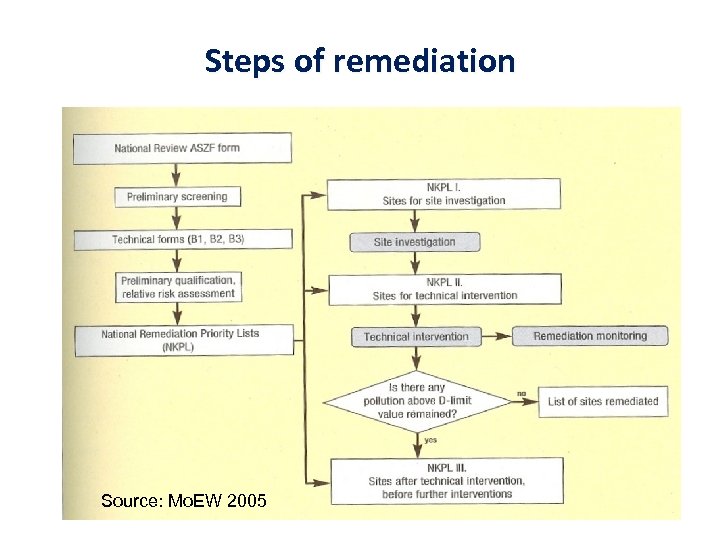 Steps of remediation Source: Mo. EW 2005
 NEW DIRECTION IN THE EU WATER POLICY integration of different theories river basin approach water quality, quantity and ecology hydrology, hydraulics, chemistry, ecology, soil science, economics • NGOs in decision making • level of public discussions, stakeholders • river basin management plans • •
 WATER FRAMEWORK DIRECTIVE • The EU Water Framework Directive requires the assessment for all kind of water bodies in order to describe their status and to prove the result of the process of reaching the good ecological status or good ecological potential • Assessment of the structure of the physical environment and the flow regime of streams and rivers • Reference conditions (river passports)
 WFD in Hungary • Surface water resources in Hungary • Subsurface water resources in Hungary • Water quality monitoring – Surface water monitoring – Subsurface water monitoring • Implementation of Water Framework Directive in Hungary • Revitalization of small water courses and wetlands in Hungary
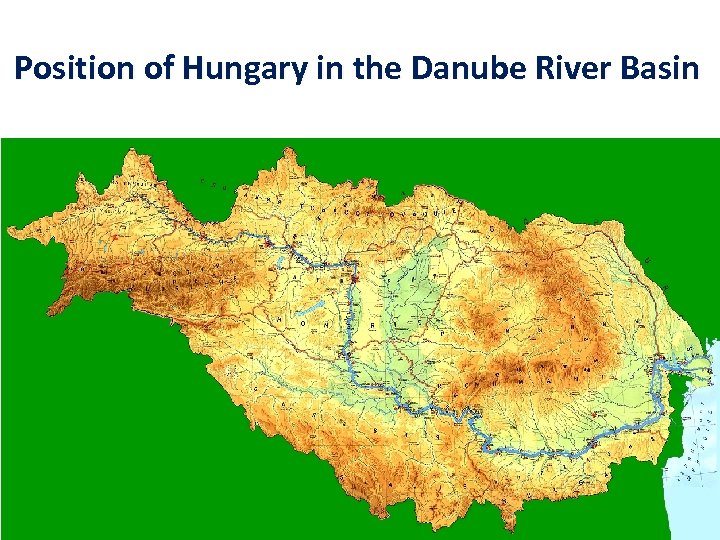 Position of Hungary in the Danube River Basin
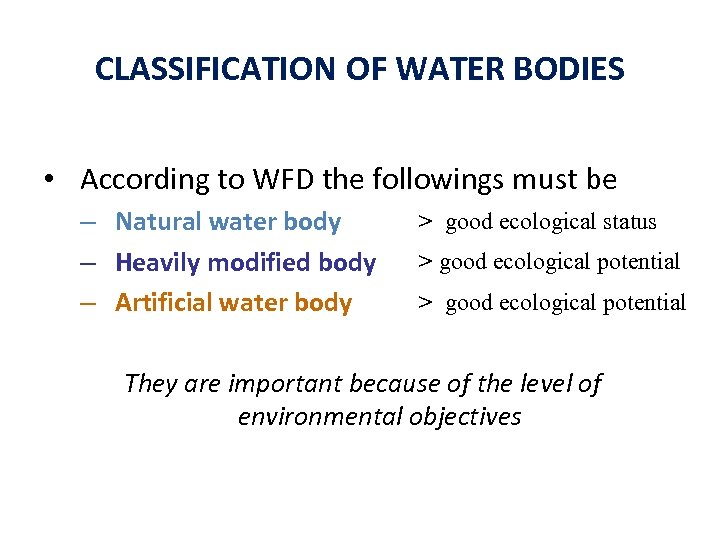 CLASSIFICATION OF WATER BODIES • According to WFD the followings must be – Natural water body – Heavily modified body – Artificial water body > good ecological status > good ecological potential They are important because of the level of environmental objectives
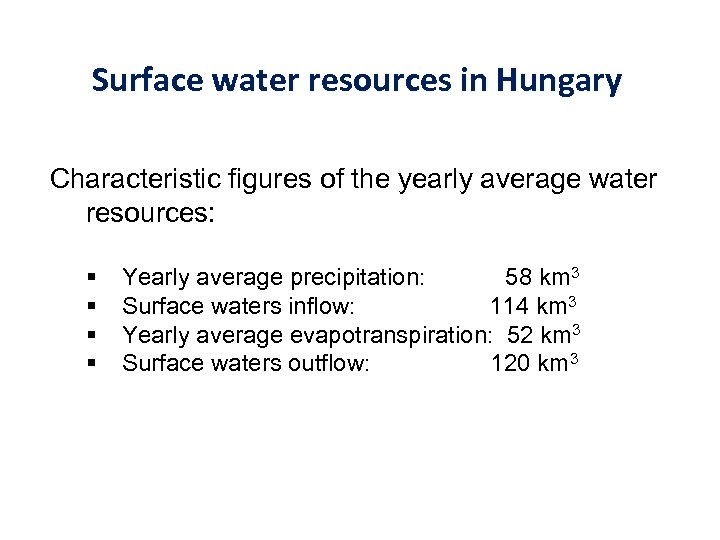 Surface water resources in Hungary Characteristic figures of the yearly average water resources: § § Yearly average precipitation: 58 km 3 Surface waters inflow: 114 km 3 Yearly average evapotranspiration: 52 km 3 Surface waters outflow: 120 km 3
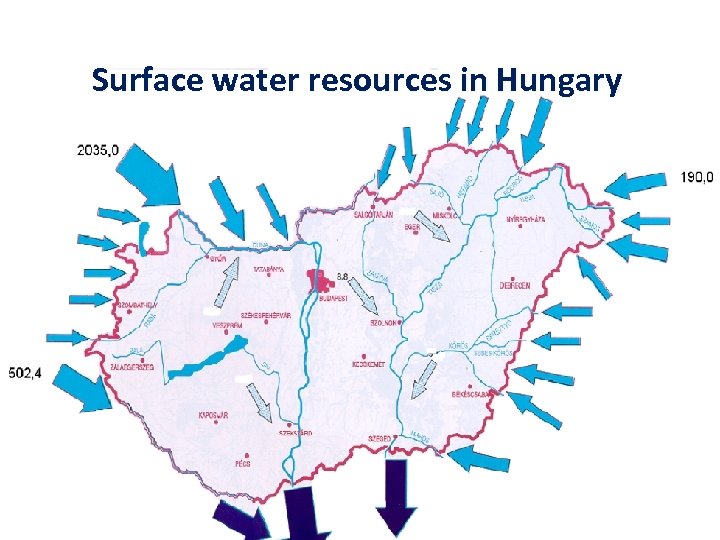 Surface water resources in Hungary
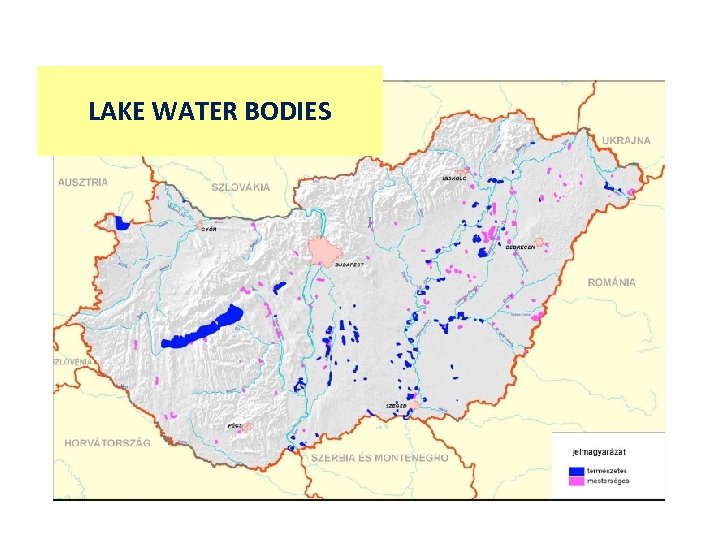 LAKE WATER BODIES
 Assessment of human activity Significant point source pollution • discharge of WWTP • discharge of (industrial IPPC and IPPC type) Significant diffuse source pollution • nutrient and pesticide from agriculture • lack of storage
 Assessment of human activity (Cont. ) Water extractions: • agricultural • drinking water, • industrial, • reservoir, • sharing discharge for energy use, • sharing discharge for other uses
 At RISK (point source pollution) 1. Organic load 2. Nutrient load 3. Hazardous parameters (Annex 10)
 At RISK (diffuse source pollution) 1. Sensibility analyses for N and P from CORINE 2. Cells are made 3. Water probably effected by actual pressure— impact is estimated, multiplied value, by catchments
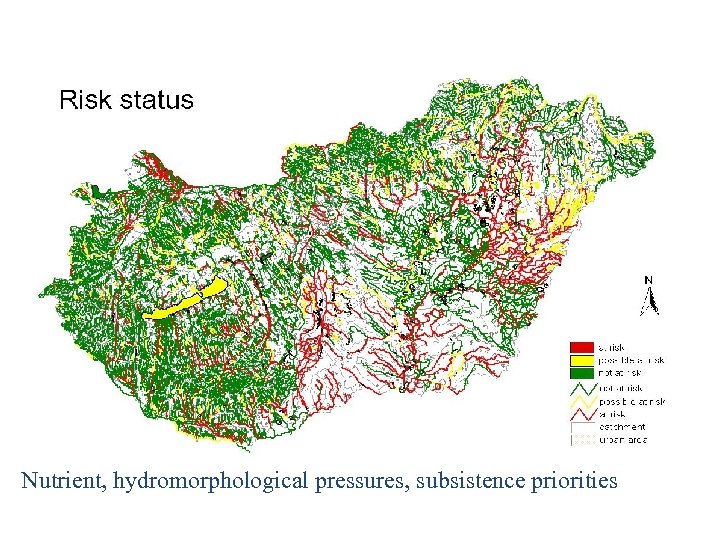 Nutrient, hydromorphological pressures, subsistence priorities
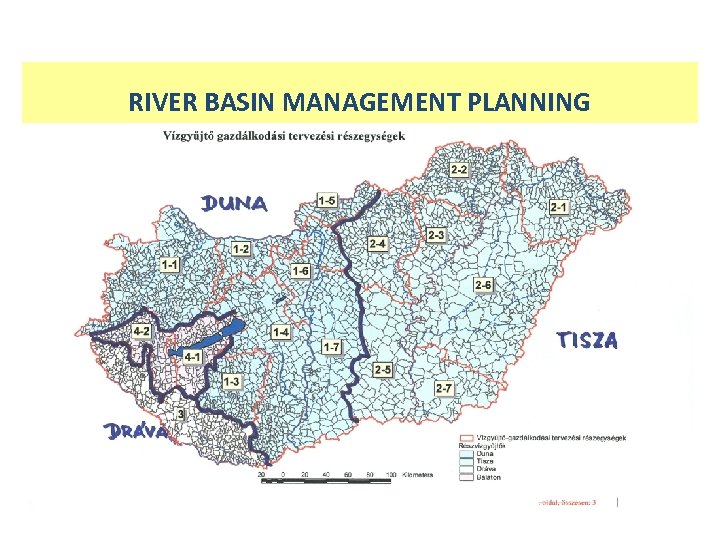 RIVER BASIN MANAGEMENT PLANNING
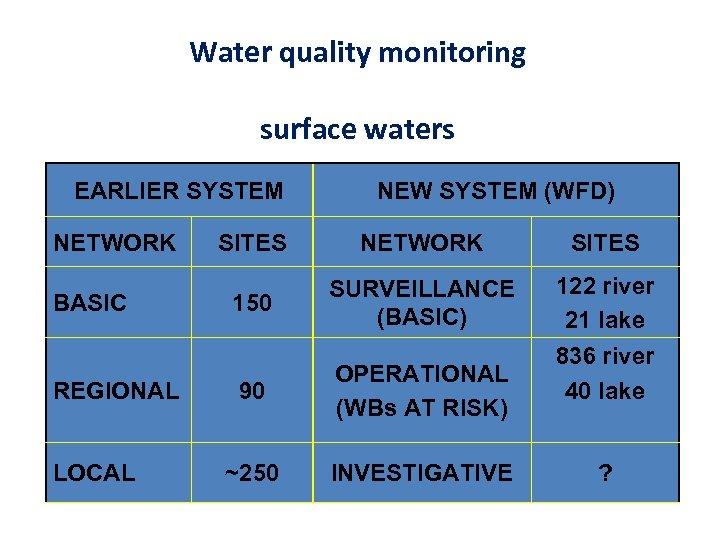 Water quality monitoring surface waters EARLIER SYSTEM NETWORK BASIC REGIONAL LOCAL NEW SYSTEM (WFD) SITES NETWORK SITES 150 SURVEILLANCE (BASIC) 122 river 21 lake 90 OPERATIONAL (WBs AT RISK) ~250 INVESTIGATIVE 836 river 40 lake ?
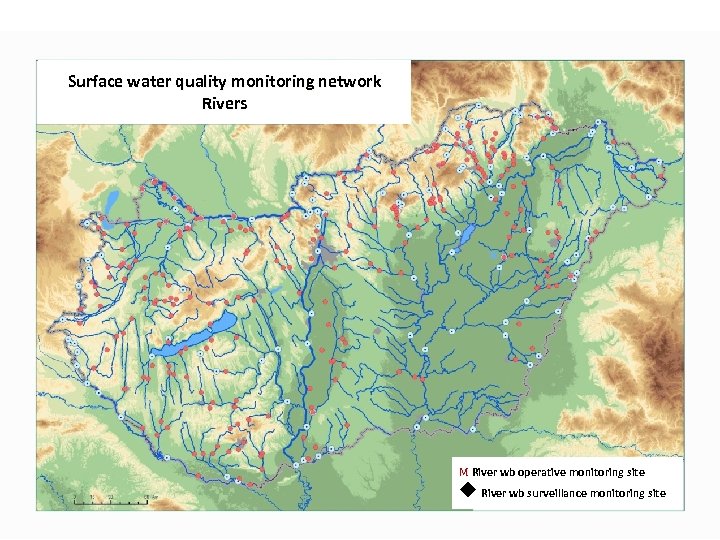 Surface water quality monitoring network Rivers M River wb operative monitoring site River wb surveillance monitoring site
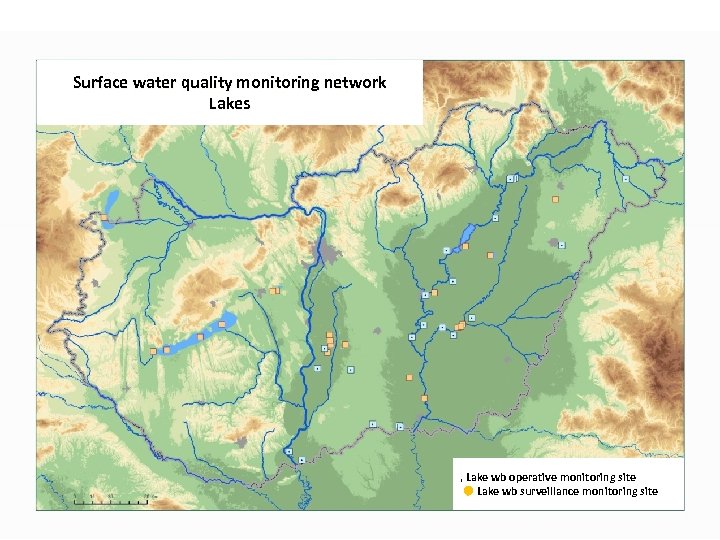 Surface water quality monitoring network Lakes ‚ Lake wb operative monitoring site Lake wb surveillance monitoring site
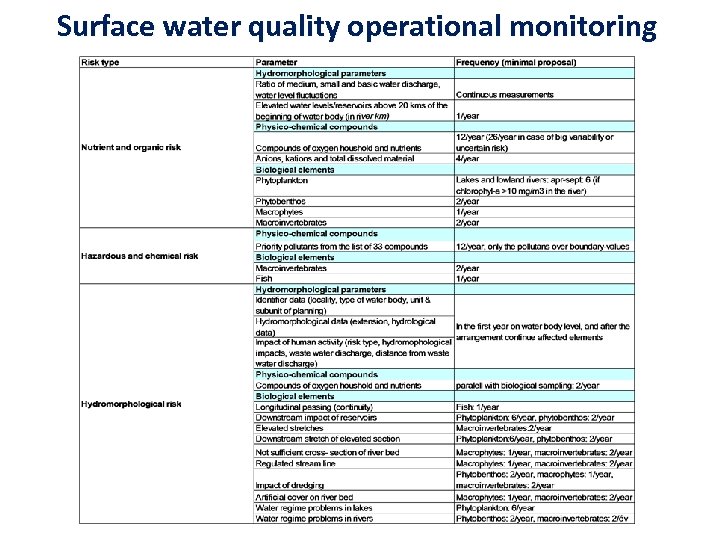 Surface water quality operational monitoring
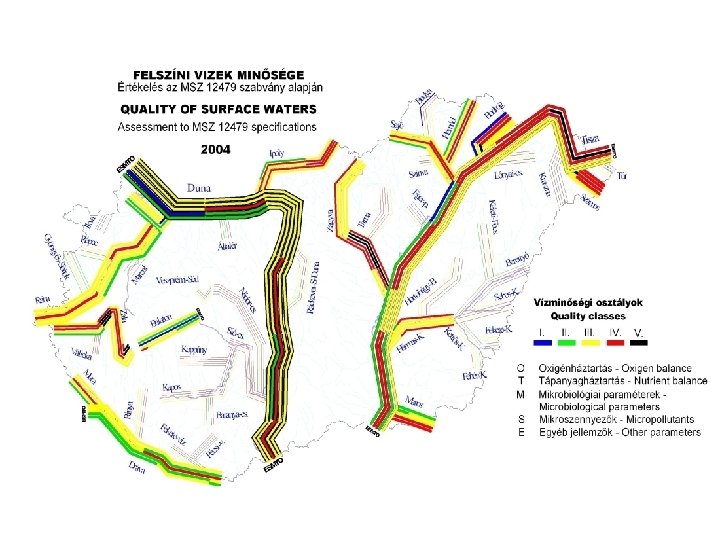 Subsurface water resources in Hungary
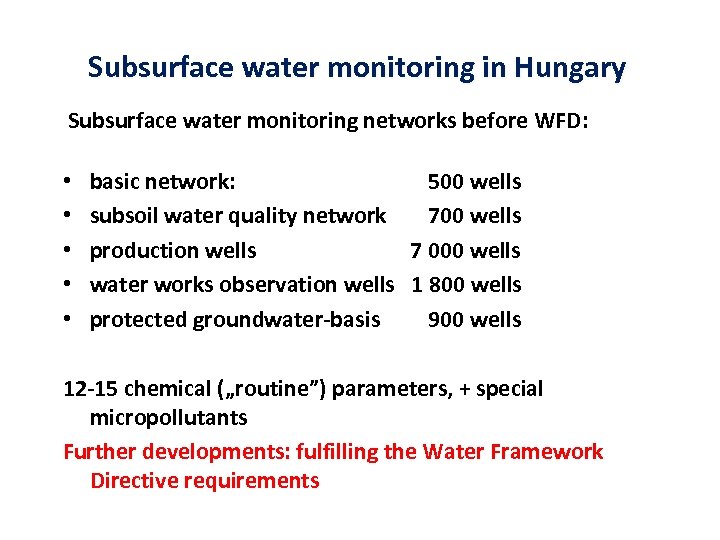 Subsurface water monitoring in Hungary Subsurface water monitoring networks before WFD: • • • basic network: 500 wells subsoil water quality network 700 wells production wells 7 000 wells water works observation wells 1 800 wells protected groundwater-basis 900 wells 12 -15 chemical („routine”) parameters, + special micropollutants Further developments: fulfilling the Water Framework Directive requirements
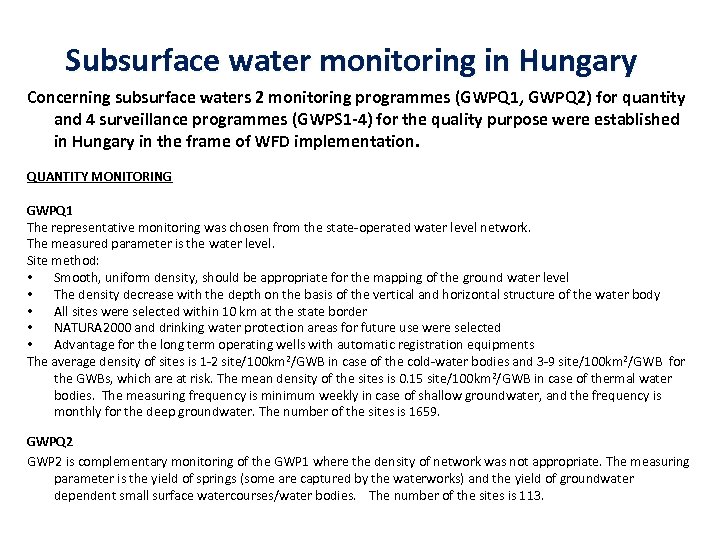 Subsurface water monitoring in Hungary Concerning subsurface waters 2 monitoring programmes (GWPQ 1, GWPQ 2) for quantity and 4 surveillance programmes (GWPS 1 -4) for the quality purpose were established in Hungary in the frame of WFD implementation. QUANTITY MONITORING GWPQ 1 The representative monitoring was chosen from the state-operated water level network. The measured parameter is the water level. Site method: • Smooth, uniform density, should be appropriate for the mapping of the ground water level • The density decrease with the depth on the basis of the vertical and horizontal structure of the water body • All sites were selected within 10 km at the state border • NATURA 2000 and drinking water protection areas for future use were selected • Advantage for the long term operating wells with automatic registration equipments The average density of sites is 1 -2 site/100 km 2/GWB in case of the cold-water bodies and 3 -9 site/100 km 2/GWB for the GWBs, which are at risk. The mean density of the sites is 0. 15 site/100 km 2/GWB in case of thermal water bodies. The measuring frequency is minimum weekly in case of shallow groundwater, and the frequency is monthly for the deep groundwater. The number of the sites is 1659. GWPQ 2 GWP 2 is complementary monitoring of the GWP 1 where the density of network was not appropriate. The measuring parameter is the yield of springs (some are captured by the waterworks) and the yield of groundwater dependent small surface watercourses/water bodies. The number of the sites is 113.
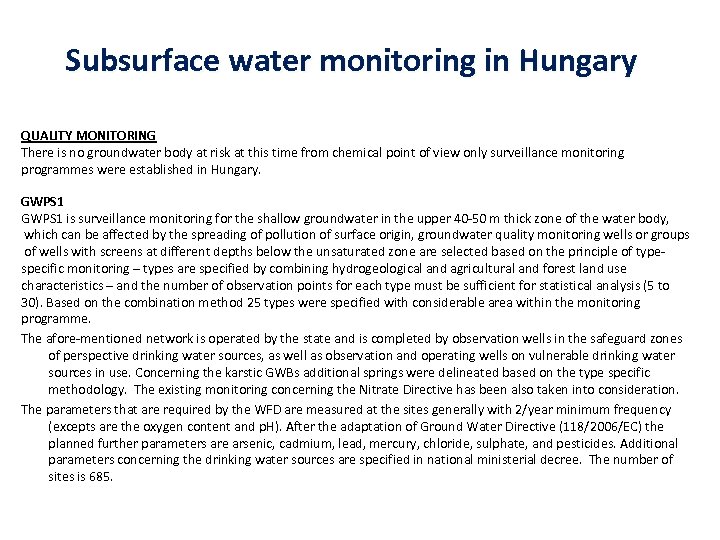 Subsurface water monitoring in Hungary QUALITY MONITORING There is no groundwater body at risk at this time from chemical point of view only surveillance monitoring programmes were established in Hungary. GWPS 1 is surveillance monitoring for the shallow groundwater in the upper 40 -50 m thick zone of the water body, which can be affected by the spreading of pollution of surface origin, groundwater quality monitoring wells or groups of wells with screens at different depths below the unsaturated zone are selected based on the principle of typespecific monitoring – types are specified by combining hydrogeological and agricultural and forest land use characteristics – and the number of observation points for each type must be sufficient for statistical analysis (5 to 30). Based on the combination method 25 types were specified with considerable area within the monitoring programme. The afore-mentioned network is operated by the state and is completed by observation wells in the safeguard zones of perspective drinking water sources, as well as observation and operating wells on vulnerable drinking water sources in use. Concerning the karstic GWBs additional springs were delineated based on the type specific methodology. The existing monitoring concerning the Nitrate Directive has been also taken into consideration. The parameters that are required by the WFD are measured at the sites generally with 2/year minimum frequency (excepts are the oxygen content and p. H). After the adaptation of Ground Water Directive (118/2006/EC) the planned further parameters are arsenic, cadmium, lead, mercury, chloride, sulphate, and pesticides. Additional parameters concerning the drinking water sources are specified in national ministerial decree. The number of sites is 685.
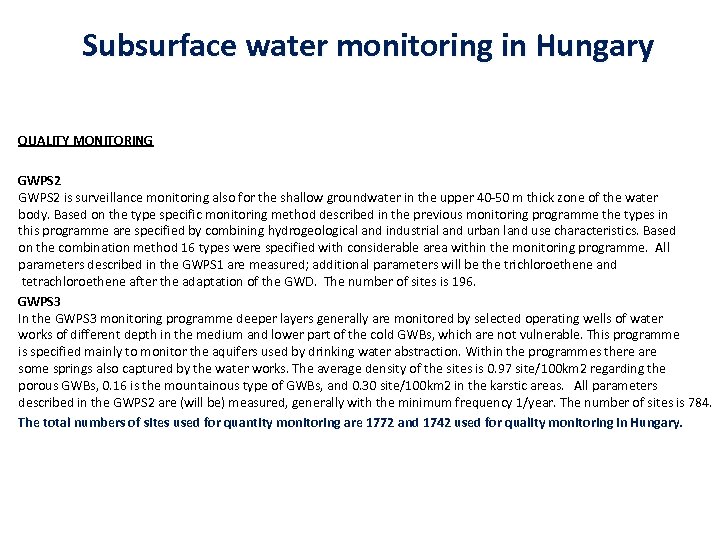 Subsurface water monitoring in Hungary QUALITY MONITORING GWPS 2 is surveillance monitoring also for the shallow groundwater in the upper 40 -50 m thick zone of the water body. Based on the type specific monitoring method described in the previous monitoring programme the types in this programme are specified by combining hydrogeological and industrial and urban land use characteristics. Based on the combination method 16 types were specified with considerable area within the monitoring programme. All parameters described in the GWPS 1 are measured; additional parameters will be the trichloroethene and tetrachloroethene after the adaptation of the GWD. The number of sites is 196. GWPS 3 In the GWPS 3 monitoring programme deeper layers generally are monitored by selected operating wells of water works of different depth in the medium and lower part of the cold GWBs, which are not vulnerable. This programme is specified mainly to monitor the aquifers used by drinking water abstraction. Within the programmes there are some springs also captured by the water works. The average density of the sites is 0. 97 site/100 km 2 regarding the porous GWBs, 0. 16 is the mountainous type of GWBs, and 0. 30 site/100 km 2 in the karstic areas. All parameters described in the GWPS 2 are (will be) measured, generally with the minimum frequency 1/year. The number of sites is 784. The total numbers of sites used for quantity monitoring are 1772 and 1742 used for quality monitoring in Hungary.
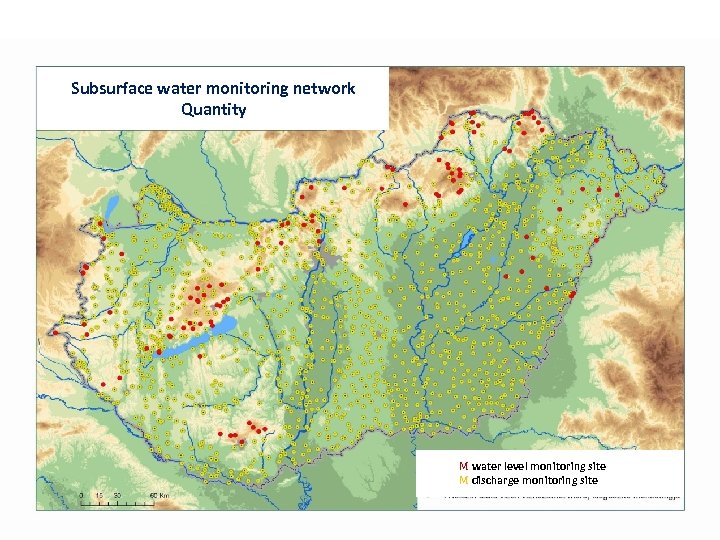 Subsurface water monitoring network Quantity M water level monitoring site M discharge monitoring site
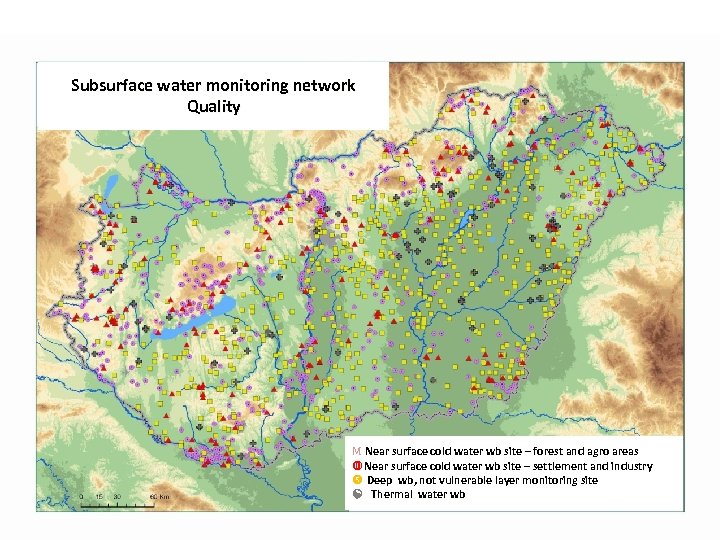 Subsurface water monitoring network Quality M Near surface cold water wb site – forest and agro areas Near surface cold water wb site – settlement and industry Deep wb, not vulnerable layer monitoring site Thermal water wb
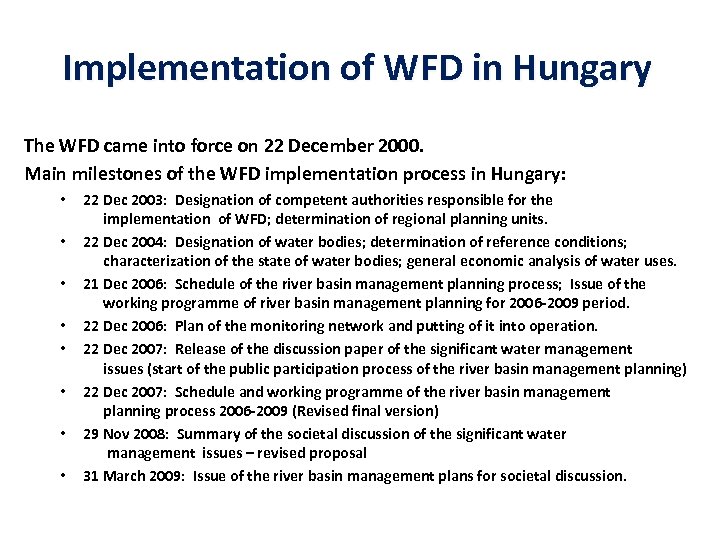 Implementation of WFD in Hungary The WFD came into force on 22 December 2000. Main milestones of the WFD implementation process in Hungary: • • 22 Dec 2003: Designation of competent authorities responsible for the implementation of WFD; determination of regional planning units. 22 Dec 2004: Designation of water bodies; determination of reference conditions; characterization of the state of water bodies; general economic analysis of water uses. 21 Dec 2006: Schedule of the river basin management planning process; Issue of the working programme of river basin management planning for 2006 -2009 period. 22 Dec 2006: Plan of the monitoring network and putting of it into operation. 22 Dec 2007: Release of the discussion paper of the significant water management issues (start of the public participation process of the river basin management planning) 22 Dec 2007: Schedule and working programme of the river basin management planning process 2006 -2009 (Revised final version) 29 Nov 2008: Summary of the societal discussion of the significant water management issues – revised proposal 31 March 2009: Issue of the river basin management plans for societal discussion.
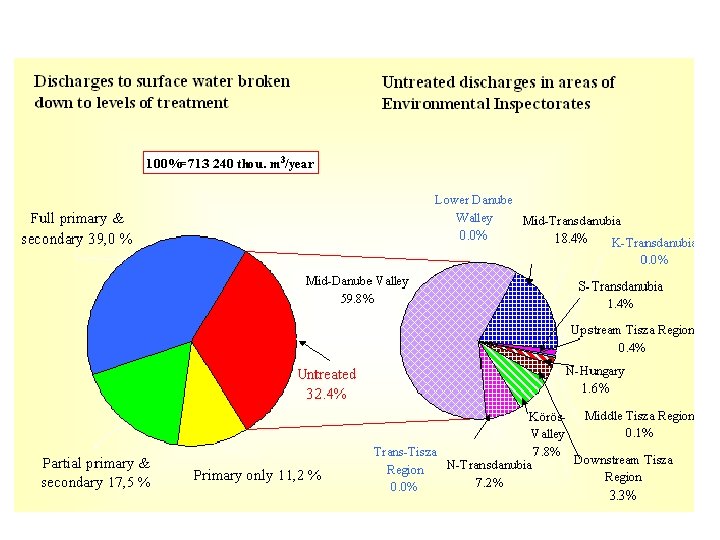
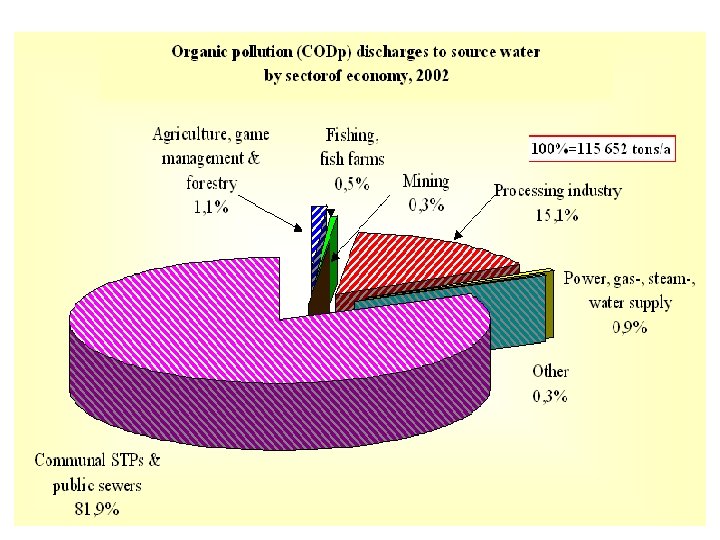
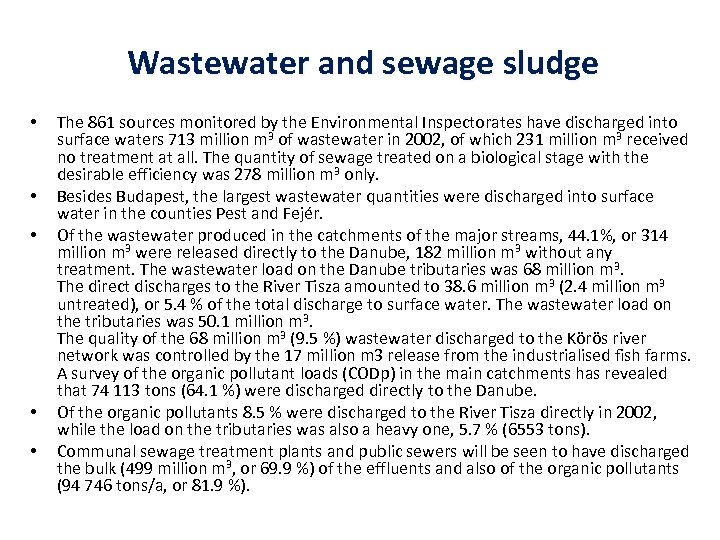 Wastewater and sewage sludge • • • The 861 sources monitored by the Environmental Inspectorates have discharged into surface waters 713 million m 3 of wastewater in 2002, of which 231 million m 3 received no treatment at all. The quantity of sewage treated on a biological stage with the desirable efficiency was 278 million m 3 only. Besides Budapest, the largest wastewater quantities were discharged into surface water in the counties Pest and Fejér. Of the wastewater produced in the catchments of the major streams, 44. 1%, or 314 million m 3 were released directly to the Danube, 182 million m 3 without any treatment. The wastewater load on the Danube tributaries was 68 million m 3. The direct discharges to the River Tisza amounted to 38. 6 million m 3 (2. 4 million m 3 untreated), or 5. 4 % of the total discharge to surface water. The wastewater load on the tributaries was 50. 1 million m 3. The quality of the 68 million m 3 (9. 5 %) wastewater discharged to the Körös river network was controlled by the 17 million m 3 release from the industrialised fish farms. A survey of the organic pollutant loads (CODp) in the main catchments has revealed that 74 113 tons (64. 1 %) were discharged directly to the Danube. Of the organic pollutants 8. 5 % were discharged to the River Tisza directly in 2002, while the load on the tributaries was also a heavy one, 5. 7 % (6553 tons). Communal sewage treatment plants and public sewers will be seen to have discharged the bulk (499 million m 3, or 69. 9 %) of the effluents and also of the organic pollutants (94 746 tons/a, or 81. 9 %).
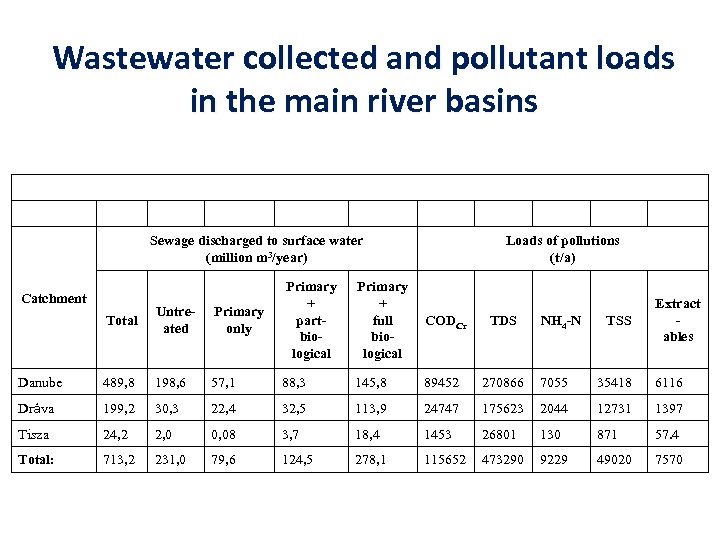 Wastewater collected and pollutant loads in the main river basins Sewage discharged to surface water (million m 3/year) Catchment Primary + partbiological Loads of pollutions (t/a) Primary + full biological CODCr TDS Extract ables Total Untreated Primary only Danube 489, 8 198, 6 57, 1 88, 3 145, 8 89452 270866 7055 35418 6116 Dráva 199, 2 30, 3 22, 4 32, 5 113, 9 24747 175623 2044 12731 1397 Tisza 24, 2 2, 0 0, 08 3, 7 18, 4 1453 26801 130 871 57. 4 Total: 713, 2 231, 0 79, 6 124, 5 278, 1 115652 473290 9229 49020 7570 NH 4 -N TSS
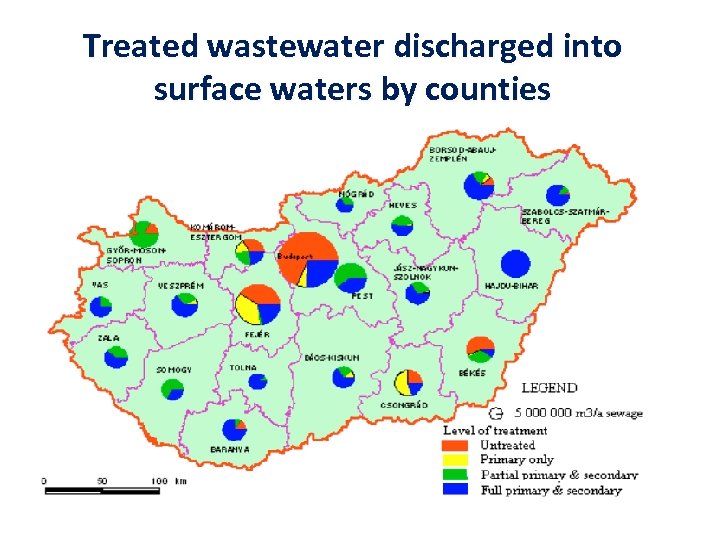 Treated wastewater discharged into surface waters by counties
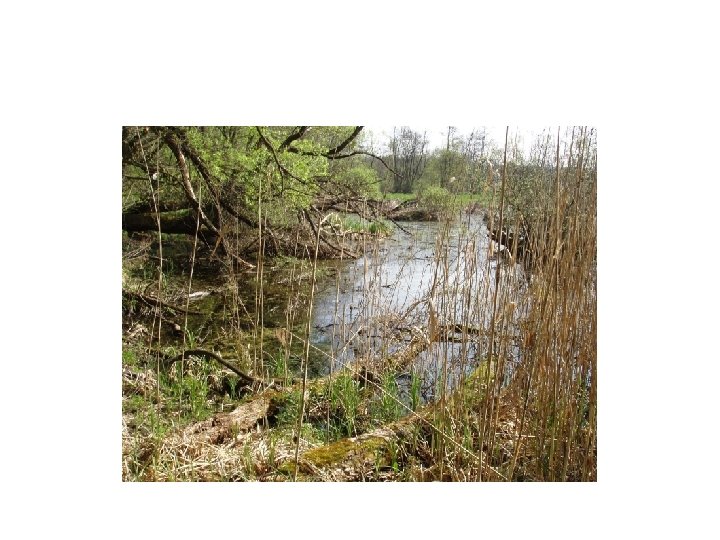
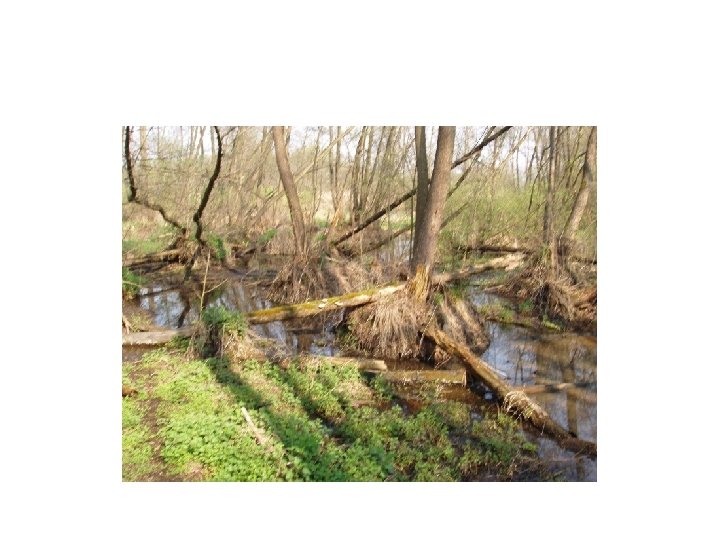
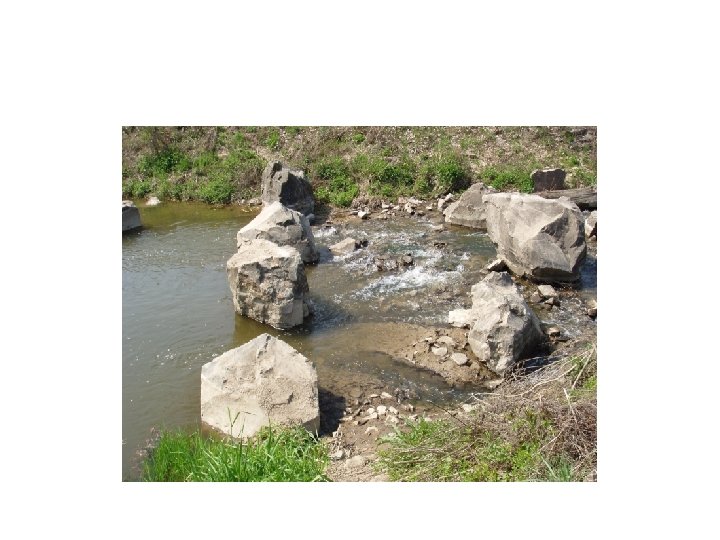
 Revitalization of small water courses and wetlands • The importance of wetlands and small creeks has increased because of – – Habitants for rear plant and animals communities Natural buffering capacity for harmful chemicals Preserving landscape Multi-funtionality of the area