


 Скачать презентацию Software Development Process Life Cycles Senior-lecturer Nazgul R
L2_SSD10.pptx
- Количество слайдов: 24
 Software Development Process Life Cycles Senior-lecturer Nazgul R. K. IITU 2016
 OUTLINE OF TALK 1. SW Development Process Stages 2. SW Development Process Stages and Artifacts 3. SW Development Process: Waterfall and Iterative IITU 2016
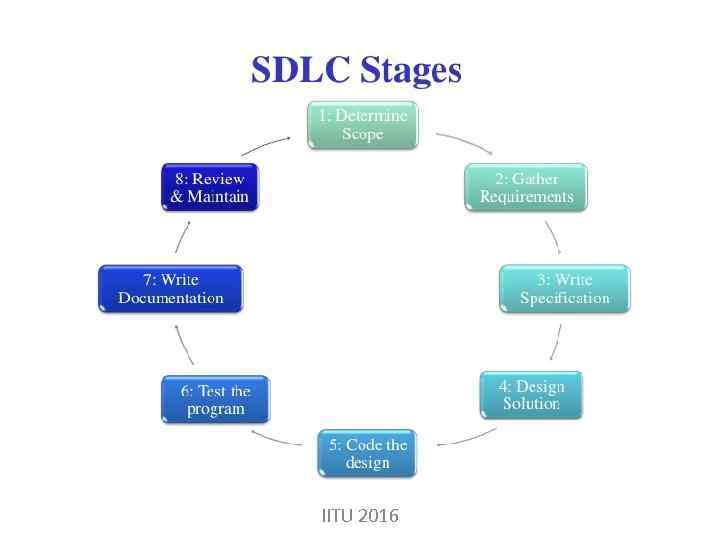 IITU 2016
 SOFTWARE DEVELOPMENT METODOLOGIES ØWaterfall ØAgile ØV-Model ØIterative ØIncremental ØRapid Application Development (RAD) ØSpiral IITU 2016
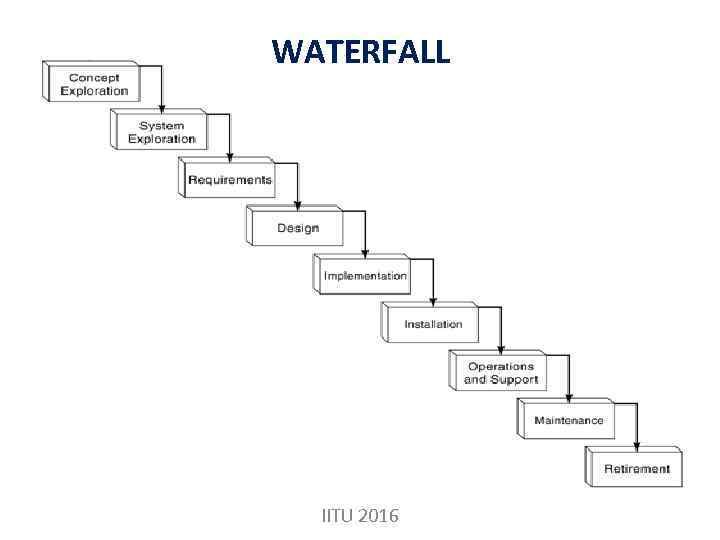 WATERFALL IITU 2016
 WATERFALL It is also referred to as a linear-sequential life cycle model. In a waterfall model, each phase must be completed fully before the next phase can begin. This type of model is basically used for the project which is small and there are no uncertain requirements. In this model the testing starts only after the development is complete. In waterfall model phases do not overlap. IITU 2016
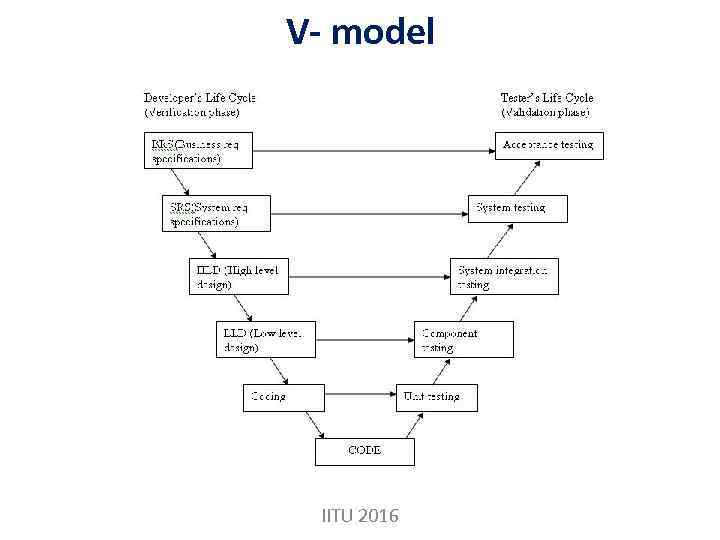 V- model IITU 2016
 V-model Verification and Validation model. Testing of the product is planned in parallel with a corresponding phase of development in V-model. Before development is started, a system test plan is created. The test plan focuses on meeting the functionality specified in the requirements gathering. IITU 2016
 ITERATIVE IITU 2016
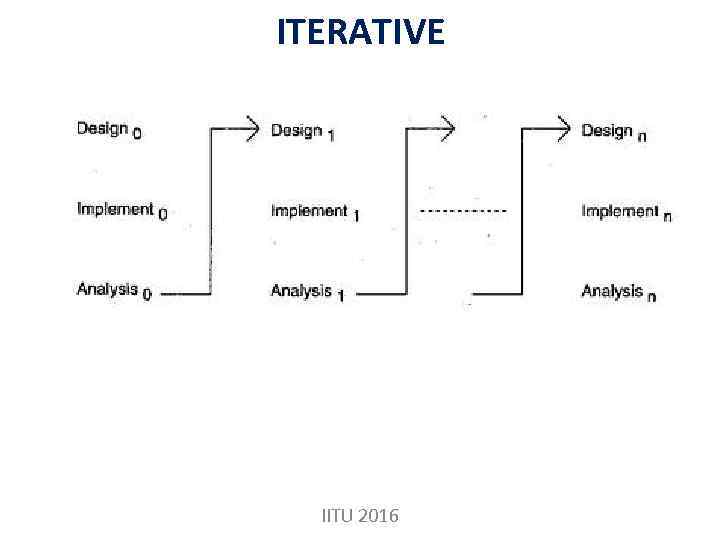
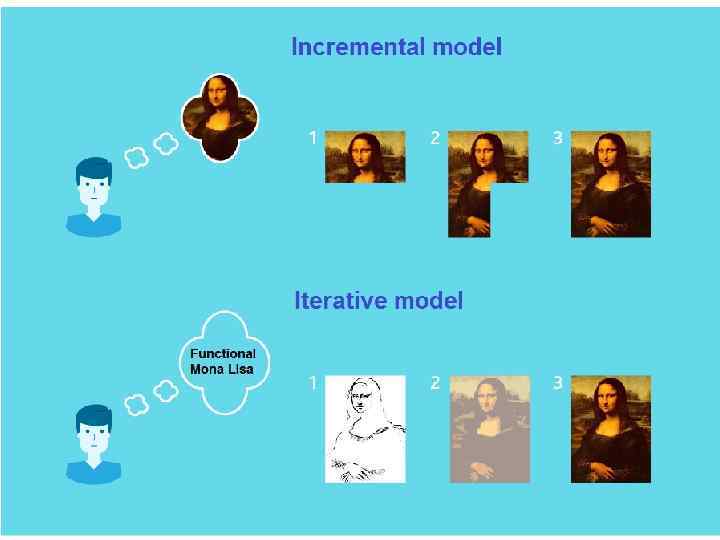
 ITERATIVE Development begins by specifying and implementing just part of the software, which can then be reviewed in order to identify further requirements. This process is then repeated, producing a new version of the software for each cycle of the model. IITU 2016
 INCREMENTAL IITU 2016
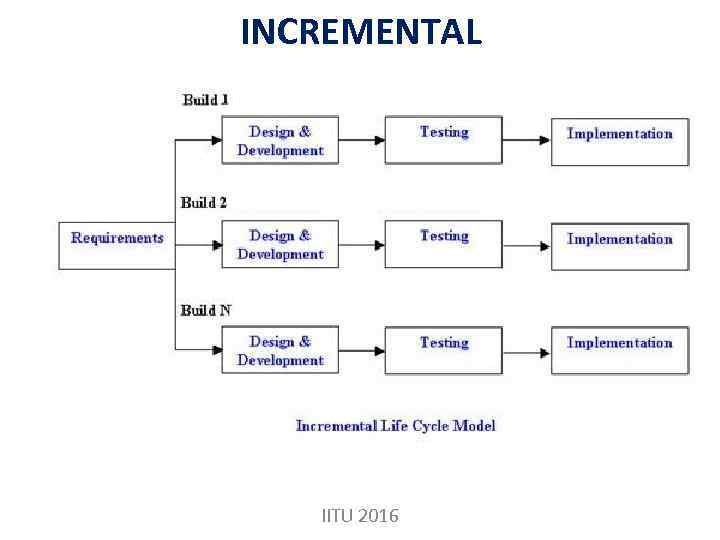
 INCREMENTAL • Generates working software quickly and early during the software life cycle. • This model is more flexible – less costly to change scope and requirements. • It is easier to test and debug during a smaller iteration. • In this model customer can respond to each built. • Lowers initial delivery cost. • Easier to manage risk because risky pieces are identified and handled during it’d iteration. IITU 2016
 IITU 2016
 RAD IITU 2016
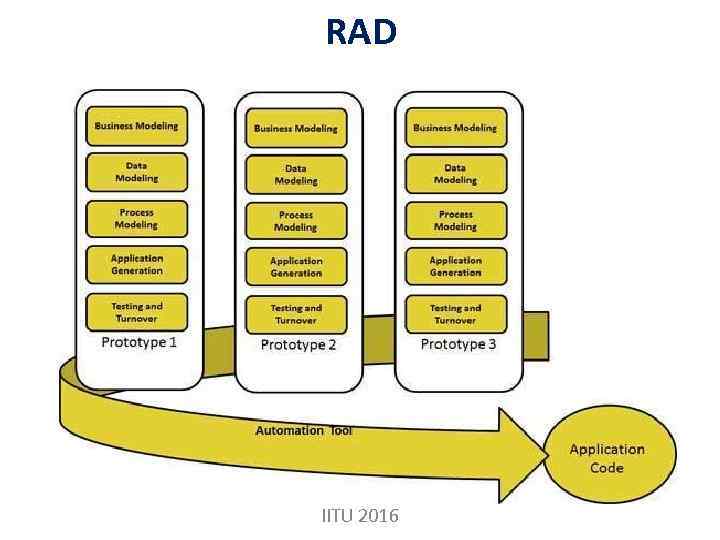
 RAD It is a type of incremental model. In RAD model the components or functions are developed in parallel as if they were mini projects. The developments are time boxed, delivered and then assembled into a working prototype. This can quickly give the customer something to see and use and to provide feedback regarding the delivery and their requirements. IITU 2016
 SPIRAL IITU 2016
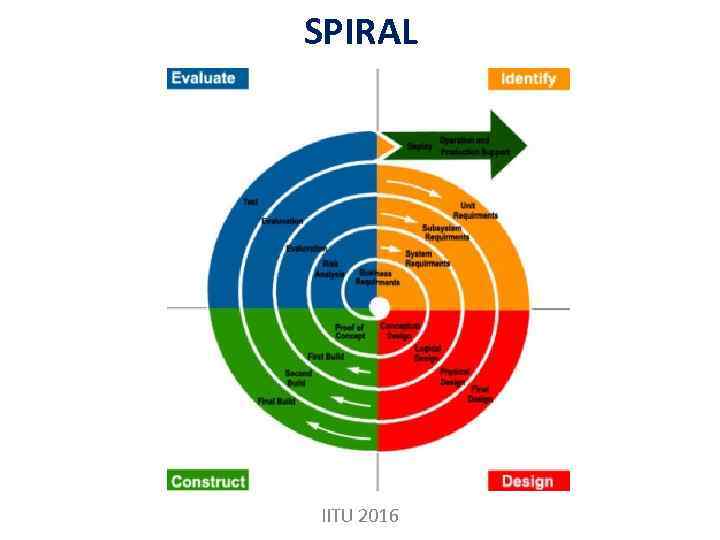
 SPIRAL The spiral model has four phases: Planning, Risk Analysis, Engineering and Evaluation. A software project repeatedly passes through these phases in iterations (called Spirals in this model). The baseline spiral, starting in the planning phase, requirements are gathered and risk is assessed. Each subsequent spirals builds on the baseline spiral IITU 2016
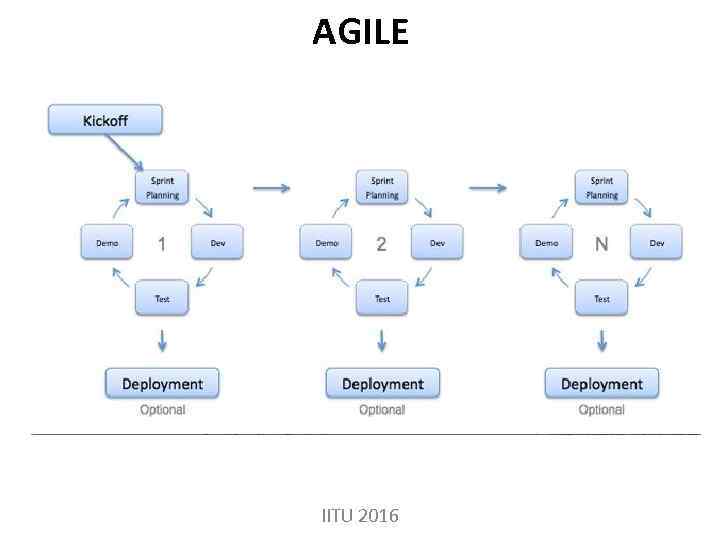 AGILE IITU 2016
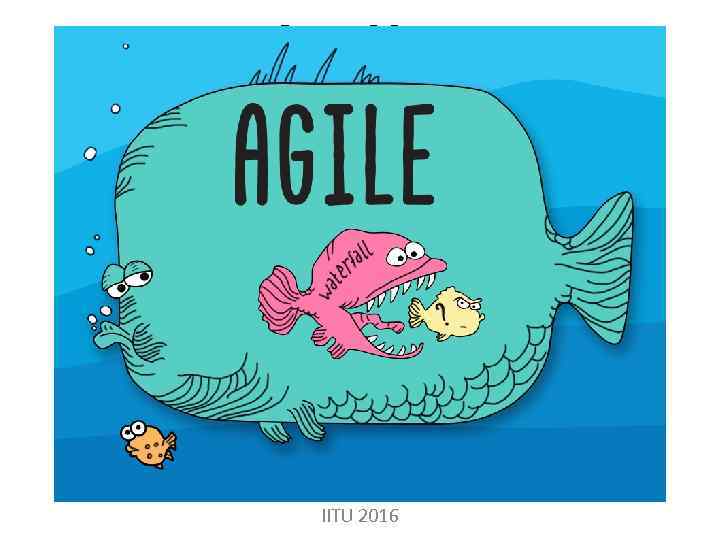
 AGILE ASD - is an umbrella term for a set of methods and practices based on the values and principles expressed in the Agile Manifesto. • Individuals and interactions over processes and tools • Working software over comprehensive documentation • Customer collaboration over contract negotiation • Responding to change over following a plan IITU 2016
 AGILE ØExtreme Programming ØDynamic Systems Development Method ØScrum IITU 2016
 Roles in SCRUM IITU 2016
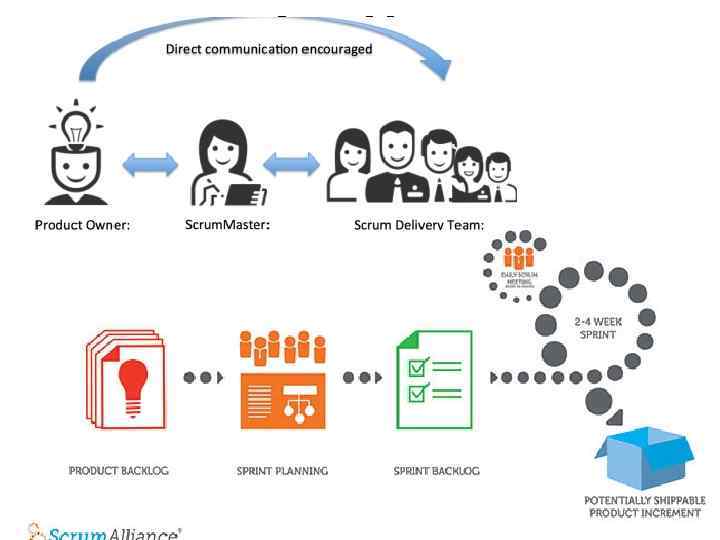 AGILE: SCRUM IITU 2016
 AGILE: SCRUM IITU 2016
 Summary • How could software development methodologies been grouped? • What is advantage and disadvantage for each of them? IITU 2016