


 Скачать презентацию Software Decision Analysis Techniques Chapters 10 -20 in
51f503ffa3bf3e8ca97f10147af33ca4.ppt
- Количество слайдов: 28
 Software Decision Analysis Techniques Chapters 10 -20 in Software Engineering Economics Updated to Med. FRS • • Economics – The study of how people make decisions in resource-limited situations Macroeconomics – Inflation, taxation, balance of payments Microeconomics – Make-or-buy, pricing, how much to build Software economics decisions – Make-or-buy: Software Product – How many options to build? – Which DP architecture to use? – How much testing (prototyping, specifying) is enough? – How much software to re-use? – Which new features to add first? Correction on slide 14 2015/10/05
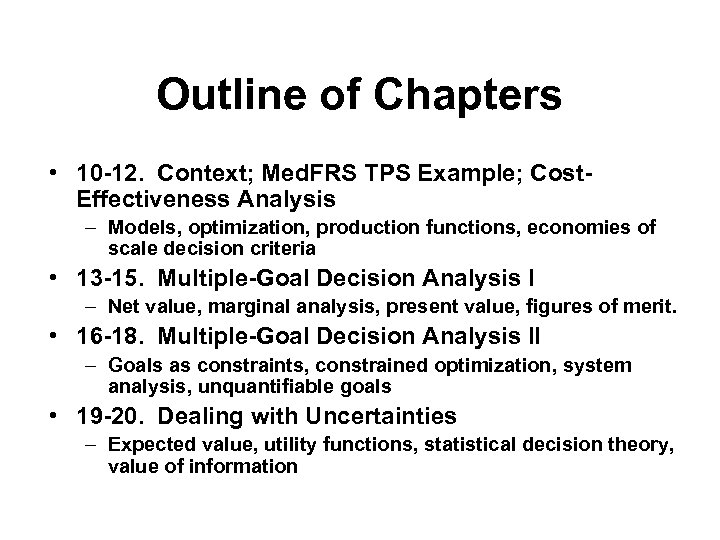 Outline of Chapters • 10 -12. Context; Med. FRS TPS Example; Cost. Effectiveness Analysis – Models, optimization, production functions, economies of scale decision criteria • 13 -15. Multiple-Goal Decision Analysis I – Net value, marginal analysis, present value, figures of merit. • 16 -18. Multiple-Goal Decision Analysis II – Goals as constraints, constrained optimization, system analysis, unquantifiable goals • 19 -20. Dealing with Uncertainties – Expected value, utility functions, statistical decision theory, value of information
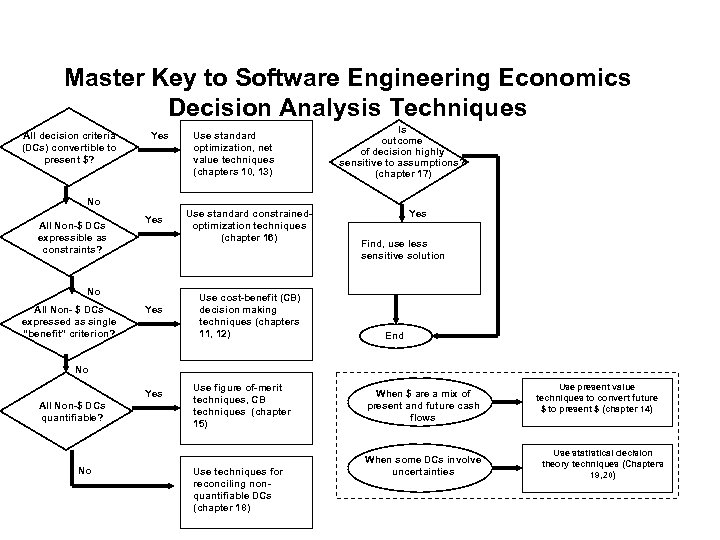 Master Key to Software Engineering Economics Decision Analysis Techniques All decision criteria (DCs) convertible to present $? Yes Use standard optimization, net value techniques (chapters 10, 13) Is outcome of decision highly sensitive to assumptions? (chapter 17) No All Non-$ DCs expressible as constraints? Yes No All Non- $ DCs expressed as single “benefit” criterion? Yes Use standard constrainedoptimization techniques (chapter 16) Use cost-benefit (CB) decision making techniques (chapters 11, 12) Yes Find, use less sensitive solution End No Yes All Non-$ DCs quantifiable? No Use figure of-merit techniques, CB techniques (chapter 15) Use techniques for reconciling nonquantifiable DCs (chapter 18) When $ are a mix of present and future cash flows When some DCs involve uncertainties Use present value techniques to convert future $ to present $ (chapter 14) Use statistical decision theory techniques (Chapters 19, 20)
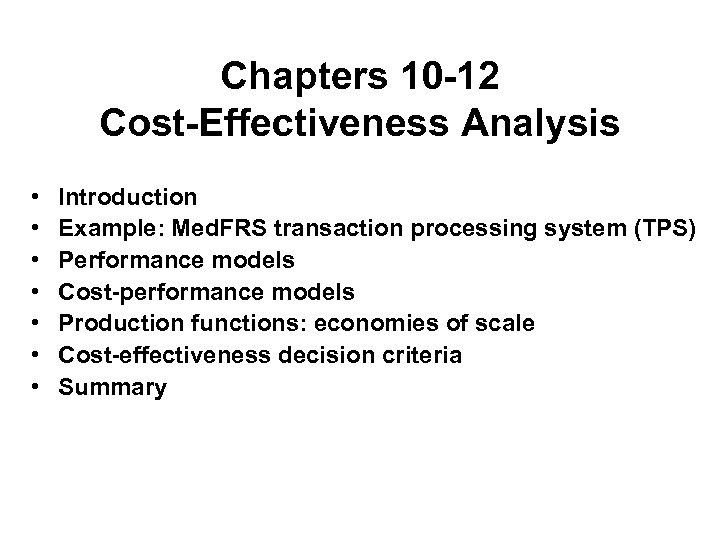 Chapters 10 -12 Cost-Effectiveness Analysis • • Introduction Example: Med. FRS transaction processing system (TPS) Performance models Cost-performance models Production functions: economies of scale Cost-effectiveness decision criteria Summary
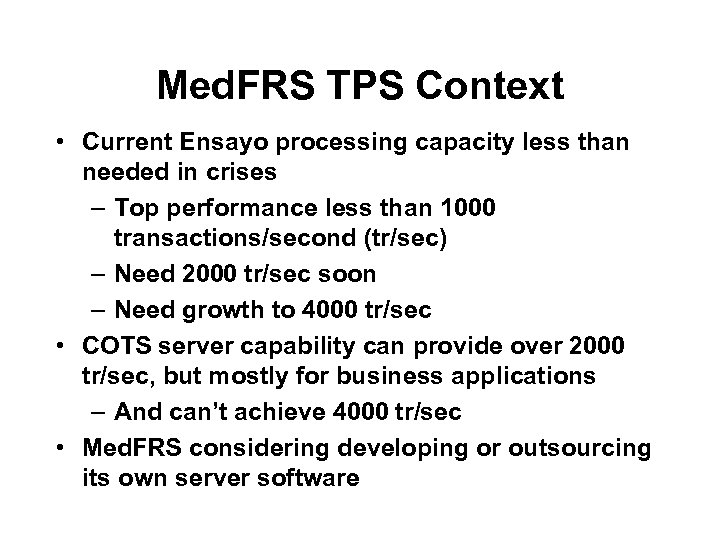 Med. FRS TPS Context • Current Ensayo processing capacity less than needed in crises – Top performance less than 1000 transactions/second (tr/sec) – Need 2000 tr/sec soon – Need growth to 4000 tr/sec • COTS server capability can provide over 2000 tr/sec, but mostly for business applications – And can’t achieve 4000 tr/sec • Med. FRS considering developing or outsourcing its own server software
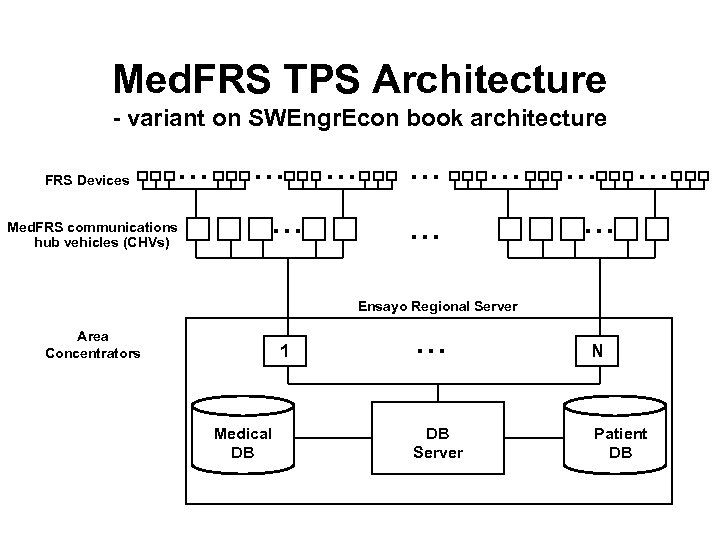 Med. FRS TPS Architecture - variant on SWEngr. Econ book architecture FRS Devices … Med. FRS communications hub vehicles (CHVs) … … … … … Ensayo Regional Server Area Concentrators 1 Medical DB … N DB Server Patient DB
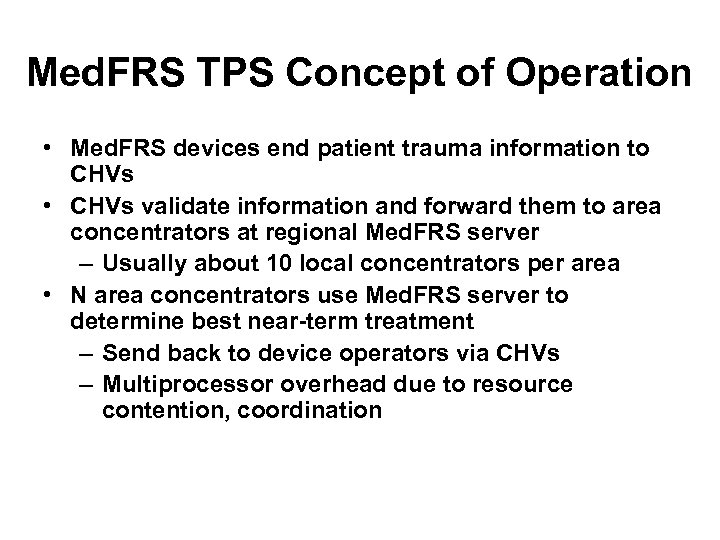 Med. FRS TPS Concept of Operation • Med. FRS devices end patient trauma information to CHVs • CHVs validate information and forward them to area concentrators at regional Med. FRS server – Usually about 10 local concentrators per area • N area concentrators use Med. FRS server to determine best near-term treatment – Send back to device operators via CHVs – Multiprocessor overhead due to resource contention, coordination
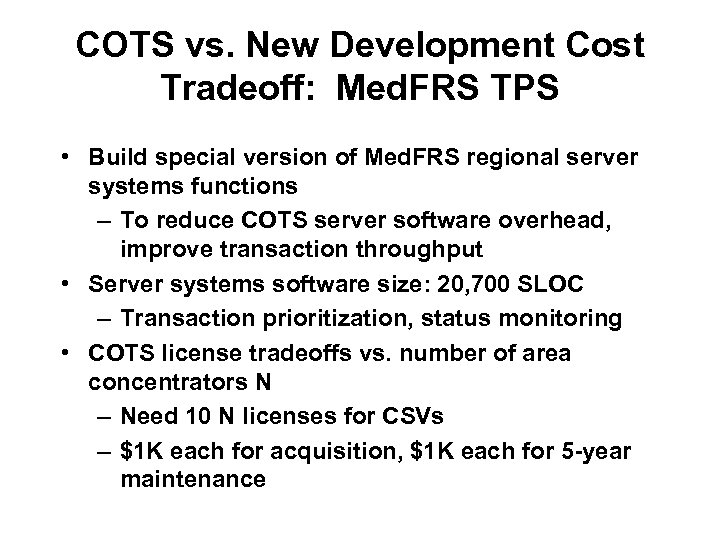 COTS vs. New Development Cost Tradeoff: Med. FRS TPS • Build special version of Med. FRS regional server systems functions – To reduce COTS server software overhead, improve transaction throughput • Server systems software size: 20, 700 SLOC – Transaction prioritization, status monitoring • COTS license tradeoffs vs. number of area concentrators N – Need 10 N licenses for CSVs – $1 K each for acquisition, $1 K each for 5 -year maintenance
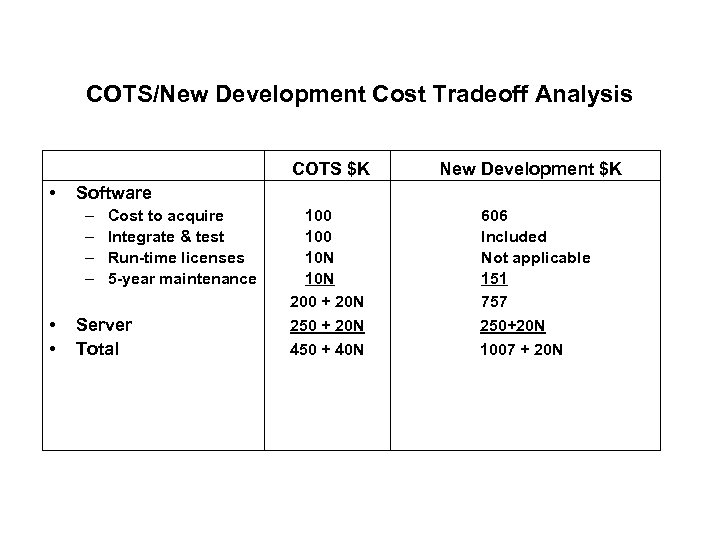 COTS/New Development Cost Tradeoff Analysis COTS $K • 100 10 N 200 + 20 N 250 + 20 N 450 + 40 N 606 Included Not applicable 151 757 250+20 N 1007 + 20 N Software – – • • New Development $K Cost to acquire Integrate & test Run-time licenses 5 -year maintenance Server Total
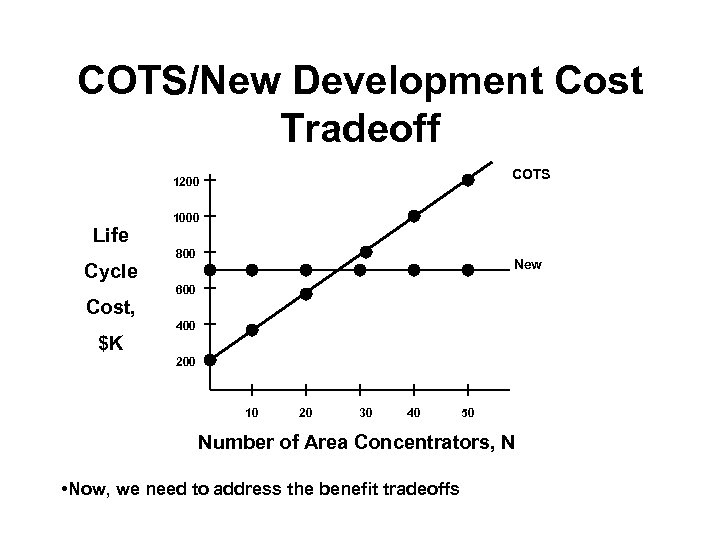 COTS/New Development Cost Tradeoff COTS 1200 Life Cycle Cost, $K 1000 800 New 600 400 200 10 20 30 40 50 Number of Area Concentrators, N • Now, we need to address the benefit tradeoffs
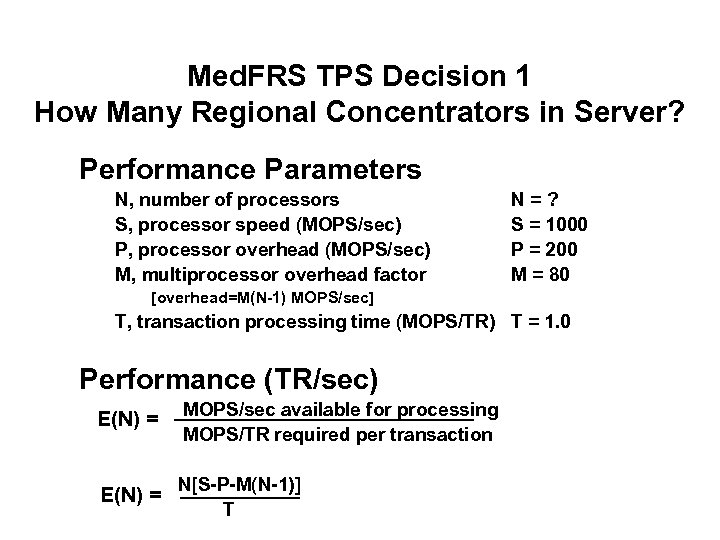 Med. FRS TPS Decision 1 How Many Regional Concentrators in Server? Performance Parameters N, number of processors S, processor speed (MOPS/sec) P, processor overhead (MOPS/sec) M, multiprocessor overhead factor N=? S = 1000 P = 200 M = 80 [overhead=M(N-1) MOPS/sec] T, transaction processing time (MOPS/TR) T = 1. 0 Performance (TR/sec) E(N) = MOPS/sec available for processing MOPS/TR required per transaction E(N) = N[S-P-M(N-1)] T
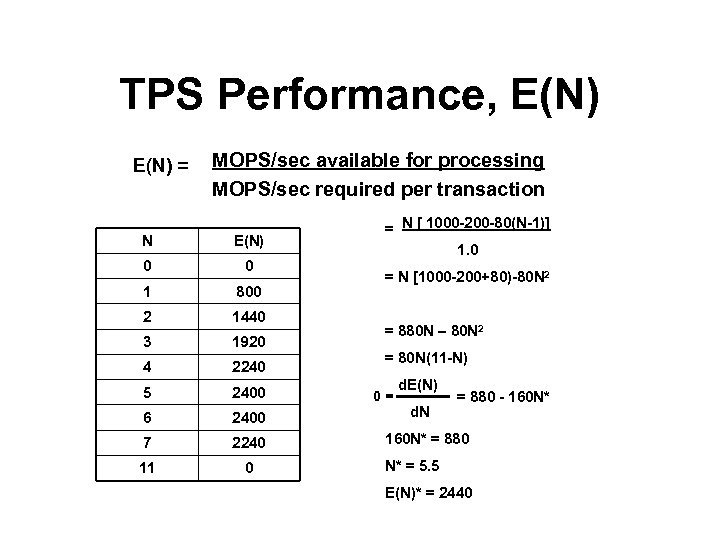 TPS Performance, E(N) = MOPS/sec available for processing MOPS/sec required per transaction N E(N) 0 0 1 800 2 1440 3 1920 4 2240 5 2400 6 2400 7 2240 11 0 = N [ 1000 -200 -80(N-1)] 1. 0 = N [1000 -200+80)-80 N 2 = 880 N – 80 N 2 = 80 N(11 -N) 0= d. E(N) d. N = 880 - 160 N* = 880 N* = 5. 5 E(N)* = 2440
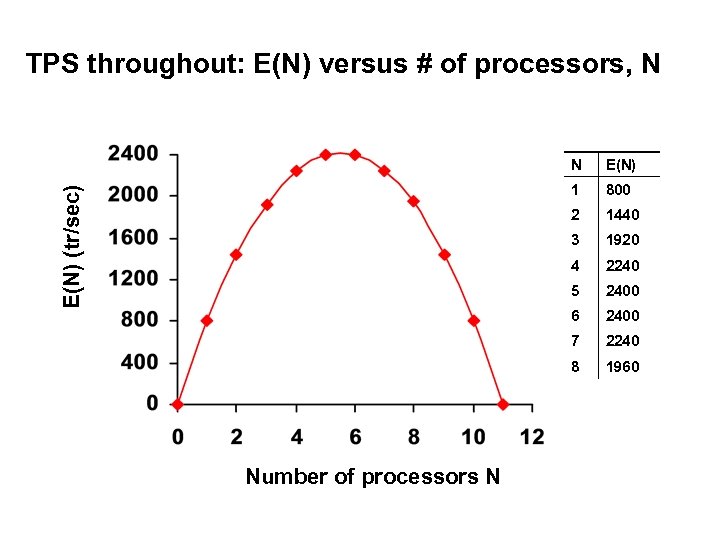 TPS throughout: E(N) versus # of processors, N 800 2 1440 3 1920 4 2240 5 2400 6 2400 7 2240 8 Number of processors N E(N) 1 E(N) (tr/sec) N 1960
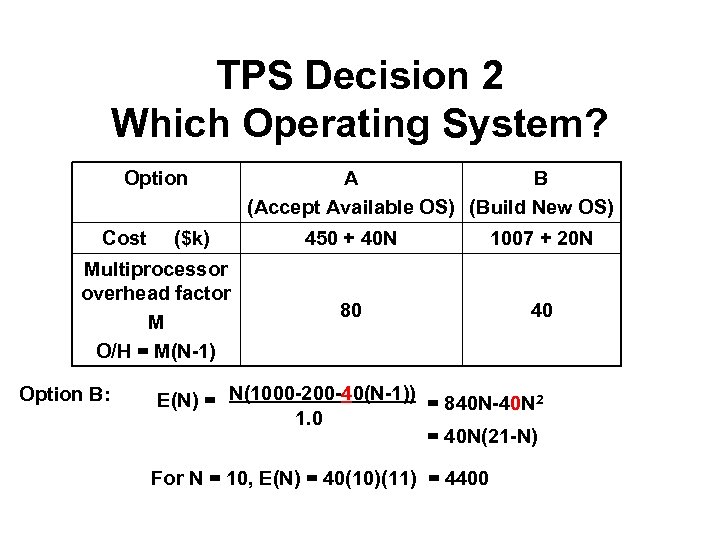 TPS Decision 2 Which Operating System? Option Cost ($k) Multiprocessor overhead factor M O/H = M(N-1) Option B: A B (Accept Available OS) (Build New OS) 450 + 40 N 1007 + 20 N 80 40 E(N) = N(1000 -200 -40(N-1)) = 840 N-40 N 2 1. 0 = 40 N(21 -N) For N = 10, E(N) = 40(10)(11) = 4400
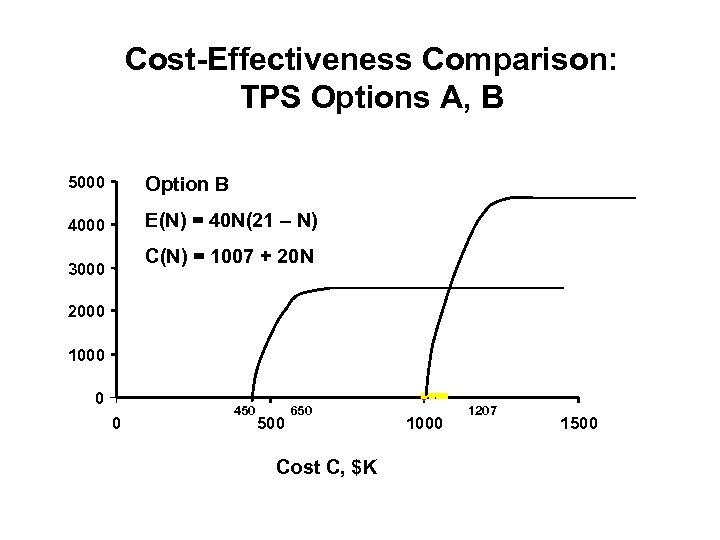 Cost-Effectiveness Comparison: TPS Options A, B 5000 Option B 4000 E(N) = 40 N(21 – N) C(N) = 1007 + 20 N 3000 2000 1000 0 0 450 500 650 Cost C, $K 1000 1207 1500
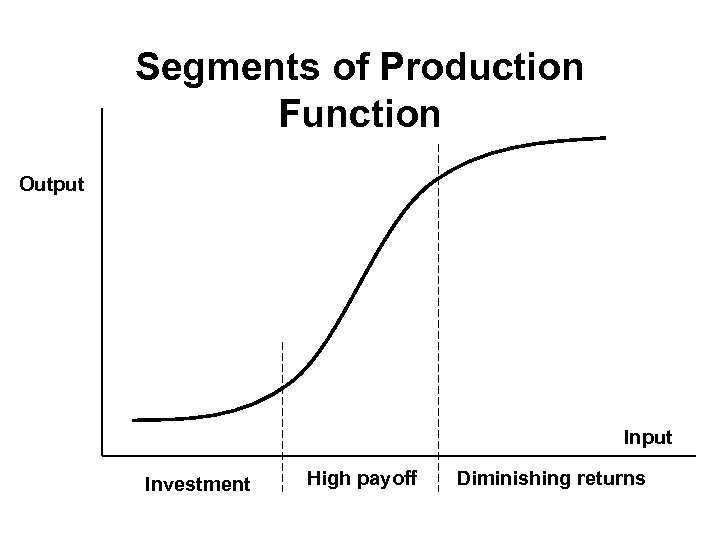 Segments of Production Function Output Investment High payoff Diminishing returns
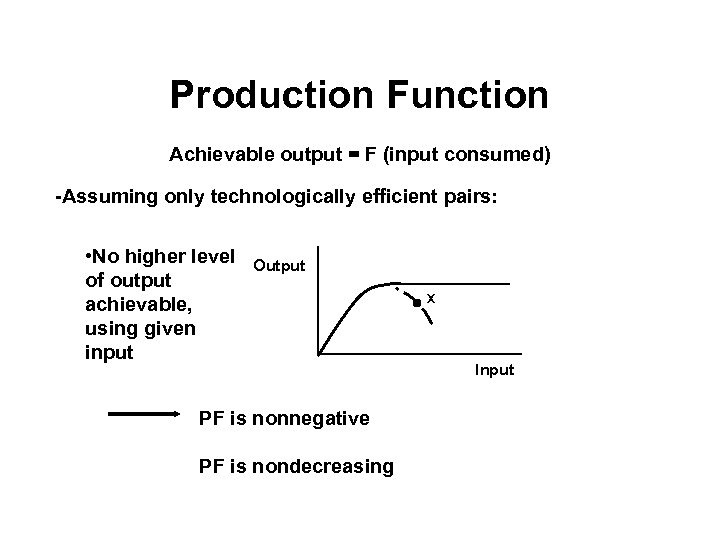 Production Function Achievable output = F (input consumed) -Assuming only technologically efficient pairs: • No higher level of output achievable, using given input Output PF is nonnegative PF is nondecreasing X Input
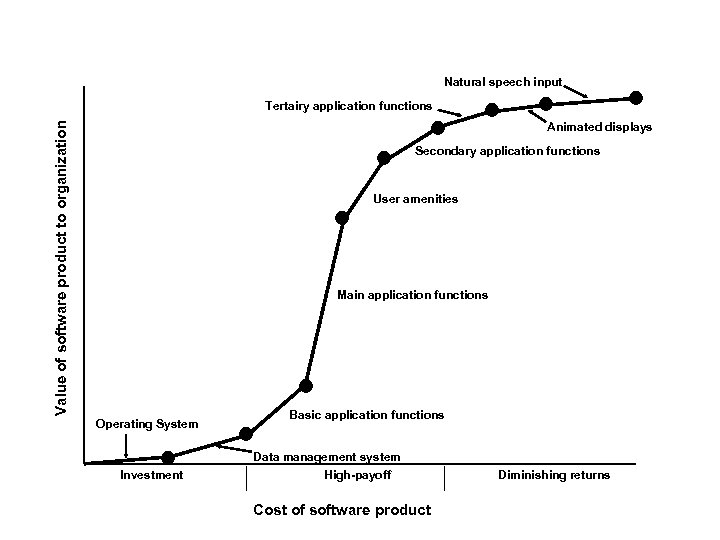 Natural speech input Value of software product to organization Tertairy application functions Animated displays Secondary application functions User amenities Main application functions Operating System Investment Basic application functions Data management system High-payoff Cost of software product Diminishing returns
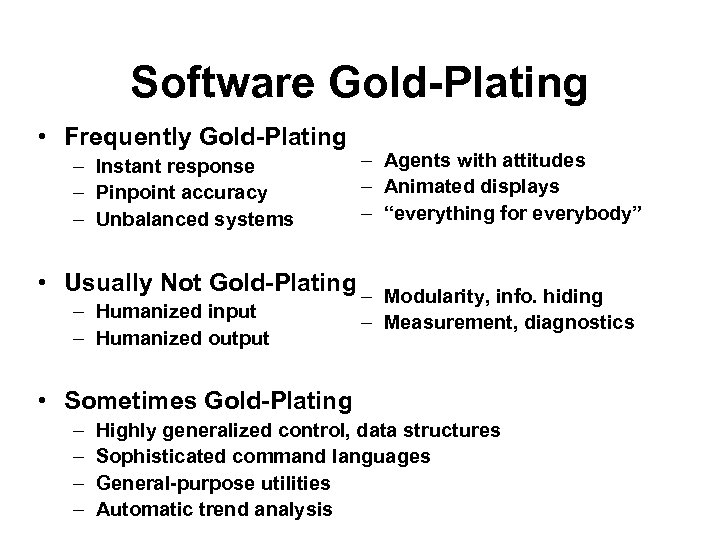 Software Gold-Plating • Frequently Gold-Plating – Instant response – Pinpoint accuracy – Unbalanced systems – Agents with attitudes – Animated displays – “everything for everybody” • Usually Not Gold-Plating – – Humanized input – Humanized output Modularity, info. hiding – Measurement, diagnostics • Sometimes Gold-Plating – – Highly generalized control, data structures Sophisticated command languages General-purpose utilities Automatic trend analysis
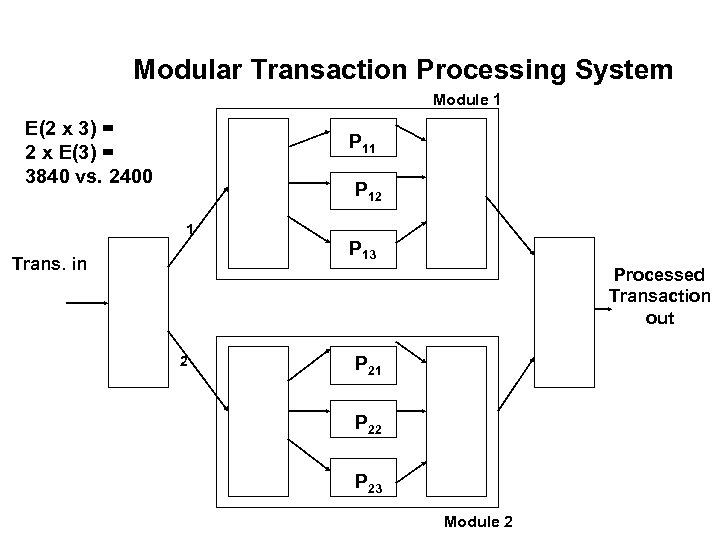 Modular Transaction Processing System Module 1 E(2 x 3) = 2 x E(3) = 3840 vs. 2400 P 11 P 12 1 P 13 Trans. in Processed Transaction out 2 P 21 P 22 P 23 Module 2
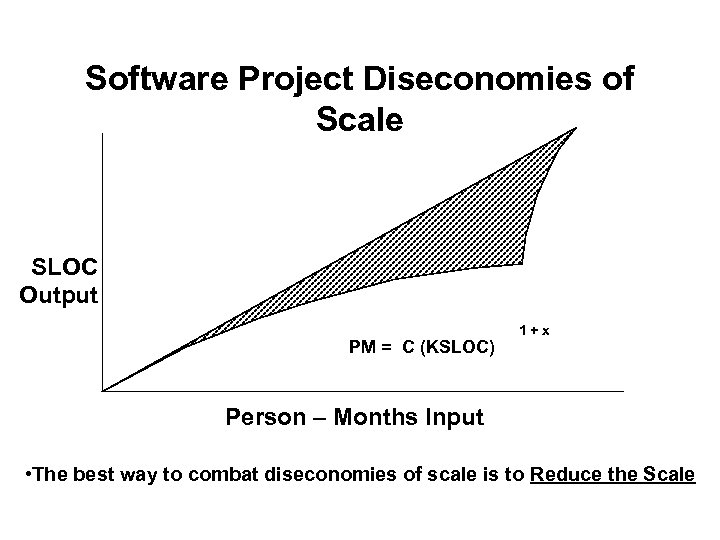 Software Project Diseconomies of Scale SLOC Output PM = C (KSLOC) 1+x Person – Months Input • The best way to combat diseconomies of scale is to Reduce the Scale
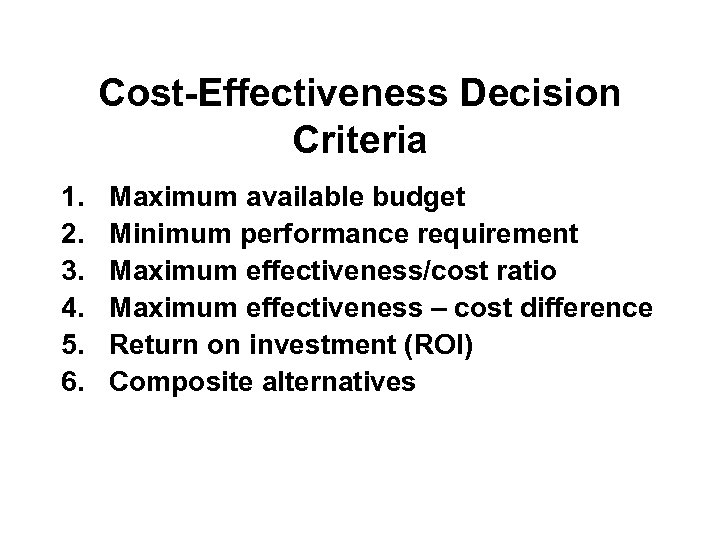 Cost-Effectiveness Decision Criteria 1. 2. 3. 4. 5. 6. Maximum available budget Minimum performance requirement Maximum effectiveness/cost ratio Maximum effectiveness – cost difference Return on investment (ROI) Composite alternatives
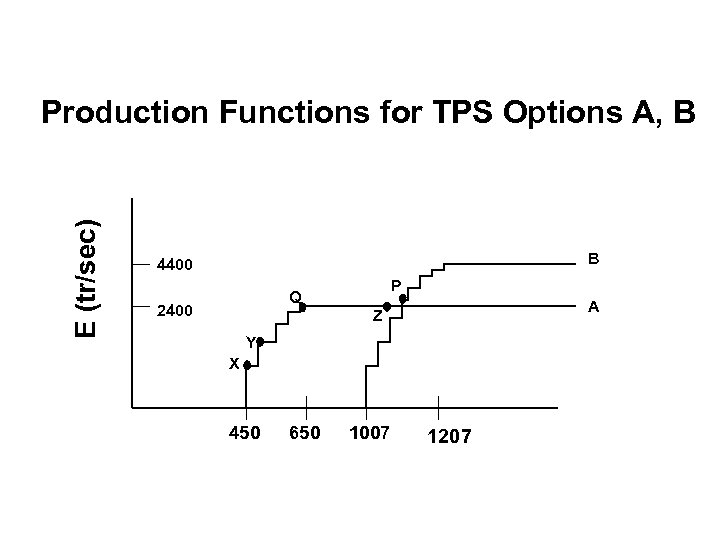 E (tr/sec) Production Functions for TPS Options A, B B 4400 P Q 2400 A Z Y X 450 650 1007 1207
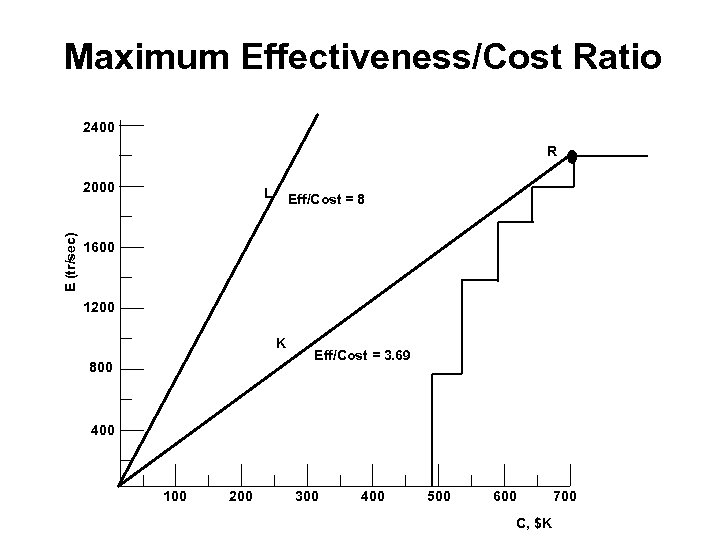 Maximum Effectiveness/Cost Ratio 2400 R E (tr/sec) 2000 L Eff/Cost = 8 1600 1200 K 800 Eff/Cost = 3. 69 400 100 200 300 400 500 600 C, $K 700
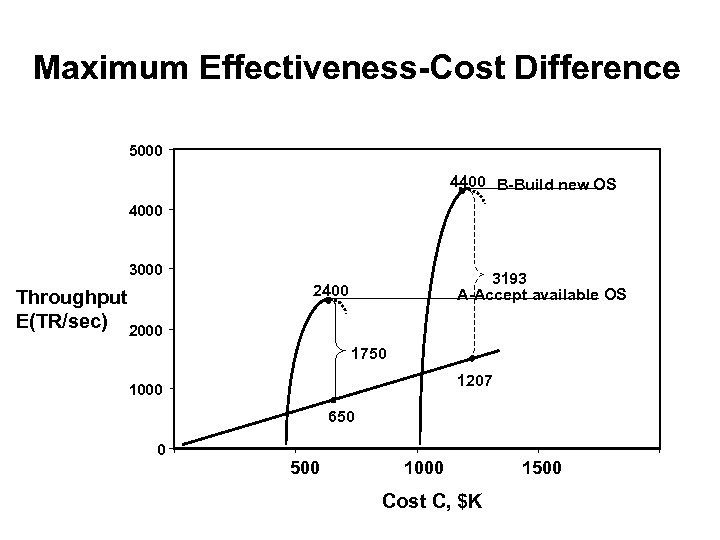 Maximum Effectiveness-Cost Difference 5000 4400 B-Build new OS 4000 3000 Throughput E(TR/sec) 2000 3193 A-Accept available OS 2400 1750 1207 1000 650 0 500 1000 Cost C, $K 1500
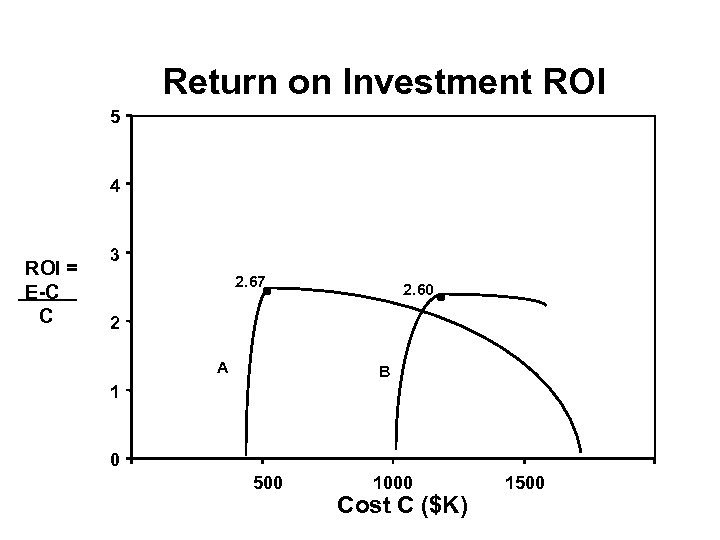 Return on Investment ROI 5 4 ROI = E-C C 3 2. 67 2. 60 2 A B 1 0 500 1000 Cost C ($K) 1500
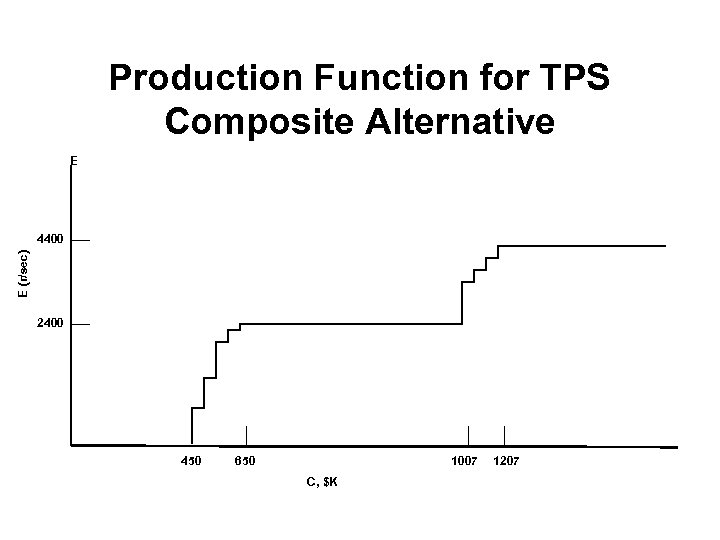 Production Function for TPS Composite Alternative E E (r/sec) 4400 2400 450 650 1007 C, $K 1207
 Summary – Cost-Effectiveness Analysis • Microeconomic concepts help structure, resolve software decision problems – – Cost-effectiveness Production functions Economies of scale C-E decision criteria • No single decision criterion dominates others – Each is best for some situations – Need to perform sensitivity analysis: • Slightly altered situation doesn’t yield bad decision