


 Скачать презентацию Soft drinks ready to eat classification requirements for
Soft drinks,ready to eat.pptx
- Количество слайдов: 18
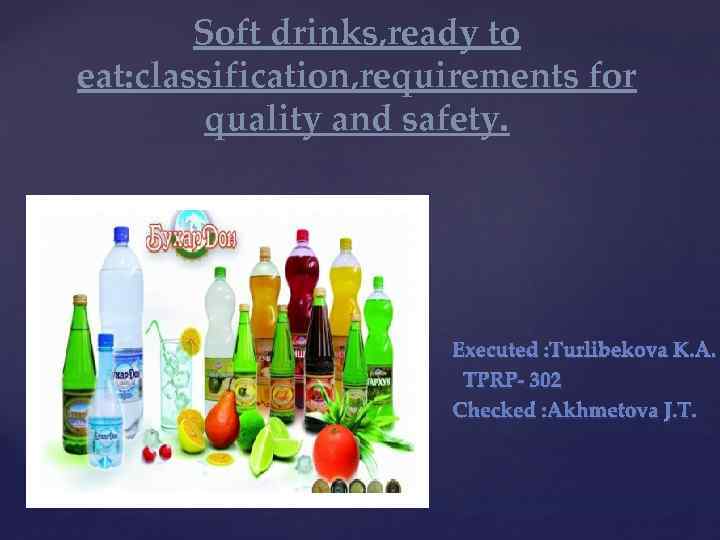 Soft drinks, ready to eat: classification, requirements for quality and safety. { Executed : Turlibekova K. A. TPRP- 302 Checked : Akhmetova J. T.
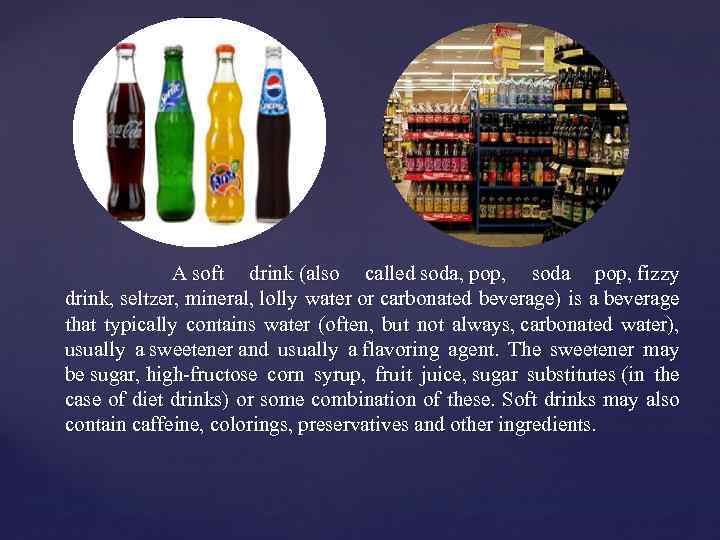 A soft drink (also called soda, pop, soda pop, fizzy drink, seltzer, mineral, lolly water or carbonated beverage) is a beverage that typically contains water (often, but not always, carbonated water), usually a sweetener and usually a flavoring agent. The sweetener may be sugar, high-fructose corn syrup, fruit juice, sugar substitutes (in the case of diet drinks) or some combination of these. Soft drinks may also contain caffeine, colorings, preservatives and other ingredients.
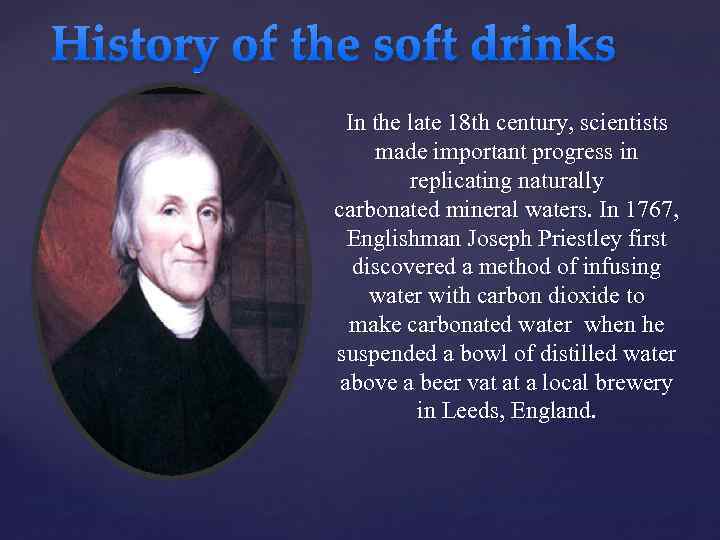 History of the soft drinks In the late 18 th century, scientists made important progress in replicating naturally carbonated mineral waters. In 1767, Englishman Joseph Priestley first discovered a method of infusing water with carbon dioxide to make carbonated water when he suspended a bowl of distilled water above a beer vat at a local brewery in Leeds, England.
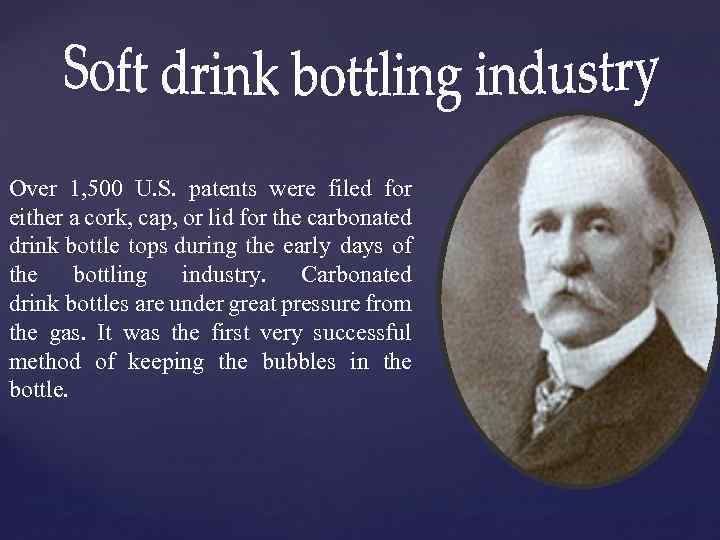 Over 1, 500 U. S. patents were filed for either a cork, cap, or lid for the carbonated drink bottle tops during the early days of the bottling industry. Carbonated drink bottles are under great pressure from the gas. It was the first very successful method of keeping the bubbles in the bottle.
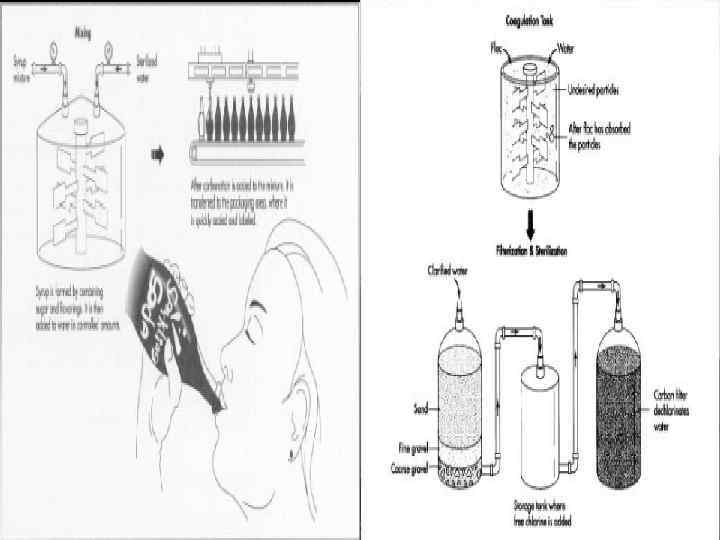
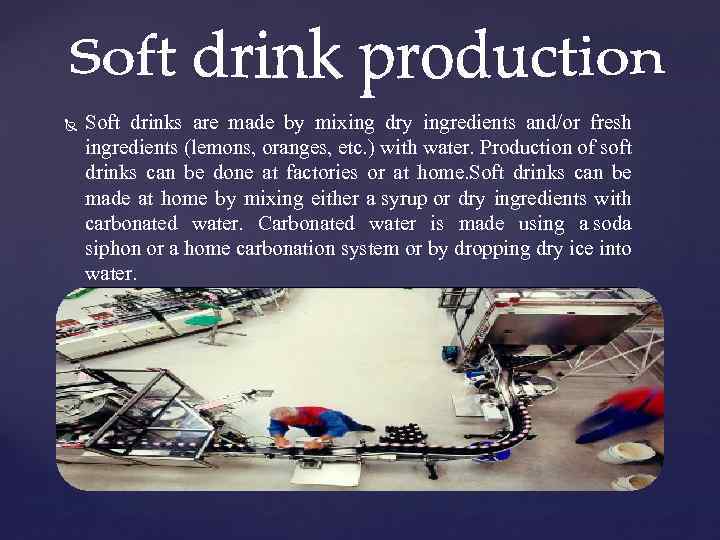 Soft drinks are made by mixing dry ingredients and/or fresh ingredients (lemons, oranges, etc. ) with water. Production of soft drinks can be done at factories or at home. Soft drinks can be made at home by mixing either a syrup or dry ingredients with carbonated water. Carbonated water is made using a soda siphon or a home carbonation system or by dropping dry ice into water.
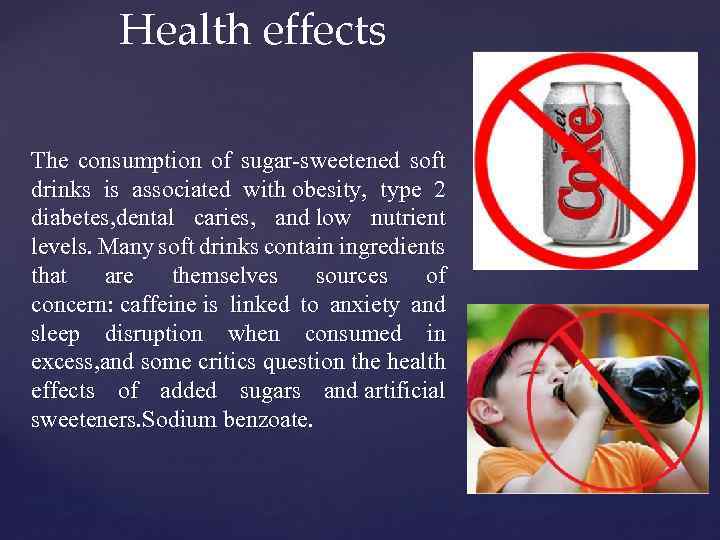 Health effects The consumption of sugar-sweetened soft drinks is associated with obesity, type 2 diabetes, dental caries, and low nutrient levels. Many soft drinks contain ingredients that are themselves sources of concern: caffeine is linked to anxiety and sleep disruption when consumed in excess, and some critics question the health effects of added sugars and artificial sweeteners. Sodium benzoate.
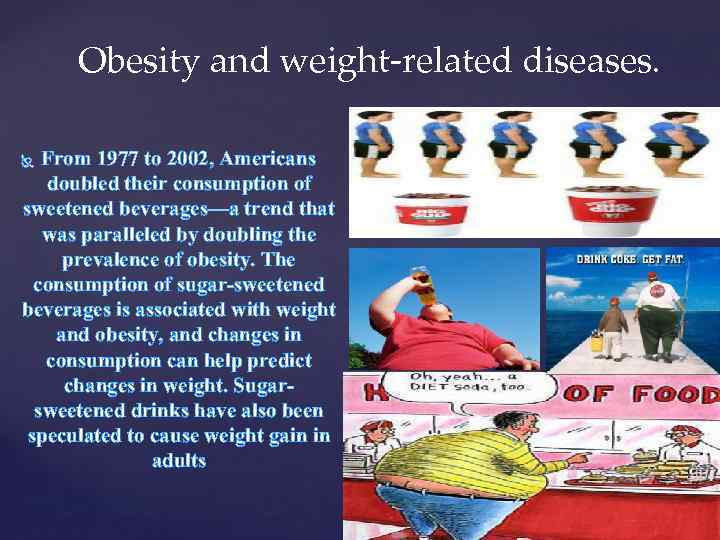 Obesity and weight-related diseases. From 1977 to 2002, Americans doubled their consumption of sweetened beverages—a trend that was paralleled by doubling the prevalence of obesity. The consumption of sugar-sweetened beverages is associated with weight and obesity, and changes in consumption can help predict changes in weight. Sugarsweetened drinks have also been speculated to cause weight gain in adults
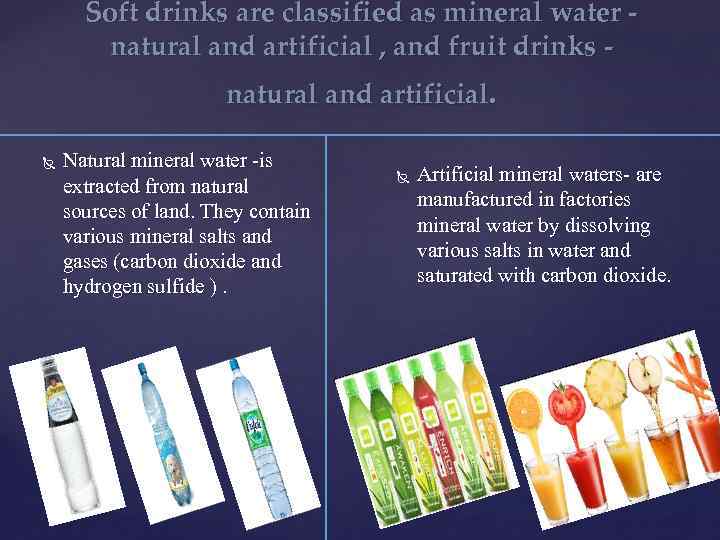 Soft drinks are classified as mineral water natural and artificial , and fruit drinks natural and artificial. Natural mineral water -is extracted from natural sources of land. They contain various mineral salts and gases (carbon dioxide and hydrogen sulfide ). Artificial mineral waters- are manufactured in factories mineral water by dissolving various salts in water and saturated with carbon dioxide.
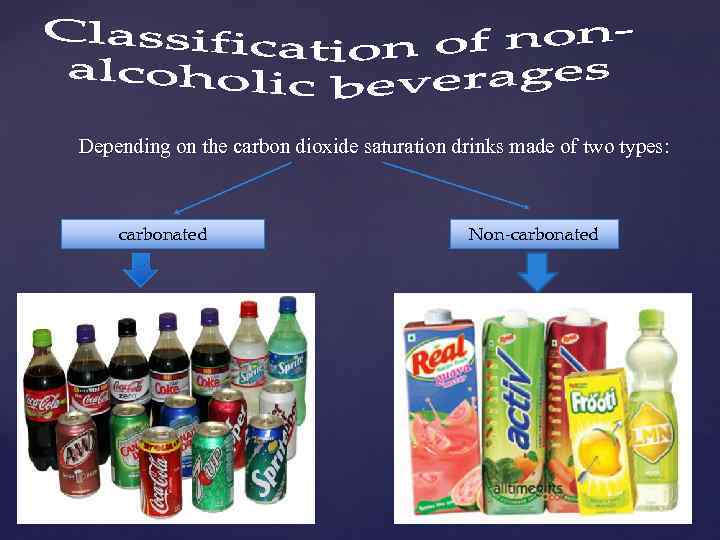 Depending on the carbon dioxide saturation drinks made of two types: carbonated Non-carbonated
 Requirements for the quality of soft drinks Soft drinks should be transparent, without sediment and debris buildup. Store bottles with drinks should tilted at a temperature not higher than 10 °. Depending on the resource base and technological production , soft drinks are divided into the following groups : drinks flavors ; juice drinks ; beverages or spicy aromatic plant material ; soft drinks in the grain raw drinks for special purposes.
 With the assortment of identification shall also establish compliance with the organoleptic properties of the declared name and composition. Color and flavor syrups, extracts and concentrates must comply with characteristic features inherent feedstock and set recipe for each denomination. Syrups can be developed on the basis of a fruit , vegetable or aromatic raw materials may comprise physiologically valuable ingredients.
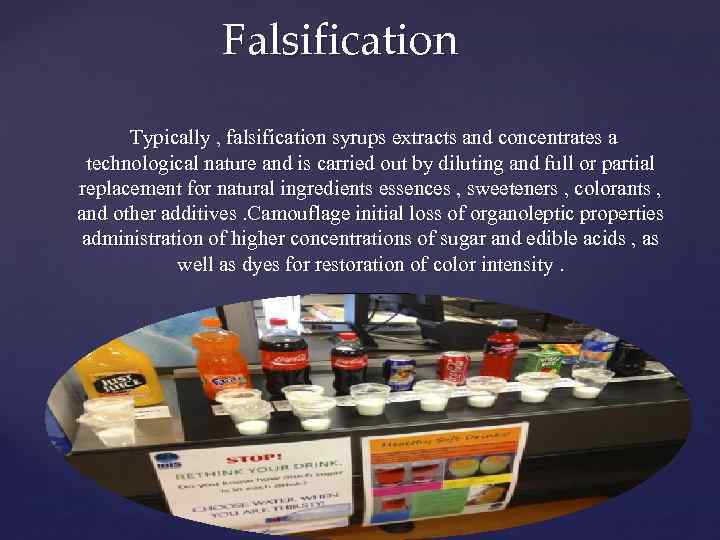 Falsification Typically , falsification syrups extracts and concentrates a technological nature and is carried out by diluting and full or partial replacement for natural ingredients essences , sweeteners , colorants , and other additives. Camouflage initial loss of organoleptic properties administration of higher concentrations of sugar and edible acids , as well as dyes for restoration of color intensity.
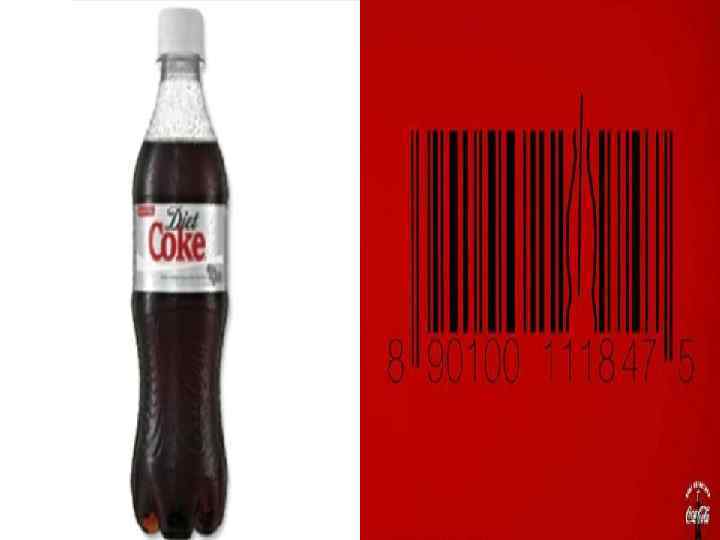
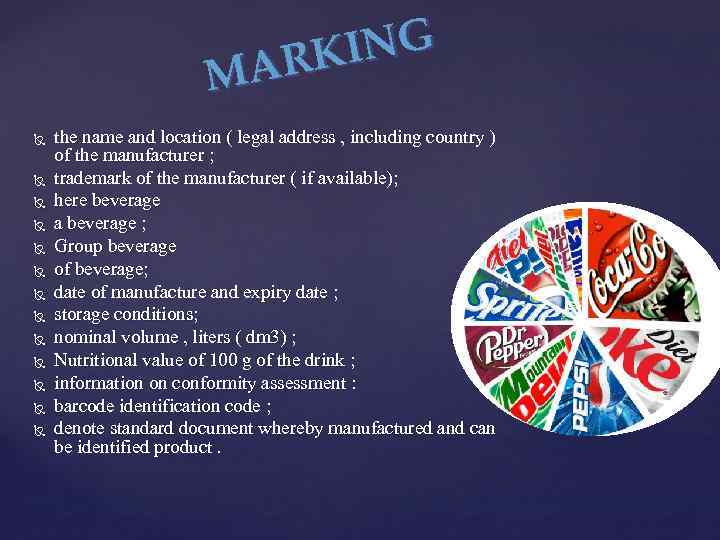 ING ARK M the name and location ( legal address , including country ) of the manufacturer ; trademark of the manufacturer ( if available); here beverage a beverage ; Group beverage of beverage; date of manufacture and expiry date ; storage conditions; nominal volume , liters ( dm 3) ; Nutritional value of 100 g of the drink ; information on conformity assessment : barcode identification code ; denote standard document whereby manufactured and can be identified product.
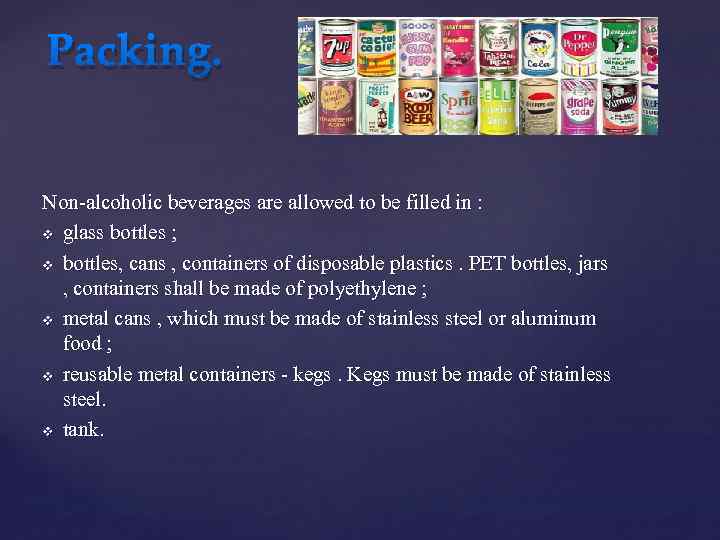 Packing. Non-alcoholic beverages are allowed to be filled in : v glass bottles ; v bottles, cans , containers of disposable plastics. PET bottles, jars , containers shall be made of polyethylene ; v metal cans , which must be made of stainless steel or aluminum food ; v reusable metal containers - kegs. Kegs must be made of stainless steel. v tank.
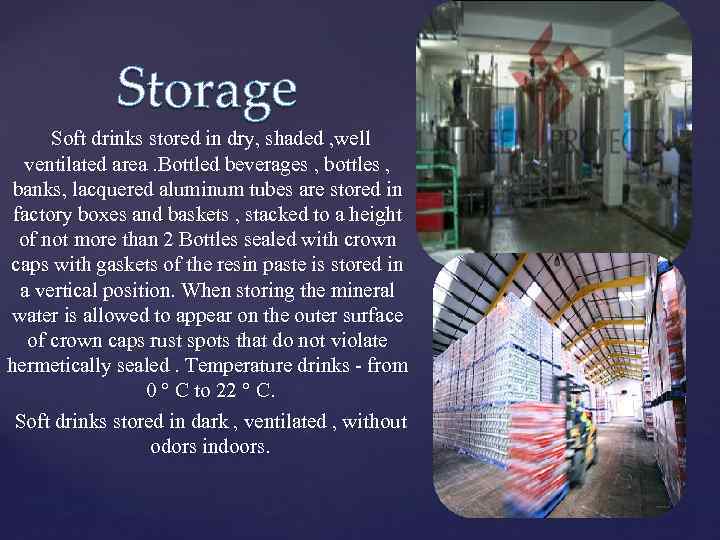 Soft drinks stored in dry, shaded , well ventilated area. Bottled beverages , bottles , banks, lacquered aluminum tubes are stored in factory boxes and baskets , stacked to a height of not more than 2 Bottles sealed with crown caps with gaskets of the resin paste is stored in a vertical position. When storing the mineral water is allowed to appear on the outer surface of crown caps rust spots that do not violate hermetically sealed. Temperature drinks - from 0 ° C to 22 ° C. Soft drinks stored in dark , ventilated , without odors indoors.
 r your ou fo ank y Th ention att