 Скачать презентацию Social Issues of the Progressive Era Background for
8025b27c430de5eed1f261f87abc991d.ppt
- Количество слайдов: 14



Social Issues of the Progressive Era Background for Broken Blossoms, The Birth of a Nation, and Within Our Gates
Progressive Era • Usually 1900 through U. S. entry into WWI (1918), although reforms dated from the late 1880 s • Belief in the power of governments at local, state, and national levels to effect political and social change • For women, “national housekeeping” movement toward more involvement in government, including woman suffrage
Progressive Era Issues • Industrialism, unions, and worker safety (corporate rapacity) • Population control and women’s sexuality • Immigration • Race • Rise of organized crime • Drug abuse and alcoholism • Prostitution and “white slavery” • Poverty and the urban underclass • Urbanization, “overcivilization, ” and the destruction of the wilderness
Reforms and Reformers • Theodore Roosevelt – Cleaned up police corruption as Police Commissioner of New York City – As President of the U. S. (1901 -1908), established the National Parks system (Gifford Pinchot) – Supported an investigation in United Mine Workers’ strike in 1892 that led to higher wages – “Trust-buster” enforcing the Interstate Commerce Act (1887), the Sherman Anti-Trust Act (1890) – But--supported annexation of the Philippines and other imperial ventures
Reforms and Reformers • Jane Addams, Twenty Years at Hull. House (settlement house) • Margaret Sanger, birth control movement • W. E. B. Du Bois, The Souls of Black Folk • Robert M. La. Follette (politician) • William Jennings Bryan, presidential candidate • John Dewey (education)
Muckrakers • Upton Sinclair, The Jungle (led to the Pure Food and Drug Act and Meat Inspection Act of 1906) • Ida Tarbell, The History of The Standard Oil Company • David Graham Phillips, “The Treason of the Senate” • Ray Stannard Baker, The Right to Work • Ida B. Wells-Barnett, Southern Horrors: Lynch Law in All Its Phases • Jacob Riis, How the Other Half Lives • Mc. Clure’s Magazine
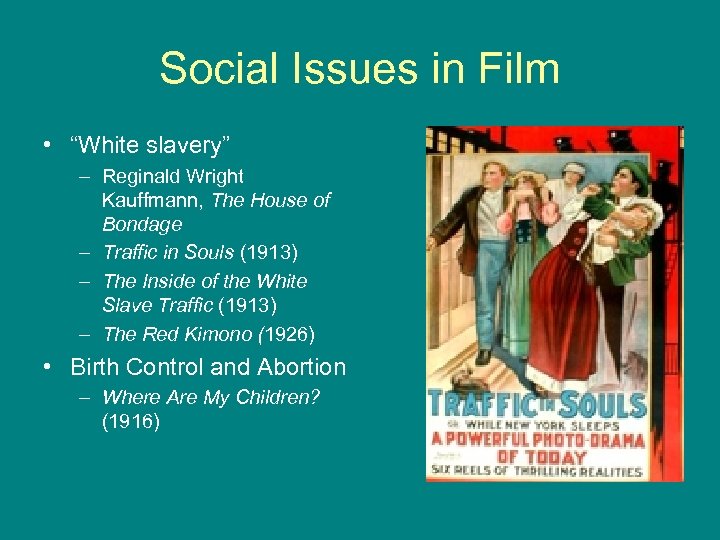
Social Issues in Film • “White slavery” – Reginald Wright Kauffmann, The House of Bondage – Traffic in Souls (1913) – The Inside of the White Slave Traffic (1913) – The Red Kimono (1926) • Birth Control and Abortion – Where Are My Children? (1916)
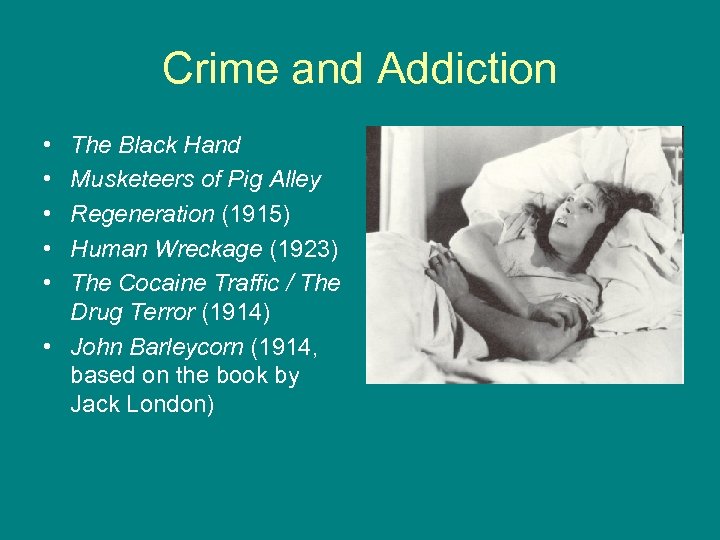
Crime and Addiction • • • The Black Hand Musketeers of Pig Alley Regeneration (1915) Human Wreckage (1923) The Cocaine Traffic / The Drug Terror (1914) • John Barleycorn (1914, based on the book by Jack London)
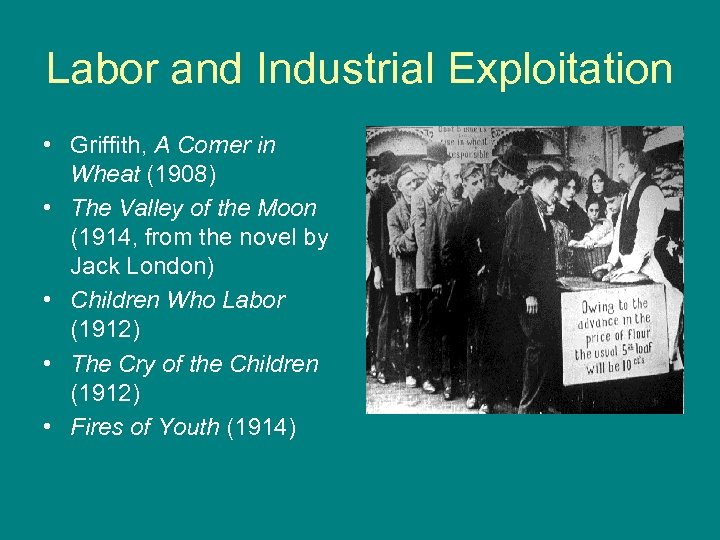
Labor and Industrial Exploitation • Griffith, A Corner in Wheat (1908) • The Valley of the Moon (1914, from the novel by Jack London) • Children Who Labor (1912) • The Cry of the Children (1912) • Fires of Youth (1914)
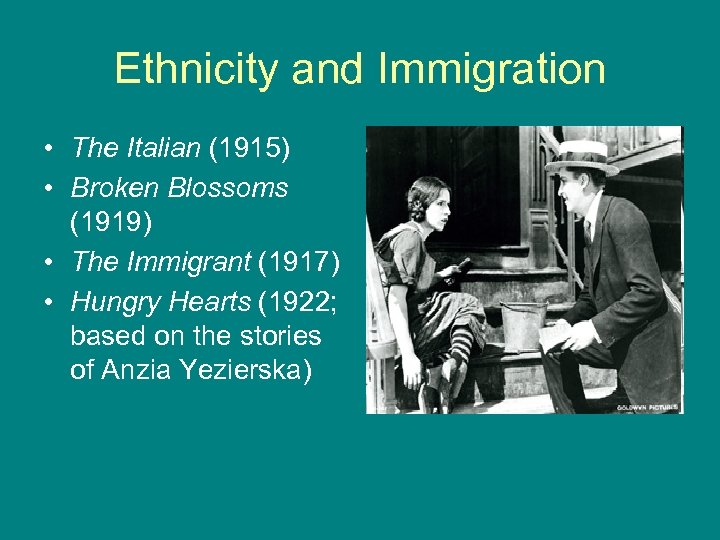
Ethnicity and Immigration • The Italian (1915) • Broken Blossoms (1919) • The Immigrant (1917) • Hungry Hearts (1922; based on the stories of Anzia Yezierska)
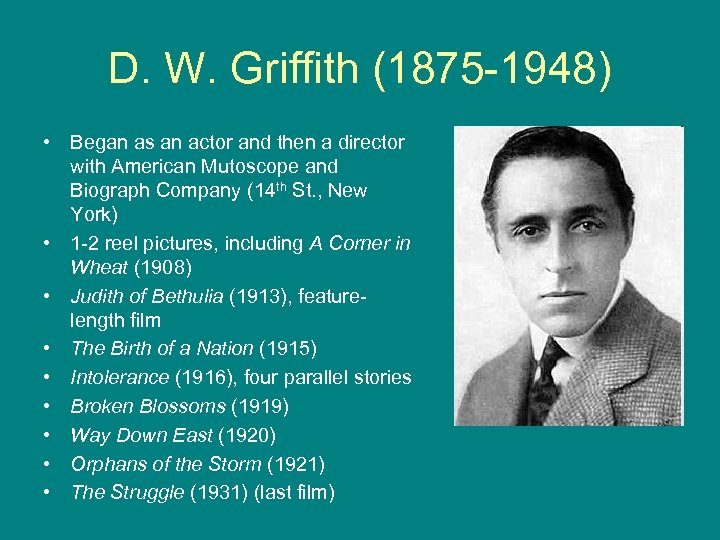
D. W. Griffith (1875 -1948) • Began as an actor and then a director with American Mutoscope and Biograph Company (14 th St. , New York) • 1 -2 reel pictures, including A Corner in Wheat (1908) • Judith of Bethulia (1913), featurelength film • The Birth of a Nation (1915) • Intolerance (1916), four parallel stories • Broken Blossoms (1919) • Way Down East (1920) • Orphans of the Storm (1921) • The Struggle (1931) (last film)
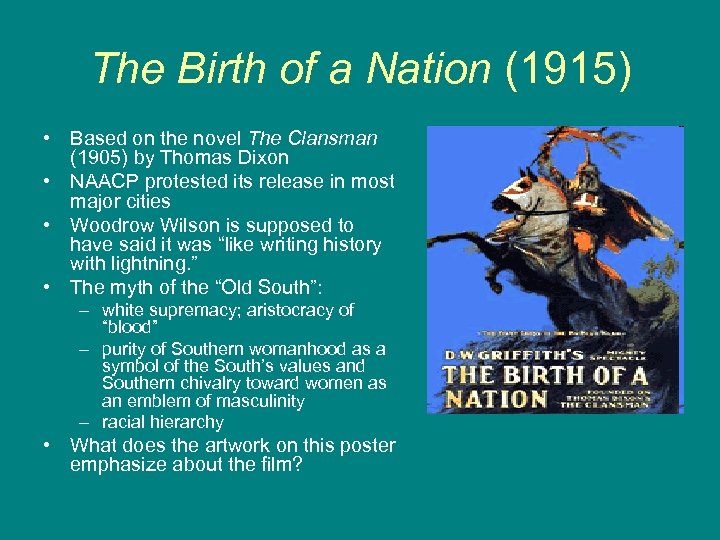
The Birth of a Nation (1915) • Based on the novel The Clansman (1905) by Thomas Dixon • NAACP protested its release in most major cities • Woodrow Wilson is supposed to have said it was “like writing history with lightning. ” • The myth of the “Old South”: – white supremacy; aristocracy of “blood” – purity of Southern womanhood as a symbol of the South’s values and Southern chivalry toward women as an emblem of masculinity – racial hierarchy • What does the artwork on this poster emphasize about the film?
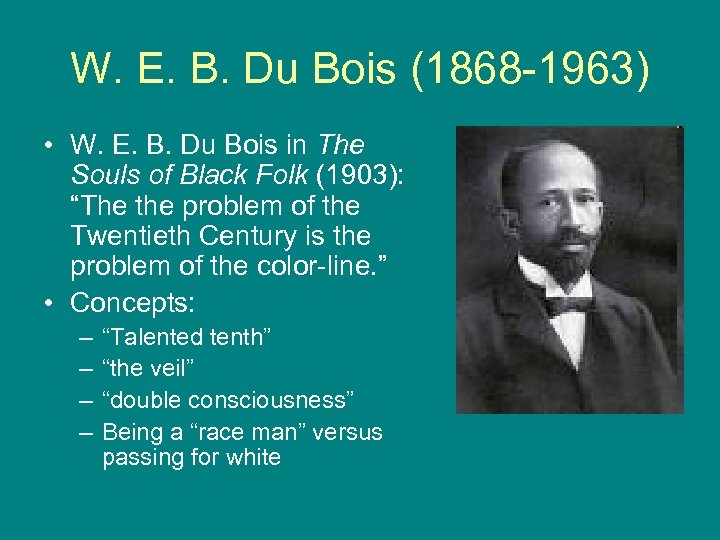
W. E. B. Du Bois (1868 -1963) • W. E. B. Du Bois in The Souls of Black Folk (1903): “The the problem of the Twentieth Century is the problem of the color-line. ” • Concepts: – – “Talented tenth” “the veil” “double consciousness” Being a “race man” versus passing for white
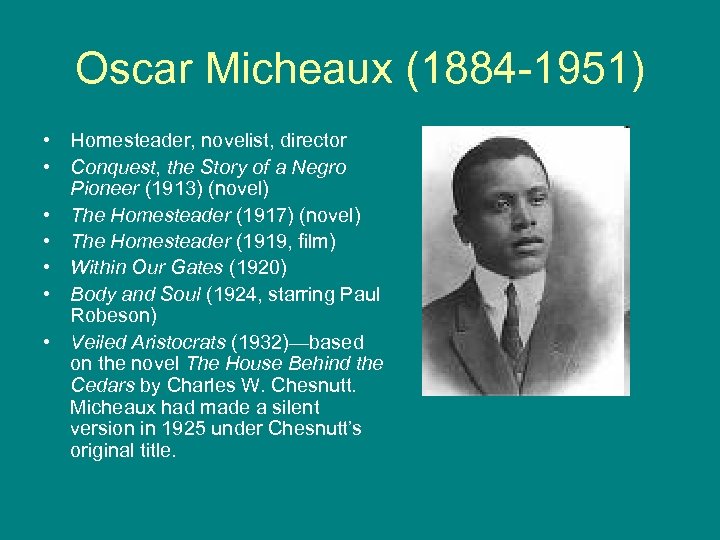
Oscar Micheaux (1884 -1951) • Homesteader, novelist, director • Conquest, the Story of a Negro Pioneer (1913) (novel) • The Homesteader (1917) (novel) • The Homesteader (1919, film) • Within Our Gates (1920) • Body and Soul (1924, starring Paul Robeson) • Veiled Aristocrats (1932)—based on the novel The House Behind the Cedars by Charles W. Chesnutt. Micheaux had made a silent version in 1925 under Chesnutt’s original title.
Скачать презентацию Social Issues of the Progressive Era Background for
8025b27c430de5eed1f261f87abc991d.ppt