 Скачать презентацию Social housing in England after the GFC affordable
59d03efeffdbdd0d096bb3485d83e6d9.ppt
- Количество слайдов: 19



Social housing in England after the GFC: affordable vs ‘affordable’ Kath Scanlon LSE London RESHAPE final conference Bolzano 19 April 2017
Themes • England’s ‘housing crisis’ • Changing nature of social landlords • Marginalisation of social housing and growth of ‘affordable’ – but not social -products
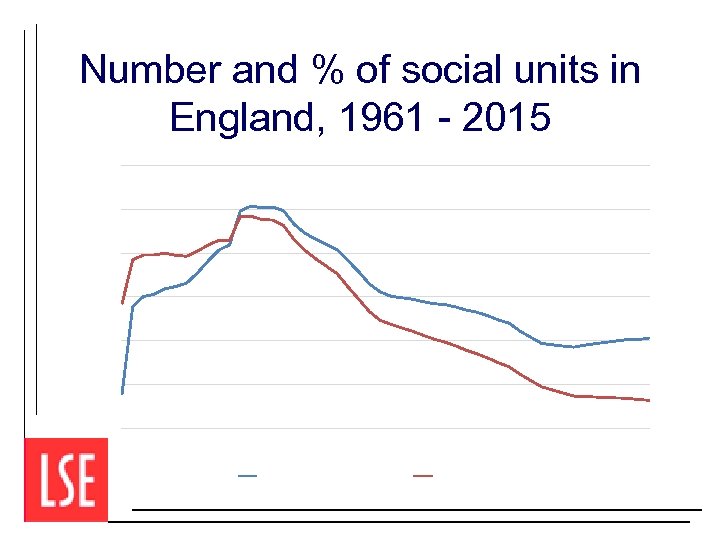
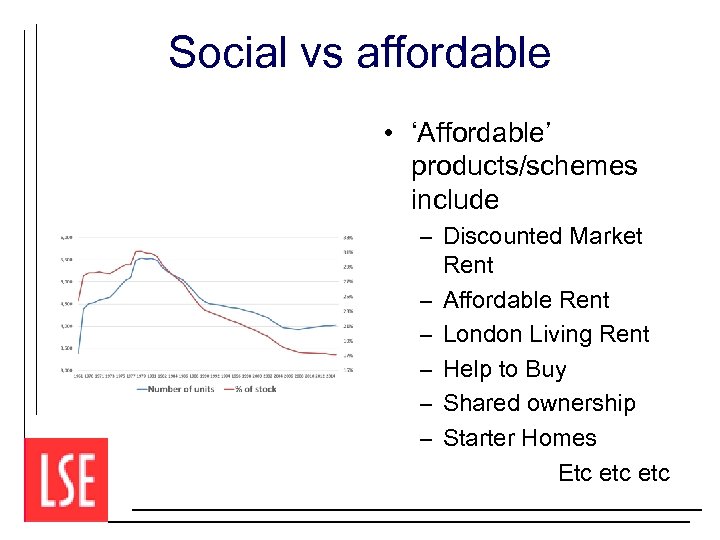
3, 000 1961 1969 1970 1971 1972 1973 1974 1975 1976 1977 1978 1979 1980 1981 1982 1983 1984 1985 1986 1987 1988 1989 1990 1991 1992 1993 1994 1995 1996 1997 1998 1999 2000 2001 2002 2003 2004 2005 2006 2007 2008 2009 2010 2011 2012 2013 2014 2015 Number and % of social units in England, 1961 - 2015 6, 000 35% 5, 500 30% 5, 000 4, 500 25% 4, 000 20% 3, 500 Number of units % of stock 15%
Built form • Reflects sector’s history—municipal construction boom in 1960 s/70 s, including many high-rise or deckaccess monotenure estates • Current practice is to provide mix (social/tenure/income) in new build • Many existing estates have become mixed through RTB—but not all
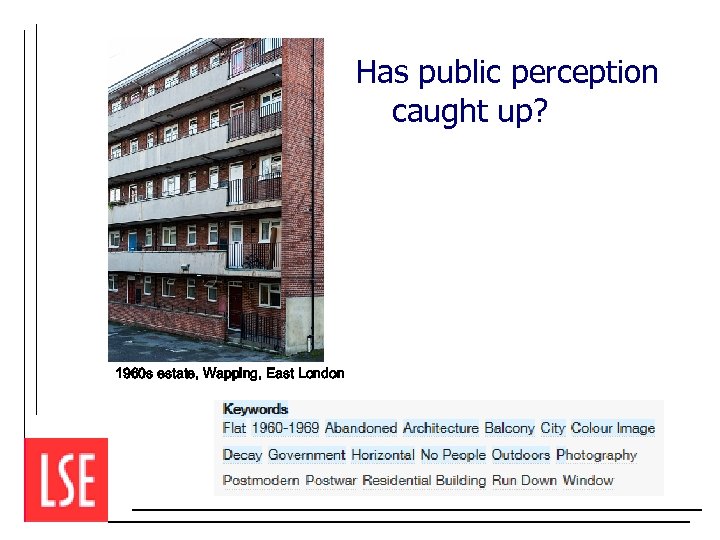
Has public perception caught up? 1960 s estate, Wapping, East London
Social landlords • Two types: local authorities (historically the main providers) and housing associations (now more important) • Councils have always operated under strong government constraints • Housing associations in principle private non-profit (often charitable) organisations
Control vs freedom • Government increases constraints on housing associations’ socialsector activities • 2015: requires associations to reduce rents for 4 years • 2016: Extension of right to buy But • Great freedom outside the social sector
Increasing commercial focus • Largest associations focus on areas where government exercises less control • Consolidations and mergers create some very big players, who compete directly with major house builders in private sale market • Genesis (32, 000 homes): will no longer build new social housing
England’s ‘housing crisis’ • Generally shorthand for affordability problems in private housing markets • Focus on – difficulties of would-be first-time buyers – high rents and insecurity of tenure in the private rented sector • Largely a London problem
Current policy priorities • stimulate housing construction so as to dampen price increases, • help first-time buyers purchase new homes and • increase provision of ‘affordable’ housing. • Social housing is seen as irrelevant for working families needing a home in higher-cost areas.
Policy case study: The Housing and Planning Act 2016 Social housing measures: • increase targeting • enable more social tenants to buy • reduce stock in expensive areas and increase in cheaper neighbourhoods • Introduce new affordable but not social products—e. g. , Starter Homes A collection of policy ideas rather than worked-out rules
Idea 1: Give housing association tenants the right to buy • Would give housing association tenants same right to buy their homes as council tenants • HAs crafted ‘voluntary’ agreement to protect status as private organisations • Government compensates them for discount using…
Idea 2: Make councils sell high-value homes • Councils sell ‘high-value’ homes as they become vacant • Transfer £ to government, who uses it to compensate housing associations • What is ‘high value’?
Idea 3: Make higher-income social tenants pay more rent • Historically social rents in England not incomedependent (unlike in many countries) • ‘pay to stay’—rent would increase for higher-income tenants
Idea 4: Require councils to use fixed-term leases • Social leases generally indefinite, in contrast to very limited security of tenure in PRS • Eligibility assessed on arrival but not after • Idea: councils to use fixed-term leases for all new tenancies
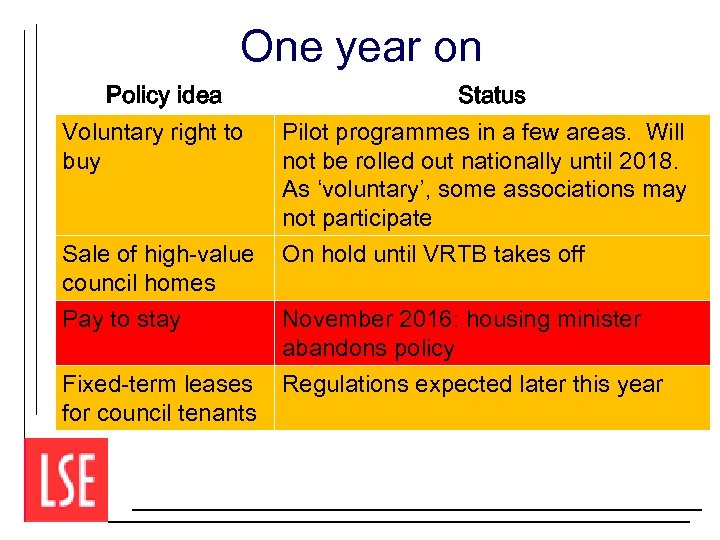
One year on Policy idea Voluntary right to buy Sale of high-value council homes Pay to stay Fixed-term leases for council tenants Status Pilot programmes in a few areas. Will not be rolled out nationally until 2018. As ‘voluntary’, some associations may not participate On hold until VRTB takes off November 2016: housing minister abandons policy Regulations expected later this year
Social vs affordable • ‘Affordable’ products/schemes include – Discounted Market Rent – Affordable Rent – London Living Rent – Help to Buy – Shared ownership – Starter Homes Etc etc
Conclusions… • Housing systems are highly path dependent and can be hard to change-especially when there is no consensus about the need for change • Given long-term ↓ in subsidy, less reason for housing associations to remain onside. Many now want to fulfil their social aims in other, less regulated sectors of the housing market
…and questions • Will social housing strictly defined retain its relevance for broader housing issues? • Is the traditional housing-tenure split (o-o, social, PRS) still a useful analytical tool, or should we look more at submarket options in the round?
Скачать презентацию Social housing in England after the GFC affordable
59d03efeffdbdd0d096bb3485d83e6d9.ppt