 Скачать презентацию Social Dilemmas Others Me HSE 2014 Seger Breugelmans
7. Social Dilemmas HSE 2014.pptx
- Количество слайдов: 78



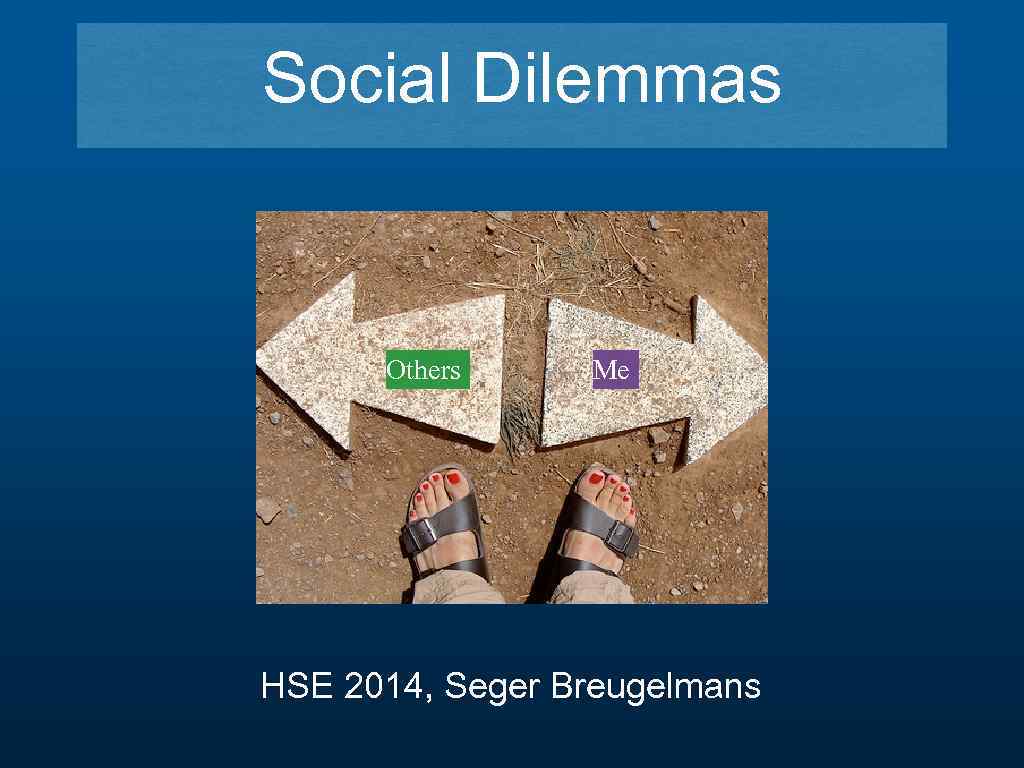
Social Dilemmas Others Me HSE 2014, Seger Breugelmans
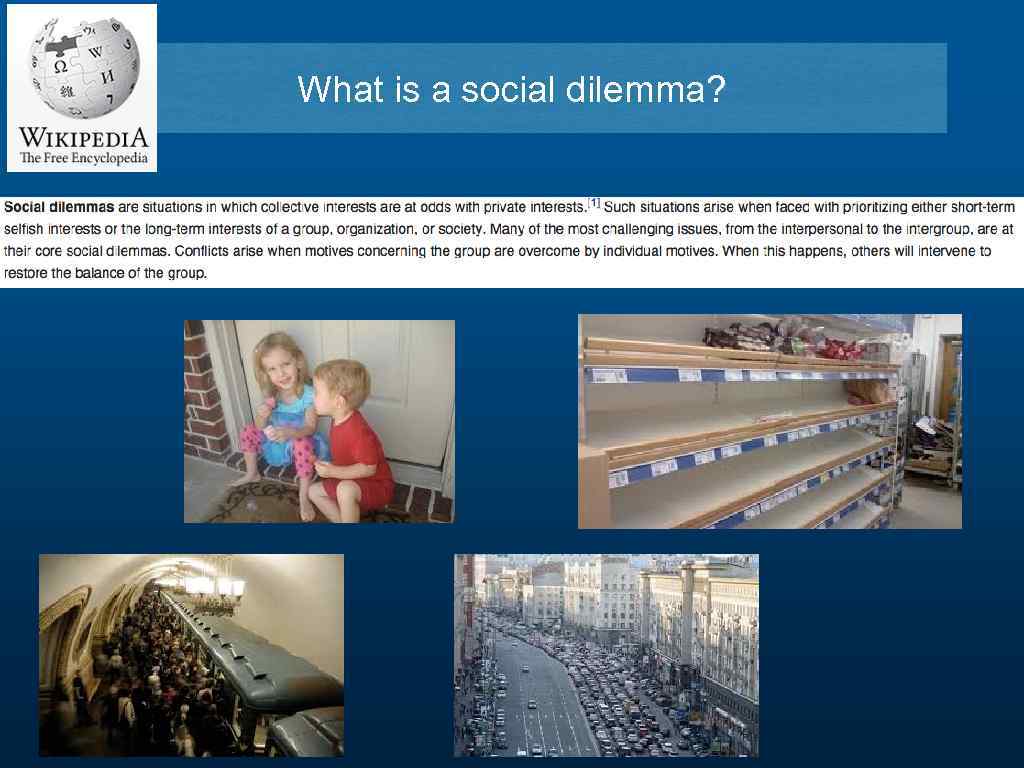
What is a social dilemma?
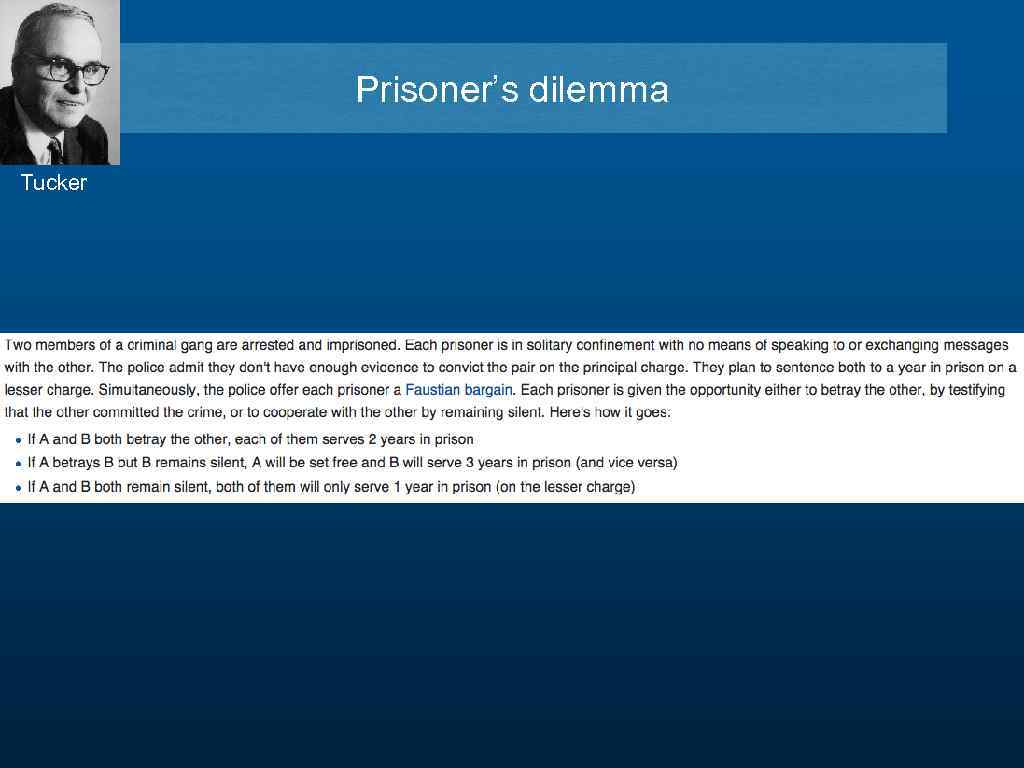
Prisoner’s dilemma 1. Prisoner’s dilemma Tucker
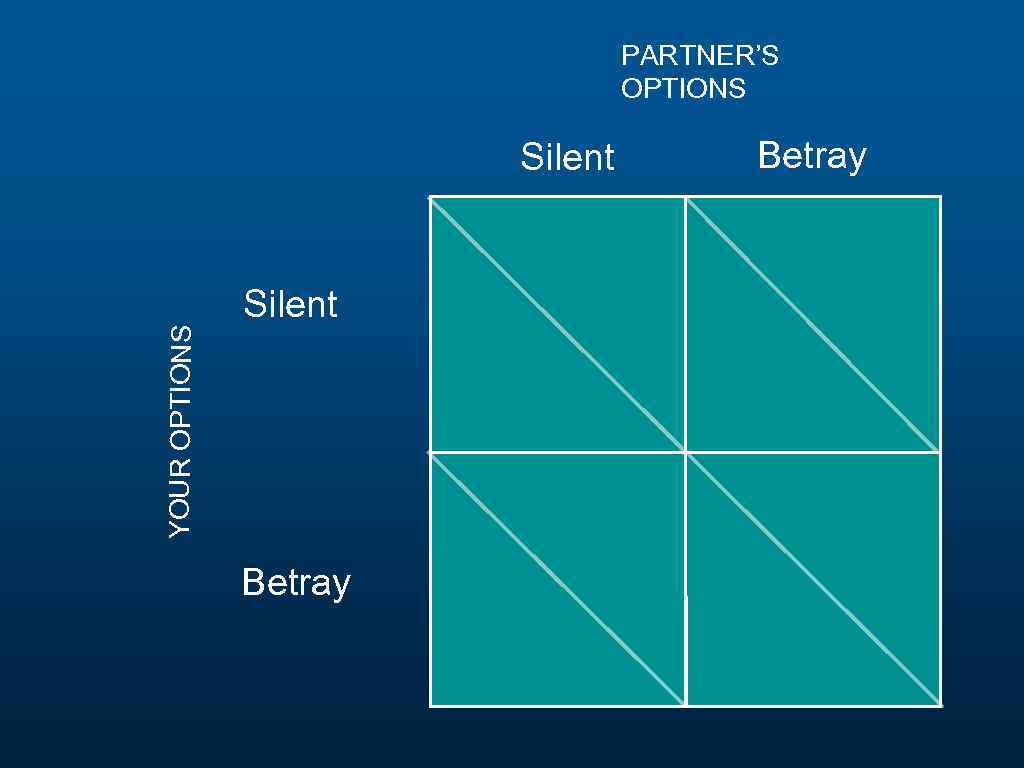
PARTNER’S OPTIONS YOUR OPTIONS Silent Betray
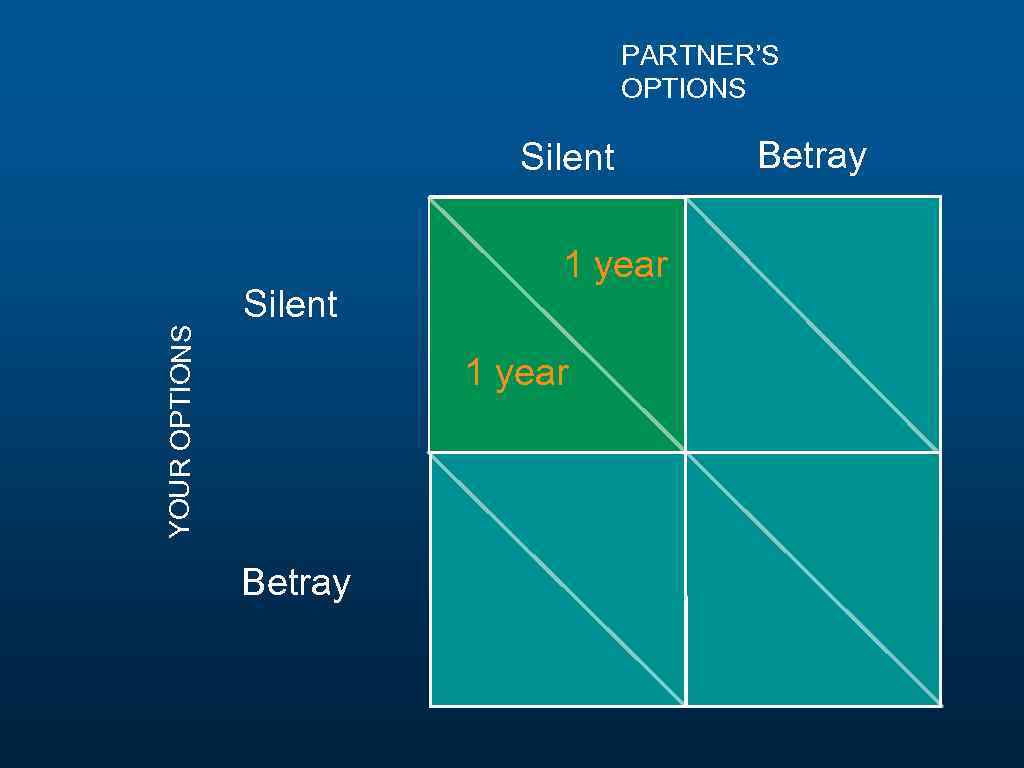
PARTNER’S OPTIONS YOUR OPTIONS Silent 1 year Betray
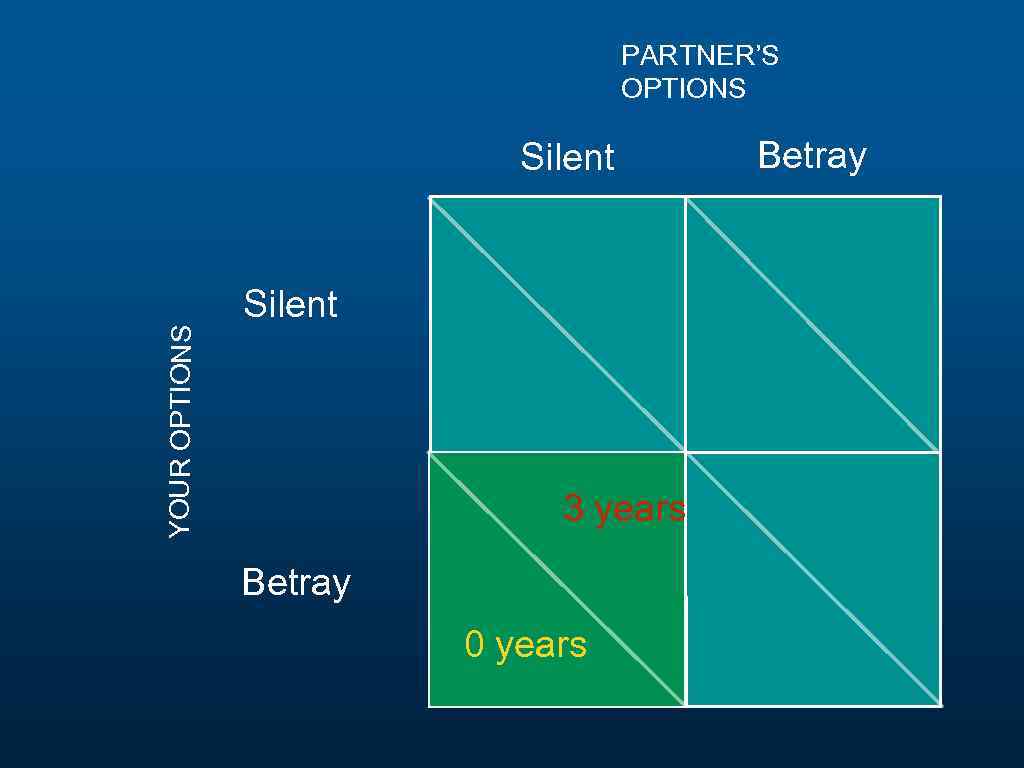
PARTNER’S OPTIONS YOUR OPTIONS Silent 3 years Betray 0 years Betray
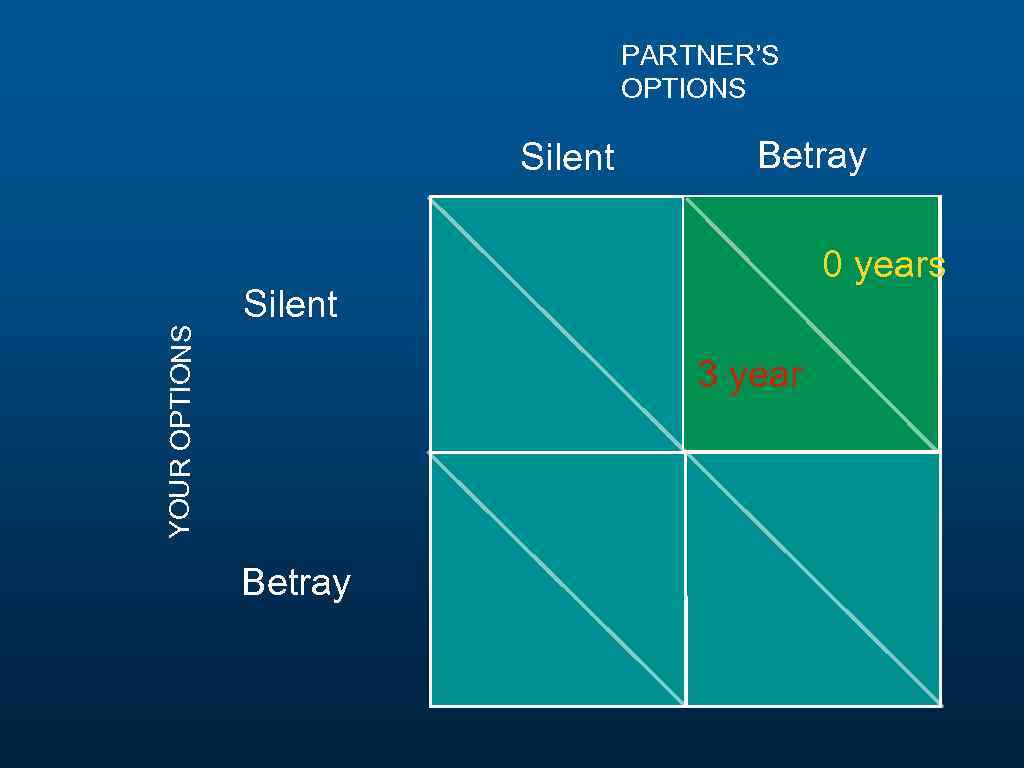
PARTNER’S OPTIONS YOUR OPTIONS Silent Betray 0 years Silent 3 year Betray
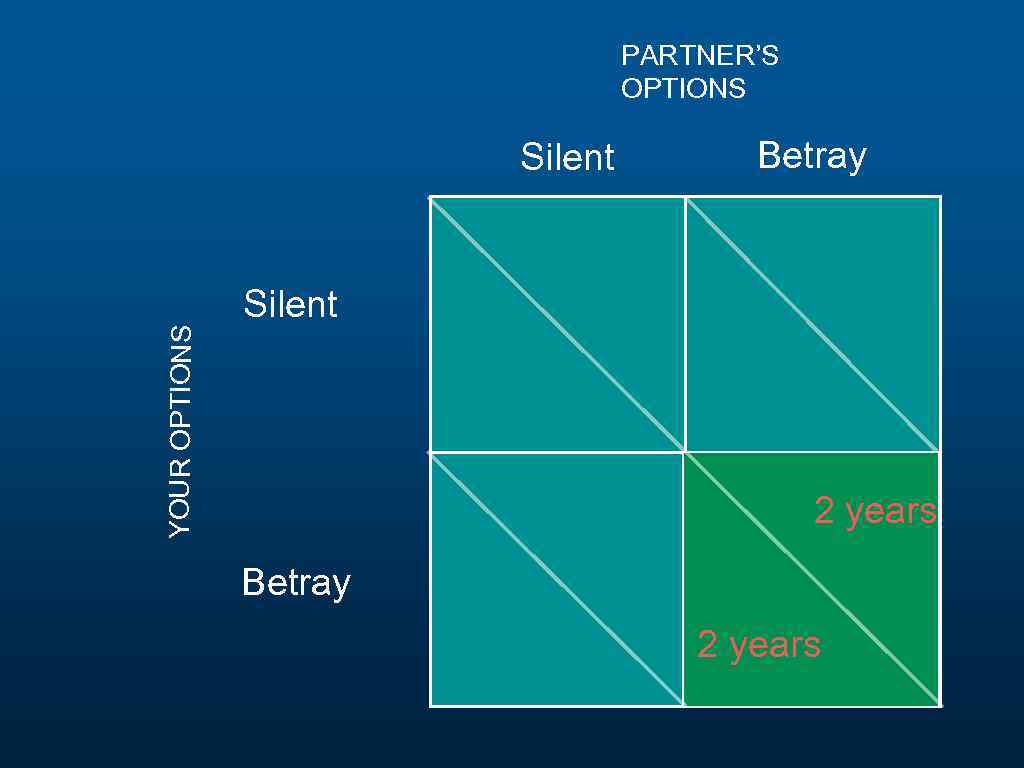
PARTNER’S OPTIONS YOUR OPTIONS Silent Betray Silent 2 years Betray 2 years
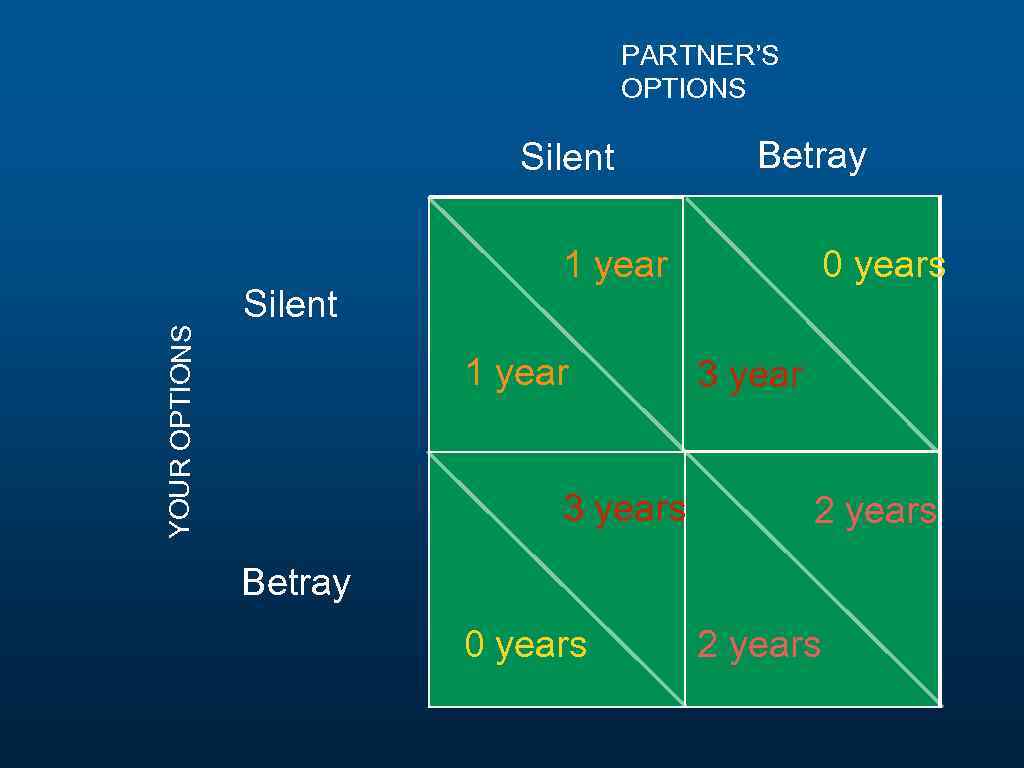
PARTNER’S OPTIONS YOUR OPTIONS Silent Betray 1 year 3 years 0 years 3 year 2 years Betray 0 years 2 years
Reasoning about the dilemma
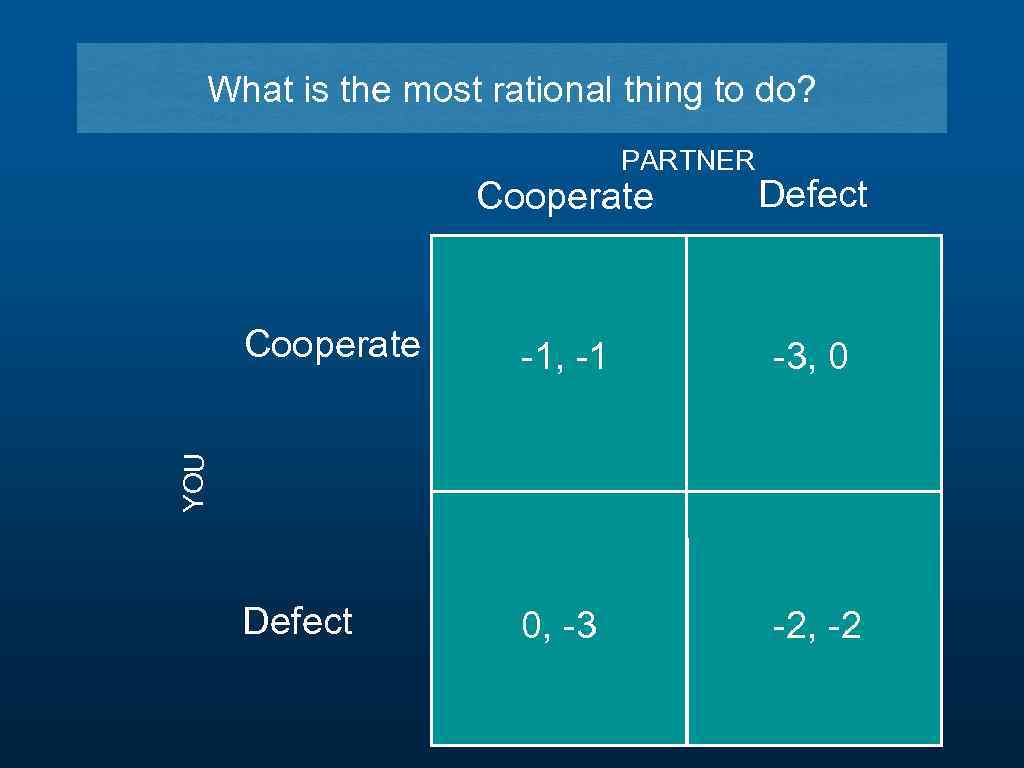
What is the most rational thing to do? PARTNER Defect Cooperate -1, -1 -3, 0 Defect 0, -3 -2, -2 YOU Cooperate
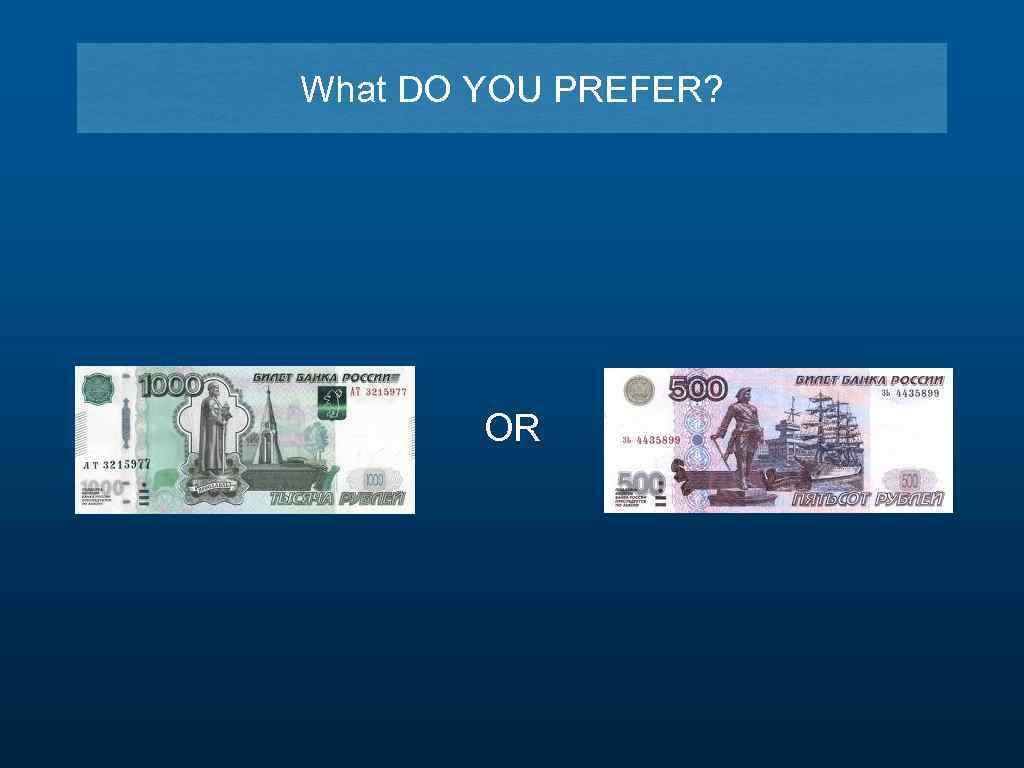
What DO YOU PREFER? OR
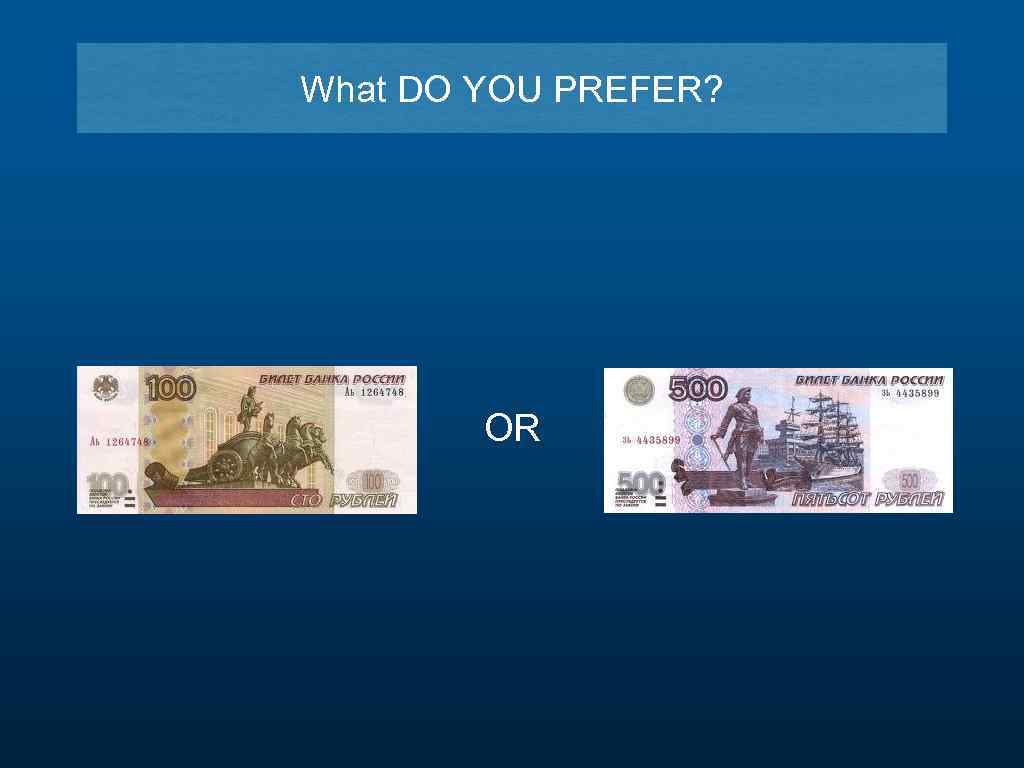
What DO YOU PREFER? OR
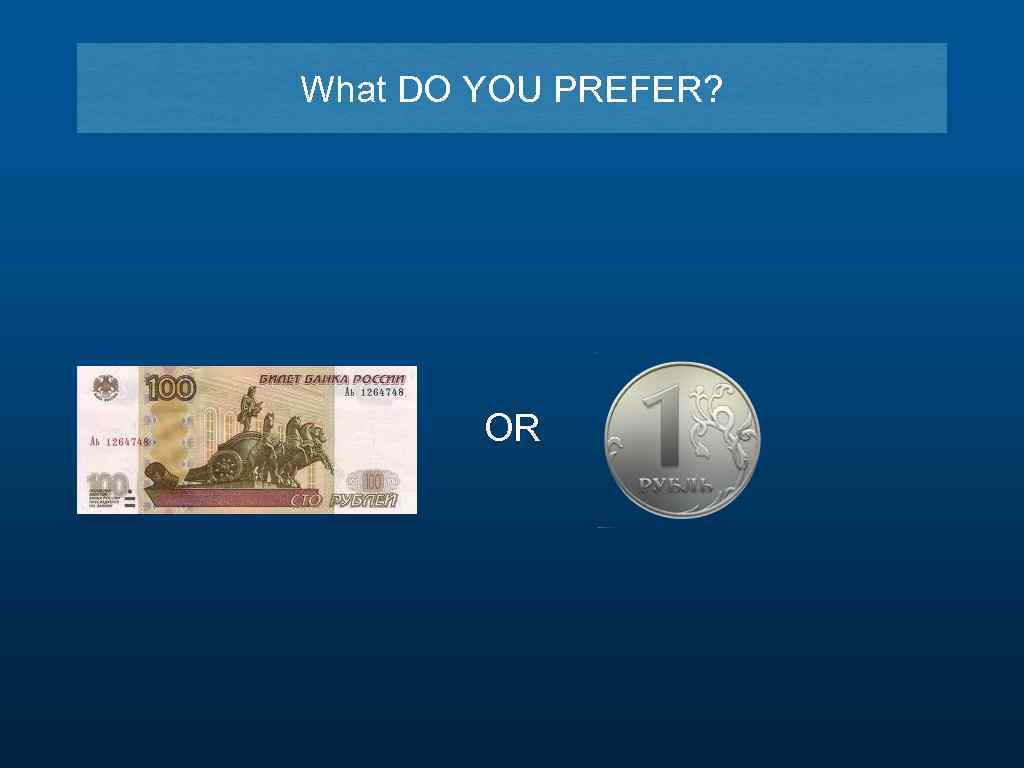
What DO YOU PREFER? OR
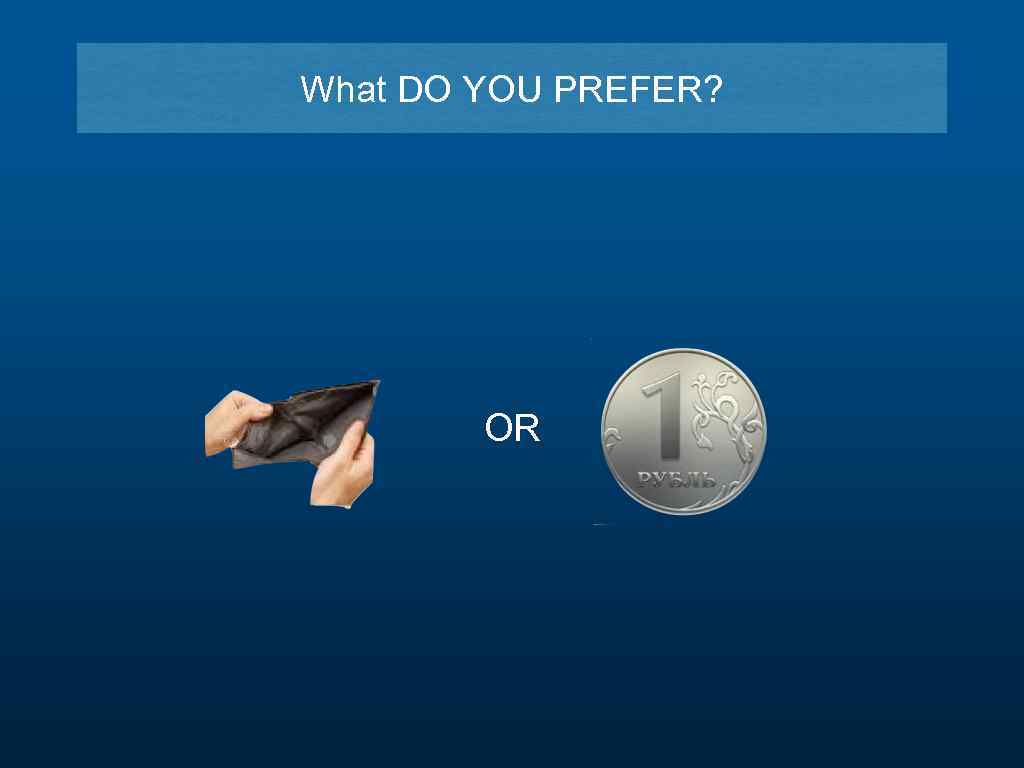
What DO YOU PREFER? OR
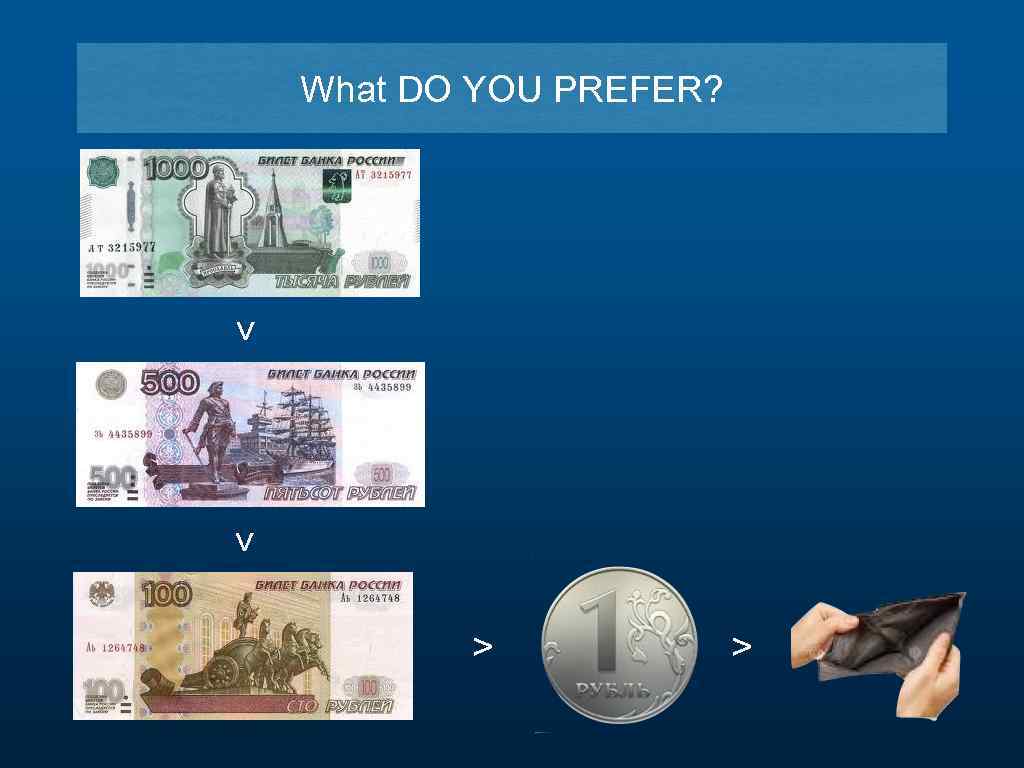
< < What DO YOU PREFER? > >
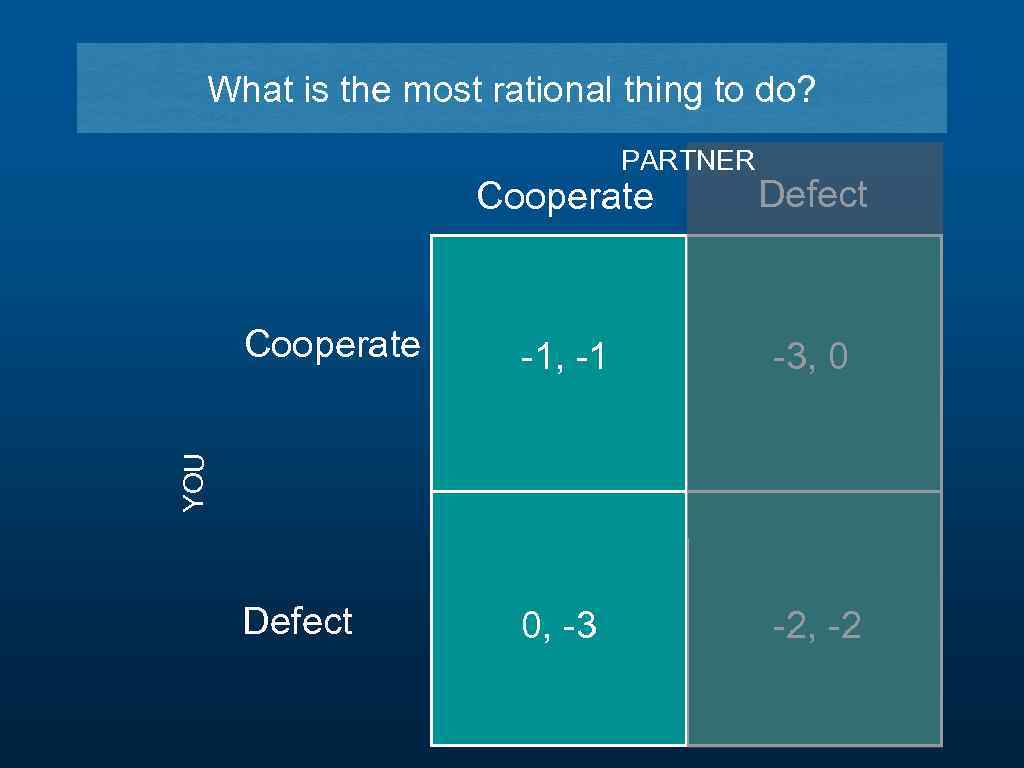
What is the most rational thing to do? PARTNER Defect Cooperate -1, -1 -3, 0 Defect 0, -3 -2, -2 YOU Cooperate
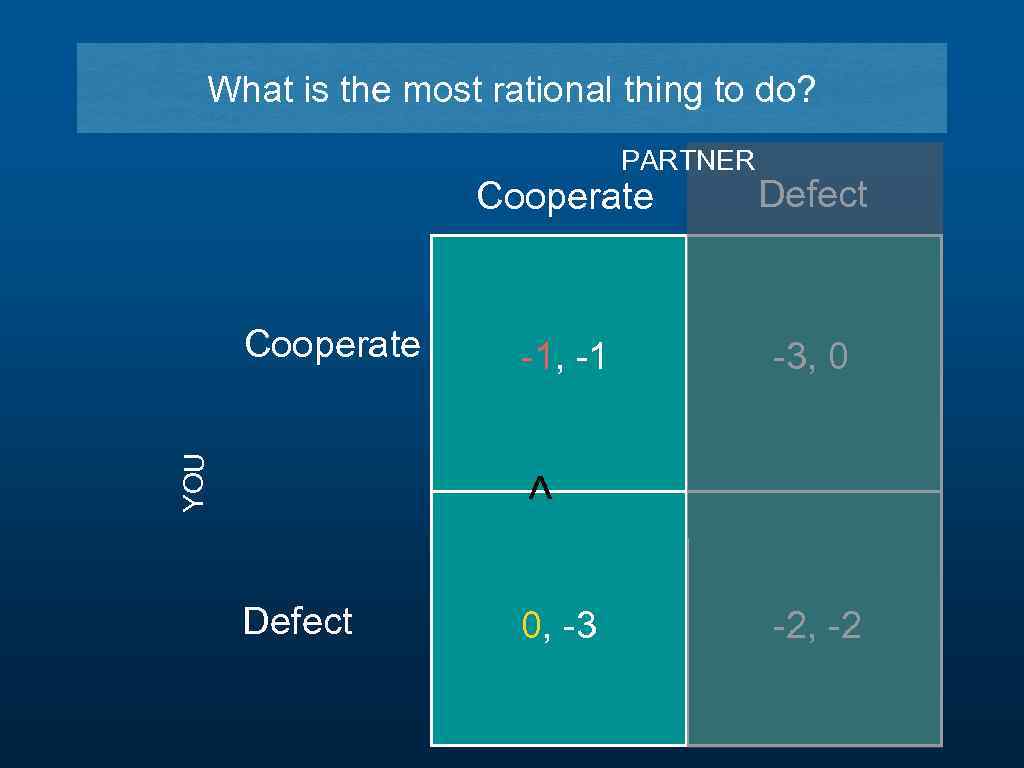
What is the most rational thing to do? PARTNER Cooperate -1, -1 -3, 0 > YOU Cooperate Defect 0, -3 -2, -2
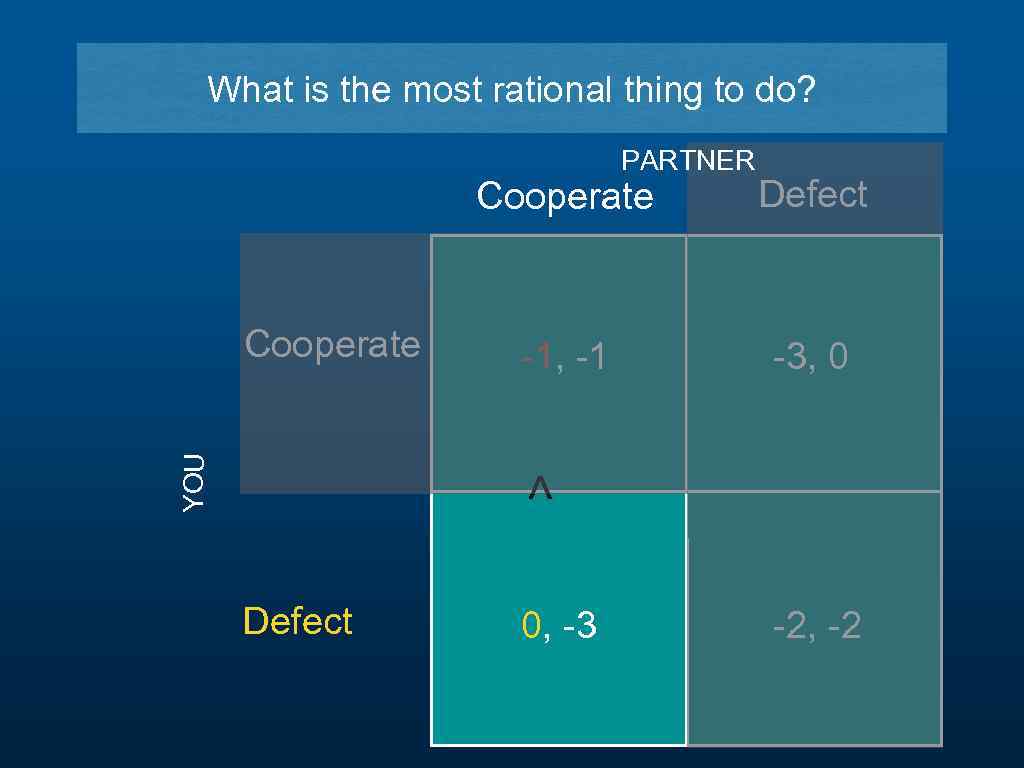
What is the most rational thing to do? PARTNER Cooperate -1, -1 -3, 0 > YOU Cooperate Defect 0, -3 -2, -2
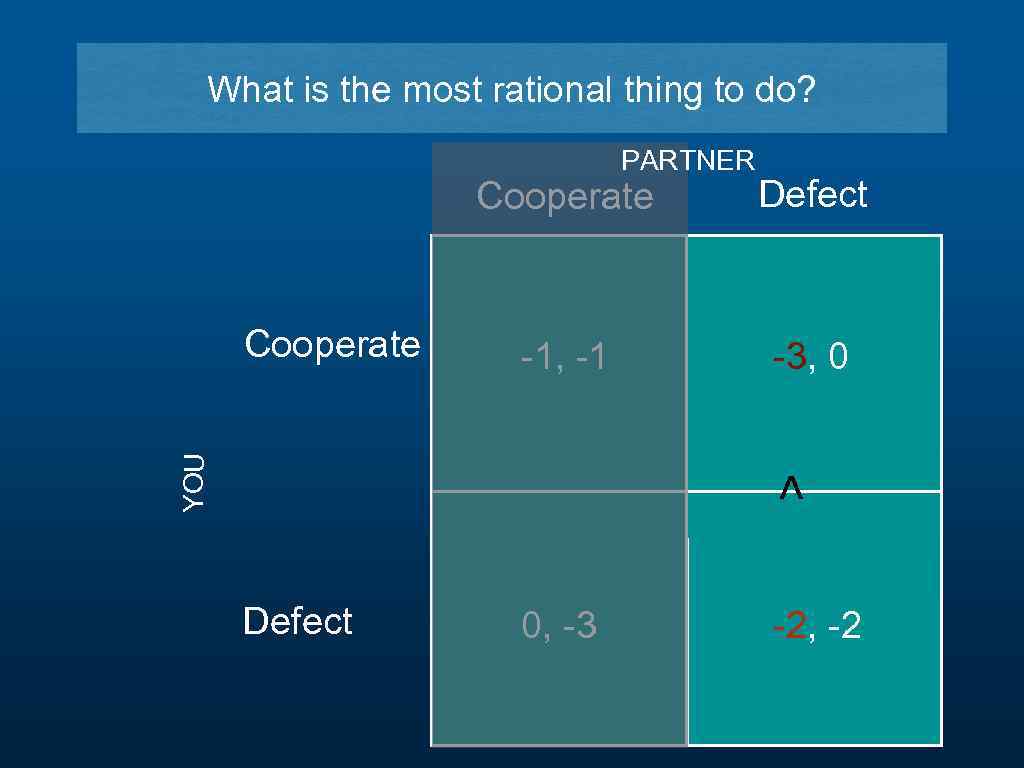
What is the most rational thing to do? PARTNER Defect Cooperate -1, -1 -3, 0 Defect 0, -3 > YOU Cooperate -2, -2
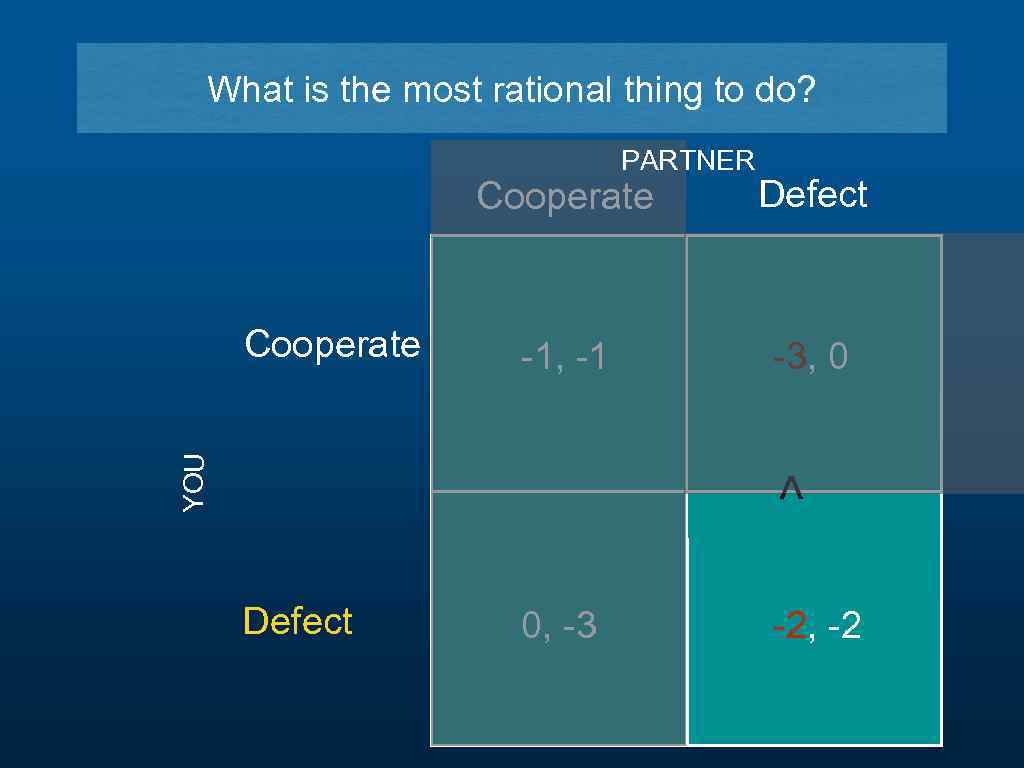
What is the most rational thing to do? PARTNER Defect Cooperate -1, -1 -3, 0 Defect 0, -3 > YOU Cooperate -2, -2
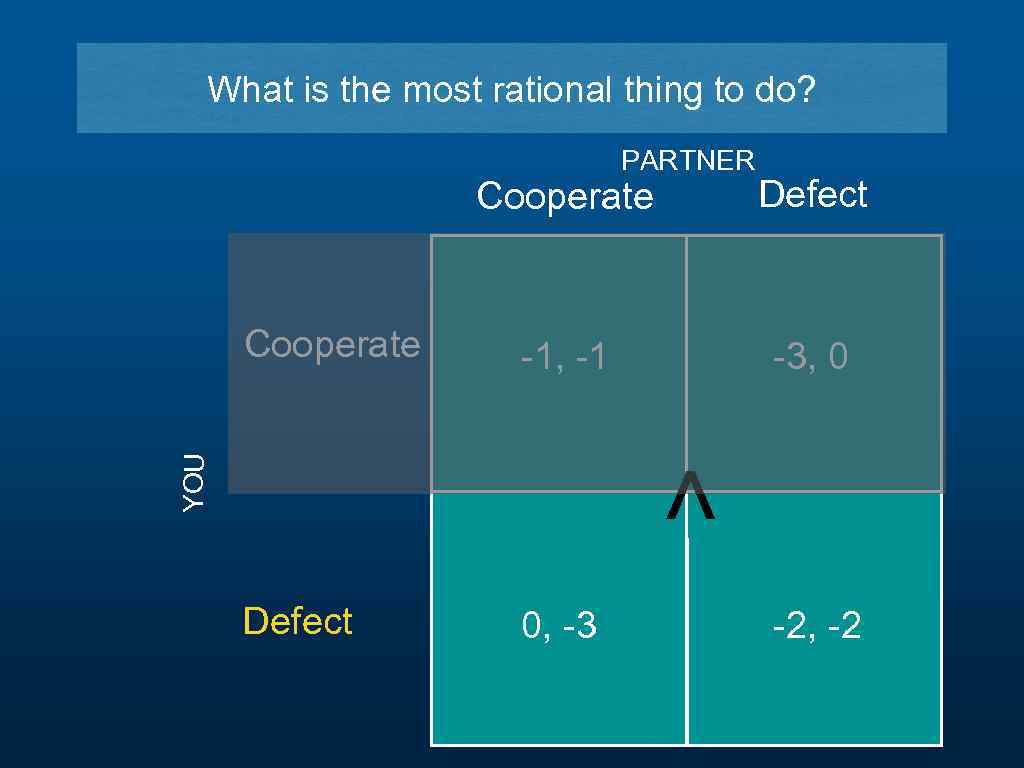
What is the most rational thing to do? PARTNER Defect Cooperate -1, -1 -3, 0 Defect 0, -3 > YOU Cooperate -2, -2
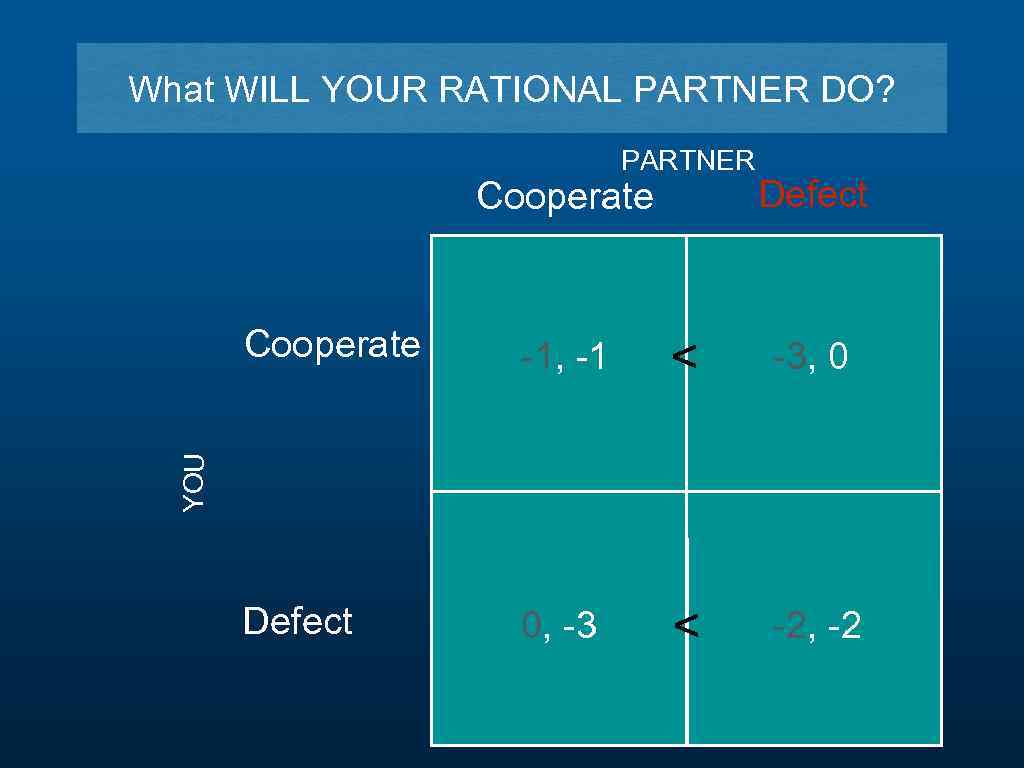
What WILL YOUR RATIONAL PARTNER DO? PARTNER Cooperate Defect -1, -1 < -3, 0 Defect 0, -3 < -2, -2 YOU Cooperate
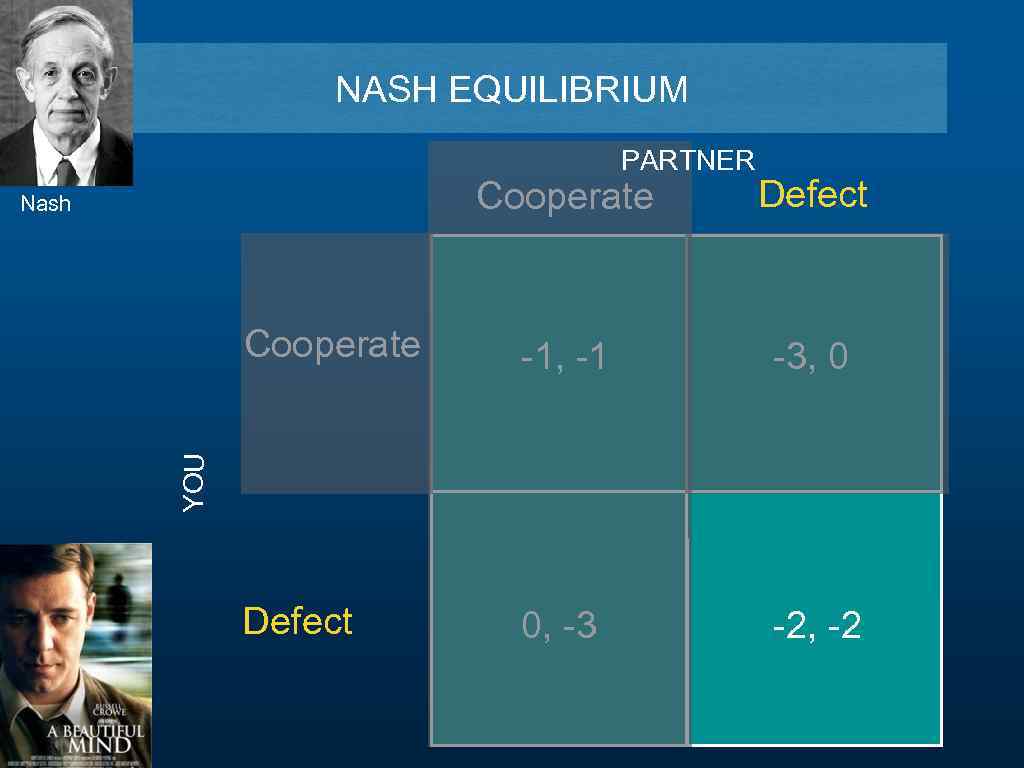
NASH EQUILIBRIUM PARTNER Cooperate Defect Cooperate -1, -1 -3, 0 Defect 0, -3 -2, -2 YOU Nash
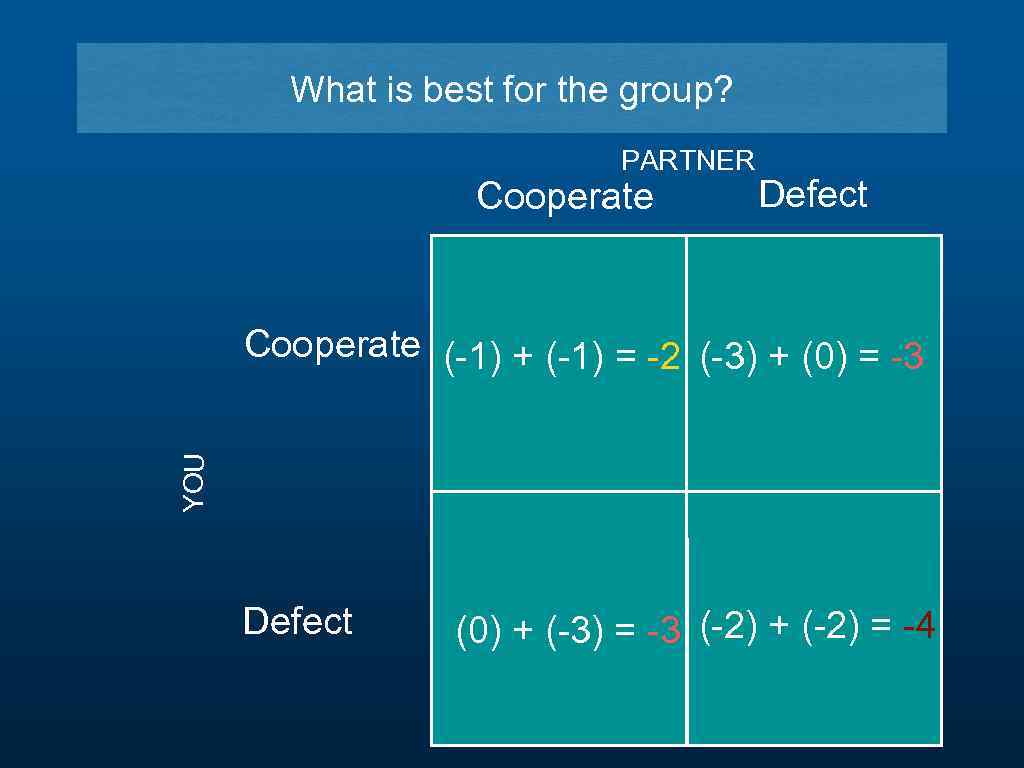
What is best for the group? PARTNER Cooperate Defect YOU Cooperate (-1) + (-1) = -2 (-3) + (0) = -3 Defect (0) + (-3) = -3 (-2) + (-2) = -4
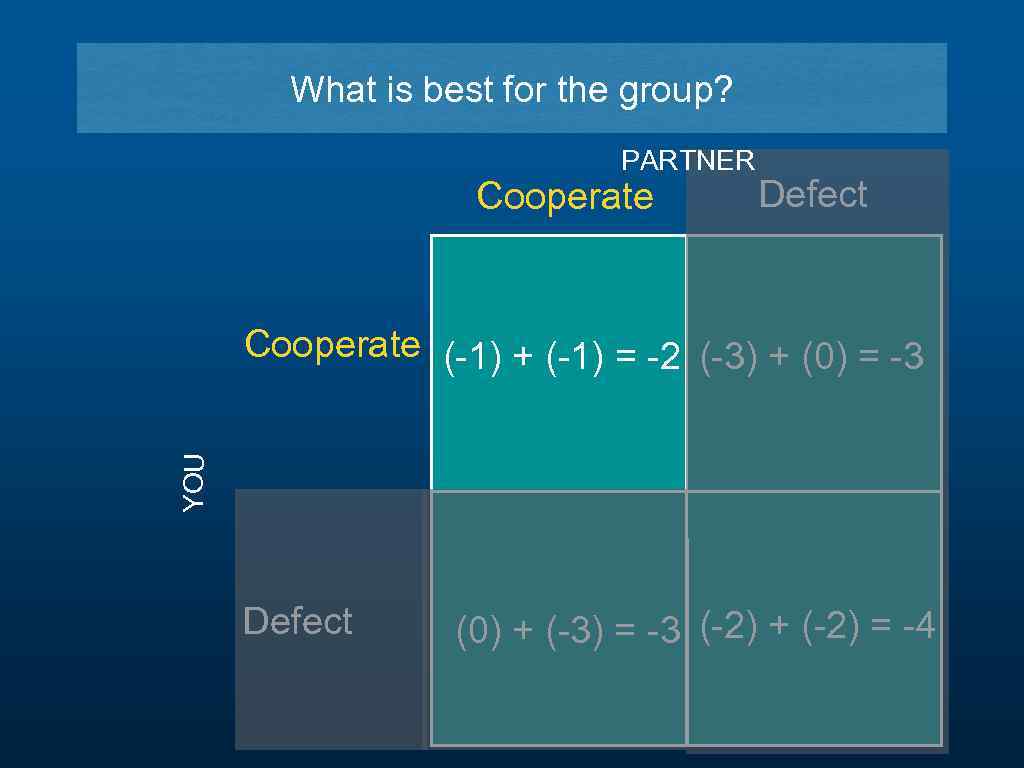
What is best for the group? PARTNER Cooperate Defect YOU Cooperate (-1) + (-1) = -2 (-3) + (0) = -3 Defect (0) + (-3) = -3 (-2) + (-2) = -4
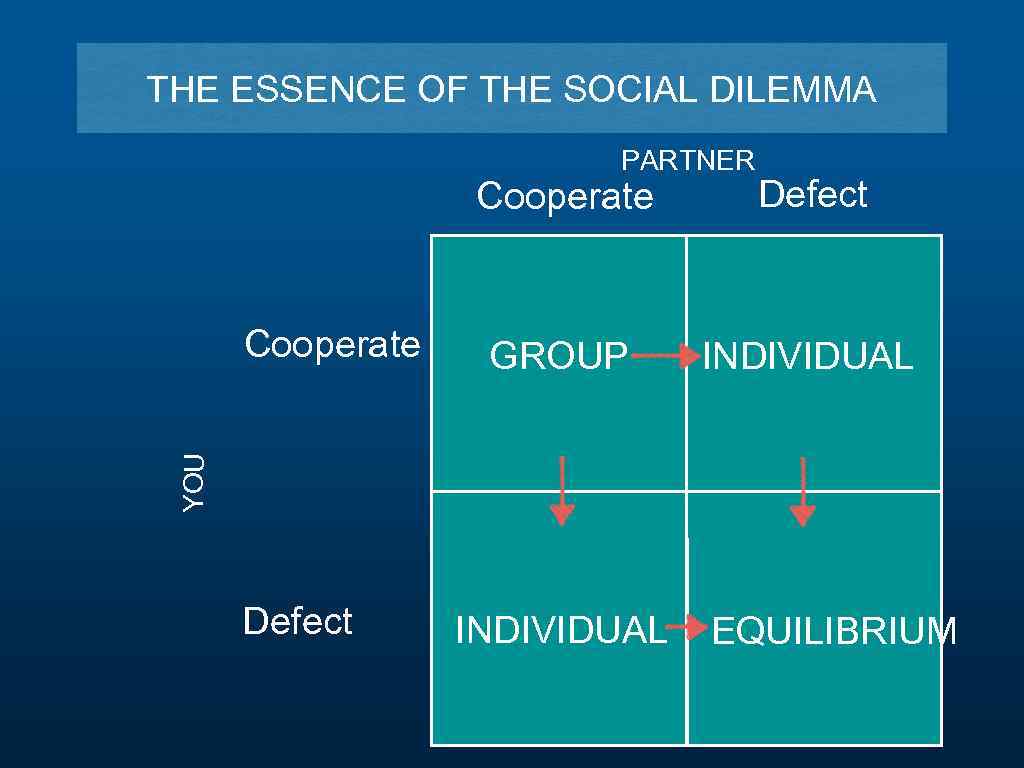
THE ESSENCE OF THE SOCIAL DILEMMA PARTNER Cooperate GROUP INDIVIDUAL YOU Cooperate Defect INDIVIDUAL EQUILIBRIUM

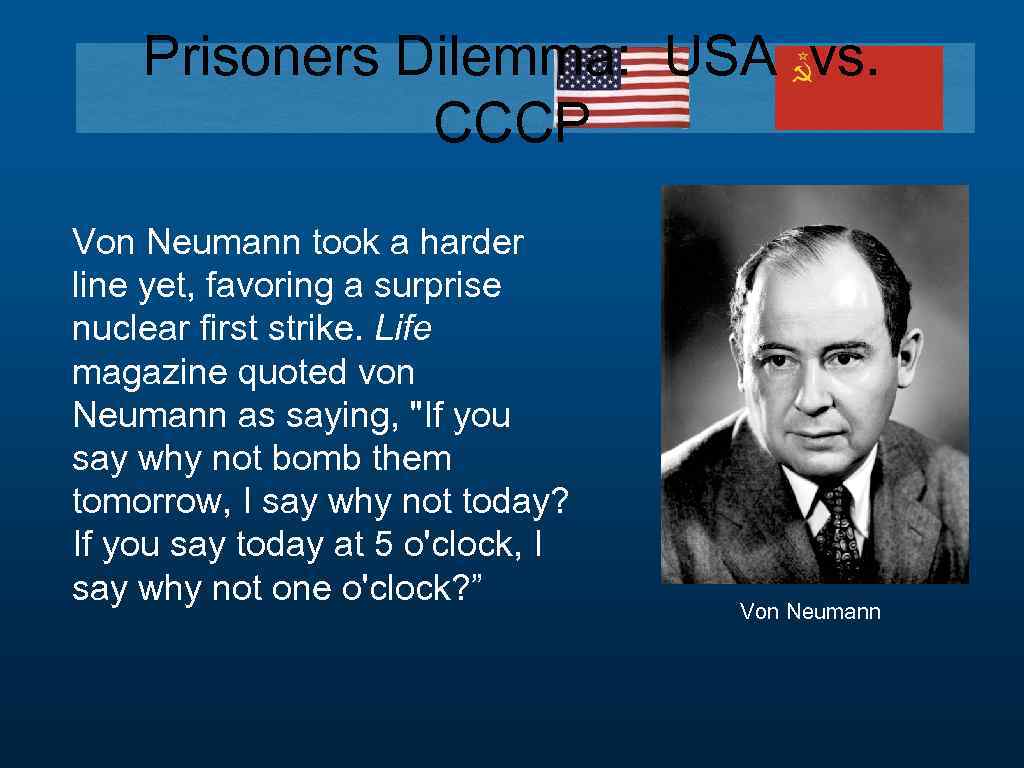
Prisoners Dilemma: USA vs. CCCP Von Neumann took a harder line yet, favoring a surprise nuclear first strike. Life magazine quoted von Neumann as saying, "If you say why not bomb them tomorrow, I say why not today? If you say today at 5 o'clock, I say why not one o'clock? ” Von Neumann
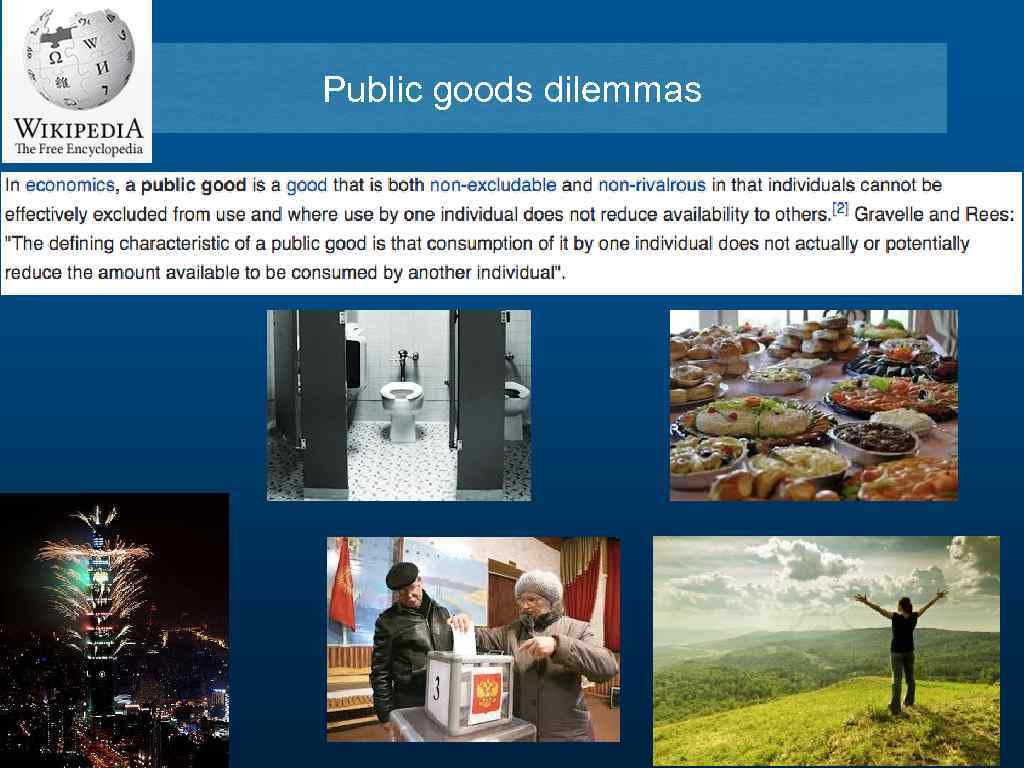
Public goods dilemmas
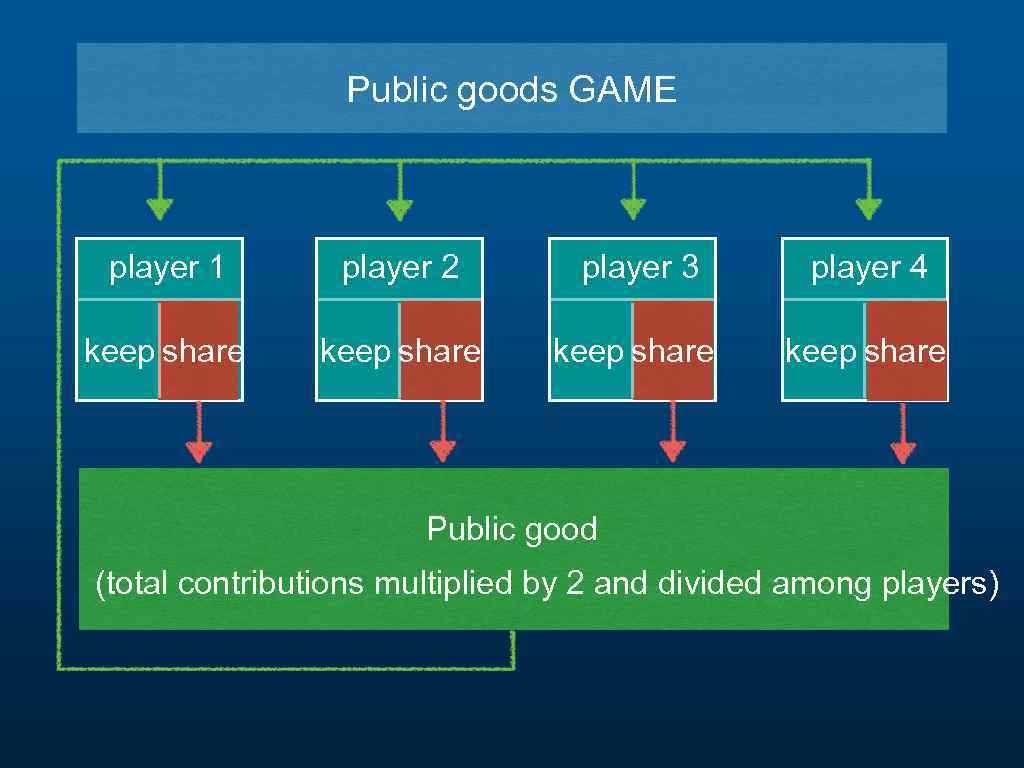
Public goods GAME player 1 player 2 player 3 player 4 keep share Public good (total contributions multiplied by 2 and divided among players)
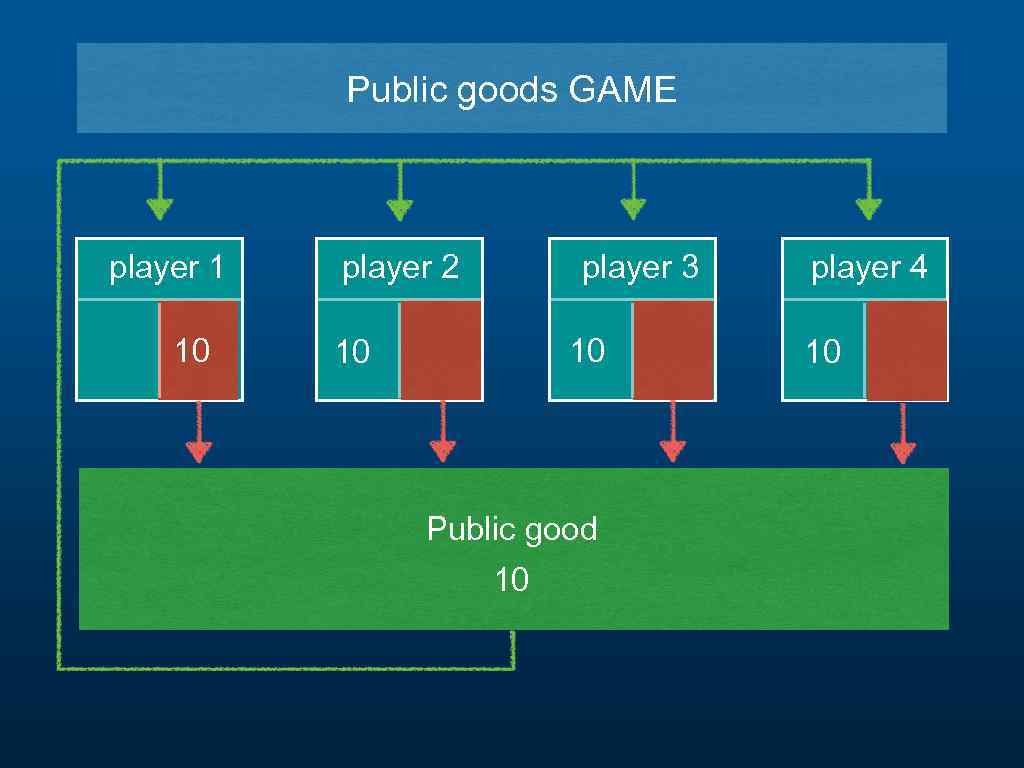
Public goods GAME player 1 10 player 2 player 3 10 10 Public good 10 player 4 10
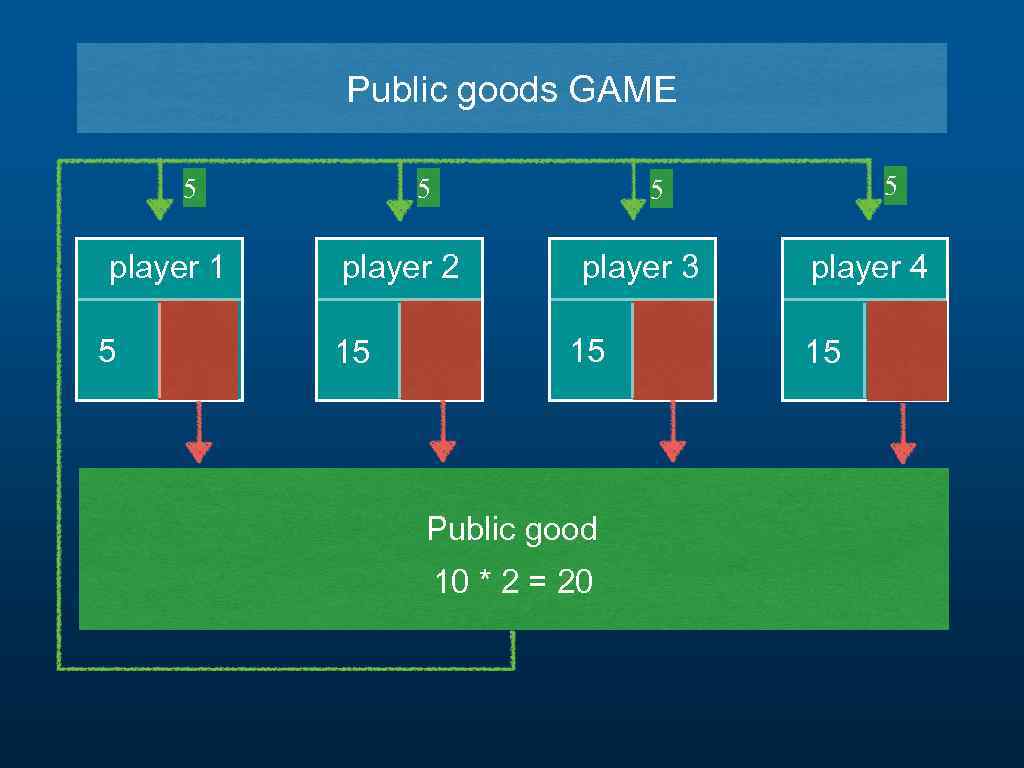
Public goods GAME 5 player 1 5 5 player 2 15 5 5 player 3 15 Public good 10 * 2 = 20 player 4 15
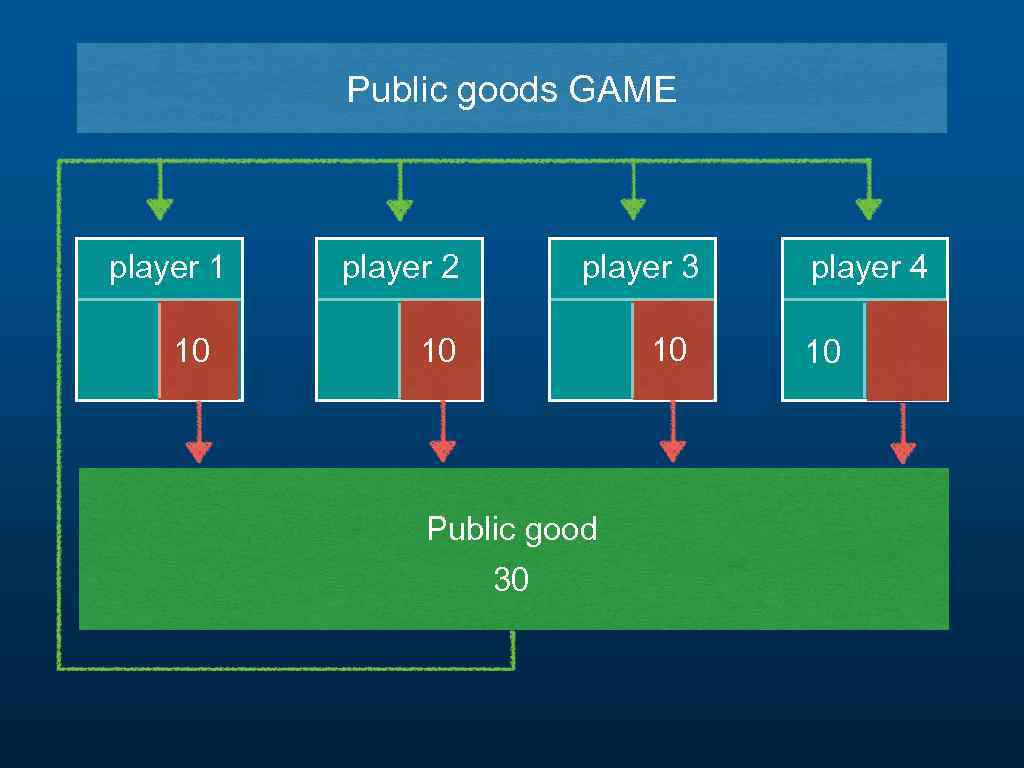
Public goods GAME player 1 10 player 2 player 3 10 10 Public good 30 player 4 10
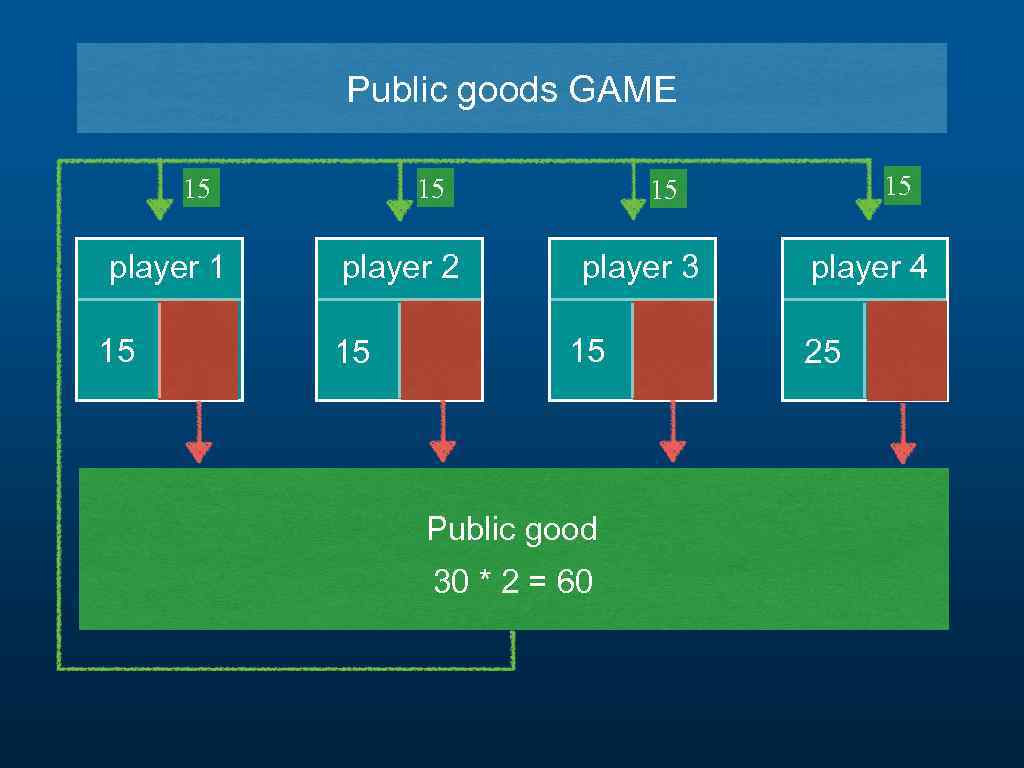
Public goods GAME 15 player 1 15 15 player 2 15 15 15 player 3 15 Public good 30 * 2 = 60 player 4 25
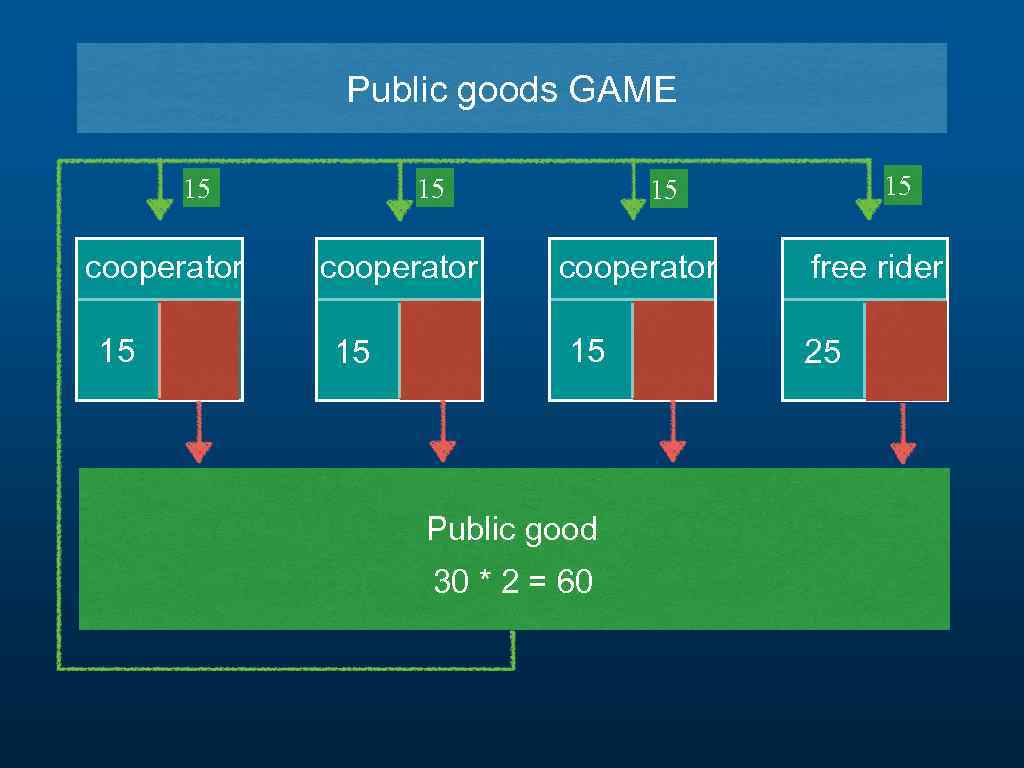
Public goods GAME 15 cooperator 15 15 15 cooperator 15 Public good 30 * 2 = 60 free rider 25
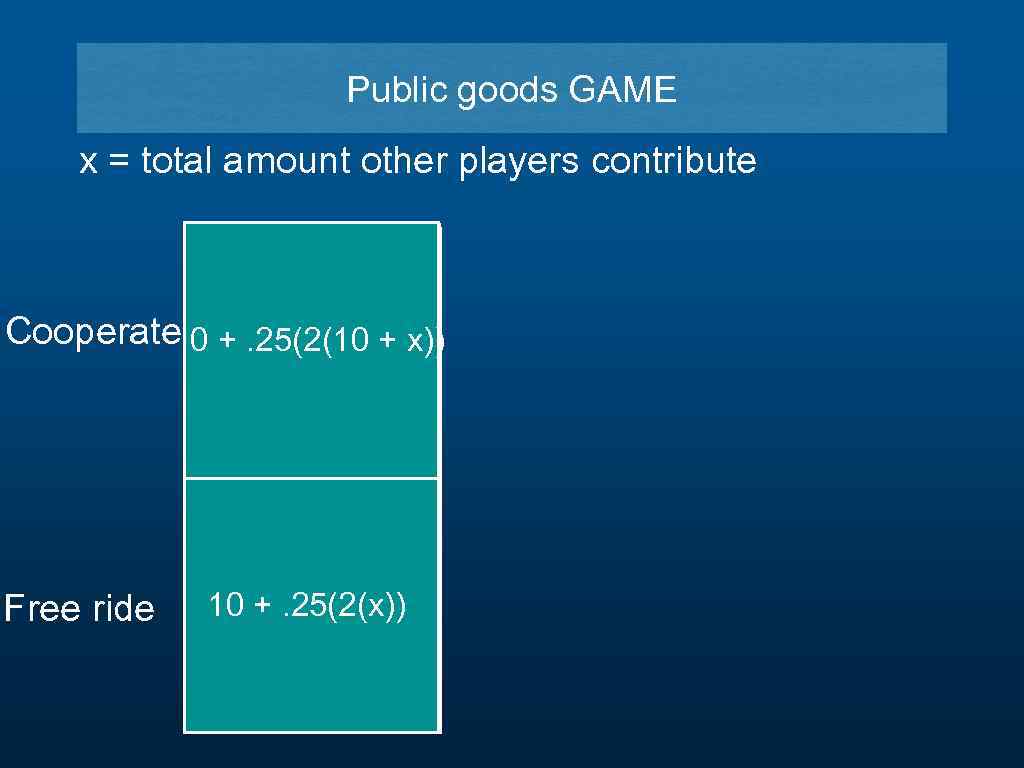
Public goods GAME x = total amount other players contribute Cooperate 0 +. 25(2(10 + x)) Free ride 10 +. 25(2(x))
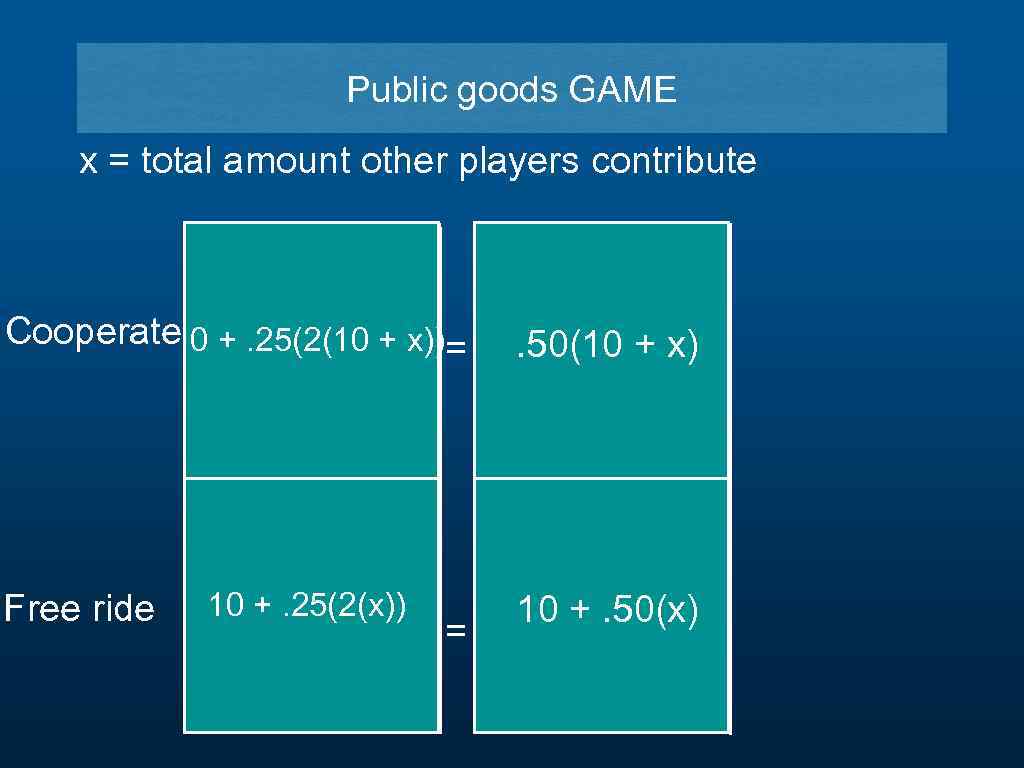
Public goods GAME x = total amount other players contribute Cooperate 0 +. 25(2(10 + x))= Free ride 10 +. 25(2(x)) = . 50(10 + x) 10 +. 50(x)
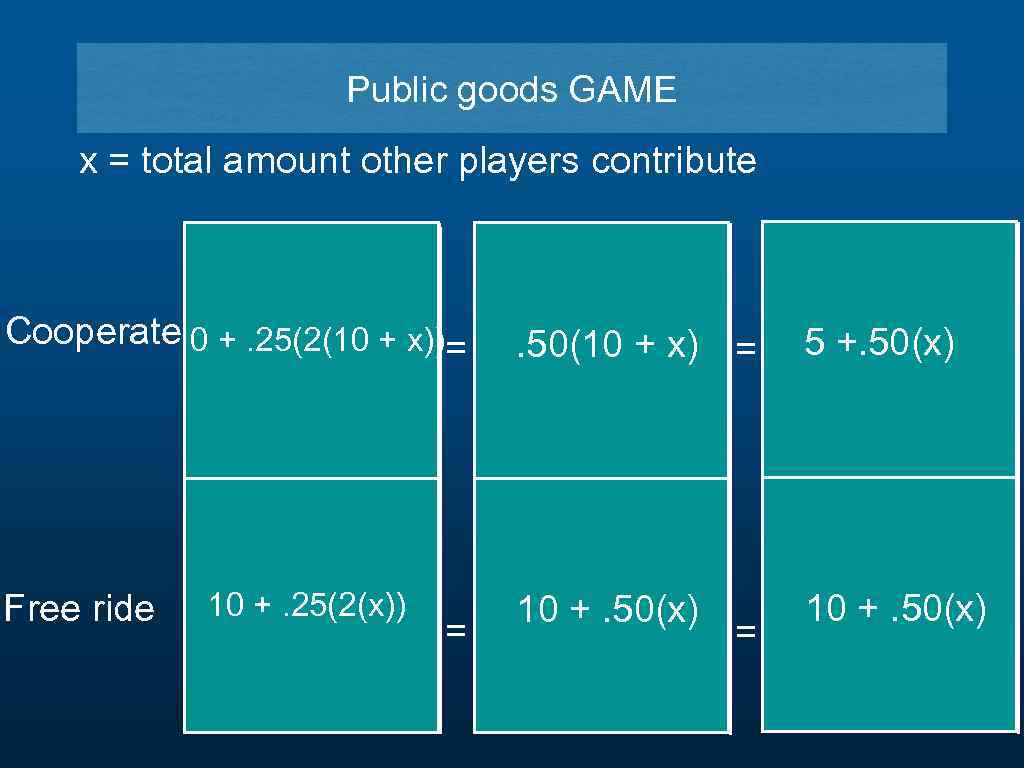
Public goods GAME x = total amount other players contribute Cooperate 0 +. 25(2(10 + x))= Free ride 10 +. 25(2(x)) = . 50(10 + x) = 5 +. 50(x) 10 +. 50(x) =
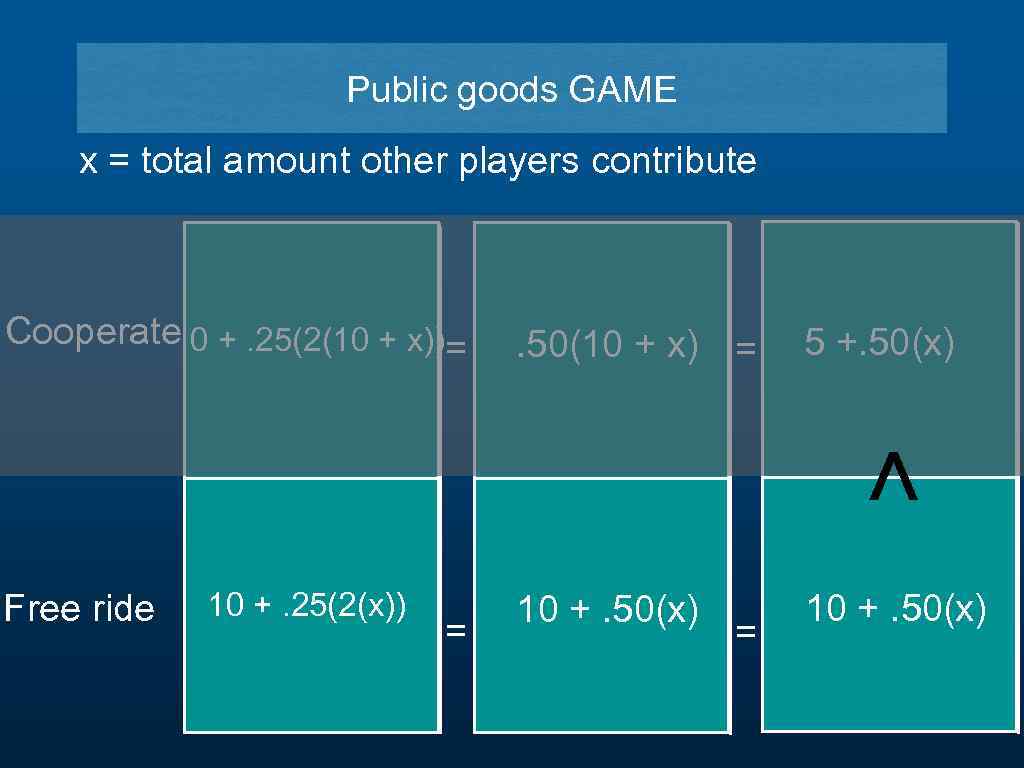
Public goods GAME x = total amount other players contribute . 50(10 + x) = 5 +. 50(x) 10 +. 50(x) > Cooperate 0 +. 25(2(10 + x))= Free ride 10 +. 25(2(x)) = =
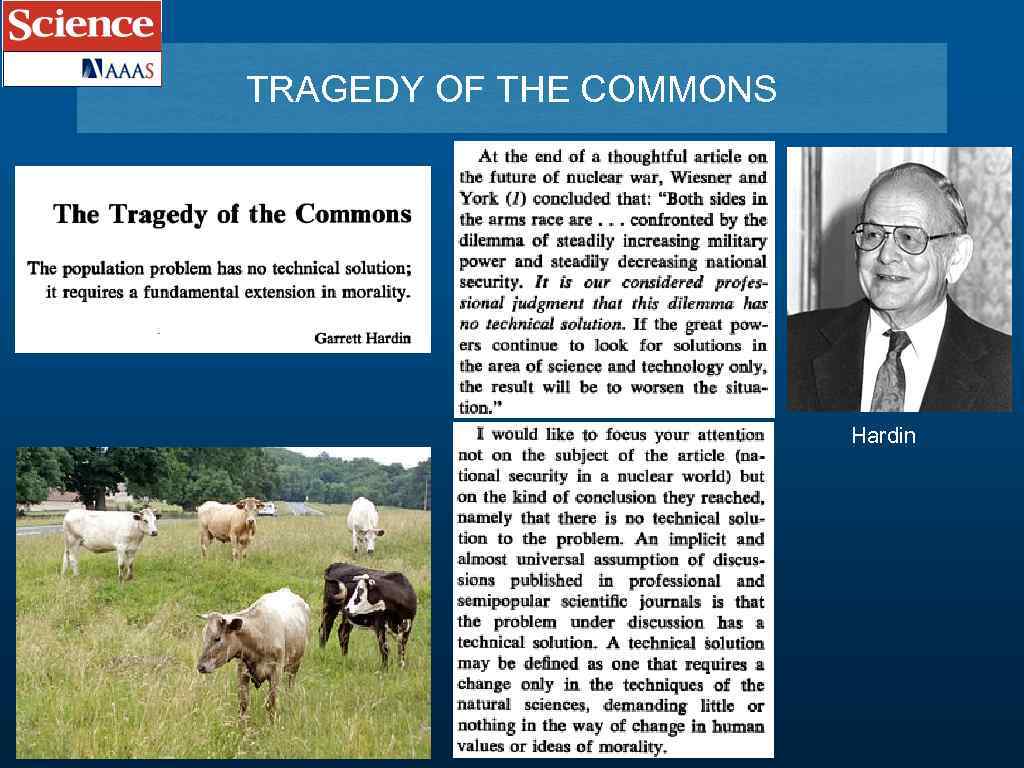
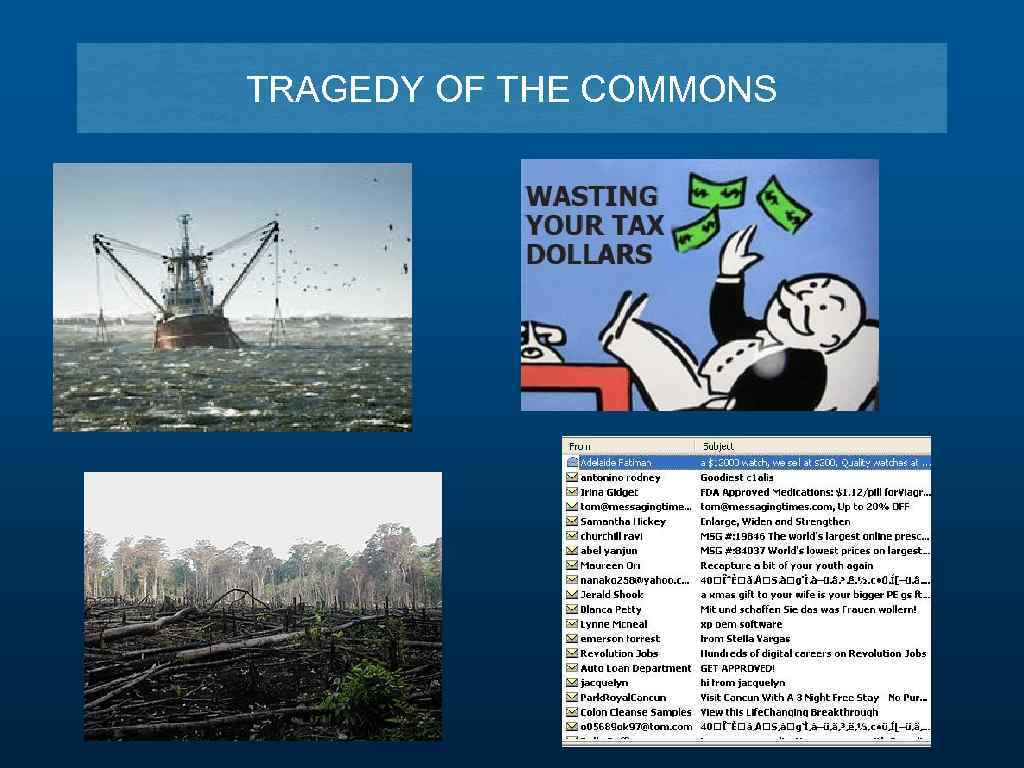
TRAGEDY OF THE COMMONS Hardin
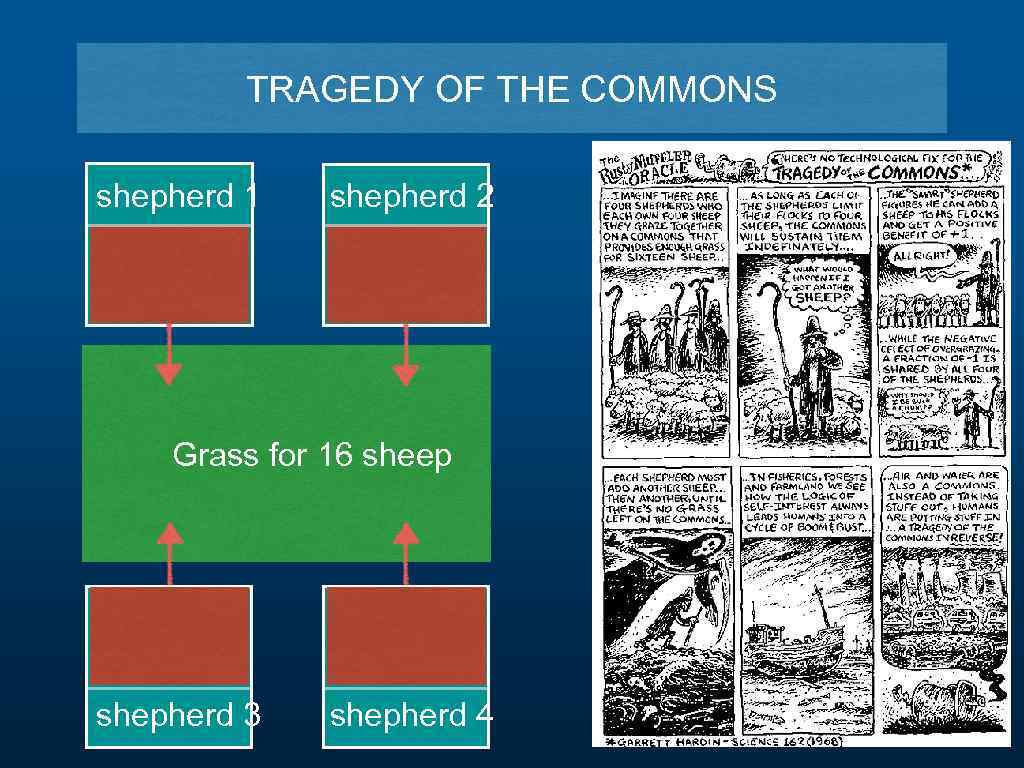
TRAGEDY OF THE COMMONS shepherd 1 shepherd 2 Grass for 16 sheep shepherd 3 shepherd 4
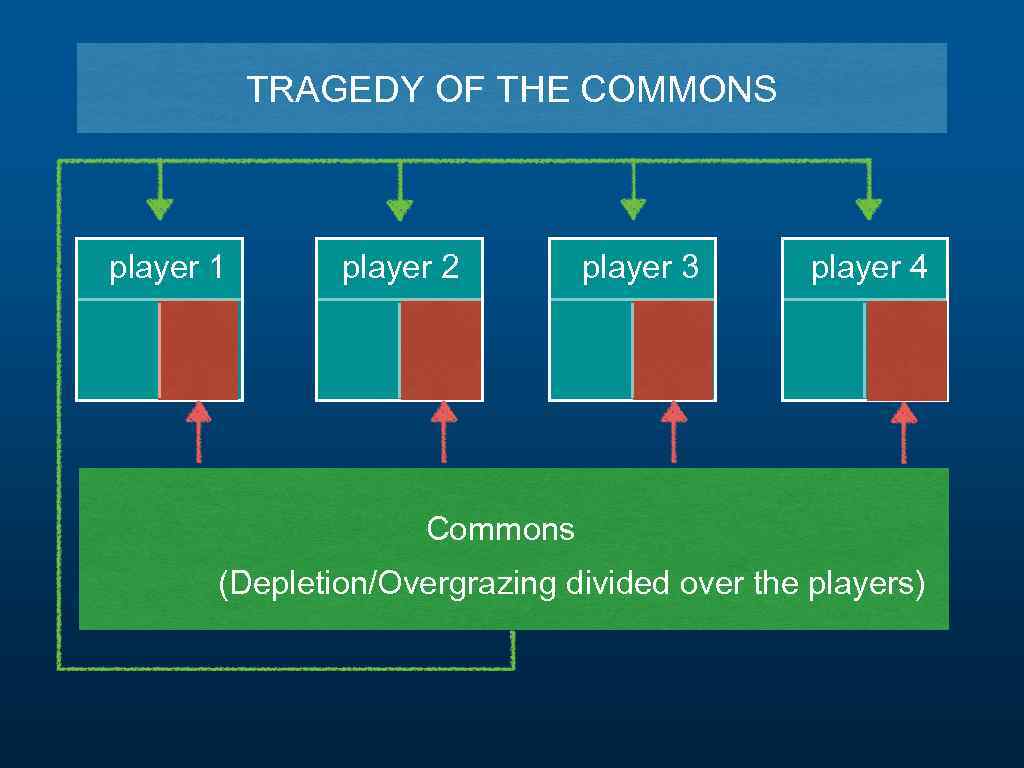
TRAGEDY OF THE COMMONS player 1 player 2 player 3 player 4 Commons (Depletion/Overgrazing divided over the players)
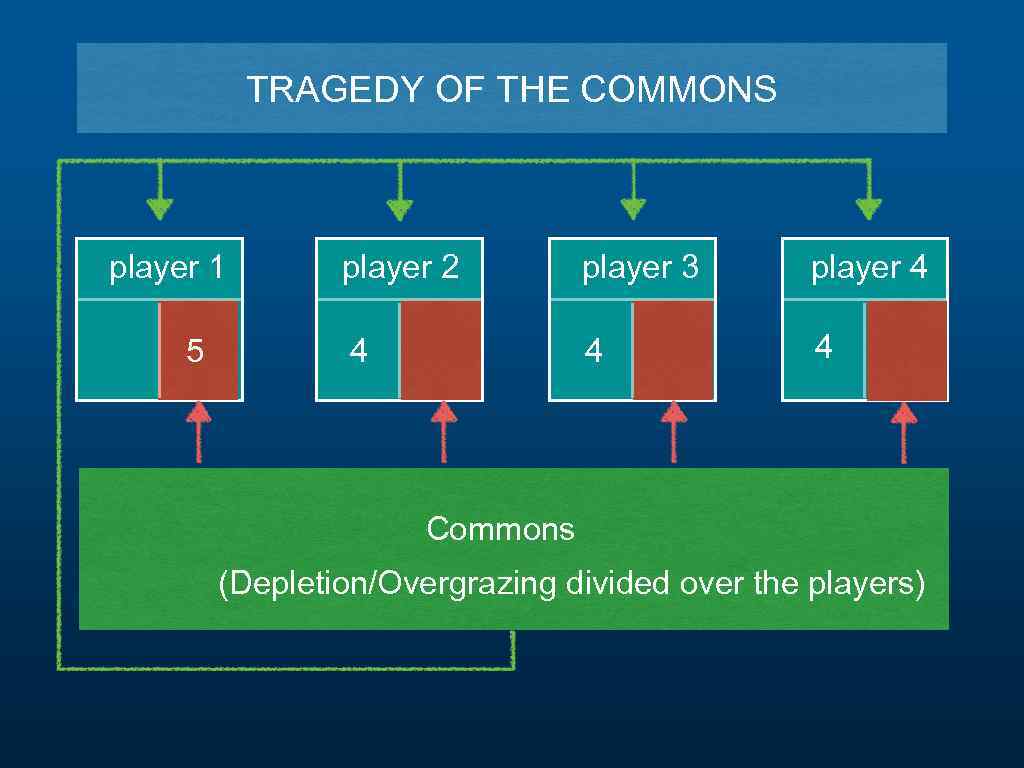
TRAGEDY OF THE COMMONS player 1 5 player 2 player 3 player 4 4 Commons (Depletion/Overgrazing divided over the players)
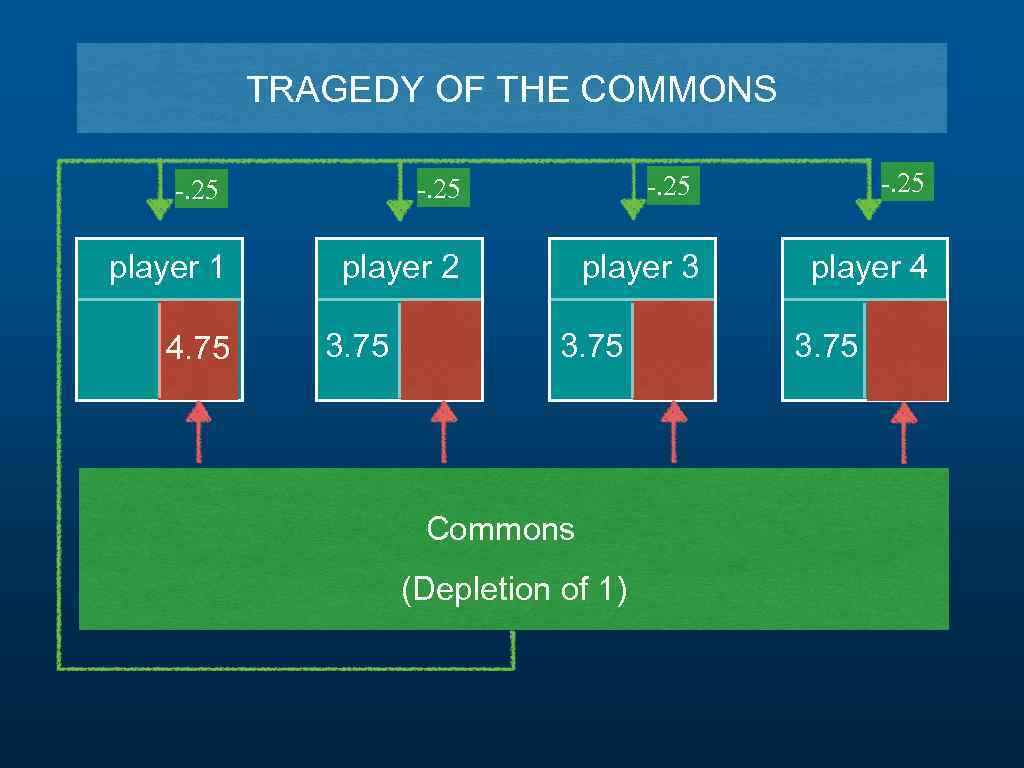
TRAGEDY OF THE COMMONS -. 25 player 1 player 2 player 3 player 4 4. 75 3. 75 Commons (Depletion of 1) 3. 75
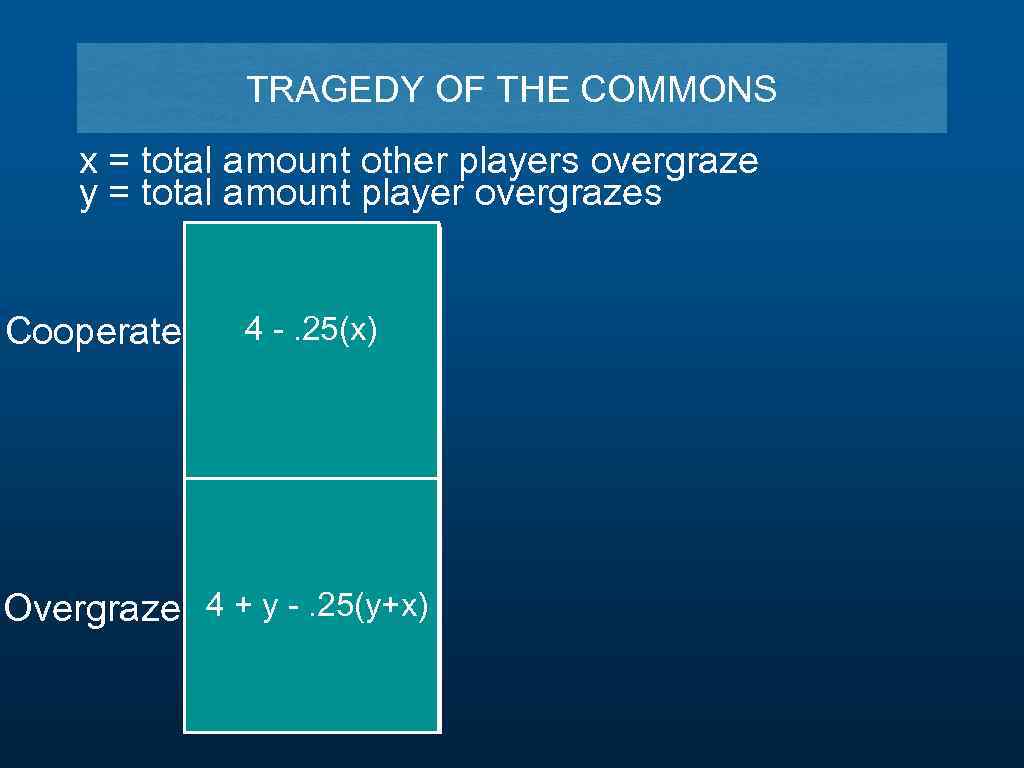
TRAGEDY OF THE COMMONS x = total amount other players overgraze y = total amount player overgrazes Cooperate 4 -. 25(x) Overgraze 4 + y -. 25(y+x)
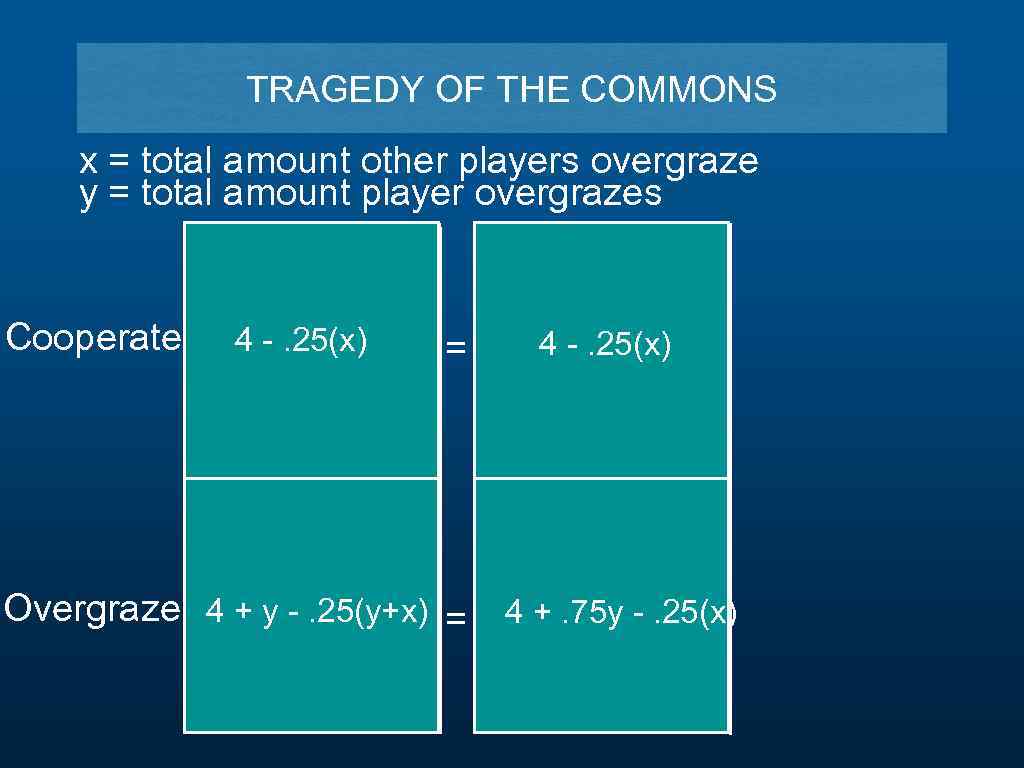
TRAGEDY OF THE COMMONS x = total amount other players overgraze y = total amount player overgrazes Cooperate 4 -. 25(x) = Overgraze 4 + y -. 25(y+x) = 4 -. 25(x) 4 +. 75 y -. 25(x)
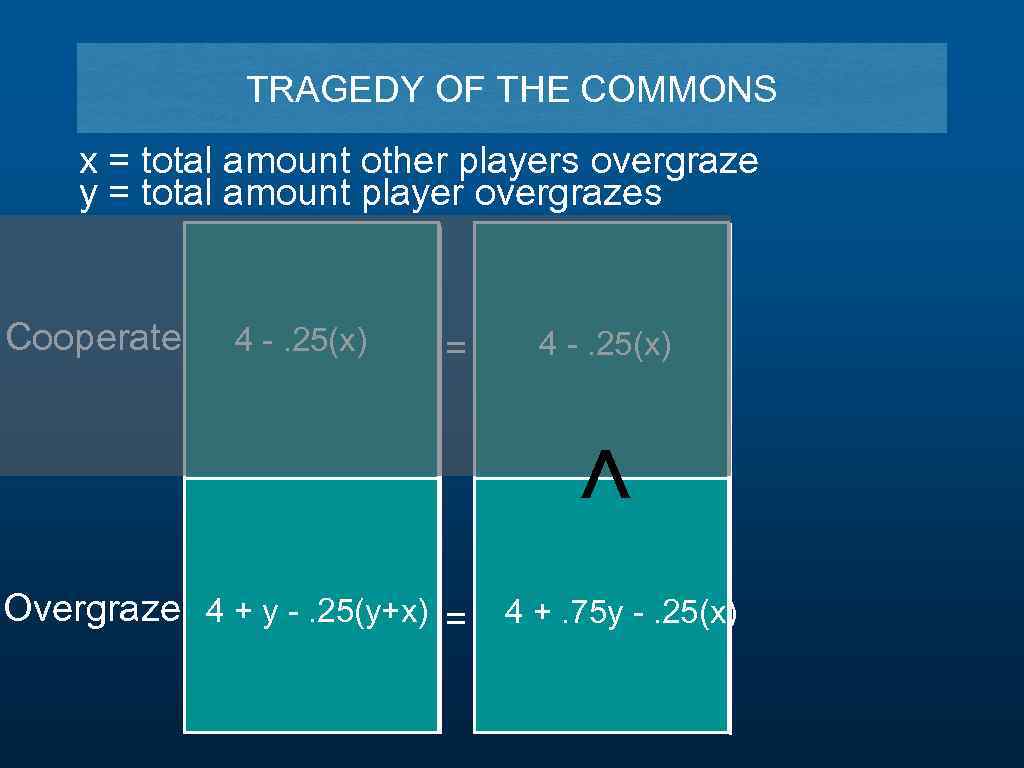
TRAGEDY OF THE COMMONS x = total amount other players overgraze y = total amount player overgrazes 4 -. 25(x) = 4 -. 25(x) > Cooperate Overgraze 4 + y -. 25(y+x) = 4 +. 75 y -. 25(x)
TRAGEDY OF THE COMMONS
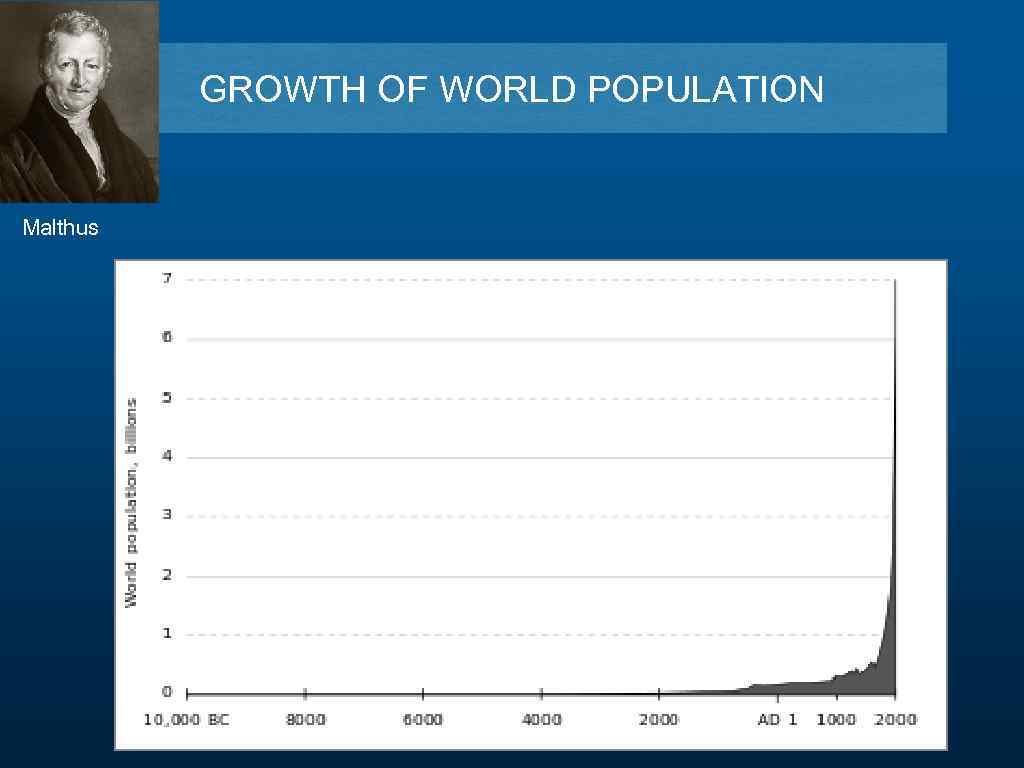
GROWTH OF WORLD POPULATION Malthus
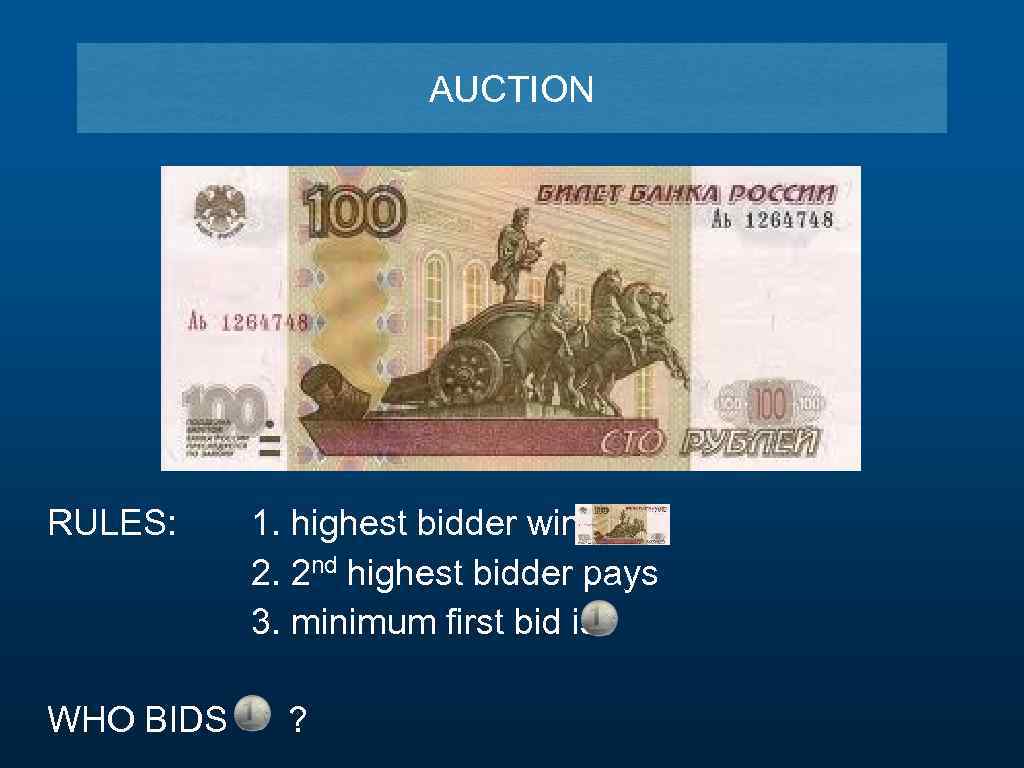
AUCTION RULES: WHO BIDS 1. highest bidder wins 2. 2 nd highest bidder pays 3. minimum first bid is ?
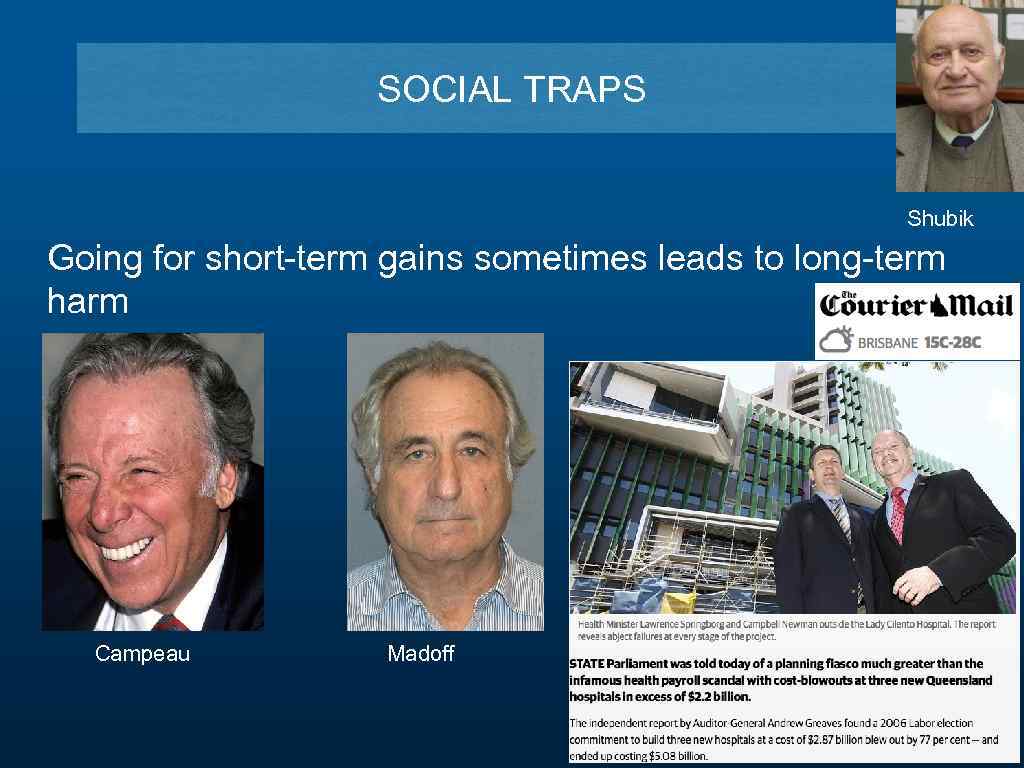
SOCIAL TRAPS Shubik Going for short-term gains sometimes leads to long-term harm Campeau Madoff
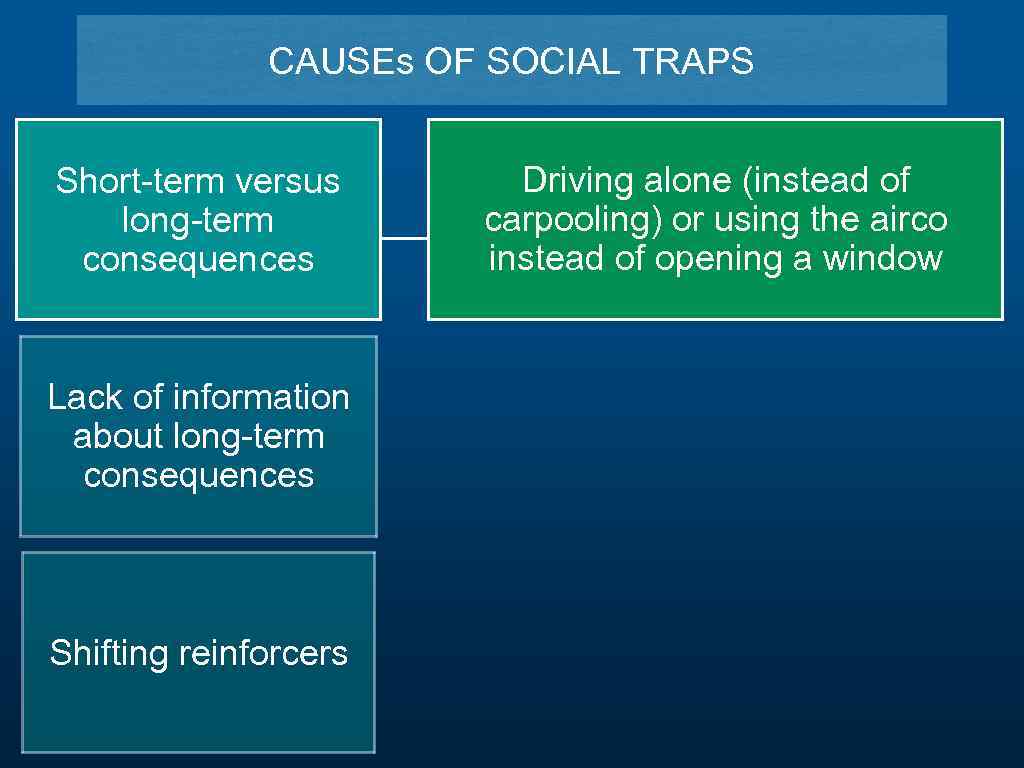
CAUSEs OF SOCIAL TRAPS Short-term versus long-term consequences Lack of information about long-term consequences Shifting reinforcers Driving alone (instead of carpooling) or using the airco instead of opening a window
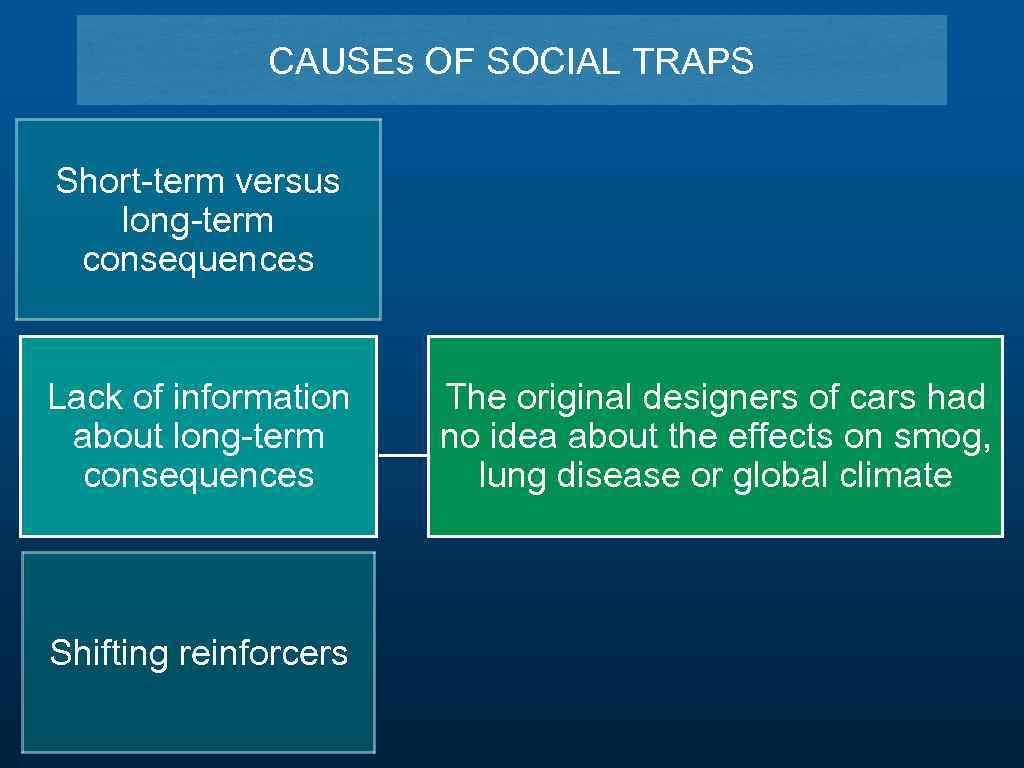
CAUSEs OF SOCIAL TRAPS Short-term versus long-term consequences Lack of information about long-term consequences Shifting reinforcers The original designers of cars had no idea about the effects on smog, lung disease or global climate
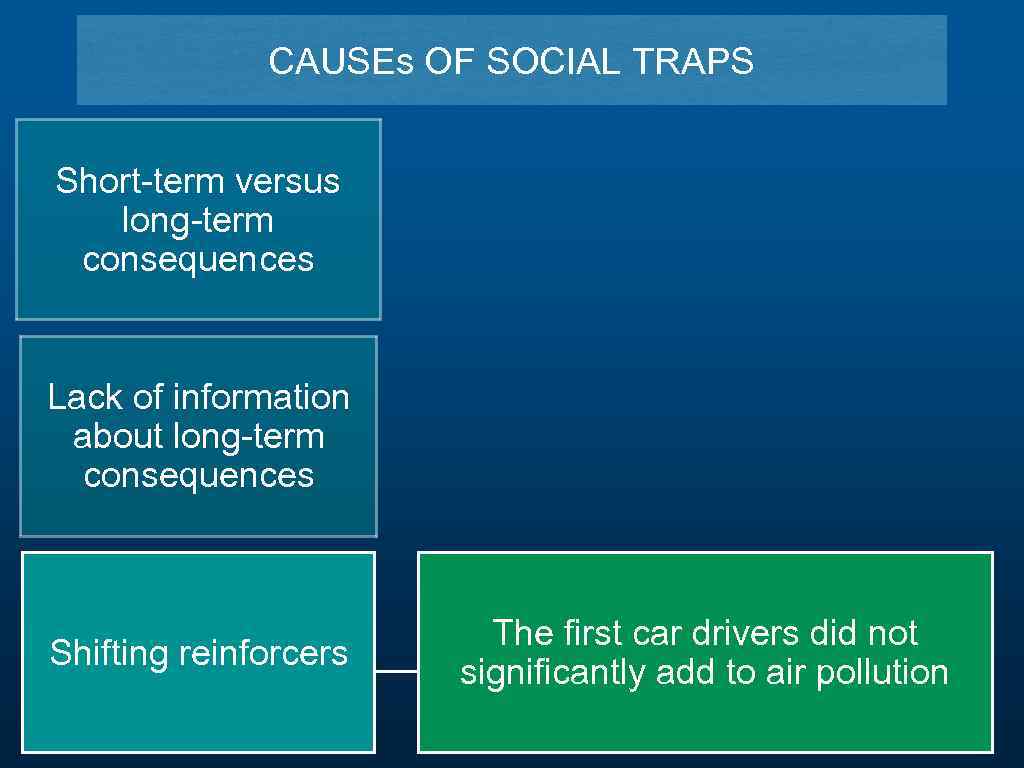
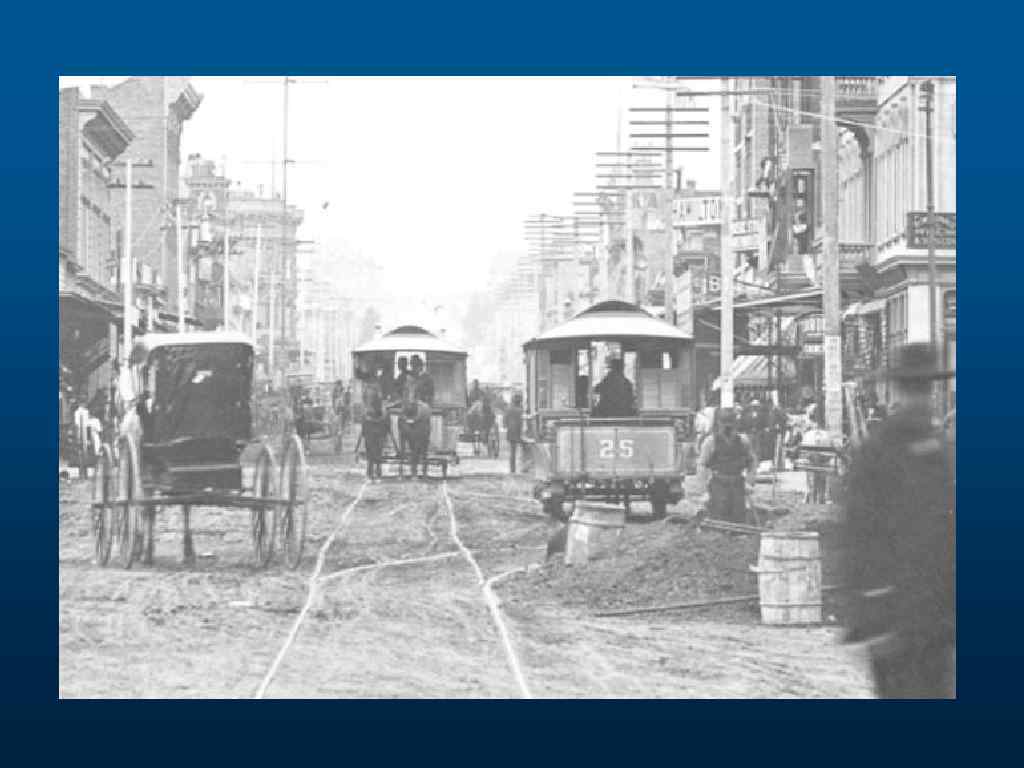
CAUSEs OF SOCIAL TRAPS Short-term versus long-term consequences Lack of information about long-term consequences Shifting reinforcers The first car drivers did not significantly add to air pollution
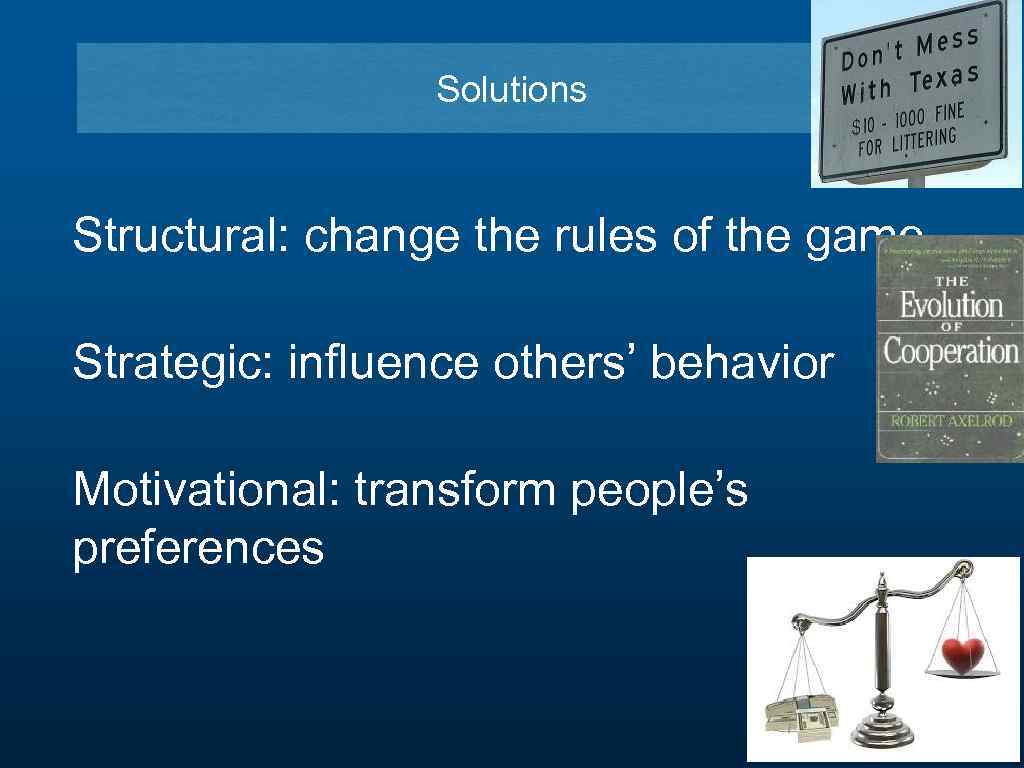
Solutions Structural: change the rules of the game Strategic: influence others’ behavior Motivational: transform people’s preferences
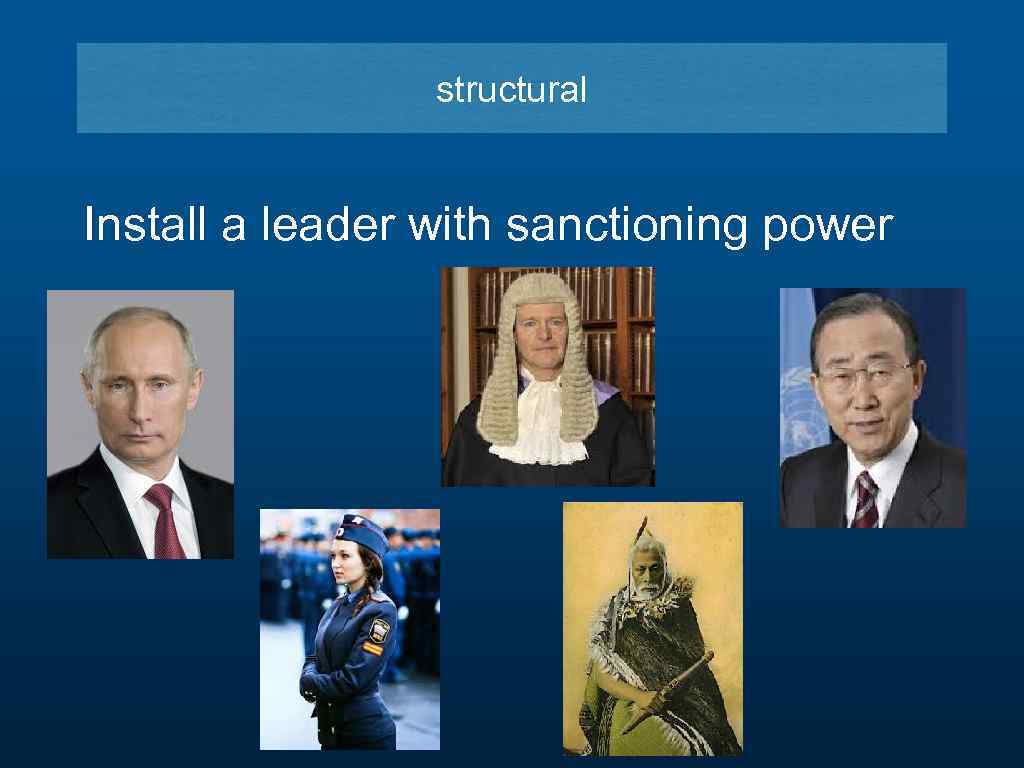
structural Install a leader with sanctioning power
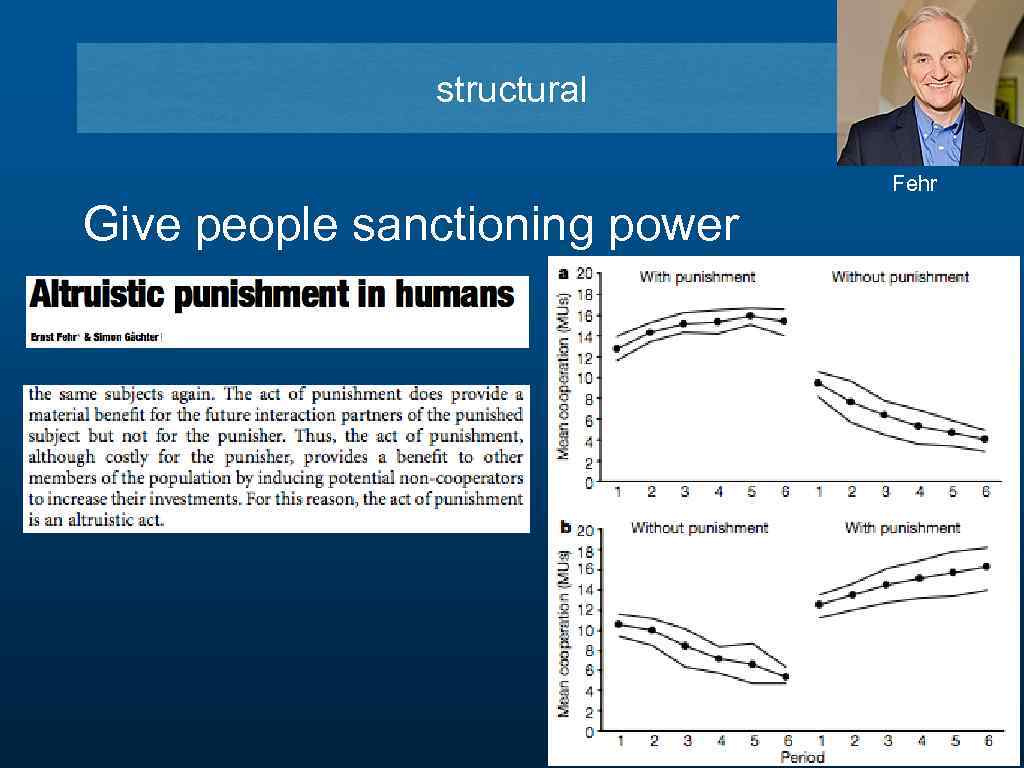
structural Fehr Give people sanctioning power
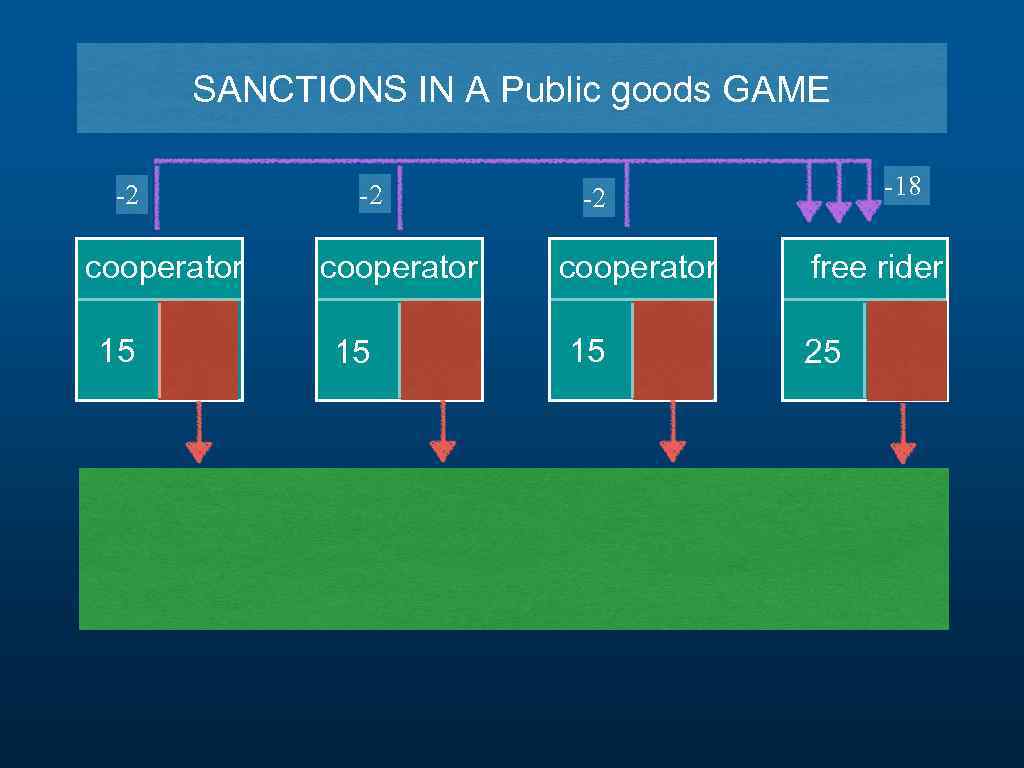
SANCTIONS IN A Public goods GAME -2 cooperator 15 -18 -2 cooperator 15 free rider 25

LIMITATIONS TO SANCTIONS
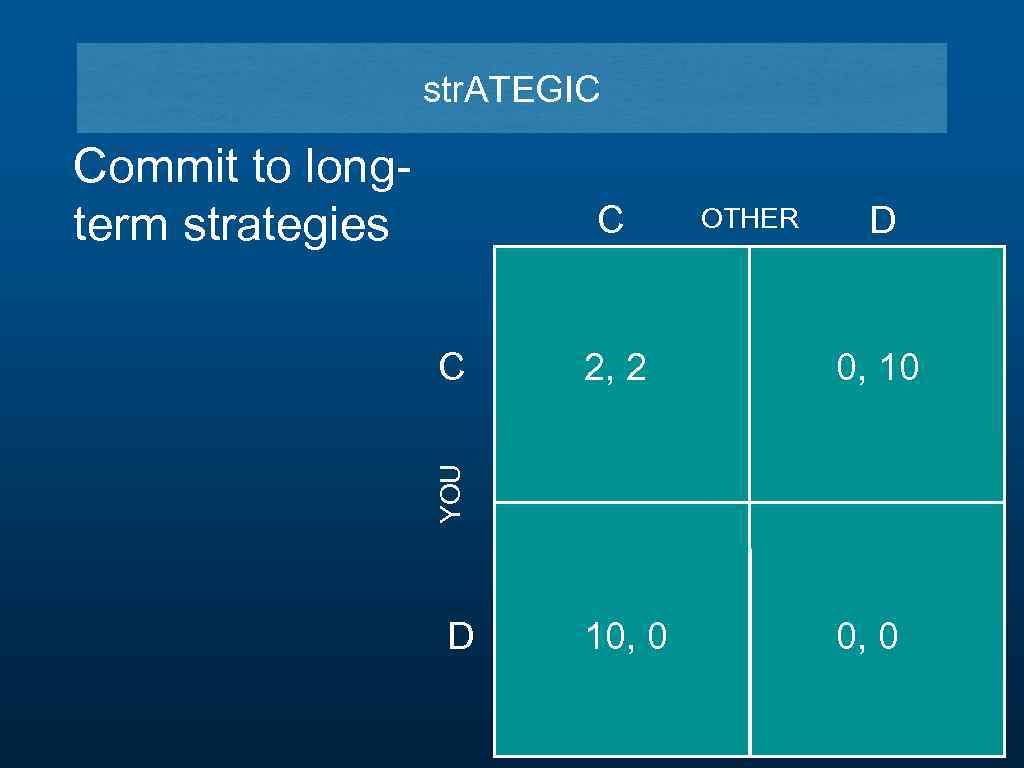
str. ATEGIC Commit to longterm strategies C D 2, 2 0, 10 10, 0 YOU C OTHER D
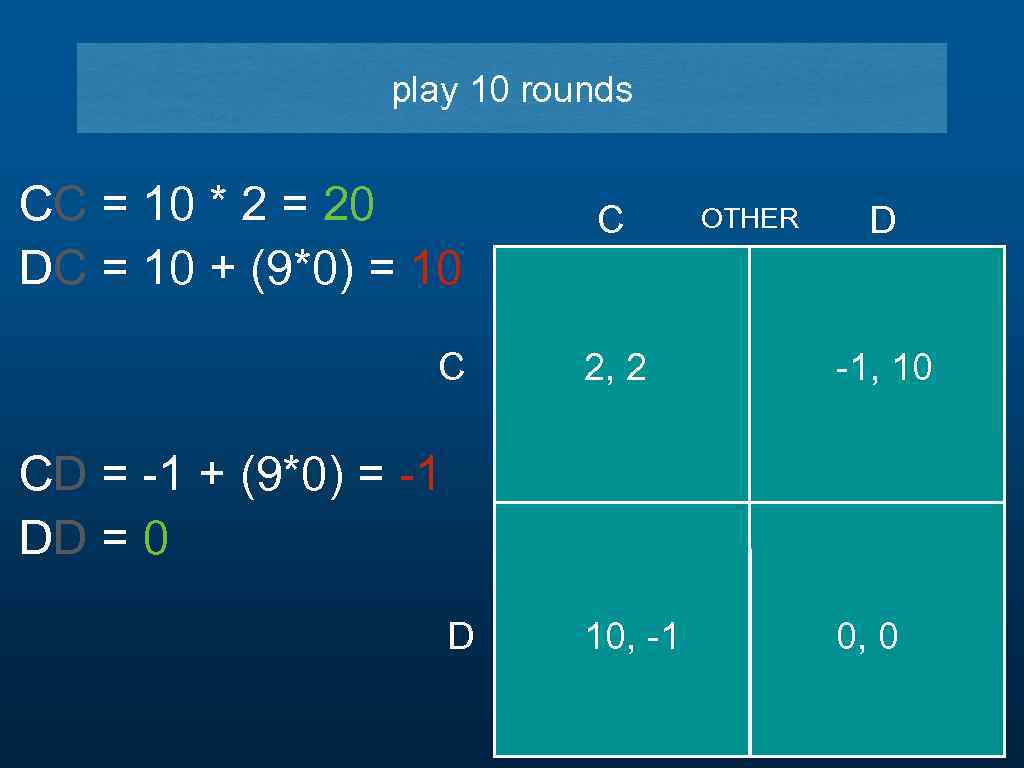
play 10 rounds CC = 10 * 2 = 20 DC = 10 + (9*0) = 10 C C OTHER D 2, 2 -1, 10 10, -1 0, 0 CD = -1 + (9*0) = -1 DD = 0 D
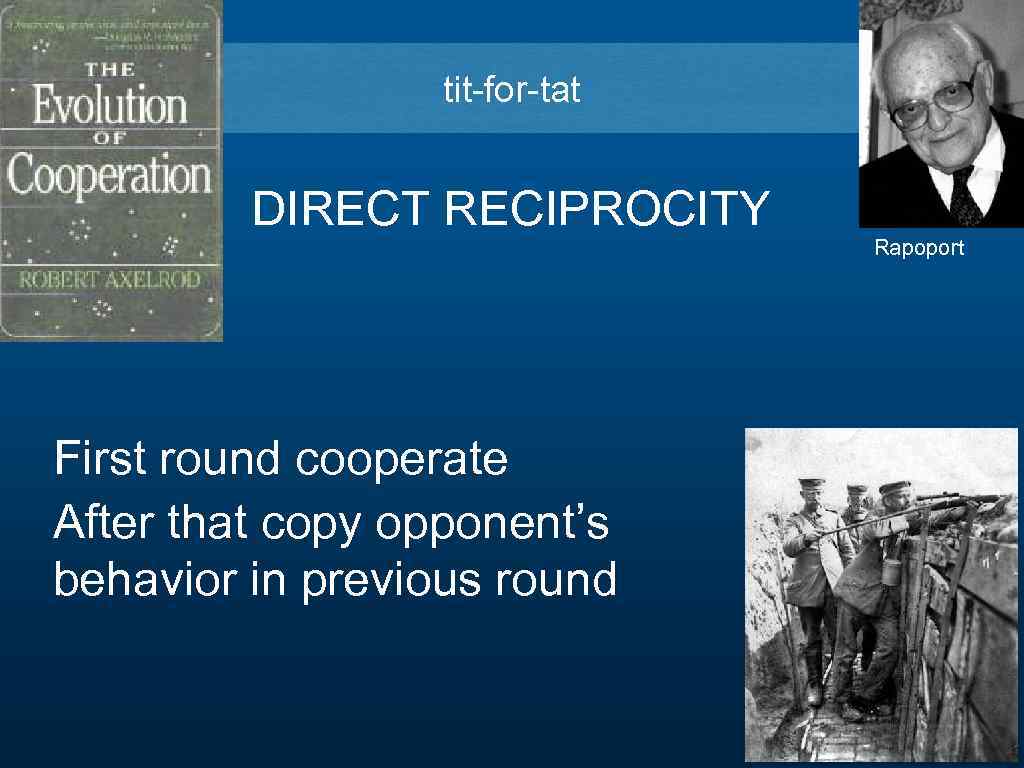
tit-for-tat DIRECT RECIPROCITY Rapoport First round cooperate After that copy opponent’s behavior in previous round
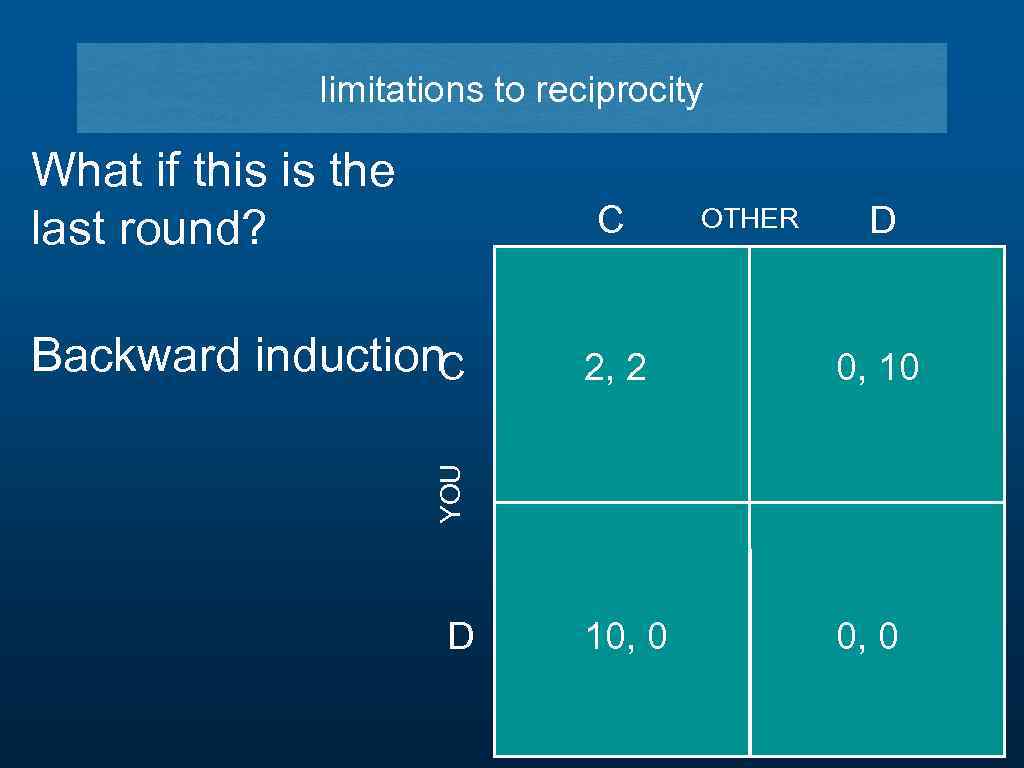
limitations to reciprocity What if this is the last round? C D 2, 2 0, 10 10, 0 YOU Backward induction. C OTHER D
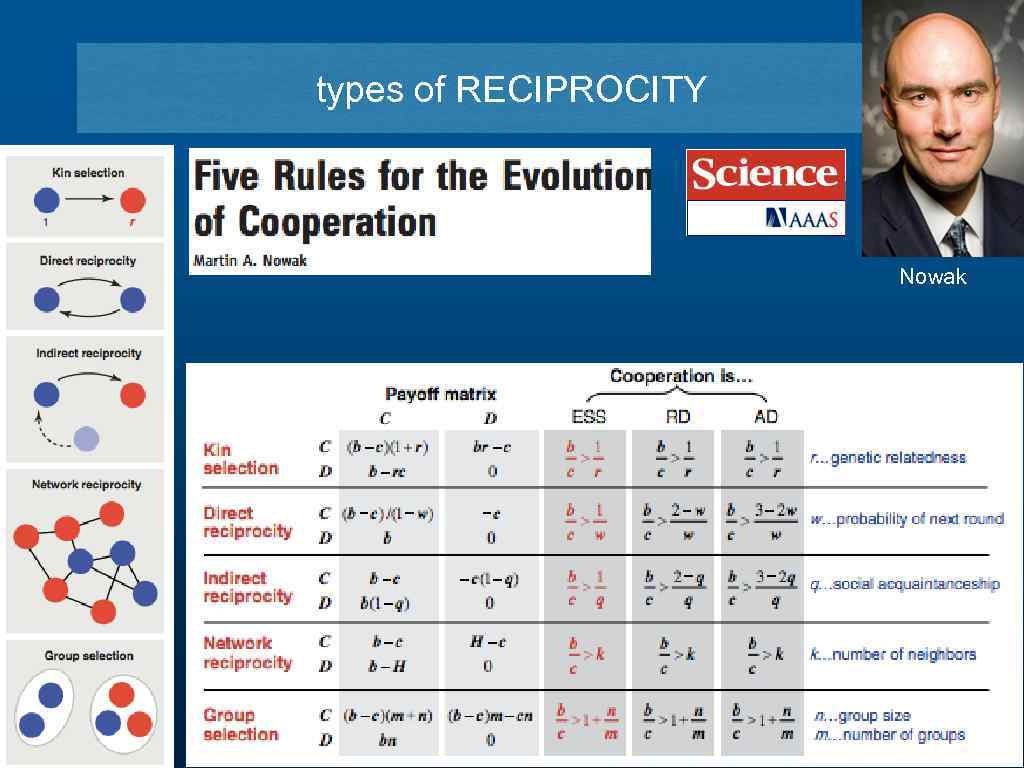
types of RECIPROCITY Nowak
motivational Transform people’s preferences Weight put on own outcomes versus other people’s outcomes Social preferences
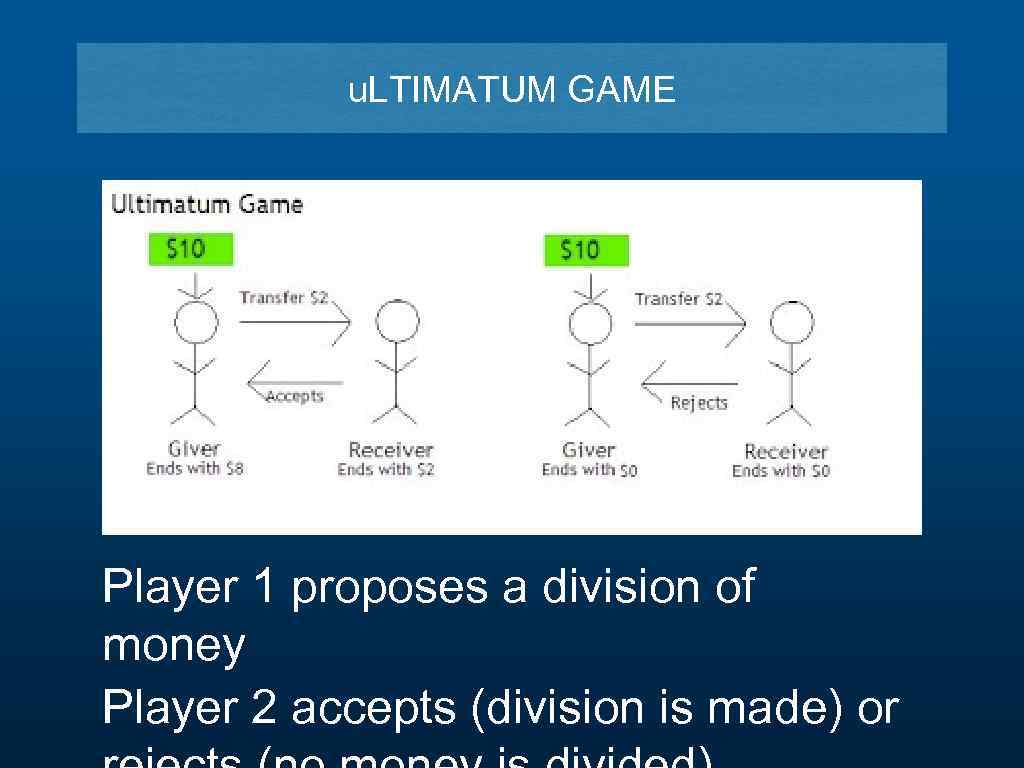
u. LTIMATUM GAME Player 1 proposes a division of money Player 2 accepts (division is made) or
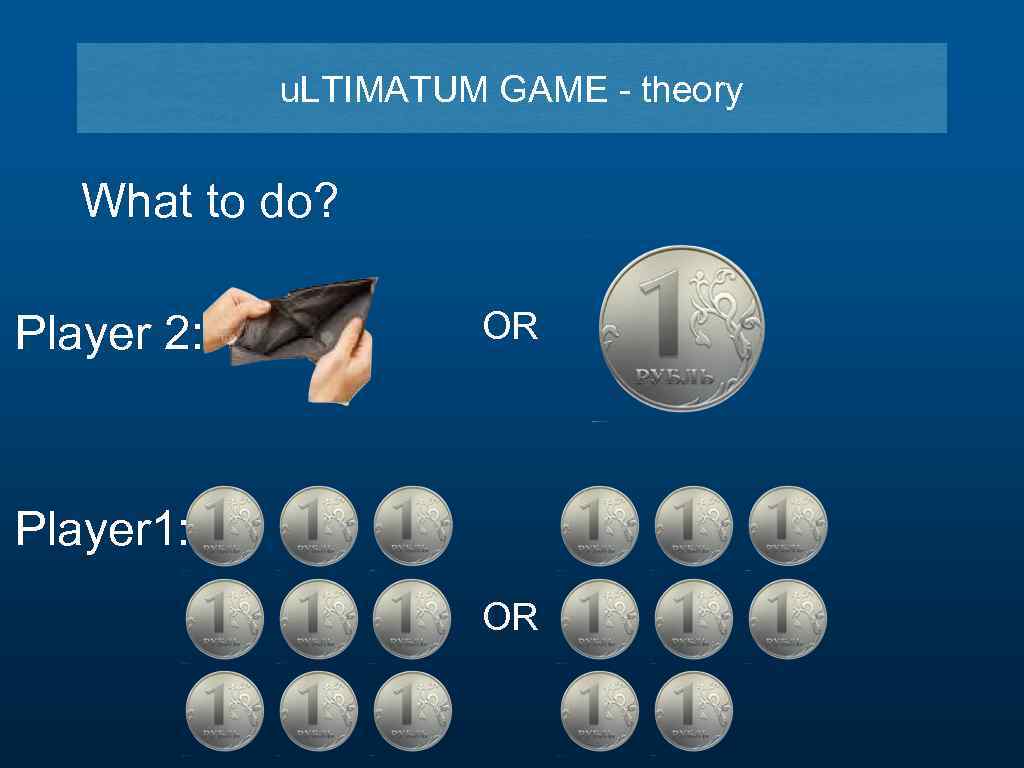
u. LTIMATUM GAME - theory What to do? Player 2: OR Player 1: OR
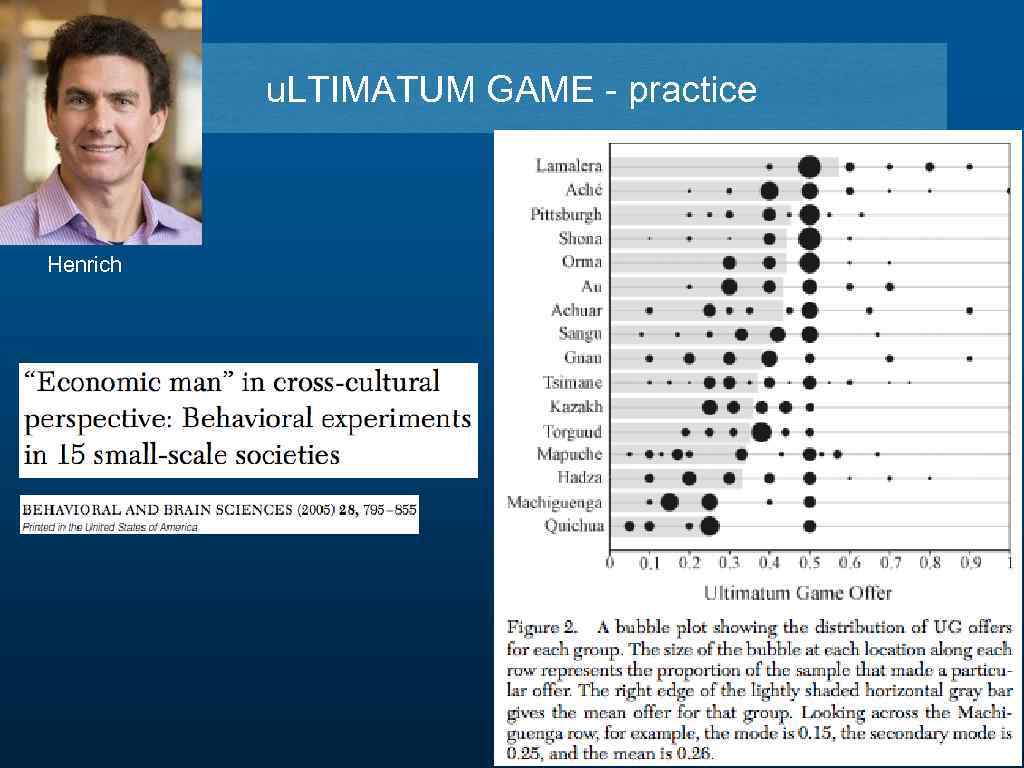
u. LTIMATUM GAME - practice Henrich
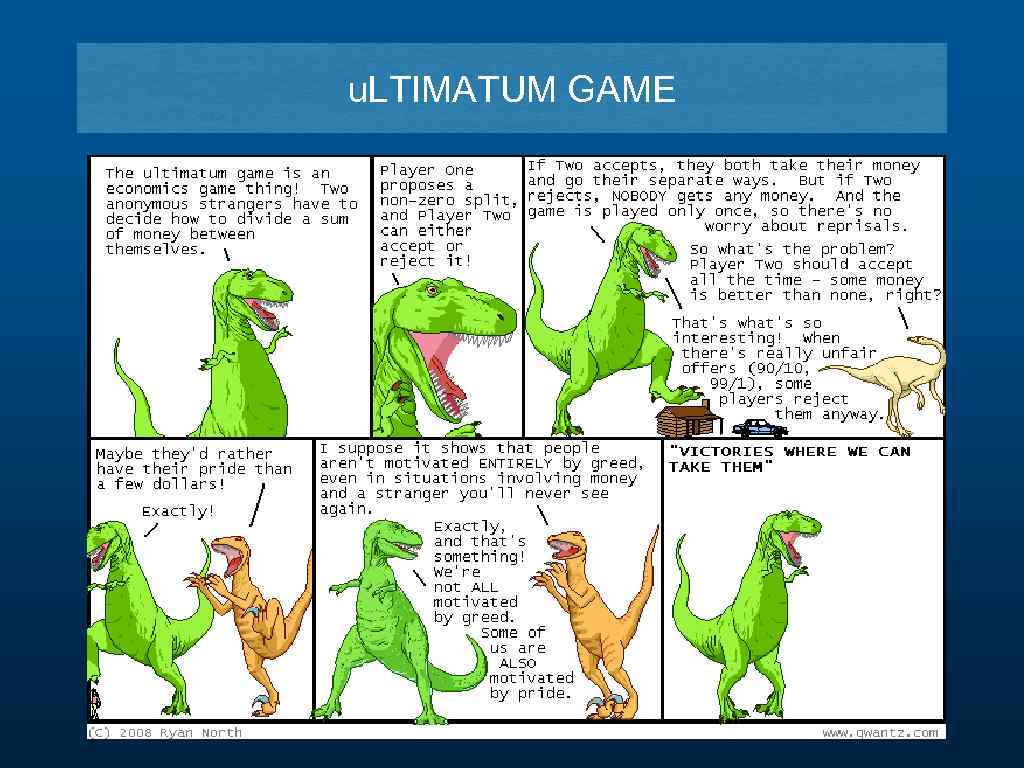
u. LTIMATUM GAME
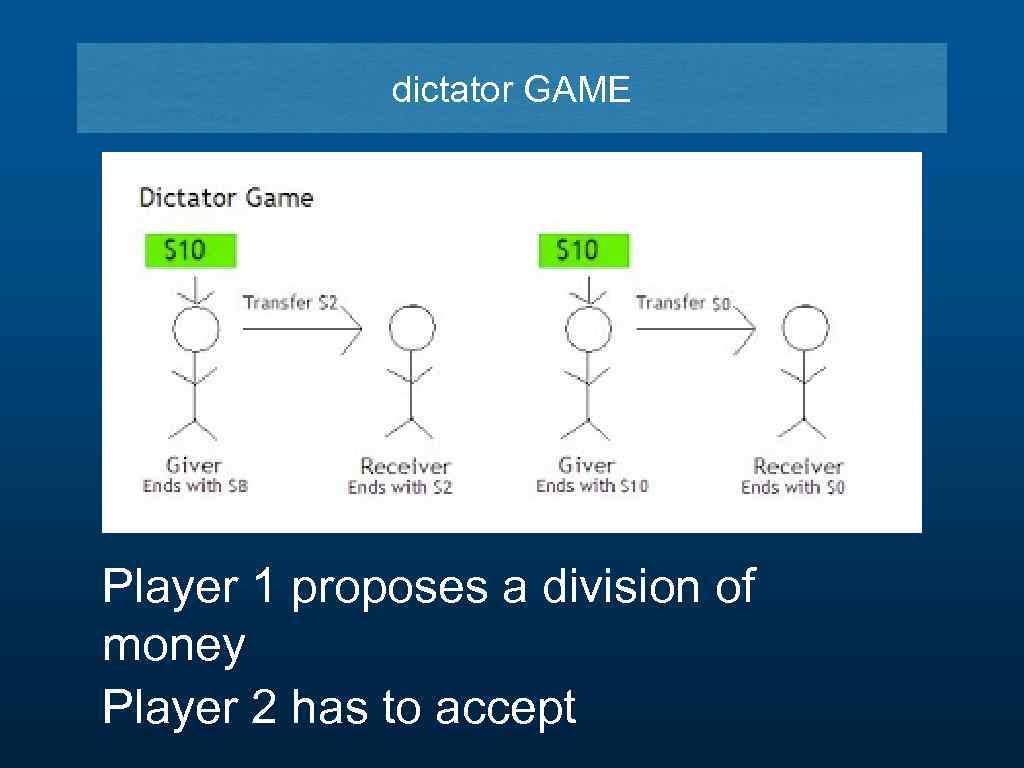
dictator GAME Player 1 proposes a division of money Player 2 has to accept
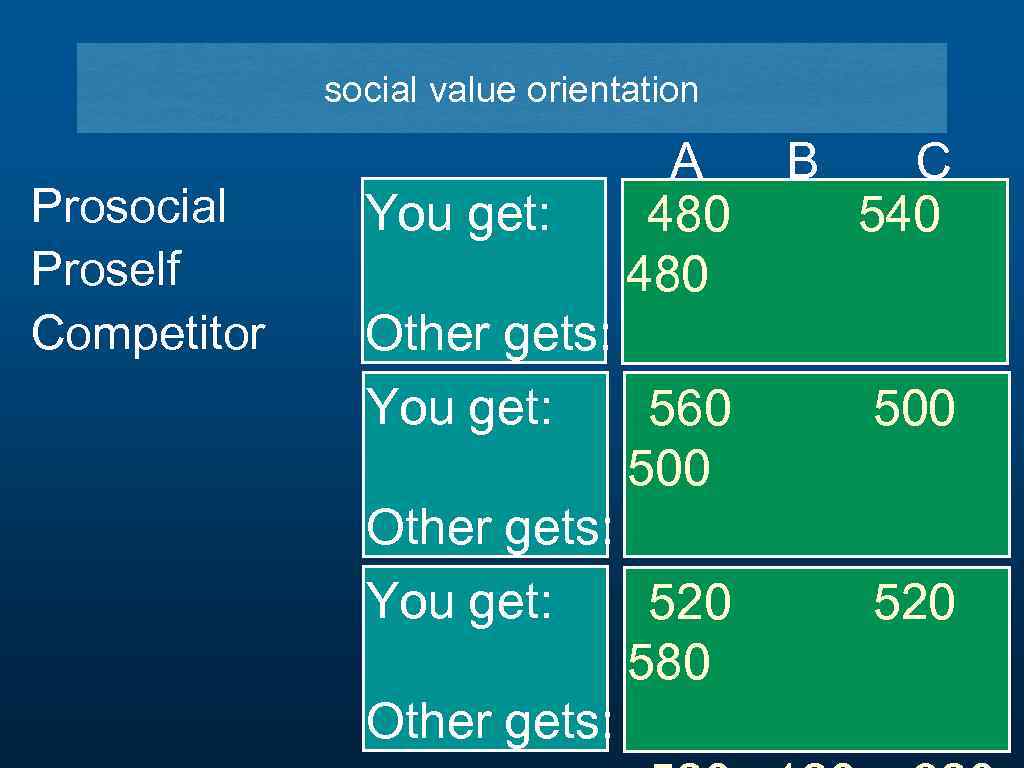
social value orientation Prosocial Proself Competitor You get: A 480 B C 540 Other gets: 80 280 500 480 You get: 560 500 Other gets: 300 520 100 You get: 520 580 Other gets:
social value orientation Van Lange Prosocial individuals had more: older brothers and sisters (older and younger) stable romantic relationships Older people have stronger prosocial preferences than younger people
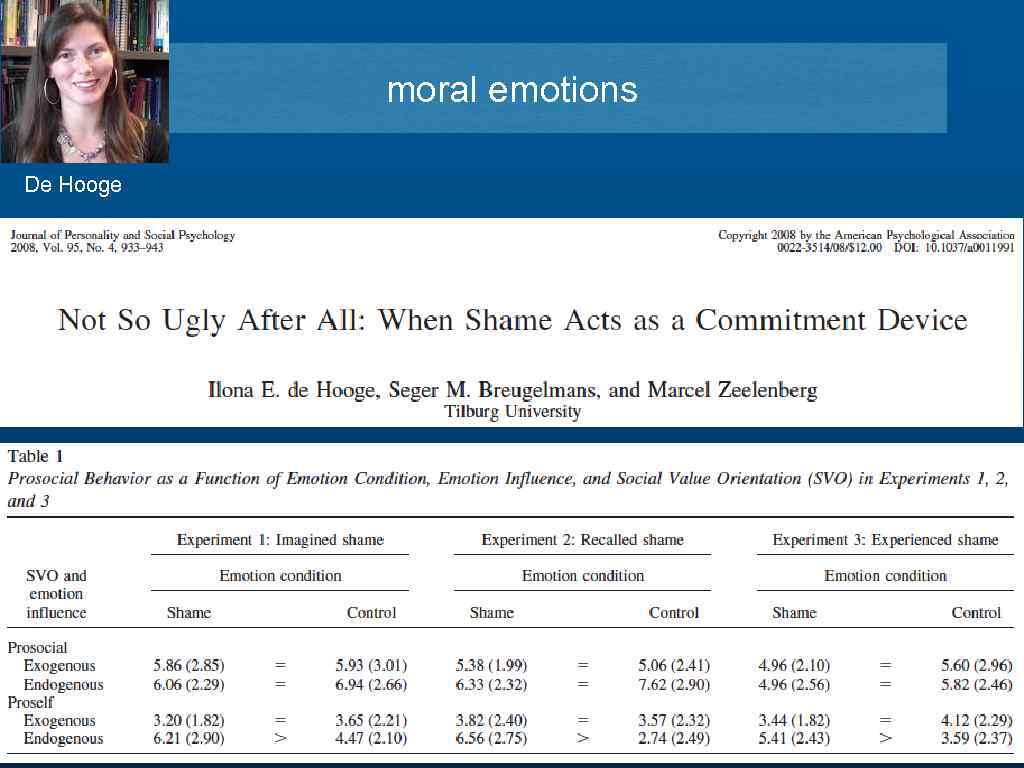
moral emotions De Hooge

limitations to moral emotions De Hooge
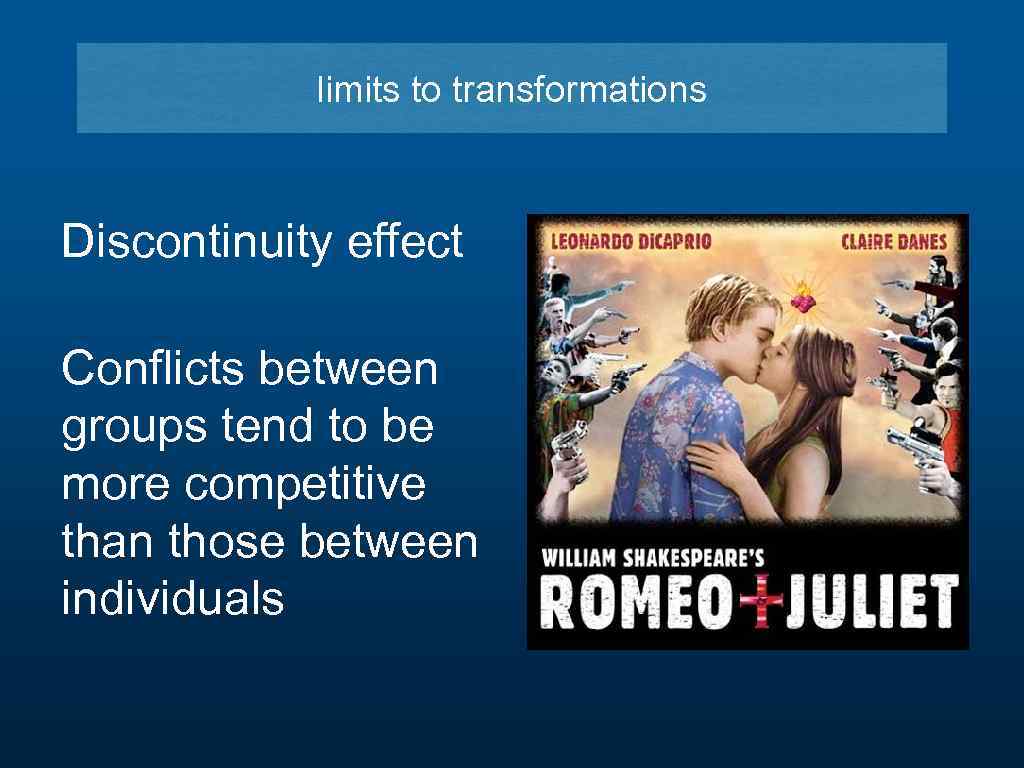
limits to transformations Discontinuity effect Conflicts between groups tend to be more competitive than those between individuals
Summary Social dilemmas are ubiquitous Social dilemmas are not easy to solve temptation, ignorance, fear Dilemmas may be “solved” by structural, strategic, or motivational factors But beware of side effects
Скачать презентацию Social Dilemmas Others Me HSE 2014 Seger Breugelmans
7. Social Dilemmas HSE 2014.pptx