


 Скачать презентацию Social Aggression Promising Intervention Programmes Questions Still
03f259b99aab756e07b8cab3bf2d661a.ppt
- Количество слайдов: 31
 Social Aggression: Promising Intervention Programmes & Questions Still Unanswered Tina Daniels, Ph. D. & Danielle Quigley, Ph. D. Carleton University & Queens University Interdisciplinary Research Laboratory on the Rights of the Child Annual Spring Conference Thursday, March 13, 2014
 Goals • What do we know? • What do we need to know? • Examine the evidence base for programmes developed to prevent or address social/relational aggression.
 Definitions: • Social Aggression- Galen & Underwood (1997) – Behaviours intended to inflict harm by damaging another’s selfesteem and/or social status • Spreading rumors, malicious gossip, social exclusion, non-verbal body language such as eye-rolling and hair flipping • Relational Aggression – Crick & Grotpeter (1995) – Behaviours intended to harm others through hurtful manipulation of or damage (or threat of damage) to peer relationships. – Typically expressed within a friendship or social group such that the relationship is manipulated in order to cause harm • Spreading mean rumors, purposeful exclusion from one’s social group
 “The lifeblood of relational aggression is the relationship. ” Odd Girl Out, Rachel Simmons (2002) • Most relational aggression occurs within intimate social or friendship networks • The closer the target is to the perpetrator the more cutting the loss “Your friends know you and how to hurt you. They know what your weaknesses are. They know exactly what to do to destroy someone’s self-worth. They try to destroy you from the inside. ” (pg. 43) Grade 8 Girl
 The Nature of Social Aggression My so called best friend always did and still does betray me constantly. K. D. , Gr. 8
 Gender Differences • Much research & discussion • Girls’ aggression of choice is RA • Boys use RA (often in conjunction with PA) and their experiences seem to be similar – Occurs frequently in boys (Card et al. , 2008) • Girls reported to be more distressed by RA than boys (Crick, 1995, Crick et al. , 2002) • School-based intervention may be appropriate for both girls and boys (Leff et al. , 2010)
 Why should we be concerned? • Girls & Boys are victimized equally – 8% report being RV, 8% report being PV and 9% report both (Crick & Grotpeter, 1996) • Relational aggression is moderately stable • Related to difficulties including internalizing problems, academic deficits, teacher–student conflicts, lack of school engagement and later mental health disorders • 7 th grade girls – one third of conflicts with girls involve friendship manipulation (Cairns et al. 1989) • Grade 4, 5, 6 – 7% of girls report being highly relationally victimized by their very best friend (Daniels, Spence & Croft, 2002)
 The Language of Social Aggression • Purposefully excluding someone – “When I am mad at someone I get even by making sure no one in my group plays with that person. ” • Withdrawing friendship in order to hurt or control another – “When my friends and I don’t like someone, we won’t let them play with us. ” • Turning members of the peer group against a particular person – “If I am mad at someone I make sure that everyone knows and I tell everyone else not to like her too. ” • Spreading rumors so that others will reject the person – “When one of us hears a rumor about someone we don’t like, we tell each other and pass it on. ” • Use of negative facial expressions or body language – “Girls can look at you and you know they are mad! They don’t have to say anything. You just look at them and they roll their eyes and they have little slits in them. ”
 Exclusionary behaviours “I remember that day that T was like walking around crying or something because nobody liked her. They (another group of girls) came up to us and said “don’t, whatever you do. T is trying to get in to your group. Don’t let her in cause she spread rumours about us and everything. The last group she was in was our group. ” (15 yrs. old)
 What’s the pay-off? • • Group cohesion, feelings of belonging Group allegiance/loyalty Sense of identity Popularity & status High profile within the group Feelings of power Addresses feelings of jealousy & revenge Allows girls to look nice
 Underlying Motivations • Girls who say they would use high levels of social aggression believe that it will be effective in achieving feelings of – Power – Revenge & – Control • while simultaneously – keeping them out of trouble & – maintaining a relationship with the rest of their friends. Delveaux & Daniels (2000)
 The Challenge • Can bring privilege, power & status • If successfully meeting needs, youth are unlikely to cease its use • Adolescents admire aggressive peers • If individuals believe others are accepting of their behaviour they are unlikely to cease its use
 Recent Review of Relational Aggression Programmes • Daniels & Quigley (2013) • Comprehensive review of the literature for intervention programmes • Inclusion criteria – Targeted girls specifically – Specifically focused on social aggression – Identified 5 programmes
 Girl Only RA Programmes 1. Social Aggression Prevention Program (SAPP) (Cappella & Weinstein, 2006) 2. Club Ophelia (Dellasega & Adamshick, 2005; Nixon & Werner, 2010) 3. Friend-to-Friend (Leff, et al. , 2007) 4. Psychoeducational Group for Aggressive Adolescent Girls (Cummings, Hoffman, & Leschied, 2004) 5. Girls United Program (Daniels & Quigley, 2009)
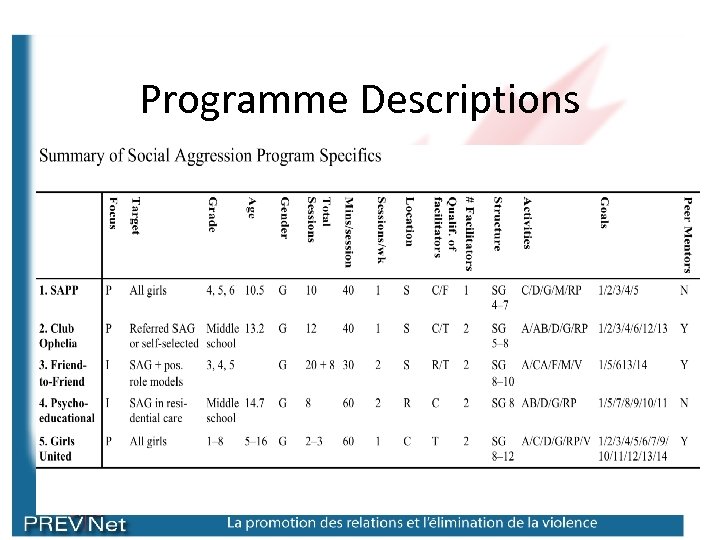 Programme Descriptions
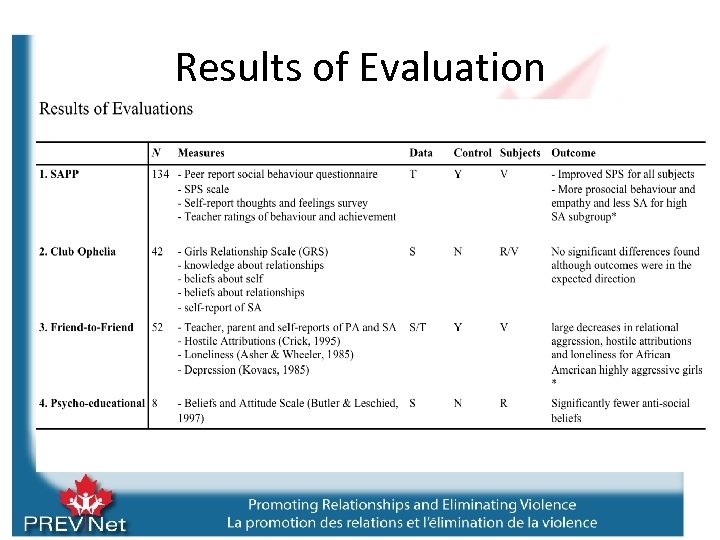 Results of Evaluation
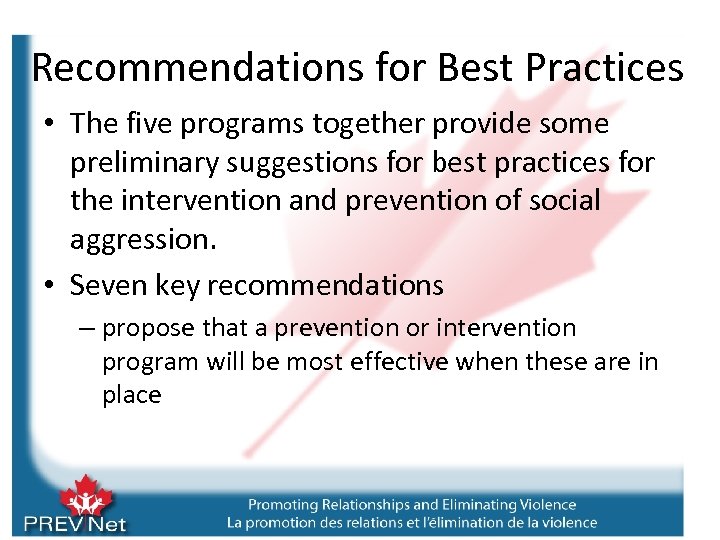 Recommendations for Best Practices • The five programs together provide some preliminary suggestions for best practices for the intervention and prevention of social aggression. • Seven key recommendations – propose that a prevention or intervention program will be most effective when these are in place
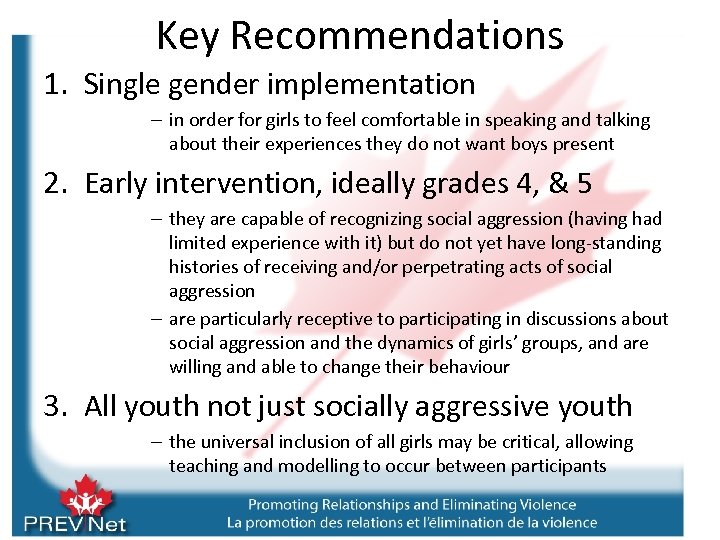 Key Recommendations 1. Single gender implementation – in order for girls to feel comfortable in speaking and talking about their experiences they do not want boys present 2. Early intervention, ideally grades 4, & 5 – they are capable of recognizing social aggression (having had limited experience with it) but do not yet have long-standing histories of receiving and/or perpetrating acts of social aggression – are particularly receptive to participating in discussions about social aggression and the dynamics of girls’ groups, and are willing and able to change their behaviour 3. All youth not just socially aggressive youth – the universal inclusion of all girls may be critical, allowing teaching and modelling to occur between participants
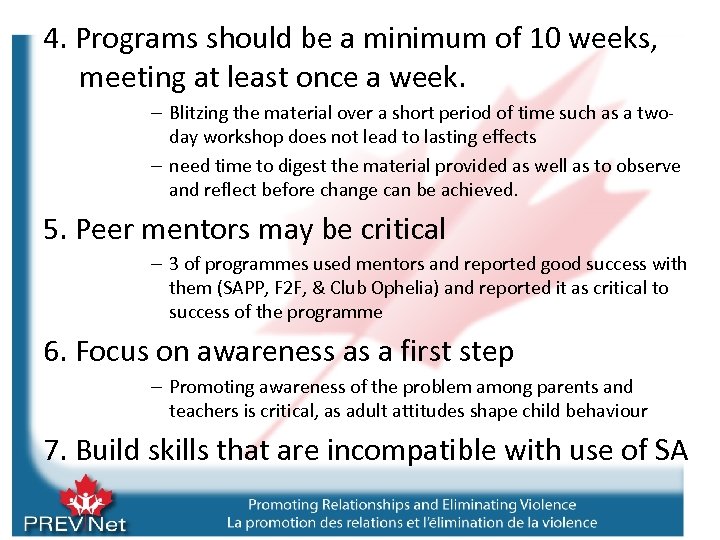 4. Programs should be a minimum of 10 weeks, meeting at least once a week. – Blitzing the material over a short period of time such as a twoday workshop does not lead to lasting effects – need time to digest the material provided as well as to observe and reflect before change can be achieved. 5. Peer mentors may be critical – 3 of programmes used mentors and reported good success with them (SAPP, F 2 F, & Club Ophelia) and reported it as critical to success of the programme 6. Focus on awareness as a first step – Promoting awareness of the problem among parents and teachers is critical, as adult attitudes shape child behaviour 7. Build skills that are incompatible with use of SA
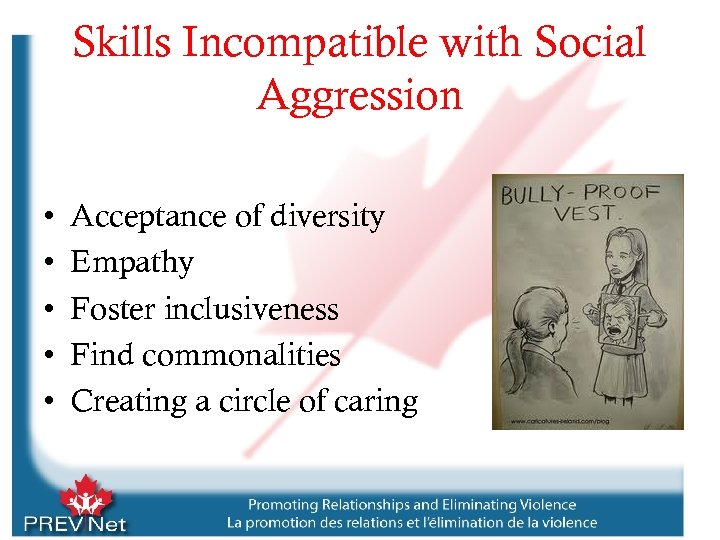 Skills Incompatible with Social Aggression • • • Acceptance of diversity Empathy Foster inclusiveness Find commonalities Creating a circle of caring
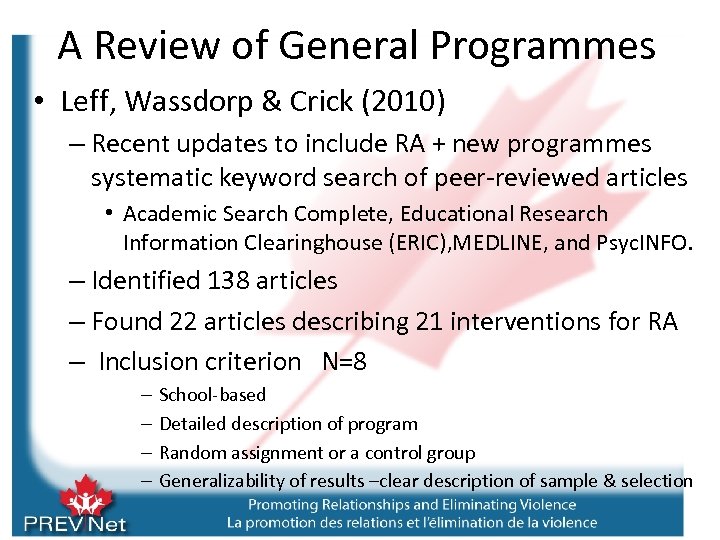 A Review of General Programmes • Leff, Wassdorp & Crick (2010) – Recent updates to include RA + new programmes systematic keyword search of peer-reviewed articles • Academic Search Complete, Educational Research Information Clearinghouse (ERIC), MEDLINE, and Psyc. INFO. – Identified 138 articles – Found 22 articles describing 21 interventions for RA – Inclusion criterion N=8 – – School-based Detailed description of program Random assignment or a control group Generalizability of results –clear description of sample & selection
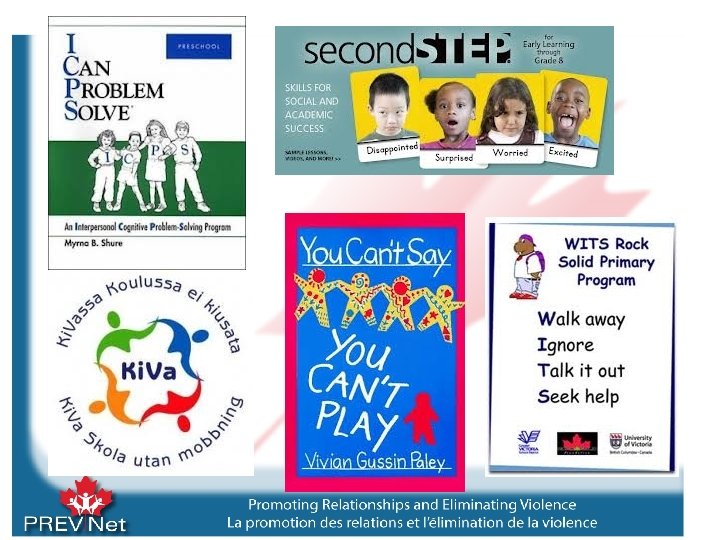
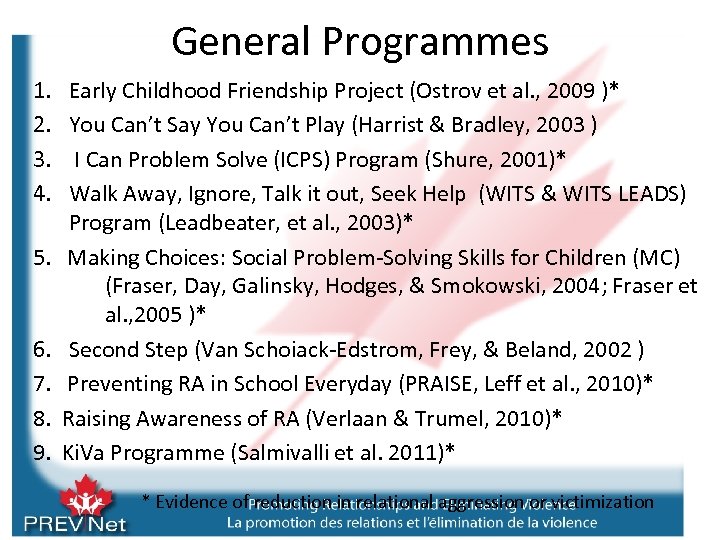 General Programmes 1. 2. 3. 4. 5. 6. 7. 8. 9. Early Childhood Friendship Project (Ostrov et al. , 2009 )* You Can’t Say You Can’t Play (Harrist & Bradley, 2003 ) I Can Problem Solve (ICPS) Program (Shure, 2001)* Walk Away, Ignore, Talk it out, Seek Help (WITS & WITS LEADS) Program (Leadbeater, et al. , 2003)* Making Choices: Social Problem-Solving Skills for Children (MC) (Fraser, Day, Galinsky, Hodges, & Smokowski, 2004; Fraser et al. , 2005 )* Second Step (Van Schoiack-Edstrom, Frey, & Beland, 2002 ) Preventing RA in School Everyday (PRAISE, Leff et al. , 2010)* Raising Awareness of RA (Verlaan & Trumel, 2010)* Ki. Va Programme (Salmivalli et al. 2011)* * Evidence of reduction in relational aggression or victimization
 Effects • Most of these programmes have demonstrated some reduction in relational aggression, • A few have shown reductions in relational victimization.
 Recommendations • Chose programmes that are developmentally appropriate for the target group • Develop champions within the school (WITS) • Multi-component social-ecological approaches (WITS, Ki. Va) • Recognize the importance of programme acceptability & implementation fidelity • Address barriers to RA intervention • Participatory action projects (WITS, RA of RA) • University community partnerships -PREVNet
 Questions that still need answers Are programme effects maintained over time? Whom should the program target? Should programmes be tailored to gender or cultural groups? Is there a developmental period that is critical for intervention? Is a programme for relational & physical victimization sufficient? Is implementation fidelity important to impact? How many session are necessary to be effective? Is cyberbullying an extension of social aggression or does it require a different approach? • What role do peer attitudes & beliefs play in supporting RA? • Is school the only or most suitable place to address RA? • Are rural and urban settings the same in regards to intervention? • •
 Challenges/Limitations • Schools may not wish to participate if they are assigned to the control condition (ICPS & Second Step) • Need mutimethod, multi-informant measures across multiple time periods • Need programme buy in and time to implement • Few are monitoring treatment fidelity or prog acceptability
 Conclusion • We are making progress • We still have along way to go
 Long Term Responsibilities • Schools cannot mandate friendships, but they can ensure that all students feel included as members of the school community. • You don’t have to be friends with everyone but it is not OK to be hurtful or harmful to anyone. • Our objective should be to ensure that all students develop the skills necessary for healthy social relationships in later life – being respectful to others, regardless of differences.
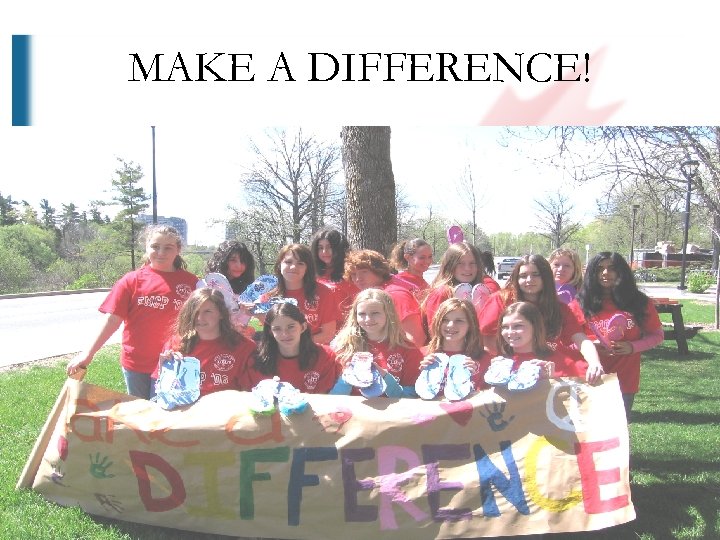 MAKE A DIFFERENCE!