 Скачать презентацию Sniper Detection Using Wireless Sensor Networks Joe Brassard
2a2ea35ce1359480ab008f31c05a15e4.ppt
- Количество слайдов: 15



Sniper Detection Using Wireless Sensor Networks Joe Brassard Wing Siu EE-194 WIR: Wireless Sensor Networks Presentation #1: February 10, 2005 1
Project Goals/Schedule Research theory behind sensor network based counter-sniper systems n Examine early implementations (Viper, Bullet Ears, Pilar, Life. Guard) n Study a newer system recently developed at Vanderbilt University (Pin. Ptr) n Suggest possible improvements to these systems n 2
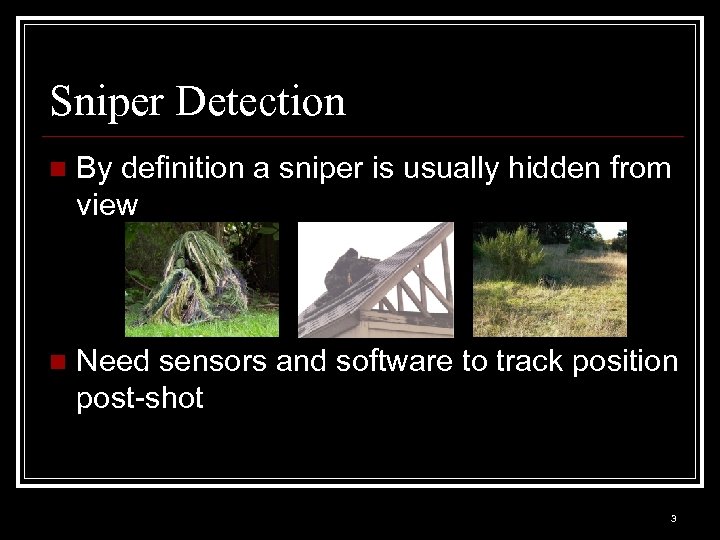
Sniper Detection n By definition a sniper is usually hidden from view n Need sensors and software to track position post-shot 3
Sniper Detection n Ways to track a bullet n n Visually – Infrared Cameras Acoustically - Microphones Shockwave – Pressure sensors Automated detection systems use some combination of these factors 4
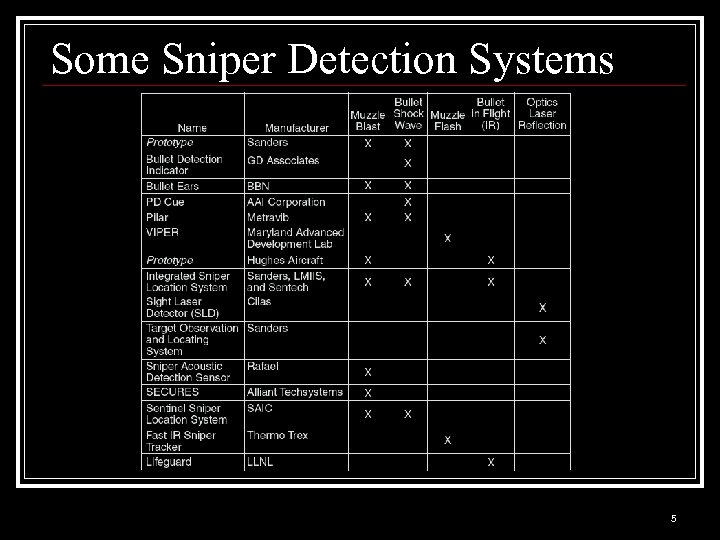
Some Sniper Detection Systems 5
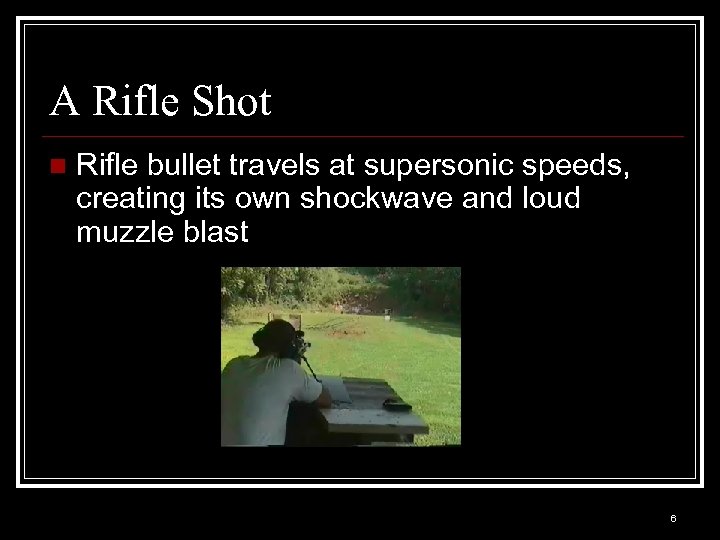
A Rifle Shot n Rifle bullet travels at supersonic speeds, creating its own shockwave and loud muzzle blast 6
Finding the Sniper n Record physical phenomena n n Projectile thermal signature Muzzle flash Muzzle blast and resultant shockwave Multiple sensors work best n n Accuracy Multiple issues 7
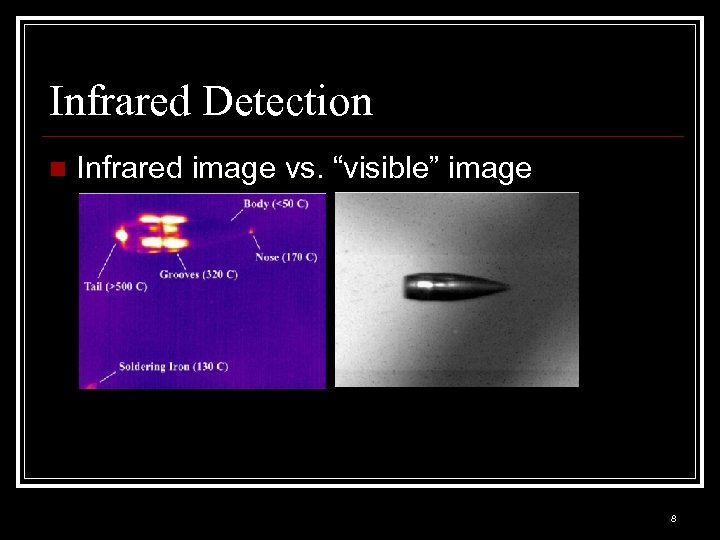
Infrared Detection n Infrared image vs. “visible” image 8
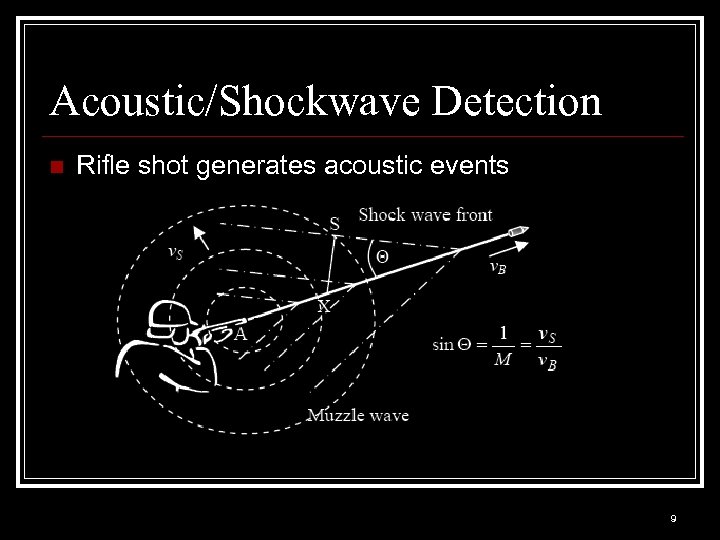
Acoustic/Shockwave Detection n Rifle shot generates acoustic events 9
Sensor Network Issues Time Synchronization n Message Routing n Sensor Localization/Density n Signal Detection n Portability n Dynamic/Static Sensor Networks n Processing Sensor Information n 10
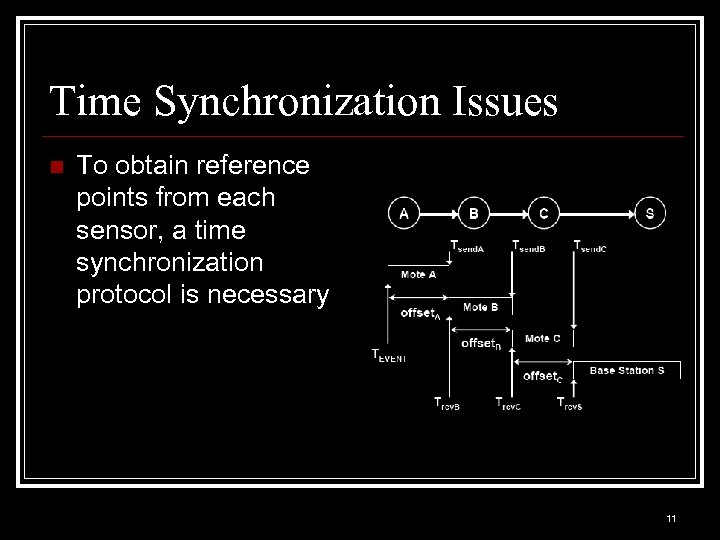
Time Synchronization Issues n To obtain reference points from each sensor, a time synchronization protocol is necessary 11
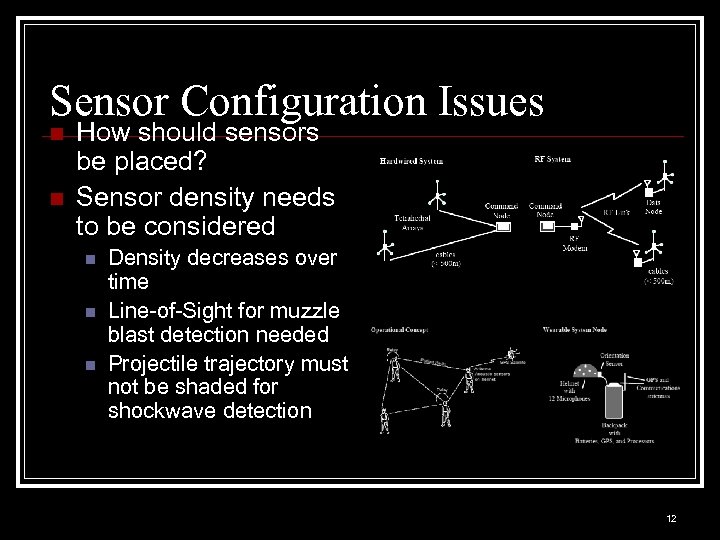
Sensor Configuration Issues n n How should sensors be placed? Sensor density needs to be considered n n n Density decreases over time Line-of-Sight for muzzle blast detection needed Projectile trajectory must not be shaded for shockwave detection 12
Signal Detection Issues Sensitivity of microphones must be very low in order to handle muzzle blasts and shockwaves (to avoid false positives) n Shockwave and muzzle blast events need to be individually modeled as each sensor might not register both signals each shot n 13
Finished Product n One Implementation For Sniper Detection: 14
References n n n Maroti, et. al. “Sensor Network-Based Countersniper System” (Vanderbilt University) Vick, et. Al. “Aerospace Operations in Urban Environments” (RAND) “Life. Guard” Video Courtesy of Lawrence Livermore National Laboratory (University of California) BBN Technologies FLIR Systems, Inc. 15
Скачать презентацию Sniper Detection Using Wireless Sensor Networks Joe Brassard
2a2ea35ce1359480ab008f31c05a15e4.ppt