


 Скачать презентацию Snapshot of the D 0 Computing and Operations
47637c91459fca48c4084aa0c58b076a.ppt
- Количество слайдов: 22
 Snapshot of the D 0 Computing and Operations Planning Process Amber Boehnlein For the D 0 Computing Planning Board
 D 0 CPB And Friends • Lee Lueking and Chip Brock, Ruth & Wyatt & Vicky, Don & Jon & Bonnie • Mike Diesburg, Iain Bertraim, Jae Yu, Heidi • Harry Melanson, Serban Protopopescu, Qizhong Li, Dugan O’Neil • Alan Jonckheere • Stu Fuess • Dane Skow, Dave Fagan • Nick Hadley, Jianming Qian, ASB
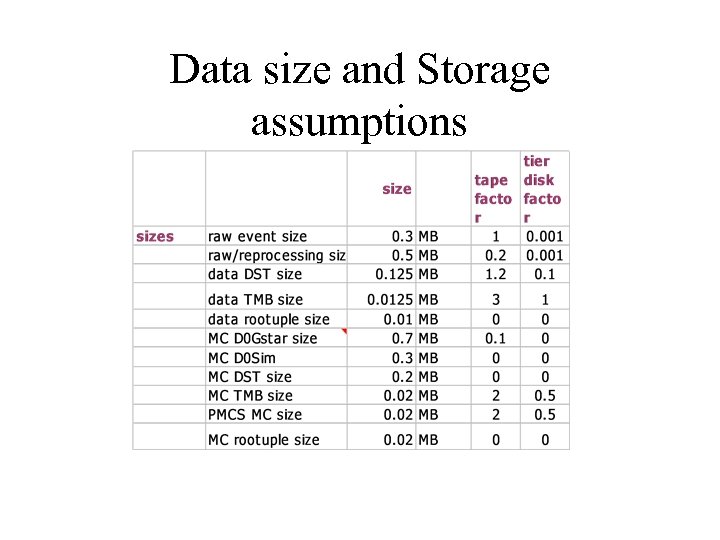 Data size and Storage assumptions
 D 0 Institution Contributions • All Monte Carlo production takes place offsite at Remote Centers • Expect some analysis to occur remotely • Investigating compute intensive operations in addition to MC generation for remote centers • CLue. D 0 desktop cluster, administered by D 0 collaboration members, contributions by institutions • Institutions can provide project disk on D 0 mino • Anticipated that institutions will contribute to CLu. Bs, the CLue. D 0 back end
 Access and Analysis patterns • Current Access and Analysis patterns – Much primary analysis done on high level data tier—currently reco based root tuple – Physics group coordinated efforts to generate • Derived data sets by skimming through root tuple or reco output • Picked event samples of raw data for re-reco studies • Specialized reprocessing of small data sets
 Extrapolation of Analysis patterns • Assume that physics or analysis group generation of derived data sets continues – Skim of thumbnails for desktop or club analysis – Skim of DSTs for studies of which tmb contains inadequate information, re-reco – Pick events of raw data samples, small dst samples – Supply freight train to regulate fast DST access. • Assume that the bulk of the users will do analysis on the TMB, either on DBE, club or remote cpus • Smaller group does more time intensive analysis as a service running over larger data sets on DBE
 • Currently difficult to estimate analysis cpu usage – Assume generation of derived sets is relatively quick/per event, but happens often – Most DST access implies time intensive operations. Estimate it is at least the order of farm processing • Would support 3 simultaneous users, ¼ farm processing time in 3 months each on 1/3 data, for initial data set. – Reco time per event is expected to increase dramatically as a number of multiple interactions – Make overall estimate of 75 seconds/event (500 MHz) for reco and analysis and re-reco—collaboration to weigh relative balance available in 2005, staged in. – Institutions can contribute CPU to CLu. Bs, assume FNAL contribution of $50 K yearly – Remote center reprocessing, or dst level reprocessing is under evalution.
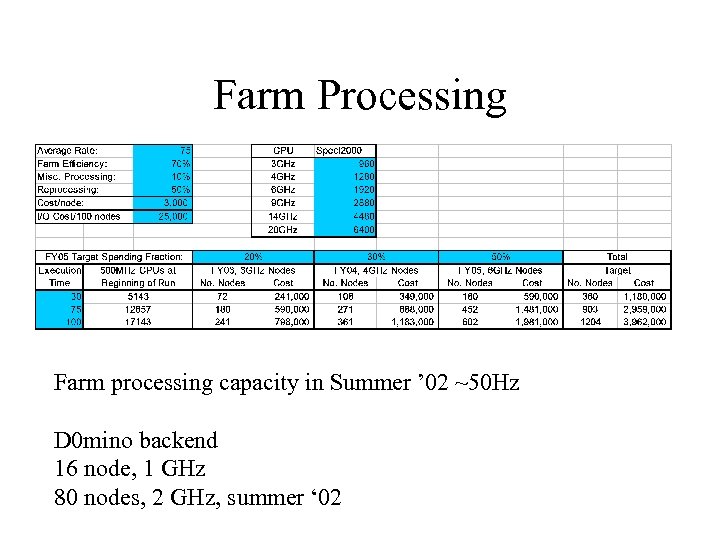 Farm Processing Farm processing capacity in Summer ’ 02 ~50 Hz D 0 mino backend 16 node, 1 GHz 80 nodes, 2 GHz, summer ‘ 02
 Roles of D 0 mino • D 0 mino provided a centralized, stable and uniform work environment – Interactive and batch services for on and offsite users • High I/O provided by 8 Gigabit ethernet connections—The Central Analysis SAM station – – Interactive To/from robotic storage To/from secondary analysis systems To/from the backend • Access to project disks and disk cache (30 TB) • Analysis CPU provided by Linux backend nodes
 Upgrading D 0 mino • Replacing D 0 mino requires identifying which parts of the design can be better served by more cost effective solutions – Linux back end to supply compute power for access to large data samples – Seeding CLu. Bs (the Clued 0 backend) as solution for intermediate (1 TB) samples – Continue to evaluate I/O performance • Upgrading D 0 mino (O 3000) would cost about $2 M, and would have to be phased in. To stay within nominal guidance, would cut analysis/farm capacity by about ½ • Fortunately, SAM gives D 0 a lot of flexibility.
 Backup facility • Two primary consumers – Project disk archive – User driven backups of small samples • Clearly a need, but not clear how best to accomplish.
 Phase 1, Robotic Storage Plan • D 0 has 1 STK silo with 9 9940 drives – Writing raw data and Reco output to mezzosilo 1 • We have an option on a second silo • AML 2 with 6 LTO drives – Writing MC data – Plan to start writing Reco output as a test on May 7 – If test is successful • Will purchase more LTO Drives and a few more 9940 x – Else • Will purchase as many 9940 x as is feasible – Likely need to purchase a few more drives of each type to get us to decision point.
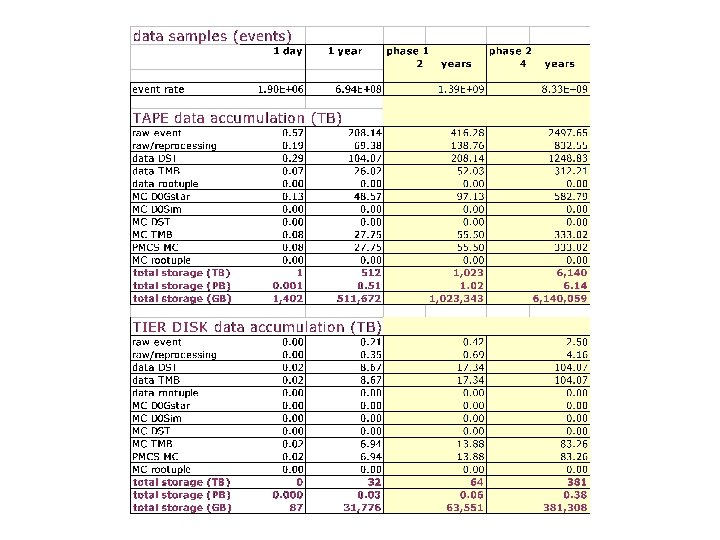
 • The overall estimated need for Robotic storage for phase 1 can be accommodated by the Mezzosilo 1&2 and the AML 2 even with the current generation of drives/media. Current Capacity approx 2*300 TB + 750 TB– compare to roughly 1 PB needed. Or The overall estimated need for Robotic storage for phase 1 can be accommodated by Mezzosilos 1&2 with 9940 bs Assume the purchase of Mezzosilo 2 in 2003 Assume purchase of Drives for Mezzosilo 2 in 2003 Assume additional purchase of drives in 2004
 Drive Estimates • Support Online operations plus buffer drain – 3 10 mbyte/sec drives • Support Farm operations – 3 10 mbyte/sec drives • Support incoming MC – 2 drives • Support Central analysis – Freight train for spooling through the DST sample in short interval (3 months) would consume 8 drives – MC and other – Pick events could consume infinite number of drives • Buy LTO and STK in 2002—distribution to vary • 20 drives for new Mezzosilo • 2004 expect to add drives
 Fixed Infrastructure Costs • Database – – machines Database disks and controllers (assumed cost 10 X cots) DB Mirrors Software • Networking – – Expand links between buildings, FCC Additional switchs for DAB, farms D 0 to FCC upgrade to 10 Gb backbone upgrade ‘ 06 Rewiring D 0 for Gb to desktop in ’ 07 • Linux build machines and disk • Additional SAM servers
 Disk Estimates • Aim for sufficient cache, TMB storage on D 0 mino – All 2002 D 0 mino project disk additions supplied by the Institutions – Assume that model continues for project space – Supply additional 18 TB cache per year
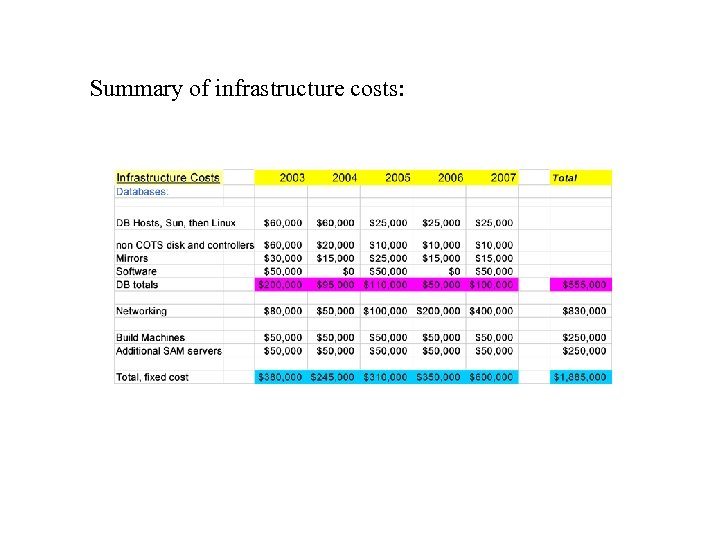 Summary of infrastructure costs:
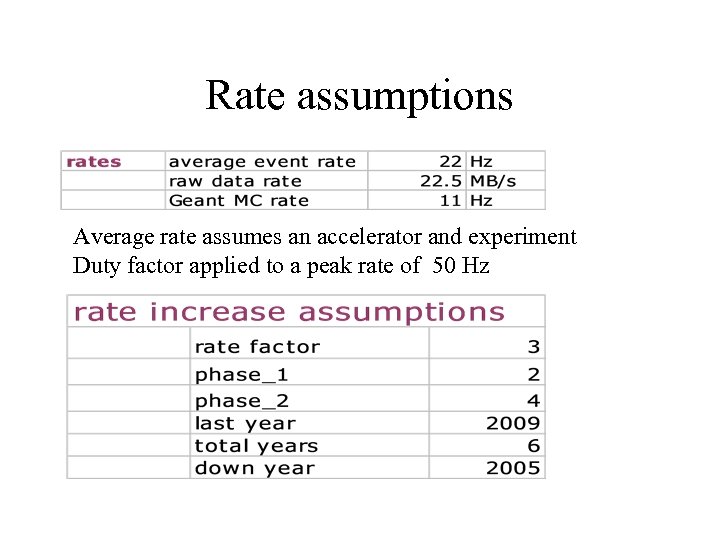 Rate assumptions Average rate assumes an accelerator and experiment Duty factor applied to a peak rate of 50 Hz
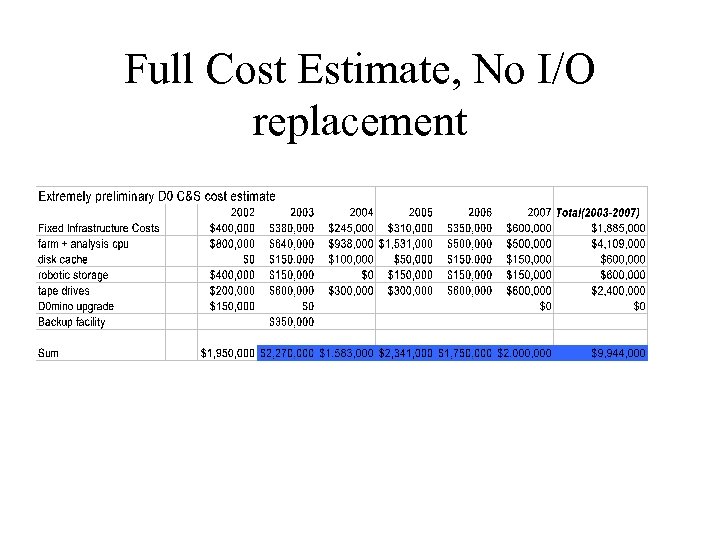 Full Cost Estimate, No I/O replacement
 Questions to D 0 • Is it possible to make a better estimate of analysis CPU needs? • Role of D 0 mino • Relative weighting of tmb and DST analysis —better to have a larger tmb as trade off for less DST usage? • Role of remote centers
 Questions to CD • How should we cost mover nodes? • Relative role of disk vs robotic storage as time goes on • Where will we put the phase 2 robots? • Interaction between networking and remote centers • Suggestions for backup facility