 Скачать презентацию Smart Cities Low Carbon Solutions Per Sieverts Nielsen
acfbd38651f62eafde029d57b74a62a8.ppt
- Количество слайдов: 48



Smart Cities: Low Carbon Solutions Per Sieverts Nielsen Urban Challenge Summer School 16 August 2016
Content • Introduction • Danish renewable energy sources • Copenhagen Climate Plan 2025 • Aspects of the energy system at Nordhavnen 2 DTU Management Engineering, Technical University of Denmark 3/19/2018
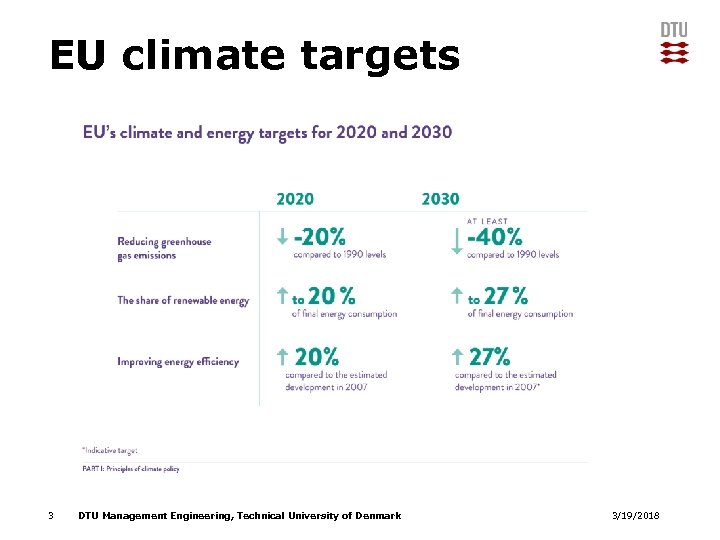
EU climate targets 3 DTU Management Engineering, Technical University of Denmark 3/19/2018
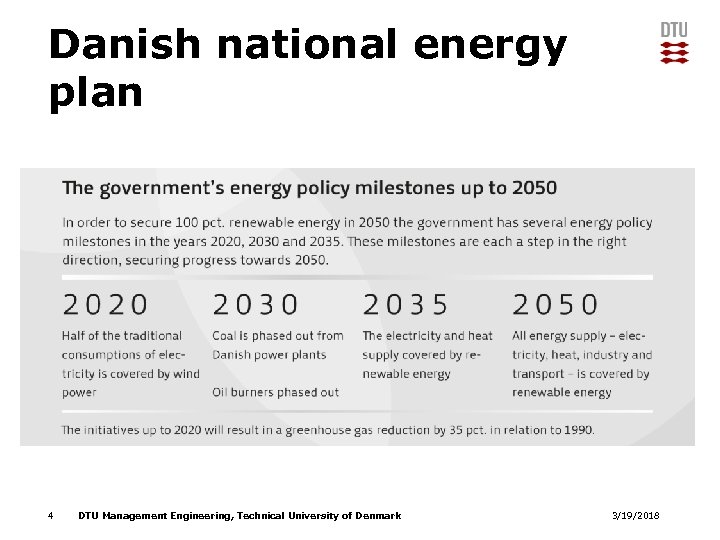
Danish national energy plan 4 DTU Management Engineering, Technical University of Denmark 3/19/2018
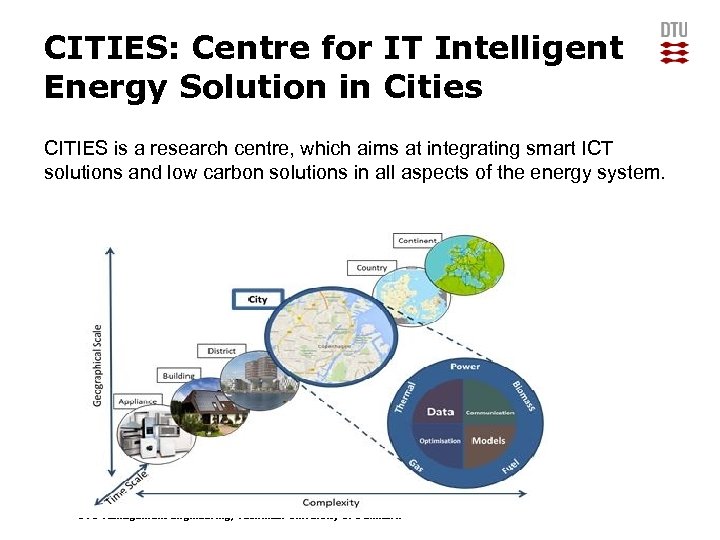
CITIES: Centre for IT Intelligent Energy Solution in Cities CITIES is a research centre, which aims at integrating smart ICT solutions and low carbon solutions in all aspects of the energy system. DTU Management Engineering, Technical University of Denmark
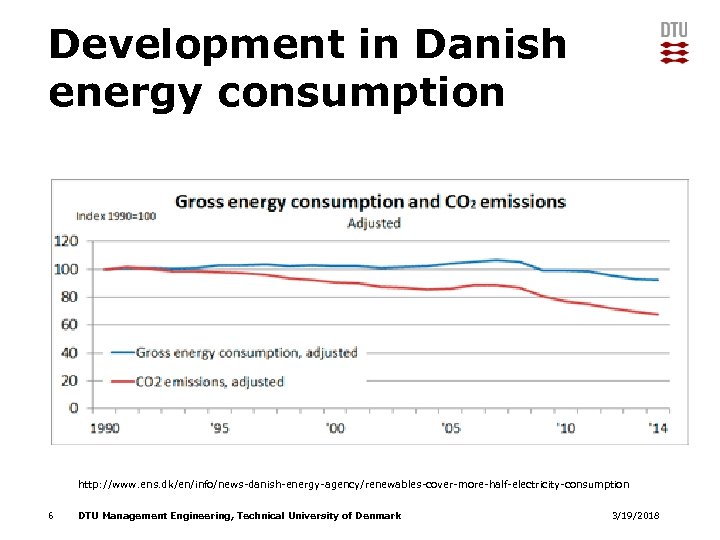
Development in Danish energy consumption http: //www. ens. dk/en/info/news-danish-energy-agency/renewables-cover-more-half-electricity-consumption 6 DTU Management Engineering, Technical University of Denmark 3/19/2018
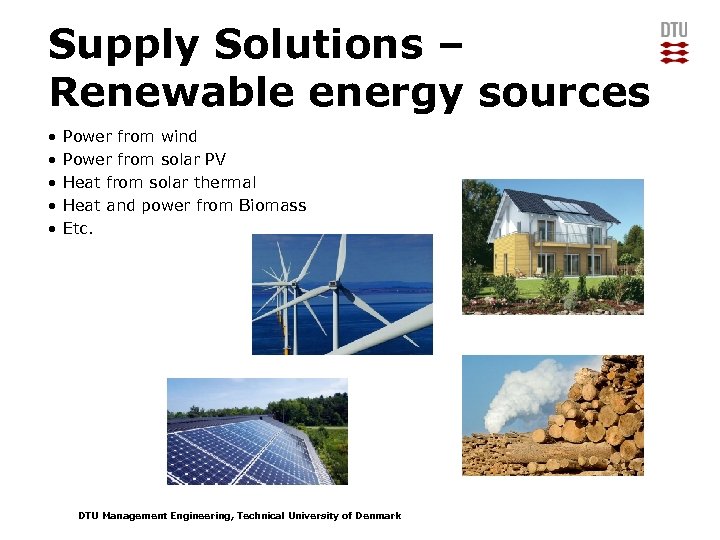
Supply Solutions – Renewable energy sources • • • Power from wind Power from solar PV Heat from solar thermal Heat and power from Biomass Etc. DTU Management Engineering, Technical University of Denmark
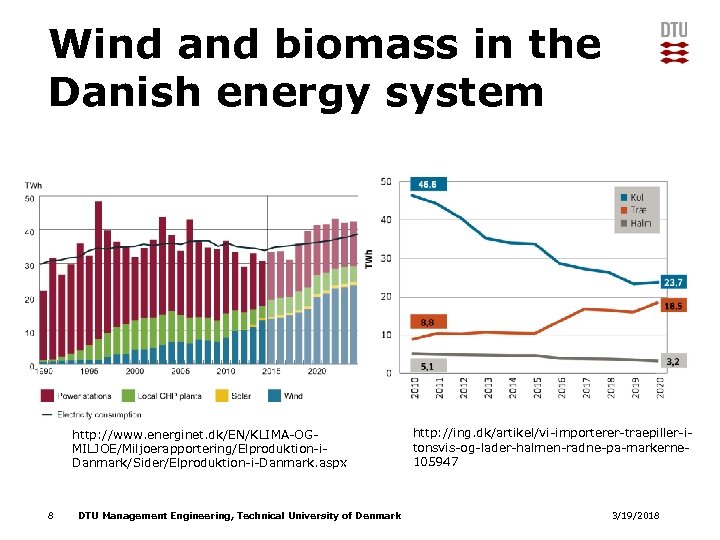
Wind and biomass in the Danish energy system http: //www. energinet. dk/EN/KLIMA-OGMILJOE/Miljoerapportering/Elproduktion-i. Danmark/Sider/Elproduktion-i-Danmark. aspx 8 DTU Management Engineering, Technical University of Denmark http: //ing. dk/artikel/vi-importerer-traepiller-itonsvis-og-lader-halmen-radne-pa-markerne 105947 3/19/2018
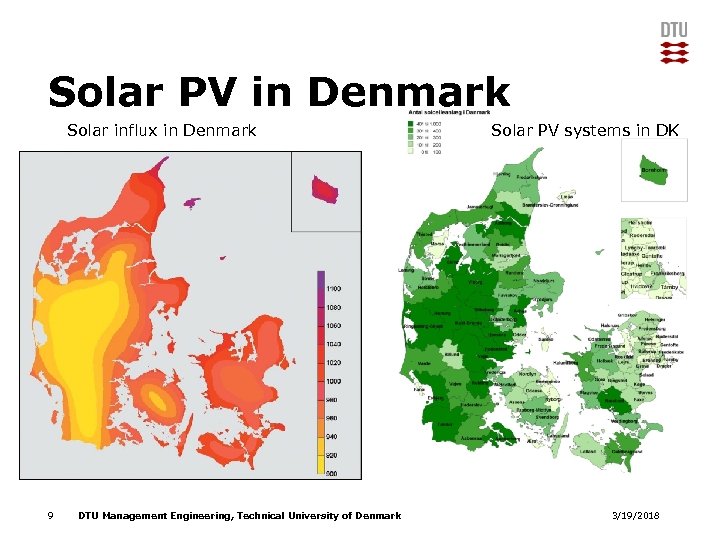
Solar PV in Denmark Solar influx in Denmark 9 DTU Management Engineering, Technical University of Denmark Solar PV systems in DK 3/19/2018
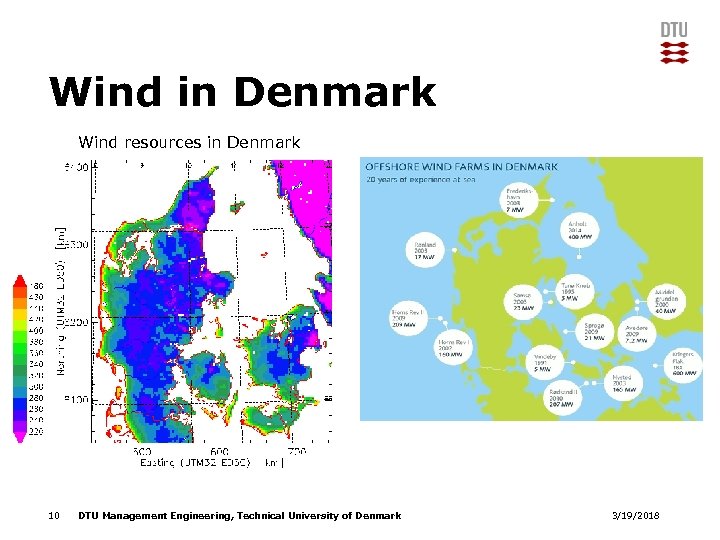
Wind in Denmark Wind resources in Denmark 10 DTU Management Engineering, Technical University of Denmark 3/19/2018
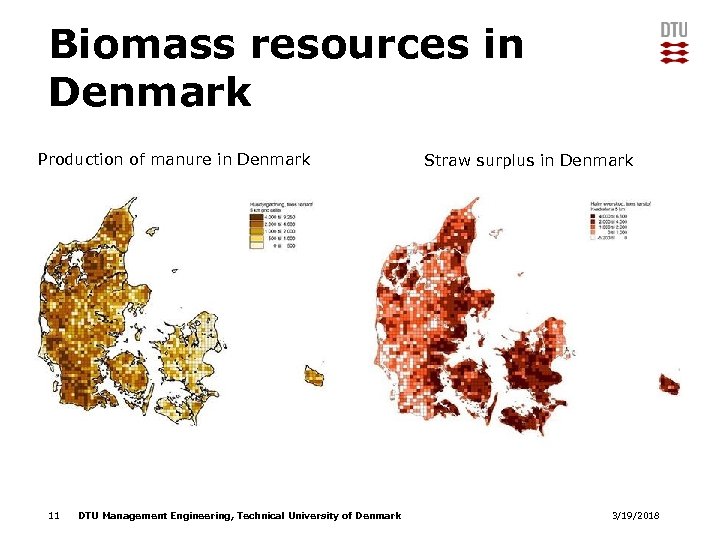
Biomass resources in Denmark Production of manure in Denmark 11 DTU Management Engineering, Technical University of Denmark Straw surplus in Denmark 3/19/2018
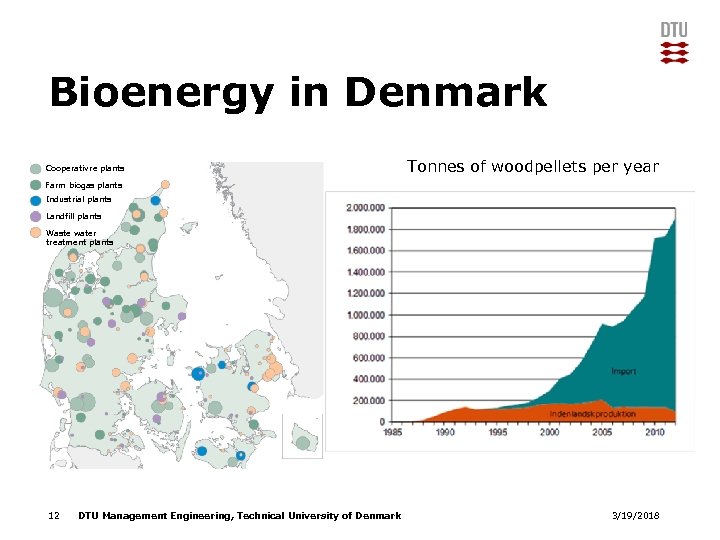
Bioenergy in Denmark Cooperativre plants Tonnes of woodpellets per year Farm biogas plants Industrial plants Landfill plants Waste water treatment plants 12 DTU Management Engineering, Technical University of Denmark 3/19/2018
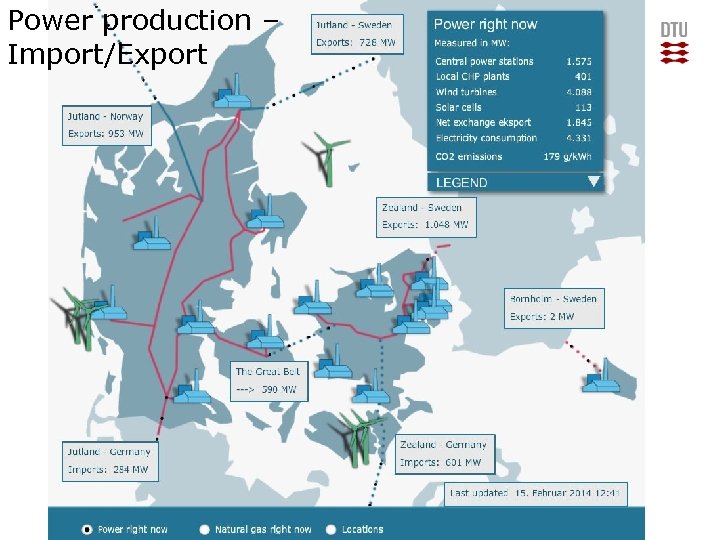
Power production – Import/Export 13 DTU Management Engineering, Technical University of Denmark
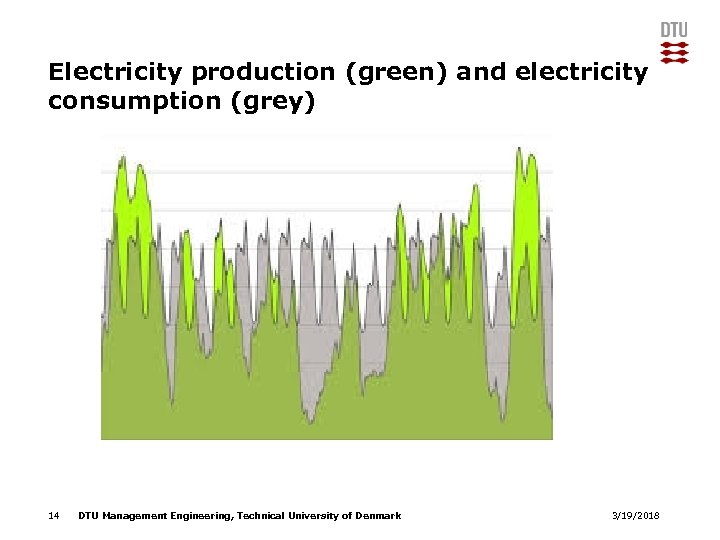
Electricity production (green) and electricity consumption (grey) 14 DTU Management Engineering, Technical University of Denmark 3/19/2018
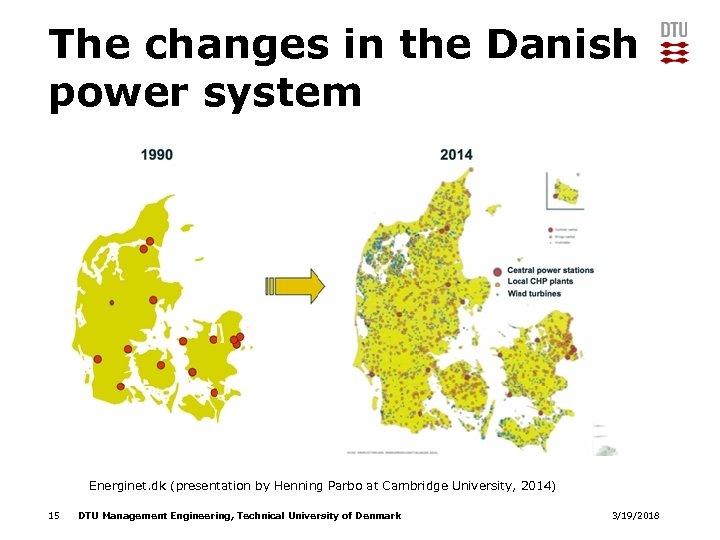
The changes in the Danish power system Energinet. dk (presentation by Henning Parbo at Cambridge University, 2014) 15 DTU Management Engineering, Technical University of Denmark 3/19/2018
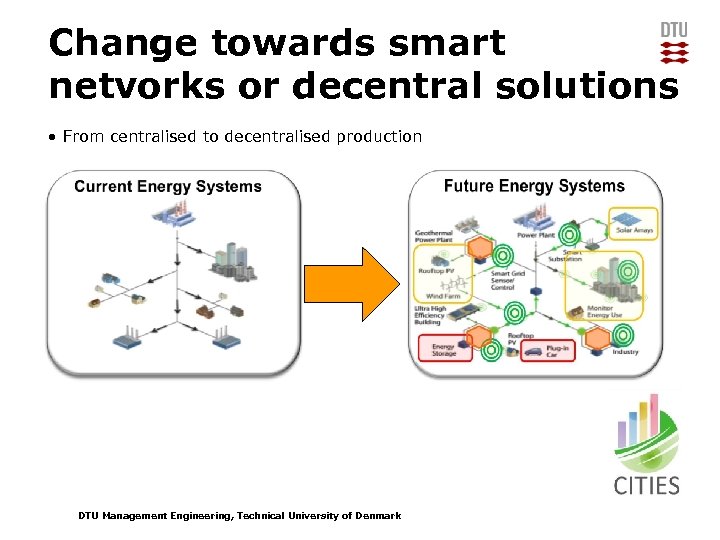
Change towards smart netvorks or decentral solutions • From centralised to decentralised production DTU Management Engineering, Technical University of Denmark
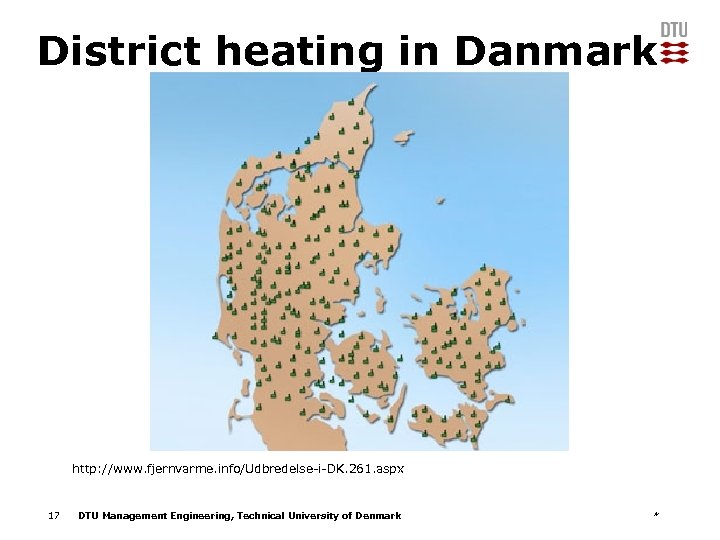
District heating in Danmark http: //www. fjernvarme. info/Udbredelse-i-DK. 261. aspx 17 DTU Management Engineering, Technical University of Denmark *
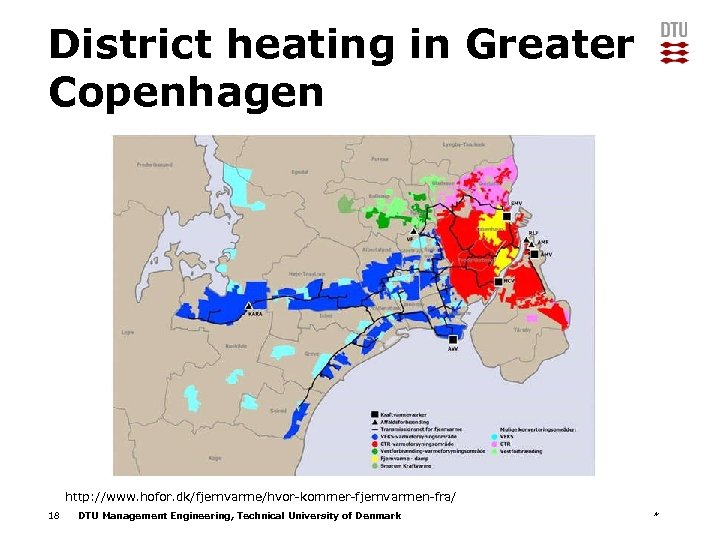
District heating in Greater Copenhagen http: //www. hofor. dk/fjernvarme/hvor-kommer-fjernvarmen-fra/ 18 DTU Management Engineering, Technical University of Denmark *
Urbanisation • In 2014, the urban population accounted for 54% of the total global population, up from 34% in 1960. The expectation is that the urban population will be increasing 1. 84% per year between 2015 and 2020, 1. 63% per year between 2020 and 2025, and 1. 44% per year between 2025 and 2030. • Copenhagen is modest at a current growth rate of 0. 2% goes up with 1200 people per year. • C 40 points out that while cities only occupy about 2% of the world’s landmass, they account for more than two thirds of global energy consumption and more than 70% of global CO 2 -emissions. 19 DTU Management Engineering, Technical University of Denmark 3/19/2018
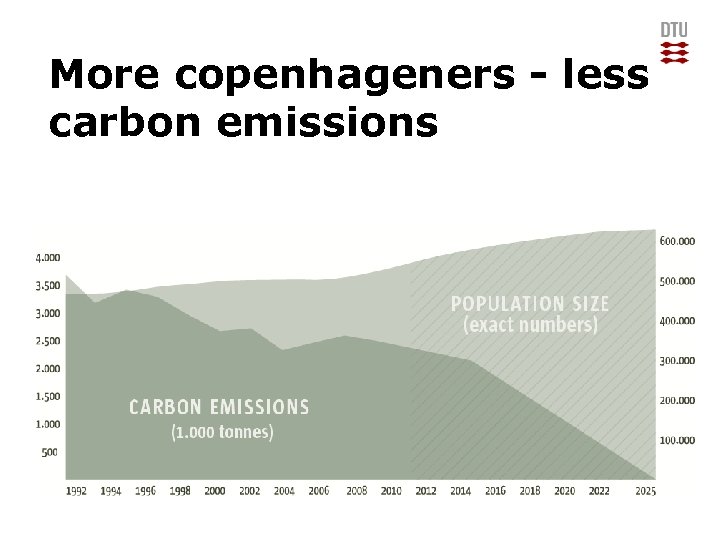
More copenhageners - less carbon emissions DTU Management Engineering, Technical University of Denmark
Copenhagen climate targets and green growth • Broad political consensus on climate plan to make Copenhagen Carbon Neutral by 2025 • Growth and climate action are each others prerequisites • Focus on growth, employment and new technology • Enforcing the Danish cleantech sector DTU Management Engineering, Technical University of Denmark
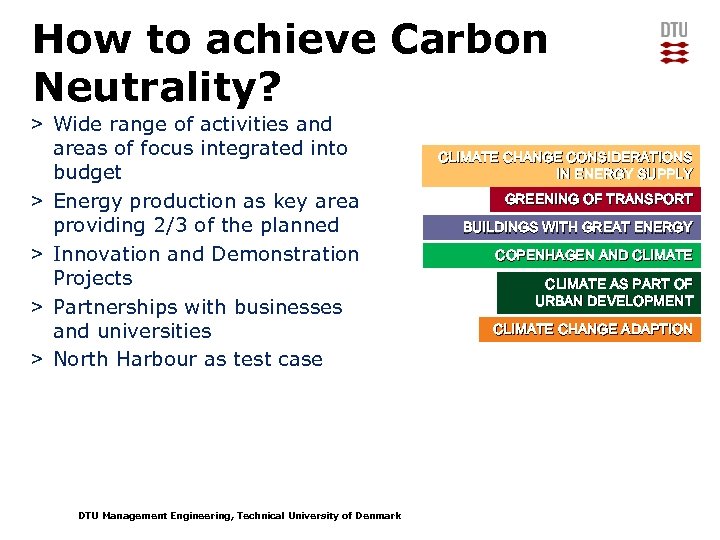
How to achieve Carbon Neutrality? > Wide range of activities and areas of focus integrated into budget > Energy production as key area providing 2/3 of the planned > Innovation and Demonstration Projects > Partnerships with businesses and universities > North Harbour as test case DTU Management Engineering, Technical University of Denmark CLIMATE CHANGE CONSIDERATIONS IN ENERGY SUPPLY GREENING OF TRANSPORT BUILDINGS WITH GREAT ENERGY COPENHAGEN AND CLIMATE AS PART OF URBAN DEVELOPMENT CLIMATE CHANGE ADAPTION
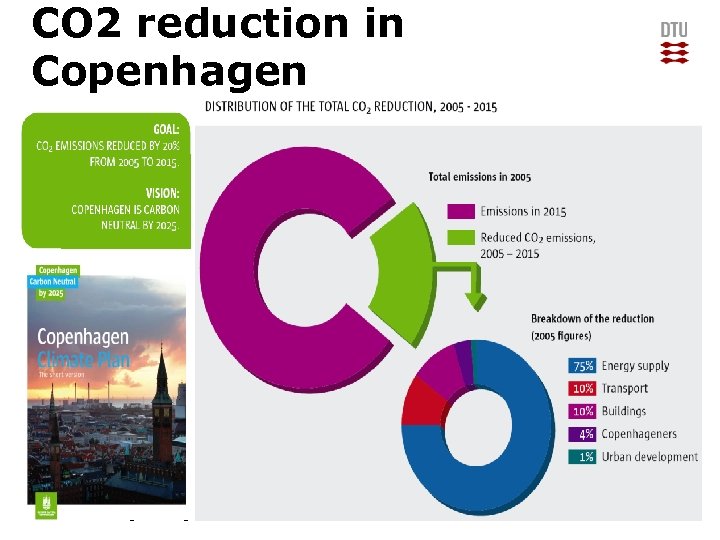
CO 2 reduction in Copenhagen DTU Management Engineering, Technical University of Denmark
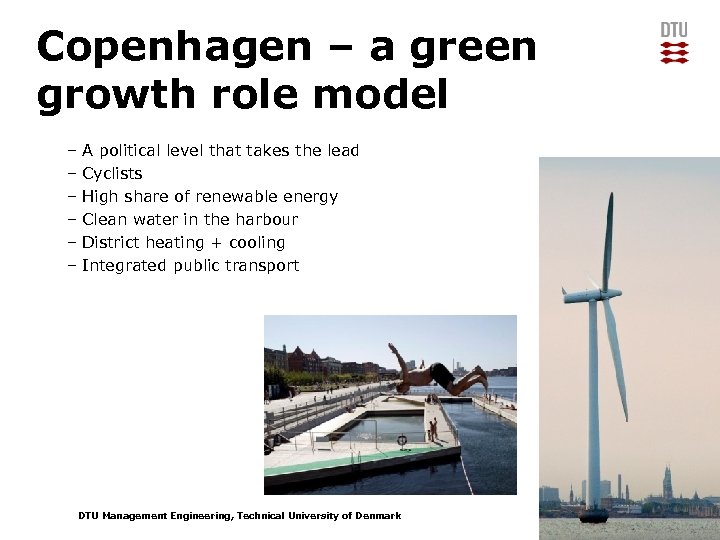
Copenhagen – a green growth role model – A political level that takes the lead – Cyclists – High share of renewable energy – Clean water in the harbour – District heating + cooling – Integrated public transport DTU Management Engineering, Technical University of Denmark
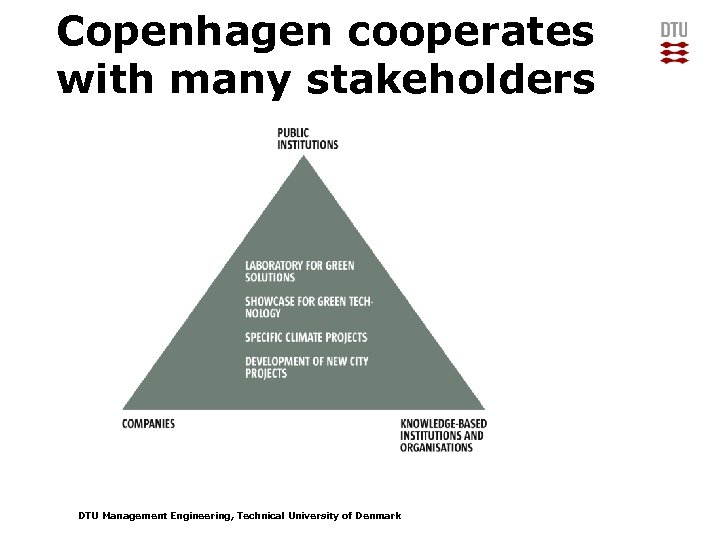
Copenhagen cooperates with many stakeholders DTU Management Engineering, Technical University of Denmark
Definition of Smart City Copenhagen had a cross department process in 2013 for deciding their definition of Smart Cities • • Use of data Use of new technologies/using old technologies in new ways Efficient use of resources New ways to involve citizens and stakeholders Innovation or technology-based growth Public-private partnerships Solve more than one problem at a time. Else Kloppenborg et al, 2015: Transformation agenda for Copenhagen (D 2. 2) 26 DTU Management Engineering, Technical University of Denmark 3/19/2018
Alternative definition of Smart City A SMART CITY – is a city that thinks about how it works: • A city that is adapting to current and future challenges and demands • A city that learns to handle for changing demographics • A city that creates an attractive place to live and work • A city that makes intelligent, efficient and sustainable use of natural resources • A city that decides on and controls the necessary public infrastructure • A city that can work with private expertise and excellence in efficient sustainable service provision • A city that can make use of private companies to implement innovate solutions for the challenges ahead • A city that is able to deliver in a low carbon economy 27 DTU Management Engineering, Technical University of Denmark 3/19/2018
Data & ICT • The idea in Copenhagen is to apply the means of data & ICT to a few areas first: Climate, energy, mobility, citizen services and, cross-cutting these themes while allowing for yet others: innovation and growth. More areas may be added before the strategy is adopted. • The focus has shifted from a very open approach with an emphasis on the use of technology, data & ICT in particular, to a more goal-oriented approach in which the areas that should be supported are named (e. g. climate, energy, mobility etc. ). • This outlined shift reflects a typical result of coordination across the City Administration. And the outcome of this process has increasingly evolved into a more comprehensive smart city understanding. 28 DTU Management Engineering, Technical University of Denmark 3/19/2018
Background and Status of CPH 2015 • Copenhagen City’s ambition to become the world’s first carbon neutral capital by 2025. The current status (as of 2014) is that overall the City is well on track. • The current climate plan: CPH 2025 commits the City Council to allocate resources on a continued basis to reach the goal. A total of 2. 7 billion DKK (€ 363 million) public money was agreed for the entire period of CPH 2025, that is, from 2012 to 2025. • Second, the roadmap for CPH 2025 includes 65 specific projects, and it includes budgets, time-horizons and desired impact. It makes the climate plan tangible to stakeholders, citizens and observers more generally. 29 DTU Management Engineering, Technical University of Denmark 3/19/2018
CPH 2025 – contributions for CO 2 reductions • • 30 Energy consumption – 7% of the total CO 2 -reductions in CPH 2025 Energy production – 74% Green Mobility – 11% The City Administration’s own climate initiatives – 2%, and New Initiatives – 6% DTU Management Engineering, Technical University of Denmark 3/19/2018
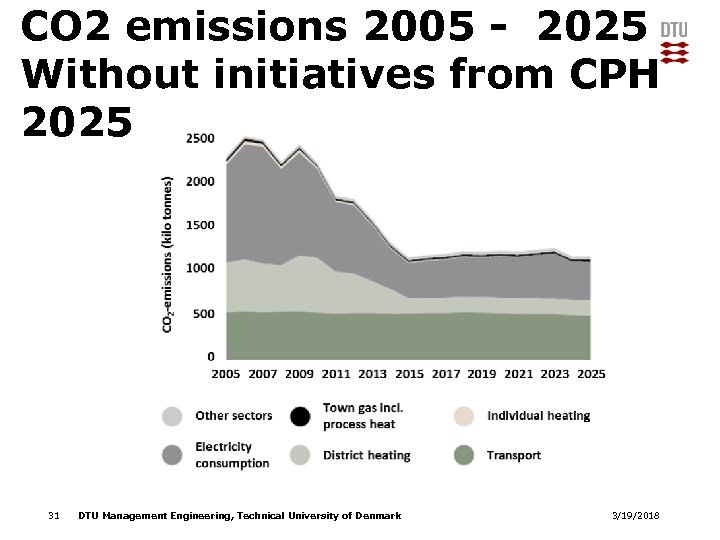
CO 2 emissions 2005 - 2025 Without initiatives from CPH 2025 31 DTU Management Engineering, Technical University of Denmark 3/19/2018
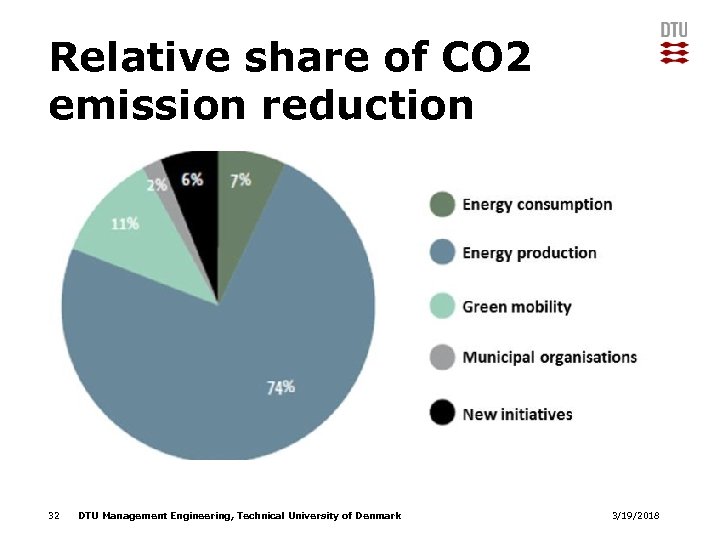
Relative share of CO 2 emission reduction 32 DTU Management Engineering, Technical University of Denmark 3/19/2018
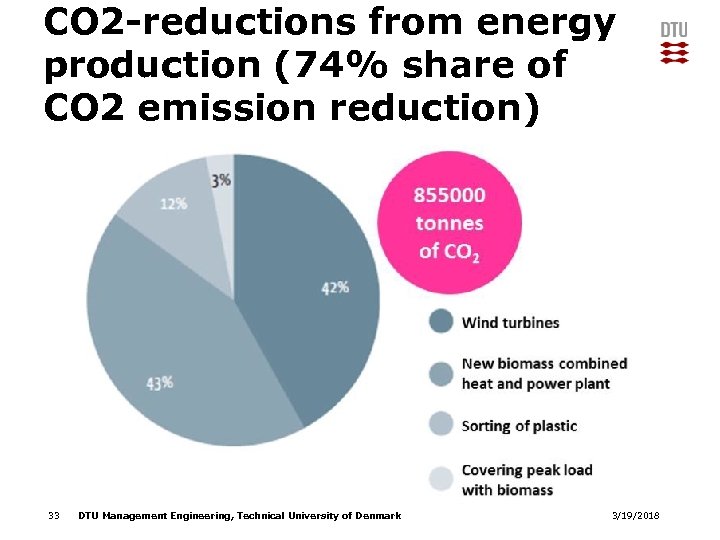
CO 2 -reductions from energy production (74% share of CO 2 emission reduction) 33 DTU Management Engineering, Technical University of Denmark 3/19/2018
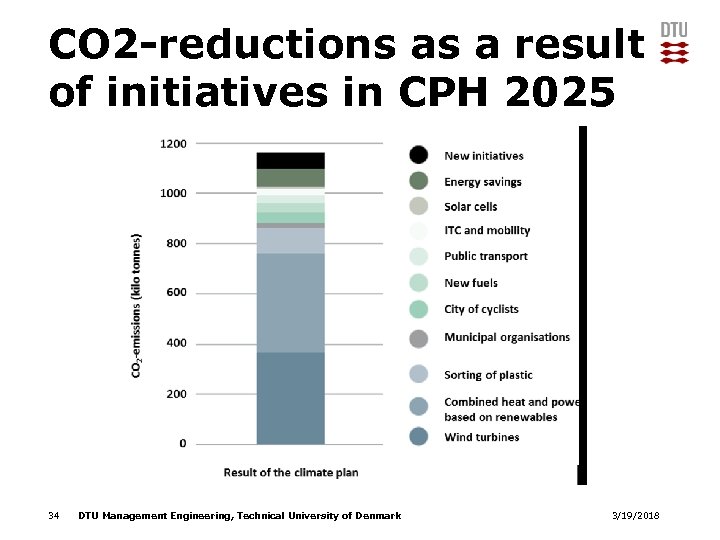
CO 2 -reductions as a result of initiatives in CPH 2025 34 DTU Management Engineering, Technical University of Denmark 3/19/2018
HOFOR • Energy Production in CPH 2025 – accounts for 74% of the planned CO 2 reductions. It is therefore very important that HOFOR, the City-owned utility company, supports CPH 2025. HOFOR supports CPH 2025 in a number of ways: • The primary strategic action is to substitute fossil fuels with biomass (wood chips) at Amagerværket, the Combined Heat and Power (CHP) Plant, which was purchased by HOFOR in January 2014. • Secondly, HOFOR establishes wind farms primarily outside the City that will result in a surplus production of RES relative to the total energy consumption in Copenhagen. This wind power may serve not only to cover energy consumption in the city but also to compensate CO 2 emissions from fossil-fuel based traffic in Copenhagen. • Moreover, HOFOR creates energy savings in the district heating grids, facilitates energy savings at end-user level, and invests in climate change adaptation (e. g. rainwater management). 35 DTU Management Engineering, Technical University of Denmark 3/19/2018
36 19. marts 2018 DTU Management Engineering, Technical University of Denmark
DTU Management Engineering, Technical University of Denmark
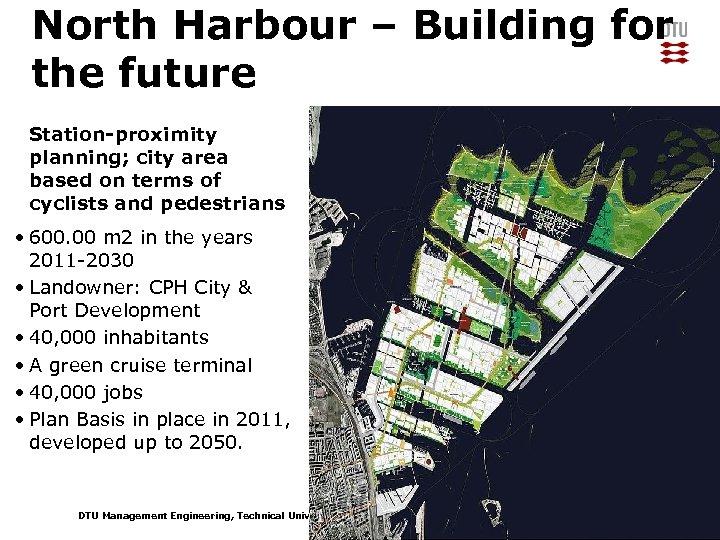
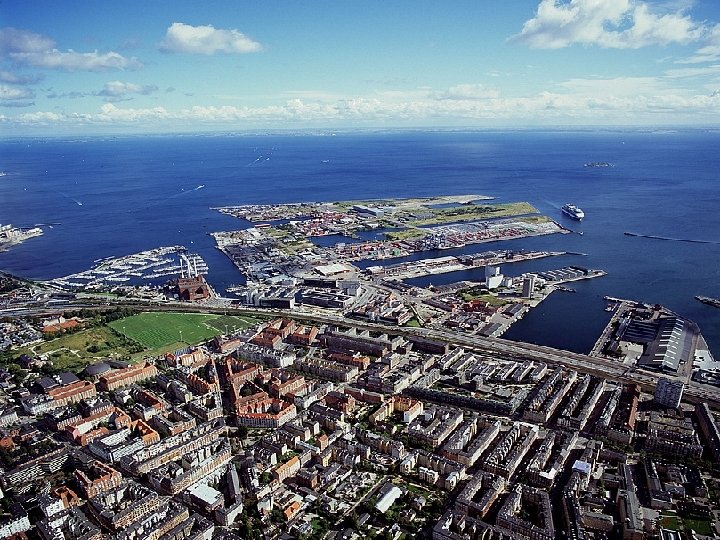
North Harbour – Building for the future Station-proximity planning; city area based on terms of cyclists and pedestrians • 600. 00 m 2 in the years 2011 -2030 • Landowner: CPH City & Port Development • 40, 000 inhabitants • A green cruise terminal • 40, 000 jobs • Plan Basis in place in 2011, developed up to 2050. DTU Management Engineering, Technical University of Denmark
DTU Management Engineering, Technical University of Denmark
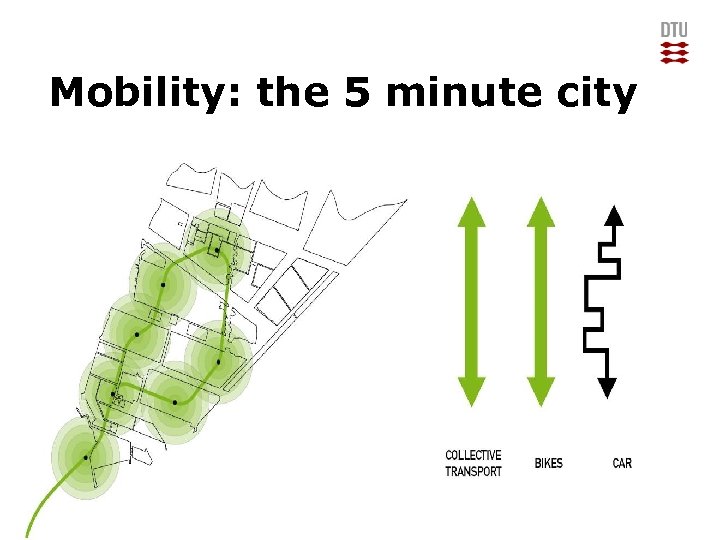
Mobility: the 5 minute city DTU Management Engineering, Technical University of Denmark
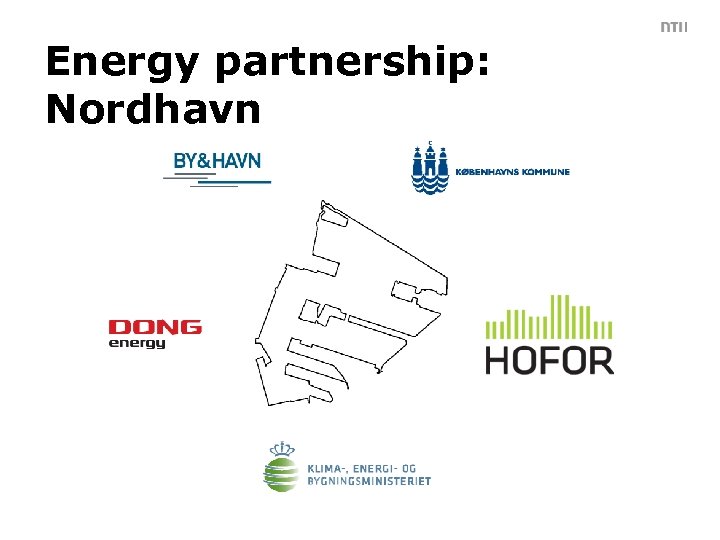
Energy partnership: Nordhavn DTU Management Engineering, Technical University of Denmark
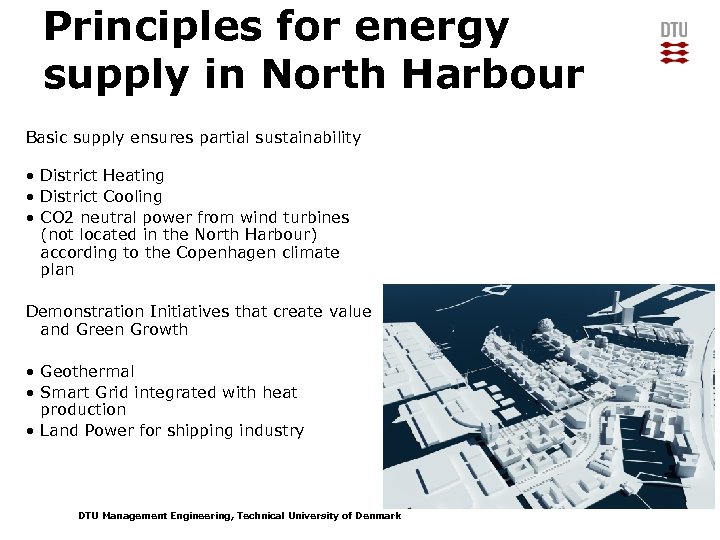
Principles for energy supply in North Harbour Basic supply ensures partial sustainability • District Heating • District Cooling • CO 2 neutral power from wind turbines (not located in the North Harbour) according to the Copenhagen climate plan Demonstration Initiatives that create value and Green Growth • Geothermal • Smart Grid integrated with heat production • Land Power for shipping industry DTU Management Engineering, Technical University of Denmark
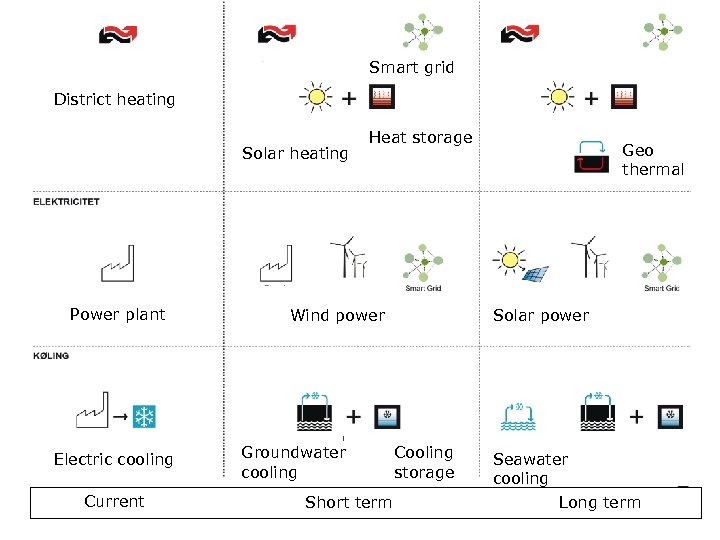
Smart grid District heating Solar heating Power plant Electric cooling Current Heat storage Wind power Groundwater cooling Short term Geo thermal Solar power Cooling storage DTU Management Engineering, Technical University of Denmark Seawater cooling Long term
Concrete Smart City examples/options • • Energy system integration Real-time data Service architechture Digital masterplanning – cobled to the physical structure • The smart building • XXX – there are several sectors which can be smart DTU Management Engineering, Technical University of Denmark
Technical solutions • • • Smart Energy Smart house Street lights On land electricity supply for cruise ships Electric cars Lowtemperature district heating District cooling Heat storage Geothermal DTU Management Engineering, Technical University of Denmark
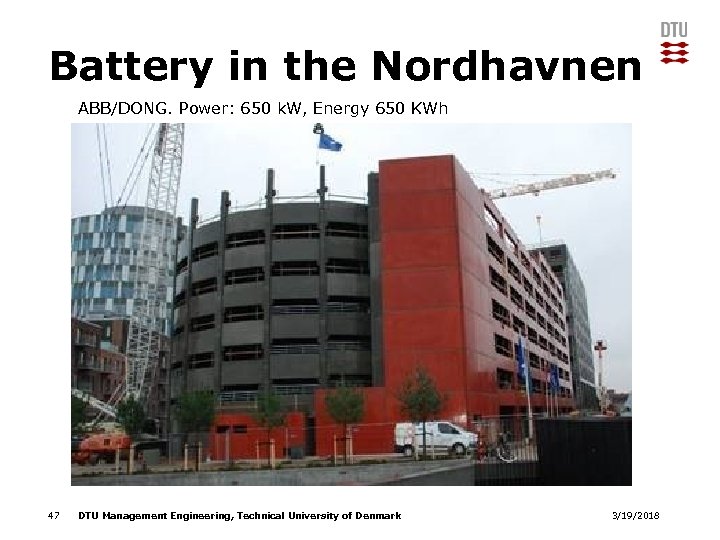
Battery in the Nordhavnen ABB/DONG. Power: 650 k. W, Energy 650 KWh 47 DTU Management Engineering, Technical University of Denmark 3/19/2018
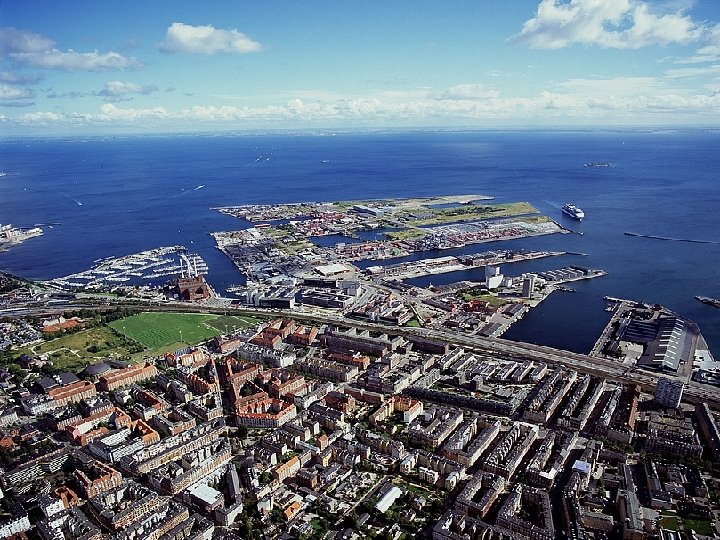
48 19. marts 2018 DTU Management Engineering, Technical University of Denmark
Скачать презентацию Smart Cities Low Carbon Solutions Per Sieverts Nielsen
acfbd38651f62eafde029d57b74a62a8.ppt