Скачать презентацию Smallpox Malakhova Anastasia What Is Smallpox Smallpox
smallpox.pptx
- Количество слайдов: 9
 Smallpox Malakhova Anastasia
 What Is Smallpox? Smallpox is an extremely contagious and deadly virus for which there is no known cure. The last known case occurred in the United States in 1949 and due to worldwide vaccination programs, this disease has been completely eradicated. Smallpox is also known as variola.
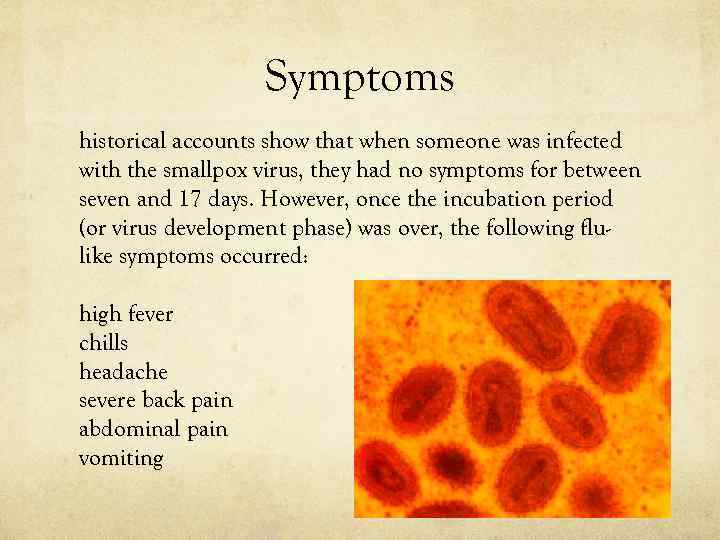 Symptoms historical accounts show that when someone was infected with the smallpox virus, they had no symptoms for between seven and 17 days. However, once the incubation period (or virus development phase) was over, the following flulike symptoms occurred: high fever chills headache severe back pain abdominal pain vomiting
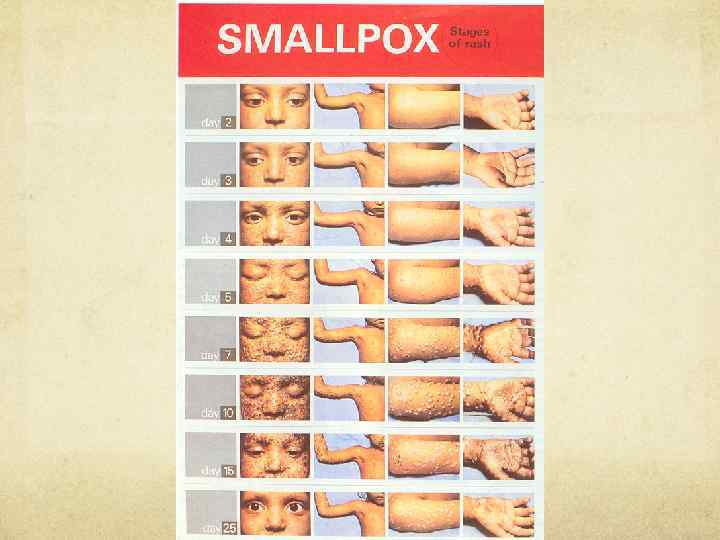
 How it spreads These symptoms would go away within two to three days. Then the patient would feel better. However, just as the patient started to feel better, a rash would appear. The rash started on the face and then spread to the hands, forearms, and the main part of the body. The person would be highly contagious until the rash disappeared.
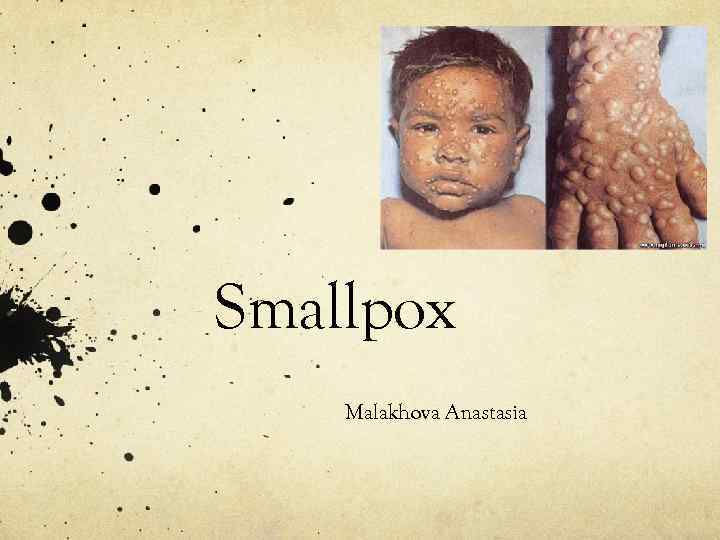
 Within two days of appearance, the rash would develop into abscesses that filled with fluid and pus. The abscesses would break open and scab over. The scabs would eventually fall off, leaving pit mark scars. Until the scabs fell off, the person remained contagious.
 Ways to treat There is no cure for the smallpox virus. As a result of worldwide, repeated vaccination programs, the variola virus (smallpox) has been completely eradicated. The only people considered to be at risk for smallpox are researchers who work with it in a laboratory setting. In the unlikely event that an exposure to the smallpox virus occurs, vaccination within one to three days can keep the illness from being so severe. In addition, antibiotics can help to reduce the bacterial infections associated with the virus.
 Probable complications Complications of smallpox arise most commonly in the respiratory system and range from simple bronchitis to fatal pneumonia. Respiratory complications tend to develop on about the eighth day of the illness and can be either viral or bacterial in origin. Secondary bacterial infection of the skin is a relatively uncommon complication of smallpox. When this occurs, the fever usually remains elevated. Other complications include encephalitis (1 in 500 patients), which is more common in adults and may cause temporary disability; permanent pitted scars, most notably on the face; and complications involving the eyes (2 percent of all cases)
 Tips to prevent a person from catching it In 1967, WHO began its attempt to eradicate the smallpox virus worldwide. The methods used in the program were simple: Careful surveillance for all smallpox infections worldwide, to allow for quick diagnosis and immediate quarantine of patients. Immediate vaccination of all contacts diagnosed with infection, in order to interrupt the virus' usual pattern of infection. The WHO's program was extremely successful, and the virus was declared eradicated worldwide in May 1980.