


 Скачать презентацию Slides for Communicating IPCC Working Group III Summary
88e97f8ce3e44602b6baca8ff502b5b0.ppt
- Количество слайдов: 39
 Slides for Communicating IPCC Working Group III Summary For Policymakers: Mitigation of Climate Change www. ucsusa. org
 Guidelines Pick a portion of these slides that reflect the interests of your audience. If you modify these slides, please remember to retain the reference credits (usually the IPCC credit for the figure or finding is at the bottom of the slide and image credits are next to each image) Slides use publicly accessible language (comment fields below each slide contain direct quotes from the IPCC for your reference).
 Figure: Courtesy of IPCC
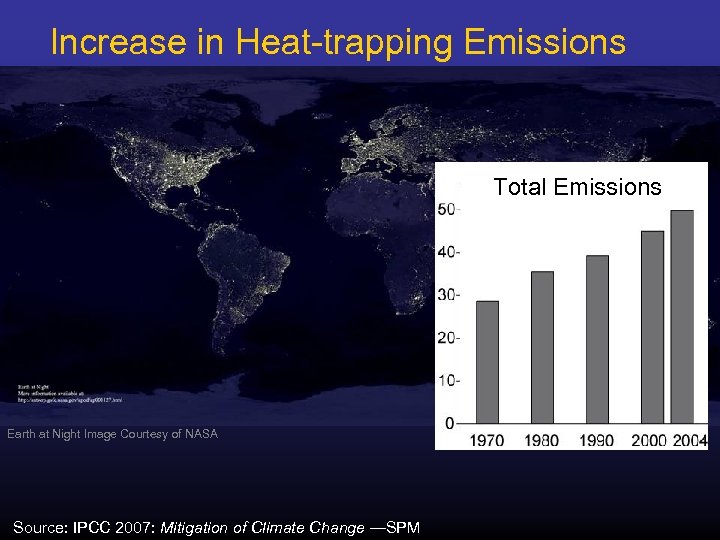 Increase in Heat-trapping Emissions Total Emissions of heat-trapping gases rose 70% between 1970 and 2004. Earth at Night Image Courtesy of NASA Source: IPCC 2007: Mitigation of Climate Change —SPM
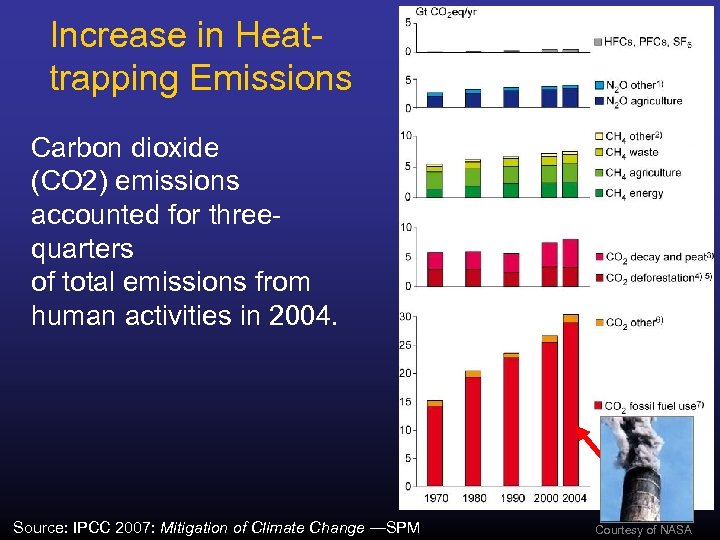 Increase in Heattrapping Emissions Carbon dioxide (CO 2) emissions accounted for threequarters of total emissions from human activities in 2004. Source: IPCC 2007: Mitigation of Climate Change —SPM Courtesy of NASA
 Carbon dioxide equivalent (CO 2 -eq) Carbon dioxide equivalent takes into account the different time period each gas remains in the atmosphere and its respective heat-trapping properties. The heat-trapping “greenhouse” gases covered by the Kyoto Protocol include: • carbon dioxide (CO 2), • methane (CH 4), To calculate CO 2 -eq see • nitrous oxide (N 2 O), www. epa. gov/climatechange/ • hydrofluorocarbons (HFCs), emissions/downloads/2007 G HGFast. Facts. pdf. • perfluorocarbons (PFCs) and • sulfur hexafluoride (SF 6). Source: IPCC 2007: Mitigation of Climate Change —SPM
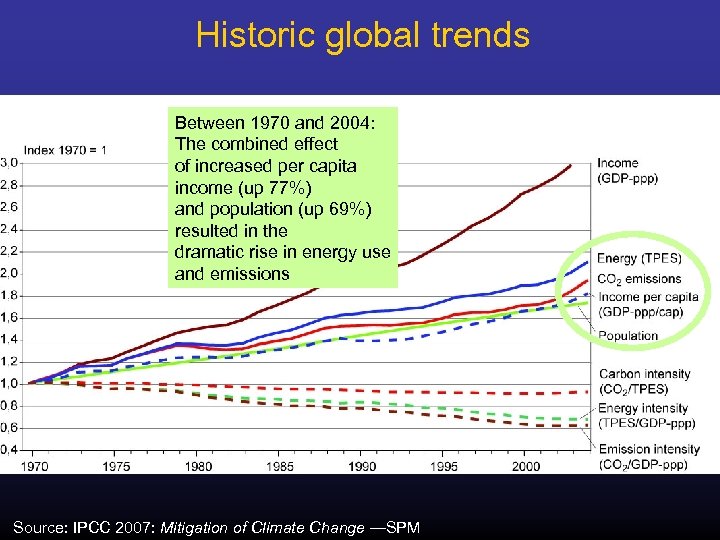 Historic global trends Between 1970 and 2004: The combined effect of increased per capita income (up 77%) and population (up 69%) resulted in the dramatic rise in energy use and emissions Source: IPCC 2007: Mitigation of Climate Change —SPM
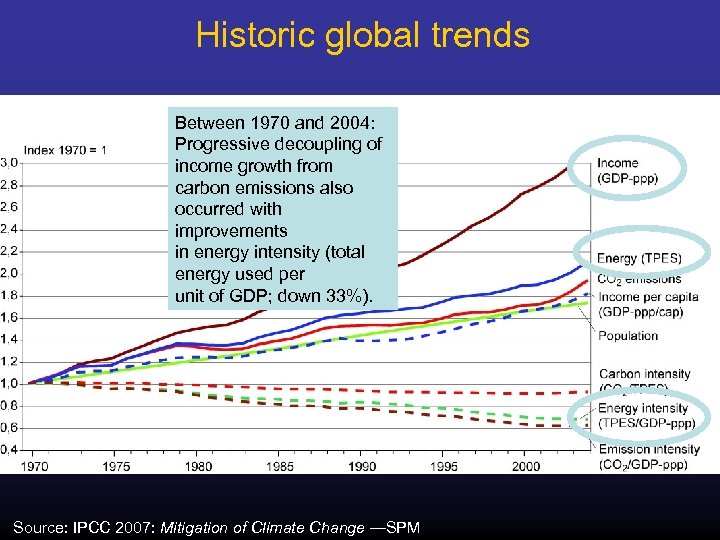 Historic global trends Between 1970 and 2004: Progressive decoupling of income growth from carbon emissions also occurred with improvements in energy intensity (total energy used per unit of GDP; down 33%). Source: IPCC 2007: Mitigation of Climate Change —SPM
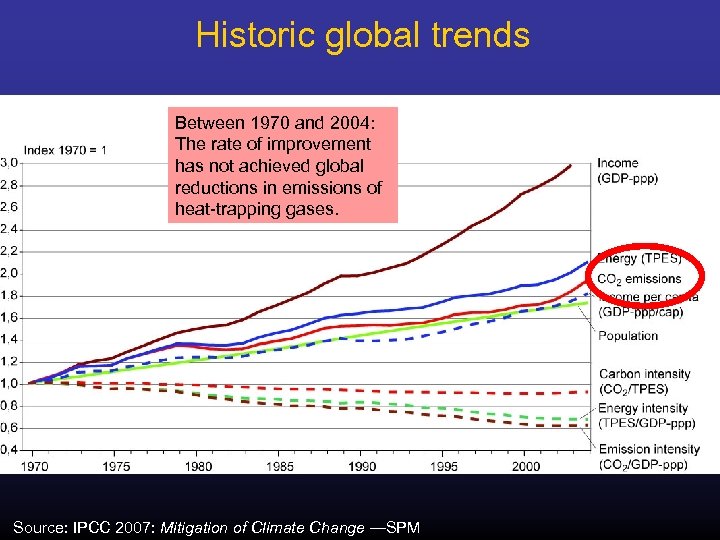 Historic global trends Between 1970 and 2004: The rate of improvement has not achieved global reductions in emissions of heat-trapping gases. Source: IPCC 2007: Mitigation of Climate Change —SPM
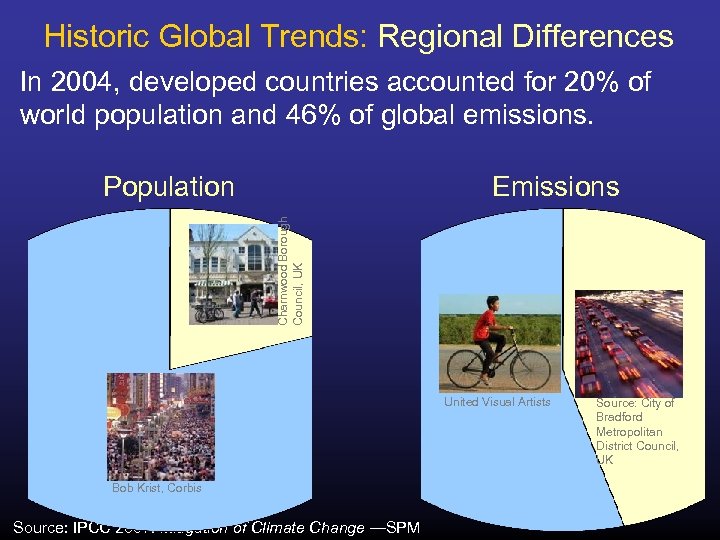 Historic Global Trends: Regional Differences In 2004, developed countries accounted for 20% of world population and 46% of global emissions. Emissions Charnwood Borough Council, UK Population United Visual Artists Bob Krist, Corbis Source: IPCC 2007: Mitigation of Climate Change —SPM Source: City of Bradford Metropolitan District Council, UK
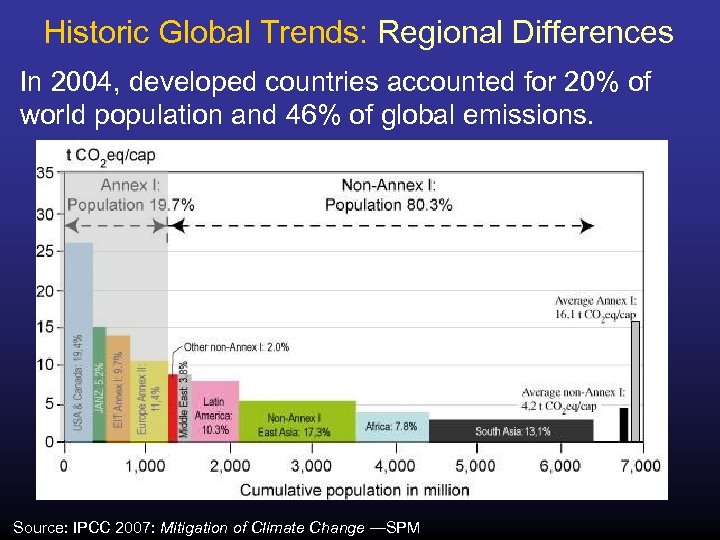 Historic Global Trends: Regional Differences In 2004, developed countries accounted for 20% of world population and 46% of global emissions. Source: IPCC 2007: Mitigation of Climate Change —SPM
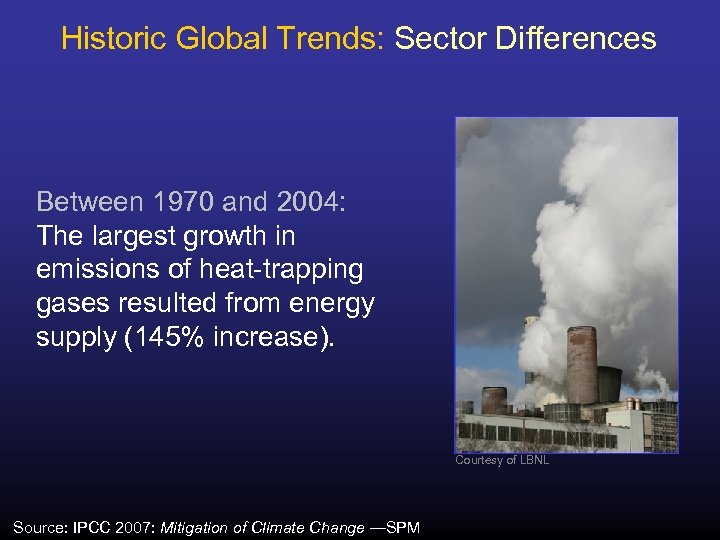 Historic Global Trends: Sector Differences Between 1970 and 2004: The largest growth in emissions of heat-trapping gases resulted from energy supply (145% increase). Courtesy of LBNL Source: IPCC 2007: Mitigation of Climate Change —SPM
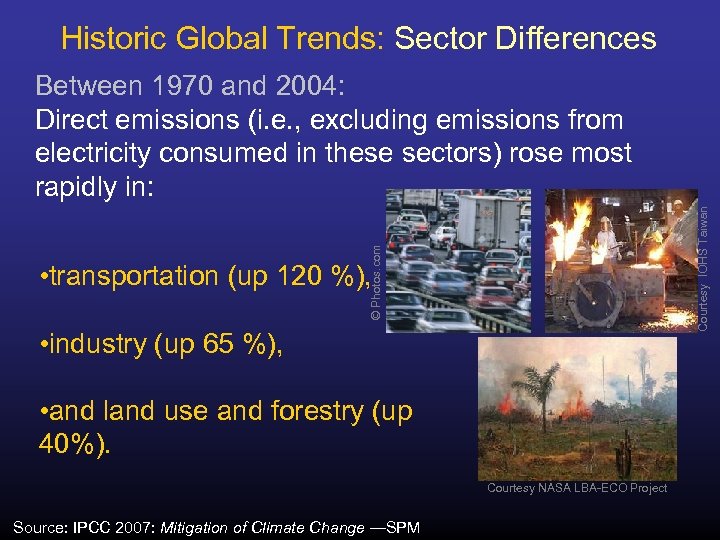 Historic Global Trends: Sector Differences © Photos. com Courtesy IOHS Taiwan Between 1970 and 2004: Direct emissions (i. e. , excluding emissions from electricity consumed in these sectors) rose most rapidly in: • transportation (up 120 %), • industry (up 65 %), • and land use and forestry (up 40%). Courtesy NASA LBA-ECO Project Source: IPCC 2007: Mitigation of Climate Change —SPM
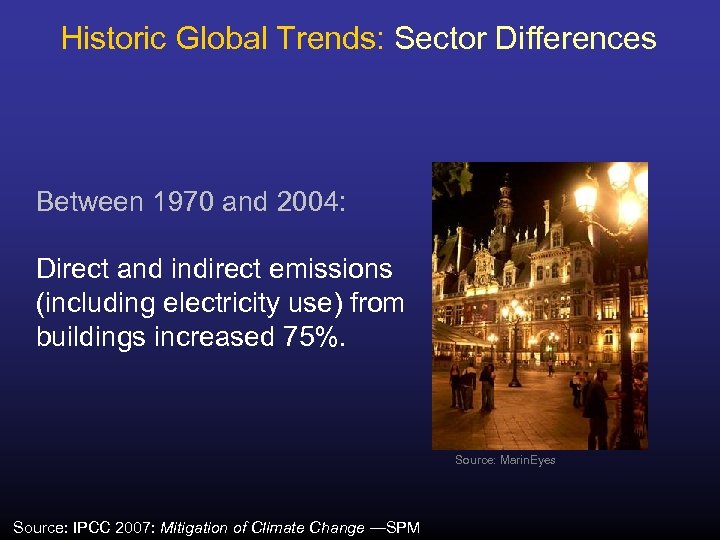 Historic Global Trends: Sector Differences Between 1970 and 2004: Direct and indirect emissions (including electricity use) from buildings increased 75%. Source: Marin. Eyes Source: IPCC 2007: Mitigation of Climate Change —SPM
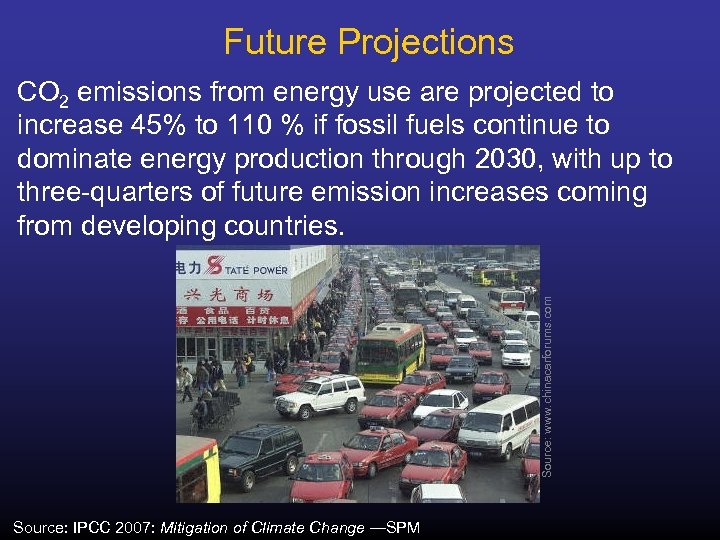 Future Projections Source: www. chinacarforums. com CO 2 emissions from energy use are projected to increase 45% to 110 % if fossil fuels continue to dominate energy production through 2030, with up to three-quarters of future emission increases coming from developing countries. Source: IPCC 2007: Mitigation of Climate Change —SPM
 Future Risks Adapted from IPCC 2007: Mitigation of Climate Change —SPM
 For example, IPCC Working Group II finds that up to 30% of plant and animal species could face increasing risk of extinction if temperatures rise more than ~3 to ~5°F (1. 5 to 2. 5°C). Source IPCC 2007 Adapted from IPCC 2007: Mitigation of Climate Change —SPM Future Risks
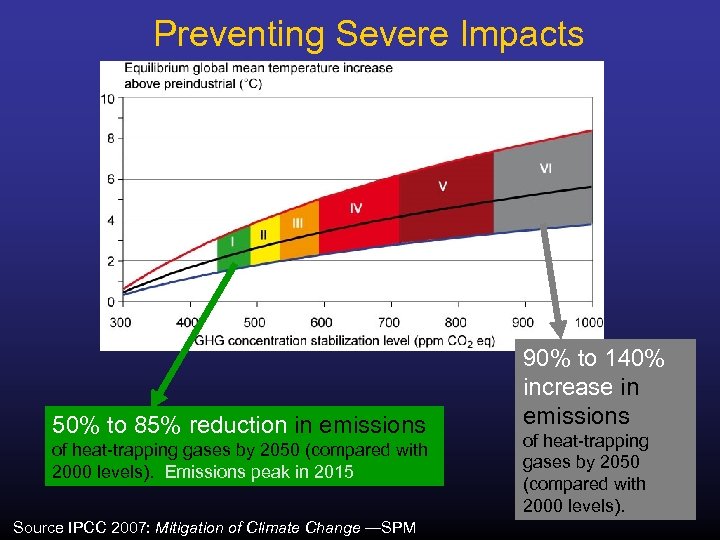 Preventing Severe Impacts 50% to 85% reduction in emissions of heat-trapping gases by 2050 (compared with 2000 levels). Emissions peak in 2015 Source IPCC 2007: Mitigation of Climate Change —SPM 90% to 140% increase in emissions of heat-trapping gases by 2050 (compared with 2000 levels).
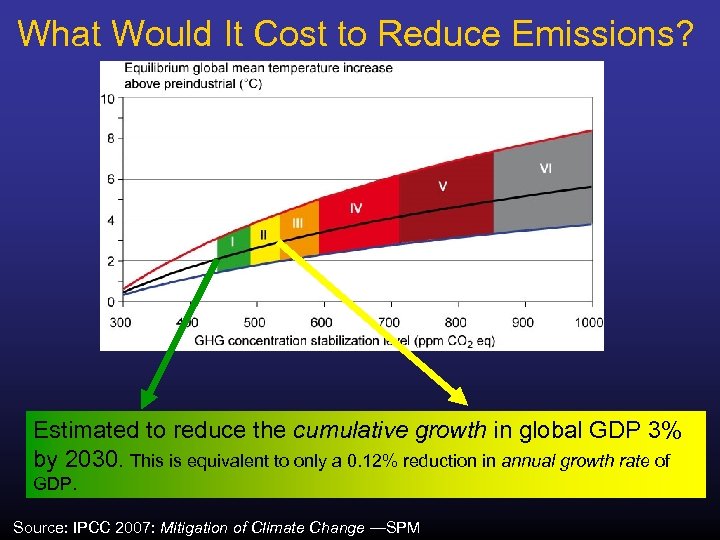 What Would It Cost to Reduce Emissions? Estimated to reduce the cumulative growth in global GDP 3% by 2030. This is equivalent to only a 0. 12% reduction in annual growth rate of GDP. Source: IPCC 2007: Mitigation of Climate Change —SPM
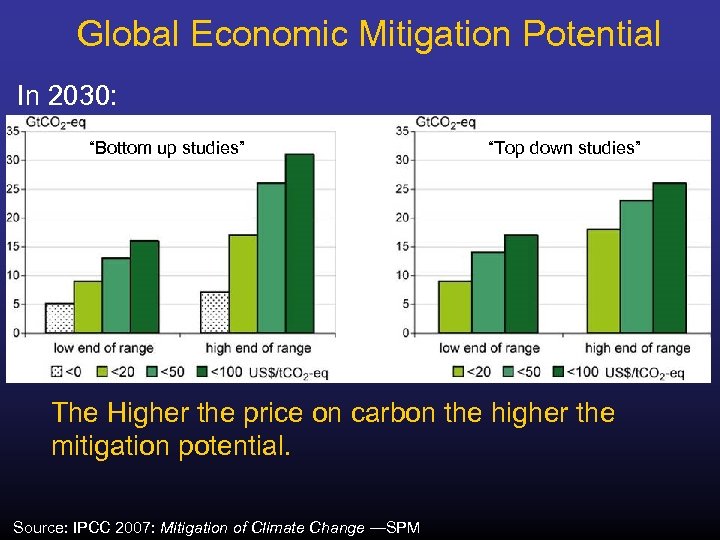 Global Economic Mitigation Potential In 2030: “Bottom up studies” “Top down studies” The Higher the price on carbon the higher the mitigation potential. Source: IPCC 2007: Mitigation of Climate Change —SPM
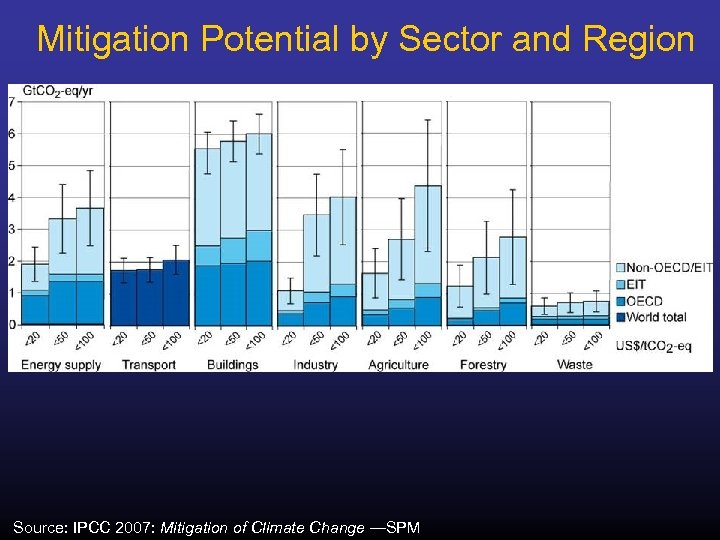 Mitigation Potential by Sector and Region Source: IPCC 2007: Mitigation of Climate Change —SPM
 Benefits of Reducing Emissions • air quality, • energy security, • public health, • agricultural production, • balance of trade, • employment, • income generation, wealth creation, and poverty alleviation. Source: IPCC 2007: Mitigation of Climate Change —SPM © Allan Fox Many emissions reduction strategies also provide benefits for:
 Emission Reduction Strategies • Integrated policies • Regulatory standards • Taxes and fees • Financial incentives • Tradable permits • Voluntary agreements • Voluntary actions Source: IPCC 2007: Mitigation of Climate Change —SPM Courtesy European Parliament Many strategies are available for governments to mitigate climate change:
 Emission Reduction Strategies Courtesy European Parliament Integrated policies that include climate change as a factor in broader policy development can ease implementation of mitigation mechanisms. Source: IPCC 2007: Mitigation of Climate Change —SPM
 Emission Reduction Strategies Courtesy European Parliament Regulatory standards provide certainty and consistency on emission levels, and send a clear signal that discourages a business-as-usual approach. Source: IPCC 2007: Mitigation of Climate Change —SPM
 Emission Reduction Strategies Courtesy European Parliament China. Daily. com Tradable permits establish a price for carbon and draw on the power of the marketplace to reduce emissions in a flexible manner. The volume of allowed emissions determines environmental effectiveness, while the distribution of allowances determines competitiveness. Source: IPCC 2007: Mitigation of Climate Change —SPM
 Emission Reduction Strategies Courtesy European Parliament www. missouristate. edu Taxes and fees are generally a cost-effective strategy; they send price signals that create incentives to reduce emissions, but cannot guarantee a specified level of reductions. Source: IPCC 2007: Mitigation of Climate Change —SPM
 Emission Reduction Strategies Courtesy European Parliament BBC. co. uk Financial incentives such as rebates and tax breaks can be used to stimulate new markets for innovative technologies. Source: IPCC 2007: Mitigation of Climate Change —SPM
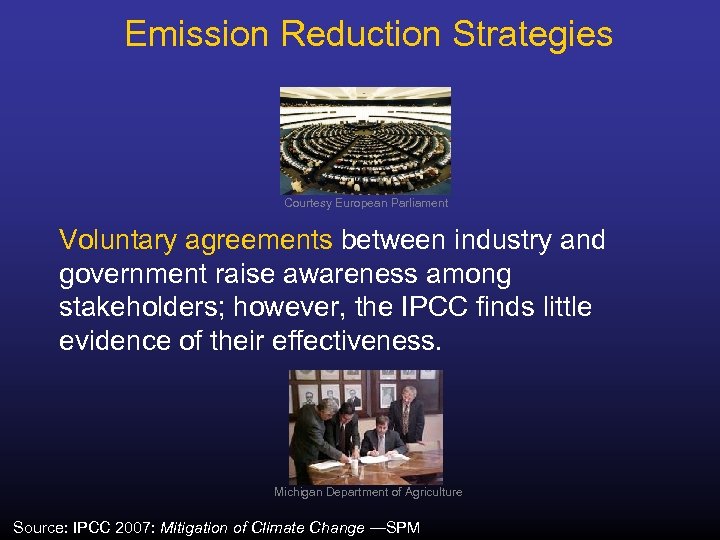 Emission Reduction Strategies Courtesy European Parliament Voluntary agreements between industry and government raise awareness among stakeholders; however, the IPCC finds little evidence of their effectiveness. Michigan Department of Agriculture Source: IPCC 2007: Mitigation of Climate Change —SPM
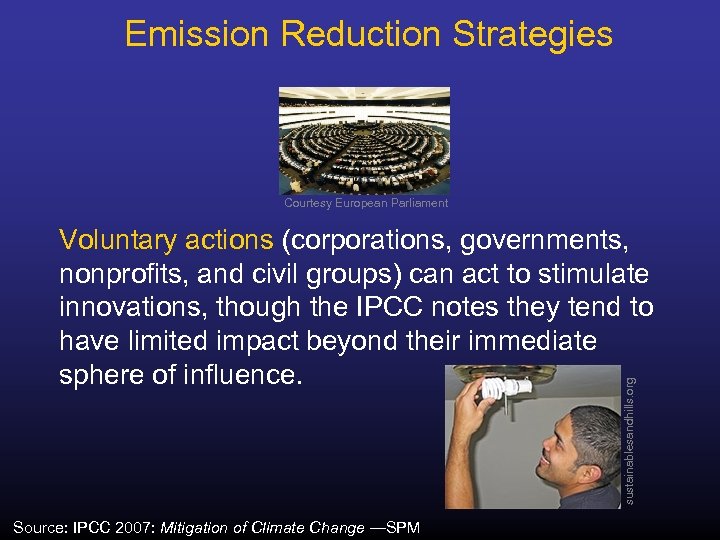 Emission Reduction Strategies Courtesy European Parliament sustainablesandhills. org Voluntary actions (corporations, governments, nonprofits, and civil groups) can act to stimulate innovations, though the IPCC notes they tend to have limited impact beyond their immediate sphere of influence. Source: IPCC 2007: Mitigation of Climate Change —SPM
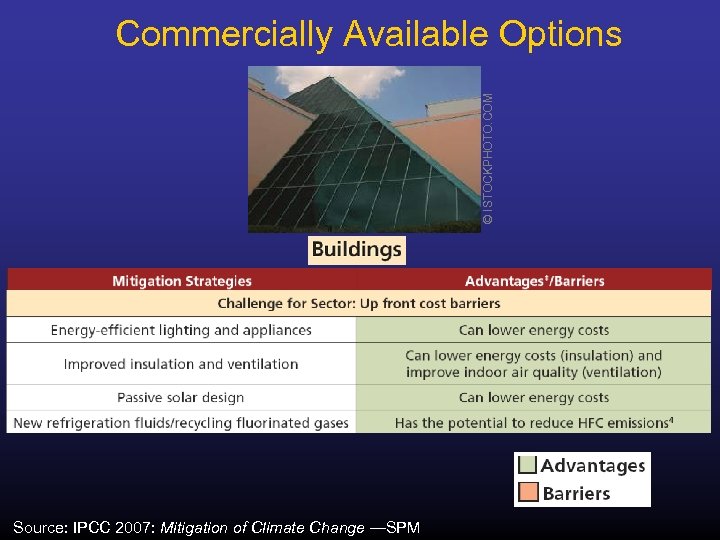 © ISTOCKPHOTO. COM Commercially Available Options Source: IPCC 2007: Mitigation of Climate Change —SPM
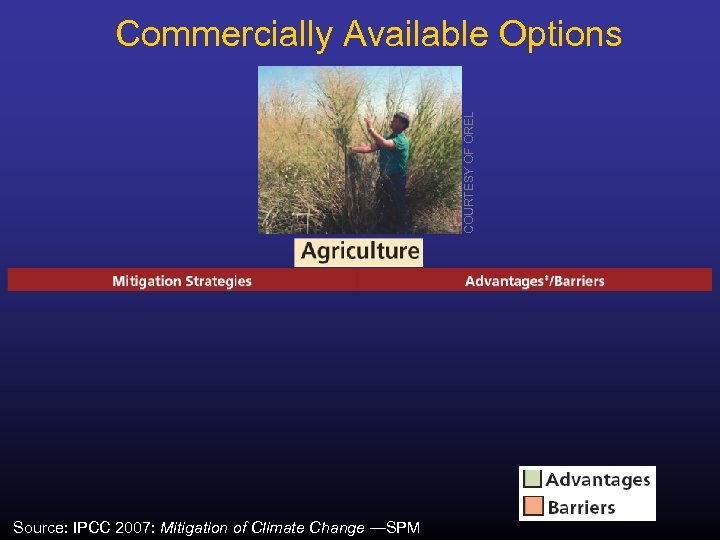 COURTESY OF OREL Commercially Available Options Source: IPCC 2007: Mitigation of Climate Change —SPM
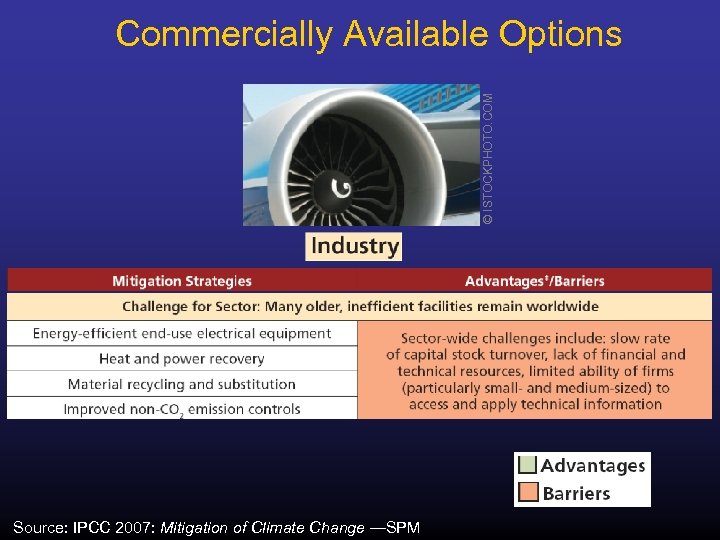 © ISTOCKPHOTO. COM Commercially Available Options Source: IPCC 2007: Mitigation of Climate Change —SPM
 COURTESY OF NREL Commercially Available Options Source: IPCC 2007: Mitigation of Climate Change —SPM
 COURTESY OF LLNL Commercially Available Options Source: IPCC 2007: Mitigation of Climate Change —SPM
 KRAEMER, INC. Commercially Available Options Source: IPCC 2007: Mitigation of Climate Change —SPM
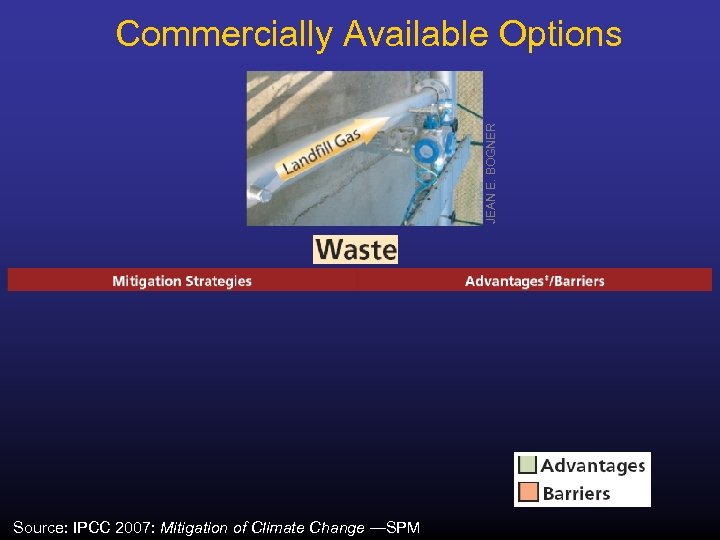 JEAN E. BOGNER Commercially Available Options Source: IPCC 2007: Mitigation of Climate Change —SPM
 Designs of the future © ISTOCKPHOTO. COM Evolving Technologies In order to stimulate deployment of technological advances, larger investment in research and development is necessary during the next few decades. Source: IPCC 2007: Mitigation of Climate Change —SPM
 Communicate the AR 4 IPCC Background, WGI, WG 2 Brochures www. ucsusa. org/global_warming/science/the-ipcc. html Tips on talking the with media and policy makers www. ucsusa. org/ssi Regional Climate Impacts http: //www. ucsusa. org/global_warming/science/region al-effects-of-global. html Questions: ssi@ucsusa. org