


 Скачать презентацию Slide 1 Which of the Following
d19d7572b63f67f639ad95dbdeeeeb25.ppt
- Количество слайдов: 125
 Slide # 1
 Which of the Following Is an Example of a Group? l Cheerleaders at a school l A high school football team l People lined up to vote l Women at a baby shower l Pedestrians at a crosswalk 2
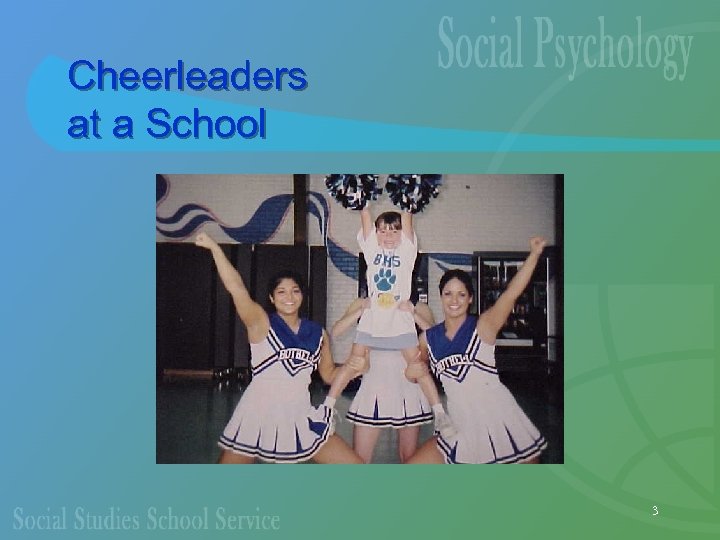 Cheerleaders at a School 3
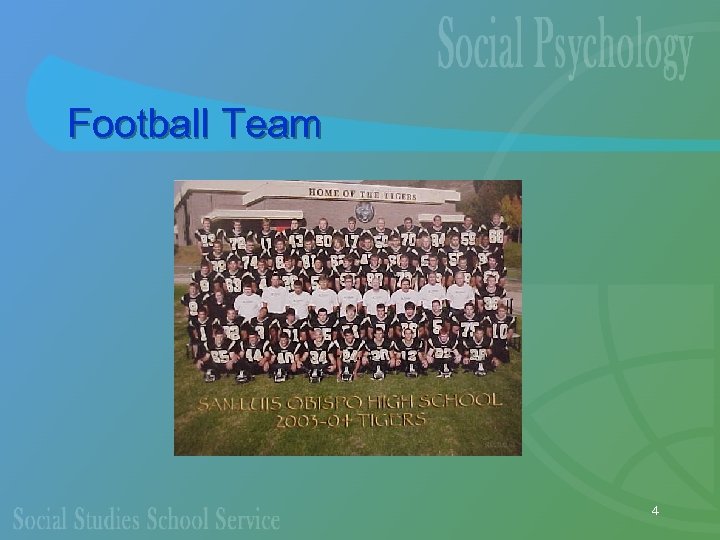 Football Team 4
 People Lined Up to Vote 5
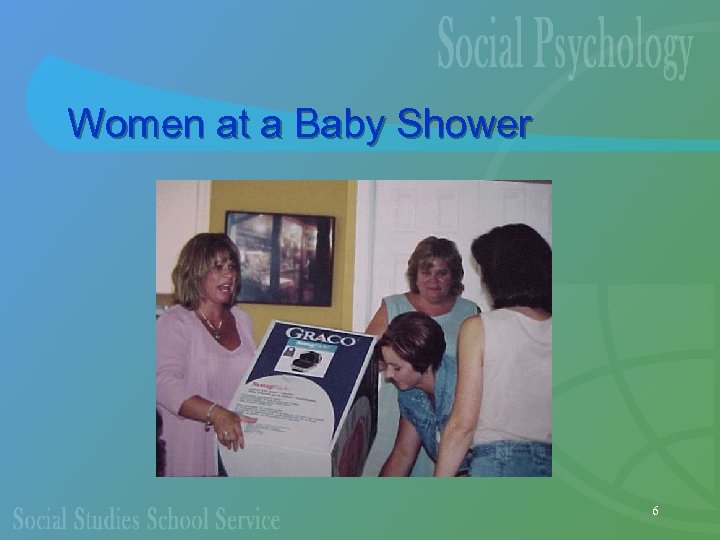 Women at a Baby Shower 6
 Pedestrians in a Crosswalk 7
 Primary Groups Families, couples in love, street gangs, social clubs l Relationships that are face-to-face and personal l 8
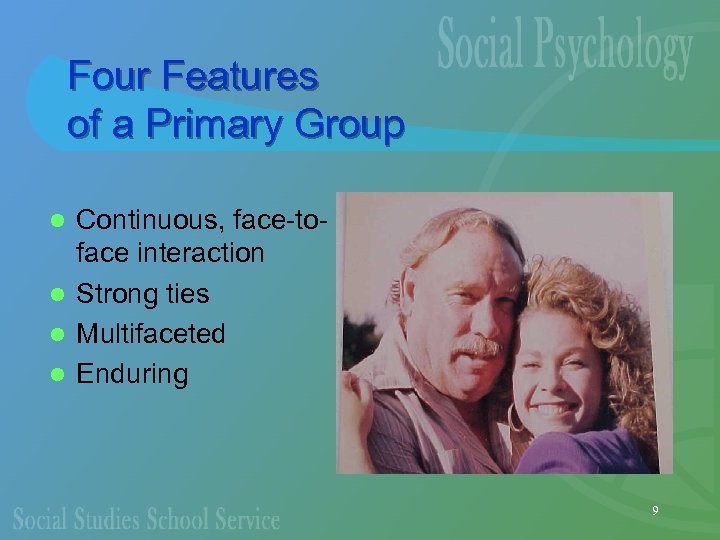 Four Features of a Primary Group Continuous, face-toface interaction l Strong ties l Multifaceted l Enduring l 9
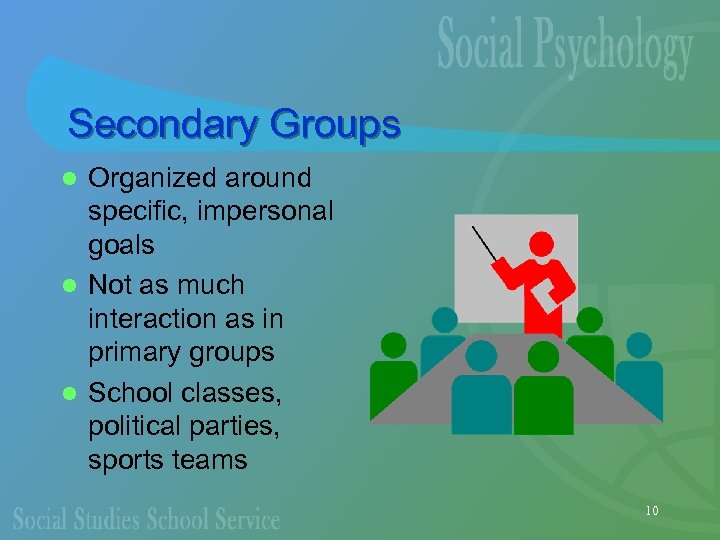 Secondary Groups Organized around specific, impersonal goals l Not as much interaction as in primary groups l School classes, political parties, sports teams l 10
 Secondary Group Characteristics l Limited face-to-face interaction l Modest or weak personal identity with the group l Weak ties of affection l Limited/shallow relations l Not very enduring 11
 Why Join a Group ? l To satisfy the need to belong l To compare experiences l To use group standards to evaluate ourselves l For companionship l To lessen anxiety and provide comfort l Group accomplishments 12
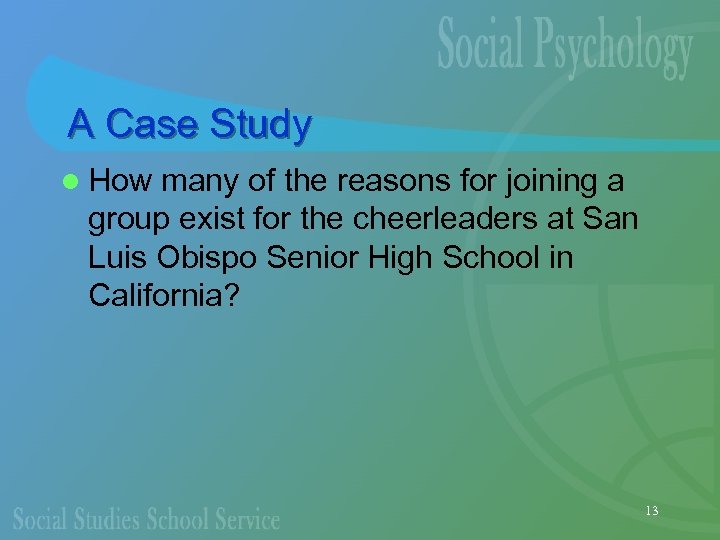 A Case Study l How many of the reasons for joining a group exist for the cheerleaders at San Luis Obispo Senior High School in California? 13
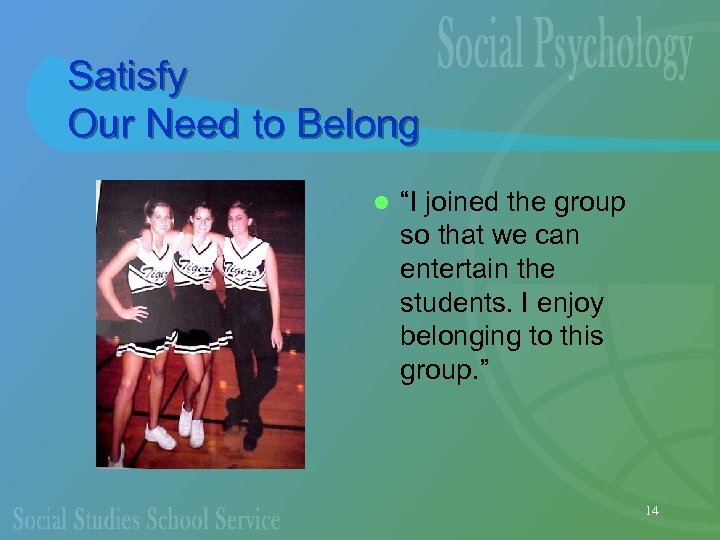 Satisfy Our Need to Belong l “I joined the group so that we can entertain the students. I enjoy belonging to this group. ” 14
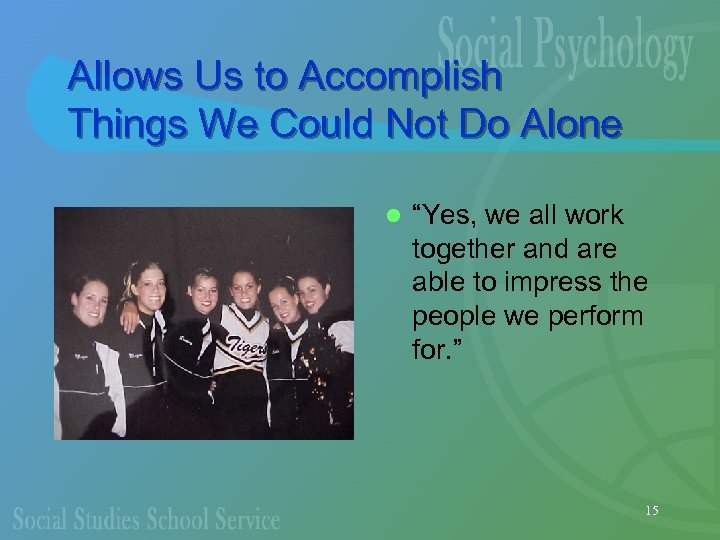 Allows Us to Accomplish Things We Could Not Do Alone l “Yes, we all work together and are able to impress the people we perform for. ” 15
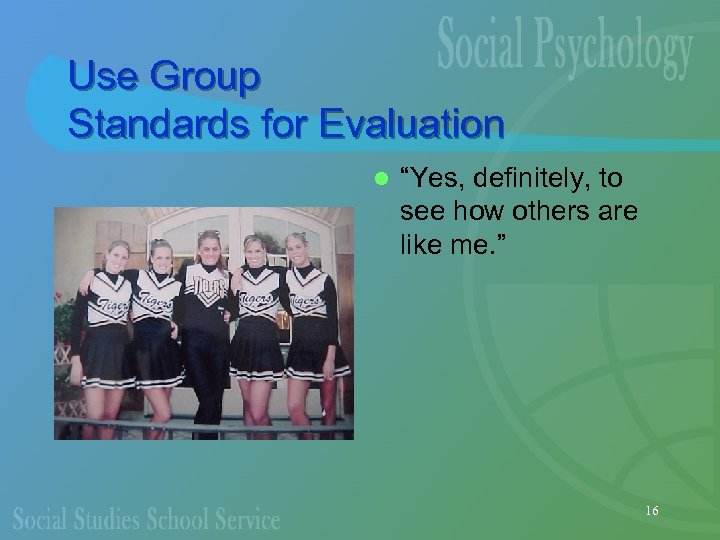 Use Group Standards for Evaluation l “Yes, definitely, to see how others are like me. ” 16
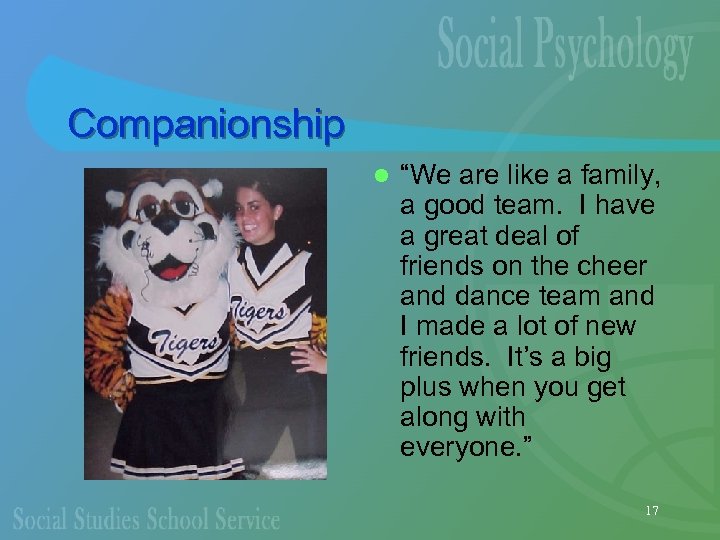 Companionship l “We are like a family, a good team. I have a great deal of friends on the cheer and dance team and I made a lot of new friends. It’s a big plus when you get along with everyone. ” 17
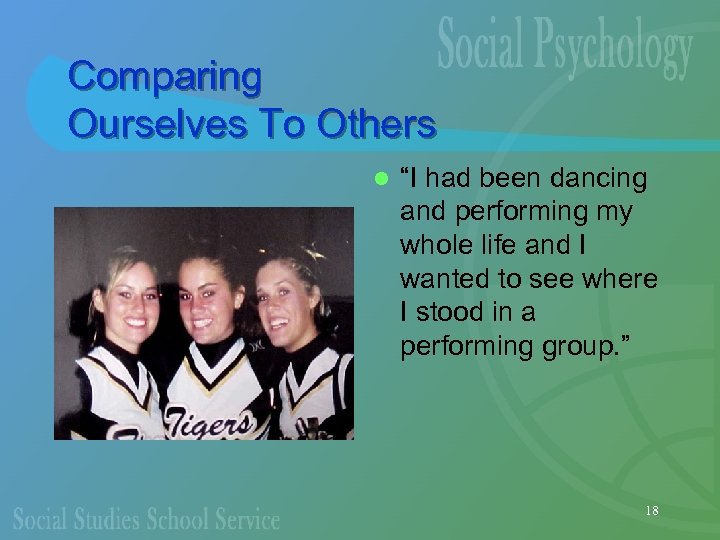 Comparing Ourselves To Others l “I had been dancing and performing my whole life and I wanted to see where I stood in a performing group. ” 18
 Peer Groups A group of friends or associates of about the same age and social position l Form cliques, clubs, gangs l 19
 Reference Groups l A group that serves as a standard for evaluating one’s achievement, behavior, or values 20
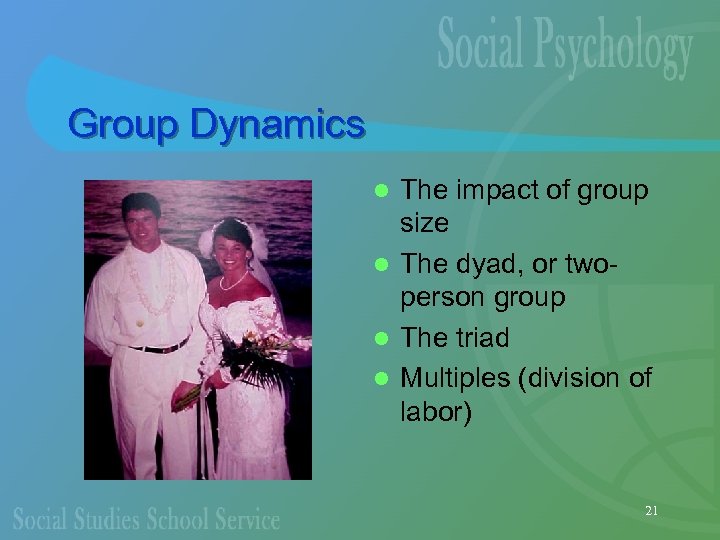 Group Dynamics The impact of group size l The dyad, or twoperson group l The triad l Multiples (division of labor) l 21
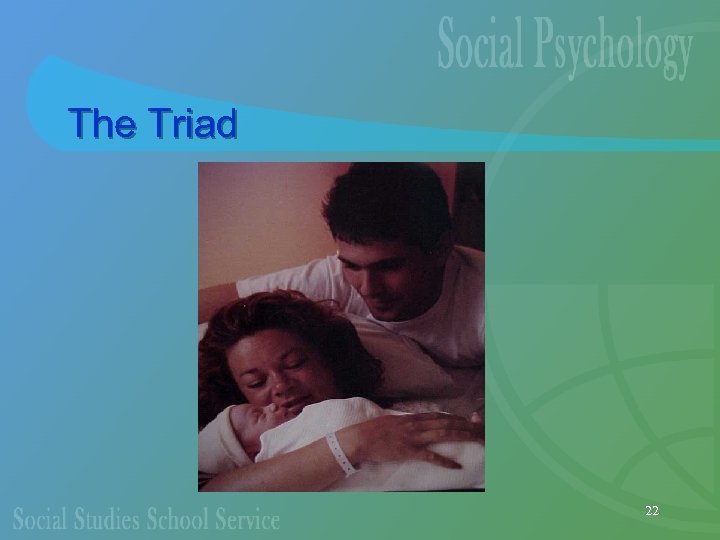 The Triad 22
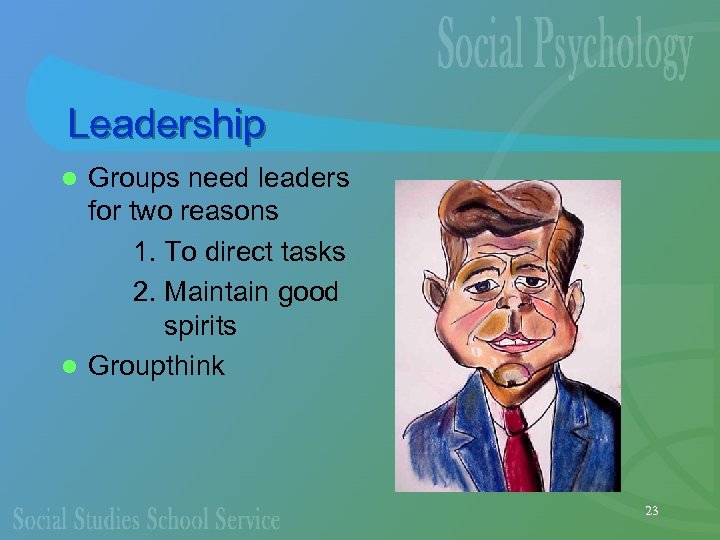 Leadership Groups need leaders for two reasons 1. To direct tasks 2. Maintain good spirits l Groupthink l 23
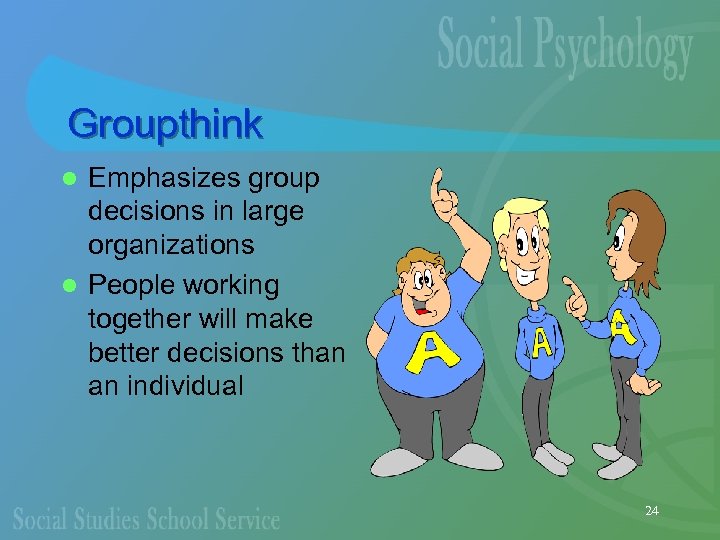 Groupthink Emphasizes group decisions in large organizations l People working together will make better decisions than an individual l 24
 When Does Groupthink Occur? When group members are unable to evaluate other available options l Inability to comprehend negative consequences l 25
 Conditions for Groupthink The group is isolated from the outside l There are time limits l Not having an impartial leader l 26
 Examples of Groupthink l Pearl Harbor and FDR l JFK’S invasion of Cuba l Nixon’s Watergate fiasco l Waco, Texas standoff 27
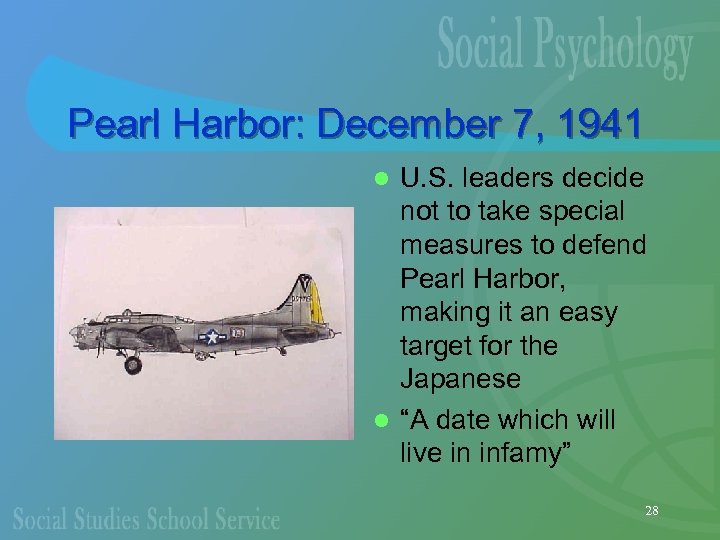 Pearl Harbor: December 7, 1941 U. S. leaders decide not to take special measures to defend Pearl Harbor, making it an easy target for the Japanese l “A date which will live in infamy” l 28
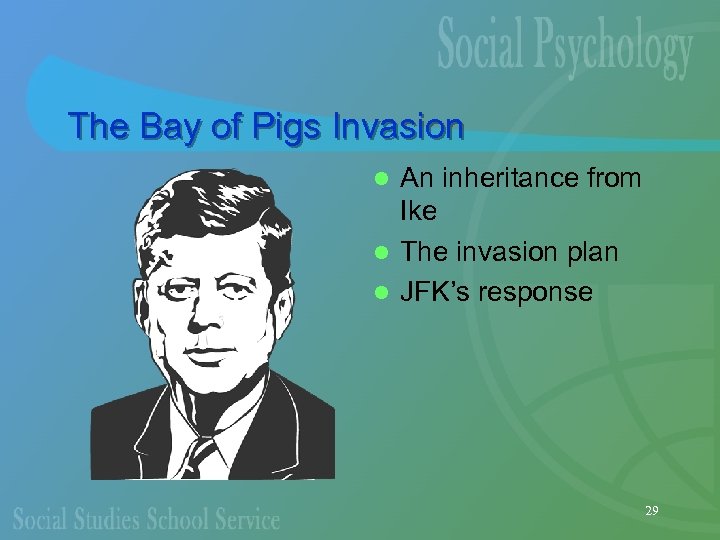 The Bay of Pigs Invasion An inheritance from Ike l The invasion plan l JFK’s response l 29
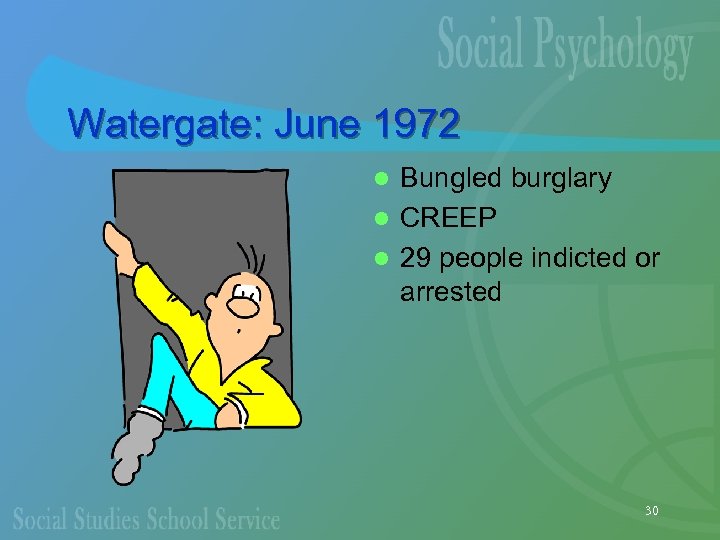 Watergate: June 1972 Bungled burglary l CREEP l 29 people indicted or arrested l 30
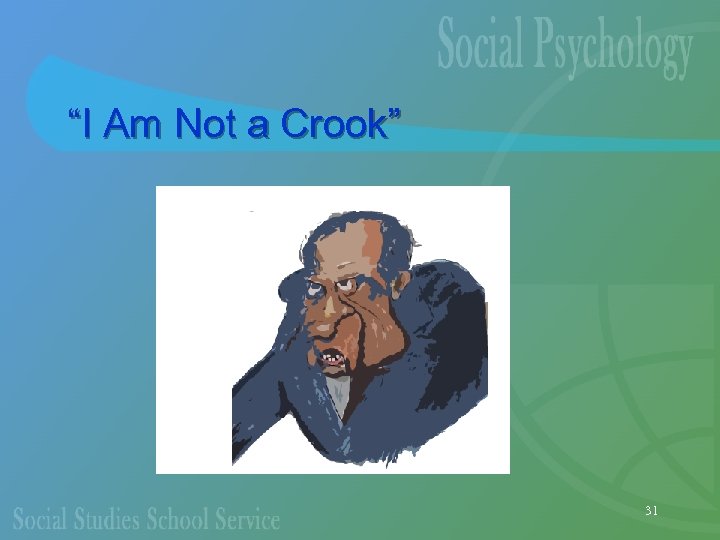 “I Am Not a Crook” 31
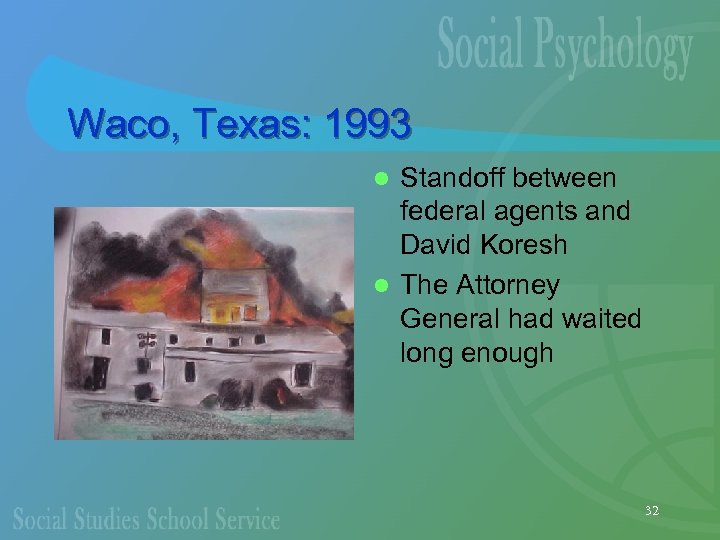 Waco, Texas: 1993 Standoff between federal agents and David Koresh l The Attorney General had waited long enough l 32
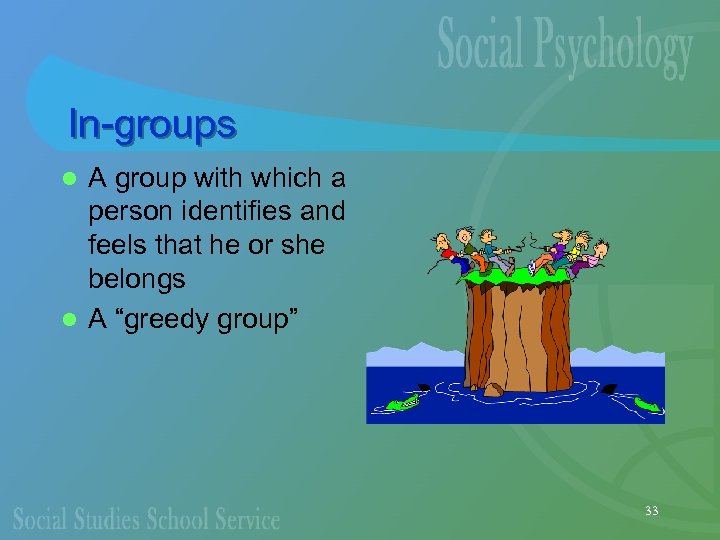 In-groups A group with which a person identifies and feels that he or she belongs l A “greedy group” l 33
 Characteristics of In-groups l 1. l 2. l 3. l 4. l 5. l 6. Sacrifice Investment Renunciation Communication Mortification Transcendence 34
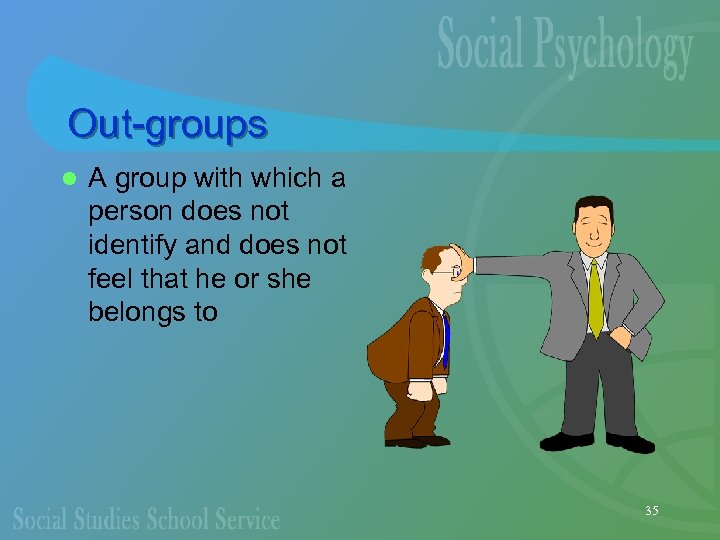 Out-groups l A group with which a person does not identify and does not feel that he or she belongs to 35
 Gangs 36
 Types Of Gangs l Social gangs l Delinquent gangs l Violent gangs 37
 Gang Locations L. A. is the gang capital of America l Chicago, Seattle, Kansas City l Importance of drugs l 38
 Public Housing Projects l. A breeding ground for gangs l Family structure l “Trophies” / “graveyards” 39
 Ethnic/Gender Breakdowns l In the 1950 s, gang members tended to be white males l Today four-fifths of gang members are African-American or Latino l Women have now entered the ranks as well 40
 History of Gangs l Born out of the chaos of inner city life (“Zoot Suit riots”) l Gangs offer ultimate control l Black gangs arose after the Watts riots in 1965 41
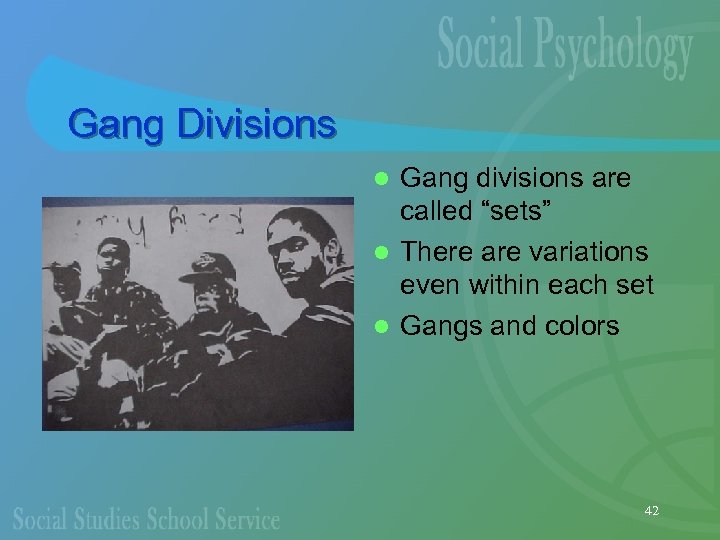 Gang Divisions Gang divisions are called “sets” l There are variations even within each set l Gangs and colors l 42
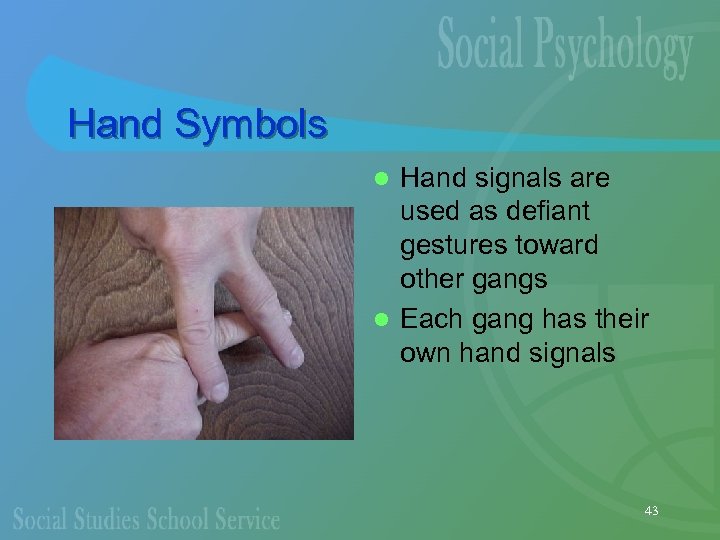 Hand Symbols Hand signals are used as defiant gestures toward other gangs l Each gang has their own hand signals l 43
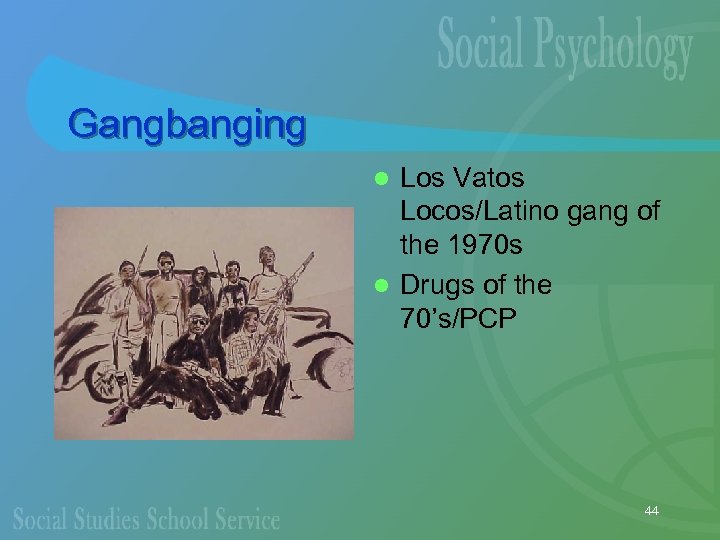 Gangbanging Los Vatos Locos/Latino gang of the 1970 s l Drugs of the 70’s/PCP l 44
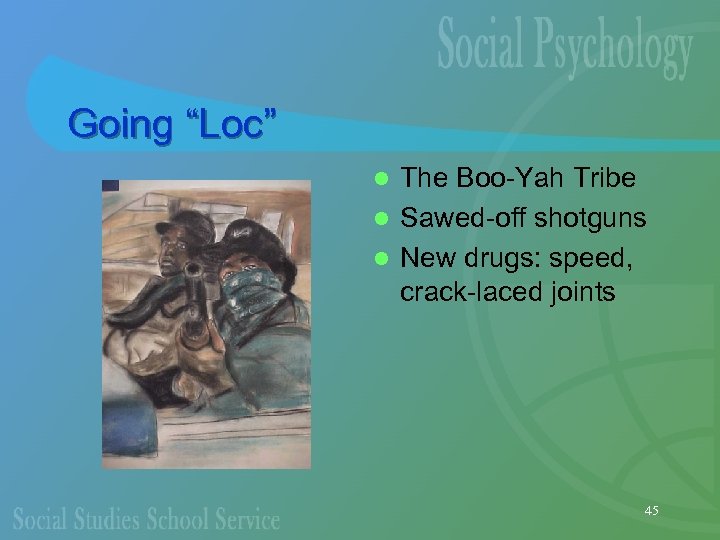 Going “Loc” The Boo-Yah Tribe l Sawed-off shotguns l New drugs: speed, crack-laced joints l 45
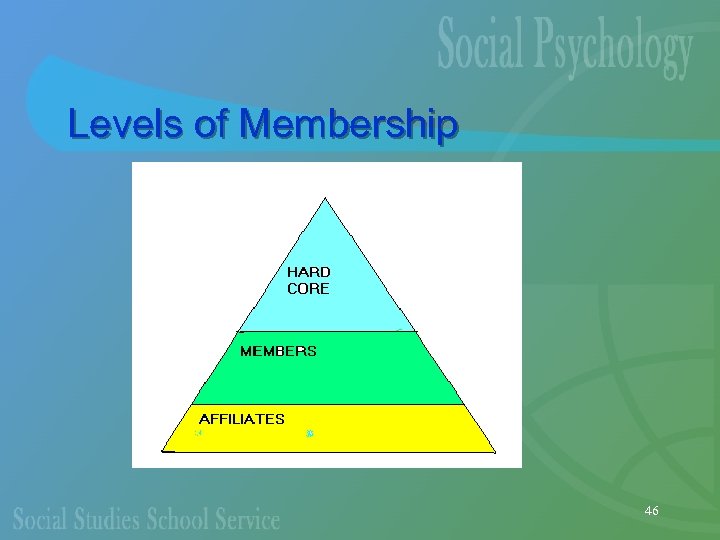 Levels of Membership 46
 Why Join a Gang? l Power l Identity l. A surrogate family l Security 47
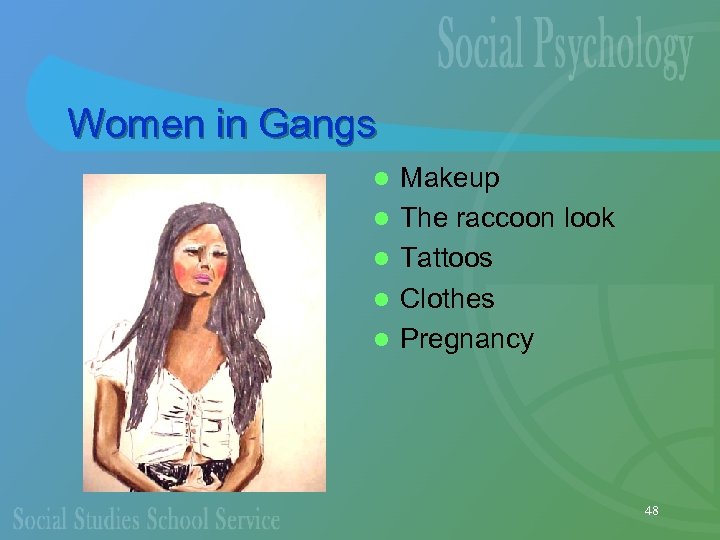 Women in Gangs l l l Makeup The raccoon look Tattoos Clothes Pregnancy 48
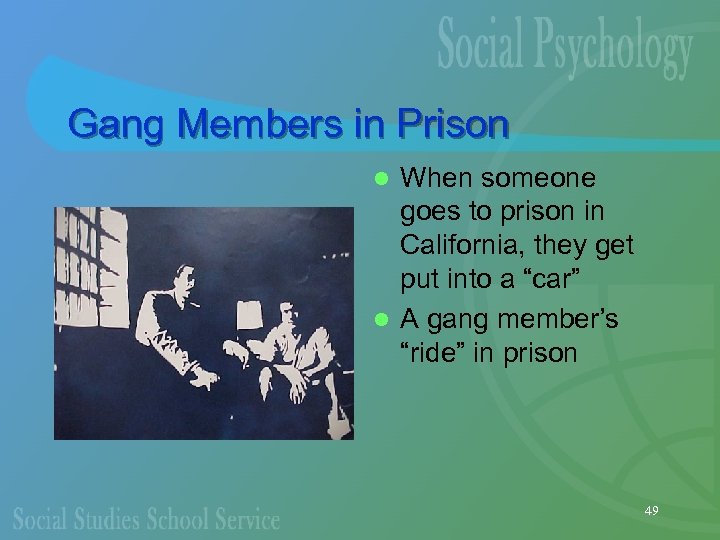 Gang Members in Prison When someone goes to prison in California, they get put into a “car” l A gang member’s “ride” in prison l 49
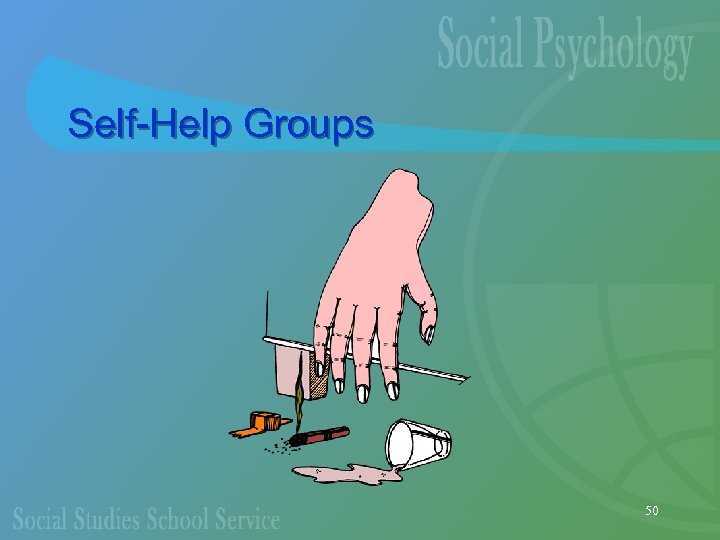 Self-Help Groups 50
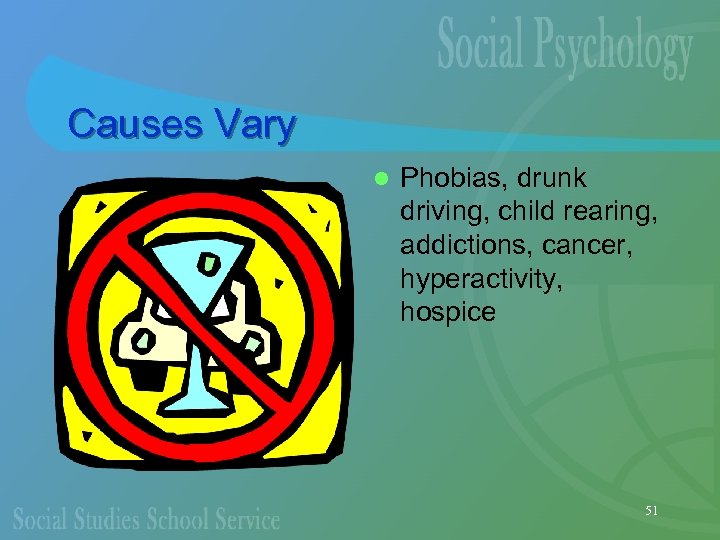 Causes Vary l Phobias, drunk driving, child rearing, addictions, cancer, hyperactivity, hospice 51
 Ryan 52
 Why Do People Join Support Groups? l People have abandoned primary groups l People find substitutes to fill needs l Those who learn to cope often turn around and help new members 53
 What Purposes Do Support Groups Serve? l They provide moral support from people in similar situations l They offer empathy and understanding l They give people the opportunity to become members of an in-group 54
 The Networking Effect l Members exchange numbers and communicate l No professional charges, but no professional help l 24 -hour service and information 55
 Attitudes 56
 Definition of “Attitude” l. A predisposition to respond in a particular way l 3 main elements 1. A belief or opinion 2. A feeling about something 3. A tendency to act toward something in a particular way 57
 Cognitive Sources Factual information l Cognitive dissonance l Inoculation effect l 58
 Emotional Sources Strong feelings without knowing why l Classical conditioning l Subliminal techniques l 59
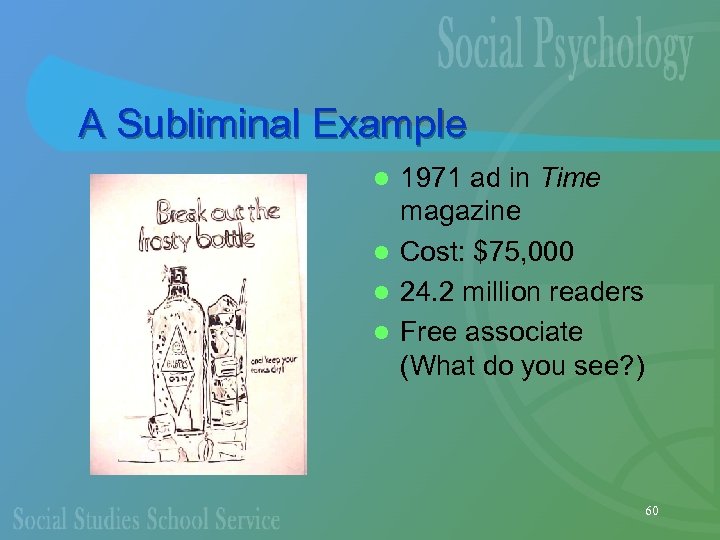 A Subliminal Example 1971 ad in Time magazine l Cost: $75, 000 l 24. 2 million readers l Free associate (What do you see? ) l 60
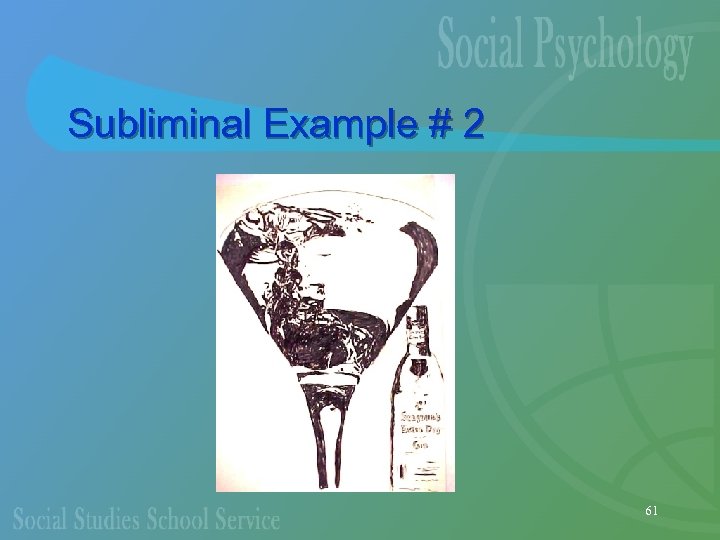 Subliminal Example # 2 61
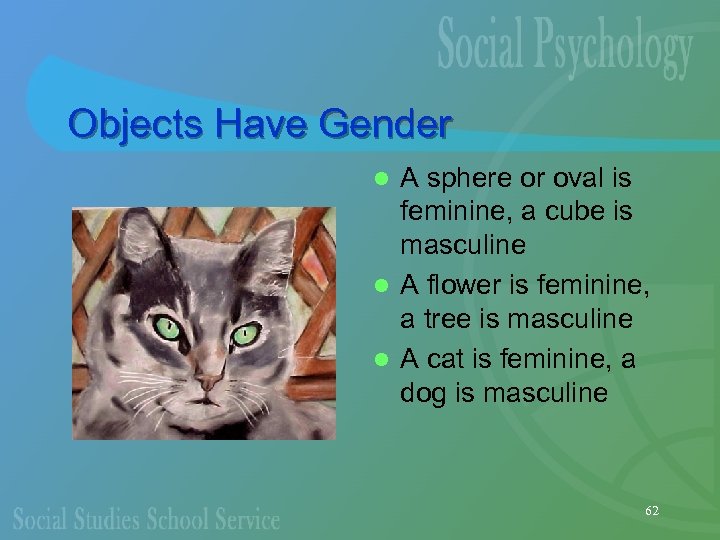 Objects Have Gender A sphere or oval is feminine, a cube is masculine l A flower is feminine, a tree is masculine l A cat is feminine, a dog is masculine l 62
 The Importance of Color l l l Red excites Yellow promotes well-being Green soothes Dark colors add weight Light colors suggest lightness 63
 Size of an Object l Close-ups = larger than life, sense of urgency, used to sell necessary products l Far away = luxury items, removes the sense of urgency and replaces it with a feeling of extravagance 64
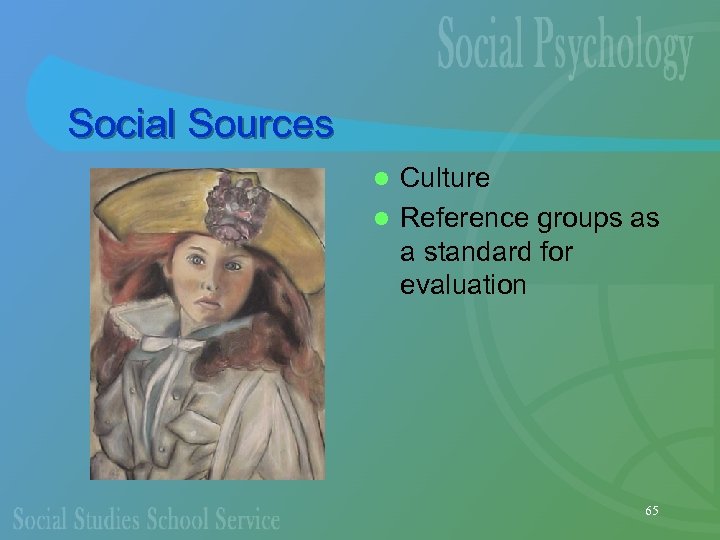 Social Sources Culture l Reference groups as a standard for evaluation l 65
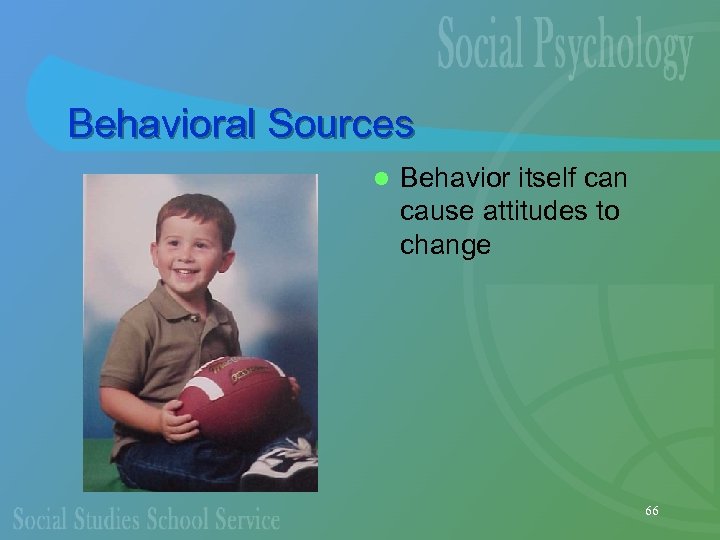 Behavioral Sources l Behavior itself can cause attitudes to change 66
 How Are Attitudes Measured? l Psychologists use many different techniques to measure attitudes 67
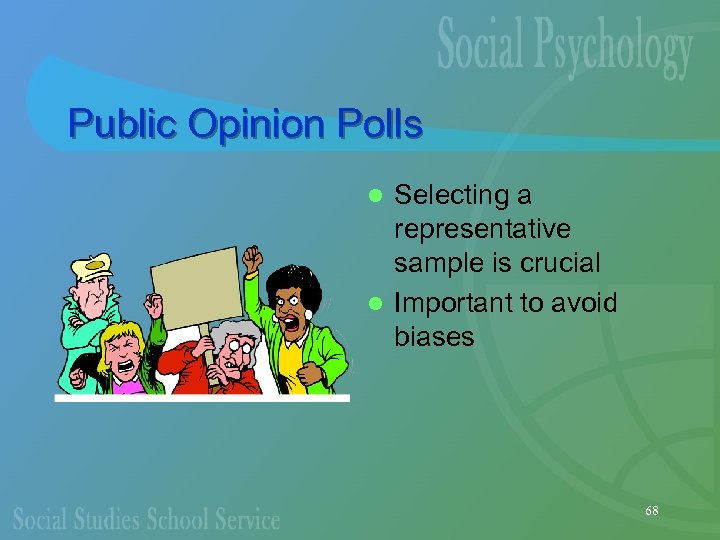 Public Opinion Polls Selecting a representative sample is crucial l Important to avoid biases l 68
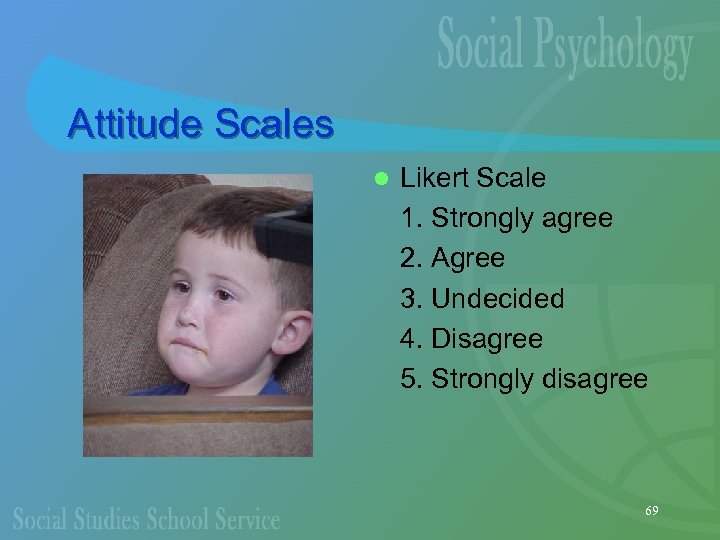 Attitude Scales l Likert Scale 1. Strongly agree 2. Agree 3. Undecided 4. Disagree 5. Strongly disagree 69
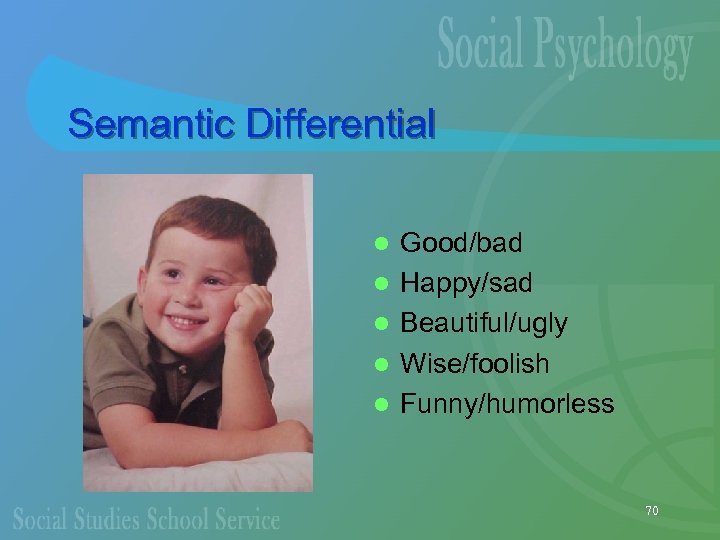 Semantic Differential l l Good/bad Happy/sad Beautiful/ugly Wise/foolish Funny/humorless 70
 Unobtrusive Methods l Milgram/lost letter 71
 How Are Attitudes Changed? l People are always trying to change your attitude 72
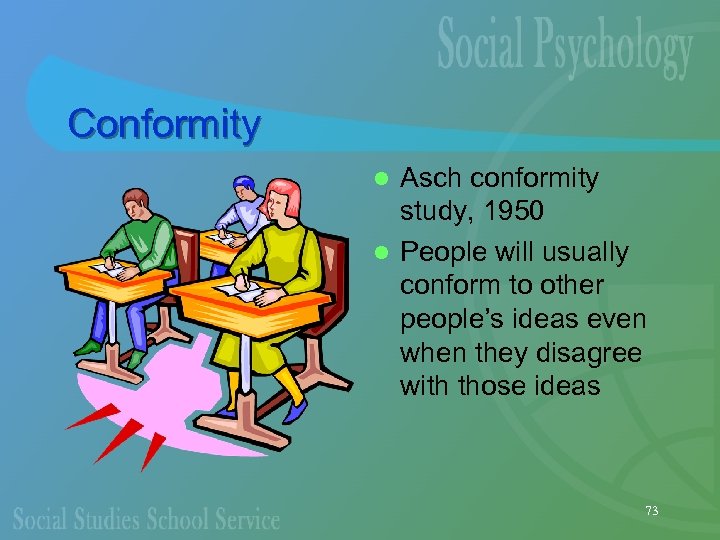 Conformity Asch conformity study, 1950 l People will usually conform to other people’s ideas even when they disagree with those ideas l 73
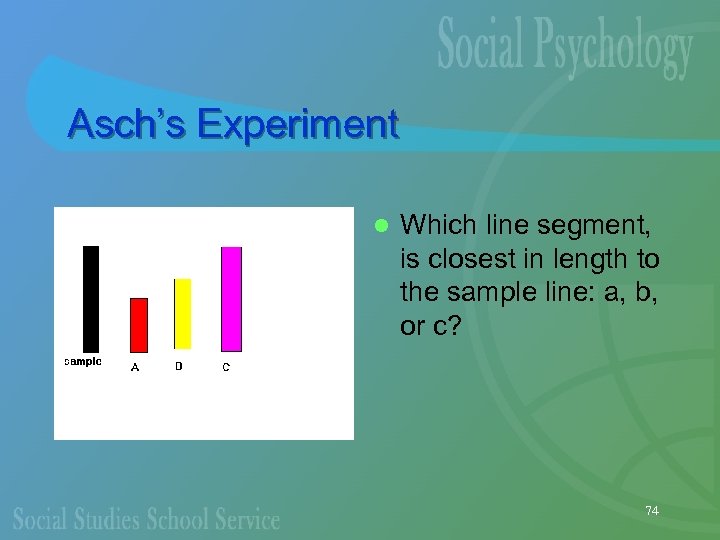 Asch’s Experiment l Which line segment, is closest in length to the sample line: a, b, or c? 74
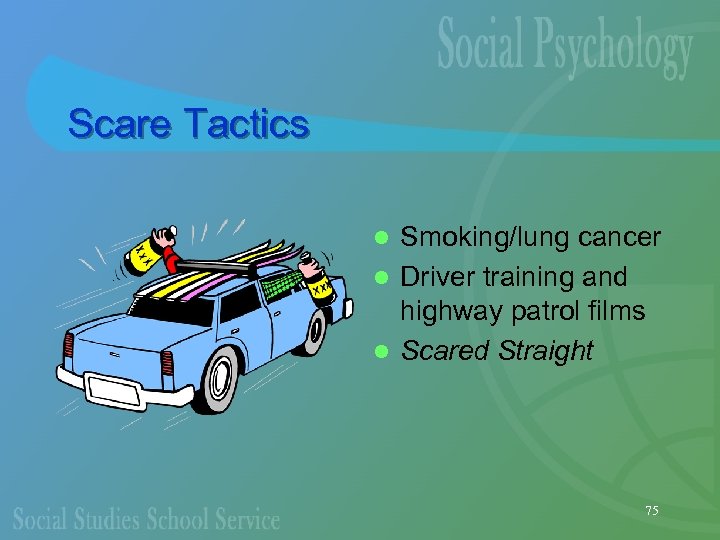 Scare Tactics Smoking/lung cancer l Driver training and highway patrol films l Scared Straight l 75
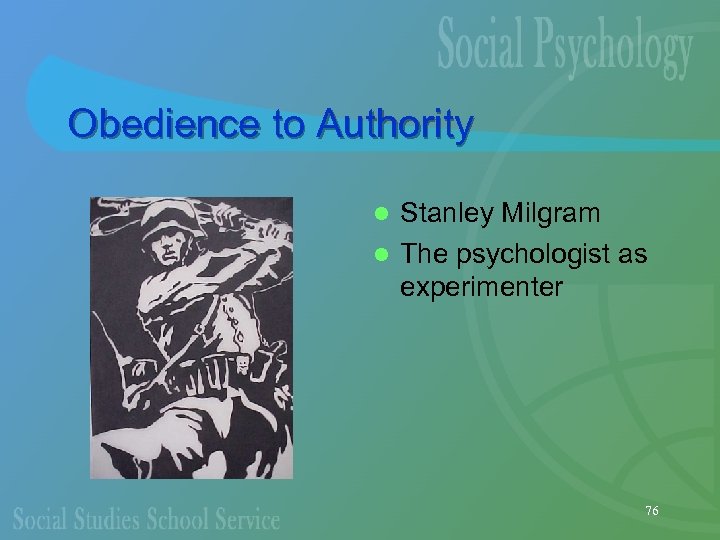 Obedience to Authority Stanley Milgram l The psychologist as experimenter l 76
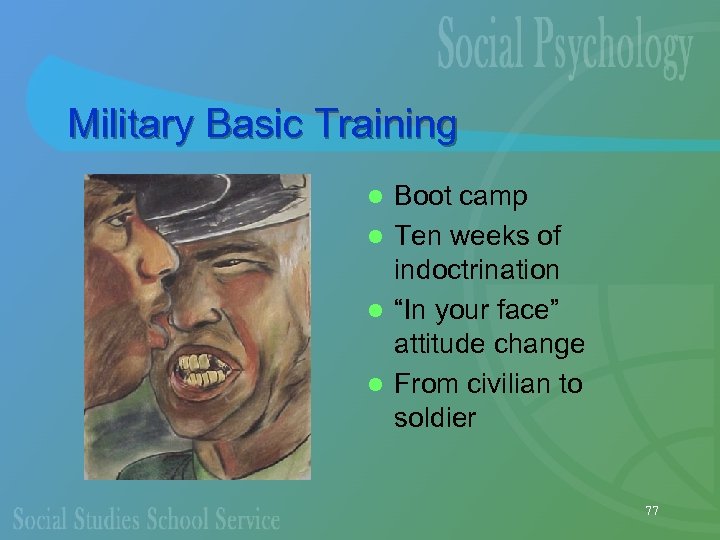 Military Basic Training Boot camp l Ten weeks of indoctrination l “In your face” attitude change l From civilian to soldier l 77
 Who Were Milgram’s Subjects? l In all but one version of the experiment, the subjects were males l 40%=skilled and unskilled l 40%=white collar (sales and business) l 20%=professionals 78
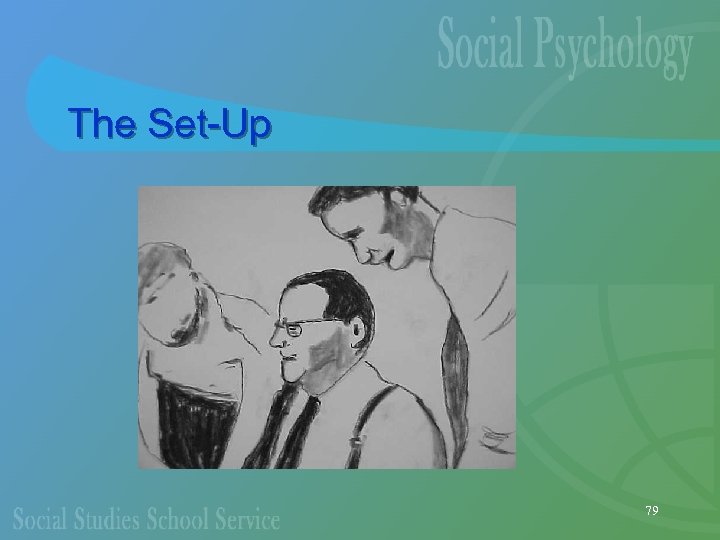 The Set-Up 79
 Making Mistakes l After 75 volts are administered for a mistake, the learner moans l At 90 volts, the learner cries out in pain l After 180 volts, the learner screams, saying he cannot stand the pain, and then begins to bang on the wall 80
 39 Psychiatrists Surveyed Believed That… l Most subjects would stop at 150 volts l Only 4% would go as high as 300 volts l One in 1000 would go to 450 volts 81
 5 Versions of the Experiment l First version: all men, 65% went all the way (450 volts) l Experimenter absent: 20. 5% l Women: 65% l Experimenter chooses shock level: 2. 5% l High school students: 85% 82
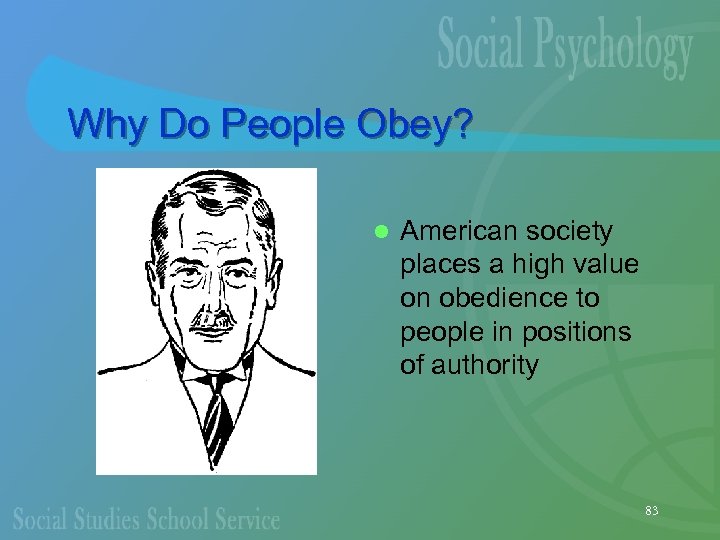 Why Do People Obey? l American society places a high value on obedience to people in positions of authority 83
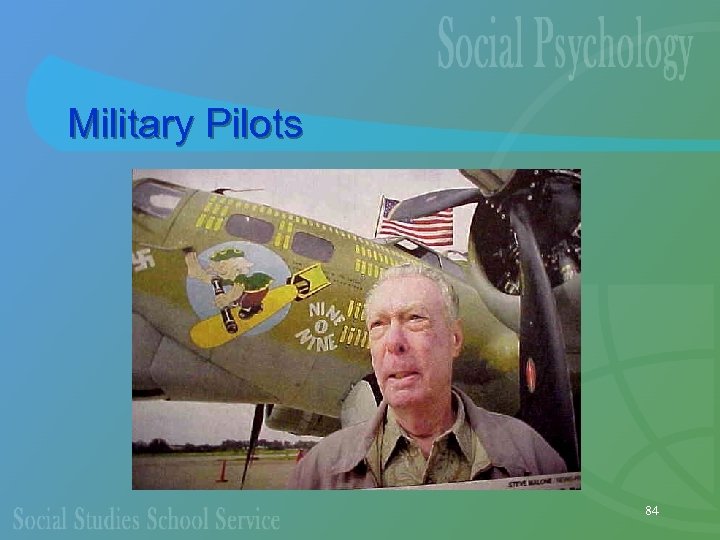 Military Pilots 84
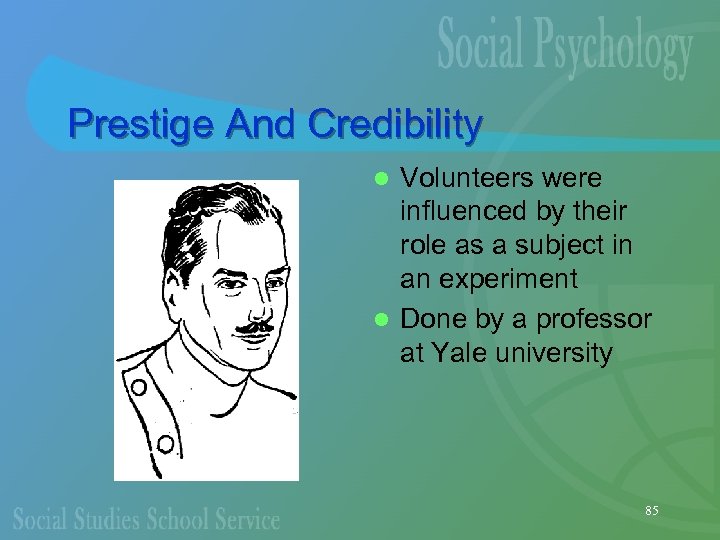 Prestige And Credibility Volunteers were influenced by their role as a subject in an experiment l Done by a professor at Yale university l 85
 Not Everyone Is Equally Obedient Sadistic or obedient? l Personality variables l Life experiences l 86
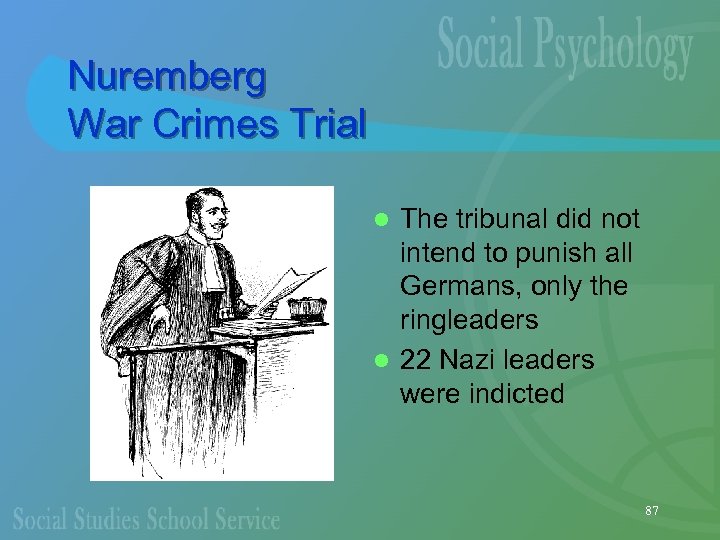 Nuremberg War Crimes Trial The tribunal did not intend to punish all Germans, only the ringleaders l 22 Nazi leaders were indicted l 87
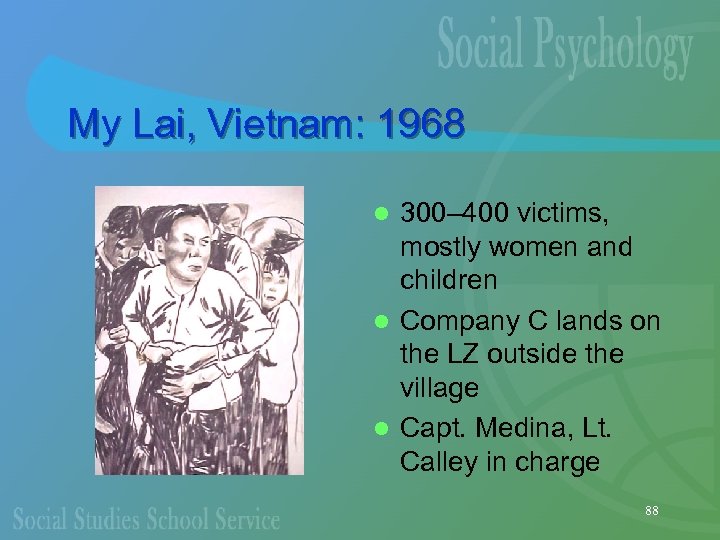 My Lai, Vietnam: 1968 300– 400 victims, mostly women and children l Company C lands on the LZ outside the village l Capt. Medina, Lt. Calley in charge l 88
 Civil Disobedience l Rosa Parks and the Montgomery bus boycott 89
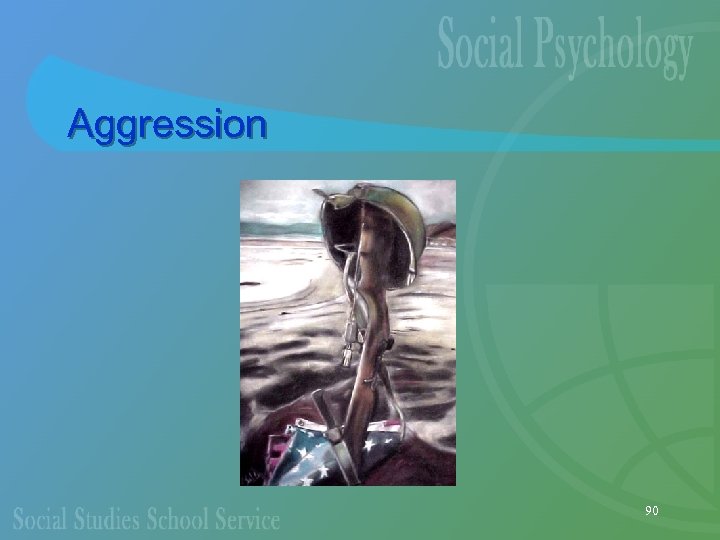 Aggression 90
 Violent Crimes 1. 5 million violent crimes are committed in the U. S. each year, including 90, 000 rapes and 20, 000 murders l 3 ½ times more likely to be murdered by a relative l 91
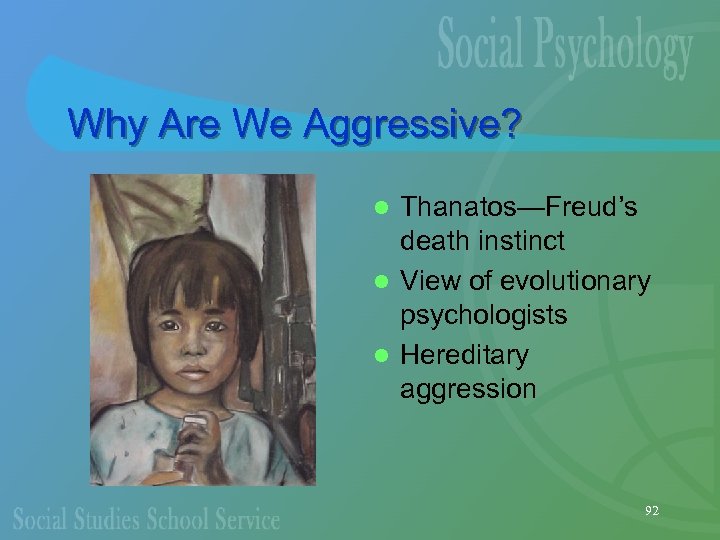 Why Are We Aggressive? Thanatos—Freud’s death instinct l View of evolutionary psychologists l Hereditary aggression l 92
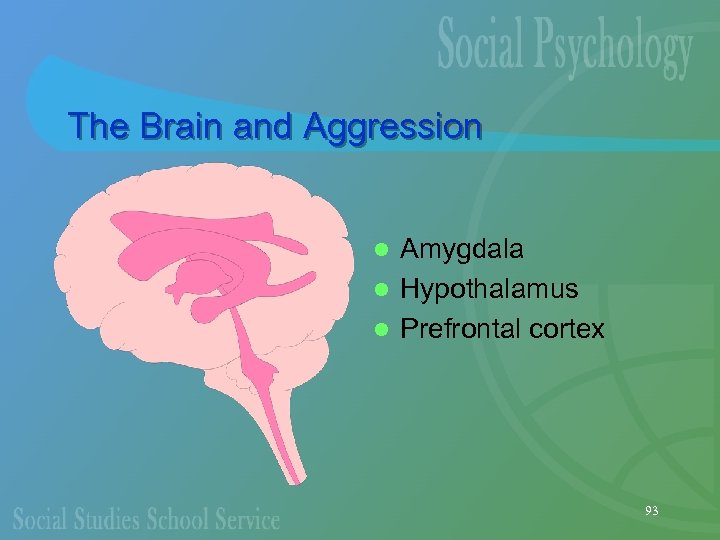 The Brain and Aggression Amygdala l Hypothalamus l Prefrontal cortex l 93
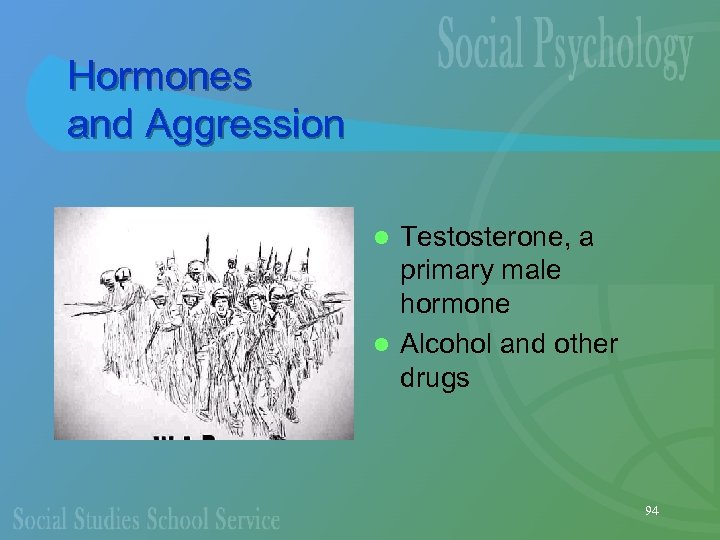 Hormones and Aggression Testosterone, a primary male hormone l Alcohol and other drugs l 94
 Learning and Aggression People learn aggression by watching and imitating others l People become more aggressive if rewarded l Frustration l 95
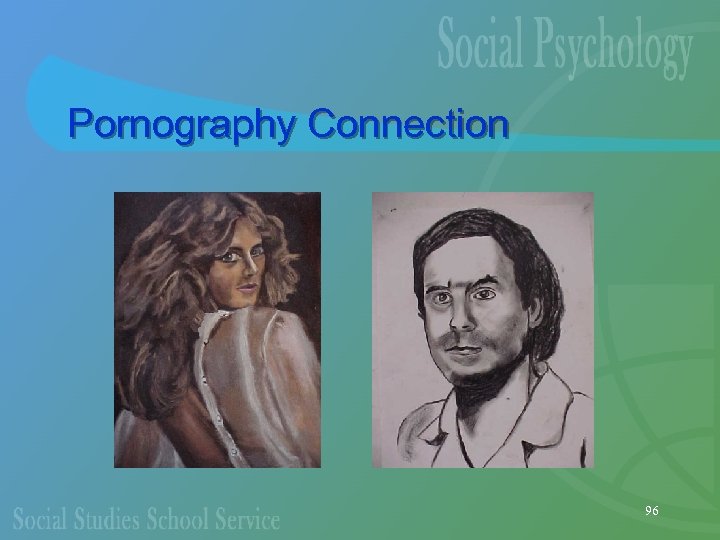 Pornography Connection 96
 Altruism/Unselfishness Concern for Another’s Welfare 97
 The Cost–Reward Theory People find the sight of another person being victimized as anxiety-provoking; helping relieves this anxiety l Diffusion of responsibility l 98
 Empathy-Altruism Theory l People are more likely to act altruistically—even when the cost of helping is high—if they feel empathy toward the person in need 99
 Evolutionary Theory l “Survival of the fittest”: A person will risk their life for someone else because if they survive, it increases the likelihood that their traits will endure through generations 100
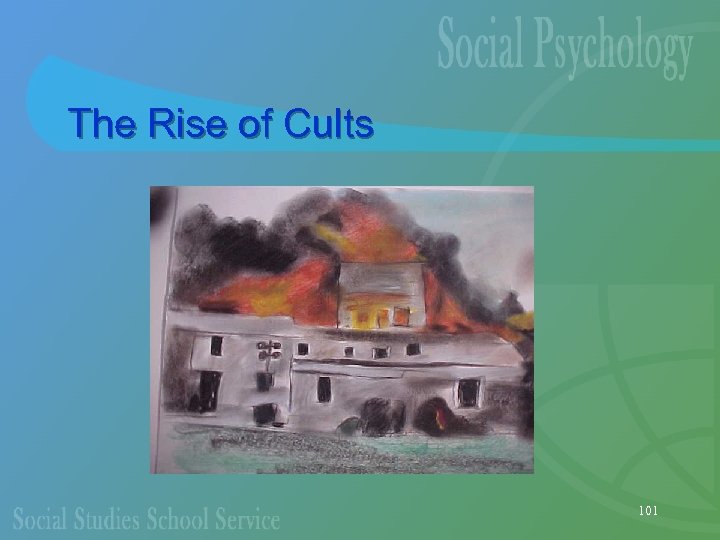 The Rise of Cults 101
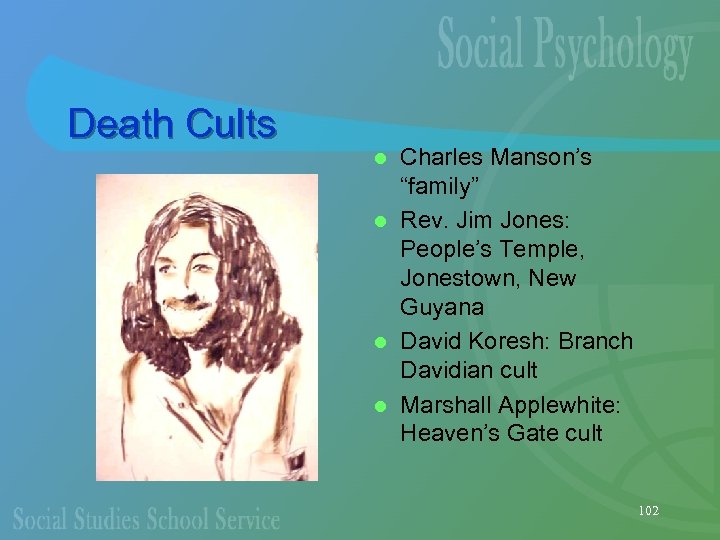 Death Cults Charles Manson’s “family” l Rev. Jim Jones: People’s Temple, Jonestown, New Guyana l David Koresh: Branch Davidian cult l Marshall Applewhite: Heaven’s Gate cult l 102
 Conversion Model l Tension or strain (job failure, marital breakup) l Religiously-oriented problem-solving perspective l Open to a new religious outlook l Be at a turning point in life 103
 Situational Factors l Need to possess a close personal tie with one or more cult member l Ties with people on the outside must be neutralized/nonexistent l Intensive, daily interaction with cult members 104
 Tactics of Cult Leaders Brainwashing/mind control l Isolation l Sleep deprivation, protein-deficient diet l Exotic rituals l 105
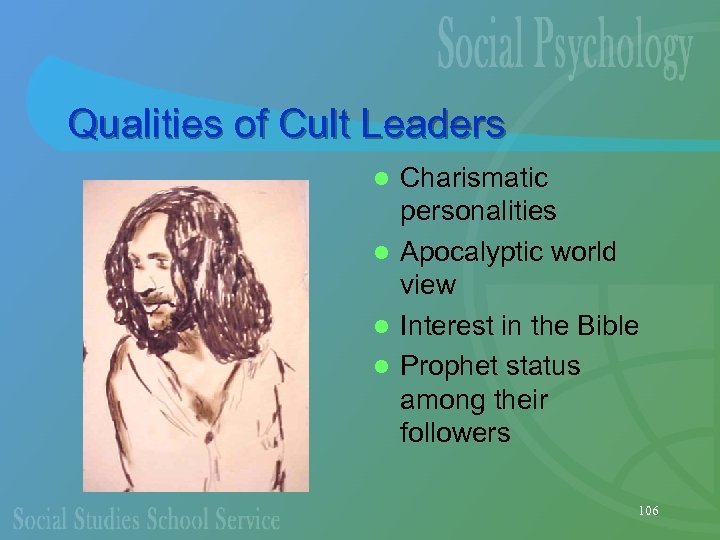 Qualities of Cult Leaders Charismatic personalities l Apocalyptic world view l Interest in the Bible l Prophet status among their followers l 106
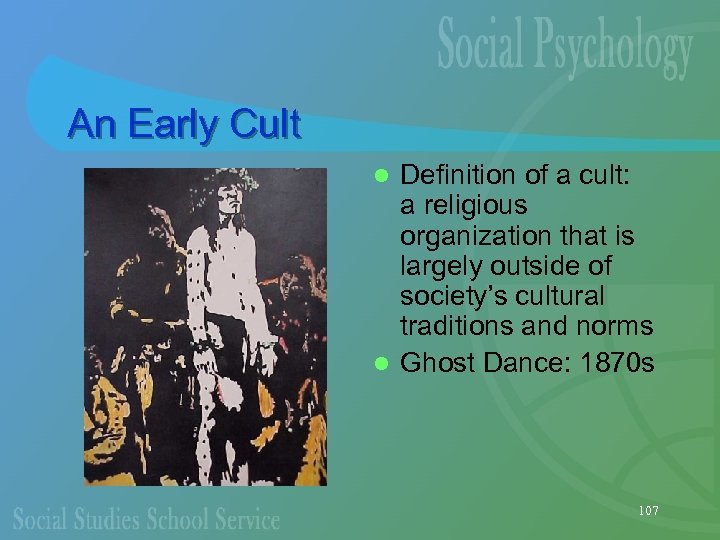 An Early Cult Definition of a cult: a religious organization that is largely outside of society’s cultural traditions and norms l Ghost Dance: 1870 s l 107
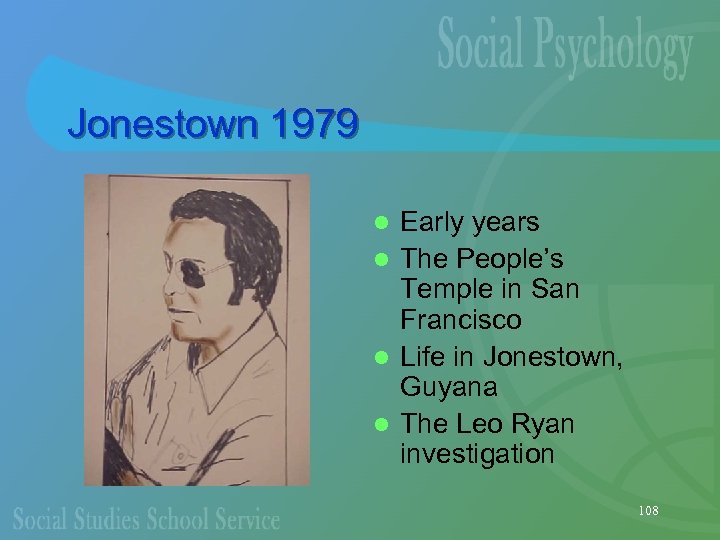 Jonestown 1979 Early years l The People’s Temple in San Francisco l Life in Jonestown, Guyana l The Leo Ryan investigation l 108
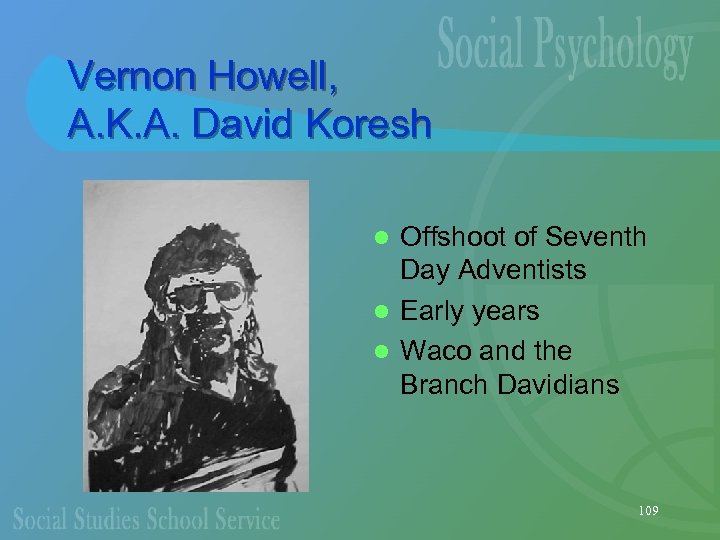 Vernon Howell, A. K. A. David Koresh Offshoot of Seventh Day Adventists l Early years l Waco and the Branch Davidians l 109
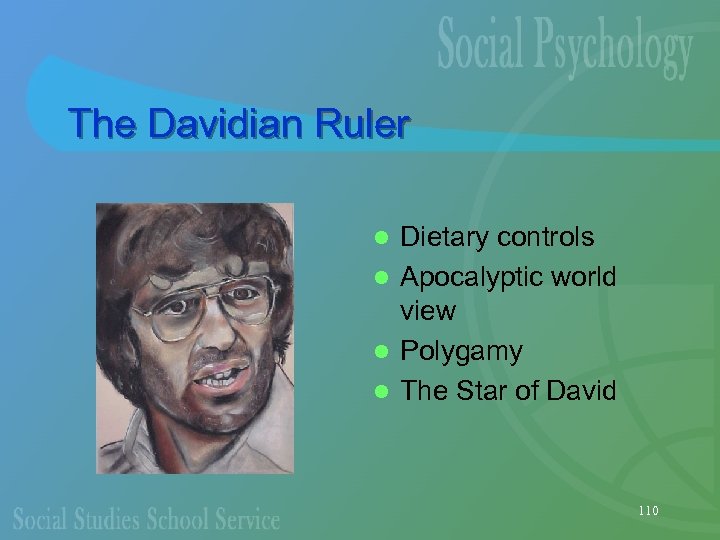 The Davidian Ruler Dietary controls l Apocalyptic world view l Polygamy l The Star of David l 110
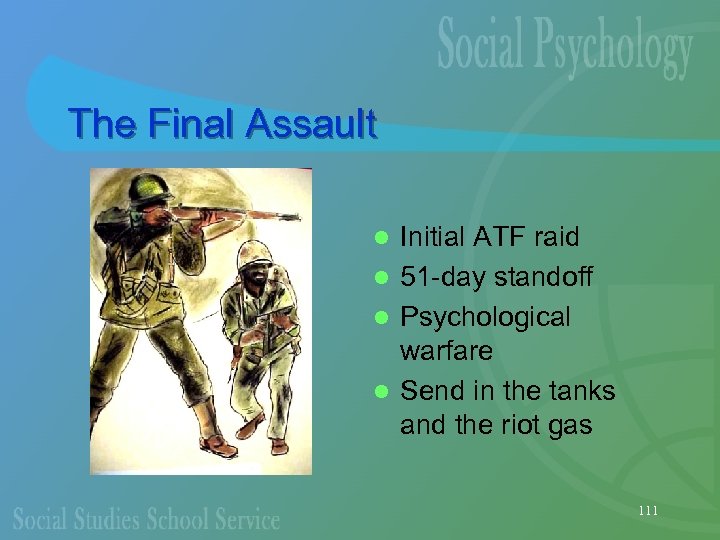 The Final Assault Initial ATF raid l 51 -day standoff l Psychological warfare l Send in the tanks and the riot gas l 111
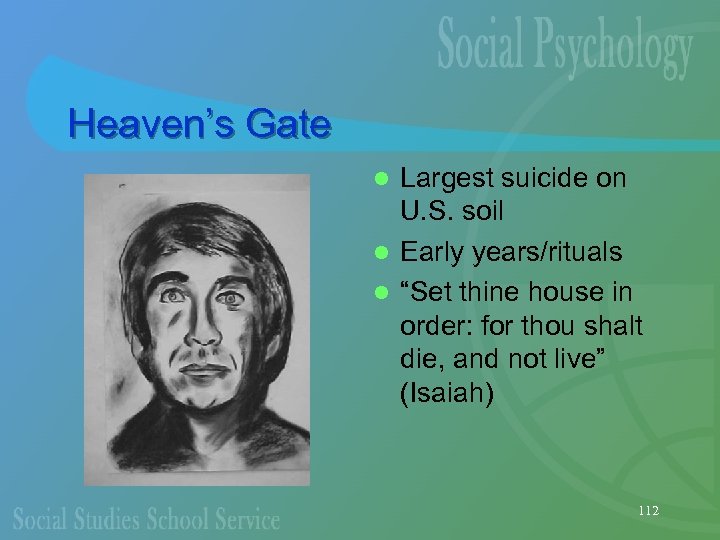 Heaven’s Gate Largest suicide on U. S. soil l Early years/rituals l “Set thine house in order: for thou shalt die, and not live” (Isaiah) l 112
 Are Cult Members Brainwashed? l Brainwashing Techniques 1. Total control and uncertainty 2. Isolation and torture 3. Physical weakening and personal humiliation 113
 Attitude and Prejudice is a preconceived notion toward a person or a group l Prejudice is strengthened by stereotyping l 114
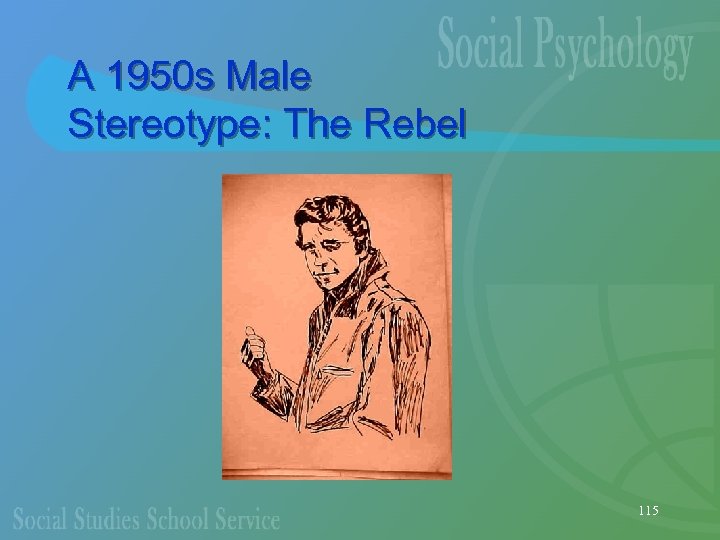 A 1950 s Male Stereotype: The Rebel 115
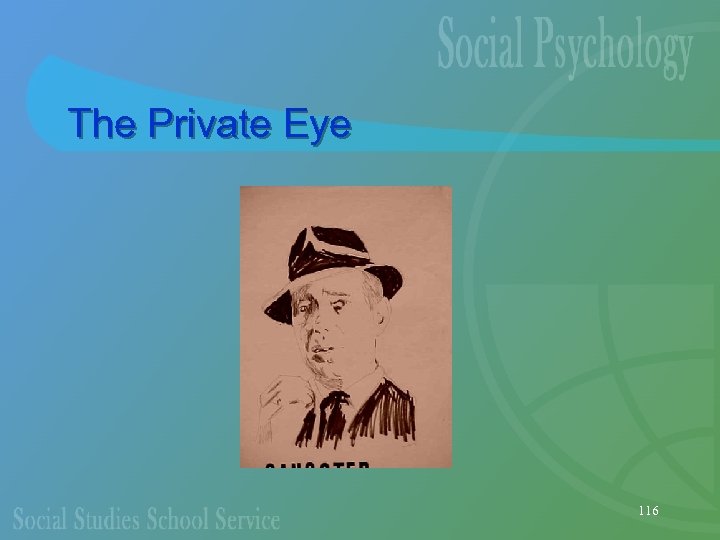 The Private Eye 116
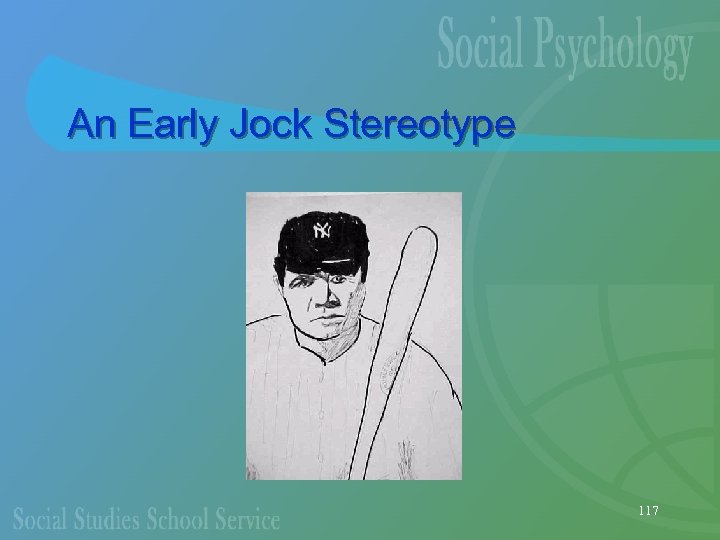 An Early Jock Stereotype 117
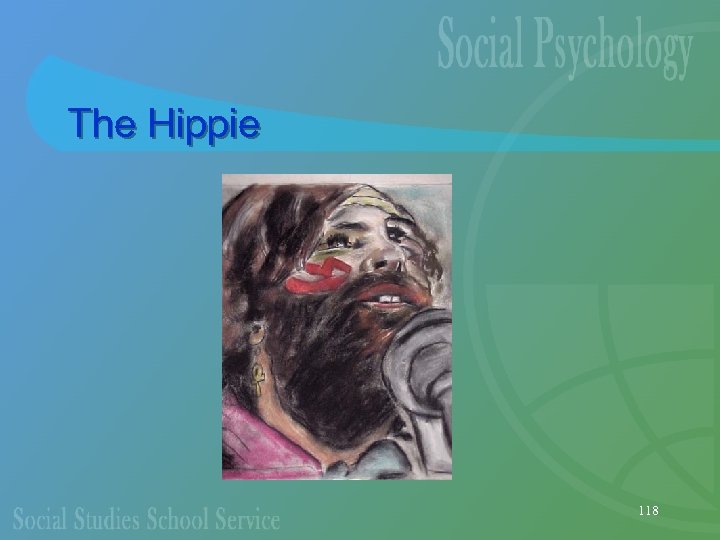 The Hippie 118
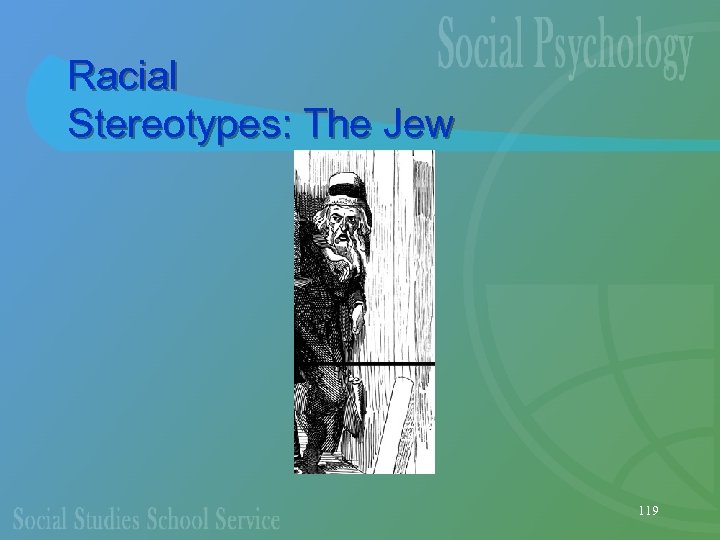 Racial Stereotypes: The Jew 119
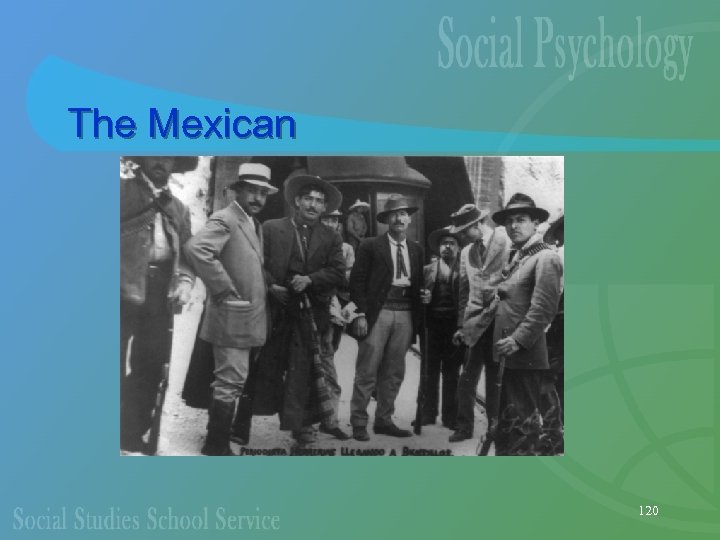 The Mexican 120
 The Italian 121
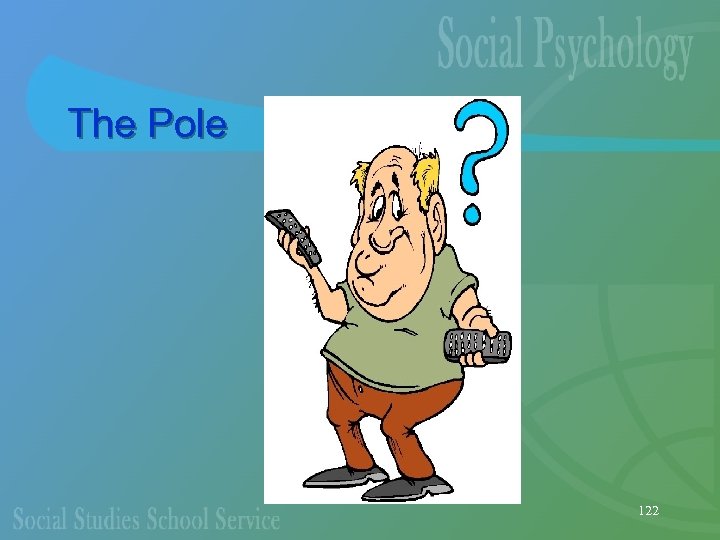 The Pole 122
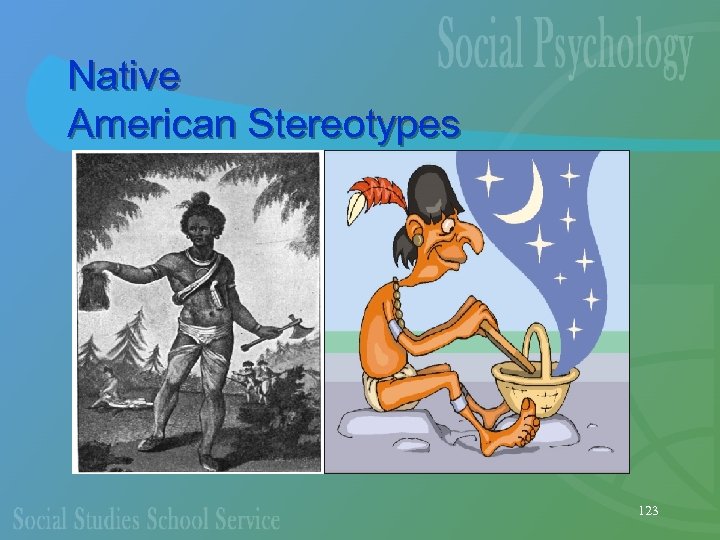 Native American Stereotypes 123
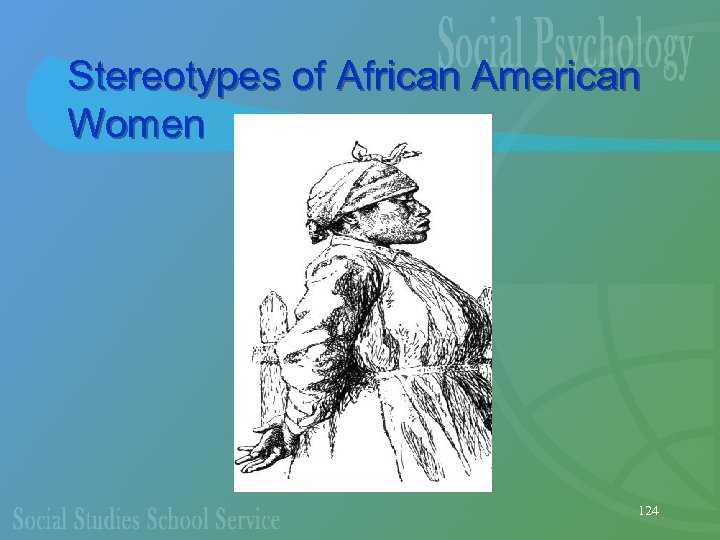 Stereotypes of African American Women 124
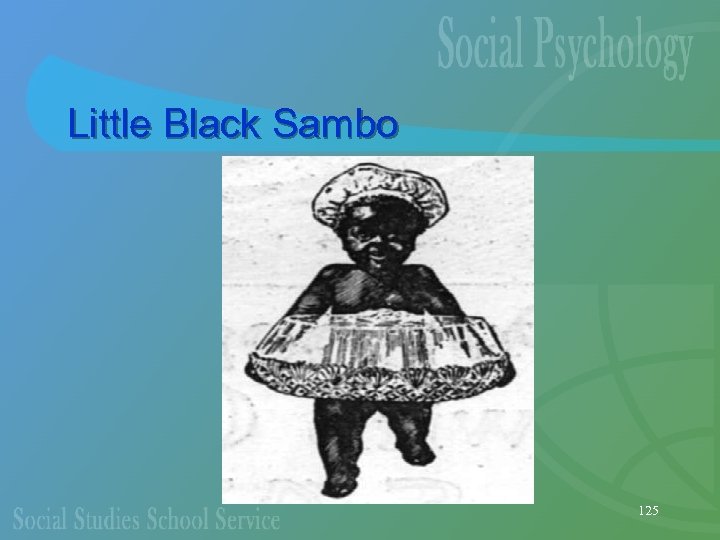 Little Black Sambo 125