


 Скачать презентацию Sleep Medicine on the Fly- What Every Physician
fd12a7aecab3a0b13340167e3e99b2c3.ppt
- Количество слайдов: 91
 Sleep Medicine on the Fly- What Every Physician Should Know Integration of Psychiatry into Primary Health Care Conference- January 2014 Raed Hawa MD, FRCP, DABSM, DABPN Deputy Psychiatrist in Chief- UHN Associate Professor Department of Psychiatry, University of Toronto Diplomate American Board of Psychiatry and Neurology Diplomate American Board of Sleep Medicine Specialty Certification in Psychosomatic Medicine Specialty Certification in Sleep Medicine
 Disclosure: Dr. Raed Hawa Advisory board, speakers’ bureaus, grant, financial or research support No conflict of interest and no financial interest or other affiliation to declare
 A Road Map? At the end of today's session participants are expected to: 1. improve their knowledge of sleep medicine as it pertains to their practice 2. become aware of the options that are available to treat these sleep disorders 3. appreciate the complexity and co-morbidity between psychiatric disorders and sleep disorders *It is all about how it applies to your practice*
 Why should physicians be interested in sleep disorders? § Sleep/tiredness/sleepiness complaints § Insomnia is often an early presentation of a psychiatric or medical illness § Many sleep disorders may mimic psychiatric illnesses ( sleep apnea and depression) § Medications affect sleep § Our patient population can benefit from basic sleep hygiene practices
 QUESTION §What is Philagrypnia?
 Clinical Vingette § David, a 48 yo married male, a banker, and a father of 2 ages 14 and 16. § Long history of recurrent major depressive episodes with multiple trials of SSRIs, SNRIs and Bupropion § Currently of Venlafaxine XR 225 mg/day § Current complaints of increased irritability and missing work that he attributes to poor sleep § What might be the causes for David’s insomnia?
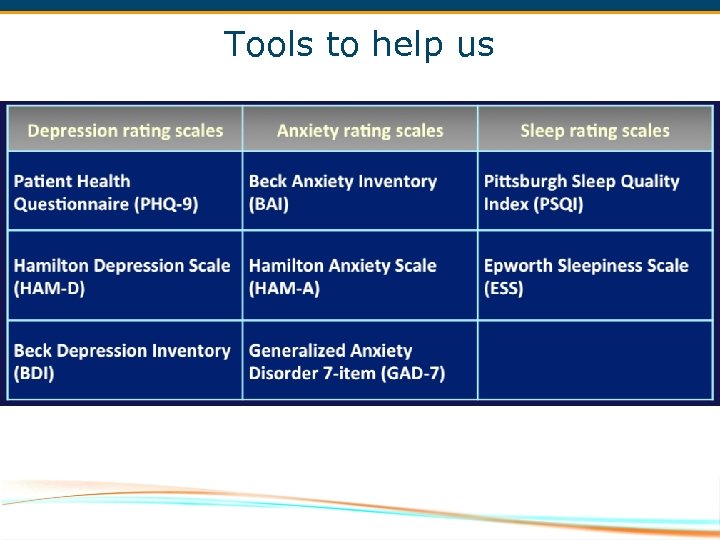 Tools to help us
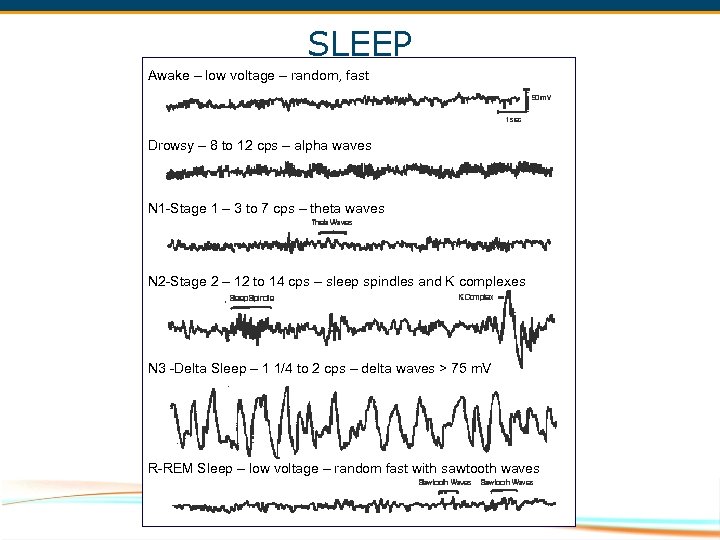 SLEEP Awake – low voltage – random, fast Drowsy – 8 to 12 cps – alpha waves N 1 -Stage 1 – 3 to 7 cps – theta waves N 2 -Stage 2 – 12 to 14 cps – sleep spindles and K complexes N 3 -Delta Sleep – 1 1/4 to 2 cps – delta waves > 75 m. V R-REM Sleep – low voltage – random fast with sawtooth waves
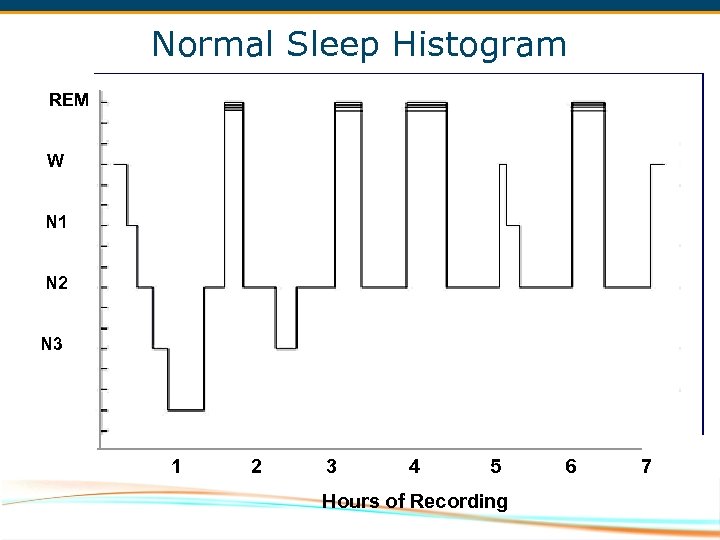 Normal Sleep Histogram REM W N 1 N 2 N 3 1 2 3 4 5 Hours of Recording 6 7
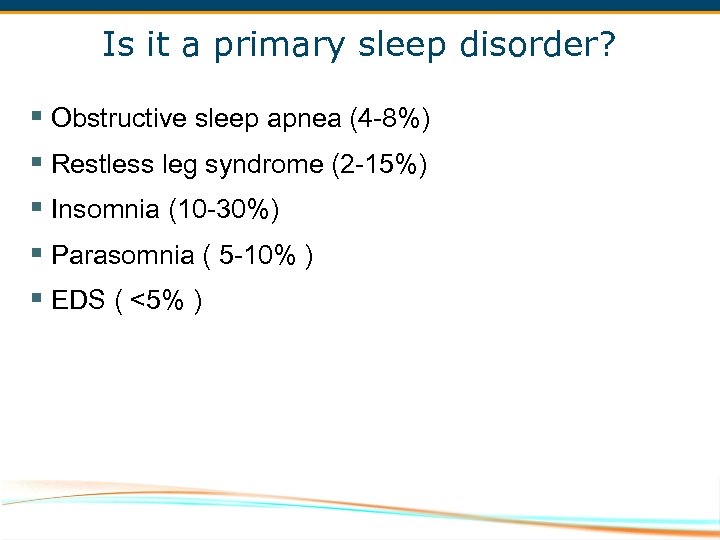 Is it a primary sleep disorder? § Obstructive sleep apnea (4 -8%) § Restless leg syndrome (2 -15%) § Insomnia (10 -30%) § Parasomnia ( 5 -10% ) § EDS ( <5% )
 OSAS § Cessation of breathing lasting at least 10 seconds with desaturations and arousals. § Some of the signs and symptoms: § Snoring, gasping for air, stopping breathing at night, memory complaints, irritability, depression, morning headaches, sexual problems, restless sleep, and sedation or tiredness during the day.
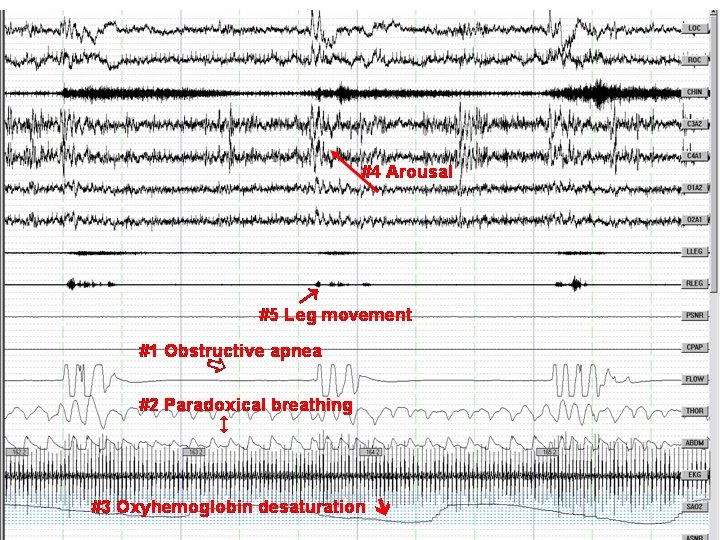
 OSAS Why treat? § High blood pressure § Heart problems- 8 to 10 times more likely to have heart attacks or strokes § More health care money- 2. 5 times more likely to visit a doctor § More likely to die in their sleep- 2. 5 times more likely § Poor quality of life and 3 times more likely to be involved in car accidents
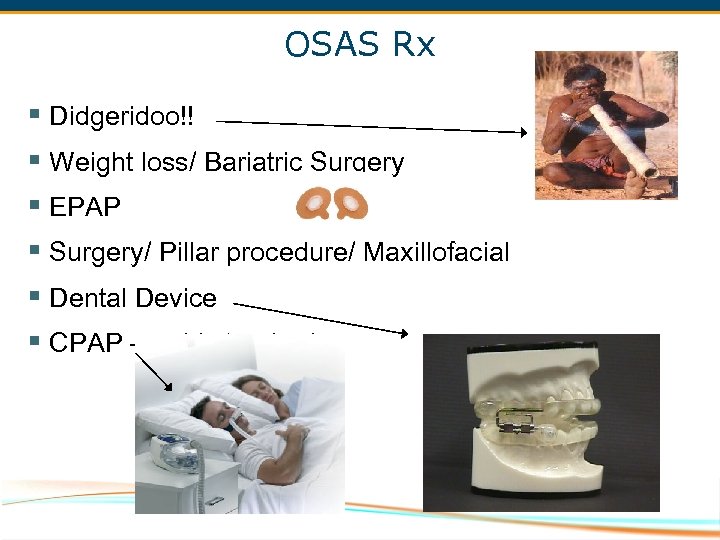 OSAS Rx § Didgeridoo!! § Weight loss/ Bariatric Surgery § EPAP § Surgery/ Pillar procedure/ Maxillofacial § Dental Device § CPAP – gold standard
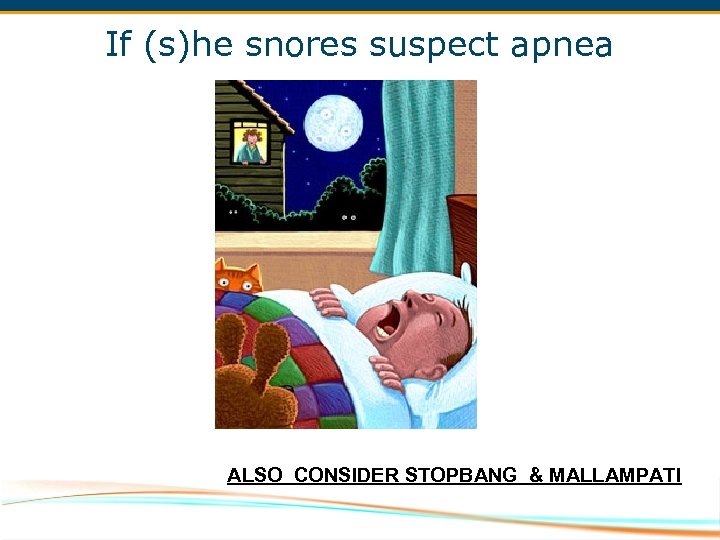 If (s)he snores suspect apnea ALSO CONSIDER STOPBANG & MALLAMPATI
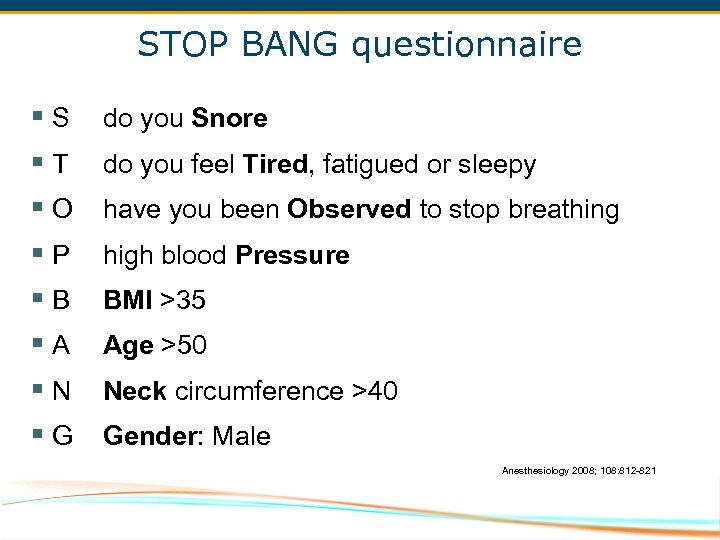 STOP BANG questionnaire §S do you Snore §T do you feel Tired, fatigued or sleepy § O have you been Observed to stop breathing §P high blood Pressure §B BMI >35 §A Age >50 §N Neck circumference >40 § G Gender: Male Anesthesiology 2008; 108: 812 -821
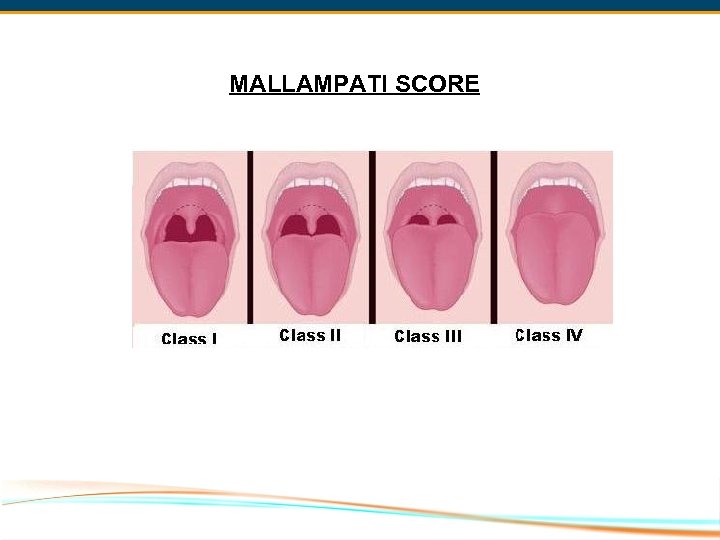 MALLAMPATI SCORE
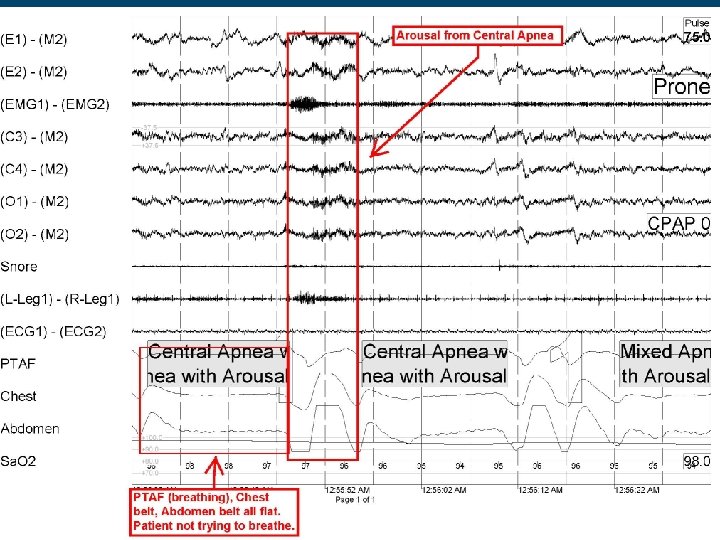
 Does the patient have apnea? • Her BMI is 22. She is on methadone for prior heroin abuse. She denies sleep difficulties but has been complaining of sleepiness. What would be your clinical concern?
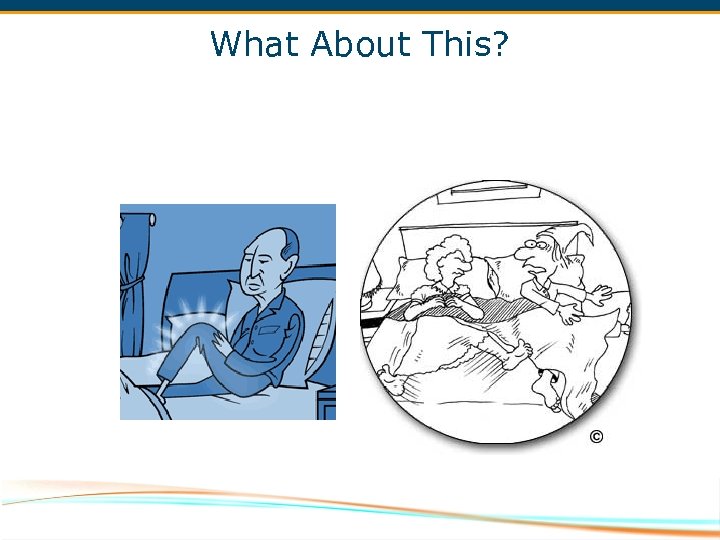 What About This?
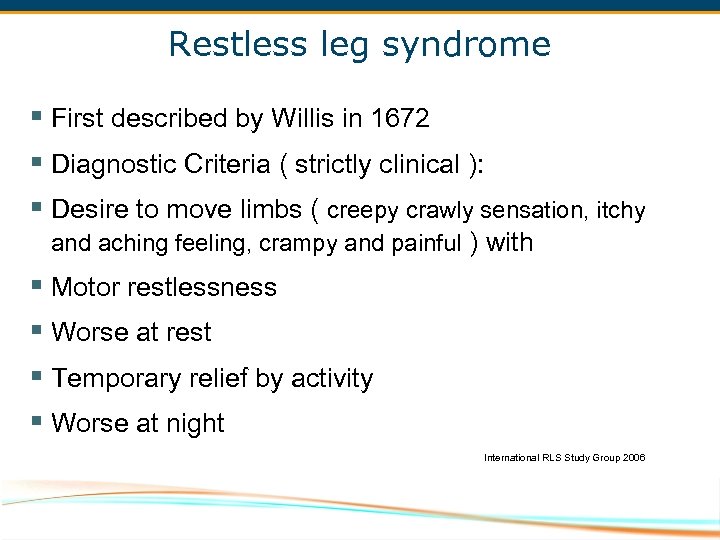 Restless leg syndrome § First described by Willis in 1672 § Diagnostic Criteria ( strictly clinical ): § Desire to move limbs ( creepy crawly sensation, itchy and aching feeling, crampy and painful ) with § Motor restlessness § Worse at rest § Temporary relief by activity § Worse at night International RLS Study Group 2006
 Periodic limb movements § PLMS: Diagnosis is based on PSG findings. § PLMD: PLMS plus sleep dysfunction. § 80% of RLS patients have PLMS § Asymptomatic PLMS does not require treatment.
 RLS § Rule out: l Iron deficiency, Uremia, RA, Peripheral neuropathy, Diabetes, Pregnancy, Spinal cord lesion, Medications. l “The Mimics” l Akathisia ( drug induced or positional ), peripheral neuropathy, nocturnal leg cramps, sleep starts, anxiety, and psychosis.
 Pathophysiology RLS § SPECT/PET l Reduction of caudate and putamen D 2 receptor binding § Brain Iron Transport l CSF ferritin low- abnormal iron transport § f. MRI l Decreased thalamic blood flow during RLS symptoms
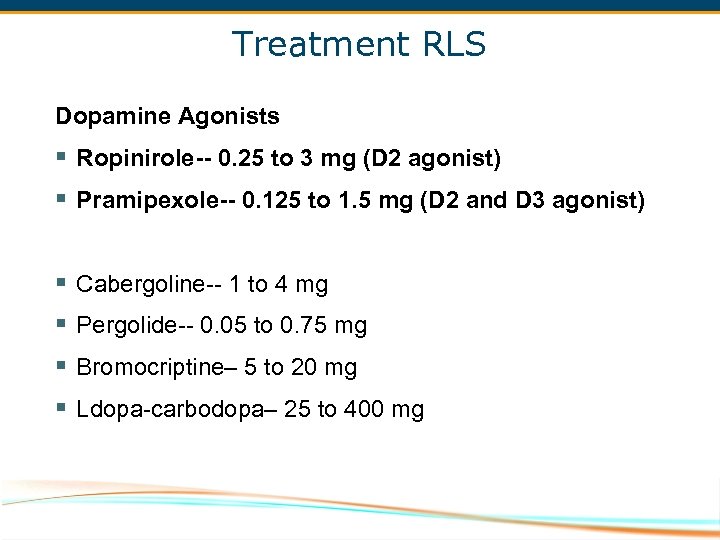 Treatment RLS Dopamine Agonists § Ropinirole-- 0. 25 to 3 mg (D 2 agonist) § Pramipexole-- 0. 125 to 1. 5 mg (D 2 and D 3 agonist) § Cabergoline-- 1 to 4 mg § Pergolide-- 0. 05 to 0. 75 mg § Bromocriptine– 5 to 20 mg § Ldopa-carbodopa– 25 to 400 mg
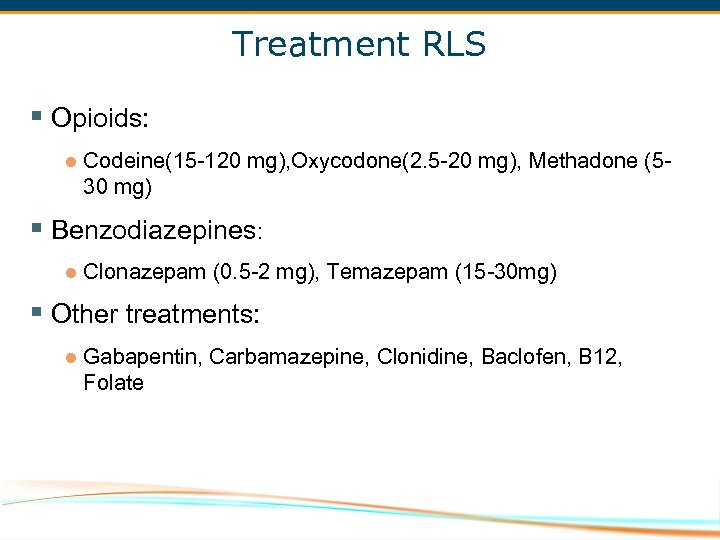 Treatment RLS § Opioids: l Codeine(15 -120 mg), Oxycodone(2. 5 -20 mg), Methadone (530 mg) § Benzodiazepines: l Clonazepam (0. 5 -2 mg), Temazepam (15 -30 mg) § Other treatments: l Gabapentin, Carbamazepine, Clonidine, Baclofen, B 12, Folate
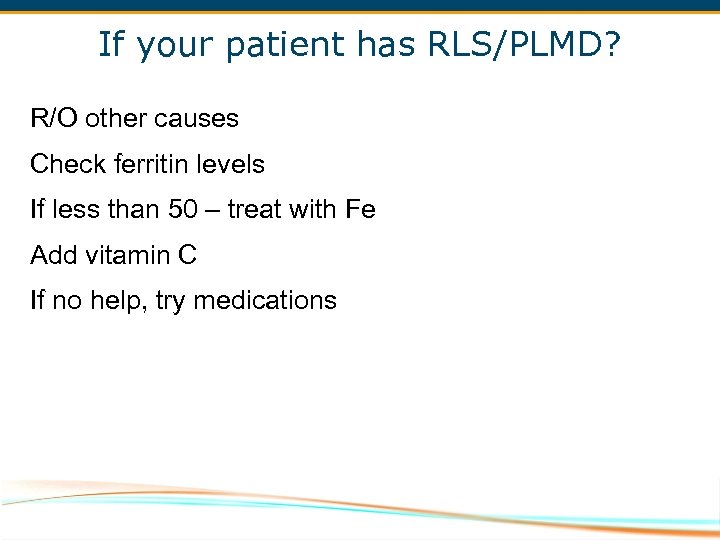 If your patient has RLS/PLMD? R/O other causes Check ferritin levels If less than 50 – treat with Fe Add vitamin C If no help, try medications
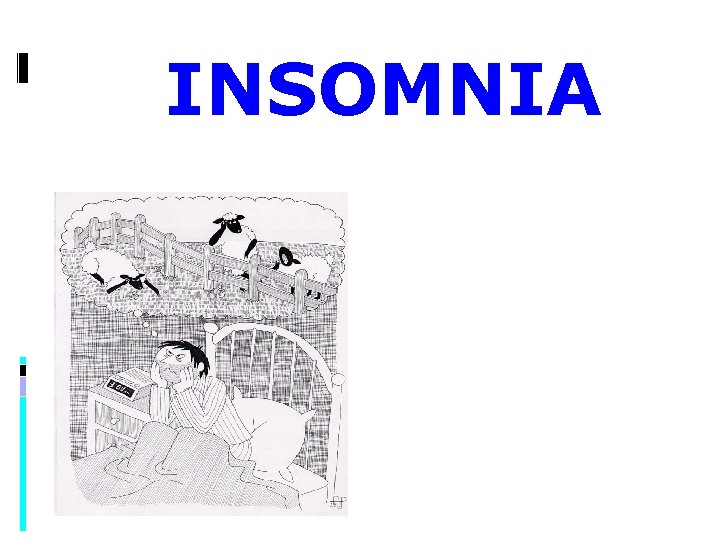 INSOMNIA B. Wayne Blount, MD, MPH Professor, Emory S. O. M.
 Insomnia- Scope of the Problem § Prevalence: 30% of general population have complaints of sleep disruption and 10% have associated functional impairment § Almost all major mental illness is associated with “some” sleep complaint § Insomnia can be the presenting complaint for anxiety, depression or a sign of abuse potential § Many medical problems can have sleep complaints as part of the presentation
 Insomnia- Definitions Global dissatisfaction with sleep and one of: 1. Difficulty initiating sleep 2. Difficulty maintaining sleep 3. Early morning awakening With distress or impairment 3 nights/week for 3 months ØDespite adequate opportunity for sleep ØEpisodic, persistent or recurrent
 Pathophysiology of Insomnia § Disorder of hyperarousal - hypervigilance during day with difficulty initiating/maintaining sleep during the night l Cognitive model l Physiologic model l Neuroendocrine model q Increased autonomic activity in sleep ( HR, MR, BP, Temperature , NE secretion, HPA activation) q Increased beta/gamma and decreased delta EEG activity q Increased brain glucose metabolism Sleep Med Rev 2010 14(1): 9 -15
 Why care about insomnia? § Insomnia prevalence increases with greater medical comorbidity § There is increased prevalence of medical disorders in those with insomnia § Insomnia with objective short sleep duration is associated with high risk for hypertension § Insomnia with objective short sleep duration is associated with high risk for type 2 diabetes § Insomnia with objective short sleep duration is associated with neuropsychological deficits Sleep 2009; 32: 491 -497 Sleep 2010; 33: 459 -465 Sleep 2007; 30920: 213 -218
 Treatment Options I. Behavioural and Cognitive therapies II. Prescription medications
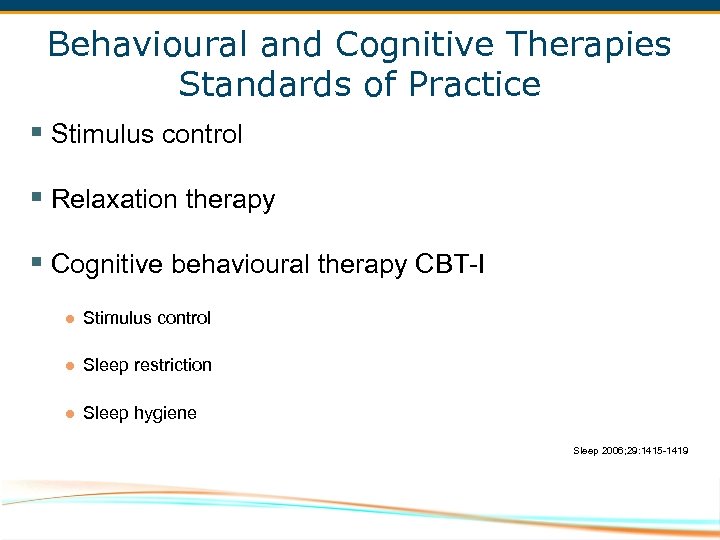 Behavioural and Cognitive Therapies Standards of Practice § Stimulus control § Relaxation therapy § Cognitive behavioural therapy CBT-I l Stimulus control l Sleep restriction l Sleep hygiene Sleep 2006; 29: 1415 -1419
 Clinical Practice Point § Most behavioural treatments studied are six one-hour sessions by trained therapists § There a few basic principles that can be utilized in your practice l Establish a rapport with your patient, listen, instill hope and follow-up l Rely on principle of conditioning and good sleep hygiene practices l Self monitoring , treatment rationale, and homework
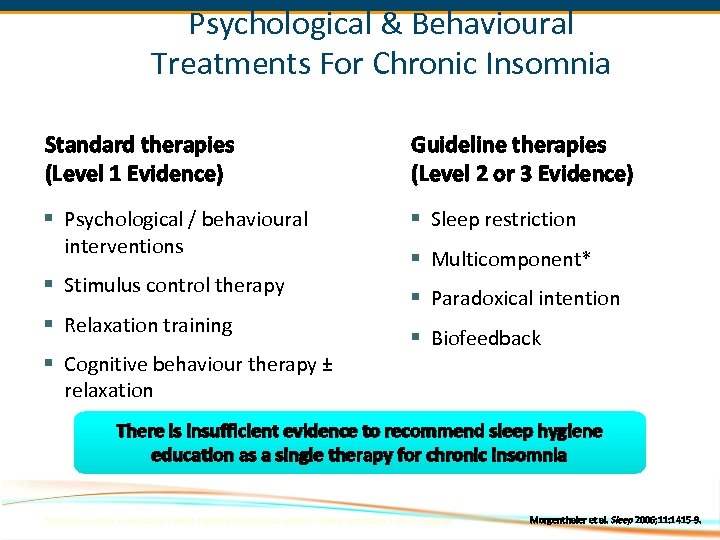 Psychological & Behavioural Treatments For Chronic Insomnia Standard therapies (Level 1 Evidence) Guideline therapies (Level 2 or 3 Evidence) § Psychological / behavioural § Sleep restriction interventions § Stimulus control therapy § Relaxation training § Cognitive behaviour therapy ± § Multicomponent* § Paradoxical intention § Biofeedback relaxation There is insufficient evidence to recommend sleep hygiene education as a single therapy for chronic insomnia *stimulus control + relaxation + sleep hygiene OR stimulus control + sleep restriction + sleep hygiene. Morgenthaler et al. Sleep 2006; 11: 1415 -9.
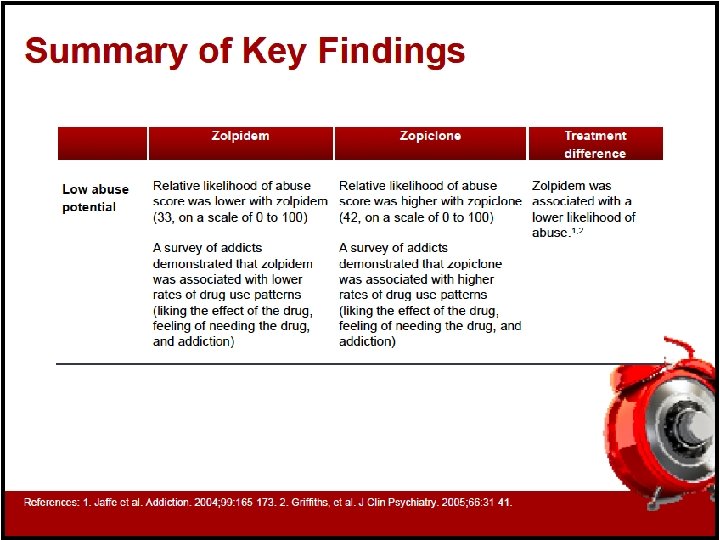
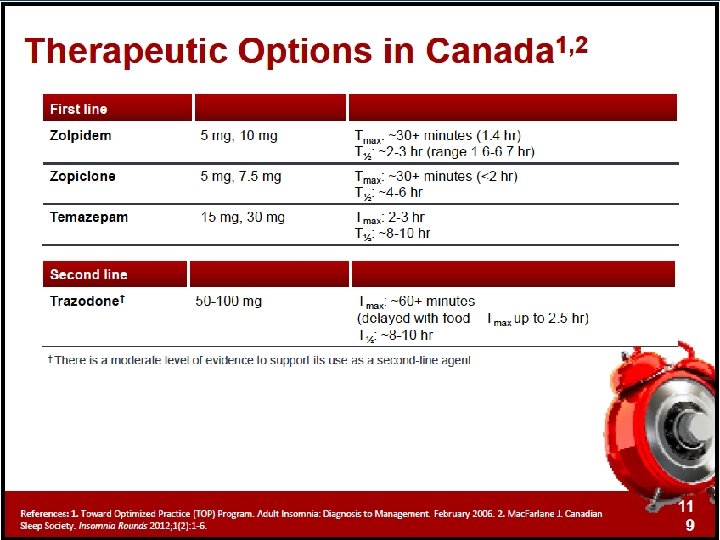
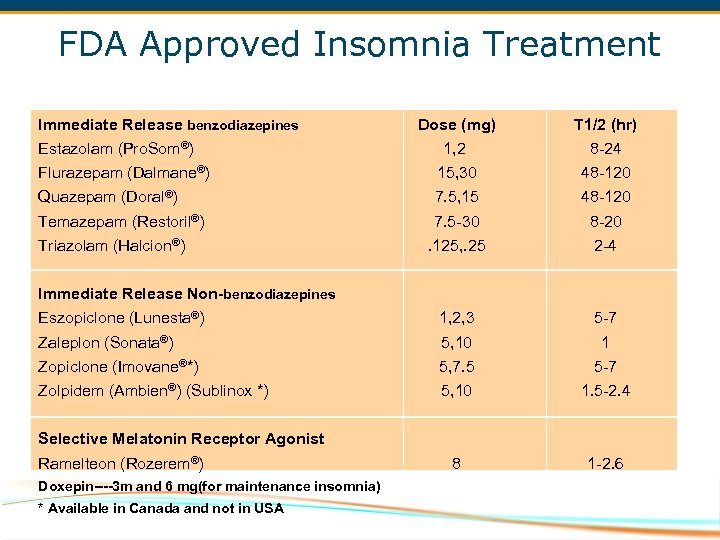 FDA Approved Insomnia Treatment Immediate Release benzodiazepines Dose (mg) T 1/2 (hr) 1, 2 8 -24 Flurazepam (Dalmane®) 15, 30 48 -120 Quazepam (Doral®) 7. 5, 15 48 -120 Temazepam (Restoril®) 7. 5 -30 8 -20 . 125, . 25 2 -4 Eszopiclone (Lunesta®) 1, 2, 3 5 -7 Zaleplon (Sonata®) 5, 10 1 Zopiclone (Imovane®*) 5, 7. 5 5 -7 Zolpidem (Ambien®) (Sublinox *) 5, 10 1. 5 -2. 4 8 1 -2. 6 Estazolam (Pro. Som®) Triazolam (Halcion®) Immediate Release Non-benzodiazepines Selective Melatonin Receptor Agonist Ramelteon (Rozerem®) Doxepin----3 m and 6 mg(for maintenance insomnia) * Available in Canada and not in USA
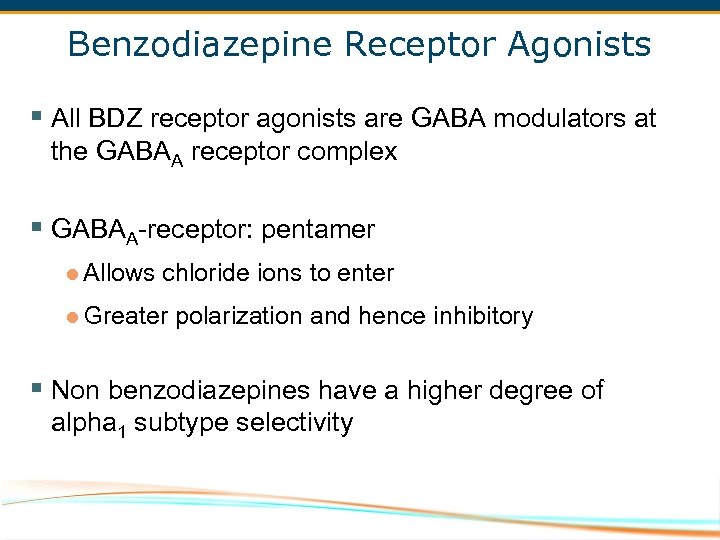 Benzodiazepine Receptor Agonists § All BDZ receptor agonists are GABA modulators at the GABAA receptor complex § GABAA-receptor: pentamer l Allows chloride ions to enter l Greater polarization and hence inhibitory § Non benzodiazepines have a higher degree of alpha 1 subtype selectivity
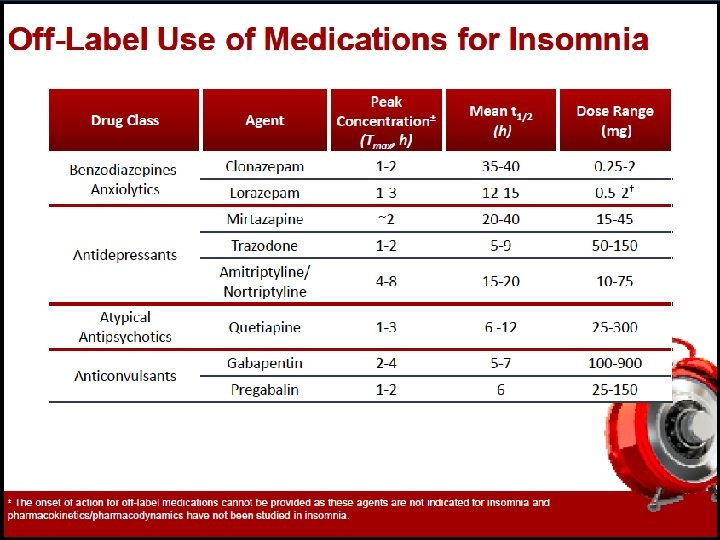
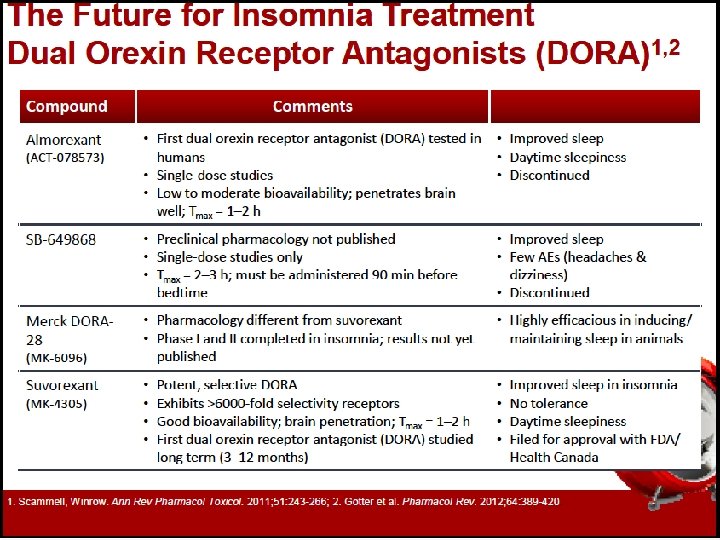
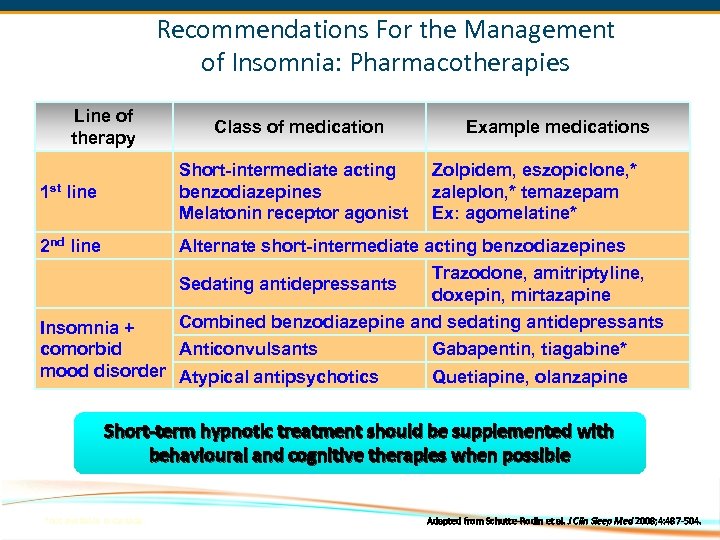 Recommendations For the Management of Insomnia: Pharmacotherapies Line of therapy Class of medication Example medications 1 st line Short-intermediate acting benzodiazepines Melatonin receptor agonist 2 nd line Alternate short-intermediate acting benzodiazepines Sedating antidepressants Zolpidem, eszopiclone, * zaleplon, * temazepam Ex: agomelatine* Trazodone, amitriptyline, doxepin, mirtazapine Combined benzodiazepine and sedating antidepressants Insomnia + comorbid Anticonvulsants Gabapentin, tiagabine* mood disorder Atypical antipsychotics Quetiapine, olanzapine Short-term hypnotic treatment should be supplemented with behavioural and cognitive therapies when possible *not available in Canada. Adapted from Schutte-Rodin et al. J Clin Sleep Med 2008; 4: 487 -504.
 Insomnia and Depression § Up to 90% of MDE patients complain of insomnia § Up to 40% of patients complaining of insomnia could have a mood disorder § Subjective complaints of difficulty initiating, maintaining sleep or early awakening § Objective findings: decreased REM latency, increased % REM, increased first REM period and decreased SWS
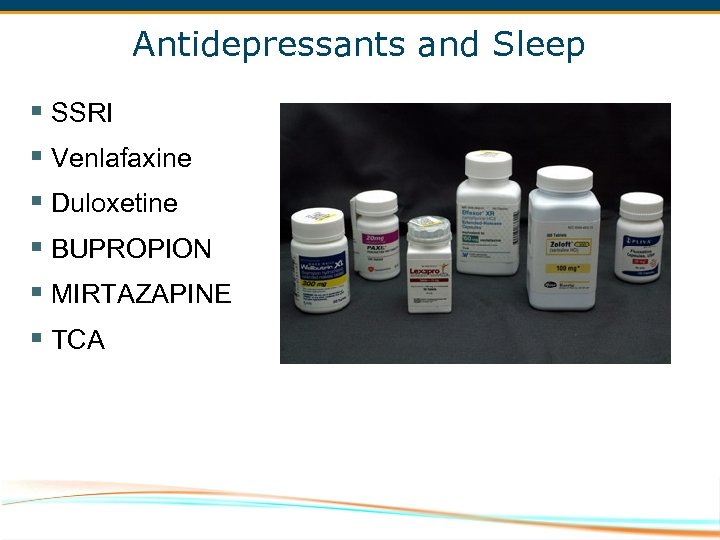 Antidepressants and Sleep § SSRI § Venlafaxine § Duloxetine § BUPROPION § MIRTAZAPINE § TCA
 SSRIs and Sleep § Idiosyncratic effects: can cause insomnia or agitation in any individual patient § Up to 60% of patients on SSRIs are also on a hypnotic § All SSRIs decrease SE, suppress REM, delay REM onset, and increase S 1 sleep § There appears to be a trend where: l Fluvoxamine and paroxetine are more sedating l Fluoxetine is more stimulating l Sertraline, citalopram and escitalopram are neutral
 Clinical Practice Point § Trazodone, TCAs and mirtazapine are commonly used to help insomnia complaints in patients who suffer from depression or anxiety disorders § SSRI could be used alone or with a BDZ/hypnotic to help insomnia complaints in depression § Adjusting dose or timing can be helpful § Combining medication with CBT is an option
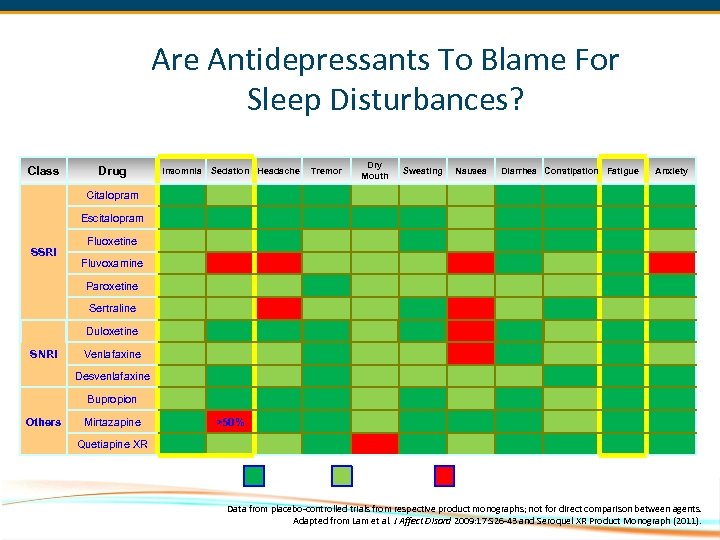 Are Antidepressants To Blame For Sleep Disturbances? Are Antidepressants to Blame for Sleep Disturbances? Class Drug Insomnia Sedation Headache Tremor Dry Mouth Sweating Nausea Diarrhea Constipation Fatigue Anxiety Citalopram Escitalopram SSRI Fluoxetine Fluvoxamine Paroxetine Sertraline Duloxetine SNRI Venlafaxine Desvenlafaxine Bupropion Others Mirtazapine >50% Quetiapine XR 0 -9% 10 -29% ≥ 30% Data from placebo-controlled trials from respective product monographs; not for direct comparison between agents. Adapted from Lam et al. J Affect Disord 2009: 17: S 26 -43 and Seroquel XR Product Monograph (2011).
 Role for Antipsychotics § A 45 year-old male was referred to see me for a sleep assessment § By the time I saw him he was already put on olanzapine 2. 5 mg po qhs and has been “doing great”. He was not sure why he needed to see me now l What are the effects of antipsychotics on sleep parameters? l What is the evidence for use of antipsychotics in insomnia and in complicated insomnia?
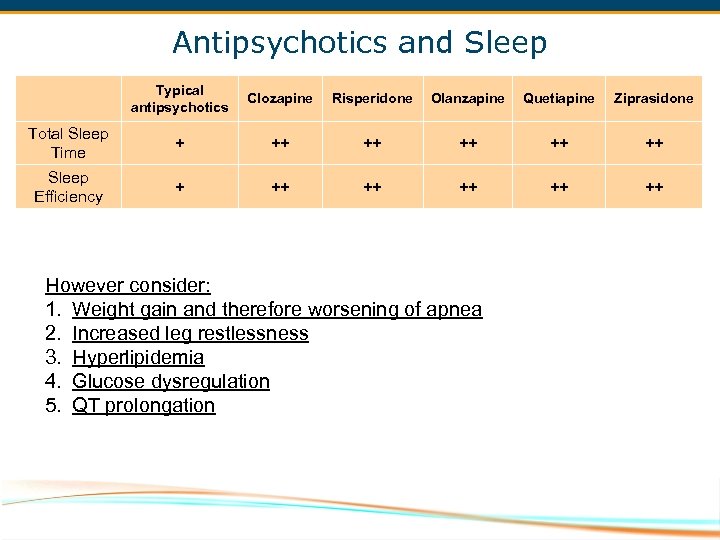 Antipsychotics and Sleep Typical antipsychotics Clozapine Risperidone Olanzapine Quetiapine Ziprasidone Total Sleep Time + ++ ++ ++ Sleep Efficiency + ++ ++ ++ However consider: 1. Weight gain and therefore worsening of apnea 2. Increased leg restlessness 3. Hyperlipidemia 4. Glucose dysregulation 5. QT prolongation
 Important Quotes- NIH Chronic Insomnia Panel § “all (antipsychotics) agents have significant risks, and thus their use in the treatment of chronic insomnia cannot be recommended” § Eszopiclone and zolpidem extended release are not indicated for “short term” use § Intermittent vs regular prescription § Short term vs long term prescription
 Clinical Practice Point § Antipsychotics are commonly used in patients who have psychosis and bipolar illness to help with sleep complaints § Antipsychotics are sometimes used in patients whose depression is successfully treated but still complain of their sleep § Potential effects on weight, lipids and glucose § Quetiapine is commonly used for “psychiatric insomnia”
 Back to David Is David’s insomnia most likely. . . l A primary sleep disorder? l A residual symptom of depression? l Medication-induced? l Due to poor sleep hygiene? l Due to something else?
 Back to David § David is exhibiting residual symptoms of depression and mild anxiety § His insomnia is affecting his work functioning § Would you change his treatment plan? If yes, how?
 Treatment of Insomnia § What is the most common prescribed medication for the treatment of insomnia § in the United States? § in Kuwait?
 Clinical aspects of Insomnia Treatment of insomnia is based upon the following principles: § A. Insomnia is always a symptom of a larger psychiatric disorder § B. Insomnia may lead to hypertension and diabetes § C. Reduction of depressive symptoms can improve insomnia § D. Sleep studies are always helpful in confirming the diagnosis of insomnia
 Depression and sleep § Polysomnographic features of depression seen in 50% of patients diagnosed with depression include: A. Abbreviated REM sleep onset B. Increased REM amounts C. Decreased slow wave sleep D. Increased sleep fragmentation and arousals E. Sleep studies are indicated in cases of suspected depression
 Case of Mr. B § Mr. B is a healthy 20 yo male whom you have been seeing in therapy for treatment of anxiety. According to his roommate, the patient has been waking up screaming, with severe sweating and difficulty to communicate with during these episodes. The patient had severe nightmares as a child. The events typically occur after missing his normal amount of sleep because of social events or studying for tests. § Q: How would you treat these “nightmares”?
 Events during sleep § Nightmares § Night terrors § Panic attacks (nocturnal) § REM behaviour disorder § Sleep walking § Nocturnal seizures § CONSIDER: prior history, age, dreaming episode, time of occurrence, ability to console, autonomic arousability, and behaviours during episode.
 Screening for Parasomnias § 1. do you or your bed partner believe that you move your arms, legs, or body too much or have unusual behaviour during sleep? § 2. do you move while dreaming as though you are attempting to carry out a dream? § 3. have you ever hurt yourself or your partner while asleep? § 4. do you eat or drink without full awareness during the night? § 5. review medication(hypnotic) list/alcohol intake
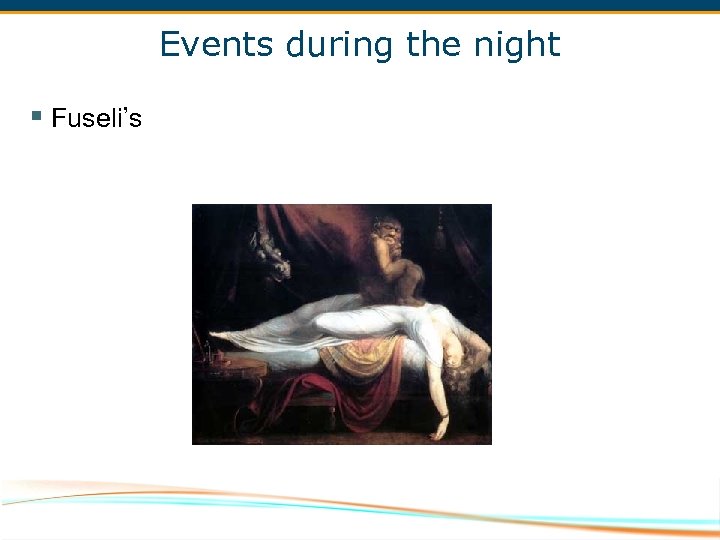 Events during the night § Fuseli’s
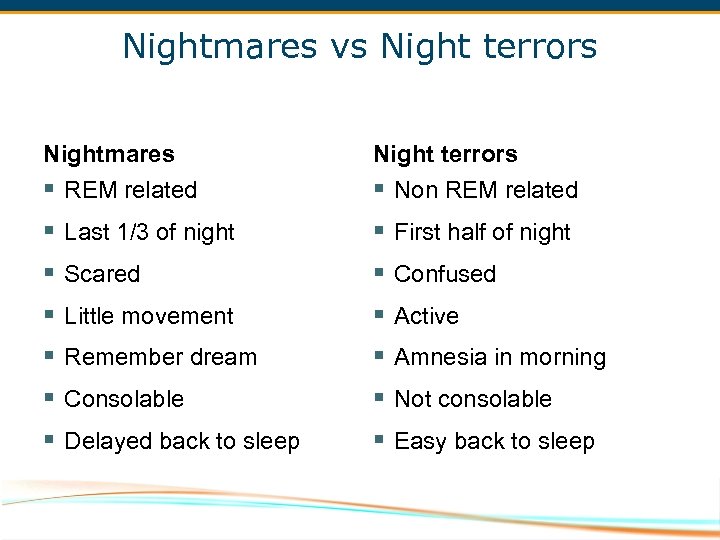 Nightmares vs Night terrors Nightmares Night terrors § REM related § Non REM related § Last 1/3 of night § First half of night § Scared § Confused § Little movement § Active § Remember dream § Amnesia in morning § Consolable § Not consolable § Delayed back to sleep § Easy back to sleep
 Nightmares § REM related events § Last third of the night § Vivid dreams § Dreams are remembered § Autonomic hyperarousability- mild § No confusion or disorientation
 Nightmares- cont’d § Treatment to be directed for culprit- medications, withdrawal, sleep disorder, sleep deprivation § No harm results from awakenings- Reassurance § Imagery rehearsal treatment § Prazosin in cases of PTSD related n/m § Tryptophan?
 Night terrors § Occur out of SWS ( N 3 )* § First half of the night § Positive hx of sleep walking § Behaviour is stereotypical § Extreme autonomic discharge § Difficult to console § Potential self harm/ harm to others » * in children out of N 1/N 2
 Night terrors- cont’d § May be triggered by: febrile illness, alcohol, sleep deprivation, stress. § Medications can induce such events- hypnotics/neuroleptics/stimulants/anti-histamines and antiarrhythmic meds § R/O brain insult, brain glioma, epilepsy, cardiac insufficiency.
 Night terrors- cont’d Treatment of NREM Parasomnia § Education and reassurance § Safety precautions- if sleep walking § BDZ/ TCA § Relaxation § Hypnosis
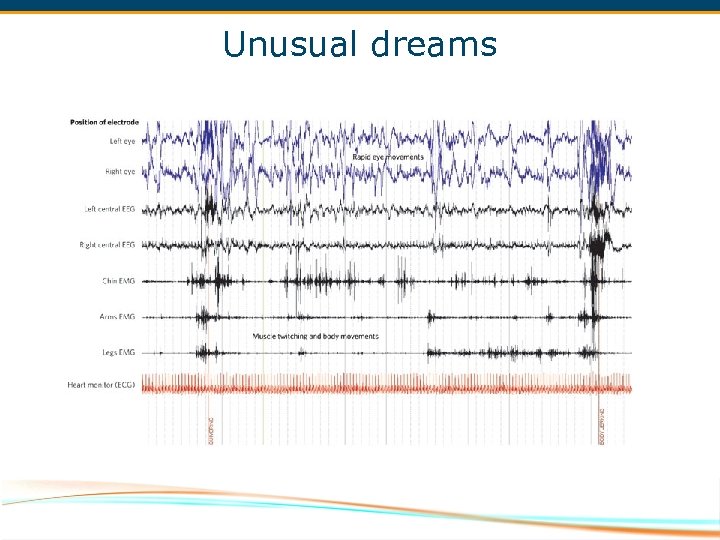
 Unusual dreams A 66 yo male who you see for depression presented to your office with bruises to his hands and feet after falling off the bed few days earlier. He recalls having a dream where he had to defend himself from a snake. On further inquiry he indicated that his wife has been scared to sleep with him in the same bed due to his excessive movements at night. His sleep record epoch shows the following:
 Unusual dreams
 Unusual dreams A 66 yo male who you see for depression presented to your office with bruises to his hands and feet after falling off the bed few days earlier. He recalls having a dream where he had to defend himself from a snake. On further inquiry he indicated that his wife has been scared to sleep with him in the same bed due to his excessive movements at night. This man likely: A. Has loss of muscle atonia during his REM sleep B. Has REM sleep behaviour disorder (RBD) C. Would benefit from an SSRI D. Will develop neuropathy with Guillain Barre-like illness E. Will benefit from Clonazepam
 ONE LAST, VERY EFFECTIVE TREATMENT OPTION § For apnea, RLS, Insomnia, parasomnias with com 0 rbid depression and anxiety is:
 ONE LAST, VERY EFFECTIVE TREATMENT OPTION § For apnea, RLS, Insomnia, parasomnias and com 0 rbid depression with anxiety is: Review this lecture
 EXTRAs § If we have time we can cover: Excessive Daytime Sleepiness
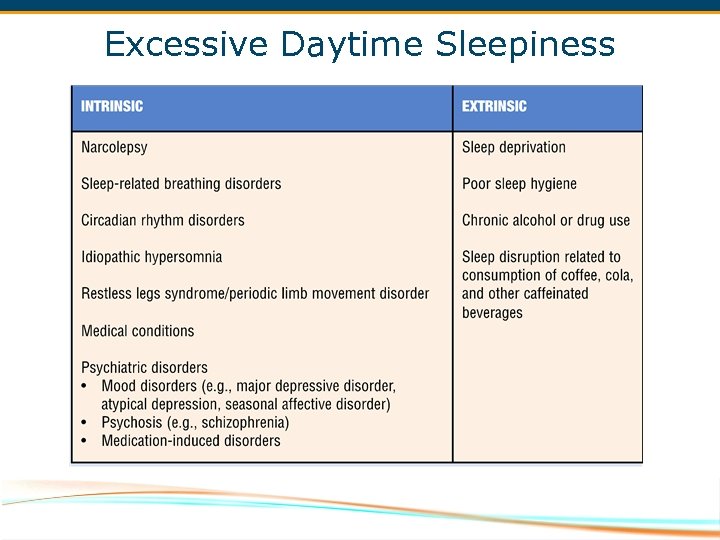
 Excessive Daytime Sleepiness
 Sleepy!
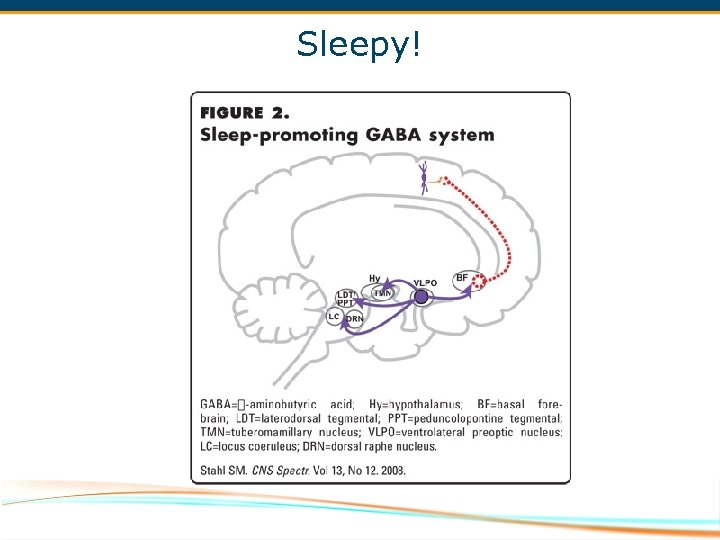
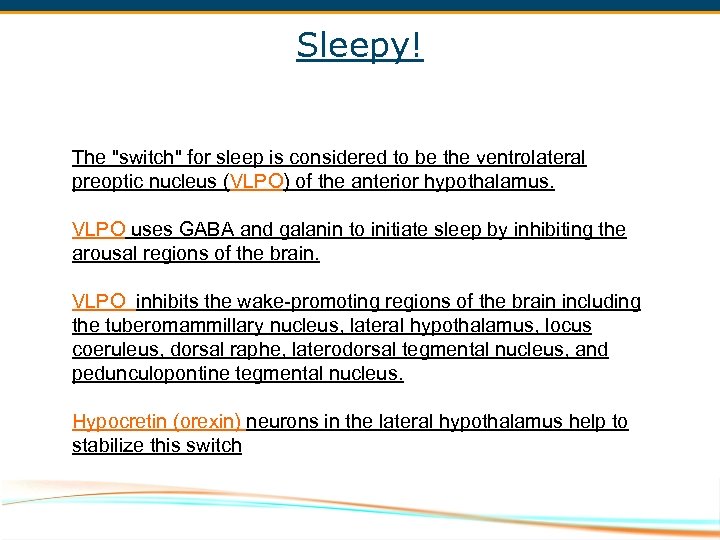 Sleepy! The "switch" for sleep is considered to be the ventrolateral preoptic nucleus (VLPO) of the anterior hypothalamus. VLPO uses GABA and galanin to initiate sleep by inhibiting the arousal regions of the brain. VLPO inhibits the wake-promoting regions of the brain including the tuberomammillary nucleus, lateral hypothalamus, locus coeruleus, dorsal raphe, laterodorsal tegmental nucleus, and pedunculopontine tegmental nucleus. Hypocretin (orexin) neurons in the lateral hypothalamus help to stabilize this switch
 EDS § A 45 yo female has been referred to a sleep clinic for assessment of day time sleepiness and fatigue. § How do you differentiate between EDS and fatigue? § Is there a role for a sleep study? MSLT? MWT? § What are the causes for EDS?
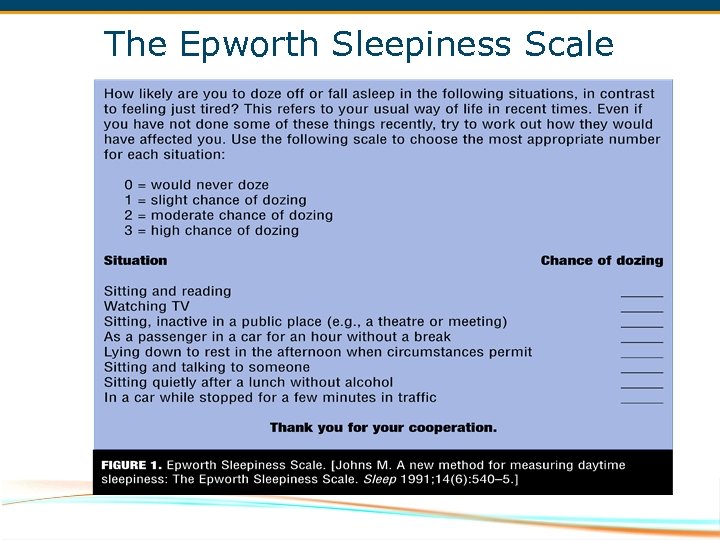 The Epworth Sleepiness Scale
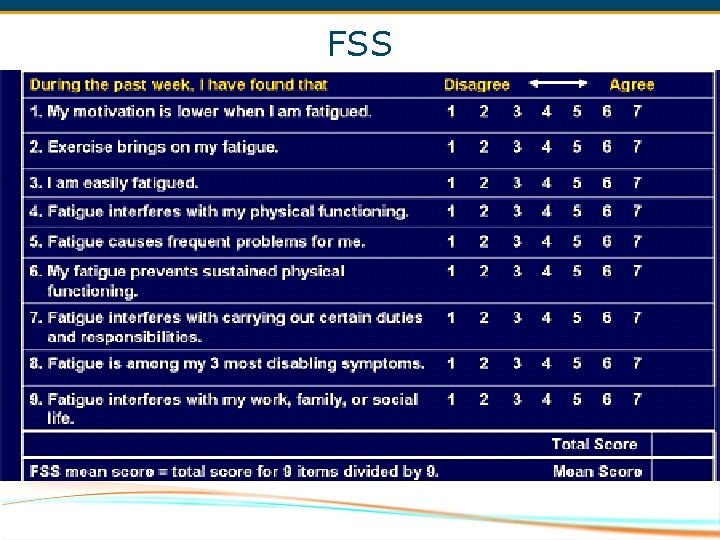 FSS
FSS
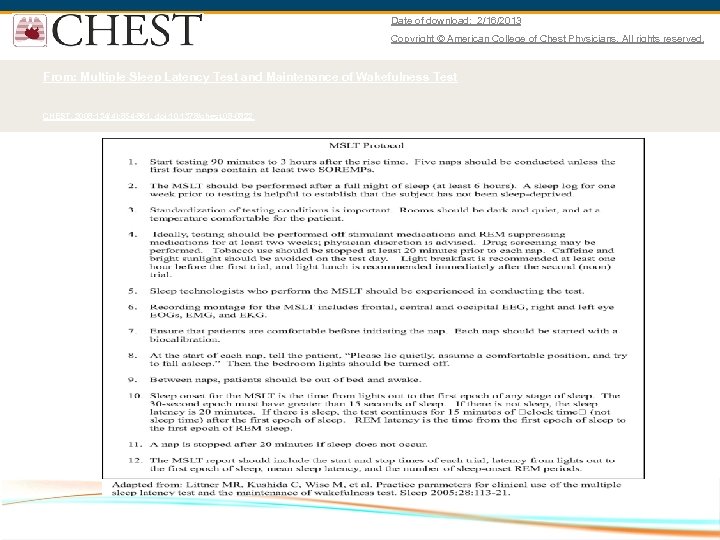 Date of download: 2/16/2013 Copyright © American College of Chest Physicians. All rights reserved. From: Multiple Sleep Latency Test and Maintenance of Wakefulness Test CHEST. 2008; 134(4): 854 -861. doi: 10. 1378/chest. 08 -0822 Figure Legend: MSLT protocol. Adapted from Littner et al. 1
 Excessive Daytime Sleepiness
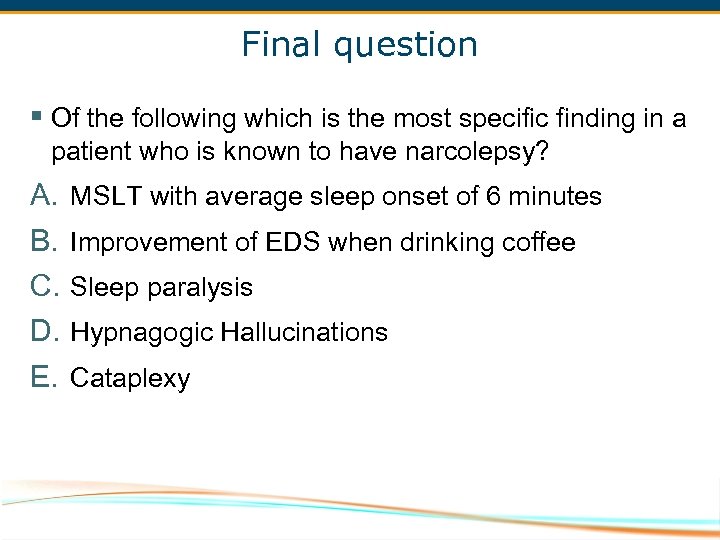 Final question § Of the following which is the most specific finding in a patient who is known to have narcolepsy? A. MSLT with average sleep onset of 6 minutes B. Improvement of EDS when drinking coffee C. Sleep paralysis D. Hypnagogic Hallucinations E. Cataplexy
 Bibliography An update on the dopaminergic treatment of restless legs syndrome and periodic limb movement disorder. Sleep 2004: 27(3): 560 -583 Brower KJ. Alcohol’s effects on sleep in alcoholics. Alcohol Research and Health 2001; 25(2): 110 -125 Kushida CA, Littner MR, Hirshkowitz M etal. Practice parameters for the use of continuous and bilevel positive airway pressure devices to treat adult patients with sleep related breathing disorders. Sleep 2006: 29(3): 375 -380 Morgenthaler T, Kapen S, Lee-Chiong T etal. Practice parameters for the medical therapy of obstructive sleep apnea. Sleep 2006; 29(8): 1031 -1035 Morin CM, Bootzin RR, Buysse DJ etal. Psychological and behavioural treatment of insomnia. Update of the recent evidence. Sleep 2006; 29(11): 1398 -1414 Neubauer DN. The evolution and development of insomnia pharmacotherapies. JCSM 2007; 3(5): S 11 -S 15 Peterson MJ and Benca RM. Sleep in mood disorders. Psychiatr Clin N 2006; 29: 1009 -1032 Roth T. Insomnia: Definition, prevalence, etiology, and consequences. JCSM 2007; 3(5): S 7 S 10 Schenck C, Mahowald M. Parasomnias. Post Med 2000; 107(3): 145 -156 Silber MH. Chronic insomnia. NEJM. 2005; 353: 803 -10
 Fun Websites § The sleep IQ test: http: //www. sleepfoundation. org/nsaw/sleepiq 99 i. cfm § Sleep meditation quilt square: A couple of simple things to remember and a cool site. http: //www. irvingstudios. com/child_abuse_survivor_monumen t/Water_files/water 14_help_with_sleep/help_with_sleep. html § Practice parameters for treating chronic primary insomnia in the elderly. Nat’l. Guideline Clearinghouse; www. guidelines. gov § http: //cks. library. nhs. uk/insomnia/view_whole_guidance 85
 QUESTIONS If you have any questions I could be reached at the following address: § raed. hawa@uhn. ca Raed Hawa MD FRCPC DABPN DABSM Associate Professor, Department of Psychiatry Deputy Psychiatrist in Chief, University Health Network Deputy Clerkship Director, UME, University of Toronto Director, Undergraduate Psychiatry Program, UME, University of Toronto
 Extra Slides
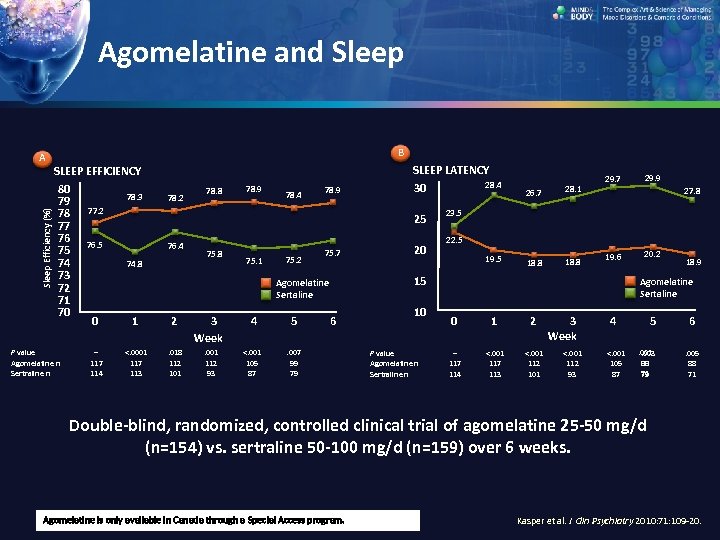 Agomelatine and Sleep Efficiency (%) A B SLEEP EFFICIENCY 80 78. 3 79 77. 2 78 77 76 76. 5 75 74 74. 8 73 72 71 70 0 1 P value Agomelatine n Sertraline n – 117 114 <. 0001 117 113 78. 2 78. 8 78. 9 78. 4 78. 9 SLEEP LATENCY 28. 4 30 25 76. 4 75. 8 75. 1 75. 2 75. 7 . 018 112 101 3 Week. 001 112 93 4 5 <. 001 105 87 29. 7 6 . 007 99 79 10 P value Agomelatine n Sertraline n 29. 9 27. 8 23. 5 22. 5 19. 5 18. 8 19. 6 15 Agomelatine Sertaline 2 20 26. 7 28. 1 20. 2 18. 9 Agomelatine Sertaline 0 1 2 – 117 114 <. 001 117 113 <. 001 112 101 3 Week <. 001 112 93 4 <. 001 105 87 5. 001. 003 88 99 71 79 6. 005 88 71 Double-blind, randomized, controlled clinical trial of agomelatine 25 -50 mg/d (n=154) vs. sertraline 50 -100 mg/d (n=159) over 6 weeks. Agomelatine is only available in Canada through a Special Access program. Kasper et al. J Clin Psychiatry 2010: 71: 109 -20.
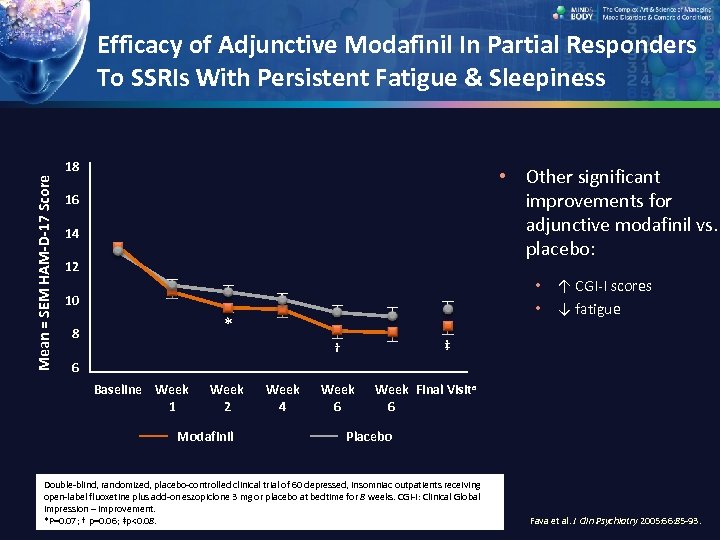 Mean = SEM HAM-D-17 Score Efficacy of Adjunctive Modafinil In Partial Responders To SSRIs With Persistent Fatigue & Sleepiness 18 • Other significant improvements for adjunctive modafinil vs. placebo: 16 14 12 • • 10 * 8 ↑ CGI-I scores ↓ fatigue ‡ † 6 Baseline Week 1 Week 2 Modafinil Week 4 Week 6 Week Final Visita 6 Placebo Double-blind, randomized, placebo-controlled clinical trial of 60 depressed, insomniac outpatients receiving open-label fluoxetine plus add-on eszopiclone 3 mg or placebo at bedtime for 8 weeks. CGI-I: Clinical Global Impression – Improvement. *P=0. 07; † p=0. 06; ‡p<0. 08. Fava et al. J Clin Psychiatry 2005: 66: 85 -93.
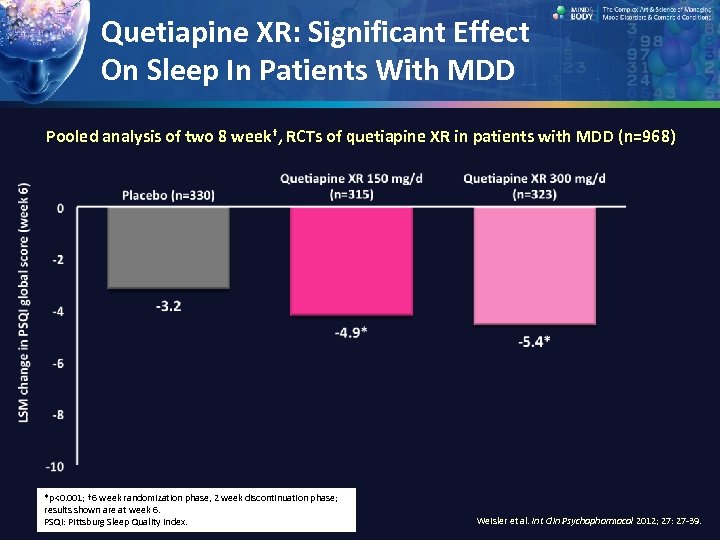 Quetiapine XR: Significant Effect On Sleep In Patients With MDD Pooled analysis of two 8 week†, RCTs of quetiapine XR in patients with MDD (n=968) *p<0. 001; † 6 week randomization phase, 2 week discontinuation phase; results shown are at week 6. PSQI: Pittsburg Sleep Quality Index. Weisler et al. Int Clin Psychopharmacol 2012; 27: 27 -39.
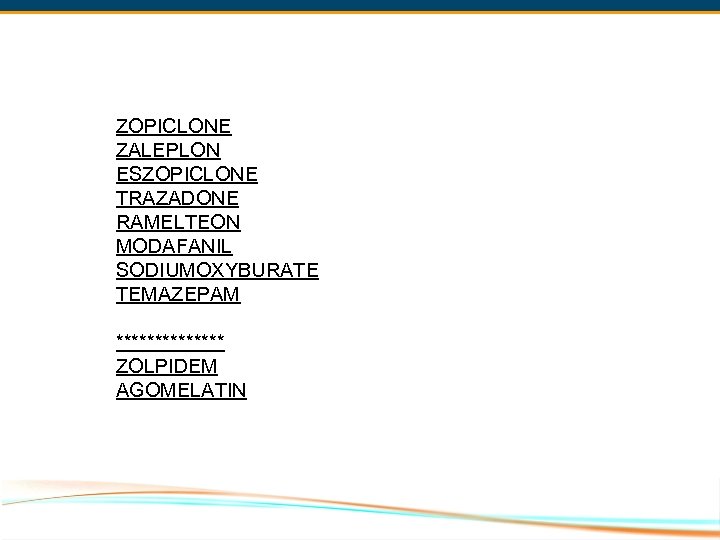 ZOPICLONE ZALEPLON ESZOPICLONE TRAZADONE RAMELTEON MODAFANIL SODIUMOXYBURATE TEMAZEPAM ******* ZOLPIDEM AGOMELATIN