


 Скачать презентацию Sleep and Fatigue Impact on Medical Trainees Geoffrey
c27df853c8d43cf1ff6be25316ce2bb4.ppt
- Количество слайдов: 36
 Sleep and Fatigue Impact on Medical Trainees Geoffrey S Gilmartin, MD Beth Israel Deaconess Medical Center Harvard Medical School Boston, MA
 The Problem “How do you brainwash someone? You sleep deprive them. You feed them bad food and you repeat things over and over again. It’s like that kind of covers residency. ” Papp et al, Academic Medicine, 2002
 The Problem The culture of medicine says: • Sleep is “optional” (and you’re a wimp if you need it) • Less sleep = more dedicated doctor Perception that reducing work hours • Compromises patient care • Reduces educational opportunity • Increases “scut” work
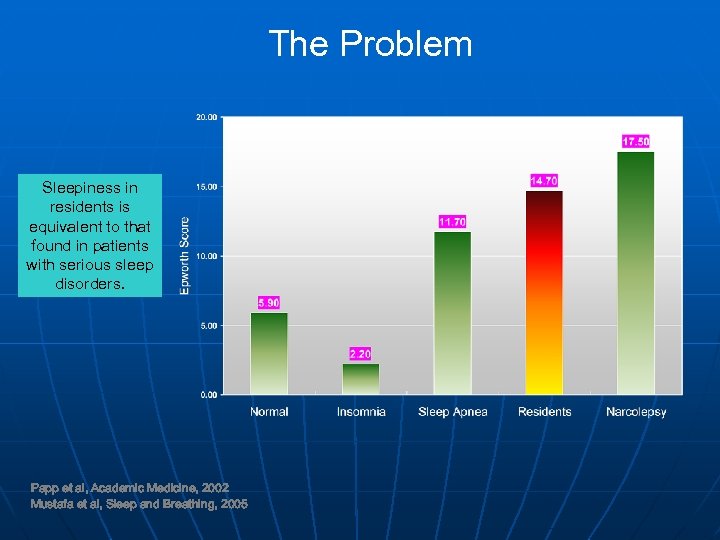 The Problem Sleepiness in residents is equivalent to that found in patients with serious sleep disorders. Papp et al, Academic Medicine, 2002 Mustafa et al, Sleep and Breathing, 2005
 Outline n Mechanism of Somnolence • 4 points Homeostatic Sleep Drive n Circadian Phase n Total Amount of Sleep Over Time n Sleep Inertia n n n Recent Literature Implications for Training
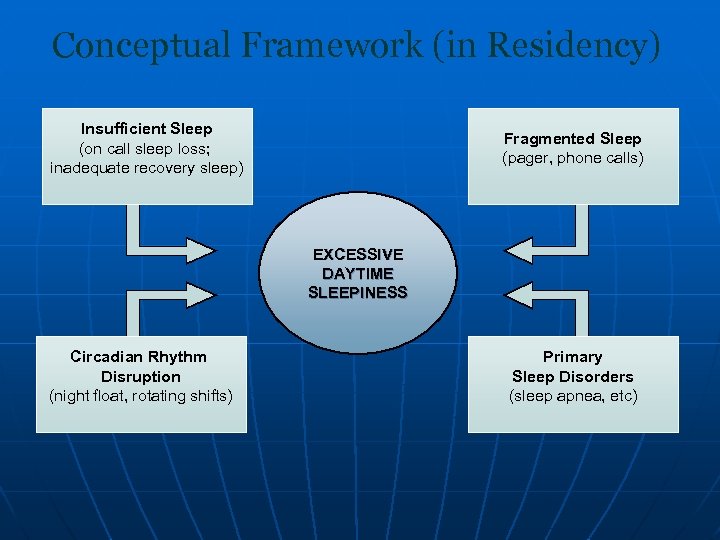 Conceptual Framework (in Residency) Insufficient Sleep (on call sleep loss; inadequate recovery sleep) Fragmented Sleep (pager, phone calls) EXCESSIVE DAYTIME SLEEPINESS Circadian Rhythm Disruption (night float, rotating shifts) Primary Sleep Disorders (sleep apnea, etc)
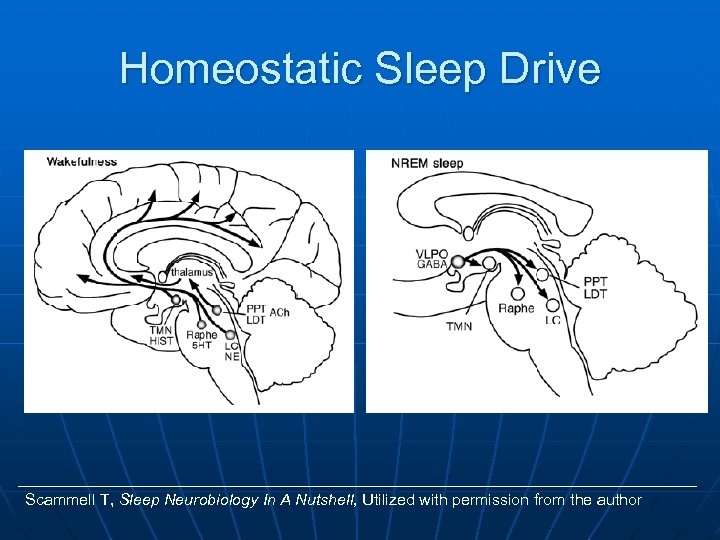 Homeostatic Sleep Drive Scammell T, Sleep Neurobiology In A Nutshell, Utilized with permission from the author
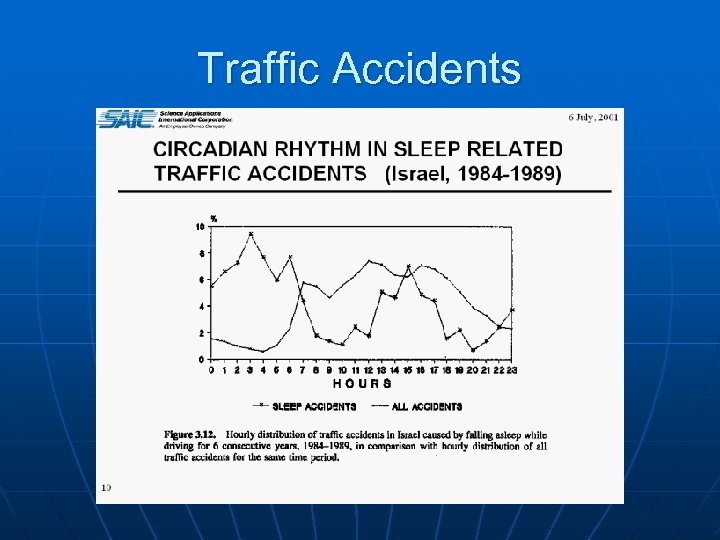 Traffic Accidents
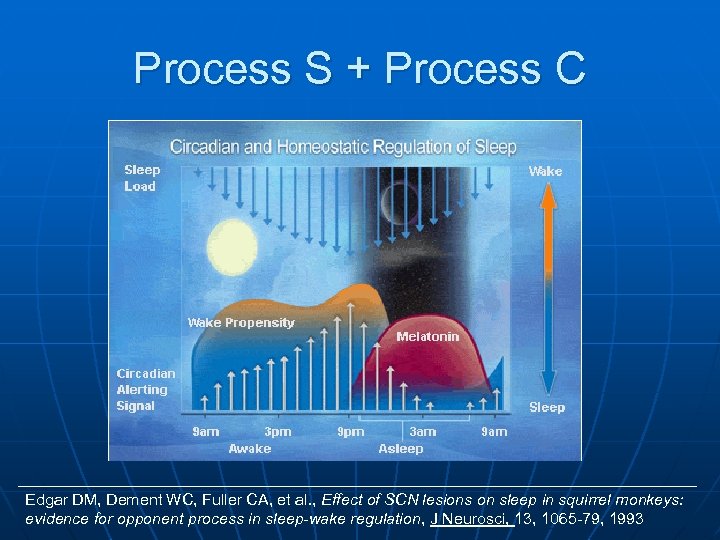 Process S + Process C Edgar DM, Dement WC, Fuller CA, et al. , Effect of SCN lesions on sleep in squirrel monkeys: evidence for opponent process in sleep-wake regulation, J Neurosci, 13, 1065 -79, 1993
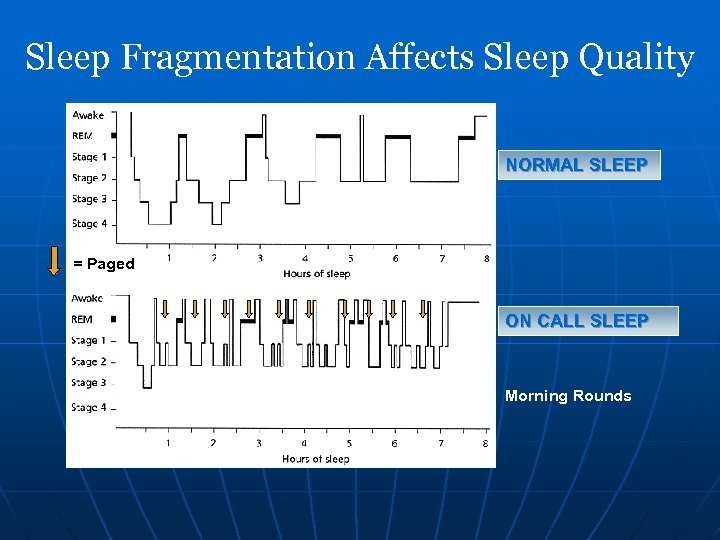 Sleep Fragmentation Affects Sleep Quality NORMAL SLEEP = Paged ON CALL SLEEP Morning Rounds
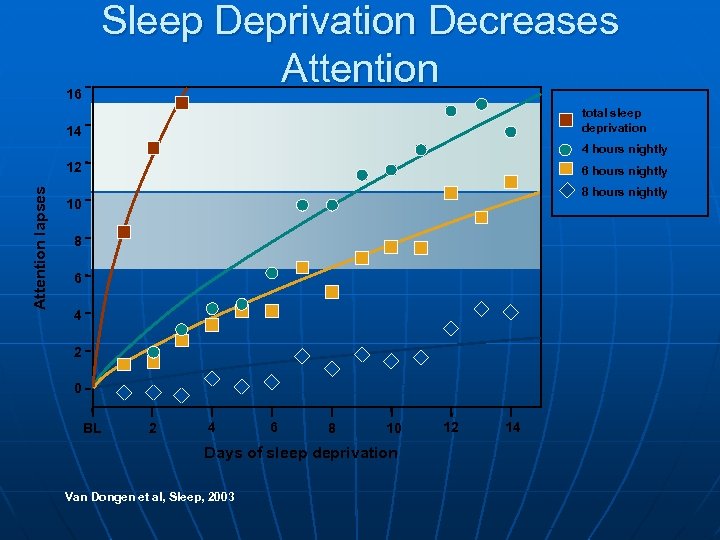 16 Sleep Deprivation Decreases Attention total sleep deprivation 14 4 hours nightly Attention lapses 12 6 hours nightly 8 hours nightly 10 8 6 4 2 0 BL 2 4 6 8 10 Days of sleep deprivation Van Dongen et al, Sleep, 2003 12 14
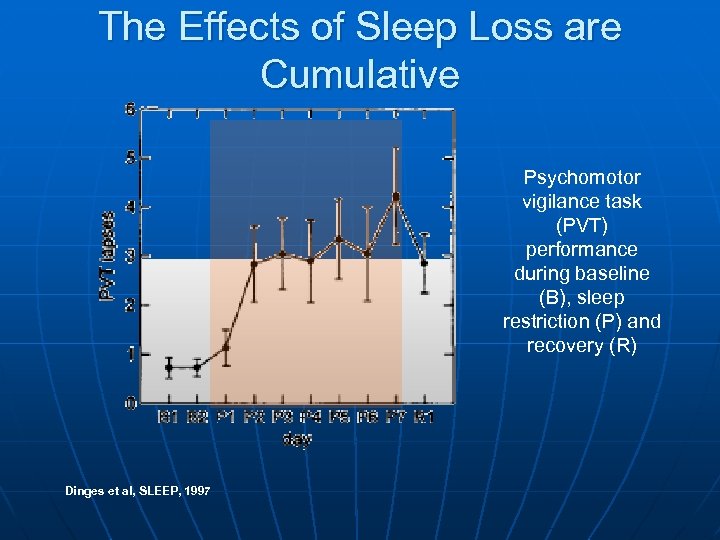 The Effects of Sleep Loss are Cumulative Psychomotor vigilance task (PVT) performance during baseline (B), sleep restriction (P) and recovery (R) Dinges et al, SLEEP, 1997
 Reducing the Impact of Sleep Loss Avoid starting out with a sleep deficit! – Even during light or no call rotations, residents do not obtain adequate sleep (average 6. 38 hrs)* *Arnedt, JAMA, 2005
 Adaptation to Sleep Loss Myth: “I’ve learned not to need as much sleep during my residency. ” Fact: Sleep needs are genetically determined and cannot be changed. Fact: Human beings do not “adapt” to getting less sleep than they need. * Fact: Although performance of tasks may improve somewhat with effort, optimal performance and consistency of performance do not! (e. g. , post-call performance on a neurocognitive battery does not differ by training year) *Arnedt, JAMA, 2005
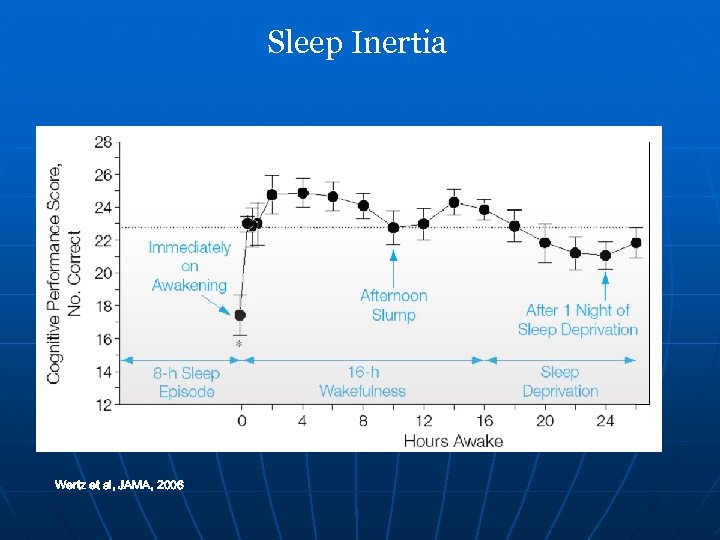 Sleep Inertia Wertz et al, JAMA, 2006
 Outline n Mechanism of Somnolence • 4 points Homeostatic Sleep Drive n Circadian Phase n Total Amount of Sleep Over Time n Sleep Inertia n n n Recent Literature Implications for Training
 Motor Vehicle Crashes-Interns n n n Barger LK, et al. Extended Work Shifts and the Risk of Motor Vehicle Crashes among Interns NEJM, 352(2), 125 -34, 2005 Prospective, Web-based survey Monthly Case-crossover analysis
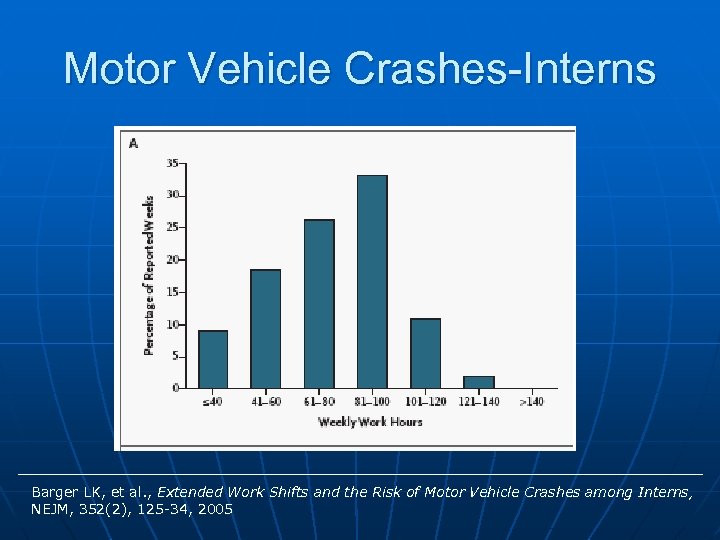 Motor Vehicle Crashes-Interns Barger LK, et al. , Extended Work Shifts and the Risk of Motor Vehicle Crashes among Interns, NEJM, 352(2), 125 -34, 2005
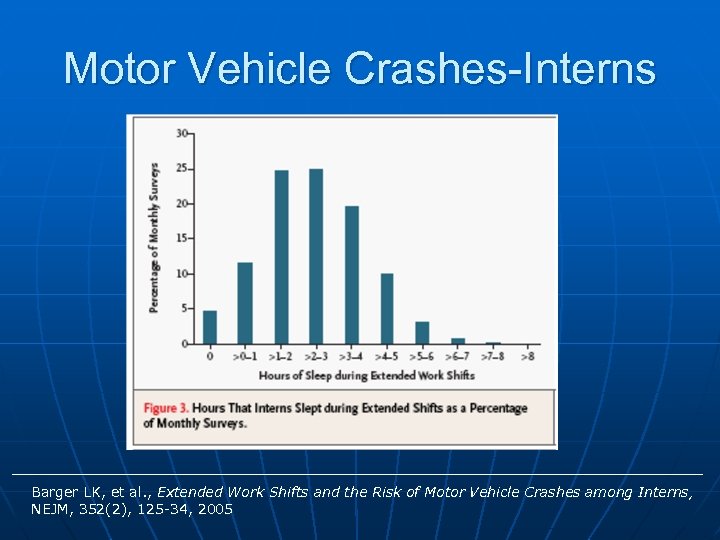 Motor Vehicle Crashes-Interns Barger LK, et al. , Extended Work Shifts and the Risk of Motor Vehicle Crashes among Interns, NEJM, 352(2), 125 -34, 2005
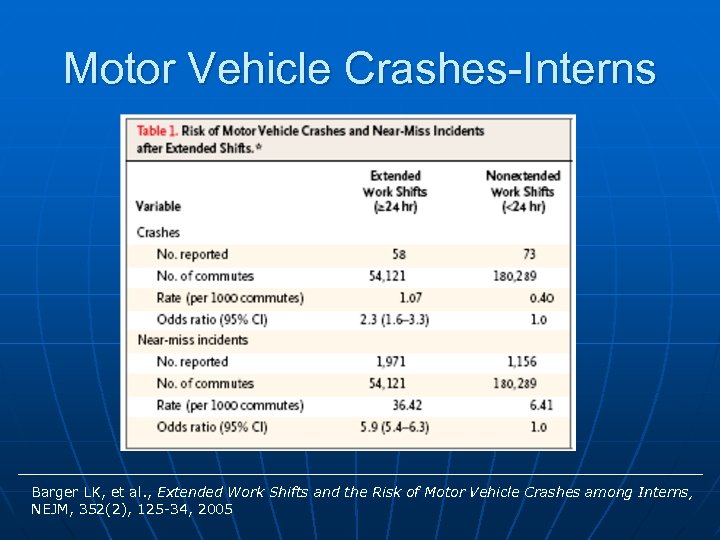 Motor Vehicle Crashes-Interns Barger LK, et al. , Extended Work Shifts and the Risk of Motor Vehicle Crashes among Interns, NEJM, 352(2), 125 -34, 2005
 Percutaneous Injuries-Interns n n n Ayas NT, et al. Extended Work Duration and the Risk of Self-Reported Percutaneous Injuries in Interns JAMA, 296, 1055 -62, 2006 Prospective Web-based survey Monthly responses Case crossover analysis
 ACGME Common Standards for Resident Duty Hours (2003) • 80 hour limit/week, averaged over four weeks • One day in seven off • Adequate rest (10 hours) between duty periods • In-house call no more than every 3 rd night • 24 hour limit on continuous duty (+ up to six hours) for transfer of care • Moonlighting must be approved by the program director
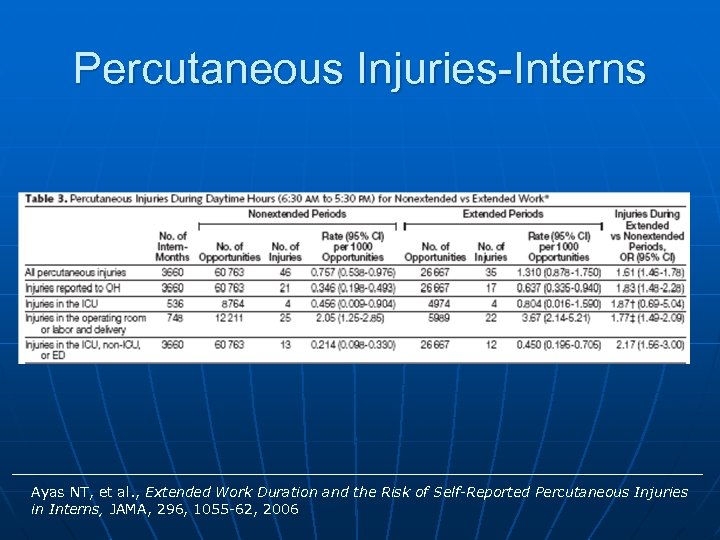 Percutaneous Injuries-Interns Ayas NT, et al. , Extended Work Duration and the Risk of Self-Reported Percutaneous Injuries in Interns, JAMA, 296, 1055 -62, 2006
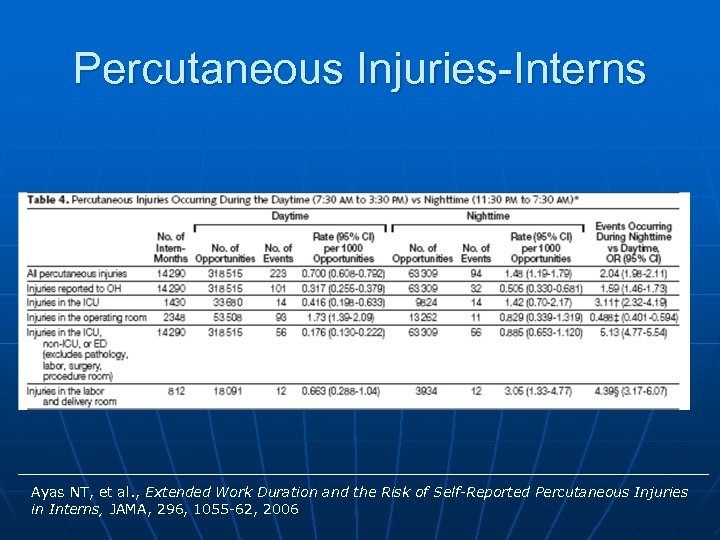 Percutaneous Injuries-Interns Ayas NT, et al. , Extended Work Duration and the Risk of Self-Reported Percutaneous Injuries in Interns, JAMA, 296, 1055 -62, 2006
 Compliance With Work Hours n n n Landrigan CP, et al. Interns Compliance with Accreditation Council for GME Work. Hours Limits JAMA, 296, 1063 -70, 2006 Prospective web-based survey Monthly Evaluated compliance
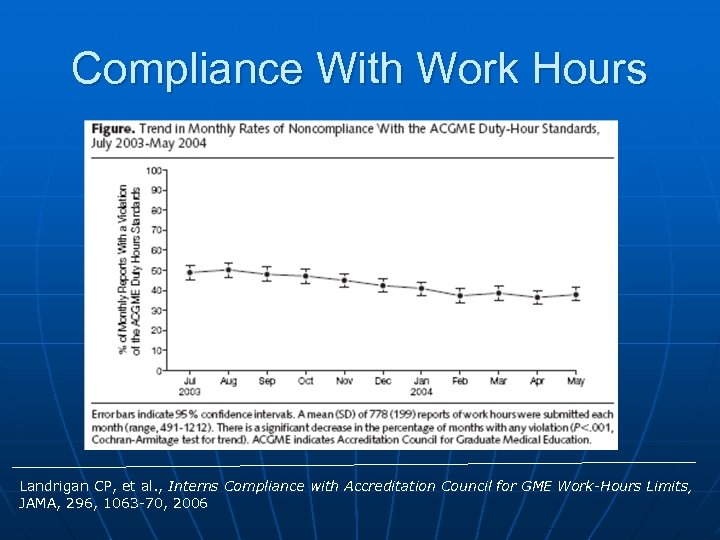 Compliance With Work Hours Landrigan CP, et al. , Interns Compliance with Accreditation Council for GME Work-Hours Limits, JAMA, 296, 1063 -70, 2006
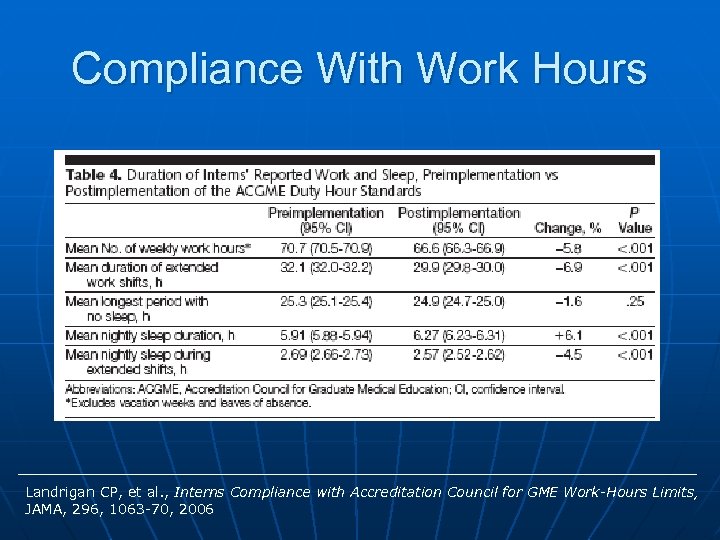 Compliance With Work Hours Landrigan CP, et al. , Interns Compliance with Accreditation Council for GME Work-Hours Limits, JAMA, 296, 1063 -70, 2006
 Outline n Mechanism of Somnolence • 4 points Homeostatic Sleep Drive n Circadian Phase n Total Amount of Sleep Over Time n Sleep Inertia n n n Recent Literature Implications for Training
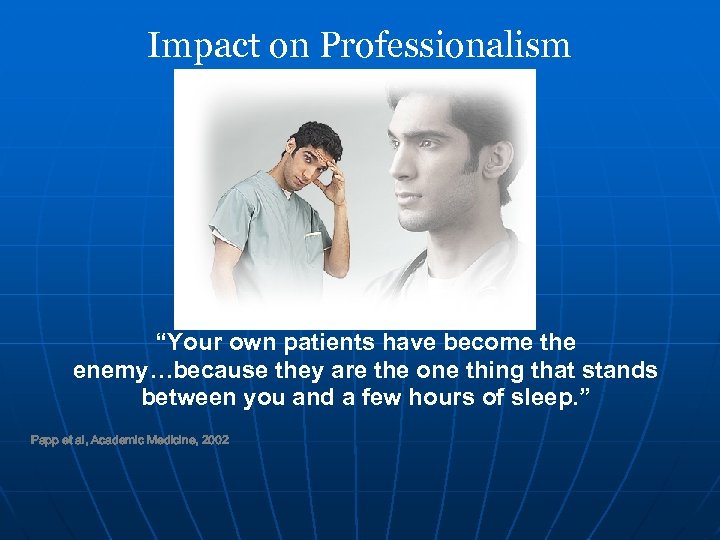 Impact on Professionalism “Your own patients have become the enemy…because they are the one thing that stands between you and a few hours of sleep. ” Papp et al, Academic Medicine, 2002
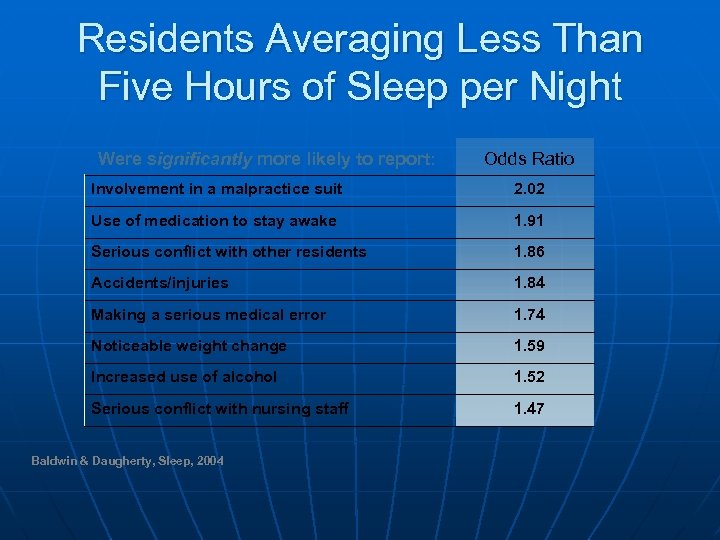 Residents Averaging Less Than Five Hours of Sleep per Night Were significantly more likely to report: Odds Ratio Involvement in a malpractice suit 2. 02 Use of medication to stay awake 1. 91 Serious conflict with other residents 1. 86 Accidents/injuries 1. 84 Making a serious medical error 1. 74 Noticeable weight change 1. 59 Increased use of alcohol 1. 52 Serious conflict with nursing staff 1. 47 Baldwin & Daugherty, Sleep, 2004
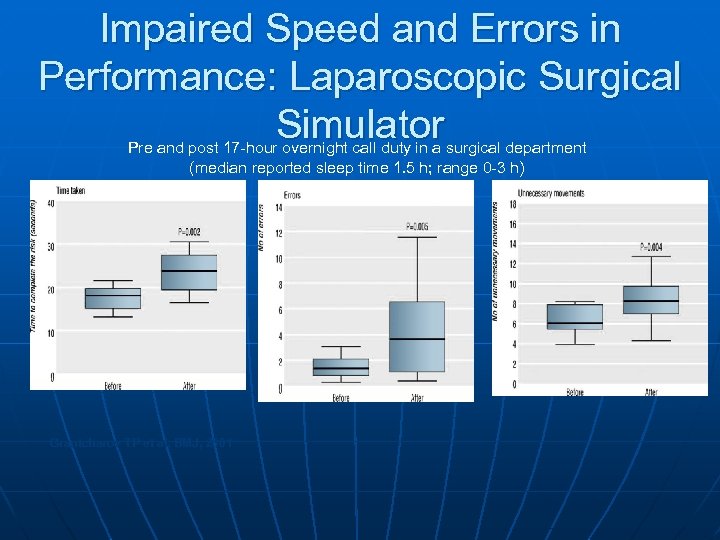 Impaired Speed and Errors in Performance: Laparoscopic Surgical Simulator Pre and post 17 -hour overnight call duty in a surgical department (median reported sleep time 1. 5 h; range 0 -3 h) Grantcharov TP et al, BMJ, 2001
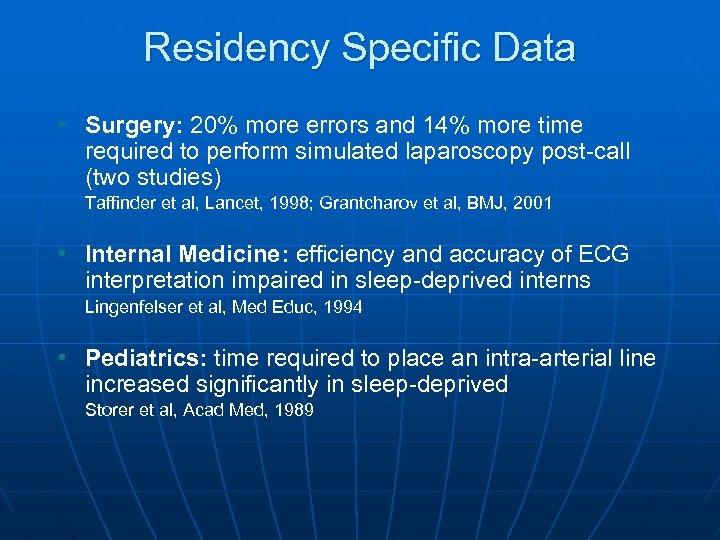 Residency Specific Data • Surgery: 20% more errors and 14% more time required to perform simulated laparoscopy post-call (two studies) Taffinder et al, Lancet, 1998; Grantcharov et al, BMJ, 2001 • Internal Medicine: efficiency and accuracy of ECG interpretation impaired in sleep-deprived interns Lingenfelser et al, Med Educ, 1994 • Pediatrics: time required to place an intra-arterial line increased significantly in sleep-deprived Storer et al, Acad Med, 1989
 Residency Specific Data • Emergency Medicine: significant reductions in comprehensiveness of history & physical exam documentation in second-year residents Bertram N Y State J Med 1988 • Family Medicine: scores achieved on the ABFM practice in-training exam negatively correlated with pre-test sleep amounts Jacques et al J Fam Pract 1990
 Work Hour Limits for Physicians in Other Countries n European Working Time Directive (law which applies to practicing physicians & residents in all EU countries) n • Maximum of 48 -56 hours per week and 13 consecutive hours New Zealand Employer - Resident Contract • Maximum 72 hours weekly and 16 consecutive hours
 Work Hour Limits for Other Occupations in the U. S. n n Truckers: maximum 11 h continuous driving Pilots: maximum 8 h per 24 flying domestic routes Nuclear Power plant workers: maximum 12 h shift Train engineers: maximum 12 h shift
 Conclusions n n Sleep-Wake regulation is complex 4 components contribute to impaired daytime function n n n Homeostatic Sleep Drive Circadian Phase Total Amount of Sleep Over Time Sleep Inertia Literature supports significant impact Work hours, even if adhered to, unlikely to be complete answer