


 Скачать презентацию Slave Auction Notice 1823 Slave Accoutrements Slave
6de9929275c4f6c0825a8b229e7e96cb.ppt
- Количество слайдов: 67
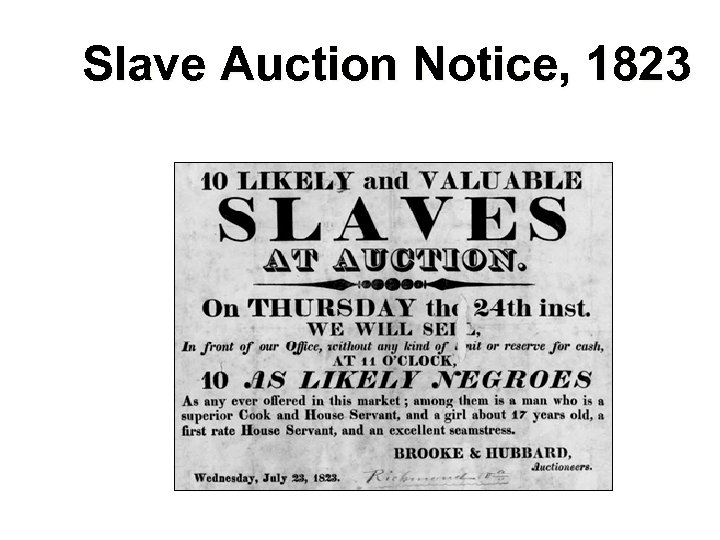 Slave Auction Notice, 1823
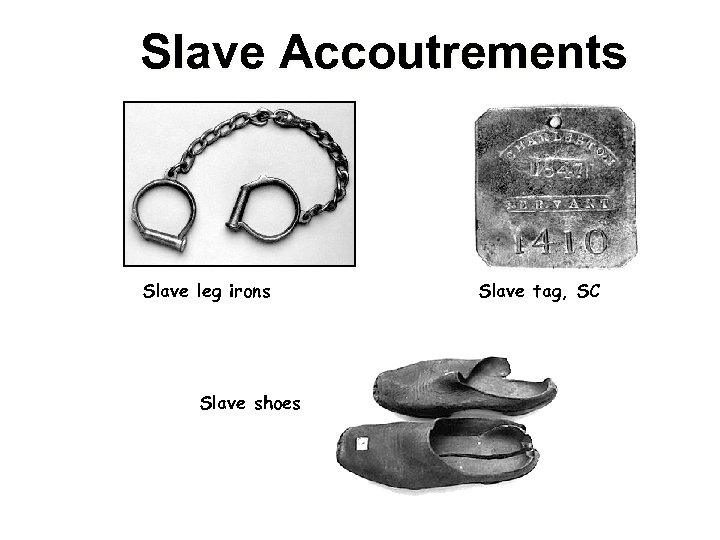 Slave Accoutrements Slave leg irons Slave shoes Slave tag, SC
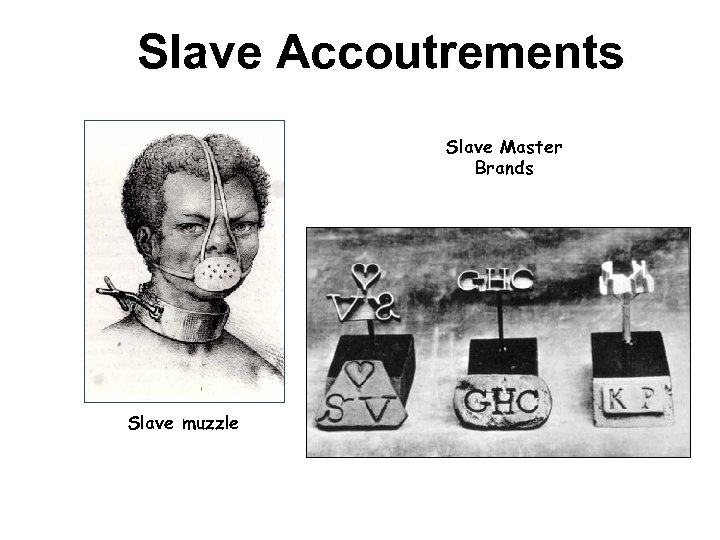 Slave Accoutrements Slave Master Brands Slave muzzle
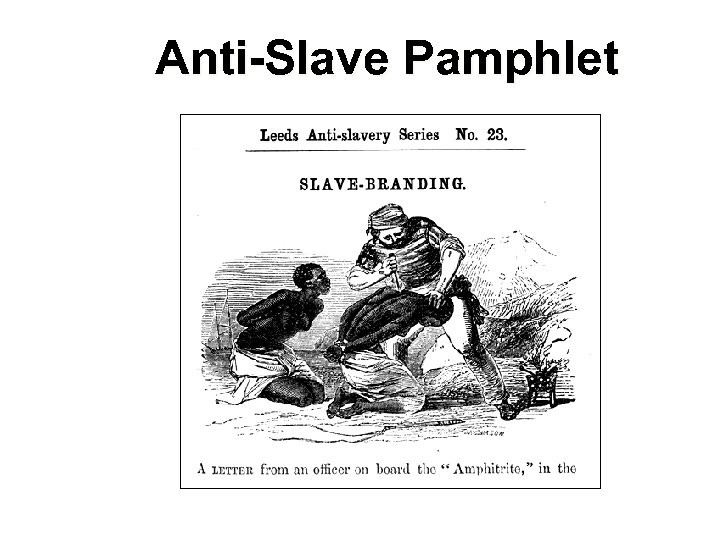 Anti-Slave Pamphlet
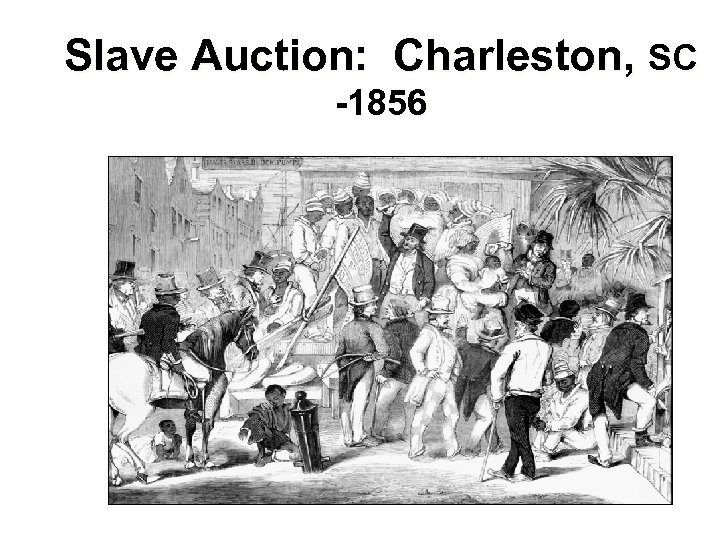 Slave Auction: Charleston, SC -1856
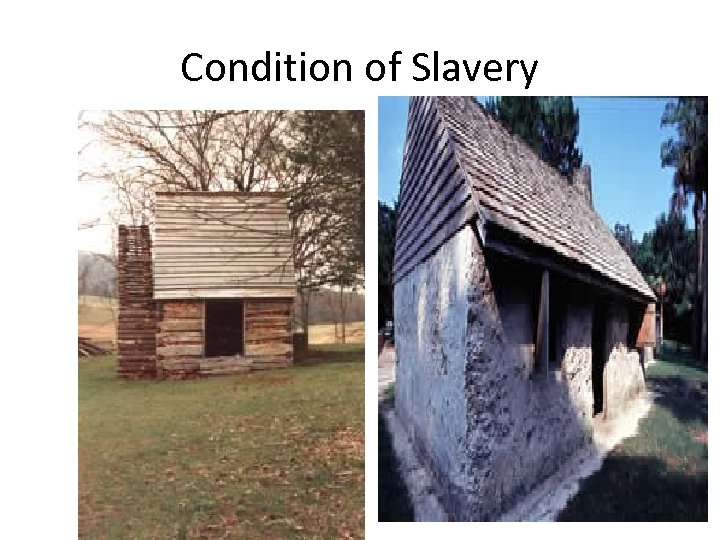 Condition of Slavery
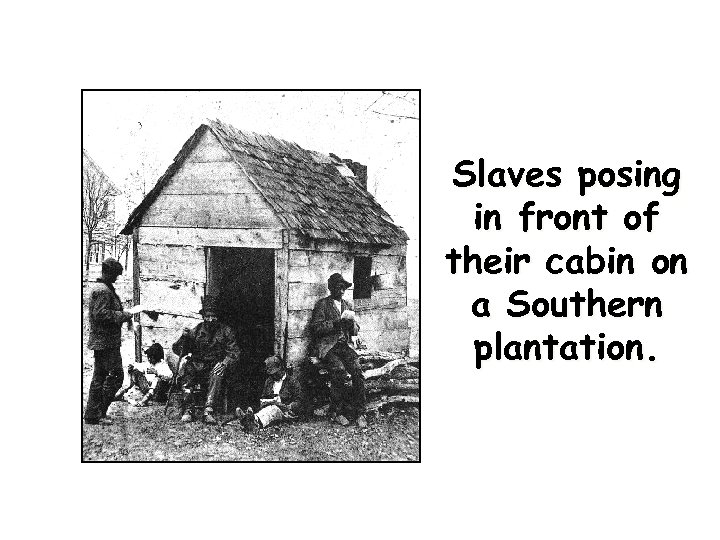 Slaves posing in front of their cabin on a Southern plantation.
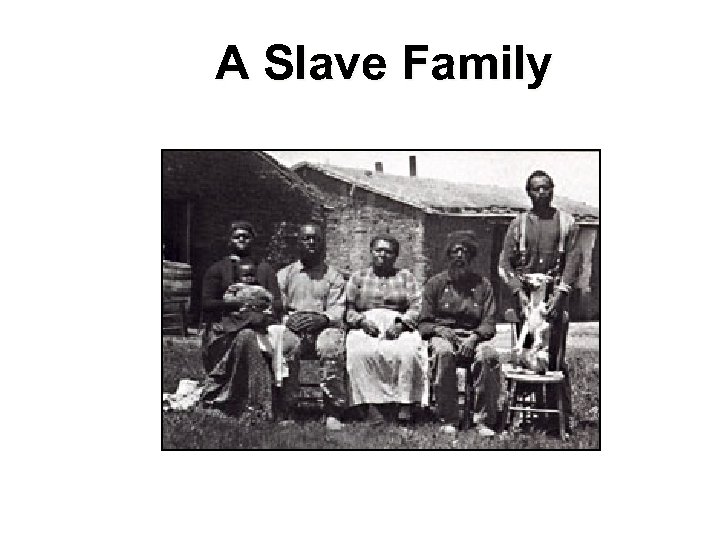 A Slave Family
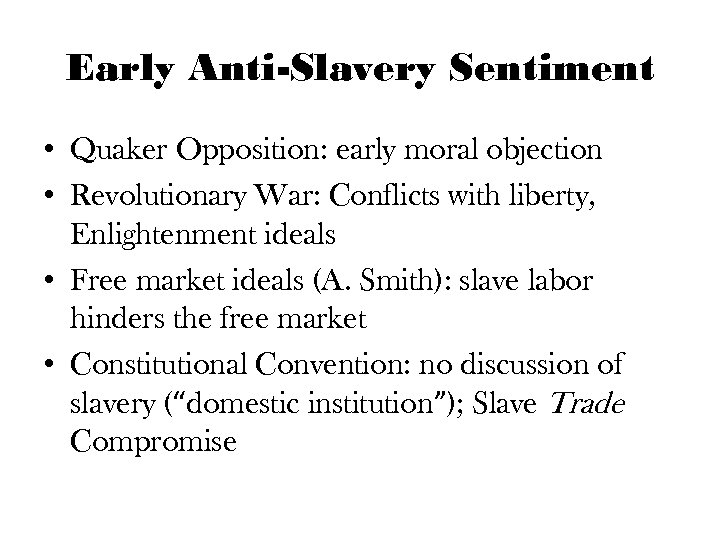 Early Anti-Slavery Sentiment • Quaker Opposition: early moral objection • Revolutionary War: Conflicts with liberty, Enlightenment ideals • Free market ideals (A. Smith): slave labor hinders the free market • Constitutional Convention: no discussion of slavery (“domestic institution”); Slave Trade Compromise
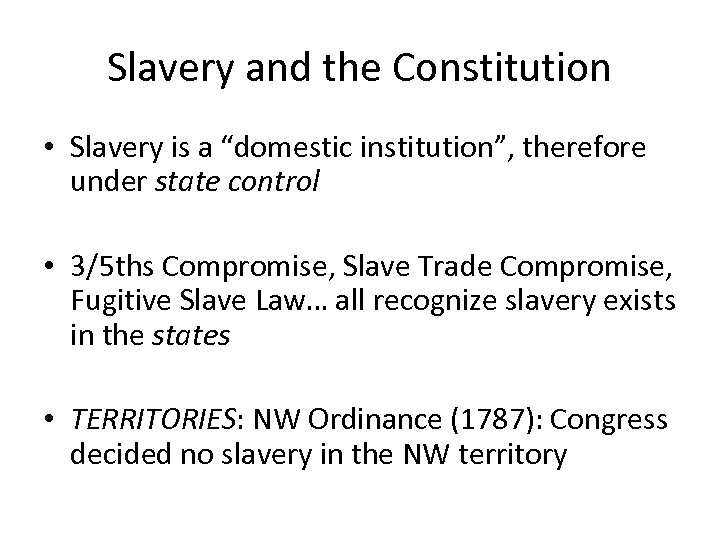 Slavery and the Constitution • Slavery is a “domestic institution”, therefore under state control • 3/5 ths Compromise, Slave Trade Compromise, Fugitive Slave Law… all recognize slavery exists in the states • TERRITORIES: NW Ordinance (1787): Congress decided no slavery in the NW territory
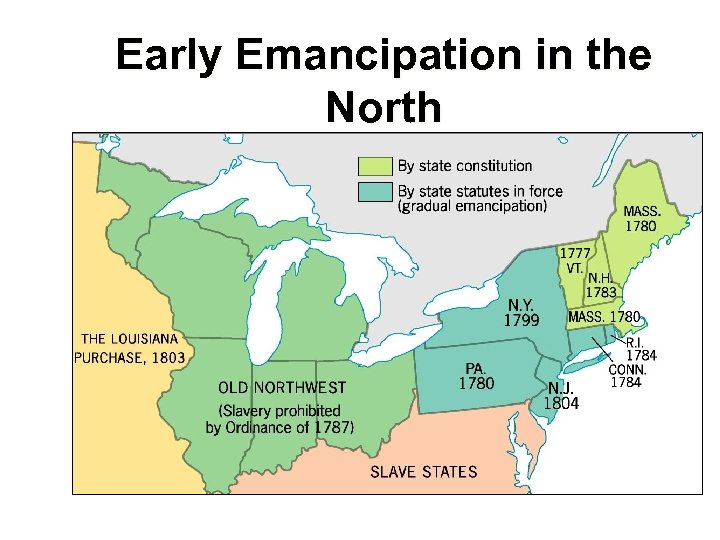 Early Emancipation in the North
 Westward Expansion • 1803: Louisiana Purchase – Missouri applies as a state; 11 slave states/11 free: Mo. Will unbalance that – 1820 -Missouri Compromise: admit Mo. , admit Maine (12 & 12); above the 36’ 30 line, no other slave states within territory
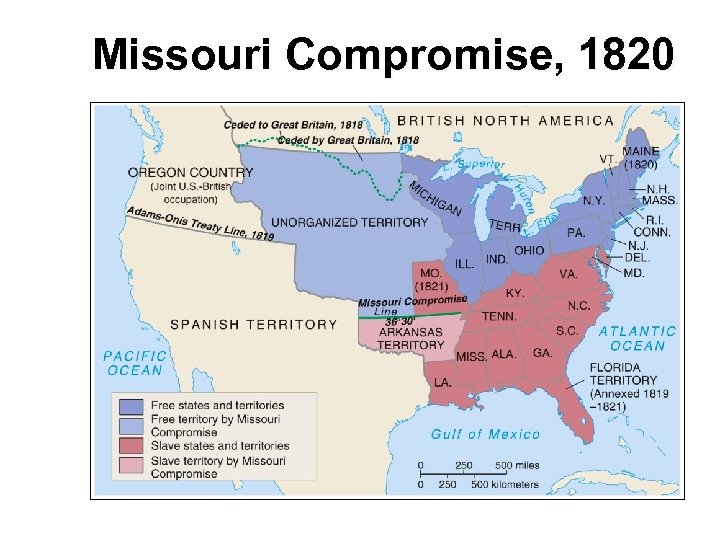 Missouri Compromise, 1820
 Louisiana Territory (cont. ) • House of Representatives dominated by Northern states • The Senate is the only representative body that they have equal representation
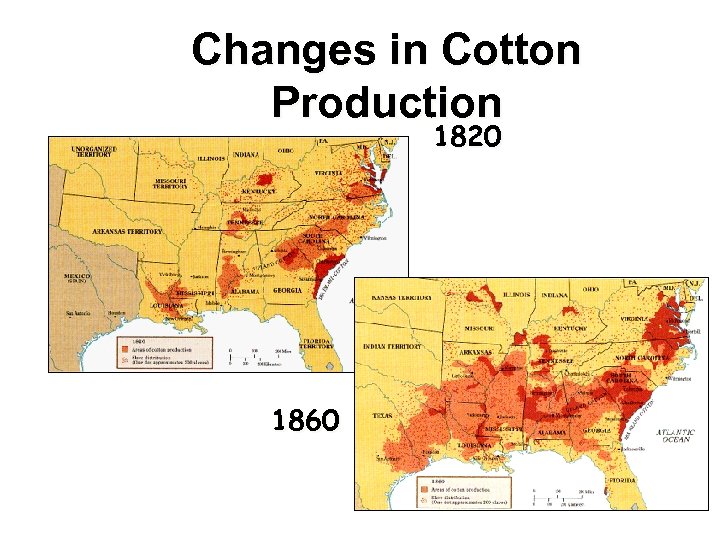 Changes in Cotton Production 1820 1860
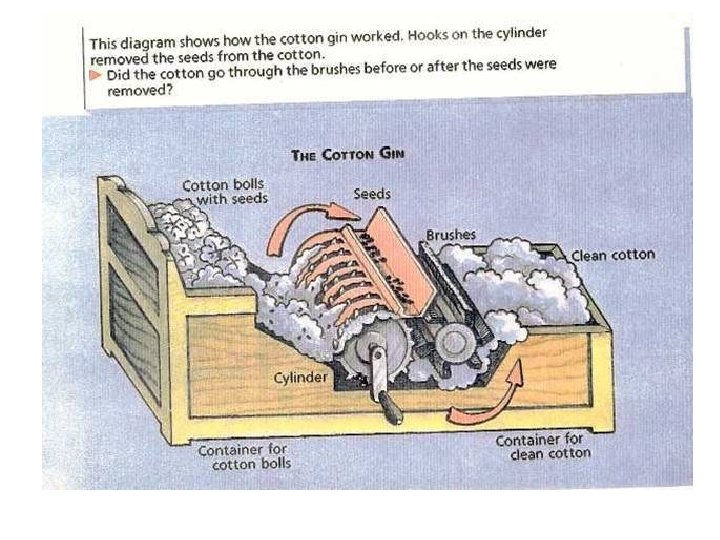
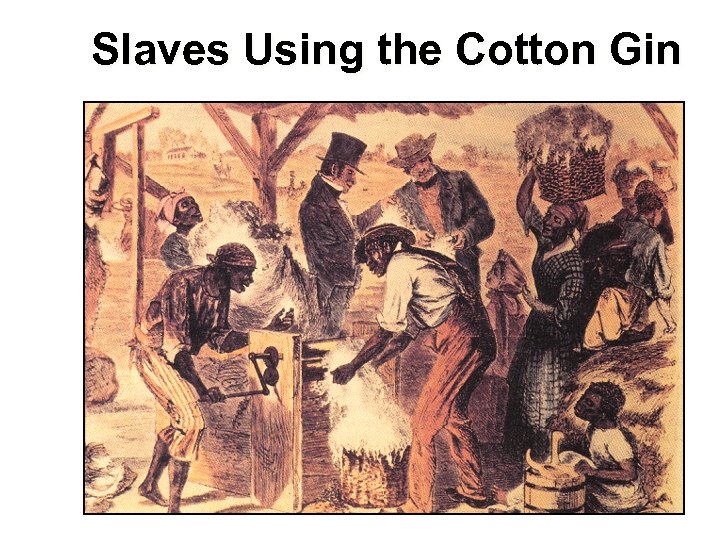 Slaves Using the Cotton Gin
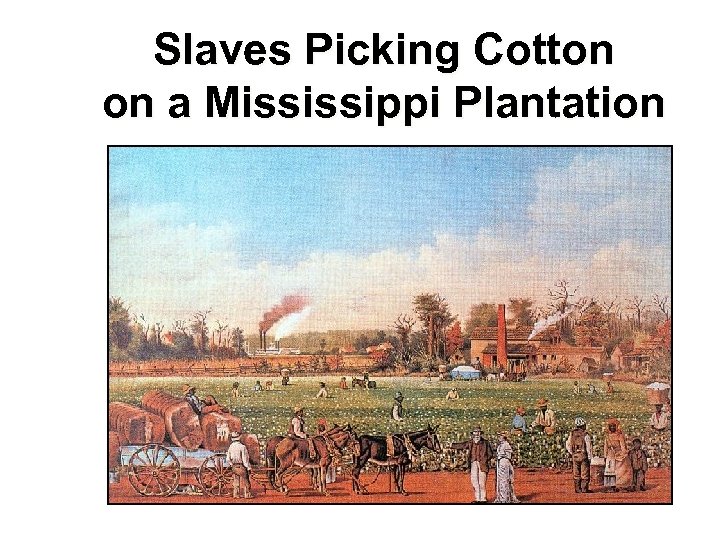 Slaves Picking Cotton on a Mississippi Plantation
 South • • Largely agricultural: cash crops Slave labor: 20% of population ONLY Most whites are poor landowners who own no slaves Little industry; cotton becomes most profitable: – “KING Cotton”…. Cotton gin: increases production • Few cities
 QUOTE: • “Slavery is like holding a wolf by the ears. You don’t like it, but you don’t dare let it go. ” – Thomas Jefferson
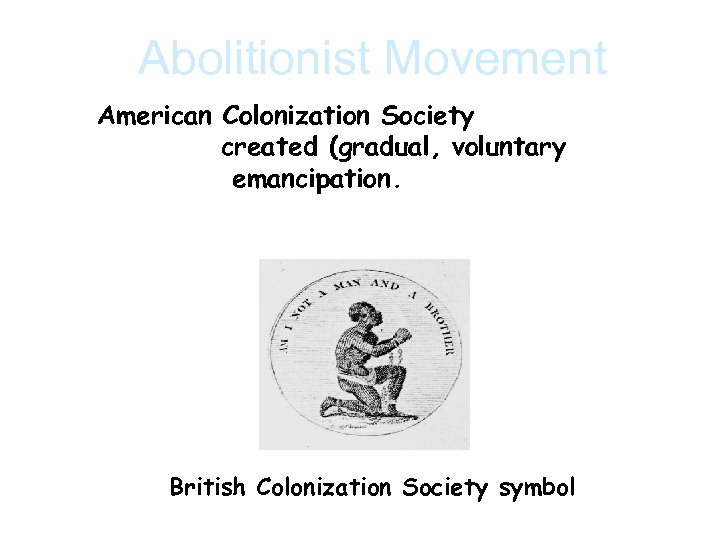 Abolitionist Movement American Colonization Society created (gradual, voluntary emancipation. British Colonization Society symbol
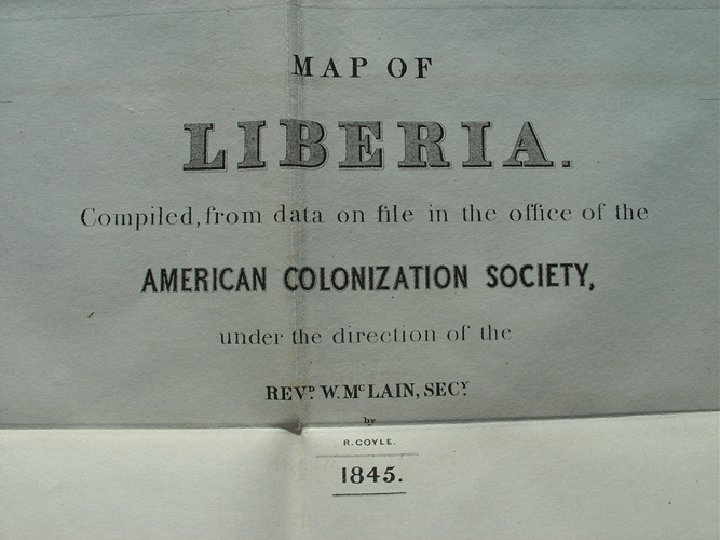
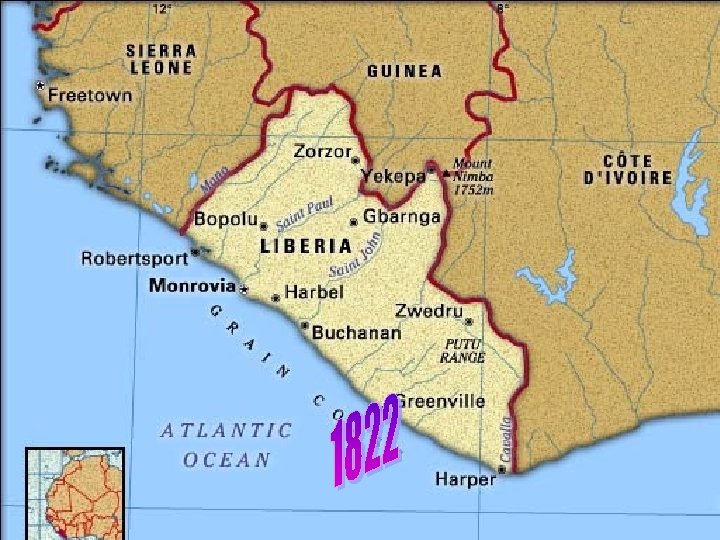
 Liberia 1821 -1822 • The American Colonization Society was founded in Washington in 1816. • Supporters – – Clay and Key Southerners fearful of revolts Northerners fearful of job competition Whites opposed to slavery AND integration • In 1821 the society successfully founded the African colony of Liberia. A total of 20, 000 African Americans emigrated Liberia.
 Free Blacks • Increases from 60, 000 -500, 000 from 1790 -1860 – Half live in South • Many mixed race • Gained freedom through: – – Freed by owner Runaway Military service Self purchase • Freed blacks worked as domestics, artisans, laborers, sailors
 Early stages of the movement 1. Began with religious groups and free African. Americans (David Walker – VIOLENCE) 2. Anti-slavery newspapers began to appear in the North by the 1830’s
 Abolitionist Movement Create a free slave state in Liberia, West Africa. No real anti-slavery sentiment in the North in the 1820 s & 1830 s. Gradualists Immediatists
 • 1820 s – abolition grows – Cotton had become more profitable causing slavery to grow • William Lloyd Garrison – Establishes The Liberator in 1831 • Abolitionist newspaper • Immediate liberation with no compensation • American Anti-Slavery Society was founded in 1833 – Guess why it split up?
 End Slavery • Underground RR: • Southerners increasingly defensive • Constitution allows the states to regulate their own “domestic institutions”: BOTH the 3/5 ths Compromise & Fugitive Slave Act recognize the existence of slavery
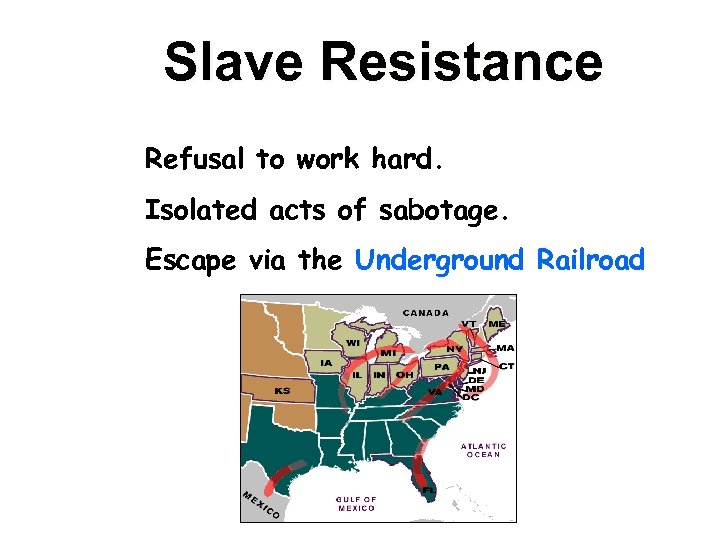 Slave Resistance Refusal to work hard. Isolated acts of sabotage. Escape via the Underground Railroad
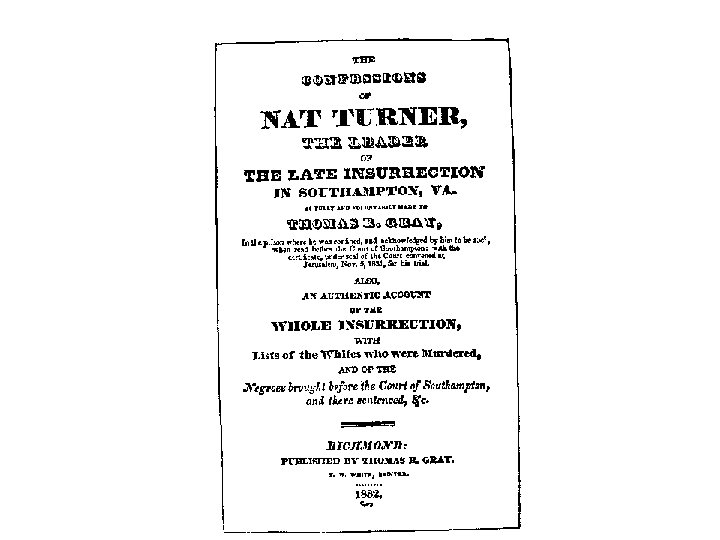
 Slave Revolts: FEAR!!! • 1822 Denmark Vesey (conspiracy): 37 executed • Louisiana Revolt: 16 blacks executed • 1831 Nat Turner’s Revolt: 60+ whites killed
 Black Abolitionists David Walker (1785 -1830) 1829 Appeal to the Coloured Citizens of the World Fight for freedom rather than wait to be set free by whites.
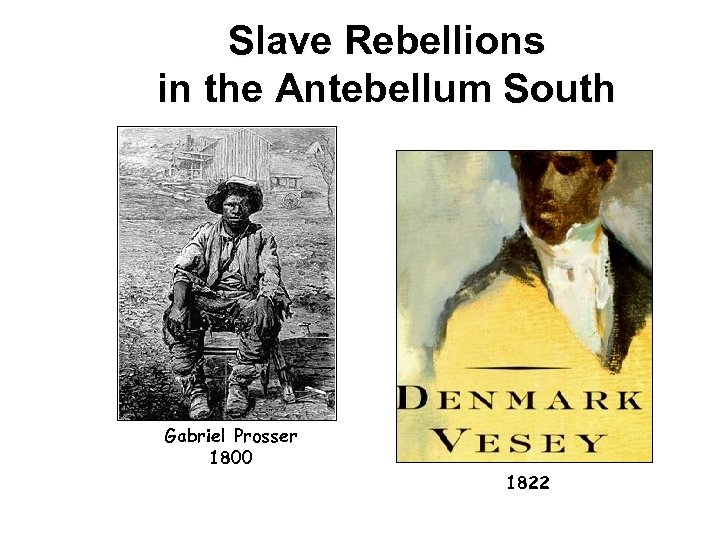 Slave Rebellions in the Antebellum South Gabriel Prosser 1800 1822
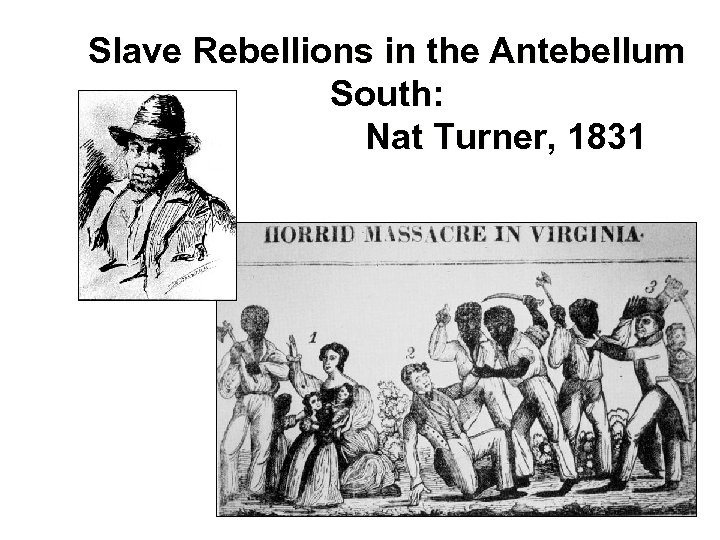 Slave Rebellions in the Antebellum South: Nat Turner, 1831
 SEIGE MENTALITY • • • Laws limiting free speech Laws banning “dangerous” literature Mob violence Increased size of state militias Watchful eyes on strangers
 Effect of 2 nd Great Awakening • • Emphasize free will and person accountability Every man was “his brother’s keeper” Slavery was a sin. If one man held another as his slave, all were held accountable for the sin of slavery • Charles G. Finney, preacher who rejected slavery and the gradual approach to ending it
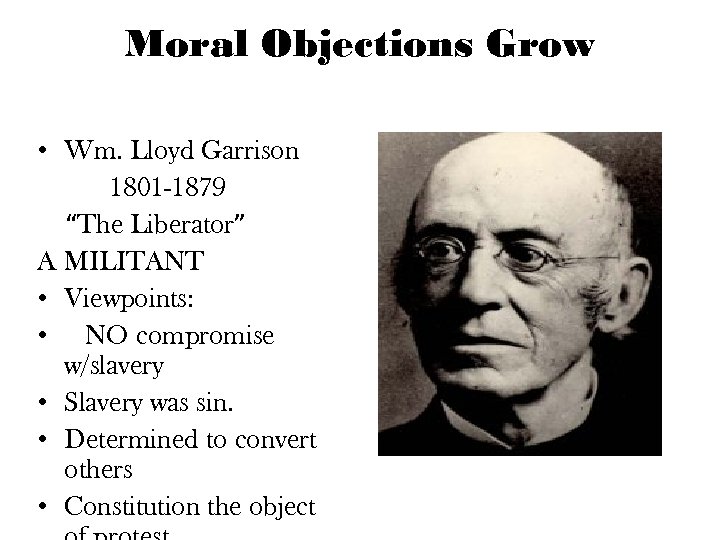 Moral Objections Grow • Wm. Lloyd Garrison 1801 -1879 “The Liberator” A MILITANT • Viewpoints: • NO compromise w/slavery • Slavery was sin. • Determined to convert others • Constitution the object
 Garrison • Equal rights for women (highly involved in the movement); caused a split in the Anti-Slavery Society; those who disapproved formed Liberty Party • “I will be harsh as truth, and as uncompromising as justice. • I am in earnest-I will not equivocate-I will not excuse. I will not retreat a single inch-AND I WILL BE HEARD!”
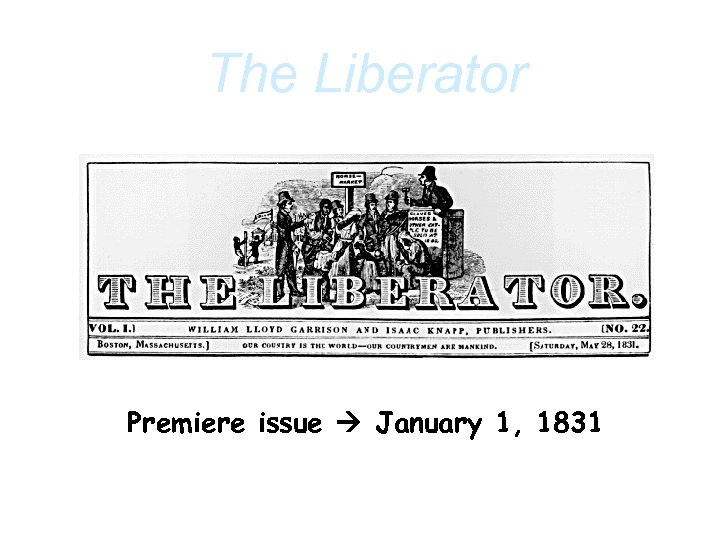 The Liberator Premiere issue January 1, 1831 R 2 -5
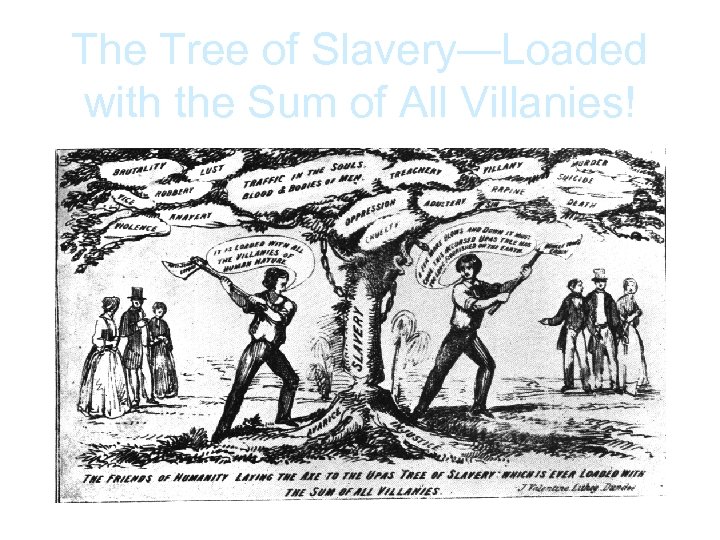 The Tree of Slavery—Loaded with the Sum of All Villanies!
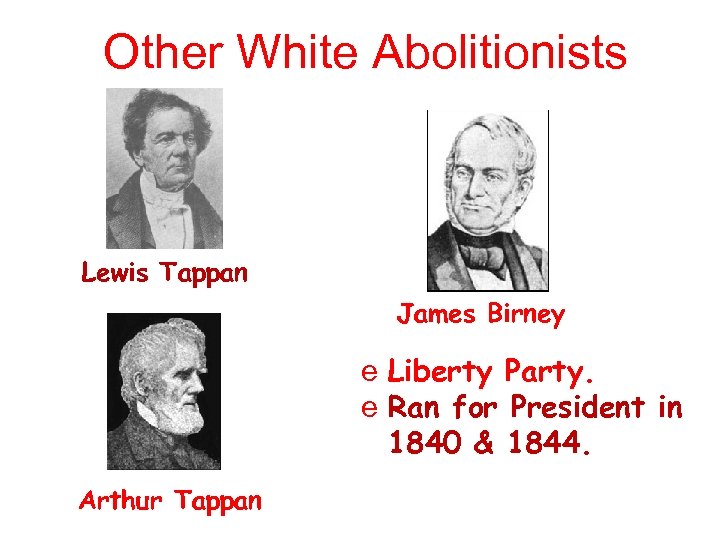 Other White Abolitionists Lewis Tappan James Birney e Liberty Party. e Ran for President in 1840 & 1844. Arthur Tappan
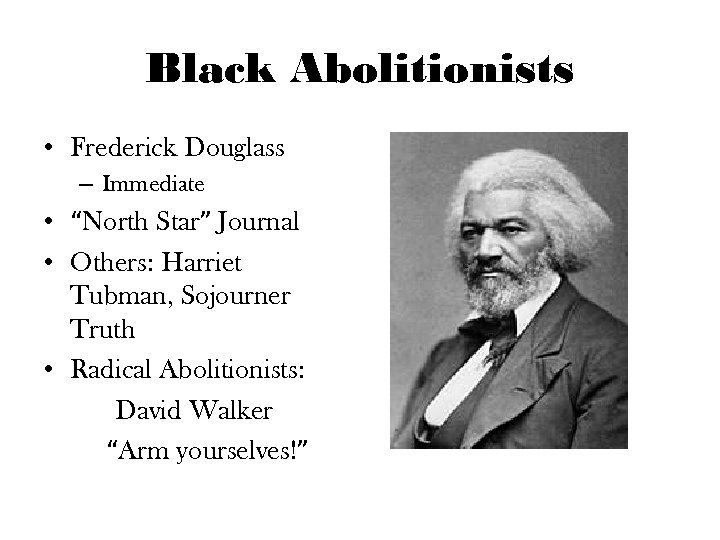 Black Abolitionists • Frederick Douglass – Immediate • “North Star” Journal • Others: Harriet Tubman, Sojourner Truth • Radical Abolitionists: David Walker “Arm yourselves!”
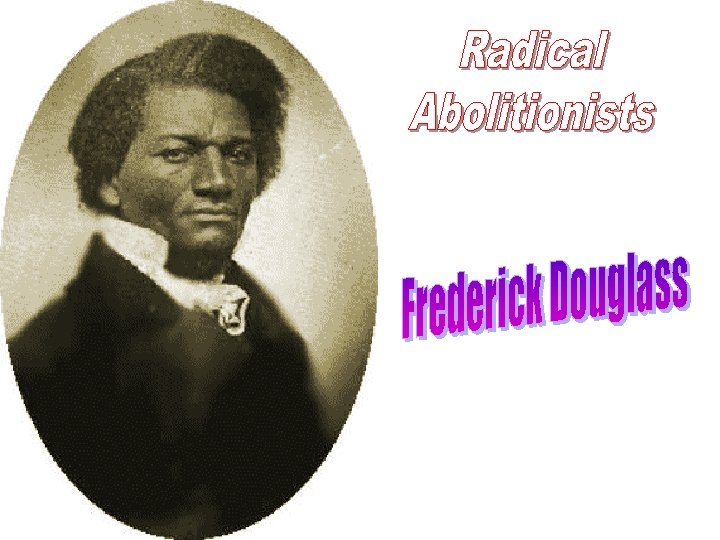
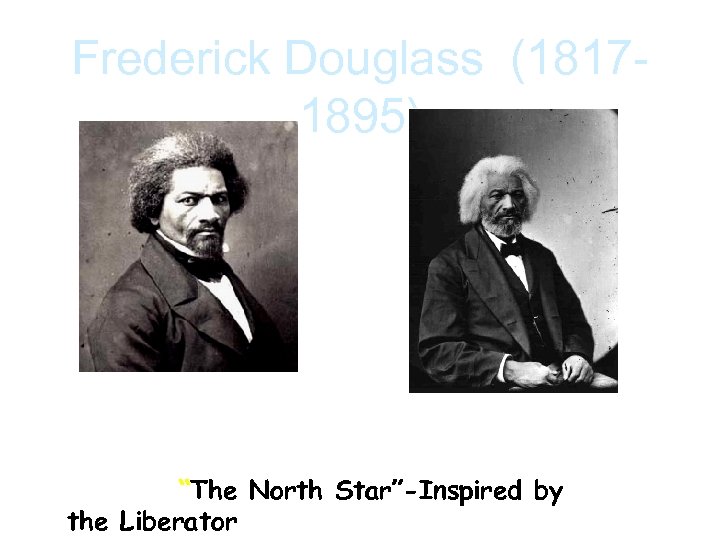 Frederick Douglass (18171895) R 2 -12 1845 The Narrative of the Life Of Frederick Douglass 1847 “The North Star”-Inspired by the Liberator
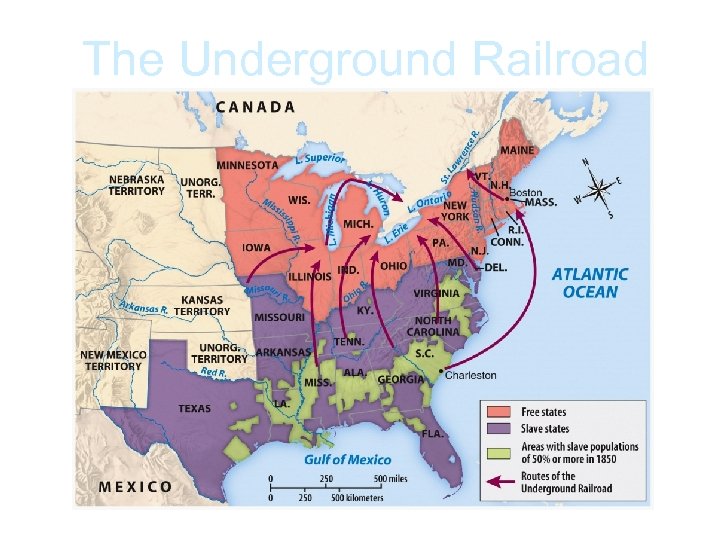 The Underground Railroad
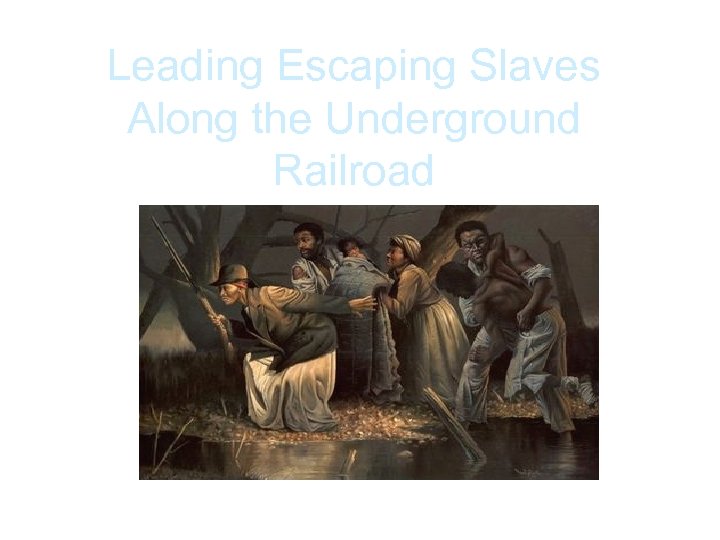 Leading Escaping Slaves Along the Underground Railroad
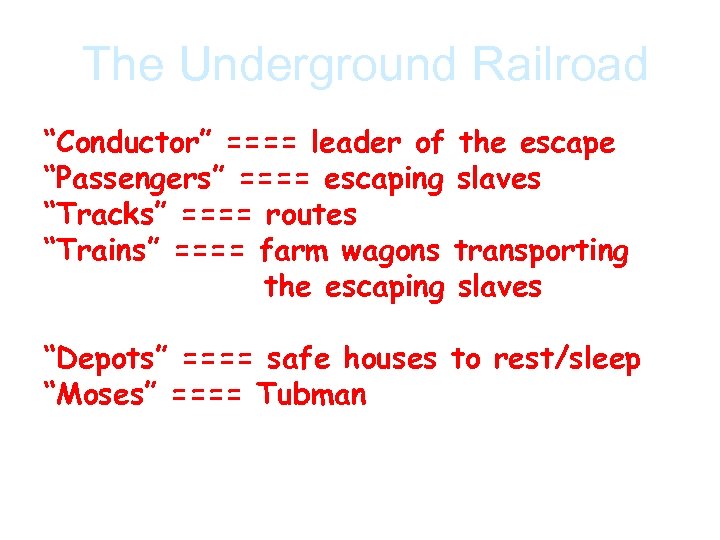 The Underground Railroad “Conductor” ==== leader of the escape “Passengers” ==== escaping slaves “Tracks” ==== routes “Trains” ==== farm wagons transporting the escaping slaves “Depots” ==== safe houses to rest/sleep “Moses” ==== Tubman
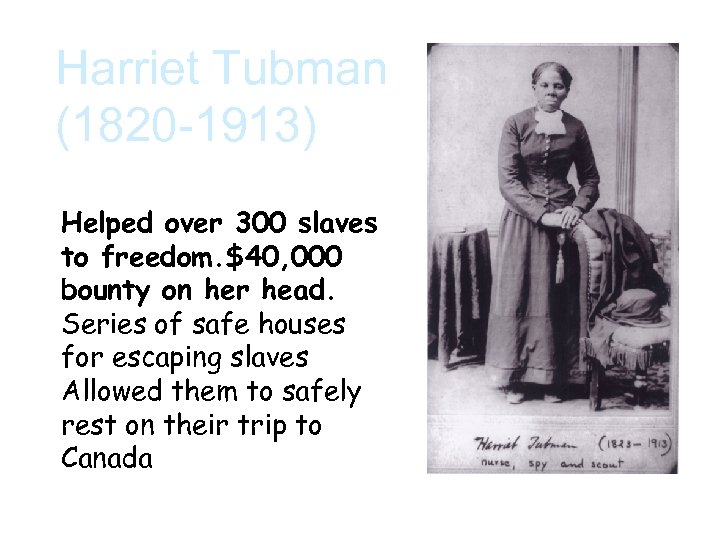 Harriet Tubman (1820 -1913) Helped over 300 slaves to freedom. $40, 000 bounty on her head. Series of safe houses for escaping slaves Allowed them to safely rest on their trip to Canada “Moses”
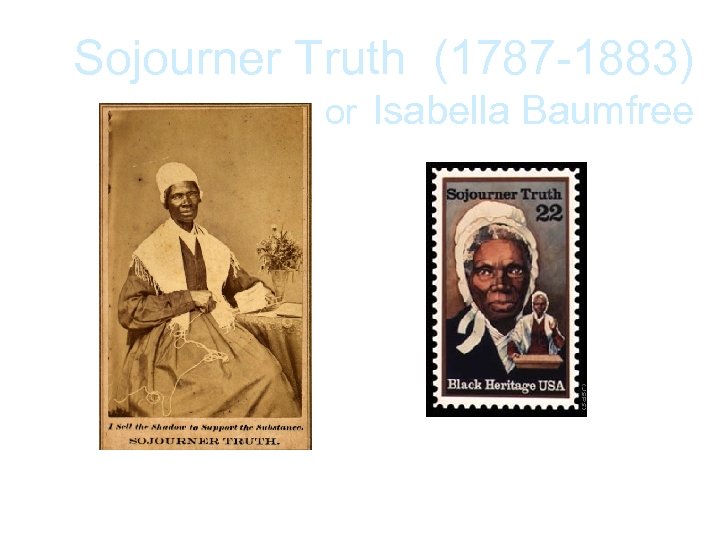 Sojourner Truth (1787 -1883) or Isabella Baumfree 1850 The Narrative of Sojourner Truth R 2 -10
 Anti-Slavery v. Abolitionism • Anti-slavery forces wanted to restrict the spread of slavery; not allow it in Western territories • No interference with slavery where it existed • Politics: Free-Soil Party, Whig Party, Republican Party • Focus was on rights of whites (“free labor, free soil, free men”) more than on blacks • ABOLITIONISTS: a loud voice by a small group
 Characteristics of the Antebellum South 1. Primarily agrarian. 2. Economic power shifted from the “upper South” to the “lower South. ” 3. “Cotton Is King!” * 1860 5 mil. bales a yr. (57% of total US exports). 4. Very slow development of industrialization. 5. Rudimentary financial system. 6. Inadequate transportation system.
 Response to Abolitionism • SOUTH: Abolitionists arrested and jailed – Abolitionist writings were banned; destroyed and burned (fear it would incite slave rebellion) • 80% of Southerners owned no slaves • 19% owned a small number • Less than 1% owned over a hundred • Destroyed abolitionist literature & property • WHY defend slavery if most don’t own slaves? ? ?
 Southern Defense of Slavery • “Way of life” argument: part of tradition, economic need (cotton the most profitable export) • Bible (“slaves, obey your masters”)/ancient civilizations • Necessary social structure • Better than wage labor in the North • Care for needs of slaves: “a positive good” • Protect our society: – -Haitian uprising…FEAR – Slave revolts
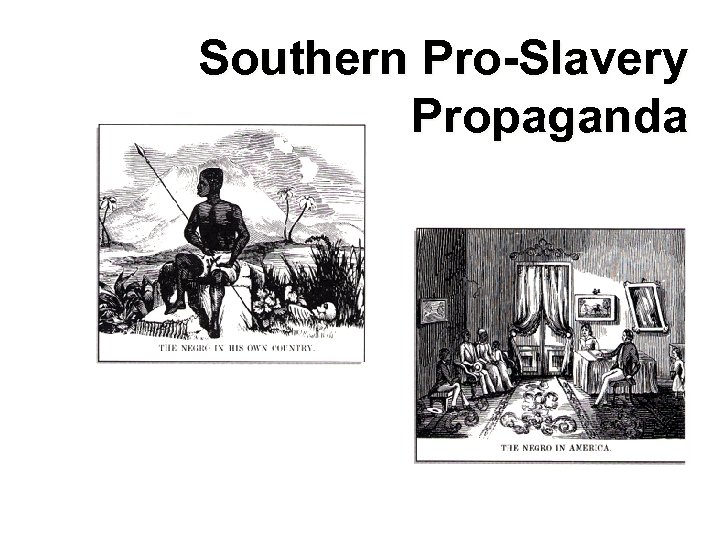 Southern Pro-Slavery Propaganda
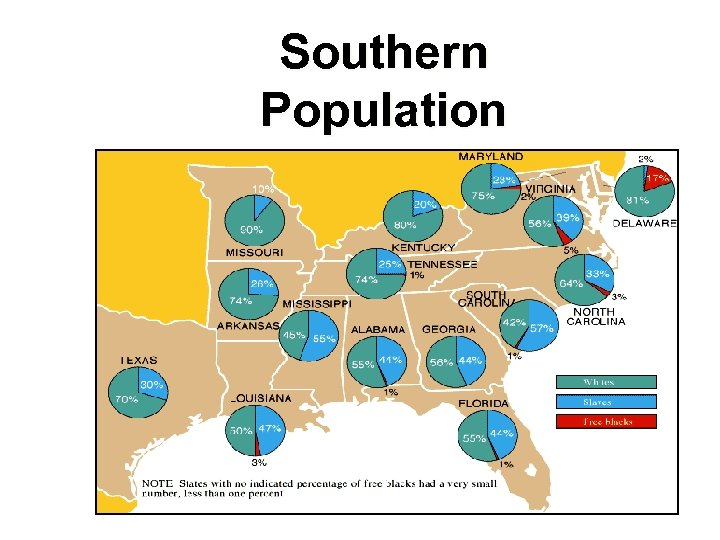 Southern Population
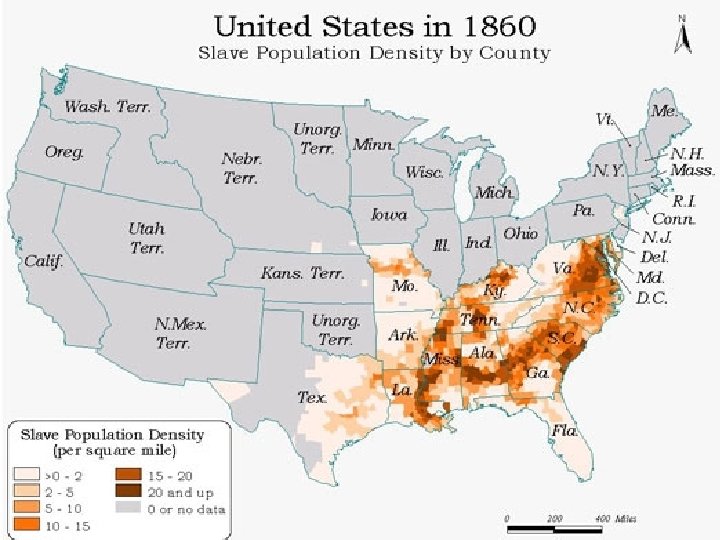
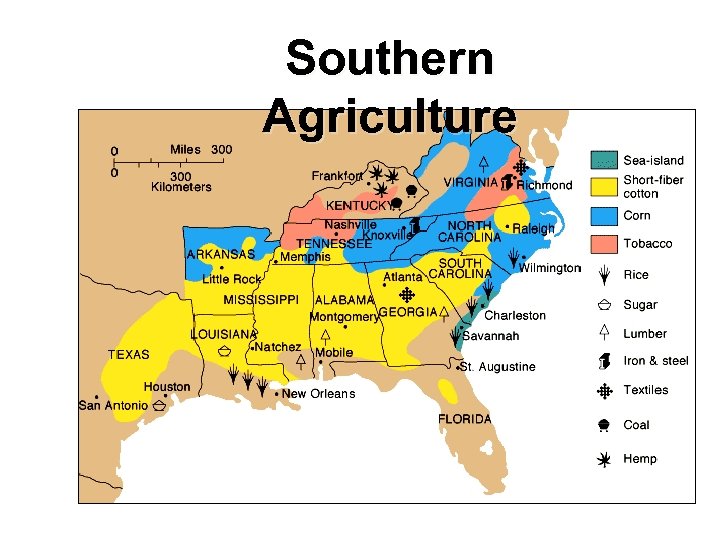 Southern Agriculture
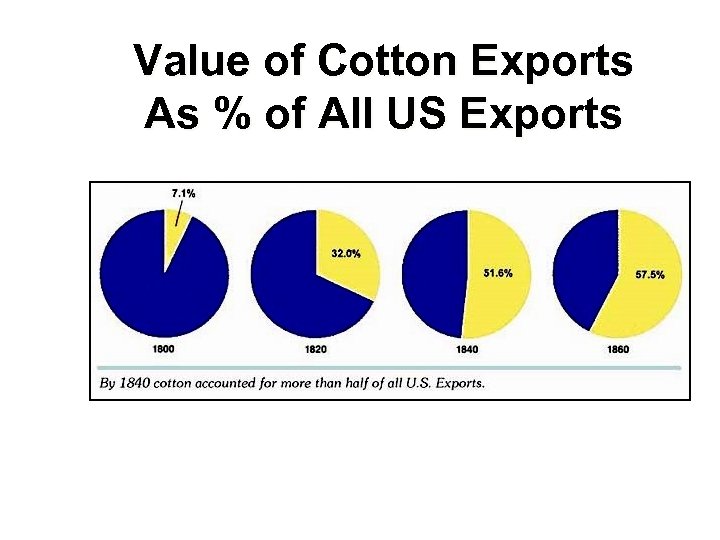 Value of Cotton Exports As % of All US Exports
![Southern Society (1850) 6, 000 “Slavocracy” [plantation owners] The “Plain Folk” [white yeoman farmers]](https://present5.com/presentation/6de9929275c4f6c0825a8b229e7e96cb/image-63.jpg "Southern Society (1850) 6, 000 “Slavocracy” [plantation owners] The “Plain Folk” [white yeoman farmers]") Southern Society (1850) 6, 000 “Slavocracy” [plantation owners] The “Plain Folk” [white yeoman farmers] Black Freemen 250, 000 Black Slaves 3, 200, 000 Total US Population 23, 000 [9, 250, 000 in the South = 40%]
Southern Society (1850) 6, 000 “Slavocracy” [plantation owners] The “Plain Folk” [white yeoman farmers] Black Freemen 250, 000 Black Slaves 3, 200, 000 Total US Population 23, 000 [9, 250, 000 in the South = 40%]
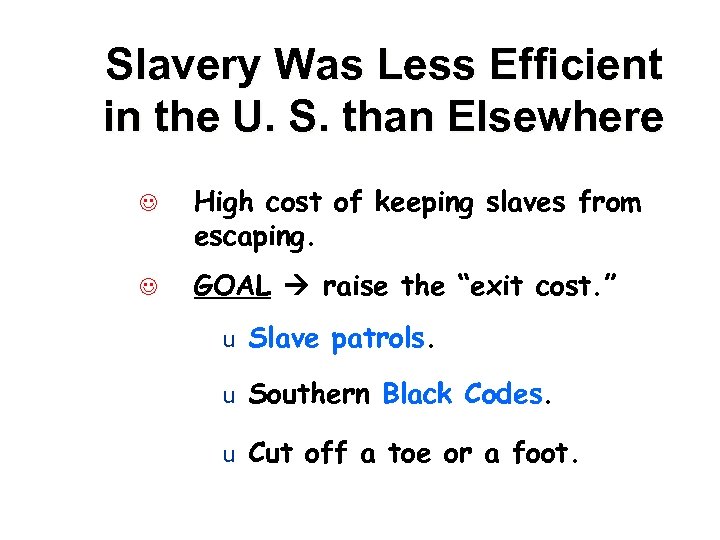 Slavery Was Less Efficient in the U. S. than Elsewhere J High cost of keeping slaves from escaping. J GOAL raise the “exit cost. ” u Slave patrols. u Southern Black Codes. u Cut off a toe or a foot.
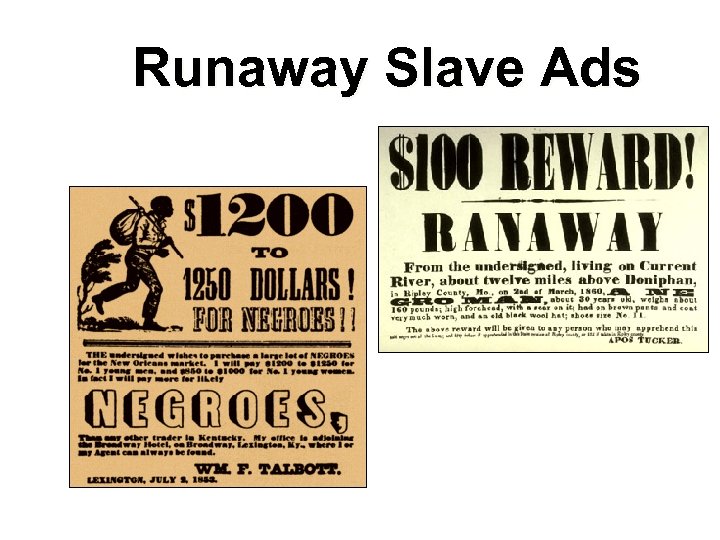 Runaway Slave Ads
 Slavery in the United States By 1850, 200 years of slavery in America History • Some northern states freed only children born after slavery was banned and kept their mothers enslaved. • In several northern states, slavery continued to exist until the 1840 s. • By 1850 two societies existed—the North, where workers labored for wages, and the South, where a large number of workers were enslaved. • Many southerners believed their economy depended on slave labor. • Those who supported slavery believed that property rights came first. • To many northerners who were truly concerned about slavery, the issue was one of basic democratic ideology.
 SLAVERY ISSUE Leads to New Political Parties • Democratic Party: splitting over the issue of slavery (N & S) • Liberty Party: anti-slavery • Free-Soil Party: no slavery in territories • NEW PARTY: 1854: Northern Democrats, Free. Soil members, & others form the Republican Party (furious over K-N Act)