


 Скачать презентацию SLa M Consultancy The Future
27e4a031d4192b23289a39f8afb23436.ppt
- Количество слайдов: 16
 SLa. M Consultancy The Future
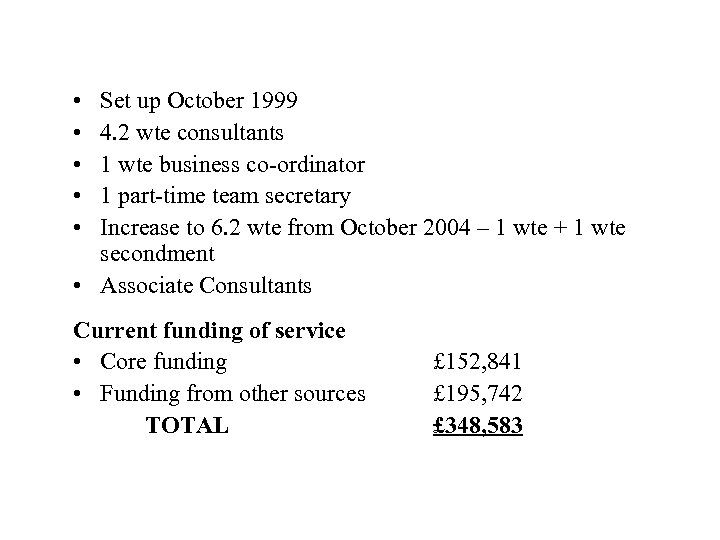 • • • Set up October 1999 4. 2 wte consultants 1 wte business co-ordinator 1 part-time team secretary Increase to 6. 2 wte from October 2004 – 1 wte + 1 wte secondment • Associate Consultants Current funding of service • Core funding • Funding from other sources TOTAL £ 152, 841 £ 195, 742 £ 348, 583
 SLa. M Consultancy operates within a model of consultancy that specifically helps people to build on their good working practices in addition to helping them identify and manage changes to improve service delivery. In order for services to change, it is necessary to understand the human processes that are occurring within the team/organisation e. g. how decisions are made, communication patterns, work roles, interpersonal relationships and the impact that these may have on the ability of people to deliver quality services.
 Core Values SLa. M Consultancy • Is committed to the Trust core values and to working with the Trust to achieve its aims • Recognises and respects the uniqueness of individuals receiving and delivering the service • Is sensitive to working with a diverse workforce, fostering relationships based on equity and mutual respect • Will ensure that organisation consultants are fit for practice. All consultants will maintain confidentiality within working practices, and achieve a level of recognised competence within an appropriate consultancy framework
 Beliefs SLa. M Consultancy exists to work with staff both within the Trust and with external organisations to deliver and develop quality health and social care services to meet the needs of service users and carers • Staff at all levels of the organisation have the potential to change • Staff are knowledgeable and resourceful • Organisation consultants need to have a sound theoretical knowledge of organisational development • Understanding, challenging and working with human processes can have a positive impact on helping staff to positively change their work behaviours • Surfacing and discussing potentially embarrassing problems, checking out assumptions, challenging poor working practices within a no blame environment, can create energy and commitment for making positive changes
 SLa. M Consultancy organisation consultants therefore work within a process model of consultancy. The fundamental difference between this and other models is that it aims to help people: • Take up the authority and responsibility in their respective roles to make changes within their services • Learn through the experience, so that they feel more confident of continuing to build on good working practices and resolve difficulties, remove blocks to the delivery of effective services • Be more confident in working with the human processes of change
 Theoretical Bases • Process consultancy • Organisational learning • Use different conversations eg dialogue/ discussion/debate in helping people bring about change • Support from Io. P and CORE We do not • Carry out investigations • Facilitate staff support groups • Facilitate one off away days
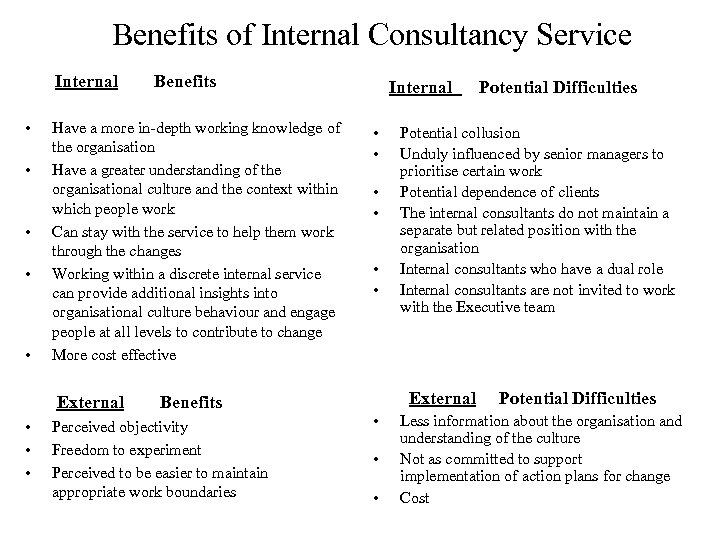 Benefits of Internal Consultancy Service Internal • • • Have a more in-depth working knowledge of the organisation Have a greater understanding of the organisational culture and the context within which people work Can stay with the service to help them work through the changes Working within a discrete internal service can provide additional insights into organisational culture behaviour and engage people at all levels to contribute to change More cost effective External • • • Benefits Perceived objectivity Freedom to experiment Perceived to be easier to maintain appropriate work boundaries Internal • • • Potential collusion Unduly influenced by senior managers to prioritise certain work Potential dependence of clients The internal consultants do not maintain a separate but related position with the organisation Internal consultants who have a dual role Internal consultants are not invited to work with the Executive team External • • • Potential Difficulties Less information about the organisation and understanding of the culture Not as committed to support implementation of action plans for change Cost
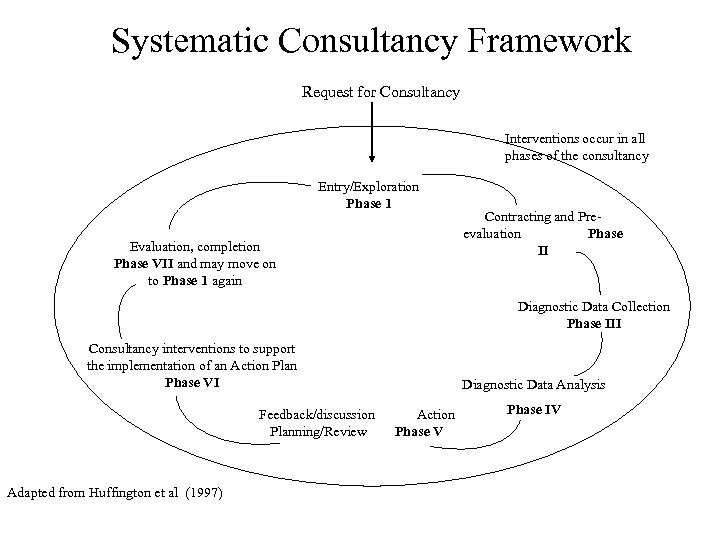 Systematic Consultancy Framework Request for Consultancy Interventions occur in all phases of the consultancy Entry/Exploration Phase 1 Evaluation, completion Phase VII and may move on to Phase 1 again Contracting and Preevaluation Phase II Diagnostic Data Collection Phase III Consultancy interventions to support the implementation of an Action Plan Phase VI Feedback/discussion Planning/Review Adapted from Huffington et al (1997) Diagnostic Data Analysis Action Phase V Phase IV
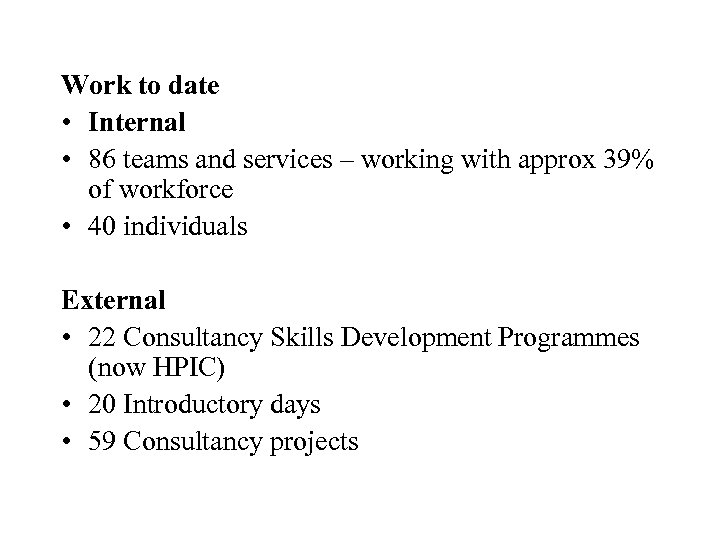 Work to date • Internal • 86 teams and services – working with approx 39% of workforce • 40 individuals External • 22 Consultancy Skills Development Programmes (now HPIC) • 20 Introductory days • 59 Consultancy projects
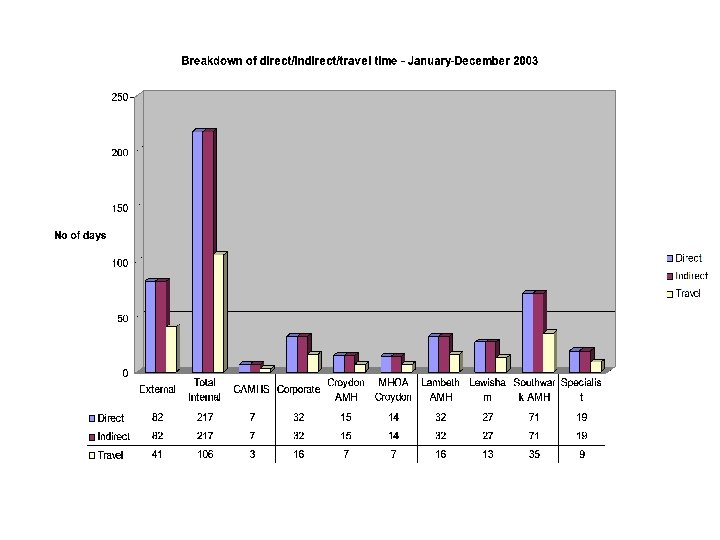
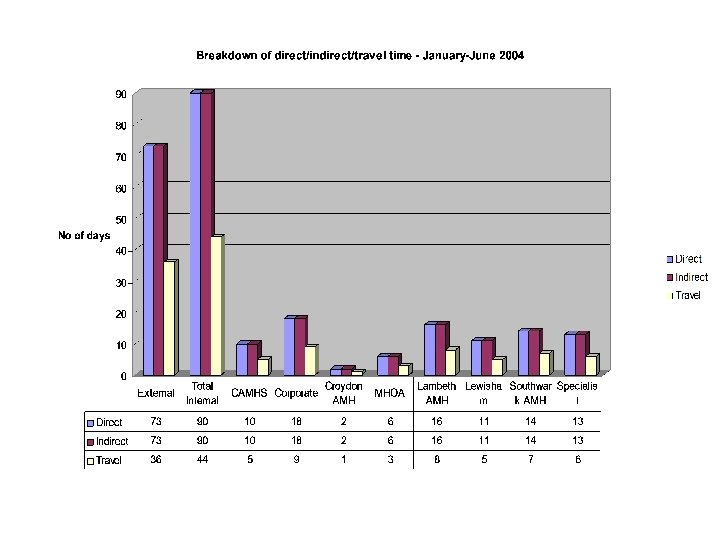
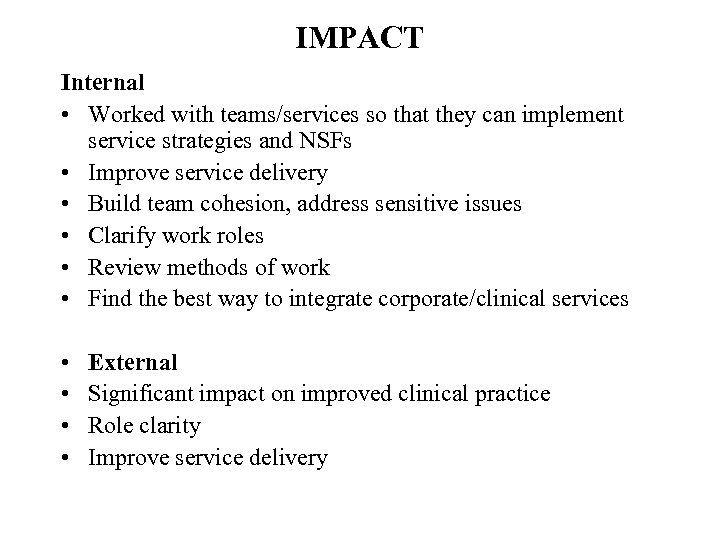 IMPACT Internal • Worked with teams/services so that they can implement service strategies and NSFs • Improve service delivery • Build team cohesion, address sensitive issues • Clarify work roles • Review methods of work • Find the best way to integrate corporate/clinical services • • External Significant impact on improved clinical practice Role clarity Improve service delivery
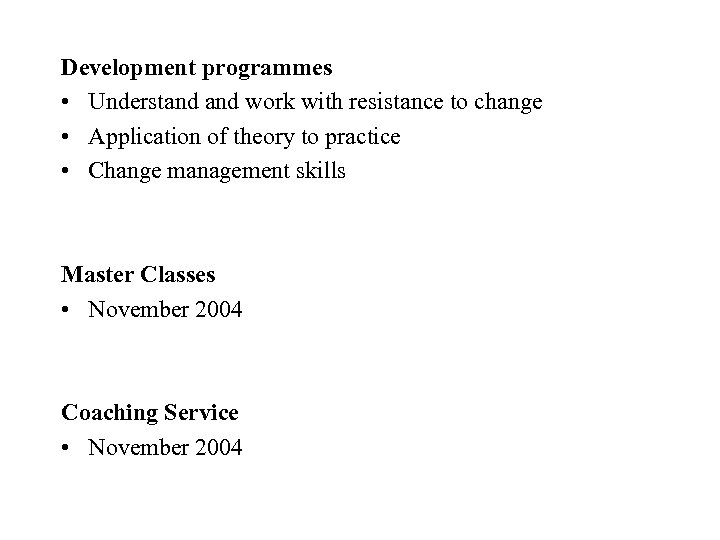 Development programmes • Understand work with resistance to change • Application of theory to practice • Change management skills Master Classes • November 2004 Coaching Service • November 2004
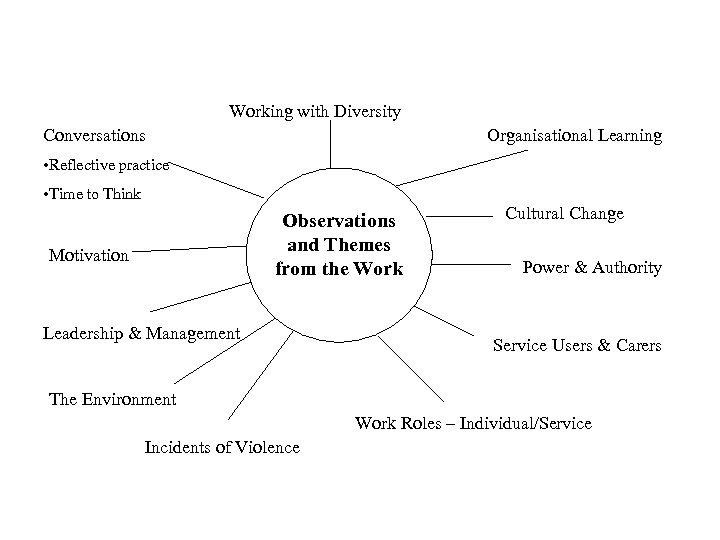 Working with Diversity Conversations Organisational Learning • Reflective practice • Time to Think Observations and Themes from the Work Motivation Leadership & Management Cultural Change Power & Authority Service Users & Carers The Environment Work Roles – Individual/Service Incidents of Violence
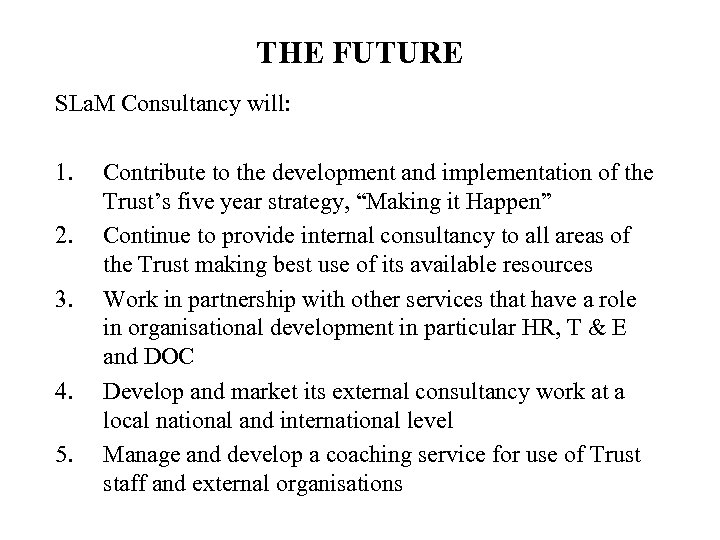 THE FUTURE SLa. M Consultancy will: 1. 2. 3. 4. 5. Contribute to the development and implementation of the Trust’s five year strategy, “Making it Happen” Continue to provide internal consultancy to all areas of the Trust making best use of its available resources Work in partnership with other services that have a role in organisational development in particular HR, T & E and DOC Develop and market its external consultancy work at a local national and international level Manage and develop a coaching service for use of Trust staff and external organisations