 Скачать презентацию Skill Recognition and Labour Mobility in ASEAN Technical
0d96e323f80d52b0bcf4d3b36d6bcdf1.ppt
- Количество слайдов: 12



Skill Recognition and Labour Mobility in ASEAN Technical Working Level Meeting Realizing post-2015 aspirations for migrants and migration 16 -17 October By Manuel Imson Senior Programme Officer/Project Coordinator ASEAN TRIANGLE Project ILO Regional Office for Asia and the Pacific
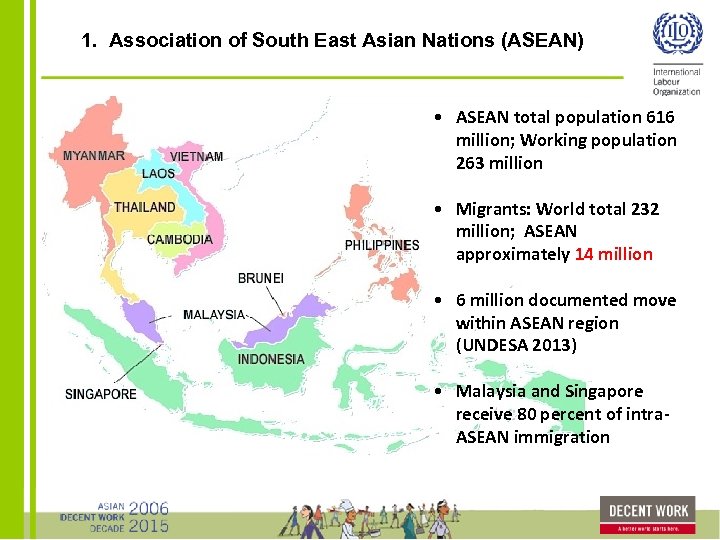
1. Association of South East Asian Nations (ASEAN) • ASEAN total population 616 million; Working population 263 million • Migrants: World total 232 million; ASEAN approximately 14 million • 6 million documented move within ASEAN region (UNDESA 2013) • Malaysia and Singapore receive 80 percent of intra. ASEAN immigration
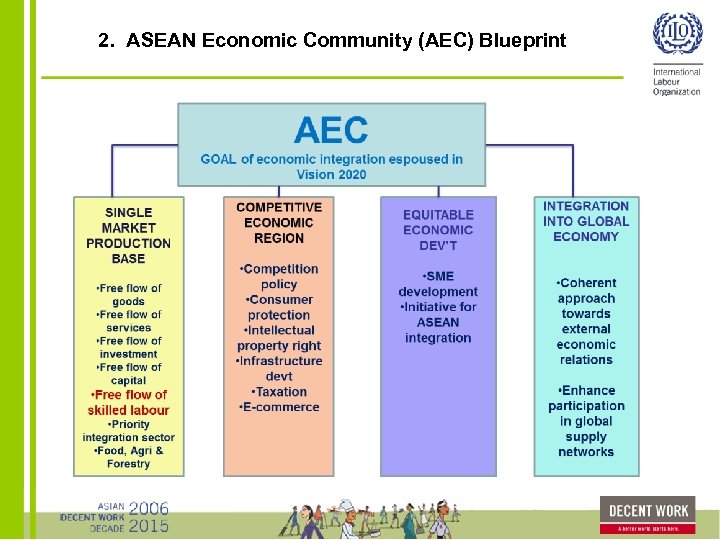
2. ASEAN Economic Community (AEC) Blueprint
3. Free Flow of Skilled Labour in ASEAN Objectives 1. Facilitate the issuance of visas and employment passes for ASEAN Professionals. 2. Facilitate the free flow of services (by 2015) 3. Enhance cooperation among ASEAN University Network members 4. Develop core competencies and qualifications for jobs 5. Strengthen the research capacities of each ASEAN Member State
4. Linking Skills Recognition with Labor Migration AQRF-ASEAN’s Institutional Framework for Skills Recognition What is AQRF? AQRF= ASEAN Qualifications Reference Framework • Translation device to relate existing qualification framework/training system of one member state with that of other member state(s) for the purpose of mutual recognition • AQRF are categorized into 8 qualifications level ranging from basic skills to most advanced and specialized skills). The levels are agreed among all 10 member states • Members are strengthening their own national system and planning to reference it to the AQRF
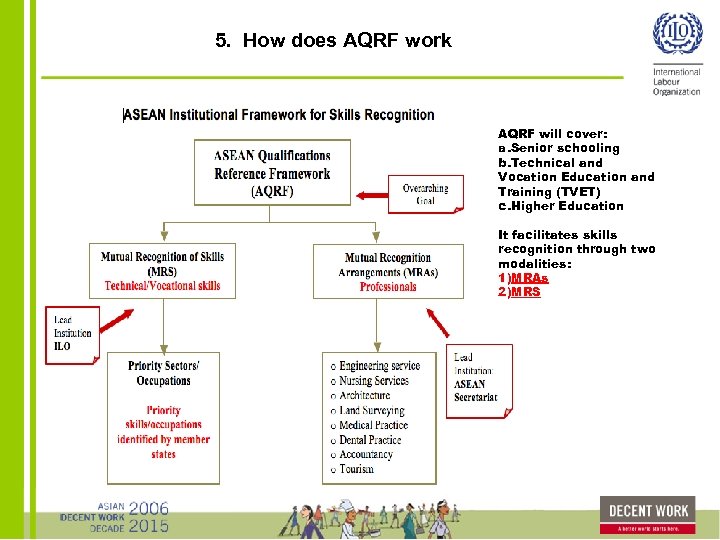
5. How does AQRF work AQRF will cover: a. Senior schooling b. Technical and Vocation Education and Training (TVET) c. Higher Education It facilitates skills recognition through two modalities: 1)MRAs 2)MRS
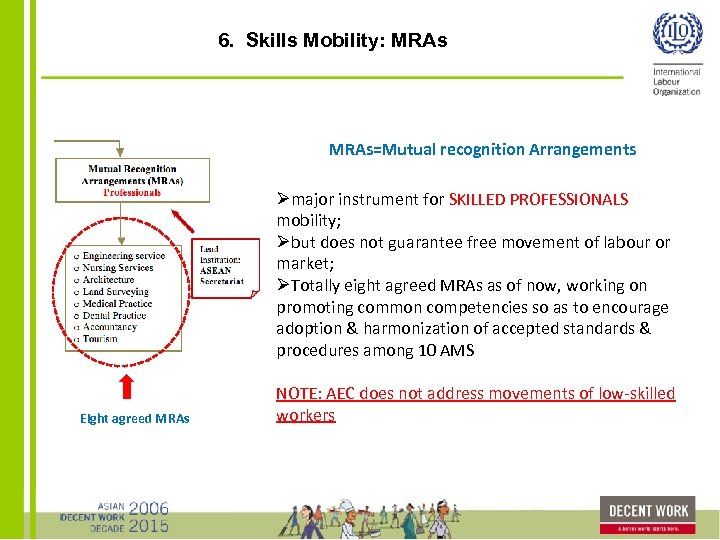
6. Skills Mobility: MRAs=Mutual recognition Arrangements Ømajor instrument for SKILLED PROFESSIONALS mobility; Øbut does not guarantee free movement of labour or market; ØTotally eight agreed MRAs as of now, working on promoting common competencies so as to encourage adoption & harmonization of accepted standards & procedures among 10 AMS Eight agreed MRAs NOTE: AEC does not address movements of low-skilled workers
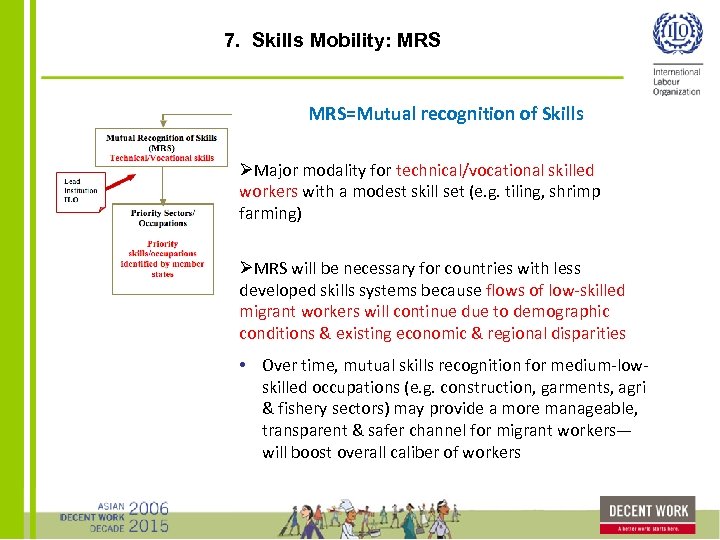
7. Skills Mobility: MRS=Mutual recognition of Skills ØMajor modality for technical/vocational skilled workers with a modest skill set (e. g. tiling, shrimp farming) ØMRS will be necessary for countries with less developed skills systems because flows of low-skilled migrant workers will continue due to demographic conditions & existing economic & regional disparities • Over time, mutual skills recognition for medium-lowskilled occupations (e. g. construction, garments, agri & fishery sectors) may provide a more manageable, transparent & safer channel for migrant workers— will boost overall caliber of workers
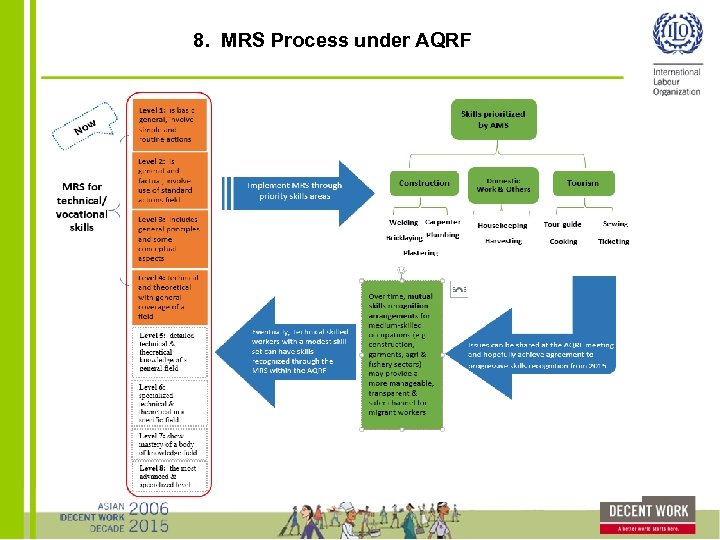
8. MRS Process under AQRF
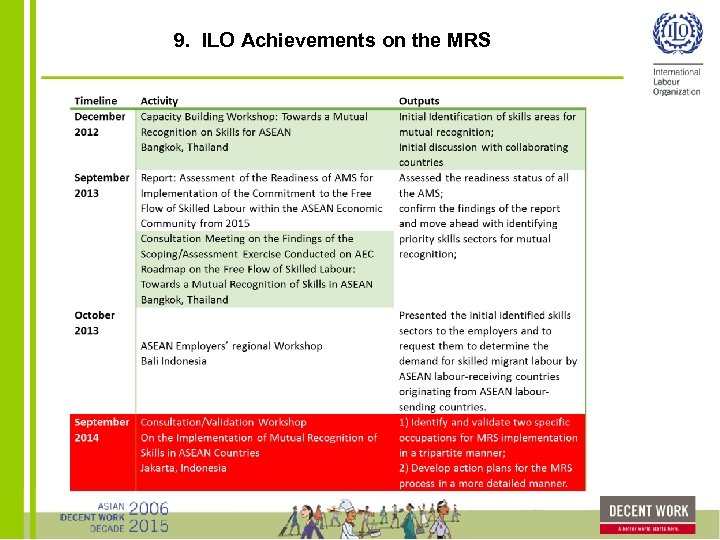
9. ILO Achievements on the MRS
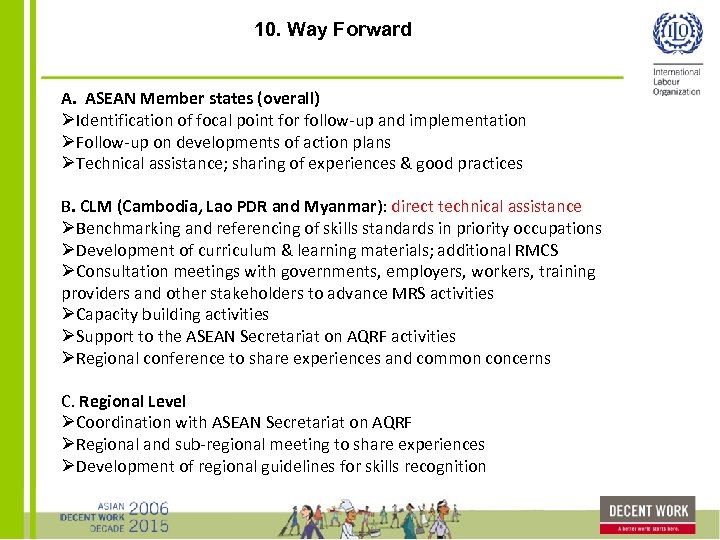
10. Way Forward A. ASEAN Member states (overall) ØIdentification of focal point for follow-up and implementation ØFollow-up on developments of action plans ØTechnical assistance; sharing of experiences & good practices B. CLM (Cambodia, Lao PDR and Myanmar): direct technical assistance ØBenchmarking and referencing of skills standards in priority occupations ØDevelopment of curriculum & learning materials; additional RMCS ØConsultation meetings with governments, employers, workers, training providers and other stakeholders to advance MRS activities ØCapacity building activities ØSupport to the ASEAN Secretariat on AQRF activities ØRegional conference to share experiences and common concerns C. Regional Level ØCoordination with ASEAN Secretariat on AQRF ØRegional and sub-regional meeting to share experiences ØDevelopment of regional guidelines for skills recognition
Thank you For more information, please contact: Manuel Imson Senior Programme Officer/Project Coordinator ILO Regional Office for Asia and the Pacific E-mail: imson@ilo. org
Скачать презентацию Skill Recognition and Labour Mobility in ASEAN Technical
0d96e323f80d52b0bcf4d3b36d6bcdf1.ppt