 Скачать презентацию Six Model University-Based Mental Health Programs What Will
978b36b1ae71c0dcc750ee0cf5cfe4cd.ppt
- Количество слайдов: 34



Six Model University-Based Mental Health Programs: What Will Work for Your Campus? Angela Andrade Disabilities Specialist Special Assistant to the Student Mental Health Committee UC Santa Barbara Andrade-a@sa. ucsb. edu
Workshop Overview v Model Programs v Small Group Discussions v Large Group Discussion v Small Group Discussions v Campus Needs v SMH Recommendations v Program Critiques
Six Model Programs v v v Columbia: Residence Halls-Based Counseling Georgetown: Postvention Program University of Illinois: Mandatory Suicide Assessment University of Washington: Suicide Prevention Program New York University: Mental Health Prevention Program Syracuse University: Gatekeeper Training Program
Six Model Programs v v v Columbia: Residence Halls-Based Counseling Georgetown: Postvention Program University of Illinois: Mandatory Suicide Assessment University of Washington: Suicide Prevention Program New York University: Mental Health Prevention Program Syracuse University: Gatekeeper Training Program
Residence Halls-Based Counseling
Residence Halls-Based Counseling v Six University Counselors--Two Residence Halls v Why? v Daily contact with students v Increased visibility of psychological services v Lowered barriers to care v Help-seeking behavior destigmatized
Residence Halls-Based Counseling v Role of Counselors v Drop in--no appointment necessary v 10 pm, 4 nights/week v Fully integrated into Residential Life v Resource for Residential Life staff, informal and increased access
Residence Halls-Based Counseling v Outcomes v 2004 -5: 311 drop-ins; 119 new students v Ambivalent students sought counseling v Challenges in tracking students v Expanded to more halls
Postvention Program
Postvention Program v Model for post-crisis response v Why? v Begin healing process v Address broad impact on students v Coordinated campus response, led by an experienced team v Ever-improving model v Flexibility based on student need
Postvention Program v Community Support Meetings (CSMs) v Held where students are v Provide structure and consistency v Get students talking about events v Suggestions and support for survivors v Campus and Community resources
Postvention Program v CSM Team (Approx. 20) v Membership from across campus v Available on short notice v Assessment after each CSM v Monthly trainings
Postvention Program v Outcomes v Students feel taken care of v Administrators like having a protocol v Response leaders feel prepared
Mandatory Suicide Assessment Program
Mandatory Suicide Assessment Program v Requires 4 counseling sessions after a reported suicidal threat or attempt in order for the student to stay in school v Based on: v The premise that most students who attempt have not seen a counselor v The finding that for most completed suicides there was a public threat or previous attempt
Mandatory Suicide Assessment Program v From 1984 to 2006, 2000 students participated in mandatory counseling v One student declined counseling v No student in the program committed suicide while at UI
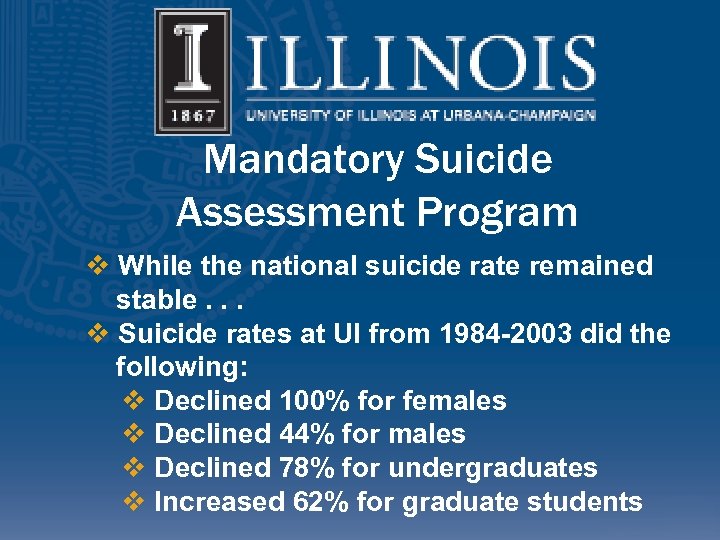
Mandatory Suicide Assessment Program v While the national suicide rate remained stable. . . v Suicide rates at UI from 1984 -2003 did the following: v Declined 100% for females v Declined 44% for males v Declined 78% for undergraduates v Increased 62% for graduate students
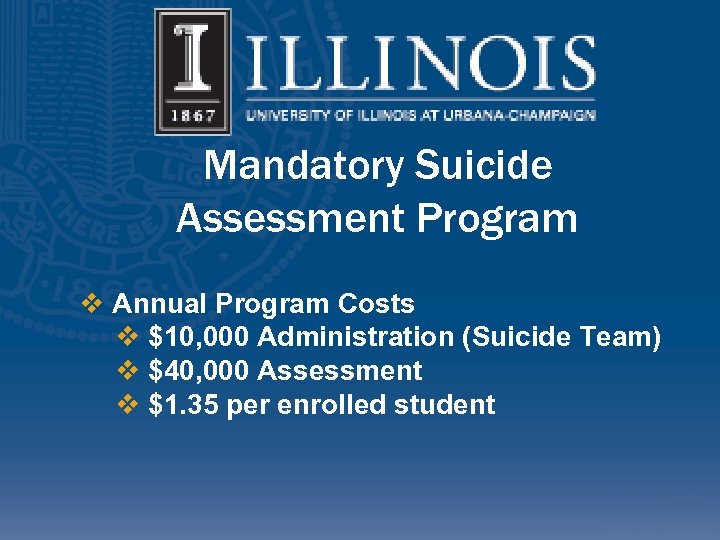
Mandatory Suicide Assessment Program v Annual Program Costs v $10, 000 Administration (Suicide Team) v $40, 000 Assessment v $1. 35 per enrolled student
Suicide Prevention Program
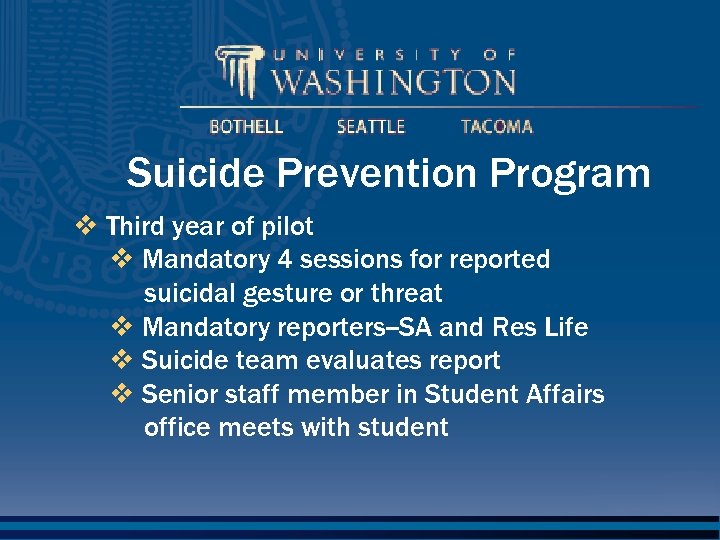
Suicide Prevention Program v Third year of pilot v Mandatory 4 sessions for reported suicidal gesture or threat v Mandatory reporters--SA and Res Life v Suicide team evaluates report v Senior staff member in Student Affairs office meets with student
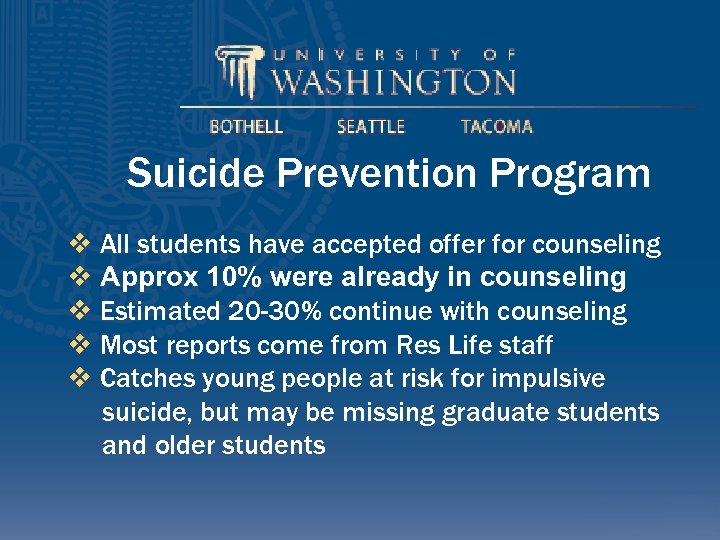
Suicide Prevention Program v All students have accepted offer for counseling v Approx 10% were already in counseling v Estimated 20 -30% continue with counseling v Most reports come from Res Life staff v Catches young people at risk for impulsive suicide, but may be missing graduate students and older students
NYU Mental Health Prevention Program
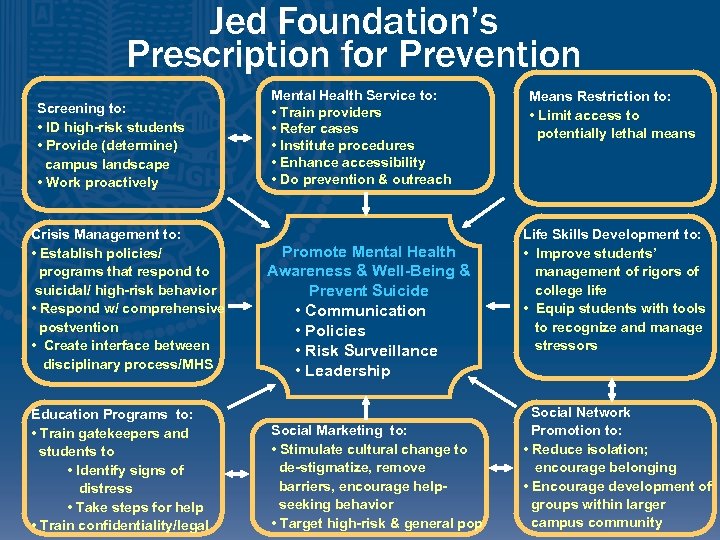
Jed Foundation’s Prescription for Prevention Screening to: • ID high-risk students • Provide (determine) campus landscape • Work proactively Crisis Management to: • Establish policies/ programs that respond to suicidal/ high-risk behavior • Respond w/ comprehensive postvention • Create interface between disciplinary process/MHS Education Programs to: • Train gatekeepers and students to • Identify signs of distress • Take steps for help • Train confidentiality/legal Mental Health Service to: • Train providers • Refer cases • Institute procedures • Enhance accessibility • Do prevention & outreach Promote Mental Health Awareness & Well-Being & Prevent Suicide • Communication • Policies • Risk Surveillance • Leadership Social Marketing to: • Stimulate cultural change to de-stigmatize, remove barriers, encourage helpseeking behavior • Target high-risk & general pop Means Restriction to: • Limit access to potentially lethal means Life Skills Development to: • Improve students’ management of rigors of college life • Equip students with tools to recognize and manage stressors Social Network Promotion to: • Reduce isolation; encourage belonging • Encourage development of groups within larger campus community
NYU Mental Health Prevention Program v Social marketing v Increased access to MH professionals v Crisis response
NYU Mental Health Prevention Program v Social Marketing v Interactive emails on MH issues-Goal. Quest v All newly enrolled students attend reality program highlighting MH issues v Produced by NYU actors/writers
NYU Mental Health Prevention Program v Increased Access to MH Professionals v Email access to a wellness social worker v 24 -hour hotline staffed by NYU social workers by day and MH professionals from Protocol on nights and weekends v Walk-in hours during evenings and weekends
NYU Mental Health Prevention Program v Crisis Response v In-house mobile crisis team v Clinical social worker 24 -hours/day v Face-to-face evaluations v Transportation to hospital if necessary
Gatekeeper Training Program
Gatekeeper Program v “Campus Connect, ” original curriculum v Suicide prevention grant from Substance Abuse and Mental Health Services Administration v Basic suicide statistics, facts, and warning signs
Gatekeeper Program v Importance of relationship with student v Prepare responders for the emotional intensity of a student crisis v Focus on listening and empathy v Experiential exercises (e. g. , photo exercise)
Gatekeeper Program v Assessment of acquired skills to deal with a student in crisis v Pre- workshop: equivalent to first-year undergrad psychology major v Post-workshop: close to a master’s -level counselor v Value of experiential exercises
Six Model Programs v v v Columbia: Residence Halls-Based Counseling Georgetown: Postvention Program University of Illinois: Mandatory Suicide Assessment University of Washington: Suicide Prevention Program New York University: Mental Health Prevention Program (Jed Foundation) Syracuse University: Gatekeeper Training Program
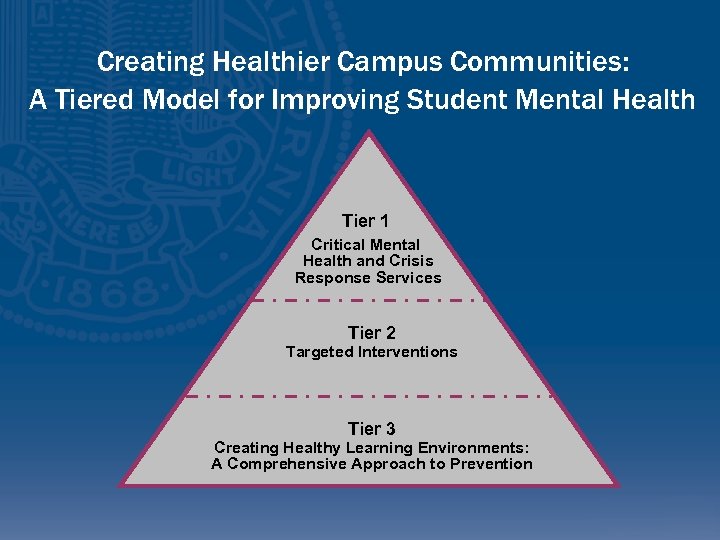
Creating Healthier Campus Communities: A Tiered Model for Improving Student Mental Health Tier 1 Critical Mental Health and Crisis Response Services Tier 2 Targeted Interventions Tier 3 Creating Healthy Learning Environments: A Comprehensive Approach to Prevention
Questions? Small-Group Breakout
Скачать презентацию Six Model University-Based Mental Health Programs What Will
978b36b1ae71c0dcc750ee0cf5cfe4cd.ppt