 Скачать презентацию SIOP Workshop Objectives n Content Obj We will
e8b792d890112fa100f4b3deb56c019f.ppt
- Количество слайдов: 29



SIOP Workshop Objectives n Content Obj: We will practice useful strategies for direct instruction of basic and academic vocabulary for ALL students n Language Obj: We will discuss, justify, note, & share vocab activities & applications.
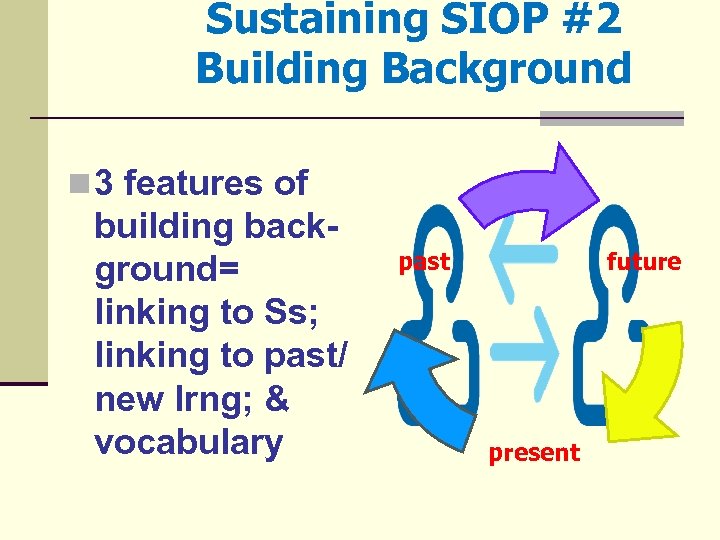
Sustaining SIOP #2 Building Background n 3 features of building background= linking to Ss; linking to past/ new lrng; & vocabulary past future present
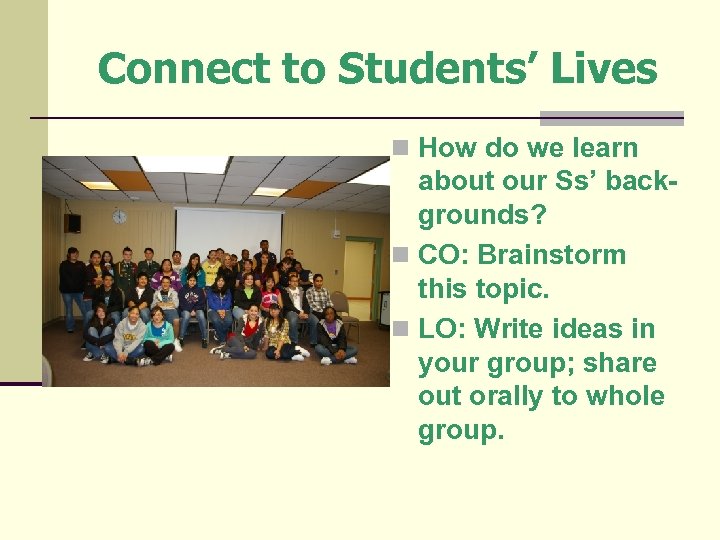
Connect to Students’ Lives n How do we learn about our Ss’ backgrounds? n CO: Brainstorm this topic. n LO: Write ideas in your group; share out orally to whole group.
Explicit Connections n Review previous objectives n Remember when we talked about … n What did we learn about yesterday in math? n Connect to other disciplines (& real life)! n Make it relevant to future classes (& life).
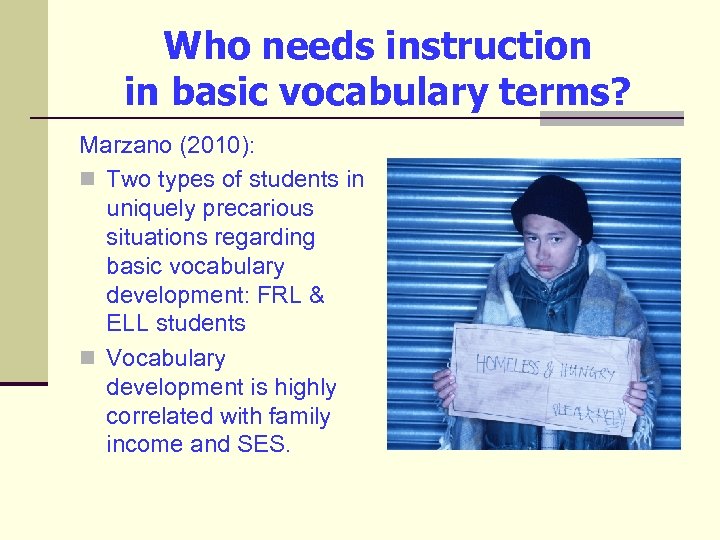
Who needs instruction in basic vocabulary terms? Marzano (2010): n Two types of students in uniquely precarious situations regarding basic vocabulary development: FRL & ELL students n Vocabulary development is highly correlated with family income and SES.
Widening Gap n Differential rate of n n 1. 2. 3. vocabulary development (low-, mid-, high- SES) Widening gap begins < 24 months 3 categories of ELL: Arrive prepared for school in L 1 Not prepared in L 1 In US w/ BICS in Eng
Categorizing Vocabulary n Multiple ways – Marzano > rank ordered n n 1. 2. 3. clusters or academic disciplines Marzano - Tiers – 1 – 5 (basic to super advanced) What we all MUST teach: Content Words Process/Function Words/Word Parts
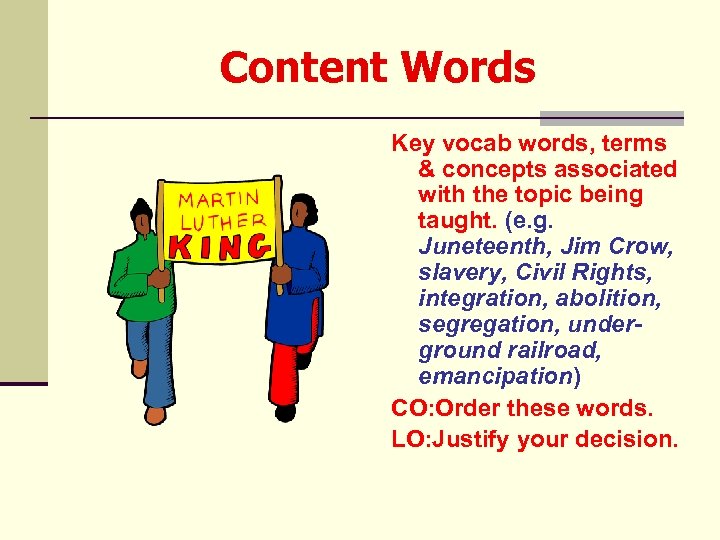
Content Words Key vocab words, terms & concepts associated with the topic being taught. (e. g. Juneteenth, Jim Crow, slavery, Civil Rights, integration, abolition, segregation, underground railroad, emancipation) CO: Order these words. LO: Justify your decision.
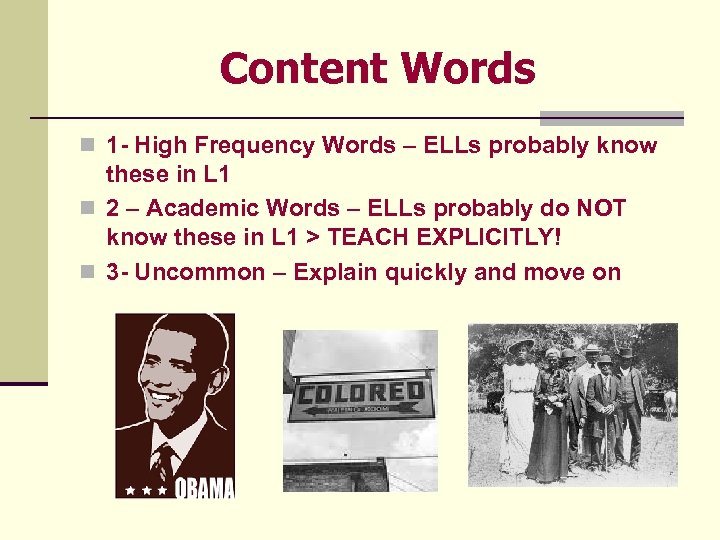
Content Words n 1 - High Frequency Words – ELLs probably know these in L 1 n 2 – Academic Words – ELLs probably do NOT know these in L 1 > TEACH EXPLICITLY! n 3 - Uncommon – Explain quickly and move on
Process/Function Words n Functional language: n n request info, justify opinions, state conclusions Classroom tasks: share with a partner, line up, graph, classify Language processes: scan, skim, question, debate, argue, sum up Transition: therefore, in conclusion, moreover Sequence: first, next, at last, finally
Words & Word Parts that Teach English Structure n 175, 000 words w/roots - Gr. 12 (Biemiller, 2004) n 15, 000 = majority n K-6 > 800 -1200/year (Dale & O’Rourke, 1981) n photo- > compare the words related by spelling and meaning to reinforce (Bear, Invernizzi, Templeton & Johnston, 2004)
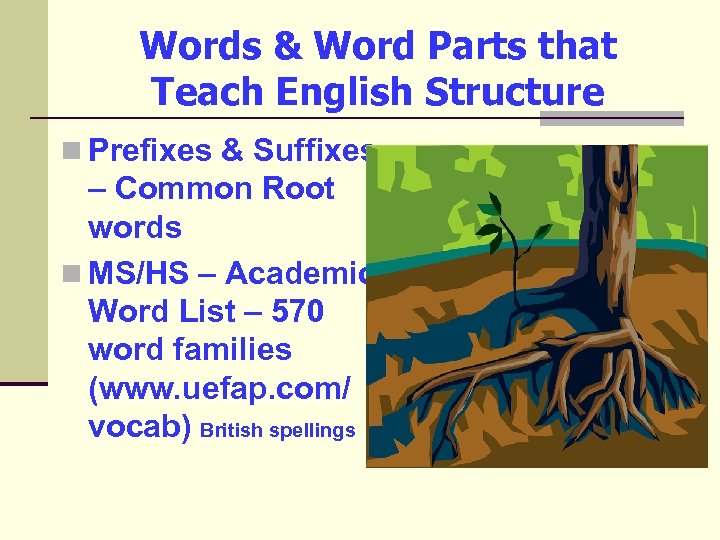
Words & Word Parts that Teach English Structure n Prefixes & Suffixes – Common Root words n MS/HS – Academic Word List – 570 word families (www. uefap. com/ vocab) British spellings
Why Dictionaries Fail Baumann, Kame’enui, Ash, 2003 – n Instruction relying on definition alone = pedagogically useless n Not likely to increase comprehension
Better Dictionaries n Newbury House Dictionary of Amer. English nhd. heinle. com n Oxford ESL Dict. n Oxford Picture Dictionary for the Content Areas n any ESL or picture dictionary
Research Synthesis Blachowicz & Fisher (2000) - Students should be ACTIVE in developing understanding of words and ways to use them. n Concept Continuum n Idea Suitcases n Word Sorts n Concept Definition Maps n Strategies for Independent Learning
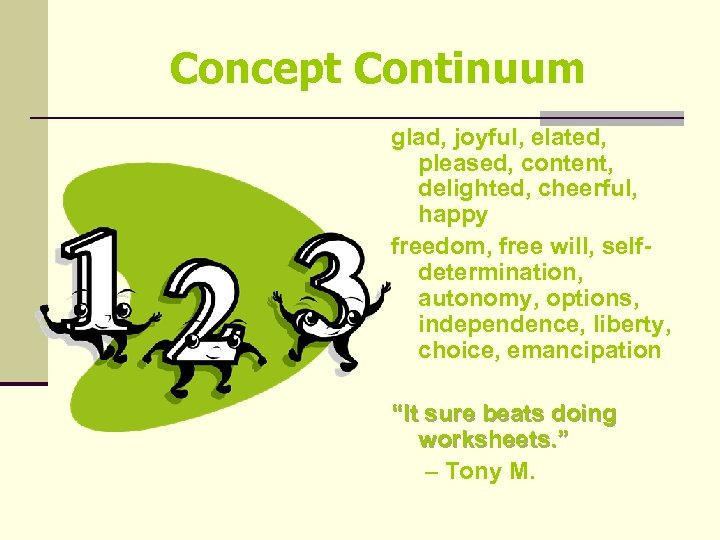
Concept Continuum glad, joyful, elated, pleased, content, delighted, cheerful, happy freedom, free will, selfdetermination, autonomy, options, independence, liberty, choice, emancipation “It sure beats doing worksheets. ” – Tony M.
Idea Suitcases Building on students background + game show fun! n What’s inside the suitcase? ? ? n Strengthen practice & comprehension n Assist in semantic generalization n Relate the vocabulary to other contexts (& reinforce!!)
Idea Suitcases n n n a movie theater a grocery store the playground your backyard a sporting event the beach the mall the kitchen art class a restaurant countries
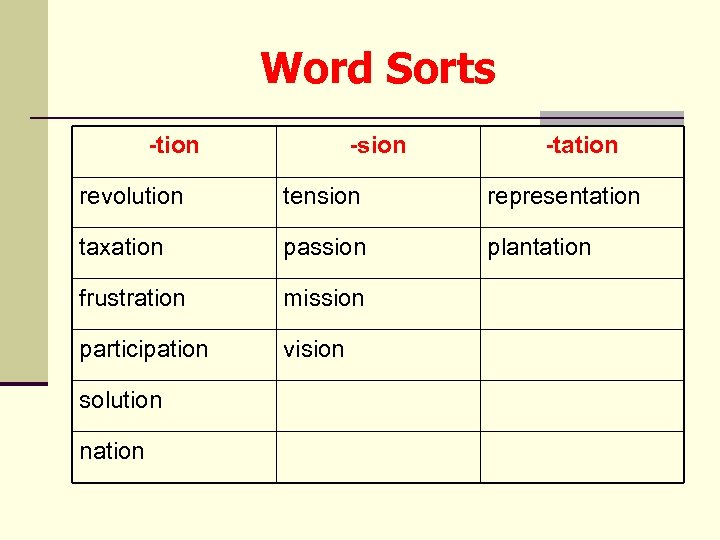
Word Sorts -tion -sion -tation revolution tension representation taxation passion plantation frustration mission participation vision solution nation
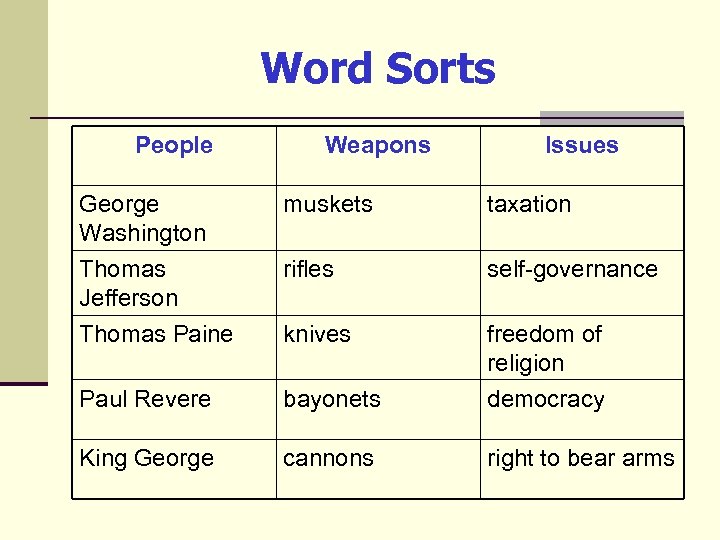
Word Sorts People Weapons Issues George Washington muskets taxation Thomas Jefferson rifles self-governance Thomas Paine knives Paul Revere bayonets freedom of religion democracy King George cannons right to bear arms
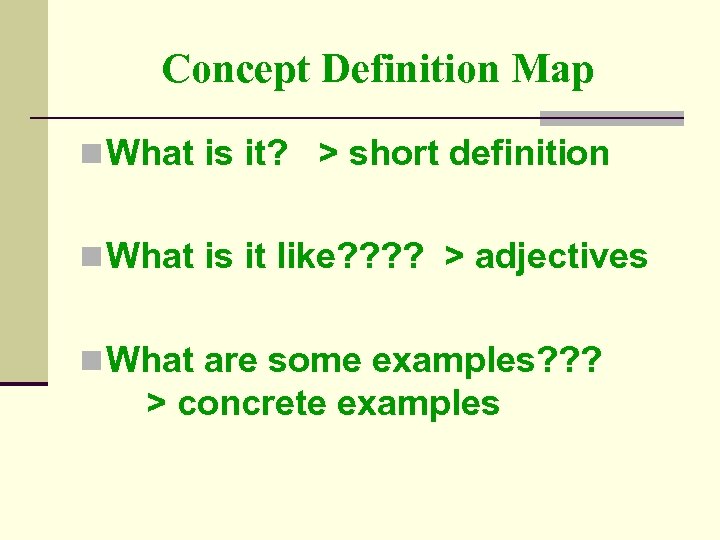
Concept Definition Map n What is it? > short definition n What is it like? ? > adjectives n What are some examples? ? ? > concrete examples
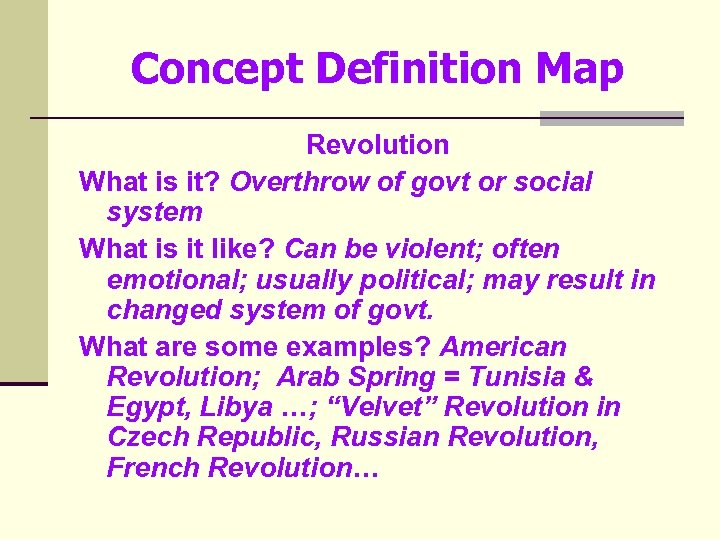
Concept Definition Map Revolution What is it? Overthrow of govt or social system What is it like? Can be violent; often emotional; usually political; may result in changed system of govt. What are some examples? American Revolution; Arab Spring = Tunisia & Egypt, Libya …; “Velvet” Revolution in Czech Republic, Russian Revolution, French Revolution…
Research Synthesis Blachowicz & Fisher (2000) Students should personalize learning: n Vocab self-selection n Mnemonic strategies n Personal dictionaries n Pictures/drawings
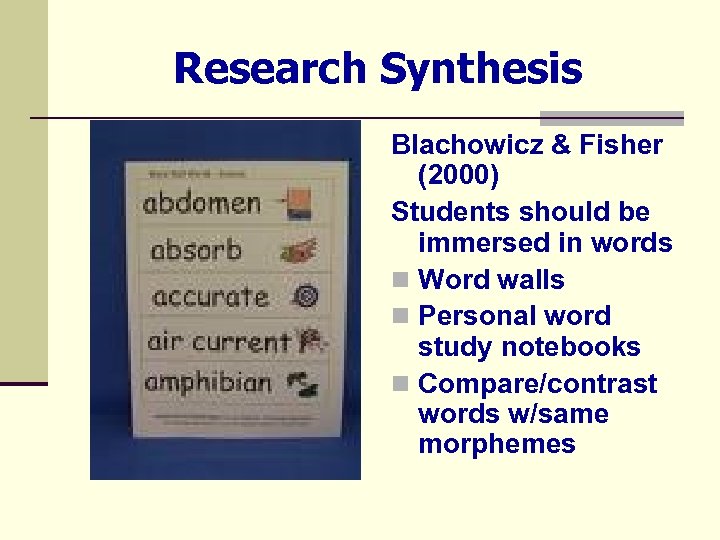
Research Synthesis Blachowicz & Fisher (2000) Students should be immersed in words n Word walls n Personal word study notebooks n Compare/contrast words w/same morphemes
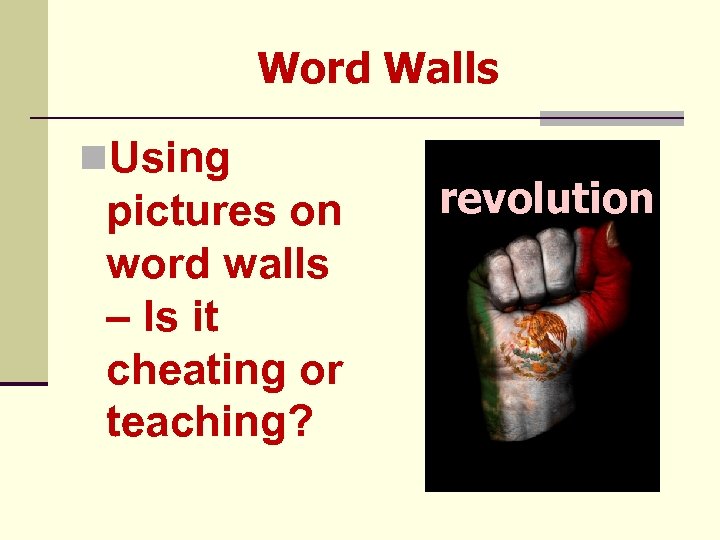
Word Walls n. Using pictures on word walls – Is it cheating or teaching? revolution
Research Synthesis Blachowicz & Fisher (2000) Students should build on multiple sources of information to learn words through multiple exposure.
Connections Hirsch 2003 – n Multiple exposures to word + n Myriad of contexts > n Deeper level of understanding
Resources n Marzano, Robert J. , Teaching Basic & Advanced Vocab n Marzano & Pickering, Building Academic Vocab n www. uefap. com/vo cab/select (academic word list) n www. wordsift. com
Скачать презентацию SIOP Workshop Objectives n Content Obj We will
e8b792d890112fa100f4b3deb56c019f.ppt