


 Скачать презентацию Singapore Math Primary Mathematics CCSS Edition is a
8c552b8faa39d214e4c162727d5e7d54.ppt
- Количество слайдов: 20
 Singapore Math Primary Mathematics (CCSS Edition) is a complete program based on the highly successful Primary Mathematics series from Singapore.
 Do you have math anxiety? “Evidence suggests that math anxiety results more from the way the subject is presented than from the subject itself. ” -Greenwood
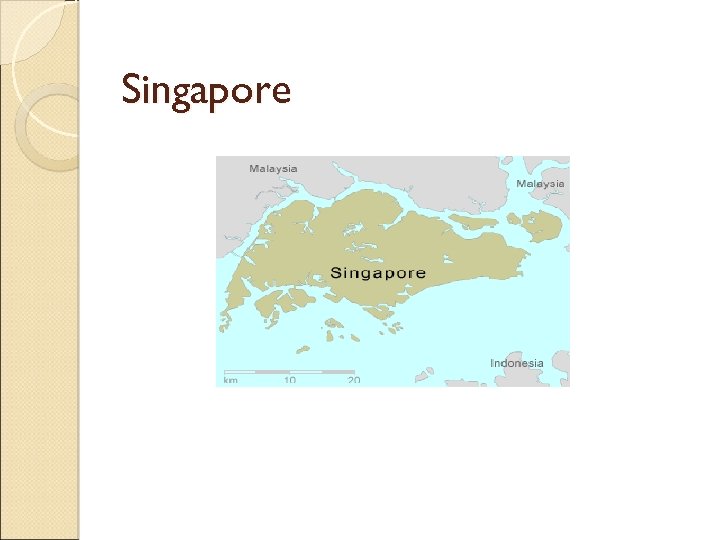 Singapore
 History of Singapore Math 1981 -1982 – First Primary Mathematics curriculum was developed 1992 – Revised to make it a problem-solving curriculum 1994 -1999 – Curriculum was reduced 2003 – Primary Mathematics U. S. Edition was published 2008 – Primary Mathematics Standards Edition was published 2014 – Primary Mathematics CCSS Edition was published
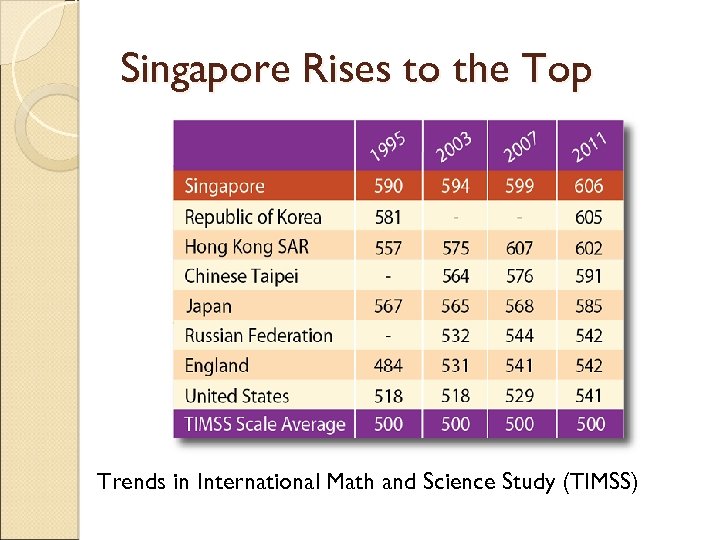 Singapore Rises to the Top Trends in International Math and Science Study (TIMSS)
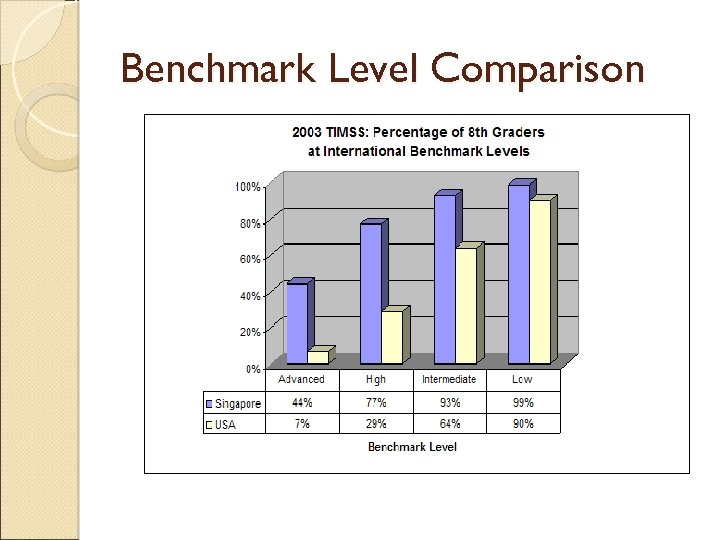 Benchmark Level Comparison
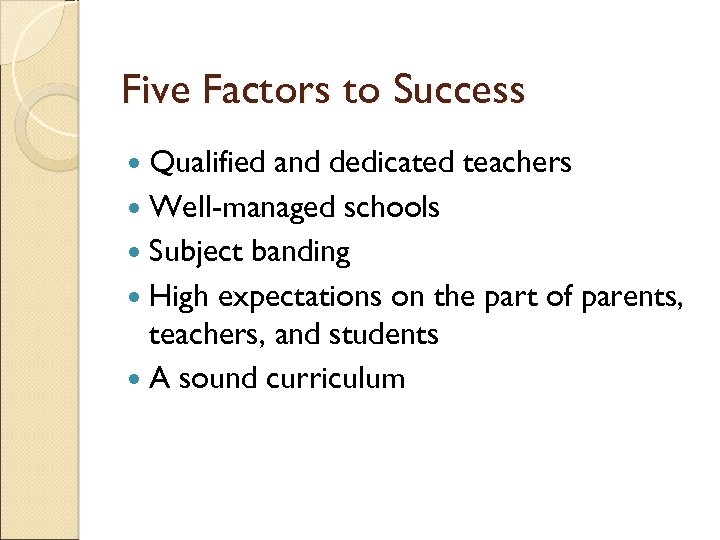 Five Factors to Success Qualified and dedicated teachers Well-managed schools Subject banding High expectations on the part of parents, teachers, and students A sound curriculum
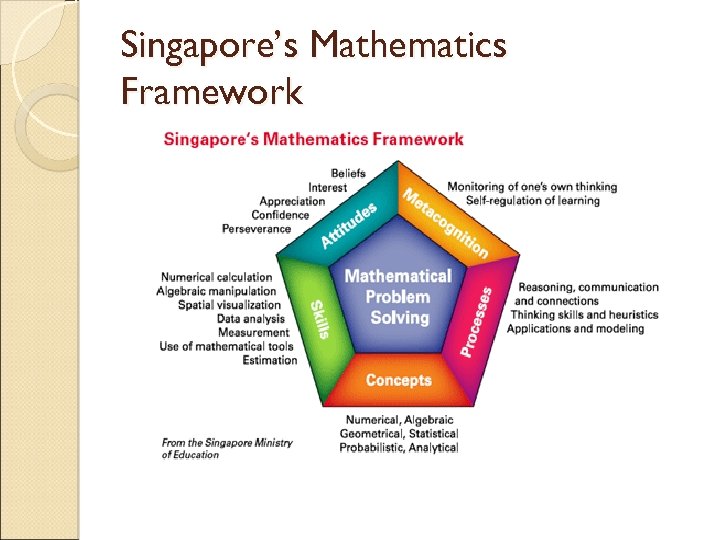 Singapore’s Mathematics Framework
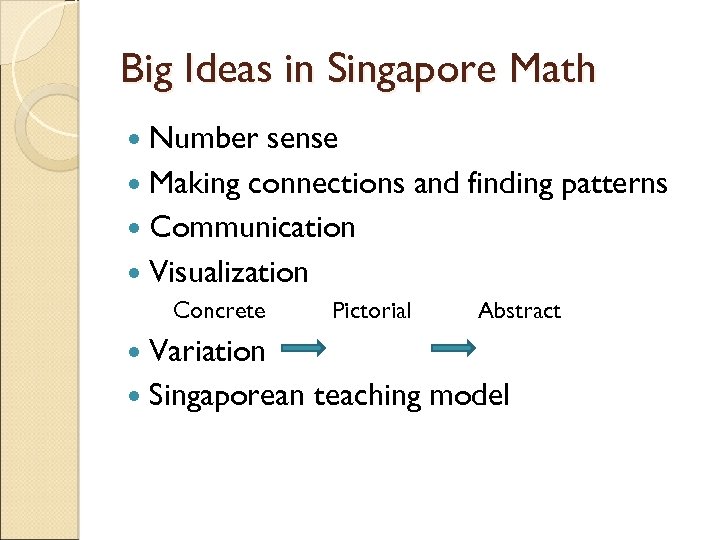 Big Ideas in Singapore Math Number sense Making connections and finding patterns Communication Visualization Concrete Pictorial Abstract Variation Singaporean teaching model
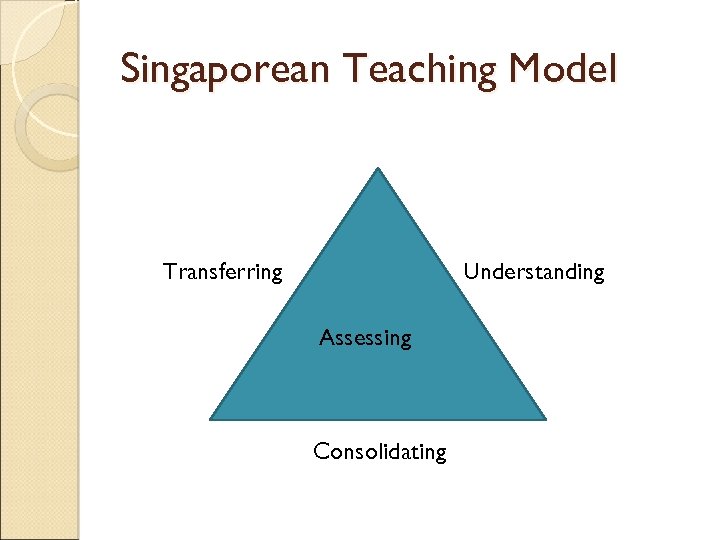 Singaporean Teaching Model Transferring Understanding Assessing Consolidating
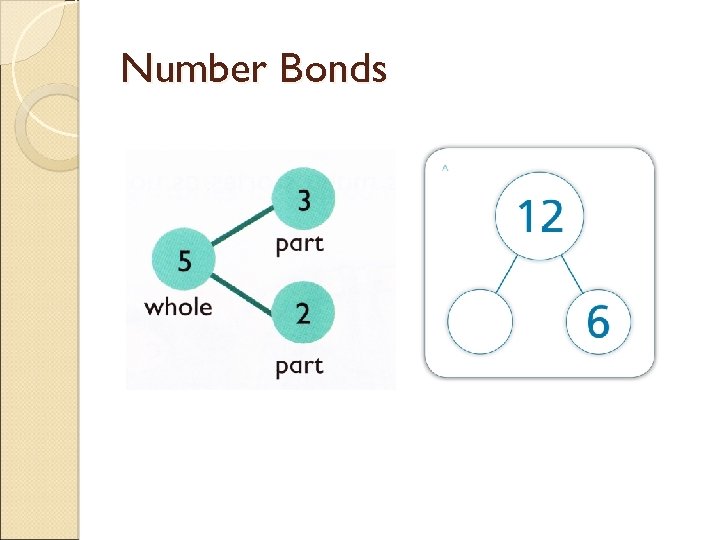 Number Bonds
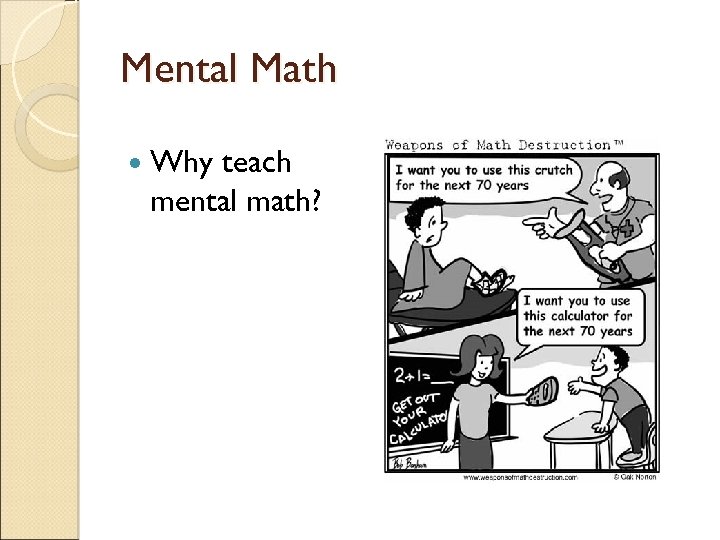 Mental Math Why teach mental math?
 Practicing Mental Math Sprints Skip counting Magic Thumb Games (Buzz, Salute) I Have – Who Has?
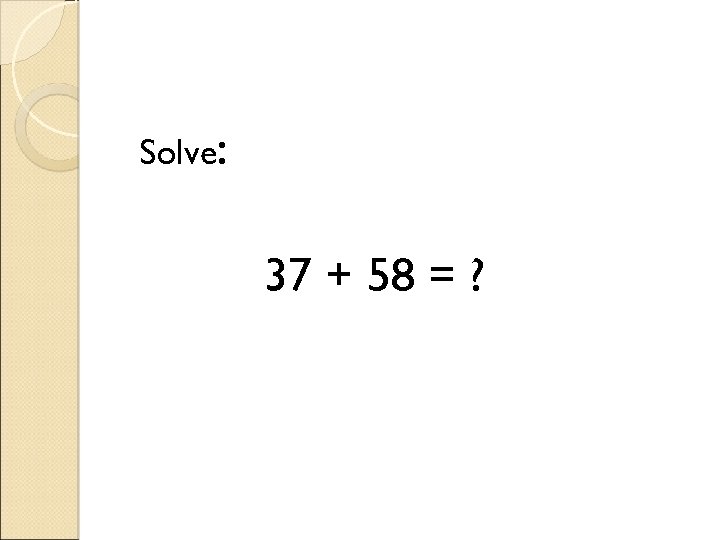 Solve: 37 + 58 = ?
 Problem Solving See Plan Do Look Back “Bar modeling allows students to engage in algebraic thinking even before they are ready to handle formal algebra. ” -Bar Modeling A Problem Solving Tool, Yeap Ban Har, Ph. D
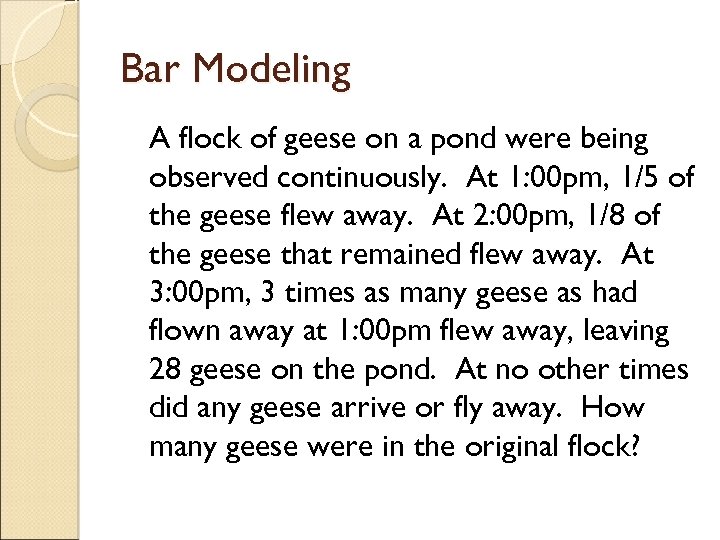 Bar Modeling A flock of geese on a pond were being observed continuously. At 1: 00 pm, 1/5 of the geese flew away. At 2: 00 pm, 1/8 of the geese that remained flew away. At 3: 00 pm, 3 times as many geese as had flown away at 1: 00 pm flew away, leaving 28 geese on the pond. At no other times did any geese arrive or fly away. How many geese were in the original flock?
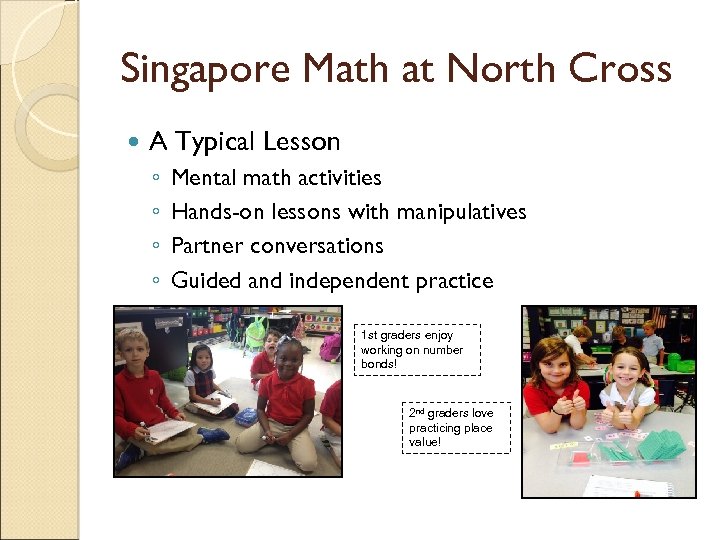 Singapore Math at North Cross A Typical Lesson ◦ ◦ Mental math activities Hands-on lessons with manipulatives Partner conversations Guided and independent practice 1 st graders enjoy working on number bonds! 2 nd graders love practicing place value!
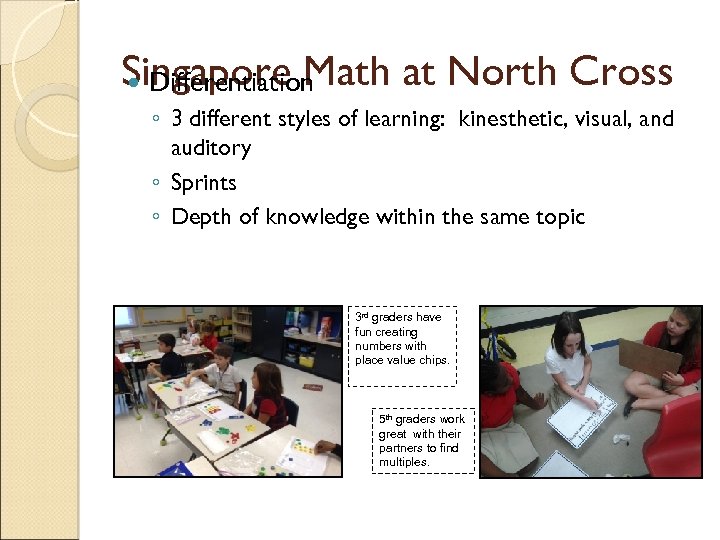 Singapore Math at North Cross Differentiation ◦ 3 different styles of learning: kinesthetic, visual, and auditory ◦ Sprints ◦ Depth of knowledge within the same topic 3 rd graders have fun creating numbers with place value chips. 5 th graders work great with their partners to find multiples.
 How Can Parents Help? Please trust in this unfamiliar way of teaching. We want the children to understand why before teaching the algorithms. Please ensure your child is practicing math facts nightly. Homework: Reinforces skills taught during class • Not always just a worksheet. Can be practicing facts, sorting, word problems with bar modeling, and internet links. • Support, but do not do it for them!
 Questions?