 Скачать презентацию Simulation-based Scheduling and Control Richard A Wysk IE
f62fb9b3c7cff6232a50a012391f0d65.ppt
- Количество слайдов: 50



Simulation-based Scheduling and Control Richard A. Wysk IE 551 – Computer Control in Manufacturing
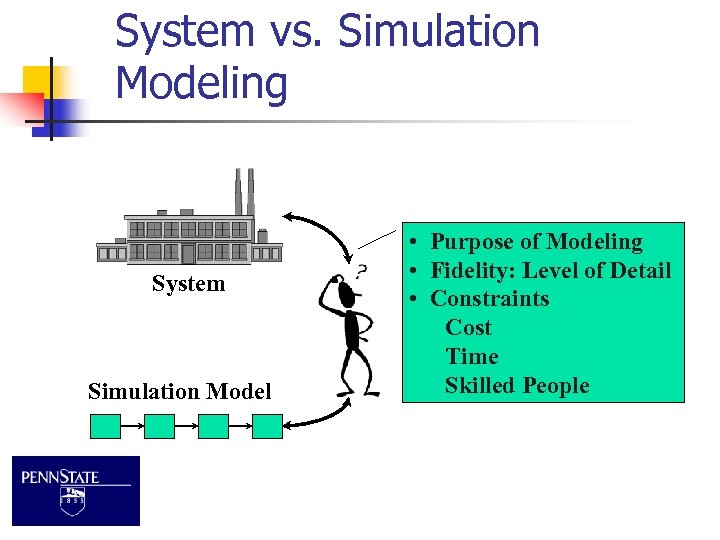
System vs. Simulation Modeling System Simulation Model • Purpose of Modeling • Fidelity: Level of Detail • Constraints Cost Time Skilled People
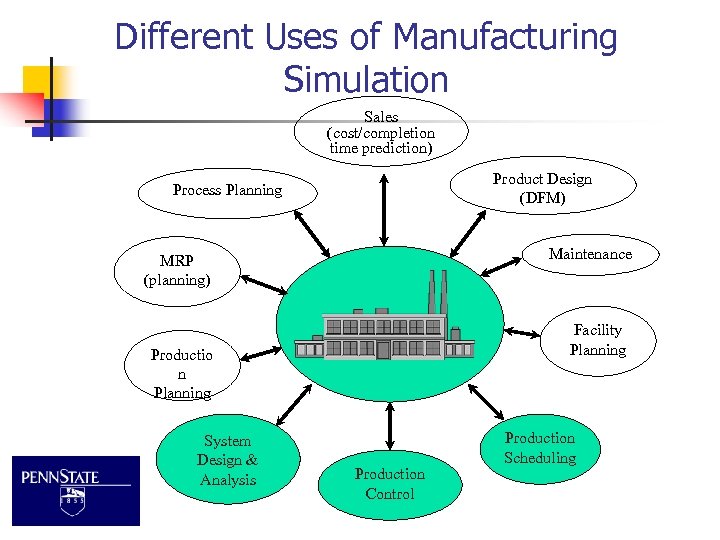
Different Uses of Manufacturing Simulation Sales (cost/completion time prediction) Product Design (DFM) Process Planning Maintenance MRP (planning) Facility Planning Productio n Planning System Design & Analysis Production Control Production Scheduling
Factory Control - Observations Most Analysis is for Processing Resources Only Almost all Scheduling considers Processing Resource Constraints Only There is no Material Handling Planning
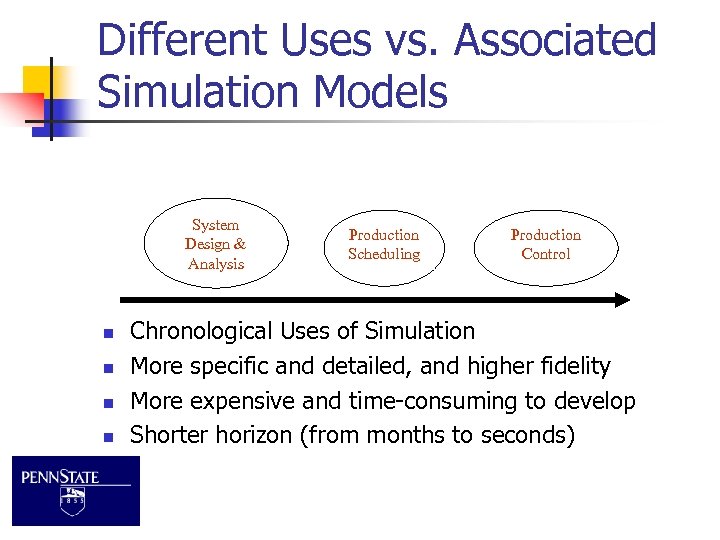
Different Uses vs. Associated Simulation Models System Design & Analysis n n Production Scheduling Production Control Chronological Uses of Simulation More specific and detailed, and higher fidelity More expensive and time-consuming to develop Shorter horizon (from months to seconds)
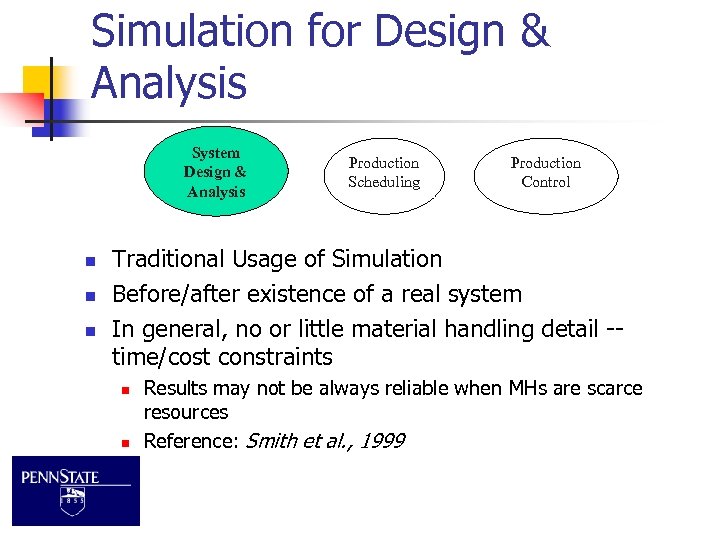
Simulation for Design & Analysis System Design & Analysis n n n Production Scheduling Production Control Traditional Usage of Simulation Before/after existence of a real system In general, no or little material handling detail -time/cost constraints n n Results may not be always reliable when MHs are scarce resources Reference: Smith et al. , 1999
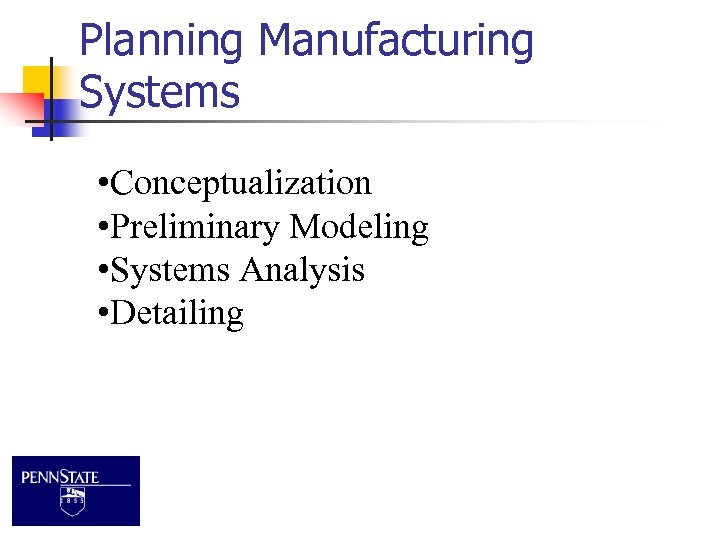
Planning Manufacturing Systems • Conceptualization • Preliminary Modeling • Systems Analysis • Detailing
Conceptualization • Aggregate Visualization of System • No. of milling machines • No. of turning machines • . . . • Arrangement of Machines • Layout • Location
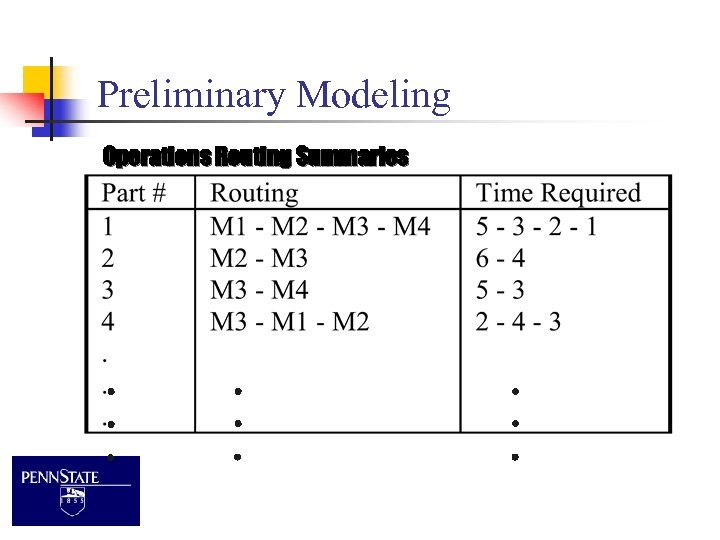
Preliminary Modeling Operations Routing Summaries
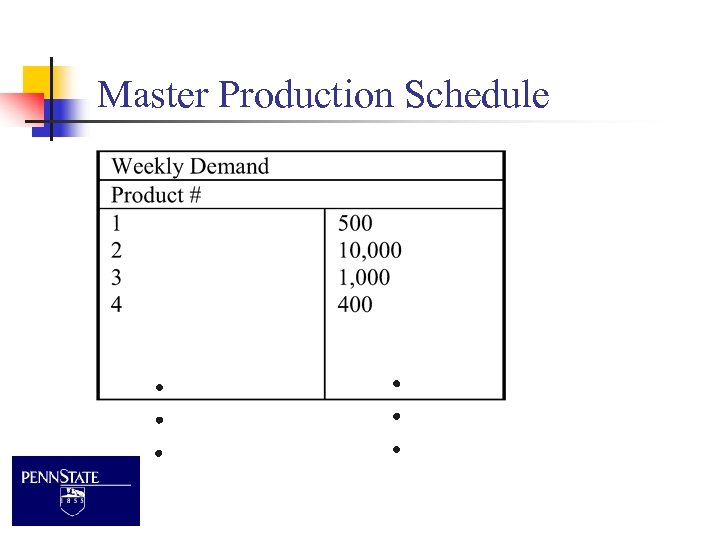
Master Production Schedule
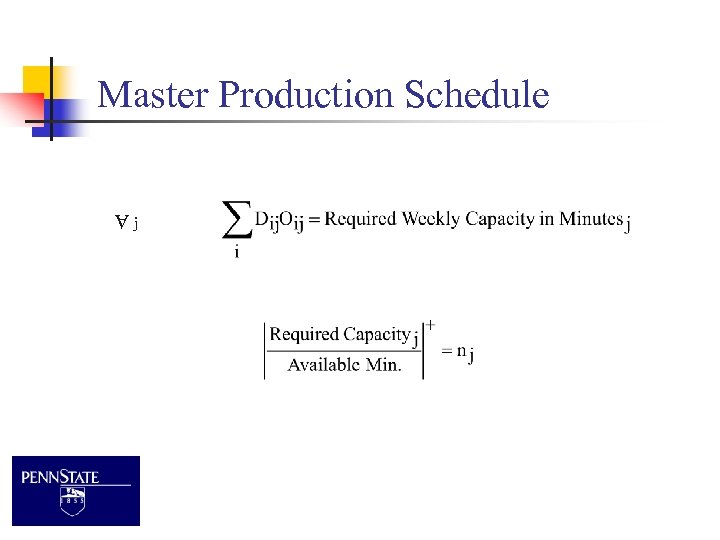
Master Production Schedule j A
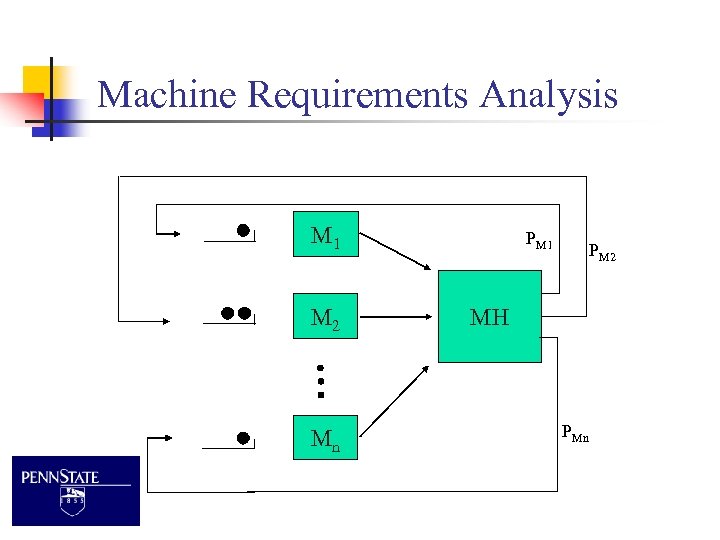
Machine Requirements Analysis M 1 M 2 Mn PM 1 PM 2 MH PMn
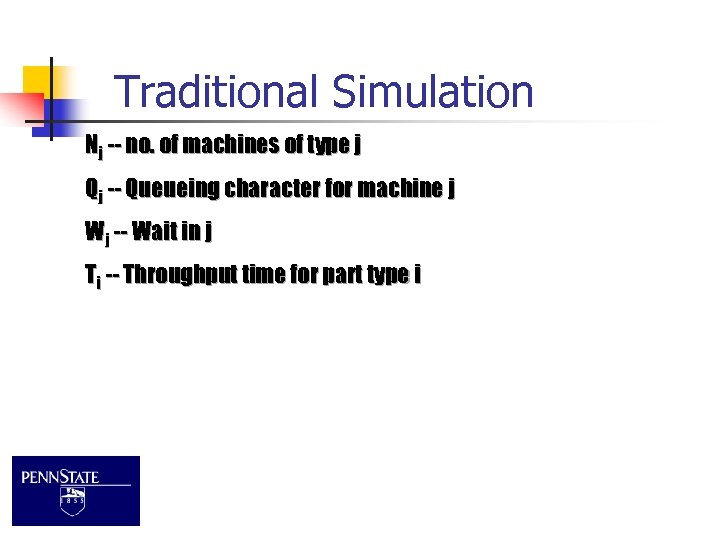
Traditional Simulation Nj -- no. of machines of type j Qj -- Queueing character for machine j Wj -- Wait in j Ti -- Throughput time for part type i
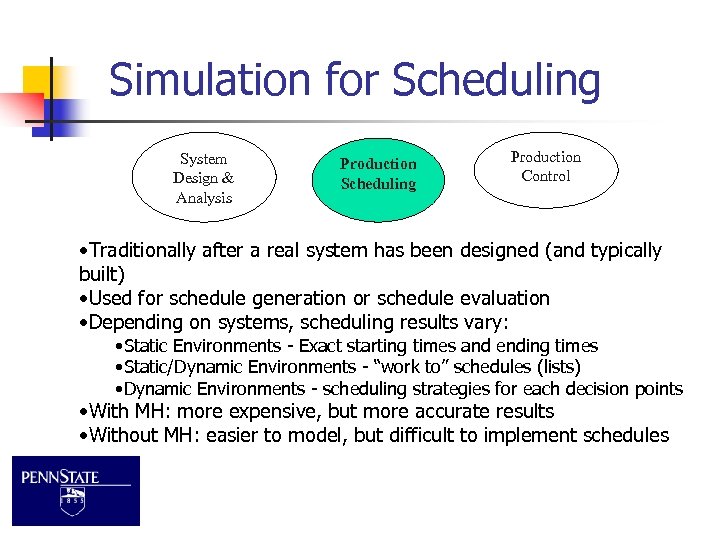
Simulation for Scheduling System Design & Analysis Production Scheduling Production Control • Traditionally after a real system has been designed (and typically built) • Used for schedule generation or schedule evaluation • Depending on systems, scheduling results vary: • Static Environments - Exact starting times and ending times • Static/Dynamic Environments - “work to” schedules (lists) • Dynamic Environments - scheduling strategies for each decision points • With MH: more expensive, but more accurate results • Without MH: easier to model, but difficult to implement schedules
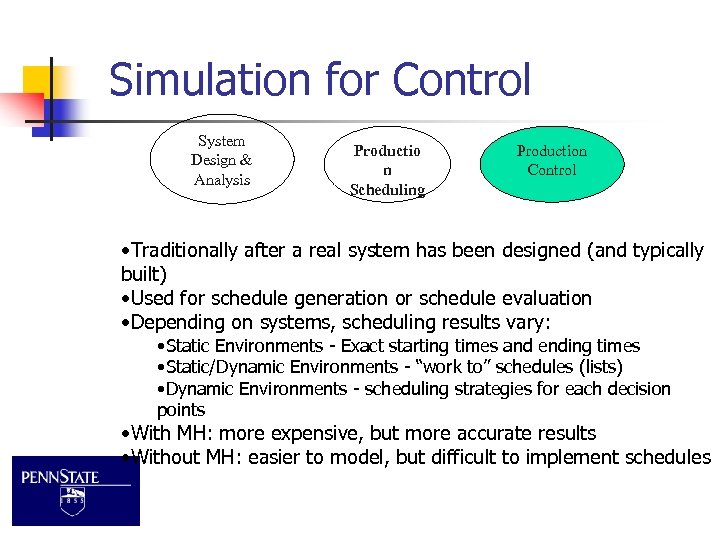
Simulation for Control System Design & Analysis Productio n Scheduling Production Control • Traditionally after a real system has been designed (and typically built) • Used for schedule generation or schedule evaluation • Depending on systems, scheduling results vary: • Static Environments - Exact starting times and ending times • Static/Dynamic Environments - “work to” schedules (lists) • Dynamic Environments - scheduling strategies for each decision points • With MH: more expensive, but more accurate results • Without MH: easier to model, but difficult to implement schedules
MH devices Material Handling (MH) v MH affects schedules v MH is addressed every other process v MH is frequently flexibility constraint
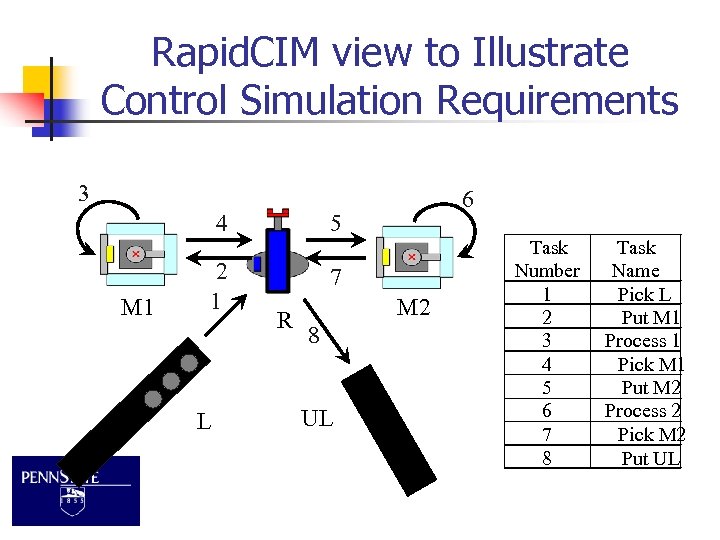
Rapid. CIM view to Illustrate Control Simulation Requirements 3 4 M 1 2 1 L 6 5 7 R M 2 8 UL Task Number 1 2 3 4 5 6 7 8 Task Name Pick L Put M 1 Process 1 Pick M 1 Put M 2 Process 2 Pick M 2 Put UL
Some Observations about this Perspective n n Generic -- applies to any system Other application specifics n Parts n n n Number Routing Buffers (none in our system)
Deadlock Related References n General deadlock discussions n n n Wysk et al. , 1994 Cho et al. , 1995 Deadlock detection for simulation n Venkatesh et al. , 1998
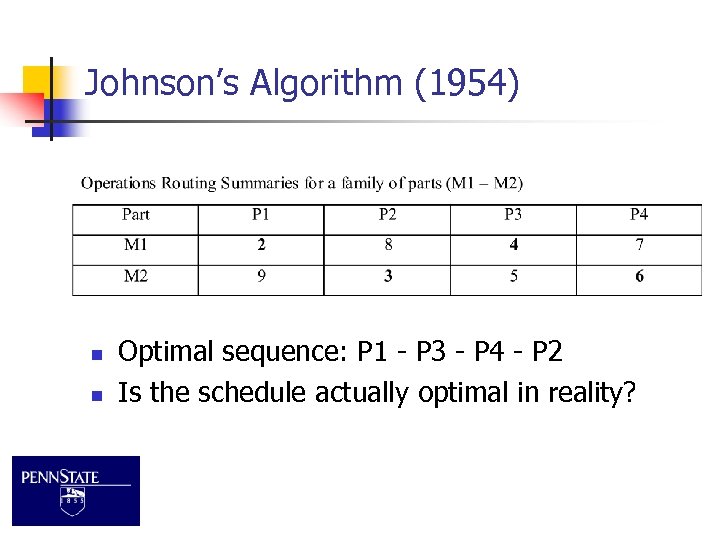
Johnson’s Algorithm (1954) n n Optimal sequence: P 1 - P 3 - P 4 - P 2 Is the schedule actually optimal in reality?
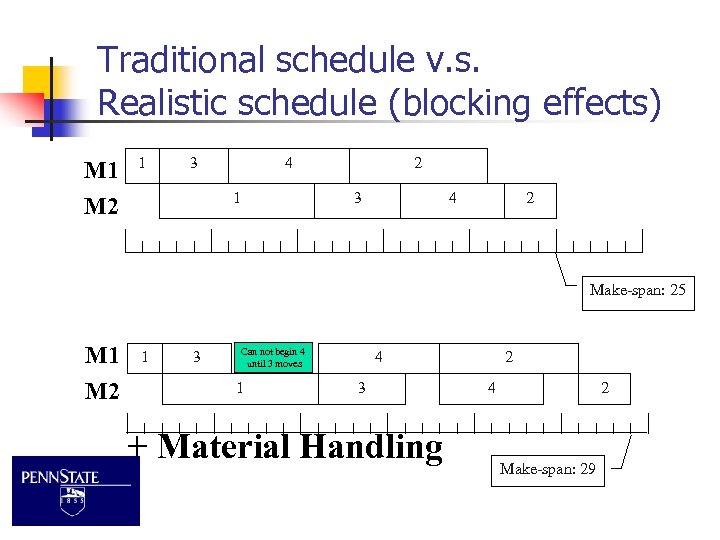
Traditional schedule v. s. Realistic schedule (blocking effects) M 1 M 2 1 3 4 1 2 3 4 2 Make-span: 25 M 1 M 2 1 3 Can not begin 4 until 3 moves 1 4 3 + Material Handling 2 4 2 Make-span: 29
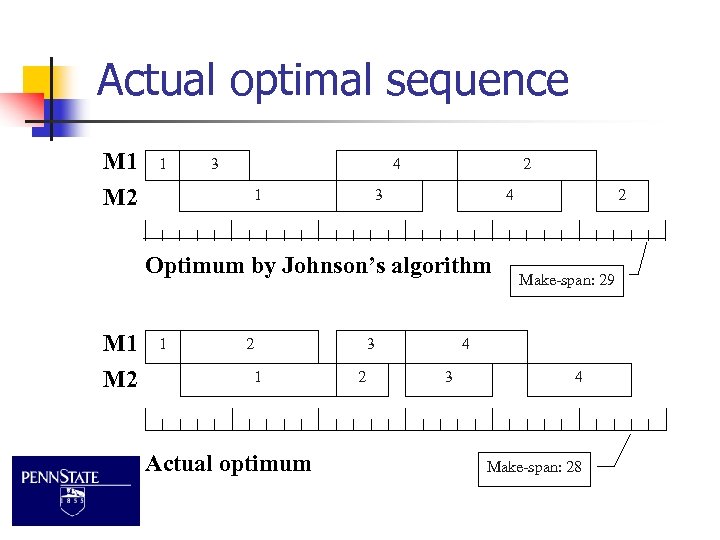
Actual optimal sequence M 1 M 2 1 3 4 1 2 3 4 Optimum by Johnson’s algorithm M 1 M 2 1 2 3 1 Actual optimum 2 2 Make-span: 29 4 3 4 Make-span: 28
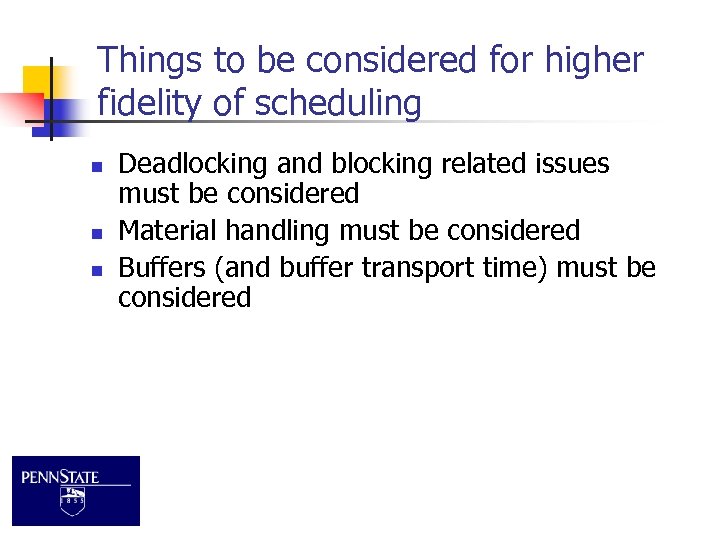
Things to be considered for higher fidelity of scheduling n n n Deadlocking and blocking related issues must be considered Material handling must be considered Buffers (and buffer transport time) must be considered
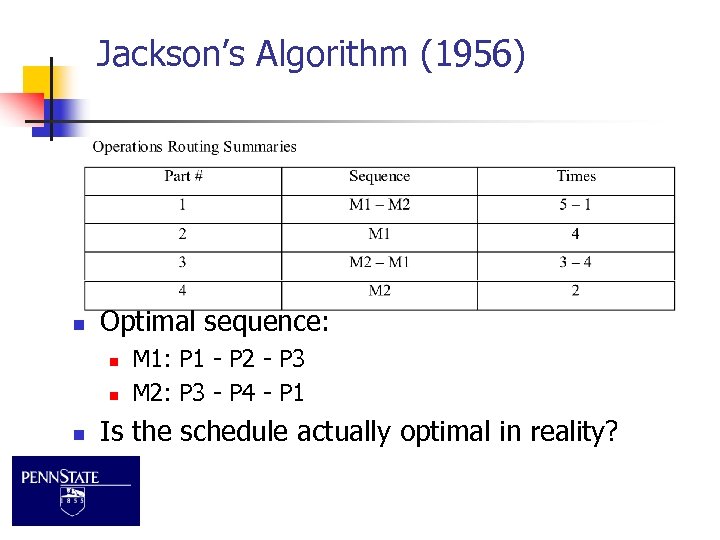
Jackson’s Algorithm (1956) n Optimal sequence: n n n M 1: P 1 - P 2 - P 3 M 2: P 3 - P 4 - P 1 Is the schedule actually optimal in reality?
Schedule Implementation n n If no buffers exist, it is impossible to implement the schedule as the optimum schedule by Jackson’s rule Even if buffers exist, several better schedules may exist including the following schedule: n n M 1: P 1 - P 2 - P 3 M 2: P 1 - P 3 - P 4
Simulation specifics n n n Very detailed simulation models that emulate the steps of parts through the system must be developed. Caution must be taken to insure that the model behaves properly. The simulation allocates resources (planning) and sequences activities (scheduling).
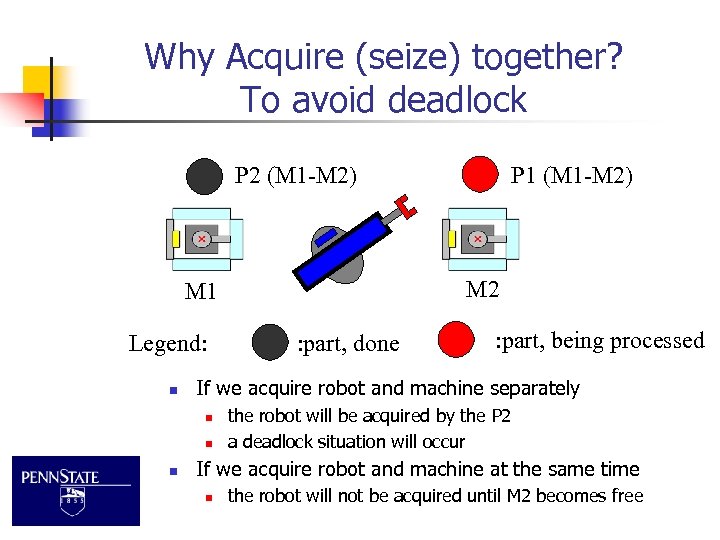
Why Acquire (seize) together? To avoid deadlock P 2 (M 1 -M 2) M 2 M 1 Legend: n : part, done : part, being processed If we acquire robot and machine separately n n n P 1 (M 1 -M 2) the robot will be acquired by the P 2 a deadlock situation will occur If we acquire robot and machine at the same time n the robot will not be acquired until M 2 becomes free
Time advancement: Simulation for Real-time Control n if runs in fast mode n n n time delay is based on the expected processing time (typically a statistical distribution) Move to the next event as quickly as possible simulation time is based on the computer clock time n n time delay is based on the performance of a physical task (subjec to machining parameters) task contains parameters: task_name, part_id, op_id real-time system monitoring (animation) Reference: Smith et al. , 1994
Simulation can be used for control n n Traditionally run simulation in fast mode Can be coordinated to physical system via HLA or messaging
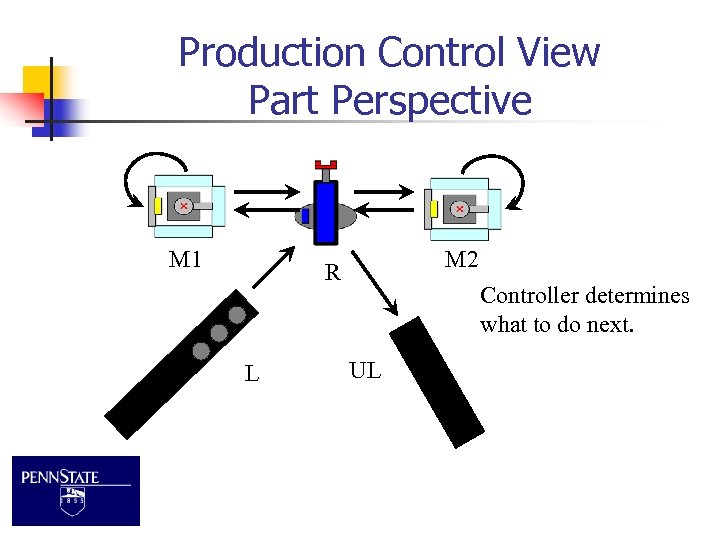
Production Control View Part Perspective M 1 M 2 R L Controller determines what to do next. UL
Simulation-based Scheduling: methodologies n n Combinatorial approach -- intractable AI/Search algorithms n n n Simulated annealing Tabu-search Genetic algorithm Neural networks (Cho and Wysk, 1993) Extended dispatching heuristics None of these guarantees optimization
Simulation-based Scheduling: multi-pass simulation n Simulation n real-time simulation - task generator fast simulation - schedule evaluator Who does the schedule “generation” then? n n Look ahead manager Scheduling: come up with a good combination of control strategies for the decision points
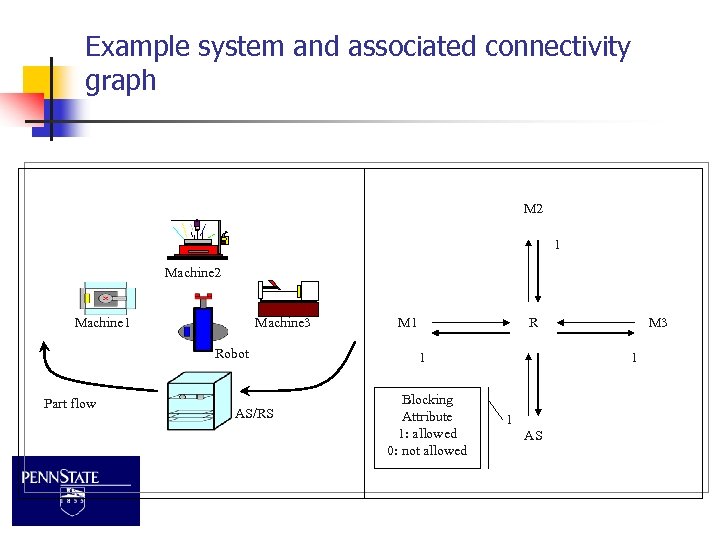
Example system and associated connectivity graph M 2 1 Machine 2 Machine 1 Machine 3 Robot Part flow AS/RS M 1 R 1 Blocking Attribute 1: allowed 0: not allowed M 3 1 1 AS
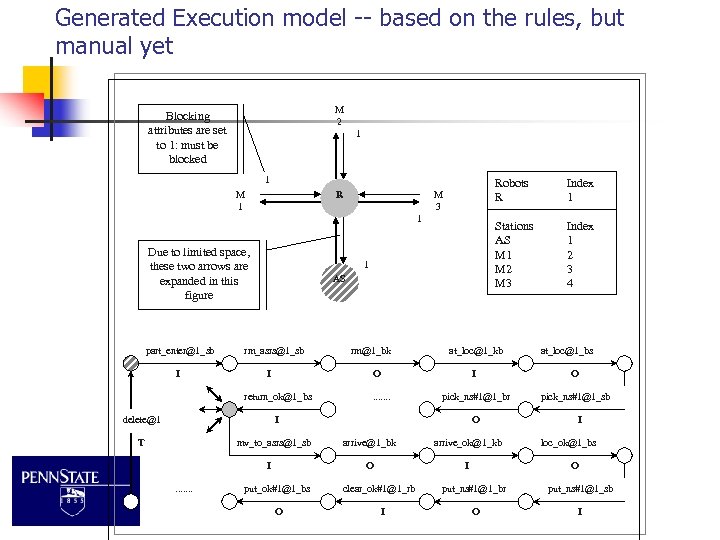
Generated Execution model -- based on the rules, but manual yet M 2 Blocking attributes are set to 1: must be blocked 1 1 M 1 R Robots R 1 Due to limited space, these two arrows are expanded in this figure part_enter@1_sb I 1 AS rm_asrs@1_sb I rm@1_bk delete@1 mv_to_asrs@1_sb O pick_ns#1@1_br pick_ns#1@1_sb . . . . O put_ok#1@1_bs O arrive@1_bk arrive_ok@1_kb O I I clear_ok#1@1_rb I at_loc@1_bs I I T . . . . Index 1 2 3 4 at_loc@1_kb O return_ok@1_bs Index 1 Stations AS M 1 M 2 M 3 I loc_ok@1_bs O put_ns#1@1_br put_ns#1@1_sb O I
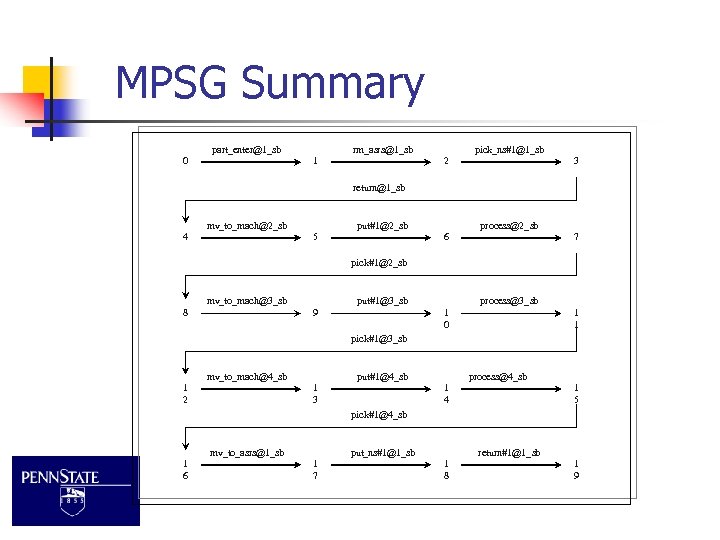
MPSG Summary part_enter@1_sb 0 rm_asrs@1_sb 1 pick_ns#1@1_sb 2 3 return@1_sb mv_to_mach@2_sb 4 put#1@2_sb 5 process@2_sb 6 7 pick#1@2_sb mv_to_mach@3_sb 8 put#1@3_sb 9 process@3_sb 1 0 1 1 pick#1@3_sb mv_to_mach@4_sb 1 2 put#1@4_sb 1 3 process@4_sb 1 4 1 5 pick#1@4_sb mv_to_asrs@1_sb 1 6 put_ns#1@1_sb 1 7 return#1@1_sb 1 8 1 9
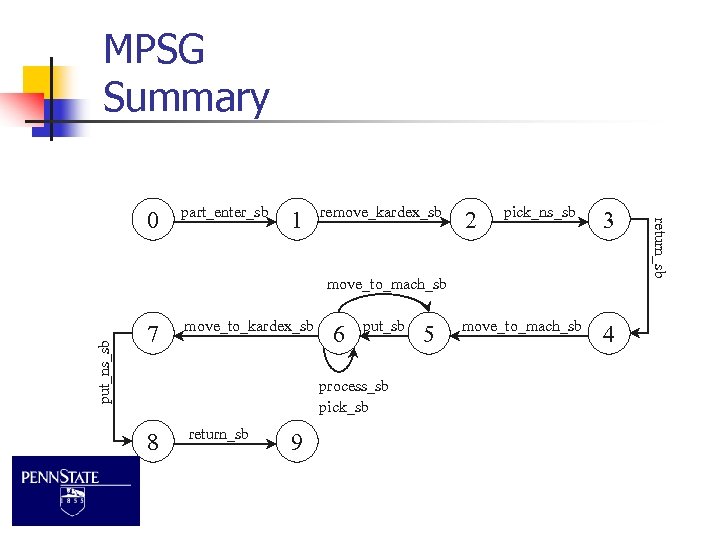
MPSG Summary part_enter_sb 1 remove_kardex_sb 2 pick_ns_sb 3 put_ns_sb move_to_mach_sb 7 move_to_kardex_sb 6 put_sb process_sb pick_sb 8 return_sb 9 5 move_to_mach_sb 4 return_sb 0
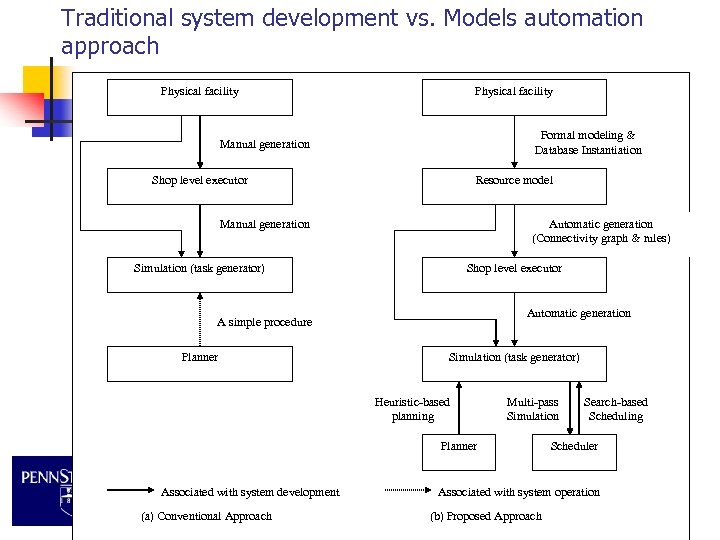
Traditional system development vs. Models automation approach Physical facility Formal modeling & Database Instantiation Manual generation Shop level executor Resource model Automatic generation (Connectivity graph & rules) Manual generation Simulation (task generator) Shop level executor Automatic generation A simple procedure Planner Simulation (task generator) Heuristic-based planning Multi-pass Simulation Planner Associated with system development (a) Conventional Approach Search-based Scheduling Scheduler Associated with system operation (b) Proposed Approach
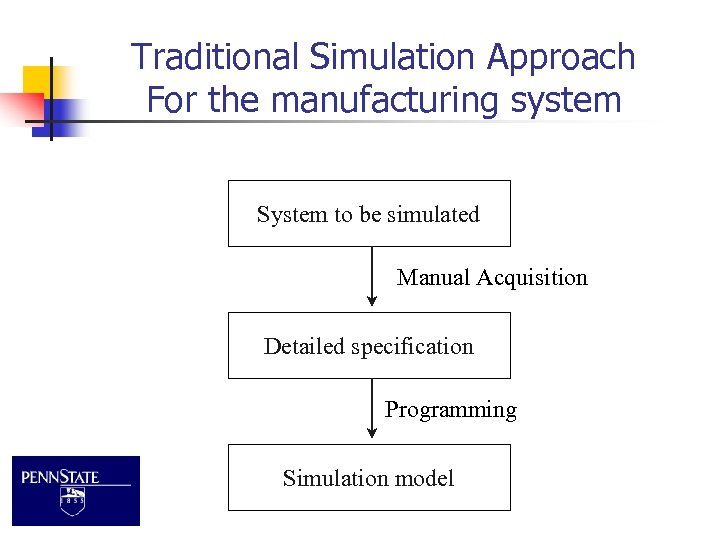
Traditional Simulation Approach For the manufacturing system System to be simulated Manual Acquisition Detailed specification Programming Simulation model
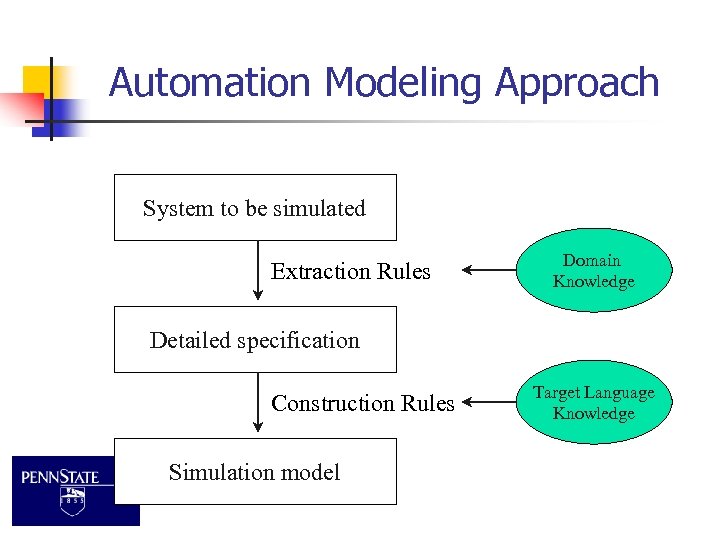
Automation Modeling Approach System to be simulated Extraction Rules Domain Knowledge Detailed specification Construction Rules Simulation model Target Language Knowledge
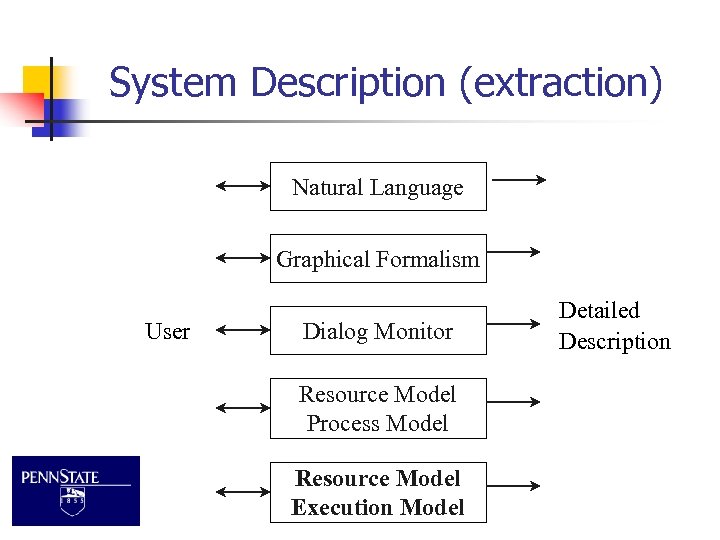
System Description (extraction) Natural Language Graphical Formalism User Dialog Monitor Resource Model Process Model Resource Model Execution Model Detailed Description
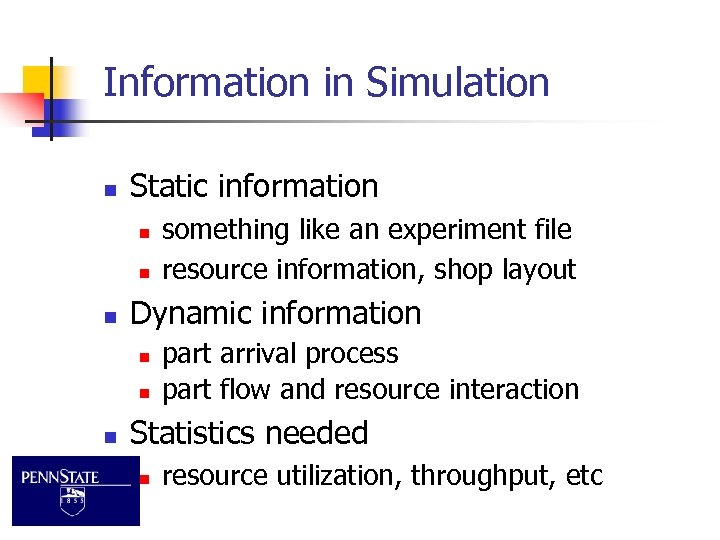
Information in Simulation n Static information n Dynamic information n something like an experiment file resource information, shop layout part arrival process part flow and resource interaction Statistics needed n resource utilization, throughput, etc
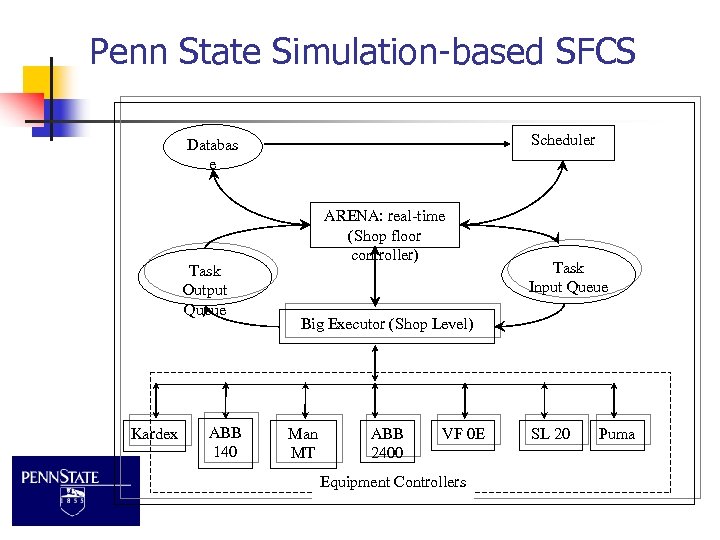
Penn State Simulation-based SFCS Scheduler Databas e Task Output Queue Kardex ABB 140 ARENA: real-time (Shop floor controller) Task Input Queue Big Executor (Shop Level) Man MT ABB 2400 VF 0 E Equipment Controllers SL 20 Puma
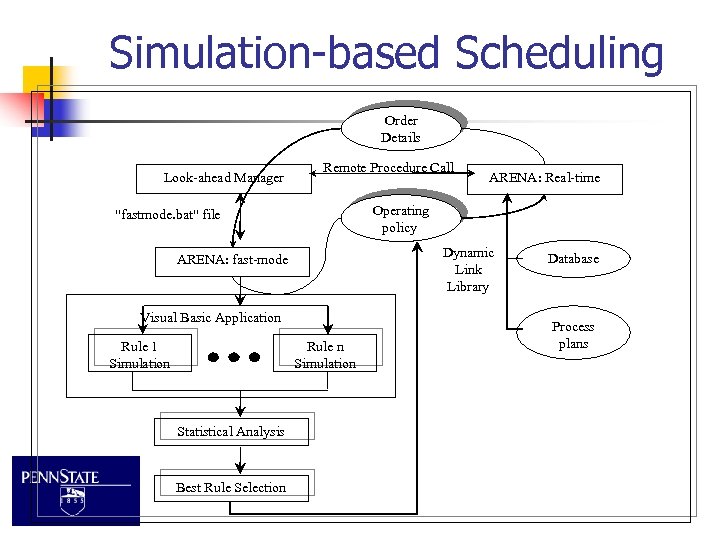
Simulation-based Scheduling Order Details Look-ahead Manager Remote Procedure Call Operating policy "fastmode. bat" file Dynamic Link Library ARENA: fast-mode Visual Basic Application Rule 1 Simulation Rule n Simulation Statistical Analysis Best Rule Selection ARENA: Real-time Database Process plans
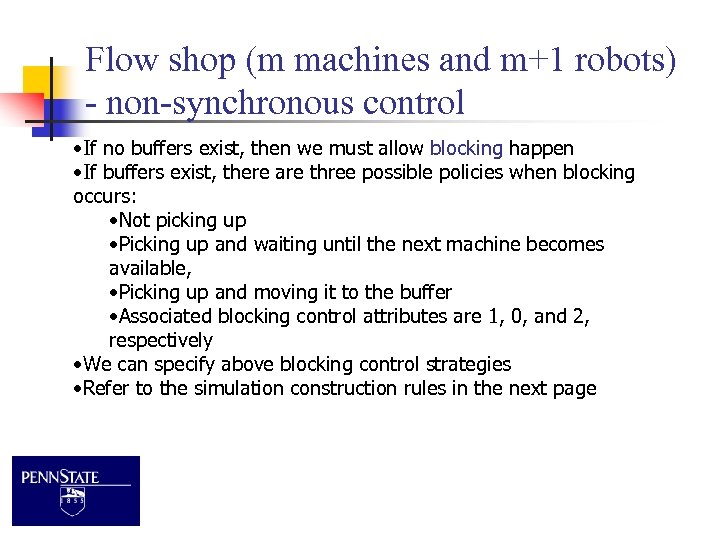
Flow shop (m machines and m+1 robots) - non-synchronous control • If no buffers exist, then we must allow blocking happen • If buffers exist, there are three possible policies when blocking occurs: • Not picking up • Picking up and waiting until the next machine becomes available, • Picking up and moving it to the buffer • Associated blocking control attributes are 1, 0, and 2, respectively • We can specify above blocking control strategies • Refer to the simulation construction rules in the next page
Information in Process Plans For each part type ID, operation code, description, resource_ID, Robot_location, NC_file_name Reference: Lee et al. , 1994 Implementation database representation PSL (Process specification language) IDEF 3 (ICAM Definition language) etc
Process Plan vs. Simulation n Simulation in simulation based control n n Process plans reside externally Simulation in design and analysis n n Process plans reside within the simulation model Possible to include the alternative routings within the model
Conclusion n Structure and information n n Simulation model Resource model Execution model Simulation model generation - resource model and execution model (+blocking attributes) % to be generated n Depends on the types of system n Pretty much for nothing
References n n n n Cho, H. , T. K. , Kumaran, and R. A. Wysk, 1995, ”Graph-theoretic deadlock detection and resolution for flexible manufacturing systems". IEEE Transactions on Robotics and Automation, Vol. 11, No. 3, pp. 413 -421. Cho, H. , and R. A. Wysk, 1993, "A Robust Adaptive Scheduler for an intelligent Workstation Controller". International Journal of Production Research, Vol. 31, No. 4, pp. 771 -789. Drake, G. R. , J. S. Smith, and B. A. Peters, 1995, "Simulation as a planning and scheduling tool for flexible manufacturing systems". Proceedings of the 1995 Winter Simulation Conference. pp. 805 -812. Ferreira, Joao C. and Wysk, R. A. , “An investigation of the influence of alternative process plans on equipment control”, Journal of Manufacturing Systems, Vol. 19, No. 6, pp. 393 – 406, 2001. Ferreira, J. C. E. , Steele, J. , Wysk, R. A. , and Pasi, D. A. , “A Schema for Flexible Equipment Control in Manufacturing Systems”, International Journal of Advanced Manufacturing Technology, Vol 18, 410 - 421. Lee, S. , R. Wysk, and J. Smith, 1994, “Process Planning Interface for a Shop Floor Control Architecture for Computer-integrated Manufacturing, " International Journal of Production Research, Vol. 9, No. 9, pp. 2415 - 2435. Smith, J. and S. Joshi. , 1992, “Message-based Part State Graphs (MPSG): A Formal Model for Shop Control”, ASME Journal of Engineering for Industry, (In review). Smith, J. , B. Peters, and A. Srinivasan, 1999, “Job Shop scheduling considering material handling”, International Journal of Production Research, Vol. 37, No. 7, 1541 -1560
References n. Son, Young-Jun and Wysk, R. A. , “Automatic simulation model generation for simulation-based, real-time control”, Computers in Industry, vol. 45, pp 291 - 308, 2001. n. Steele, Jay W. , Son, Young-Jun and Wysk, R. A. , “Resource Modeling for Integration of the Manufacturing Enterprise”, Journal of Manufacturing Systems, Vol. 19, No. 6, pp 407 – 426, 2001. n. Moreno-Lizaranzu, Manuel J. , Wysk, Richard A. , Hong, Joonki and Prabhu, Vittaldas V. , “A Hybrid Shop Floor Control System For Food Manufacturing”, Transactions of IIE, Vol. 33, No. 3, 193 – 2003, March 2001. n. Hong, Joonki, Prabhu Vittal and Wysk, R. A. , “Real-time Batch Sequencing using arrival time control algorithm”, International Journal of Production Research, Vol 39, No. 17, pp 3863 – 3880, 2001. n. Ferreira, J. C. E. and Wysk, R. A. , “On the efficiency of alternative process plans”, Journal of the Brazilian Society of Mechanical Sciences, Vol. XXIII, No. 3, pp 285 – 302, 2001. n. Smith, J. S. , Wysk, R. A. , Sturrok, D. T. , Ramaswamy, S. E. , Smith, G. D. , and S. B. Joshi. , 1994, “Discrete Event Simulation for Shop Floor Control” Proceedings of the 1994 Winter Simulation Conference, pp. 962 -969. n. Son, Y. , H. Rodríguez-Rivera, and R. Wysk, 1999, “A Multi-pass Simulation-based, Real-time Scheduling and Shop Floor Control System, " (Accepted) Transactions, The quarterly Journal of the Society for Computer Simulation International.
References n. Steele, J. , S. Lee, C. Narayanan, and R. Wysk, 1999, “Resource Models for Modeling Product, Process and Production Requirements in Engineering Environments, " submitted to International Journal of Production Research. • Venkatesh, S. , J. S. Smith, B. Deuermeyer, and G. Curry, 1998, ”Deadlock detection for discrete event simulation: Multiple-unit seizes". IIE Transactions, Vol. 30 No. 3, pp. 201 -216 • Wu, S. D. and R. A. Wysk, 1988, "Multi-pass expert control system - A control / scheduling structure for flexible manufacturing cells". Journal of Manufacturing Systems, Vol. 7 No. 2, pp. 107 -120 • Wu, S. D. and R. A. Wysk, 1989, "An application of discrete-event simulation to on-line control and scheduling in flexible manufacturing". International Journal of Production Research, Vol. 27, No. 9, pp. 1603 -1623. • Wysk, R. A. , Peters, B. A. , and J. S. Smith, 1995, “A Formal Process Planning Schema for Shop Floor Control” Engineering Design and Automation Journal, Vol. 1, No. 1, pp. 3 -19 • Wysk, R. A. , N. Yang, S. Joshi, 1994, "Resolution of deadlocks in flexible manufacturing systems: avoidance and recovering approaches". Journal of Manufacturing Systems, Vol. 13, No. 2, pp. 128138.
Скачать презентацию Simulation-based Scheduling and Control Richard A Wysk IE
f62fb9b3c7cff6232a50a012391f0d65.ppt