


 Скачать презентацию Simplifying Wide-Area Application Development with Wheel FS Jeremy
d8387ea71fc3294bd26f6ed5ed50209b.ppt
- Количество слайдов: 38
 Simplifying Wide-Area Application Development with Wheel. FS Jeremy Stribling In collaboration with Jinyang Li, Frans Kaashoek, Robert Morris MIT CSAIL & New York University
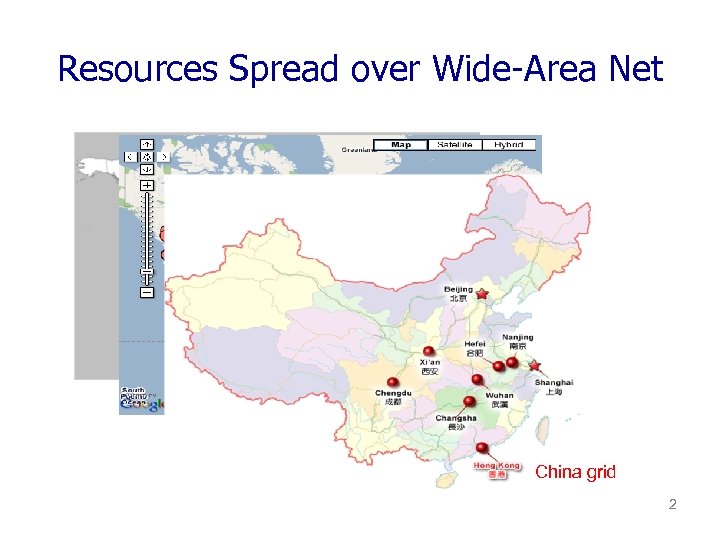 Resources Spread over Wide-Area Net Planet. Lab Google datacenters China grid 2
 Grid Computations Share Data Nodes in a distributed computation share: – Program binaries – Initial input data – Processed output from one node as intermediary input to another node 3
 So Do Users and Distributed Apps • Apps aggregate disk/computing at hundreds of nodes • Example apps – Content distribution networks (CDNs) – Backends for web services – Distributed digital research library All applications need distributed storage 4
 State of the Art in Wide-Area Storage • Existing wide-area file systems are inadequate – Designed only to store files for users – E. g. , No hundreds of nodes can write files to the same dir – E. g. , Strong consistency at the cost of availability • Each app builds its own storage! – Distributed Hash Tables (DHTs) – ftp, scp, wget, etc. 5
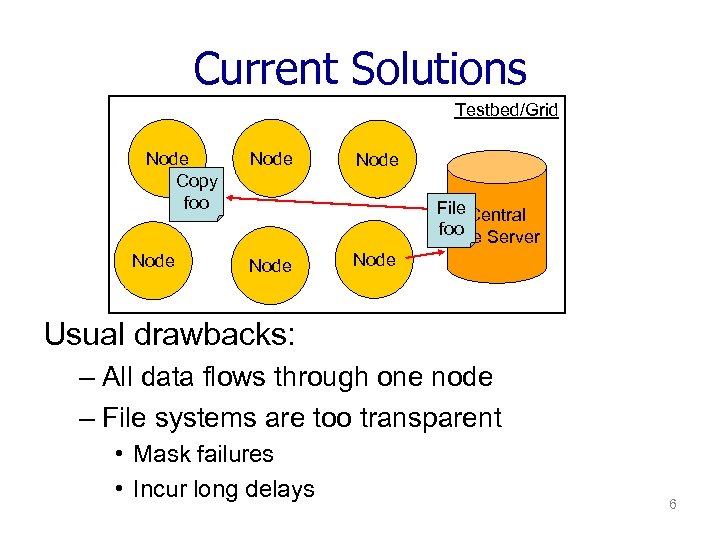 Current Solutions Testbed/Grid Node Copy foo Node File Central foo Server File Node Usual drawbacks: – All data flows through one node – File systems are too transparent • Mask failures • Incur long delays 6
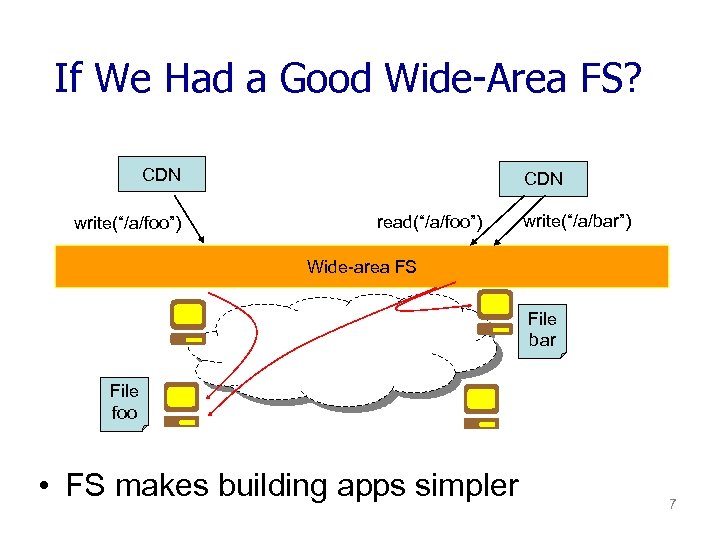 If We Had a Good Wide-Area FS? CDN write(“/a/foo”) CDN read(“/a/foo”) write(“/a/bar”) Wide-area FS File bar File foo • FS makes building apps simpler 7
 Why Is It Hard? • Apps care a lot about performance • WAN is often the bottleneck – High latency, low bandwidth – Transient failures • How to give app control without sacrificing ease of programmability? 8
 Our Contribution: Wheel. FS • Suitable for wide-area apps • Gives app control through cues over: – Consistency vs. availability tradeoffs – Data placement – Timing, reliability, etc. • Prototype implementation 9
 Talk Outline • • Challenges & our approach Basic design Application control Running a Grid computation over Wheel. FS 10
 What Does a File System Buy You? • Re-use existing software • Simplify the construction of new applications – A hierarchical namespace – A familiar interface – Language-independent usage 11
 Why Is It Hard To Build a FS on WAN? • High latency, low bandwidth – 100 s ms instead of 1 s ms latency – 10 s Mbps instead of 1000 s Mbps bandwidth • Transient failures are common – 32 outages over 64 hours across 132 paths [Andersen’ 01] 12
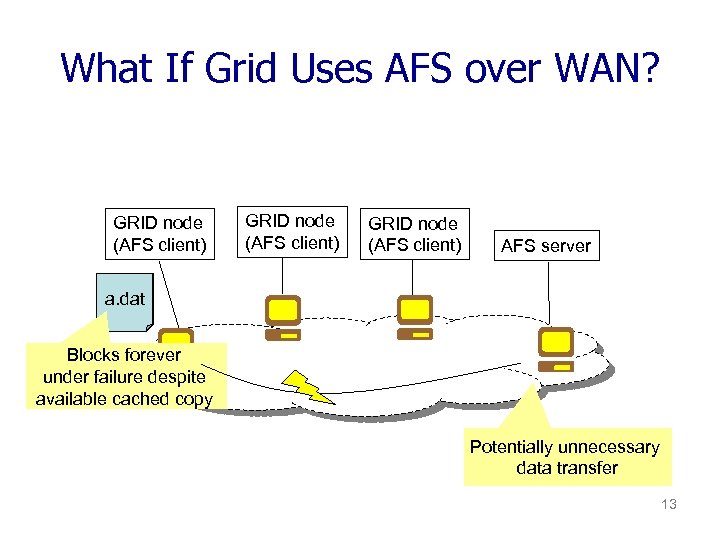 What If Grid Uses AFS over WAN? GRID node (AFS client) AFS server a. dat Blocks forever under failure despite available cached copy Potentially unnecessary data transfer 13
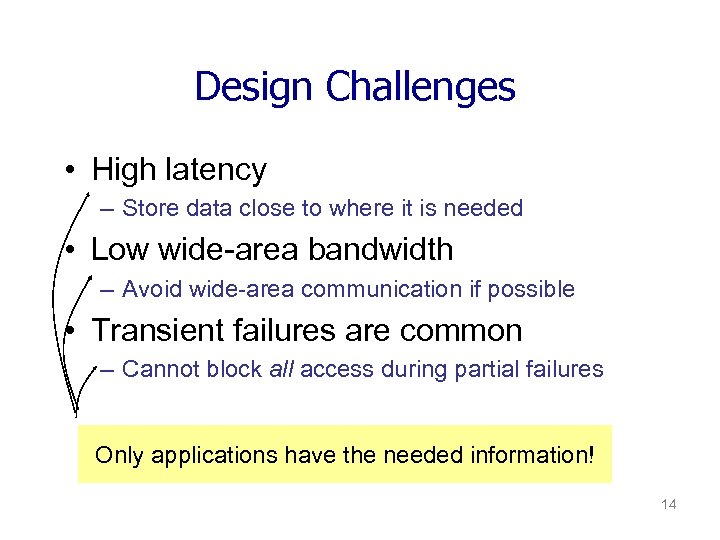 Design Challenges • High latency – Store data close to where it is needed • Low wide-area bandwidth – Avoid wide-area communication if possible • Transient failures are common – Cannot block all access during partial failures Only applications have the needed information! 14
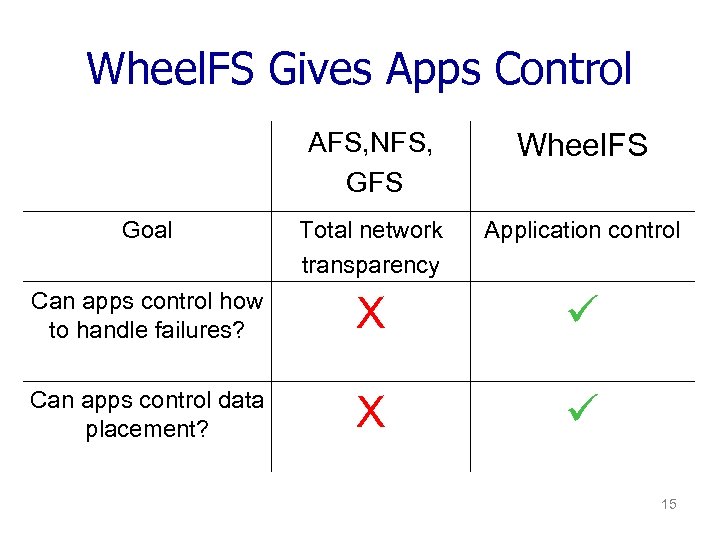 Wheel. FS Gives Apps Control AFS, NFS, GFS Wheel. FS Goal Total network transparency Application control Can apps control how to handle failures? X Can apps control data placement? X 15
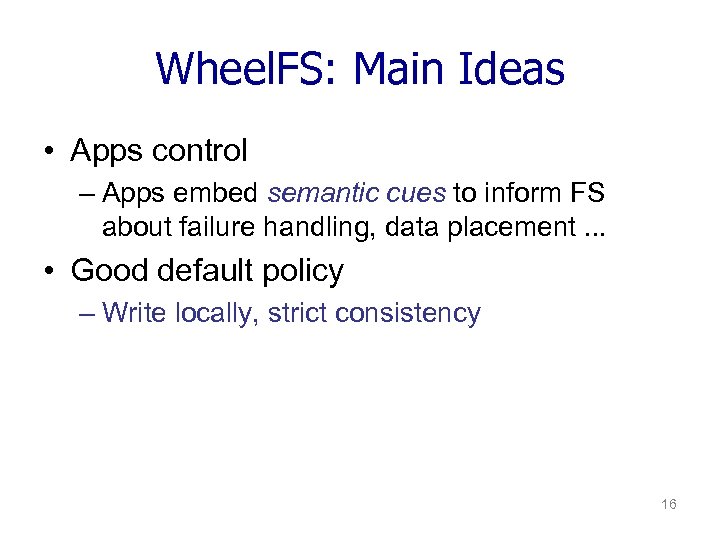 Wheel. FS: Main Ideas • Apps control – Apps embed semantic cues to inform FS about failure handling, data placement. . . • Good default policy – Write locally, strict consistency 16
 Talk Outline • • Challenges & our approach Basic design Application control Running a Grid computation over Wheel. FS 17
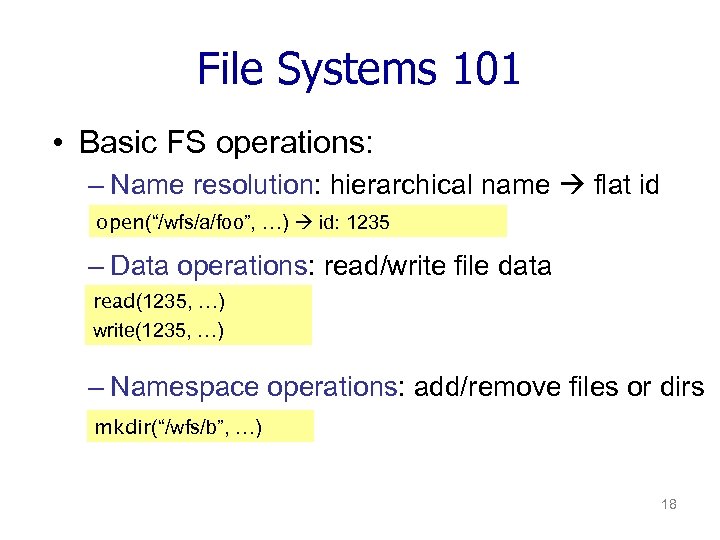 File Systems 101 • Basic FS operations: – Name resolution: hierarchical name flat id open(“/wfs/a/foo”, …) id: 1235 – Data operations: read/write file data read(1235, …) write(1235, …) – Namespace operations: add/remove files or dirs mkdir(“/wfs/b”, …) 18
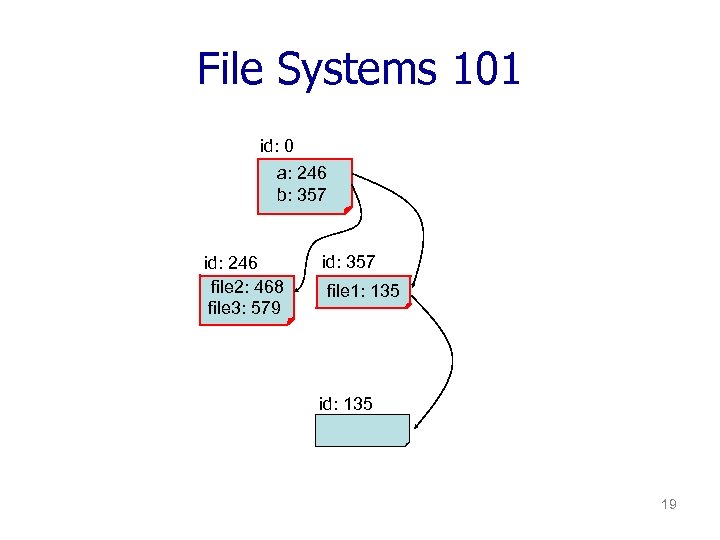 File Systems 101 id: 0 a: 246 b: 357 id: 246 file 2: 468 file 3: 579 id: 357 file 1: 135 id: 135 19
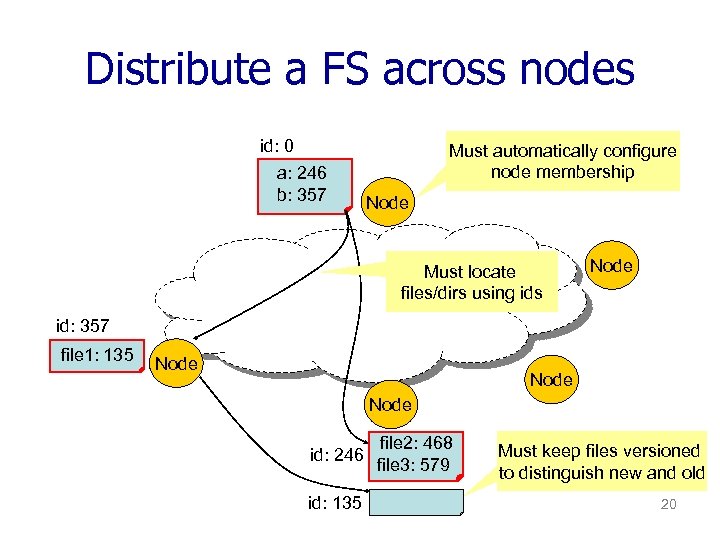 Distribute a FS across nodes id: 0 a: 246 b: 357 Must automatically configure node membership Node Must locate files/dirs using ids Node id: 357 file 1: 135 Node id: 246 id: 135 file 2: 468 file 3: 579 Must keep files versioned to distinguish new and old 20
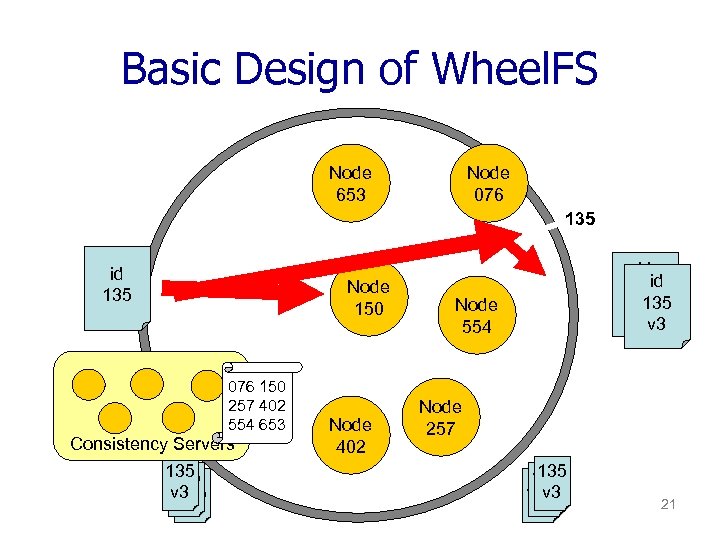 Basic Design of Wheel. FS Node 653 Node 076 135 id 135 Node 150 076 150 257 402 554 653 Consistency Servers 135 v 3 135 v 2 Node 402 id id 135 v 2 v 3 Node 554 Node 257 135 v 3 135 v 2 21
 Default Behavior: Write Locally, Strict Consistency • Write locally: Store newly created files at the writing node –Writes are fast –Transfer data lazily for reads when necessary • Strict consistency: data behaves as in a local FS – Once new data is written and the file is closed, the next open will see the new data 22
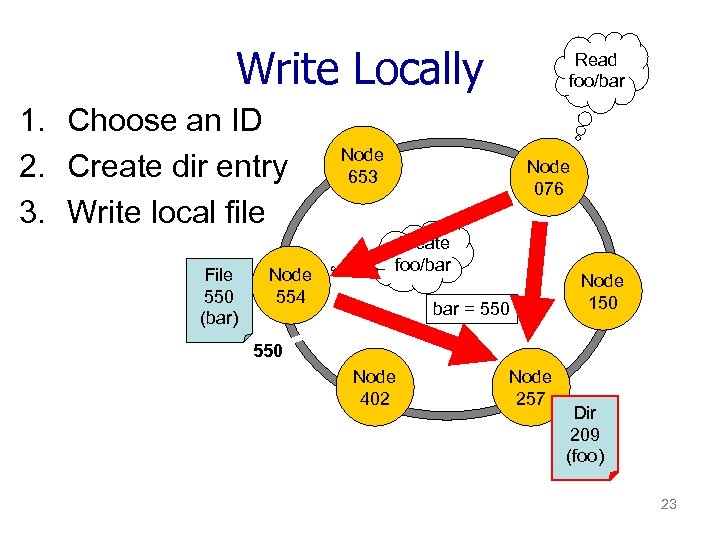 Write Locally 1. Choose an ID 2. Create dir entry 3. Write local file File 550 (bar) Node 554 Read foo/bar Node 653 Node 076 Create foo/bar = 550 Node 150 550 Node 402 Node 257 Dir 209 (foo) 23
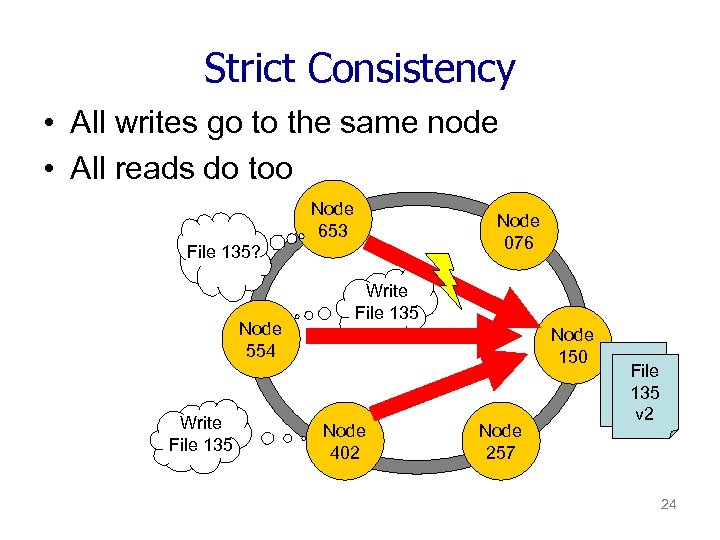 Strict Consistency • All writes go to the same node • All reads do too Node 653 Node 076 File 135? Node 554 Write File 135 Node 150 Node 402 Node 257 File 135 v 2 24
 Talk Outline • • Challenges & our approach Basic design Application control Running a Grid computation over Wheel. FS 25
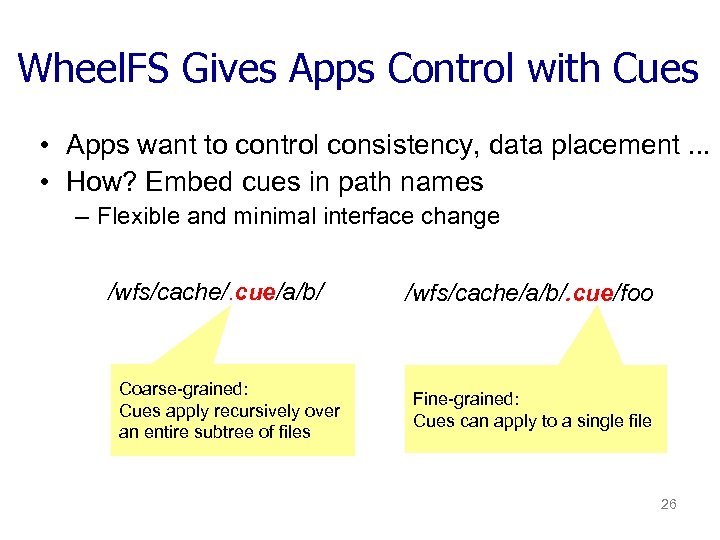 Wheel. FS Gives Apps Control with Cues • Apps want to control consistency, data placement. . . • How? Embed cues in path names – Flexible and minimal interface change /wfs/cache/. cue/a/b/ Coarse-grained: Cues apply recursively over an entire subtree of files /wfs/cache/a/b/. cue/foo Fine-grained: Cues can apply to a single file 26
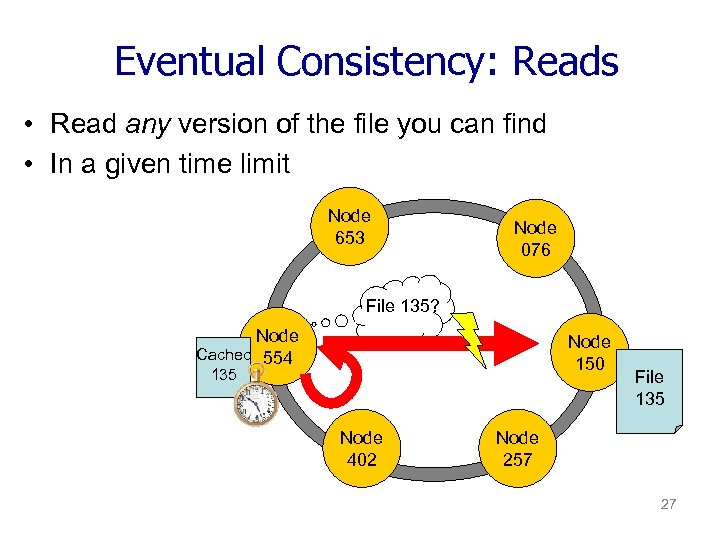 Eventual Consistency: Reads • Read any version of the file you can find • In a given time limit Node 653 Node 076 File 135? Node Cached 554 Node 150 135 Node 402 File 135 Node 257 27
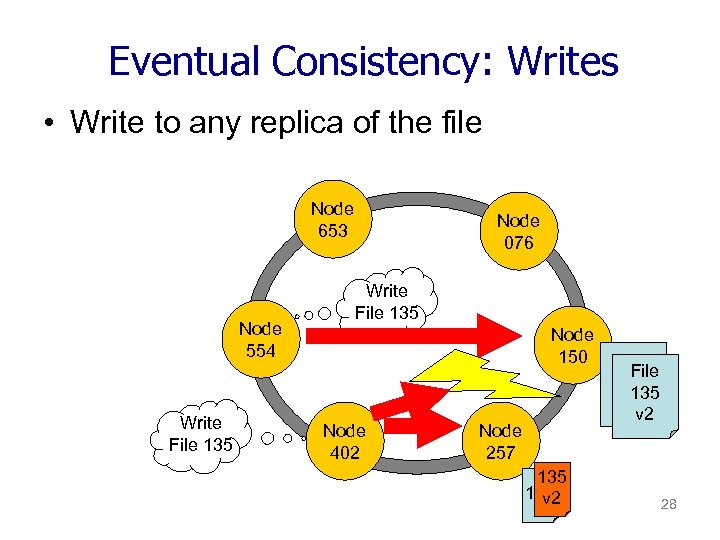 Eventual Consistency: Writes • Write to any replica of the file Node 653 Node 554 Write File 135 Node 076 Write File 135 Node 150 Node 402 Node 257 135 v 2 File 135 v 2 28
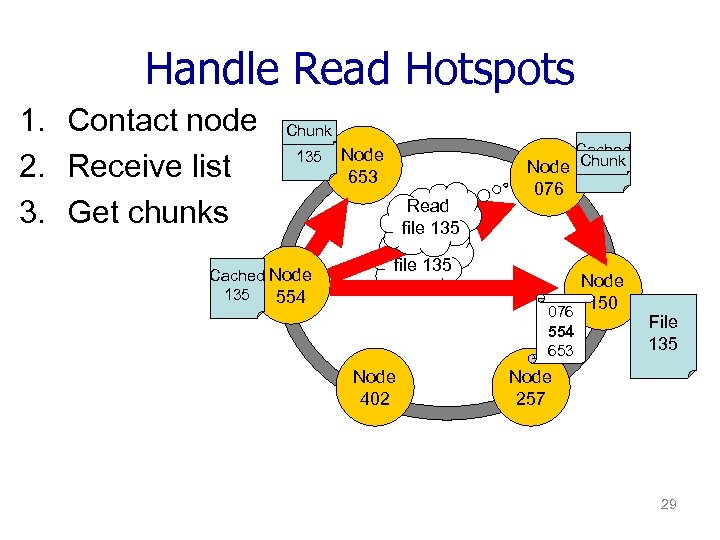 Handle Read Hotspots 1. Contact node 2. Receive list 3. Get chunks Chunk Cached 135 Node Cached Node 135 554 Cached Node Chunk 135 653 Read file 135 076 Node 150 076 554 653 Node 402 Node 257 File 135 Chunk 29
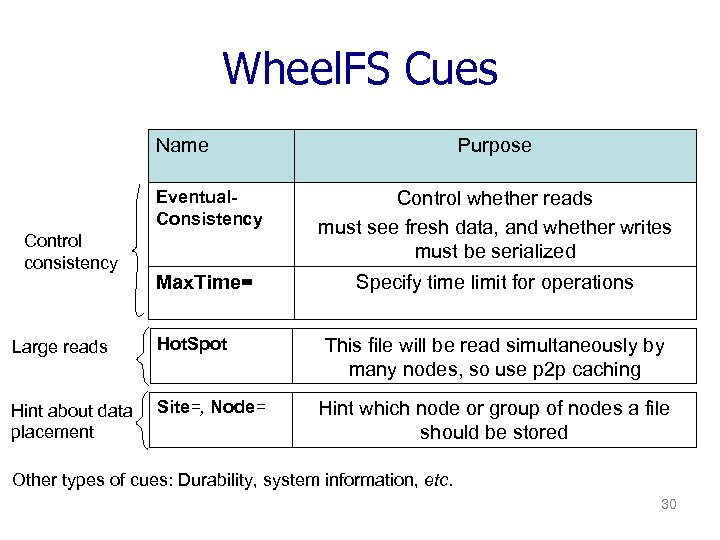 Wheel. FS Cues Name Purpose Eventual. Consistency Control consistency Control whether reads must see fresh data, and whether writes must be serialized Max. Time= Specify time limit for operations Large reads Hot. Spot Hint about data placement Site=, Node= This file will be read simultaneously by many nodes, so use p 2 p caching Hint which node or group of nodes a file should be stored Other types of cues: Durability, system information, etc. 30
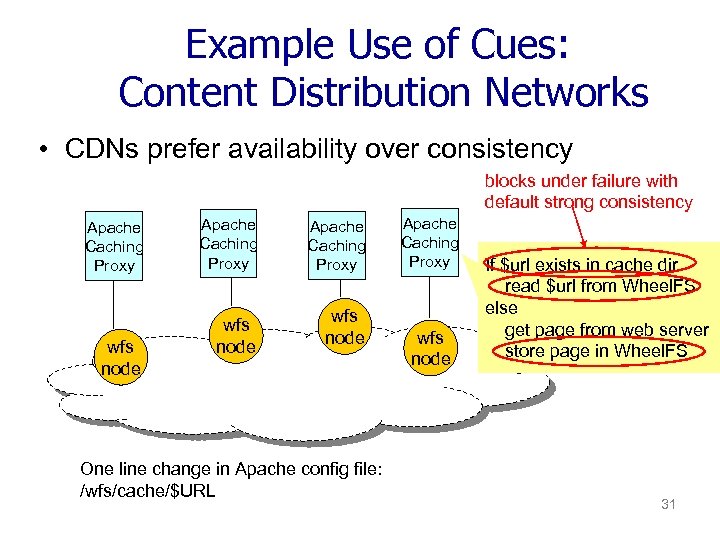 Example Use of Cues: Content Distribution Networks • CDNs prefer availability over consistency blocks under failure with default strong consistency Apache Caching Proxy wfs node One line change in Apache config file: /wfs/cache/$URL Apache Caching Proxy wfs node If $url exists in cache dir read $url from Wheel. FS else get page from web server store page in Wheel. FS 31
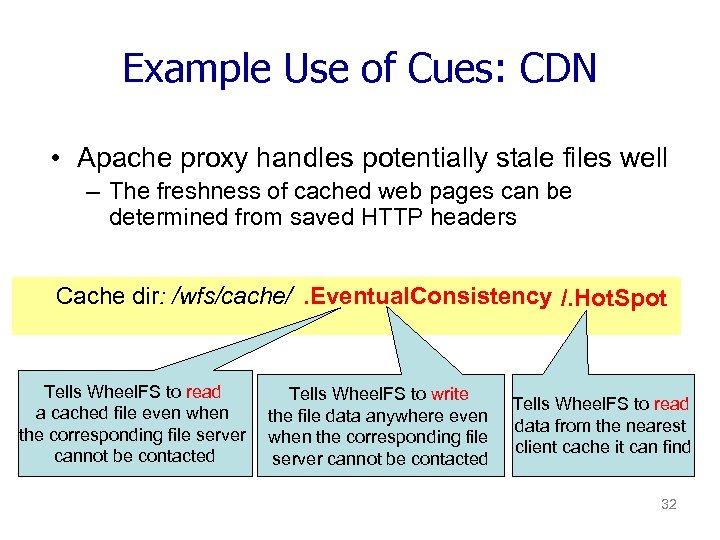 Example Use of Cues: CDN • Apache proxy handles potentially stale files well – The freshness of cached web pages can be determined from saved HTTP headers Cache dir: /wfs/cache/. Eventual. Consistency /. Hot. Spot Tells Wheel. FS to read a cached file even when the corresponding file server cannot be contacted Tells Wheel. FS to write the file data anywhere even when the corresponding file server cannot be contacted Tells Wheel. FS to read data from the nearest client cache it can find 32
 Example Use of Cues: BLAST Grid Computation • DNA alignment tool run on Grids • Copy separate DB portions and queries to many nodes • Run separate computations • Later fetch and combine results • Read binary using. Hot. Spot • Write output using. Eventual. Consistency 33
 Talk Outline • • Challenges & our approach Basic design Application control Running a Grid computation over Wheel. FS 34
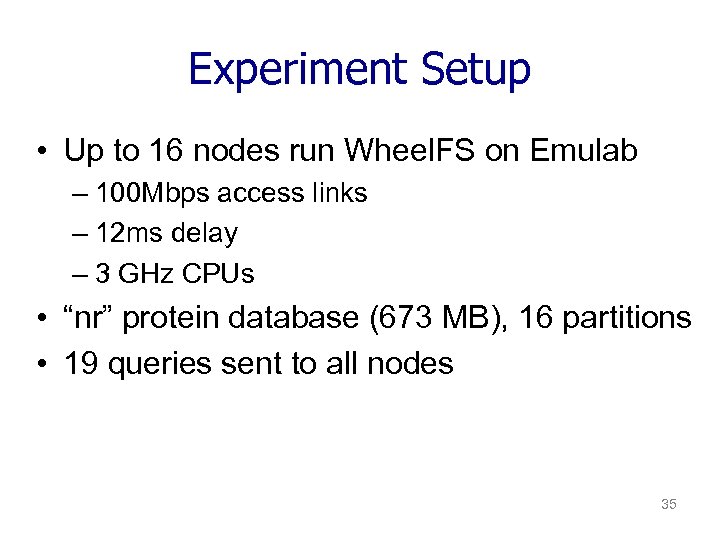 Experiment Setup • Up to 16 nodes run Wheel. FS on Emulab – 100 Mbps access links – 12 ms delay – 3 GHz CPUs • “nr” protein database (673 MB), 16 partitions • 19 queries sent to all nodes 35
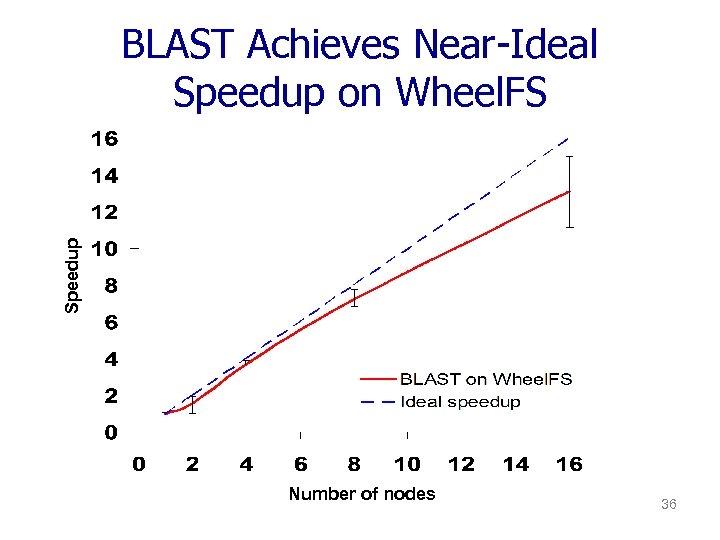 Speedup BLAST Achieves Near-Ideal Speedup on Wheel. FS Number of nodes 36
 Related Work • • Cluster FS: Farsite, GFS, x. FS, Ceph Wide-area FS: Jet. File, CFS, Shark Grid: Legion. FS, Grid. FTP, IBP POSIX I/O High Performance Computing Extensions 37
 Conclusion • A WAN FS simplifies app construction • FS must let app control data placement & consistency • Wheel. FS exposes such control via cues Building apps is easy with Wheel. FS 38