 Скачать презентацию Simile 1 The glass bulb smashed like broken
aee31d2c4e117013d4192bcec3db9fa8.ppt
- Количество слайдов: 26



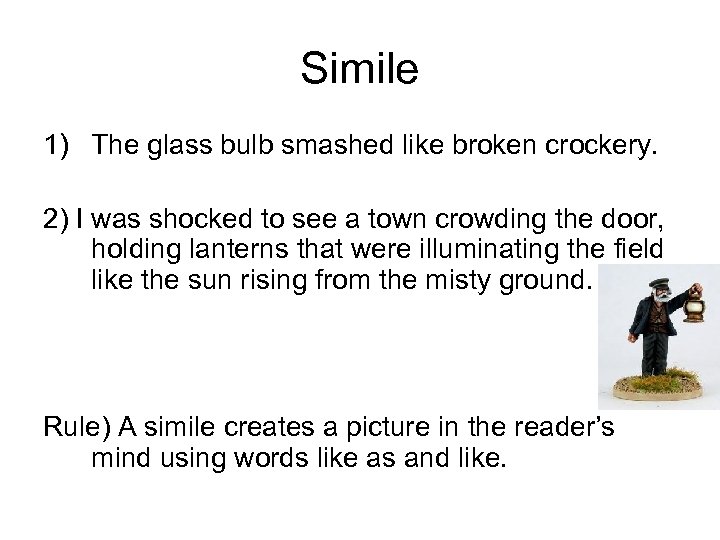
Simile 1) The glass bulb smashed like broken crockery. 2) I was shocked to see a town crowding the door, holding lanterns that were illuminating the field like the sun rising from the misty ground. Rule) A simile creates a picture in the reader’s mind using words like as and like.
2 Ad 1) The lighthouse keeper was a clean, kind man with a deep, booming voice. Rule) The sentence has two adjectives before the first noun then two before the second noun.
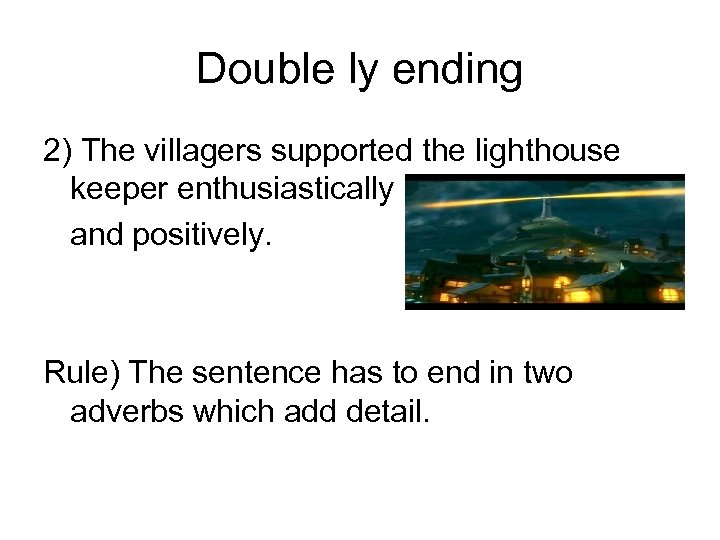
Double ly ending 2) The villagers supported the lighthouse keeper enthusiastically and positively. Rule) The sentence has to end in two adverbs which add detail.
4. 3_ed 1. Scared, confused , anxious, the lighthouse keeper tripped and smashed the glass bulb. Rule: A 3 ed sentence must start with three adjectives to describe what they’re feeling. The ed words MUST be followed by commas.
13. Ad, same ad 1) He was scared, scared because the ship was storming towards him. Rule: The first adjective is repeated after the comma.
3 bad –(dash) questions NO. 14 • Broken, smashed, destroyed- how could I fix the bulb? • 3 negative adjectives followed By a hyphen then a question Which relates to a adjective.
2 pairs NO. 5 • Sad and upset, cold and bothered; he did not know how much longer it would last. • start with two pairs of related adjectives each pair is followed by a comma separated by and.
8 O. (I. ) Outside (inside) v. The lighthouse keeper was grumpy like always. (Inside he felt jealous of the partying that was going on at the pub. ) Rule: The first sentence explains what the person was doing. The second sentence explains their feelings and how they feel inside.
6 De: De v The lighthouse keeper was exhausted: he had been writing for over an hour. v. The lighthouse keeper was bored: all he could do was sit there in silence while everyone else was partying. Rule: First you tell how the person feels: then you explain it in detail.
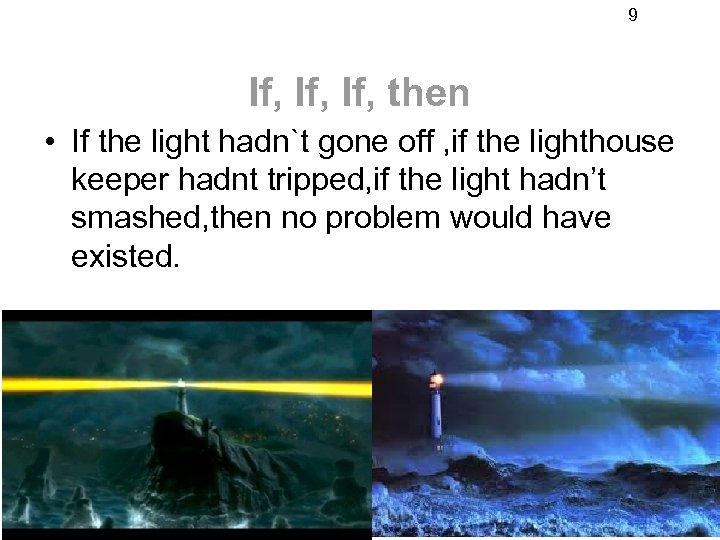
9 If, If, then • If the light hadn`t gone off , if the lighthouse keeper hadnt tripped, if the light hadn’t smashed, then no problem would have existed.
7 Verb, Person • Rushing, the lighthouse keeper tripped over his handy toolbox. • Rushing vigourosly the lighthouse keeper stumbled over his handy toolbox. Tip Use a adverb too!
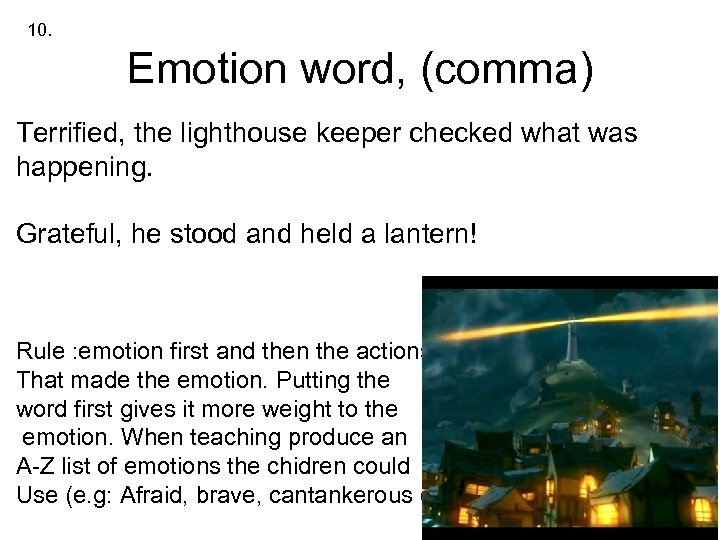
10. Emotion word, (comma) Terrified, the lighthouse keeper checked what was happening. Grateful, he stood and held a lantern! Rule : emotion first and then the actions That made the emotion. Putting the word first gives it more weight to the emotion. When teaching produce an A-Z list of emotions the chidren could Use (e. g: Afraid, brave, cantankerous etc. )
16 All The Ws • Would the boat crash into the jagged rocks? • Why did the bulb break? • Who would take over the lighthouse while I was gone? Rule: The sentence has to start with the word either Who, what, where, why, when, would, was, will, what if.
22 Personification of weather • The lighthouse keeper was annoyed as the wind knocked the window open. • The wind whistled as it blew open the window. • When the wind burst open the window it blew the candle out with all its might. Rule: Giving weather a human feature.
11 Noun, which, who, where • The lighthouse, which illuminates the area, always used to survive the storms. • The lighthouse keeper, who scares me, was working. Rule: The commas, which add exta information, have to start with a noun, which, who or where.
1 B. O. Y. S • The light bulb was shining brightly, but suddenly went out. • The lighthouse was happily sitting on the rocks, when a gush of wind hit it. Rule: The first part of the sentence must end with a comma and the last part always begins with a connective (but, or, yet, so)
12 Many Questions • What was the biggest concern? The bulb breaking? The ship crashing? • Where was the lighthouse keeper? Lost? Drunk? Injured? Rule: Has to start with a question and question mark, followed by further words or phrases which pose linked questions.
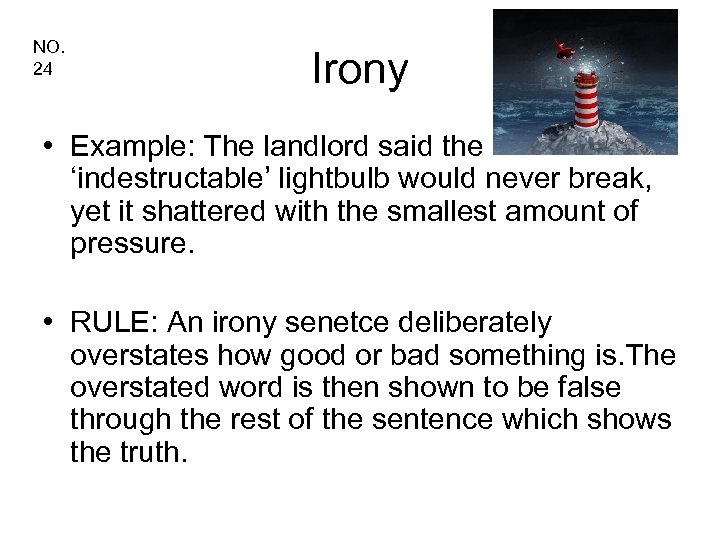
NO. 24 Irony • Example: The landlord said the ‘indestructable’ lightbulb would never break, yet it shattered with the smallest amount of pressure. • RULE: An irony senetce deliberately overstates how good or bad something is. The overstated word is then shown to be false through the rest of the sentence which shows the truth.
NO. 17 List sentences • Example: The old, multicolored, gigantic lighthouse loomed over my small body. • I saw the large, joyful, helpful crowd stomp towards the lighthouse with their lanterns. • RULE: A list senence must have 3 or 4 adjectives BEFORE the noun.
18 Some; others sentences Some people helped; others watched. For the lighthouse keeper some days are proplematic; others are boring. RULE: some; others sentences are compound sentences which begin with the word some. And have a semi –colon to replace the word but.
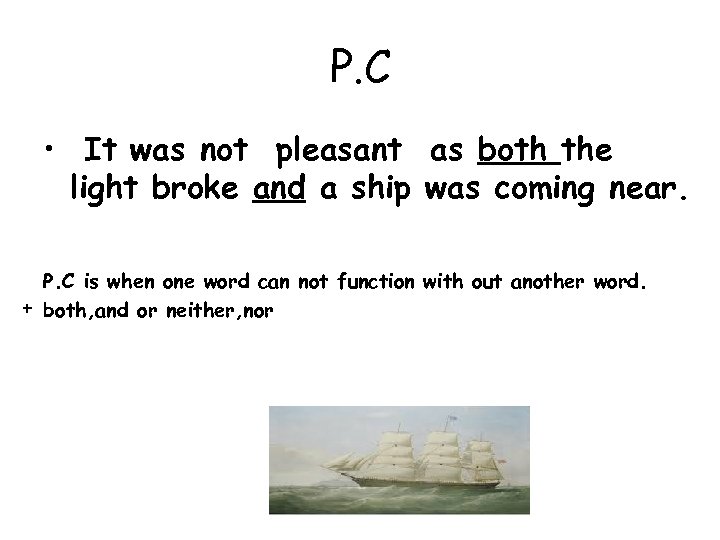
P. C • It was not pleasant as both the light broke and a ship was coming near. P. C is when one word can not function with out another word. + both, and or neither, nor
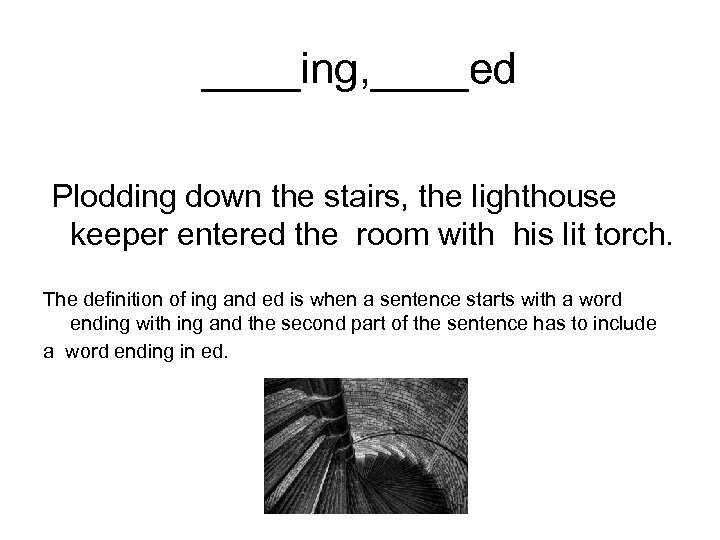
____ing, ____ed Plodding down the stairs, the lighthouse keeper entered the room with his lit torch. The definition of ing and ed is when a sentence starts with a word ending with ing and the second part of the sentence has to include a word ending in ed.
2 pairs no. 5 • Shocked and worried, desperate and scared, he did not know what would happen next…. .
The more the more no. 20 • The more he dashed up the spiral staircase, the more confused he became.
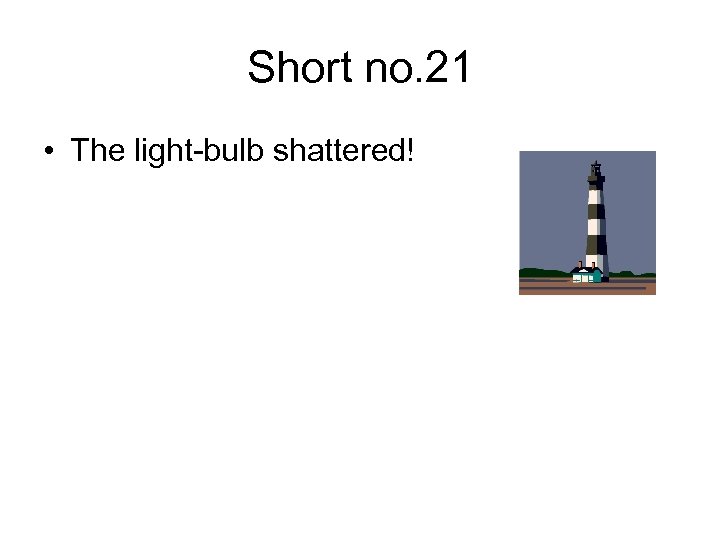
Short no. 21 • The light-bulb shattered!
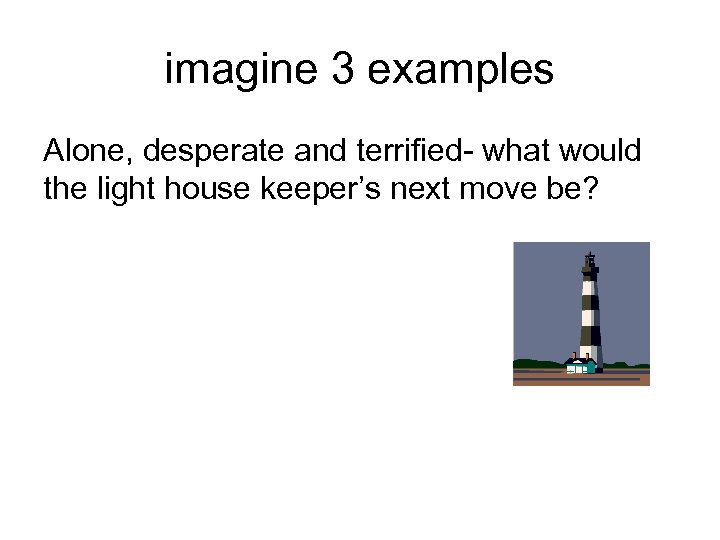
imagine 3 examples Alone, desperate and terrified- what would the light house keeper’s next move be?
Скачать презентацию Simile 1 The glass bulb smashed like broken
aee31d2c4e117013d4192bcec3db9fa8.ppt