Скачать презентацию Signaling Models and Experiments A Research Perspective Andreas
12bb034aa76ef64af8e83dca2abfbbf7.ppt
- Количество слайдов: 29
 Signaling Models and Experiments A Research Perspective Andreas Diekmann and Wojtek Przepiorka Zurich workshop “Challenges and Visions in the Social Sciences” August 18 th to 23 rd, 2008
 Mount Hope, Holmes County © Ian Adams
 Signaling Theory Signal your type: Method to achieve cooperation in a social dilemma situation if information is incomplete Explaining seemingly irrational behaviour: Large investments in “distinctions” (Bourdieu), conspicous consumption (Veblen), dress codes, “inefficient” social norms (Posner), wasting resources (advertisement campaigns), donations and gift-giving (Camerer).
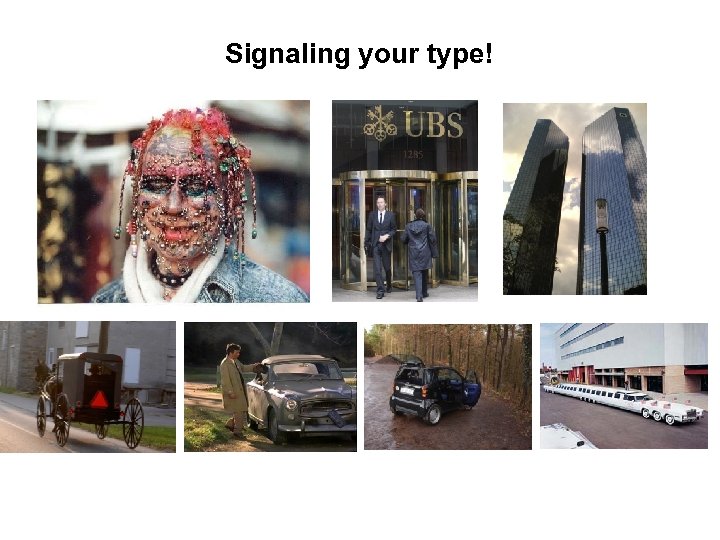 Signaling your type!
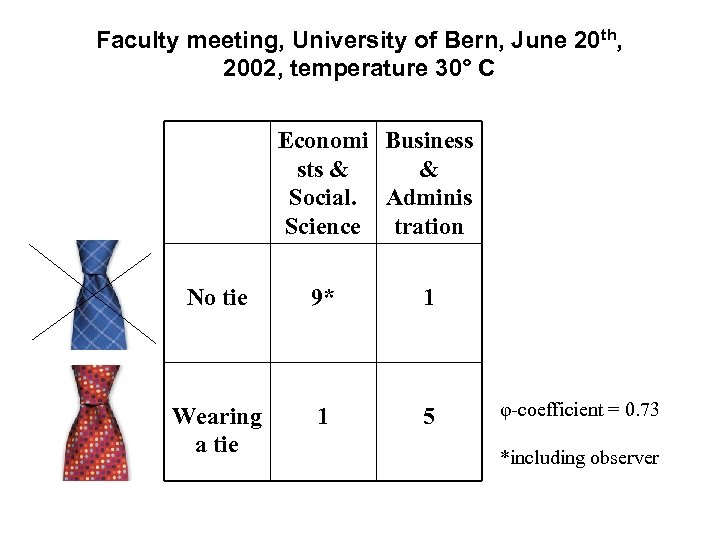 Faculty meeting, University of Bern, June 20 th, 2002, temperature 30° C Economi Business sts & & Social. Adminis Science tration No tie 9* 1 Wearing a tie 1 5 φ-coefficient = 0. 73 *including observer
 Trust game under incomplete information with Signaling (Model based on Posner „Law and Social Norms“) We assume a trust situation with two types of actors. Actors have the same preferences but act under different structural conditions. Type A plays a repeated game while type B is in a one-shot situation. („Stayer“ versus „Mover“. ) Hence, types can be distinguished by discount parameters. However, there is incomplete information. The trustor does not know the type of the trustee. Note: We do not assume „honest“ or „dishonest“ preferences. With a high proportion of „mover“ no cooperation will emerge. Signaling the type may help to promote cooperation. (Signaling theory of social norms. )
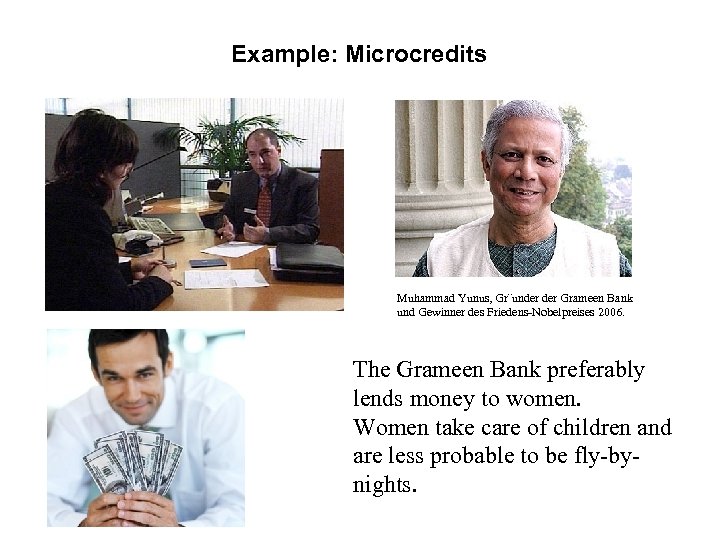 Example: Microcredits Muhammad Yunus, Gr¨under Grameen Bank und Gewinner des Friedens-Nobelpreises 2006. The Grameen Bank preferably lends money to women. Women take care of children and are less probable to be fly-bynights.
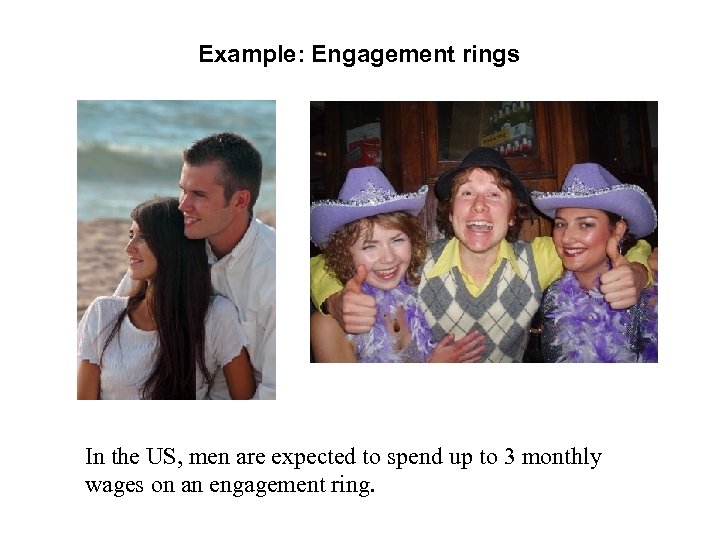 Example: Engagement rings In the US, men are expected to spend up to 3 monthly wages on an engagement ring.
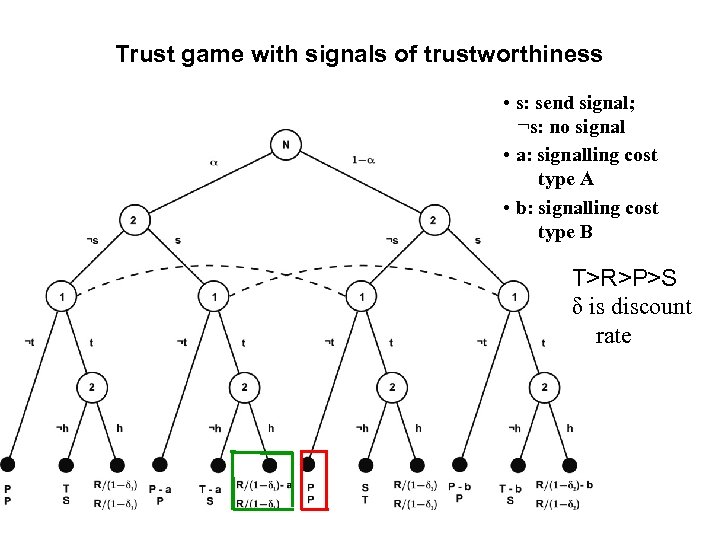 Trust game with signals of trustworthiness • s: send signal; ¬s: no signal • a: signalling cost type A • b: signalling cost type B T>R>P>S δ is discount rate
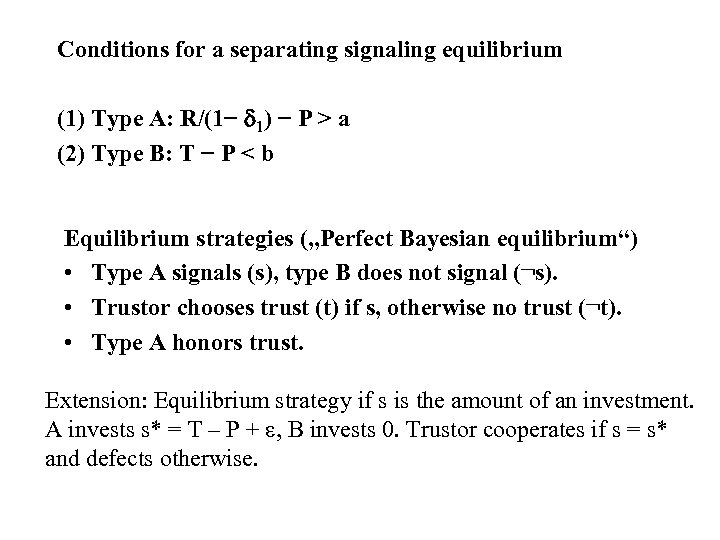 Conditions for a separating signaling equilibrium (1) Type A: R/(1− d 1) − P > a (2) Type B: T − P < b Equilibrium strategies („Perfect Bayesian equilibrium“) • Type A signals (s), type B does not signal (¬s). • Trustor chooses trust (t) if s, otherwise no trust (¬t). • Type A honors trust. Extension: Equilibrium strategy if s is the amount of an investment. A invests s* = T – P + ε, B invests 0. Trustor cooperates if s = s* and defects otherwise.
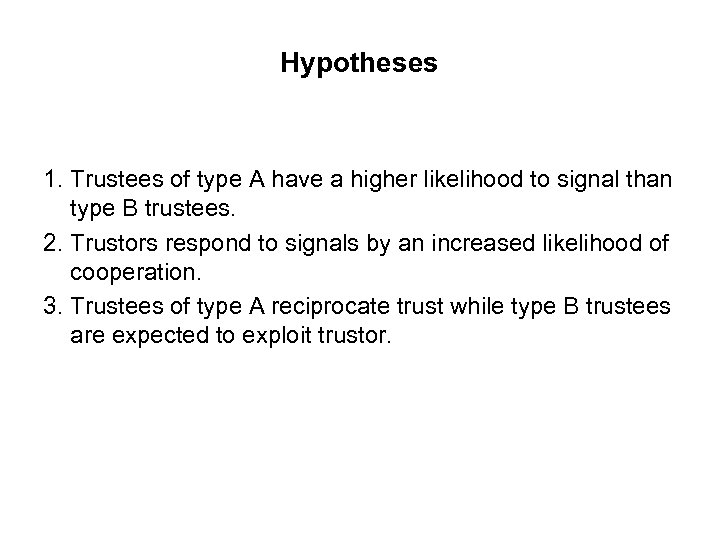 Hypotheses 1. Trustees of type A have a higher likelihood to signal than type B trustees. 2. Trustors respond to signals by an increased likelihood of cooperation. 3. Trustees of type A reciprocate trust while type B trustees are expected to exploit trustor.
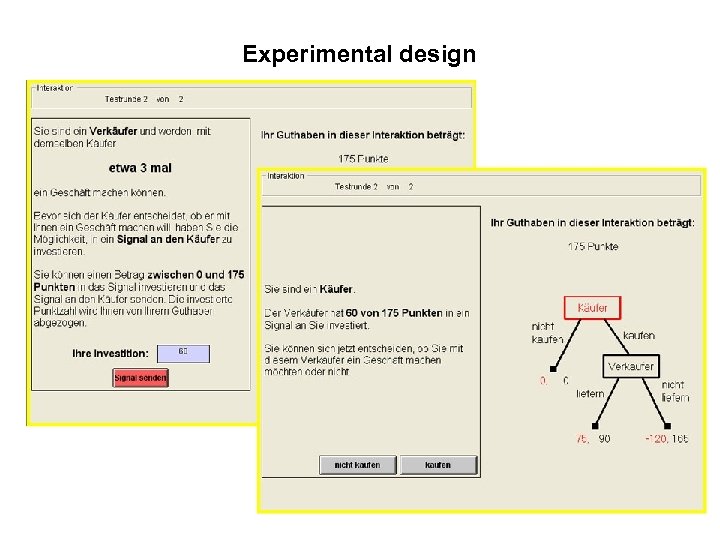
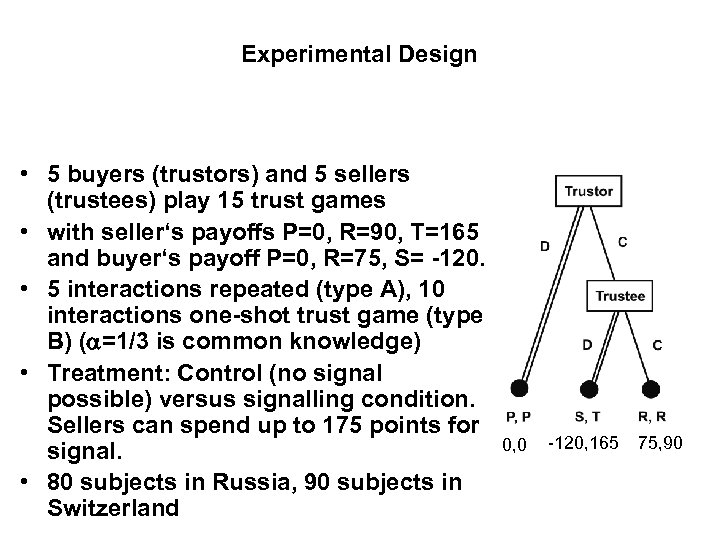 Experimental Design • 5 buyers (trustors) and 5 sellers (trustees) play 15 trust games • with seller‘s payoffs P=0, R=90, T=165 and buyer‘s payoff P=0, R=75, S= -120. • 5 interactions repeated (type A), 10 interactions one-shot trust game (type B) (a=1/3 is common knowledge) • Treatment: Control (no signal possible) versus signalling condition. Sellers can spend up to 175 points for signal. • 80 subjects in Russia, 90 subjects in Switzerland 0, 0 -120, 165 75, 90
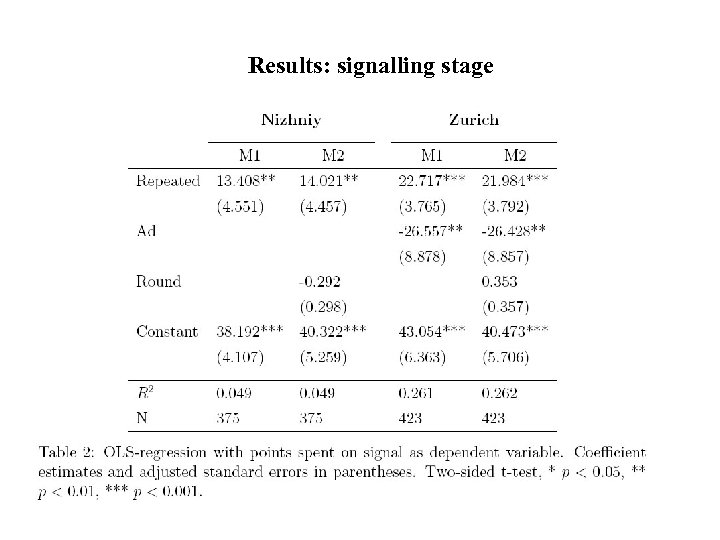
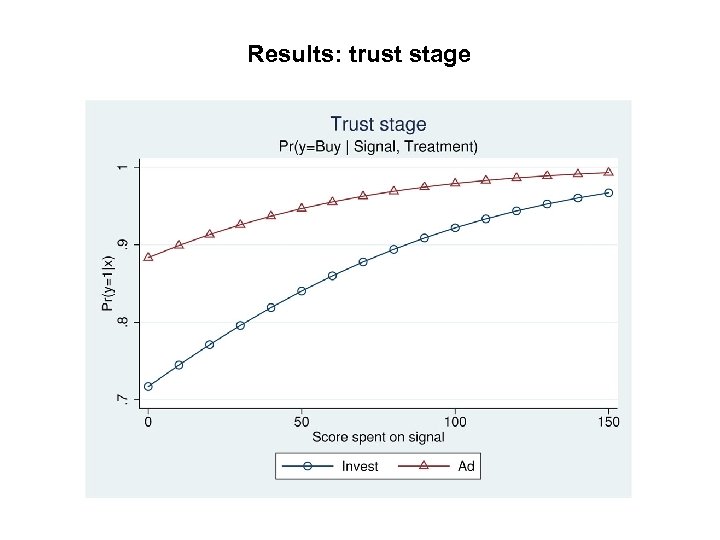
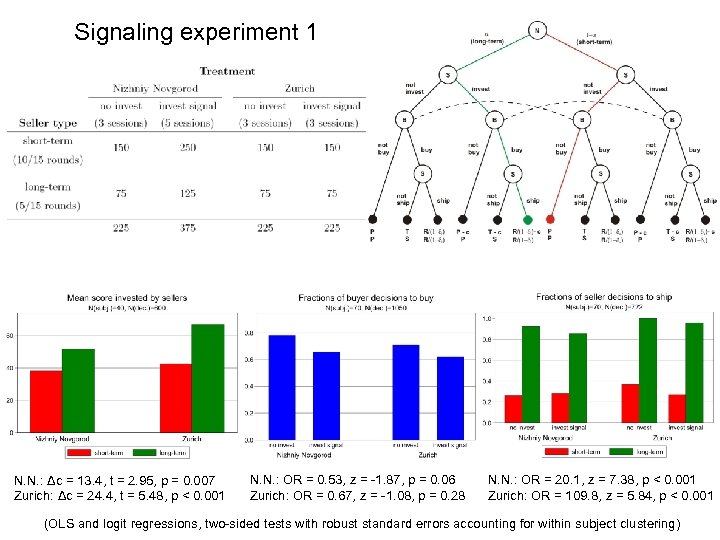 Signaling experiment 1 N. N. : Δc = 13. 4, t = 2. 95, p = 0. 007 Zurich: Δc = 24. 4, t = 5. 48, p < 0. 001 N. N. : OR = 0. 53, z = -1. 87, p = 0. 06 Zurich: OR = 0. 67, z = -1. 08, p = 0. 28 N. N. : OR = 20. 1, z = 7. 38, p < 0. 001 Zurich: OR = 109. 8, z = 5. 84, p < 0. 001 (OLS and logit regressions, two-sided tests with robust standard errors accounting for within subject clustering)
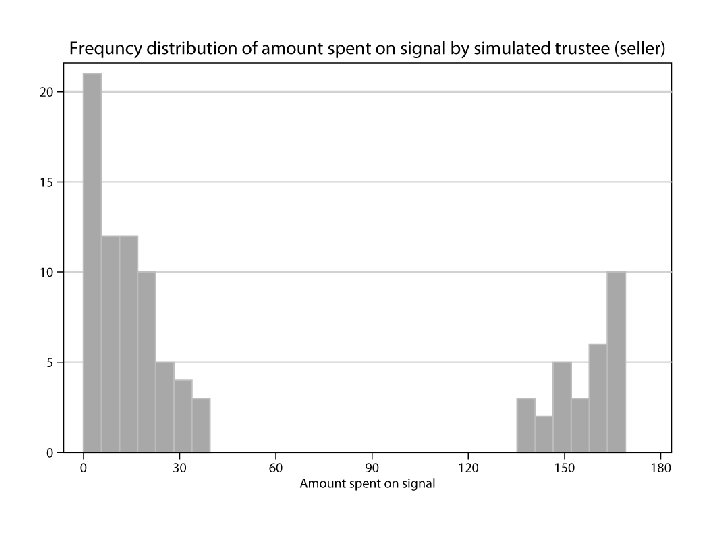
 Learning: Evolution of Response to Signal Trustee simulated by computer (subject informed!) Random signal plus noise over ca. 100 rounds Treatments: 1. no signal (control) 2. signal (low versus high plus error component) 3. signal (plus small probability of trustor’s error) 4. signal as ad frame
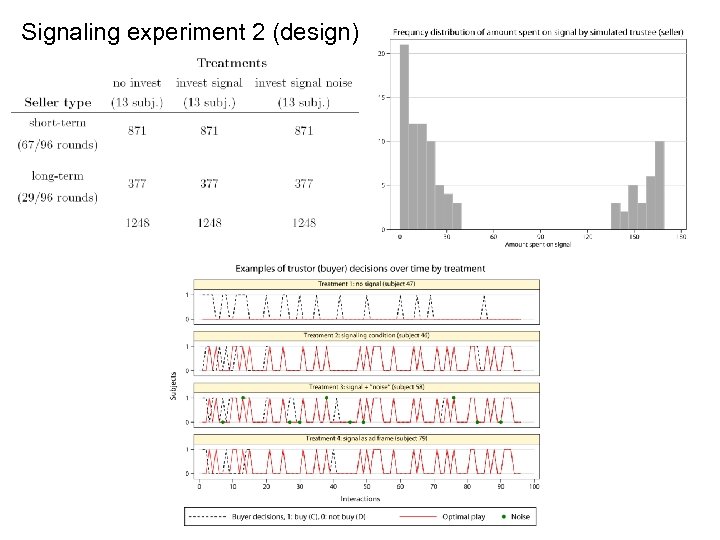 Signaling experiment 2 (design)
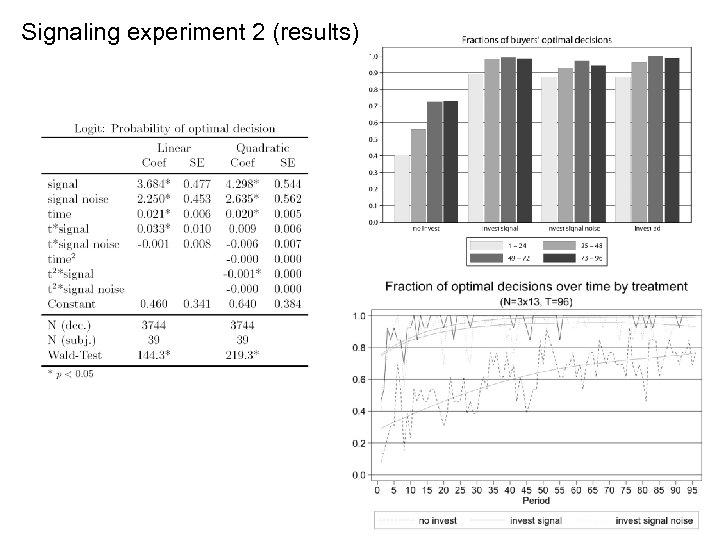 Signaling experiment 2 (results)
 Research Perspective and Challenges • Experiments with one-shot or short sequence signaling games are misleading. Evolution of response to signal: Learning by trial and error • Biology: Many applications of signaling theory • Economics: Investment in education as costly signals (Spence) • Sociology: Much essayistic writing about ”symbols”, “distinctions” etc. Why not using more precise models of game theory? • Signaling theory may account for “puzzling” phenomena not easily explainable by other approaches (inefficient norms, “voting paradox”, readiness to engage in discrimination …) • Policy issue: Signaling furthers cooperation but institutions may be more efficient and fair. • Many interesting propositions follow from signaling theory.

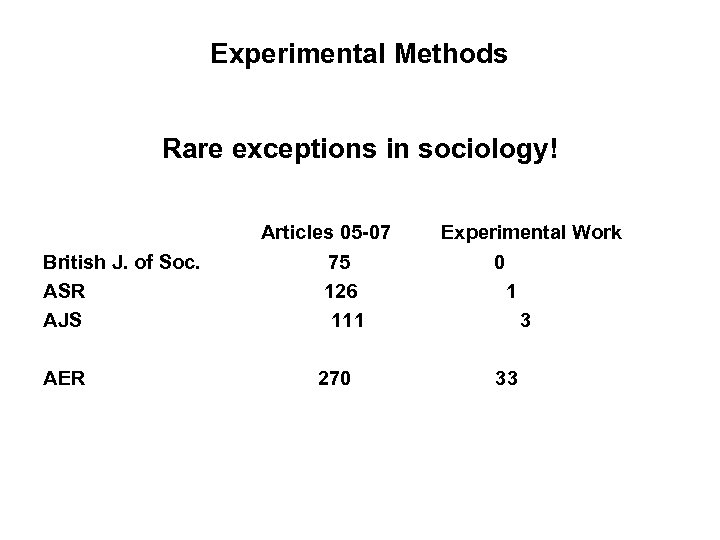 Experimental Methods Rare exceptions in sociology! Articles 05 -07 Experimental Work British J. of Soc. ASR AJS 75 126 111 0 AER 270 33 1 3
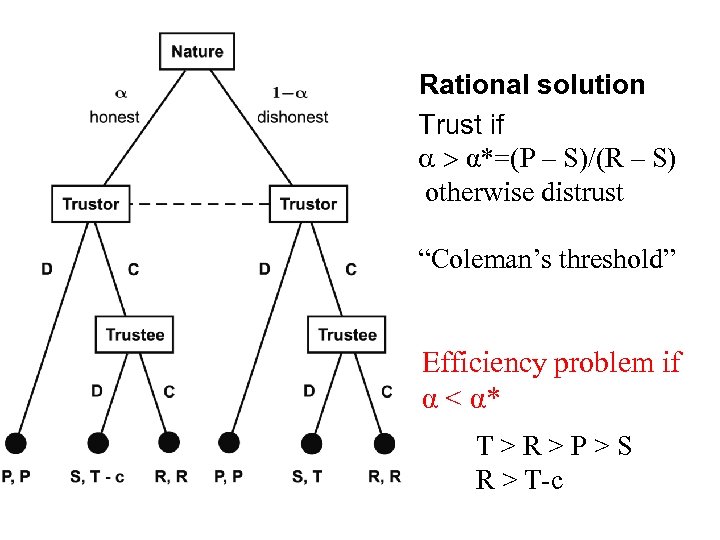 Rational solution Trust if a > α*=(P – S)/(R – S) otherwise distrust “Coleman’s threshold” Efficiency problem if α < α* T>R>P>S R > T-c
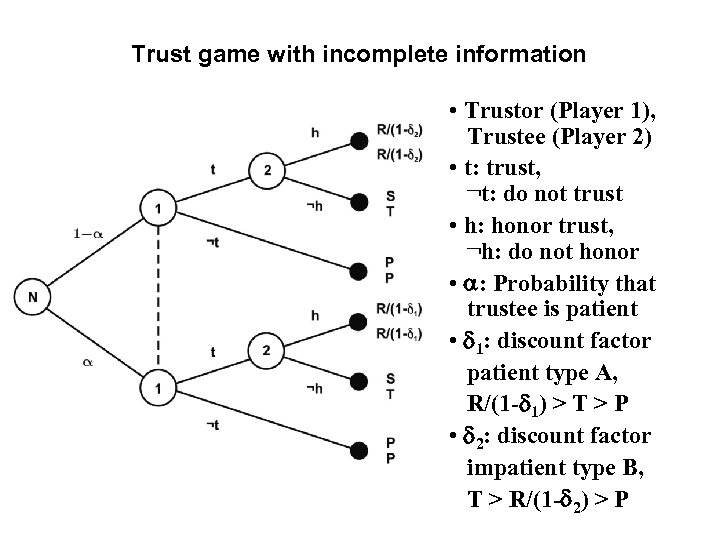 Trust game with incomplete information • Trustor (Player 1), Trustee (Player 2) • t: trust, ¬t: do not trust • h: honor trust, ¬h: do not honor • a: Probability that trustee is patient • d 1: discount factor patient type A, R/(1 -d 1) > T > P • d 2: discount factor impatient type B, T > R/(1 -d 2) > P
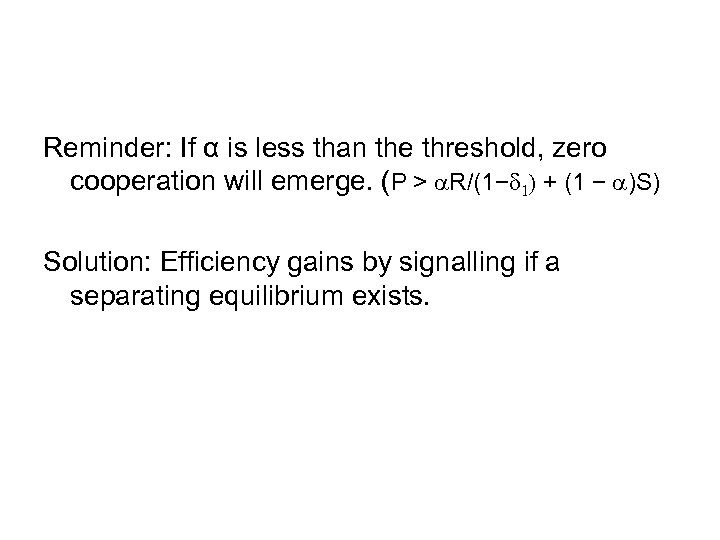 Reminder: If α is less than the threshold, zero cooperation will emerge. (P > a. R/(1−d 1) + (1 − a)S) Solution: Efficiency gains by signalling if a separating equilibrium exists.
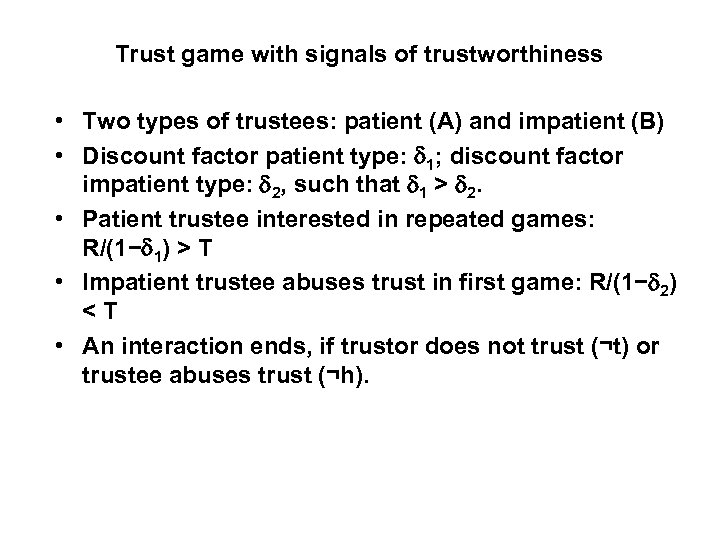 Trust game with signals of trustworthiness • Two types of trustees: patient (A) and impatient (B) • Discount factor patient type: d 1; discount factor impatient type: d 2, such that d 1 > d 2. • Patient trustee interested in repeated games: R/(1−d 1) > T • Impatient trustee abuses trust in first game: R/(1−d 2)
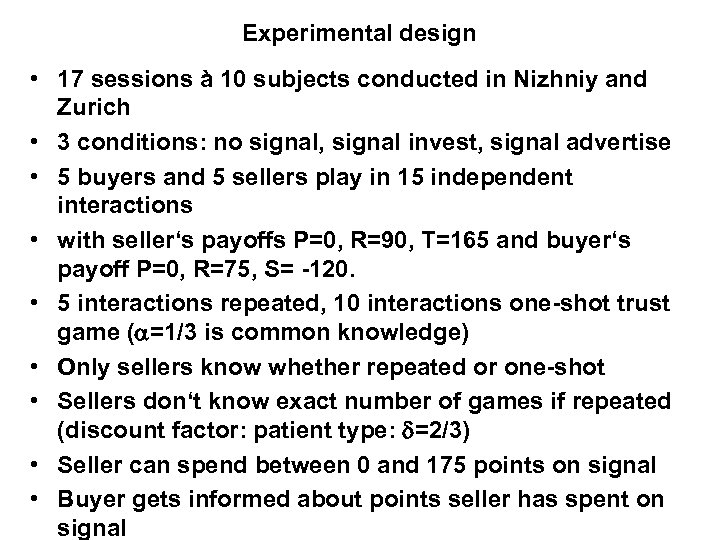 Experimental design • 17 sessions à 10 subjects conducted in Nizhniy and Zurich • 3 conditions: no signal, signal invest, signal advertise • 5 buyers and 5 sellers play in 15 independent interactions • with seller‘s payoffs P=0, R=90, T=165 and buyer‘s payoff P=0, R=75, S= -120. • 5 interactions repeated, 10 interactions one-shot trust game (a=1/3 is common knowledge) • Only sellers know whether repeated or one-shot • Sellers don‘t know exact number of games if repeated (discount factor: patient type: d=2/3) • Seller can spend between 0 and 175 points on signal • Buyer gets informed about points seller has spent on signal
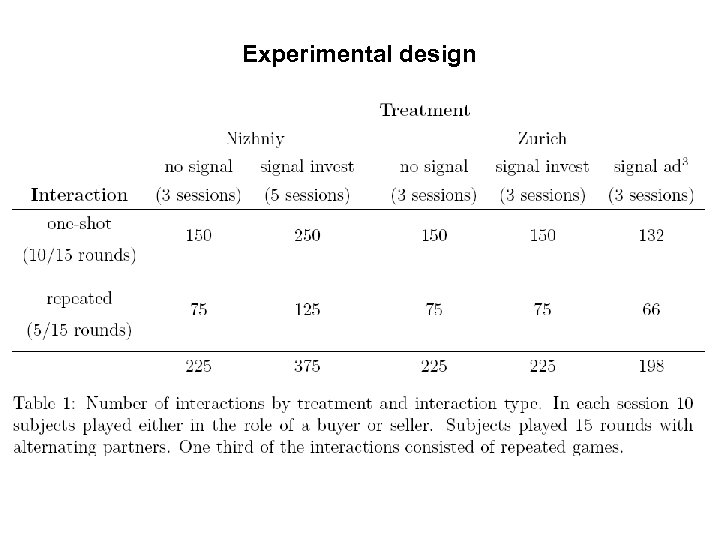 Experimental design
 Experimental design
 Results: signalling stage
 Results: trust stage