Скачать презентацию Signal Transduction Pathways From signal to gene expression
3982be21860899ce4c746a0b4d0dbff9.ppt
- Количество слайдов: 48
 Signal Transduction Pathways “From signal to gene expression”
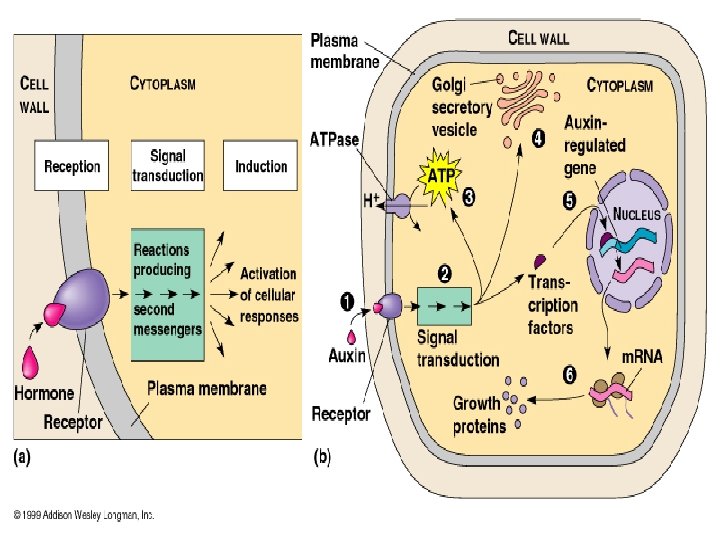
 Signal Transduction Pathways The biochemical events that conduct the signal of a hormone or growth factor from the cell exterior, through the cell membrane and into the cytoplasm which involve a number of molecules including receptors, proteins, and messengers a series of steps by which a signal on a cell’s surface is converted into a specific cellular response
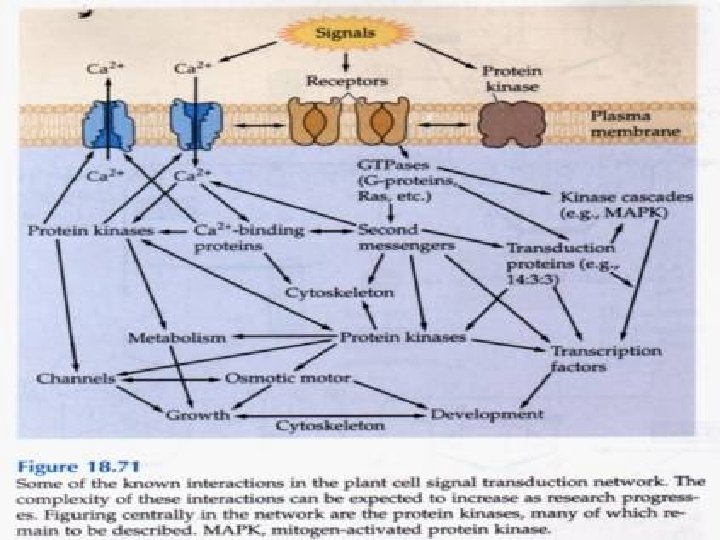
 Overview on Plant Signal Transduction 1. The stream of signals to which plant cells react is continuous and complex 2. Signal transduction uses a network of interactions within cells, and throughout the plants
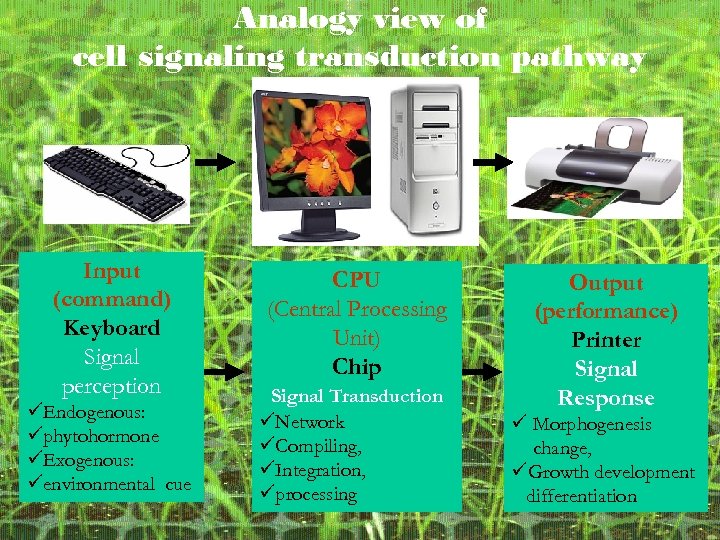 Analogy view of cell signaling transduction pathway Input (command) Keyboard Signal perception üEndogenous: üphytohormone üExogenous: üenvironmental cue CPU (Central Processing Unit) Chip Signal Transduction üNetwork üCompiling, üIntegration, üprocessing Output (performance) Printer Signal Response ü Morphogenesis change, üGrowth development differentiation
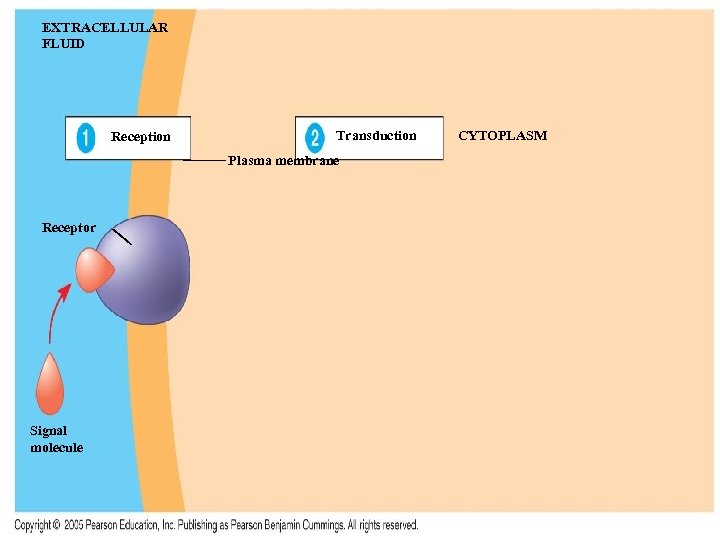 EXTRACELLULAR FLUID Reception Transduction Plasma membrane Receptor Signal molecule CYTOPLASM
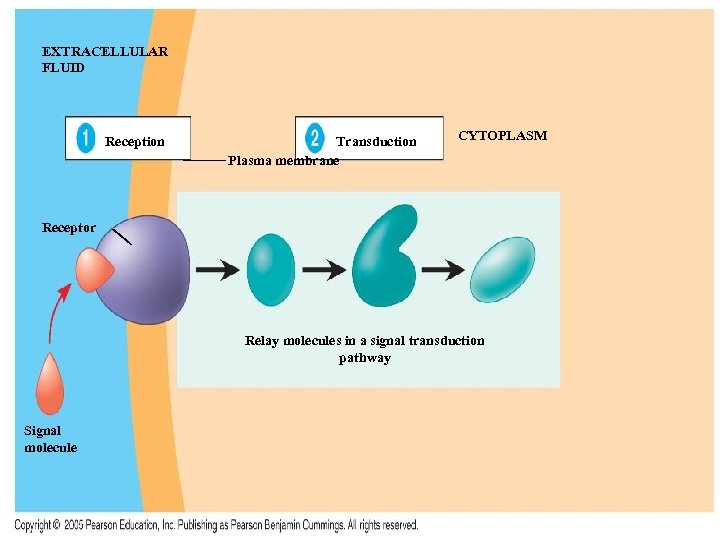 EXTRACELLULAR FLUID Reception Transduction Plasma membrane CYTOPLASM Receptor Relay molecules in a signal transduction pathway Signal molecule
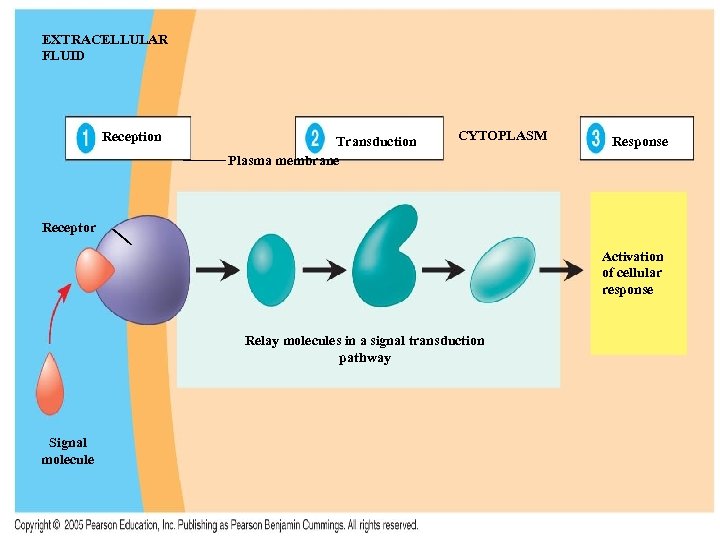 EXTRACELLULAR FLUID Reception Transduction Plasma membrane CYTOPLASM Response Receptor Activation of cellular response Relay molecules in a signal transduction pathway Signal molecule
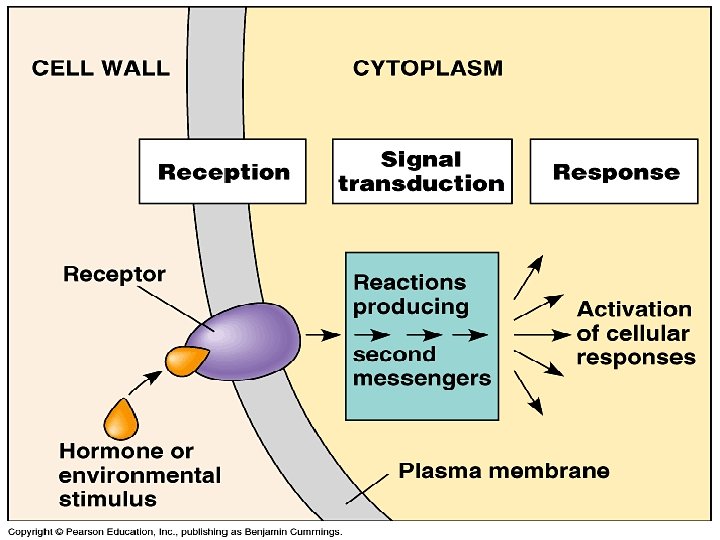 Overview on Plant Signal Transduction 1. The stream of signals to which plant cells react is continuous and complex 2. Signal transduction uses a network of interactions within cells, and throughout the plants
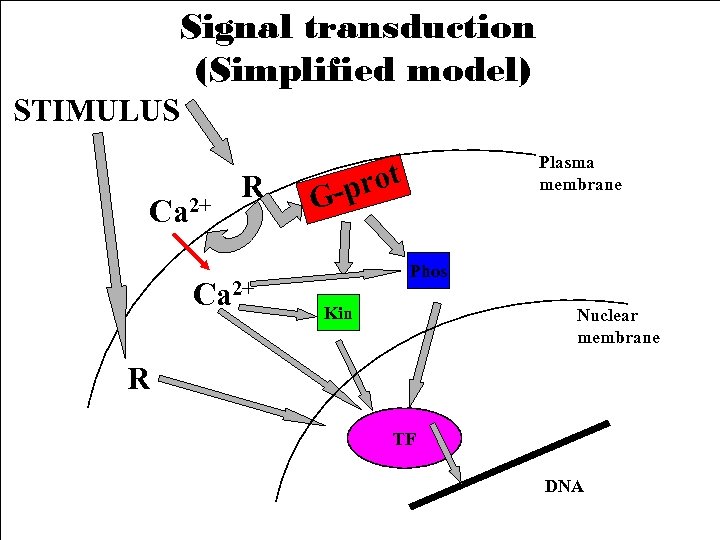 Signal transduction (Simplified model) STIMULUS Ca 2+ R Ca 2+ Plasma membrane prot GPhos Kin Nuclear membrane R TF DNA
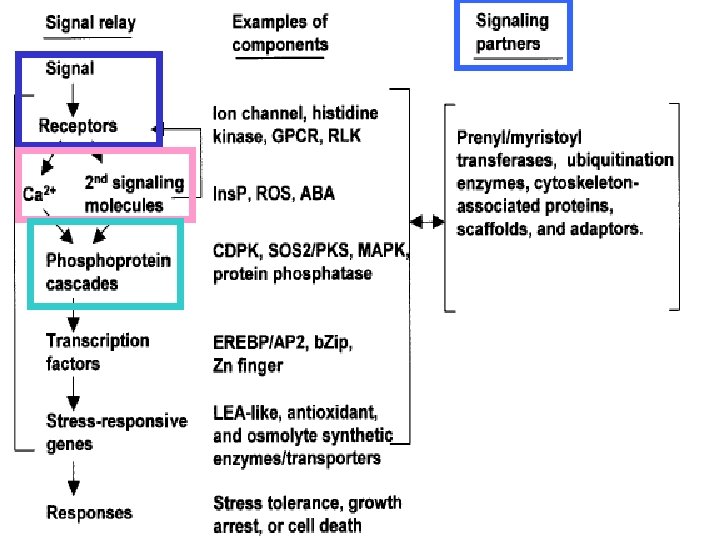
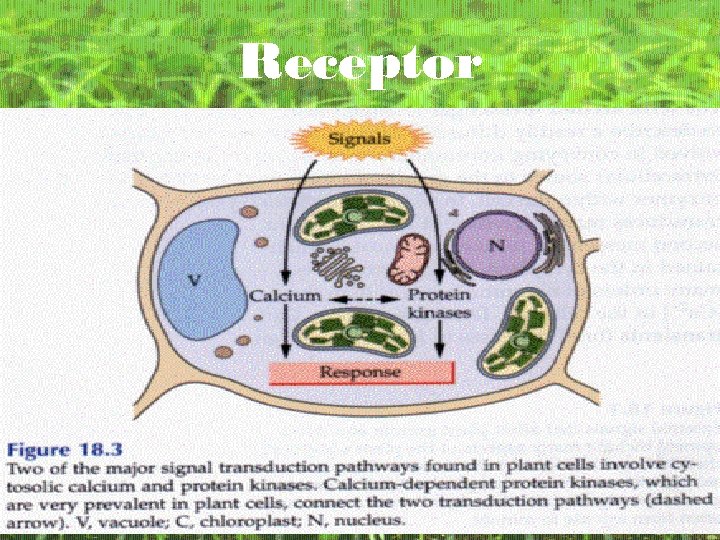
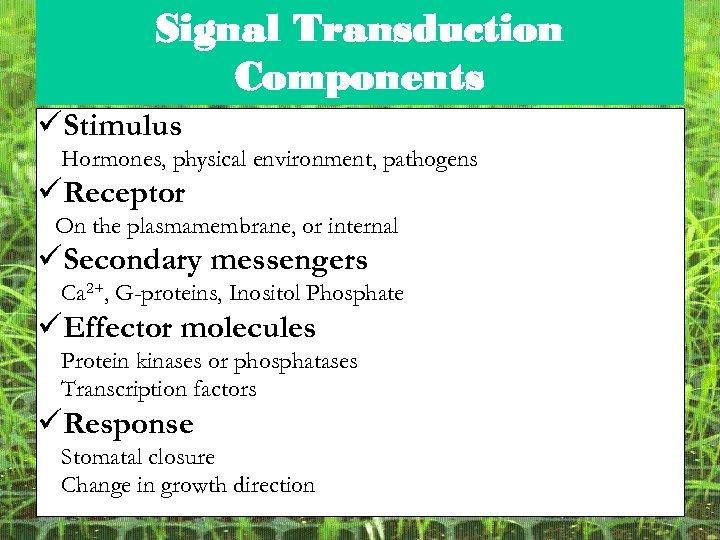 Signal Transduction Components üStimulus Hormones, physical environment, pathogens üReceptor On the plasmamembrane, or internal üSecondary messengers Ca 2+, G-proteins, Inositol Phosphate üEffector molecules Protein kinases or phosphatases Transcription factors üResponse Stomatal closure Change in growth direction
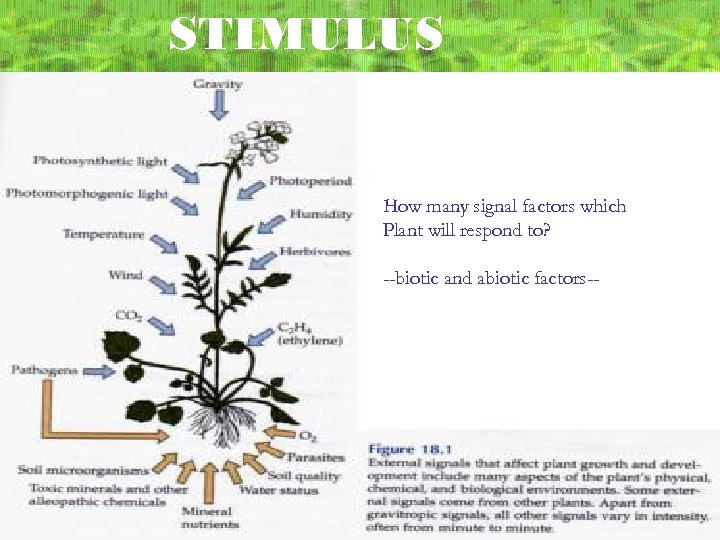 STIMULUS How many signal factors which Plant will respond to? --biotic and abiotic factors--
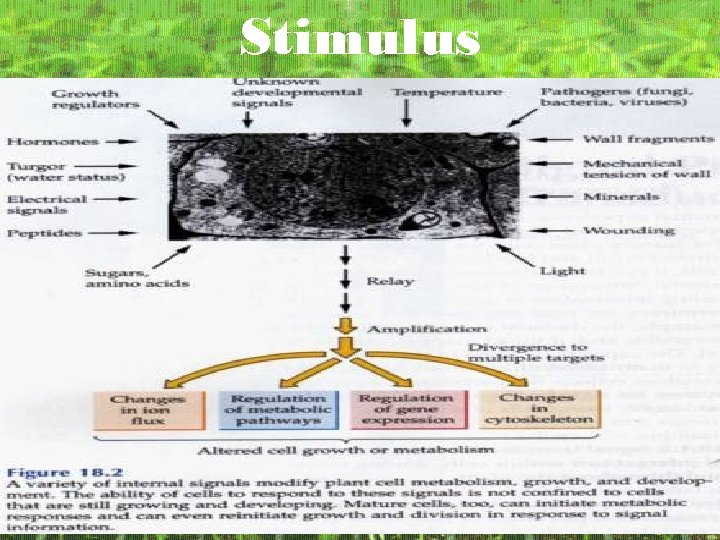 Stimulus
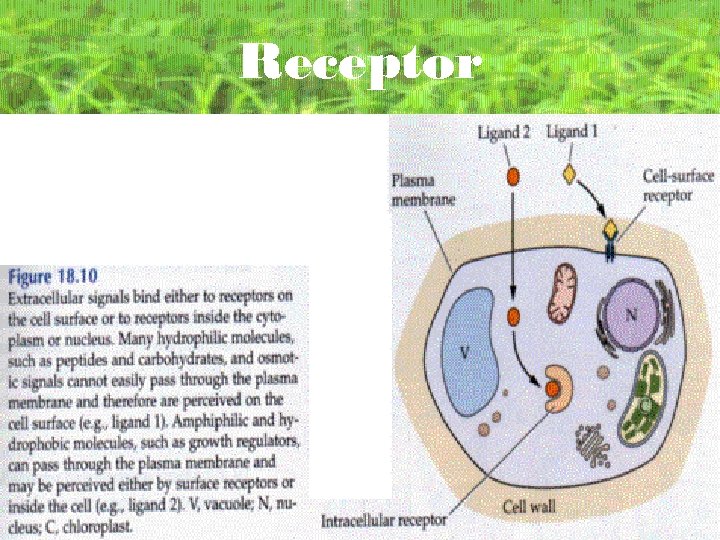
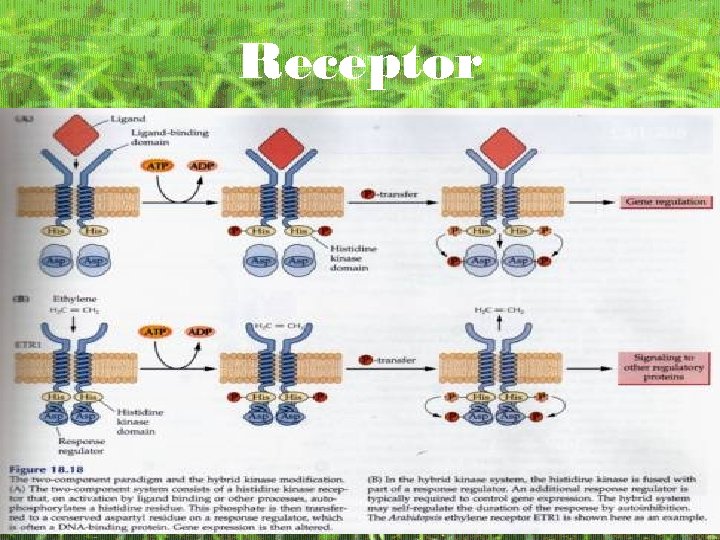
 Reception A signal molecule binds to a receptor protein, causing it to change shape The binding between a signal molecule (ligand) and receptor is highly specific – A conformational change in a receptor is often the initial transduction of the signal – Most signal receptors are plasma membrane proteins
 Intracellular Receptors • Some intracellular receptor proteins are found in the cytosol or nucleus of target cells • Small or hydrophobic chemical messengers can readily cross the membrane and activate receptors • An activated hormone-receptor complex can act as a transcription factor, turning on specific genes
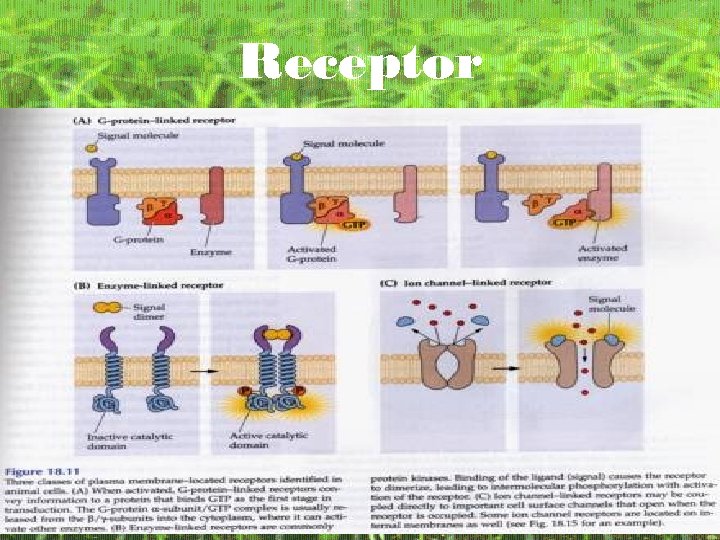
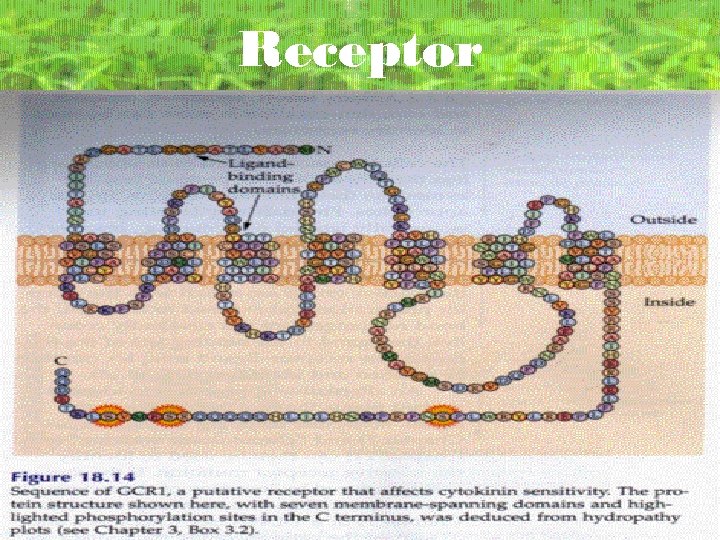
 Receptors in the Plasma Membrane • Most water-soluble signal molecules bind to specific sites on receptor proteins in the plasma membrane • There are three main types of membrane receptors: 1. G-protein-linked receptors 2. Receptor tyrosine kinases 3. Ion channel receptors
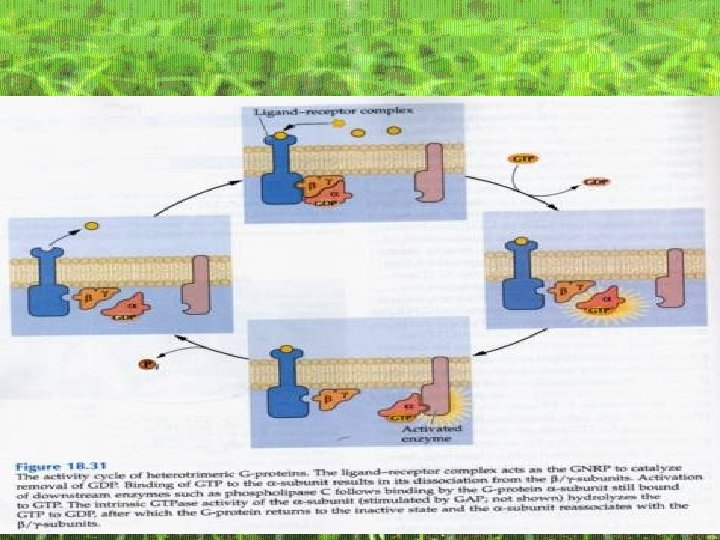
 G-protein-linked Receptor • It is a plasma membrane receptor that works with the help of a G protein • The G-protein acts as an on/off switch • If GDP is bound to the G protein, the G protein is inactive
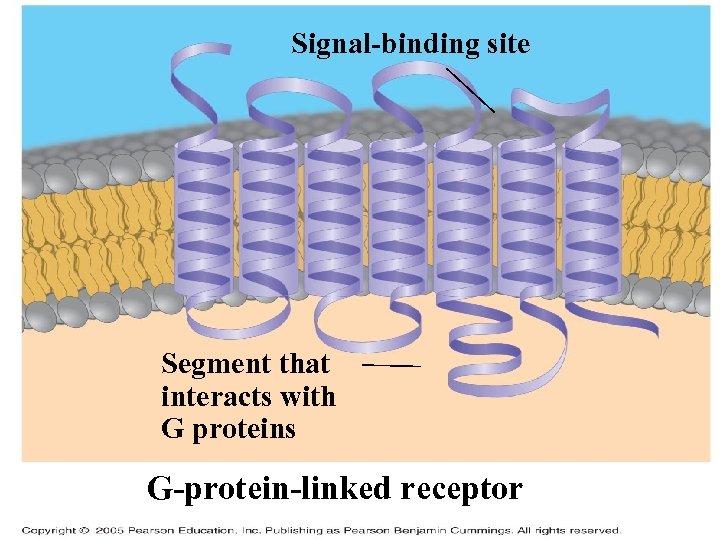 Signal-binding site Segment that interacts with G proteins G-protein-linked receptor
 Receptor Tyrosine Kinases • Regulates cell growth and cell reproduction • Tyrosine kinase catalyzes transfer of phosphate group from ATP to tyrosines • Can trigger ten or more signal transduction pathways at once • Abnormal tyrosine kinases that work even without a signal molecule may contribute to some cancers
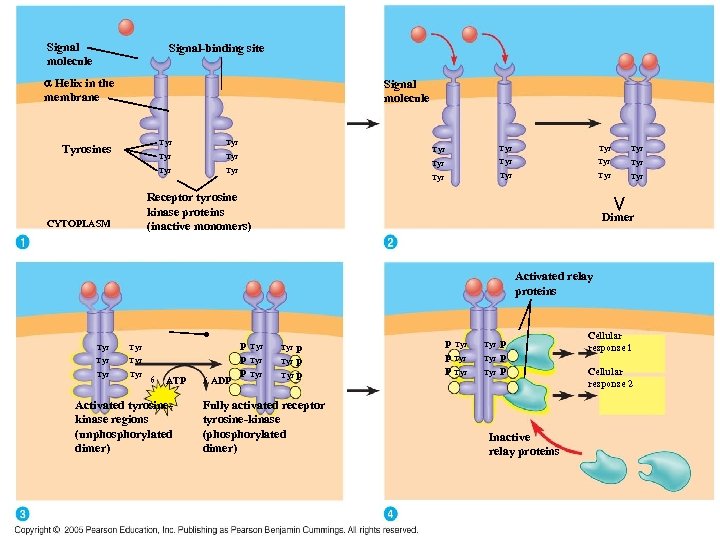 Signal molecule Signal-binding site a Helix in the membrane Signal molecule Tyr Tyr Tyrosines Tyr Tyr Tyr Tyr Receptor tyrosine kinase proteins (inactive monomers) CYTOPLASM Dimer Activated relay proteins Tyr Tyr Tyr 6 ATP Activated tyrosinekinase regions (unphosphorylated dimer) 6 ADP P Tyr Tyr P Fully activated receptor tyrosine-kinase (phosphorylated dimer) P Tyr P Tyr Inactive relay proteins Cellular response 1 Cellular response 2
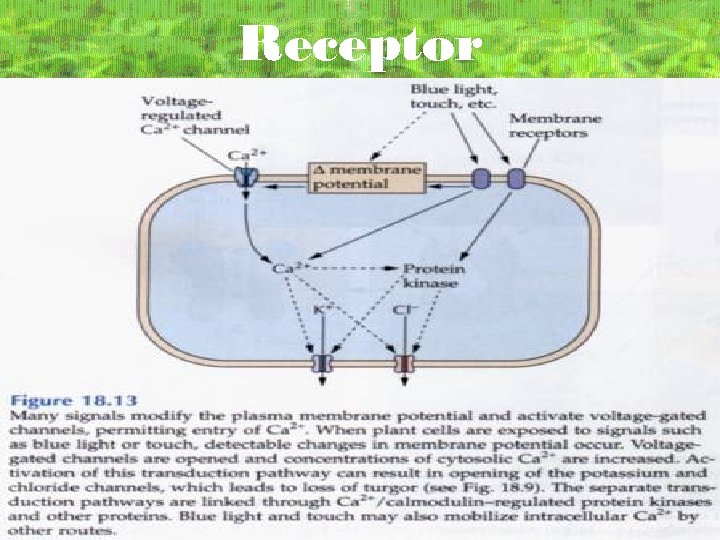
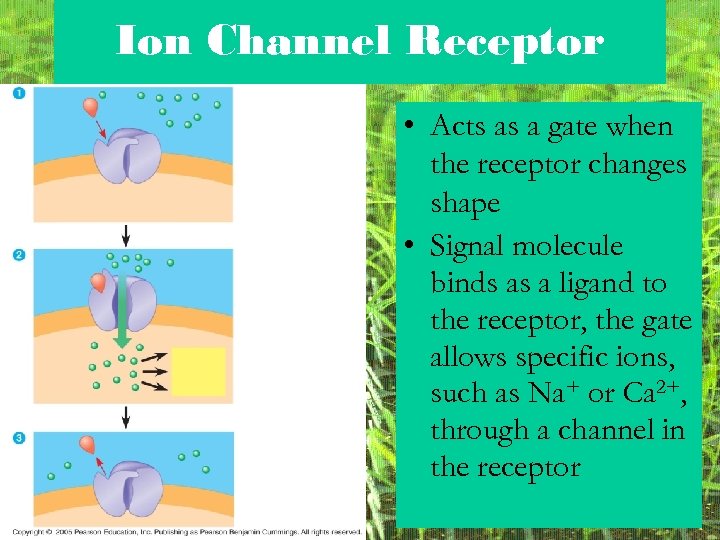 Ion Channel Receptor • Acts as a gate when the receptor changes shape • Signal molecule binds as a ligand to the receptor, the gate allows specific ions, such as Na+ or Ca 2+, through a channel in the receptor
 Receptor
 Receptor
 Receptor
 Receptor
 Receptor
 Receptor
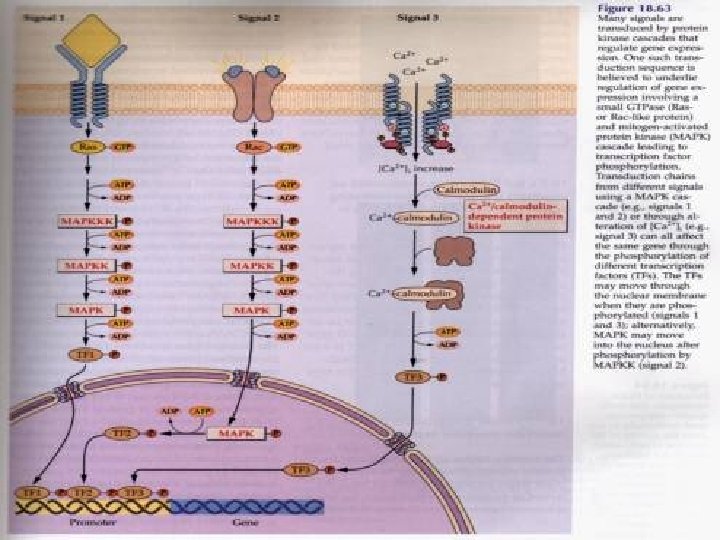
 Transduction Cascades of molecular interactions relay signals from receptors to target molecules in the cell • Transduction usually involves multiple steps • Multistep pathways can amplify a signal: A few molecules can produce a large cellular response • Multistep pathways provide more opportunities for coordination and regulation
 Signal Transduction Pathways ü The molecules that relay a signal from receptor to response are mostly proteins ü Like falling dominoes, the receptor activates another protein, which activates another, and so on, until the protein producing the response is activated ü At each step, the signal is transduced into a different form, usually a conformational change
 Protein Phosphorylation and Dephosphorylation ü In many pathways, the signal is transmitted by a cascade of protein phosphorylations ü Phosphatase enzymes remove the phosphates ü This phosphorylation and dephosphorylation system acts as a molecular switch, turning activities on and off
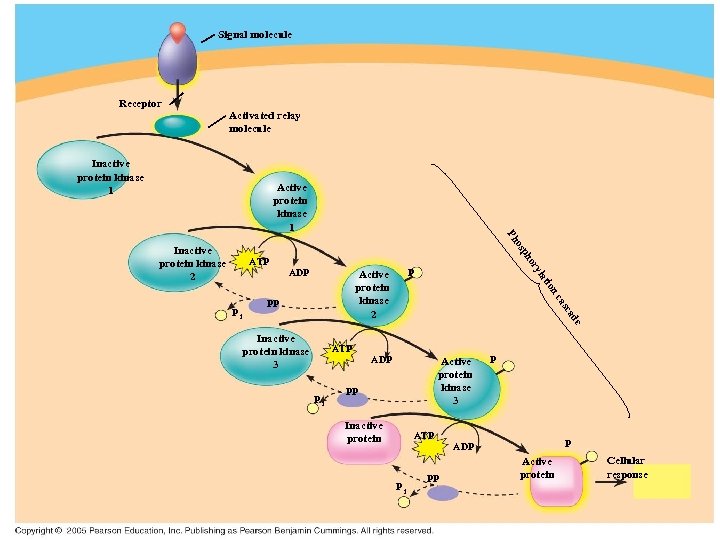 Signal molecule Receptor Activated relay molecule Inactive protein kinase 1 Active protein kinase 1 P Pi de ATP ca Inactive protein kinase 3 as PP nc tio Active protein kinase 2 yla Pi ADP or ATP ph os Ph Inactive protein kinase 2 ADP Active protein kinase 3 PP Inactive protein ATP Pi PP P P ADP Active protein Cellular response
 Small Molecules and Ions as Second Messengers ü Second messengers are small, nonprotein, watersoluble molecules or ions ü The extracellular signal molecule that binds to the membrane is a pathway’s “first messenger” ü Second messengers can readily spread throughout cells by diffusion ü Second messengers participate in pathways initiated by G-protein-linked receptors and receptor tyrosine kinases
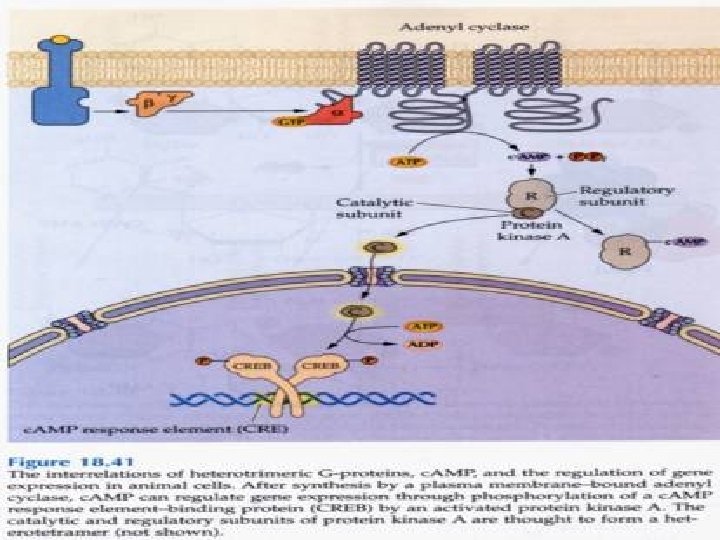
 Cyclic AMP ü Cyclic AMP (c. AMP) is one of the most widely used second messengers ü Adenylyl cyclase, an enzyme in the plasma membrane, converts ATP to c. AMP in response to an extracellular signal ü Many signal molecules trigger formation of c. AMP ü Other components of c. AMP pathways are G proteins, G-proteinlinked receptors, and protein kinases ü c. AMP usually activates protein kinase A, which phosphorylates various other proteins ü Further regulation of cell metabolism is provided by G-protein systems that inhibit adenylyl cyclase
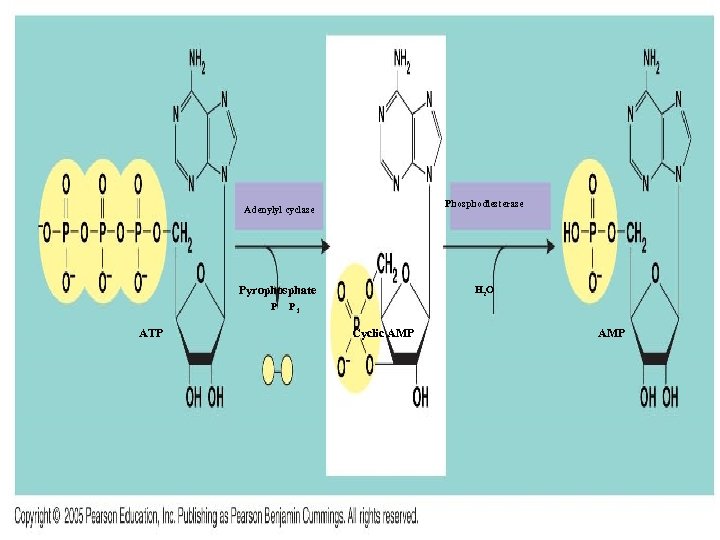 Phosphodiesterase Adenylyl cyclase Pyrophosphate P ATP H 2 O Pi Cyclic AMP
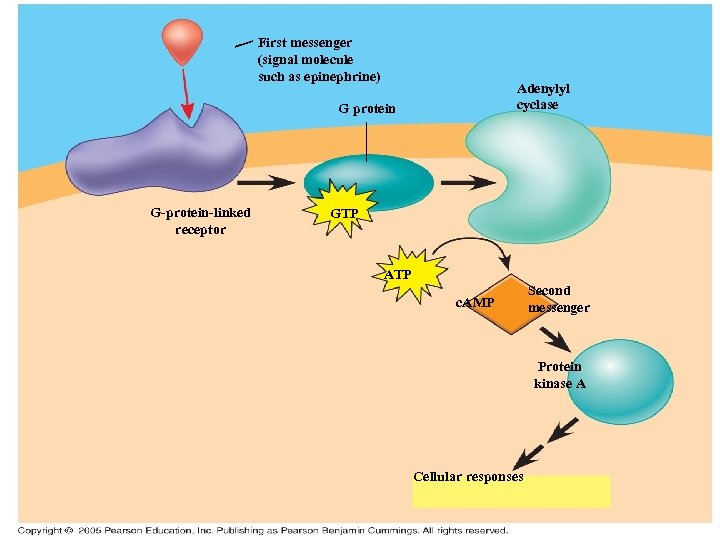 First messenger (signal molecule such as epinephrine) Adenylyl cyclase G protein G-protein-linked receptor GTP ATP c. AMP Second messenger Protein kinase A Cellular responses
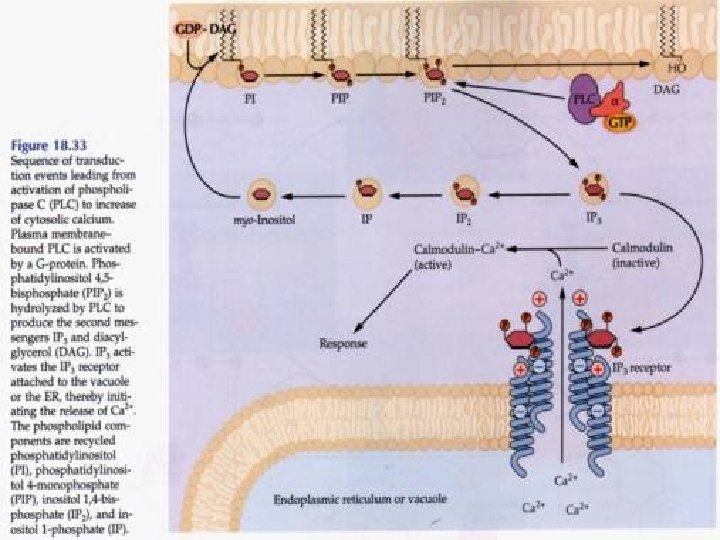
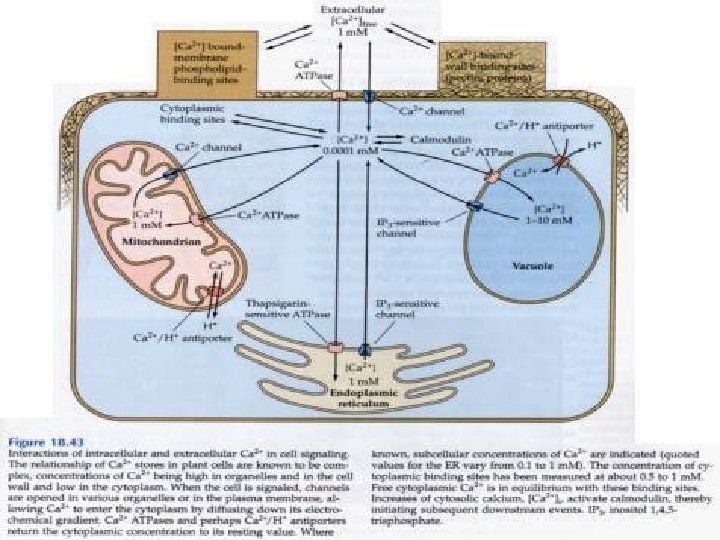
 Calcium ions and Inositol Triphosphate (IP) 3 ü Calcium ions (Ca 2+) act as a second messenger in many pathways ü Calcium is an important second messenger because cells can regulate its concentration ü A signal relayed by a signal transduction pathway may trigger an increase in calcium in the cytosol ü Pathways leading to the release of calcium involve inositol triphosphate (IP 3) and diacylglycerol (DAG) as second messengers
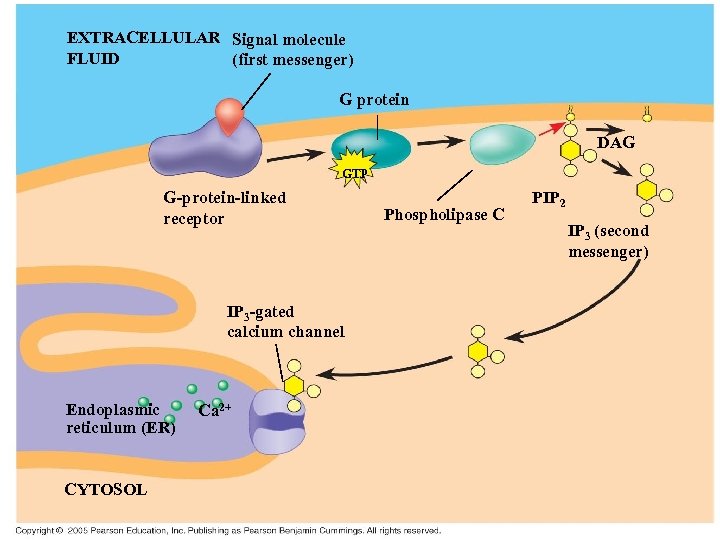 EXTRACELLULAR Signal molecule FLUID (first messenger) G protein DAG GTP G-protein-linked receptor IP 3 -gated calcium channel Endoplasmic reticulum (ER) CYTOSOL Ca 2+ Phospholipase C PIP 2 IP 3 (second messenger)
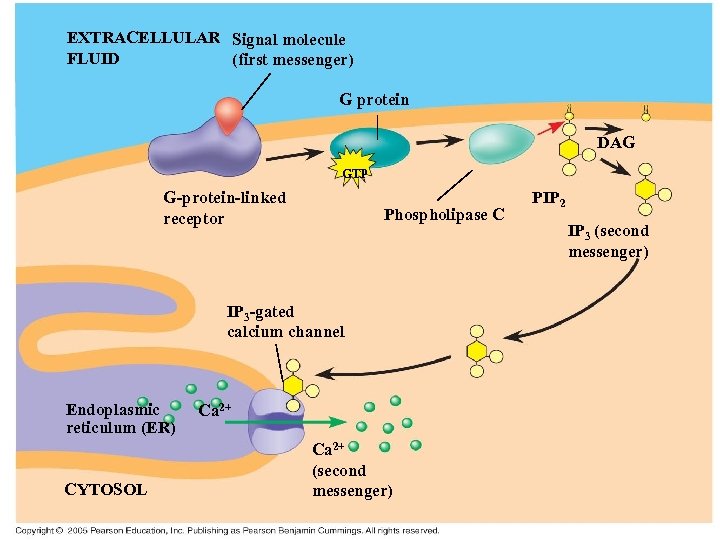 EXTRACELLULAR Signal molecule FLUID (first messenger) G protein DAG GTP G-protein-linked receptor Phospholipase C IP 3 -gated calcium channel Endoplasmic reticulum (ER) CYTOSOL Ca 2+ (second messenger) PIP 2 IP 3 (second messenger)
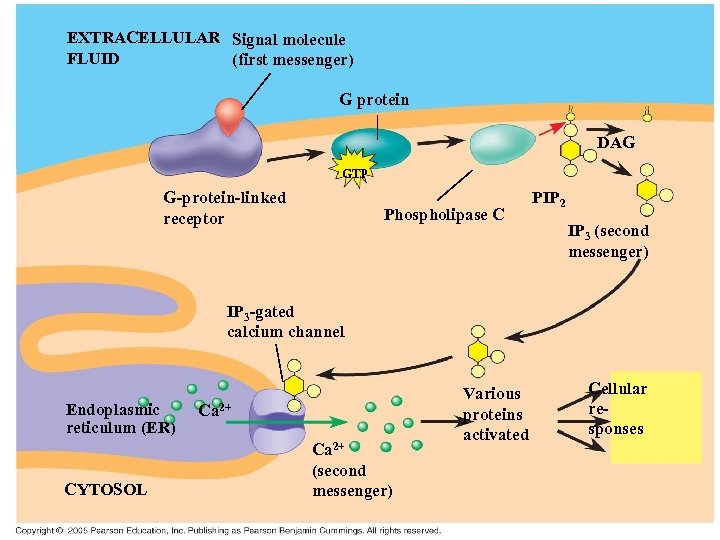 EXTRACELLULAR Signal molecule FLUID (first messenger) G protein DAG GTP G-protein-linked receptor Phospholipase C PIP 2 IP 3 (second messenger) IP 3 -gated calcium channel Endoplasmic reticulum (ER) CYTOSOL Ca 2+ (second messenger) Various proteins activated Cellular responses