


 Скачать презентацию Show me the Money Working together to provide
c064cb4d38074c66f7b7fa62a9a3e789.ppt
- Количество слайдов: 39
 Show me the Money Working together to provide quality care for MDwise members P 0607 1
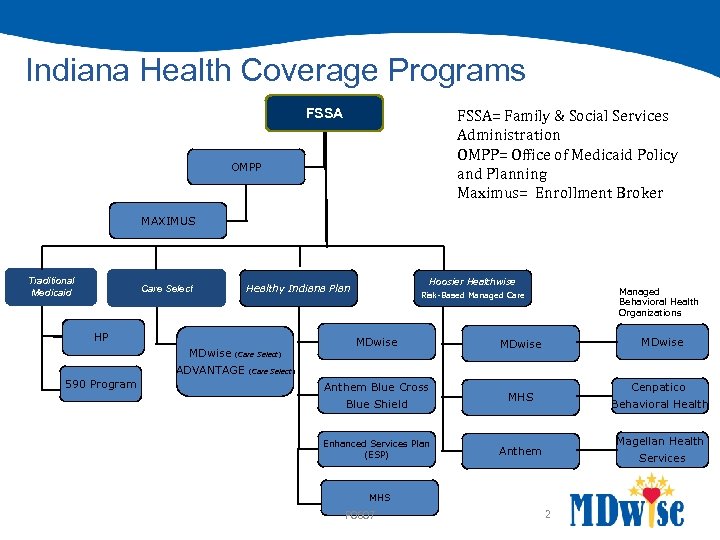 Indiana Health Coverage Programs FSSA= Family & Social Services Administration OMPP= Office of Medicaid Policy and Planning Maximus= Enrollment Broker OMPP MAXIMUS Traditional Medicaid HP MDwise Managed Behavioral Health Organizations Risk-Based Managed Care MDwise (Care Select) ADVANTAGE 590 Program Hoosier Healthwise Healthy Indiana Plan Care Select MDwise (Care Select) Anthem Blue Cross Blue Shield Enhanced Services Plan (ESP) Cenpatico MHS Behavioral Health Magellan Health Anthem Services MHS P 0607 2
 Who is MDwise? • MDwise is a local, not-for-profit company serving Hoosier Healthwise, Care Select and Healthy Indiana Plan (HIP) members. • MDwise believes that everyone deserves to have health coverage. • MDwise Hoosier Healthwise covers 270, 000 children, pregnant women, and eligible families. P 0607 3
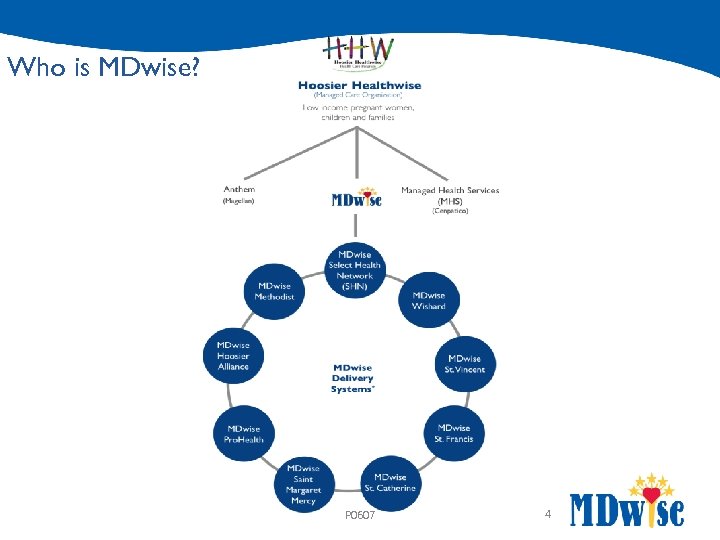 Who is MDwise? P 0607 4
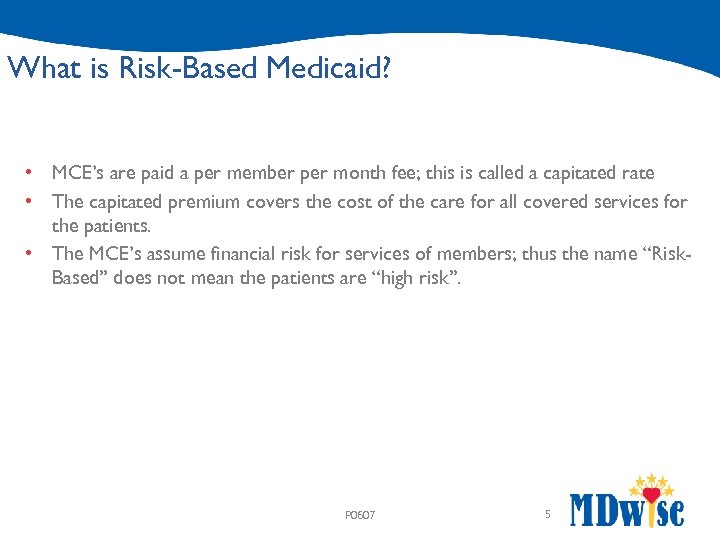 What is Risk-Based Medicaid? • MCE’s are paid a per member per month fee; this is called a capitated rate • The capitated premium covers the cost of the care for all covered services for the patients. • The MCE’s assume financial risk for services of members; thus the name “Risk. Based” does not mean the patients are “high risk”. P 0607 5
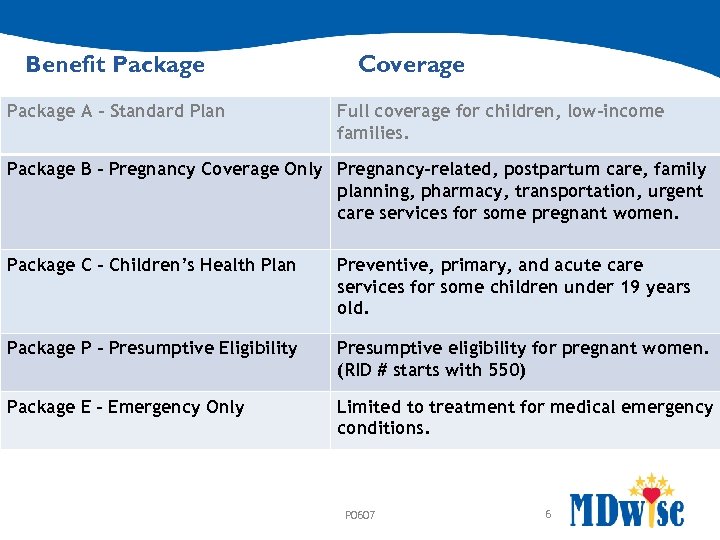 Benefit Package A – Standard Plan Coverage Full coverage for children, low-income families. Package B – Pregnancy Coverage Only Pregnancy-related, postpartum care, family planning, pharmacy, transportation, urgent care services for some pregnant women. Package C – Children’s Health Plan Preventive, primary, and acute care services for some children under 19 years old. Package P – Presumptive Eligibility Presumptive eligibility for pregnant women. (RID # starts with 550) Package E – Emergency Only Limited to treatment for medical emergency conditions. P 0607 6
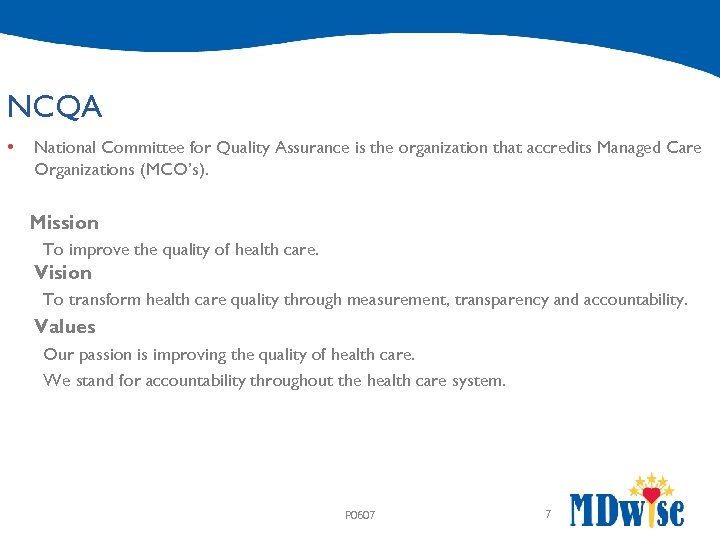 NCQA • National Committee for Quality Assurance is the organization that accredits Managed Care Organizations (MCO’s). Mission To improve the quality of health care. Vision To transform health care quality through measurement, transparency and accountability. Values Our passion is improving the quality of health care. We stand for accountability throughout the health care system. P 0607 7
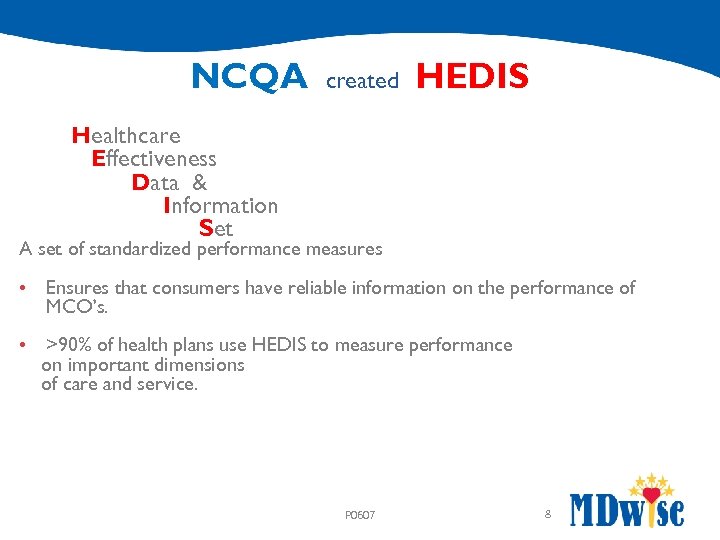 NCQA created HEDIS Healthcare Effectiveness Data & Information Set A set of standardized performance measures • Ensures that consumers have reliable information on the performance of MCO’s. • >90% of health plans use HEDIS to measure performance on important dimensions of care and service. P 0607 8
 Pay for Performance or P 4 P are Incentivized HEDIS Measures • A contractual activity of MCO’s • P 4 P is an incentive to meet quality measures for providers in the commercial, Medicaid and Medicare insured populations. • 1. 0% of the MDwise capitated payment is withheld, and paid to the MCO when quality goals are met. P 0607 9
 Pay for Performance – P 4 P • Supplemental payment based on measured performance against a target • Incent high quality care by shifting greatest reimbursement to highest quality providers and plans • Incent provider offices to increase visits or improve processes. • Site contests or office contests to improve quality of care. P 0607 10
 Pay for Performance – P 4 P • Provider incentives based on claims submissions. • Provider incentives based on meeting targeted measures. • Site contests by increasing a measure or bringing in the most members requiring services in a given measure. • Provider incentives adding provider staff or equipment that can help increase a quality measure or quality of care to members. P 0607 11
 HEDIS contains 71 Quality Measures: § Asthma Medication Use § Persistence of Beta-Blocker Treatment after Heart Attack § Controlling High Blood Pressure § Comprehensive Diabetes Care § Breast Cancer Screening § Antidepressant Medication Management § Childhood and Adolescent Immunization Status § Advising Smokers to Quit & offering assistance to quit…. and others P 0607 12
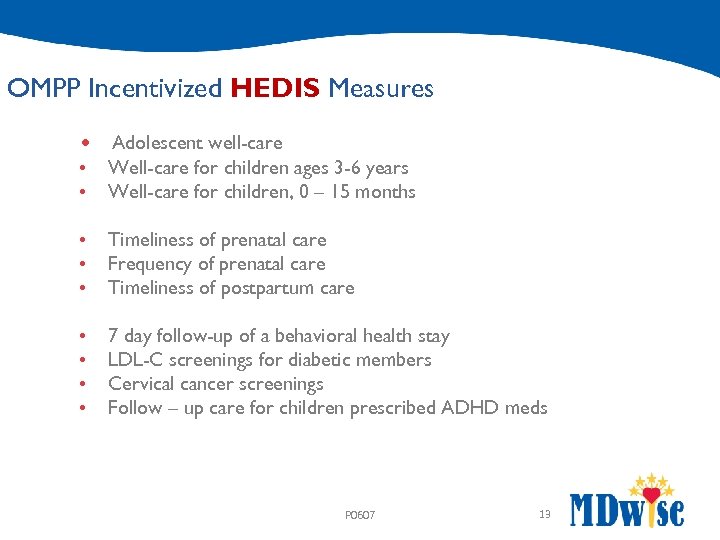 OMPP Incentivized HEDIS Measures • Adolescent well-care • • Well-care for children ages 3 -6 years Well-care for children, 0 – 15 months • • • Timeliness of prenatal care Frequency of prenatal care Timeliness of postpartum care • • 7 day follow-up of a behavioral health stay LDL-C screenings for diabetic members Cervical cancer screenings Follow – up care for children prescribed ADHD meds P 0607 13
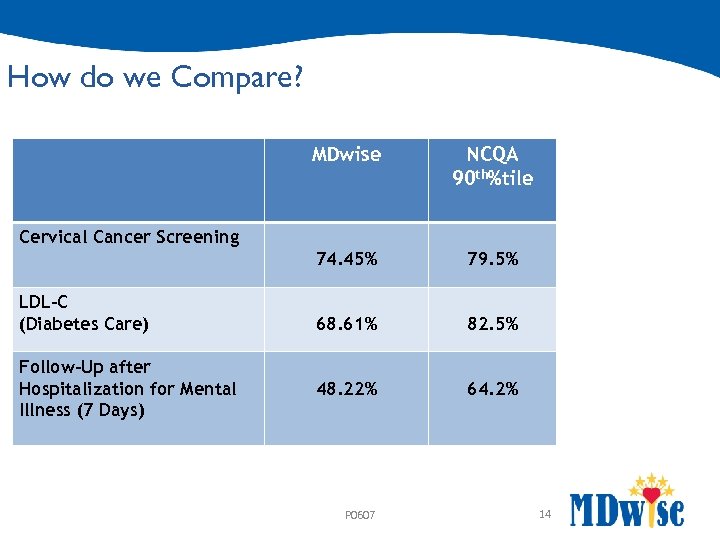 How do we Compare? MDwise NCQA 90 th%tile 74. 45% 79. 5% 68. 61% 82. 5% 48. 22% 64. 2% Cervical Cancer Screening LDL-C (Diabetes Care) Follow-Up after Hospitalization for Mental Illness (7 Days) P 0607 14
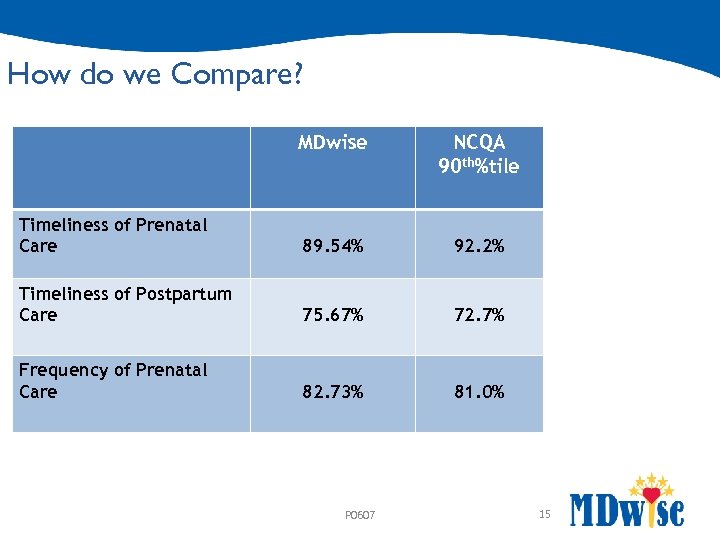 How do we Compare? MDwise NCQA 90 th%tile Timeliness of Prenatal Care 89. 54% 92. 2% Timeliness of Postpartum Care 75. 67% 72. 7% Frequency of Prenatal Care 82. 73% 81. 0% P 0607 15
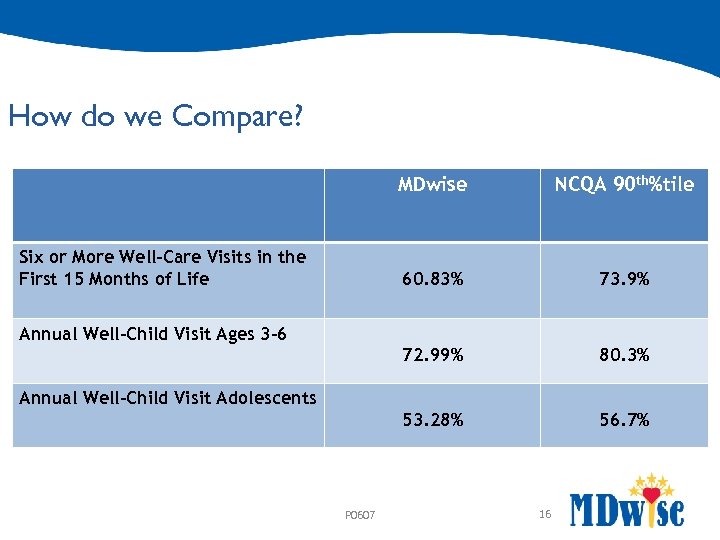 How do we Compare? MDwise 60. 83% 73. 9% 72. 99% 80. 3% 53. 28% Six or More Well-Care Visits in the First 15 Months of Life NCQA 90 th%tile 56. 7% Annual Well-Child Visit Ages 3 -6 Annual Well-Child Visit Adolescents P 0607 16
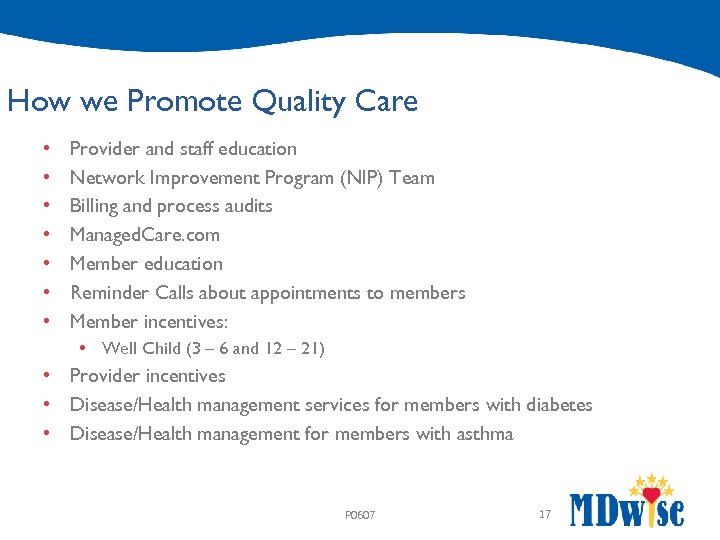 How we Promote Quality Care • • Provider and staff education Network Improvement Program (NIP) Team Billing and process audits Managed. Care. com Member education Reminder Calls about appointments to members Member incentives: • Well Child (3 – 6 and 12 – 21) • Provider incentives • Disease/Health management services for members with diabetes • Disease/Health management for members with asthma P 0607 17
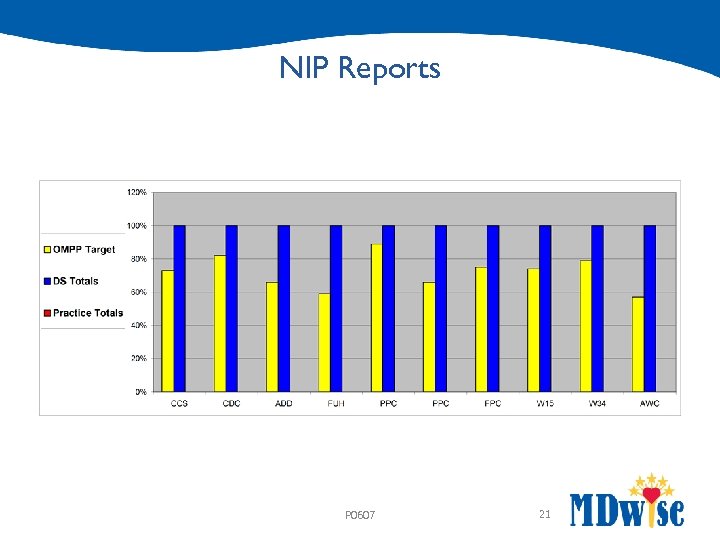
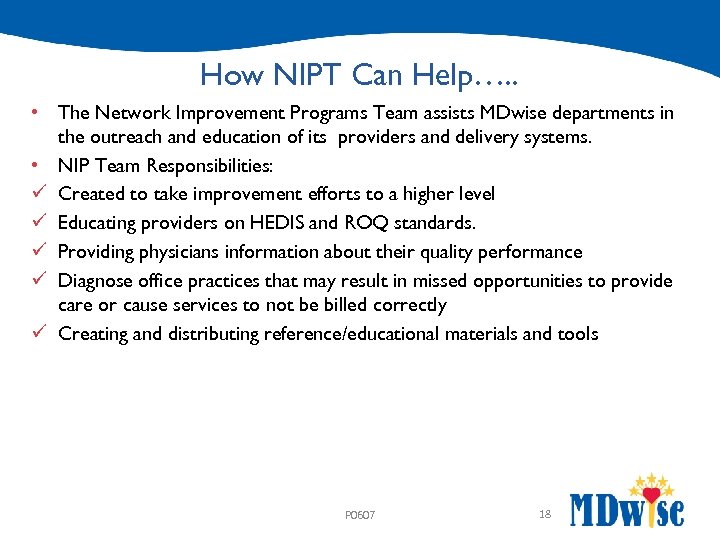 How NIPT Can Help…. . • The Network Improvement Programs Team assists MDwise departments in the outreach and education of its providers and delivery systems. • NIP Team Responsibilities: ü Created to take improvement efforts to a higher level ü Educating providers on HEDIS and ROQ standards. ü Providing physicians information about their quality performance ü Diagnose office practices that may result in missed opportunities to provide care or cause services to not be billed correctly ü Creating and distributing reference/educational materials and tools P 0607 18
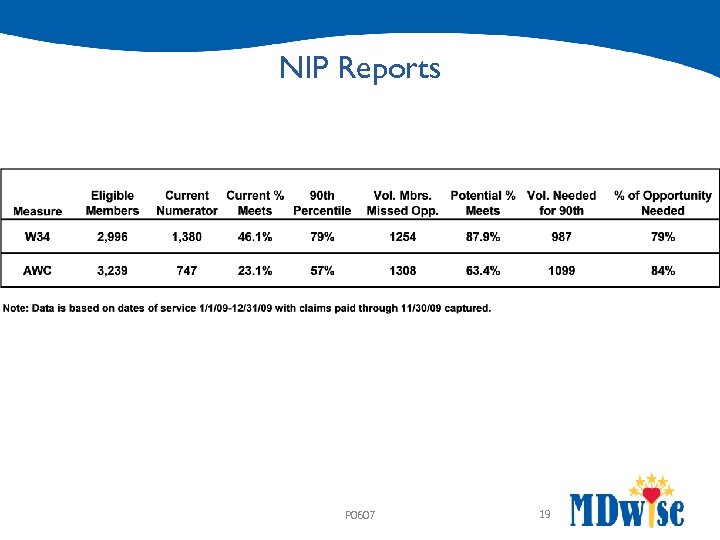 NIP Reports P 0607 19
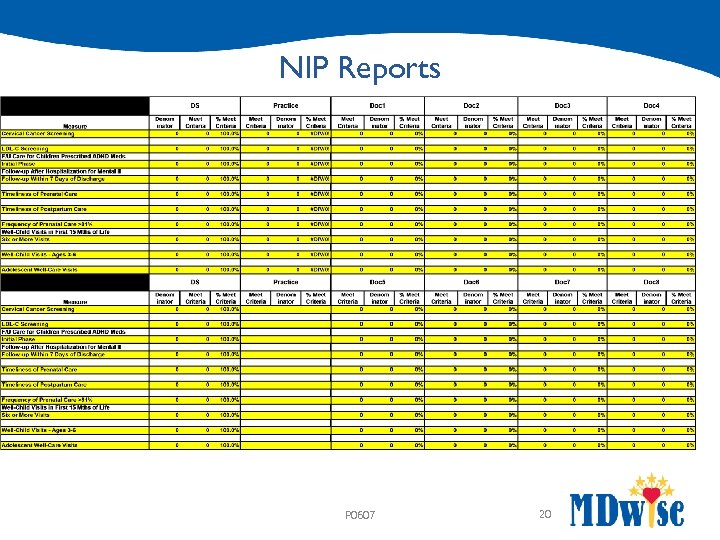 NIP Reports P 0607 20
 NIP Reports P 0607 21
 Disease/Health Management • • • RN’s identify & evaluate members with unique healthcare needs Develop individualized plan of care Assist in overcoming barriers to care Risk assessment Maintains contact with PMP and member Implements interventions for identified needs. P 0607 22
 Disease Management Goals • Empower member with self-management tools, education and awareness • Promote the Asthma/Diabetes action plan in the home, school, and provider office • Encourage adherence to the physician’s treatment plan • Reinforce self-management goals: problem-solving techniques, overcoming barriers, and establishing goals • Provide physicians with member specific utilization information including pharmacy, emergency room, and outpatient visits • Promote relationship between the member and his/her physician(s) • Promote healthy lifestyle choices P 0607 23
 Opportunities for Improvement • Maximize every member interaction to provide preventive and well-care. • • Well care visits for children when they are in for acute care Schedule the 15 th month EPSDT (Early Periodic Screening, Diagnosis, and Treatment) visit prior to the 15 th month of life LDL-C screens for diabetics when in for acute care Document all components of prenatal and postpartum care and submit for well-care visits. Staff who does scheduling can identify members who need services to schedule in a timely fashion Ensure proper billing for services rendered. Be sure that the documentation is complete P 0607 24
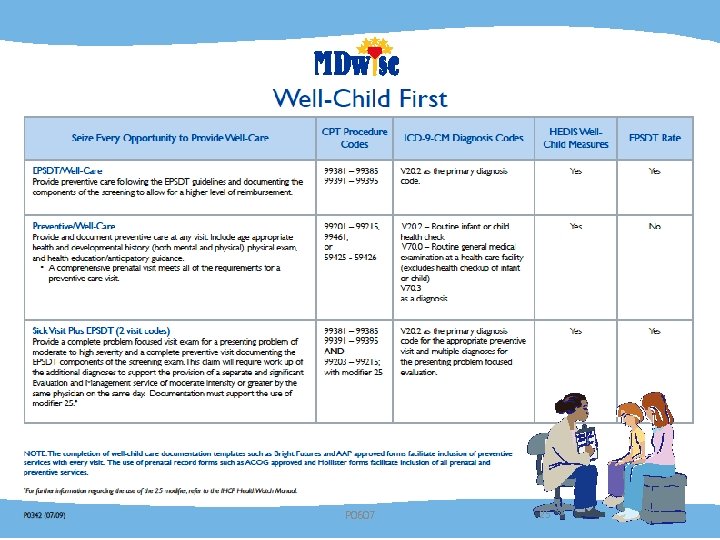 Converting Acute Visits to Well Visits P 0607 25
 P 0607 26
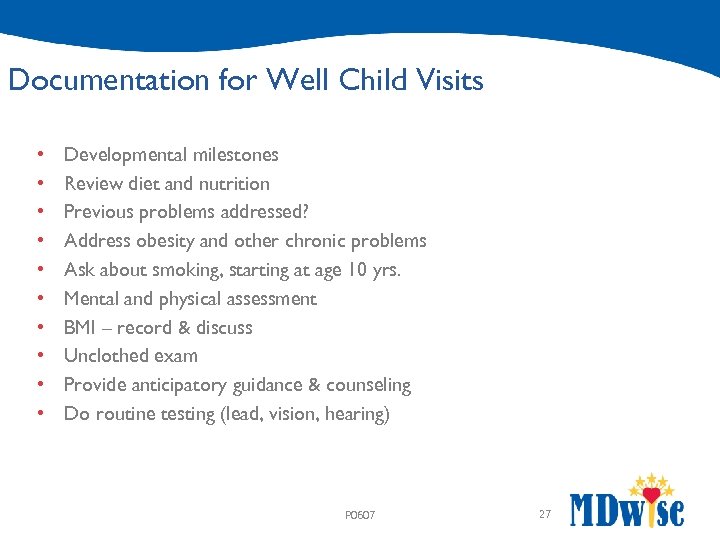 Documentation for Well Child Visits • • • Developmental milestones Review diet and nutrition Previous problems addressed? Address obesity and other chronic problems Ask about smoking, starting at age 10 yrs. Mental and physical assessment BMI – record & discuss Unclothed exam Provide anticipatory guidance & counseling Do routine testing (lead, vision, hearing) P 0607 27
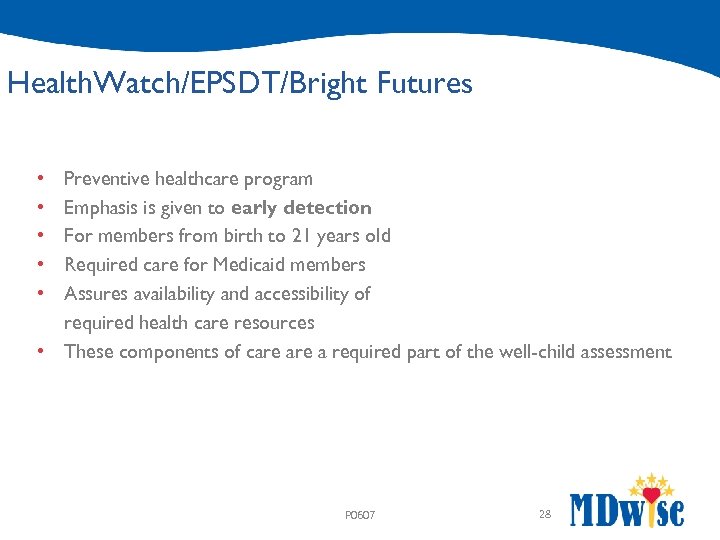 Health. Watch/EPSDT/Bright Futures Preventive healthcare program Emphasis is given to early detection For members from birth to 21 years old Required care for Medicaid members Assures availability and accessibility of required health care resources • These components of care a required part of the well-child assessment • • • P 0607 28
 Opportunities • If a member contacts the primary medical provider’s (PMP’s) office for a sore throat (sick visit) the office should take the opportunity to provide preventive care and schedule a well child visit if the member is due for services. • If the PMP office receives a list of non – compliant members, the office should reach out to the members and schedule preventive services. P 0607 29
 Opportunities • A PMP office could take the opportunity to convert a sick visit into a well – child visit when the member is in the office for acute care. • If the PMP office has electronic medical records (EMR), implement alerts to reflect the non – complaint members in the quality measures. P 0607 30
 Opportunities • If a member is being seen for an initial prenatal visit or post partum visit, all the components of a preventive well – child exam are provided. The appropriate V 20. 2 or V 70. 0 can be submitted as a secondary diagnosis code and count towards the AWC measure. • If all components of Early and Periodic Screening, Diagnosis, and Treatment (EPSDT) services were provided, remember to submit the appropriate 99381 – 99385 or 99391 – 99395 with the V 20. 2. P 0607 31
 Opportunities • If all components of EPSDT were not provided, remember to submit the appropriate E&M code along with V 20. 2, V 70. 0, or V 70. 3 to ensure the services count towards the HEDIS measure. • If EPSDT services were provided along with acute care, be sure to submit the appropriate EPSDT code along with the E&M code and the 25 modifier to ensure the services are counted towards the HEDIS measure. P 0607 32
 Quiz……. . 1. 2. 3. 4. 5. If the PMP office provides immunizations and well care at the same visit, can I bill for both? How do I bill for both services and how do they count towards the HEDIS measure? When can I bill for the following combination 99381 and V 20. 2 as primary? If a pregnant adolescent member is seen for prenatal care, how is the claim coded to count towards the HEDIS measure? Can a sick visit and a preventive visit be billed and reimbursed n the same date of service (DOS)? P 0607 33
 Quiz……. . 1. 2. 3. 4. 5. 6. Is MDwise currently at the NCQA 90 th percentile for the well – child 3 – 6 measure? Name 2 examples of provider incentives? Name 2 examples to promote quality of care within the MDwise network. Give an example of a disease management goal? Give an example for an opportunity for improvement? What is a goal of the EPSDT program? P 0607 34
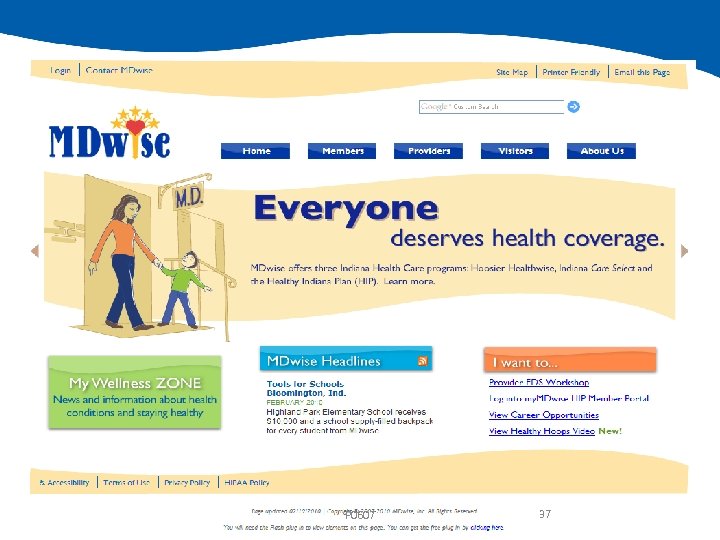
 Resources • MDwise website : www. MDwise. org • My Wellness Zone: http: //mdws. staywellsolutionsonline. com/ • American Academy of Pediatrics http: //www. aap. org/ P 0607 35
 American Academy of Pediatrics P 0607 36
 P 0607 37
 Thanks for your hard work! Questions? P 0607 38
 Handouts HEDIS poster Well – Child Mini Poster Quality PDF http: //www. mdwise. org/about/mdwisequalityprogram 09. pdf EPSDT grid Network Improvement Program Charts P 0607 39