


 Скачать презентацию Shopper Scape Snapshot Shopper Reaction to Payroll Tax
4f9183b811fc9b1194f81d052ef5ed4c.ppt
- Количество слайдов: 5
 Shopper. Scape® Snapshot Shopper Reaction to Payroll Tax Increase Modest and Measured April 2013
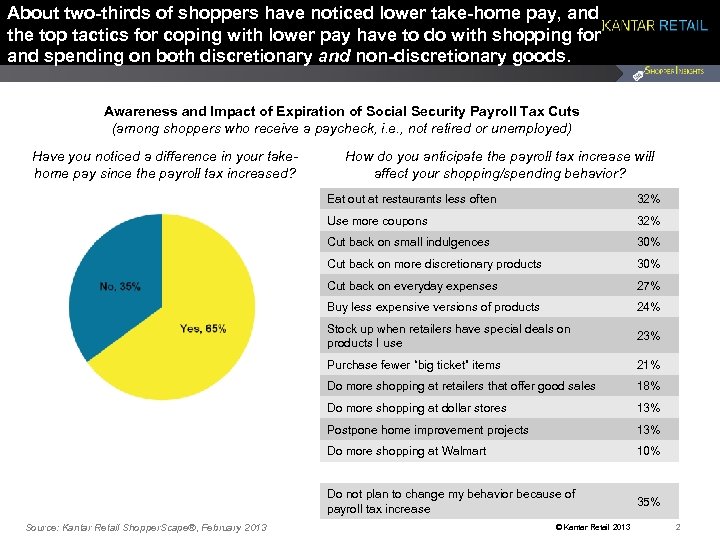 About two-thirds of shoppers have noticed lower take-home pay, and the top tactics for coping with lower pay have to do with shopping for and spending on both discretionary and non-discretionary goods. Awareness and Impact of Expiration of Social Security Payroll Tax Cuts (among shoppers who receive a paycheck, i. e. , not retired or unemployed) Have you noticed a difference in your takehome pay since the payroll tax increased? How do you anticipate the payroll tax increase will affect your shopping/spending behavior? Eat out at restaurants less often Use more coupons 32% Cut back on small indulgences 30% Cut back on more discretionary products 30% Cut back on everyday expenses 27% Buy less expensive versions of products 24% Stock up when retailers have special deals on products I use 23% Purchase fewer “big ticket” items 21% Do more shopping at retailers that offer good sales 18% Do more shopping at dollar stores 13% Postpone home improvement projects 13% Do more shopping at Walmart 10% Do not plan to change my behavior because of payroll tax increase Source: Kantar Retail Shopper. Scape®, February 2013 32% 35% © Kantar Retail 2013 2
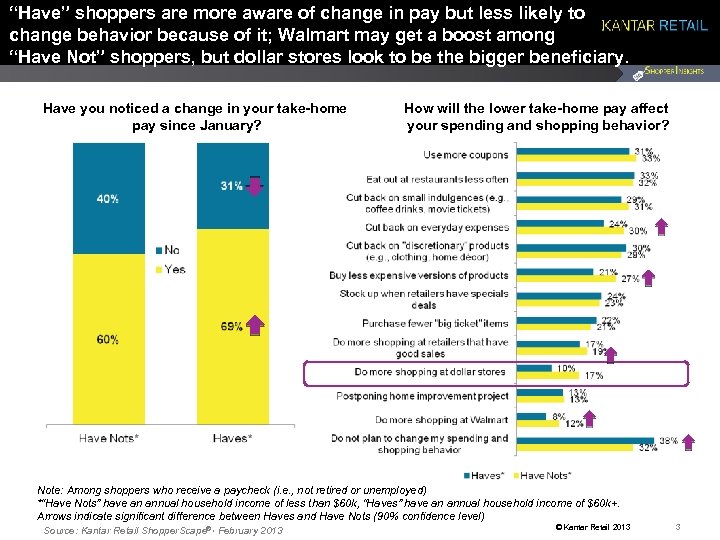 “Have” shoppers are more aware of change in pay but less likely to change behavior because of it; Walmart may get a boost among “Have Not” shoppers, but dollar stores look to be the bigger beneficiary. Have you noticed a change in your take-home pay since January? How will the lower take-home pay affect your spending and shopping behavior? Note: Among shoppers who receive a paycheck (i. e. , not retired or unemployed) *“Have Nots” have an annual household income of less than $60 k, “Haves” have an annual household income of $60 k+. Arrows indicate significant difference between Haves and Have Nots (90% confidence level) Source: Kantar Retail Shopper. Scape® , February 2013 © Kantar Retail 2013 3
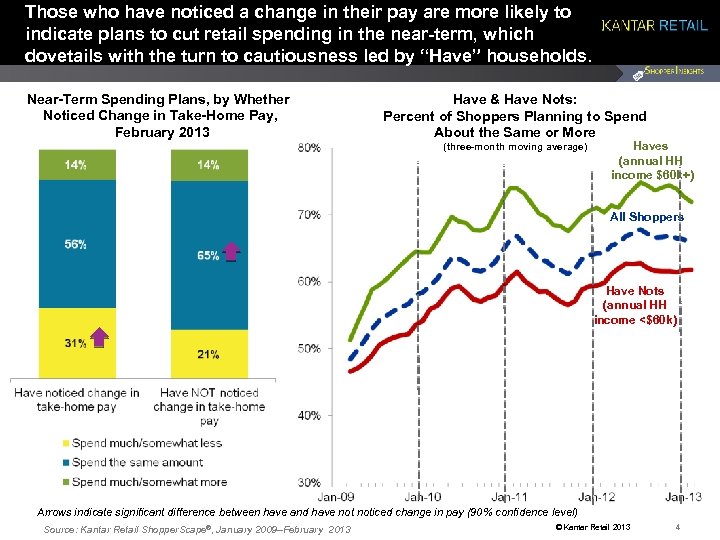 Those who have noticed a change in their pay are more likely to indicate plans to cut retail spending in the near-term, which dovetails with the turn to cautiousness led by “Have” households. Near-Term Spending Plans, by Whether Noticed Change in Take-Home Pay, February 2013 Have & Have Nots: Percent of Shoppers Planning to Spend About the Same or More (three-month moving average) Haves (annual HH income $60 k+) All Shoppers Have Nots (annual HH income <$60 k) Arrows indicate significant difference between have and have noticed change in pay (90% confidence level) Source: Kantar Retail Shopper. Scape®, January 2009–February 2013 © Kantar Retail 2013 4
 Rachel Mc. Guire Rachel. Mc. Guire@kantarretail. com Two Easton Oval Suite 500 Columbus, OH 43219 T +1. 614. 355. 4000 T +1. 614. 355. 4036 F +1. 614. 355. 4059 www. kantarretailiq. com © 2013 Kantar. No part of these materials may be used, reproduced or adapted without the prior written consent of the copyright owner. All rights reserved.