 Скачать презентацию Shallow Water Bathymetry of Singapore s Highly Turbid Coastal
342c3cf7e7dc440c5a1582d67b34ee7f.ppt
- Количество слайдов: 22



Shallow Water Bathymetry of Singapore’s Highly Turbid Coastal Waters: A Comparative Approach James F. Bramante, Durairaju Kumaran Raju, Sin Tsai Min Tropical Marine Science Institute, National University of Singapore
Purpose • Determine effectiveness of multispectral algorithms in Singapore • Determine how extra 4 bands may help • Develop high resolution shallow-water bathymetric map • Coral/Benthic Surveys • Interface into more complicated IOP models • Determine possible new benthic habitats
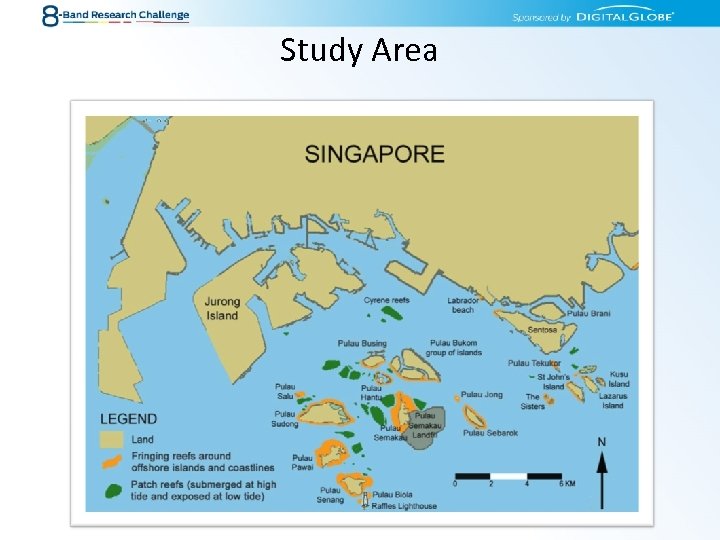
Study Area
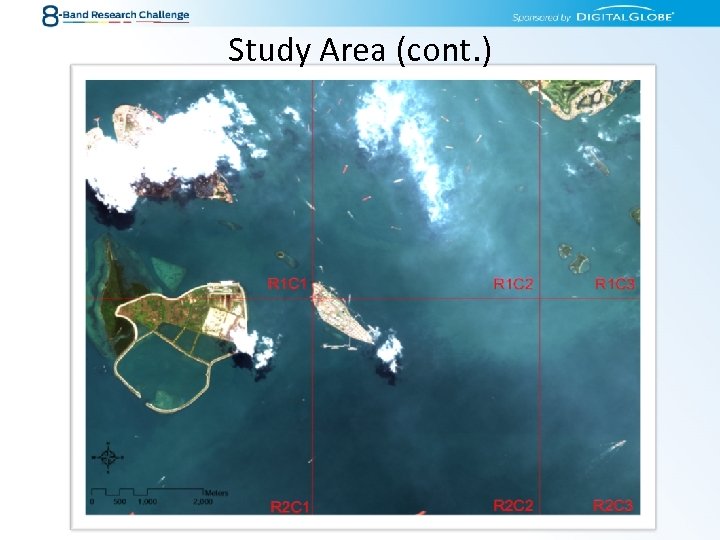
Study Area (cont. )
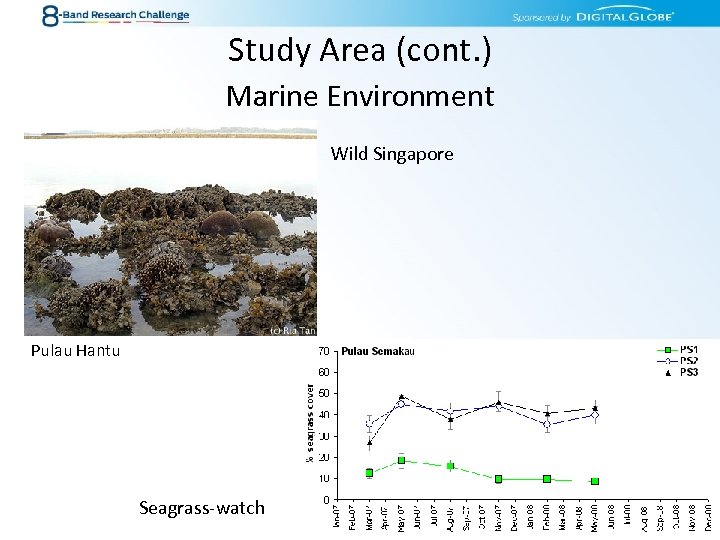
Study Area (cont. ) Marine Environment Wild Singapore Pulau Hantu Seagrass-watch
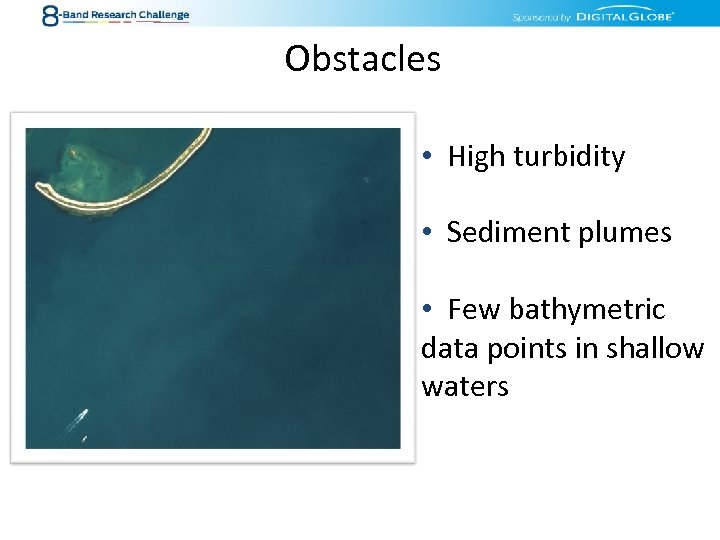
Obstacles • High turbidity • Sediment plumes • Few bathymetric data points in shallow waters
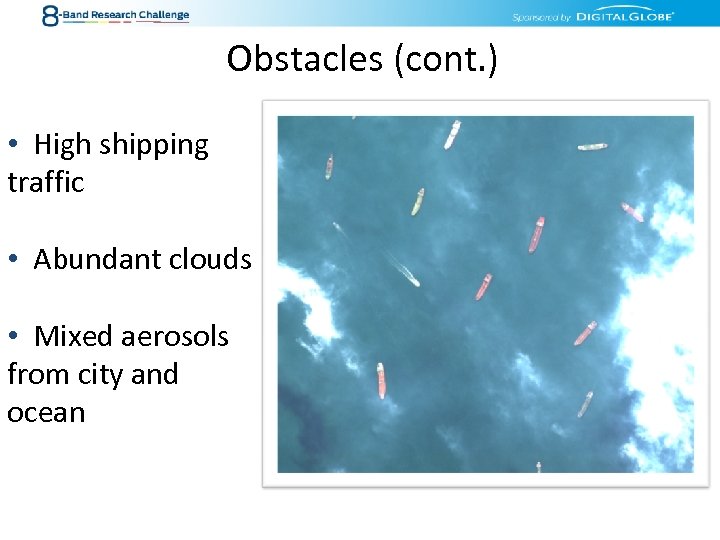
Obstacles (cont. ) • High shipping traffic • Abundant clouds • Mixed aerosols from city and ocean
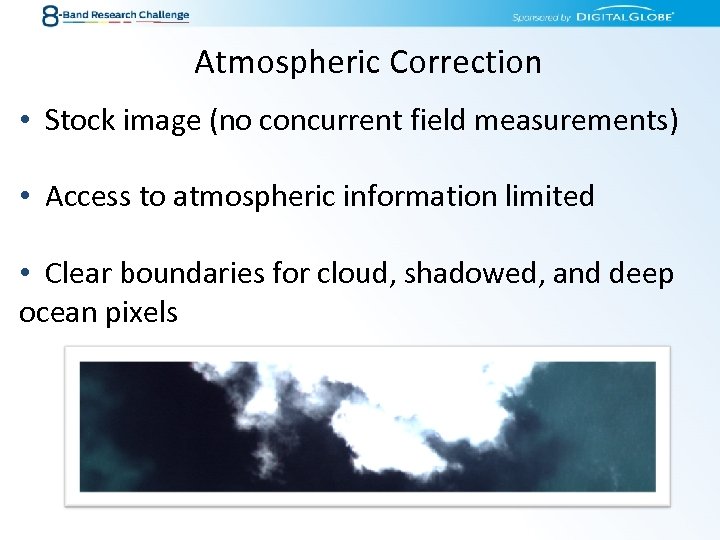
Atmospheric Correction • Stock image (no concurrent field measurements) • Access to atmospheric information limited • Clear boundaries for cloud, shadowed, and deep ocean pixels
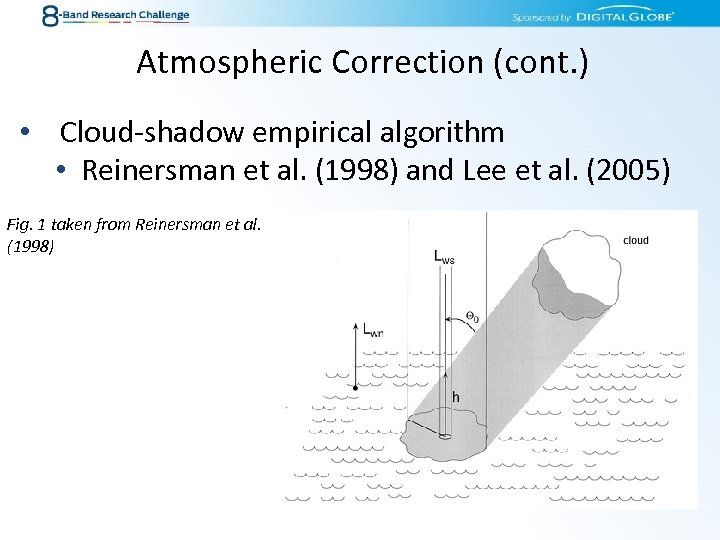
Atmospheric Correction (cont. ) • Cloud-shadow empirical algorithm • Reinersman et al. (1998) and Lee et al. (2005) Fig. 1 taken from Reinersman et al. (1998)
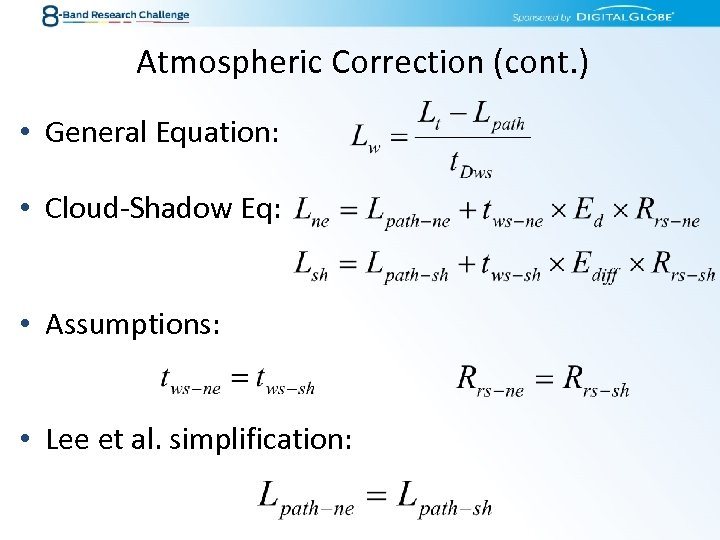
Atmospheric Correction (cont. ) • General Equation: • Cloud-Shadow Eq: • Assumptions: • Lee et al. simplification:
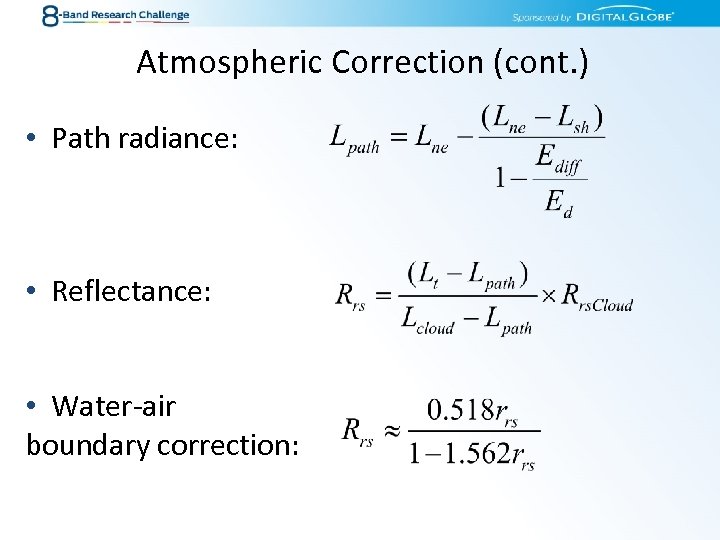
Atmospheric Correction (cont. ) • Path radiance: • Reflectance: • Water-air boundary correction:
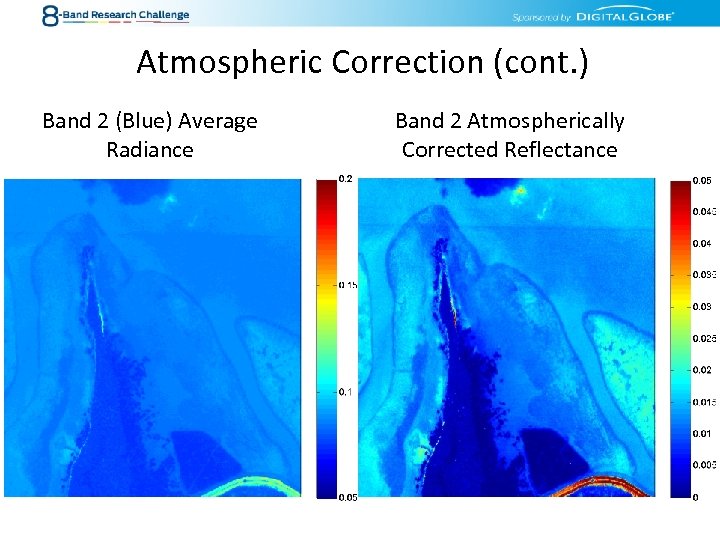
Atmospheric Correction (cont. ) Band 2 (Blue) Average Radiance Band 2 Atmospherically Corrected Reflectance
Bathymetry Algorithms • LUT Classification • Linear Ratio Algorithm (Stumpf et al. 2003) • Linear Band Algorithm (Lyzenga et al. 2006) • Compared results using conventional 4 bands and Worldview-2’s 8 bands
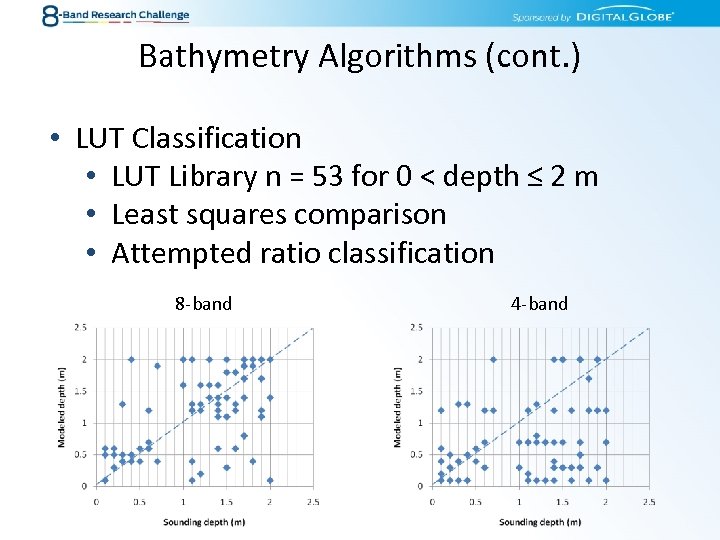
Bathymetry Algorithms (cont. ) • LUT Classification • LUT Library n = 53 for 0 < depth ≤ 2 m • Least squares comparison • Attempted ratio classification 8 -band 4 -band
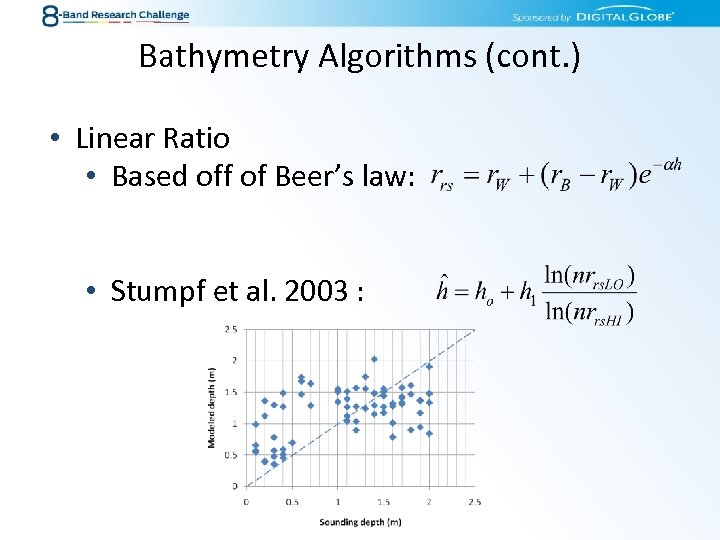
Bathymetry Algorithms (cont. ) • Linear Ratio • Based off of Beer’s law: • Stumpf et al. 2003 :
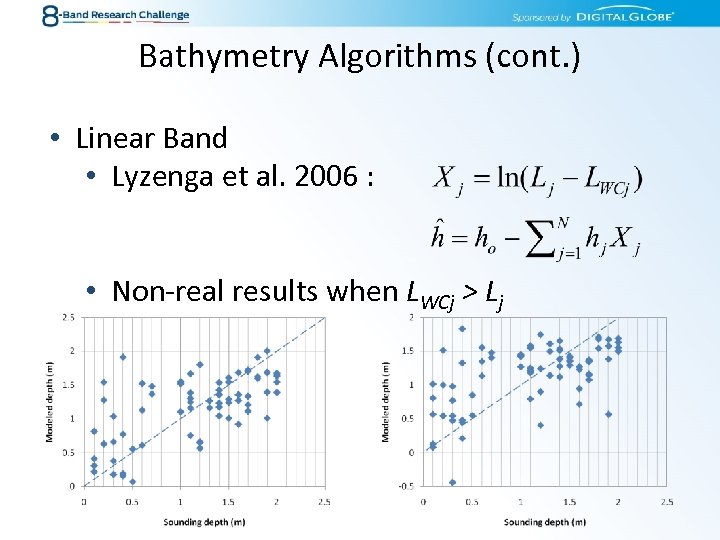
Bathymetry Algorithms (cont. ) • Linear Band • Lyzenga et al. 2006 : • Non-real results when LWCj > Lj
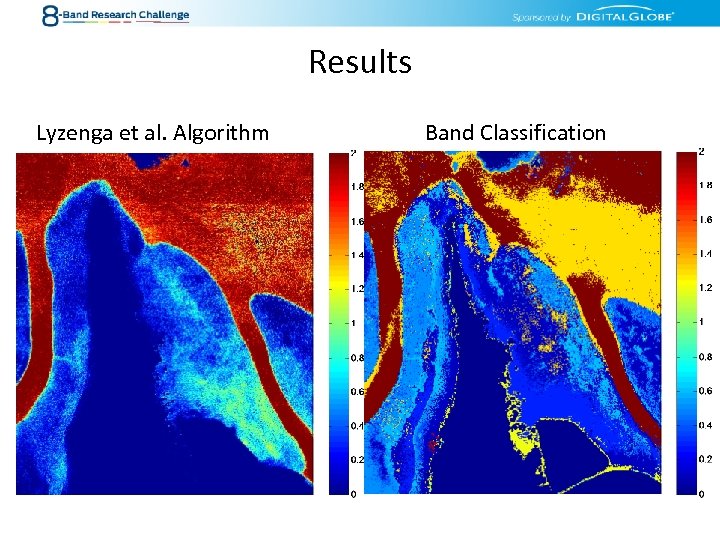
Results Lyzenga et al. Algorithm Band Classification
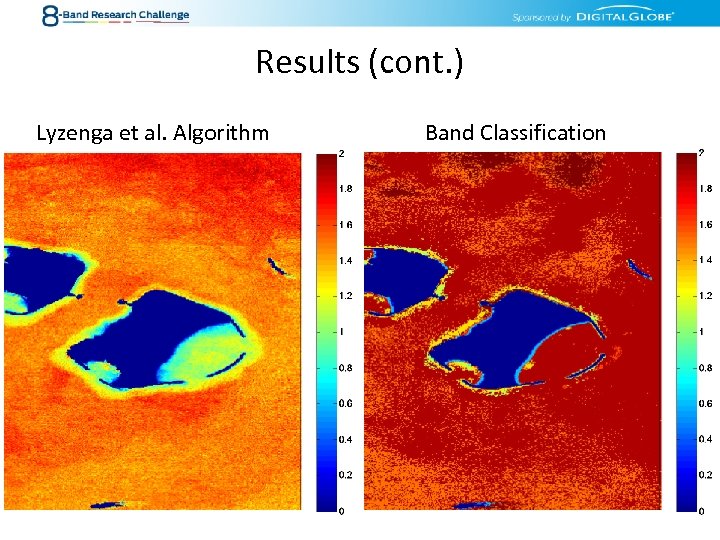
Results (cont. ) Lyzenga et al. Algorithm Band Classification
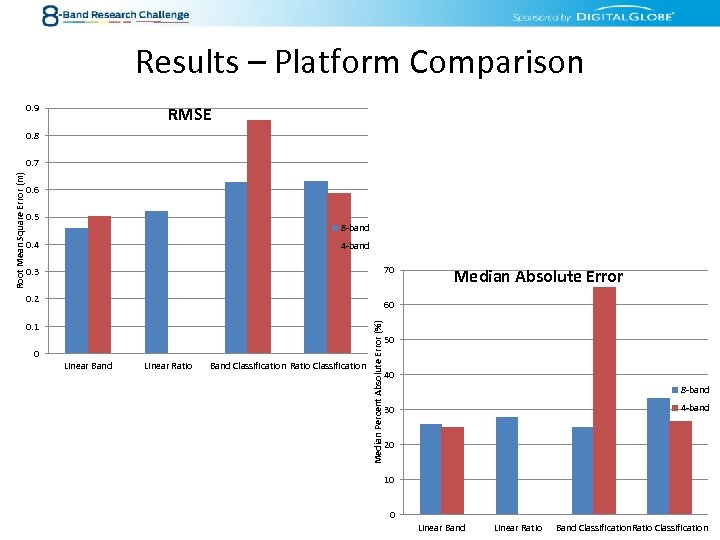
Results – Platform Comparison 0. 9 RMSE 0. 8 0. 6 0. 5 8 -band 0. 4 4 -band 70 0. 3 0. 2 Median Absolute Error 60 0. 1 0 Linear Band Linear Ratio Band Classification Ratio Classification Median Percent Absolute Error (%) Root Mean Square Error (m) 0. 7 50 40 8 -band 4 -band 30 20 10 0 Linear Band Linear Ratio Band Classification. Ratio Classification
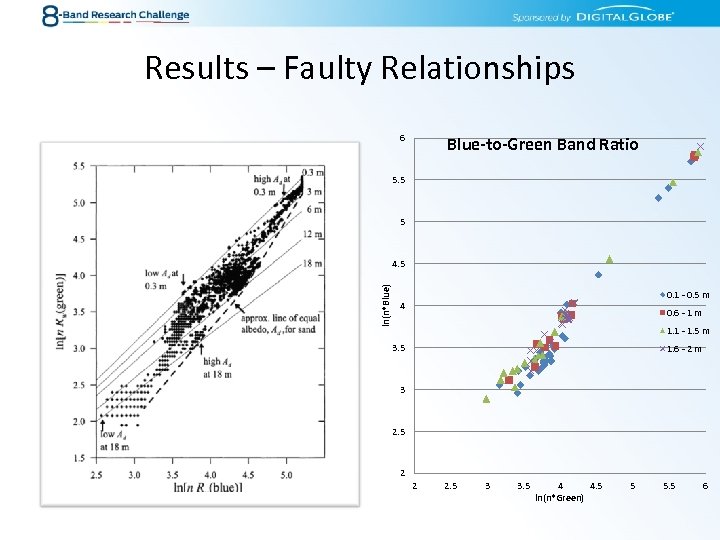
Results – Faulty Relationships 6 Blue-to-Green Band Ratio 5. 5 5 ln(n*Blue) 4. 5 0. 1 - 0. 5 m 4 0. 6 - 1 m 1. 1 - 1. 5 m 3. 5 1. 6 - 2 m 3 2. 5 2 2 2. 5 3 3. 5 4 4. 5 ln(n*Green) 5 5. 5 6
Conclusions • With more validation, Lyzenga et al. model and band classifications may prove useful in turbid waters • Assumed relationship between band absorption and depth must be re-examined in extremely turbid waters
Further Investigations • Evaluated cloud-shadow atmospheric correction model against RT Model; former was validated and did not affect results much • Attempting to use water-column index to adjust for water mass variation in Lyzenga algorithm • Using spectroradiometer to modify semianalytical models for Singapore
Скачать презентацию Shallow Water Bathymetry of Singapore s Highly Turbid Coastal
342c3cf7e7dc440c5a1582d67b34ee7f.ppt