 Скачать презентацию Shallow Cumulus Growth an idealized view Bjorn Stevens
5fc28be2c5a8077d6f195ca33dc16810.ppt
- Количество слайдов: 58



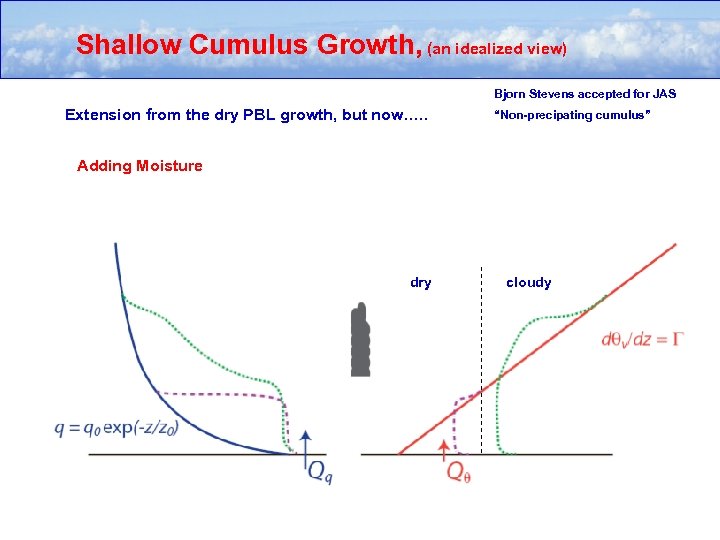
Shallow Cumulus Growth, (an idealized view) Bjorn Stevens accepted for JAS Extension from the dry PBL growth, but now…. . “Non-precipating cumulus” Adding Moisture dry cloudy
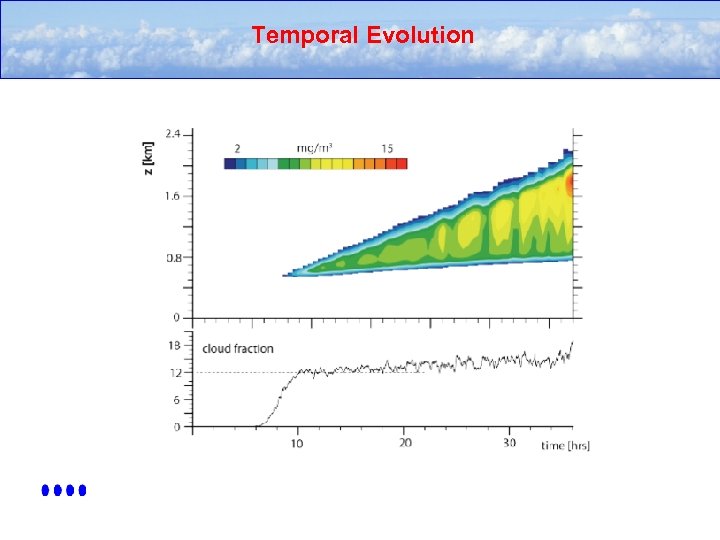
Temporal Evolution
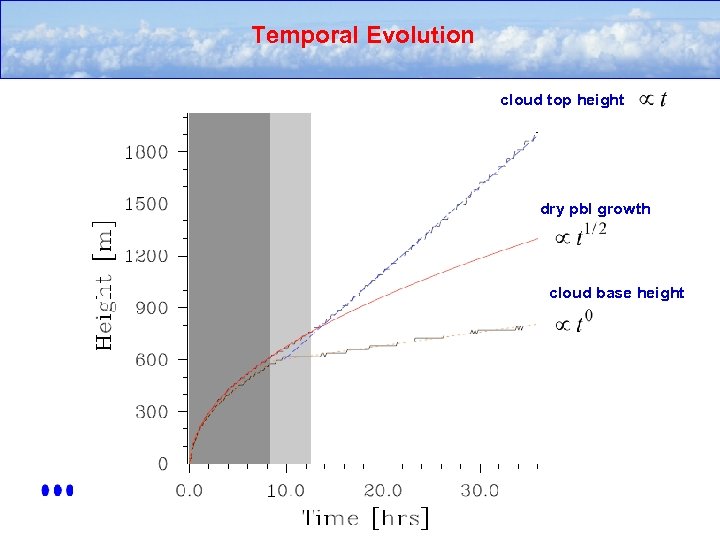
Temporal Evolution cloud top height dry pbl growth cloud base height
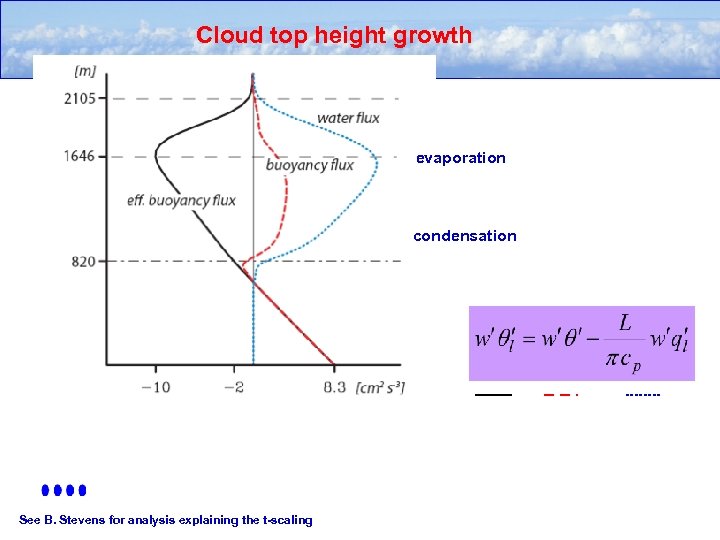
Cloud top height growth evaporation condensation See B. Stevens for analysis explaining the t-scaling
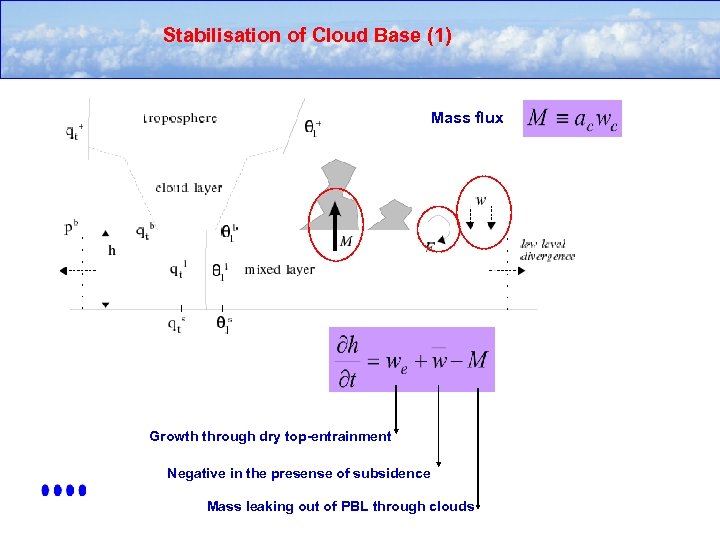
Stabilisation of Cloud Base (1) Mass flux Growth through dry top-entrainment Negative in the presense of subsidence Mass leaking out of PBL through clouds
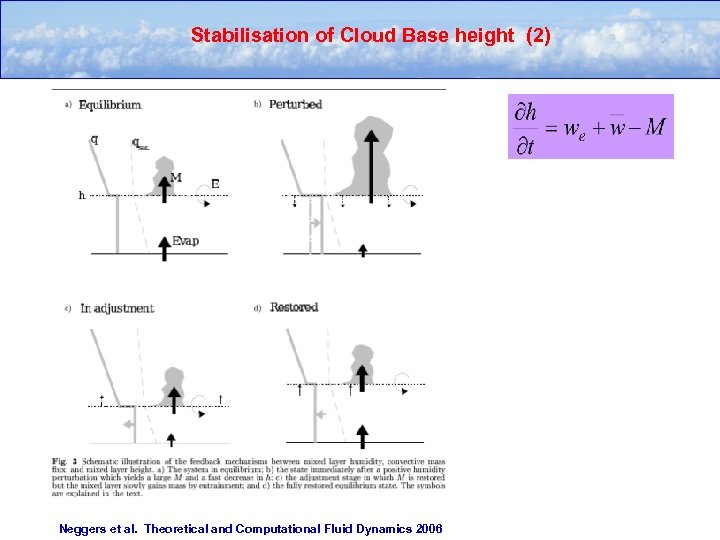
Stabilisation of Cloud Base height (2) Neggers et al. Theoretical and Computational Fluid Dynamics 2006
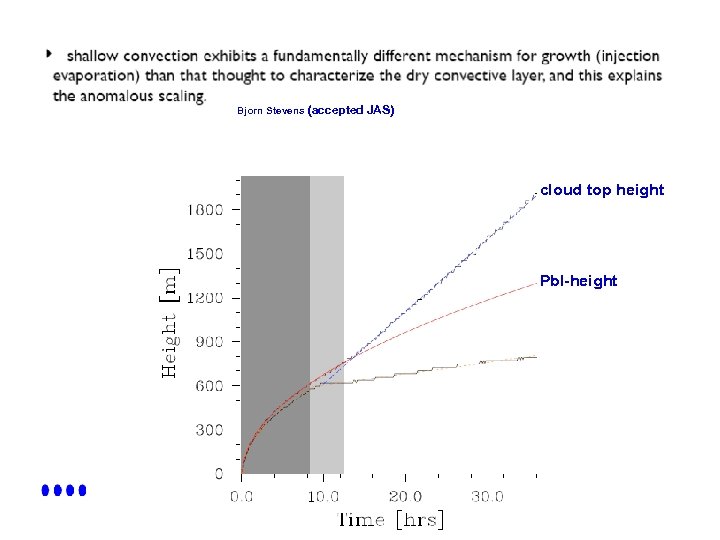
Bjorn Stevens (accepted JAS) cloud top height Pbl-height
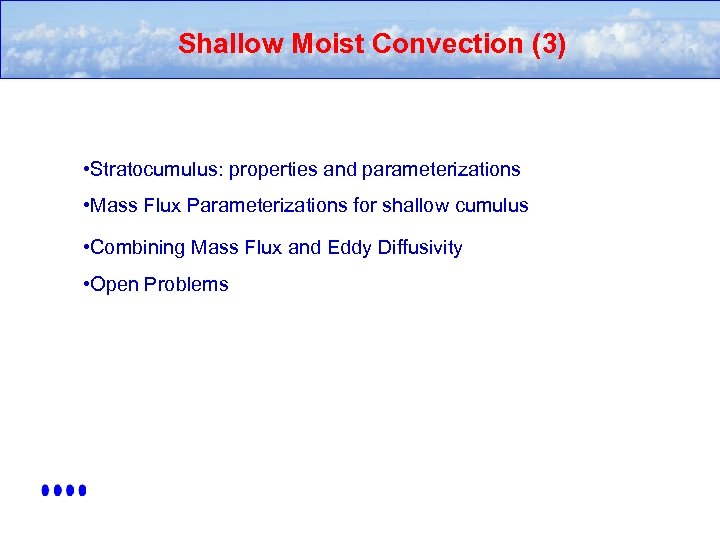
Shallow Moist Convection (3) • Stratocumulus: properties and parameterizations • Mass Flux Parameterizations for shallow cumulus • Combining Mass Flux and Eddy Diffusivity • Open Problems
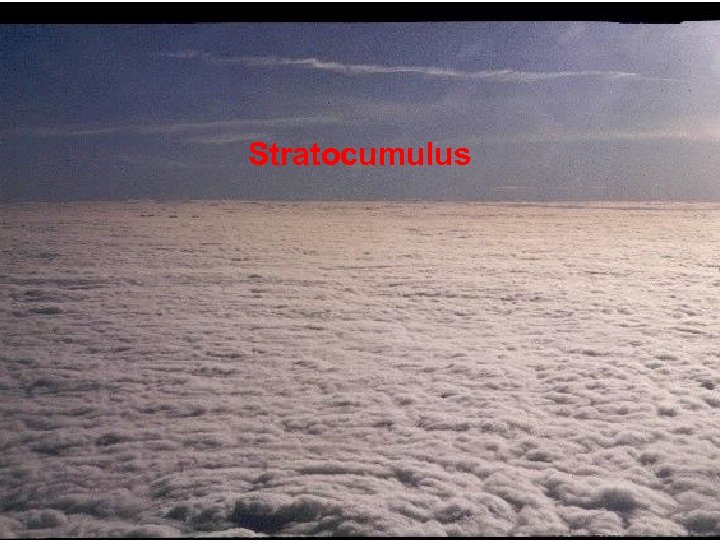
Stratocumulus
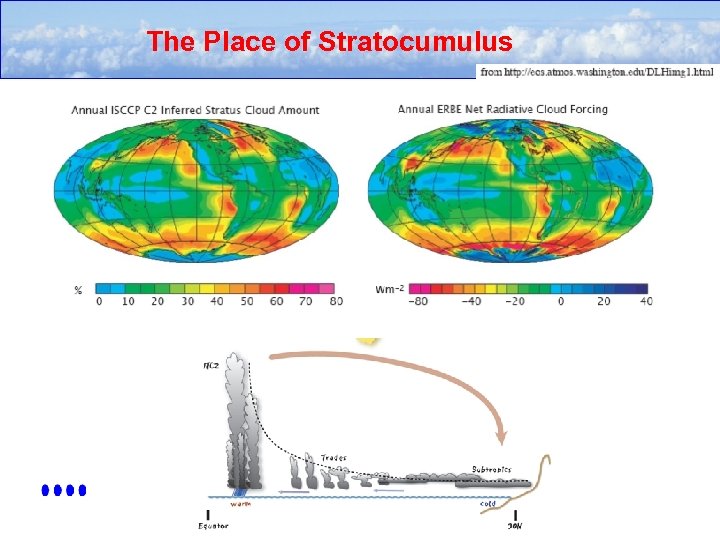
The Place of Stratocumulus
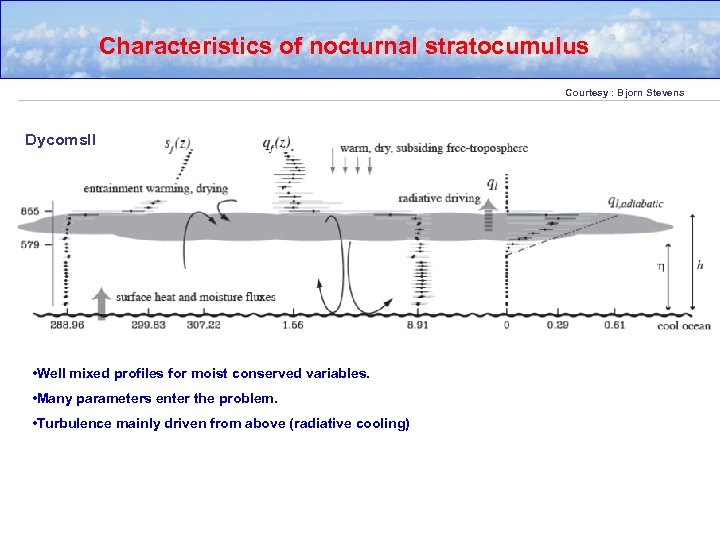
Characteristics of nocturnal stratocumulus Courtesy : Bjorn Stevens Dycoms. II • Well mixed profiles for moist conserved variables. • Many parameters enter the problem. • Turbulence mainly driven from above (radiative cooling)
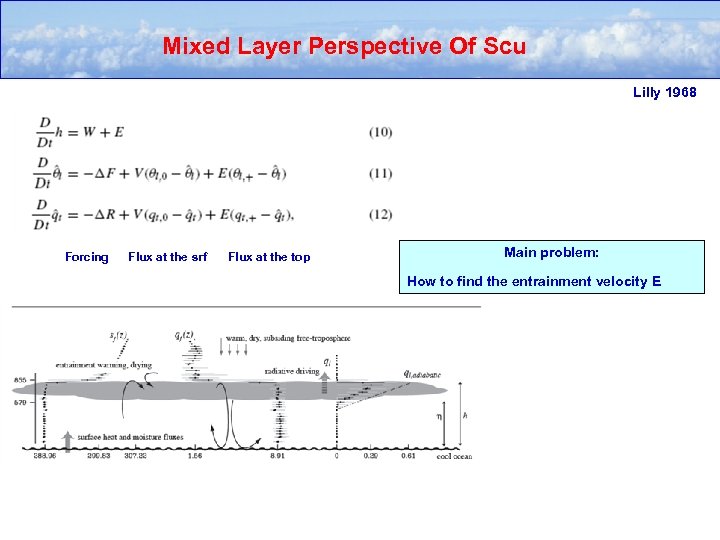
Mixed Layer Perspective Of Scu Lilly 1968 Forcing Flux at the srf Flux at the top Main problem: How to find the entrainment velocity E
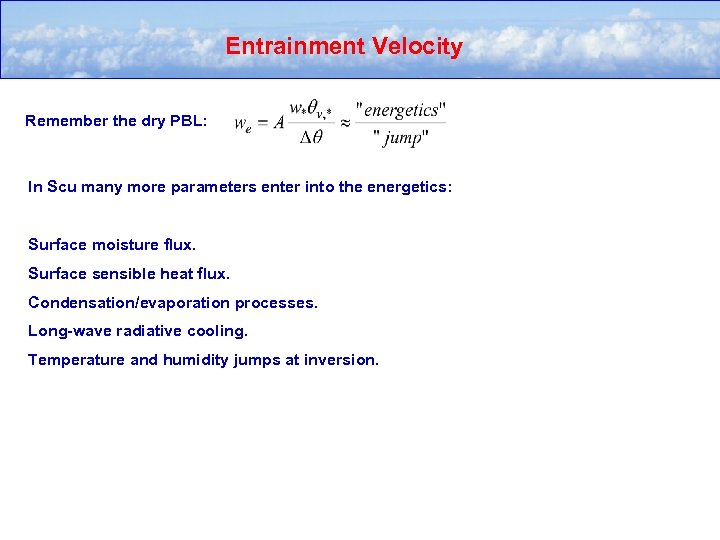
Entrainment Velocity Remember the dry PBL: In Scu many more parameters enter into the energetics: Surface moisture flux. Surface sensible heat flux. Condensation/evaporation processes. Long-wave radiative cooling. Temperature and humidity jumps at inversion.
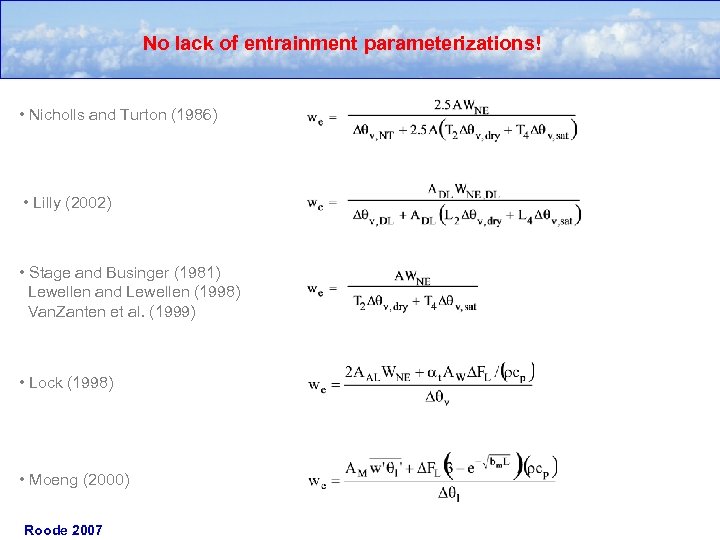
No lack of entrainment parameterizations! • Nicholls and Turton (1986) • Lilly (2002) • Stage and Businger (1981) Lewellen and Lewellen (1998) Van. Zanten et al. (1999) • Lock (1998) • Moeng (2000) Roode 2007
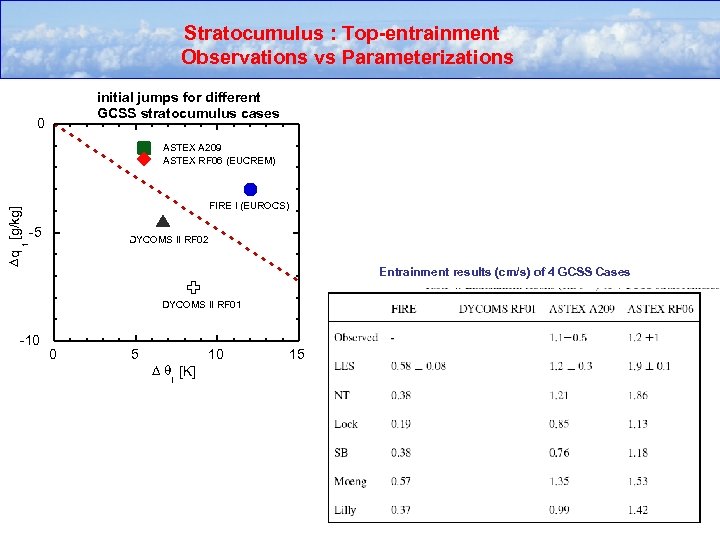
Stratocumulus : Top-entrainment Observations vs Parameterizations initial jumps for different GCSS stratocumulus cases 0 buoyancy reversal criterion -5 FIRE I (EUROCS) DYCOMS II RF 02 t D q [g/kg] ASTEX A 209 ASTEX RF 06 (EUCREM) Entrainment results (cm/s) of 4 GCSS Cases DYCOMS II RF 01 -10 0 5 D q [K] l 10 15
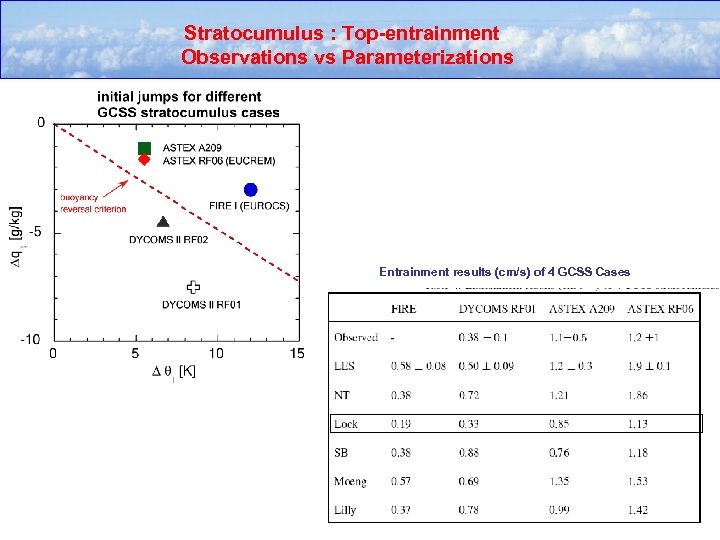
Stratocumulus : Top-entrainment Observations vs Parameterizations Entrainment results (cm/s) of 4 GCSS Cases
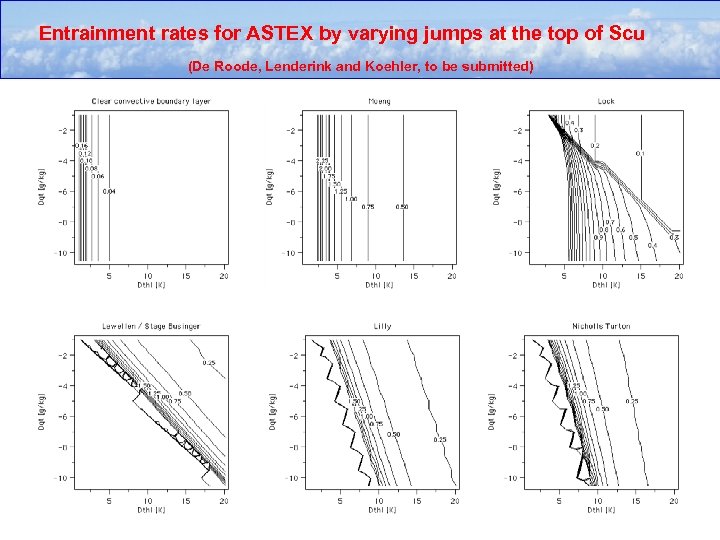
Entrainment rates for ASTEX by varying jumps at the top of Scu (De Roode, Lenderink and Koehler, to be submitted)
Stratocumulus : Parameterizations Computation of the flux Representation of top entrainment Explicit top-entrainment
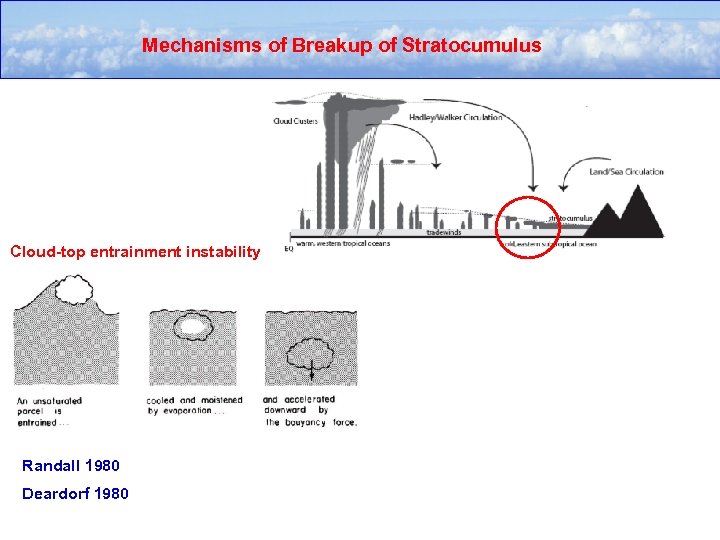
Mechanisms of Breakup of Stratocumulus Cloud-top entrainment instability Randall 1980 Deardorf 1980
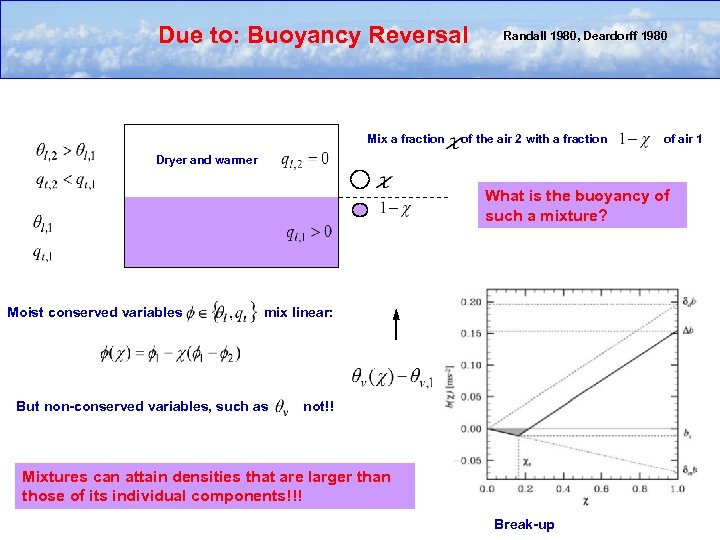
Due to: Buoyancy Reversal Mix a fraction Randall 1980, Deardorff 1980 of the air 2 with a fraction of air 1 Dryer and warmer What is the buoyancy of such a mixture? Moist conserved variables mix linear: But non-conserved variables, such as not!! Mixtures can attain densities that are larger than those of its individual components!!! Break-up
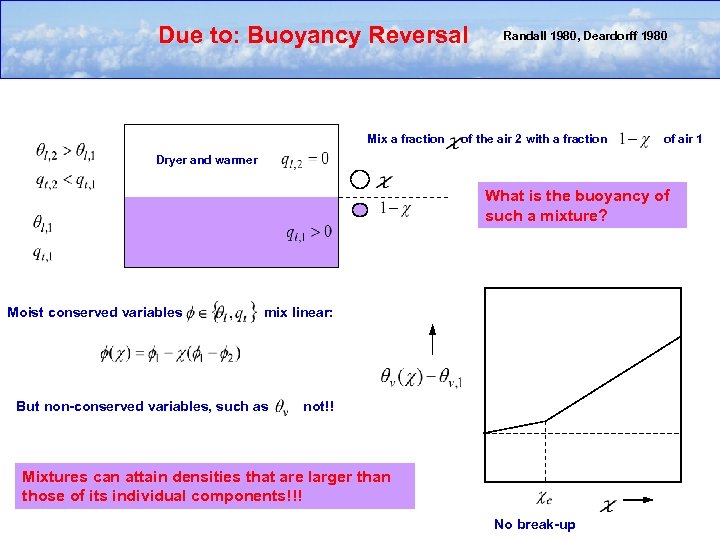
Due to: Buoyancy Reversal Mix a fraction Randall 1980, Deardorff 1980 of the air 2 with a fraction of air 1 Dryer and warmer What is the buoyancy of such a mixture? Moist conserved variables mix linear: But non-conserved variables, such as not!! Mixtures can attain densities that are larger than those of its individual components!!! No break-up
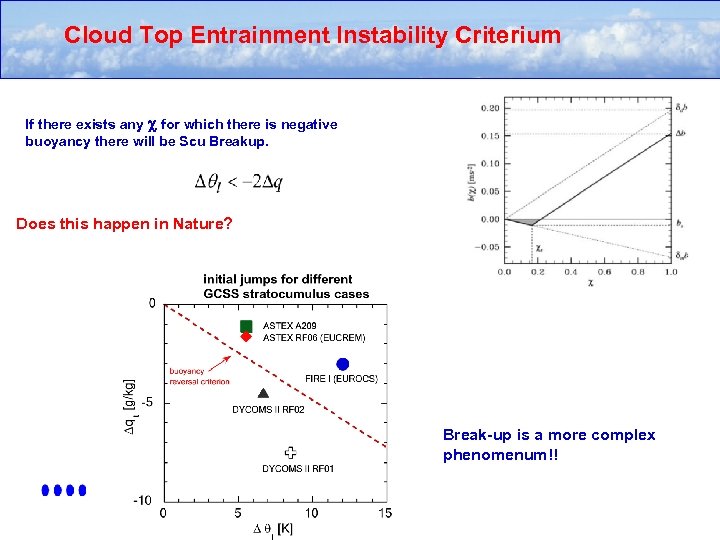
Cloud Top Entrainment Instability Criterium If there exists any c for which there is negative buoyancy there will be Scu Breakup. Does this happen in Nature? Break-up is a more complex phenomenum!!
Courtesy: Steve Krueger University of Utah
Courtesy: Steve Krueger University of Utah
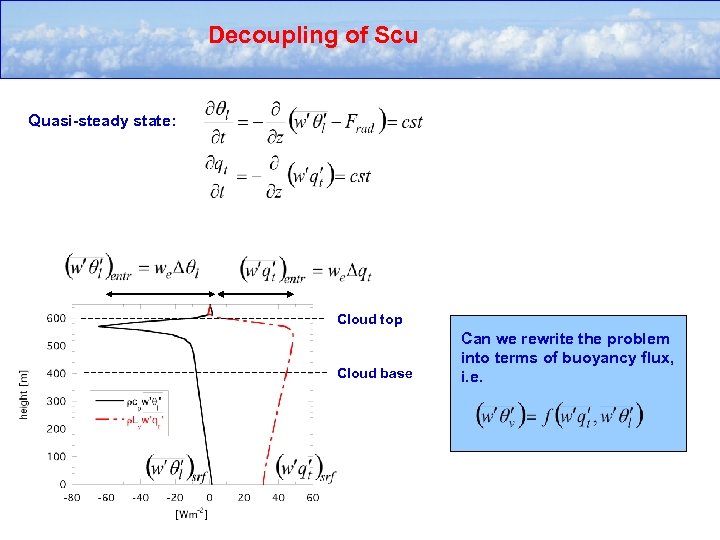
Decoupling of Scu Quasi-steady state: Cloud top Cloud base Can we rewrite the problem into terms of buoyancy flux, i. e.
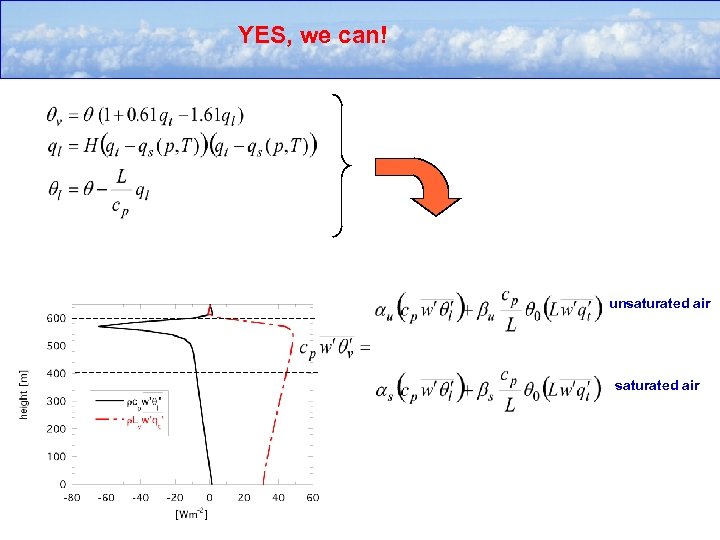
YES, we can! unsaturated air
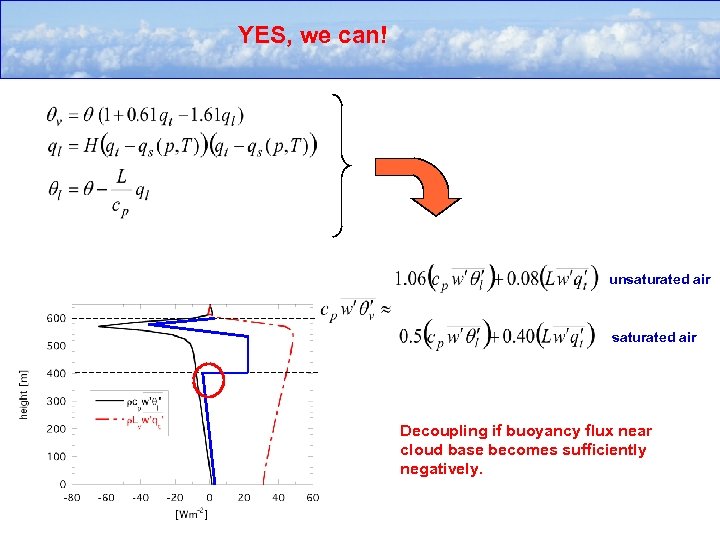
YES, we can! unsaturated air Decoupling if buoyancy flux near cloud base becomes sufficiently negatively.
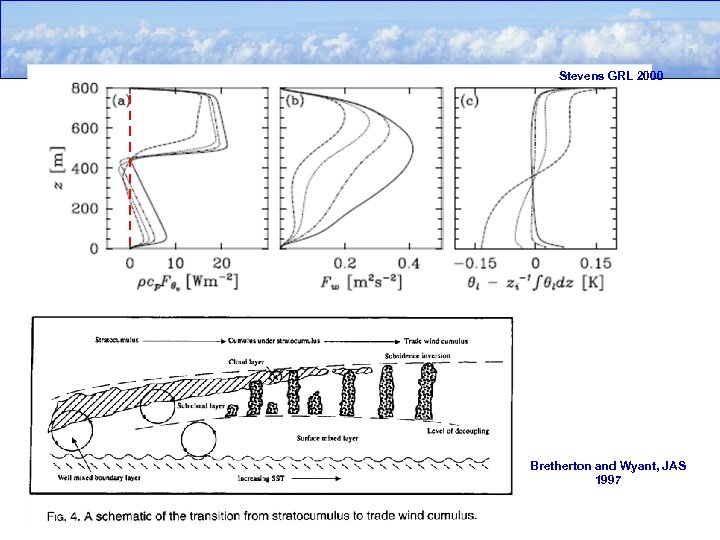
Stevens GRL 2000 Bretherton and Wyant, JAS 1997
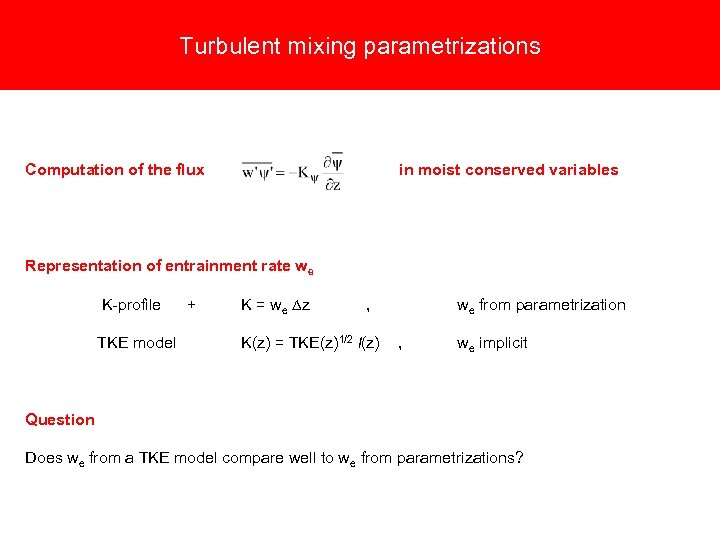
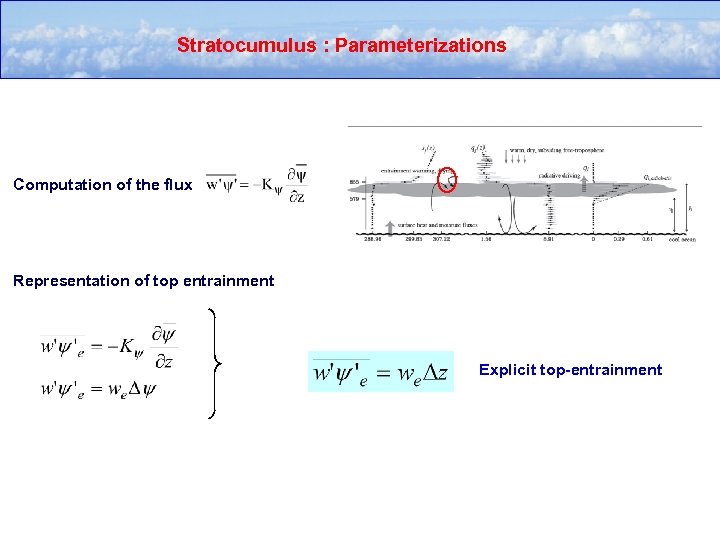
Turbulent mixing parametrizations Computation of the flux in moist conserved variables Representation of entrainment rate we K-profile TKE model + K = we Dz , K(z) = TKE(z)1/2 l(z) we from parametrization , we implicit Question Does we from a TKE model compare well to we from parametrizations?
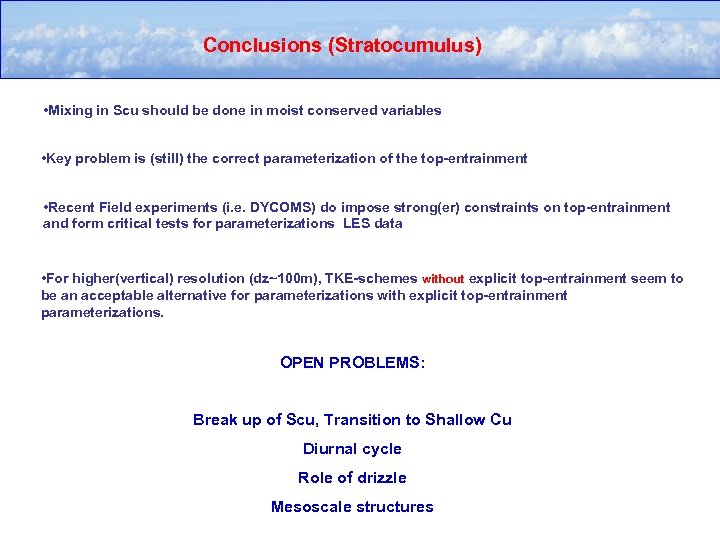
Conclusions (Stratocumulus) • Mixing in Scu should be done in moist conserved variables • Key problem is (still) the correct parameterization of the top-entrainment • Recent Field experiments (i. e. DYCOMS) do impose strong(er) constraints on top-entrainment and form critical tests for parameterizations LES data • For higher(vertical) resolution (dz~100 m), TKE-schemes without explicit top-entrainment seem to be an acceptable alternative for parameterizations with explicit top-entrainment parameterizations. OPEN PROBLEMS: Break up of Scu, Transition to Shallow Cu Diurnal cycle Role of drizzle Mesoscale structures
Mass Flux Parameterization for Shallow Cu:
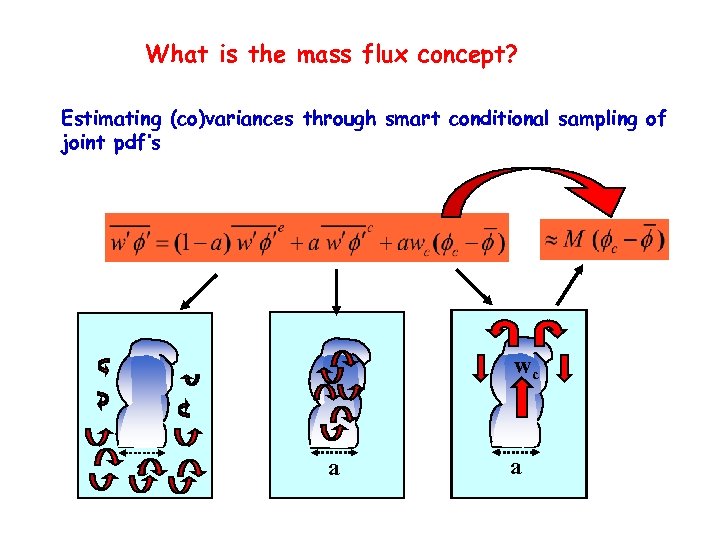
What is the mass flux concept? Estimating (co)variances through smart conditional sampling of joint pdf’s wc a a a
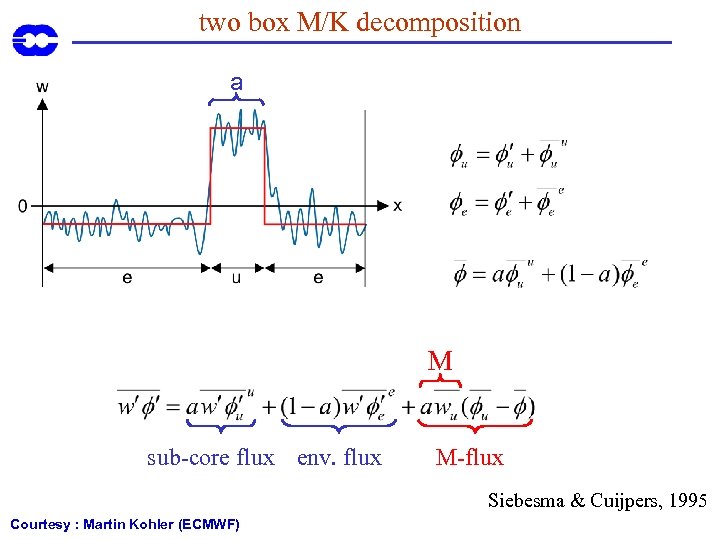
two box M/K decomposition a M sub-core flux env. flux M-flux Siebesma & Cuijpers, 1995 Courtesy : Martin Kohler (ECMWF)
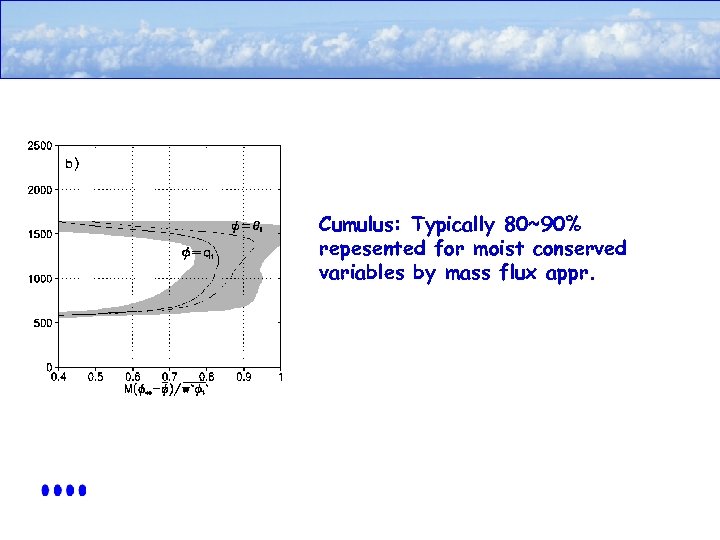
Cumulus: Typically 80~90% repesented for moist conserved variables by mass flux appr.
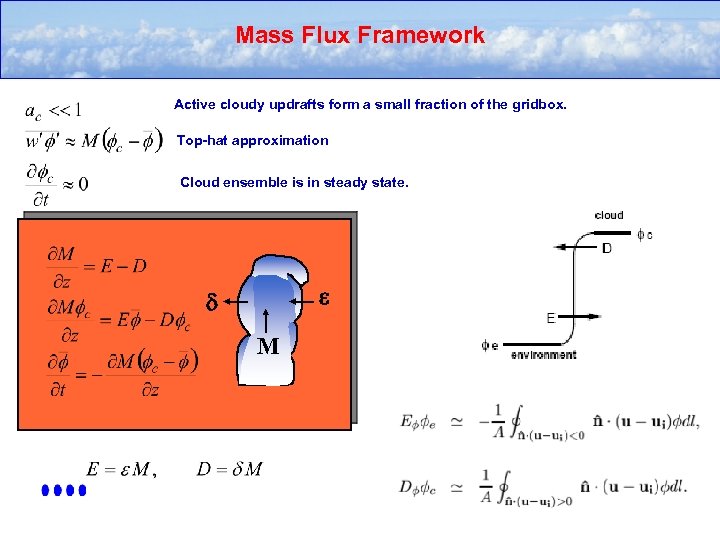
Mass Flux Framework Active cloudy updrafts form a small fraction of the gridbox. Top-hat approximation Cloud ensemble is in steady state. e d M
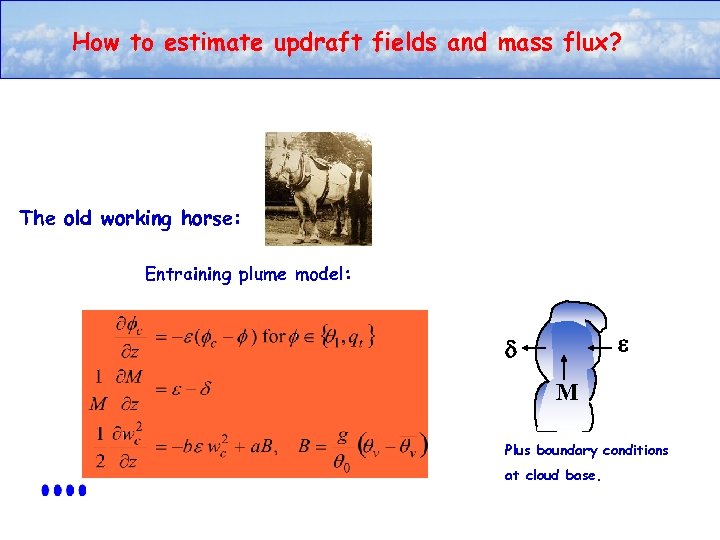
How to estimate updraft fields and mass flux? The old working horse: Entraining plume model: e d M Plus boundary conditions at cloud base.
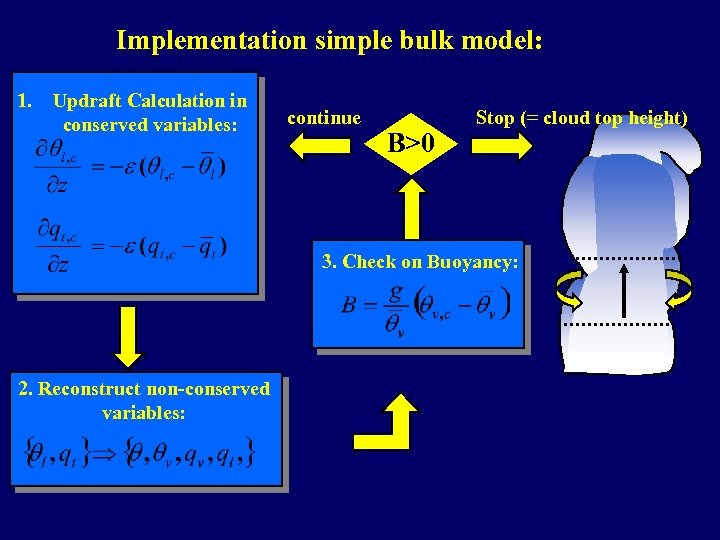
Implementation simple bulk model: 1. Updraft Calculation in conserved variables: continue B>0 Stop (= cloud top height) 3. Check on Buoyancy: 2. Reconstruct non-conserved variables:
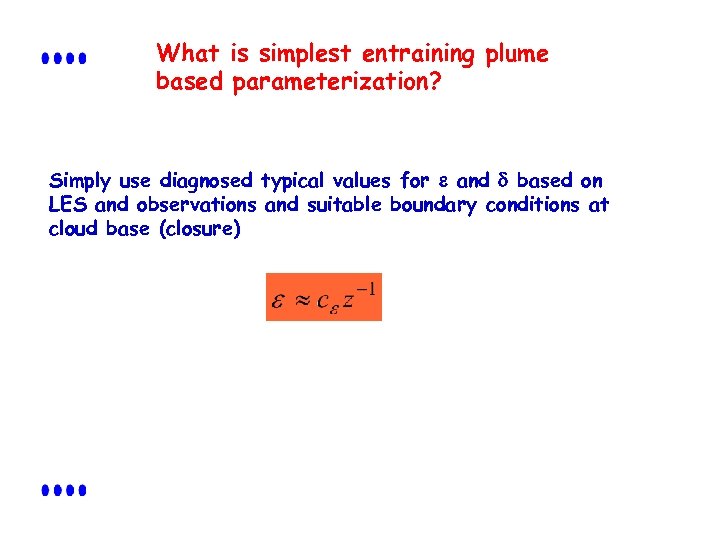
What is simplest entraining plume based parameterization? Simply use diagnosed typical values for e and d based on LES and observations and suitable boundary conditions at cloud base (closure)
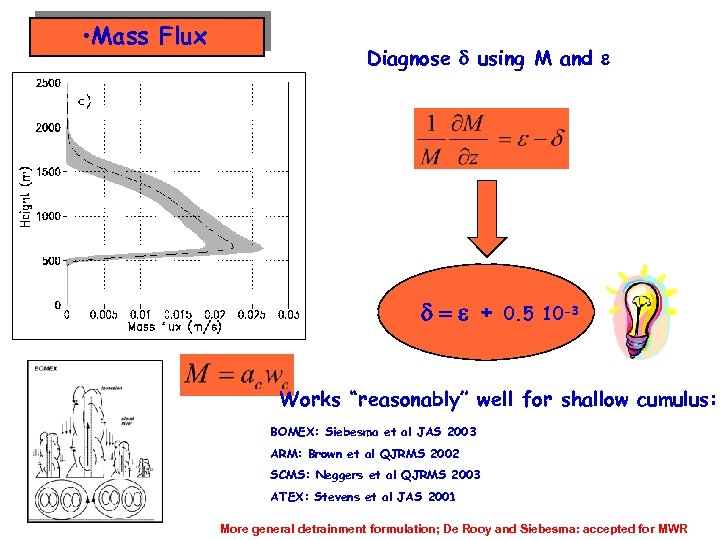
• Mass Flux Diagnose d using M and e d=e + 0. 5 10 -3 Works “reasonably” well for shallow cumulus: BOMEX: Siebesma et al JAS 2003 ARM: Brown et al QJRMS 2002 SCMS: Neggers et al QJRMS 2003 ATEX: Stevens et al JAS 2001 More general detrainment formulation; De Rooy and Siebesma: accepted for MWR
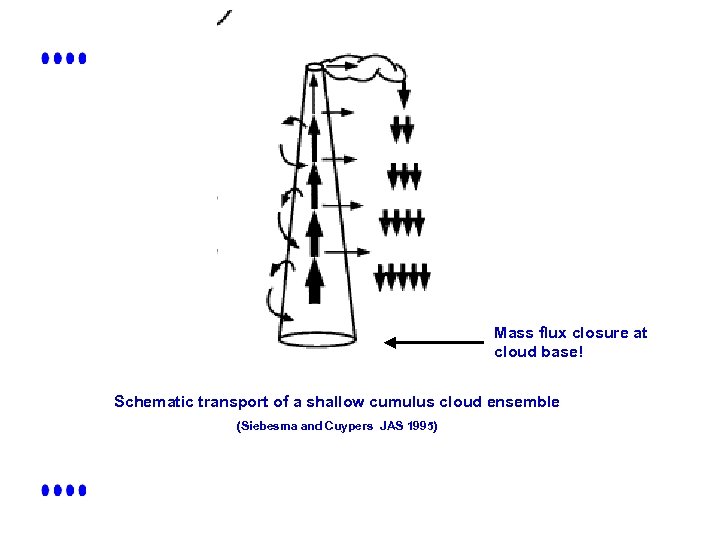
Mass flux closure at cloud base! Schematic transport of a shallow cumulus cloud ensemble (Siebesma and Cuypers JAS 1995)
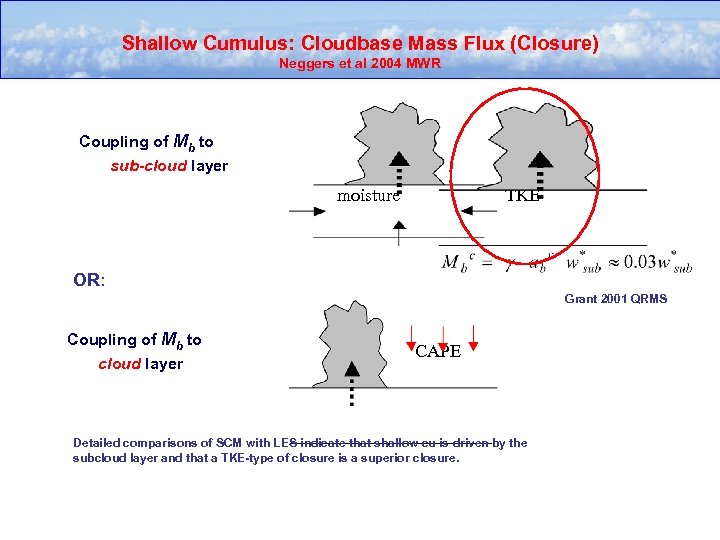
Shallow Cumulus: Cloudbase Mass Flux (Closure) Neggers et al 2004 MWR Coupling of Mb to sub-cloud layer moisture TKE OR: Grant 2001 QRMS Coupling of Mb to cloud layer CAPE Detailed comparisons of SCM with LES indicate that shallow cu is driven by the subcloud layer and that a TKE-type of closure is a superior closure.
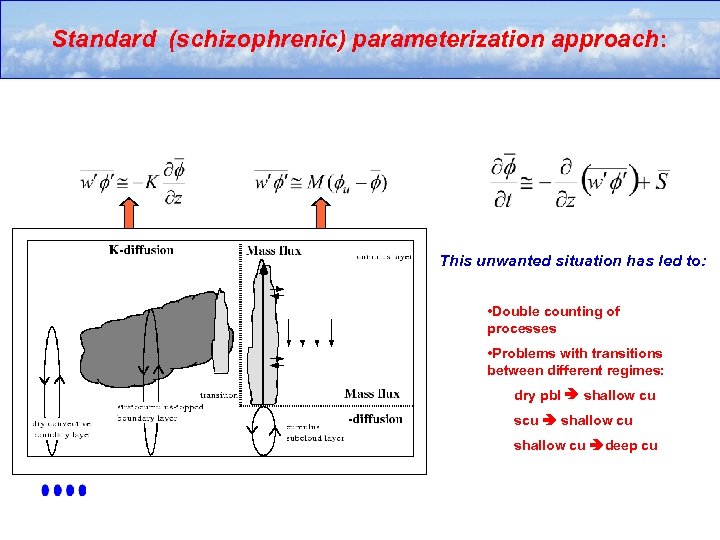
Standard (schizophrenic) parameterization approach: This unwanted situation has led to: • Double counting of processes • Problems with transitions between different regimes: dry pbl shallow cu scu shallow cu deep cu
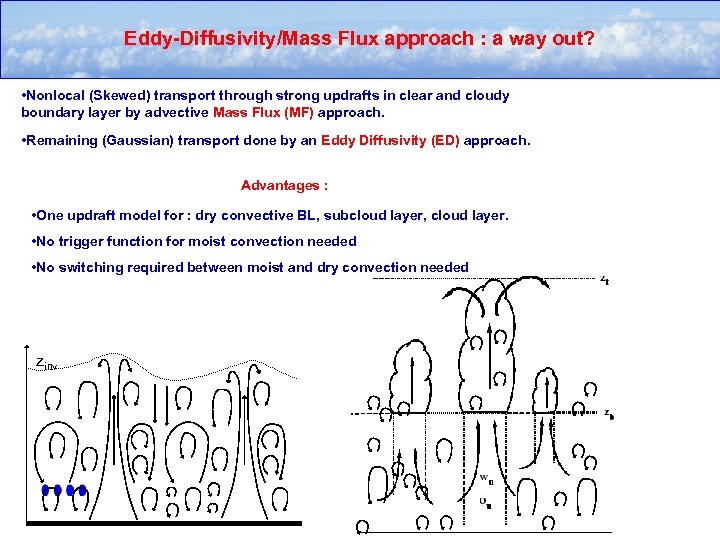
Eddy-Diffusivity/Mass Flux approach : a way out? • Nonlocal (Skewed) transport through strong updrafts in clear and cloudy boundary layer by advective Mass Flux (MF) approach. • Remaining (Gaussian) transport done by an Eddy Diffusivity (ED) approach. Advantages : • One updraft model for : dry convective BL, subcloud layer, cloud layer. • No trigger function for moist convection needed • No switching required between moist and dry convection needed zinv
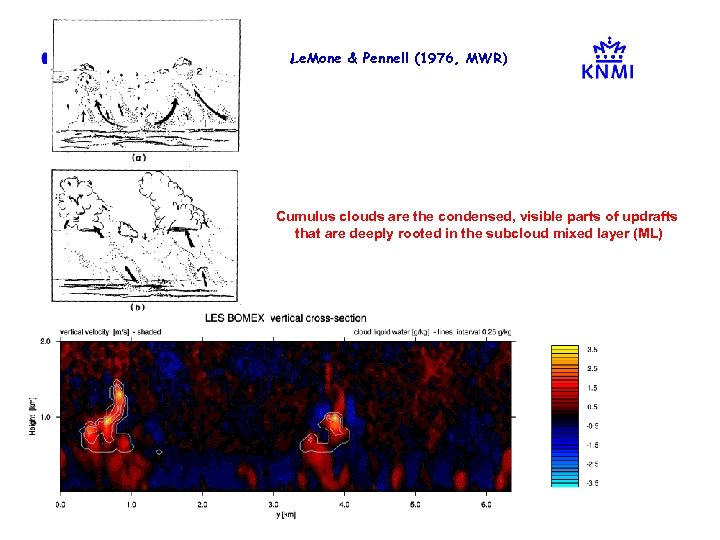
l Le. Mone & Pennell (1976, MWR) Cumulus clouds are the condensed, visible parts of updrafts that are deeply rooted in the subcloud mixed layer (ML)
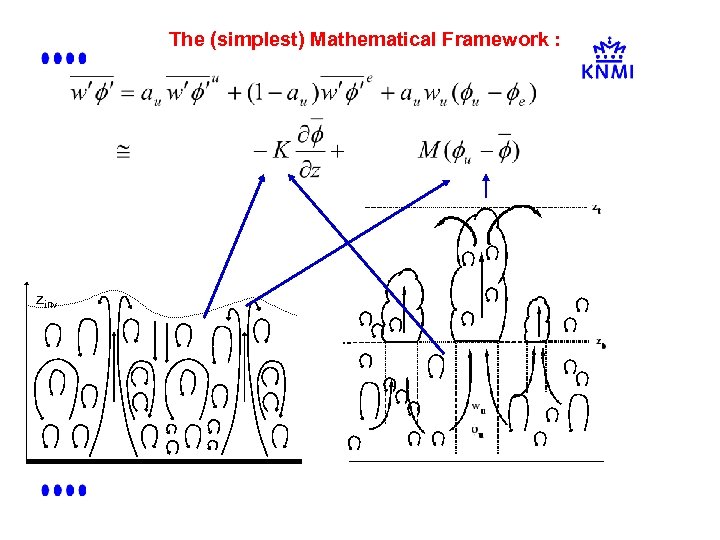
The (simplest) Mathematical Framework : zinv
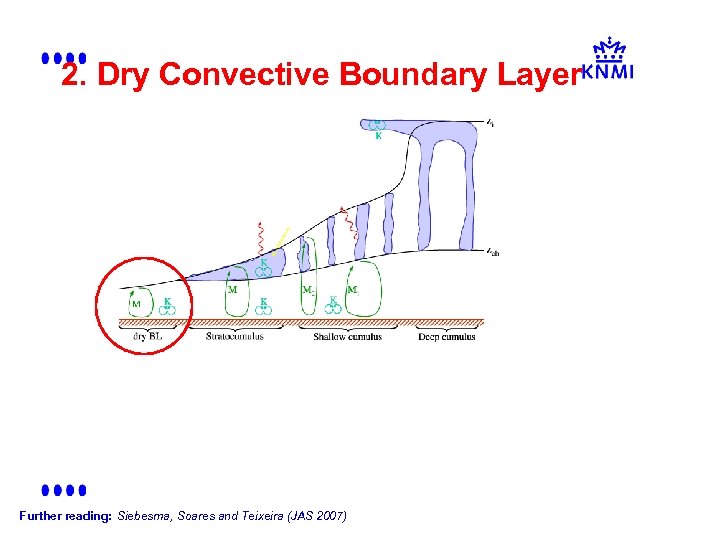
2. Dry Convective Boundary Layer Further reading: Siebesma, Soares and Teixeira (JAS 2007)
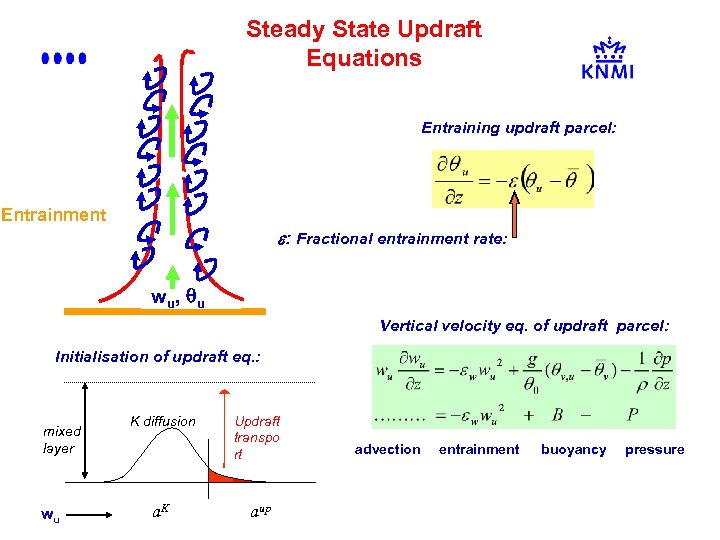
Steady State Updraft Equations Entraining updraft parcel: Entrainment e: Fractional entrainment rate: wu , qu Vertical velocity eq. of updraft parcel: Initialisation of updraft eq. : mixed layer wu K diffusion a. K Updraft transpo rt aup advection entrainment buoyancy pressure
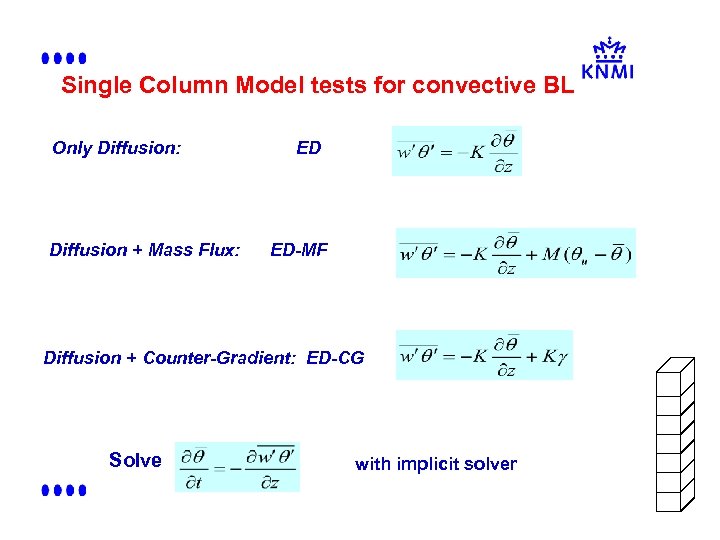
Single Column Model tests for convective BL Only Diffusion: Diffusion + Mass Flux: ED ED-MF Diffusion + Counter-Gradient: ED-CG Solve with implicit solver
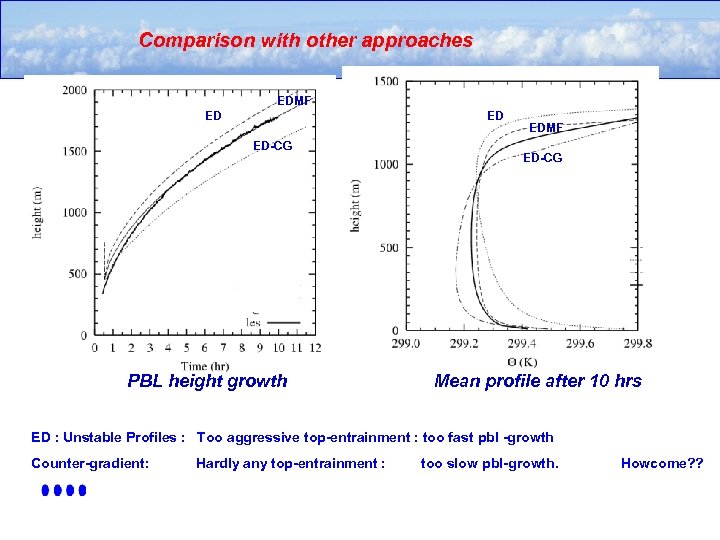
Comparison with other approaches EDMF ED ED ED-CG PBL height growth EDMF ED-CG Mean profile after 10 hrs ED : Unstable Profiles : Too aggressive top-entrainment : too fast pbl -growth Counter-gradient: Hardly any top-entrainment : too slow pbl-growth. Howcome? ?
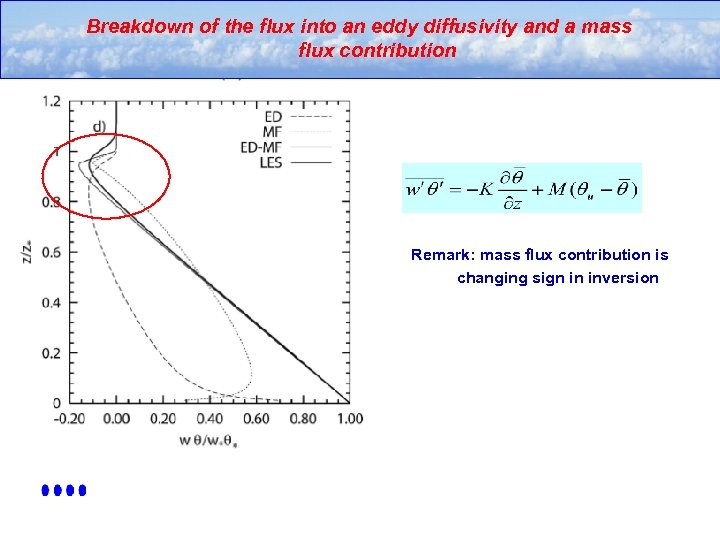
Breakdown of the flux into an eddy diffusivity and a mass flux contribution Remark: mass flux contribution is changing sign in inversion
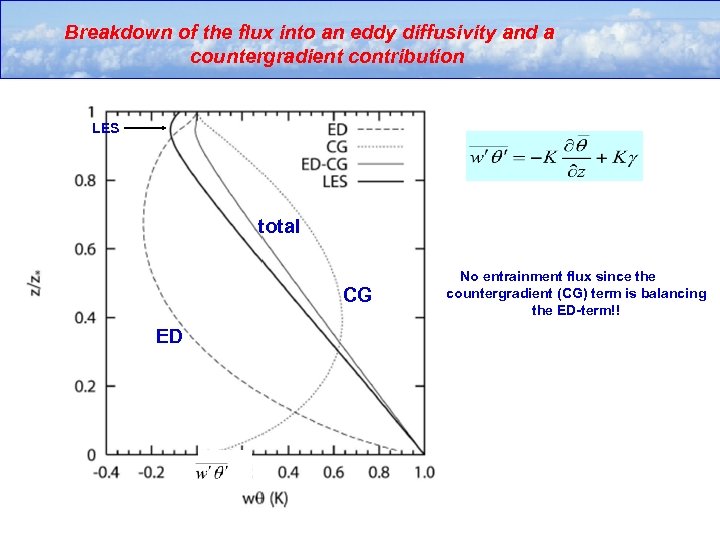
Breakdown of the flux into an eddy diffusivity and a countergradient contribution LES total CG ED No entrainment flux since the countergradient (CG) term is balancing the ED-term!!
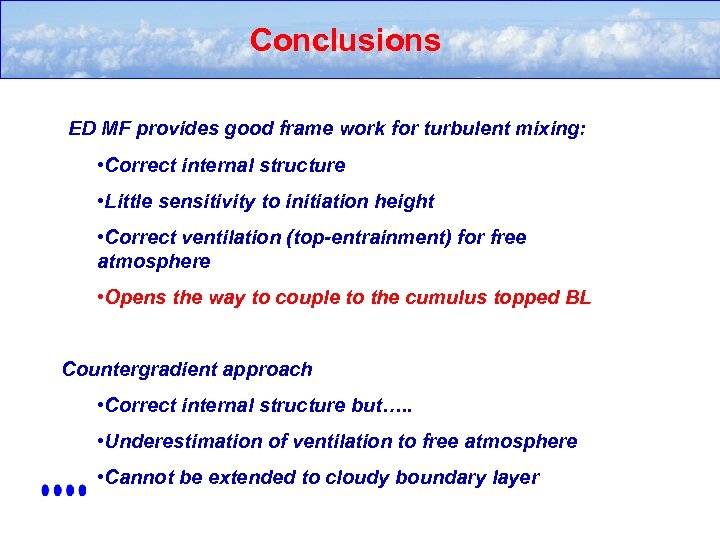
Conclusions ED MF provides good frame work for turbulent mixing: • Correct internal structure • Little sensitivity to initiation height • Correct ventilation (top-entrainment) for free atmosphere • Opens the way to couple to the cumulus topped BL Countergradient approach • Correct internal structure but…. . • Underestimation of ventilation to free atmosphere • Cannot be extended to cloudy boundary layer
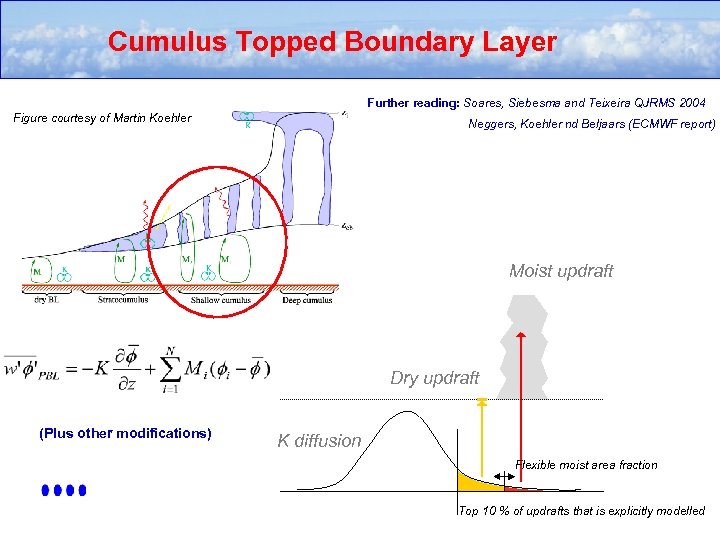
Cumulus Topped Boundary Layer Further reading: Soares, Siebesma and Teixeira QJRMS 2004 Figure courtesy of Martin Koehler Neggers, Koehler nd Beljaars (ECMWF report) Moist updraft Dry updraft (Plus other modifications) K diffusion Flexible moist area fraction Top 10 % of updrafts that is explicitly modelled
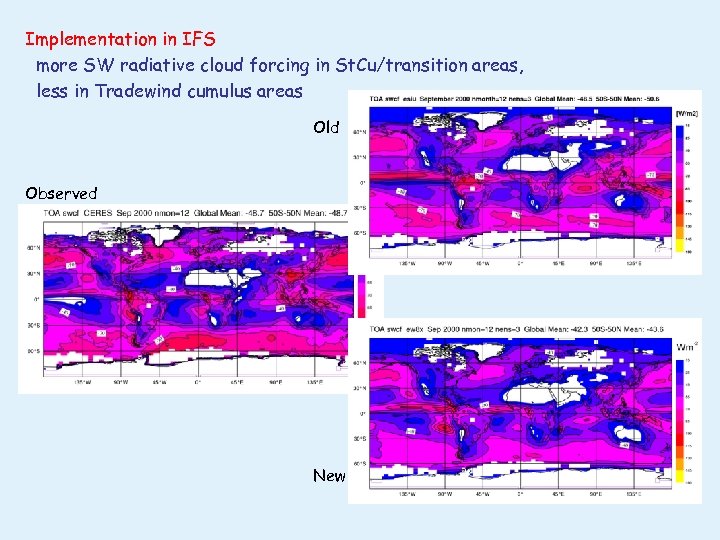
Implementation in IFS more SW radiative cloud forcing in St. Cu/transition areas, less in Tradewind cumulus areas Old Observed New
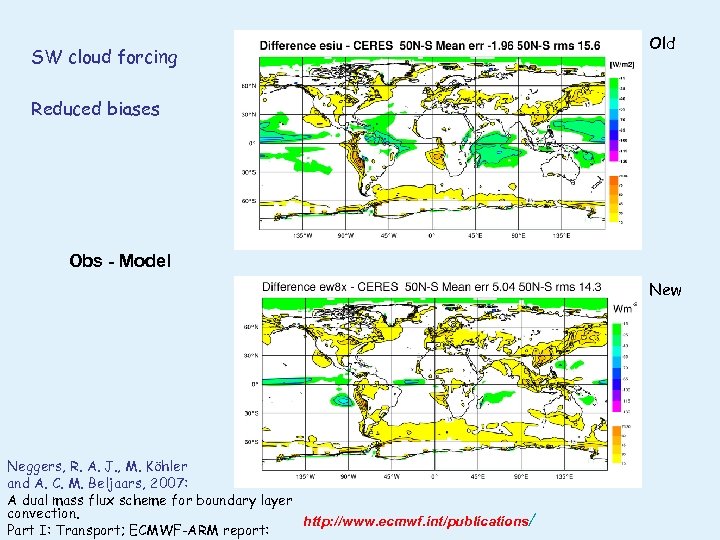
SW cloud forcing Old Reduced biases Obs - Model New Neggers, R. A. J. , M. Köhler and A. C. M. Beljaars, 2007: A dual mass flux scheme for boundary layer convection. http: //www. ecmwf. int/publications/ Part I: Transport; ECMWF-ARM report:
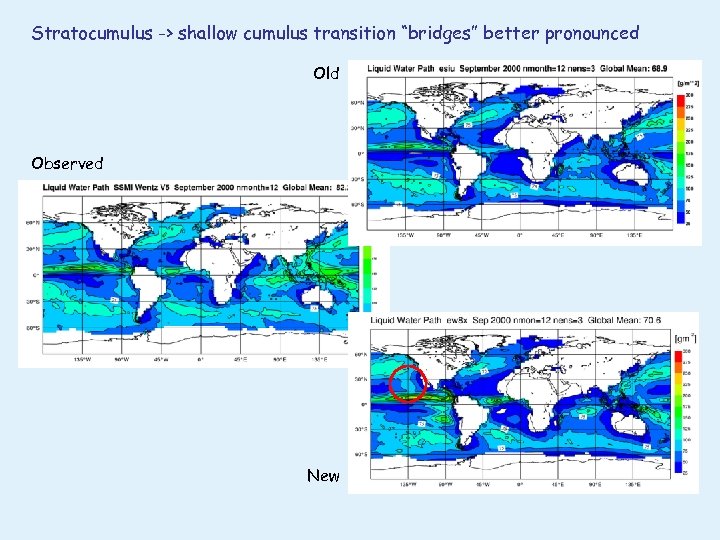
Stratocumulus -> shallow cumulus transition “bridges” better pronounced Old Observed New
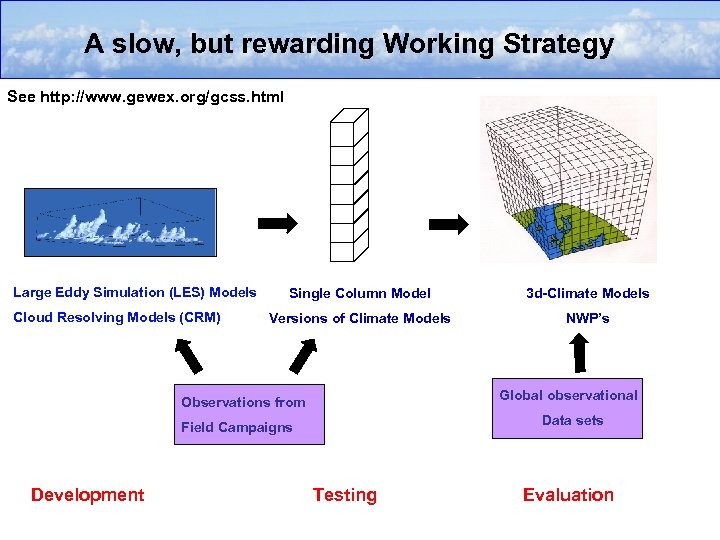
A slow, but rewarding Working Strategy See http: //www. gewex. org/gcss. html Large Eddy Simulation (LES) Models Cloud Resolving Models (CRM) Single Column Model 3 d-Climate Models Versions of Climate Models NWP’s Global observational Observations from Data sets Field Campaigns Development Testing Evaluation
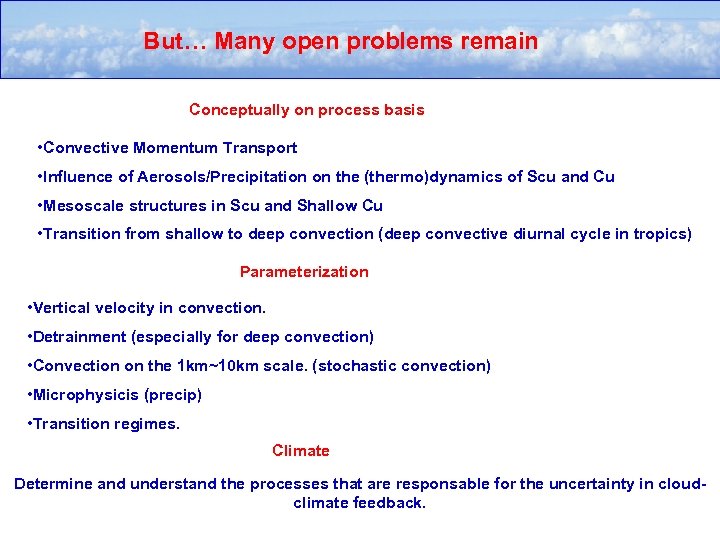
But… Many open problems remain Conceptually on process basis • Convective Momentum Transport • Influence of Aerosols/Precipitation on the (thermo)dynamics of Scu and Cu • Mesoscale structures in Scu and Shallow Cu • Transition from shallow to deep convection (deep convective diurnal cycle in tropics) Parameterization • Vertical velocity in convection. • Detrainment (especially for deep convection) • Convection on the 1 km~10 km scale. (stochastic convection) • Microphysicis (precip) • Transition regimes. Climate Determine and understand the processes that are responsable for the uncertainty in cloudclimate feedback.
Скачать презентацию Shallow Cumulus Growth an idealized view Bjorn Stevens
5fc28be2c5a8077d6f195ca33dc16810.ppt