


 Скачать презентацию Shakespeare and the genres of Love After a
684374a3c92ba092b4205525bfa3e16a.ppt
- Количество слайдов: 125
 Shakespeare and the genres of Love After a first introductory section which will be devoted to the Shakespearean Canon and its historical and cultural background, the course will focus on the Shakespearean treatment of the love theme. Analytical examples will be drawn from the Sonnets, the Comedies, the Tragedies and the Problem Plays.
 BIBLIOGRAFIA: testi primari • W. Shakespeare, The Sonnets, any edition • W. Shakespeare, Midsummer Night’s Dream, Arden Edition • W. Shakespeare, Romeo and Juliet, Arden Edition • W. Shakespeare, Troilus and Cressida, Arden Edition
 Bibliografia critica • Stanley Wells and Lena Cowen Orlin (eds. ), Shakespeare. An Oxford Guide, Oxford U. P. , 2003 (Part I, Shakespeare’s life and times, cap. 1, 2, 3; Part II Shakespearian genres, cap. 15, 16, 18 • M. Stanco (a cura di), La letteratura inglese dall’Umanesimo al Rinascimento, Roma, Carocci, 2016(Introduzione, Parte I, cap. 1, Parte II, cap. 7, 11, 13, 14, 15) • R. Ciocca, La musica dei sensi, Amore e pulsione nello Shakespeare comico-romantico, Roma, Bulzoni, 1999 • -"Amore, lussuria, identità. Conflitto tra volontà e desiderio in Shakespeare", Annali - Anglistica, XXXVII, 1 -3, 1994, pp. 31 -46 • -"Rito, sogno, gioco in A Midsummer Night's Dream", Annali - Anglistica, XXXV, 1, 1992, pp. 27 -48
 Bibliografia consigliata, obbligatoria per i non frequentanti • Un manuale di Storia dell’Inghilterra (secoli XVI e XVII) • Un manuale di storia della letteratura inglese (secoli XVI e XVII)
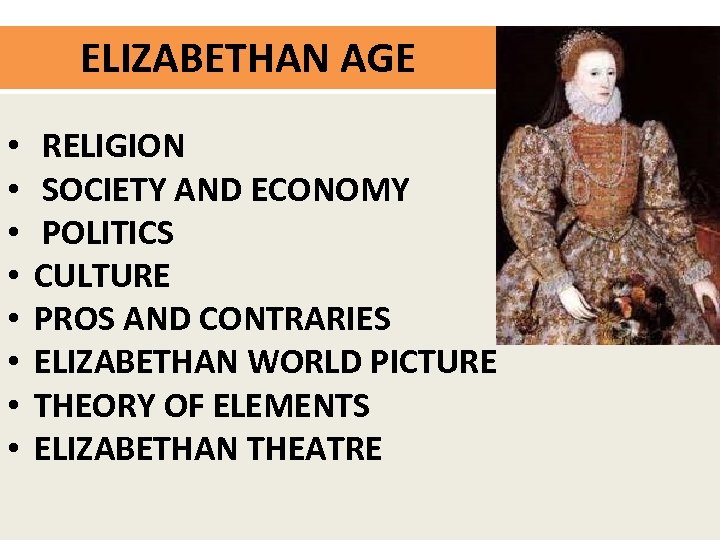 ELIZABETHAN AGE • • RELIGION SOCIETY AND ECONOMY POLITICS CULTURE PROS AND CONTRARIES ELIZABETHAN WORLD PICTURE THEORY OF ELEMENTS ELIZABETHAN THEATRE
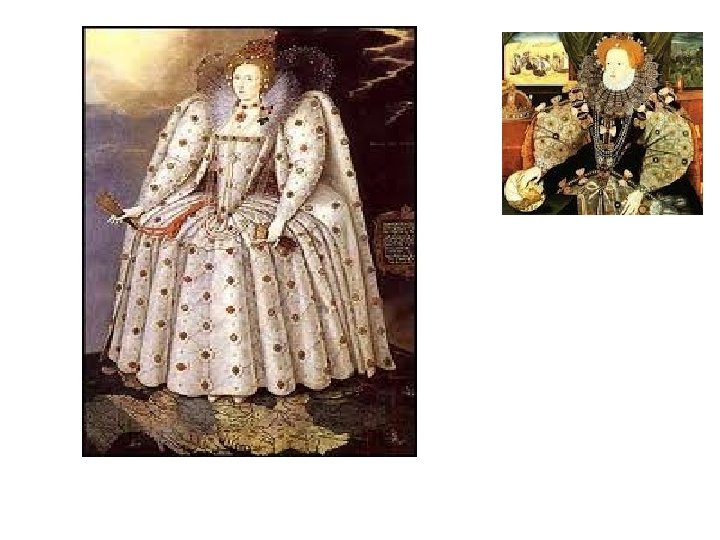
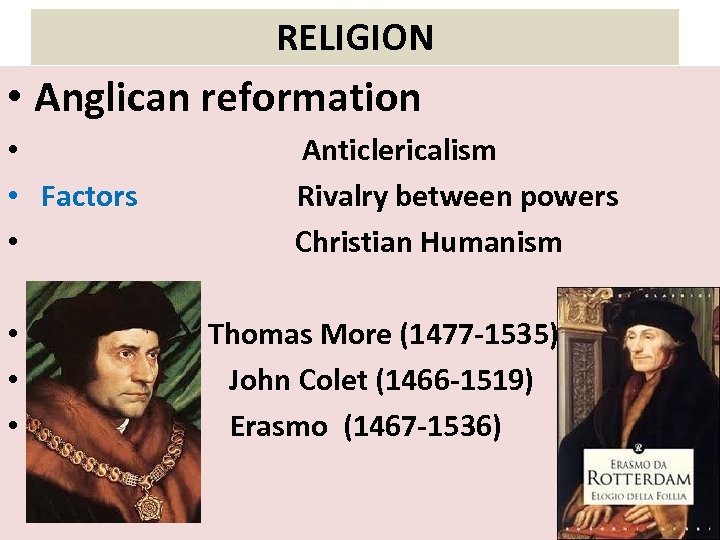 RELIGION • Anglican reformation • Anticlericalism • Factors Rivalry between powers • Christian Humanism • Thomas More (1477 -1535) • John Colet (1466 -1519) • Erasmo (1467 -1536)
 collateral factors The English Bible (1526) William Tyndale (1495 -1536) contingent factors Divorce from Catherine of Aragon determinant factors Publication of Luther’s 95 theses (1517) ACT OF SUPREMACY (1534) Spoliation of monasteries 1536 The Tudors, 3 rd series, 1 disc, 1 episode (Pilgrimage of grace) 1539
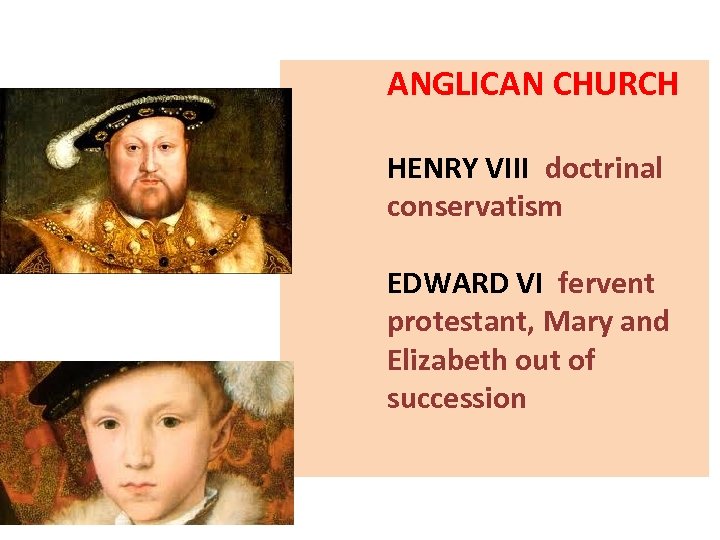 ANGLICAN CHURCH HENRY VIII doctrinal conservatism EDWARD VI fervent protestant, Mary and Elizabeth out of succession
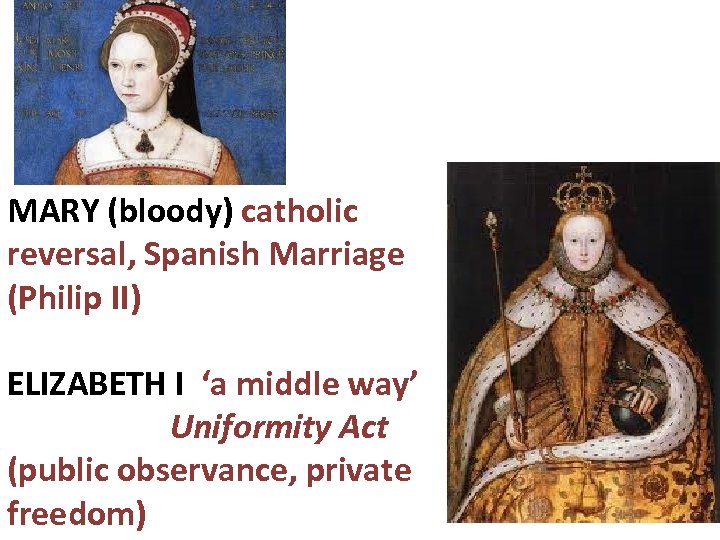 MARY (bloody) catholic reversal, Spanish Marriage (Philip II) ELIZABETH I ‘a middle way’ Uniformity Act (public observance, private freedom)
 Society and Economy Landed gentry: increase in number, power and wealth (from dissolution of monasteries and patronage from the crown) The Queen’s Justices of the Peace were the local most influential exponents of the gentry.
 London was absorbing more and more of the home and foreign commerce, a portent in size for England even for Europe, at the death of Mary : 100. 000 inhabitants, at the death of Elizabeth 200. 000 The power and privilege of the Mayor and citizens with their militia formed a state within the state, a society bourgeois and protestant.
 The greatest social change was the expansion of overseas enterprise. Merchants sought out distant markets compelled by the loss of Calais under Mary and the rivalry with Spain in the Low Countries. These changes caused distress and unemployment in cloth manufacture but in the long run new markets were found: Russia, Prussia, The Baltic, Turkey, Persia, India (Cape of Good Hope).
 1600 East India Company Seafaring and discoveries laid the path to colonialism (even though Newfoundland Virginia were only temporary). Colonization became a means for personal betterment and national strength.
 Politics Despite several crises, a relative peace was kept (victims of violence – Savages, Irish, Catholics and dissenters, political enemies- were not so numerous as in other periods or other countries).
 Wales Bosworth field placed a Welsh dynasty on the throne of England. No religious difference arose to divide the people. There was no movement to colonize the country by robbing the natives of their land. Ireland: Tudor policy was disastrous. The dominus became rex to strengthen English control. Catholicism made Ireland suspect and dangerous.
 Scotland: The two countries had a common interest in defending the Reformation from internal and external enemies. With the death of Elizabeth the two crowns were reunited on the head of James Stuart. Before there had been the crisis with France and Mary Stuart.
 France and Scotland had a common policy against England: James V had married the French Catholic Marie de Guise, their daughter Mary Stuart (niece of Margaret sister of Henry VIII) married the heir to the French throne: Francis II. When he died the French and the Scottish together with the English Catholics plotted to put Mary on the throne of England.
 Spain: After the execution of Mary Stuart, Philip II of Spain sent the Armada. In 1588 England defeated Spain. Failure of Leicester in the Low Countries Failure of Essex in Ireland Essex rebellion
 Culture Printing and Translating diffused knowledge (censure) In the days of Erasmus, Renaissance had been confined to scholars and the king’s court. In the Elizabethan Age classicism filtered through into theatre and the street. English language touched its moment of fullest beauty and power. Minds, set free from medieval bonds were not yet caught by Puritan fanaticism. The merry old England of folklore and popular tradition was still there. London and the court were centres of cultural import from abroad and local production and diffusion in the reign.
 The Golden Age Poetry (Sidney, Spenser, Daniel, Drayton); Prose (Lyly, Greene, Ralegh, Hakluyt); Drama (Kyd, Marlowe, Shakespeare)
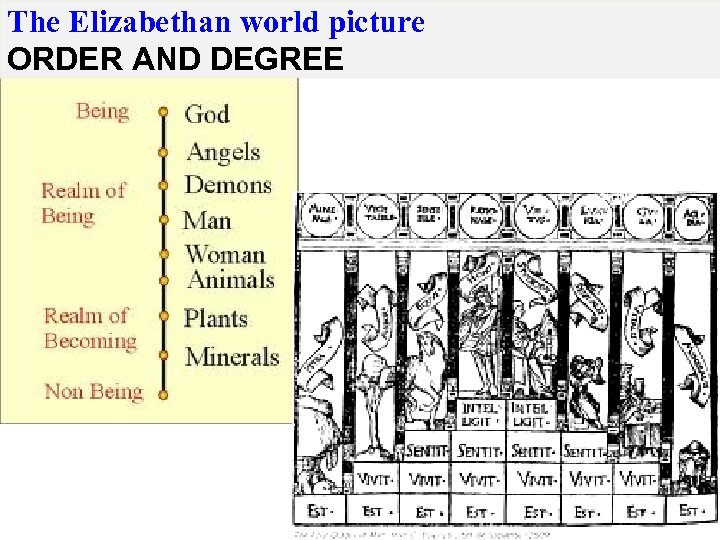 The Elizabethan world picture ORDER AND DEGREE
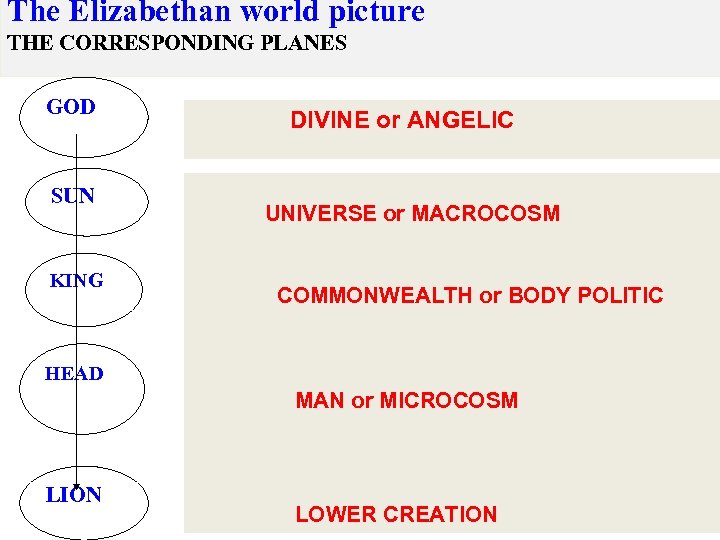 The Elizabethan world picture THE CORRESPONDING PLANES GOD SUN KING DIVINE or ANGELIC UNIVERSE or MACROCOSM COMMONWEALTH or BODY POLITIC HEAD MAN or MICROCOSM LION LOWER CREATION
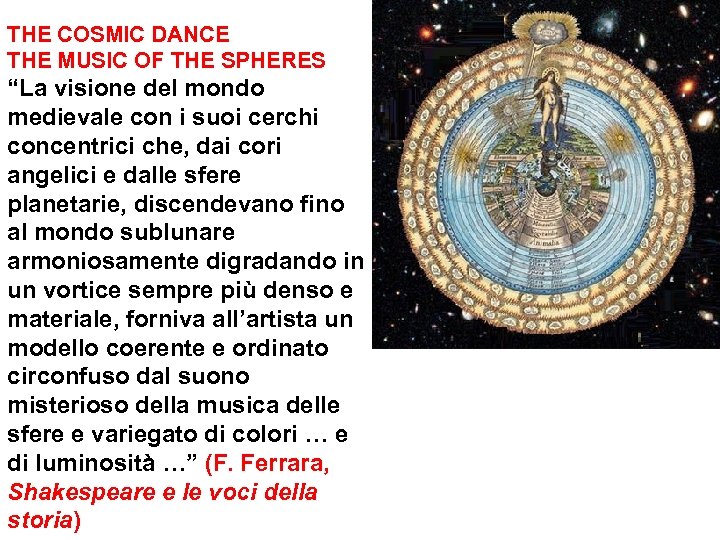 THE COSMIC DANCE THE MUSIC OF THE SPHERES “La visione del mondo medievale con i suoi cerchi concentrici che, dai cori angelici e dalle sfere planetarie, discendevano fino al mondo sublunare armoniosamente digradando in un vortice sempre più denso e materiale, forniva all’artista un modello coerente e ordinato circonfuso dal suono misterioso della musica delle sfere e variegato di colori … e di luminosità …” (F. Ferrara, Shakespeare e le voci della storia)
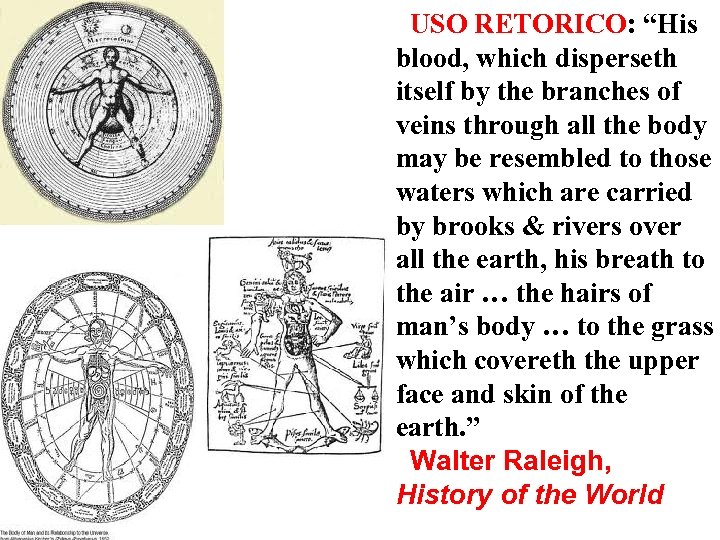 USO RETORICO: “His blood, which disperseth itself by the branches of veins through all the body may be resembled to those waters which are carried by brooks & rivers over all the earth, his breath to the air … the hairs of man’s body … to the grass which covereth the upper face and skin of the earth. ” Walter Raleigh, History of the World
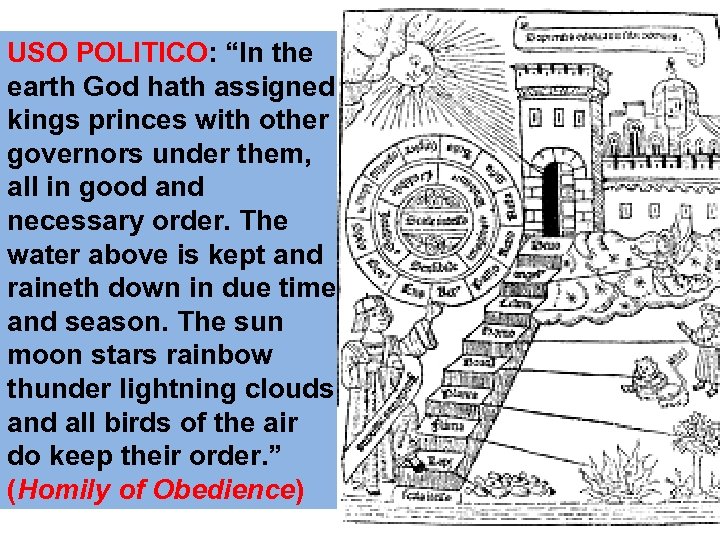 USO POLITICO: “In the earth God hath assigned kings princes with other governors under them, all in good and necessary order. The water above is kept and raineth down in due time and season. The sun moon stars rainbow thunder lightning clouds and all birds of the air do keep their order. ” (Homily of Obedience)
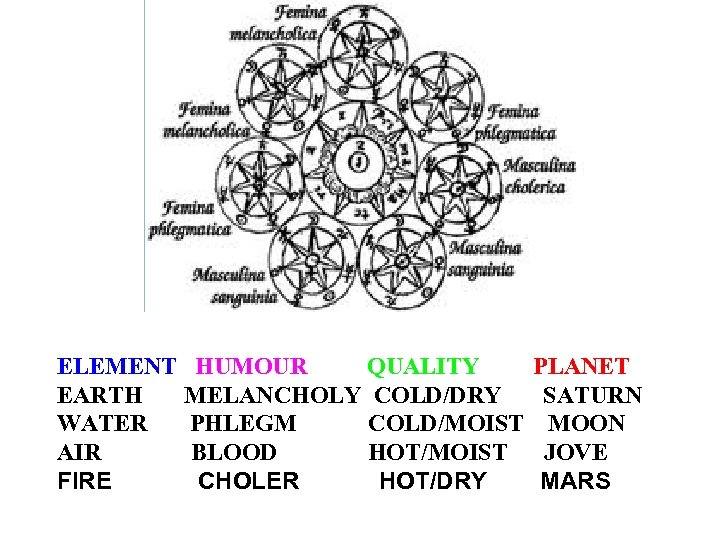 ELEMENT HUMOUR QUALITY PLANET EARTH MELANCHOLY COLD/DRY SATURN WATER PHLEGM COLD/MOIST MOON AIR BLOOD HOT/MOIST JOVE FIRE CHOLER HOT/DRY MARS
 FOOD IS MADE OF THE 4 ELEMENTS. LIVER (KING OF LOWEST PART OF BODY: VEGETATIVE ) CONVERTS IT INTO 4 HUMOURS. THEY ARE CARRIED TO THE HEART (KING OF MIDDLE PORTION OF BODY: SENSITIVE). THE HEART REFINES THE HUMOURS AND SENDS THEM TO BRAIN (KING OF TOP OF HUMAN BODY: RATIONAL)
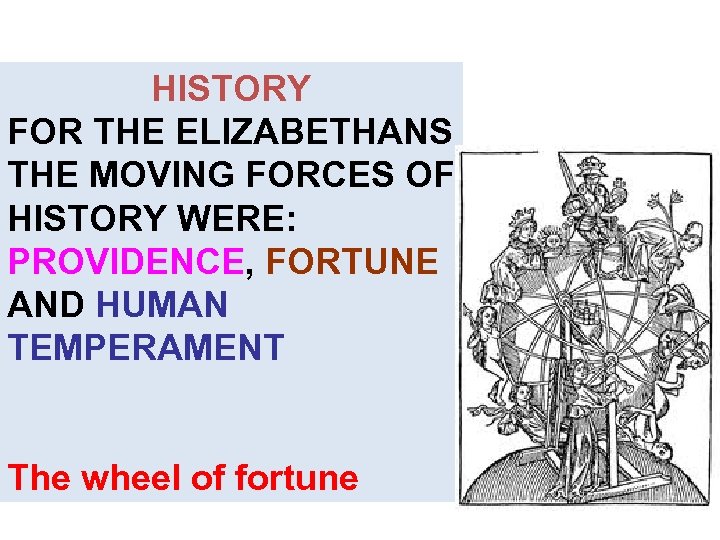 HISTORY FOR THE ELIZABETHANS THE MOVING FORCES OF HISTORY WERE: PROVIDENCE, FORTUNE AND HUMAN TEMPERAMENT The wheel of fortune
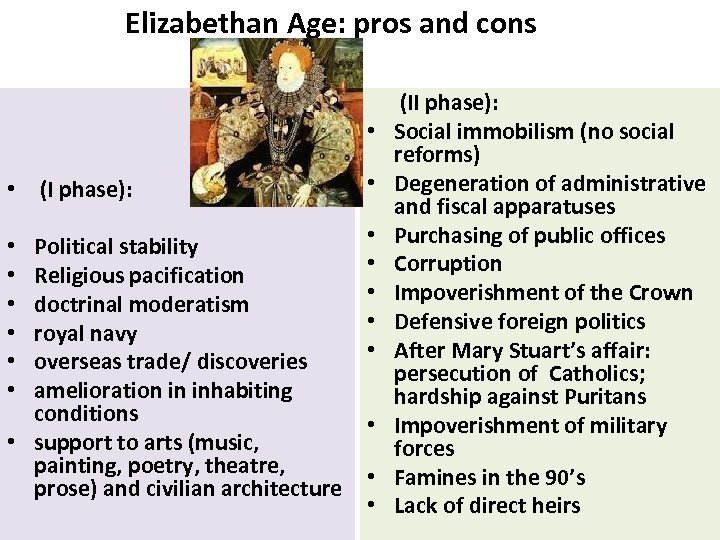 Elizabethan Age: pros and cons • • (I phase): • Political stability Religious pacification doctrinal moderatism royal navy overseas trade/ discoveries amelioration in inhabiting conditions • support to arts (music, painting, poetry, theatre, prose) and civilian architecture • • • • (II phase): Social immobilism (no social reforms) Degeneration of administrative and fiscal apparatuses Purchasing of public offices Corruption Impoverishment of the Crown Defensive foreign politics After Mary Stuart’s affair: persecution of Catholics; hardship against Puritans Impoverishment of military forces Famines in the 90’s Lack of direct heirs
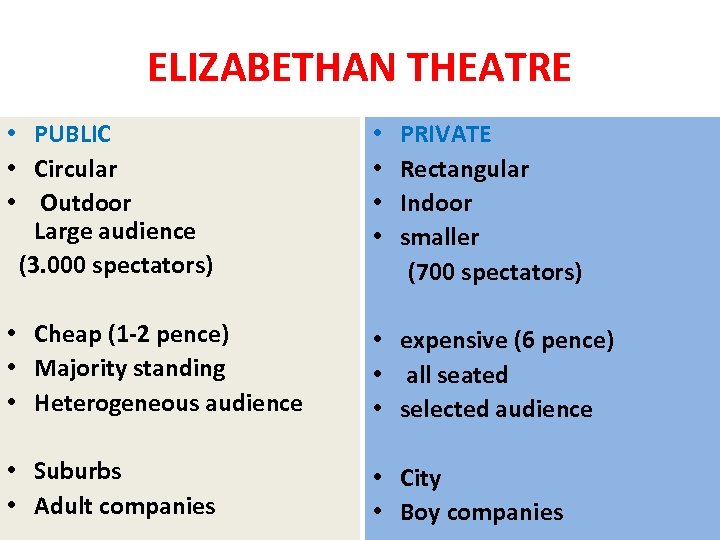 ELIZABETHAN THEATRE • PUBLIC • PRIVATE • Circular • Rectangular • Outdoor • Indoor Large audience • smaller (3. 000 spectators) (700 spectators) • Cheap (1 -2 pence) • Majority standing • Heterogeneous audience • expensive (6 pence) • all seated • selected audience • Suburbs • Adult companies • City • Boy companies
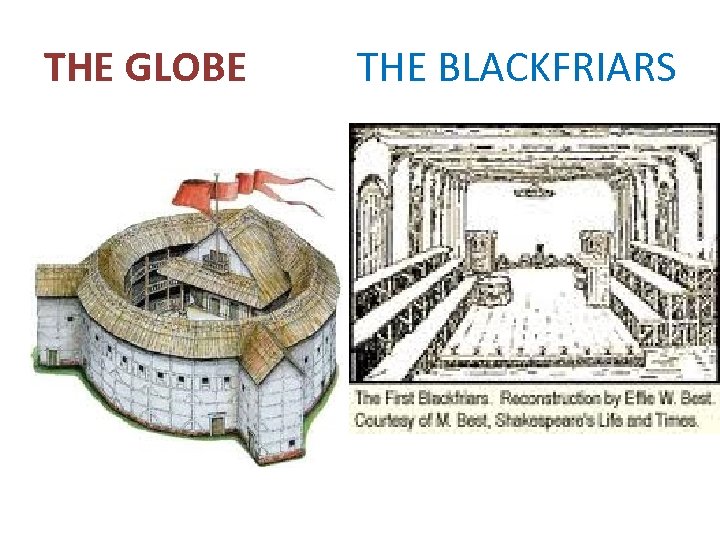 THE GLOBE THE BLACKFRIARS
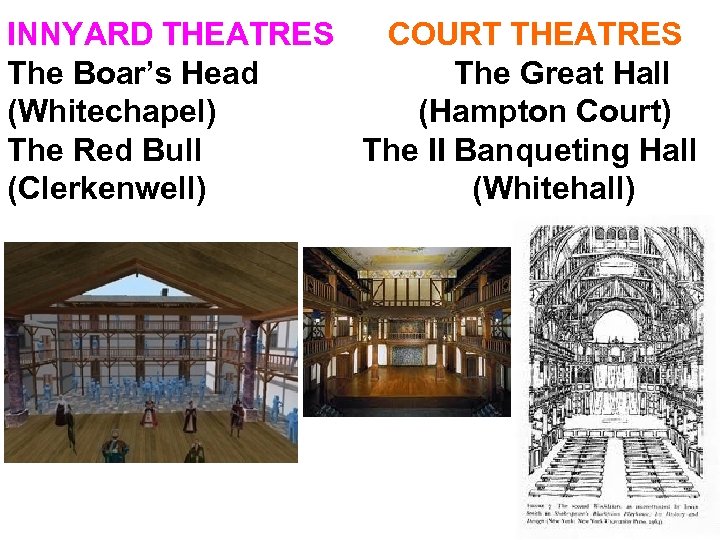 INNYARD THEATRES COURT THEATRES The Boar’s Head The Great Hall (Whitechapel) (Hampton Court) The Red Bull The II Banqueting Hall (Clerkenwell) (Whitehall)
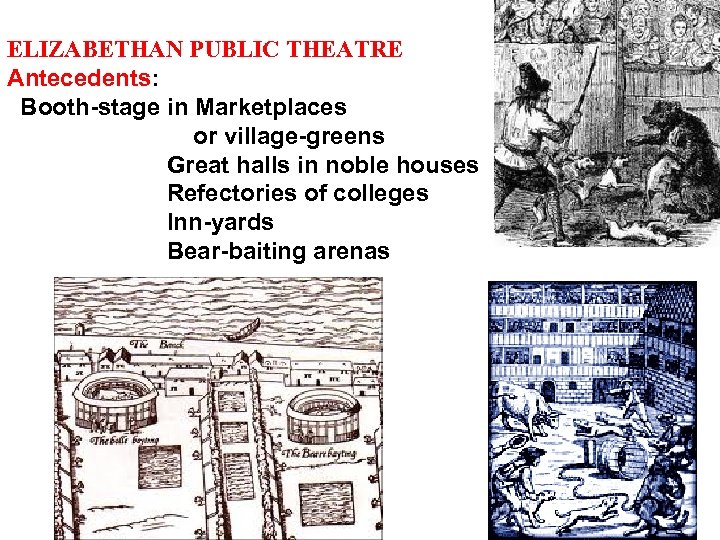 ELIZABETHAN PUBLIC THEATRE Antecedents: Booth-stage in Marketplaces or village-greens Great halls in noble houses Refectories of colleges Inn-yards Bear-baiting arenas
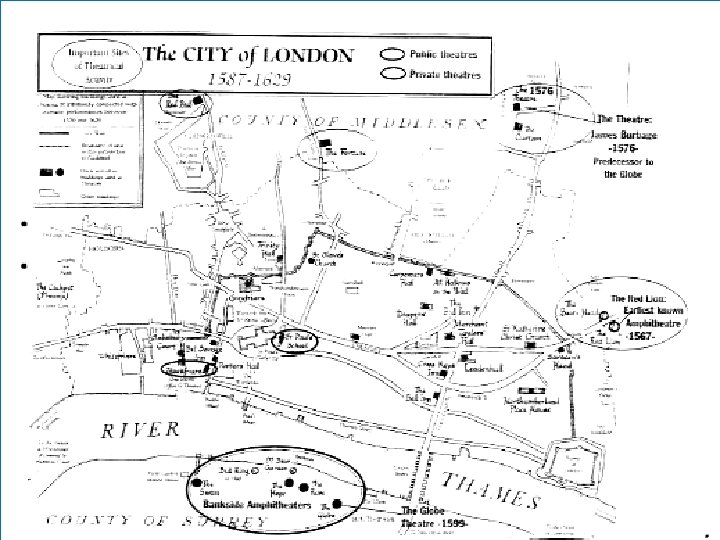
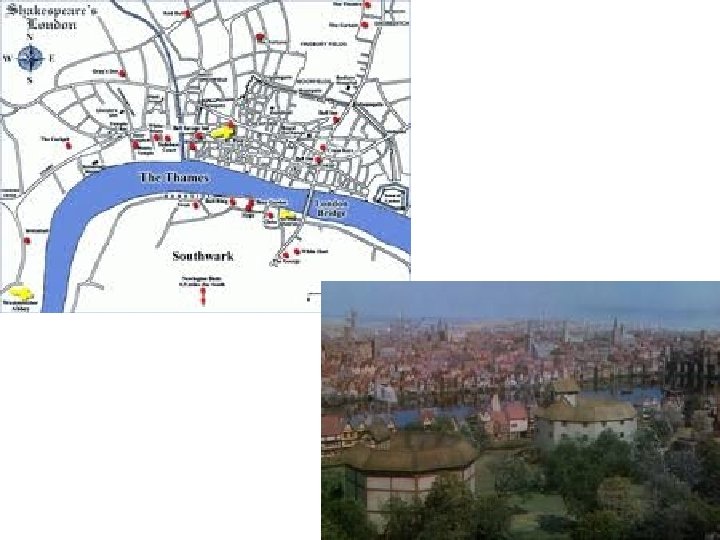
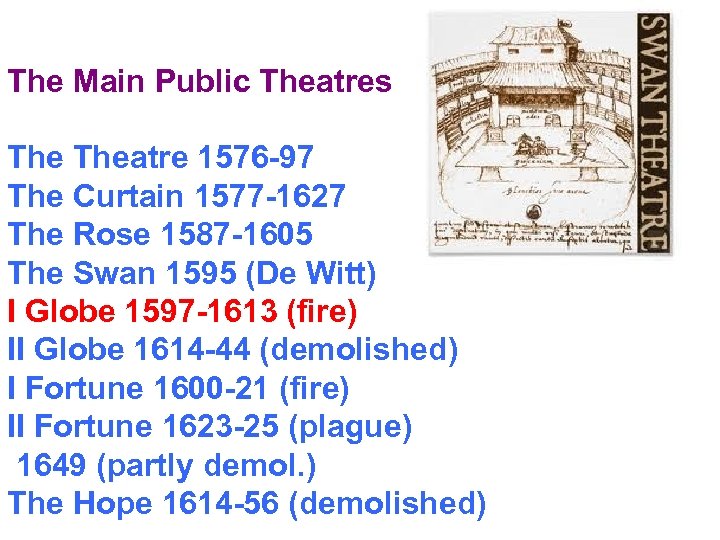 The Main Public Theatres Theatre 1576 -97 The Curtain 1577 -1627 The Rose 1587 -1605 The Swan 1595 (De Witt) I Globe 1597 -1613 (fire) II Globe 1614 -44 (demolished) I Fortune 1600 -21 (fire) II Fortune 1623 -25 (plague) 1649 (partly demol. ) The Hope 1614 -56 (demolished)
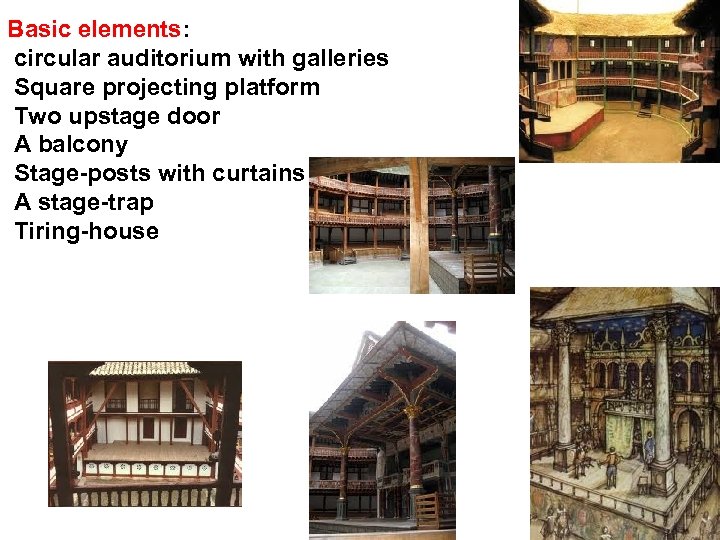 Basic elements: circular auditorium with galleries Square projecting platform Two upstage door A balcony Stage-posts with curtains A stage-trap Tiring-house
 Conventions: Flexibility Multiple repertoire Symbolism Emblems Costumes Boy-actors for female roles Anachronism No space/time/genre unities Music (before, after, during the performance, at intervals)
 CHARACTERISTICS OF ELIZAB. PUBLIC THEATRE UNCERTAINTY: endemic plague since 1348 Theatres closed in 1580, 86, 87, 94, 1605 Theatres closed during hot season (summer tours in the country cfr. Hamlet) Dramatic season in London: Sept. to Christmas (twelve days festivities, chosen plays at court) Jen. to Feb. (Lenten interruption)
 THEATRE TRANGRESSIVE CHARACTER Contiguity with vagrancy, festive and riotous revelry, laziness, class proximity, sexual ambiguity, profane, irreverent, blasphemous character, susceptible of producing street disorders and tumults. Sometimes connected to political threat (1601 Essex and Richard II) 1597 The Isle of Dogs by Ben Jonson & Thomas Nashe (lost) performed at the Swan Theatre by the Earl of Pembroke’s Men caused a riot.
 The Master of the revels selected the plays to be performed at court but also exercised control and censorship upon the texts Ordinance of the Privy Council: “ Her MAJESTIE being informed that there are verie greate disorders committed in the common playhouses both by lewd matters that are handled on the stages and by resorte and confluence of bad pople, hath given direction that not onlie no plaies shal be used within London or about the citty or in any publique place during this tyme of sommer, but that also those playhouses that are erected or built only for such purposes shall be plucked down. ”
 PATRONAGE 1572 Act for punishment of vagabonds: “Illegal for strolling players to perform without authorization” Companies took the livery of the Patron (Leicester’s Men; Sussex Men; Queen’s Men; Lord Strange Men; The Admiral’s Men; Lord Chamberlain’s Men later to become The King’s Men etc. )
 Letter by Lord Chamberlain to Lord Mayor of London to ask leave for his Men to play at The Cross and Keys Tavern: “…the which I praie you the rather to doe for that they have undertaken to me that wheretofore they began not their plaies till towards fower a clock, they will now begin at two and have done betweene fower and five, and will nott use anie drums or trumpettes att all the calling of peopell together; and shall be contributories to the poor of the parishe. ”
 1642 beginning of the civil war I closure ordinance 1647 II ordinance 1649 players arrested at the Red Bull definite closure of theatre till 1660 (Restoration Charles II)
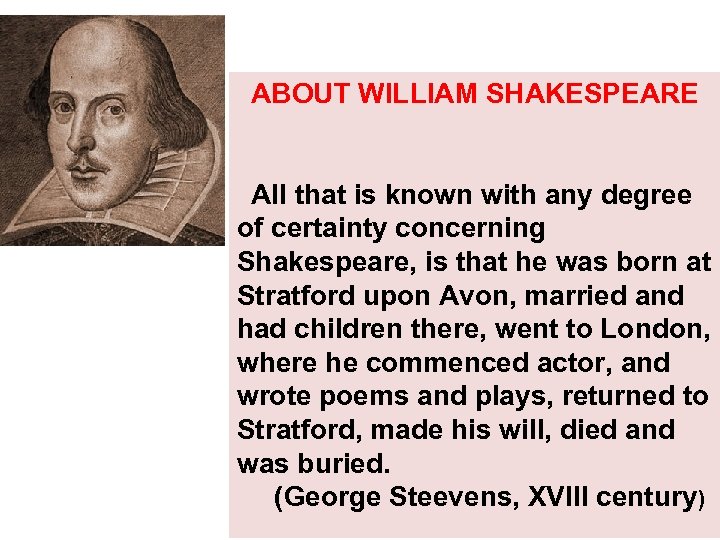 ABOUT WILLIAM SHAKESPEARE All that is known with any degree of certainty concerning Shakespeare, is that he was born at Stratford upon Avon, married and had children there, went to London, where he commenced actor, and wrote poems and plays, returned to Stratford, made his will, died and was buried. (George Steevens, XVIII century)
 Elements of Biography He had … fallen into ill company; … some that made a frequent practice of deer-stealing engaged him with them … in robbing a park that belonged to sir Thomas Lucy of Cherlecot, near Stratford. For this he was prosecuted by that gentleman … and in order to revenge that ill usage, he made a ballad upon him. This is said to have been so very bitter that it redoubled the prosecution against him to that degree that he was obliged to leave his business and family for some time, and shelter himself in London. (Rowe, 1709)
 Traces of his dramatic activity “Those puppets… that spake from our mouth those antics garnished in our colours” “An upstart crow, beautified with our feathers, that with his tiger’s heart wrapped in a player’s hide, supposes he is as well able to bombast out a blank verse as the best of you: and being an absolute Johannes fac totum, is in his own conceit the only shake-scene in a country. ” (Robert Greene, A Groatsworth of Wit) “O tiger’s heart wrapp’d in a woman’s hide! (3 Henry VI)
 SOURCES FOR ENGLISH DRAMATIC CRITICISM: ARISTOTLE, Poetics Decorum: no mixture of tragic (lofty) with comic (low) materials respect of the space/time/action unities
 SHAKESPEARE: Tragic plots and comic subplots (R. & J. ) High-life and low-life characters (Dream) Verses and prose (most plays) Lyricism, conceits and obscenity (Dream, Troilus) No time/space/genre unities (A. & C. )
 Shakespeare’s plays tend to live along the edge of genre’s boundaries, comedy liable to be clouded by tragic potential, history wavering between tragedy and comedy, tragedy slipping into comic routines. In the Shakespearean plays a common phenomenon is the domestication and intermingling of multiple sources.
 SHAKESPEAREAN CRITICISM • • From: primus inter pares To: facile princeps COEVAL still uncanonised NEO-CLASSICAL unrefined genius ROMANTIC the poet CONTEMPORARY dramatist of modernity (CFR. cap. su Bardolatria e orientamenti critici in Lett. Inglese dall’umanesimo al Rinascimento)
 Coeval criticism P. SIDNEY, Defense of Poesie (printed 1595, written about 1580) Contempt for: “Contemporary dramatic attitude to intermingle kings & clowns, serious and comic subjects, elevated style and gross punning” Dedicatory poem by Ben Jonson in the Preface to First Folio, 1623 “To the memory of my beloved, the author mr. William Shakespeare: and what he hath left us”; ‘He was not of an age, but for all time!’ “His mind and hand went together, and what he thought, he uttered with that easiness that we have scarse received from him a blot in his papers. ”
 Neoclassical criticism: Nature Vs Art T. RYMER, A Short View of Tragedy (1692) Judgement rather than fancy, Structure rather than variety, Decorum and respect for typologies (Iago doesn’t conform to military standards established by Horatio) John Dryden, Essay of Dramatic Poesy, 1668: “he was naturally learn’d; he needed not the spectacle of books to read Nature; he looked inwards, and found her there. ”Rewriting on the basis of respect of the three unities: cfr. All for Love 1678
 Romantic criticism G. E. Lessing appreciated his naturalism against French rigidity Goethe used Hamlet as subtext in his Wilhelm Meister Schlegel translated him in German and created a theory of an ‘organic form’ reconciling art and nature This theory was appropriated by Coleridge who strengthened the myth of the great soul poet: ‘ever-living’ and ‘myriad-minded’
 CONTEMPORARY CRITICISM professional criticism (Stanco, cap. 15) BRADLEY character criticism STRUCTURALISM regularities POSTSTRUCTURALISM perspective and deconstruction (psychoanalysis, new historicism, cultural materialism, gender (feminist, queer), postcolonial)
 Comedy: characteristics Comedy = Social /collective/generational genre Possible Greek etymology: Komoidìa Kòme village Kòmos ritual procession (Dionysian) Kòme+odè Song of the Village (ritual + social character)
 Classical Comic Models • OLD COMEDY GREEK (ARISTOPHANES) RITUAL (Fertility, Natural rythms in vegetation and in the Human) • NEW COMEDY LATIN (PLAUTUS) SATIRICAL, Social rigidities
 Shakespearean comedy: Models and sources: Archaic heathen seasonal and fertility rites, Greek comedy and novel (Apuleio, The Golden Ass), Ovidio (Metamorphoses), Arcadic traditions (Sannazzaro, Arcadia), Arthurian legends in medieval literature, Folklore, folktales and popular beliefs (May rites, Morris Dances etc. ), Latin Satire against social faults and vices, Medieval stories and narrations (Italian novellas), Popular drama (Moralities), Petrarchism, Renaissance court culture and fashion, Euphuism, romances by University Wits (Greene, Lyly, Nashe, Lodge, Peele)
 Shakespearean comedy as rite of passage: a sort of coming of age (old comedy) Structure (example of Structuralist criticism) Beginning: Crisis, antagonism with parents, old people Vs young people, love Vs law Development of dramatic action: escape, adventure in the green world (no social conventions) Chaos Epilogue: resolution, reconciliation, return to society, marriage, happy ending, renewal of society, Cosmos
 Shakespearean comedy as social satire (new comedy) • Social and personal defects highlighted by means of: • Caricature and farcical elements • In comedy personal faults and flaws cause laugh: in the end they are castigated and forgiven or redeemed (Katherine) • [in tragedy they are the causes of tragedy itself (Othello: jealousy, Iago: envy, Macbeth: ambition)]
 Language of Shakespeare’s comedy comic, bawdy, parodic, witty, euphuistic, full of conceits, conventional, bombastic, proverbial, full of puns, quibbles, double éntendre, romantic, liric, poetical, musical, interspersed with sonnets, love songs, ballads
 Elements of shakespearean comedy CROSSDRESSING: “The most useful dramatic device for mediating the initiatives of the female, however, is the male disguise. Male garments immensely broaden the sphere in which female energy can manifest itself. Dressed as a man, a nubile woman can go places and do things she couldn’t do otherwise, thus getting the play out of the court and the closet and into interesting places like forests…” (or law courts) ( Clara Claiborne Park, “How we like it”)
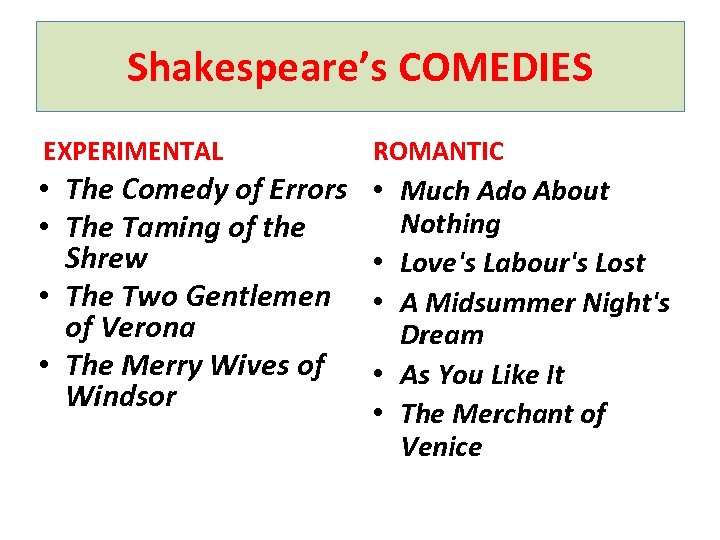 Shakespeare’s COMEDIES EXPERIMENTAL ROMANTIC • The Comedy of Errors • The Taming of the Shrew • The Two Gentlemen of Verona • The Merry Wives of Windsor • Much Ado About Nothing • Love's Labour's Lost • A Midsummer Night's Dream • As You Like It • The Merchant of Venice
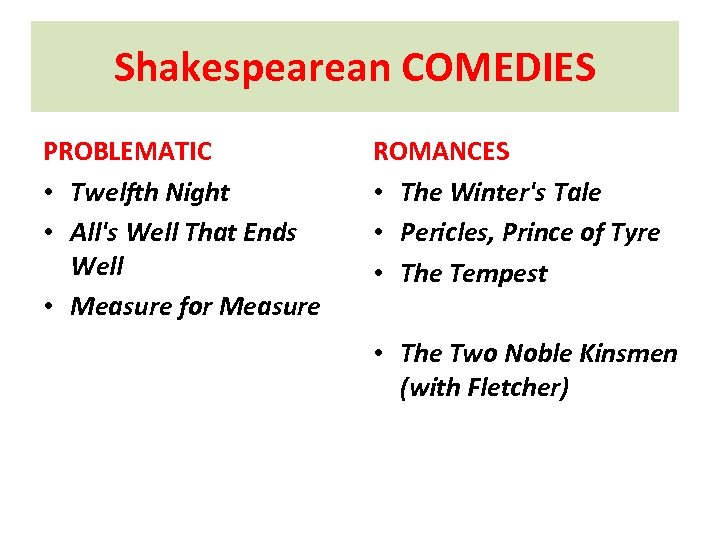 Shakespearean COMEDIES PROBLEMATIC • Twelfth Night • All's Well That Ends Well • Measure for Measure ROMANCES • The Winter's Tale • Pericles, Prince of Tyre • The Tempest • The Two Noble Kinsmen (with Fletcher)
 TRAGEDY: general models • • Classical: Greek, Latin Medieval Modern Possible etimology: from Greek Tragodìa Tràgos: goat Aido: to sing Dionysian ritual: sacrifice of goat/scapegoat ritual
 Greek models: structure In Aristotle’s Poetics Violation of order (personal/psychological/historical/political) CRISIS: Chaos Peak of chaos in violence: purge of passions and release: CATHARSIS. Return to ORDER In its constant return to a position of equilibrium, tragedy may be said to reinforce artistically the desirability of political order.
 Latin Models • Ovidio, Metamorphoses (narrative poem) (myths from Greek derivation about dramatic transformations, used for images, phrasing, stories) • Seneca plays full of horrors designed more for static declamation than for the excitement of quick-fire action and surprise cherished by the Elizabethan audience.
 Medieval Models ‘Narrative tragedy’: Boccaccio, De casibus virorum illustrium (56 stories of fall of famous people); Chaucer, The Monk’s Tale: “hym that stood in greet prosperitee/And is fallen out of heigh degree/Into myserie. . . endeth wrecchedly”) Lydgate’s The Fall of Princes; (in Renaissance by various authors: The Mirror for Magistrates); ‘Moralities’ tragicomic drama, allegorical struggle between conflicting ethical drivest, character of the Vice was usually comic
 modern models Marlowe’s Dido, Queen of Carthage, Tamburlaine, part 1 and 2, The Jew of Malta, Dr Faustus, Edward II, Kyd’s The Spanish Tragedy (revenge)
 Characteristics of shakespearean tragedy A. C. Bradley, in Shakespearean Tragedy, (1904) describes these plays as stories of exceptional suffering and calamity, leading to the death of a dominant figure of high social standing- a figure intensely committed to his chosen course of action, who is given primary responsibility for what happens in the plot, and whose responsibility for the choices made is most powerfully projected by the rhetoric of his struggle with his own nature.
 George Steiner describes tragedy as the reenactment of private anguish on a public stage. It offers ‘a terrible stark insight into human life’. Yet in suffering lies man’s claim to dignity. Georg Lukacs said that tragedy begins when enigmatic forces have distilled the essence from a man, and its progress consists in man’s essential, true nature becoming more and more manifest. Tragedy becomes ‘the pure experience of self’.
 Shakespearean Tragedy Shakespearean innovation consists mainly in his capability to depict a psychological, most intimate and universal at the same time, scene in which human drives and instincts are seen in their tragic dialectics.
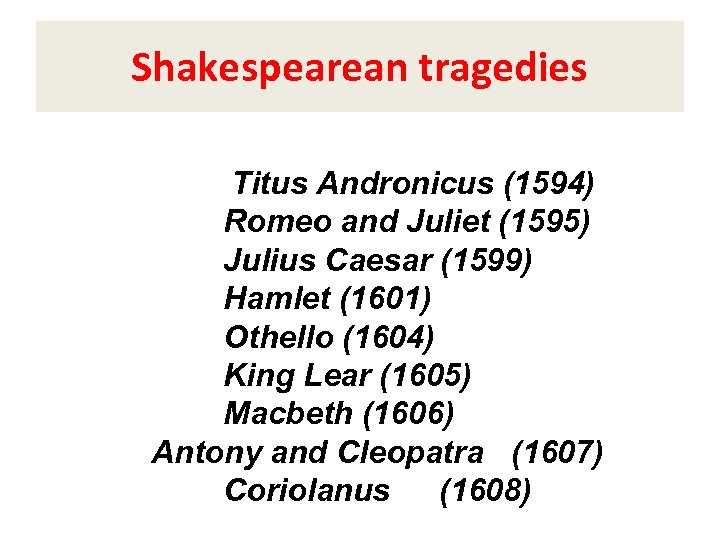 Shakespearean tragedies Titus Andronicus (1594) Romeo and Juliet (1595) Julius Caesar (1599) Hamlet (1601) Othello (1604) King Lear (1605) Macbeth (1606) Antony and Cleopatra (1607) Coriolanus (1608)
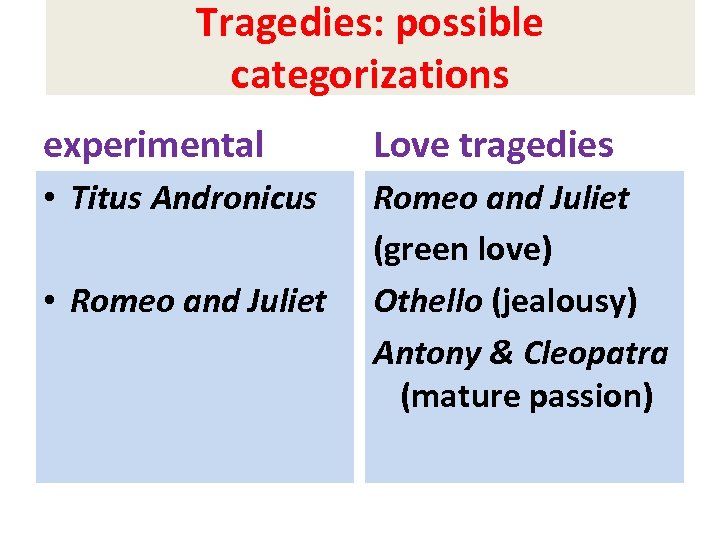 Tragedies: possible categorizations experimental Love tragedies • Titus Andronicus Romeo and Juliet (green love) Othello (jealousy) Antony & Cleopatra (mature passion) • Romeo and Juliet
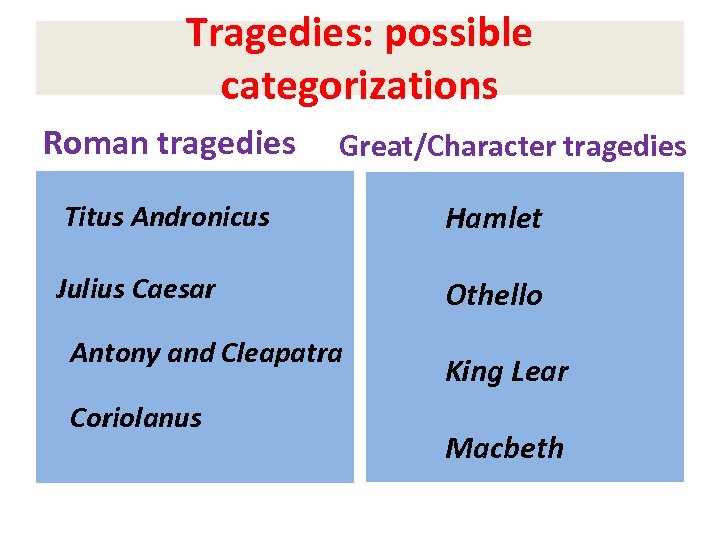 Tragedies: possible categorizations Roman tragedies Great/Character tragedies Titus Andronicus Julius Caesar Antony and Cleapatra Coriolanus Hamlet Othello King Lear Macbeth
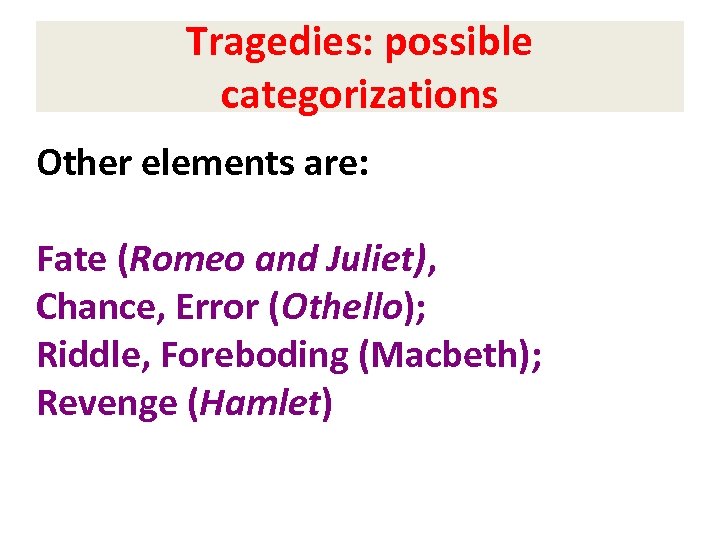 Tragedies: possible categorizations Other elements are: Fate (Romeo and Juliet), Chance, Error (Othello); Riddle, Foreboding (Macbeth); Revenge (Hamlet)
 In Shakespeare: Tragedy is a male genre in its preoccupation with the individual in conflict, whereas Comedy is a female genre with its wider social concern and its desire for harmonious integration through felicity and procreation
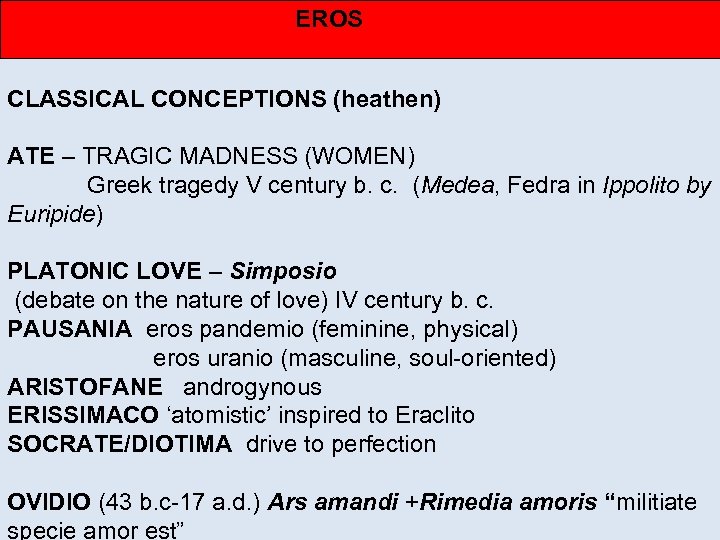 EROS CLASSICAL CONCEPTIONS (heathen) ATE – TRAGIC MADNESS (WOMEN) Greek tragedy V century b. c. (Medea, Fedra in Ippolito by Euripide) PLATONIC LOVE – Simposio (debate on the nature of love) IV century b. c. PAUSANIA eros pandemio (feminine, physical) eros uranio (masculine, soul-oriented) ARISTOFANE androgynous ERISSIMACO ‘atomistic’ inspired to Eraclito SOCRATE/DIOTIMA drive to perfection OVIDIO (43 b. c-17 a. d. ) Ars amandi +Rimedia amoris “militiate specie amor est”
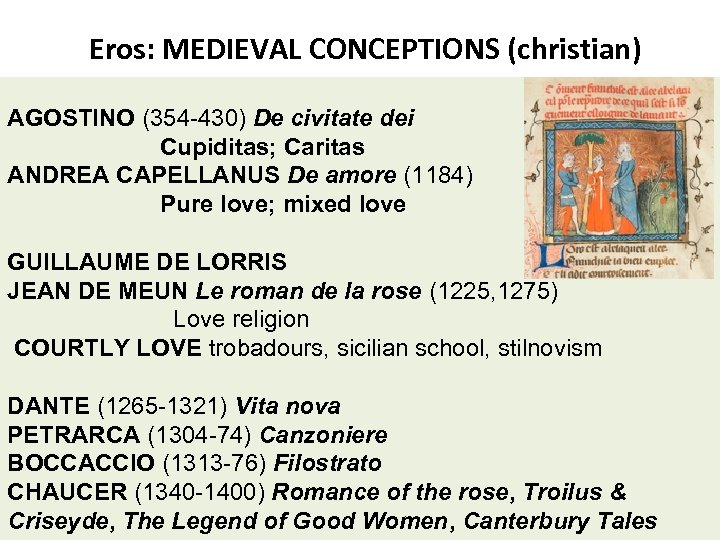 Eros: MEDIEVAL CONCEPTIONS (christian) AGOSTINO (354 -430) De civitate dei Cupiditas; Caritas ANDREA CAPELLANUS De amore (1184) Pure love; mixed love GUILLAUME DE LORRIS JEAN DE MEUN Le roman de la rose (1225, 1275) Love religion COURTLY LOVE trobadours, sicilian school, stilnovism DANTE (1265 -1321) Vita nova PETRARCA (1304 -74) Canzoniere BOCCACCIO (1313 -76) Filostrato CHAUCER (1340 -1400) Romance of the rose, Troilus & Criseyde, The Legend of Good Women, Canterbury Tales
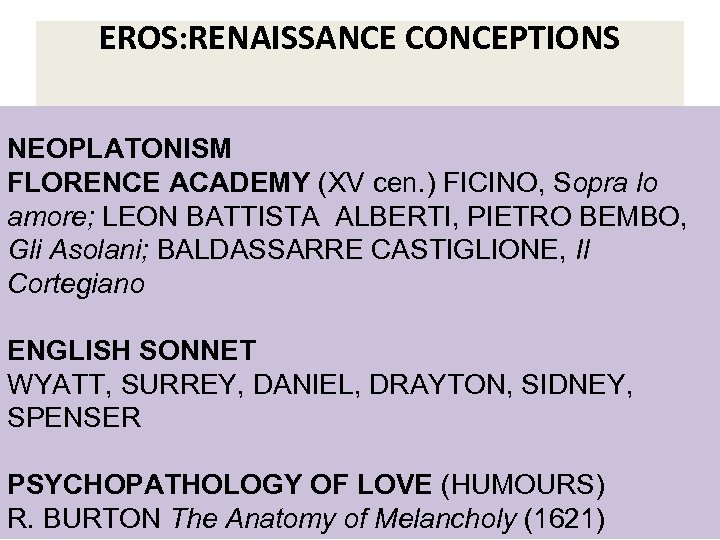 EROS: RENAISSANCE CONCEPTIONS NEOPLATONISM FLORENCE ACADEMY (XV cen. ) FICINO, Sopra lo amore; LEON BATTISTA ALBERTI, PIETRO BEMBO, Gli Asolani; BALDASSARRE CASTIGLIONE, Il Cortegiano ENGLISH SONNET WYATT, SURREY, DANIEL, DRAYTON, SIDNEY, SPENSER PSYCHOPATHOLOGY OF LOVE (HUMOURS) R. BURTON The Anatomy of Melancholy (1621)
 Eros shakespeariano Emerge in S. un moderno senso dell’eros. Siamo ormai al di là della tradizione petrarchesca, anche se quelle tematiche e quei moduli continuano ad esercitare la loro influenza. L’esperienza dell’eros è presentata, ora, in svariatissimi registri e secondo linee dinamiche, drammatiche, in una continua ristrutturazione dei rapporti e delle emozioni che vi si investono. … L’Eros corre ovunque, in rapporti tradizionali e trasgressivi, in situazioni sorprendenti, in registri e moduli di molteplice inventività stilistica, retorica, parodica, gergale. Alle costrizioni puritane fa riscontro una tumultuosa sfenatezza concettuale ed espressiva; e l’amore ideale si coniuga con la parodia dell’amore o l’inesauribile scoperta dell’osceno. (A. Serpieri e K. Elam, L’Eros in Shakespeare)
 Eros shakespeariano: infinite variety • Comedies: EROS+ Adventure Marriage • Tragedies: Eros: Passion among Passions (love and jealousy; love and ambition; love and weariness of the world; love and lust for power; • Histories: Eros denied, interdicted, degraded to obscenity • Narrative poems: rational Vs sensual love • Sonnetts: platonic, intellectual, obscene, amused, parodical, guilty…
 Shakespeare’s Sonnets • Stationers’ Register May 20°, 1609 • Re-edited (with interpolations) in 1640 by John Benson • Dedicated to Mr. W. H. (William Herbert, Earl of Pembroke/Henry Wriothesley, Earl of Southampton/others). • 154 sonnets (152+ 2 variations on an epigram from Antologia Palatina referred to Cupid) • 3 protagonists: fair youth (1 -126), dark lady (127 -152), rival poet (78 -80; 82 -86) • Metrical scheme: three quatrains, four-line stanzas, and a final couplet. The rhyme scheme is abab cdcd efef gg.
 Shakespeare’s Sonnets • 1, 2, 15, 16, 17, 18, 20, 45, 54, • 78, 82, 129, 130, 134, 135, 144
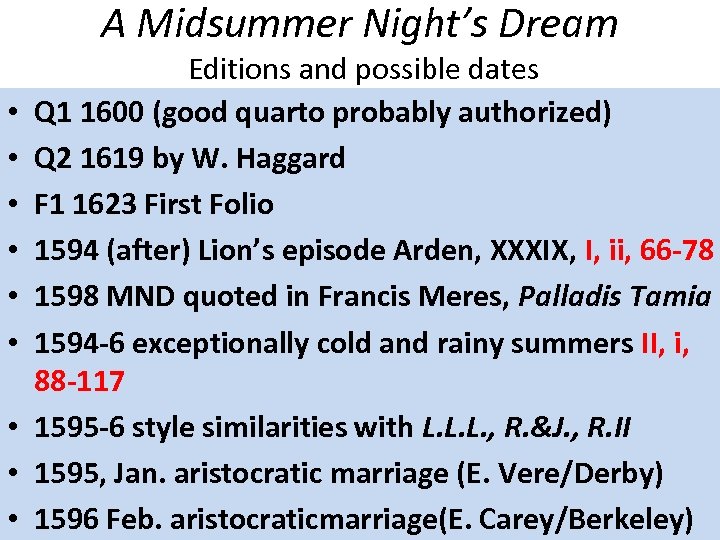 A Midsummer Night’s Dream • • • Editions and possible dates Q 1 1600 (good quarto probably authorized) Q 2 1619 by W. Haggard F 1 1623 First Folio 1594 (after) Lion’s episode Arden, XXXIX, I, ii, 66 -78 1598 MND quoted in Francis Meres, Palladis Tamia 1594 -6 exceptionally cold and rainy summers II, i, 88 -117 1595 -6 style similarities with L. L. L. , R. &J. , R. II 1595, Jan. aristocratic marriage (E. Vere/Derby) 1596 Feb. aristocraticmarriage(E. Carey/Berkeley)
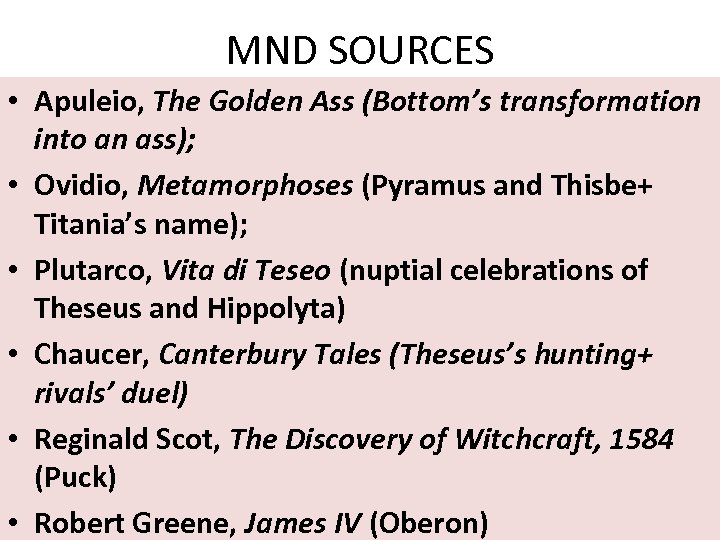 MND SOURCES • Apuleio, The Golden Ass (Bottom’s transformation into an ass); • Ovidio, Metamorphoses (Pyramus and Thisbe+ Titania’s name); • Plutarco, Vita di Teseo (nuptial celebrations of Theseus and Hippolyta) • Chaucer, Canterbury Tales (Theseus’s hunting+ rivals’ duel) • Reginald Scot, The Discovery of Witchcraft, 1584 (Puck) • Robert Greene, James IV (Oberon)
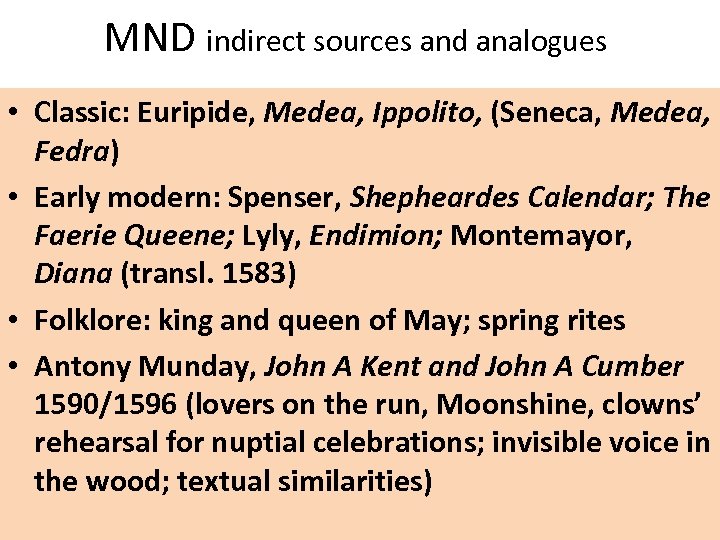 MND indirect sources and analogues • Classic: Euripide, Medea, Ippolito, (Seneca, Medea, Fedra) • Early modern: Spenser, Shepheardes Calendar; The Faerie Queene; Lyly, Endimion; Montemayor, Diana (transl. 1583) • Folklore: king and queen of May; spring rites • Antony Munday, John A Kent and John A Cumber 1590/1596 (lovers on the run, Moonshine, clowns’ rehearsal for nuptial celebrations; invisible voice in the wood; textual similarities)
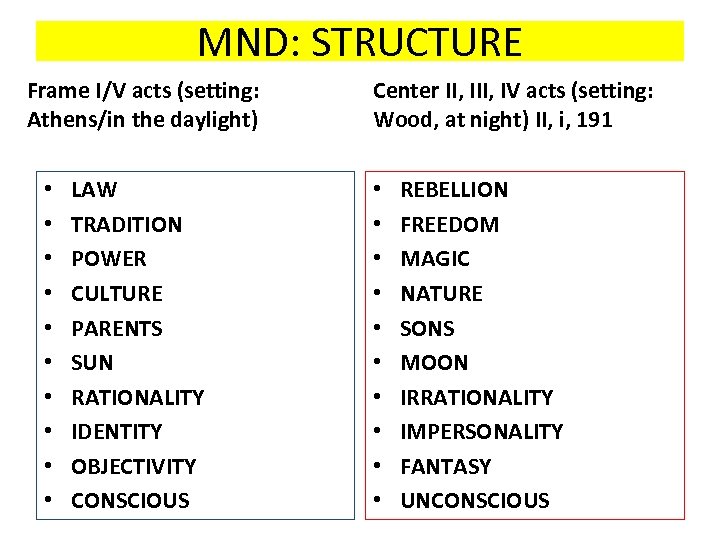 MND: STRUCTURE Frame I/V acts (setting: Athens/in the daylight) • • • LAW TRADITION POWER CULTURE PARENTS SUN RATIONALITY IDENTITY OBJECTIVITY CONSCIOUS Center II, IV acts (setting: Wood, at night) II, i, 191 • • • REBELLION FREEDOM MAGIC NATURE SONS MOON IRRATIONALITY IMPERSONALITY FANTASY UNCONSCIOUS
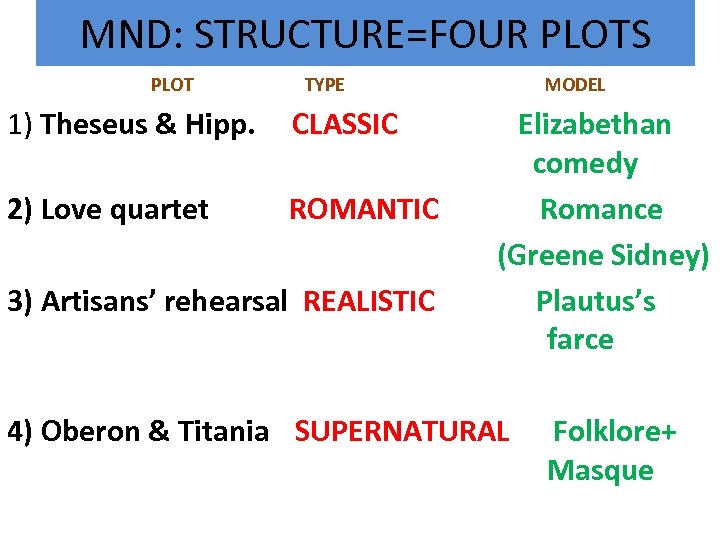 MND: STRUCTURE=FOUR PLOTS PLOT TYPE MODEL 1) Theseus & Hipp. CLASSIC Elizabethan comedy 2) Love quartet ROMANTIC Romance (Greene Sidney) 3) Artisans’ rehearsal REALISTIC Plautus’s farce 4) Oberon & Titania SUPERNATURAL Folklore+ Masque
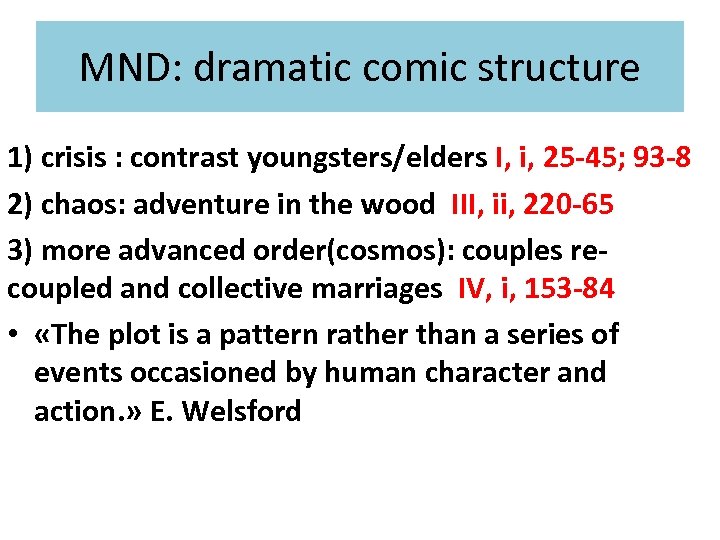 MND: dramatic comic structure 1) crisis : contrast youngsters/elders I, i, 25 -45; 93 -8 2) chaos: adventure in the wood III, ii, 220 -65 3) more advanced order(cosmos): couples recoupled and collective marriages IV, i, 153 -84 • «The plot is a pattern rather than a series of events occasioned by human character and action. » E. Welsford
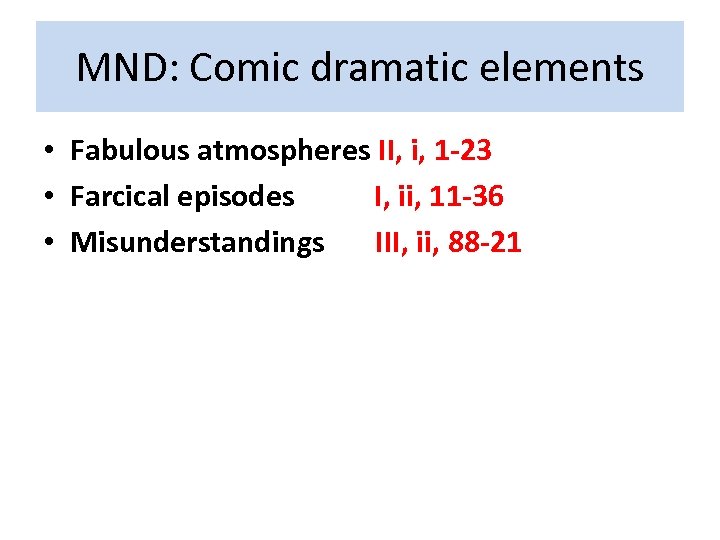 MND: Comic dramatic elements • Fabulous atmospheres II, i, 1 -23 • Farcical episodes I, ii, 11 -36 • Misunderstandings III, ii, 88 -21
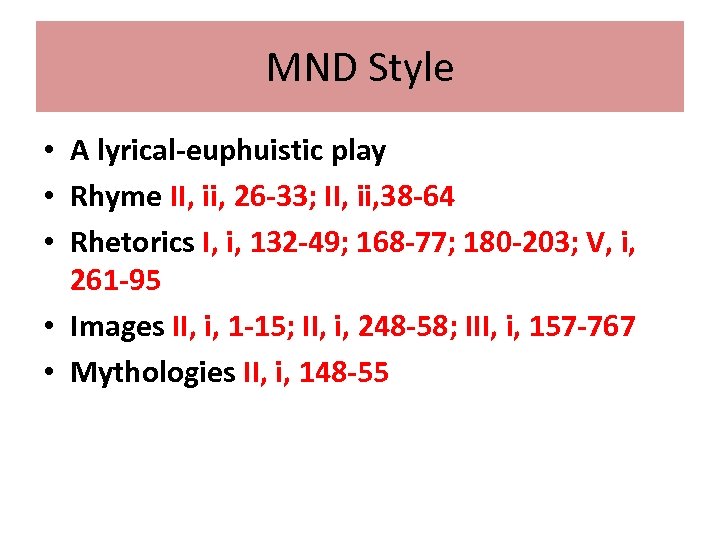 MND Style • A lyrical-euphuistic play • Rhyme II, ii, 26 -33; II, ii, 38 -64 • Rhetorics I, i, 132 -49; 168 -77; 180 -203; V, i, 261 -95 • Images II, i, 1 -15; II, i, 248 -58; III, i, 157 -767 • Mythologies II, i, 148 -55
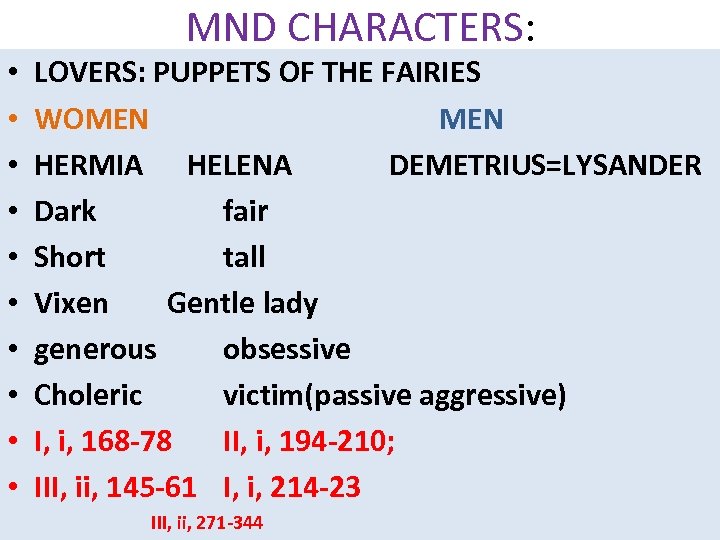 MND CHARACTERS: • • • LOVERS: PUPPETS OF THE FAIRIES WOMEN HERMIA HELENA DEMETRIUS=LYSANDER Dark fair Short tall Vixen Gentle lady generous obsessive Choleric victim(passive aggressive) I, i, 168 -78 II, i, 194 -210; III, ii, 145 -61 I, i, 214 -23 III, ii, 271 -344
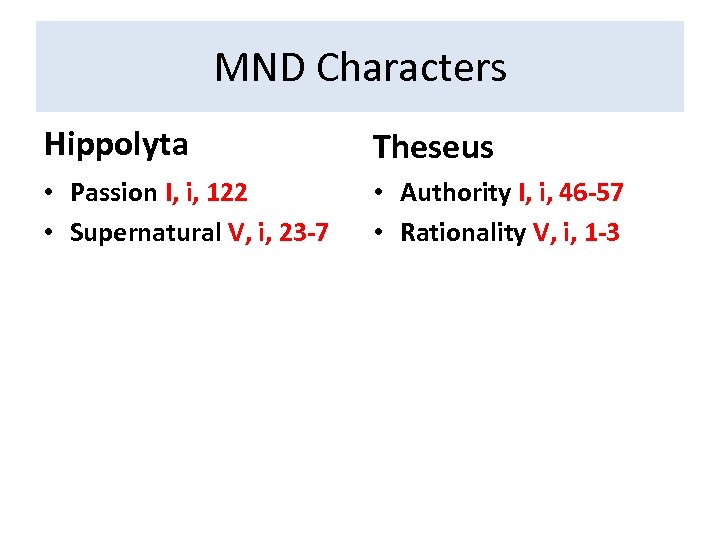 MND Characters Hippolyta Theseus • Passion I, i, 122 • Supernatural V, i, 23 -7 • Authority I, i, 46 -57 • Rationality V, i, 1 -3
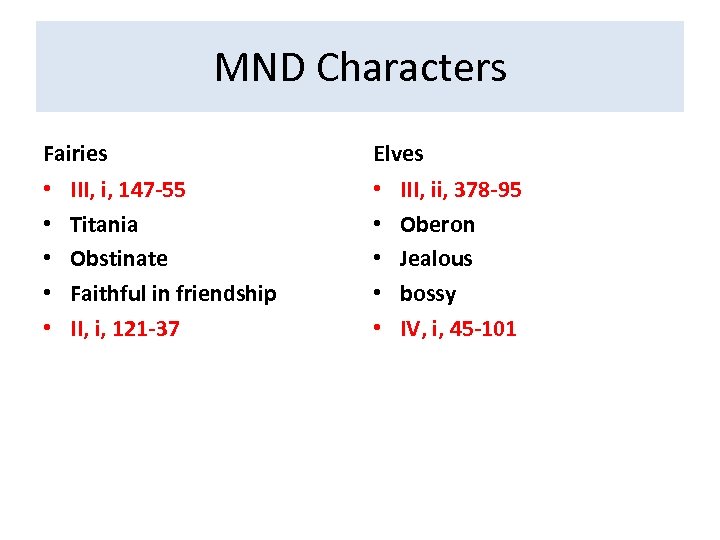 MND Characters Fairies • • • III, i, 147 -55 Titania Obstinate Faithful in friendship II, i, 121 -37 Elves • • • III, ii, 378 -95 Oberon Jealous bossy IV, i, 45 -101
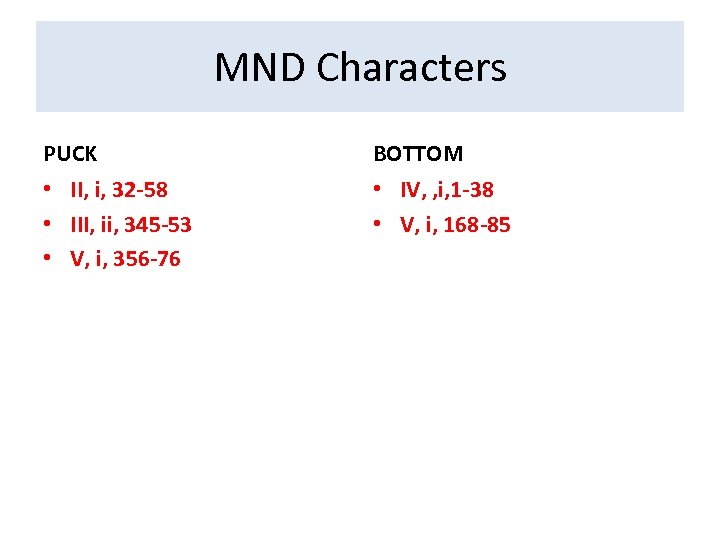 MND Characters PUCK BOTTOM • II, i, 32 -58 • III, ii, 345 -53 • V, i, 356 -76 • IV, , i, 1 -38 • V, i, 168 -85
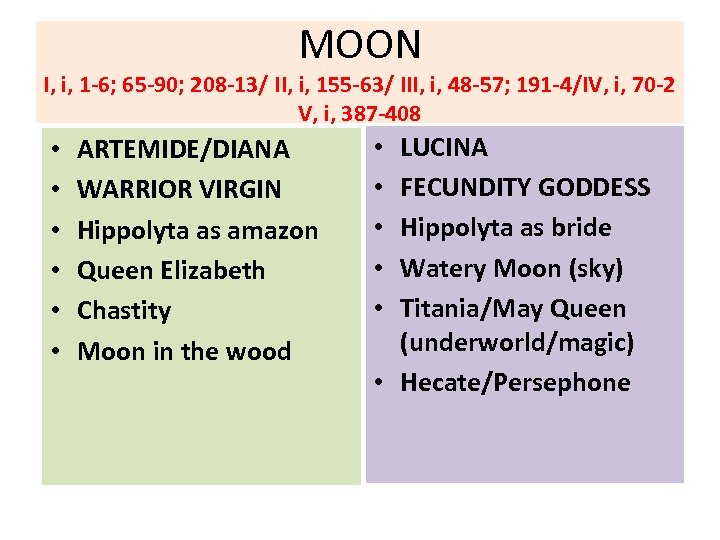 MOON I, i, 1 -6; 65 -90; 208 -13/ II, i, 155 -63/ III, i, 48 -57; 191 -4/IV, i, 70 -2 V, i, 387 -408 • • • ARTEMIDE/DIANA WARRIOR VIRGIN Hippolyta as amazon Queen Elizabeth Chastity Moon in the wood LUCINA FECUNDITY GODDESS Hippolyta as bride Watery Moon (sky) Titania/May Queen (underworld/magic) • Hecate/Persephone • • •
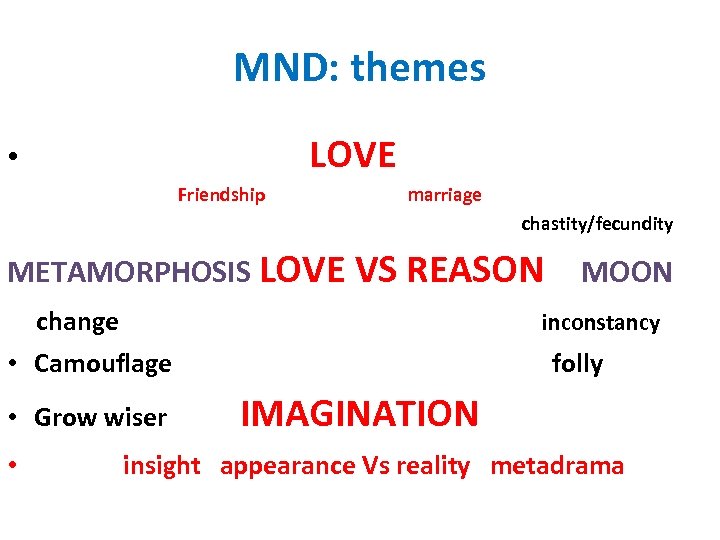 MND: themes • LOVE Friendship marriage chastity/fecundity METAMORPHOSIS LOVE VS REASON MOON change inconstancy • Camouflage folly • Grow wiser IMAGINATION • insight appearance Vs reality metadrama
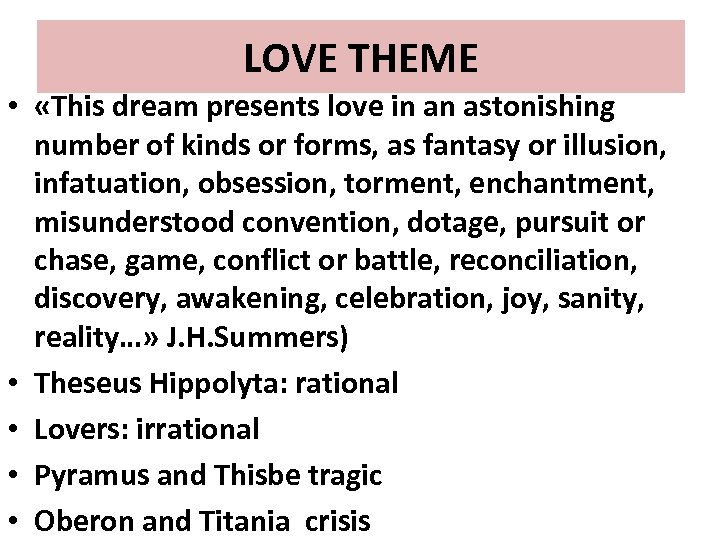 LOVE THEME • «This dream presents love in an astonishing number of kinds or forms, as fantasy or illusion, infatuation, obsession, torment, enchantment, misunderstood convention, dotage, pursuit or chase, game, conflict or battle, reconciliation, discovery, awakening, celebration, joy, sanity, reality…» J. H. Summers) • Theseus Hippolyta: rational • Lovers: irrational • Pyramus and Thisbe tragic • Oberon and Titania crisis
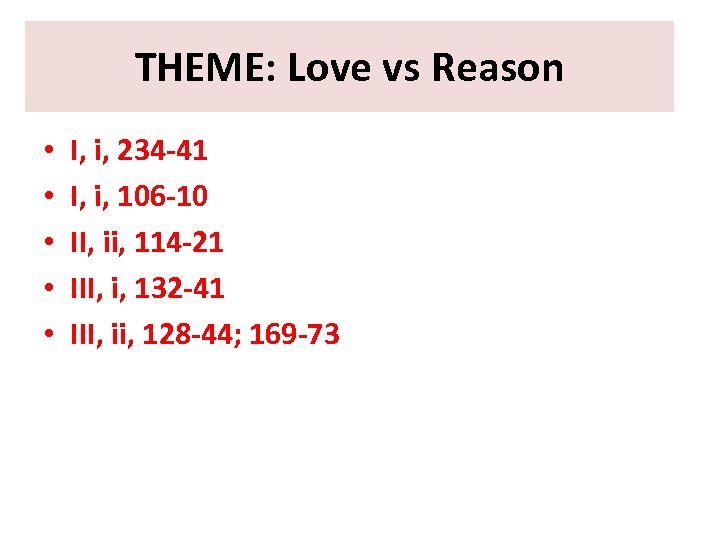 THEME: Love vs Reason • • • I, i, 234 -41 I, i, 106 -10 II, ii, 114 -21 III, i, 132 -41 III, ii, 128 -44; 169 -73
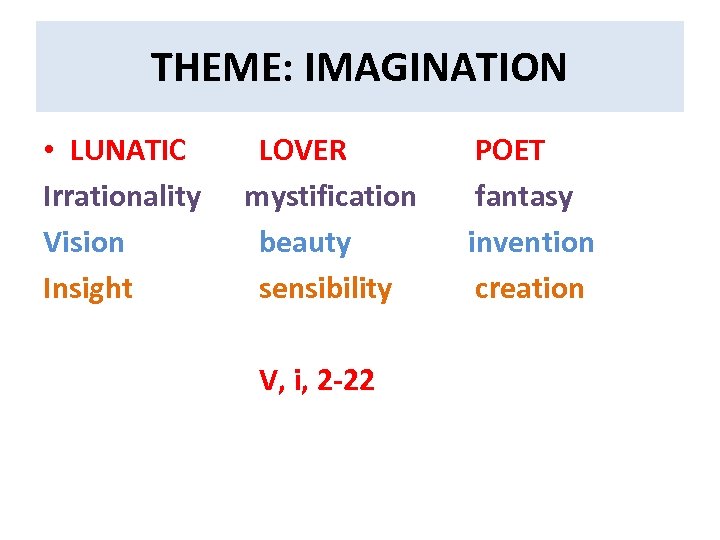 THEME: IMAGINATION • LUNATIC LOVER POET Irrationality mystification fantasy Vision beauty invention Insight sensibility creation V, i, 2 -22
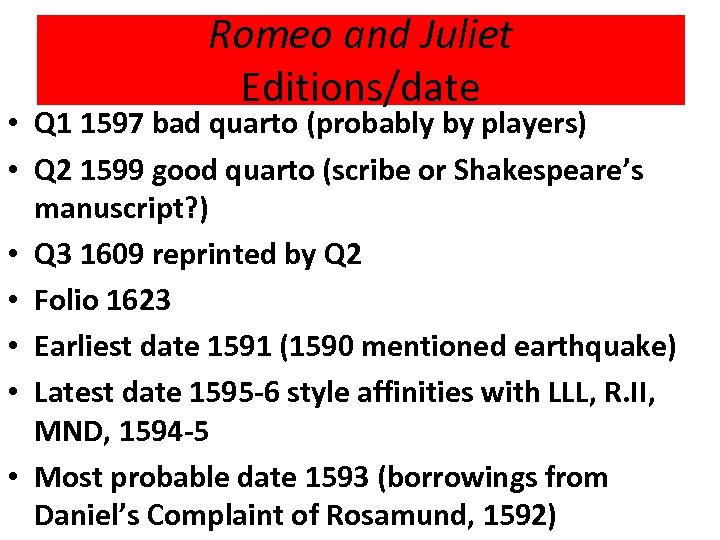 Romeo and Juliet Editions/date • Q 1 1597 bad quarto (probably by players) • Q 2 1599 good quarto (scribe or Shakespeare’s manuscript? ) • Q 3 1609 reprinted by Q 2 • Folio 1623 • Earliest date 1591 (1590 mentioned earthquake) • Latest date 1595 -6 style affinities with LLL, R. II, MND, 1594 -5 • Most probable date 1593 (borrowings from Daniel’s Complaint of Rosamund, 1592)
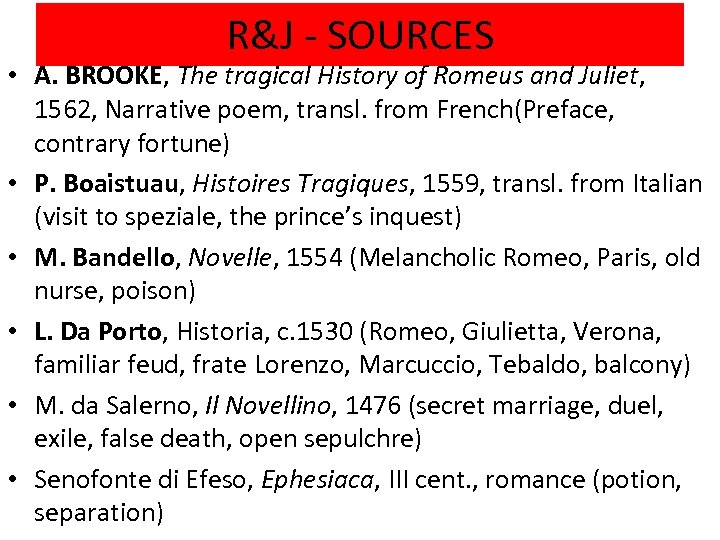 R&J - SOURCES • A. BROOKE, The tragical History of Romeus and Juliet, 1562, Narrative poem, transl. from French(Preface, contrary fortune) • P. Boaistuau, Histoires Tragiques, 1559, transl. from Italian (visit to speziale, the prince’s inquest) • M. Bandello, Novelle, 1554 (Melancholic Romeo, Paris, old nurse, poison) • L. Da Porto, Historia, c. 1530 (Romeo, Giulietta, Verona, familiar feud, frate Lorenzo, Marcuccio, Tebaldo, balcony) • M. da Salerno, Il Novellino, 1476 (secret marriage, duel, exile, false death, open sepulchre) • Senofonte di Efeso, Ephesiaca, III cent. , romance (potion, separation)
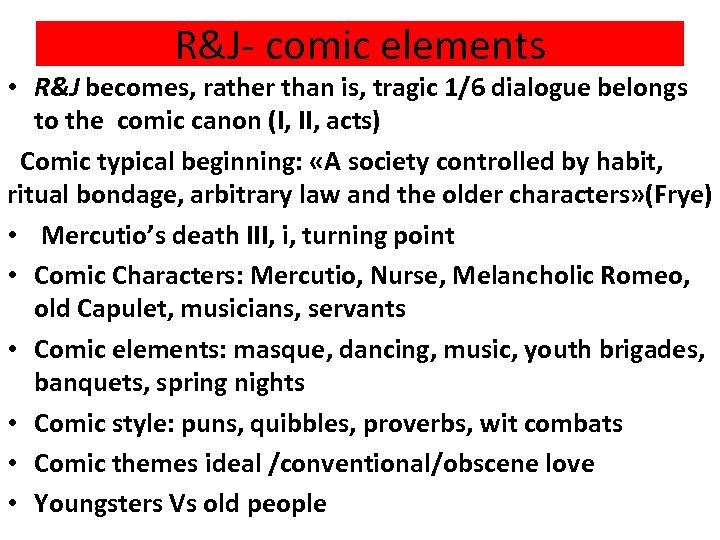 R&J- comic elements • R&J becomes, rather than is, tragic 1/6 dialogue belongs to the comic canon (I, II, acts) Comic typical beginning: «A society controlled by habit, ritual bondage, arbitrary law and the older characters» (Frye) • Mercutio’s death III, i, turning point • Comic Characters: Mercutio, Nurse, Melancholic Romeo, old Capulet, musicians, servants • Comic elements: masque, dancing, music, youth brigades, banquets, spring nights • Comic style: puns, quibbles, proverbs, wit combats • Comic themes ideal /conventional/obscene love • Youngsters Vs old people
 R&J Comic Elements • Comic scenes: I, i, 1 -30; I, iii, 7 -57; I, iv, 51 -103; II, iv, 37 -70 • «The two modes of tragedy and comedy are opposed, so generating the central dynamic of the action, but there are subterranean connections between them which make an antithetical structure complex like a living organism. The play’s comedy is notable for the latent presence, even in scenes of the greatest ease, of a pressure of energy ready to turn into violence…»
 R&J- tragic elements • Failed acts of communication: III, ii, 34 -70 (Nurse, Juliet); III, v, 68 -102 (Juliet, Lady Capulet); IV, i, 5 -28 (Paris, Juliet, Friar) V, i, ii (Romeo, Balthasar; Friar John, Friar Lawrence) TRAGIC IRONY
 R&J- tragic elements • Temporal acceleration (the action takes place in a few days, 5 dawns: melancholic Romeo; Romeo leaves the garden, farewell between the two lovers; Juliet’s faked death; Prince and the two dead lovers; Juliet 2 years younger; old Capulet anticipates twice the wedding; arrival of the guards accelerates Romeo’s suicide) • Time of the lovers Vs normal time • II, i, 116 -20; II, v, 1 -15
 Tragic speed • «R&J is a drama in which speed is the medium of fate, though at first it appears that fate is only a function of speed. In the close, the awesome silent tableau prompts the audience to the recognition that the unique quality of this tragic experience is created by the impetuous rashness of youth. » (B. Gibbons) • Friar: «They stumble that run fast»
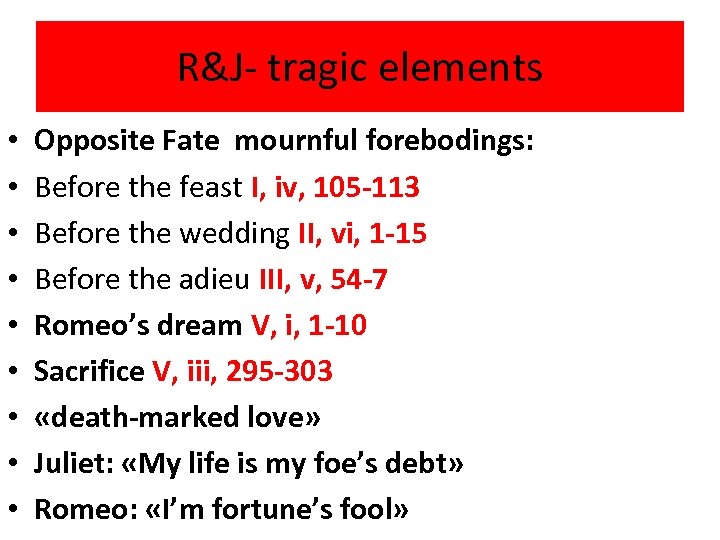 R&J- tragic elements • • • Opposite Fate mournful forebodings: Before the feast I, iv, 105 -113 Before the wedding II, vi, 1 -15 Before the adieu III, v, 54 -7 Romeo’s dream V, i, 1 -10 Sacrifice V, iii, 295 -303 «death-marked love» Juliet: «My life is my foe’s debt» Romeo: «I’m fortune’s fool»
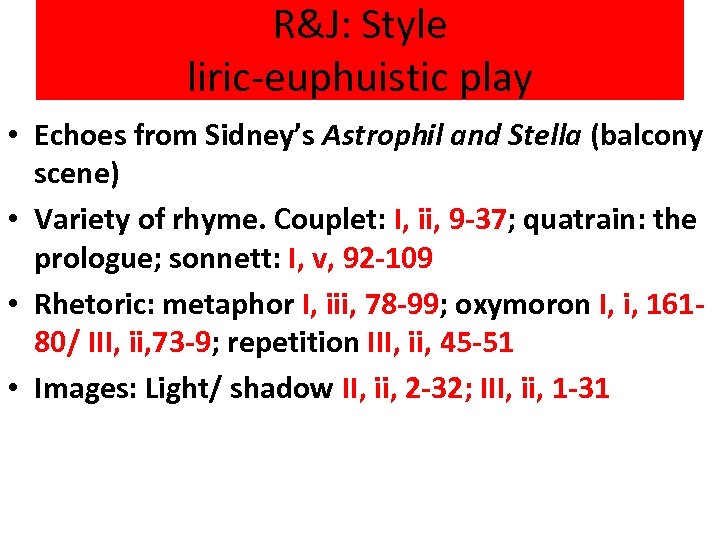 R&J: Style liric-euphuistic play • Echoes from Sidney’s Astrophil and Stella (balcony scene) • Variety of rhyme. Couplet: I, ii, 9 -37; quatrain: the prologue; sonnett: I, v, 92 -109 • Rhetoric: metaphor I, iii, 78 -99; oxymoron I, i, 16180/ III, ii, 73 -9; repetition III, ii, 45 -51 • Images: Light/ shadow II, ii, 2 -32; III, ii, 1 -31
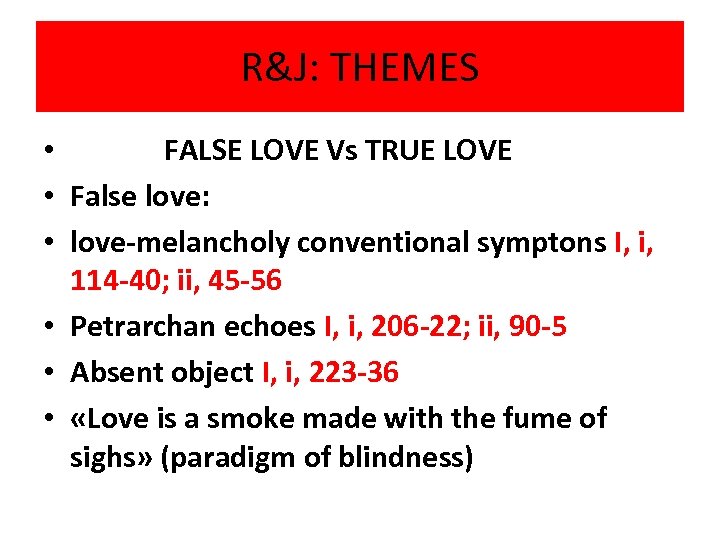 R&J: THEMES • FALSE LOVE Vs TRUE LOVE • False love: • love-melancholy conventional symptons I, i, 114 -40; ii, 45 -56 • Petrarchan echoes I, i, 206 -22; ii, 90 -5 • Absent object I, i, 223 -36 • «Love is a smoke made with the fume of sighs» (paradigm of blindness)
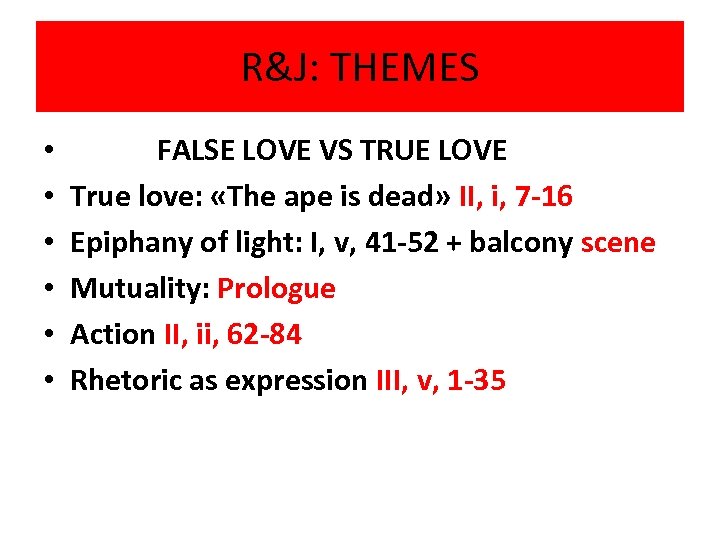 R&J: THEMES • • • FALSE LOVE VS TRUE LOVE True love: «The ape is dead» II, i, 7 -16 Epiphany of light: I, v, 41 -52 + balcony scene Mutuality: Prologue Action II, ii, 62 -84 Rhetoric as expression III, v, 1 -35
 R&J: THEMES EROS AND THANATOS «The love of Romeo and Juliet is the tragic passion that seeks its own destruction. » (M. Mahood) • Voyage towards death: Prologue, 9; V, iii, 116 • Nuptial bed=tomb Death=Juliet’s husband III, ii, 136 • Unconscious forebodings I, v, 46 • Death= time’s defeat II, ii, 15 -22 «Romeo and Juliet stellify each other, the love which appears to be quenched as easily as a spark is exstinguished is, in fact, made as permanent as the sun and stars when it is out of the range of time» (M. Mahood)
 R&J: THEMES EROS AND THANATOS «by having them die, he saved the pure couple» «The time of love would be that of the present moment, and marriage, as continuity, is its opposite. » «The loving couple is outside the law, the law is deadly for it… the story of the famous couple is a story of the impossible couple» (J. Kristeva)
 R&J: THEMES EROS AND THANATOS Love Vs Marriage Moment /continuity II, vi, 4 -6; IV, v, 77 -8 Secrecy/law II, ii, 61 -73 Deadly eros: maternal suffocating embrace II, iii, 5 -6 Hate other face of love I, v, 137 -40; III, v, 55 -7 Love paradigm: 174 occurrences Life paradigm: 65 occurrences Death paradigm: 127 occurrences
 TROILUS AND CRESSIDA editions, date and occasion 1602 -3 publication announced on the Stationer’s Register 1608 -9 in quarto 1623 In folio Most probable date 1602 (first mention in 1603, in the Prologue there is a possible reference to Ben Jonson’s Poetaster (1601) 1 -30 • Possible occasion: private representation during Christmas 12 days at the Inns of Court for Law’s Students; Pandarus in the Epilogue announces his testament in 2 months’ time = Lord of Misrule, an officer appointed to be in charge of the Christmas revelries, making his will at Shrove Tuesday before Ash Wednesday V, x, 35 -57 • •
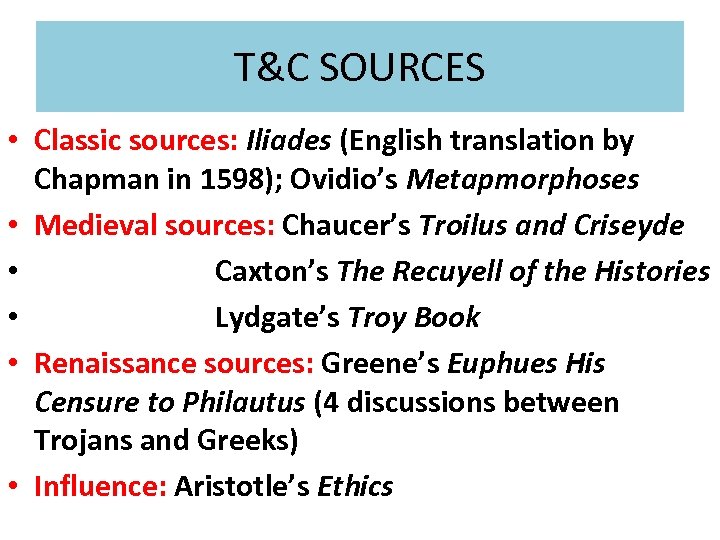 T&C SOURCES • Classic sources: Iliades (English translation by Chapman in 1598); Ovidio’s Metapmorphoses • Medieval sources: Chaucer’s Troilus and Criseyde • Caxton’s The Recuyell of the Histories • Lydgate’s Troy Book • Renaissance sources: Greene’s Euphues His Censure to Philautus (4 discussions between Trojans and Greeks) • Influence: Aristotle’s Ethics
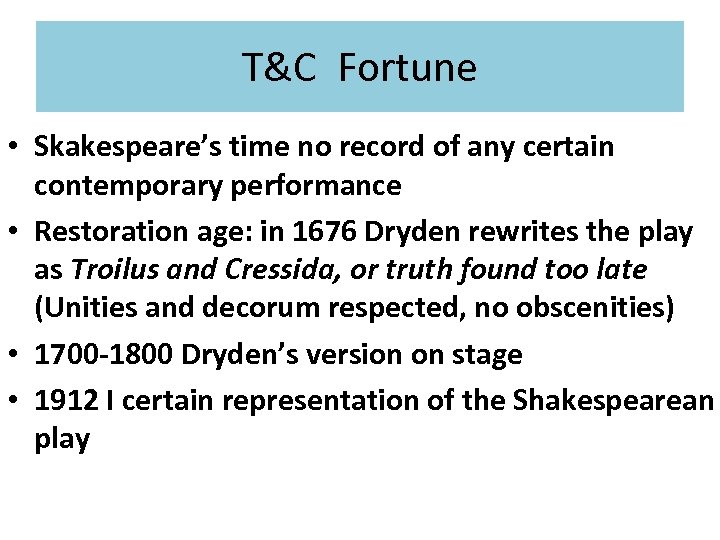 T&C Fortune • Skakespeare’s time no record of any certain contemporary performance • Restoration age: in 1676 Dryden rewrites the play as Troilus and Cressida, or truth found too late (Unities and decorum respected, no obscenities) • 1700 -1800 Dryden’s version on stage • 1912 I certain representation of the Shakespearean play
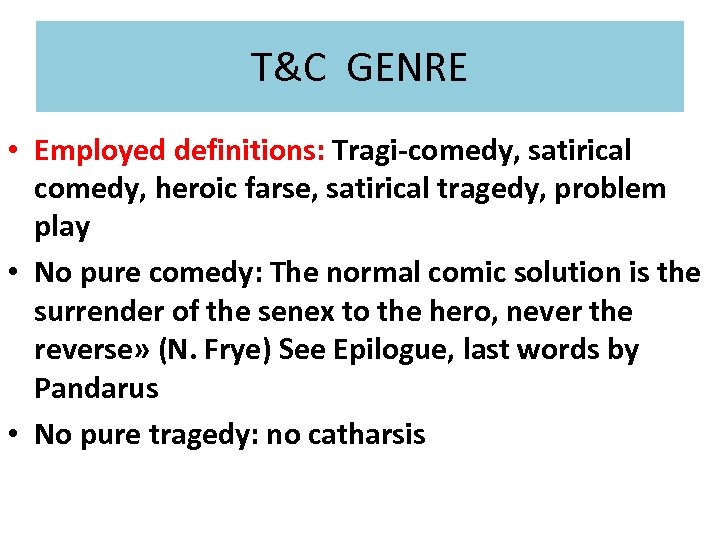 T&C GENRE • Employed definitions: Tragi-comedy, satirical comedy, heroic farse, satirical tragedy, problem play • No pure comedy: The normal comic solution is the surrender of the senex to the hero, never the reverse» (N. Frye) See Epilogue, last words by Pandarus • No pure tragedy: no catharsis
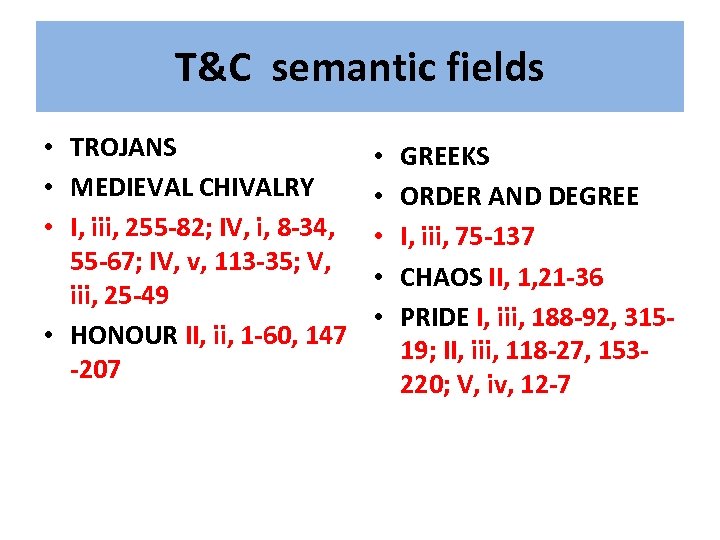 T&C semantic fields • TROJANS • MEDIEVAL CHIVALRY • I, iii, 255 -82; IV, i, 8 -34, 55 -67; IV, v, 113 -35; V, iii, 25 -49 • HONOUR II, ii, 1 -60, 147 -207 • • • GREEKS ORDER AND DEGREE I, iii, 75 -137 CHAOS II, 1, 21 -36 PRIDE I, iii, 188 -92, 31519; II, iii, 118 -27, 153220; V, iv, 12 -7
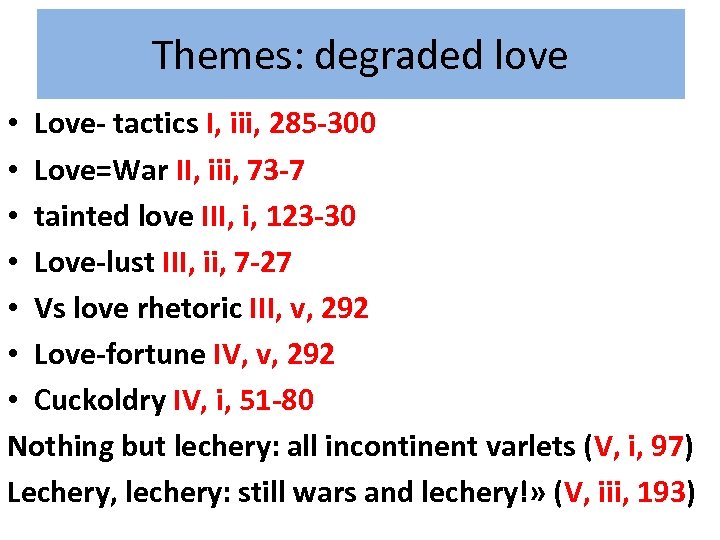 Themes: degraded love • Love- tactics I, iii, 285 -300 • Love=War II, iii, 73 -7 • tainted love III, i, 123 -30 • Love-lust III, ii, 7 -27 • Vs love rhetoric III, v, 292 • Love-fortune IV, v, 292 • Cuckoldry IV, i, 51 -80 Nothing but lechery: all incontinent varlets (V, i, 97) Lechery, lechery: still wars and lechery!» (V, iii, 193)
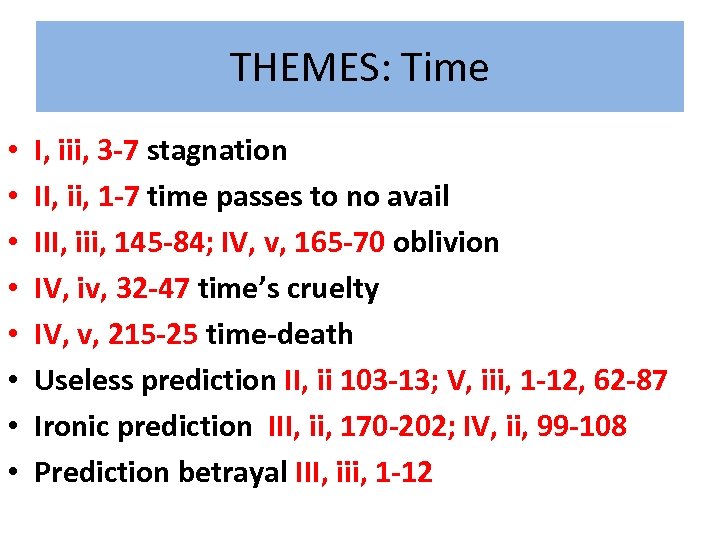 THEMES: Time • • I, iii, 3 -7 stagnation II, ii, 1 -7 time passes to no avail III, iii, 145 -84; IV, v, 165 -70 oblivion IV, iv, 32 -47 time’s cruelty IV, v, 215 -25 time-death Useless prediction II, ii 103 -13; V, iii, 1 -12, 62 -87 Ironic prediction III, ii, 170 -202; IV, ii, 99 -108 Prediction betrayal III, iii, 1 -12
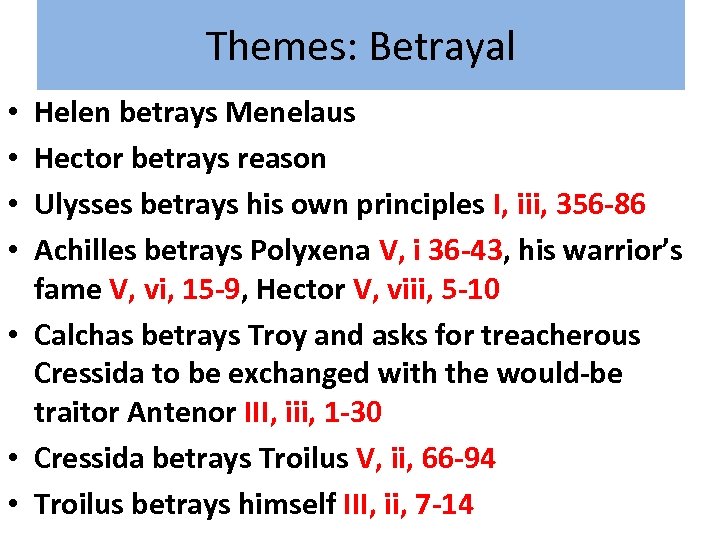 Themes: Betrayal Helen betrays Menelaus Hector betrays reason Ulysses betrays his own principles I, iii, 356 -86 Achilles betrays Polyxena V, i 36 -43, his warrior’s fame V, vi, 15 -9, Hector V, viii, 5 -10 • Calchas betrays Troy and asks for treacherous Cressida to be exchanged with the would-be traitor Antenor III, iii, 1 -30 • Cressida betrays Troilus V, ii, 66 -94 • Troilus betrays himself III, ii, 7 -14 • •
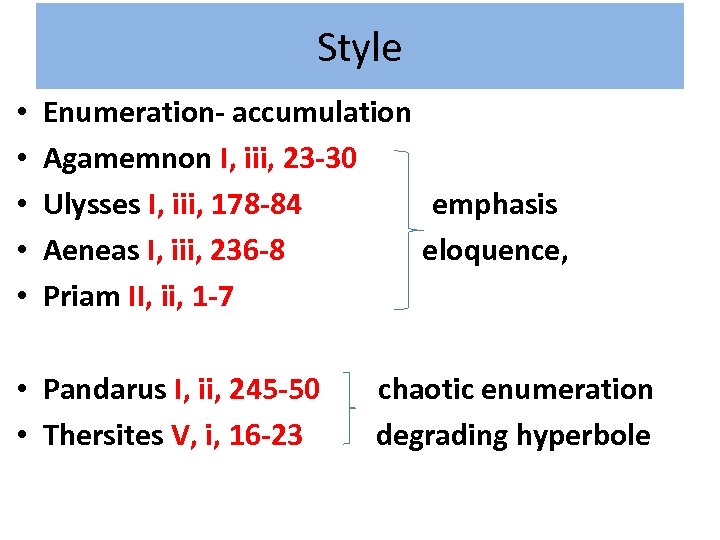 Style • • • Enumeration- accumulation Agamemnon I, iii, 23 -30 Ulysses I, iii, 178 -84 emphasis Aeneas I, iii, 236 -8 eloquence, Priam II, ii, 1 -7 • Pandarus I, ii, 245 -50 chaotic enumeration • Thersites V, i, 16 -23 degrading hyperbole