 Скачать презентацию SGP Successes and Challenges SGP Coverage ØEstablished
8b32abe8a0f5778233f0b3d10593dc37.ppt
- Количество слайдов: 30



SGP Successes and Challenges
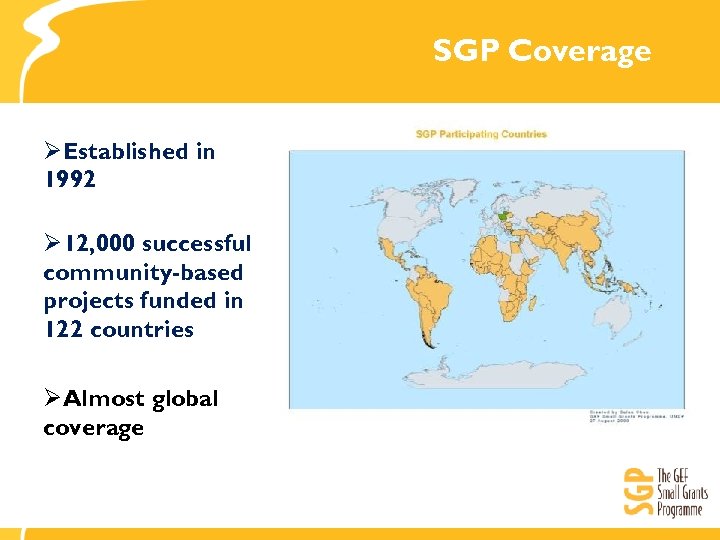
SGP Coverage ØEstablished in 1992 Ø 12, 000 successful community-based projects funded in 122 countries ØAlmost global coverage
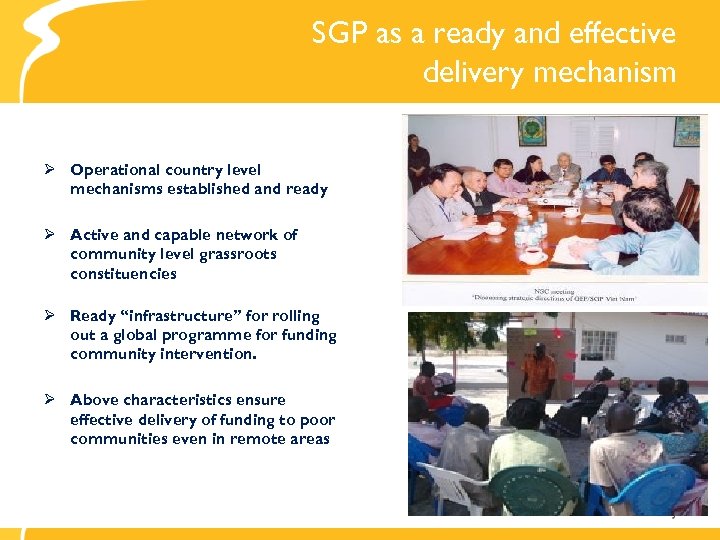
SGP as a ready and effective delivery mechanism Ø Operational country level mechanisms established and ready Ø Active and capable network of community level grassroots constituencies Ø Ready “infrastructure” for rolling out a global programme for funding community intervention. Ø Above characteristics ensure effective delivery of funding to poor communities even in remote areas
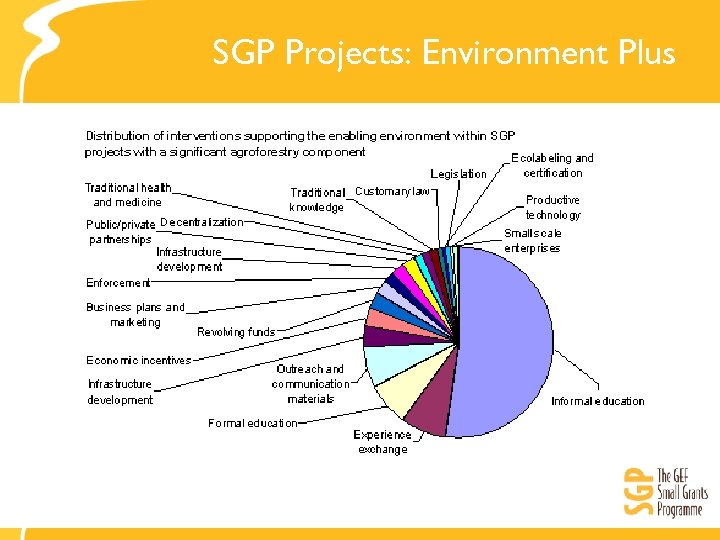
SGP Projects: Environment Plus
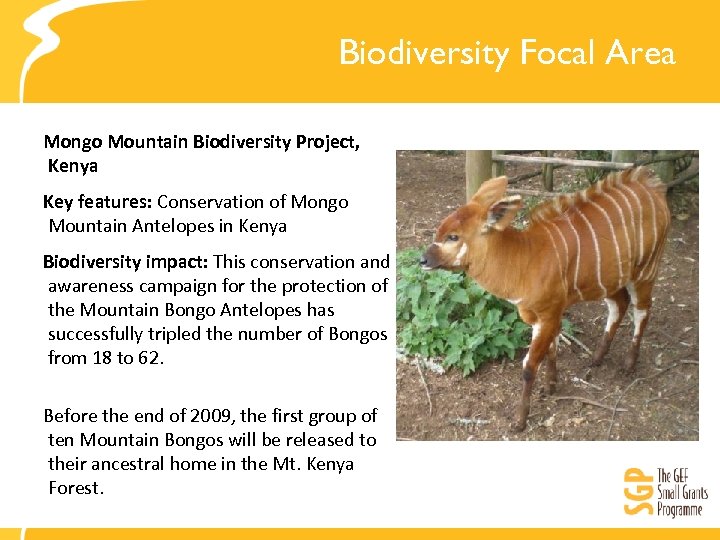
Biodiversity Focal Area Mongo Mountain Biodiversity Project, Kenya Key features: Conservation of Mongo Mountain Antelopes in Kenya Biodiversity impact: This conservation and awareness campaign for the protection of the Mountain Bongo Antelopes has successfully tripled the number of Bongos from 18 to 62. Before the end of 2009, the first group of ten Mountain Bongos will be released to their ancestral home in the Mt. Kenya Forest.
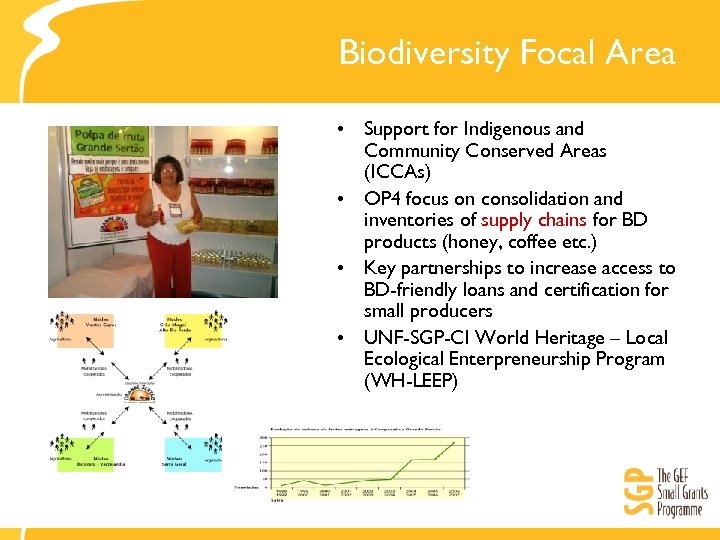
Biodiversity Focal Area • Support for Indigenous and Community Conserved Areas (ICCAs) • OP 4 focus on consolidation and inventories of supply chains for BD products (honey, coffee etc. ) • Key partnerships to increase access to BD-friendly loans and certification for small producers • UNF-SGP-CI World Heritage – Local Ecological Enterpreneurship Program (WH-LEEP)
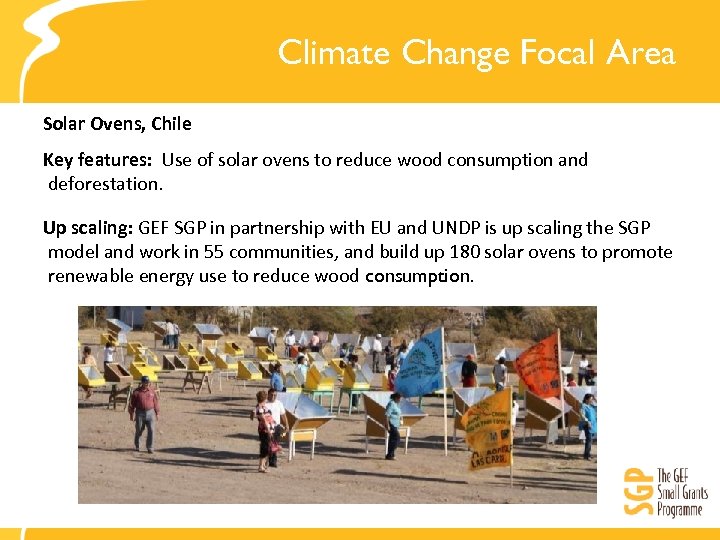
Climate Change Focal Area Solar Ovens, Chile Key features: Use of solar ovens to reduce wood consumption and deforestation. Up scaling: GEF SGP in partnership with EU and UNDP is up scaling the SGP model and work in 55 communities, and build up 180 solar ovens to promote renewable energy use to reduce wood consumption.
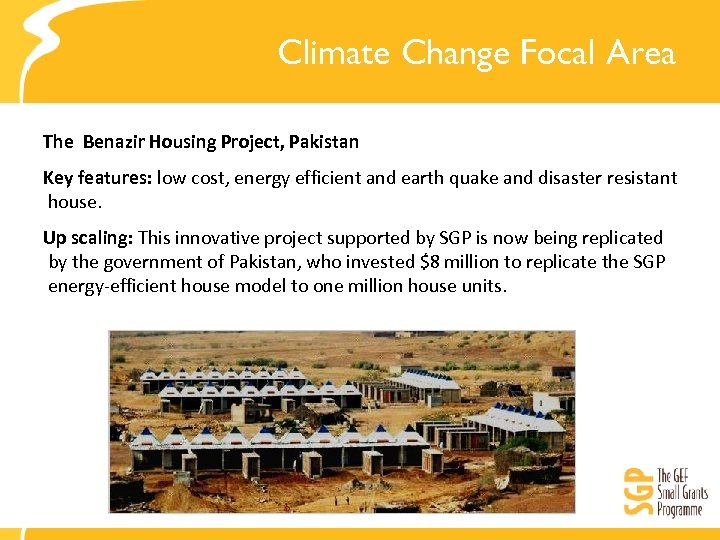
Climate Change Focal Area The Benazir Housing Project, Pakistan Key features: low cost, energy efficient and earth quake and disaster resistant house. Up scaling: This innovative project supported by SGP is now being replicated by the government of Pakistan, who invested $8 million to replicate the SGP energy-efficient house model to one million house units.
Success in pioneering CBA • Building the resilience of communities and the ecosystems upon which they rely in the face of climate change impacts • Pioneering CBA in 9 countries through the GEF SPA; 28 projects on-going; targeting 80 – 200 by 2014 • Now also pioneering CBA in the whole Pacific region (15 countries) plus Cambodia, Laos, Vietnam and Sri Lanka with Aus. AID
International Waters Focal Area Regional Networking/partnerships for Greater Impact
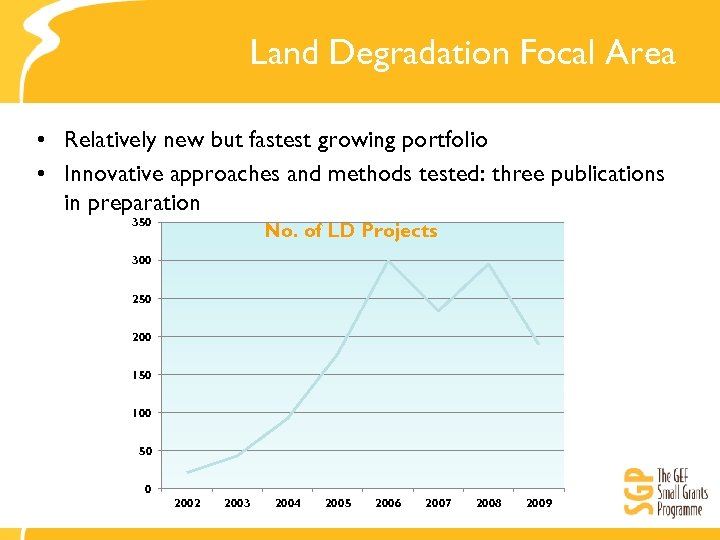
Land Degradation Focal Area • Relatively new but fastest growing portfolio • Innovative approaches and methods tested: three publications in preparation 350 No. of LD Projects 300 250 200 150 100 50 0 2002 2003 2004 2005 2006 2007 2008 2009
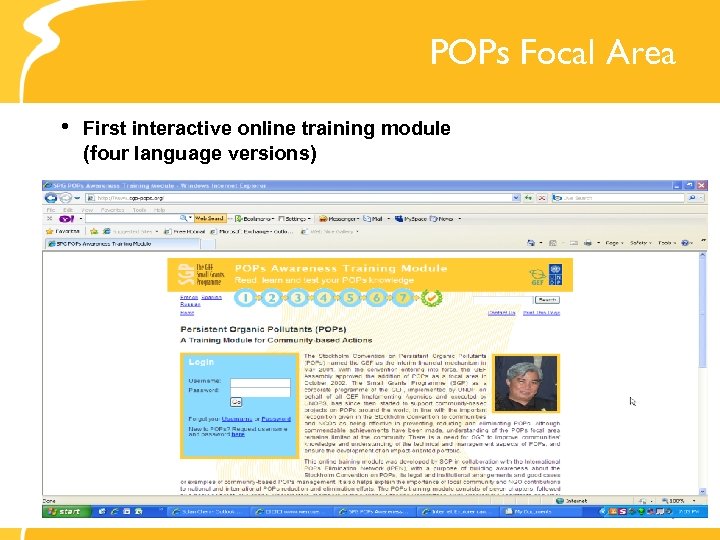
POPs Focal Area • First interactive online training module (four language versions)
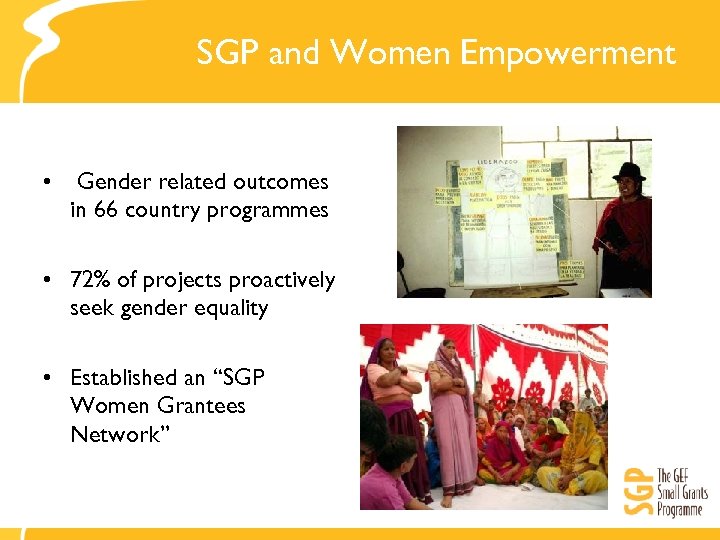
SGP and Women Empowerment • Gender related outcomes in 66 country programmes • 72% of projects proactively seek gender equality • Established an “SGP Women Grantees Network”
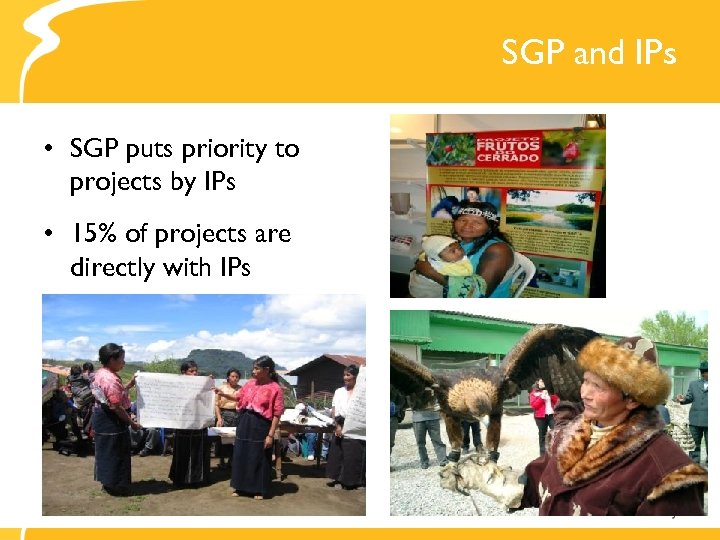
SGP and IPs • SGP puts priority to projects by IPs • 15% of projects are directly with IPs
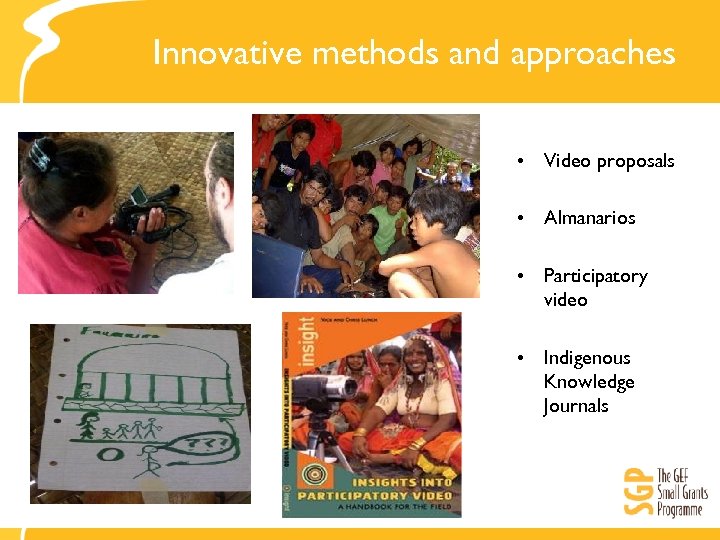
Innovative methods and approaches • Video proposals • Almanarios • Participatory video • Indigenous Knowledge Journals
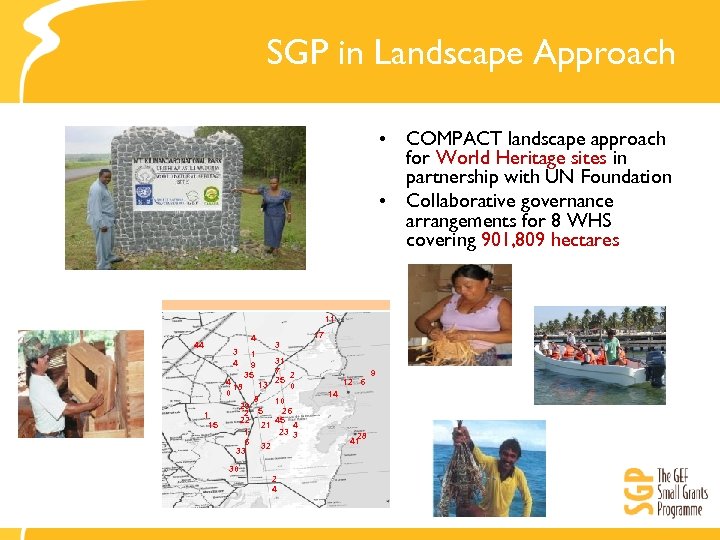
SGP in Landscape Approach • COMPACT landscape approach for World Heritage sites in partnership with UN Foundation • Collaborative governance arrangements for 8 WHS covering 901, 809 hectares 11 44 4 3 4 1 9 35 4 18 0 29 2 1 22 15 1 6 33 30 3 31 7 2 25 13 0 8 10 5 26 45 21 4 23 3 32 2 4 17 12 6 14 28 41 9
Partnerships • • • • Grantees UNDP UNEP World Bank European Commission New Zealand Aid Aus. AID United Nations Foundation UNV UNF Dutch Government National Governments State/Local Governments Regional Governments (NRG 4 SD) • ASEAN Center for Biodiversity • National Environmental Funds • International NGOs (RSBP/Birdlife, etc. ) • ICRAN • IPEN • Women’s Groups • British Petroleum, Coca-Cola, Expedia • Development Bank of Southern Africa, HSBC • Hotel Associations
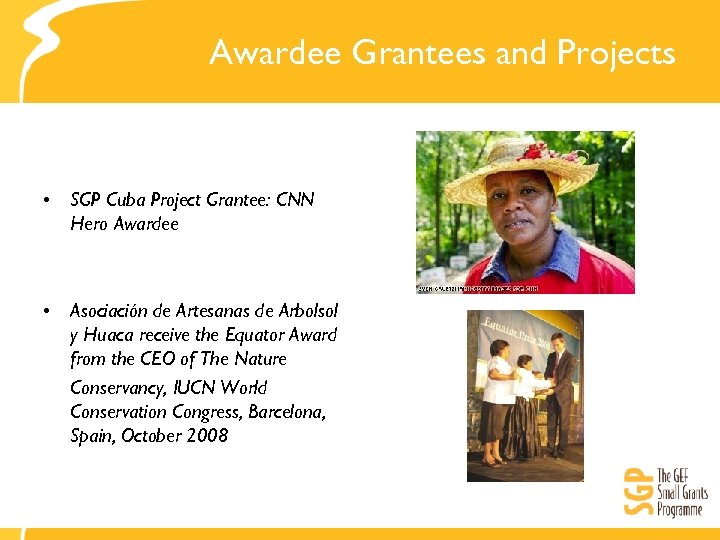
Awardee Grantees and Projects • SGP Cuba Project Grantee: CNN Hero Awardee • Asociación de Artesanas de Arbolsol y Huaca receive the Equator Award from the CEO of The Nature Conservancy, IUCN World Conservation Congress, Barcelona, Spain, October 2008
SGP Award-Winning Projects 2009 • • • Sello Bicentenario-Chile Kyoto World Water Grand Prize – Sri Lanka Kyoto World Water Grand Prize – Tanzania 2008 • • • • James A. Waight Conservation Award-Belize Women's Empowerment UN Red Ribbon Award –Cameroon Sustainable Management of Water-Chile National Award on New Technologies- Cuba Tourism for Tomorrow award, "Investor in People" category, World Tourism & Travel Council (WTTC)-Honduras Global Green– India Wetland’s Champion—Iran Equator Initiative Award- Micronesia Equator Initiative Award – Namibia Ryutaro Hashimoto APFED Award- Nepal Equator Initiative Award-Peru Equator Initiative Award- Senegal Best practices in Conservation for the Tourism for Tomorrow Awards- Sri Lanka Equator Initiative Award- Sri Lanka 2008 WISIONS Award “Water for Energy and Energy for Water”- Tanzania
SGP Award winning projects 2007 • • 2007 SEED Awards for Entrepreneurship in Sustainable Development-Ecuador National Environment Award- Honduras Innovation and Commitment Award – Iran Best Practices Competition in Sustainable Development of Central Asia – Kyrgyzstan 2006 • • Premio Nacional de Medio Ambiente de la República de Cuba-Cuba UNDP Innovation Award- Cuba 2006 CNN Hero –Cuba Zayed International Prize for the Environment- Trinidad and Tobago 2005 • Grand Prix of the President of the Republic of Senega- Senegal 2004 • Ashden Award – Pakistan 2003 • • • Knight Order Medal for merit in rural development/environment- Burkina Faso UN Person of the Year Award Kenya UNESCO International Programme for the Development of Communication (IPDC) Award - Trinidad and Tobago
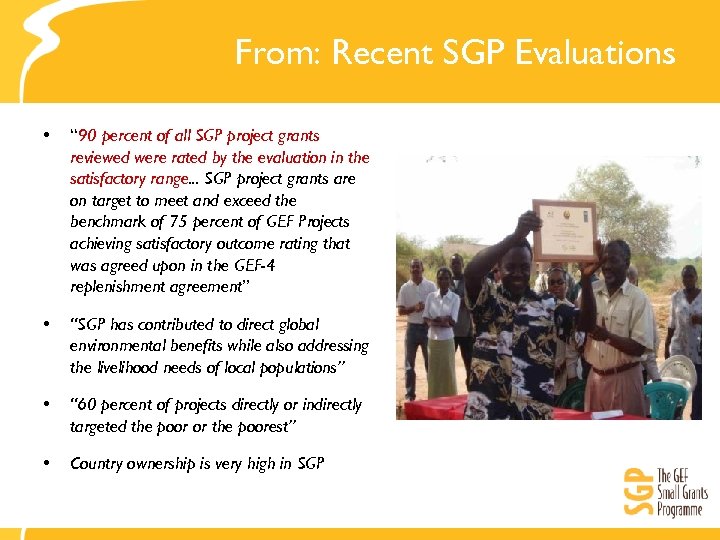
From: Recent SGP Evaluations • “ 90 percent of all SGP project grants reviewed were rated by the evaluation in the satisfactory range. . . SGP project grants are on target to meet and exceed the benchmark of 75 percent of GEF Projects achieving satisfactory outcome rating that was agreed upon in the GEF-4 replenishment agreement” • “SGP has contributed to direct global environmental benefits while also addressing the livelihood needs of local populations” • “ 60 percent of projects directly or indirectly targeted the poor or the poorest” • Country ownership is very high in SGP
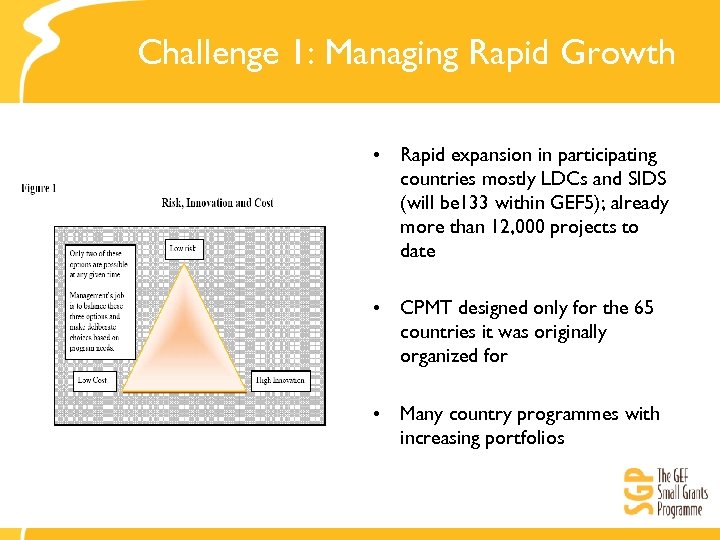
Challenge 1: Managing Rapid Growth • Rapid expansion in participating countries mostly LDCs and SIDS (will be 133 within GEF 5); already more than 12, 000 projects to date • CPMT designed only for the 65 countries it was originally organized for • Many country programmes with increasing portfolios
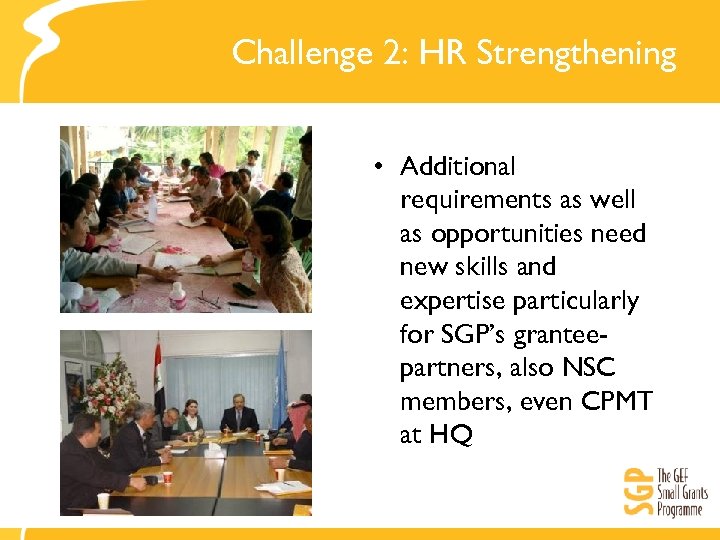
Challenge 2: HR Strengthening • Additional requirements as well as opportunities need new skills and expertise particularly for SGP’s granteepartners, also NSC members, even CPMT at HQ
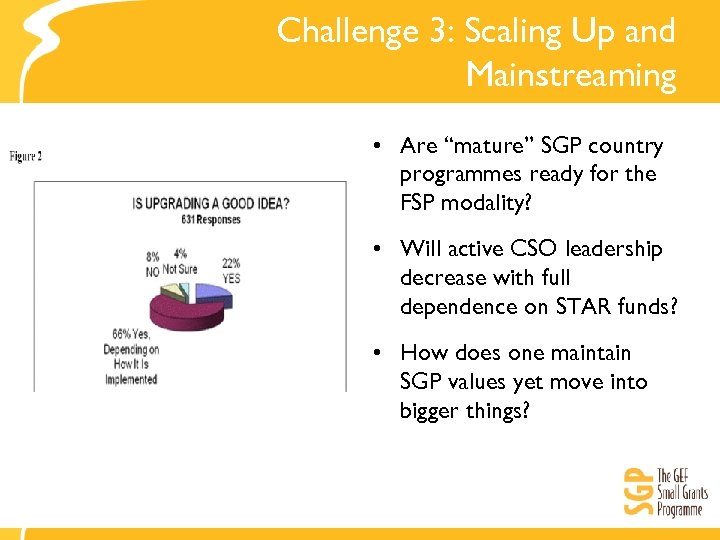
Challenge 3: Scaling Up and Mainstreaming • Are “mature” SGP country programmes ready for the FSP modality? • Will active CSO leadership decrease with full dependence on STAR funds? • How does one maintain SGP values yet move into bigger things?
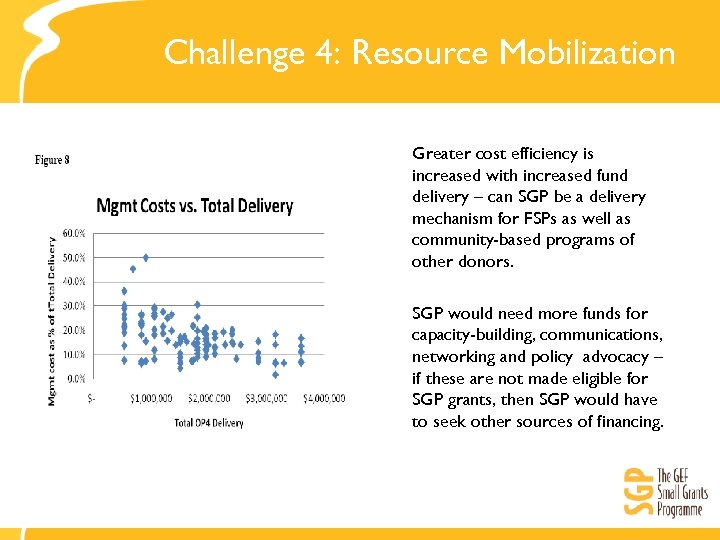
Challenge 4: Resource Mobilization • Greater cost efficiency is increased with increased fund delivery – can SGP be a delivery mechanism for FSPs as well as community-based programs of other donors. SS SGP would need more funds for capacity-building, communications, networking and policy advocacy – if these are not made eligible for SGP grants, then SGP would have to seek other sources of financing.
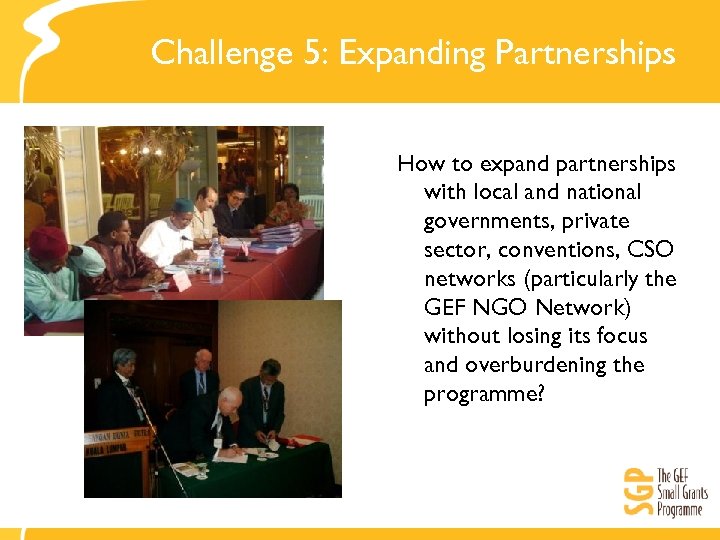
Challenge 5: Expanding Partnerships How to expand partnerships with local and national governments, private sector, conventions, CSO networks (particularly the GEF NGO Network) without losing its focus and overburdening the programme?
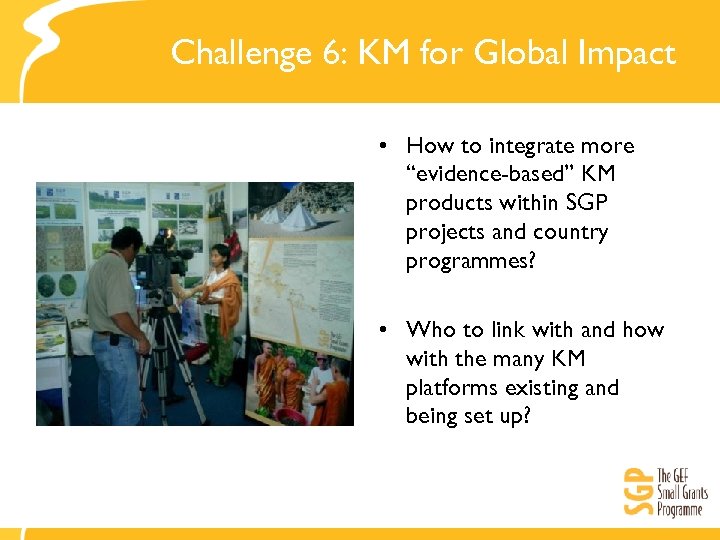
Challenge 6: KM for Global Impact • How to integrate more “evidence-based” KM products within SGP projects and country programmes? • Who to link with and how with the many KM platforms existing and being set up?
Challenge 7: Limited Time • SGP should be able to develop a draft of its Programmatic Pro. Doc for OP 5 that integrates 10 PIFs by January 2010. • SGP should be able to submit this Programmatic OP 5 Pro. Doc to the April or May 2010 Council Meeting. • Fund endorsement and release should be made by July 2010 so that there would be no funding gap.
In Conclusion All of SGP’s stakeholders must exert full effort to facilitate the programme’s transition from GEF 4 to GEF 5 and support the implementation of its more ambitious deliverables in a more complex GEF 5 environment.
Thank You!
Скачать презентацию SGP Successes and Challenges SGP Coverage ØEstablished
8b32abe8a0f5778233f0b3d10593dc37.ppt